HGW05
Pompeii. Herculaneum Gate West Side. Shop.
(Eschebach West 5, Kockel Süd 5). Excavated 10th to 23rd March 1763.
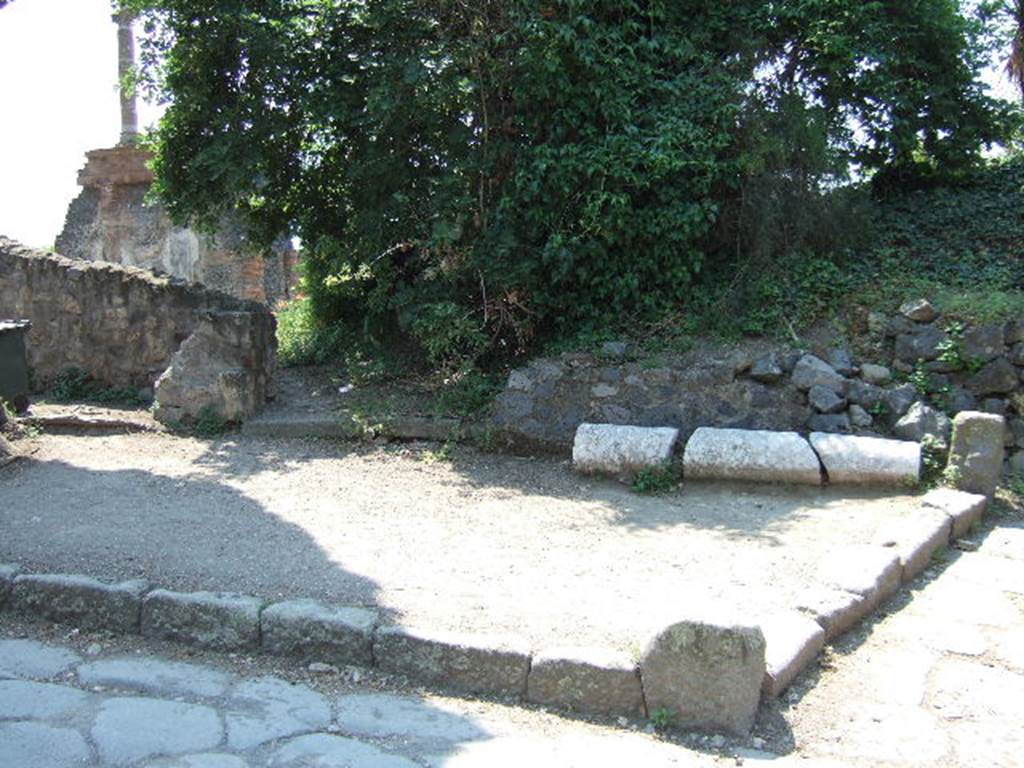
HGW05 Pompeii. May 2006. Looking at front, from Via dei Sepolcri.
According to PAH this was excavated between 10th and 23rd March 1763.
It was a room with an earth floor and walls covered in white plaster.
A number of objects were found including
Bronze: A vase with an ornate mask handle, five rings, a coin, a mirror and two small buckles.
Glass: Three carafes, a cup with a handle and two perfume bottles.
Clay: Twenty-seven lamps, a bowl, four vases, sixteen pots, a cauldron, two water jugs and thirty eight lids.
Bone: Five tubes with holes (hinges?), a needle and a counterweight.
Lead: Three small weights.
See Fiorelli G., 1860. Pompeianarum antiquitatum historia,
Vol. 1: 1748 - 1818,
Naples, 2 Addenda 110-111.
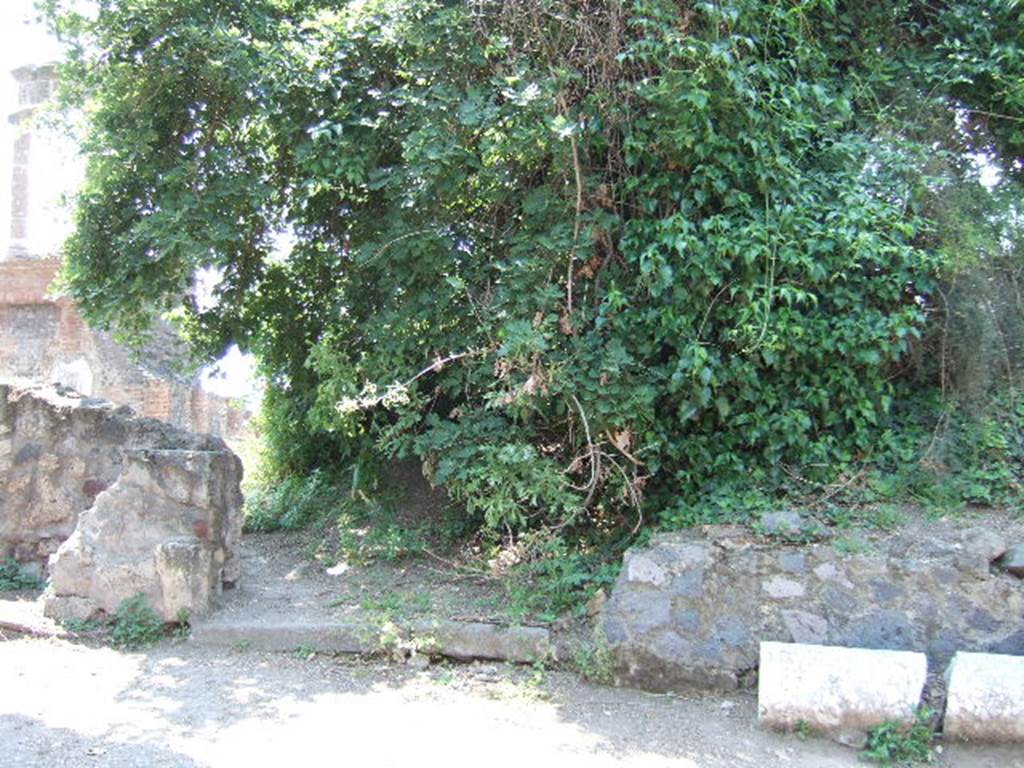
HGW05 Pompeii. May 2005. Entrance.
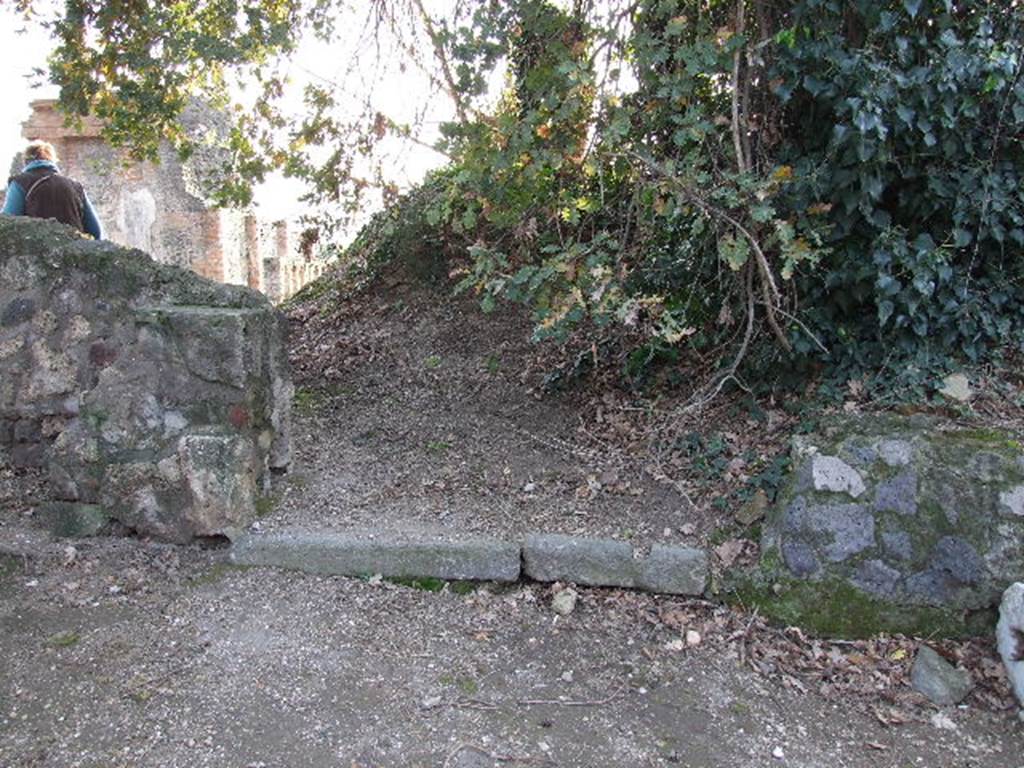
HGW05 Pompeii, entrance in centre. December 2007. The stone wall on left has been built across the Via Pomeriale.
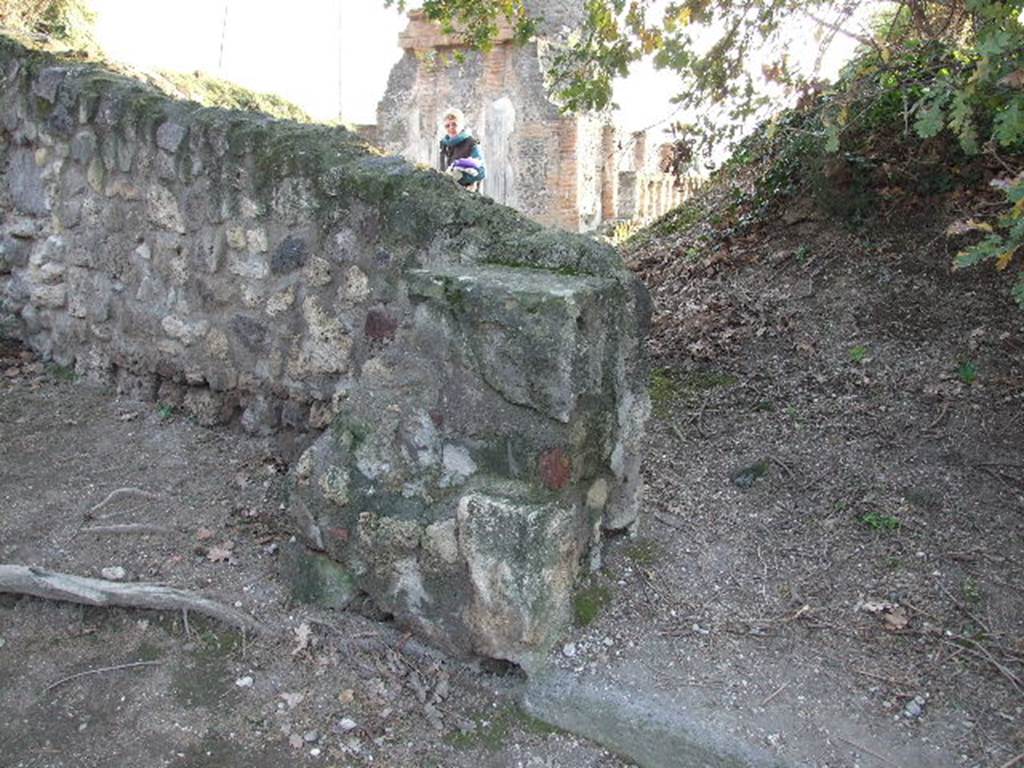
HGW05 Pompeii. December 2007.
The stone wall behind and to left of pillar has been built across the Via Pomeriale.
The corner was the site of a street altar.
“The serpent painting stood at the intersection of the so-called Via Pomeriale and the Via dei Sepolcri near tomb 5”
See Fiorelli G.,
1860. Pompeianarum antiquitatum historia,
Vol. 1: 1748 - 1818, Naples, 234 (Aug 12th
1769).
See Pompeii: Scienza et Società page 26.
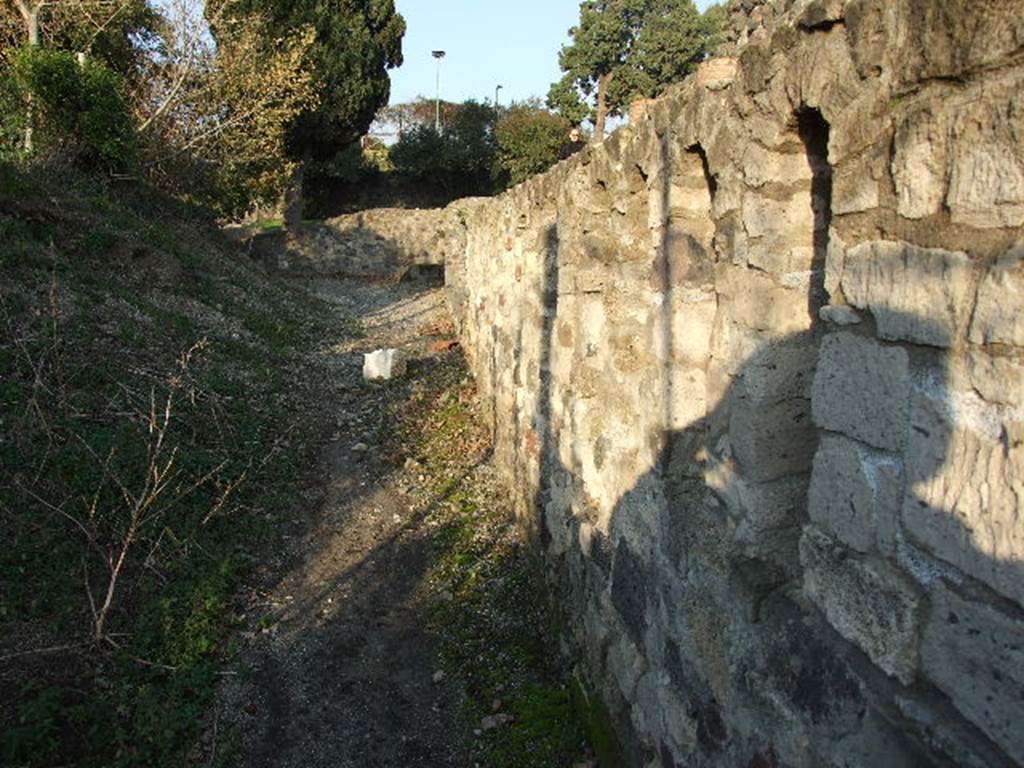
HGW05 Pompeii, December 2007. Looking east between the buried HGW05 and HGW04a on right.
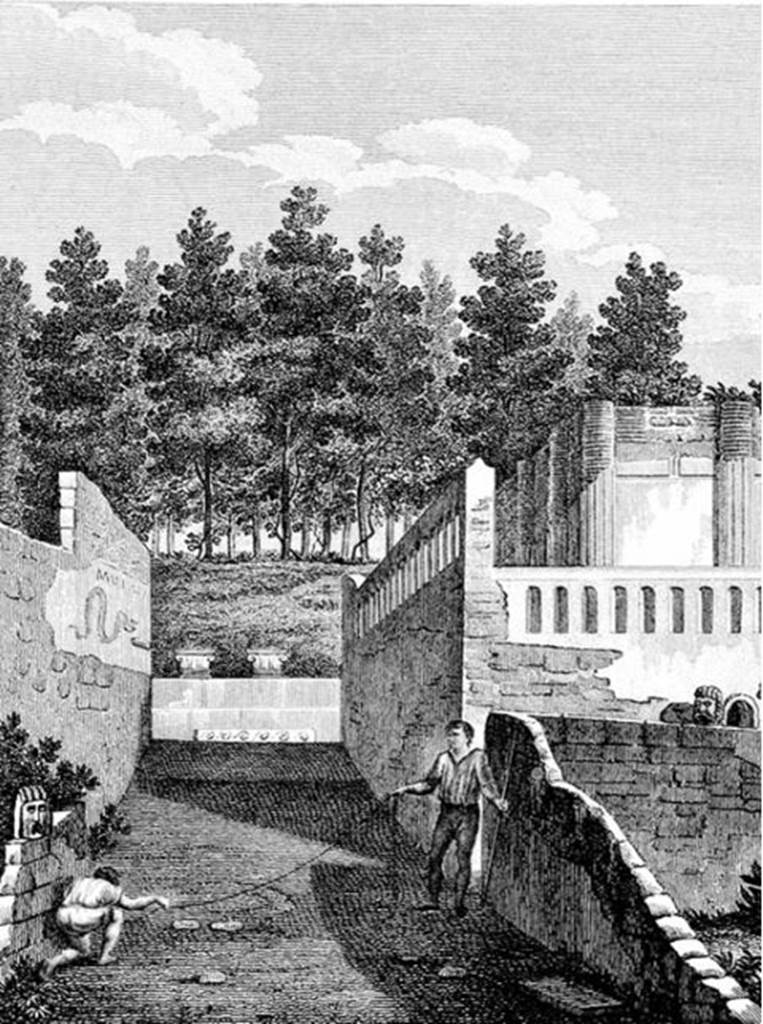
HGW05 Pompeii. The street altar on the outside east wall of tomb as shown by Mazois.
See Mazois, F.,
1824. Les Ruines de Pompei: Premiere
Partie. Paris: Didot Frères. (Pl. 12).
![HGW05 Pompeii. Cippus of Suedius Clemens. Found 16th August 1763.
Found on the south of the street close to the entrance to HGW05, almost opposite to the circular seat of Mamia.
Now in Naples Archaeological Museum. Inventory number 3848.
Photo © Livius.org Use subject to Creative Commons Attribution-ShareAlike 3.0
The inscription reads
EX AVCTORITATE
IMP CAESARIS
VESPASIANI AVG
LOCA PVBLICA A PRIVATIS
POSSESSA T SVEDIVS CLEMENS
TRIBVNVS CAVSIS COGNITIS ET
MENSVRIS FACTIS REI
PVBLICAE POMPEIANORVM
RESTITVIT [CIL X 1018]
According to Epigraphik-Datenbank Clauss/Slaby (See www.manfredclauss.de) this reads
Ex auctoritate
Imp(eratoris) Caesaris
Vespasiani Aug(usti)
loca publica a privatis
possessa T(itus) Suedius Clemens
tribunus causis cognitis et
mensuris factis rei
publicae Pompeianorum
restituit [CIL X 1018]
By virtue of authority conferred upon him by the Emperor Vespasian Caesar Augustus,
Titus Suedius Clemens, tribune, having investigated the facts and taken measurements,
restored to the citizens of Pompeii public places illegally appropriated by private persons.
Similar Cippi were found at the Porta Marina, Porta Nocera and the Porta Vesuvio.
The wording “rei publicae Pompeianorum” on this one, discovered in 1763, was the first positive identification that the site was Pompeii.
Until then scholars had divided opinions on the city buried under Civita. Many, including the first official excavators, thought it was the ancient city of Stabiae.
See Conticello, B., Ed, 1990. Rediscovering Pompeii. Rome: L’Erma di Bretschneider. (p. 225).](tombs%20hgw05_files/image014.jpg)
HGW05 Pompeii. Cippus of Suedius Clemens. Found 16th August 1763.
Found on the south of the street close to the entrance to HGW05, almost opposite to the circular seat of Mamia.
Now in Naples Archaeological Museum. Inventory number 3848.
Photo © Livius.org Use subject to Creative Commons
Attribution-ShareAlike 3.0
The inscription reads
EX AVCTORITATE
IMP CAESARIS
VESPASIANI AVG
LOCA PVBLICA A PRIVATIS
POSSESSA T SVEDIVS CLEMENS
TRIBVNVS CAVSIS COGNITIS ET
MENSVRIS FACTIS REI
PVBLICAE POMPEIANORVM
RESTITVIT [CIL X 1018]
According to Epigraphik-Datenbank Clauss/Slaby (See www.manfredclauss.de) this reads
Ex auctoritate
Imp(eratoris)
Caesaris
Vespasiani
Aug(usti)
loca publica a
privatis
possessa T(itus)
Suedius Clemens
tribunus causis
cognitis et
mensuris factis
rei
publicae
Pompeianorum
restituit [CIL X 1018]
By virtue of authority conferred upon him by the Emperor Vespasian Caesar Augustus,
Titus Suedius Clemens, tribune, having investigated the facts and taken measurements,
restored to the citizens of Pompeii public places illegally appropriated by private persons.
Similar Cippi were found at the Porta Marina, Porta Nocera and the Porta Vesuvio.
The wording “rei publicae Pompeianorum” on this one, discovered in 1763, was the first positive identification that the site was Pompeii.
Until then scholars had divided opinions on the city buried under Civita. Many, including the first official excavators, thought it was the ancient city of Stabiae.
See Conticello,
B., Ed, 1990. Rediscovering Pompeii.
Rome: L’Erma di Bretschneider. (p. 225).
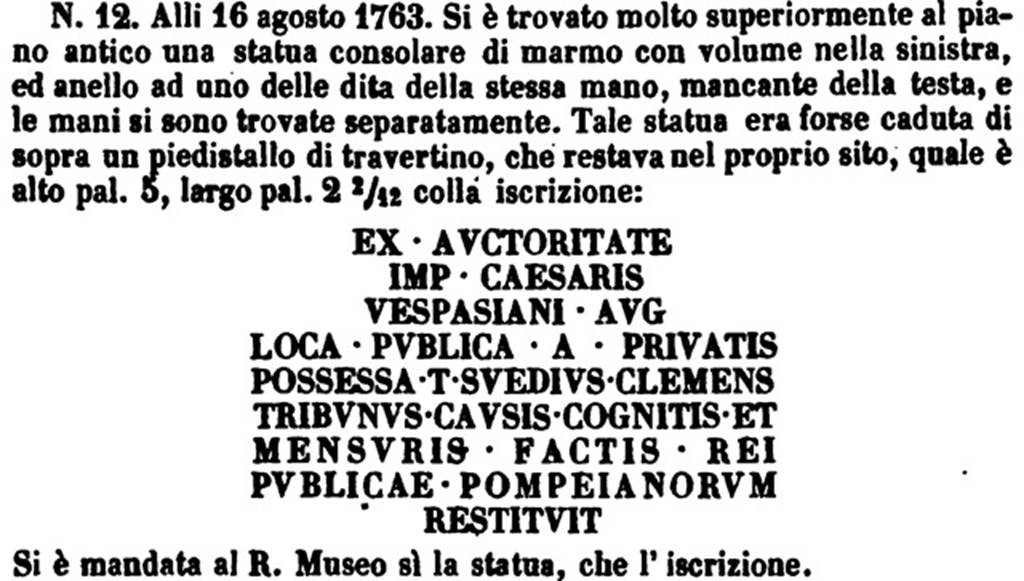
HGW05 Pompeii. On 16th August 1763 an inscribed cippus and a consular statue of marble were found.
The cippus is now in Naples Archaeological Museum. Inventory number 3848.
The statue is now in Naples Archaeological Museum. Inventory number 6235.
See Fiorelli G., 1860. Pompeianarum antiquitatum historia,
Vol. 1: 1748 - 1818,
Naples, 1 153, add. 114, n.12.