HGE40 Pompeii. Herculaneum Gate East Side. Nameless tomb (Kockel).
Tomb of Salvius or Tomba del fanciullo Salvio (Eschebach).
Excavated 1812-1813? (Eschebach East 40, Kockel Nord 40).
![HGE40 Pompeii. May 2006. A stele in herm form was found inside the tomb.
The inscription on this tomb gave no first name and was simply
SALVIVS PVER
VIXIT ANNIS VI.
According to Epigraphik-Datenbank Clauss/Slaby (See www.manfredclauss.de) this read
Salvius puer
vixit annis VI [CIL X 1032]
Mau translates this as “ The boy Salvius lived six years”.
See Mau, A., 1907, translated by Kelsey F. W. Pompeii: Its Life and Art. New York: Macmillan. (p. 426).
According to Kockel, the stele was said by Mommsen, Niccolini and Overbeck to have been found next to that of Munatius Atimetus (HGW22/Nord22).
Bonucci, Breton, Fiorelli and Mau however attributed it to HGE40/Nord40.
See Kockel V., 1983. Die Grabbauten vor dem Herkulaner Tor in Pompeji. Mainz: von Zabern. (p. 100).](tombs%20hge40_files/image003.jpg)
HGE40 Pompeii. May 2006. A stele in herm form was found inside the tomb.
The inscription on this tomb gave no first name and was simply -
SALVIVS PVER
VIXIT ANNIS VI.
According to Epigraphik-Datenbank Clauss/Slaby (See www.manfredclauss.de) this read
Salvius puer
vixit annis
VI [CIL X 1032]
Mau translates this as “The boy Salvius lived six years”.
See Mau, A., 1907, translated by Kelsey F. W. Pompeii: Its Life and Art. New York: Macmillan. (p. 426).
According to Kockel, the stele was said by Mommsen, Niccolini and Overbeck to have been found next to that of Munatius Atimetus (HGW22/Nord22).
Bonucci, Breton, Fiorelli and Mau however attributed it to HGE40/Nord40.
See Kockel V., 1983. Die Grabbauten vor dem Herkulaner Tor in Pompeji. Mainz: von Zabern. (p. 100).
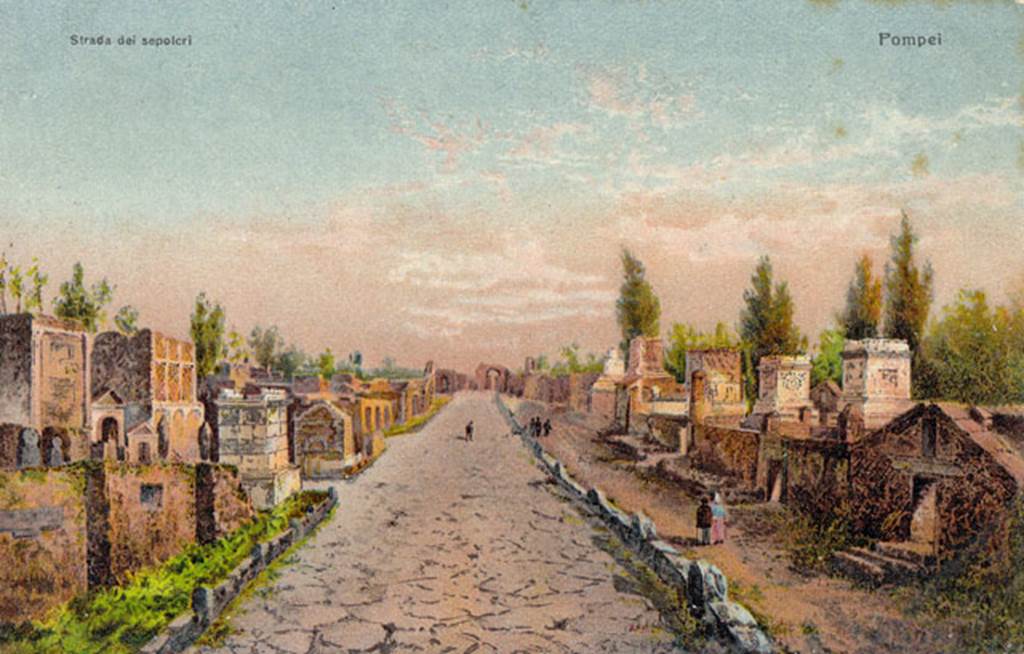
HGE40 Pompeii. Old postcard by Stengel. HGE40 is the smaller aedicula tomb on the left. Photo courtesy of Drew Baker.
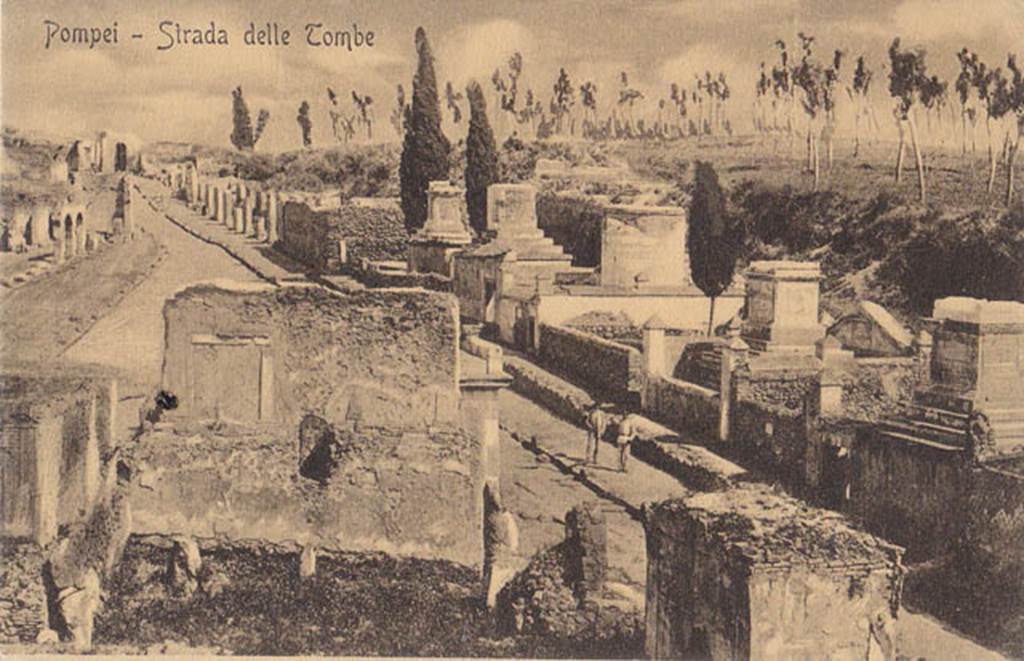
HGE40 Pompeii. Old postcard. The rear of the tomb is in the bottom centre. Photo courtesy of Drew Baker.
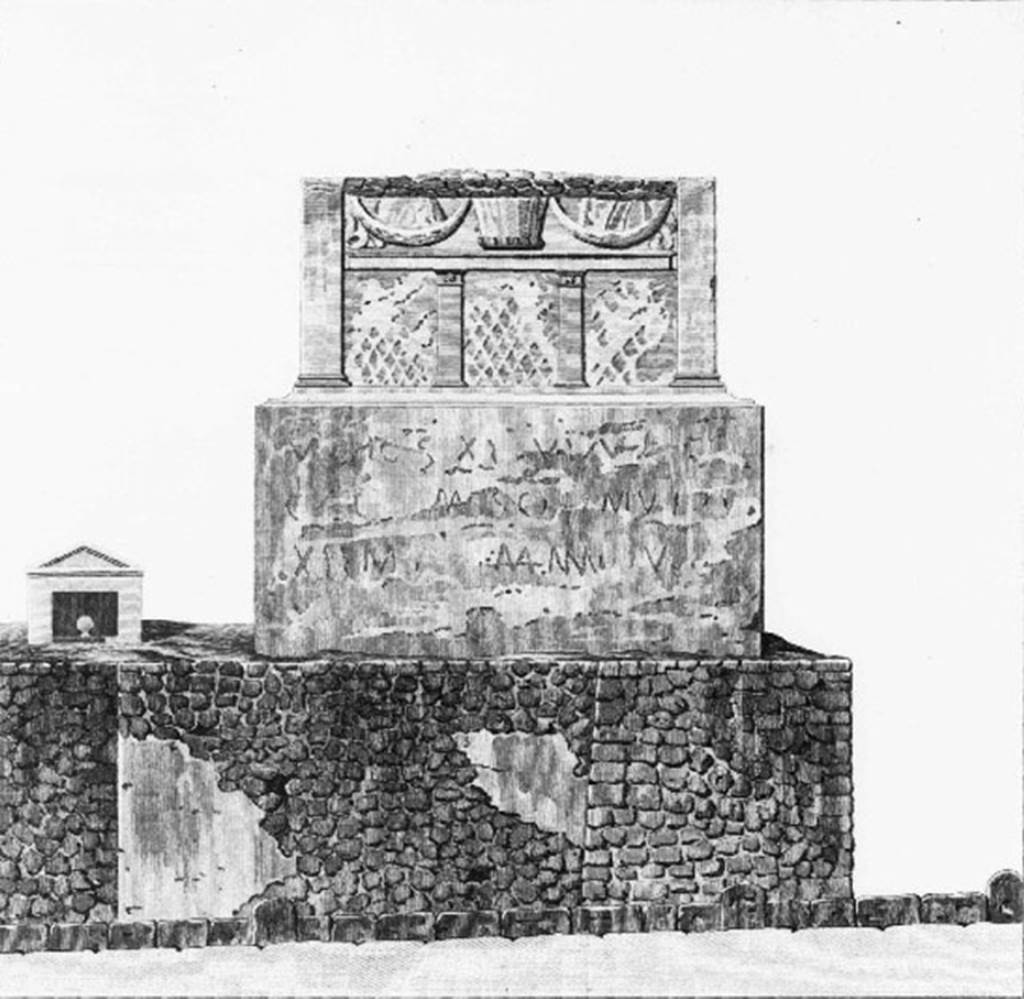
HGE40 Pompeii. 1824 drawing by Mazois. HGE 40 is to the left and HGE 38 is to the right.
See Mazois, F., 1824. Les Ruines de Pompei: Premiere Partie. Paris: Didot Freres. (pl. 16,1).