HGE37 Pompeii. Herculaneum Gate East Side. Tomb of the Allei.
Tomb of M. Alleius Luccius Libella and M. Alleius Libella.
Excavated 1813. (Eschebach East 37, Kockel Nord 37).
Tomb 36 and Tomb 37 are often confused.
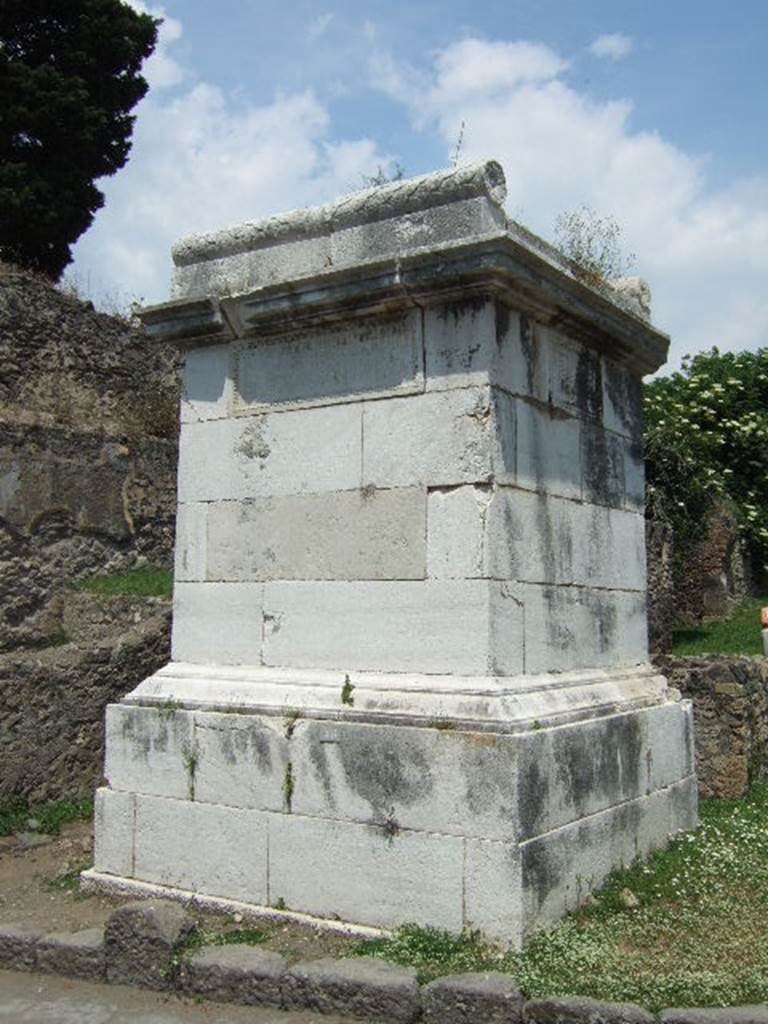
HGE37 Pompeii. May 2006. Tomb, looking towards west and south sides with plaques.
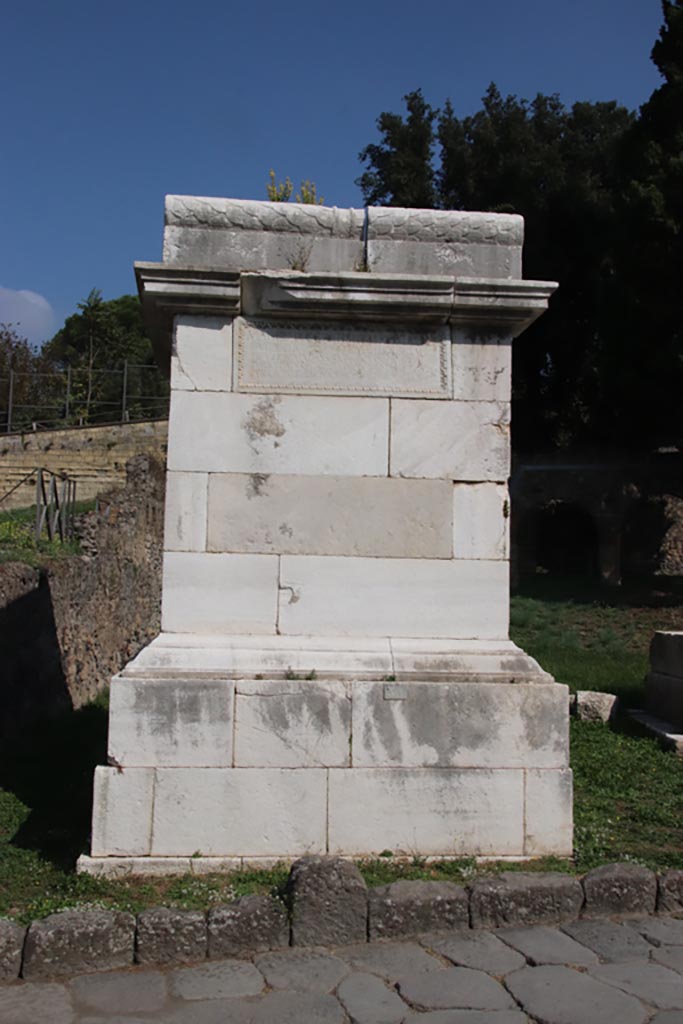
HGE37 Pompeii. Pompeii. October 2023.
Looking towards west side with plaque. Photo courtesy of Klaus Heese.
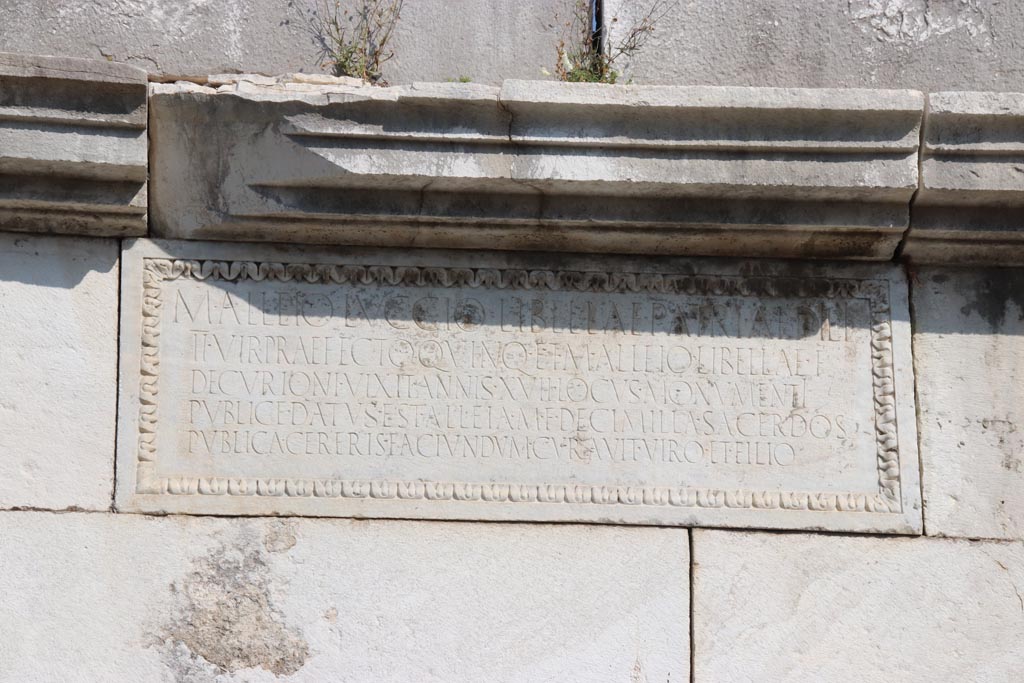
HGE37 Pompeii. October 2023. Marble plaque on west side. Photo
courtesy of Klaus Heese.
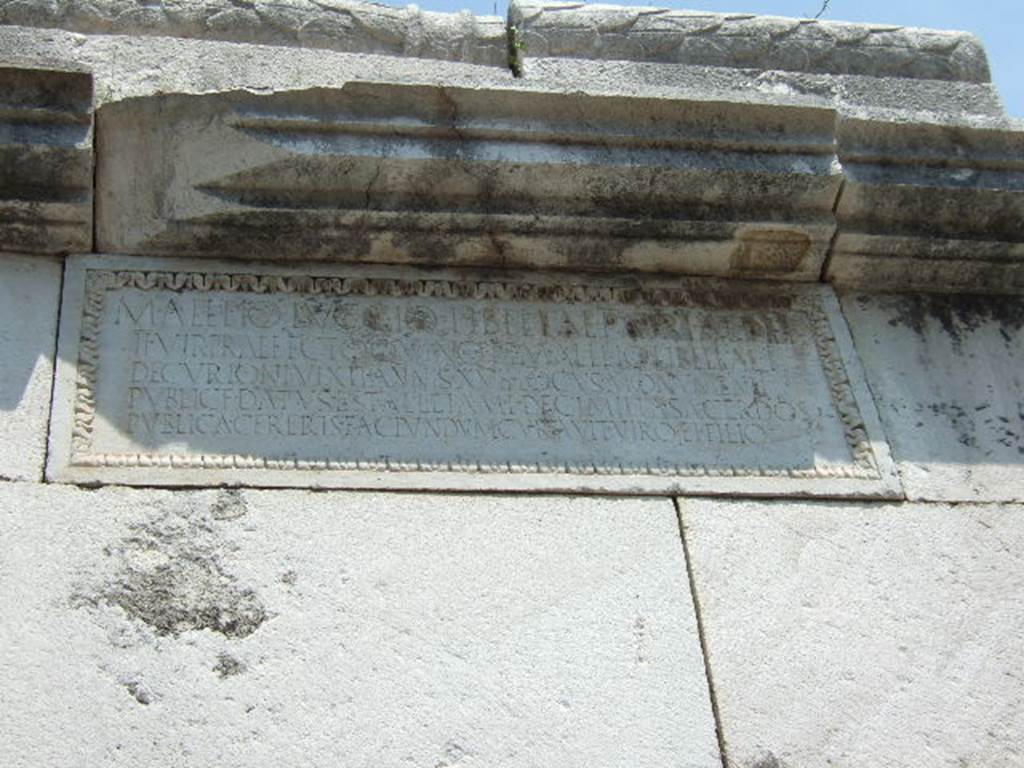
HGE37 Pompeii. May 2006. Wider marble plaque on west side.
![HGE37 Pompeii. May 2006. Marble plaque on south side.
On the plaque is the inscription:
M. ALLEIO LVCCIO LIBELLAE PATRI AEDILI
II VIR PRAEFECTO QVINQ(uennali) ET M. ALLEIO LIBELLAE F
DECVRIONI VIXIT ANNIS XVII LOCVS MONVMENTI
PVBLICE DATVS EST ALLEIA M F DECIMILLA SACERDOS
PVBLICA CERERIS FACIVNDVM CVRAVIT VIRO ET FILIO
This differs from the east side plaque where the last word is FILO rather than FILIO.
The plaque is also wider and the inscription is on fewer (five) lines.
According to Epigraphik-Datenbank Clauss/Slaby (See www.manfredclauss.de) this reads
M(arco) Alleio Luccio Libellae patri aedile
IIvir(o) praefecto quinq(uennali) et M(arco) Alleio Libellae f(ilio)
decurioni vixit annis XVII locus monumenti
publice datus est Alleia M(arci) f(ilia) Decimilla Sacerdos
publica Cereris faciundum curavit viro et filio [CIL X 1036 – first part]](tombs%20hge37_files/image009.jpg)
HGE37 Pompeii. May 2006. Detail of marble plaque on west side. On the plaque is the inscription:
M. ALLEIO LVCCIO LIBELLAE PATRI AEDILI
II VIR PRAEFECTO QVINQ ET M. ALLEIO LIBELLAE F
DECVRIONI VIXIT ANNIS XVII LOCVS MONVMENTI
PVBLICE DATVS EST ALLEIA M F DECIMILLA SACERDOS
PVBLICA CERERIS FACIVNDVM CVRAVIT VIRO ET FILIO
This differs from the south side plaque where the last word is FILO rather than FILIO.
The plaque is also wider, and the inscription is on fewer (five) lines.
According to Epigraphik-Datenbank Clauss/Slaby (See www.manfredclauss.de) this reads
M(arco) Alleio Luccio
Libellae patri aedile
IIvir(o)
praefecto quinq(uennali) et M(arco) Alleio Libellae f(ilio)
decurioni vixit
annis XVII locus monumenti
publice datus est
Alleia M(arci) f(ilia) Decimilla Sacerdos
publica Cereris faciundum
curavit viro et filio [CIL X 1036 –
first part]
![HGE37 Pompeii. May 2006. Marble plaque on east side. On the plaque is the inscription:
M. ALLEIO LVCCIO LIBELLAE PATRI
AEDILI II VIR PRAEFECTO QVINQ(uennali) ET
M. ALLEIO LIBELLAE F DECVRIONI VIXIT
ANNIS XVII LOCVS MONVMENTI
PVBLICE DATVS EST ALLEIA M F
DECIMILLA SACERDOS PVBLICA
CERERIS FACIVNDVM CVRAVIT VIRO
ET FILO
This differs from the south side plaque where the last word is FILIO rather than FILO.
The plaque is also narrower and the inscription is on more (eight) lines.
According to Epigraphik-Datenbank Clauss/Slaby (See www.manfredclauss.de) this reads
M(arco) Alleio Luccio Libellae patri
aedili IIvir(o) praefecto quinq(uennali) et
M(arco) Alleio Libellae f(ilio) decurioni vixit
annis XVII locus monumenti
publice datus est Alleia M(arci) f(ilia)
Decimilla sacerdos publica
Cereris faciundum curavit viro
et filio [CIL X 1036 second part]
Gell describes this as “A well-executed tomb, in stone, of simple form, about 15 feet high.
Upon two of its sides are similar inscriptions, which inform us that it was erected by Alicia Decimilla, public priestess of Ceres, to her husband Luccius Libella, aedile, duumvir, and quinquennial prefect : also to her son M. Alleius Libella, decurion at 17, upon ground decreed by the public for that purpose.”
See Gell, W, and Gandy J. P., 1819. Pompeiana. London: Rodwell and Martin. (p. 111).](tombs%20hge37_files/image011.jpg)
HGE37 Pompeii. May 2006. Marble plaque on south side. On the plaque is the inscription:
M. ALLEIO LVCCIO LIBELLAE PATRI
AEDILI II VIR PRAEFECTO QVINQ(uennali) ET
M. ALLEIO LIBELLAE F DECVRIONI VIXIT
ANNIS XVII LOCVS
MONVMENTI
PVBLICE DATVS EST ALLEIA M F
DECIMILLA
SACERDOS PVBLICA
CERERIS FACIVNDVM
CVRAVIT VIRO
ET FILO
This differs from the west side plaque where the last word is FILIO rather than FILO.
The plaque is also narrower and the inscription is on more (eight) lines.
According to Epigraphik-Datenbank Clauss/Slaby (See www.manfredclauss.de) this reads
M(arco) Alleio Luccio
Libellae patri
aedili IIvir(o)
praefecto quinq(uennali) et
M(arco) Alleio
Libellae f(ilio) decurioni vixit
annis XVII locus
monumenti
publice datus est
Alleia M(arci) f(ilia)
Decimilla sacerdos
publica
Cereris faciundum
curavit viro
et filio [CIL X 1036 second part]
Gell describes this as “A well-executed tomb, in stone, of simple form, about 15 feet high.
Upon two of its sides are similar inscriptions, which inform us that
it was erected by Alicia Decimilla, public priestess of Ceres, to her husband Luccius Libella, aedile, duumvir, and quinquennial prefect: also to her son M. Alleius Libella, decurion at 17, upon ground decreed by the public for that purpose.”
See Gell, W, and Gandy J. P., 1819. Pompeiana. London: Rodwell and Martin. (p. 111).
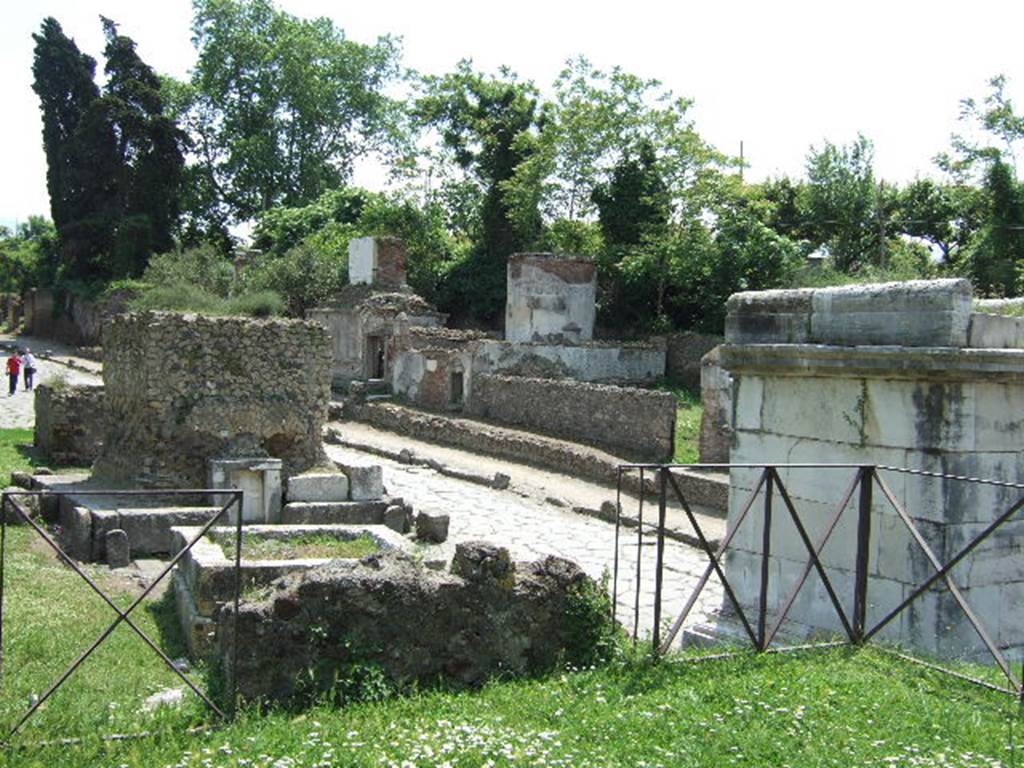
HGE37 Pompeii. May 2006. Looking south over HGE36, HGE35 and HGE34 with HGE37 to right.
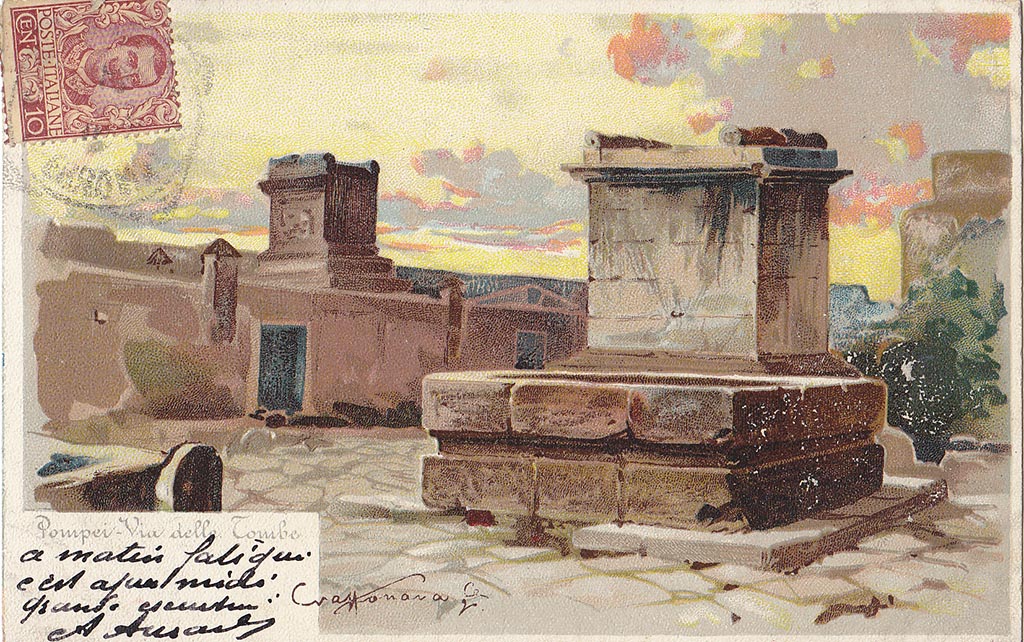
HGE37 Pompeii. Old postcard by Ragozino. HGE37 is seen behind HGE35. Photo courtesy of Drew Baker.
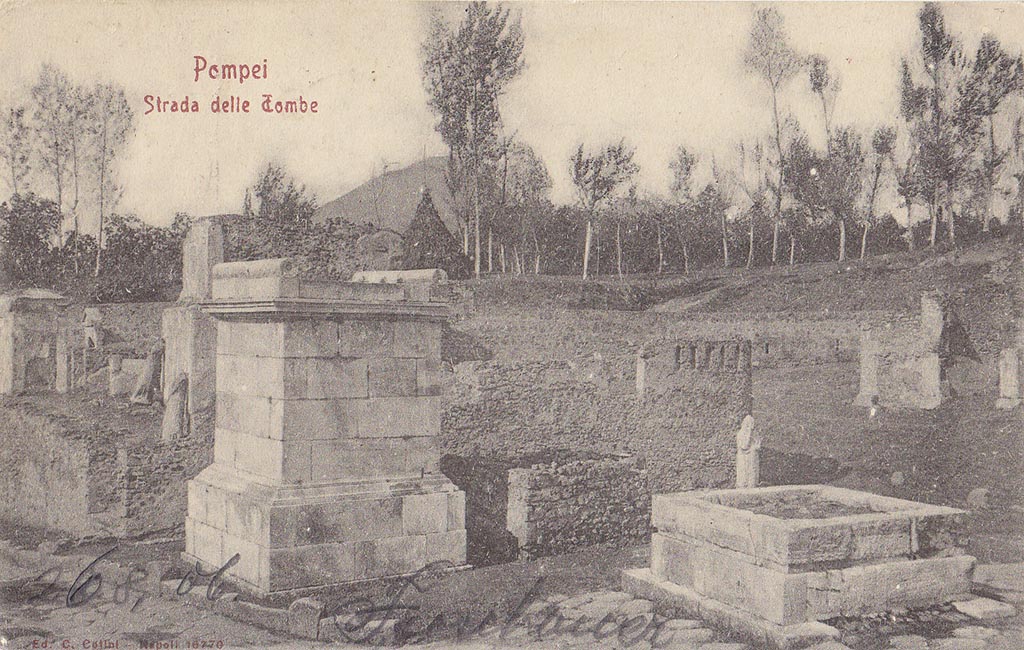
HGE37 Pompeii to left of HGE36 with HGE35 at front. Old postcard by Colini, c.1906.
Note the placing of the statues. Photo courtesy of Drew Baker.
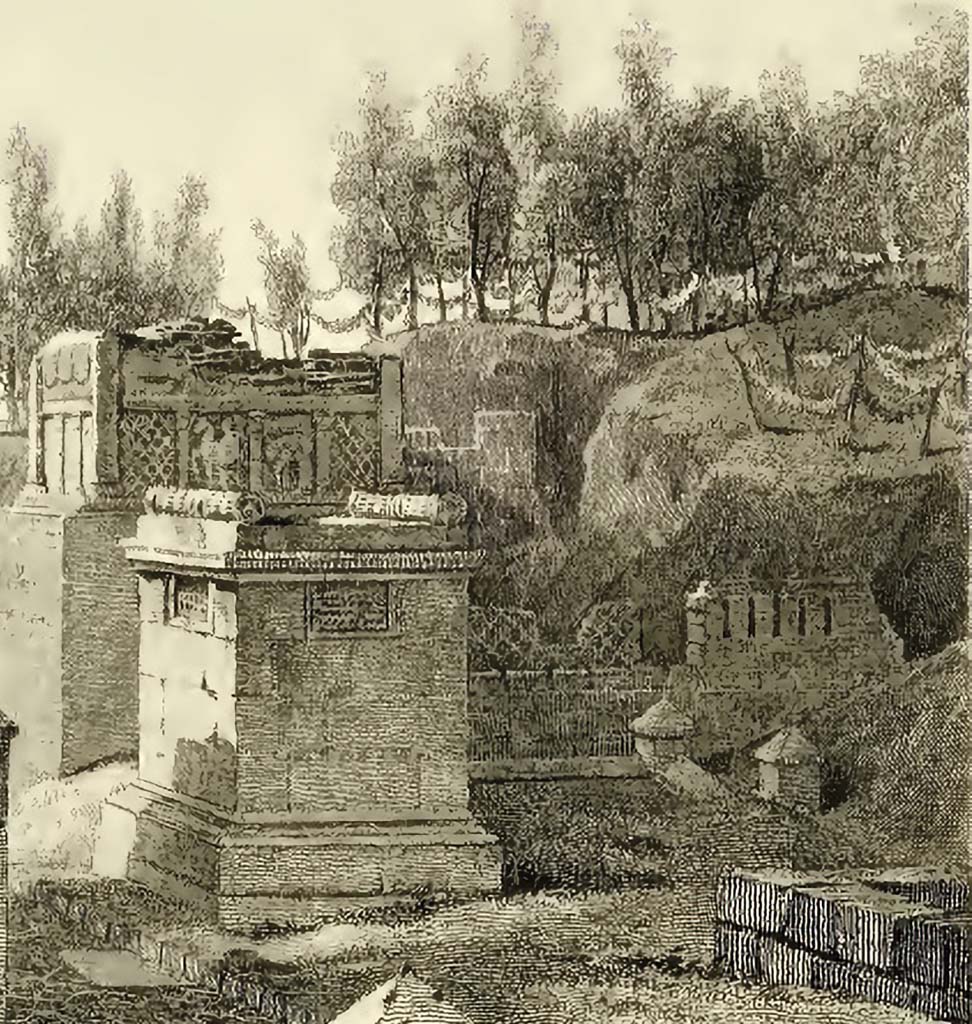
HGE37 Pompeii. 1824 drawing of HE37 (left) and HGE36 (right).
See Gell, W, and Gandy J. P., 1819. Pompeiana. London: Rodwell and Martin, (pl. 11).