HGE34 Pompeii. Herculaneum Gate East Side. Tomb with the marble door.
Tomb of
Lucius Caltilius L. L. Pamphilus and Servilia. Tomba con sotterraneo.
Excavated 1813-1814. (Eschebach East 34, Kockel Nord 34).
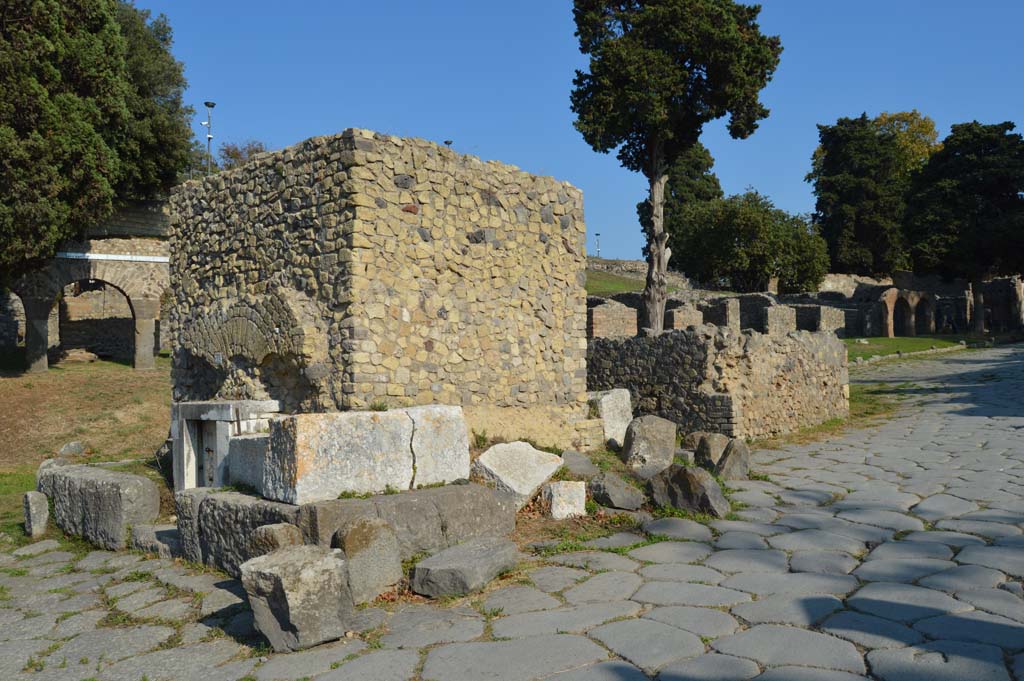
HGE34 Pompeii. October 2017. Looking towards the north, on left, and west side, in centre.
Foto Taylor Lauritsen, ERC
Grant 681269 DÉCOR.
![HGE34 Pompeii. May 2006. North and west sides.
According to Kockel, seven fragments of an inscription tablet were found in the street on 26th June 1813.
The inscription read:
L(ucius) Caltilius L(uci) l(ibertus)
Coll(ina tribu)
[P]amphilus
[---]ae uxori
[---]mo [CIL IV 1046]
See Kockel V., 1983. Die Grabbauten vor dem Herkulaner Tor in Pompeji. Mainz: von Zabern. (p.162-5).](tombs%20hge34_files/image003.jpg)
HGE34 Pompeii. May 2006. North and west sides.
According to Kockel, seven fragments of an inscription tablet were found in the street on 26th June 1813.
The inscription read:
L(ucius)
Caltilius L(uci) l(ibertus)
Coll(ina tribu)
[P]amphilus
[---]ae uxori
[---]mo [CIL IV 1046]
See Kockel V., 1983. Die Grabbauten vor dem Herkulaner Tor in Pompeji. Mainz: von Zabern. (p.162-5).
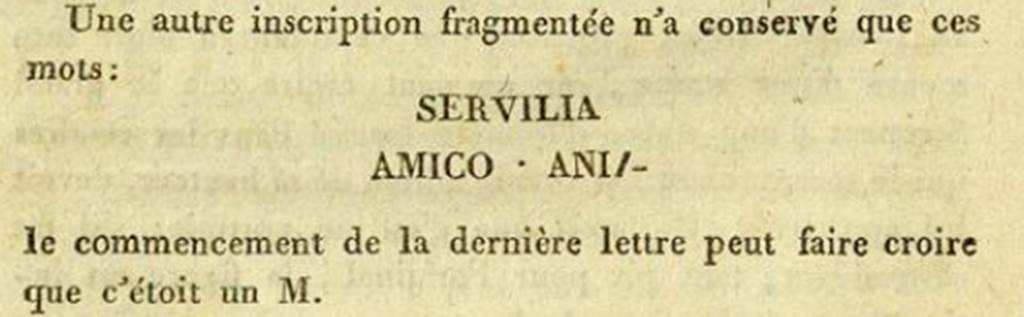
HGE34 Pompeii. 1813. De Clarac recorded a fragment of an inscription with the words SERVILIA AMICO ANIM.
See Clarac F. de, 1813. Fouille faite à Pompei en présence de S. M. la Reine des Deux Siciles, le 18 Mars 1813. (p. 44).
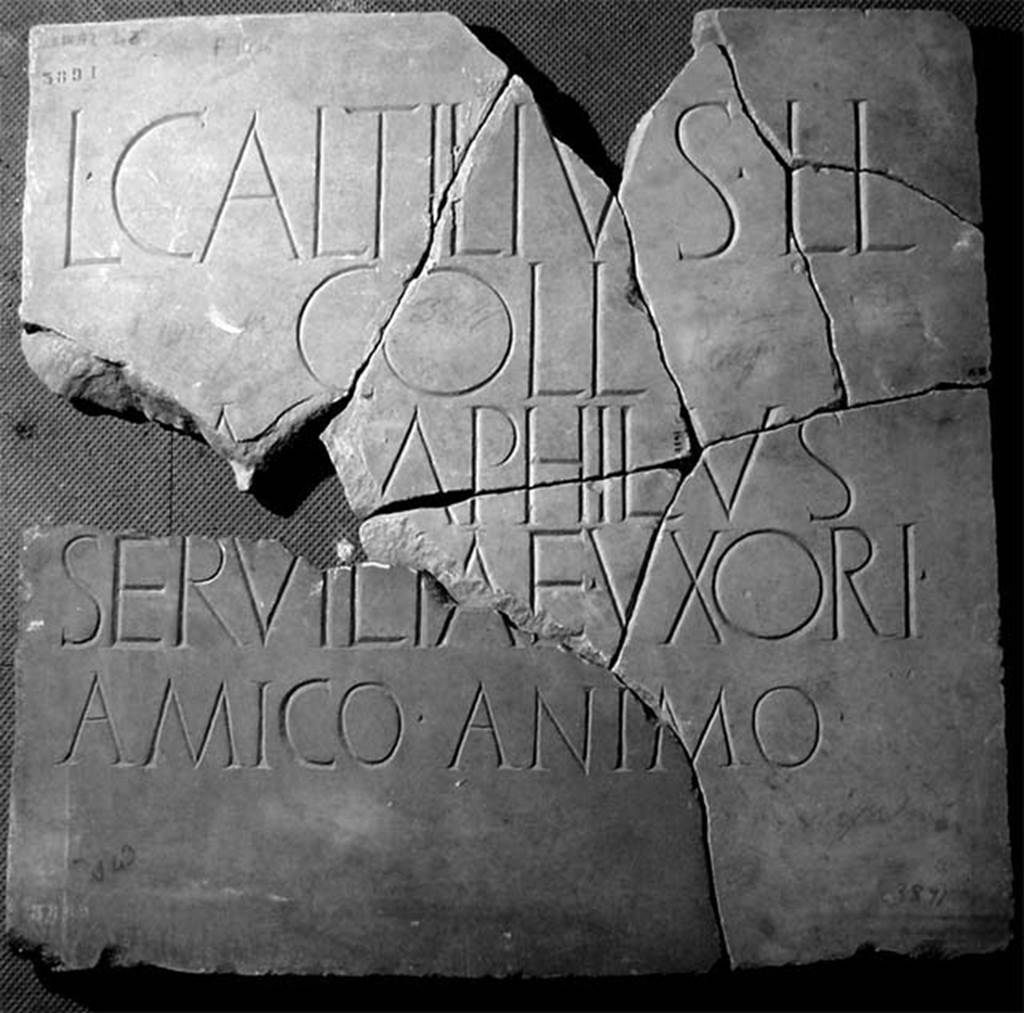
HGE34 Pompeii. Tablet reconstructed in February 2011.
In 2010 Dr Peter Kruschwitz and Virginia Campbell from the University of Reading, UK, identified the piece noted by Clarac (here shown bottom left) as being part of the HGE34 tomb tablet.
This added the name of Servilia, the wife of Lucius and the tablet now translates as
‘Lucius Caltilius Pamphilus, freedman of Lucius, member of the Collinian tribe, for his wife Servilia, in a loving spirit.'
The tablet is now in Naples Archaeological Museum.
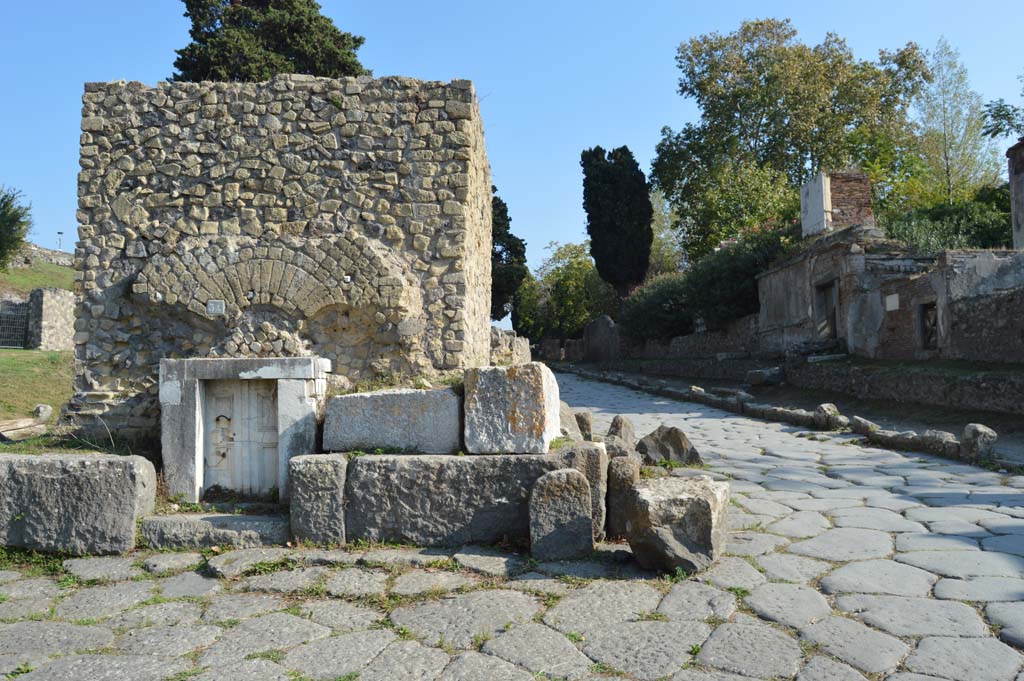
HGE34 Pompeii. October 2017. Looking towards north side of
tomb.
Foto Taylor Lauritsen, ERC Grant 681269 DÉCOR.
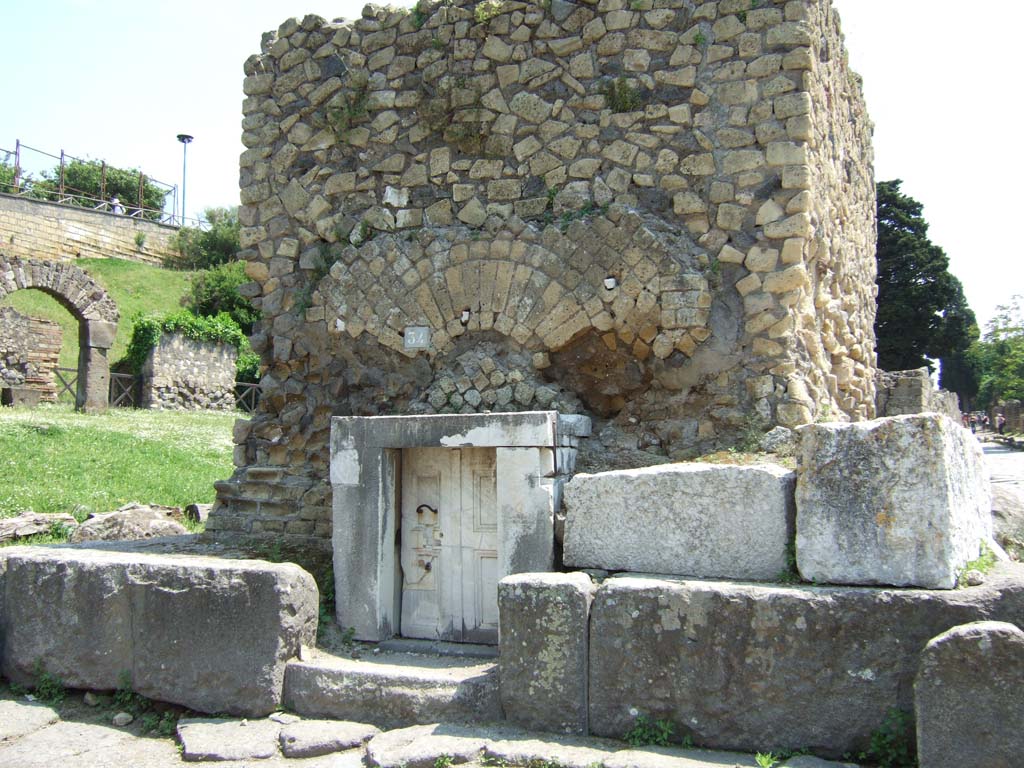
HGE34 Pompeii. May 2006. North side with marble door.
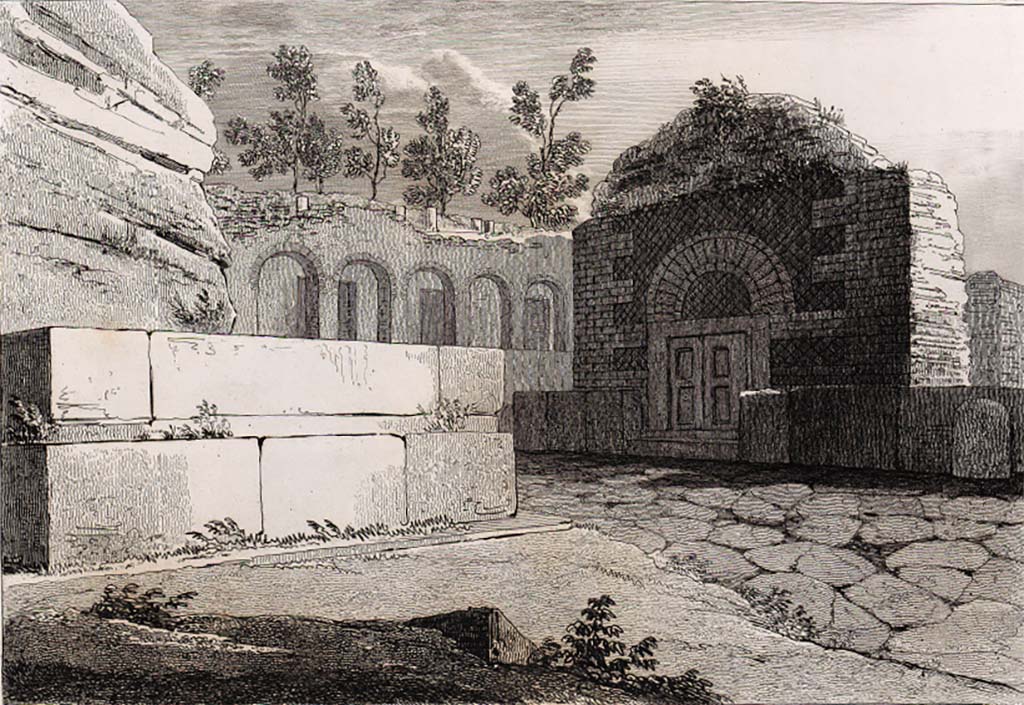
HGE34 Pompeii. 1817 engraving of north side with marble door.
See Cooke, Cockburn and Donaldson, 1827. Pompeii Illustrated: Vol. II. London: Cooke. (pl. 26).
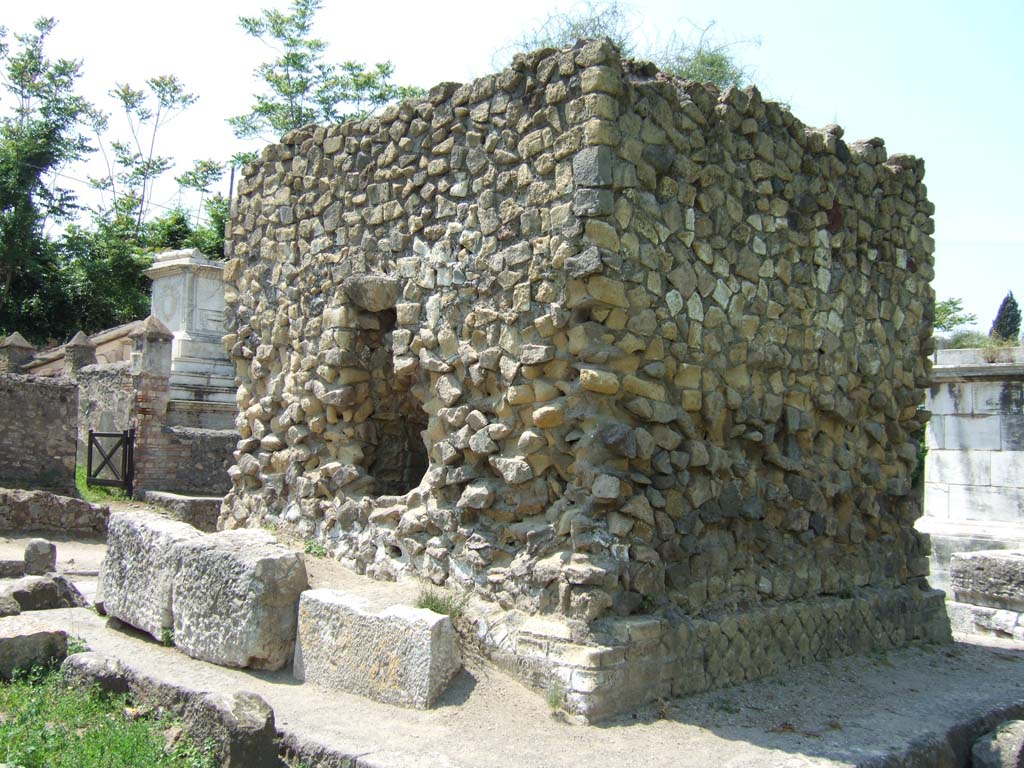
HGE34 Pompeii. May 2006. South side with window, and east side.
According to Garcia y Garcia, a bomb fell onto the roadway near to the tomb with the marble door.
This caused the partial disintegration of the bed of the road, with the breaking up and loss of five irregular blocks of the lava-stone.
See Garcia y
Garcia, L., 2006. Danni di guerra a Pompei. Rome: L’Erma di Bretschneider. (p.165)
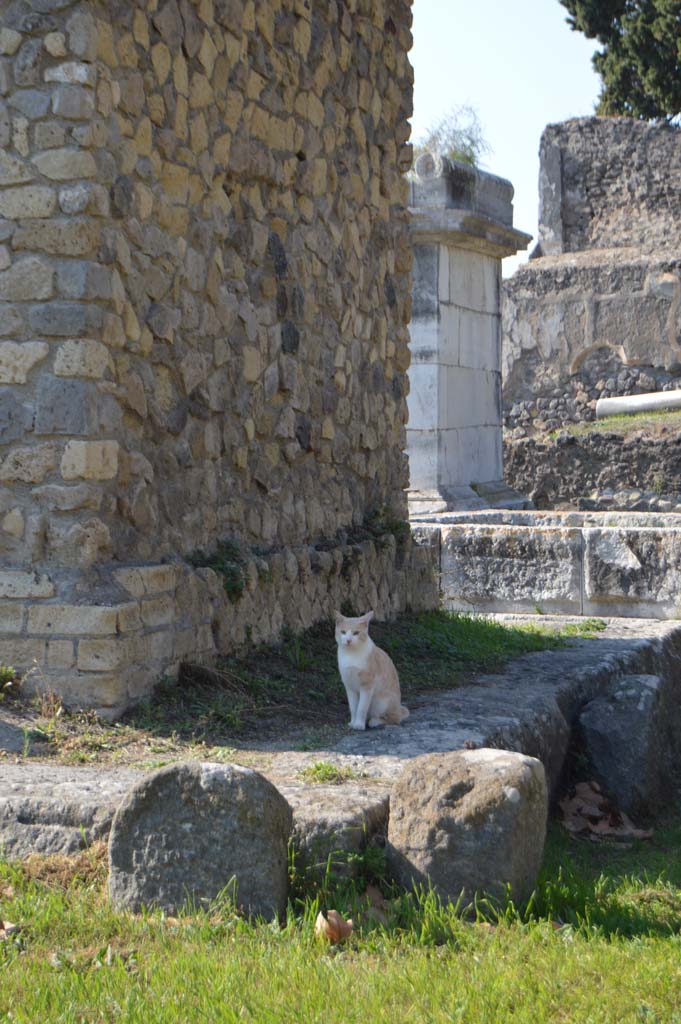
Looking north along east side of tomb, with a pretty interested bystander!!
Foto Taylor Lauritsen, ERC
Grant 681269 DÉCOR.
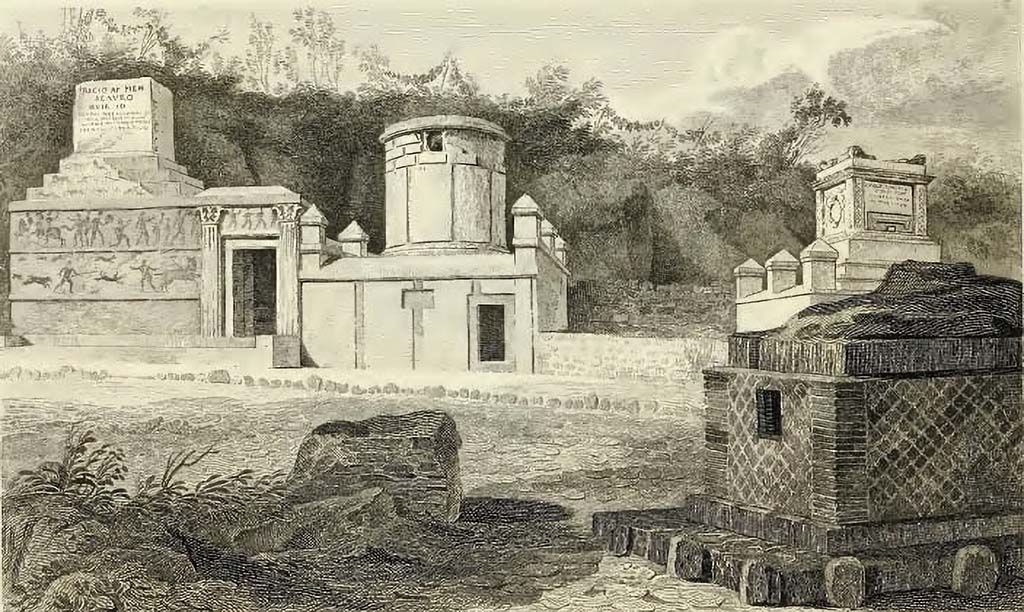
HGE34 Pompeii. 1819 drawing of view looking west with HGE34 on the right.
See Gell, W, and Gandy J. P., 1819. Pompeiana. London: Rodwell and Martin. (pl. 7).
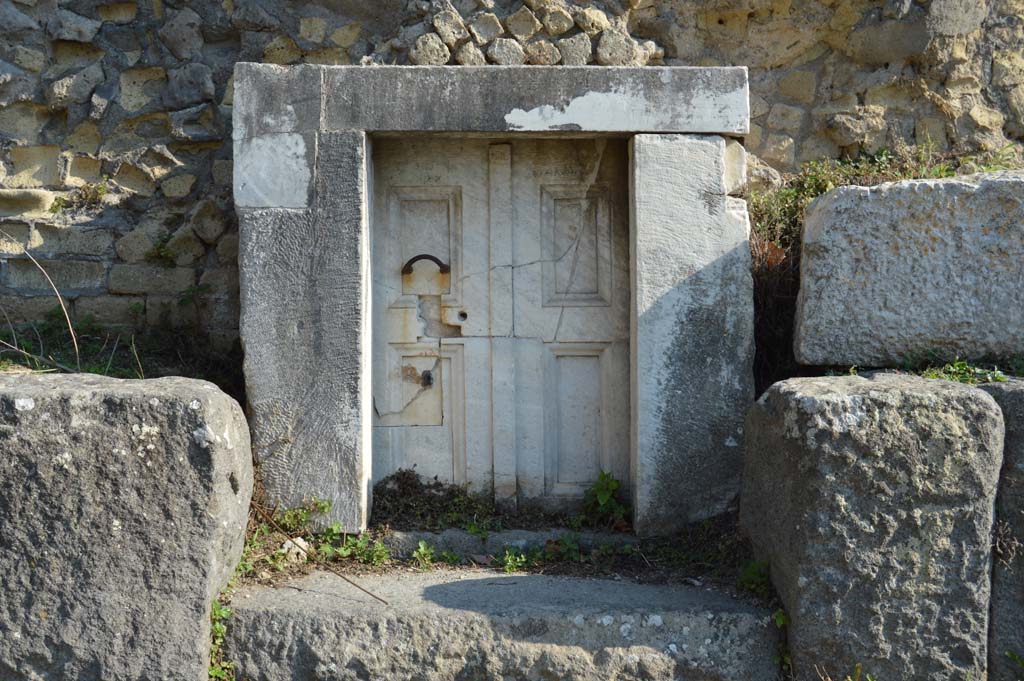
HGE34 Pompeii.
October 2017. North side of tomb with marble door.
Foto
Taylor Lauritsen, ERC Grant 681269 DÉCOR.
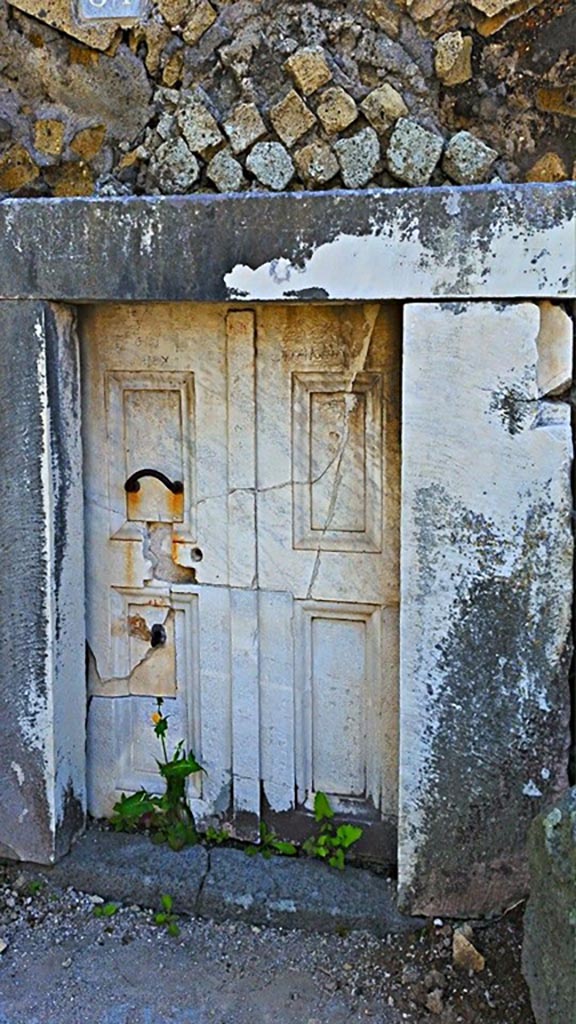
HGE34 Pompeii. 2015/2016.
Marble door on north
side of tomb. Photo courtesy of Giuseppe
Ciaramella.
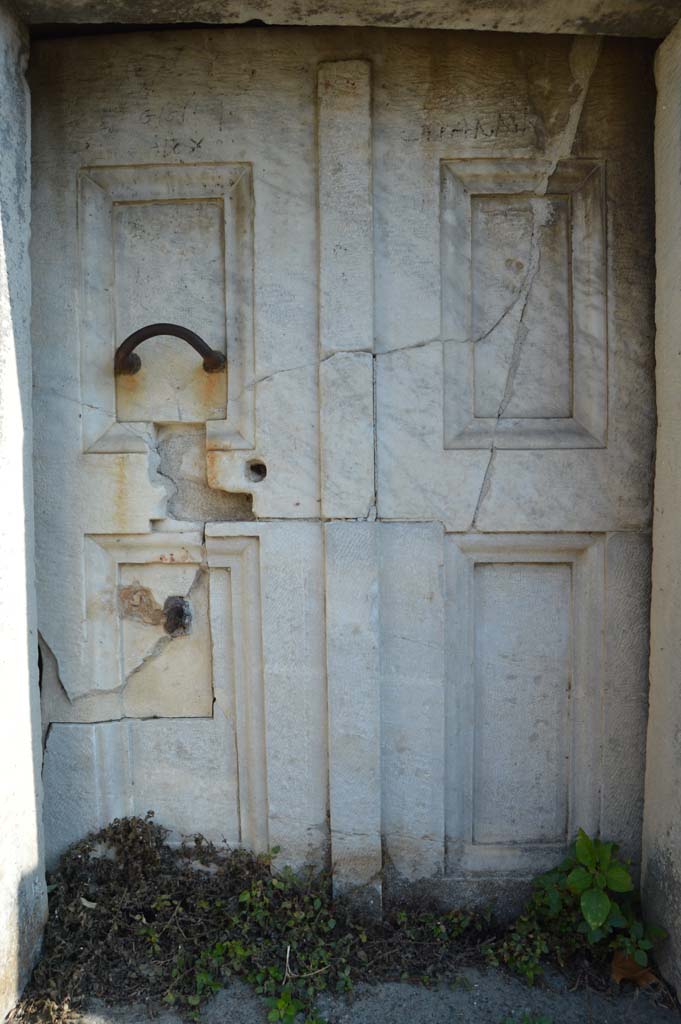
HGE34 Pompeii.
October 2017. Marble door on north side of tomb.
Foto
Taylor Lauritsen, ERC Grant 681269 DÉCOR.
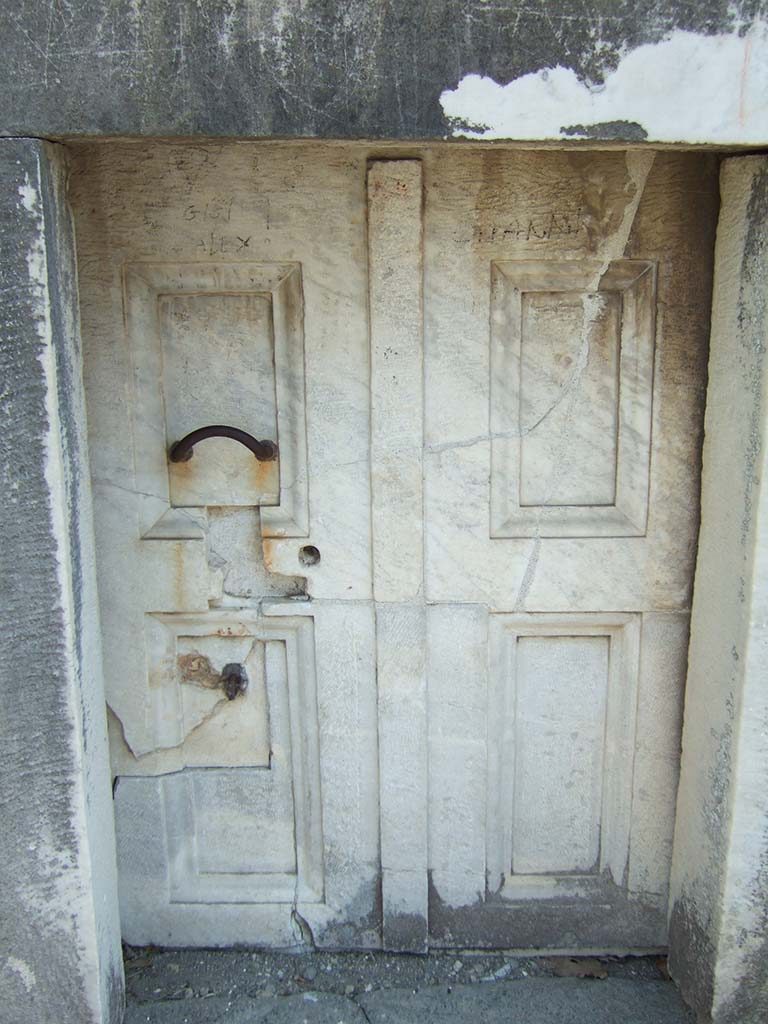
HGE34 Pompeii. May 2006. Restored marble door on north side.
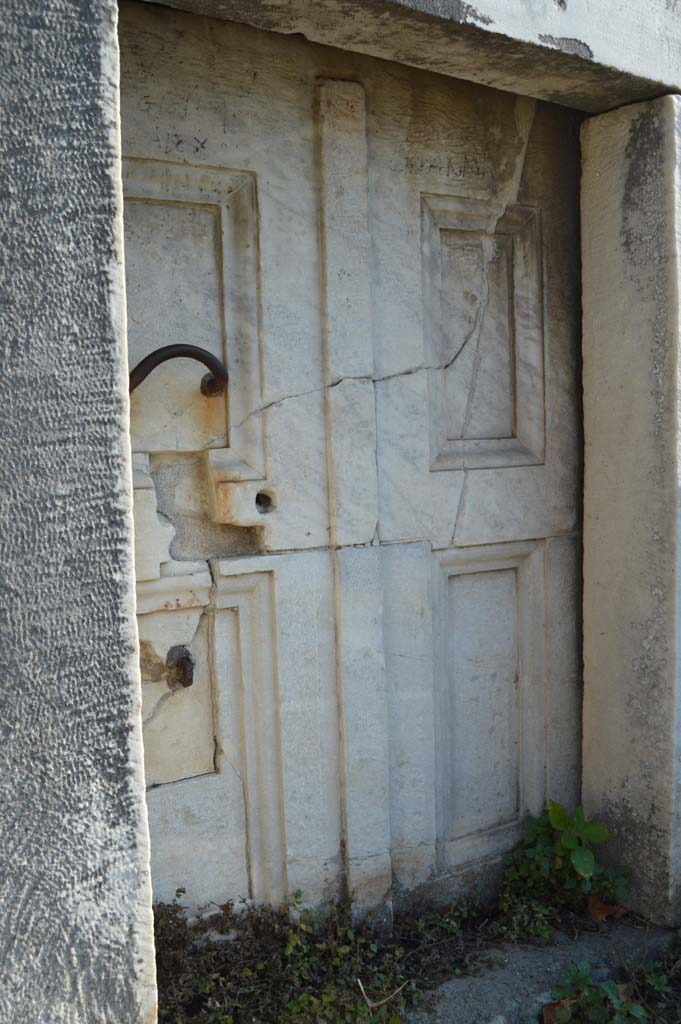
HGE34 Pompeii. October 2017. Detail of west side of doorway and door surround.
Foto Taylor Lauritsen, ERC
Grant 681269 DÉCOR.
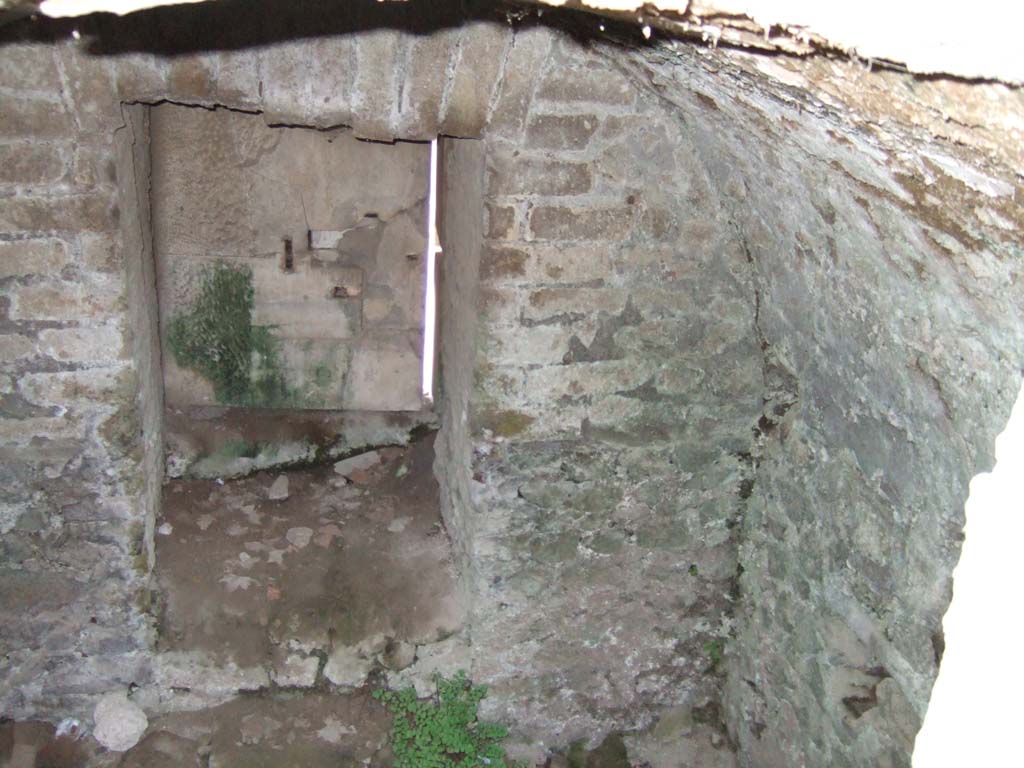
HGE34 Pompeii. May 2006. Looking north inside tomb towards marble door.
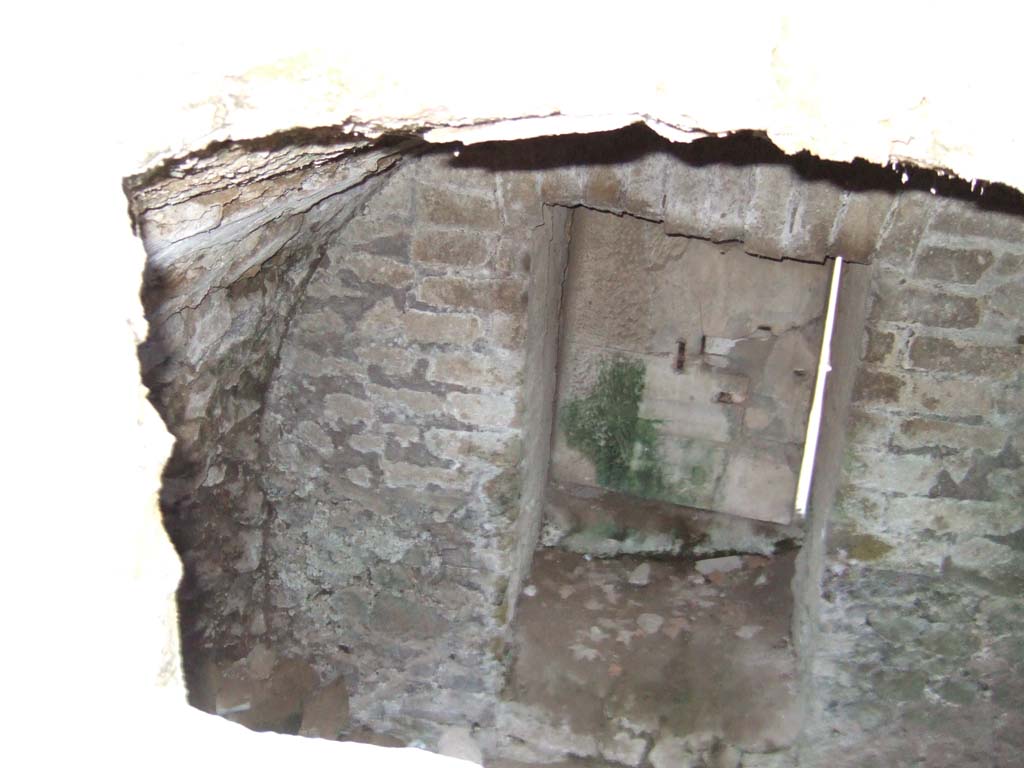
HGE34 Pompeii. May 2006. Interior north wall.
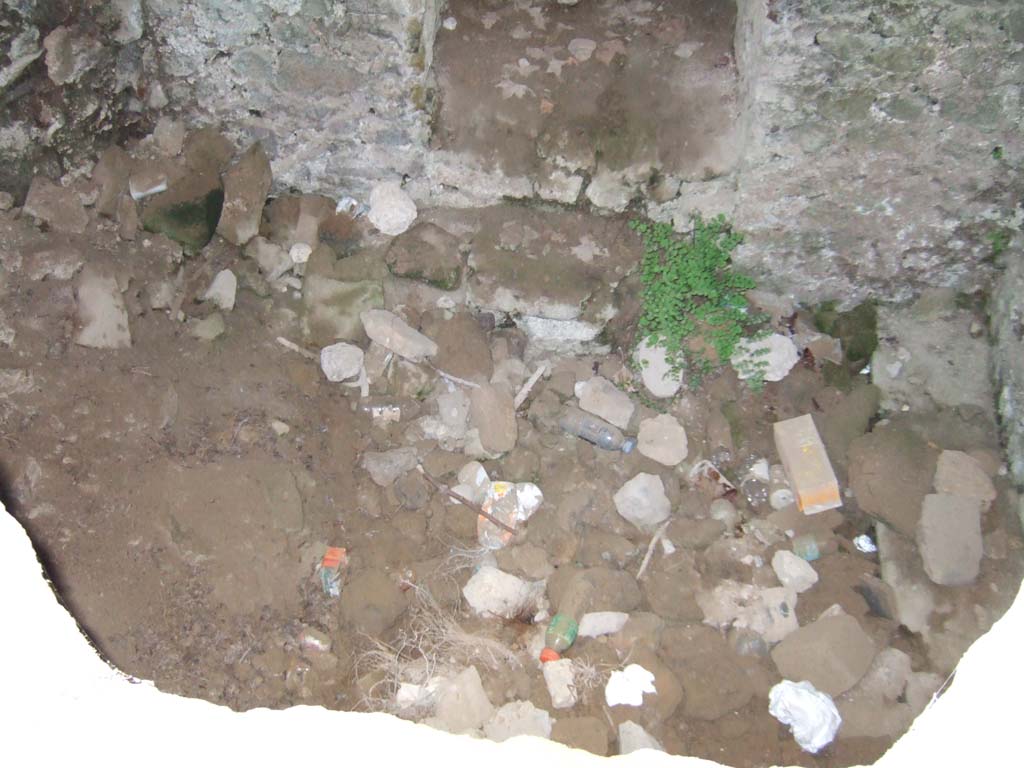
HGE34 Pompeii. May 2006. Floor of tomb.
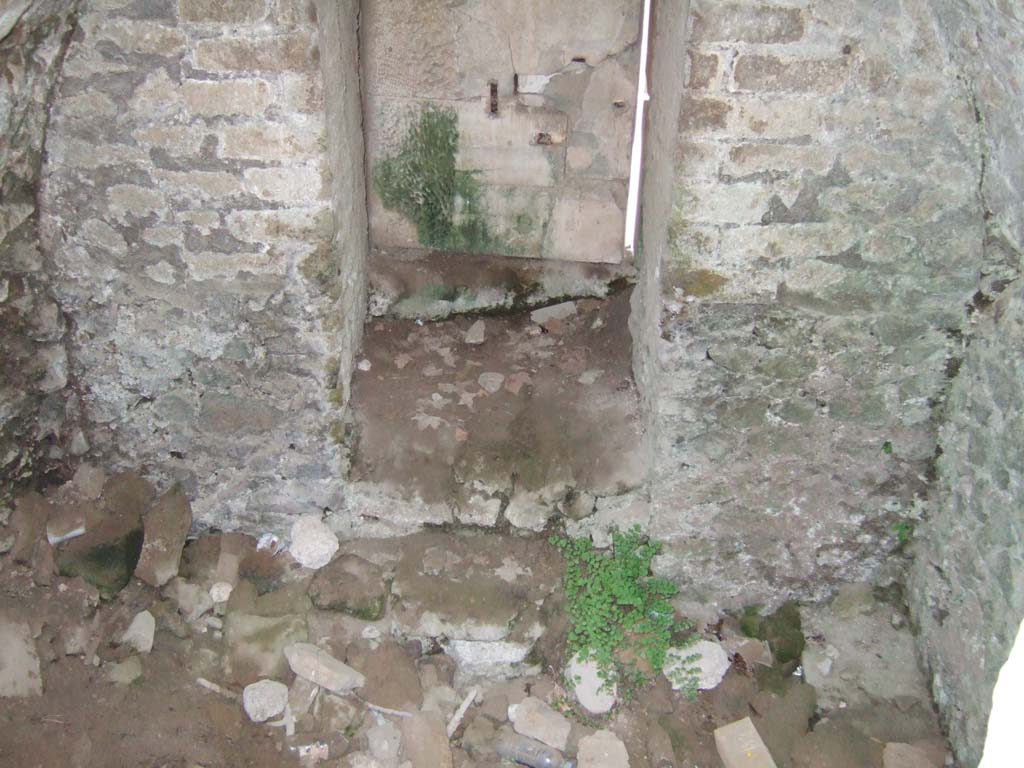
HGE34 Pompeii. May 2006. Steps into tomb behind marble door.
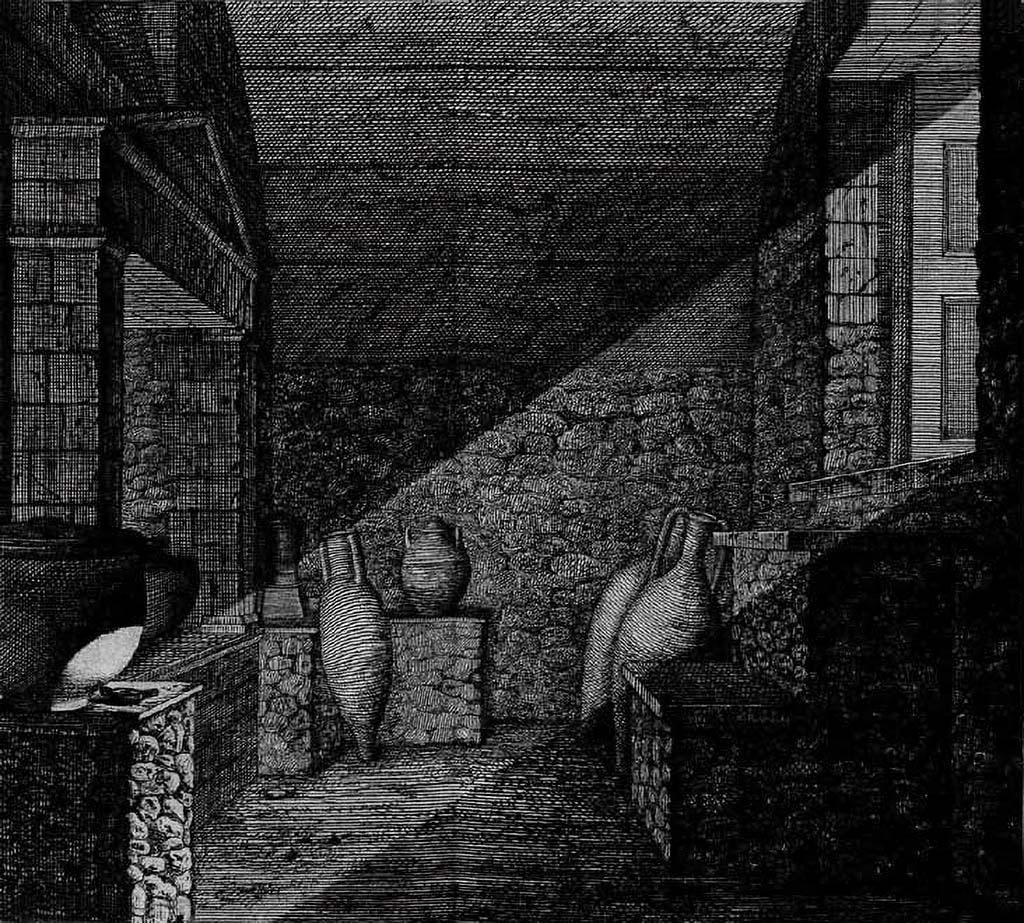
HGE34 Pompeii. 1813 drawing by de Clarac of the interior of the tomb.
This shows the aedicula and side benches opposite the entrance and the location of finds.
See Clarac F. de, 1813. Fouille faite à Pompei en présence de S. M. la Reine des Deux Siciles, le 18 Mars 1813. (Ta. 9)
Kockel recorded the finds in the tomb as --
The marble door, two marble door posts, which were found inside the tomb and restored in place in 1814.
One alabaster urn, one marble and two glass urns,
Two amphorae,
Eight glass cremation jars,
A terracotta altar, three terracotta jugs,
An agate/sapphire set in a gold ring, and with a deer cut in the centre.
See Kockel V., 1983. Die Grabbauten vor dem Herkulaner Tor in Pompeji. Mainz: von Zabern. (p. 162-163)
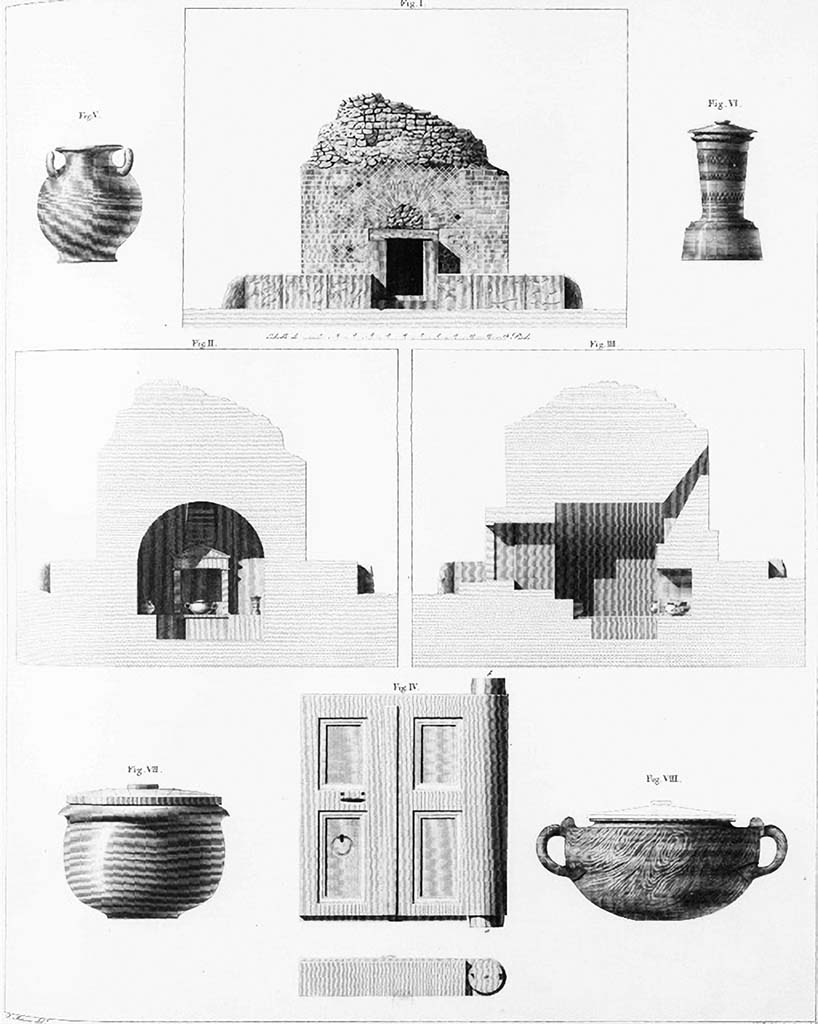
HGE34 Pompeii. 1824 drawing by Mazois of tomb contents and cross sections.
First row: Glass urn found on bench running around sides; View of front of tomb;
Terracotta altar with cylindrical double-conical body with ornamentation, found close to the alcove.
Second row: Cross section showing aedicula opposite the entrance, bench and location of some objects; Cross section of inner chamber.
Third row: Marble urn found top left of entrance; Marble door (and profile); Alabaster urn found in aedicula opposite the entrance.
See Mazois, F., 1824. Les Ruines de Pompei: Premiere Partie. Paris: Didot Freres. (pl. 19).
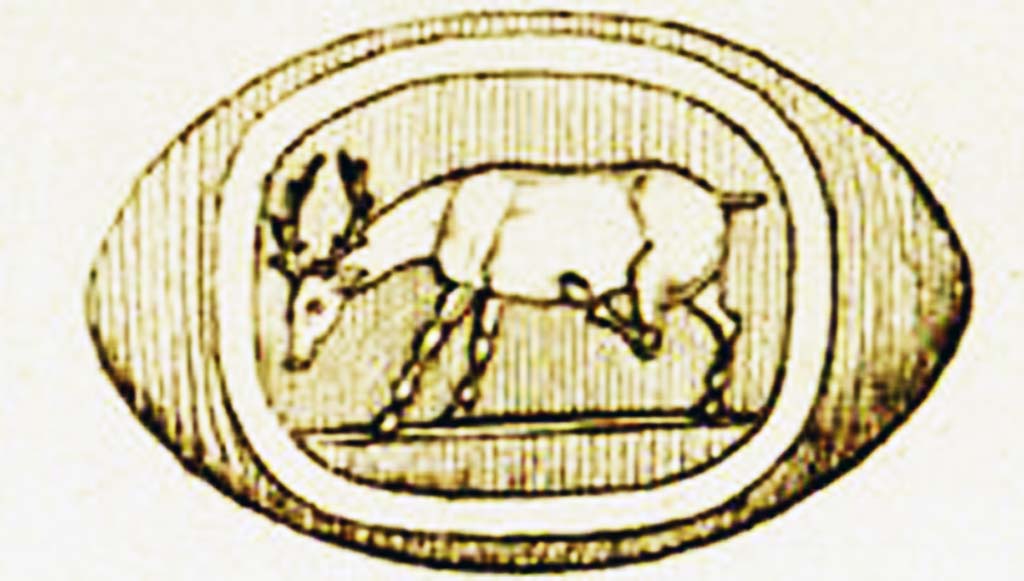
HGE34 Pompeii. 1813 drawing of agate and sapphire ring found in an alabaster urn in the tomb.
See Clarac F. de, 1813. Fouille faite à Pompei en présence de S. M. la Reine des Deux Siciles, le 18 Mars 1813. (pl. 6 no. 28).