HGE09 Pompeii. Herculaneum Gate East Side.
Tomb or cenotaph of an unknown person or a public seat.
Excavated 1811-2. (Eschebach East 9, Kockel Nord 9).
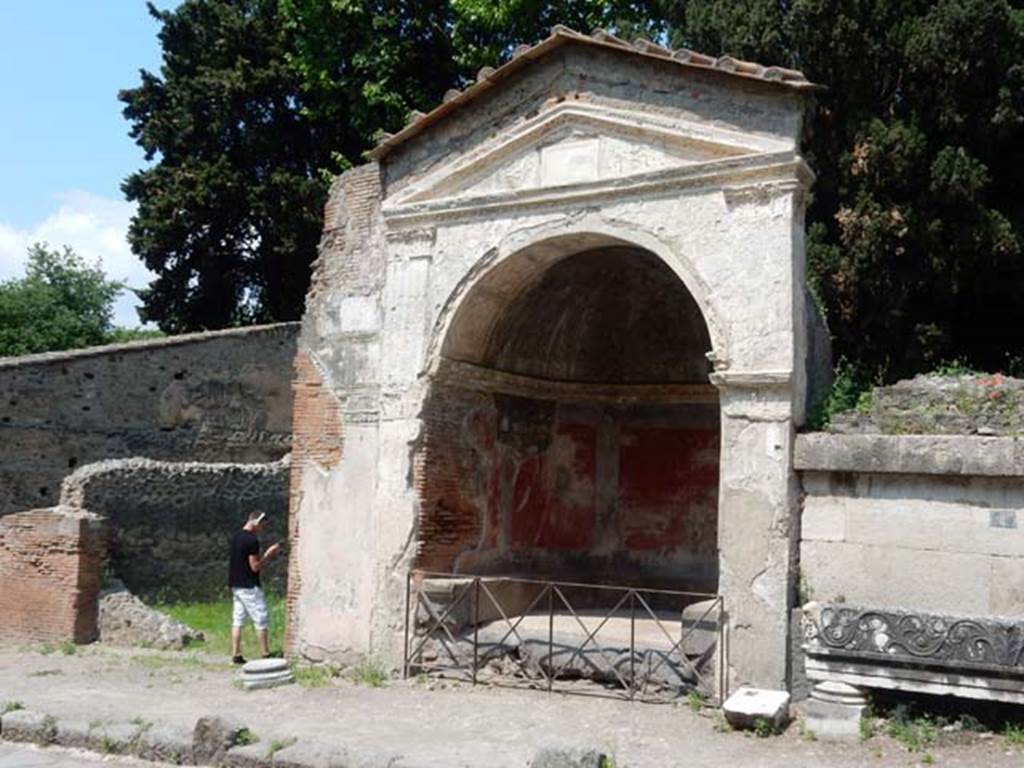
HGE09 Pompeii. May 2015. Looking towards tomb on east side of Via dei Sepolcri. Photo courtesy of Buzz Ferebee.
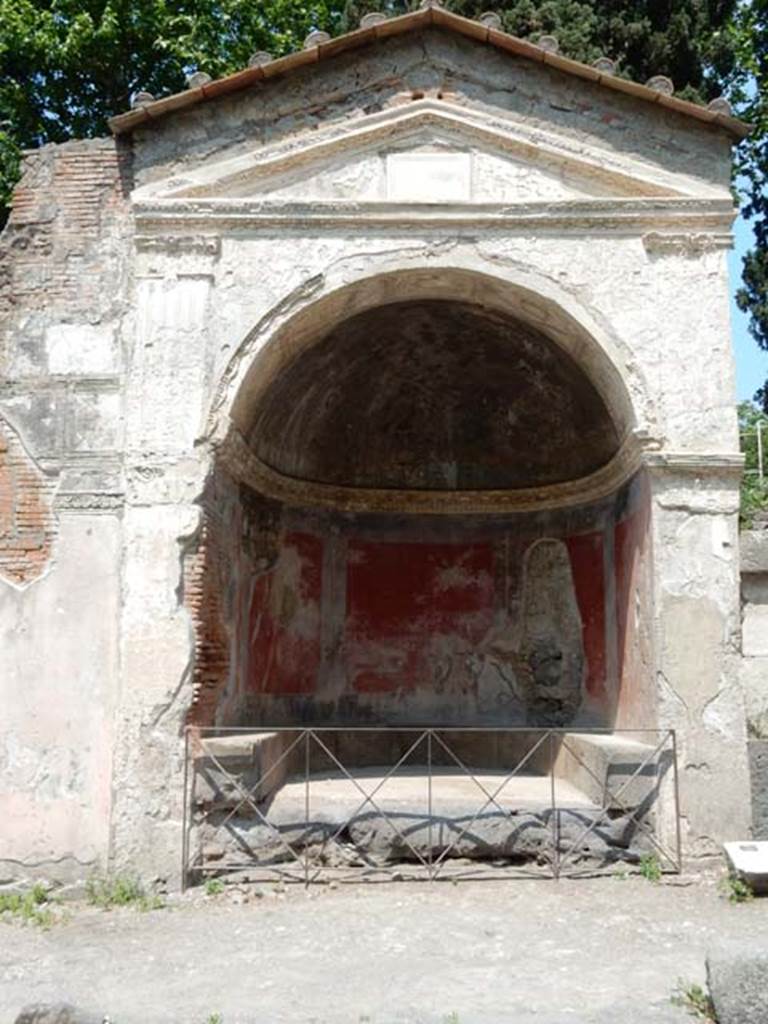
HGE09 Pompeii. May 2015. Looking east to tomb. Photo courtesy of Buzz Ferebee.
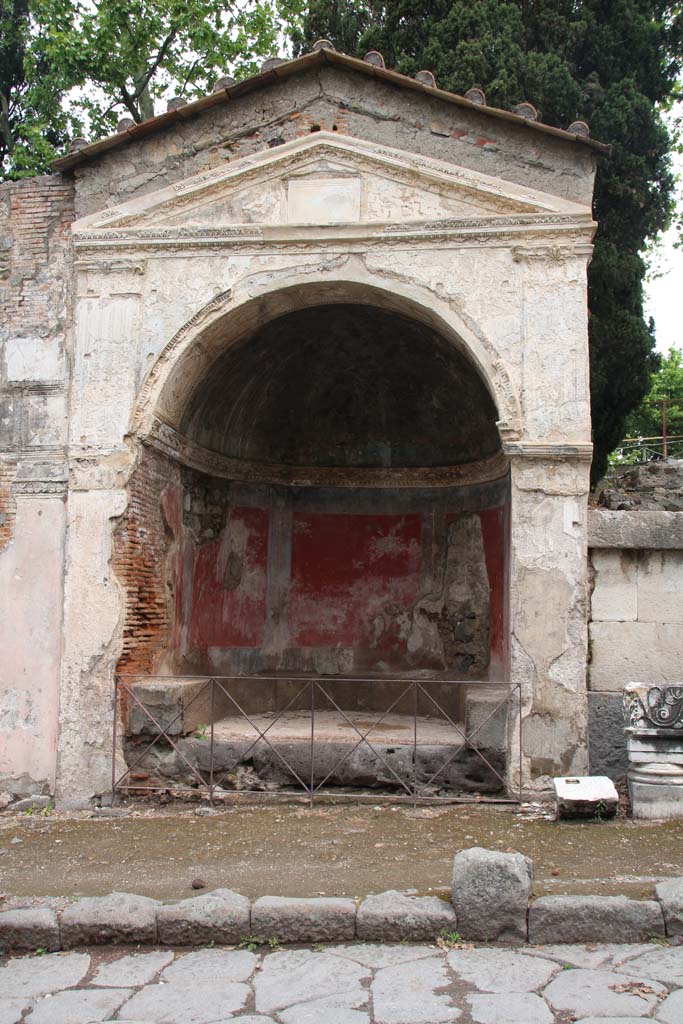
HGE09 Pompeii. April 2014. Looking towards tomb on east side of Via dei Sepolcri.
Photo courtesy of Klaus Heese.
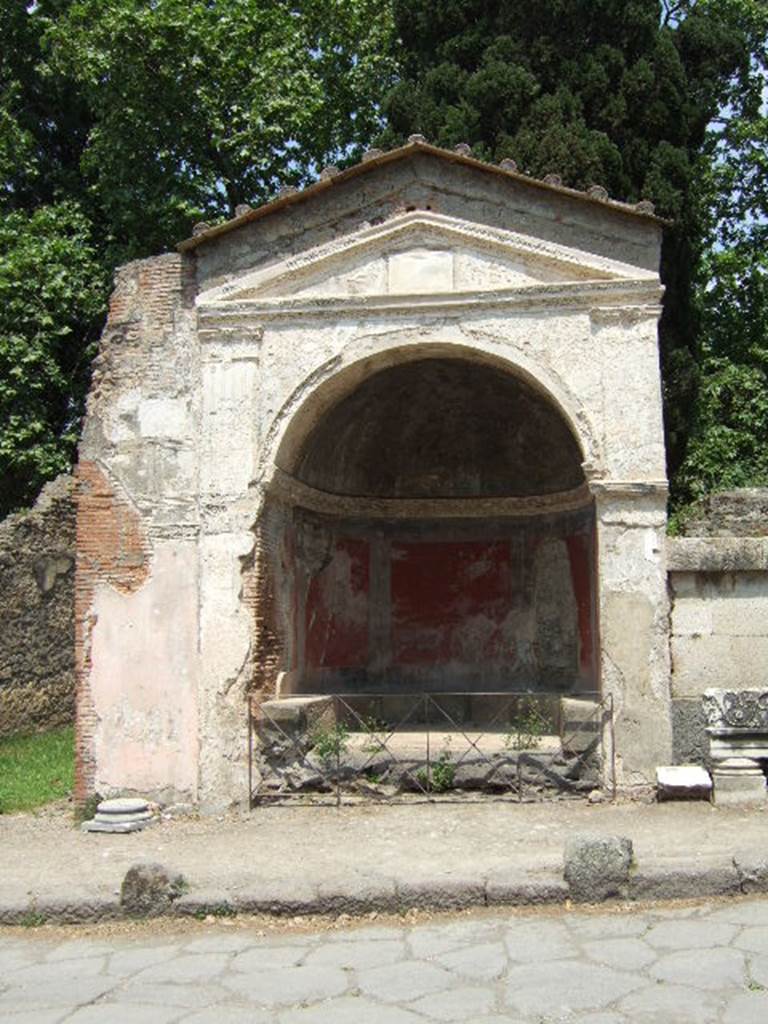
HGE09 Pompeii. May 2006. The tomb is a half round niche under an aedicula facade.
It contains a seat and there is no obvious place for a burial and there are no finds.
According to Kockel it is either:
A public seat built by a rich person.
A Cenotaph with no provision for a burial.
A burial place with the urn as yet to be found under the seat.
The context in which it stands leads him to favour it being a cenotaph or burial place.
See Kockel V., 1983. Die Grabbauten vor dem Herkulaner Tor in Pompeji. Mainz: von Zabern. (p. 161).
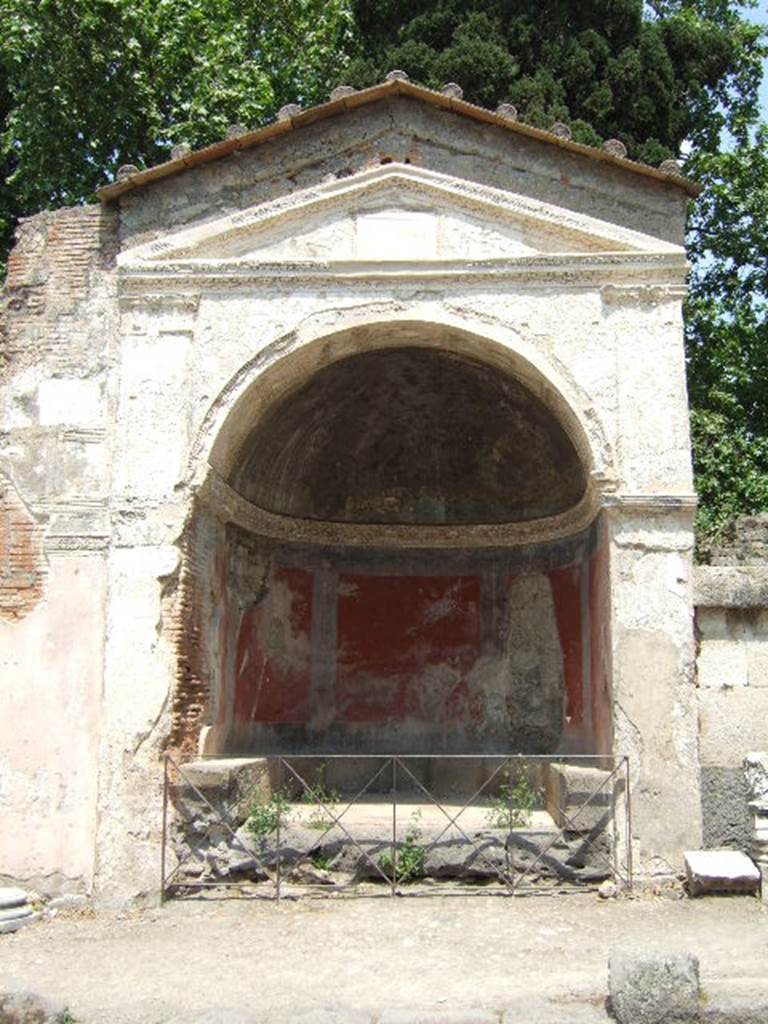
HGE09 Pompeii. May 2006.
At the base of the tomb is a public seat. The area above is painted red and stuccoed.
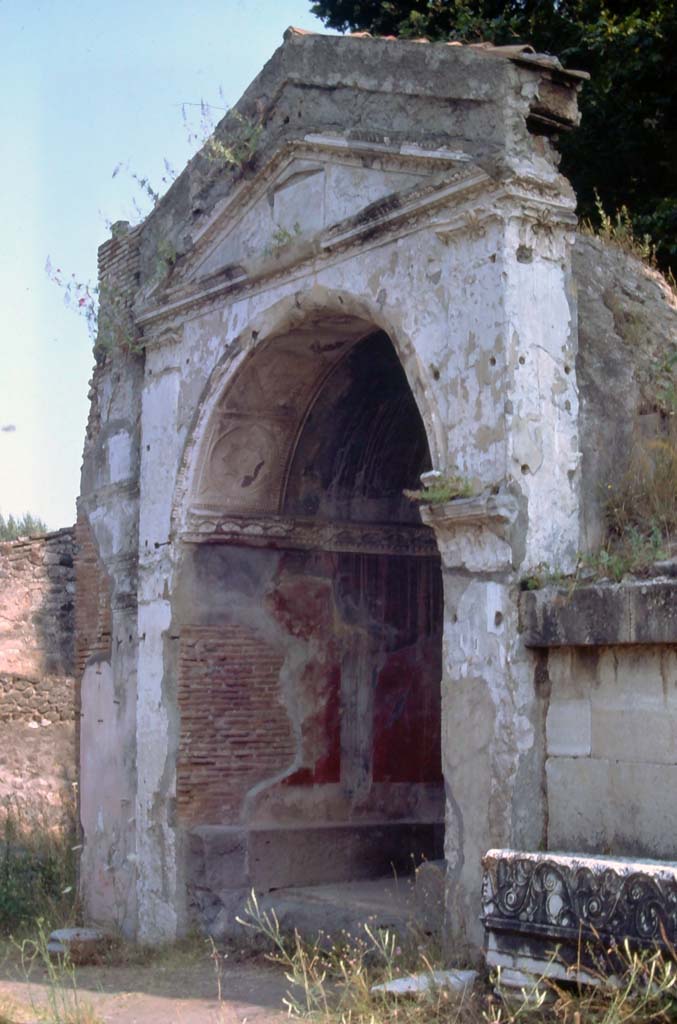
HGE09 Pompeii. 8th August 1976. Looking towards tomb on
east side of Via dei Sepolcri.
Photo courtesy of Rick Bauer, from Dr George Fay’s slides
collection.
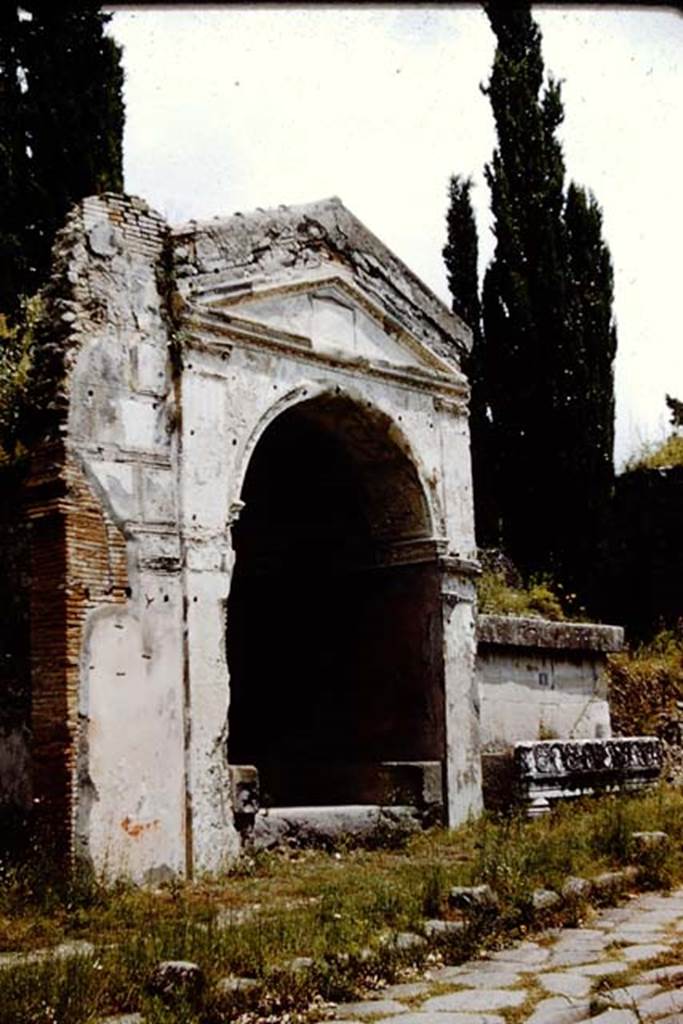
HGE09 Pompeii. 1961.
Looking south-east to tomb, on left, with HGE08 on right. Photo by Stanley A. Jashemski.
Source: The Wilhelmina and Stanley A. Jashemski archive in the University of Maryland Library, Special Collections (See collection page) and made available under the Creative Commons Attribution-Non-Commercial License v.4. See Licence and use details.
J61f0619
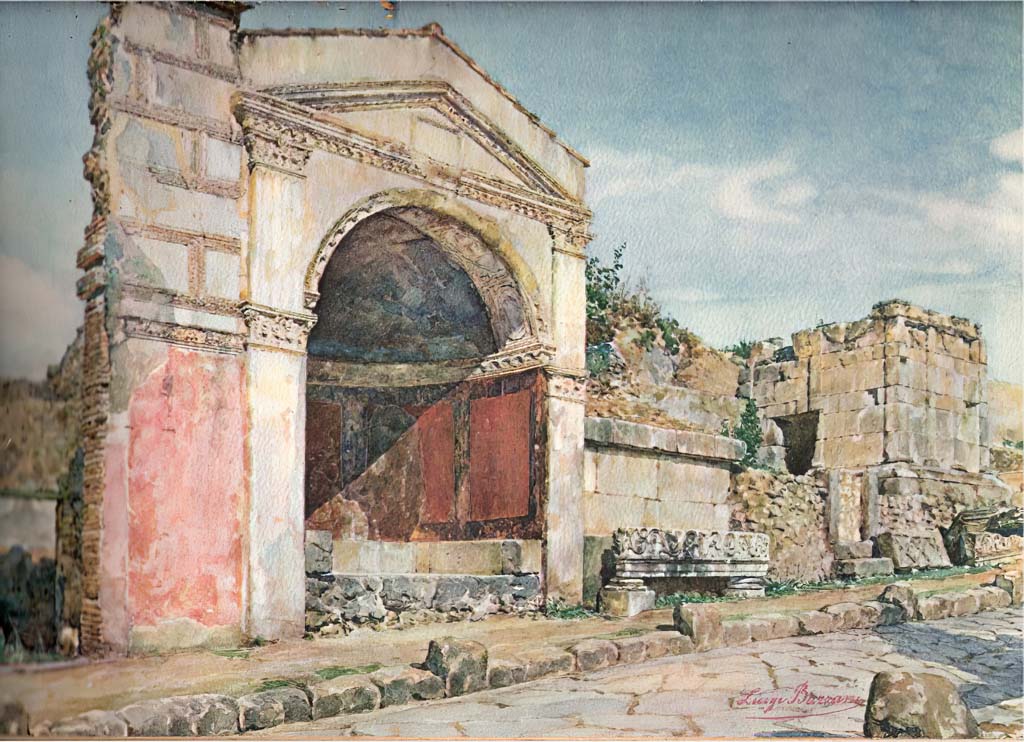
HGE09 Pompeii. Undated watercolour by Luigi Bazzani.
Looking south-east from Via dei Sepolcri towards HGE10, on left, HGE09, in centre, and HGE08, HGE07 and HGE06, on right.
Now in Naples Archaeological Museum, inventory number 139443.
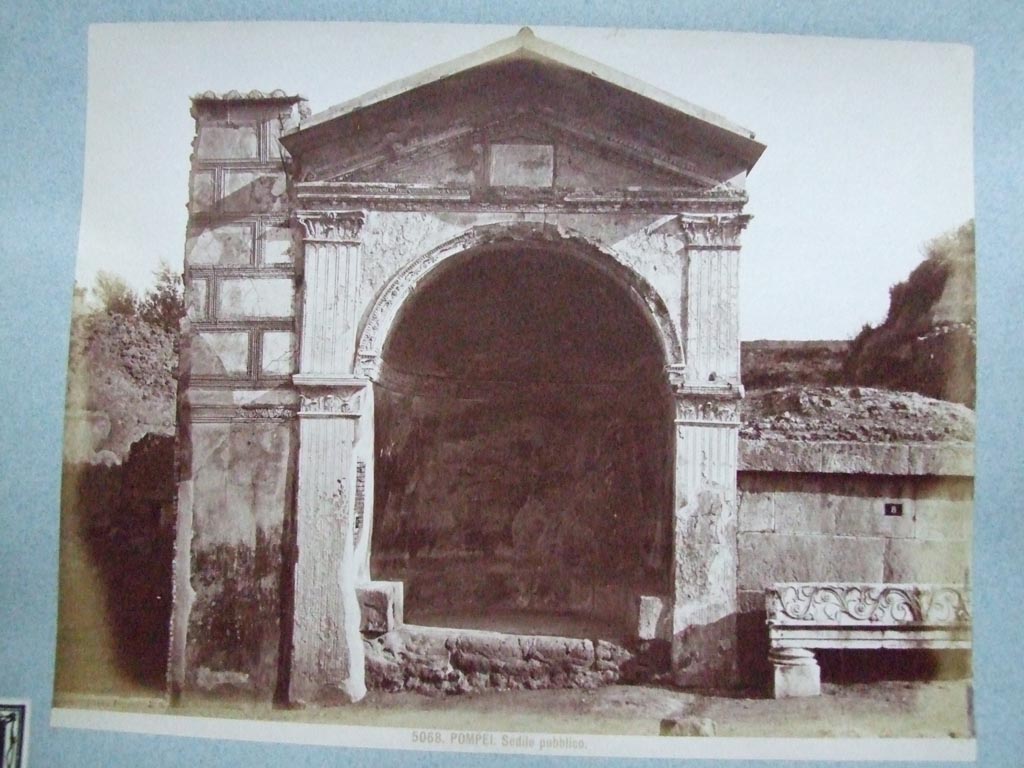
HGE09 Pompeii. 19th century photograph of tomb to left with HGE08 to right.
Old undated photograph courtesy of the Society of Antiquaries, Fox Collection.
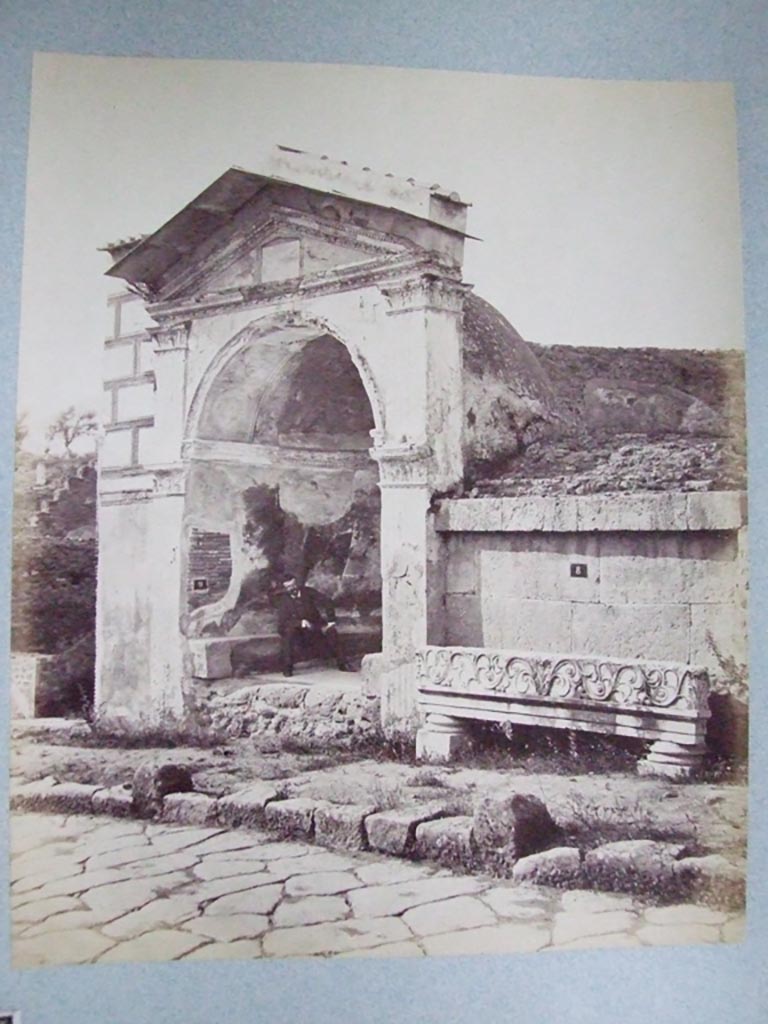
HGE09 Pompeii. Tomb to left with HGE08 to right.
Old undated photograph courtesy of the Society of Antiquaries, Fox Collection.
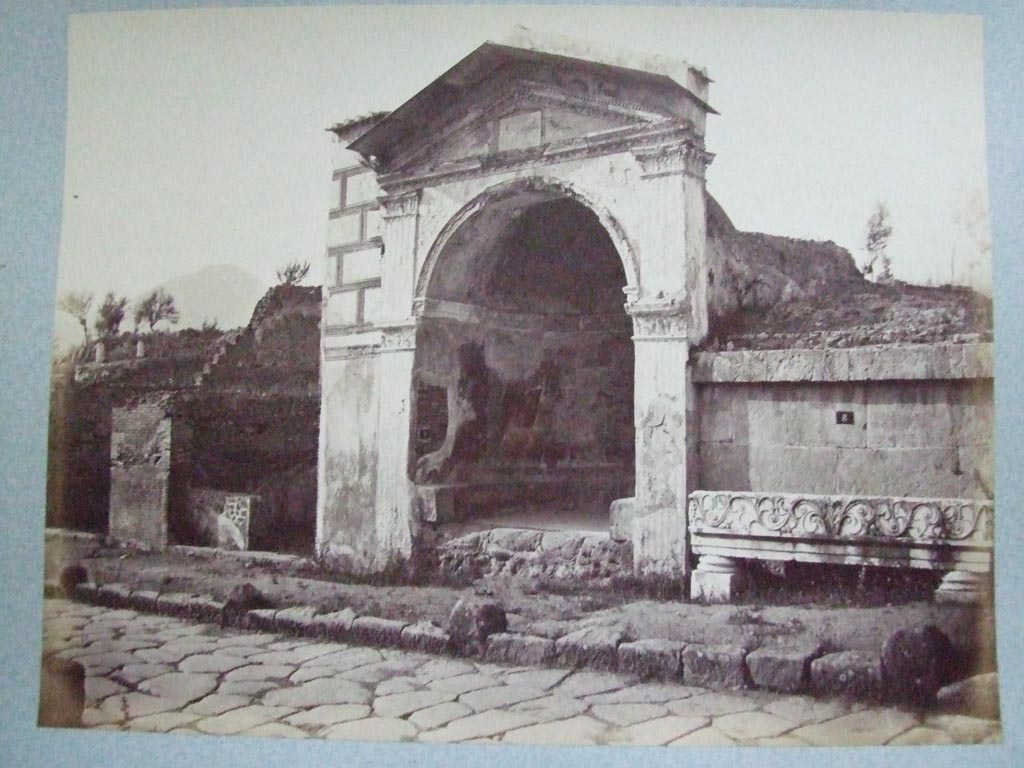
HGE09 Pompeii. Tomb and seat centre with HGE10 left and HGE08 right.
Old undated photograph courtesy of the Society of Antiquaries, Fox Collection.
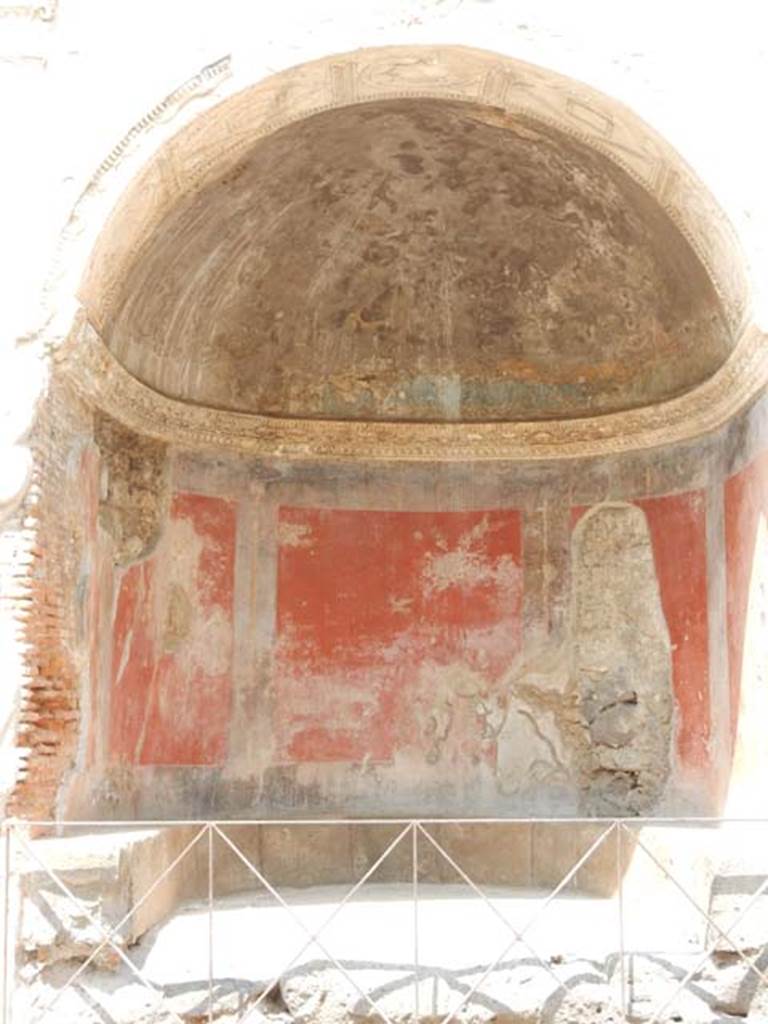
HGE09 Pompeii. May 2015. Detail of stucco and painted walls. Photo courtesy of Buzz Ferebee.
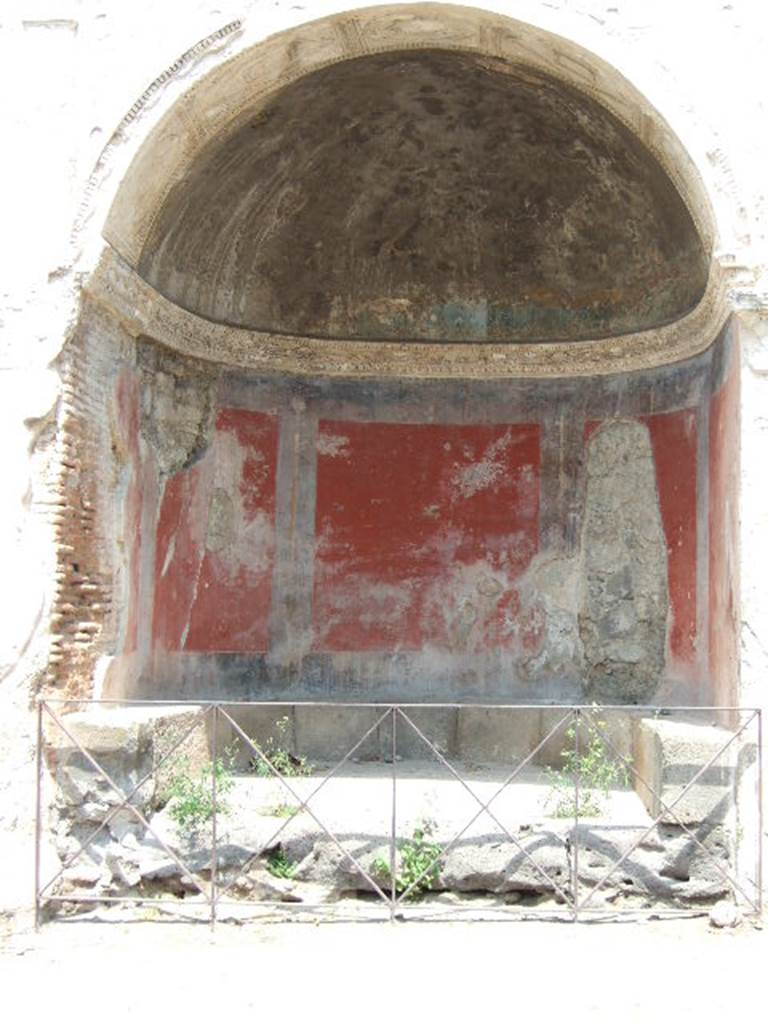
HGE09 Pompeii. May 2006. Inside the niche of the tomb with the seat, stuccowork and red painted walls.
According to Mau the curved ceiling was covered in stucco (now fallen) moulded in the form of a shell.
See Mau, A., 1907, translated by Kelsey F. W. Pompeii: Its Life and Art. New York: Macmillan. (p. 417).
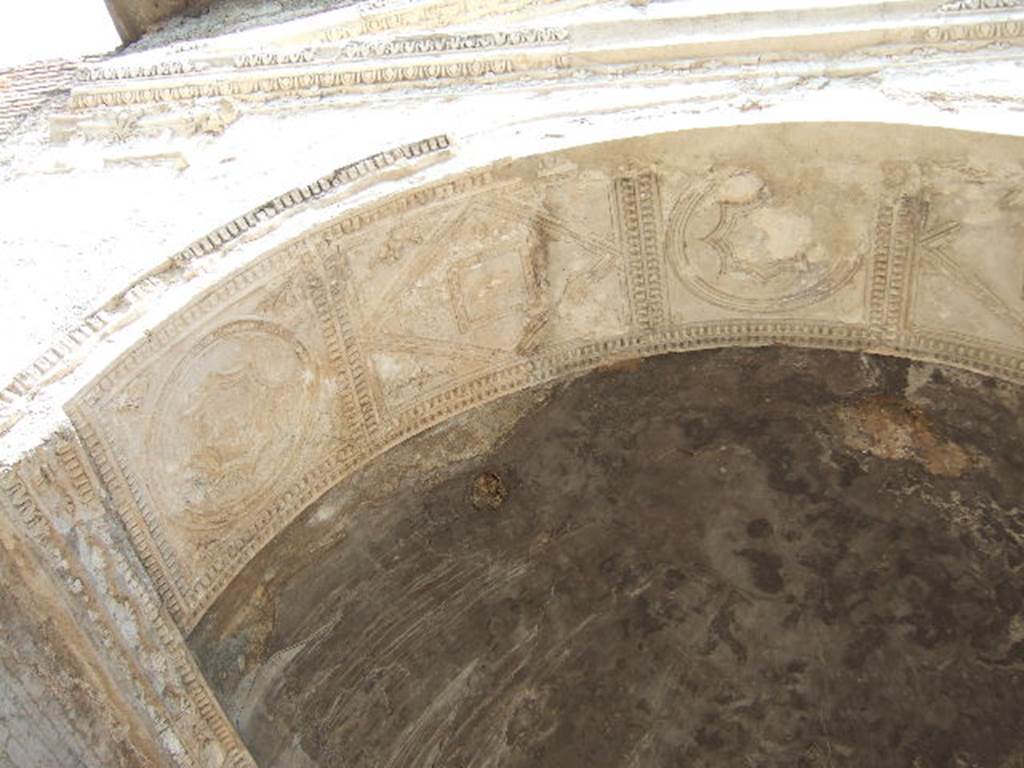
HGE09 Pompeii. May 2006. Curved roof of front with stucco decoration on left side.
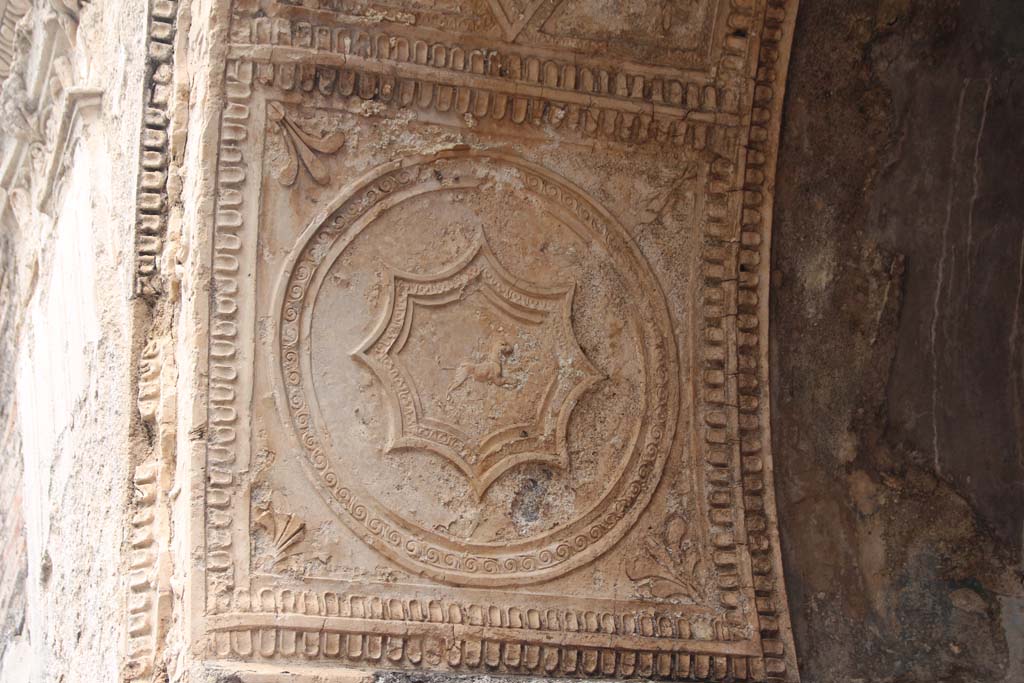
HGE09 Pompeii. April 2014. Detail of
stucco ornament on left side of curved ceiling. Photo courtesy of
Klaus Heese.
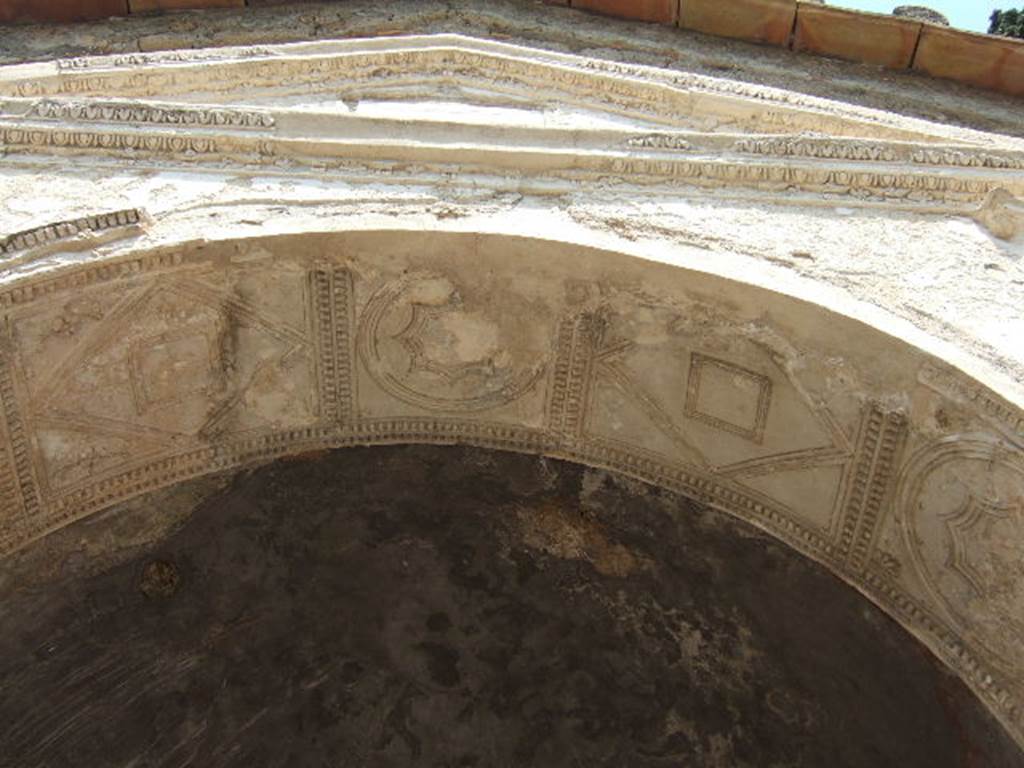
HGE09 Pompeii. May 2006. Curved roof of front with stucco decoration in centre.
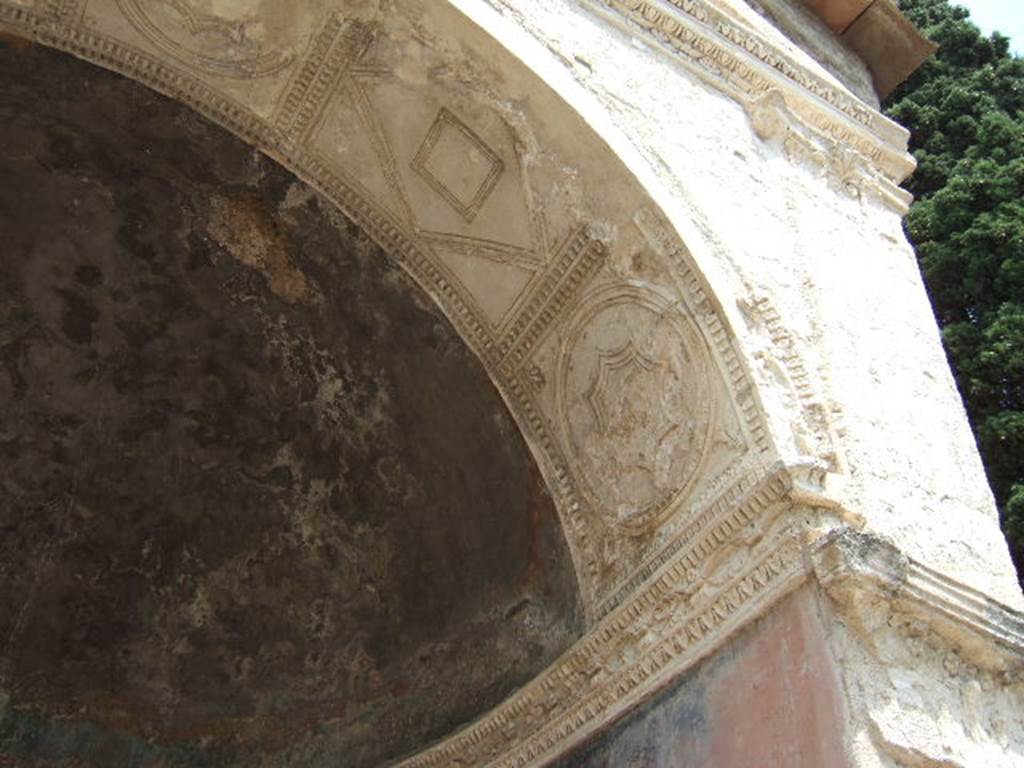
HGE09 Pompeii. May 2006. Curved roof of front with stucco decoration on right side.
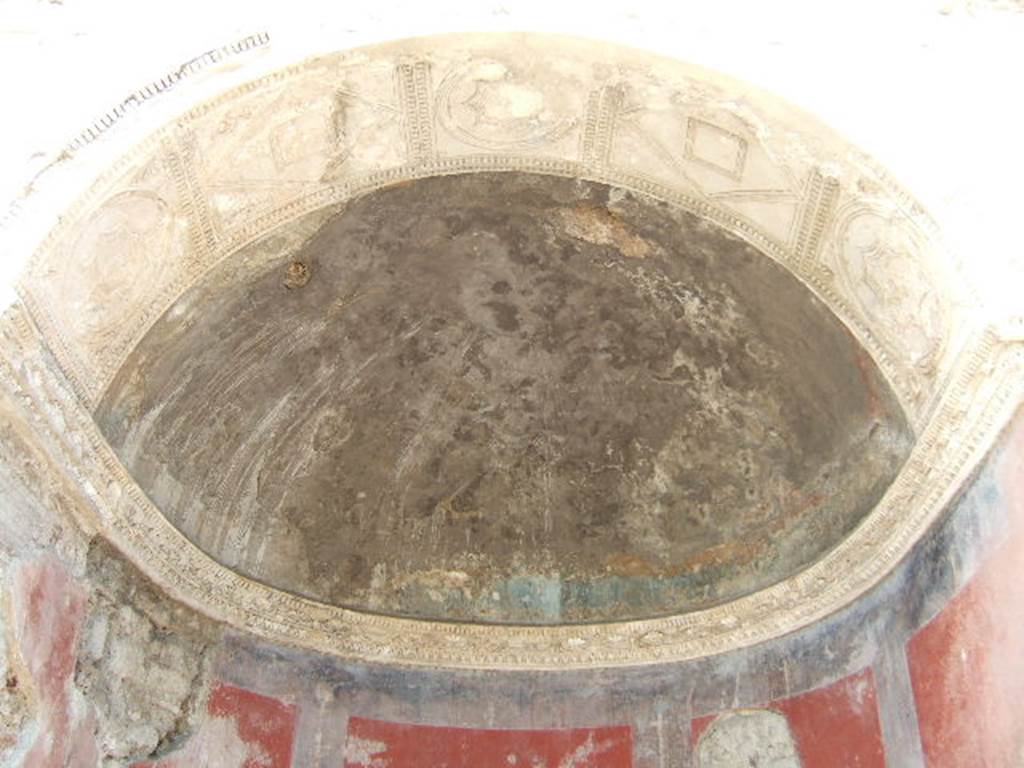
HGE09 Pompeii. May 2006. Band of stucco decoration at top of painted walls.
The remains of painted decoration can be seen above this at the base of the semi-circular dome of the niche.
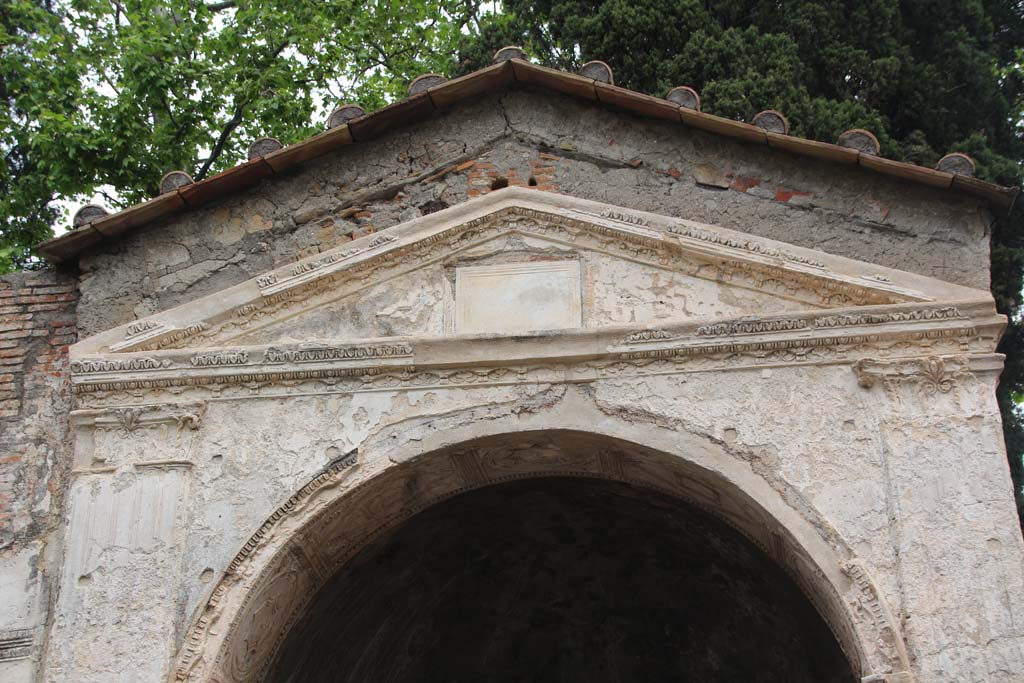
HGE09 Pompeii. April 2014. Aedicula
top with blank plaque. Photo courtesy of Klaus Heese.
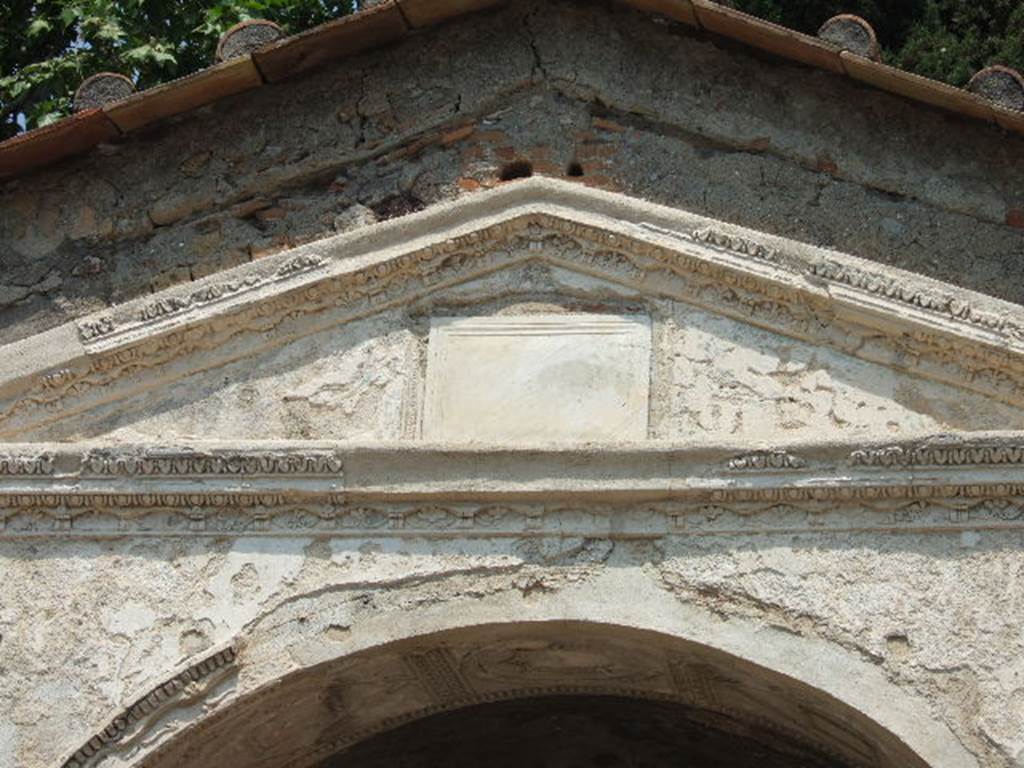
HGE09 Pompeii. May 2006. Aedicula top with blank plaque. According to Kockel, this was never inscribed so the tomb occupant is unknown.
See Kockel V., 1983. Die Grabbauten vor dem Herkulaner Tor in Pompeji. Mainz: von Zabern. (p. 160).
According to Mau the stucco plasterwork is identical to that in the Villa of the Mosaic Columns so the tomb may be linked to an occupant of that villa.
See Mau, A., 1907, translated by Kelsey F. W. Pompeii: Its Life and Art. New York: Macmillan. (p. 417).
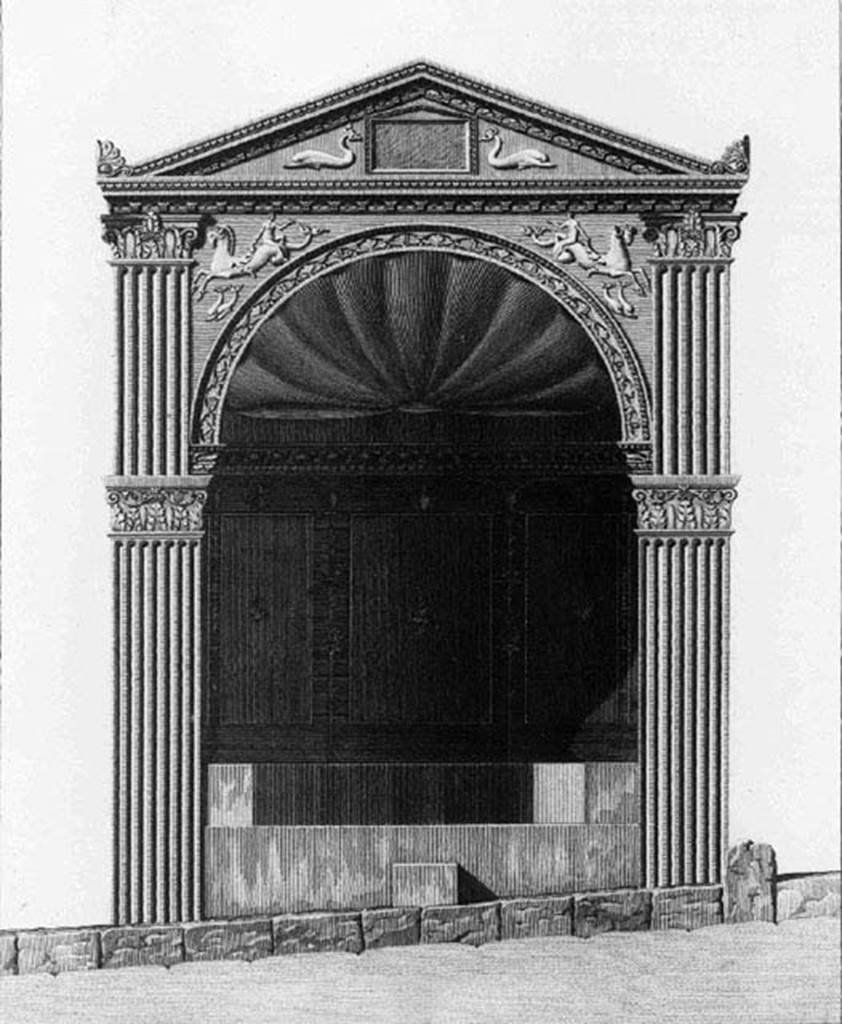
HGE09 Pompeii. 1824 drawing of tomb.
See Mazois, F.,
1824. Les Ruines de Pompei: Premiere
Partie. Paris: Didot Frères, (pl. 34).
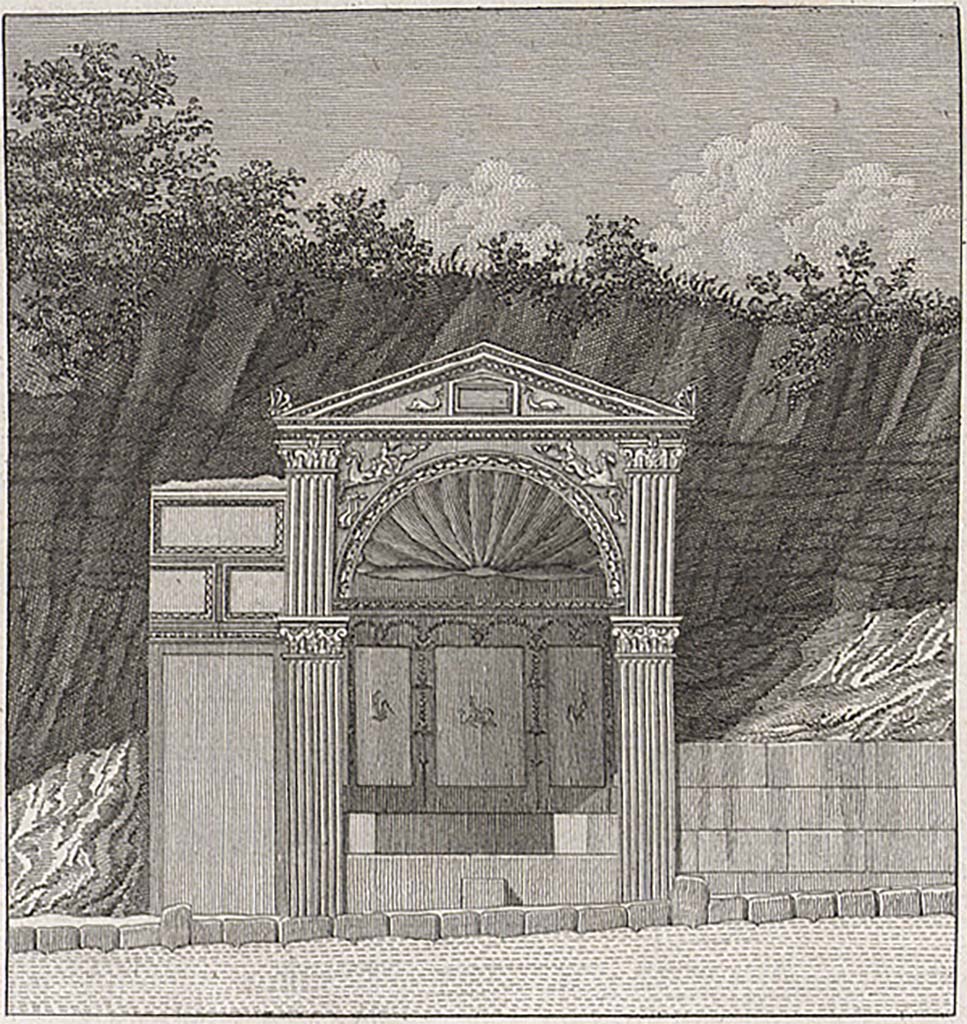
HGE09 Pompeii. 1824 drawing of tomb with HGE08 to right.
See Mazois, F.,
1824. Les Ruines de Pompei: Premiere
Partie. Paris: Didot Frères, (pl. 33,1).
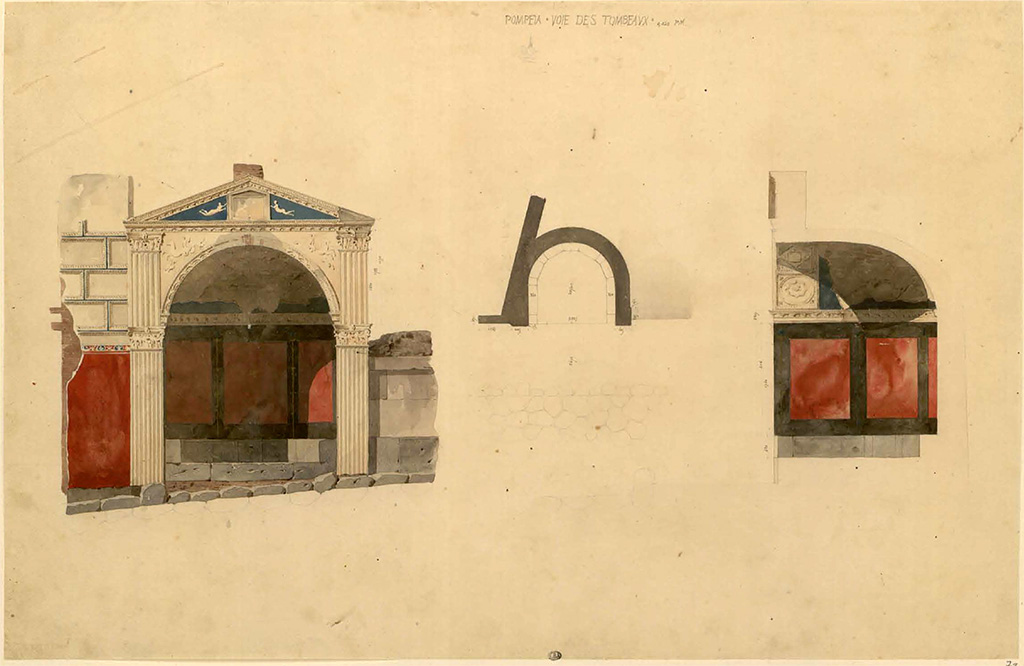
HGE09 Pompeii. Between 1823 and 1828, watercolour sketches
by Felix Duban of tomb.
See Duban F. Album
de dessins d'architecture effectués par Félix Duban pendant son pensionnat à la
Villa Medicis, entre 1823 et 1828: Tome 2, Pompéi. No. 72.
INHA Identifiant numérique NUM PC 40425 (2)
https://bibliotheque-numerique.inha.fr/idurl/1/7157 Use
« Licence Ouverte / Open Licence » Etalab
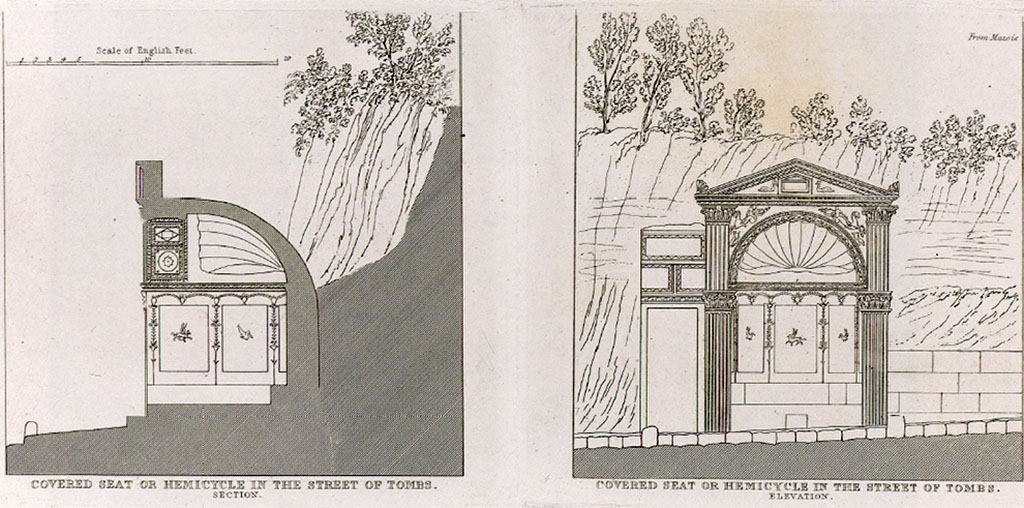
HGE09 Pompeii. 1827 drawings by W. B. Cooke of tomb cross section and elevation after Mazois.
See Cooke, Cockburn
and Donaldson, 1827. Pompeii Illustrated:
Vol. II. London: Cooke, pl. 32.
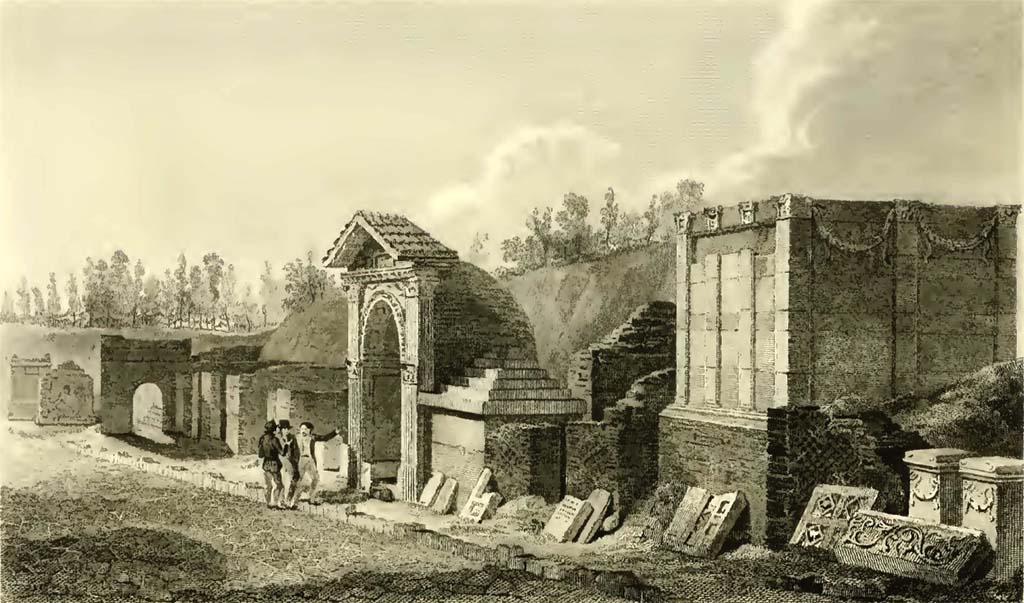
HGE09 Pompeii. 1824 drawing of tombs HGE05, HGE06, HGE07, HGE08 and HGE09.
See Gell, W, and Gandy J. P., 1819. Pompeiana. London: Rodwell and Martin, (pl. 12).