IX.8.c Pompeii. Rear entrance to House at IX.8.8?
Linked to IX.8.3 and IX.8.6. Excavated 1880.
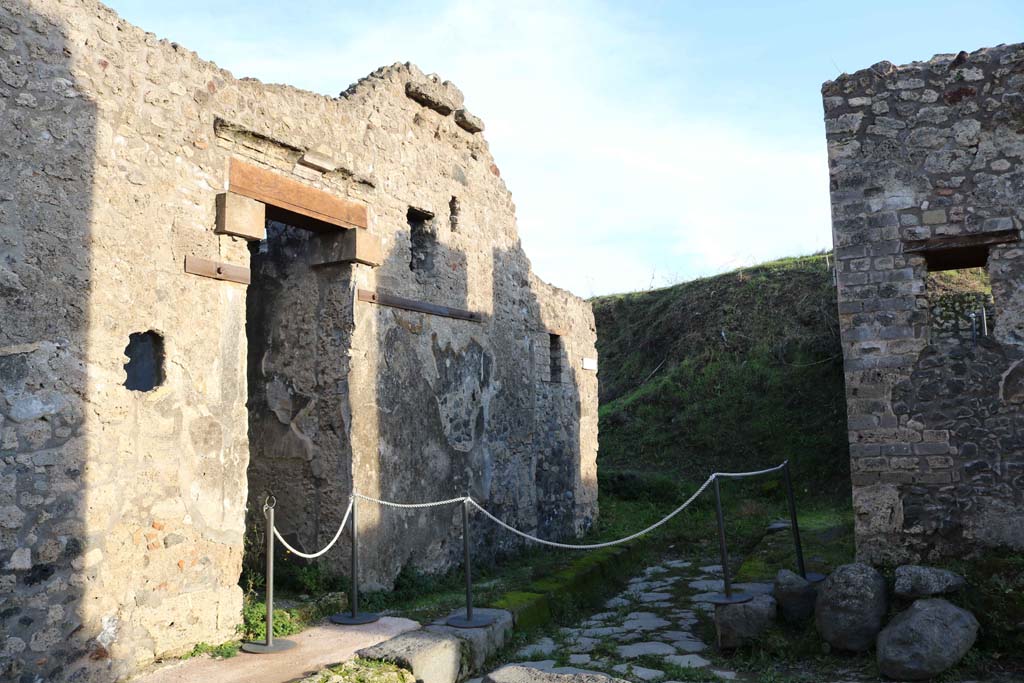
IX.8.b Pompeii and IX.8.c, on left, with IX.6.8, on right.
December 2018.
Looking south into unexcavated area of Vicolo del Centenario. Photo courtesy of Aude Durand.
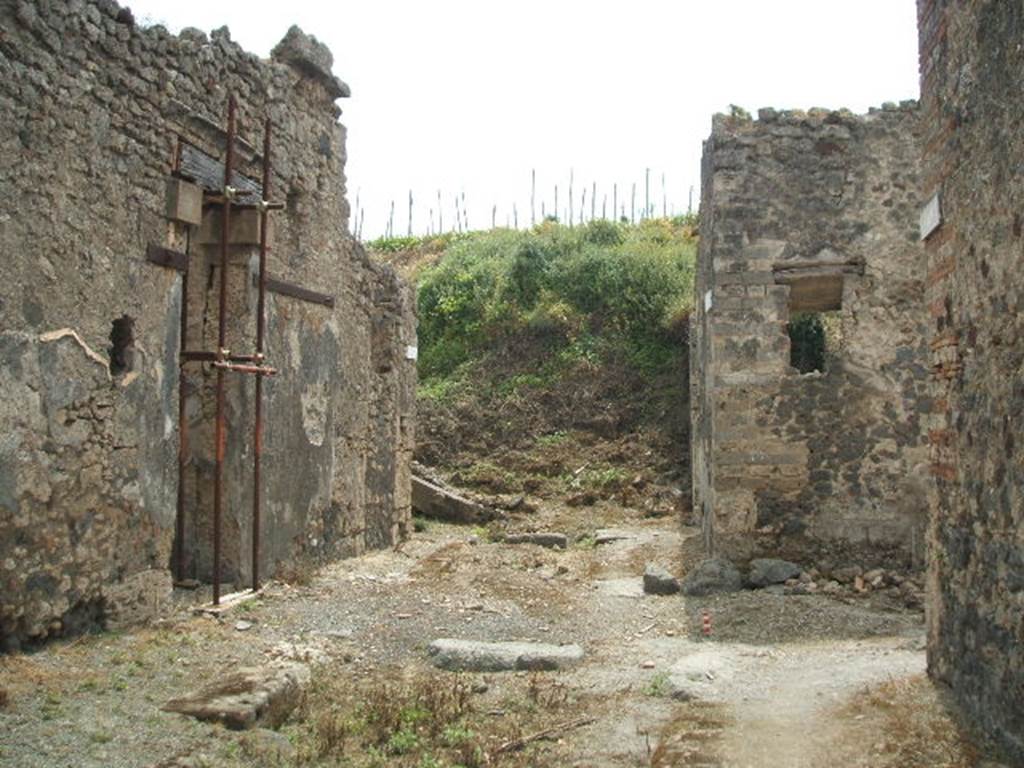
IX.8.b and IX.8.c Pompeii, on left. May 2005. Looking south into unexcavated area. IX.6 and IX.5, on right.
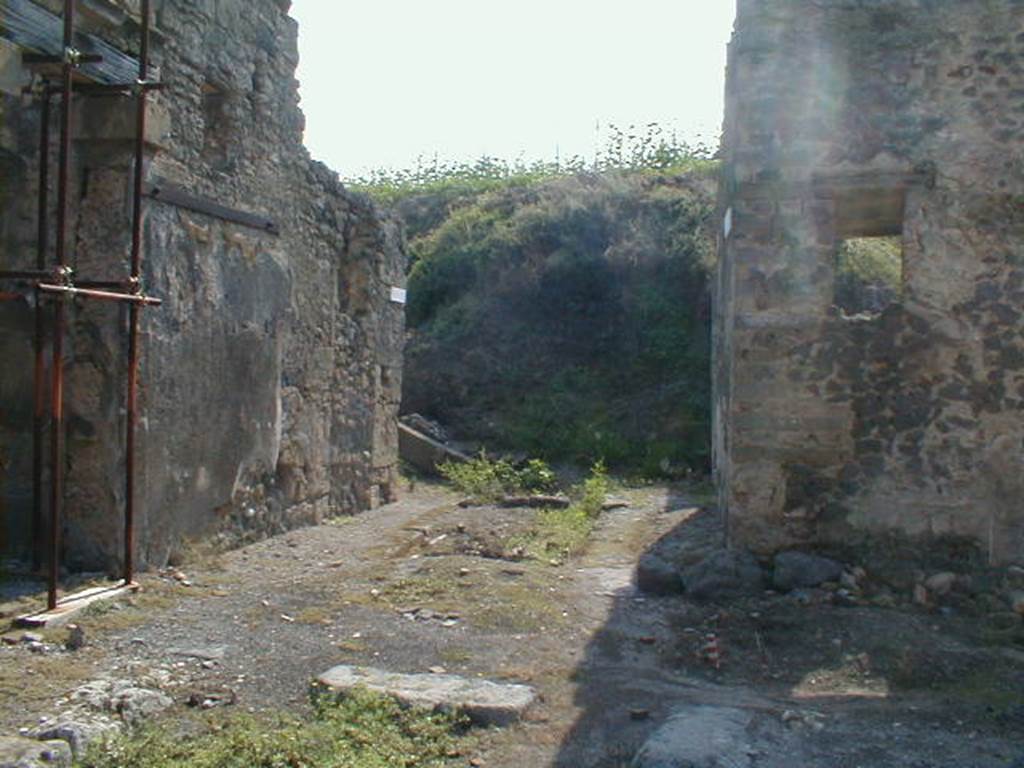
IX.8.b and IX.8.c Pompeii, on left. May 2005. End of Vicolo del Centenario (unexcavated).
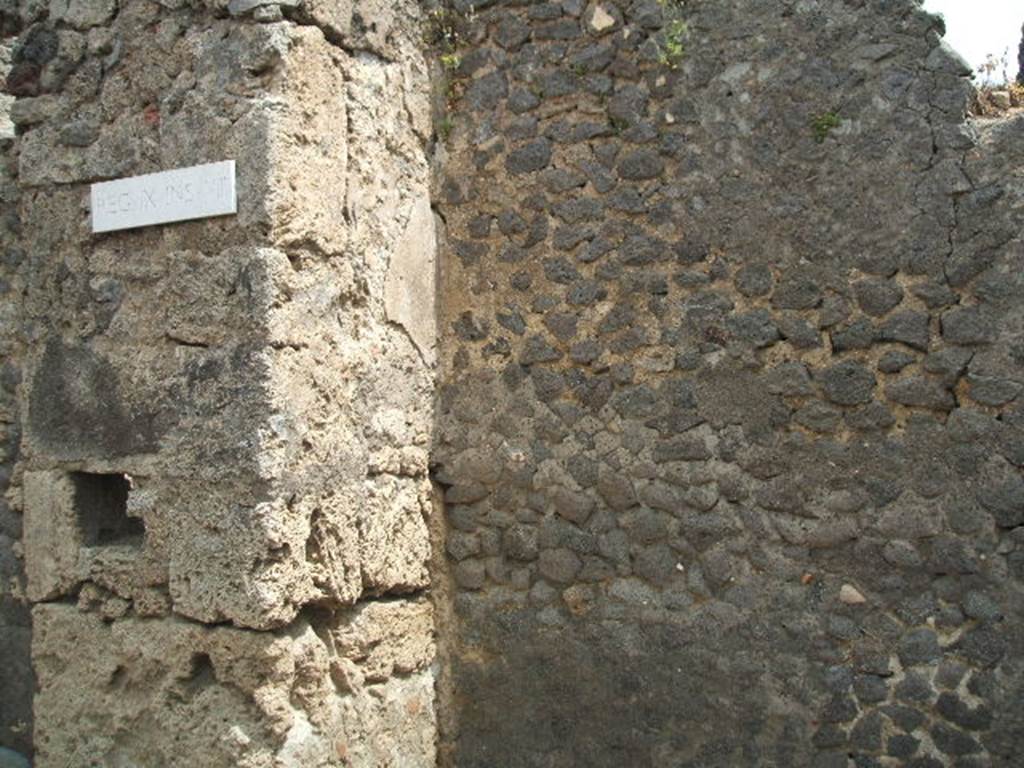
IX.8.c Pompeii. May 2005. Front west facing wall of facade.
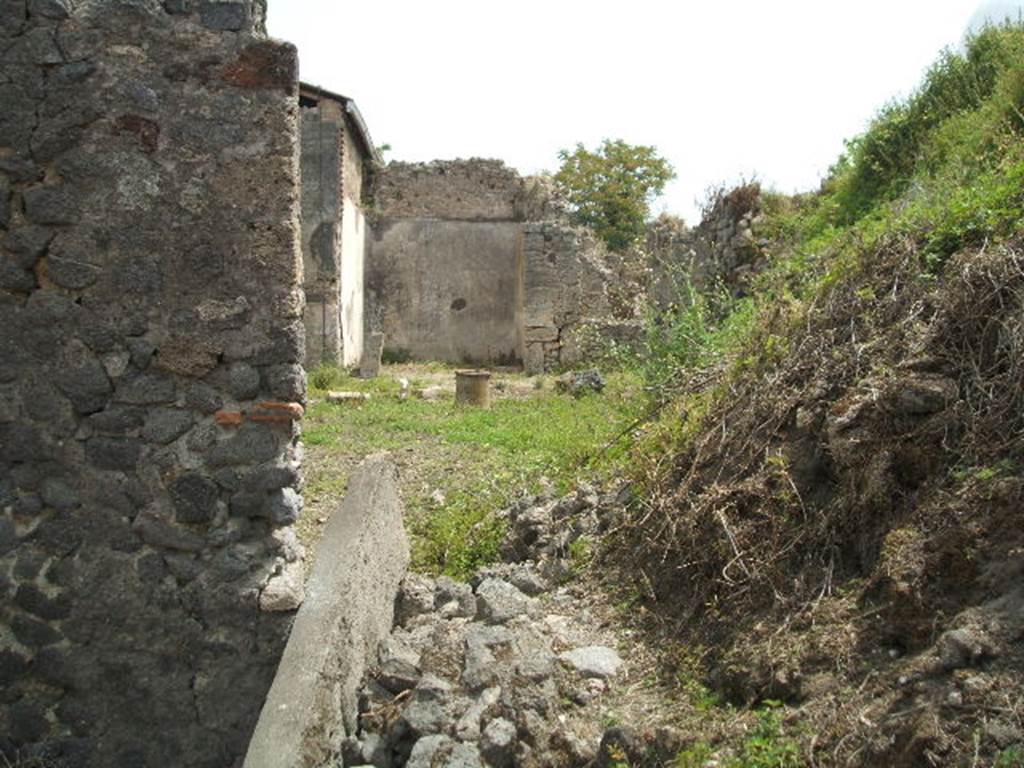
IX.8.c Pompeii. May 2005. Looking east from entrance.
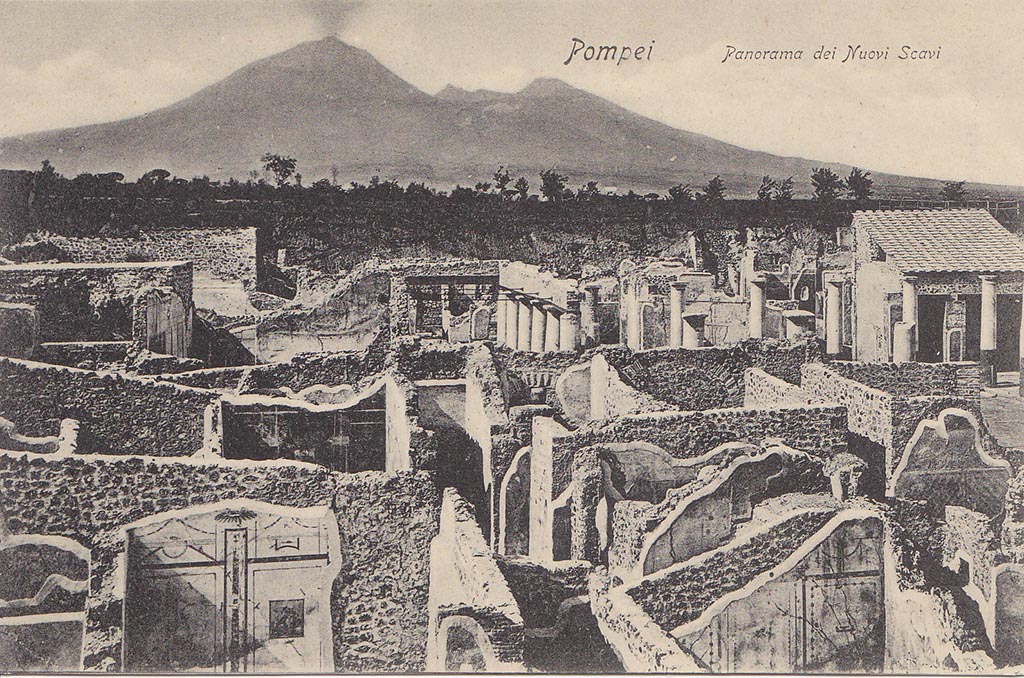
IX.8.c Pompeii. Old undated postcard. Looking north from the top of the unexcavated area.
IX.8.c is in the lower front of the photo. Behind is IX.8.b and at the rear is the House of the Centenary. Photo courtesy of Drew Baker.
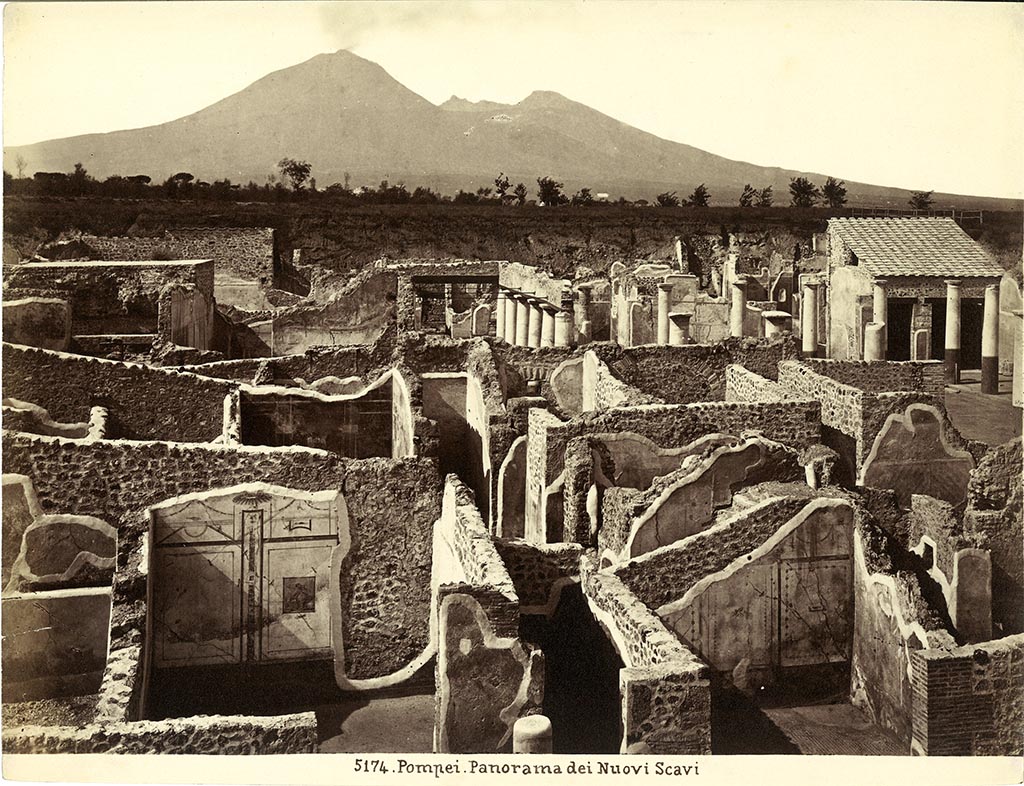
IX.8.c Pompeii. 19th century postcard numbered 5174. Looking north from the top of the unexcavated area.
IX.8.c is at the front of the photo. Behind is IX.8.b and at the rear is the House of the Centenary. Photo courtesy of Rick Bauer.
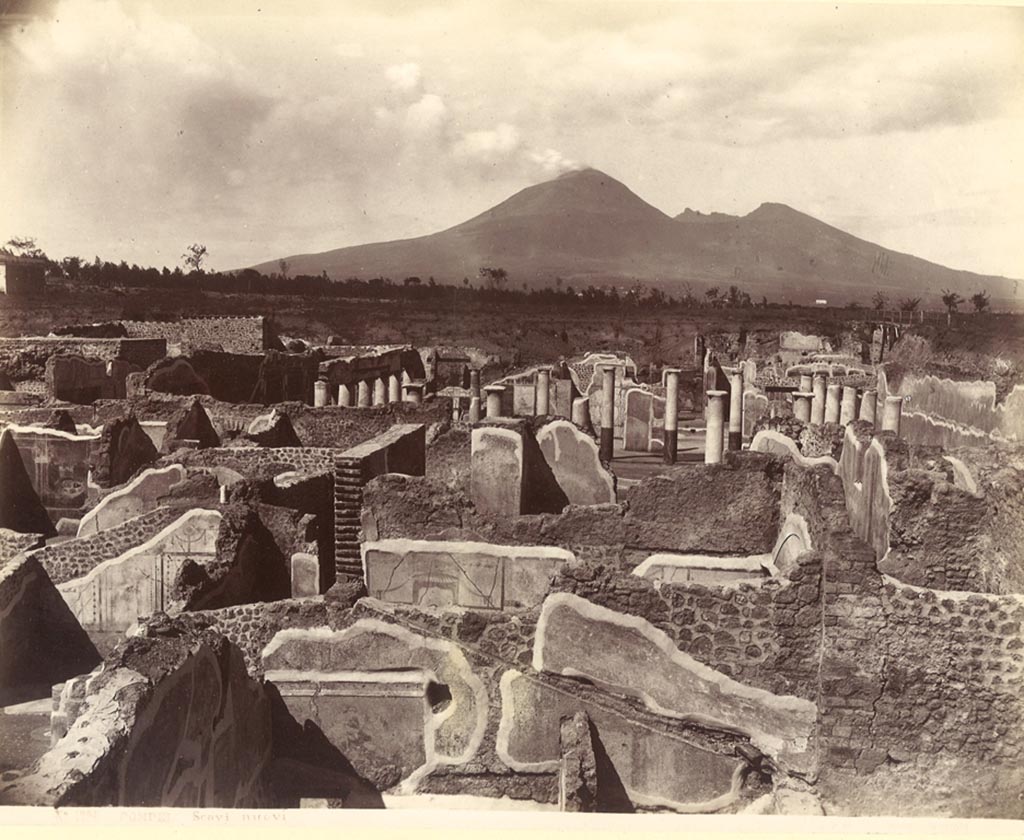
IX.8.c Pompeii.
c.1880-1890. G. Sommer no. 1291.
Looking north from IX.8.8/IX.8.c, towards rear of triclinium with nymphaeum and peristyle of IX.8.6. Photo courtesy of Rick Bauer.
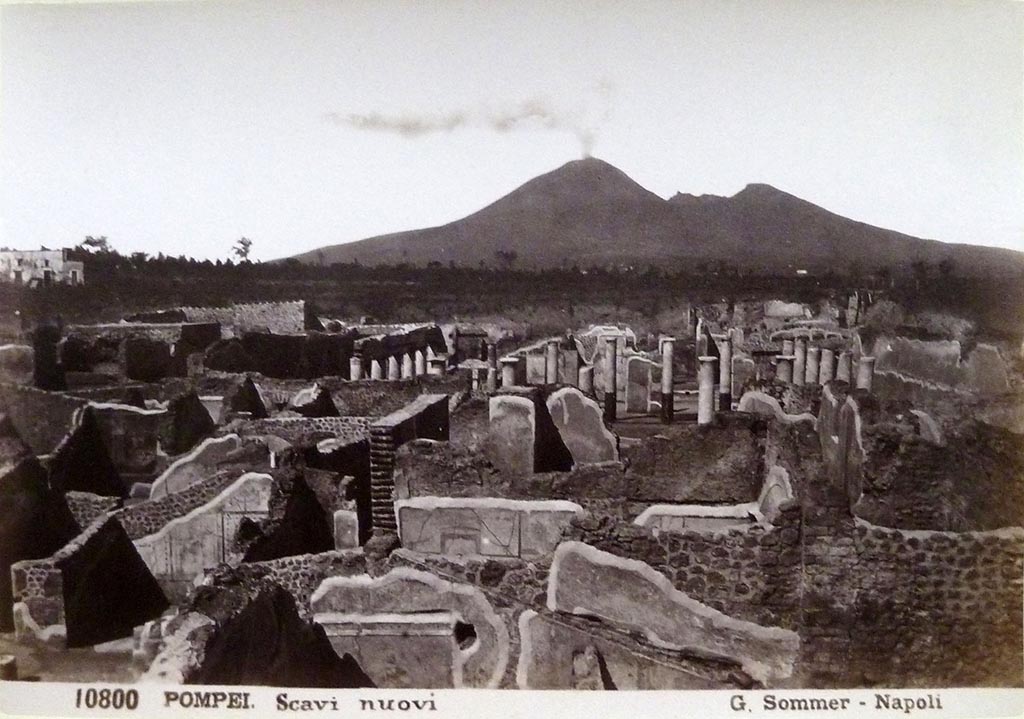
IX.8.c Pompeii. Looking north from IX.8.8/IX.8.c, towards rear of triclinium with nymphaeum and peristyle of IX.8.6.
Photograph No. 10800, by Giorgio Sommer, (1834-1914). Public domain, via Wikimedia Commons
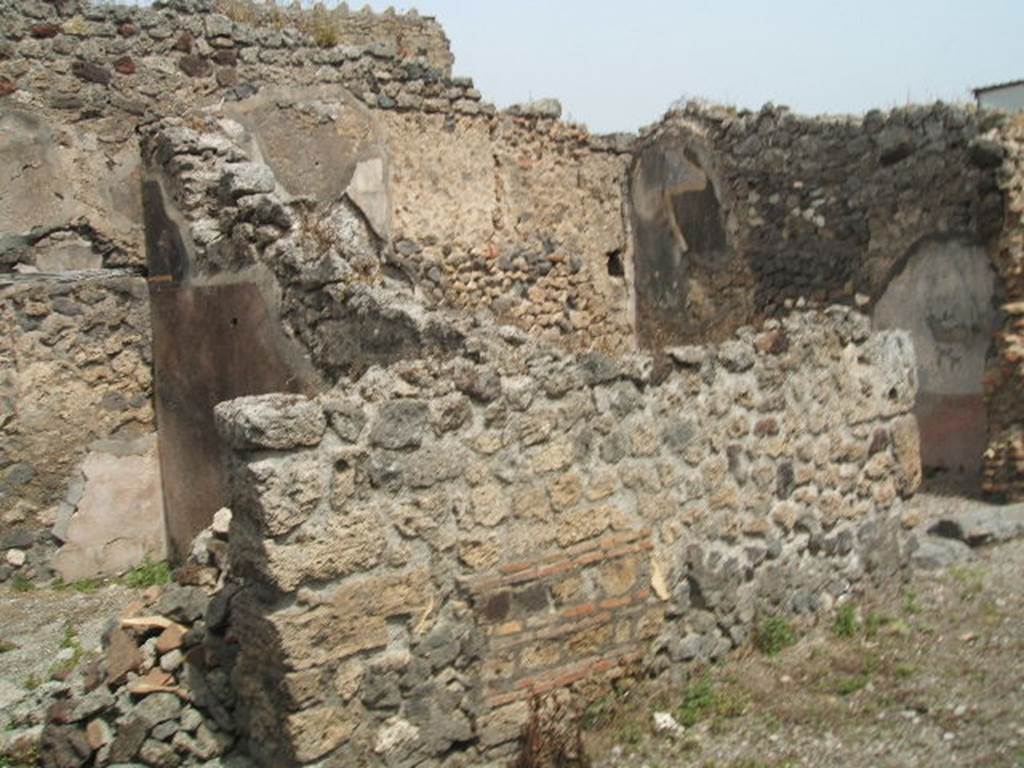
IX.8.c Pompeii. May 2005. Two doorways to rooms in north-west corner of peristyle.
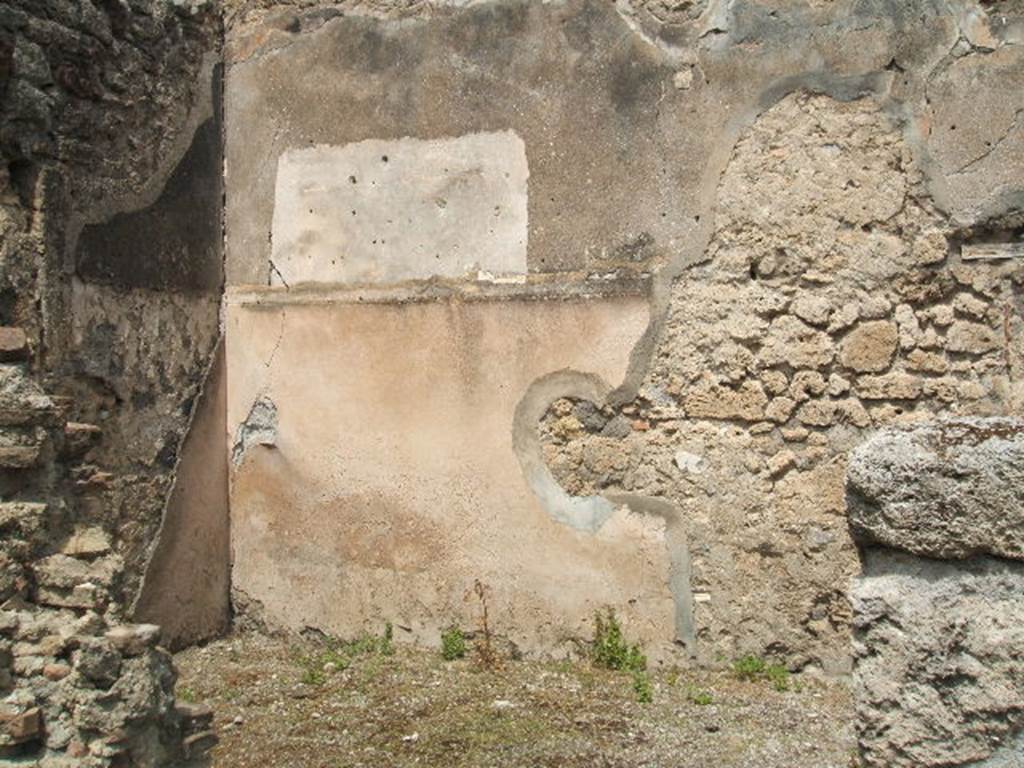
IX.8.c Pompeii. May 2005. Room on north side of entrance.
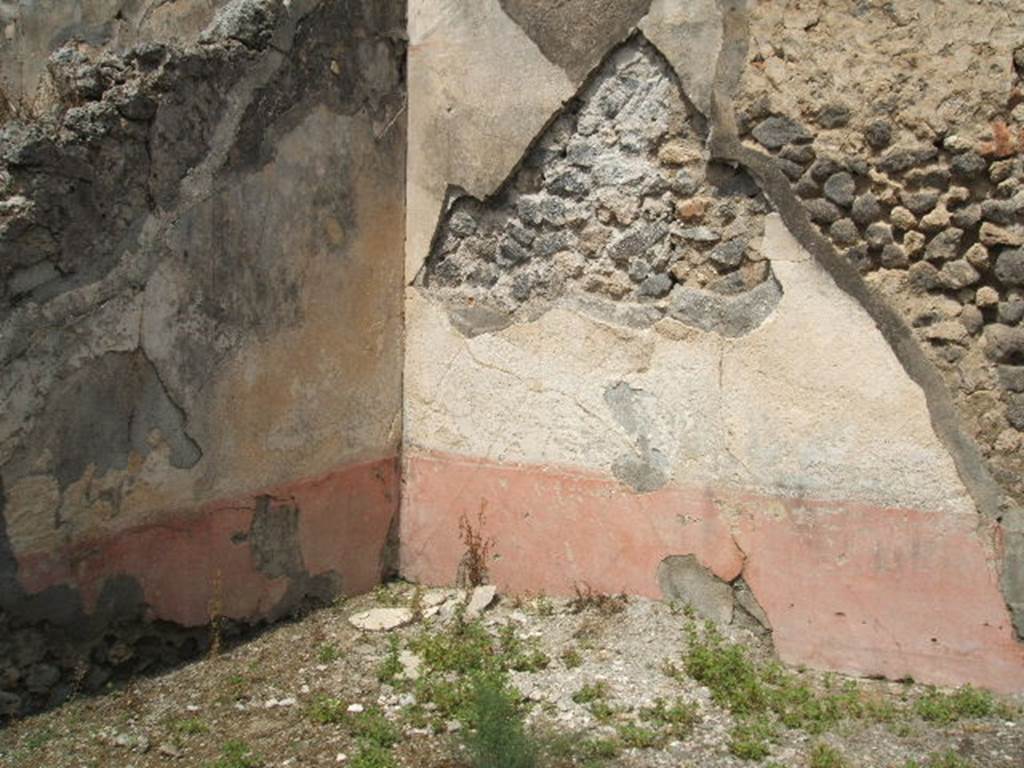
IX.8.c Pompeii. May 2005. North-west corner of second room on north side of north portico of peristyle.
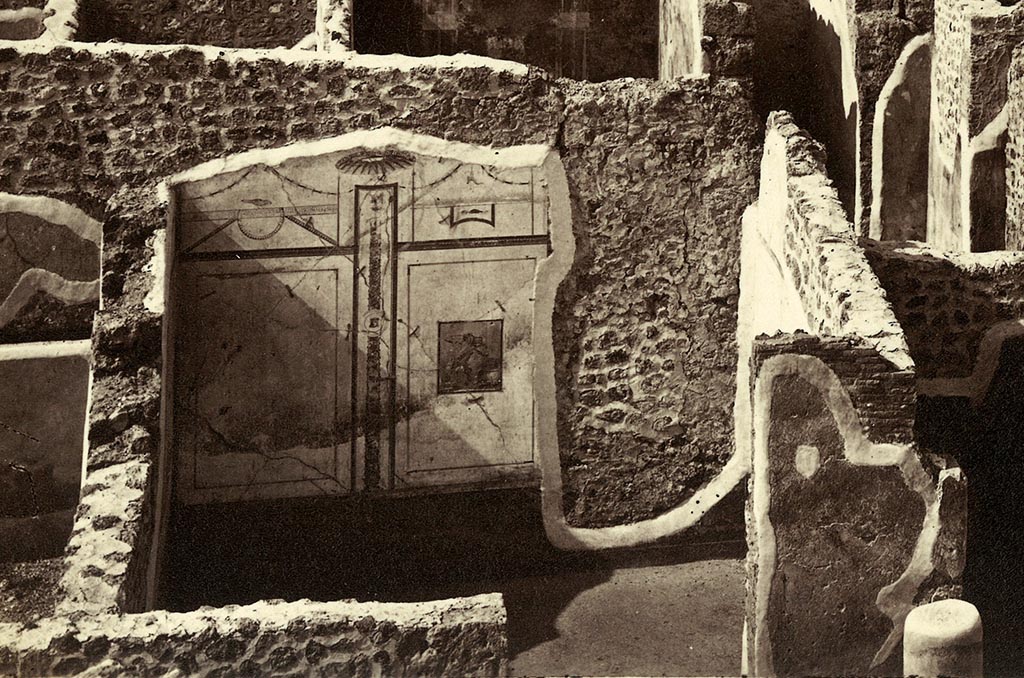
IX.8.c Pompeii. 1860. Detail from old postcard showing second room on north side of peristyle.
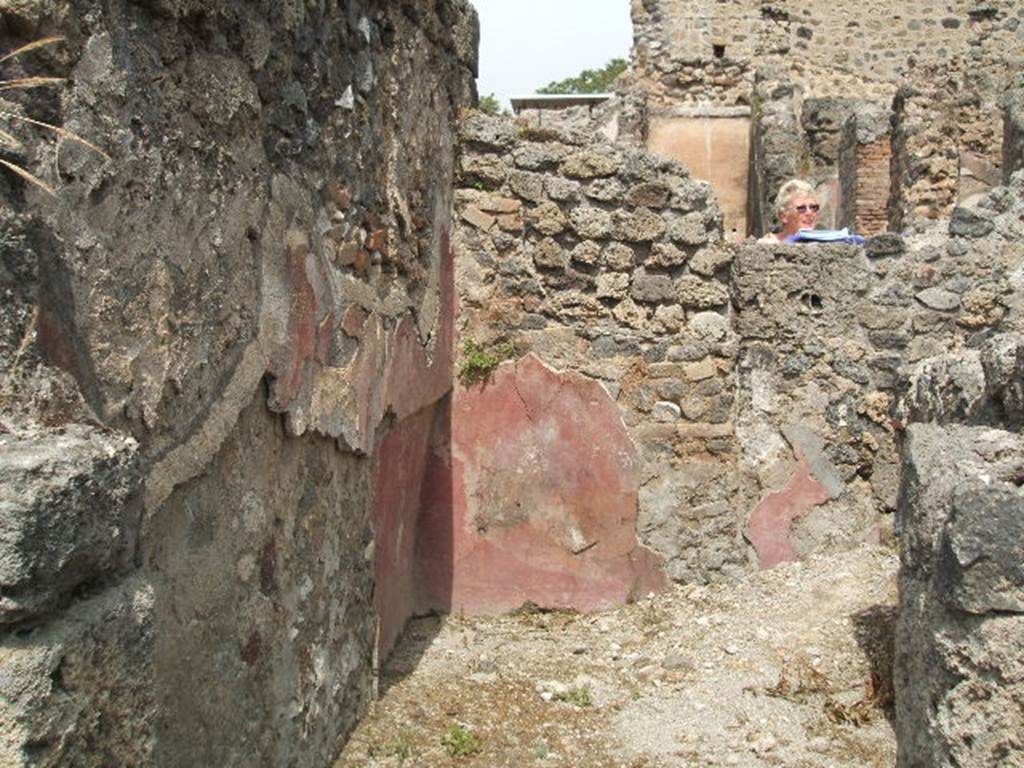
IX.8.c Pompeii. May 2005. Small room or cupboard, looking north.
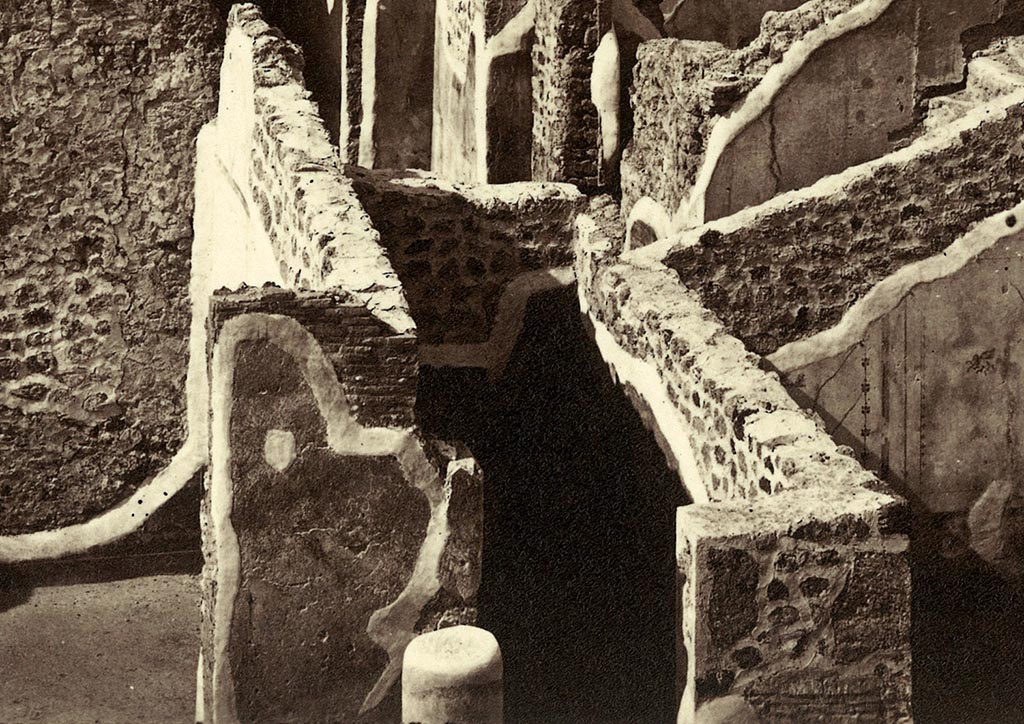
IX.8.c Pompeii. 1860. Detail from old postcard, showing small room or cupboard, looking north.
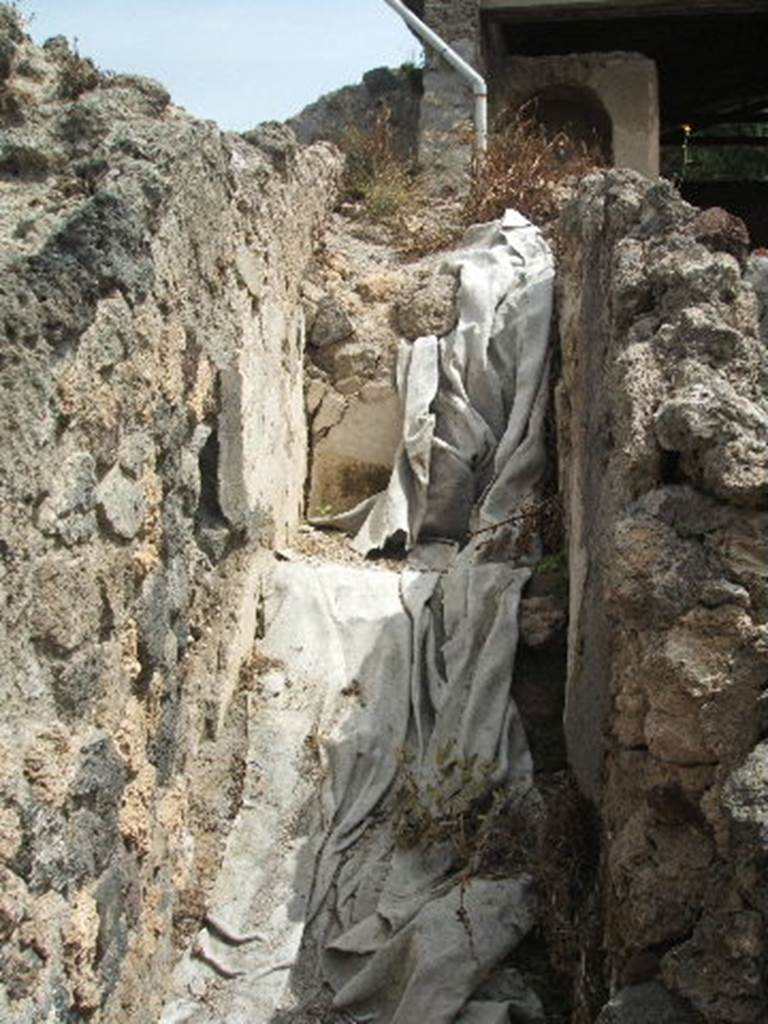
IX.8.c Pompeii. May 2005.
Looking east along site of small steps to upper floor, leading east from small room or cupboard area.
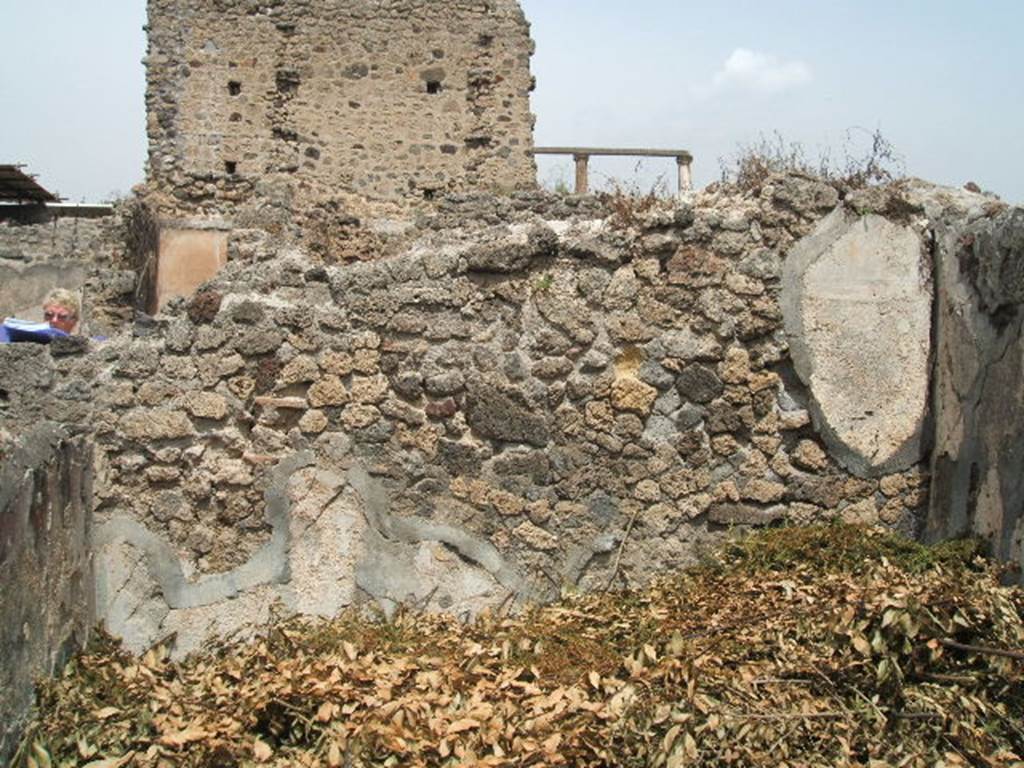
IX.8.c Pompeii. May 2005. Looking north into exedra. The small stairs are at the rear of this north wall.
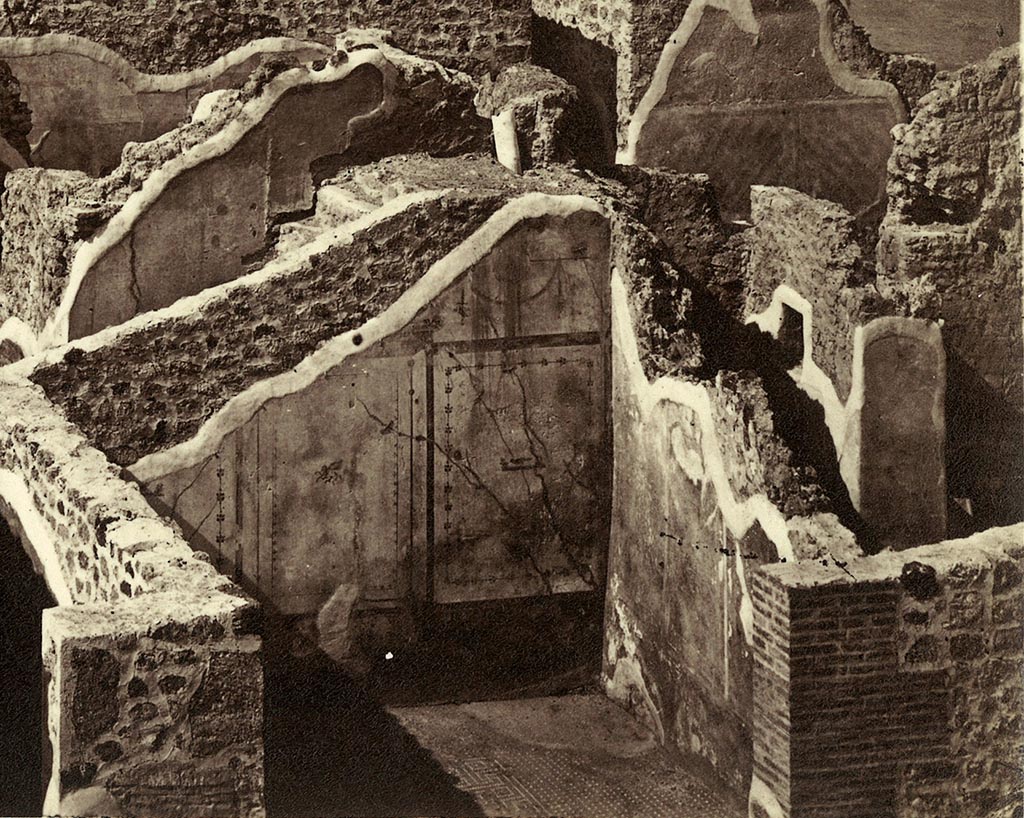
IX.8.c Pompeii. 1860. Detail from old postcard, looking north into exedra.
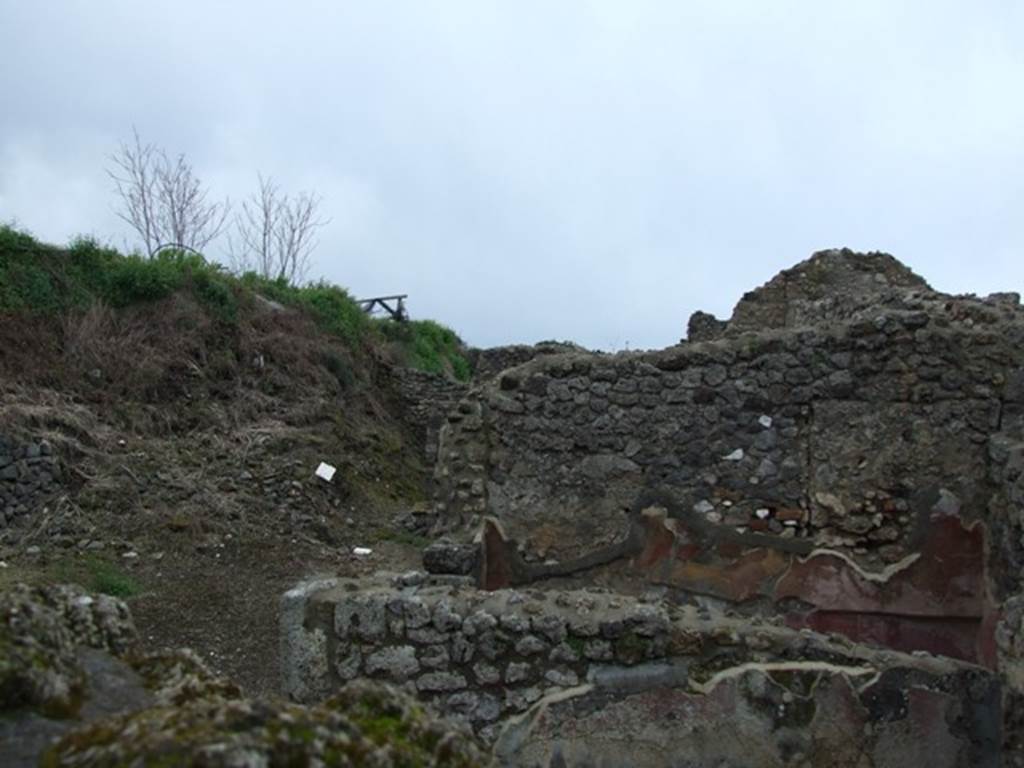
IX.8.c Pompeii. March 2009. Looking south-west from IX.8.6 across exedra to west wall of small room or cupboard.
The unexcavated can be seen on the south side of the peristyle.
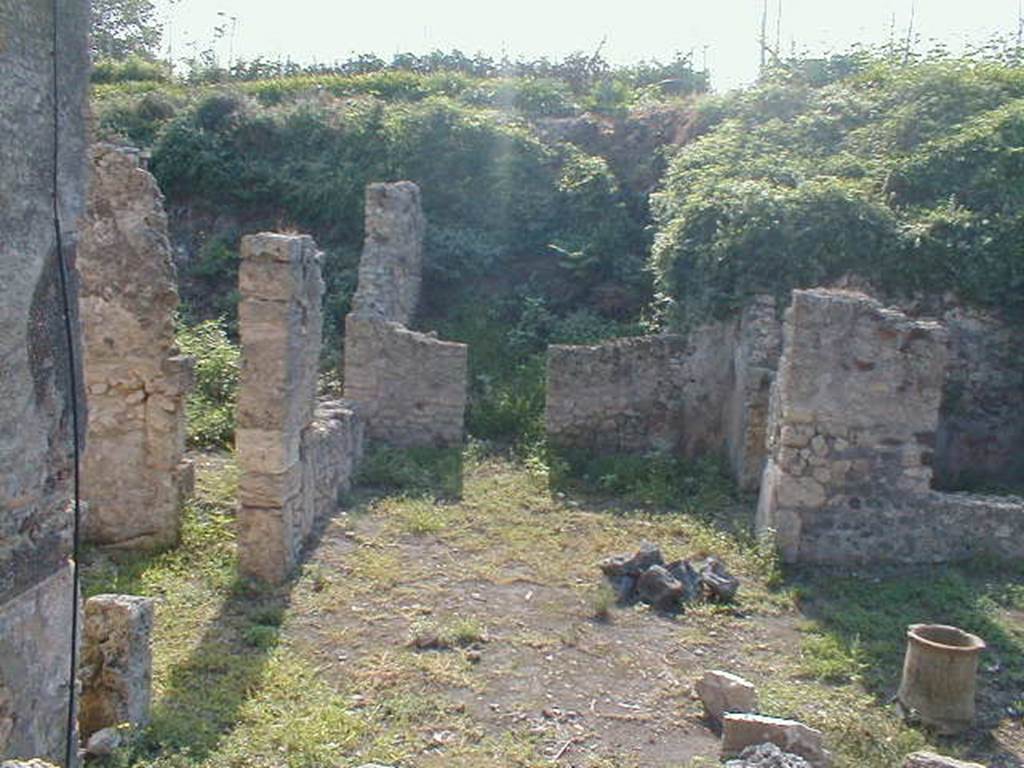
IX.8.c Pompeii. May 2005. Looking south along east portico, with entrance to triclinium on the left.
The room on south side of garden area is on the right. Photograph taken from IX.8.6.
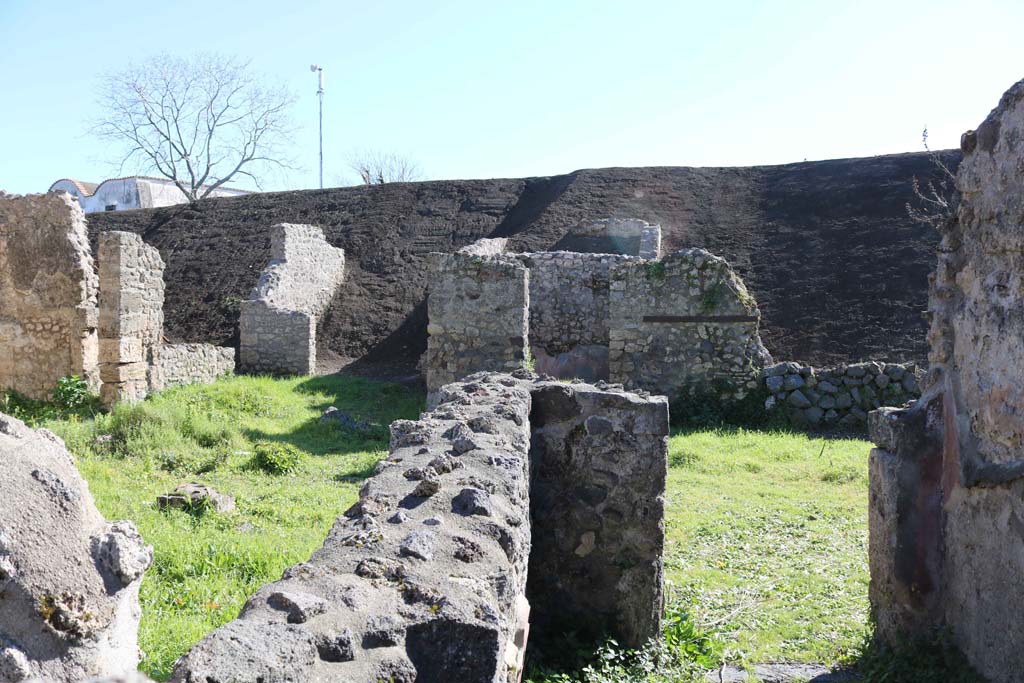
IX.8.c Pompeii. February 2020.
Looking from rooms on north side across peristyle towards a room
on south side, and into the unexcavated. Photo courtesy of Aude Durand.
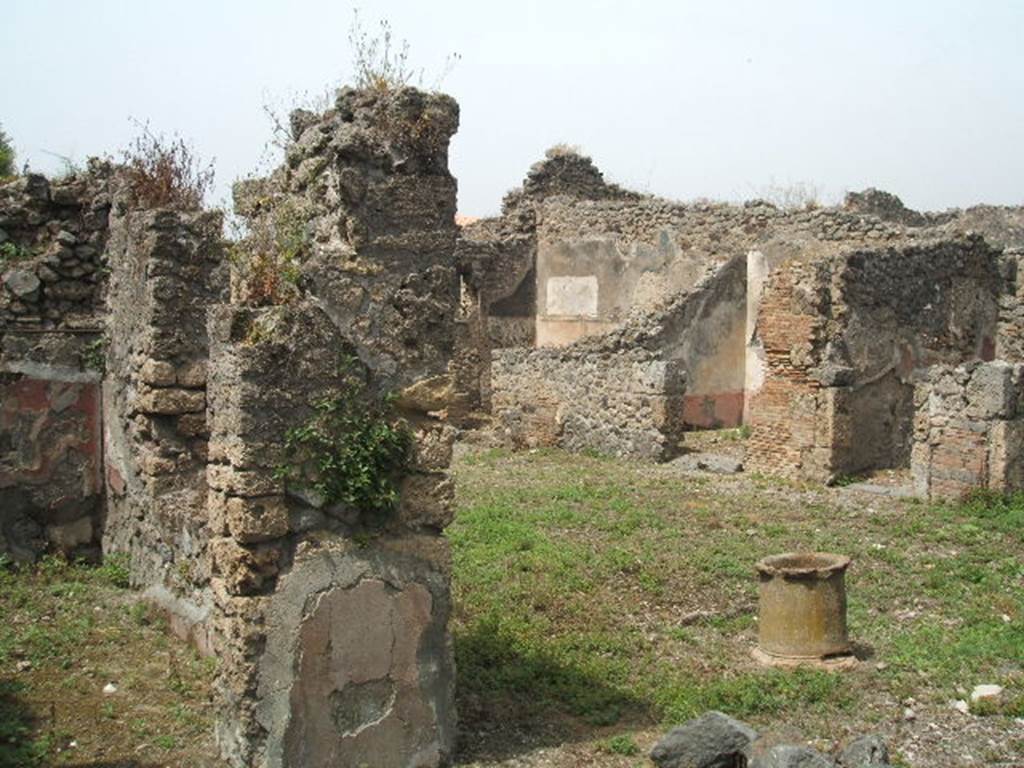
IX.8.c Pompeii. May 2005. Doorway to room on south side of garden area, on left.
Looking north-west across peristyle with terracotta puteal, towards rooms on north side.
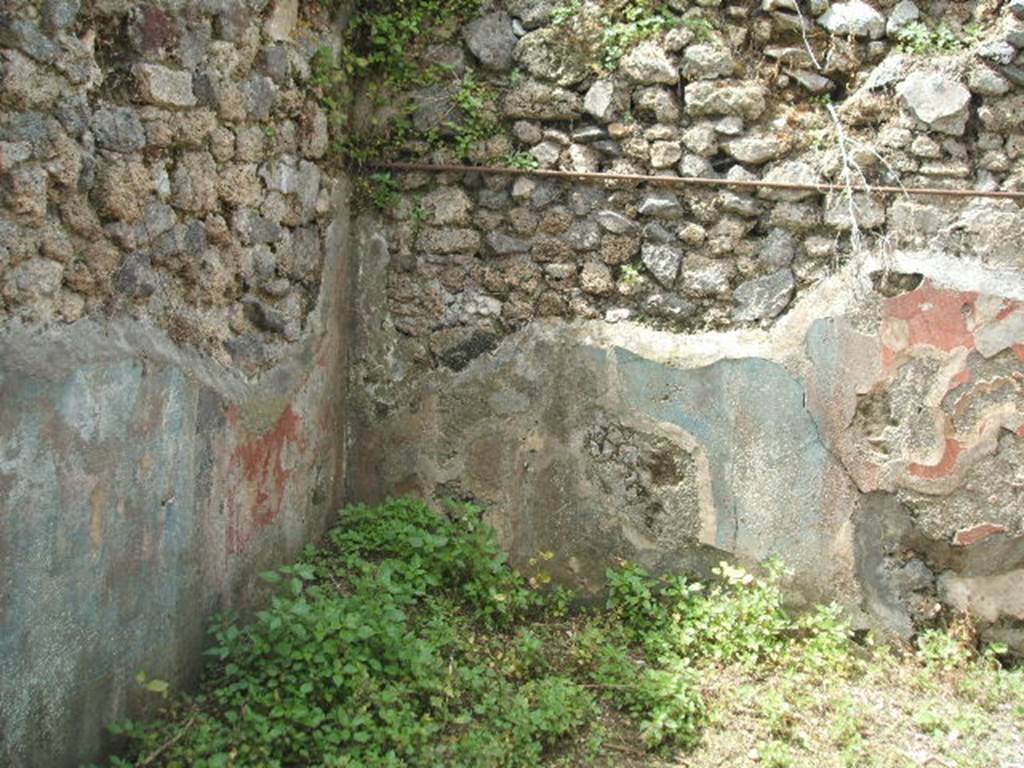
IX.8.c Pompeii. May 2005. Room on south side of garden area. South-west corner and remains of painted plaster.
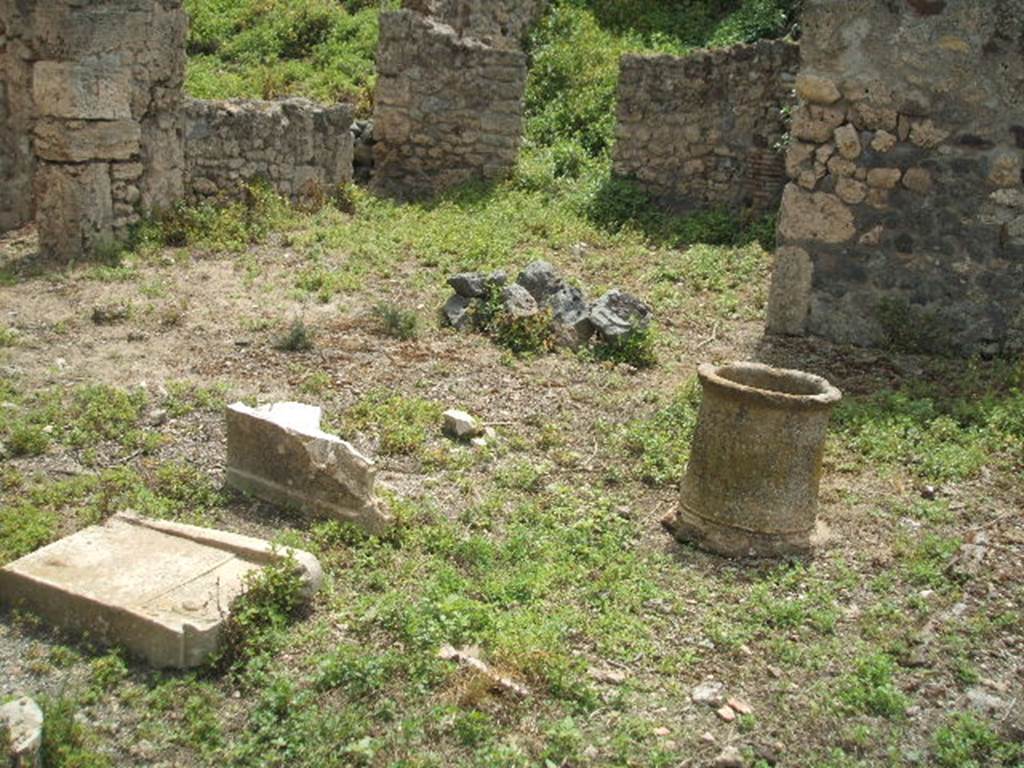
IX.8.c Pompeii. May 2005. Site of east portico, looking south into unexcavated.
According to Boyce, in the west wall of the kitchen, which was reached from the south side of the peristyle, was a rectangular niche.
On the wall above the niche was a lararium painting. The Genius was on the right of a flaming tripod adorned with garlands.
On the left was a tibicen and to the right stood a camillus. On each side of this group stood a Lar.
The serpents were painted on the back wall of the niche.
Both serpents were red and yellow, and their tails extended over onto the side walls of the niche.
The altar between them was painted as imitation red and yellow variegated marble.
The layer of plaster on which the serpents had been painted had partly fallen away, revealing beneath it an earlier layer.
The earlier layer was also decorated with painted figures, however Boyce thought it was impossible to ascertain what they were.
See Boyce G. K., 1937. Corpus of the Lararia of Pompeii. Rome: MAAR 14. (p. 90, no. 452).
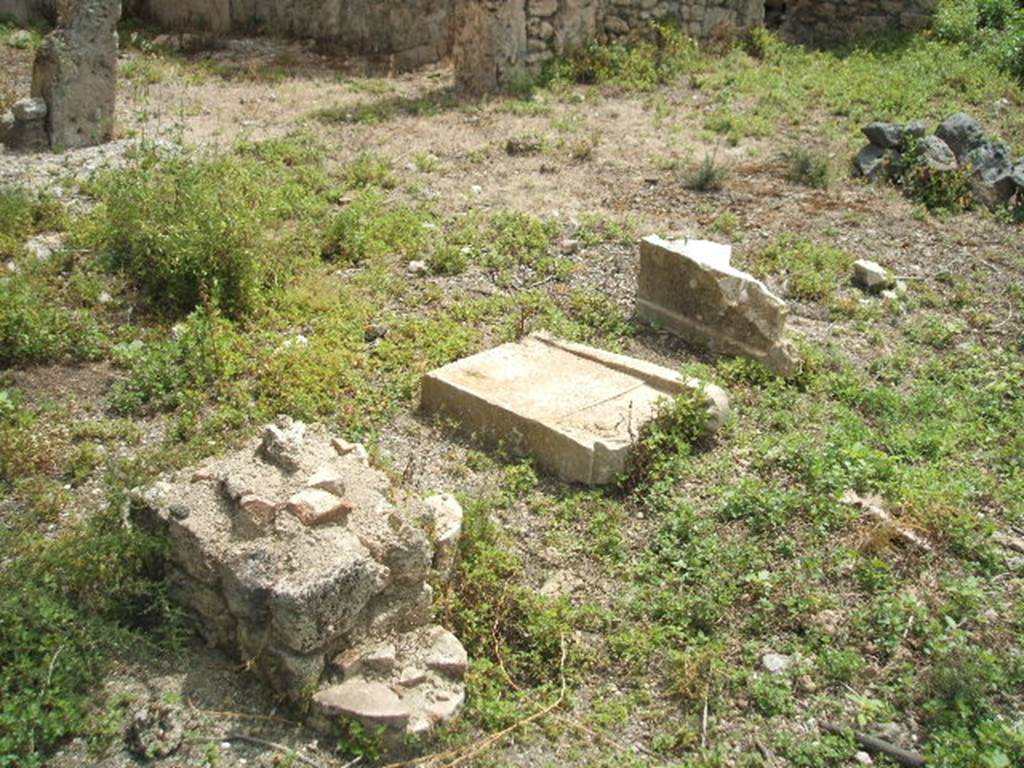
IX.8.c Pompeii. May 2005. Site of east portico, with remains on one of the brick pillars.
Looking south-east towards doorway to triclinium, on upper left of photo.
According to Jashemski, the peristyle garden was enclosed on the west, north and east by a portico.
The portico was supported by five stuccoed brick columns and two pillars.
There was a terracotta puteal in the east portico.
Under the west portico was a small masonry basin with a low base.
See Jashemski, W. F., 1993. The Gardens of Pompeii, Volume II: Appendices. New York: Caratzas. (p.245)
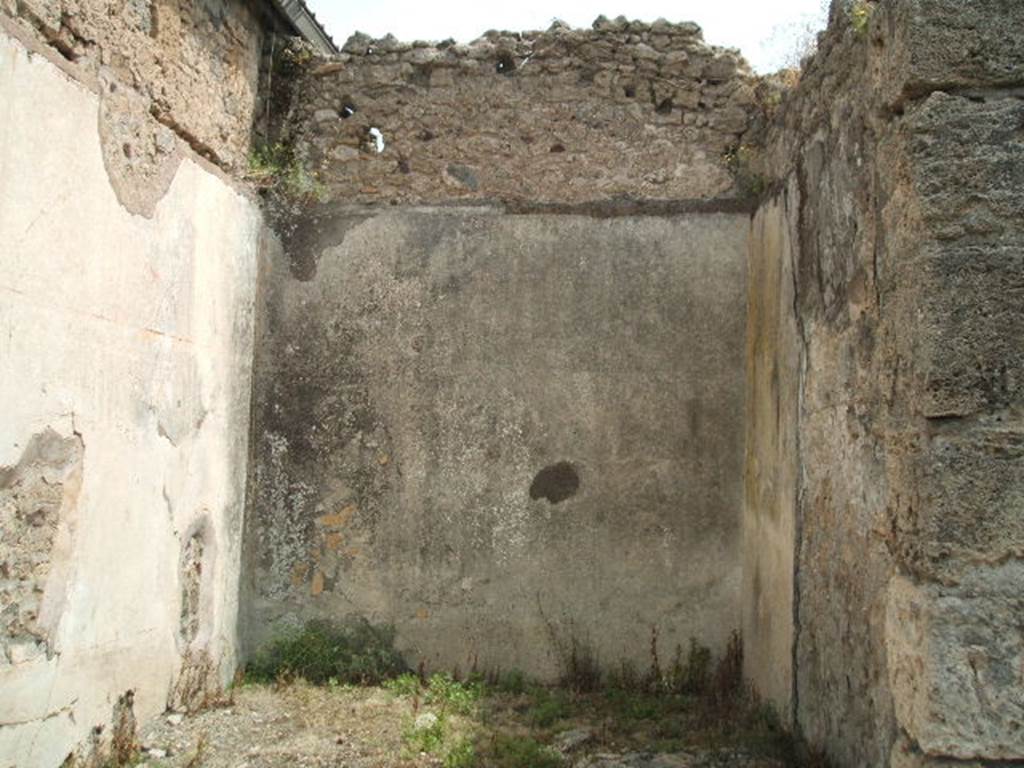
IX.8.c Pompeii. May 2005. Triclinium on east side of peristyle. Looking east.