IX.8.2 Pompeii. The Hortulus of the Ludimagister et
Grammaticus Potitus.
Scuola philosophica epicurea. Excavated 1879.
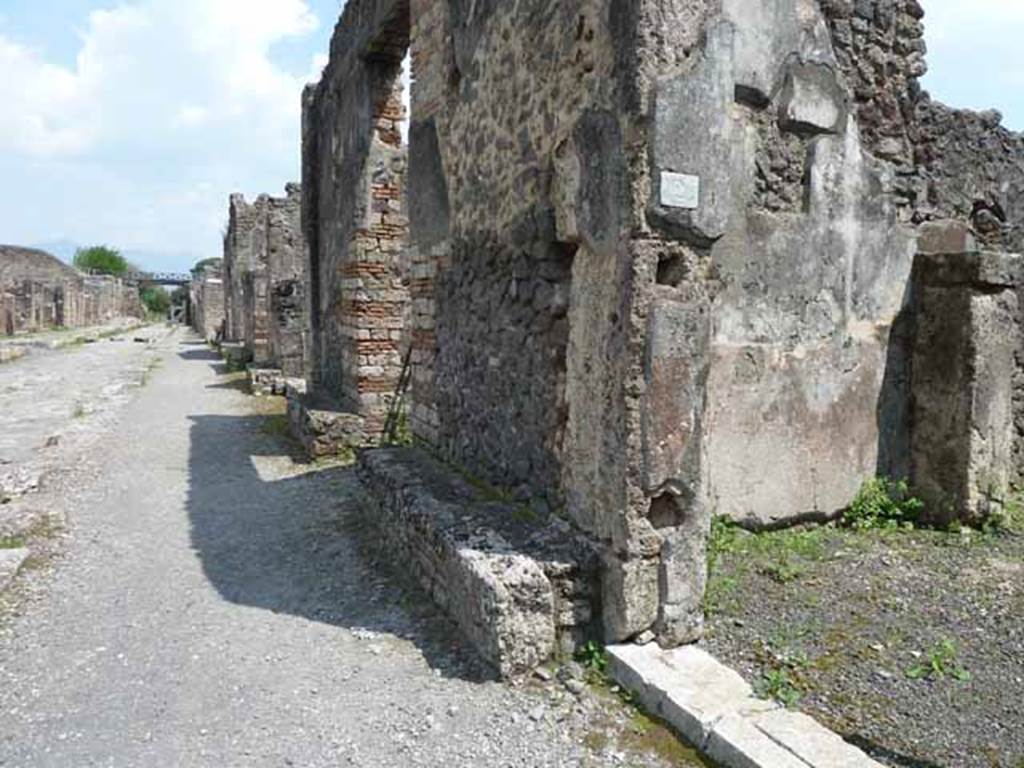
IX.8.2 Pompeii. May 2010. Entrance on Via di Nola, looking east.
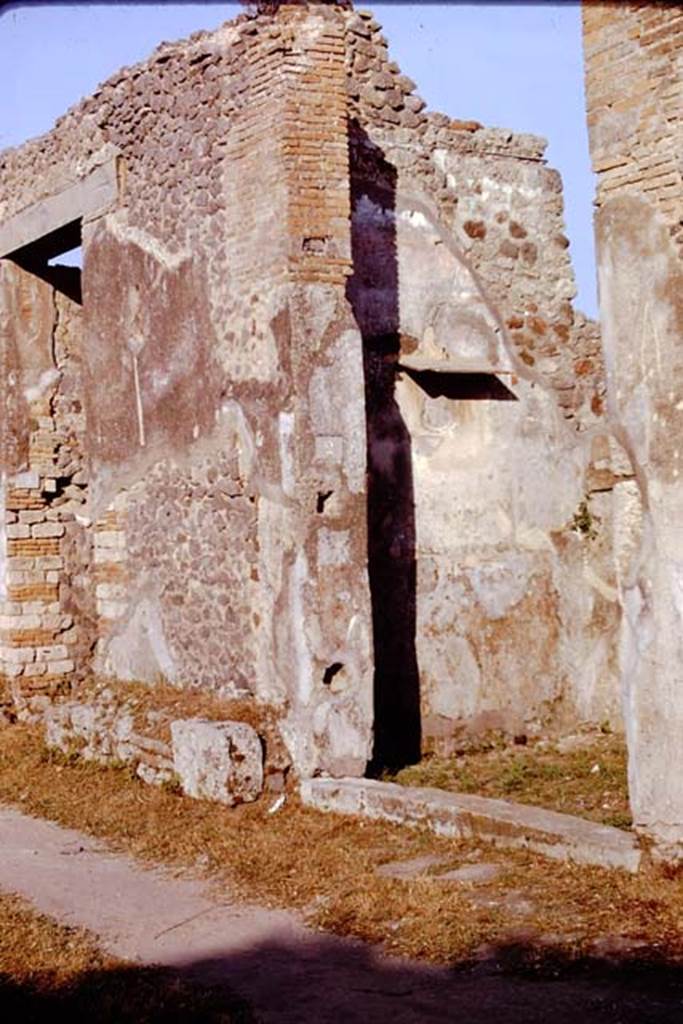
IX.8.2 Pompeii. 1961. Entrance doorway and east wall, with bench outside. Photo by Stanley A. Jashemski.
Source: The Wilhelmina and Stanley A. Jashemski archive in the University of Maryland Library, Special Collections (See collection page) and made available under the Creative Commons Attribution-Non Commercial License v.4. See Licence and use details.
J61f0767
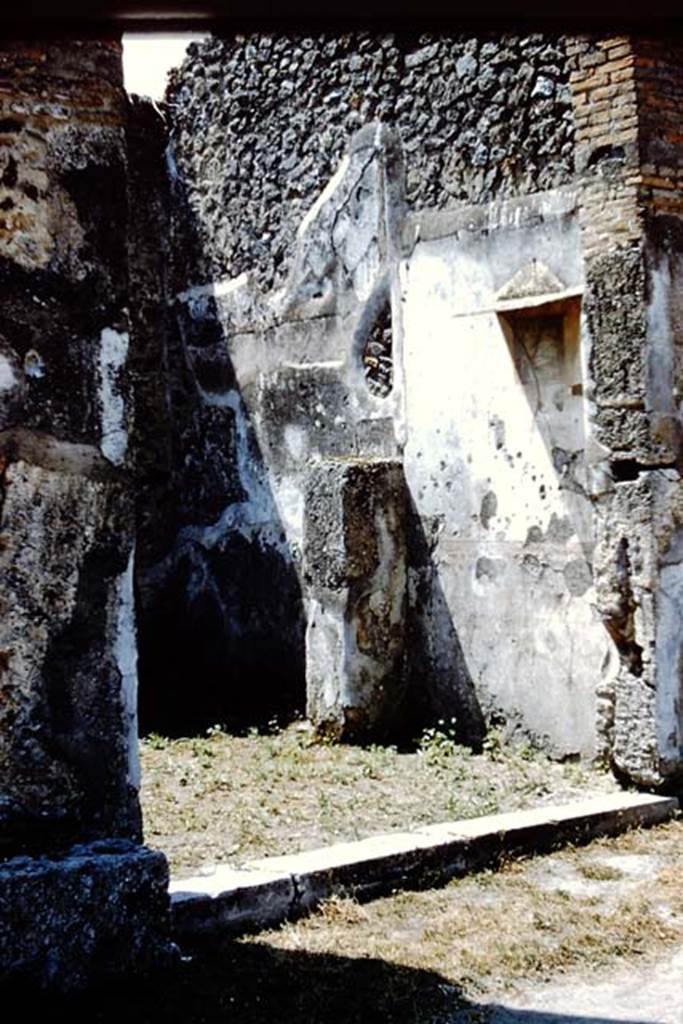
IX.8.2 Pompeii. 1961. Entrance doorway and west wall. Photo by Stanley A. Jashemski.
Source: The Wilhelmina and Stanley A. Jashemski archive in the University of Maryland Library, Special Collections (See collection page) and made available under the Creative Commons Attribution-Non Commercial License v.4. See Licence and use details.
J61f0834
![IX.8.2 Pompeii. March 2009. Entrance on Via di Nola. According to Della Corte, written on the east (left) side of the entrance were –
Potitus cum (Rustio) V(ero) (rogat) [CIL IV 3736]
Potitus rog(at) [CIL IV 3732]
Potito f(e)lic(iter) [CIL IV 3735 (with Note 1 that in CIL IV it was registered as Potito filio (?)).
Also written to the side of the entrance:
Poveri rog(ant) [CIL IV 3730]
(Adiut?)or, o (Vict?)or puer rog(at) [CIL IV 3739]
Discentes rog(ant) [CIL IV 362]
See Della Corte, M., 1965. Case ed Abitanti di Pompei. Napoli: Fausto Fiorentino. (p.134)
According to Epigraphik-Datenbank Clauss/Slaby (See www.manfredclauss.de) these read as –
Suettium [3]
Potitus cum V[icinis( ?)]
dignos coloniae vir(os) [ [CIL IV 3736]
Here
/n
/nium
aed(ilem) Potitus rog(at) [CIL IV 3732]
Paquium aed(ilem)
Potito filio ADI [CIL IV 3735]
Herennium
pomeri rog(ant) [CIL IV 3730]
]or puer rog(at) [CIL IV 3739]
Verum d(uum)vir(um) i(ure) d(icundo) o(ro) v(os) <f=S>(aciatis) d<i=E>scen<t=D>e(s) d(ignum) r(ei) p(ublicae) [CIL IV 362]](9%2008%2002_files/image009.jpg)
IX.8.2 Pompeii. March
2009. Entrance on Via di Nola.
According to Della Corte, written on the east (left) side of the entrance were –
Potitus cum
(Rustio) V(ero) (rogat) [CIL IV 3736]
Potitus rog(at) [CIL
IV 3732]
Potito f(e)lic(iter) [CIL IV 3735 (with Note 1 that in CIL IV it was registered as Potito filio (?)).
Also written to the side of the entrance:
Poveri
rog(ant) [CIL IV 3730]
(Adiut?)or, o (Vict?)or
puer rog(at)
[CIL IV 3739]
Discentes rog(ant)
[CIL IV 362]
See Della Corte, M., 1965. Case ed Abitanti di Pompei. Napoli: Fausto Fiorentino. (p.134)
According to Epigraphik-Datenbank Clauss/Slaby (See www.manfredclauss.de) these read as –
Suettium [3]
Potitus cum V[icinis( ?)]
dignos coloniae vir(os) [ [CIL IV 3736]
Here
/n
/nium
aed(ilem) Potitus rog(at) [CIL IV 3732]
Paquium aed(ilem)
Potito filio ADI [CIL IV
3735]
Herennium
pomeri rog(ant) [CIL IV 3730]
]or puer rog(at) [CIL IV
3739]
Verum
d(uum)vir(um) i(ure) d(icundo) o(ro) v(os) <f=S>(aciatis)
d<i=E>scen<t=D>e(s) d(ignum) r(ei) p(ublicae) [CIL IV 362]
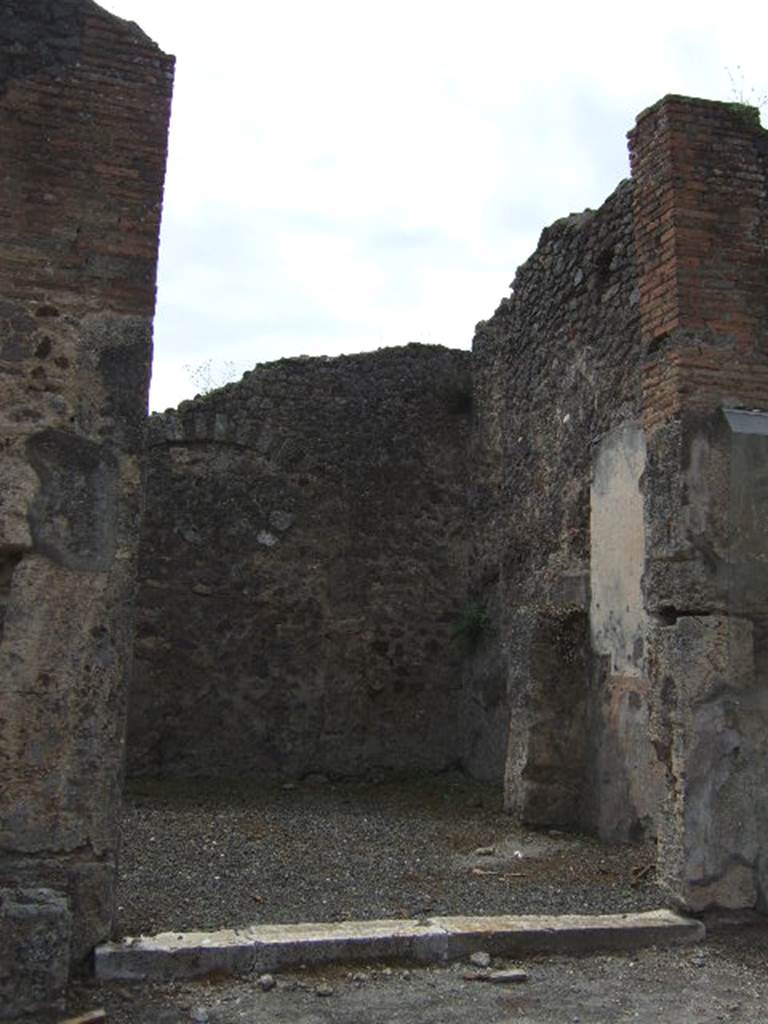
IX.8.2 Pompeii. May 2006. Entrance doorway.
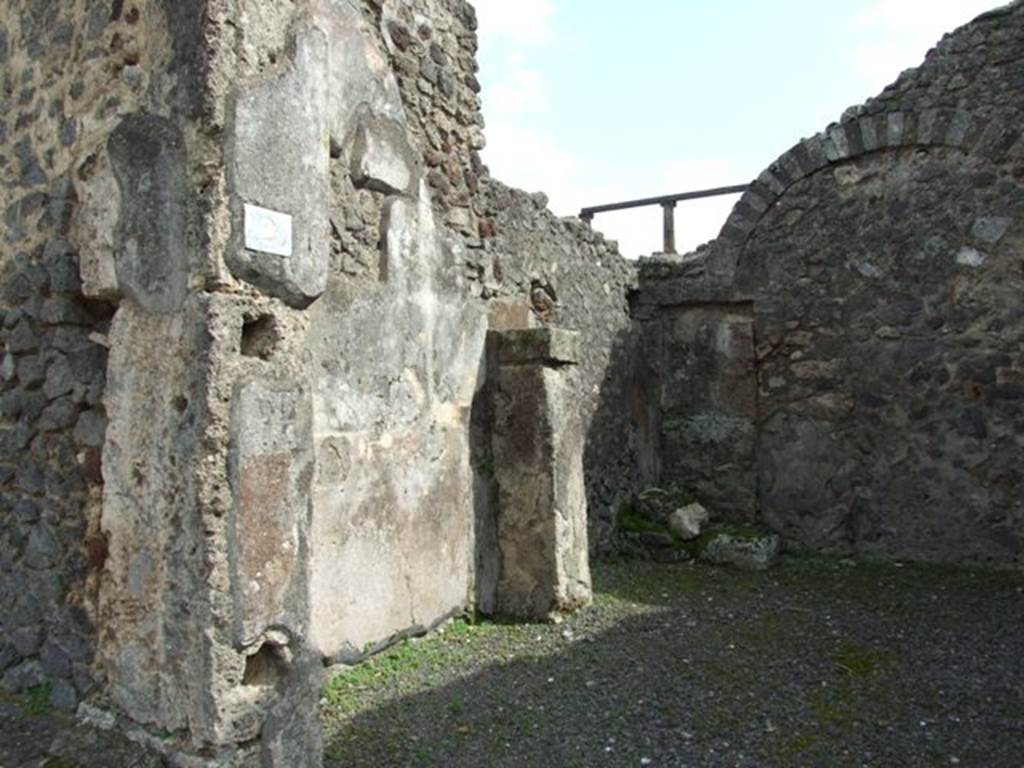
IX.8.2 Pompeii. March 2009. East wall of front and rear rooms.
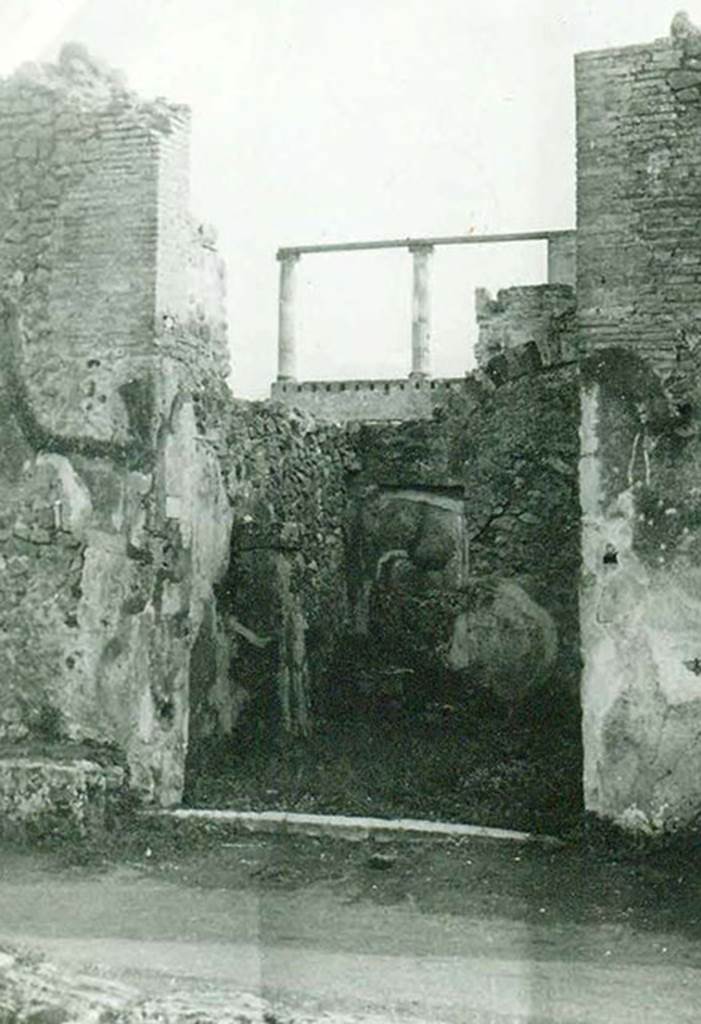
IX.8.2 Pompeii. 1945. Looking south-east through entrance doorway. Photo courtesy of Rick Bauer.
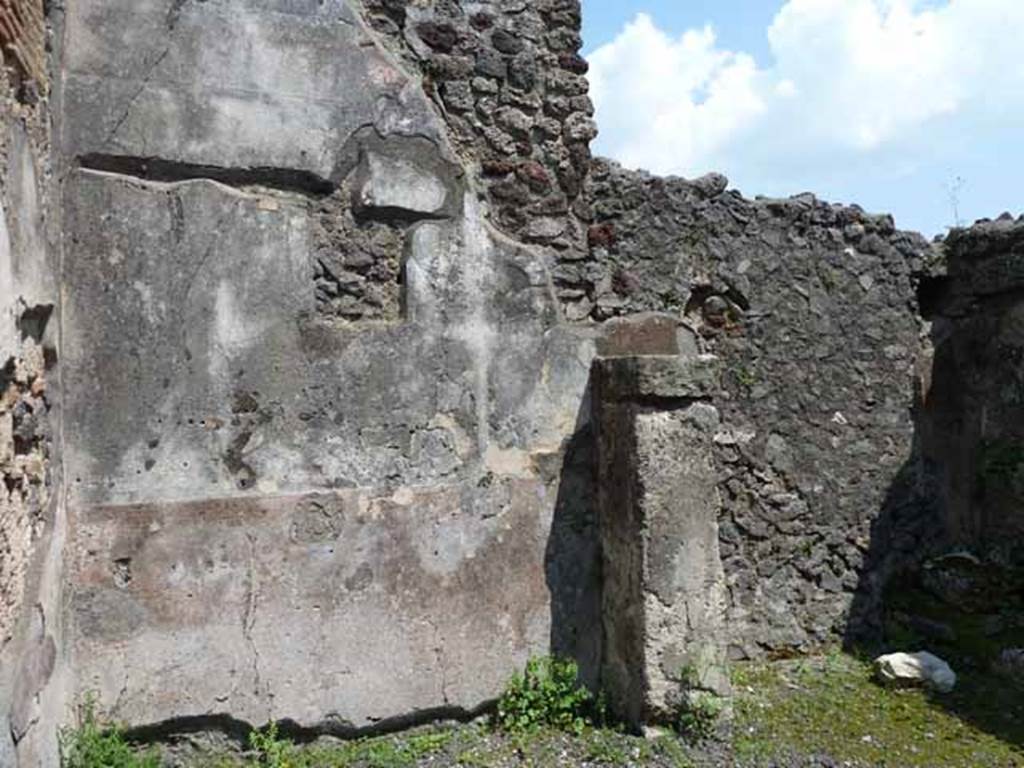
IX.8.2 Pompeii. May 2010. East wall of front and rear rooms.
According to Garcia y Garcia, a painting of a sacred landscape would have been seen in the centre of the east wall.
This was soon lost and is no longer visible.
Two drawings of the painting can be found in the German Archaeological Institute of Rome.
See Garcia y Garcia, L., 2005. Pupils, Teachers and Schools in Pompeii. Roma: Bardi editore. (p. 72-3, with figs 41-42 showing two drawings of the sacred landscape).
See De Carolis,
E. 1989. Italienische Reise. Naples:
Bibliopolis, (p. 250 & fig. 93 on page 323)
There was a frieze on a black background on the upper walls.
A small trace survived on the east wall, depicting figures of philosophers.
Five drawings of these can be seen in Fig.120, of Schefold, but it says they were found at the shop at IX.8.4.
See Schefold, K., 1962. Vergessenes Pompeji. Bern: Francke. (Fig.120)
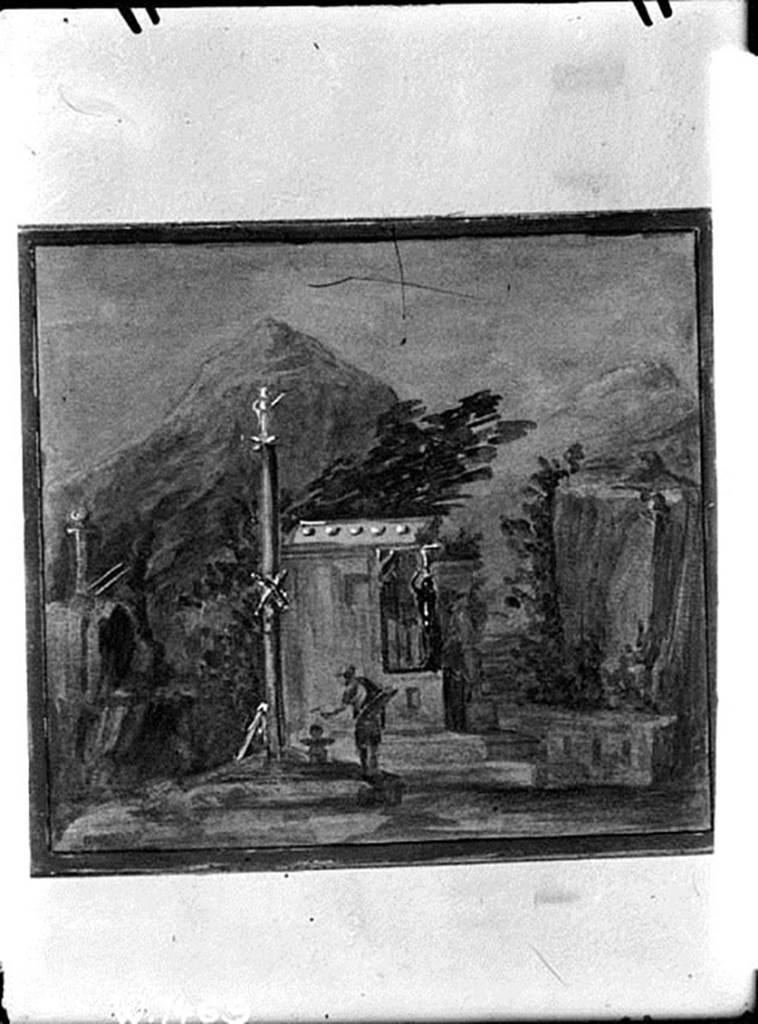
IX.8.2 Pompeii. W.1469. Painting of sacred landscape found in the central part of the east wall.
According to Bragantini, this painting was removed.
It showed a woman sacrificing at an altar under a column with a statue of Priapus on it.
See
Bragantini, de Vos, Badoni, 1986. Pitture e Pavimenti di Pompei, Parte 3. Rome: ICCD. (p.511)
Photo by Tatiana
Warscher. Photo © Deutsches Archäologisches Institut, Abteilung Rom, Arkiv.
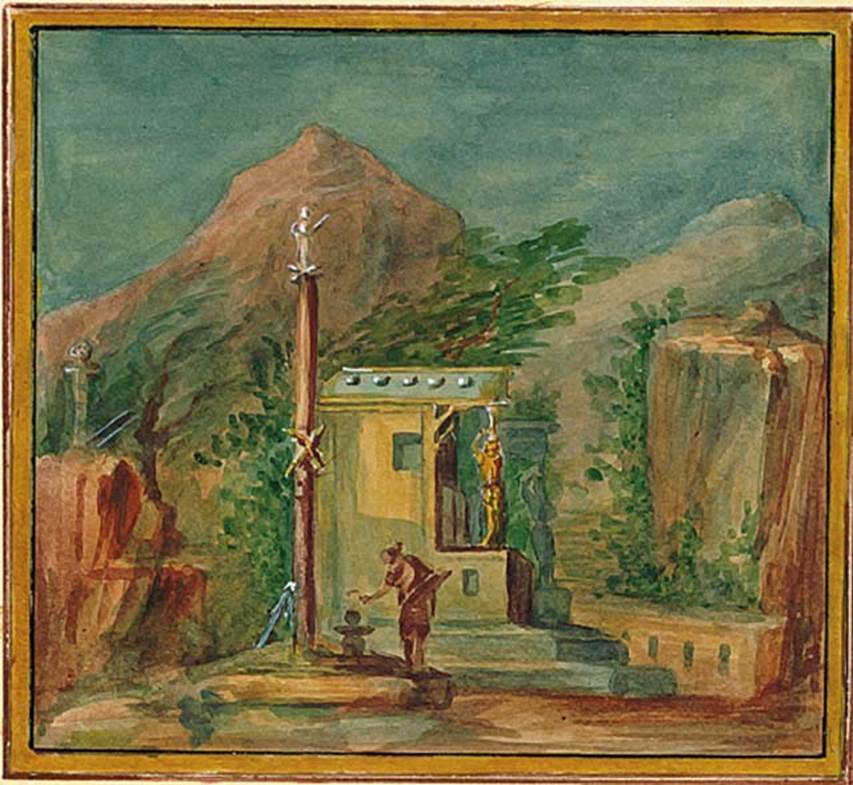
IX.8.2 Pompeii. Copy of painting of sacred landscape, found in the central part of the east wall.
DAIR 83.371. Photo
© Deutsches Archäologisches Institut, Abteilung Rom, Arkiv.
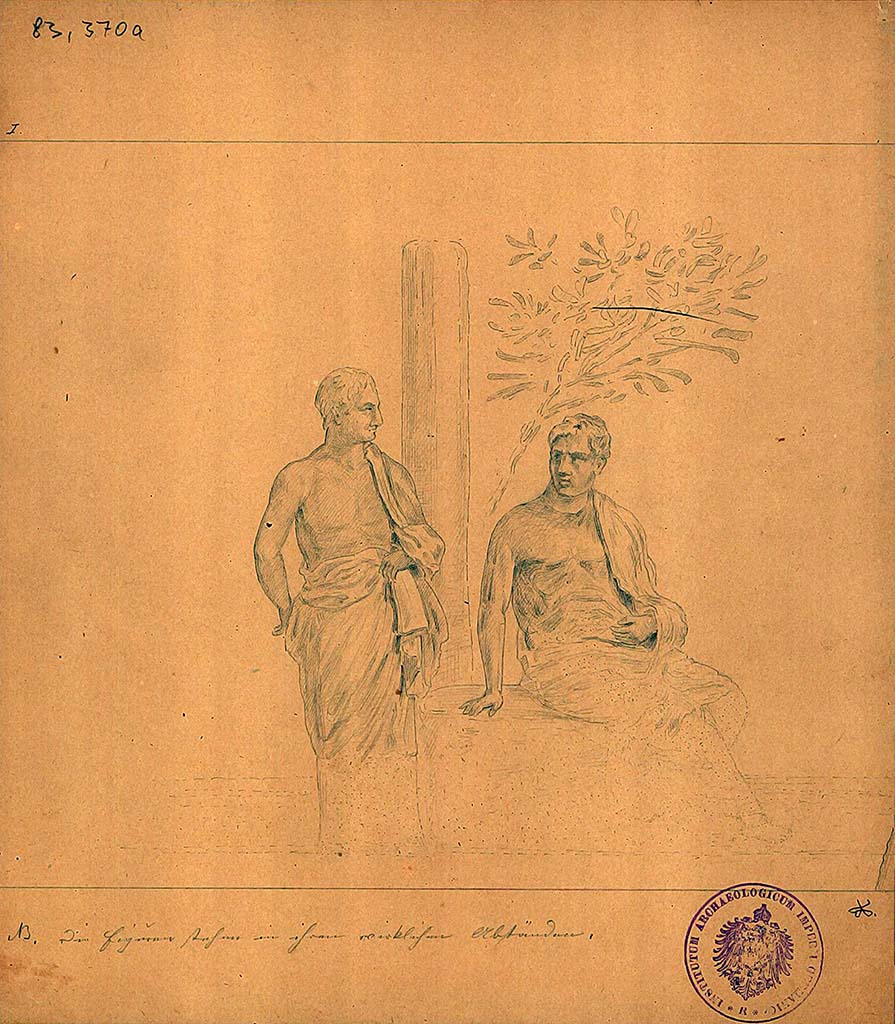
IX.8.2 Pompeii. Drawing of two philosophers one of five sketches by A. Sikkard depicting figures of philosophers.
These would have been seen on a black background, a small trace survived in the frieze on the upper east wall.
DAIR 83.370a.
Photo © Deutsches Archäologisches Institut, Abteilung Rom, Arkiv.
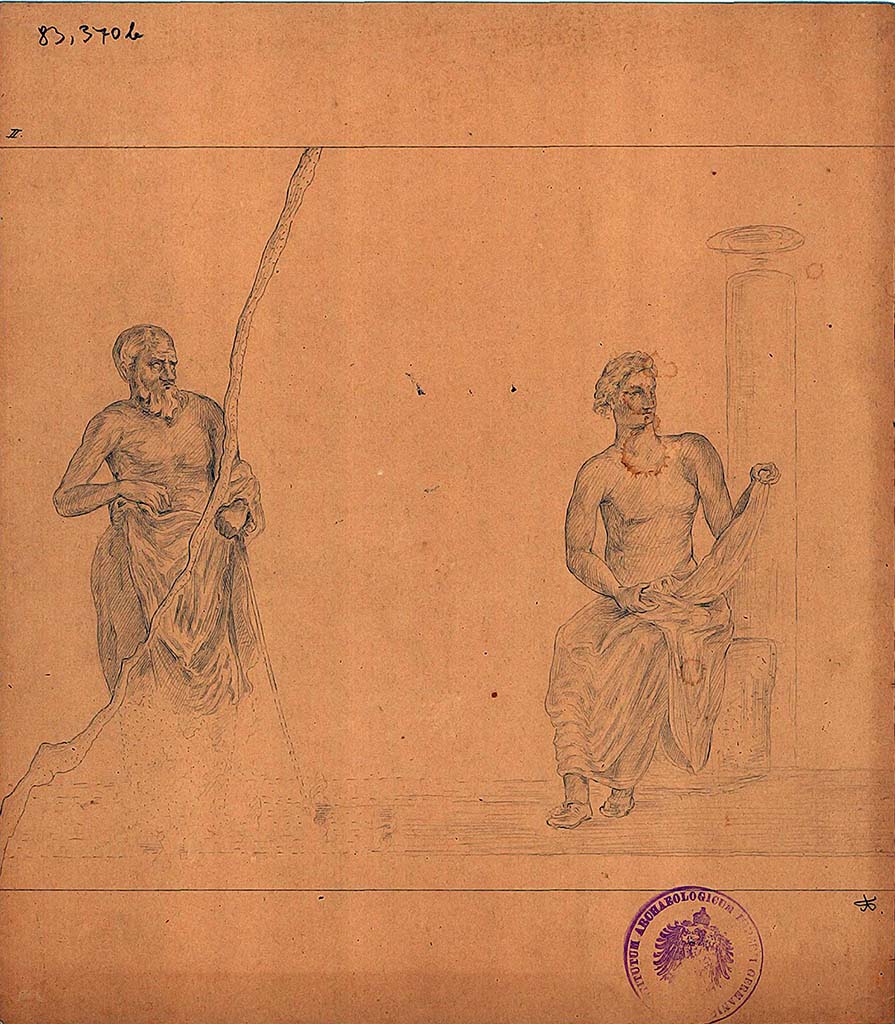
IX.8.2 Pompeii. Drawing of two philosophers, second of five sketches by A. Sikkard depicting figures of philosophers.
These would have been seen on a black background, a small trace survived in the frieze on the upper east wall.
DAIR 83.370b.
Photo © Deutsches Archäologisches Institut, Abteilung Rom, Arkiv.
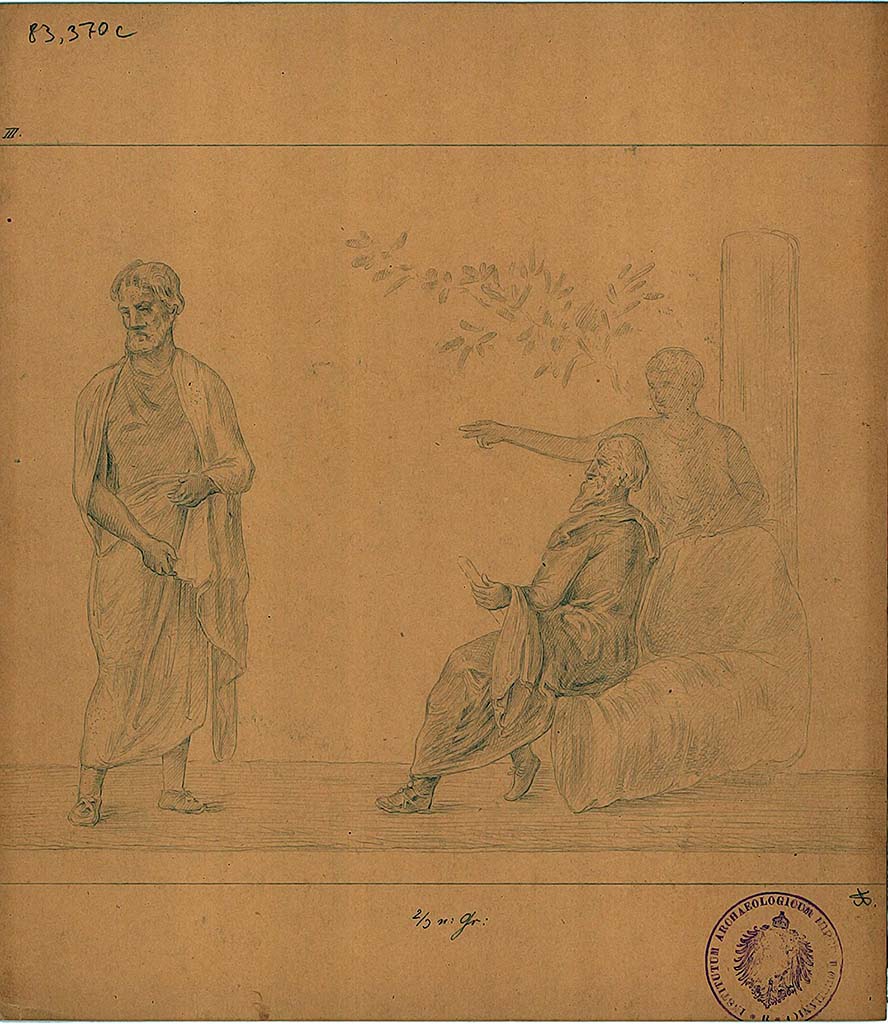
IX.8.2 Pompeii. Drawing of three philosophers, the third of five sketches by A. Sikkard depicting figures of philosophers.
These would have been seen on a black background, a small trace survived in the frieze on the upper east wall.
DAIR 83.370c.
Photo © Deutsches Archäologisches Institut, Abteilung Rom, Arkiv.
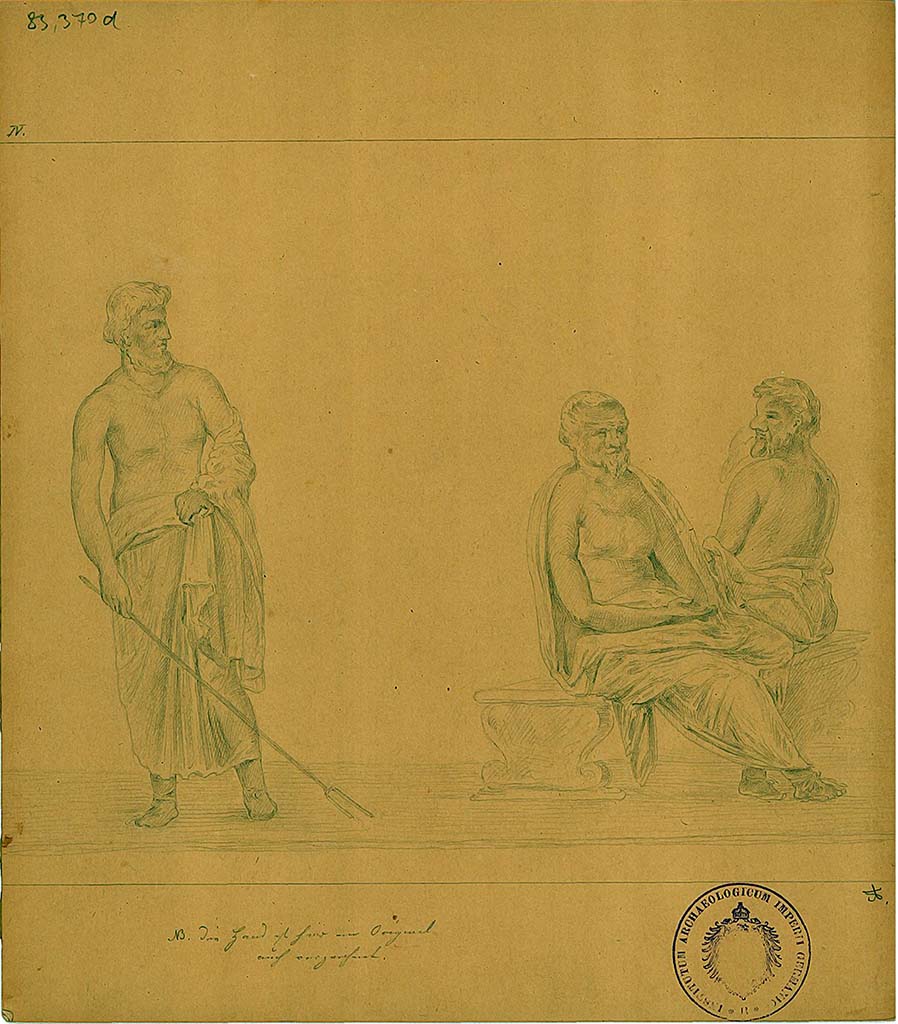
IX.8.2 Pompeii. Drawing three philosophers, the fourth of five sketches by A. Sikkard depicting figures of philosophers.
These would have been seen on a black background, a small trace survived in the frieze on the upper east wall.
DAIR 83.370d.
Photo © Deutsches Archäologisches Institut, Abteilung Rom, Arkiv.
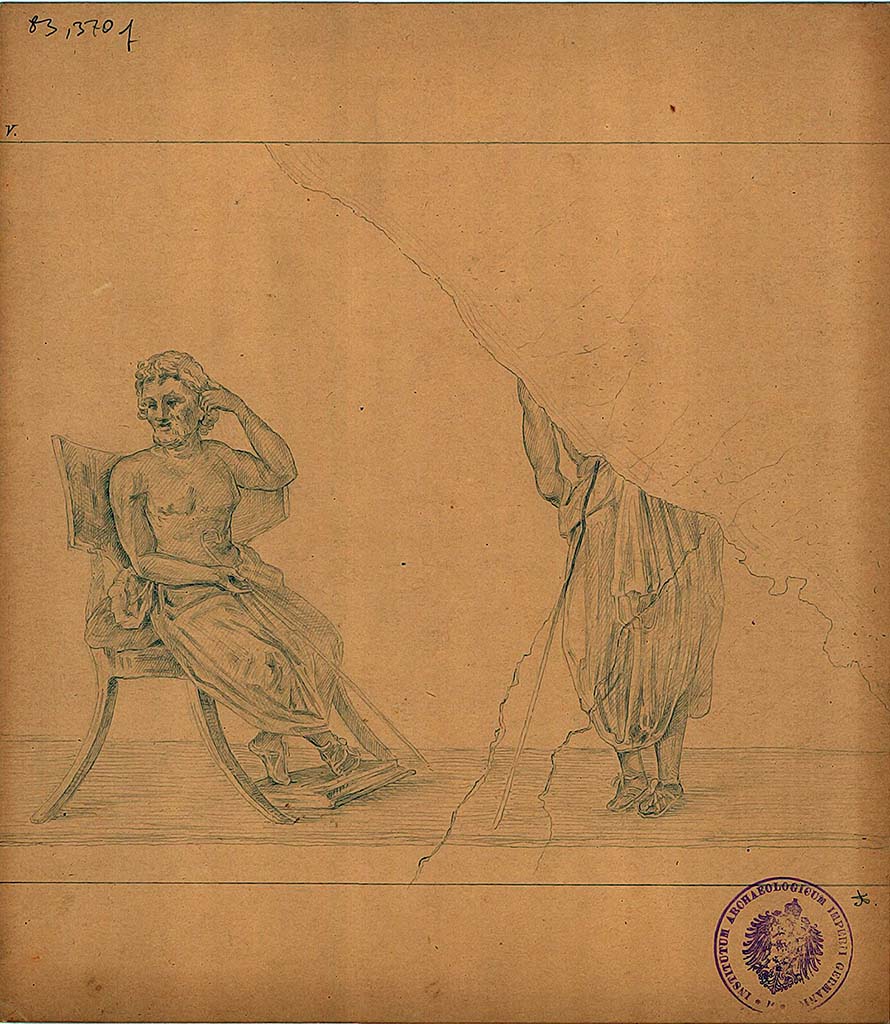
IX.8.2 Pompeii. Drawing of two philosophers, the fifth of five sketches depicting by A. Sikkard figures of philosophers.
These would have been seen on a black background, a small trace survived in the frieze on the upper east wall.
DAIR 83.370e.
Photo © Deutsches Archäologisches Institut, Abteilung Rom, Arkiv.
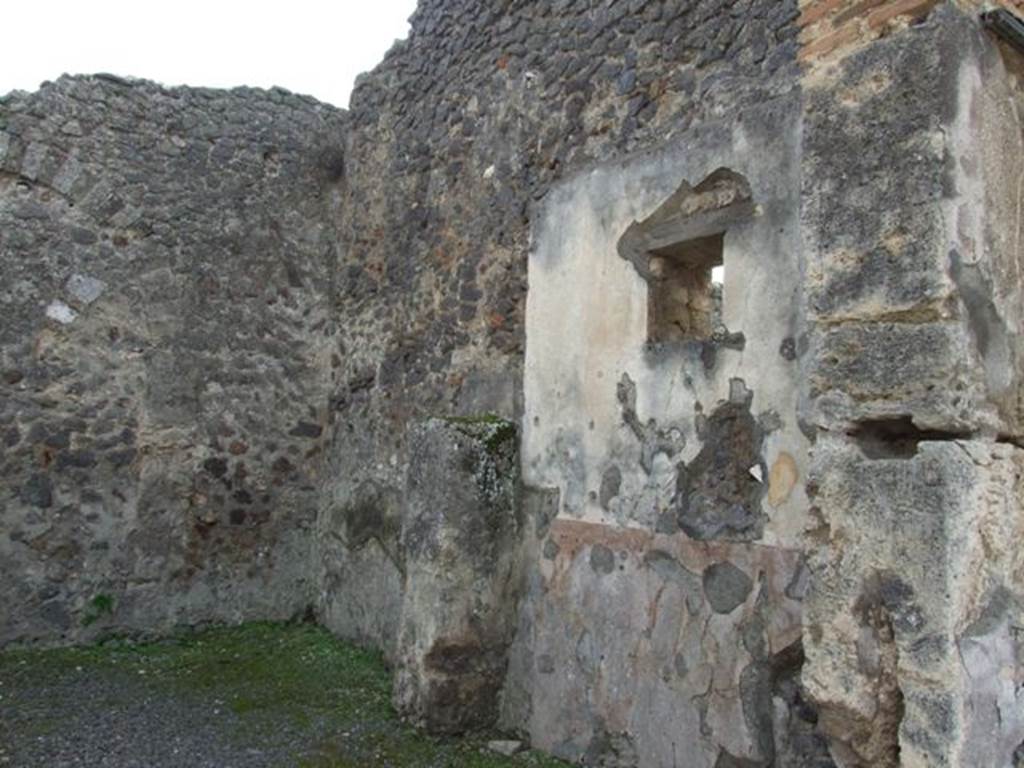
IX.8.2 Pompeii. March 2009. West wall of front and rear rooms.
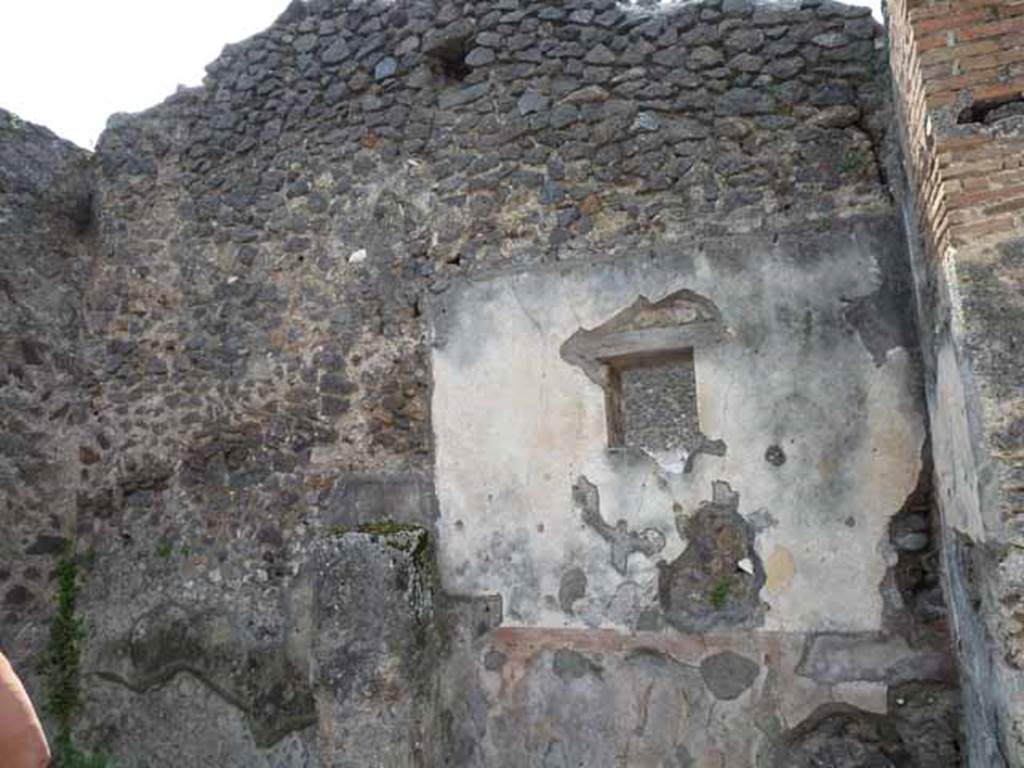
IX.8.2 Pompeii. May 2010. West wall of front and rear rooms.
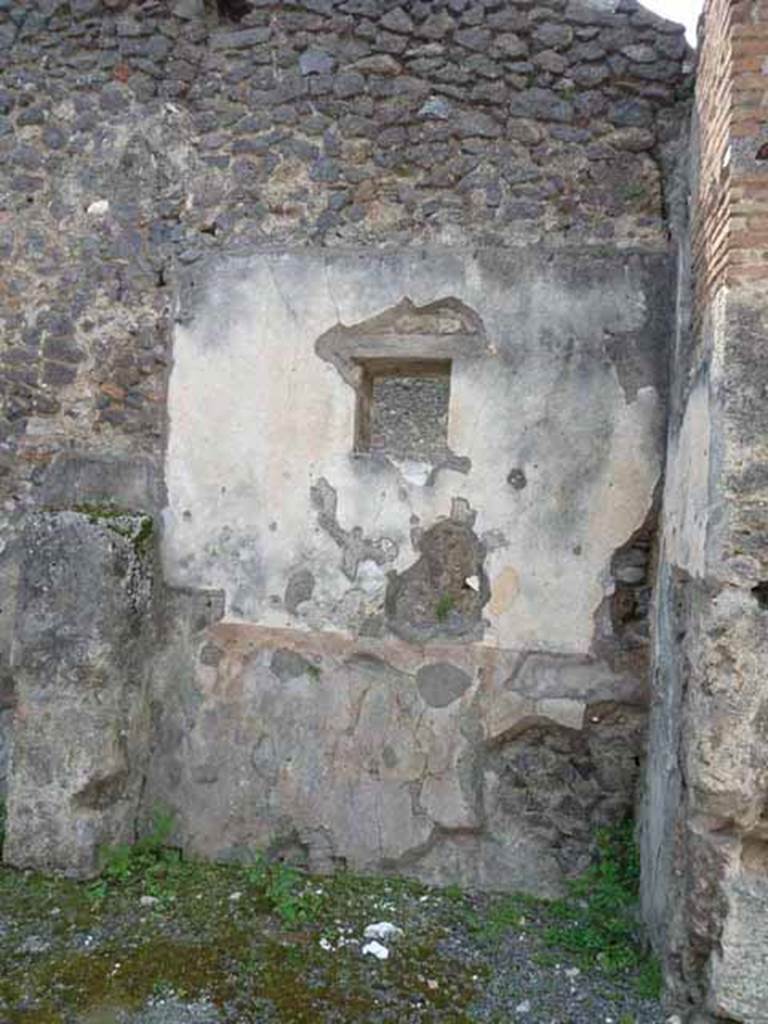
IX.8.2 Pompeii. May 2010. West wall of front room of shop, with window now to IX.8.1, in centre.
According to Garcia y Garcia the painting of a sacred landscape, in the middle of the central panel on the west wall is still partially discernible.
Perhaps this painting has been removed from the wall for safe-keeping and a window inserted.
See Garcia y Garcia, L., 2005. Pupils, Teachers and Schools in Pompeii. Roma: Bardi editore.
(p. 74-5, with figs 43-45 showing three versions of the sacred landscape, now in the German Archaeological Institute of Rome)
See De Carolis,
E. 1989. Italienische Reise. Naples:
Bibliopolis, (p.250 & fig. 92 on page 323)
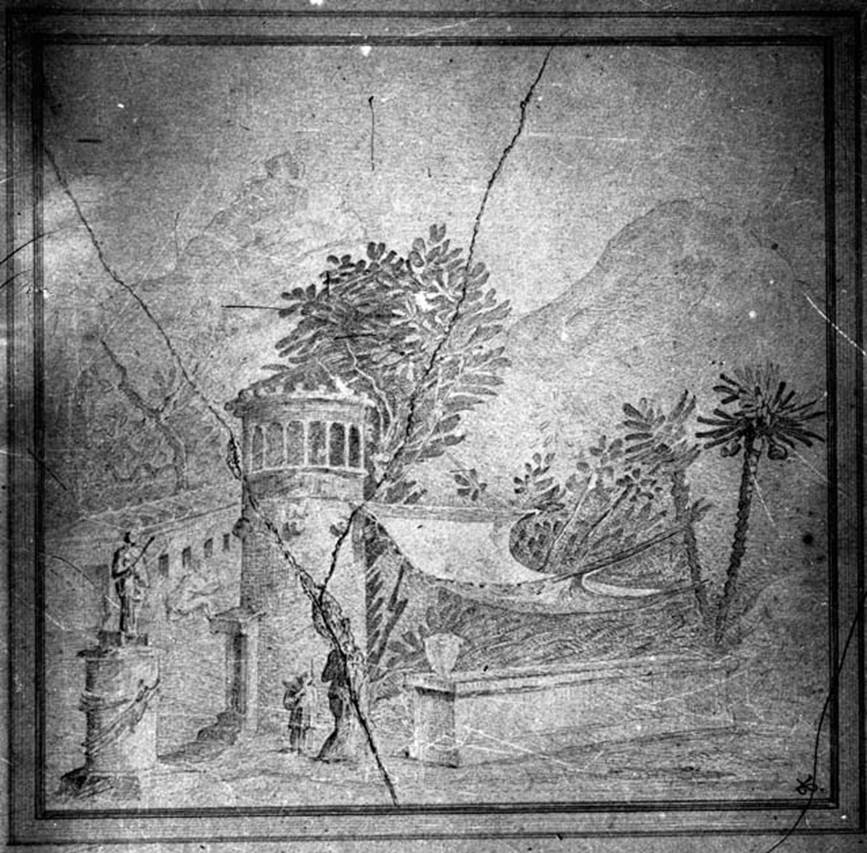
IX.8.2 Pompeii. W.1473. Sacred landscape from west wall
According to Bragantini, the painting has been removed.
It showed an altar with a statue of Hekate, a tower, a tree, an offering woman, a small child and a sun-shade attached to a palm-tree.
See
Bragantini, de Vos, Badoni, 1986. Pitture e Pavimenti di Pompei, Parte 3. Rome: ICCD. (p.511)
Photo by Tatiana
Warscher. Photo © Deutsches Archäologisches Institut, Abteilung Rom, Arkiv.
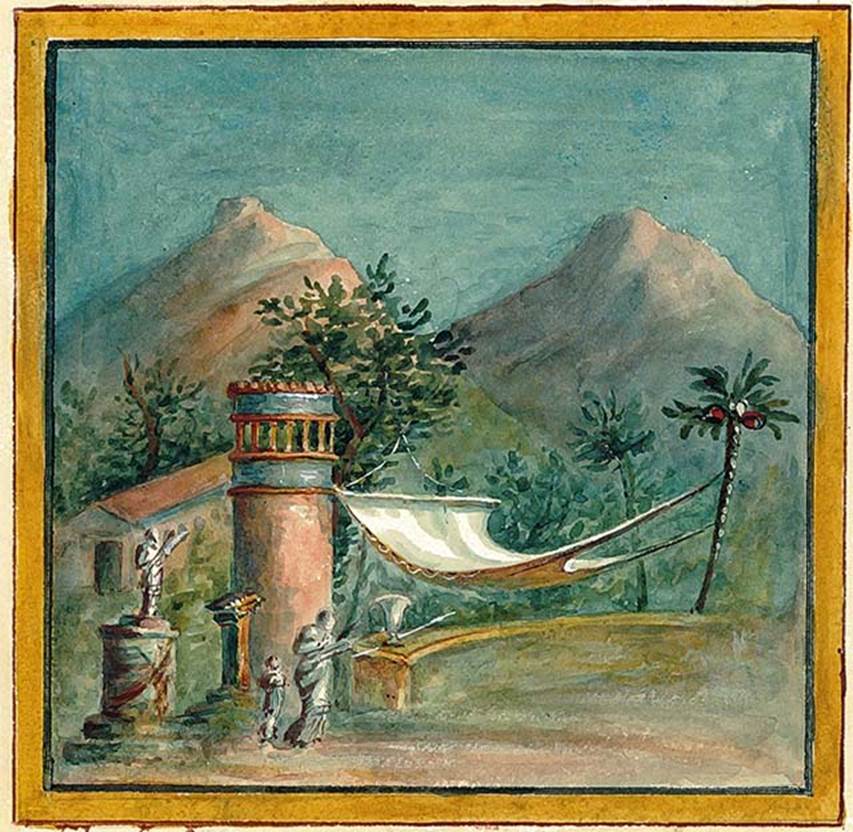
IX.8.2 Pompeii. Watercolour copy of sacred landscape from west wall.
It shows an altar with a statue of Hecate, a tower, a tree, an offering woman, a small child and a sun-shade attached to a palm-tree.
DAIR 83.369.
Photo © Deutsches Archäologisches Institut, Abteilung Rom, Arkiv.
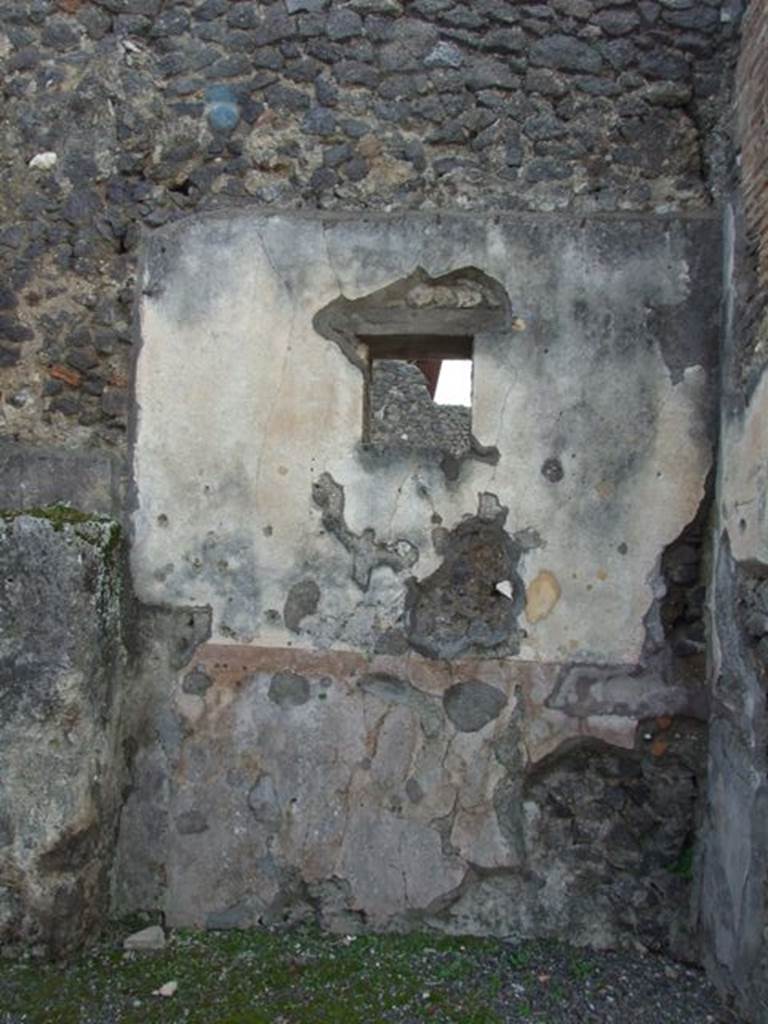
IX.8.2 Pompeii. March 2009. West wall of front room of shop, now with window to IX.8.1.
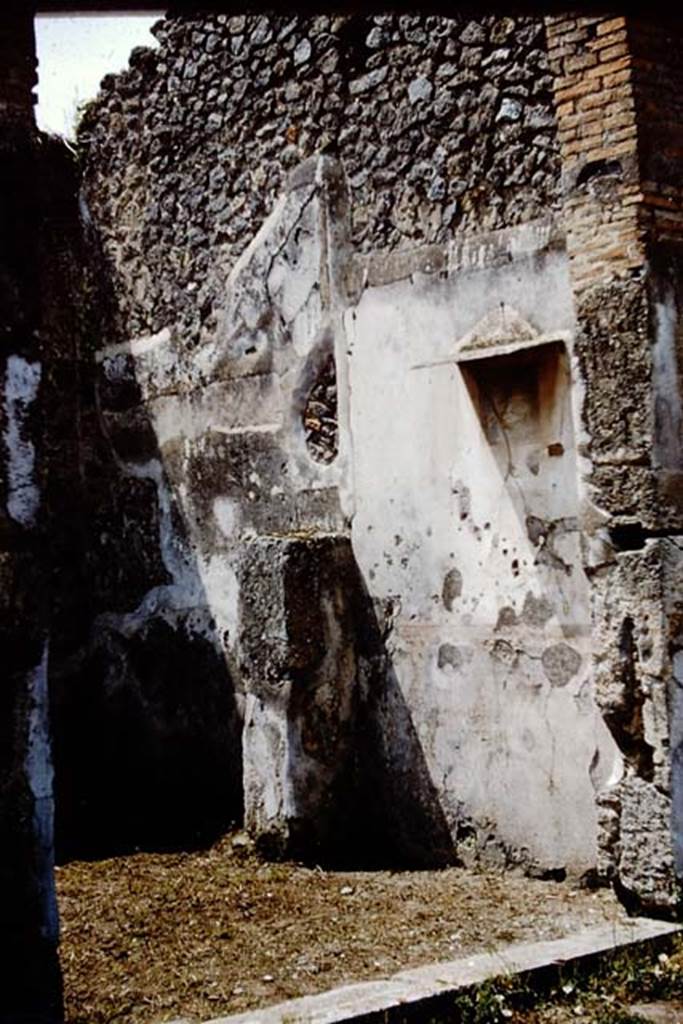
IX.8.2 Pompeii. 1961. West wall, with original painting in situ. Photo by Stanley A. Jashemski.
Source: The Wilhelmina and Stanley A. Jashemski archive in the University of Maryland Library, Special Collections (See collection page) and made available under the Creative Commons Attribution-Non Commercial License v.4. See Licence and use details.
J61f0530
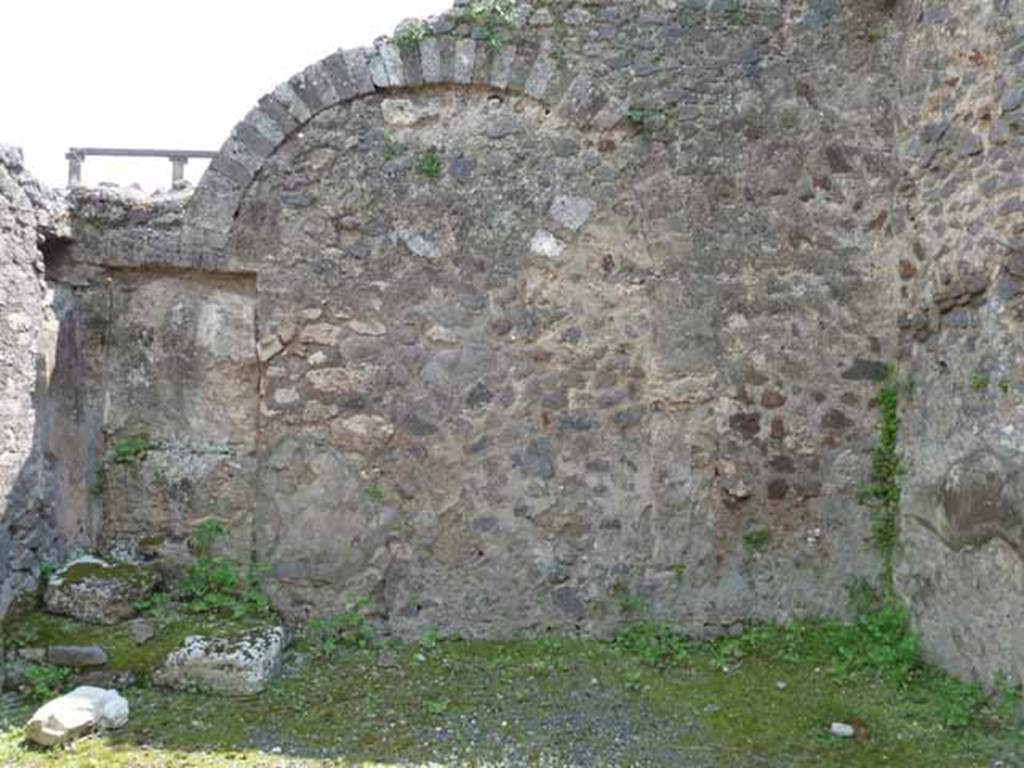
IX.8.2 Pompeii. May 2010. South wall of rear room.
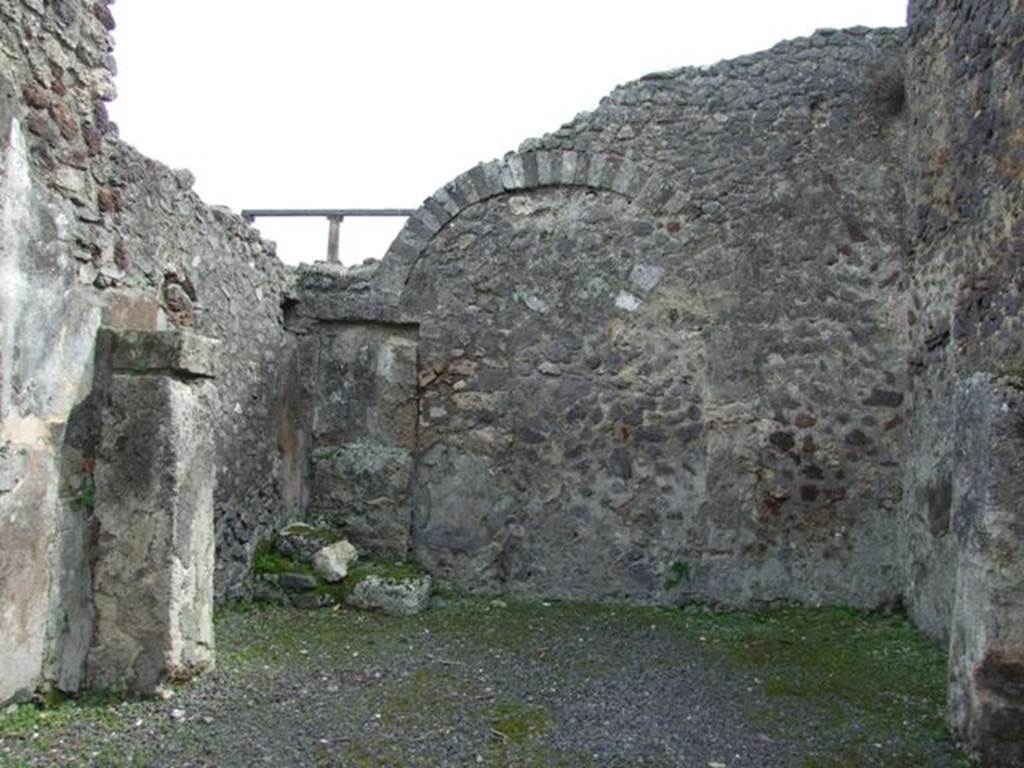
IX.8.2 Pompeii. March 2009. Rear room and south wall.
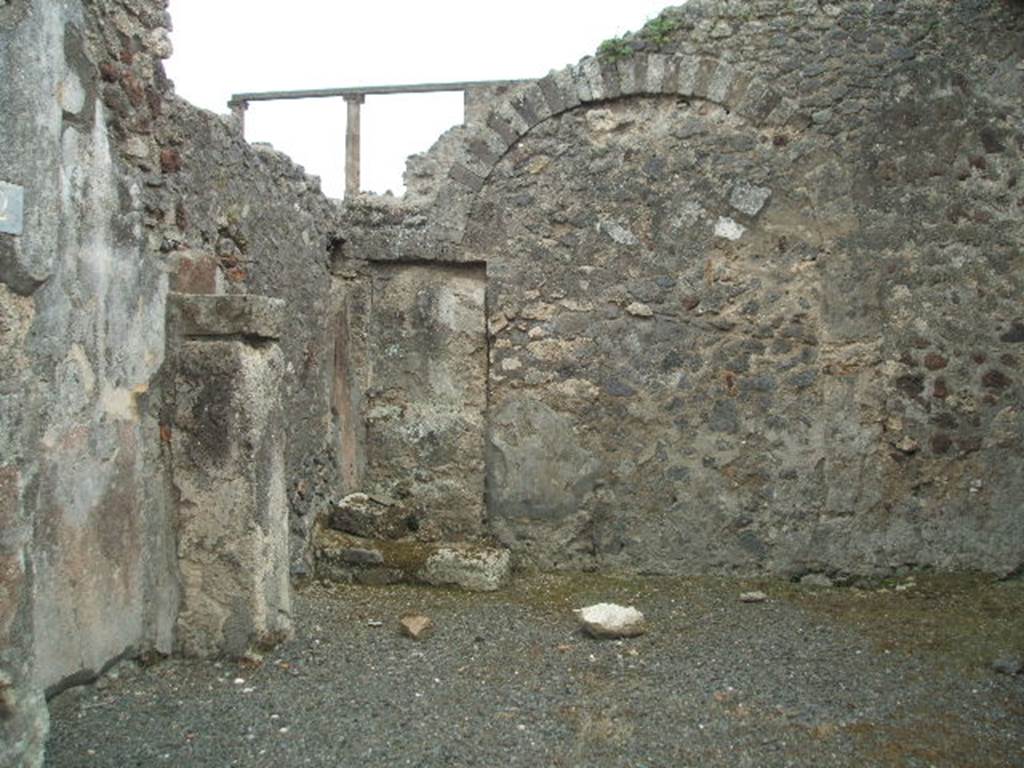
IX.8.2 Pompeii. May 2005. South wall of rear room.
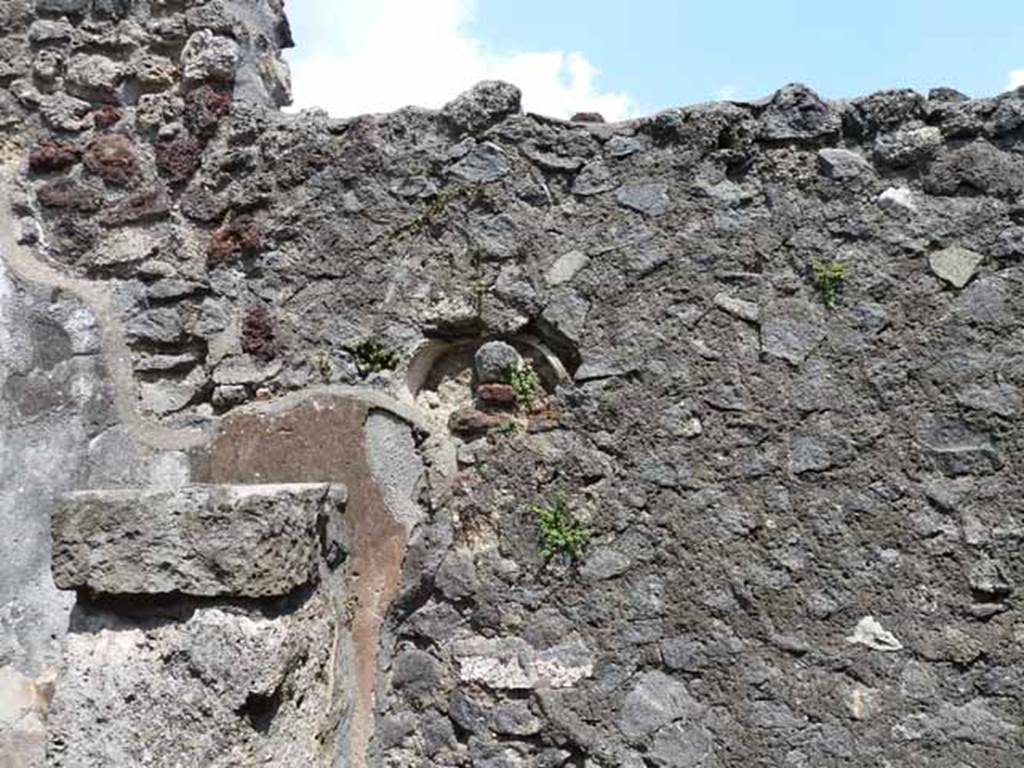
IX.8.2 Pompeii. May 2010. East wall of rear room.
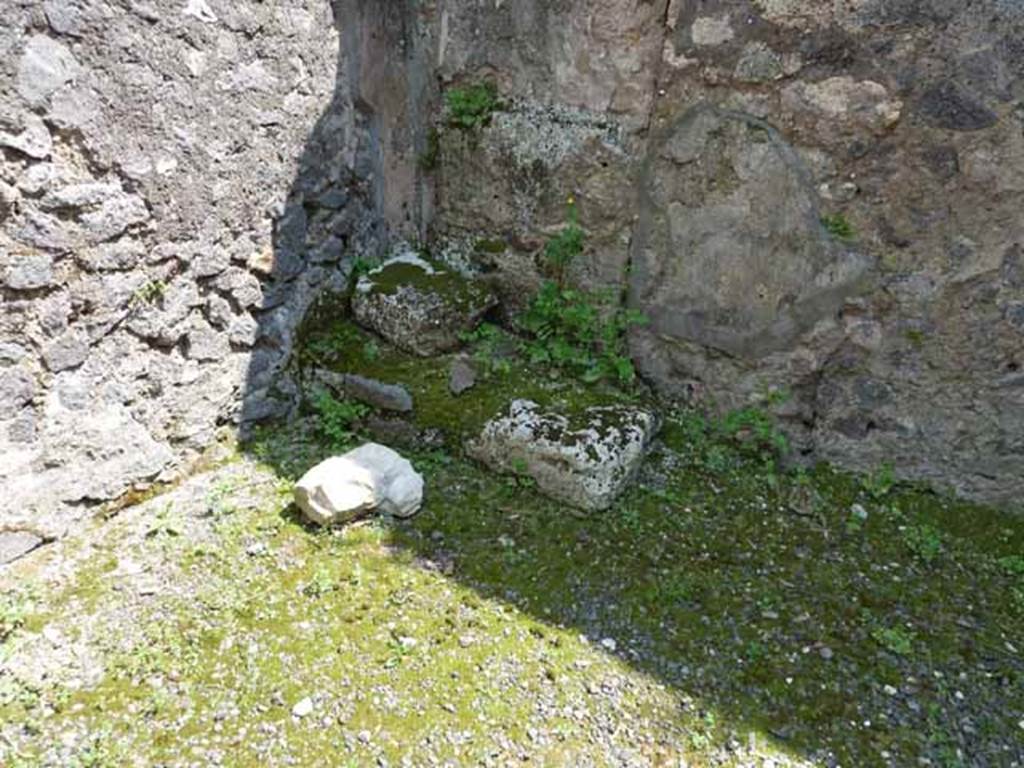
IX.8.2 Pompeii. May 2010. Base of stairs to upper floor in south-east corner of rear room.
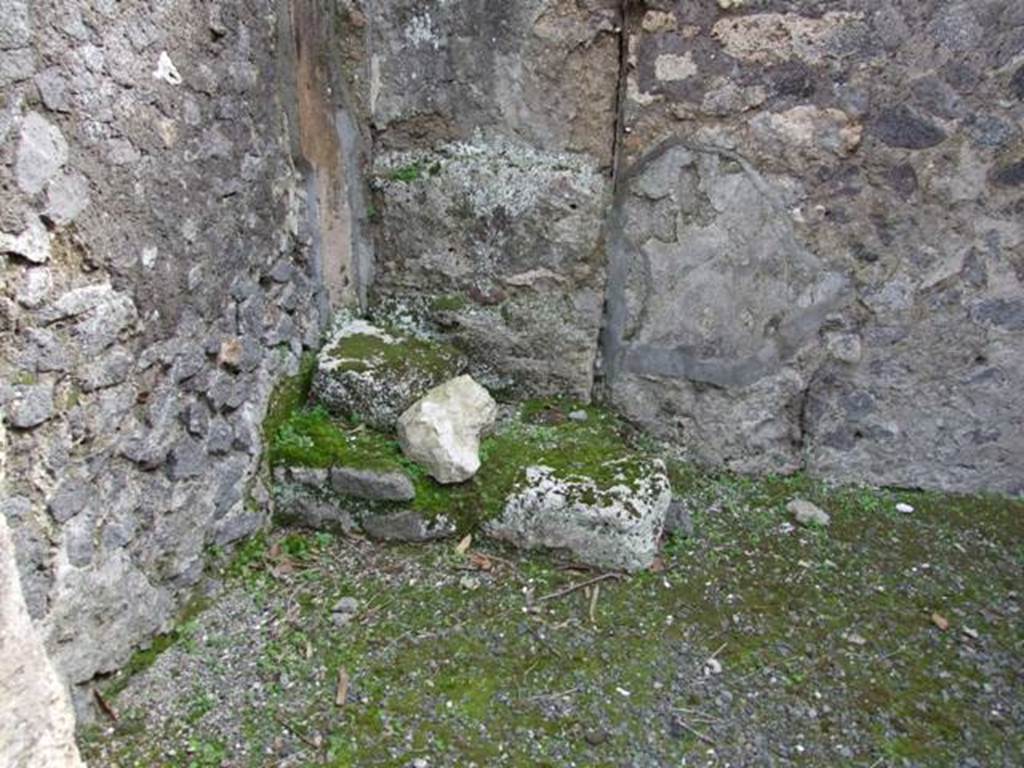
IX.8.2 Pompeii. March 2009.
South-east corner of rear room, with stone base for stairs to wooden pergula. The latrine was under the stairs.
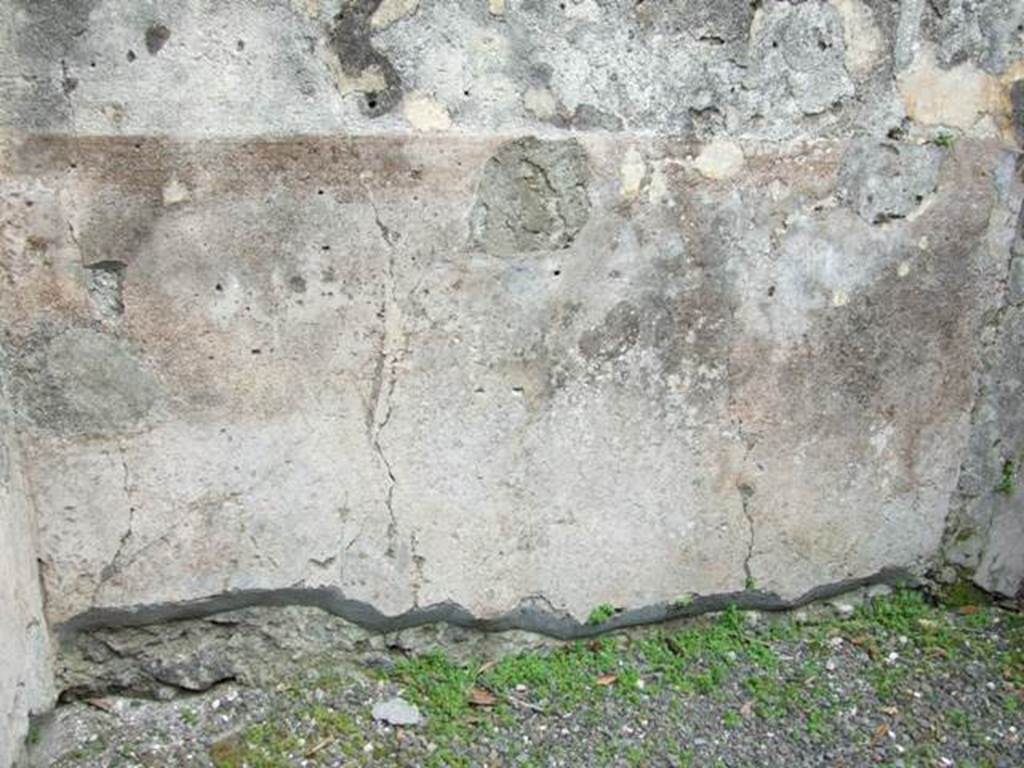
IX.8.2 Pompeii. March 2009. Remains of painted plaster on base of east wall of front room of shop.
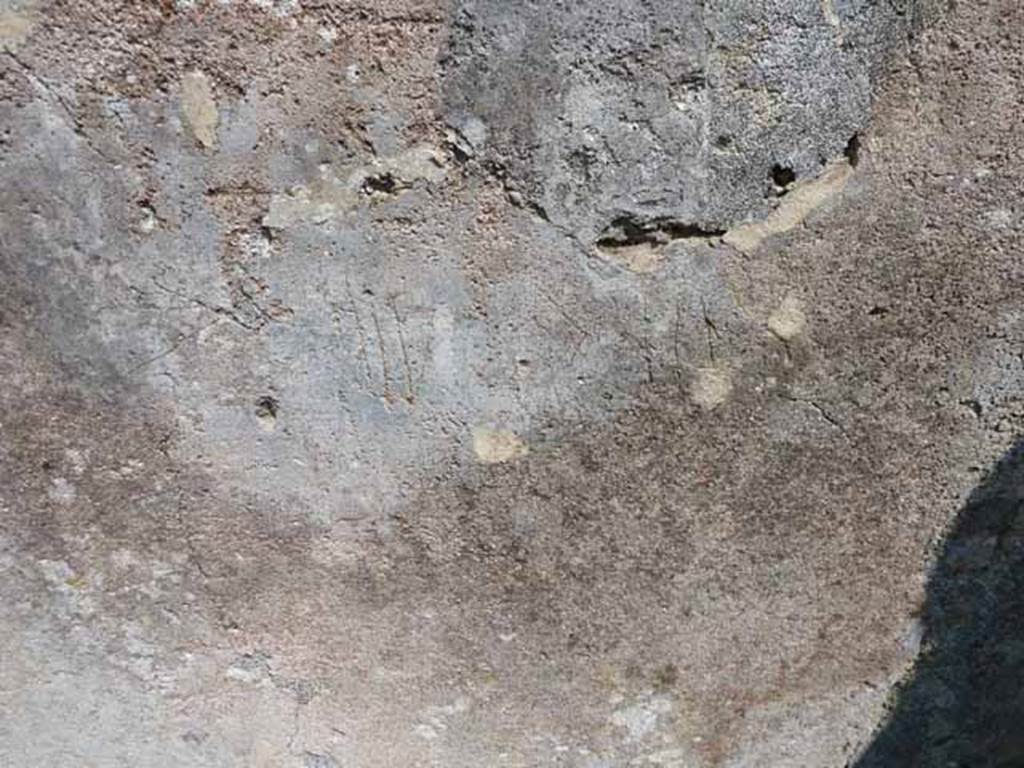
IX.8.2 Pompeii. May 2010. South end of lower east wall of front room of shop, writing on painted plaster.
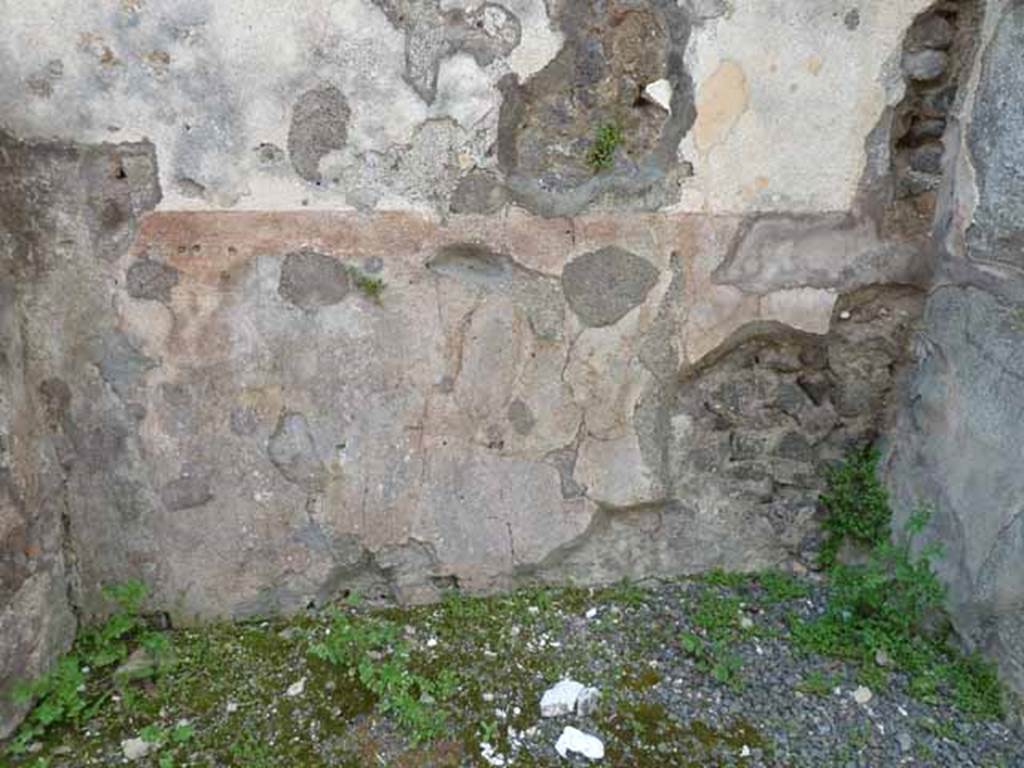
IX.8.2 Pompeii. May 2010. Remains of painted plaster on base of west wall of front room of shop.
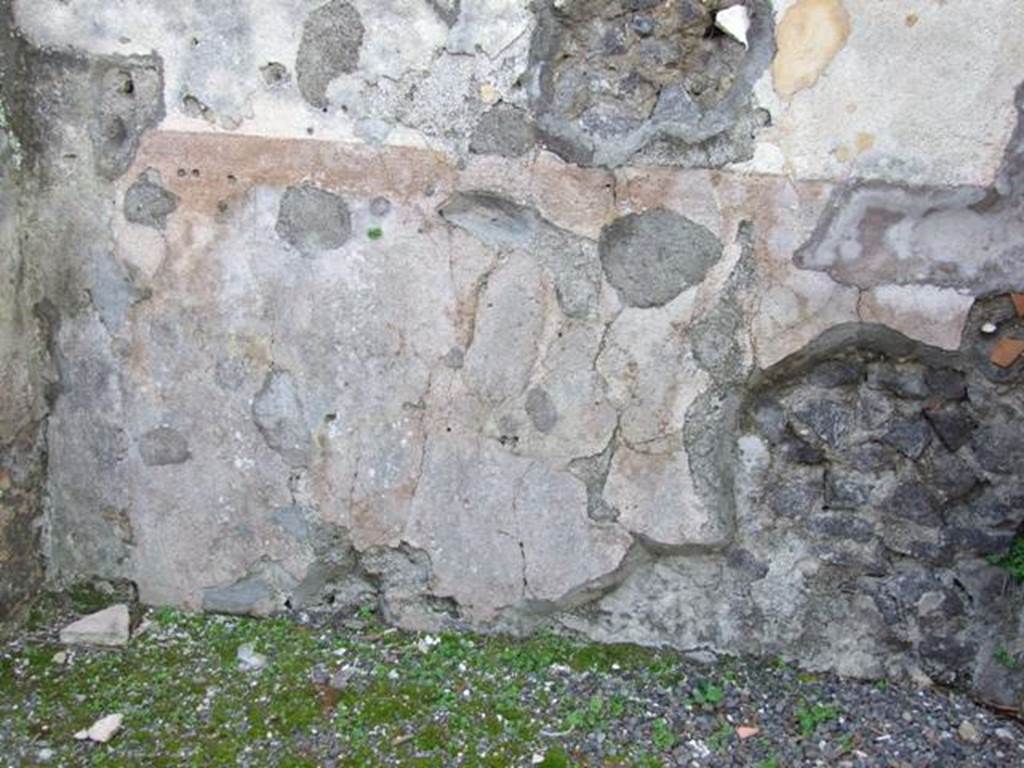
IX.8.2 Pompeii. March 2009. Remains of painted plaster on base of west wall of front room of shop.
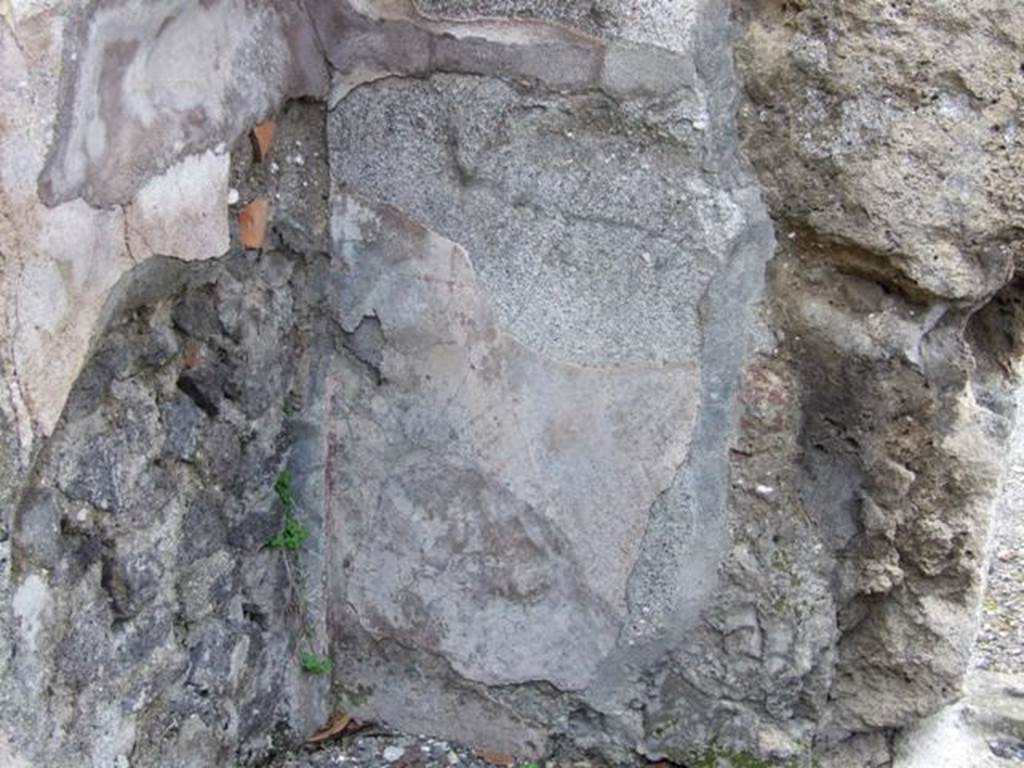
IX.8.2 Pompeii. March 2009. North-west corner of base of walls of front room of shop.
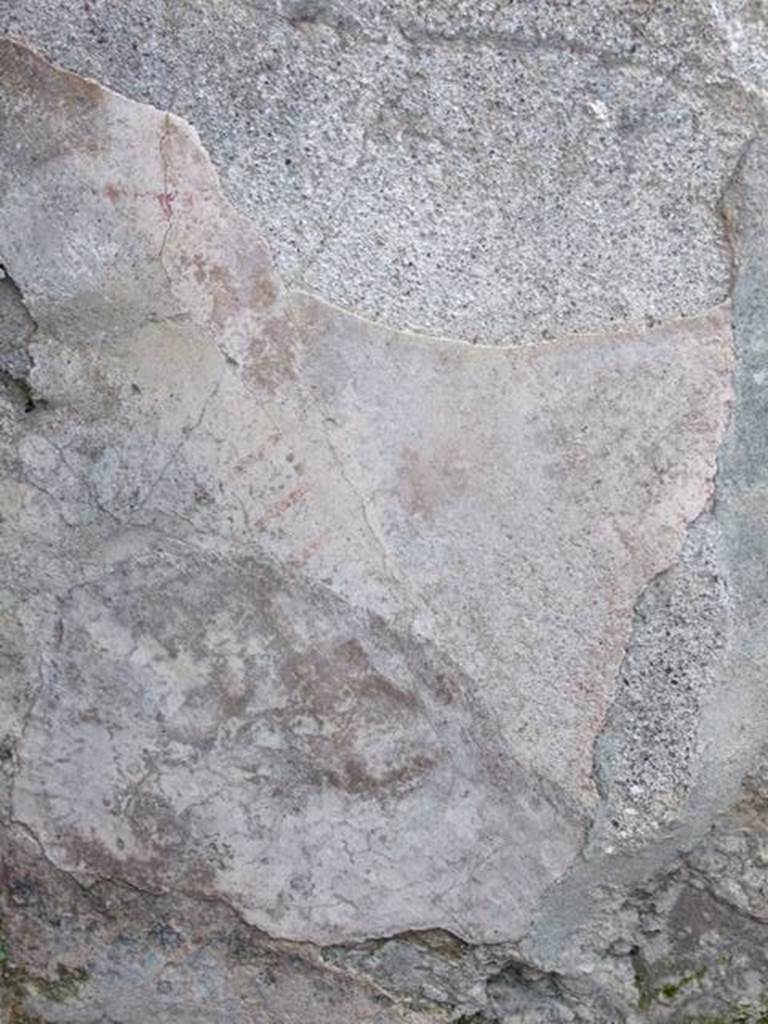
IX.8.2 Pompeii. March 2009. Base of the north wall of the front room of the shop, painted with lattice fence.
According to Jashemski, there were plants visible behind the lattice. Today, they are no longer visible.
See Jashemski, W. F., 1993. The Gardens of Pompeii, Volume II: Appendices. New York: Caratzas. (p.366, no.97)
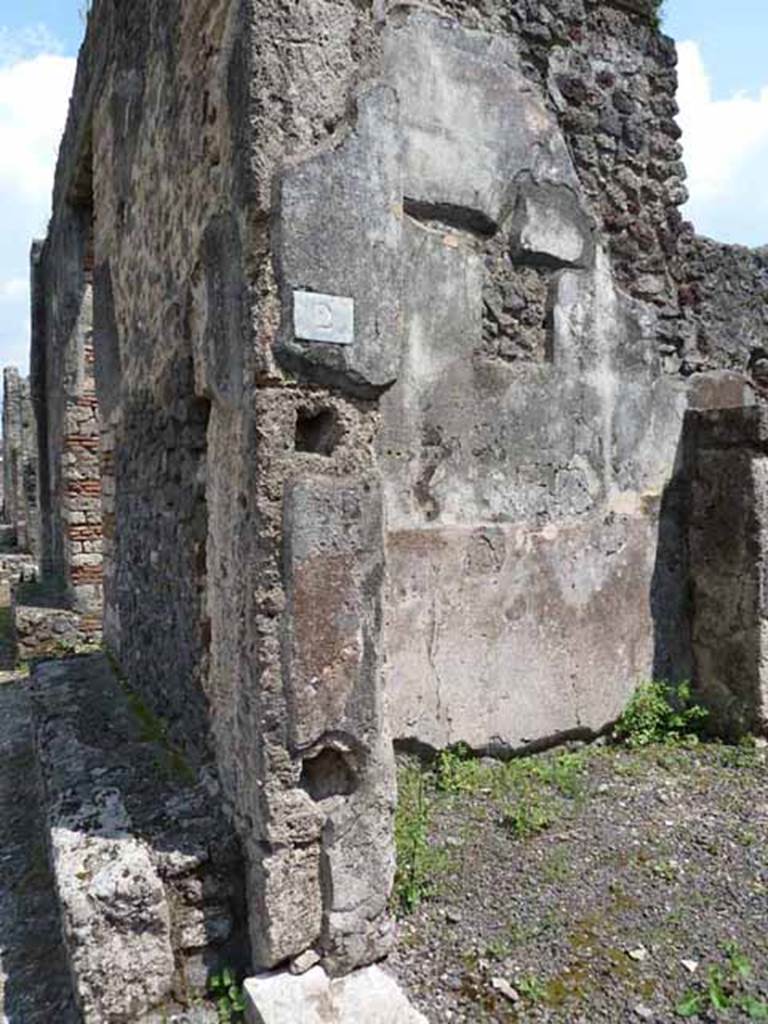
IX.8.2 Pompeii. May 2010. East side of entrance doorway.
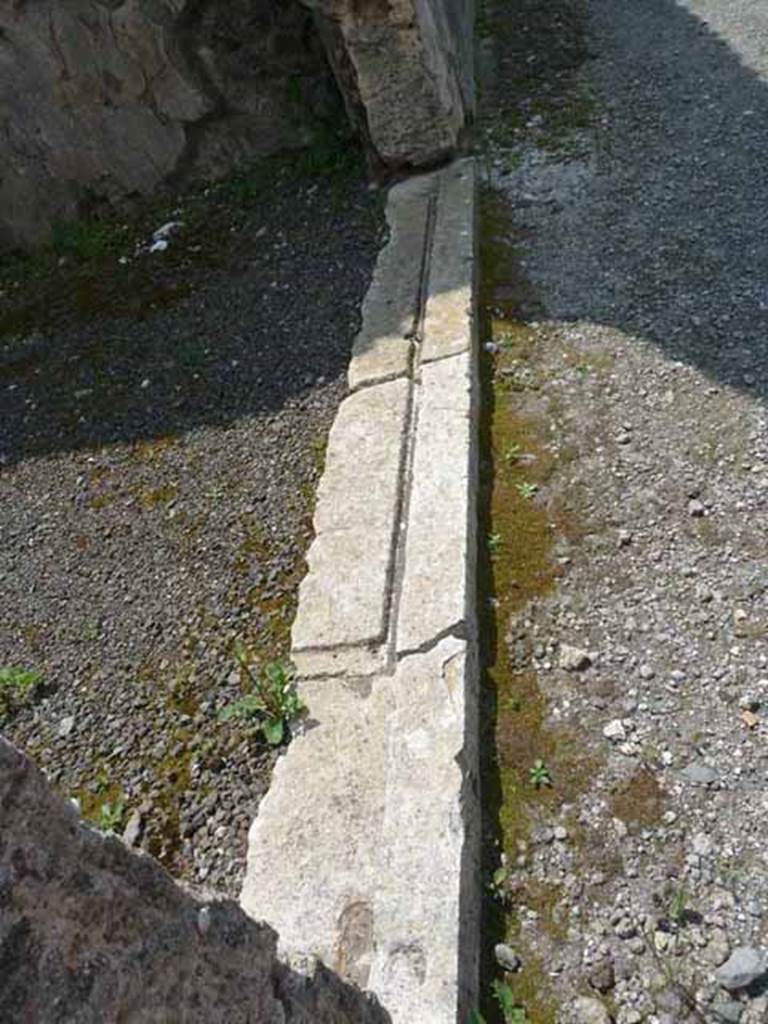
IX.8.2 Pompeii. May 2010. Threshold or sill.
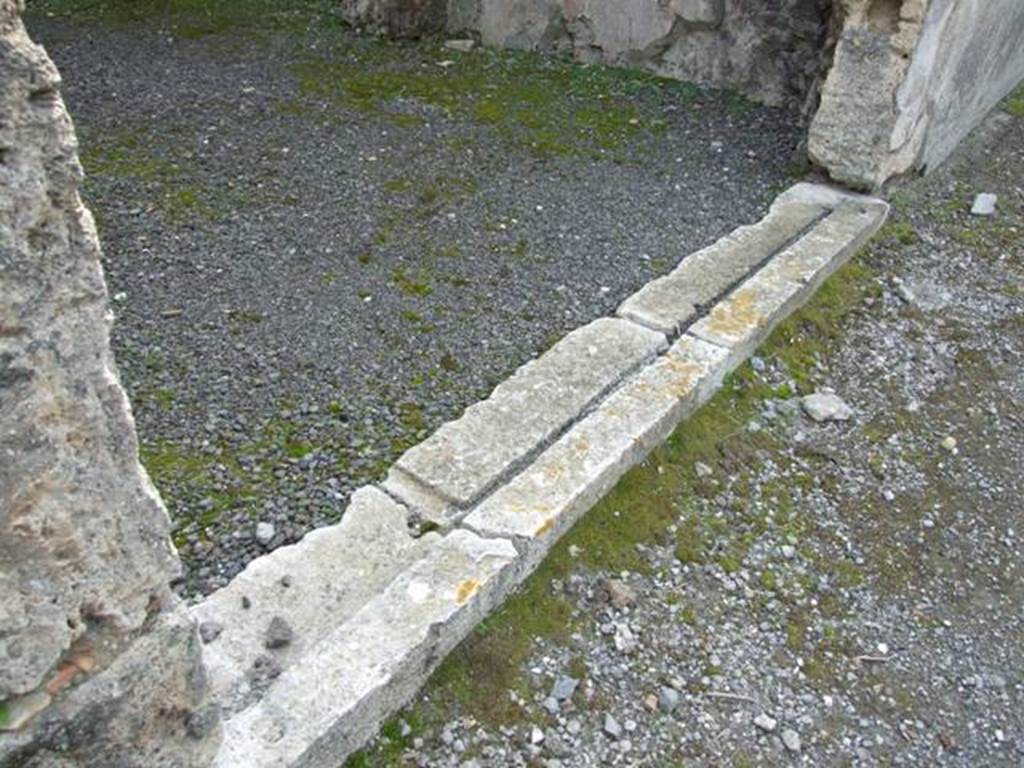
IX.8.2 Pompeii. March 2009. Threshold or sill.
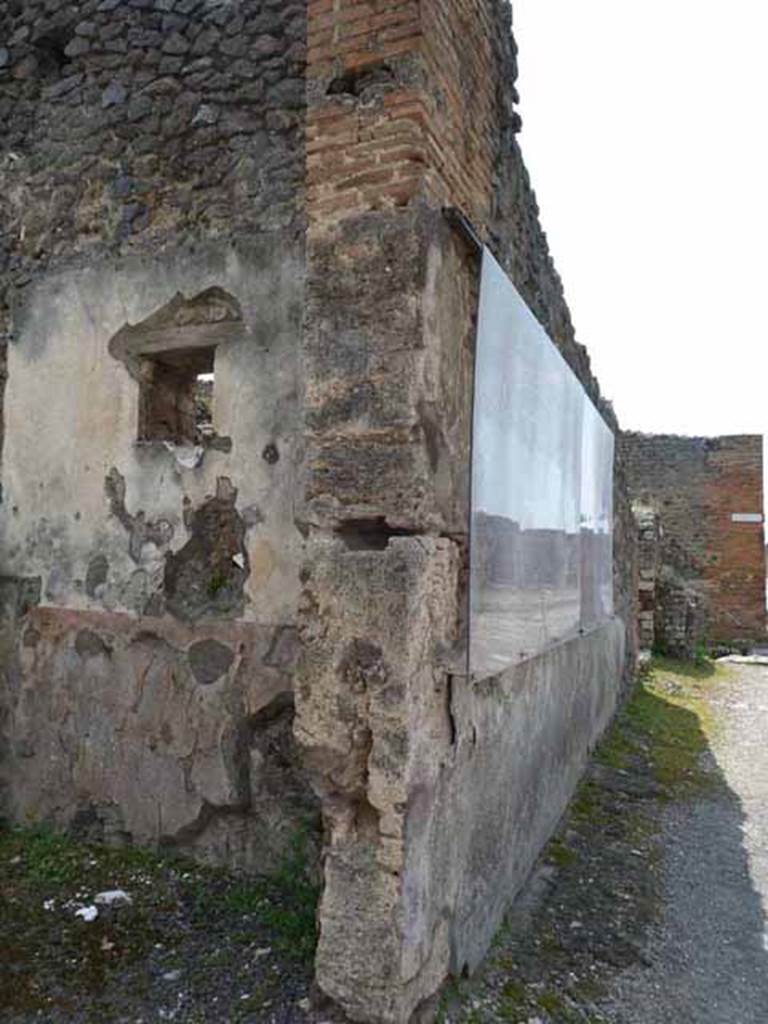
IX.8.2 Pompeii. May 2010. West side of entrance doorway, and site of graffiti.
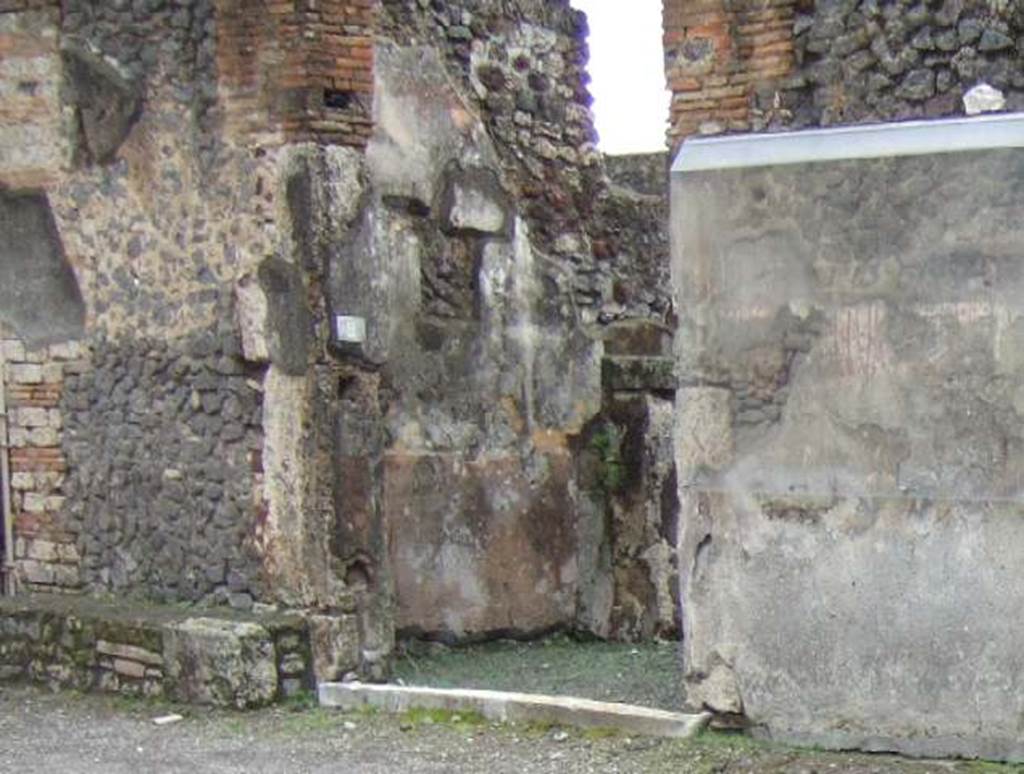
IX.8.2 Pompeii. December 2005. Entrance with painted graffiti on the west side.
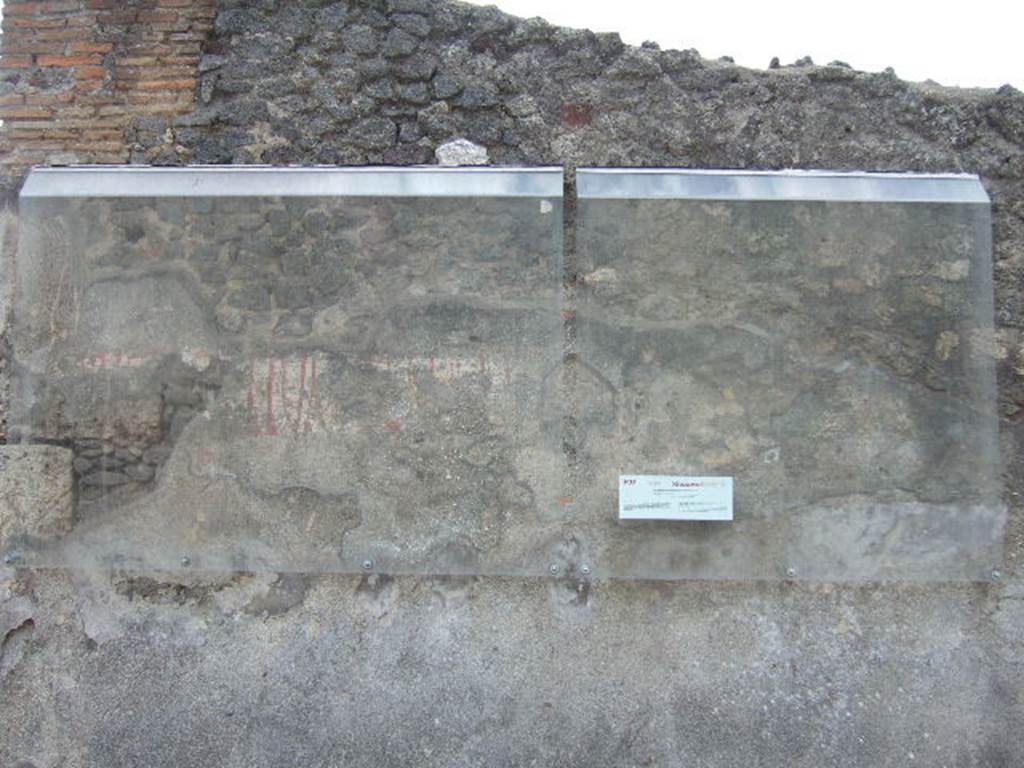
IX.8.2 Pompeii. May 2006. Painted graffiti on front wall, between IX.8.2 and IX.8.1.
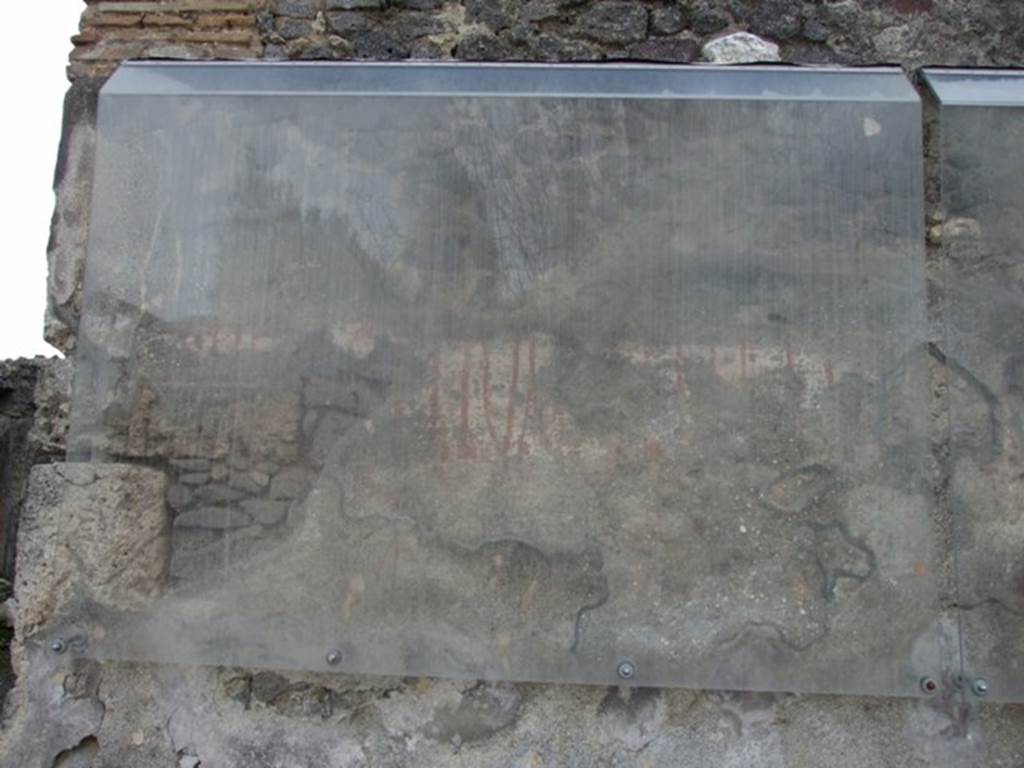
IX.8.2 Pompeii. December 2007.
Remains of painted Latin graffiti advertising that 10 pairs of Ateius’ gladiators would fight in the amphitheatre.
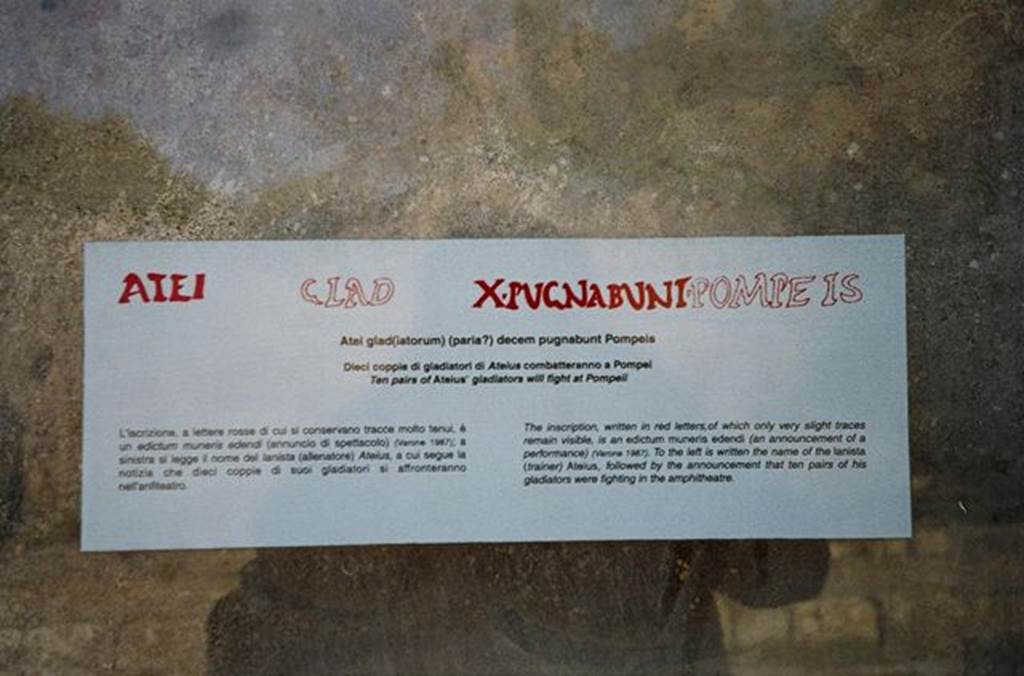
IX.8.2 Pompeii. October 2009. Explanation of painted Latin graffiti. Photo courtesy of Rick Bauer.
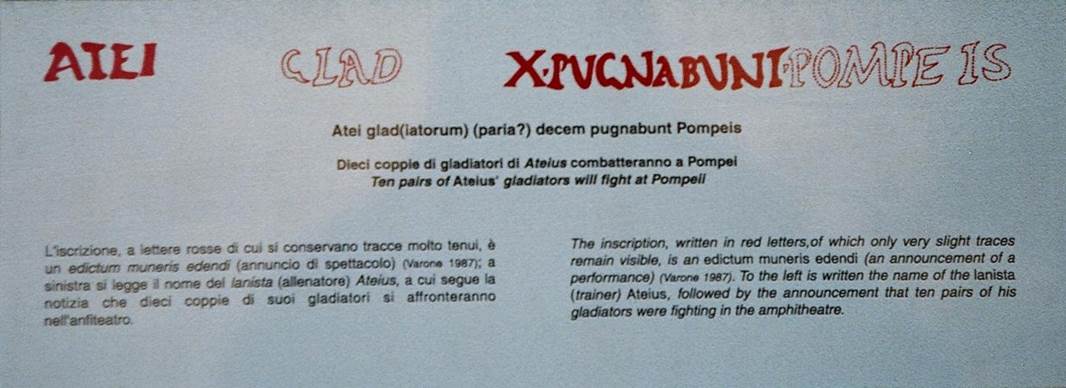
IX.8.2 Pompeii. October 2009. Explanation of painted Latin graffiti.
Atei
glad(iatorum) (paria?) decem pugnabunt Pompeis.
Ten pairs of Ateius’ gladiators will fight at Pompeii.
Photo courtesy of Rick Bauer.