IX.1.27 Pompeii. Shop of Pacuvius Erasistratus. Excavated 1858?
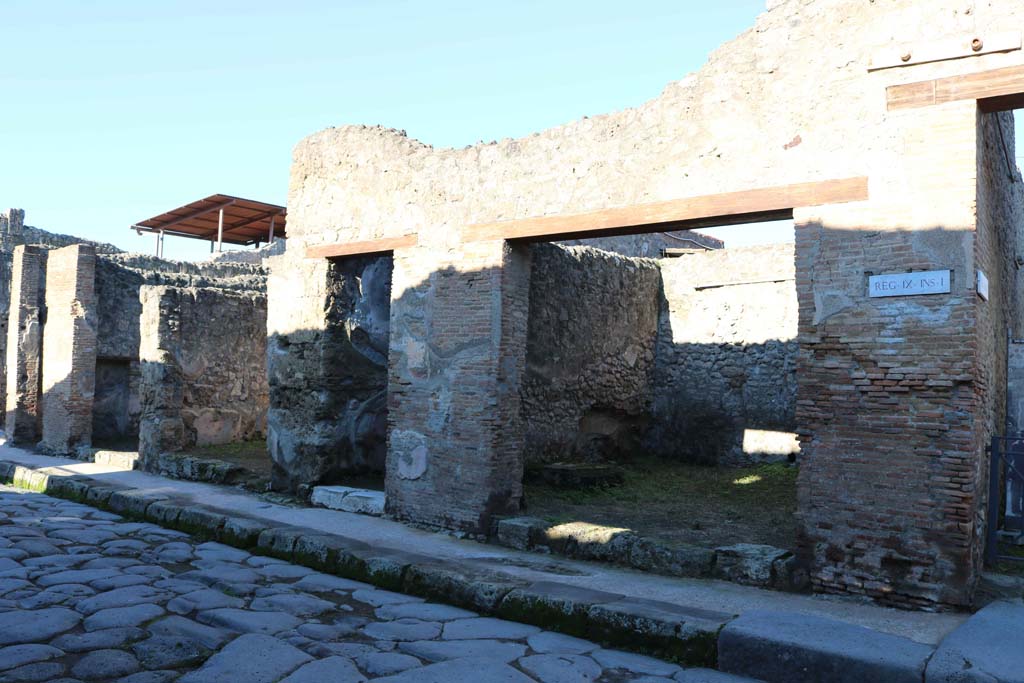
IX.1.27 Pompeii, on right. December 2018.
Looking towards entrance on north side of Via dell’Abbondanza. Photo courtesy of Aude Durand.
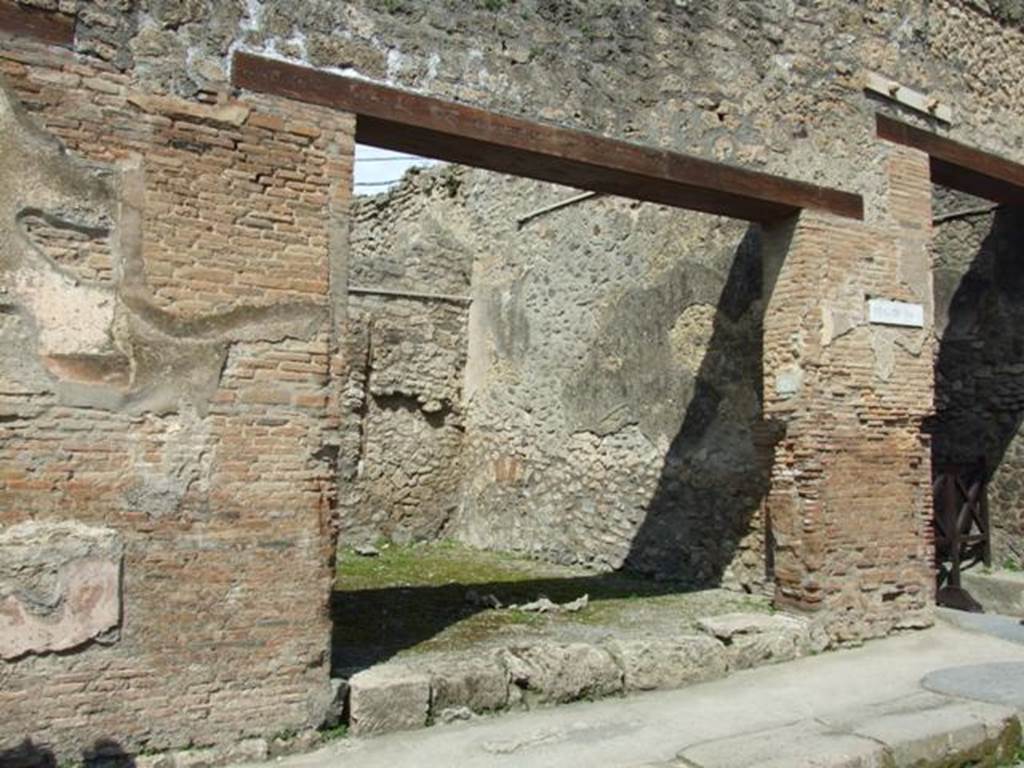
IX.1.27 Pompeii.
March 2009. Entrance on Via dell’Abbondanza.
![IX.1.27 Pompeii. May 2005. Entrance, looking north. According to Fiorelli, this was a rustic shop with a hearth, and the recess for the bed under the stairs leading up to the mezzanine.
Found here was a marble tablet, incised with a single line PACVVIVS . ERASISTRATVS . EX . VIsv [CIL X 930].
See Fiorelli, G. (1875). Descrizione di Pompei, (p.376)
See Pappalardo, U., 2001. La Descrizione di Pompei per Giuseppe Fiorelli (1875). Napoli: Massa Editore. (p.140)](9%2001%2027_files/image006.jpg)
IX.1.27 Pompeii. May 2005. Entrance, looking north.
According to Fiorelli, this was a rustic shop with a hearth, and the recess for the bed under the stairs leading up to the mezzanine.
Found here was a marble tablet, used as construction
material, incised with a single line PACVVIVS . ERASISTRATVS . EX . VIsv [CIL X 930].
See Fiorelli, G.
(1875). Descrizione di Pompei,
(p.376)
See Pappalardo, U., 2001. La Descrizione di Pompei per Giuseppe Fiorelli (1875). Napoli: Massa Editore. (p.140).
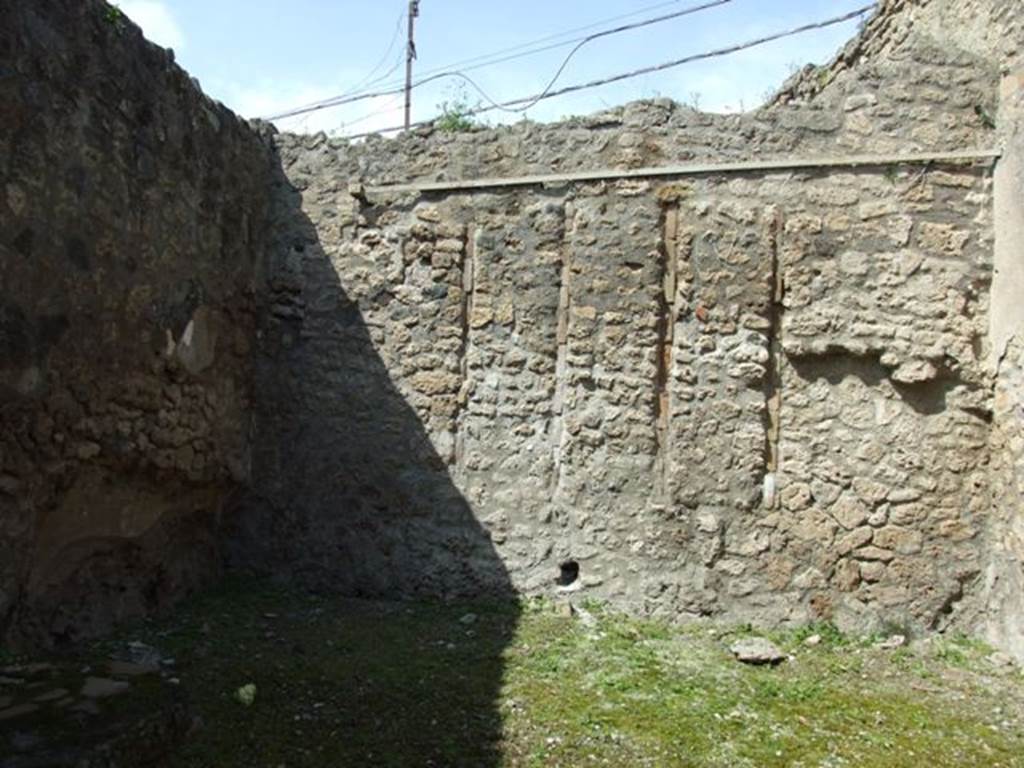
IX.1.27 Pompeii. March 2009. North wall.
“In the north wall are three narrow vertical strips that mark the place where wooden planks were embedded into the wall, perhaps for the purpose of reinforcing the stucco. No satisfactory explanation has been given so far.”
She also quotes similar examples at VI.11.10, and VII.2.6.
![IX.1.27 Pompeii. March 2009. South-west corner at front of shop, with remains of hearth. On the left of the entrance, was the hearth and an altar. According to Boyce, it was “a kind of altar with a small niche in the wall above it – presumably for the cult of the Lares”. Apparently fixed to it there was a marble slab bearing the inscription
PACVVIVS . ERASISTRATVS . EX . VIsv [CIL X 930]
Boyce also noted that Fiorelli said nothing about the connection between the altar and the incised slab but noted that the slab had been re-used as materiale di costruzione.
See Boyce G. K., 1937. Corpus of the Lararia of Pompeii. Rome: MAAR 14. (p.80)
See Pappalardo, U., 2001. La Descrizione di Pompei per Giuseppe Fiorelli (1875). Napoli: Massa Editore. (p.140)
Cooley translates the latin inscription to
Pacuvius Erasistratus, after a vision. [CIL X 930]
See Cooley, A. and M.G.L., 2004. Pompeii : A Sourcebook. London : Routledge. (p.106, E58), where it is said to have come from IX.1.25.
According to Boyce above, the place of discovery of CIL X 930, was given as IX.1.25, but wrongly so; cf. Fiorelli and the Bull.Inst.
He gives the references - Fiorelli, Descr., 376; Bull. Inst., 1867, 162.](9%2001%2027_files/image010.jpg)
IX.1.27 Pompeii. March 2009. South-west corner at front of shop, with remains of hearth.
On the left of the entrance, were the hearth and an altar with a niche above it.
See BdI, 1867, (p.162).
According to Boyce, it was “a kind of altar with a small niche in the wall above it – presumably for the cult of the Lares”.
Apparently fixed to it there was a marble slab bearing the inscription
PACVVIVS .
ERASISTRATVS . EX . VIsv [CIL X 930]
Boyce also noted that Fiorelli said nothing about the connection between the altar and the incised slab but noted that the slab had been re-used as materiale di costruzione.
See Boyce G. K., 1937. Corpus
of the Lararia of Pompeii. Rome:
MAAR 14. (p.80)
See Pappalardo, U., 2001. La Descrizione di Pompei per Giuseppe Fiorelli (1875). Napoli: Massa Editore. (p.140)
Cooley translates the inscription to
Pacuvius Erasistratus, after a vision. [CIL X 930]
See Cooley, A. and M.G.L., 2004. Pompeii: A Sourcebook. London: Routledge. (p.106, E58), where it is said to have come from IX.1.25.
According to Boyce above, the place of discovery of CIL X 930, was given as IX.1.25, but wrongly so; cf. Fiorelli and the Bull.Inst.
He gives the references - Fiorelli, Descr., 376; Bull. Inst., 1867, 162.
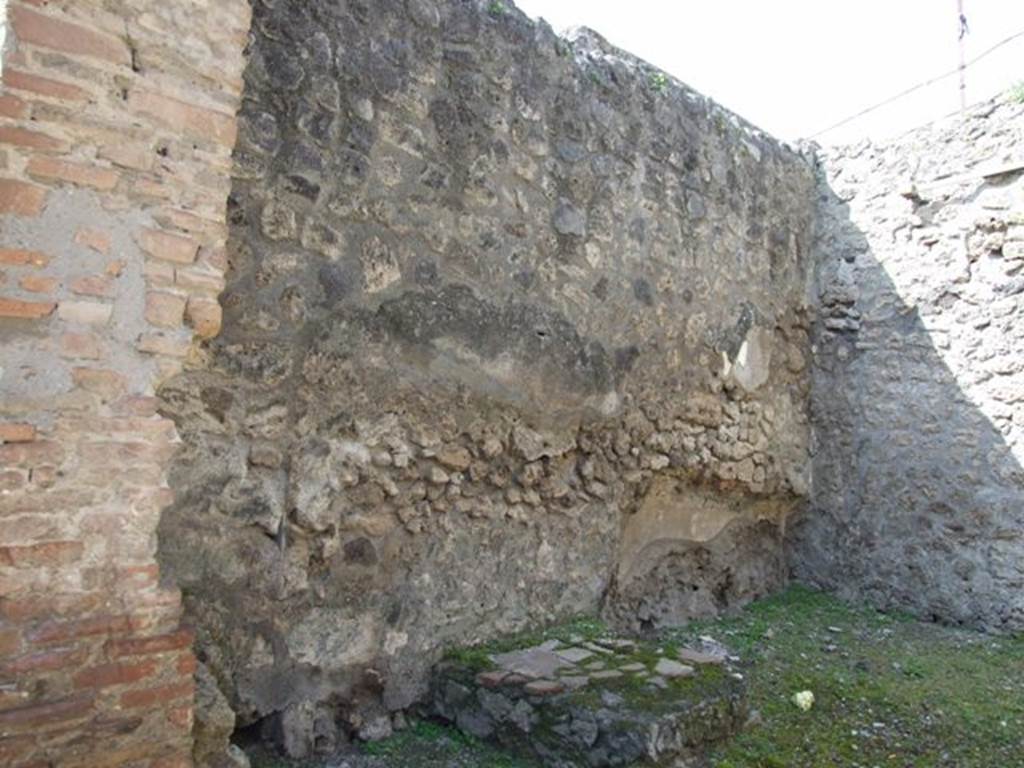
IX.1.27 Pompeii. March 2009. West wall, with base of stairs to upper floor and bed recess.
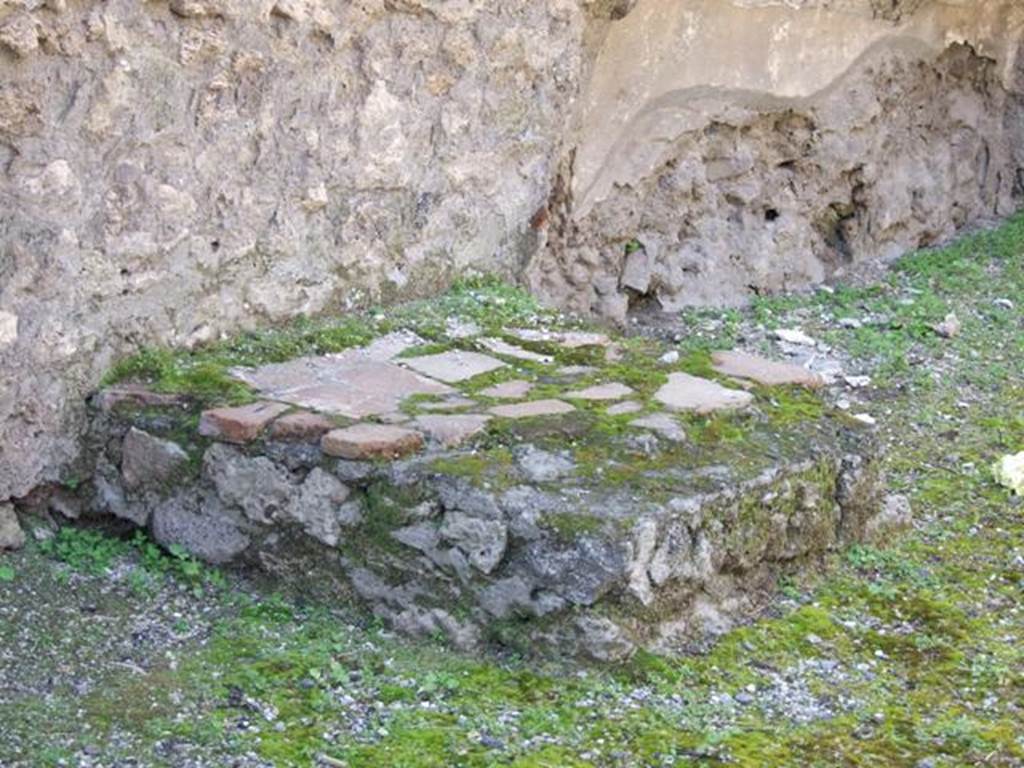
IX.1.27 Pompeii. March 2009. Base of stairs to upper floor, against west wall.
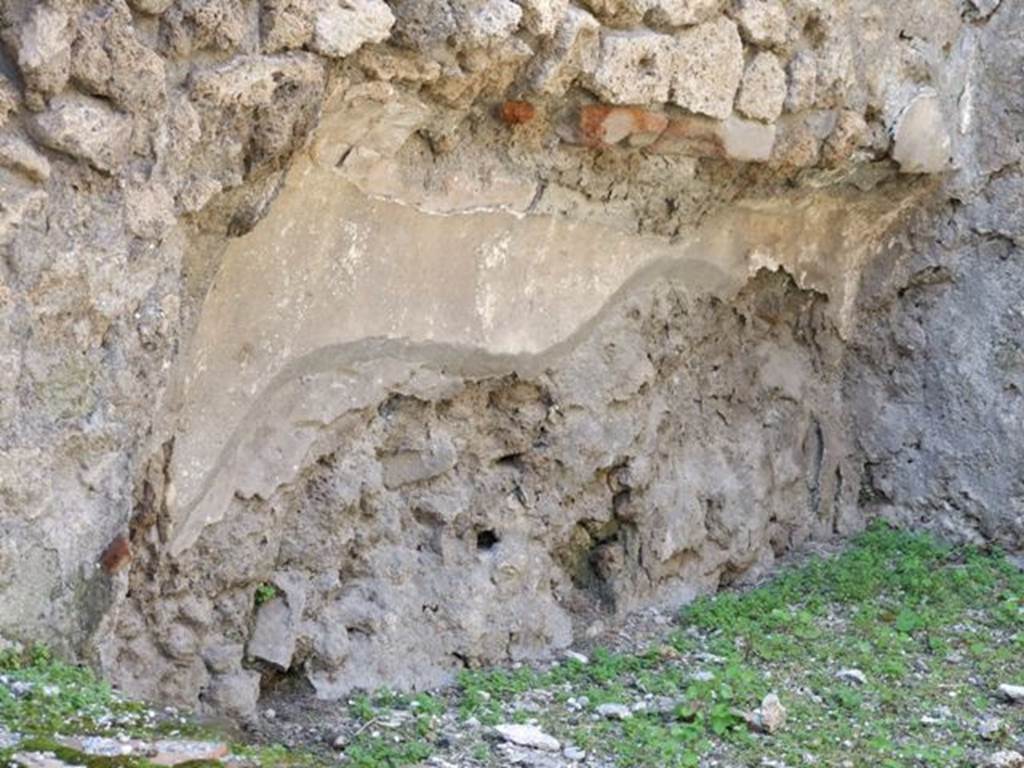
IX.1.27 Pompeii. March 2009. West wall, with remains of recess, which would have been under the stairs.
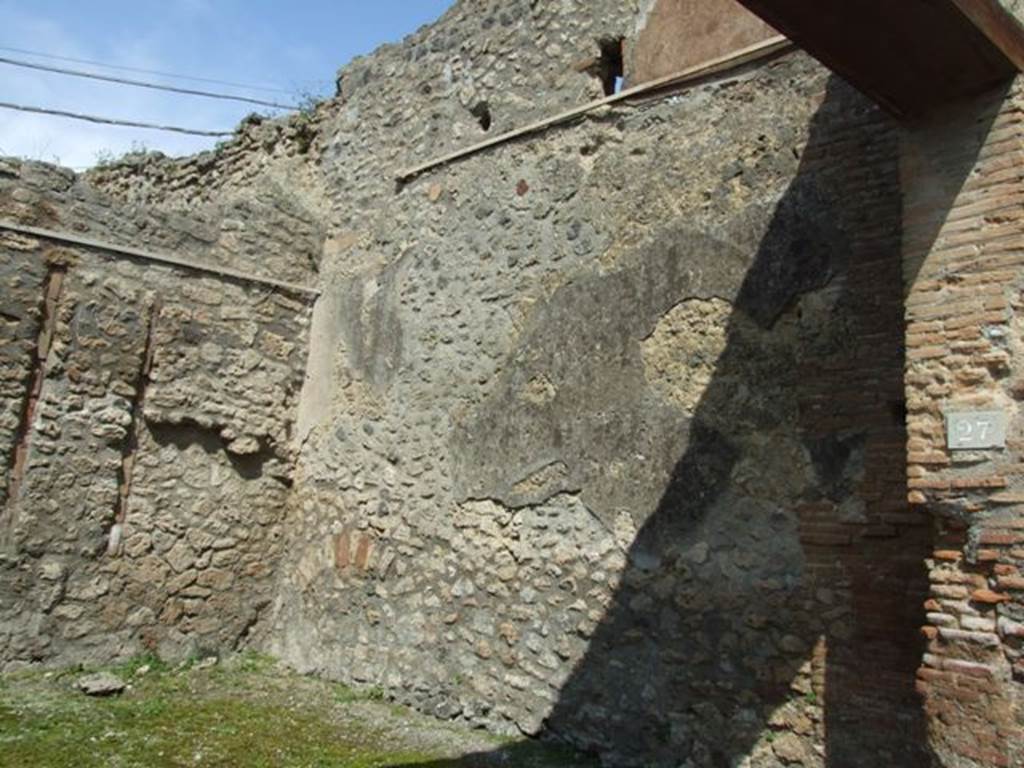
IX.1.27 Pompeii. March 2009. East wall.
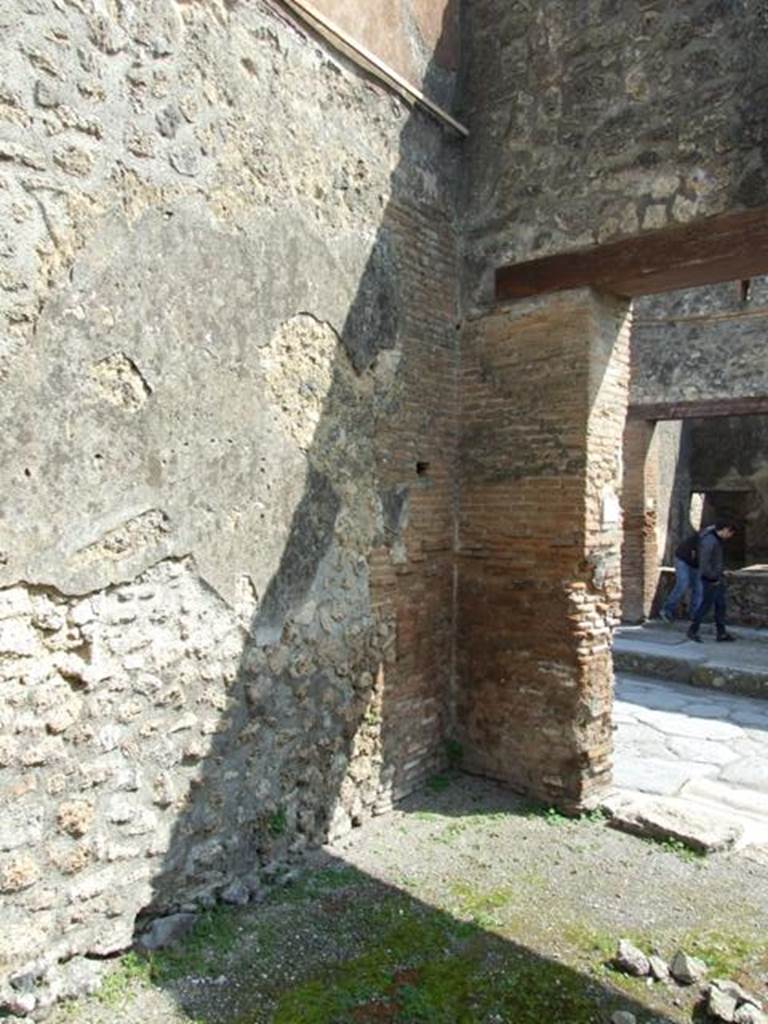
IX.1.27 Pompeii. March 2009. South-east corner at front of shop.
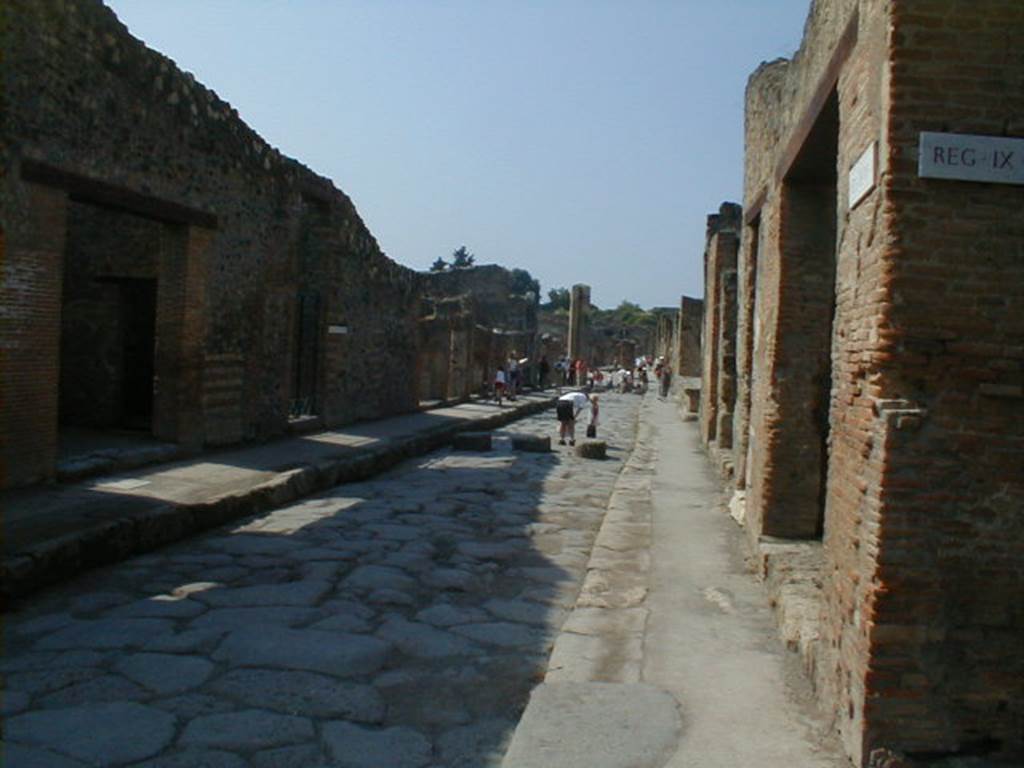
I.4 Pompeii, on left. Via dell’ Abbondanza looking west, from end of Vicolo di Tesmo near IX.1.27, on right.
![IX.1.27 Pompeii. May 2005. Side of shop in Vicolo di Tesmo looking north. IX.7.13
According to Varone and Stefani, a graffito was found to the east of IX.1.27 (on the left), but not conserved:
Ampliatum aed(ilem) V(irum) b(onum) vicini rog(ant) [CIL IV 2978?]
On the right of the photo, to the west of IX.7.13, they think the following may have been found
M(arcum) Holconi[um]
Aed(ilem) o(ro) v(os) f(aciatis) [CIL IV 2980?]
See Varone, A. and Stefani, G., 2009. Titulorum Pictorum Pompeianorum, Rome: L’erma di Bretschneider, (p.379)](9%2001%2027_files/image024.jpg)
IX.1.27 Pompeii, on left. May 2005. Side of shop in Vicolo di Tesmo looking north. IX.7.13, on right.
According to Varone and Stefani, a graffito was found to the east of IX.1.27 (on the left), but not conserved:
Ampliatum aed(ilem)
V(irum) b(onum) vicini
rog(ant) [CIL IV 2978?]
On the right of the photo, to the west of IX.7.13, they think the following may have been found
M(arcum) Holconi[um]
aed(ilem) o(ro)
v(os) f(aciatis) [CIL IV 2980?]
See Varone, A. and Stefani, G., 2009. Titulorum Pictorum Pompeianorum, Rome: L’erma di Bretschneider, (p.379)
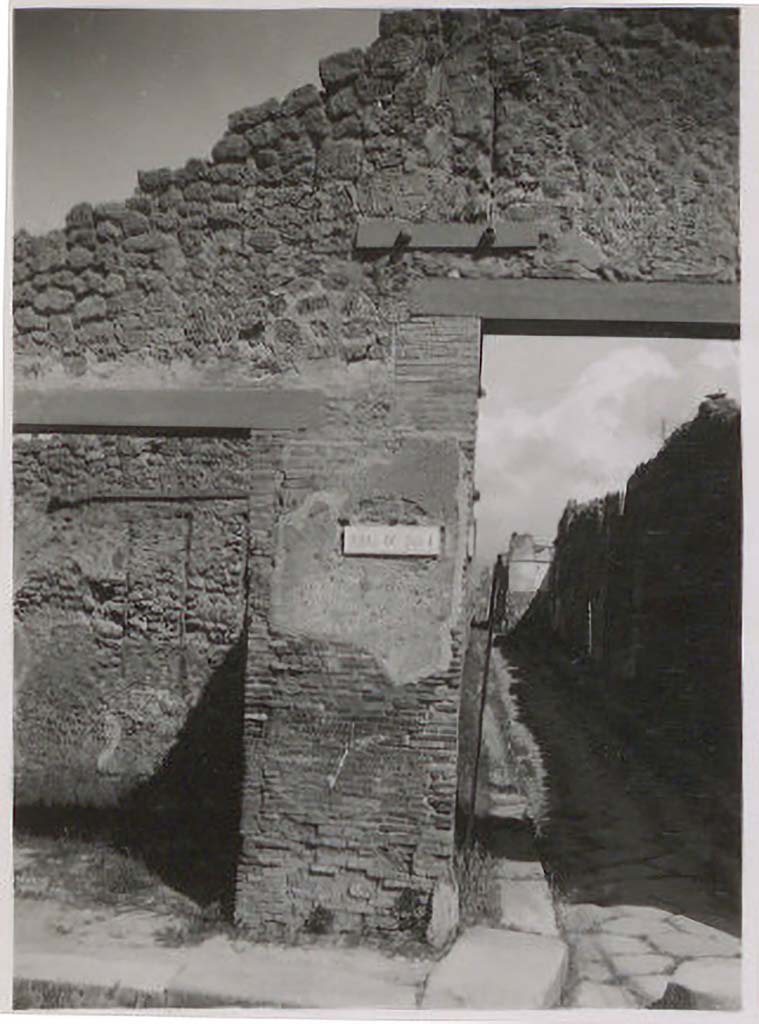
IX.1.27 Pompeii. Pre-1943. Looking north to pilaster on east side of entrance, with Vicolo di Tesmo, on right.
Photo by Tatiana Warscher.