VII.12.11 Pompeii. Casa del Forno, dwelling/bakery with workshop.
Excavated 1846, 1863.
Part 1 Part 2
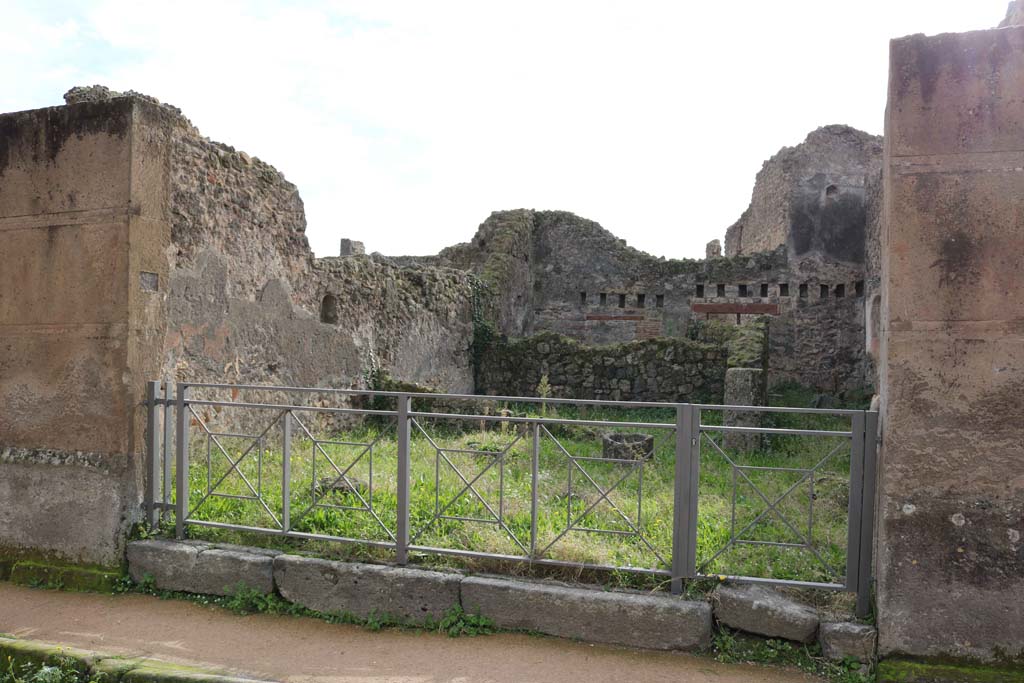
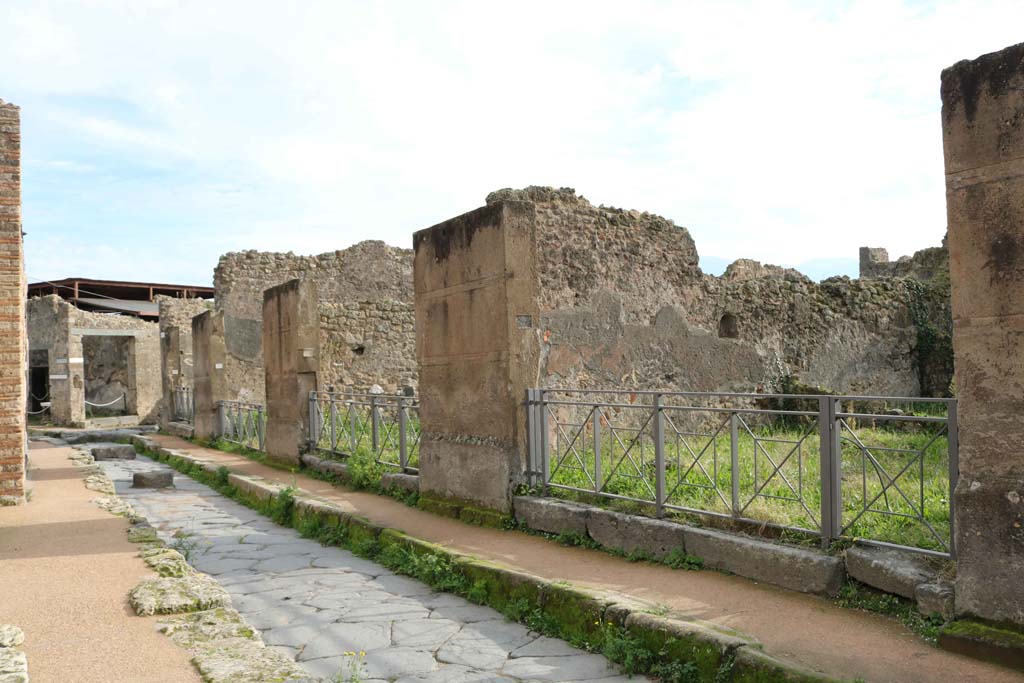
Via degli Augustali,
Pompeii. December 2018.
Looking east along south
side, with VII.12.11 on right. Photo courtesy of Aude Durand.
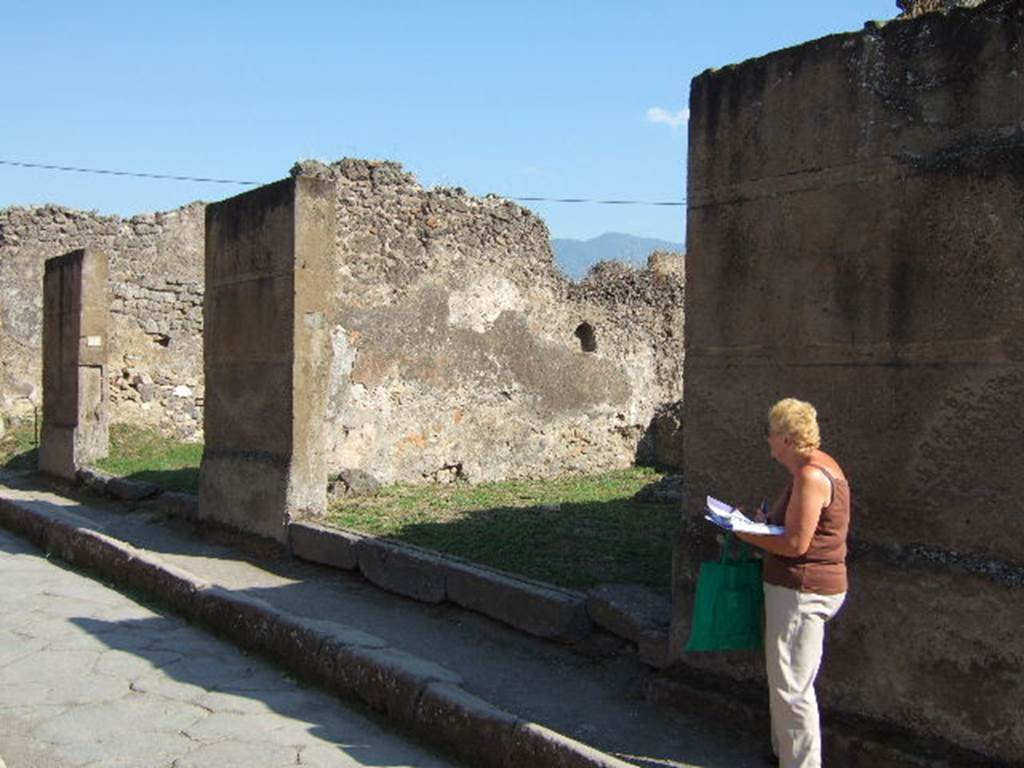
VII.12.11 Pompeii. September 2005. Looking east towards entrance doorway.
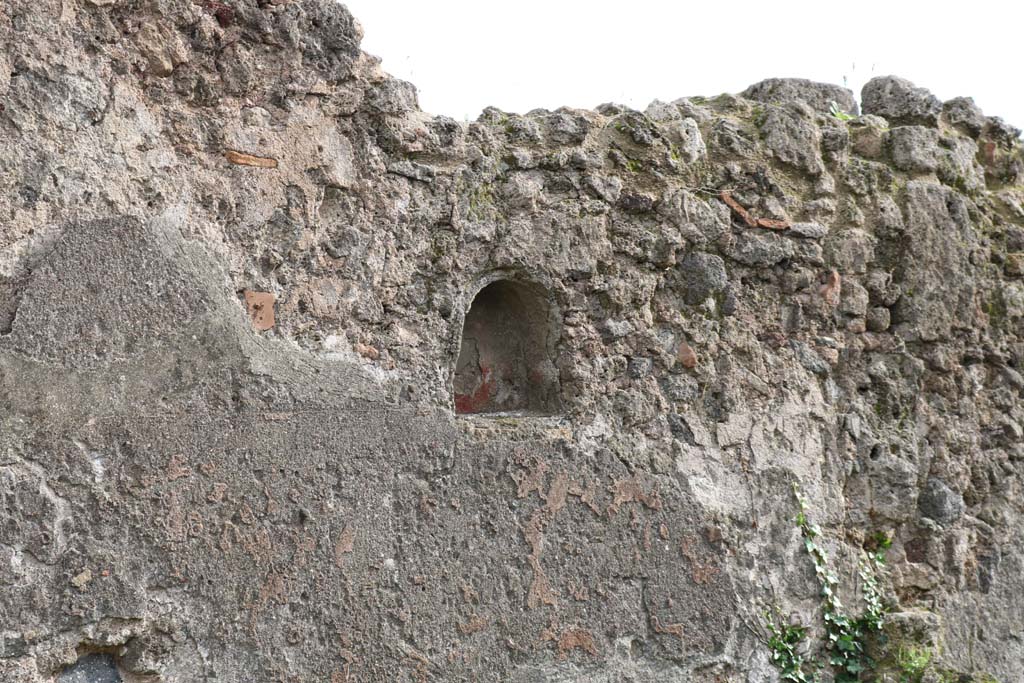
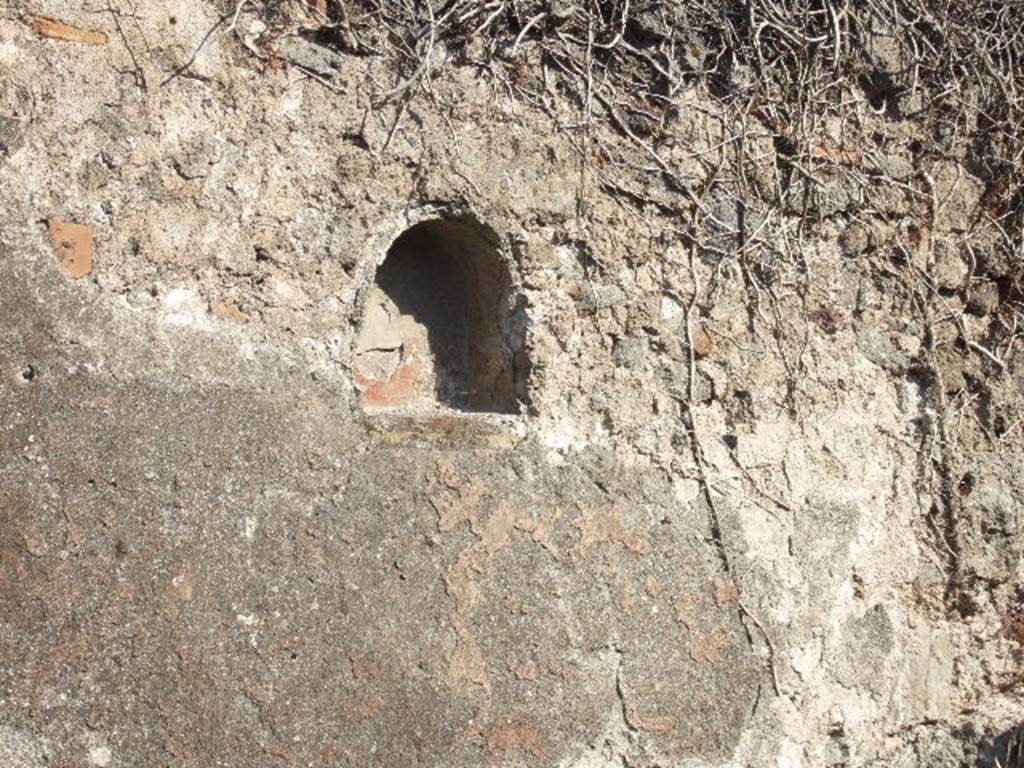
VII.12.11 Pompeii. September 2005. Niche on east wall.
According to Boyce, in the east wall of the workshop was an arched niche.
Its inside walls were coated with red stucco.
See Boyce G. K., 1937. Corpus of the Lararia of Pompeii. Rome: MAAR 14. (p.70, no.315)
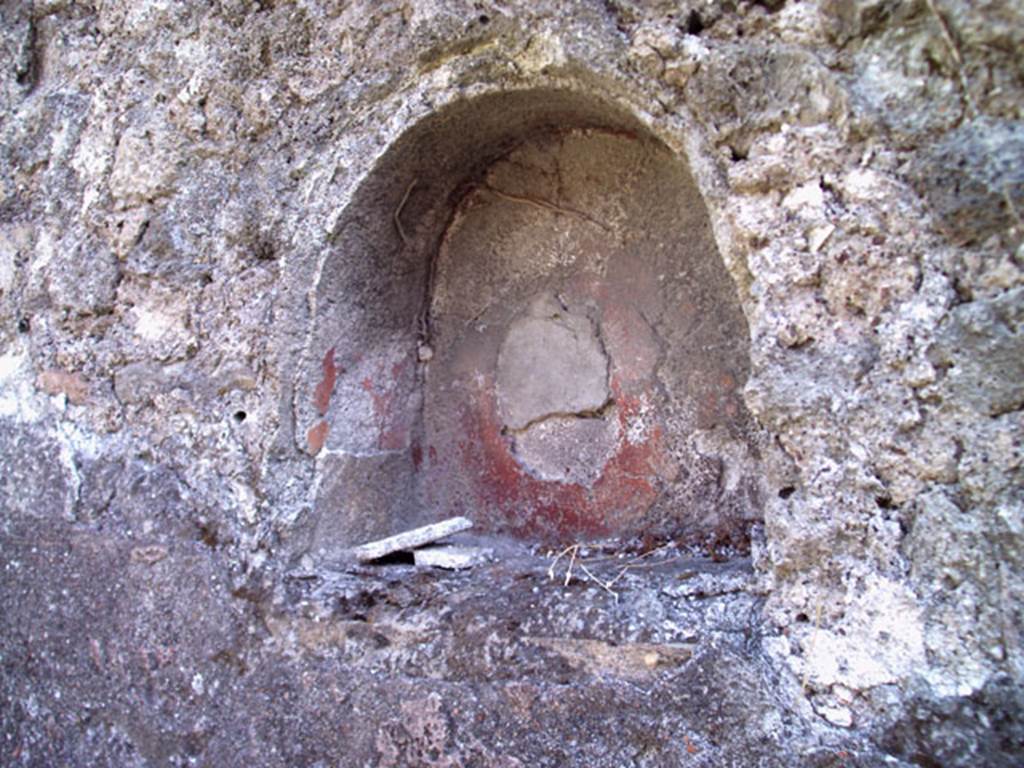
VII.12.11 Pompeii. July 2008. Niche on east wall. Photo courtesy of Jared Benton.
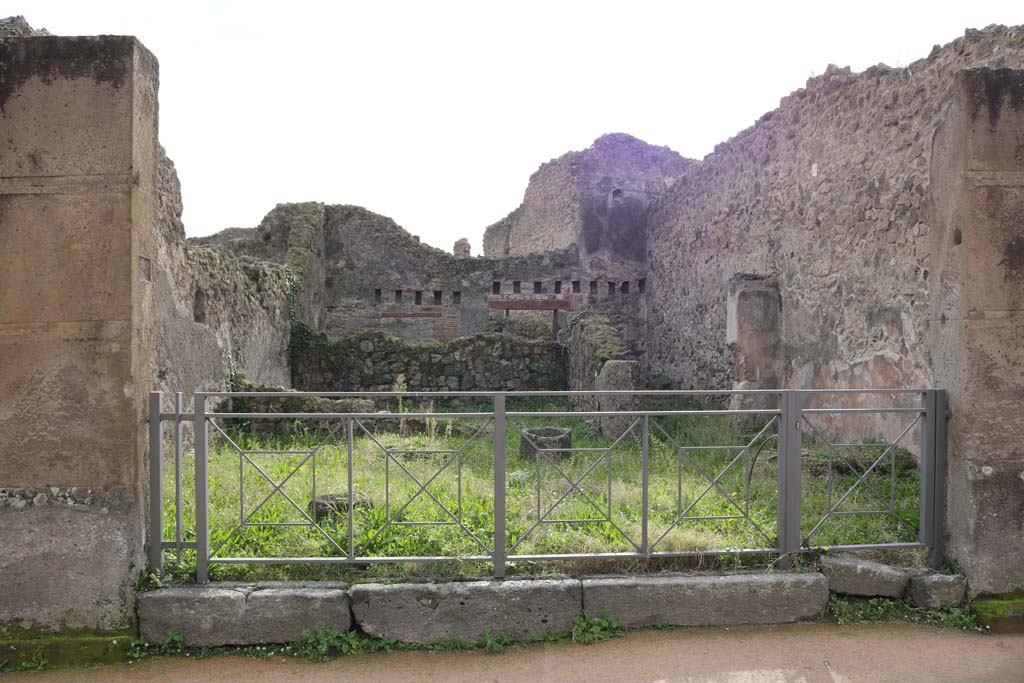
VII.12.11 Pompeii. December 2018.
Looking south across workshop towards rear room
with corridor to rear on right. Photo courtesy of Aude Durand.
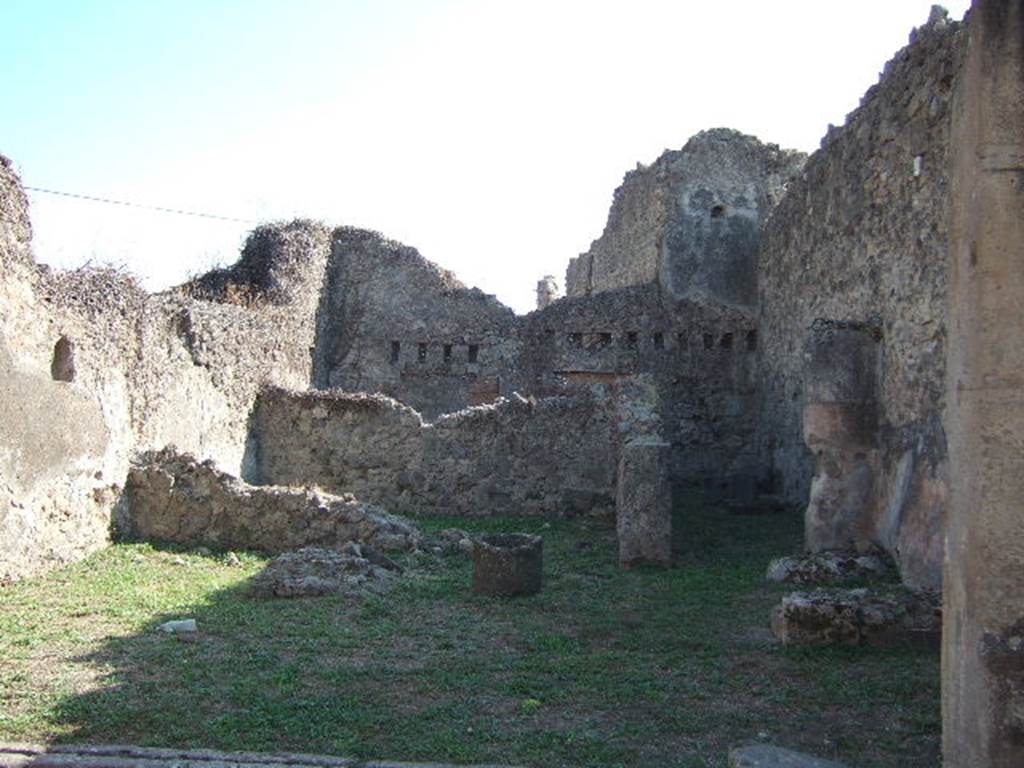
VII.12.11 Pompeii. September 2005. Looking south across workshop towards rear room, on left.
On the right is the doorway to the rear, near steps to the upper floor and remains of a bench or podium.
See Eschebach, L., 1993. Gebäudeverzeichnis und Stadtplan der antiken Stadt Pompeji. Köln: Böhlau. (p.327)
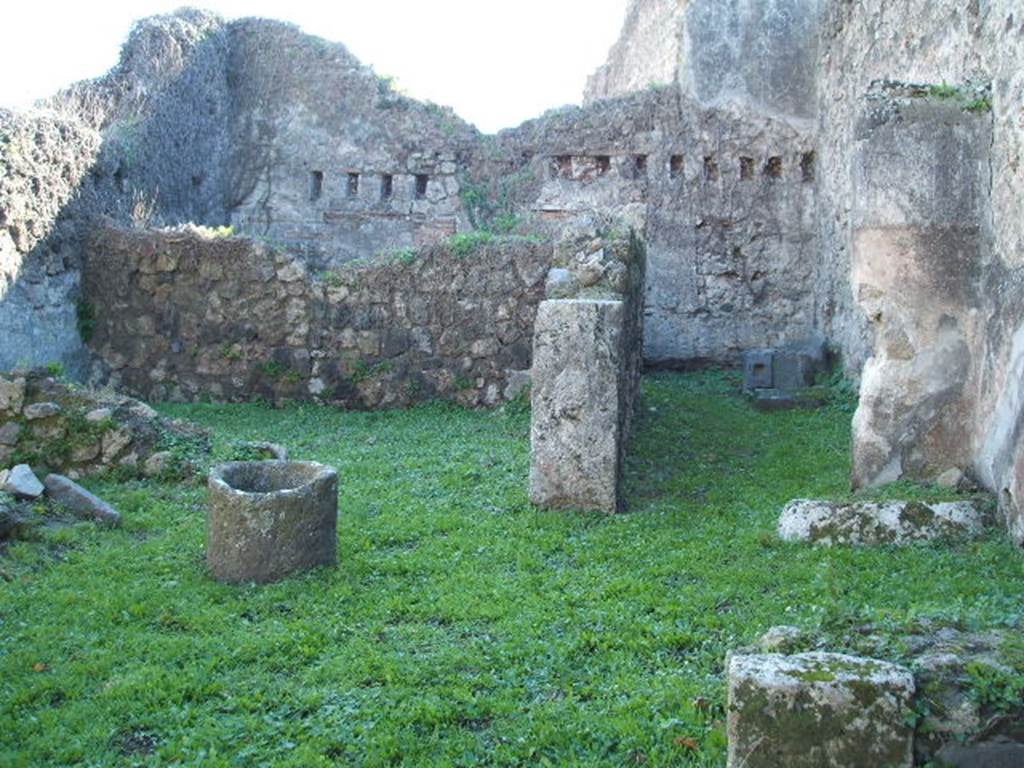
VII.12.11 Pompeii. December 2004. Looking south to doorway to rear room and corridor.
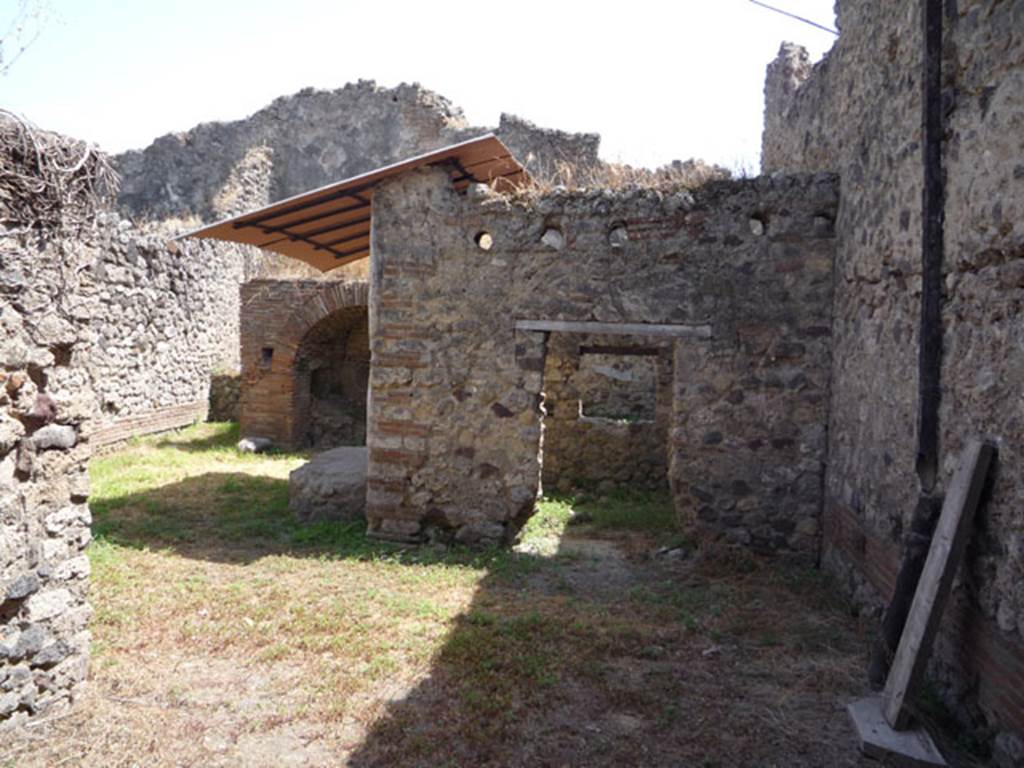
VII.12.11 Pompeii. September 2009. Looking south towards oven in rear room. Photo courtesy of Jared Benton.
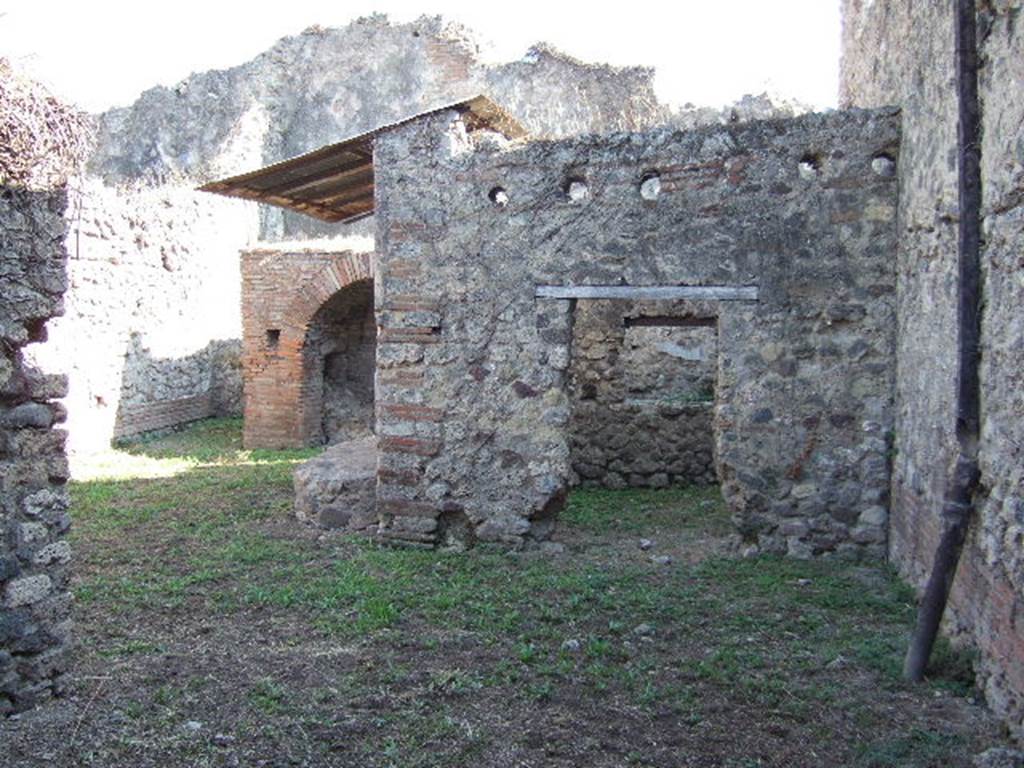
VII.12.11 Pompeii. September 2005. Looking south.
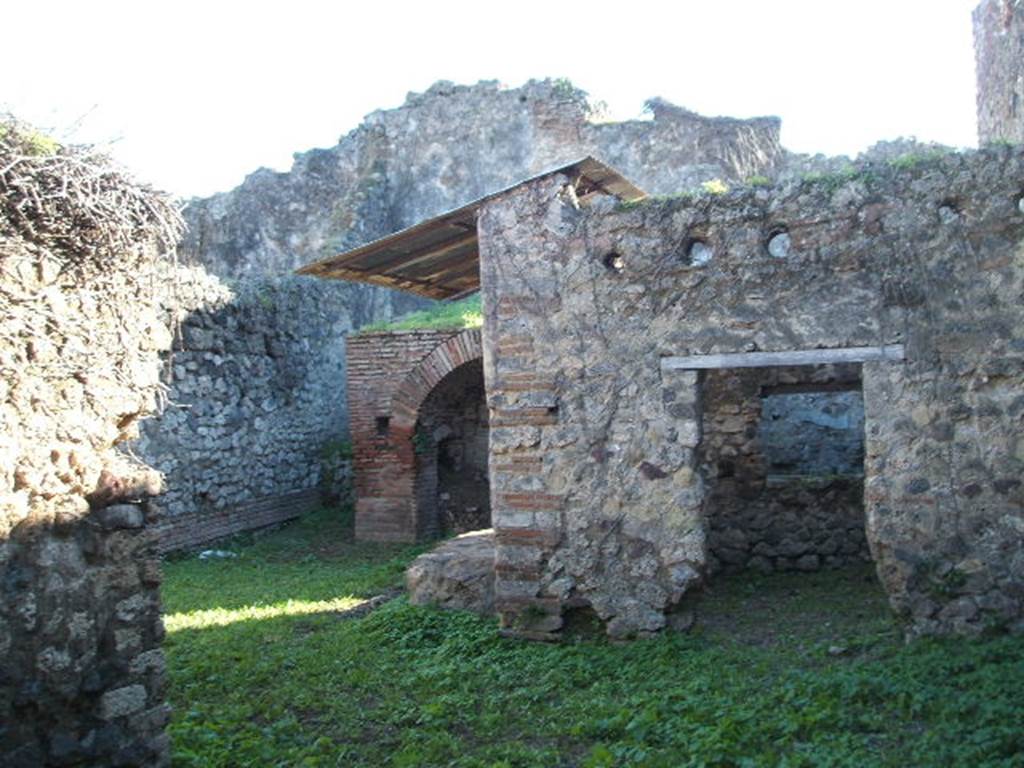
VII.12.11 Pompeii. December 2004. Looking south across rear room, with oven.
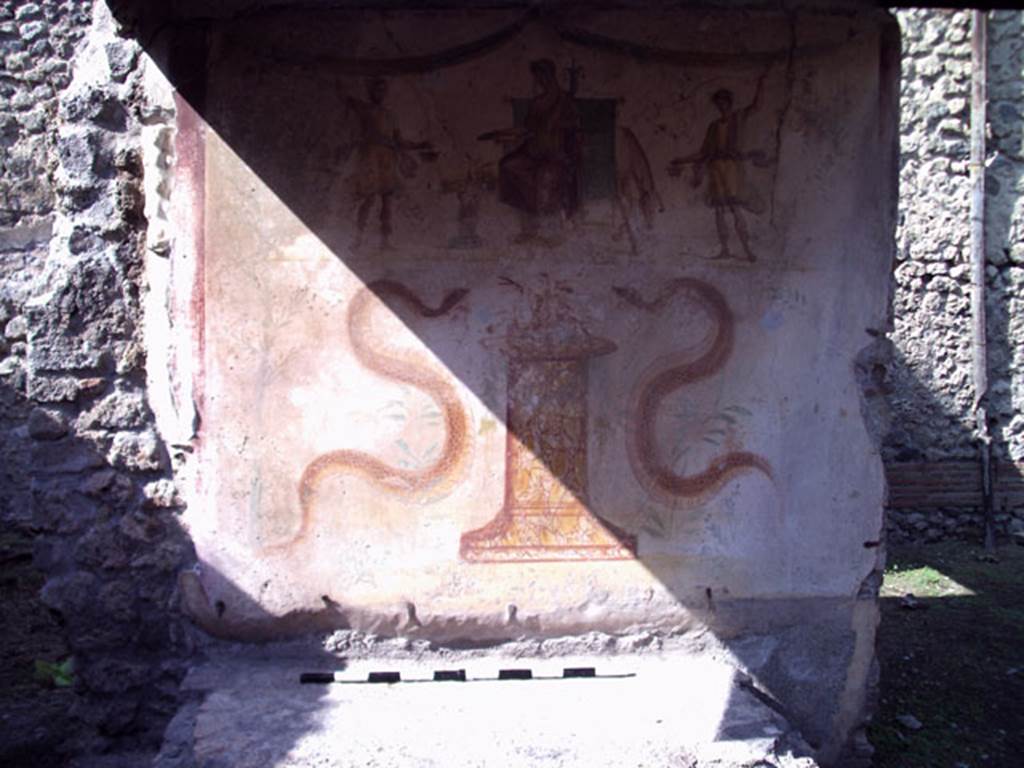
VII.12.11 Pompeii. July 2008. Looking west towards lararium painting. Photo courtesy of Jared Benton.
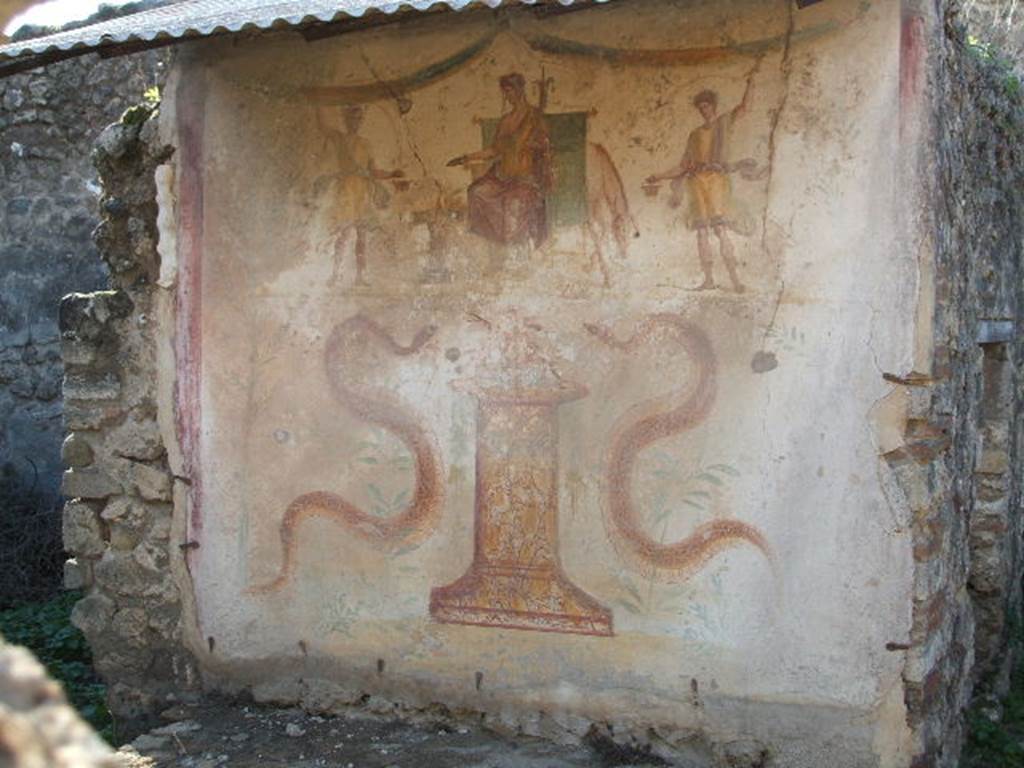
VII.12.11 Pompeii. December 2004. Lararium.
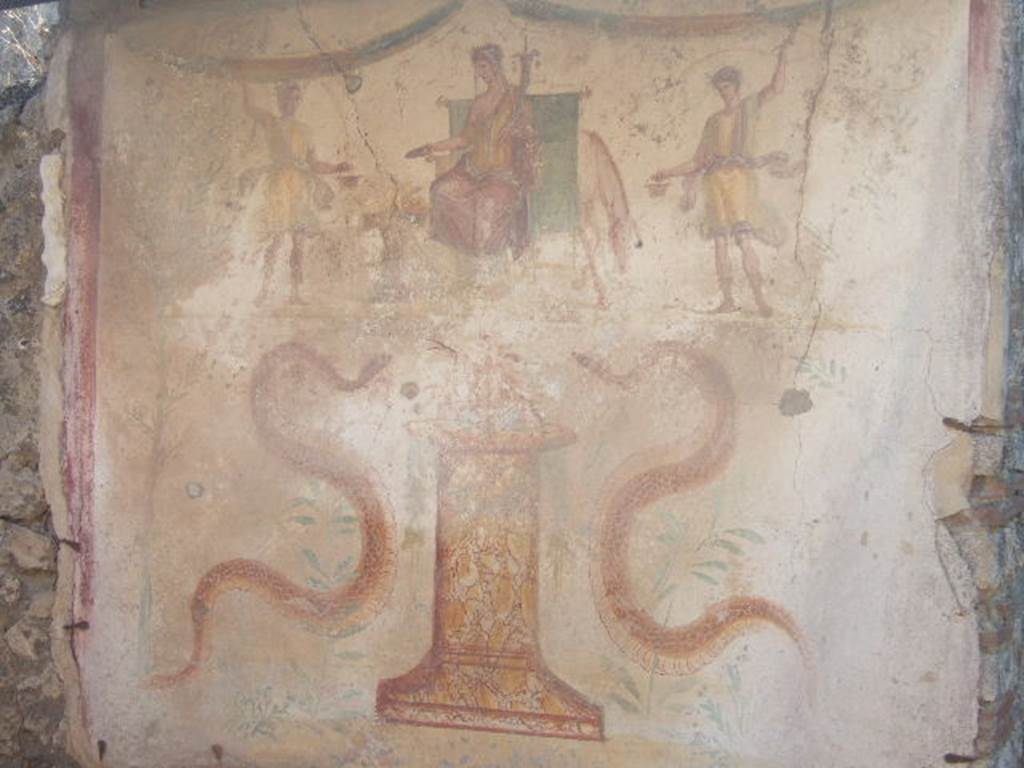
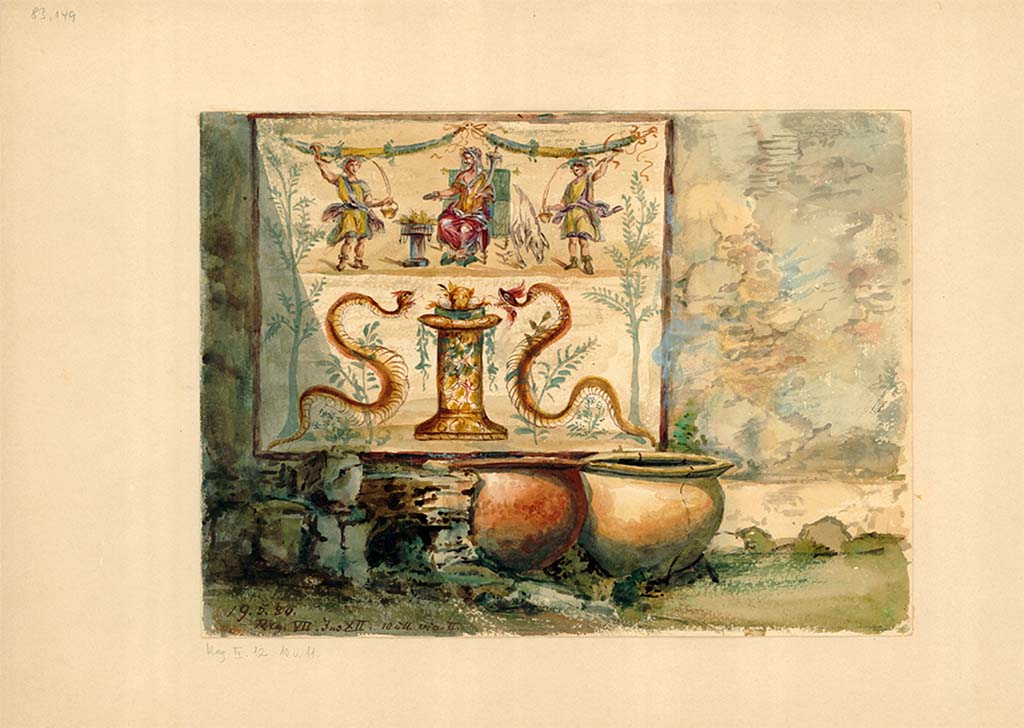
According to Boyce, on the west wall was a lararium painting on a white background.
Upon a throne sat Vesta, on each side of the goddess stood a wreathed Lar, much smaller than Vesta.
Behind and to the right of her throne, the forepart of an ass was visible.
In the lower zone were two serpents approaching a cylindrical altar painted in imitation yellow marble and finished with fire and fruit.
Each serpent had a red crest and beard, but those on the right serpent were larger.
At the sides of both the upper and lower panels were green trees and above the top of the upper panel were two garlands.
The entire painting was bordered with broad red stripes at top and sides.
Boyce thought this one of the most finely executed of all lararium pictures.
See Boyce G. K., 1937. Corpus of the Lararia of Pompeii. Rome: MAAR 14. (p.70, no.316, and Pl. 24,1)
See Fröhlich, T.,
1991. Lararien und Fassadenbilder in den Vesuvstädten. Mainz: von Zabern. (L91)
See Bullettino dell’Instituto di Corrispondenza
Archeologica (DAIR), 1864, p.115-116 (described as Casa IV.)
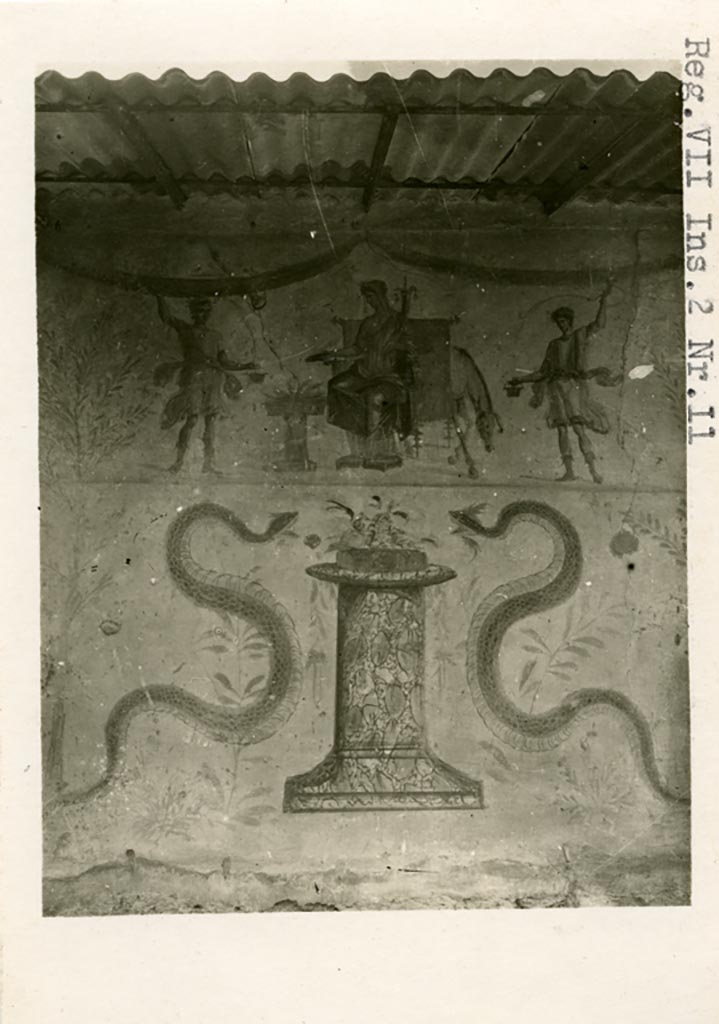
VII.12.11 Pompeii, but shown on photo as from VII.2.11. Pre-1937-39. Painted lararium on west wall.
Photo courtesy of American Academy in Rome, Photographic Archive. Warsher collection no. 952.
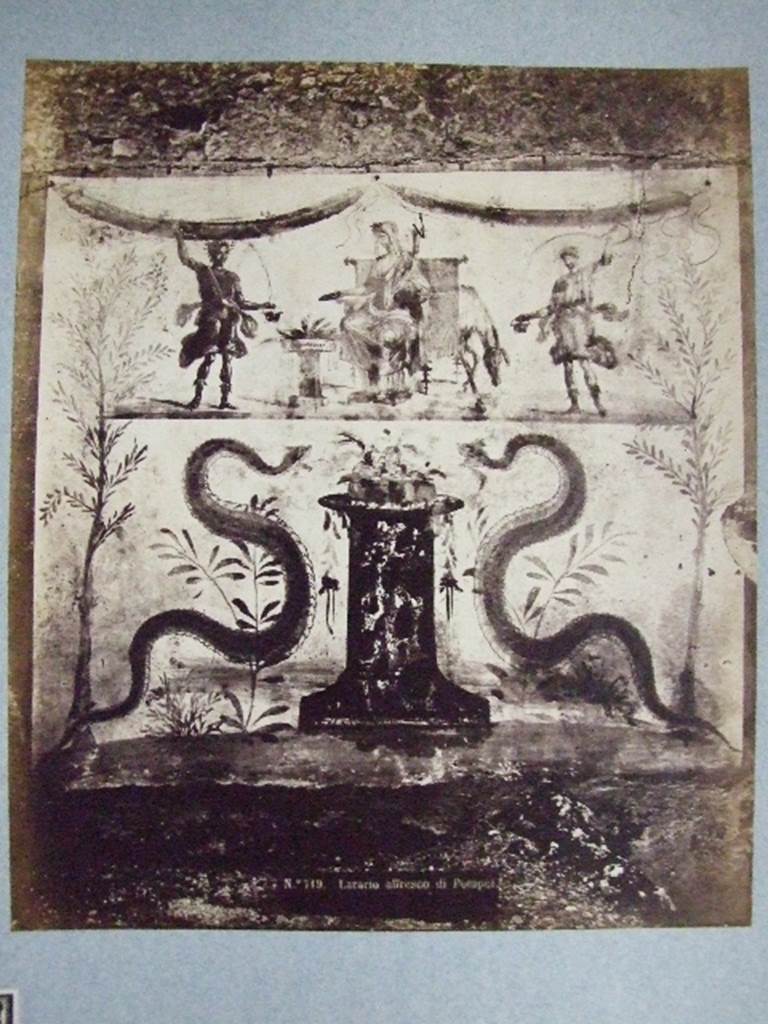
VII.12.11 Pompeii. Lararium on old undated photograph.
Courtesy of Society of Antiquaries. Fox Collection.
VII.12.11 Pompeii. September 2005. Lararium painting.
VII.12.11 Pompeii. 19th May 1880 or 1886? Lararium painting on
west side of oven in bakery.
DAIR 83.149. Photo ©
Deutsches Archäologisches Institut, Abteilung Rom, Arkiv.
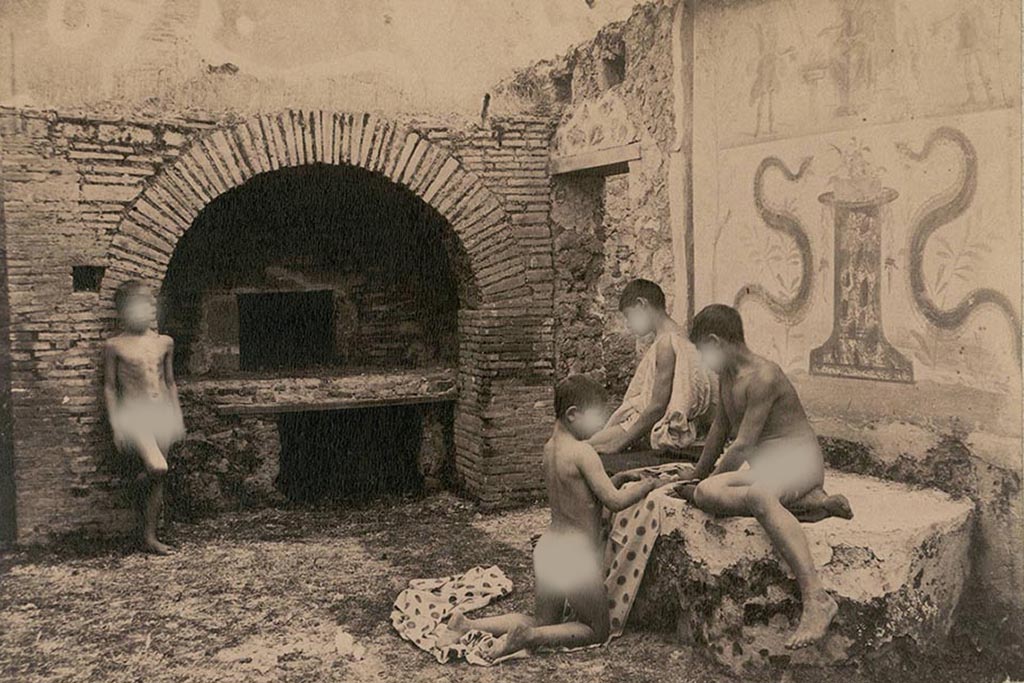
Photograph
by Wilhelm von Plüschow, (1852-1930) (adapted by Pompeiiinpictures to highlight the building features).
Public domain, via Wikimedia Commons.
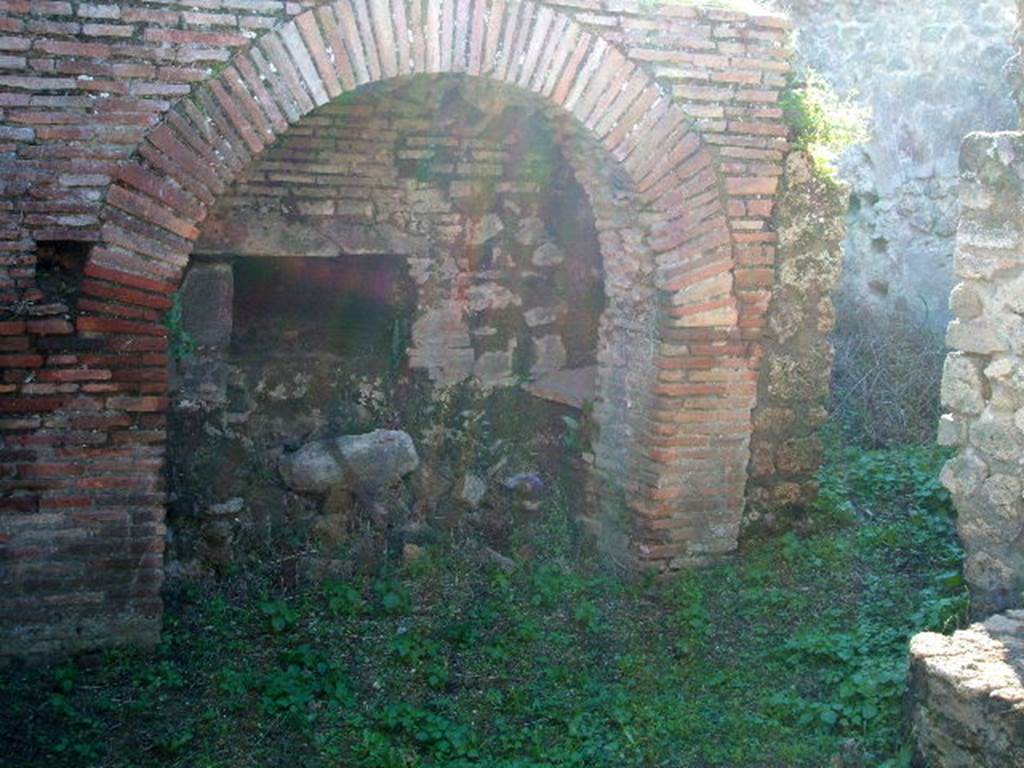
VII.12.11 Pompeii. December 2004. Oven on south side of rear room, with room on its west side, on the right.
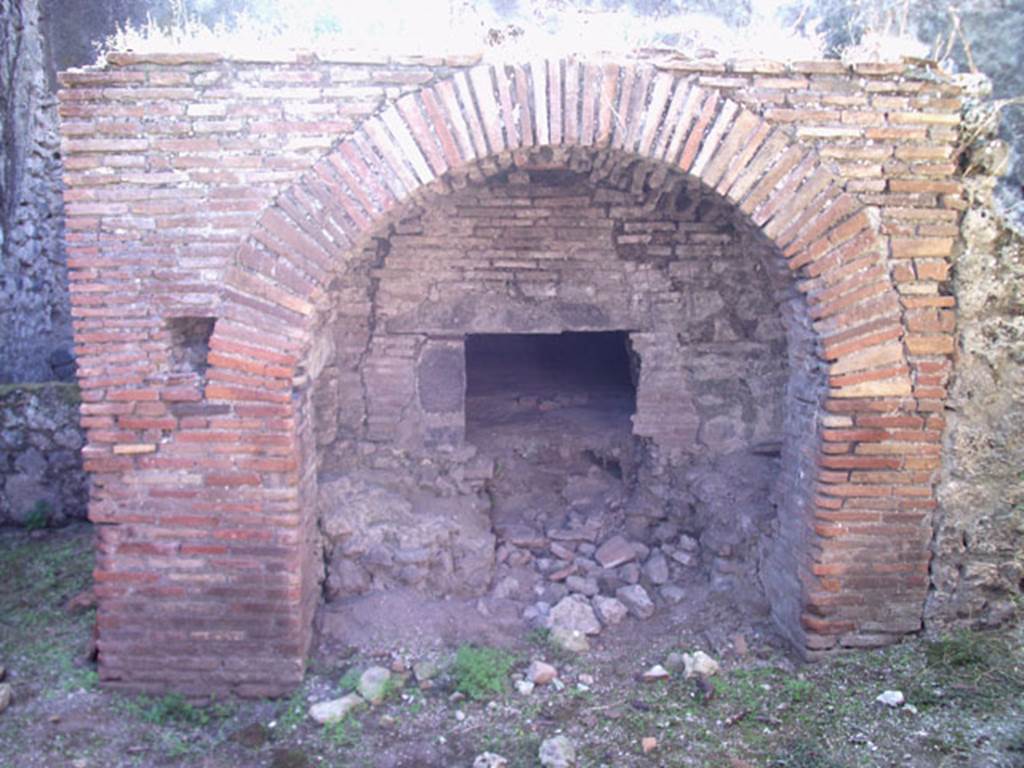
VII.12.11 Pompeii. July 2008. Looking south to front of oven, with small recess and pipe, on left. Photo courtesy of Jared Benton.
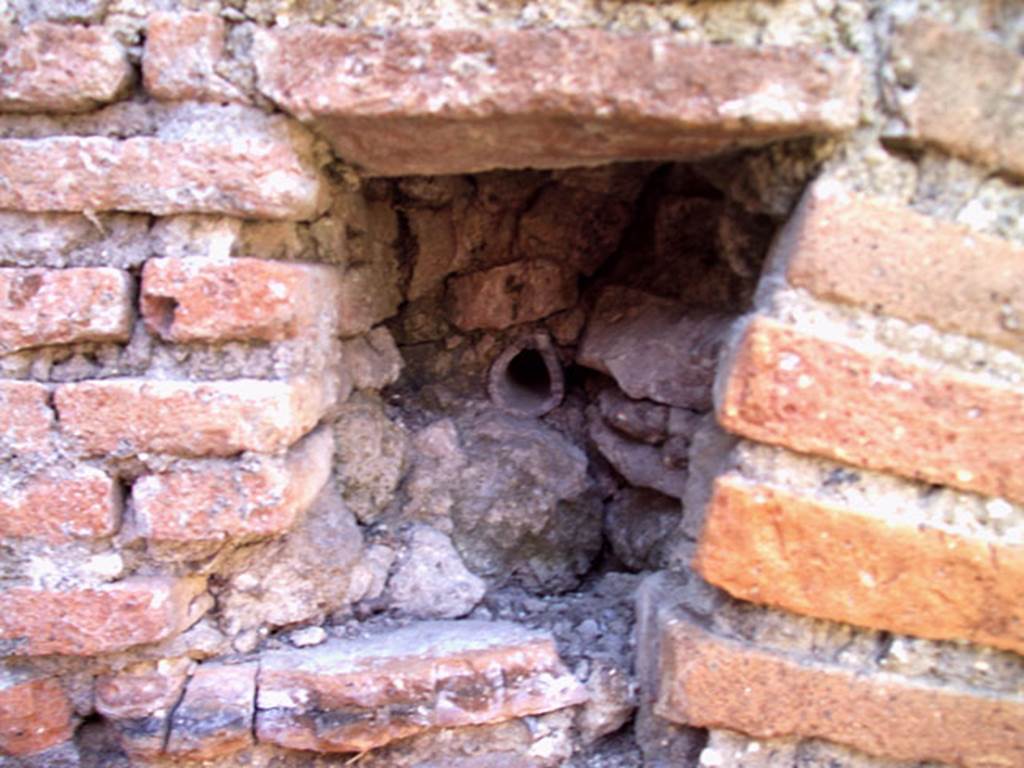
VII.12.11 Pompeii. July 2008. Recess and pipe on east side of oven. Photo courtesy of Jared Benton.
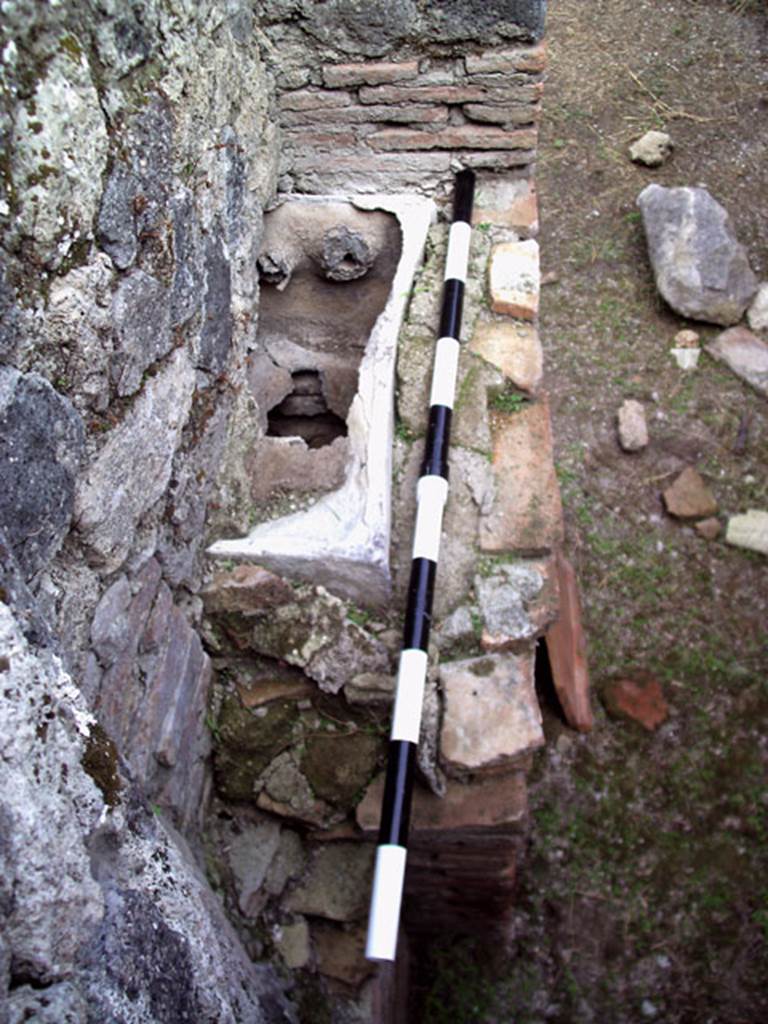
VII.12.11 Pompeii. July 2008. Water feature from east side of oven. Photo courtesy of Jared Benton.
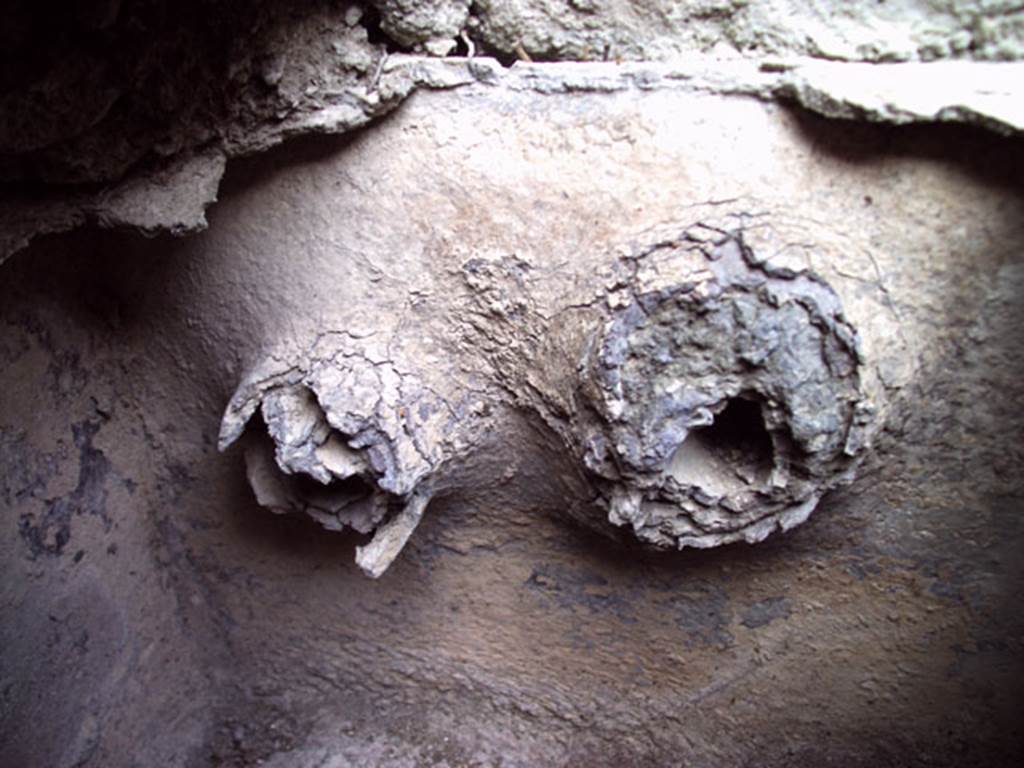
VII.12.11 Pompeii. July 2008. Detail from water feature on east side of oven. Photo courtesy of Jared Benton.
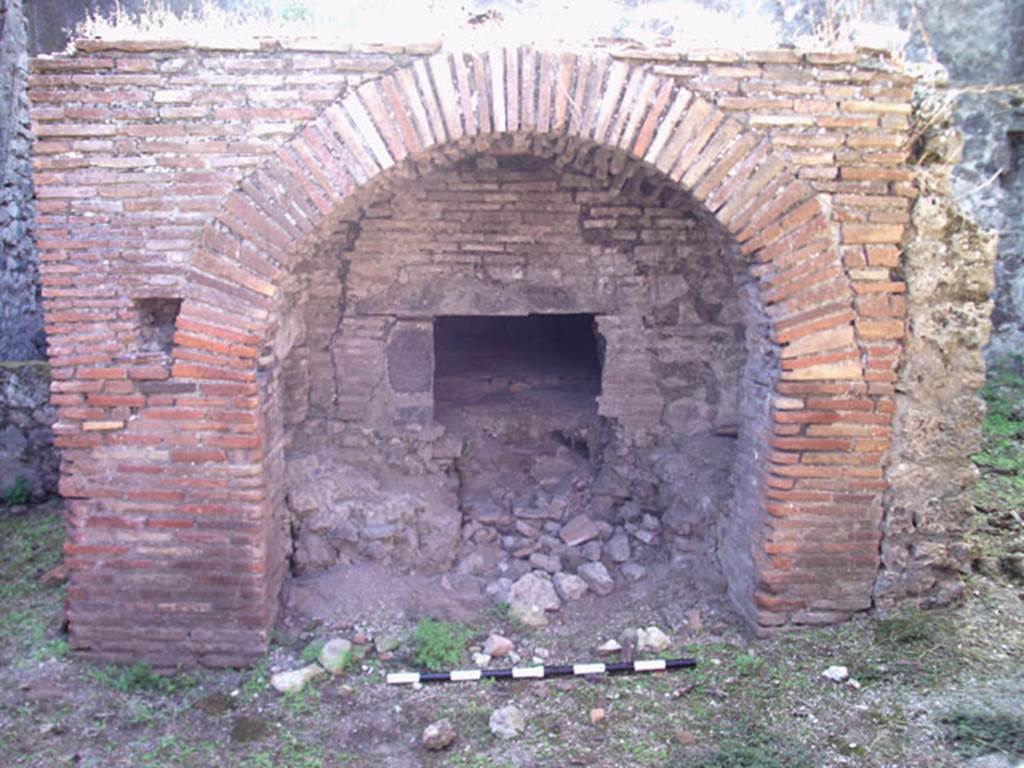
VII.12.11 Pompeii. July 2008. Looking south to oven. Photo courtesy of Jared Benton.
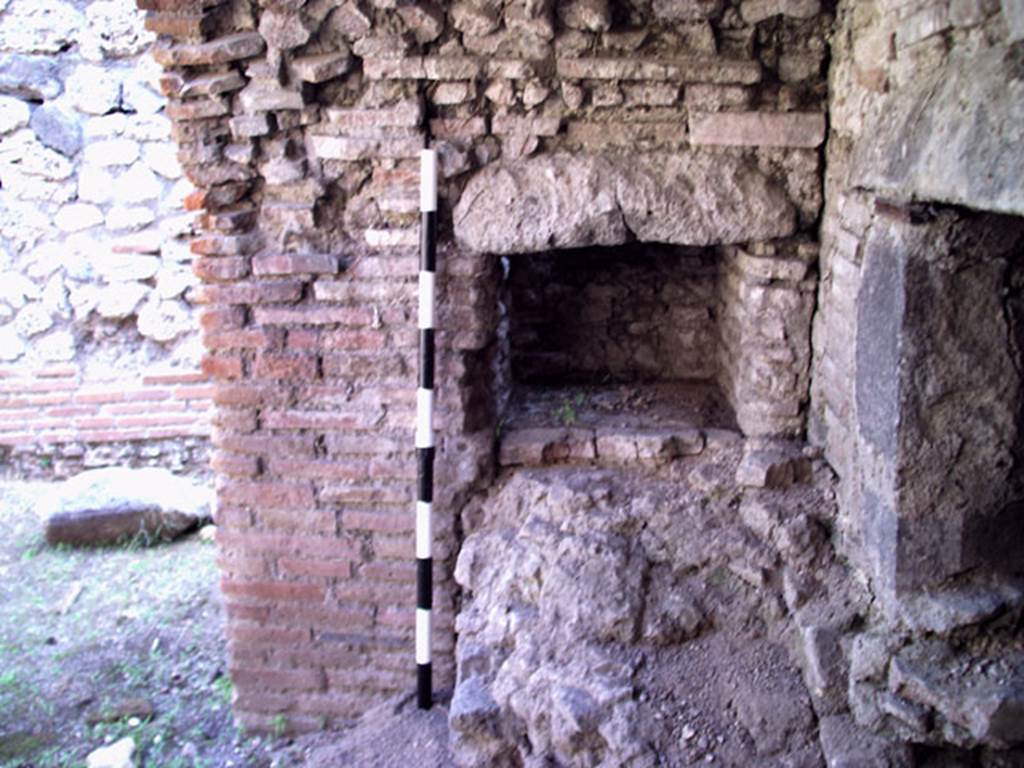
VII.12.11 Pompeii. July 2008. Looking towards east side in oven. Photo courtesy of Jared Benton.
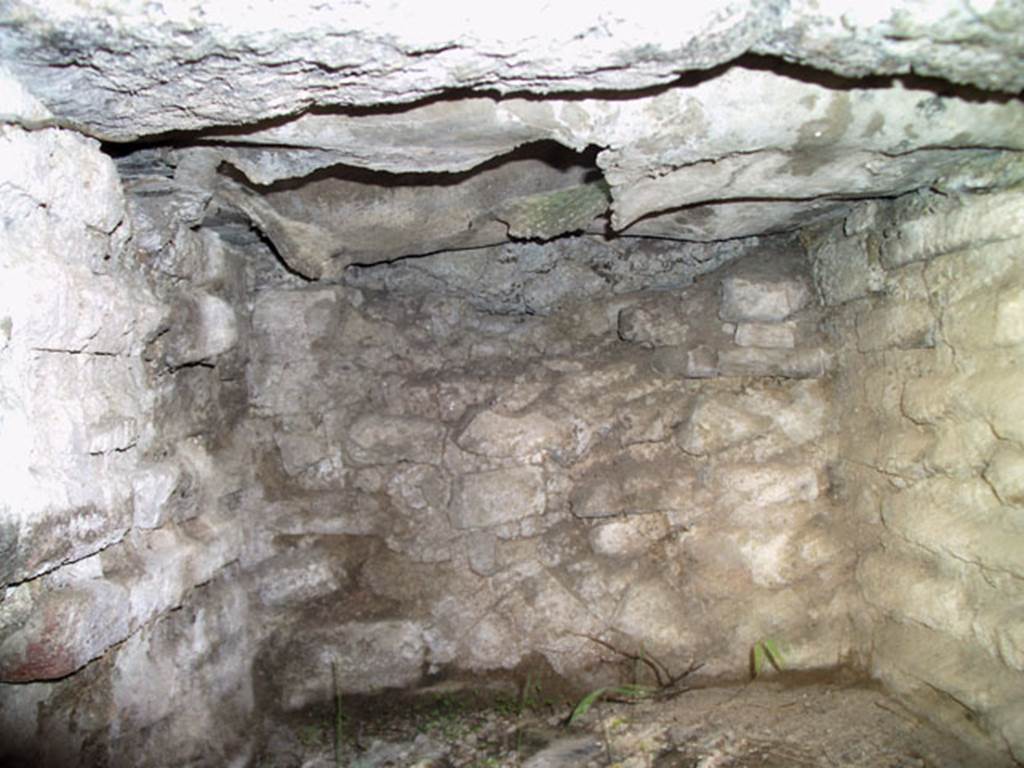
VII.12.11 Pompeii. July 2008. Looking east. Photo courtesy of Jared Benton.
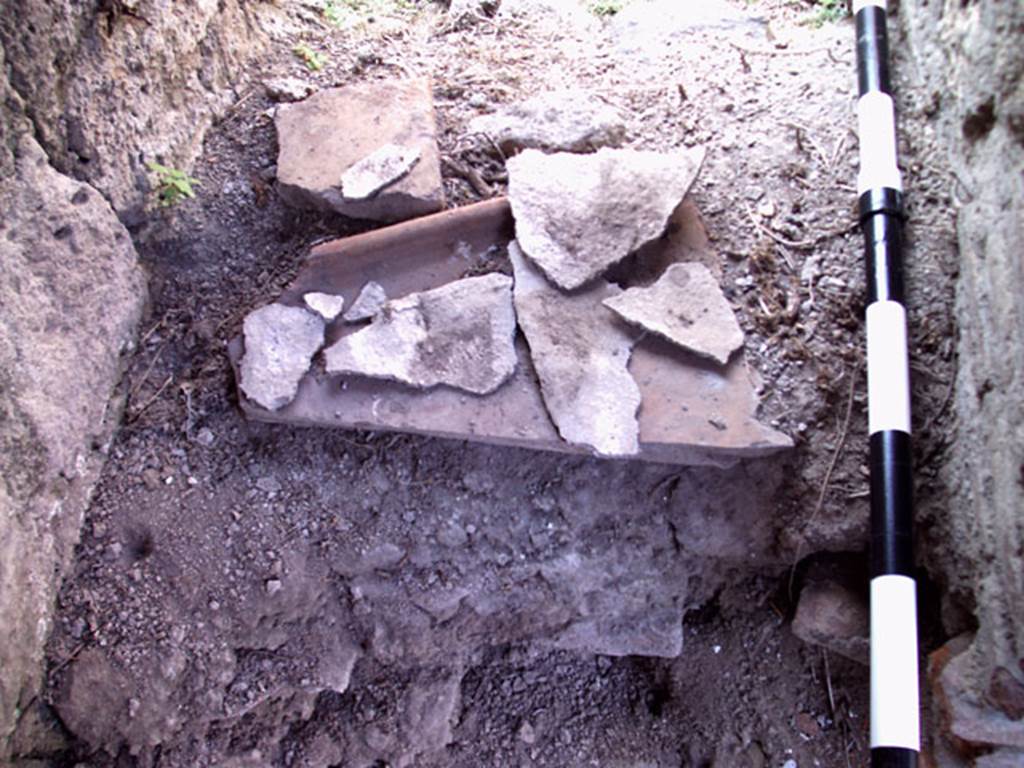
VII.12.11 Pompeii. July 2008. Looking towards west side of oven. Photo courtesy of Jared Benton.
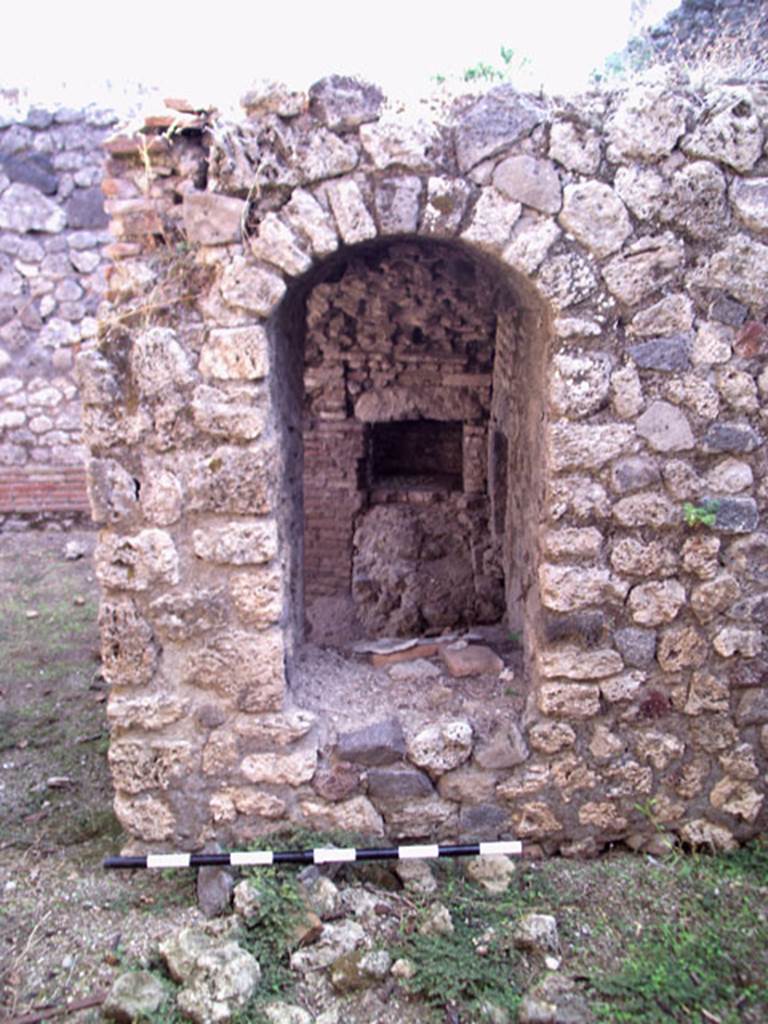
VII.12.11 Pompeii. July 2008.
Looking east through oven, from room on west side. Photo courtesy of Jared Benton.
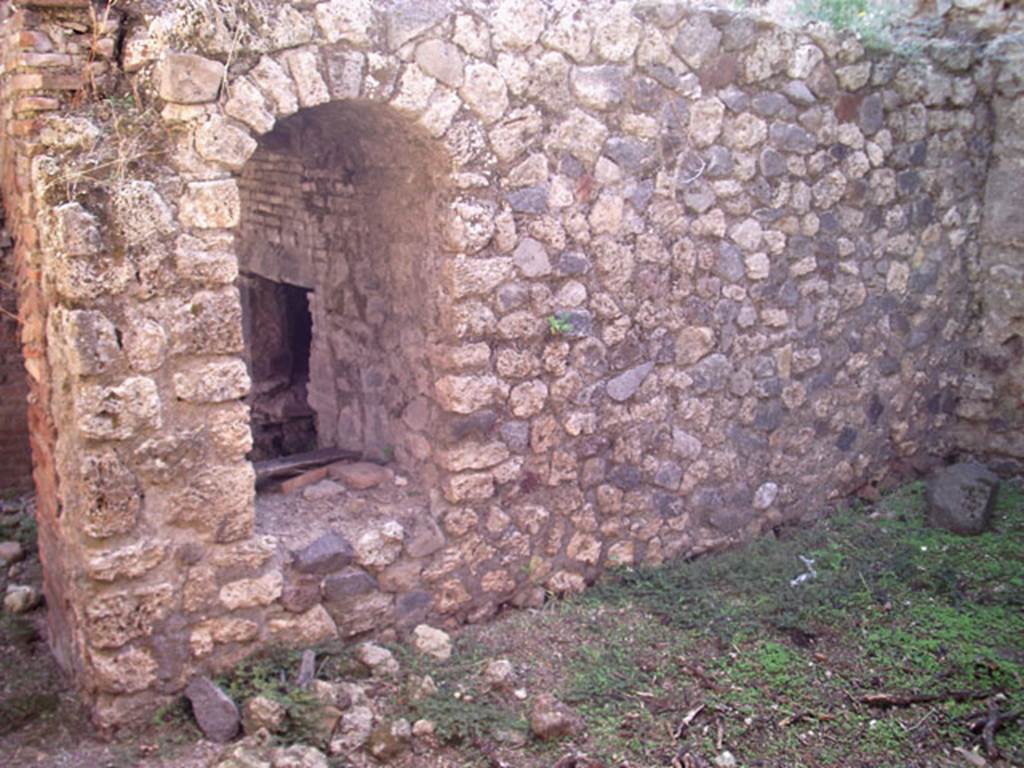
VII.12.11 Pompeii. July 2008. Wall at side of oven, in room on its west side. Photo courtesy of Jared Benton.
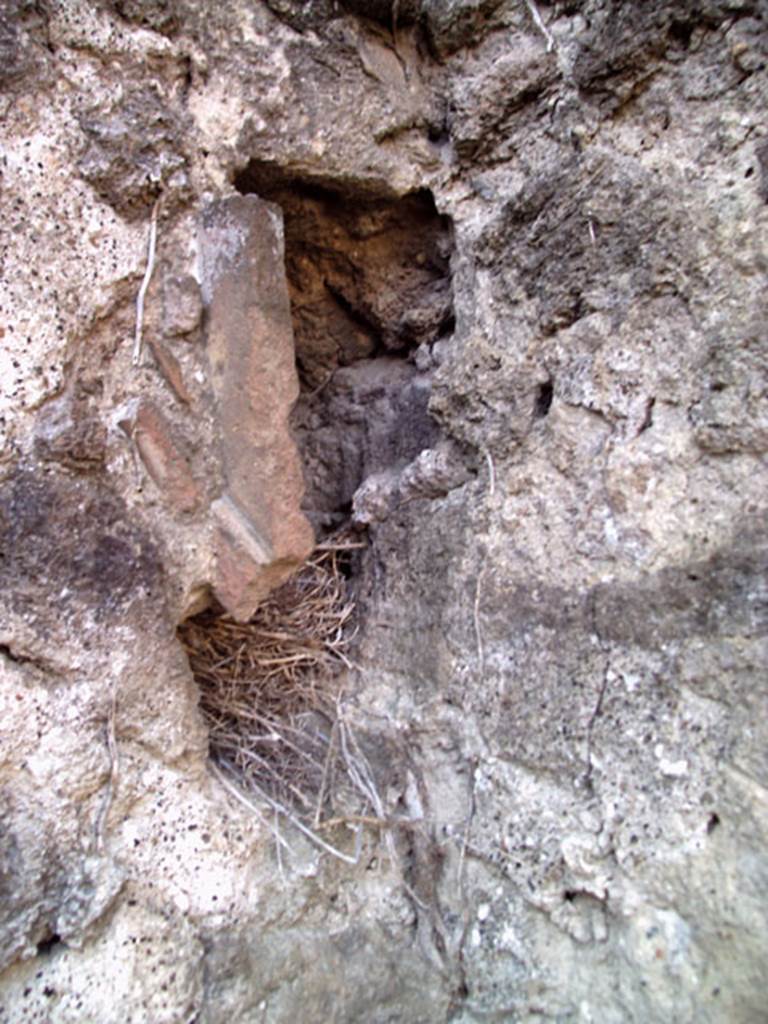
VII.12.11 Pompeii. July 2008. Detail. Photo courtesy of Jared Benton.
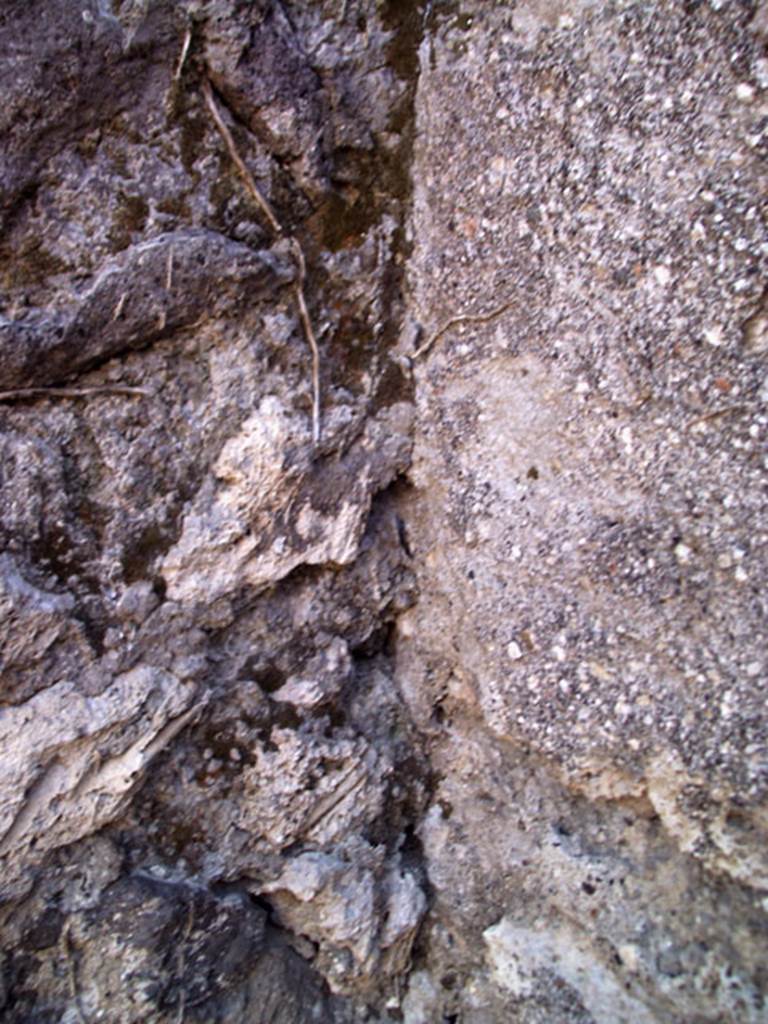
VII.12.11 Pompeii. July 2008.
South-east corner of room on west side of oven. Photo courtesy of Jared Benton.
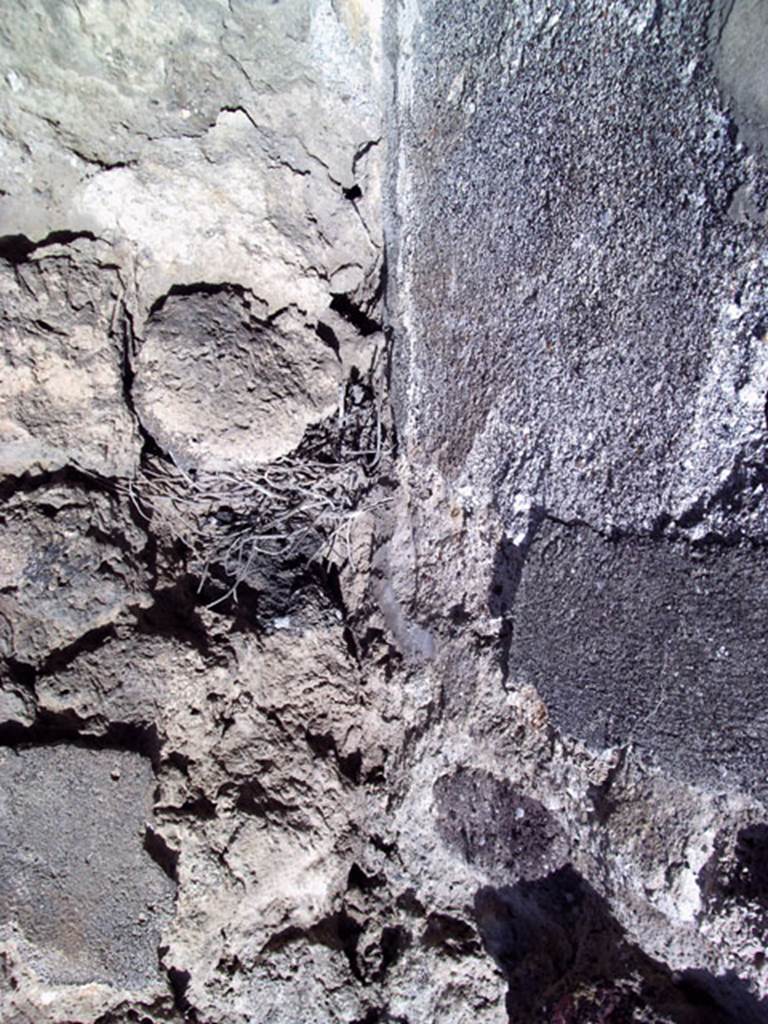
VII.12.11 Pompeii. July 2008. Detail. Photo courtesy of Jared Benton.
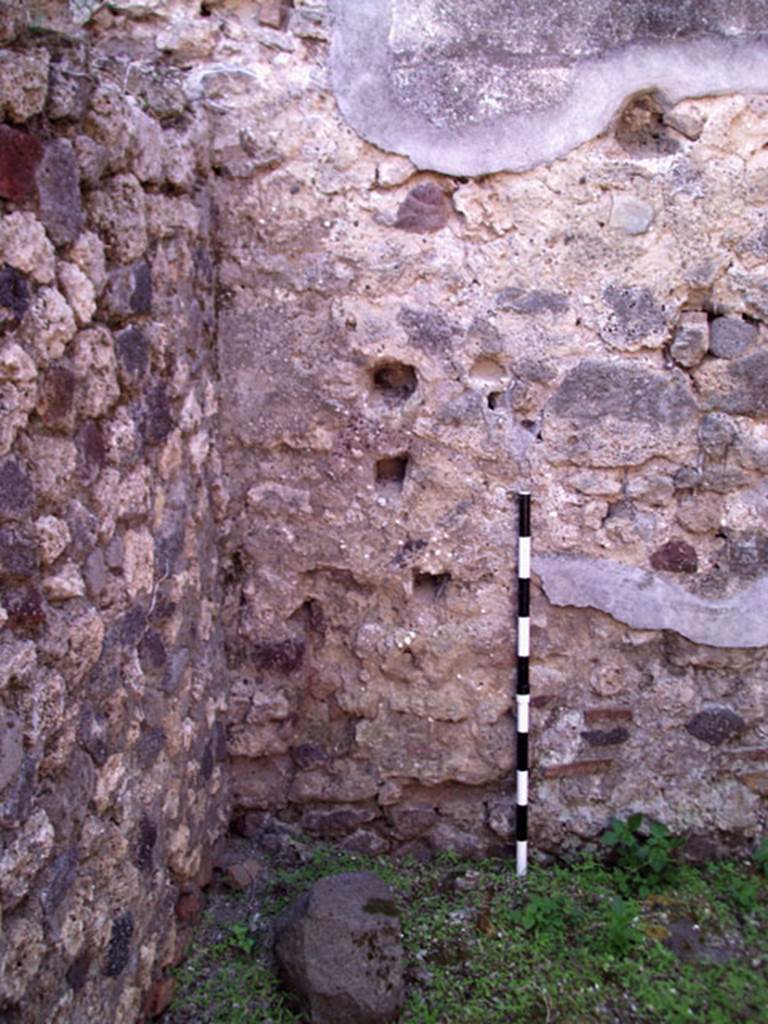
VII.12.11 Pompeii. July 2008.
South-east corner, of room on west side of oven. Photo courtesy of Jared Benton.
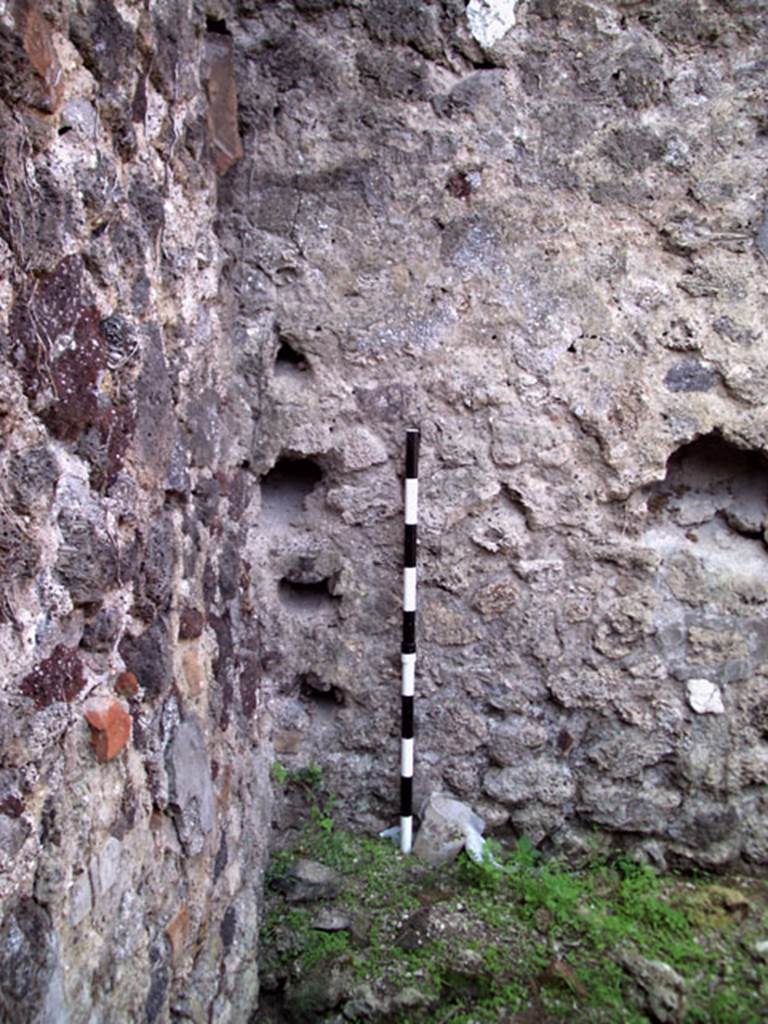
VII.12.11 Pompeii. July 2008.
North-west corner of room on west side of oven. Photo courtesy of Jared Benton.
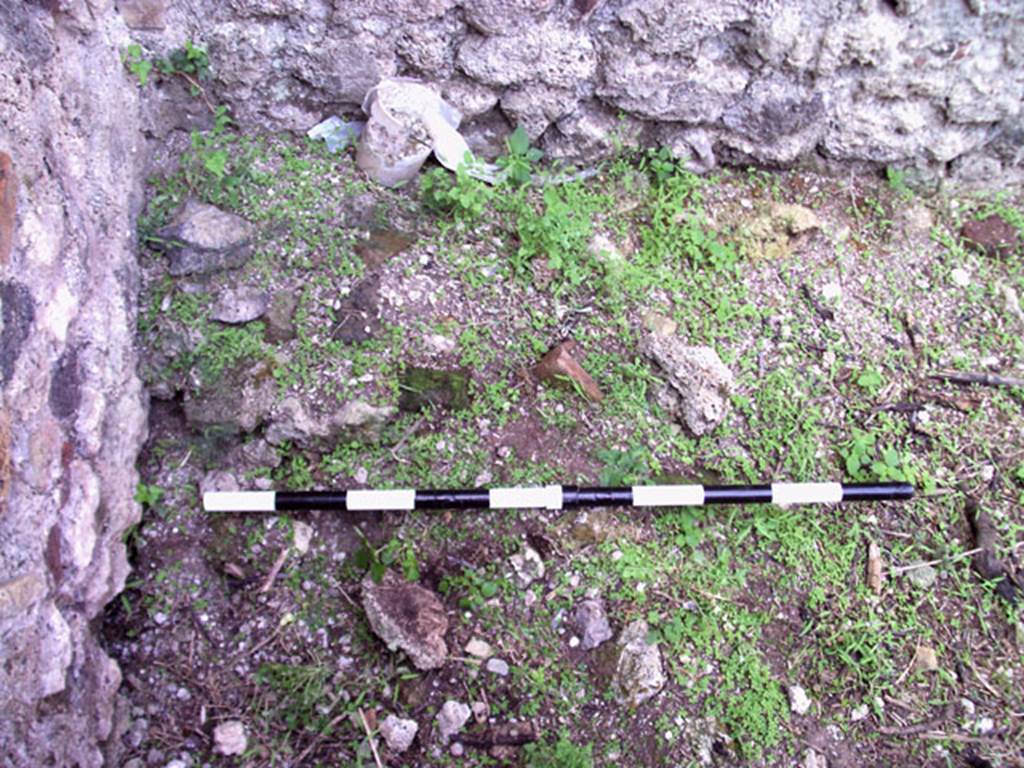
VII.12.11 Pompeii. July 2008. Detail from north-west corner of room on west side of oven. Photo courtesy of Jared Benton.
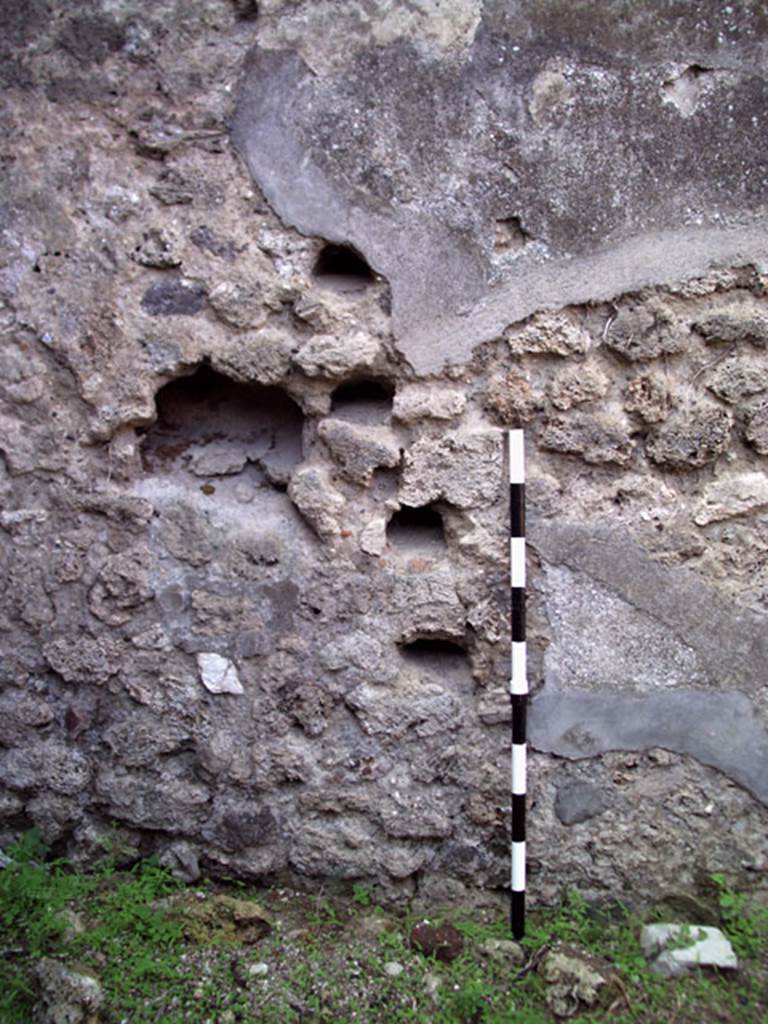
VII.12.11 Pompeii. July 2008. North wall. Photo courtesy of Jared Benton.
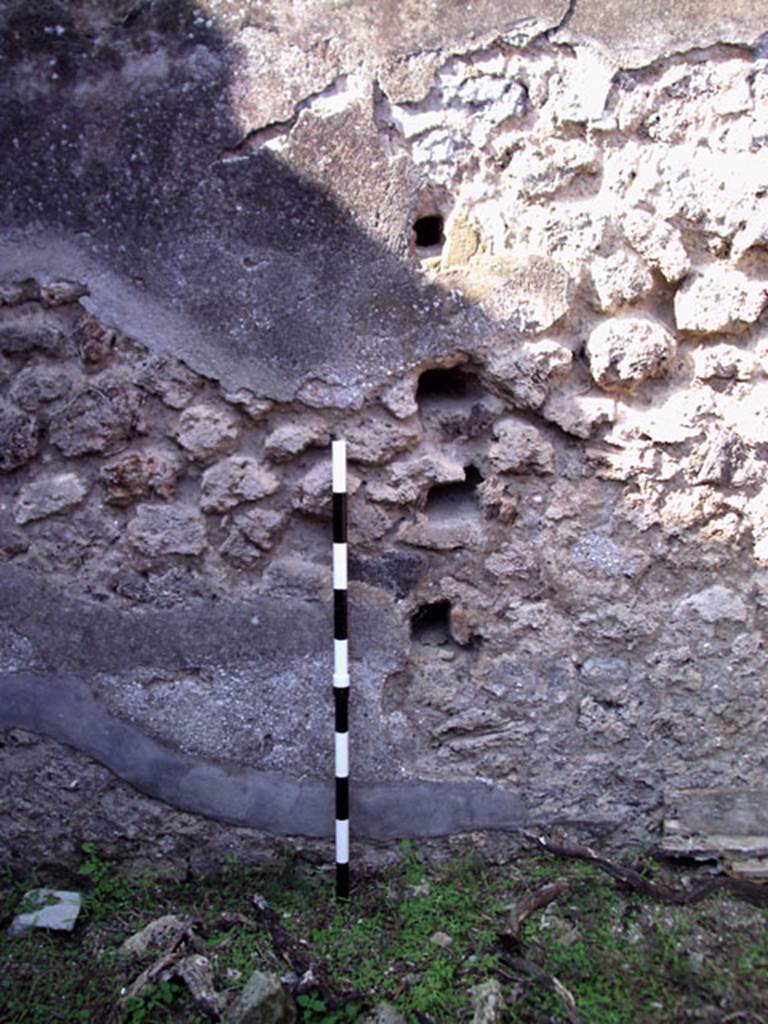
VII.12.11 Pompeii. July 2008. North wall. Photo courtesy of Jared Benton.
Notizie degli Scavi, 1900, (p.588-590).
(La fognatura di Pompeii, pp.587-599).

VII.12.11 Pompeii. 1900.
Description of sewage system found in
four properties.
The earliest sewage
system consisted of collecting sewage from under the houses, in cesspools at
the latrines, and leaving it there for a longer or shorter time. These wells
varied in structure and size and, to give an idea, four are mentioned here.
See Notizie degli Scavi di Antichità, 1900,
(p.588)
![VI.10.14 Pompeii. 1900. Il primo [pozzo] nella casa VI.X.14……. Description of sewage system found in VI.10.14.
See Notizie degli Scavi di Antichità, 1900, (p.589).](7%2012%2011_files/image072.jpg)
VI.10.14 Pompeii. 1900. Il primo [pozzo] nella
casa VI.X.14……. Description of
sewage system found in VI.10.14.
See Notizie degli Scavi di Antichità, 1900,
(p.589).

VI.10.14 Pompeii. 1900.
Description of sewage system found in VI.10.14.
See Notizie degli Scavi di Antichità, 1900,
(p.589)
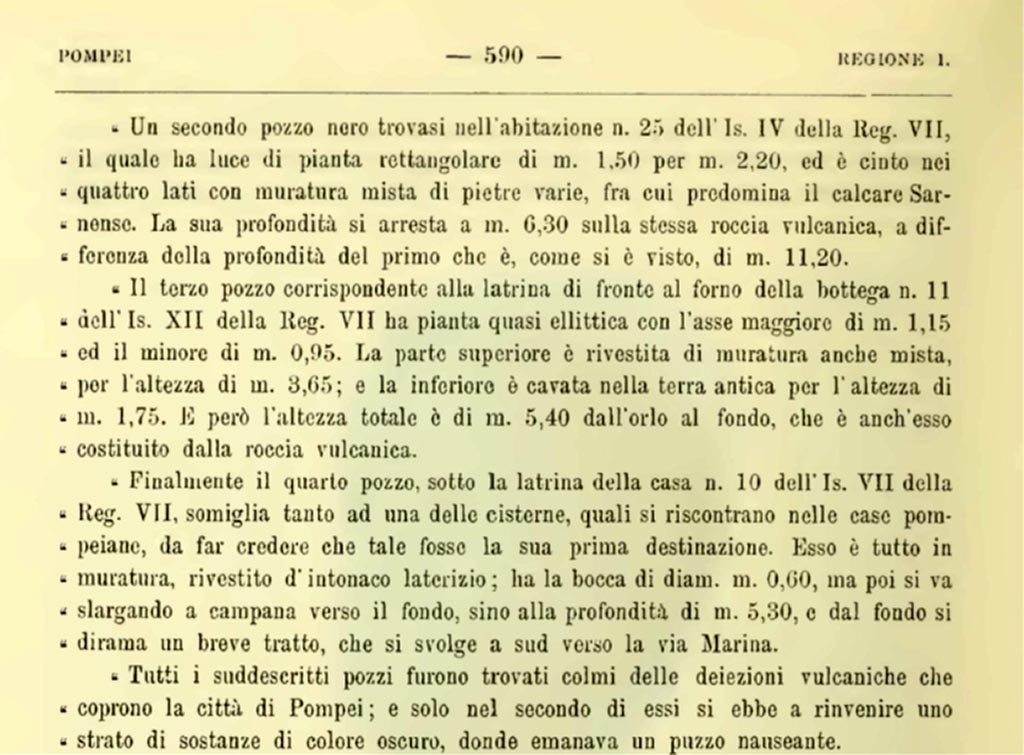
VII.12.11 Pompeii. 1900. Description of sewage system found in this property.
Il terzo pozzo
corrispondente alla latrina di fronte al forno della bottega VII.XII.11………
The third pit,
corresponding to the latrine in front of the oven in workshop No. 11 of Is. XII
of Reg. VII, has an almost elliptical plan, with its major axis measuring 1.15
m and its minor axis 0.95 m. The upper part is covered with masonry, also
mixed, to a height of 3.65 m; and the lower part is hollowed out of the ancient
earth to a height of 1.75 m. However, the total height is 5.40 m from the rim
to the bottom, which is also made of volcanic rock.
All the aforementioned pits were found filled with the volcanic deposits
that cover the city of Pompeii; and only in the second of them was a layer of
dark-colored substances found, from which a nauseating stench emanated.
See Notizie degli Scavi di
Antichità, 1900, (p.590).