VII.4.52 Pompeii. Shop.
Excavated 1847. (Strada della Fortuna 10).
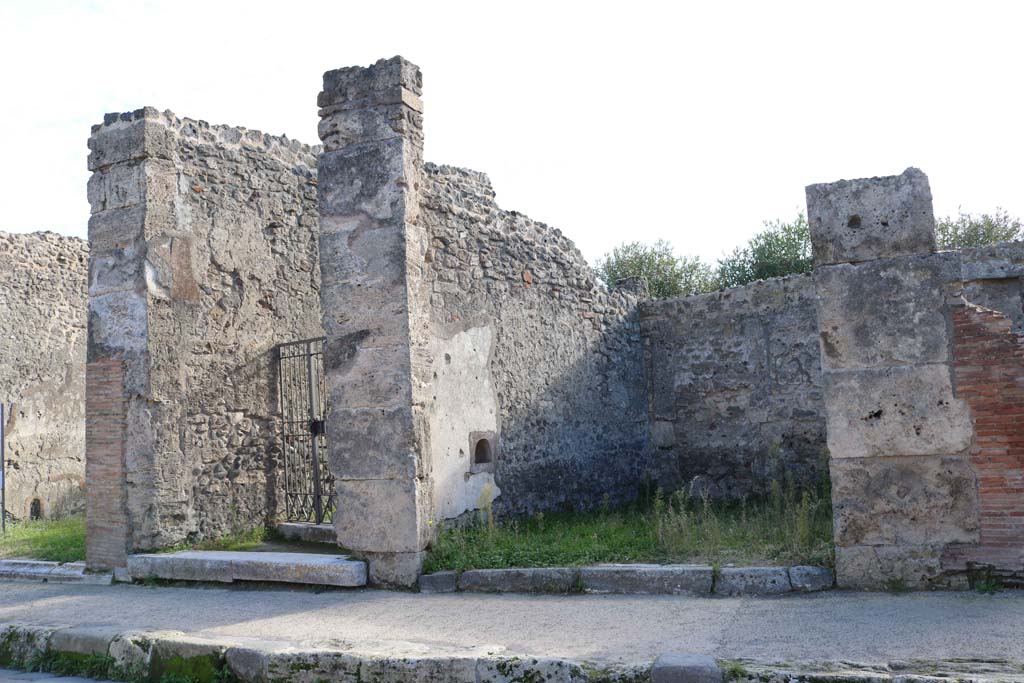
VII.4.52 Pompeii, on right. December 2018.
Looking south from Via della Fortuna towards
entrance doorway. Photo courtesy of Aude Durand.
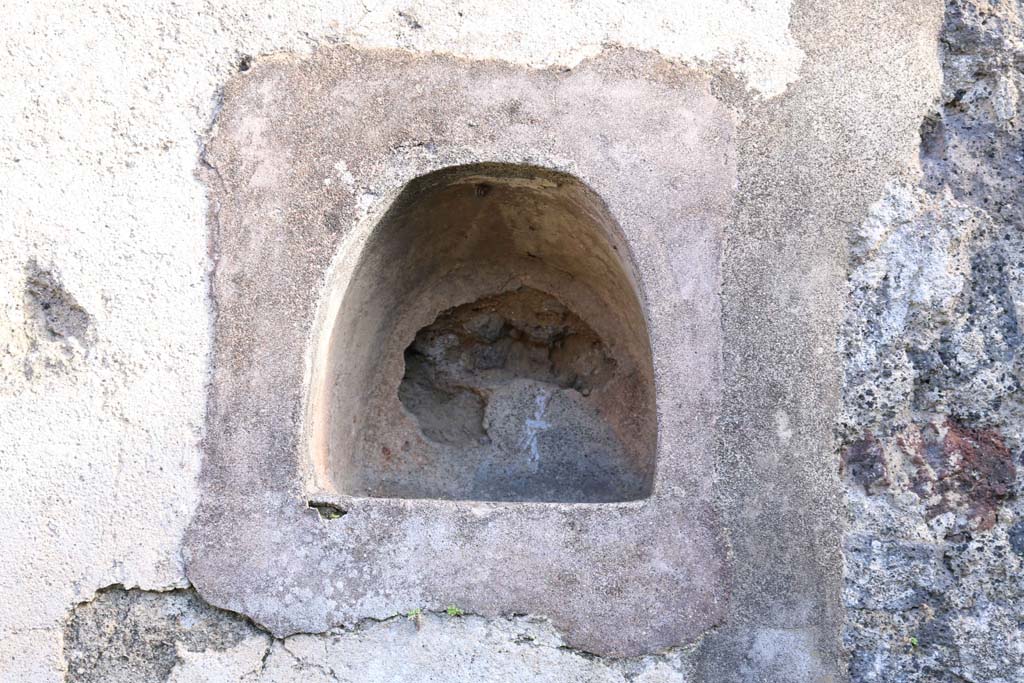
VII.4.52 Pompeii, December 2018. Niche set into
east wall of shop. Photo courtesy of Aude Durand.
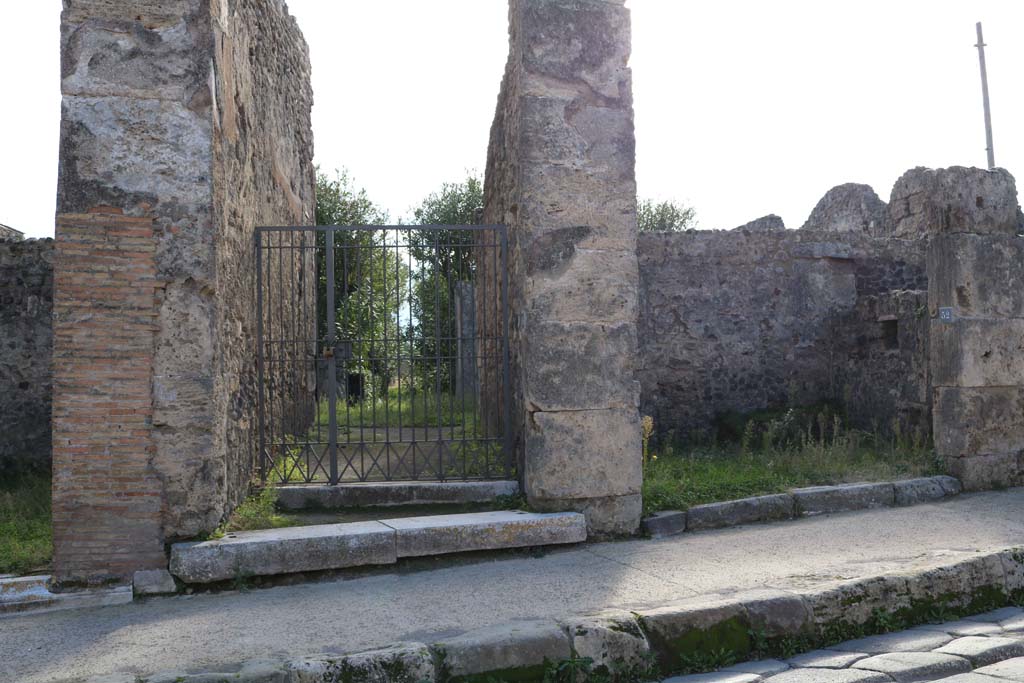
VII.4.52 Pompeii, on right. December 2018.
Looking towards west wall of shop, on right,
with square niche. Photo courtesy of Aude Durand.
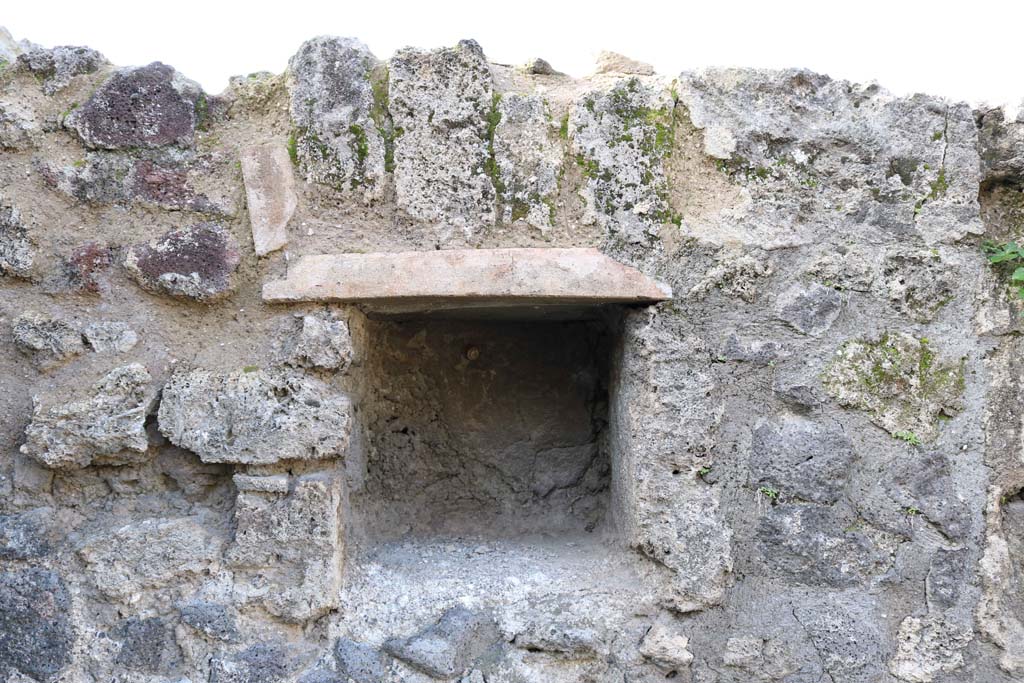
VII.4.52 Pompeii, December 2018. Looking towards
square niche set into west wall of shop. Photo courtesy of Aude Durand.
![VII.4.52 Pompeii. May 2005. Looking south from entrance across shop.
According to Eschebach, on the left was a small arched niche. On the right at the rear was a staircase to the upper floor with a latrine beneath.
See Eschebach, L., 1993. Gebäudeverzeichnis und Stadtplan der antiken Stadt Pompeji. Köln: Böhlau. (p.282)
According to Boyce, in the west wall was a rectangular niche and in the east wall was an arched niche. One of them was probably a Lararium.
See Boyce G. K., 1937. Corpus of the Lararia of Pompeii. Rome: MAAR 14. (p.66, no.280)
Graffito was found in April 1833 on the pilaster on the right, between VII.4.52 and 53 –
Rufum d(ignum?) […]
L(ucium) Nu[mis]iu[m
De[…] [CIL IV 287]
See Pagano, M. and Prisciandaro, R., 2006. Studio sulle provenienze degli oggetti rinvenuti negli scavi borbonici del regno di Napoli. Naples : Nicola Longobardi. (p.147)](7%2004%2052_files/image007.jpg)
According to Eschebach, on the left was a small arched niche.
On the right at the rear was a staircase to the upper floor with a latrine beneath.
See Eschebach, L., 1993. Gebäudeverzeichnis und Stadtplan der antiken Stadt Pompeji. Köln: Böhlau. (p.282)
According to Boyce, in the west wall was a rectangular niche and in the east wall was an arched niche.
One of them was probably a Lararium.
See Boyce G. K., 1937. Corpus of the Lararia of Pompeii. Rome: MAAR 14. (p.66, no.280)
Graffito was found in April 1833 on the pilaster on the right, between VII.4.52 and 53 –
Rufum d(ignum?)
[…]
L(ucium) Nu[mis]iu[m
De[…] [CIL IV 287]
See Pagano, M. and Prisciandaro, R., 2006. Studio sulle provenienze degli oggetti rinvenuti negli scavi borbonici del regno di Napoli. Naples: Nicola Longobardi. (p.147)