VII.4.25 Pompeii. Workshop and dwelling.
Linked to VII.4.24. Excavated 1822, 1833 and 1868.
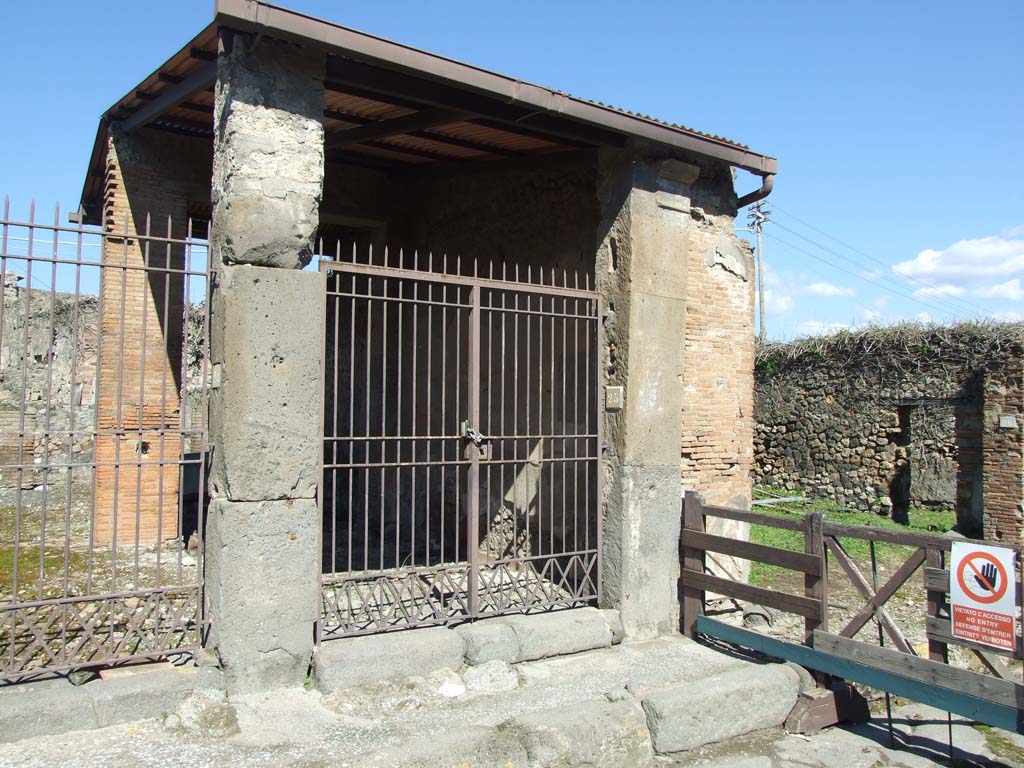
VII.4.25 Pompeii. March 2009. Entrance.
![VII.4.25 Pompeii. March 2009. Entrance.
Found in May 1822, painted in red on the pilaster between VII.4.25 and 26, (on the right) were –
A(ulum) Vettium Firmum
Numisius Iucundus cum Secundo
Et Victore rog(at) [CIL IV 558]
C(aium) Cuspium Pansam aed(ilem) [CIL IV 559]
See Pagano, M. and Prisciandaro, R., 2006. Studio sulle provenienze degli oggetti rinvenuti negli scavi borbonici del regno di Napoli. Naples: Nicola Longobardi. (p. 124)](7%2004%2025_files/image003.jpg)
VII.4.25 Pompeii. March 2009. Entrance.
Found in May 1822, painted in red on the pilaster between VII.4.25 and 26, (on the right) were –
A(ulum) Vettium
Firmum
Numisius Iucundus
cum Secundo
Et Victore
rog(at) [CIL IV 558]
C(aium) Cuspium
Pansam aed(ilem) [CIL IV 559]
See Pagano, M. and Prisciandaro, R., 2006. Studio sulle provenienze degli oggetti rinvenuti negli scavi borbonici del regno di Napoli. Naples: Nicola Longobardi. (p. 124)
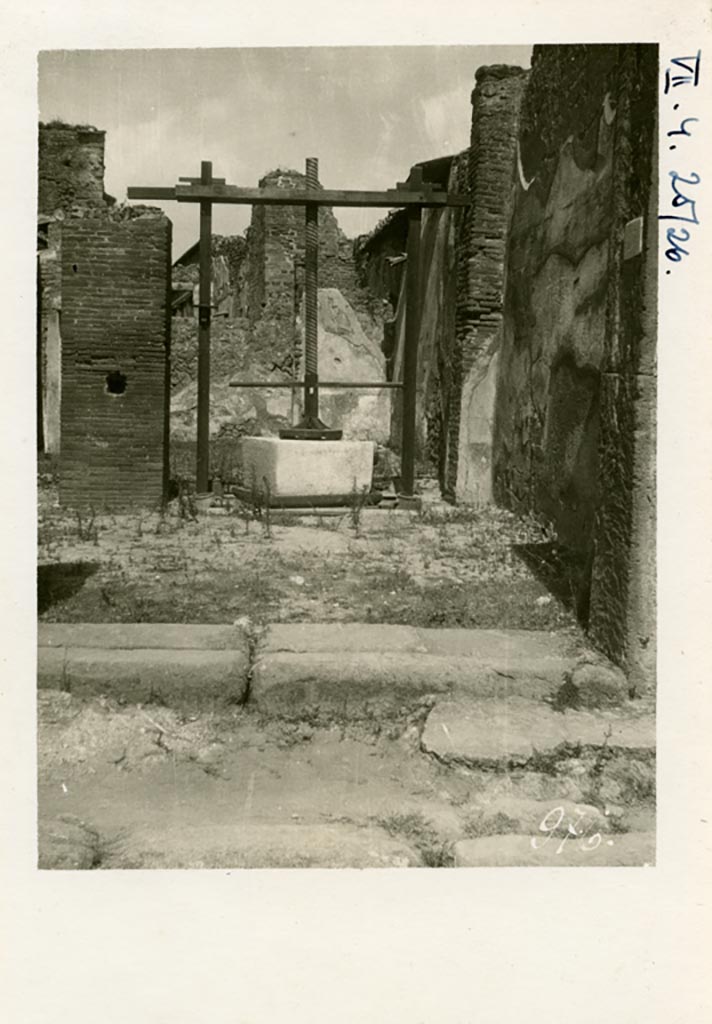
VII.4.25 Pompeii. Pre-1937-39.
Looking north from Via degli Augustali, across workshop room towards atrium and tablinum.
Photo courtesy of American Academy in Rome, Photographic Archive. Warsher collection no. 976.
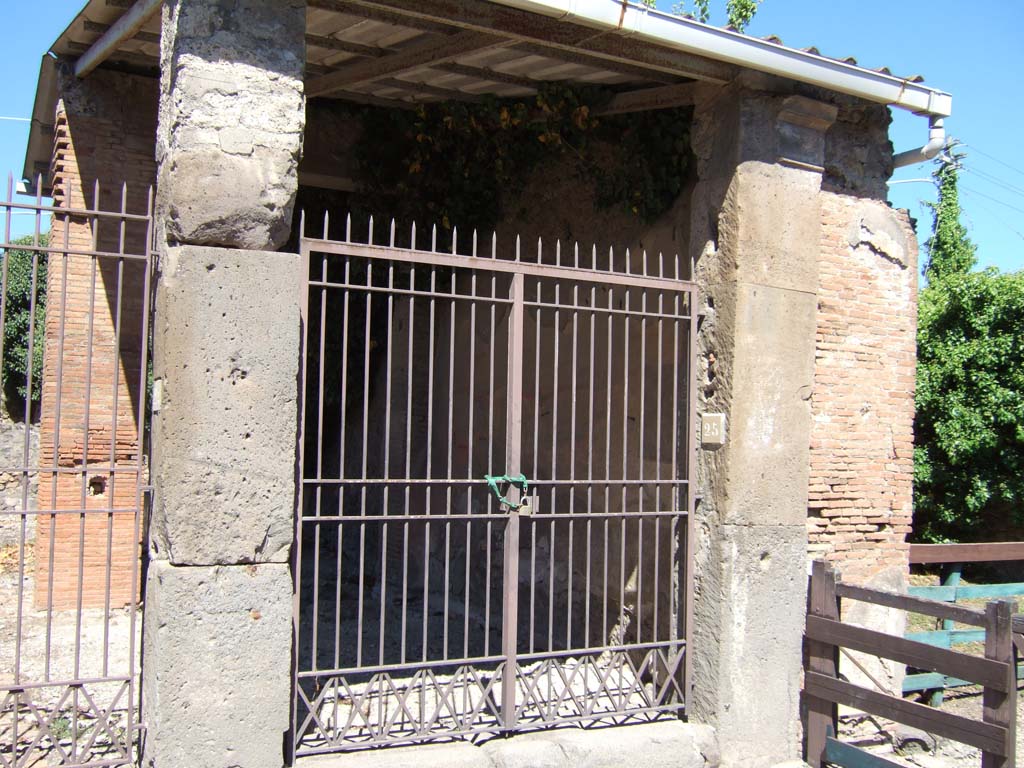
VII.4.25 Pompeii. September 2005. Entrance.
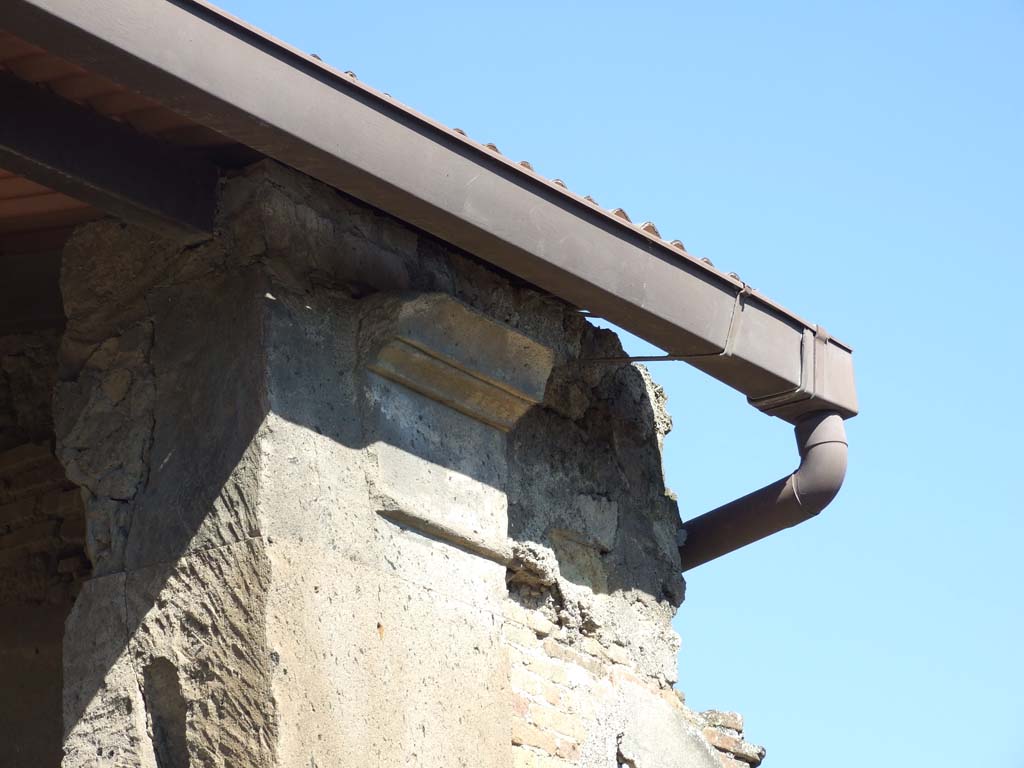
VII.4.25 Pompeii. March 2009. Upper east side of entrance.
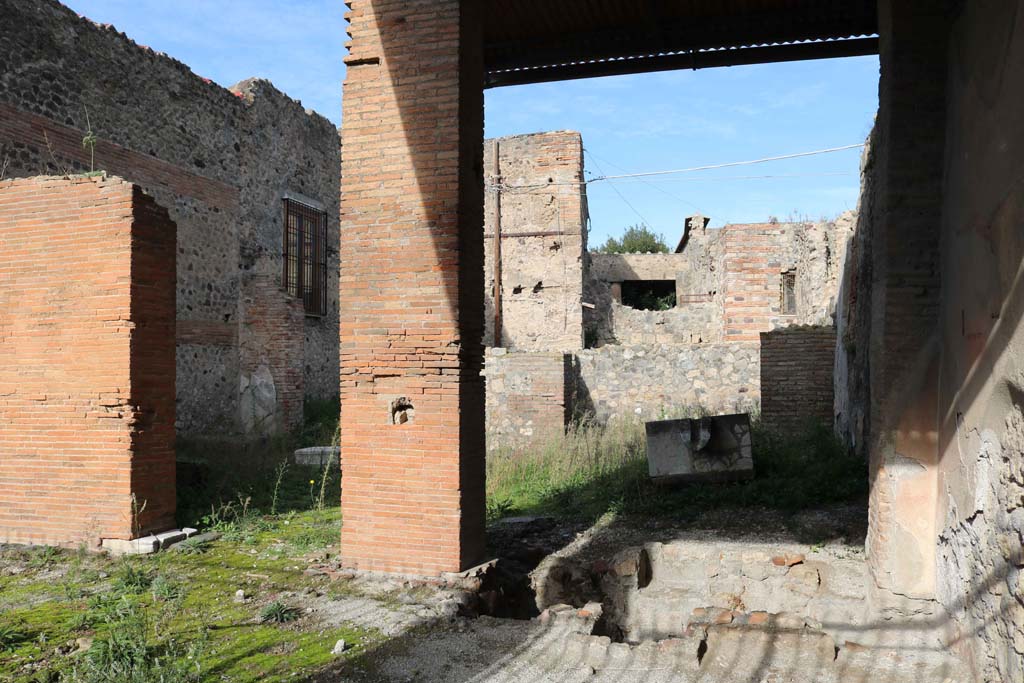
VII.4.25 Pompeii. December 2018.
Looking
north across workshop room towards atrium and tablinum. Photo courtesy of Aude
Durand.
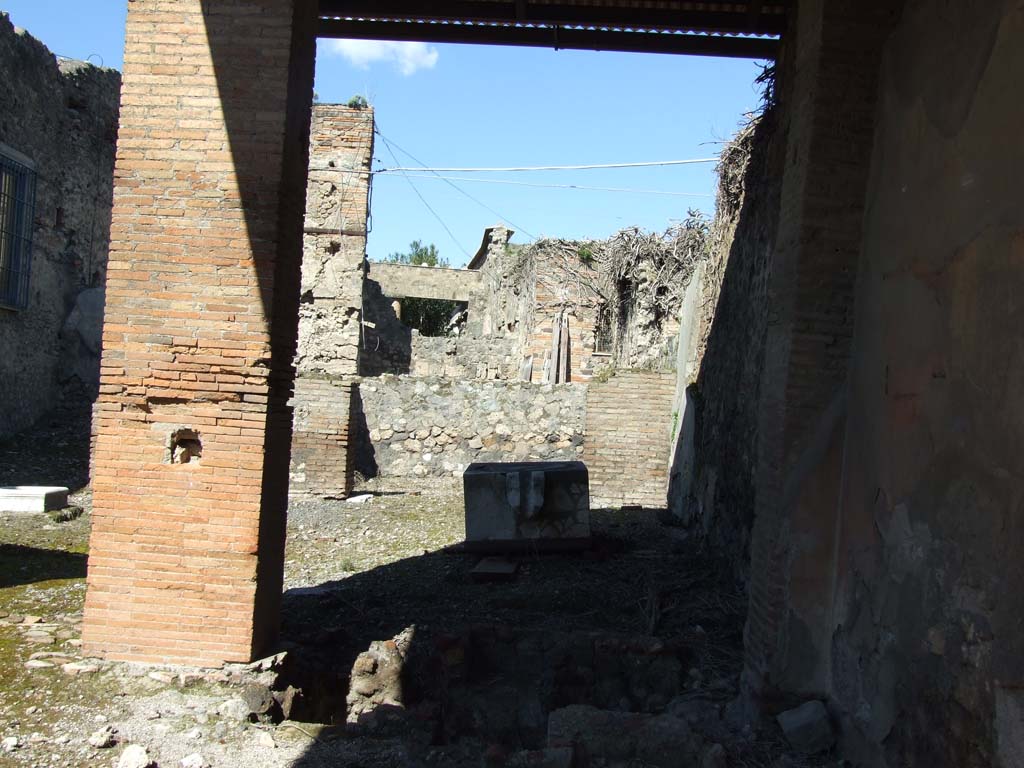
VII.4.25 Pompeii. March 2009. Looking north across atrium to tablinum.
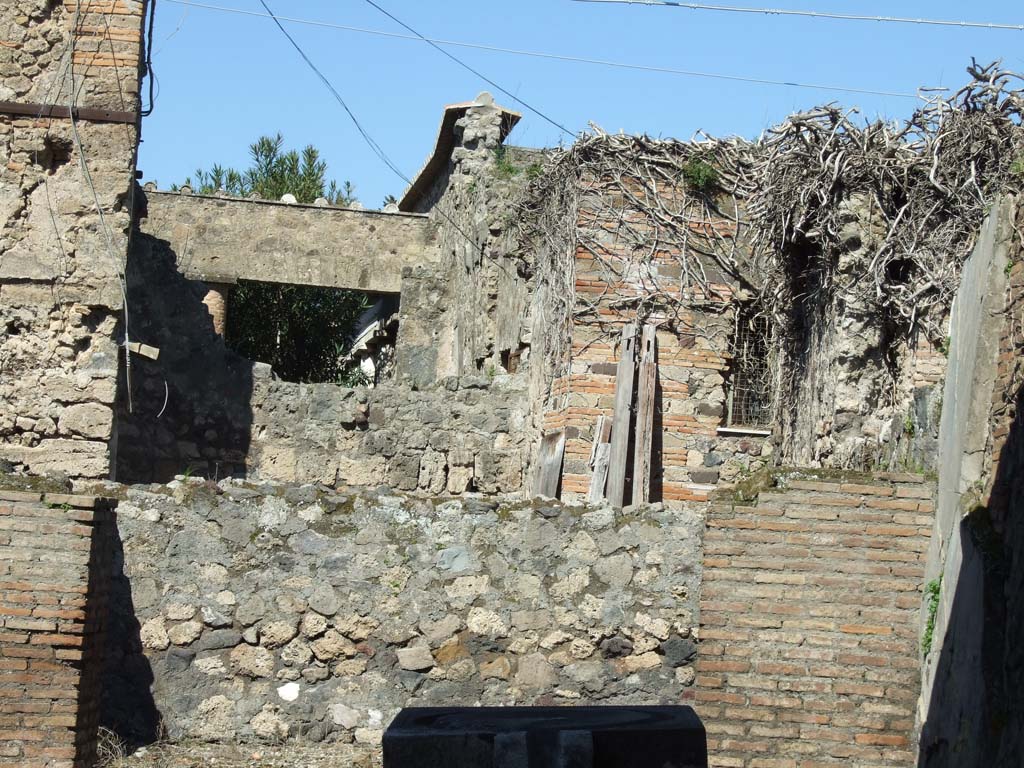
VII.4.25 Pompeii. March 2009. Looking north to rear rooms.
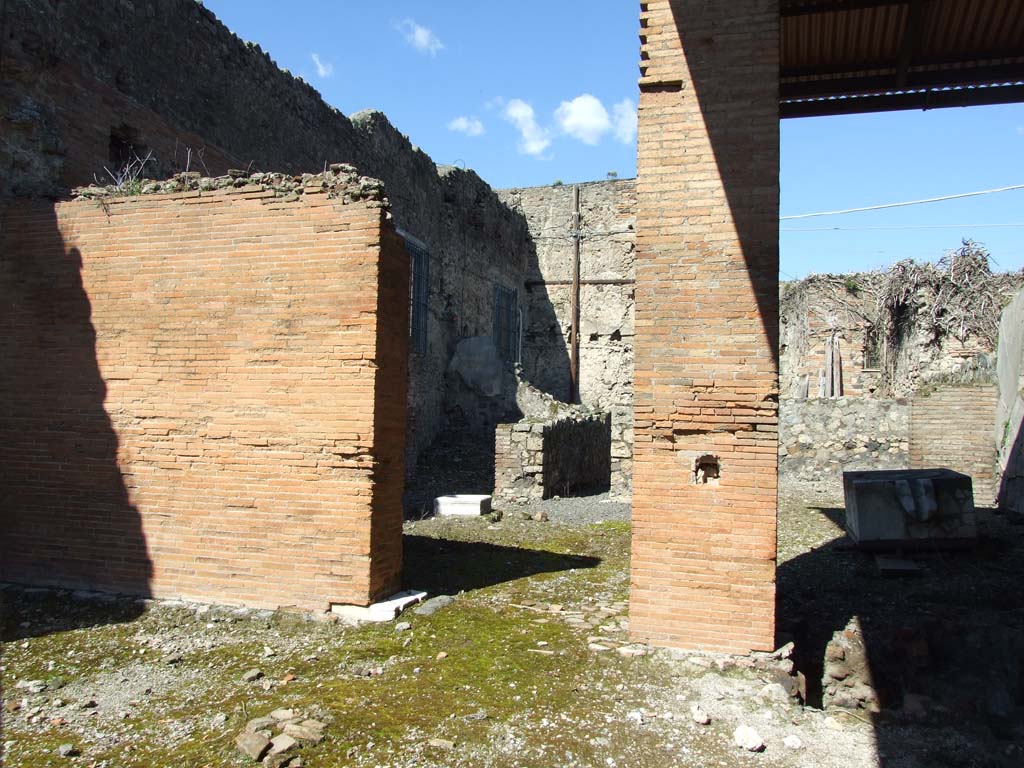
VII.4.25 Pompeii. March 2009. Looking north-west across atrium towards cubiculum.
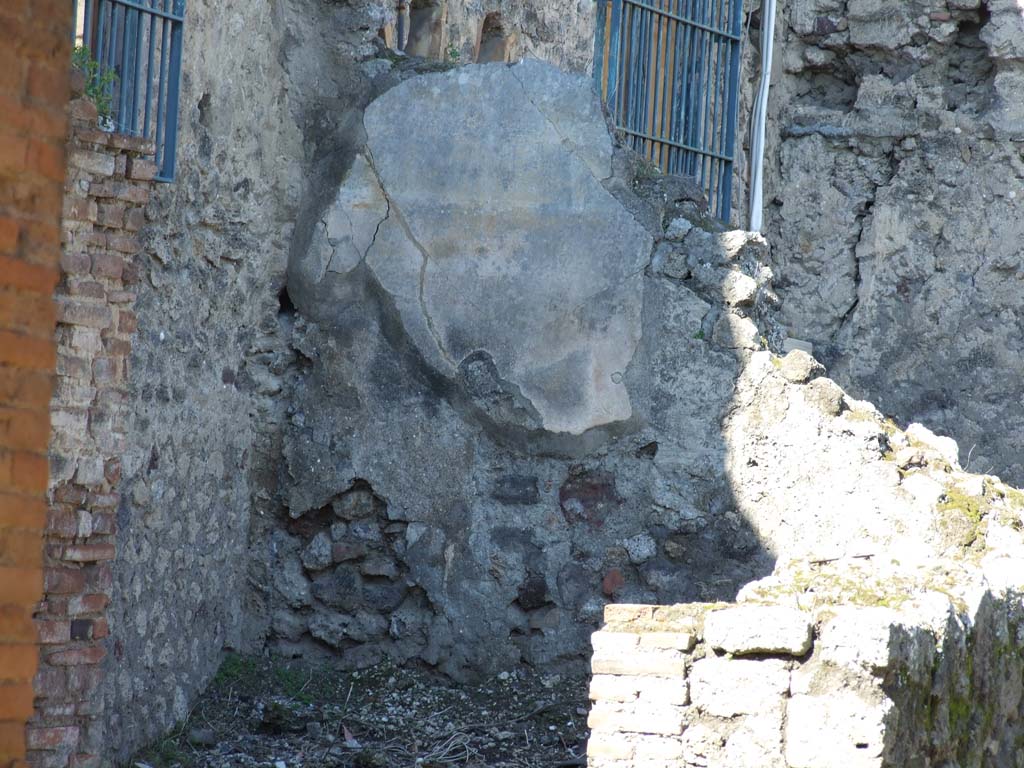
VII.4.25 Pompeii. March 2009. Cubiculum on north-west side of atrium.
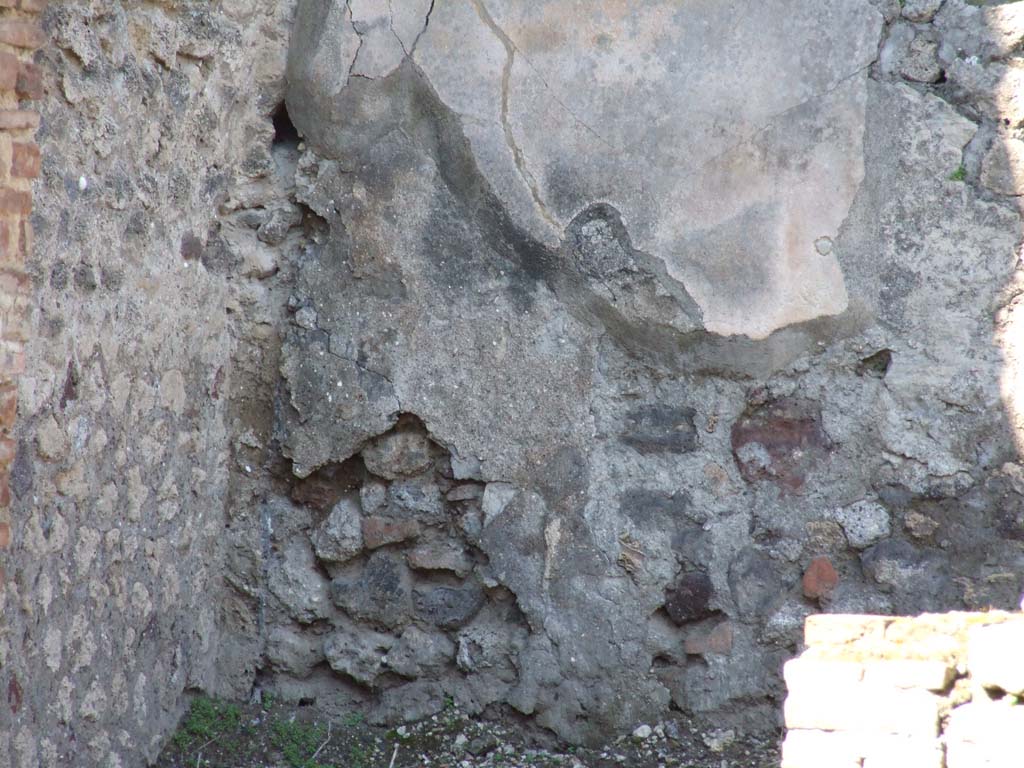
VII.4.25 Pompeii. March 2009. North wall of cubiculum.
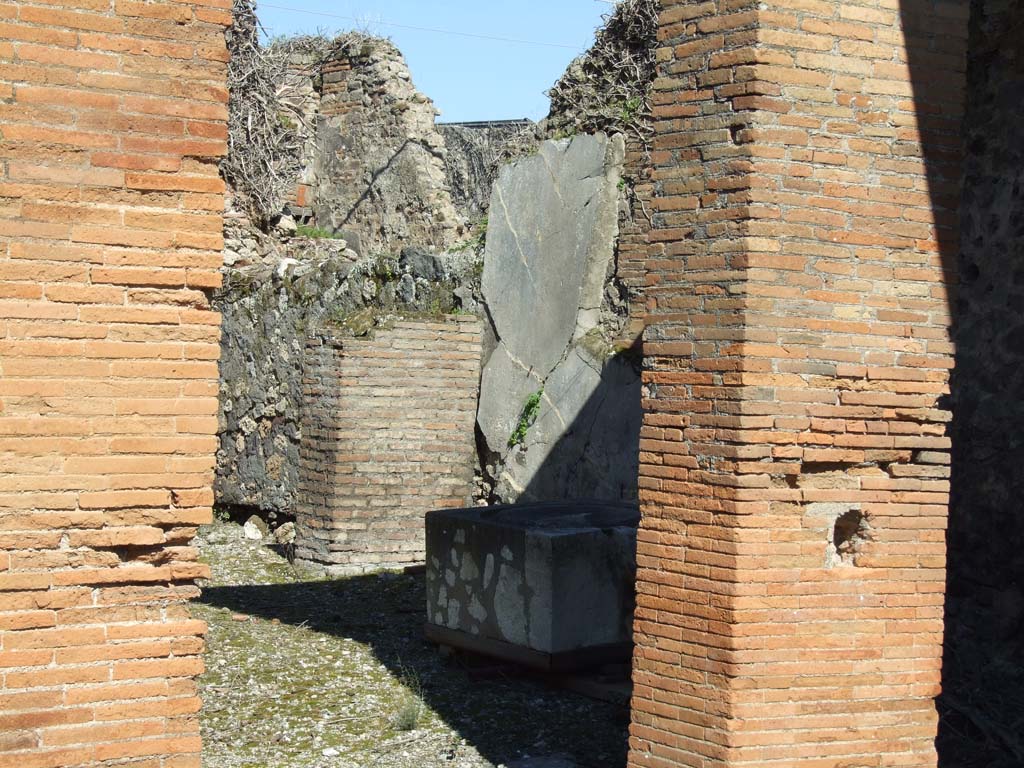
VII.4.25 Pompeii. March 2009. Atrium, east side with oil press.
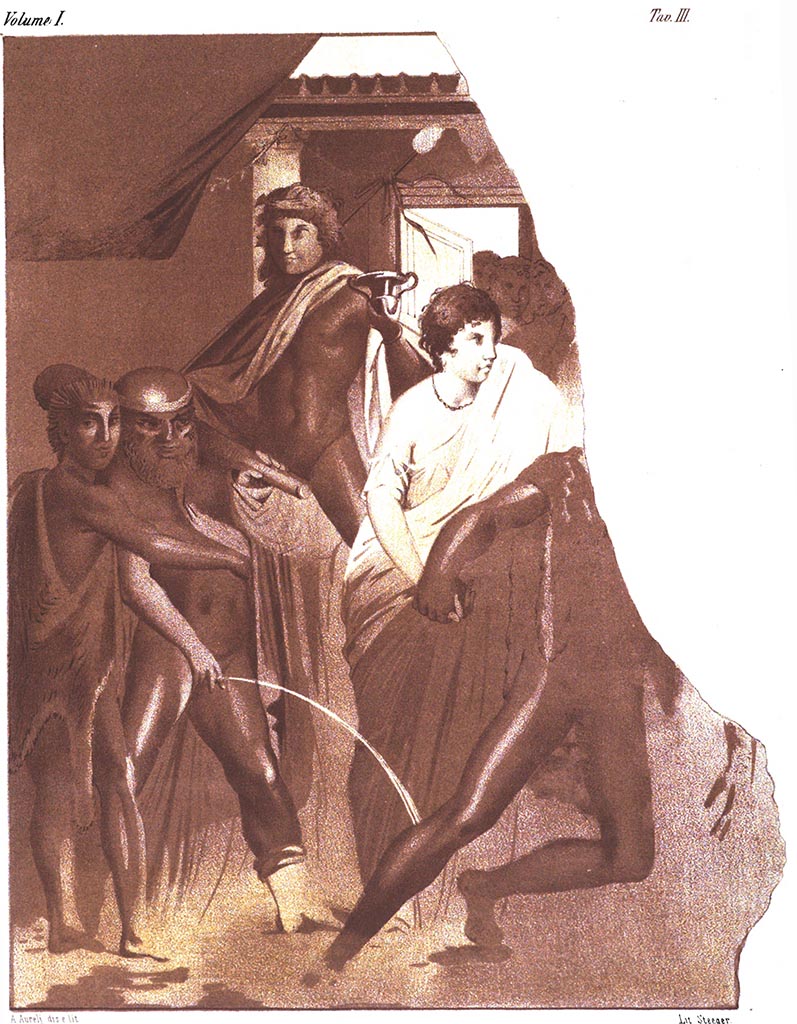
VII.4.25 Pompeii. Atrium, east side. 1868 painting by A. Aurelj with lithograph by V. Steeger, published in NdS.
The painting shows a young Dionysus and an ancient Silenus with a club on his shoulder and being supported by a young faun. The two figures on the right may be a drunken Hercules violently carrying away Auge.
See Giornale degli Scavi N.S.1, no. 2, Settembre 1868, Tav III.
According to Kuivalainen this painting was partially preserved when discovered, now destroyed.
He comments –
“A young Bacchus is presented in the company of a drunken Hercules in the process of falling down; the thiasus is also slightly tipsy, with Silenus carrying the club of Hercules. Bacchus holding the cantharus from the bottom is a rare detail; his larger size and position above the other figures affirm his identity as Bacchus, supervising the scene.”
See Kuivalainen, I., 2021. The Portrayal of Pompeian Bacchus. Commentationes Humanarum Litterarum
140. Helsinki: Finnish Society of Sciences and Letters, (p.180-181, F27).
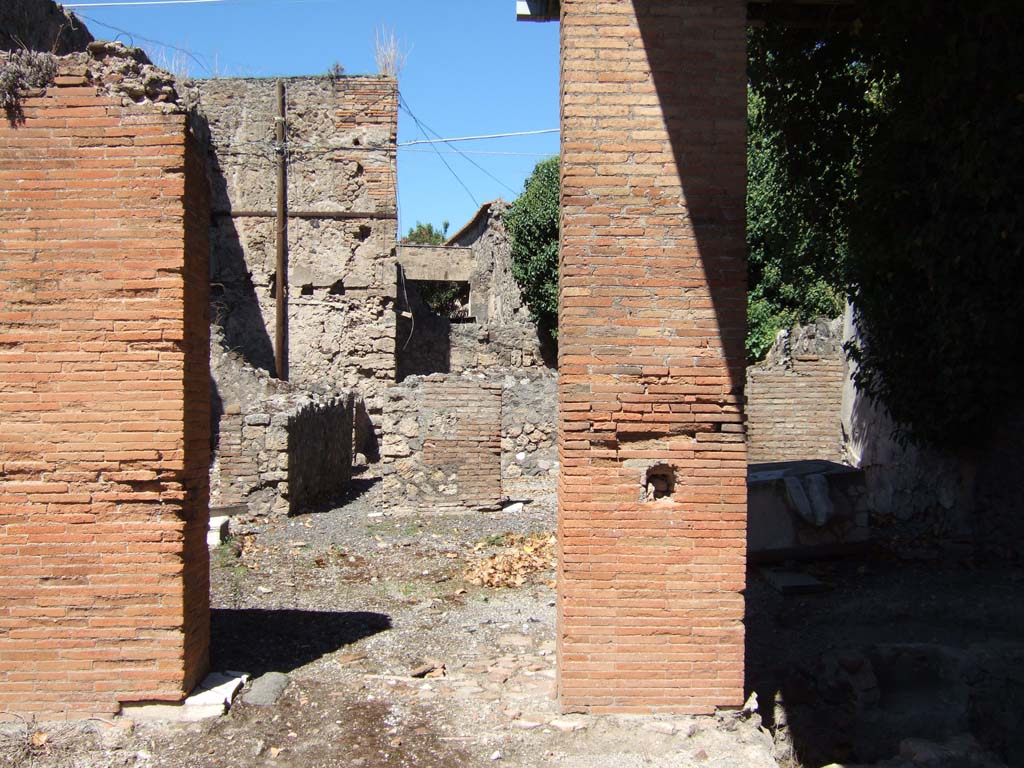
VII.4.25 Pompeii. September 2005. Doorways from VII.4.24 and VII.4.25 to rear rooms.
According to Boyce, on the west wall of the kitchen above the hearth, was a Lararium painting in two zones on a white background.
It showed the Genius pouring a libation upon an altar. On each side of him was a Lar in a blue tunic and red pallium.
Instead of the customary serpents, the lower zone was filled with a second sacrificial scene, but only the popa remains.
He held a knife in his right hand and held a hog with his left.
The hog was adorned with a red band around its belly and a garland.
See Boyce G. K., 1937. Corpus of the Lararia of Pompeii. Rome: MAAR 14.(p.65, no.272)
According to Garcia y Garcia, all the rear parts of this dwelling were damaged by the bombing in September 1943.
Demolition of the atrium, fauces and two other rooms in this area occurred, including the falling of the painted fourth style plaster.
See Garcia y
Garcia, L., 2006. Danni di guerra a Pompei. Rome: L’Erma di Bretschneider. (p. 97)
According to Fröhlich, only slight faded traces of the lararium painting remain.
See Fröhlich, T.,
1991. Lararien und Fassadenbilder in den
Vesuvstädten. Mainz: von
Zabern. (p.286, L84)
See Giacobello, F., 2008. Larari Pompeiani: Iconografia e culto dei Lari in ambito domestico. Milano: LED Edizioni, (p.193, no.78)
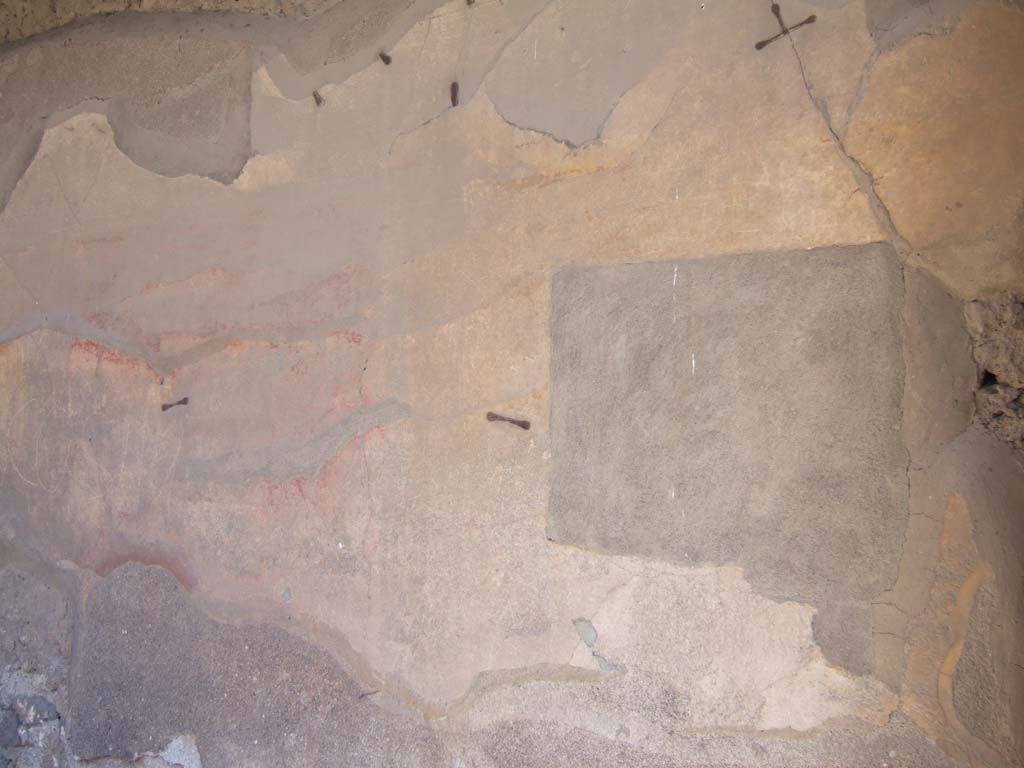
VII.4.25 Pompeii. September 2005. East wall of shop, remains of painting.
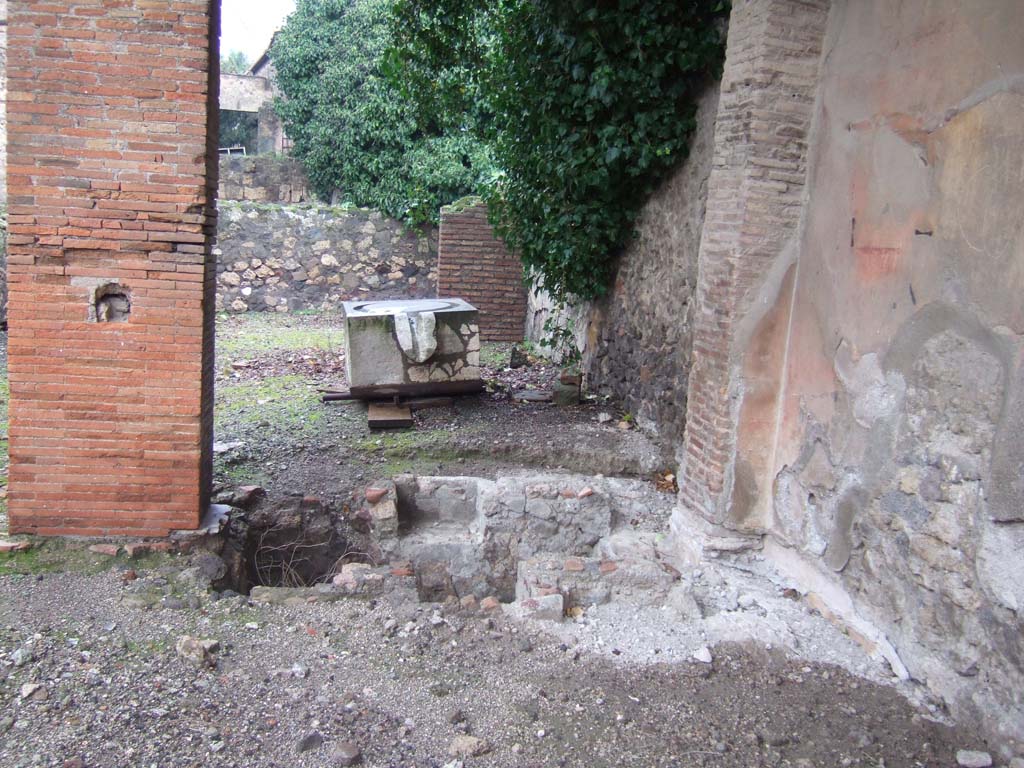
VII.4.25 Pompeii. December 2005. Shop, in the background is the oil press found in VII.14.14.
See Eschebach, L., 1993. Gebäudeverzeichnis und Stadtplan der antiken Stadt Pompeji. Köln: Böhlau. (p.277)
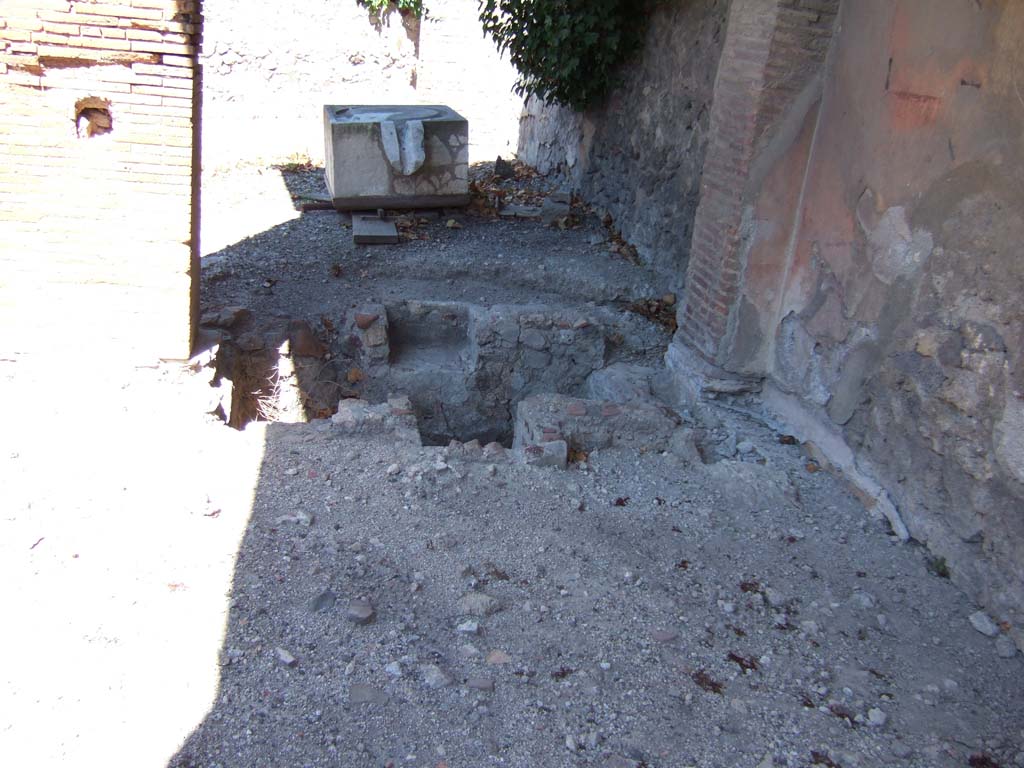
VII.4.25 Pompeii. September 2005. Floor of shop.
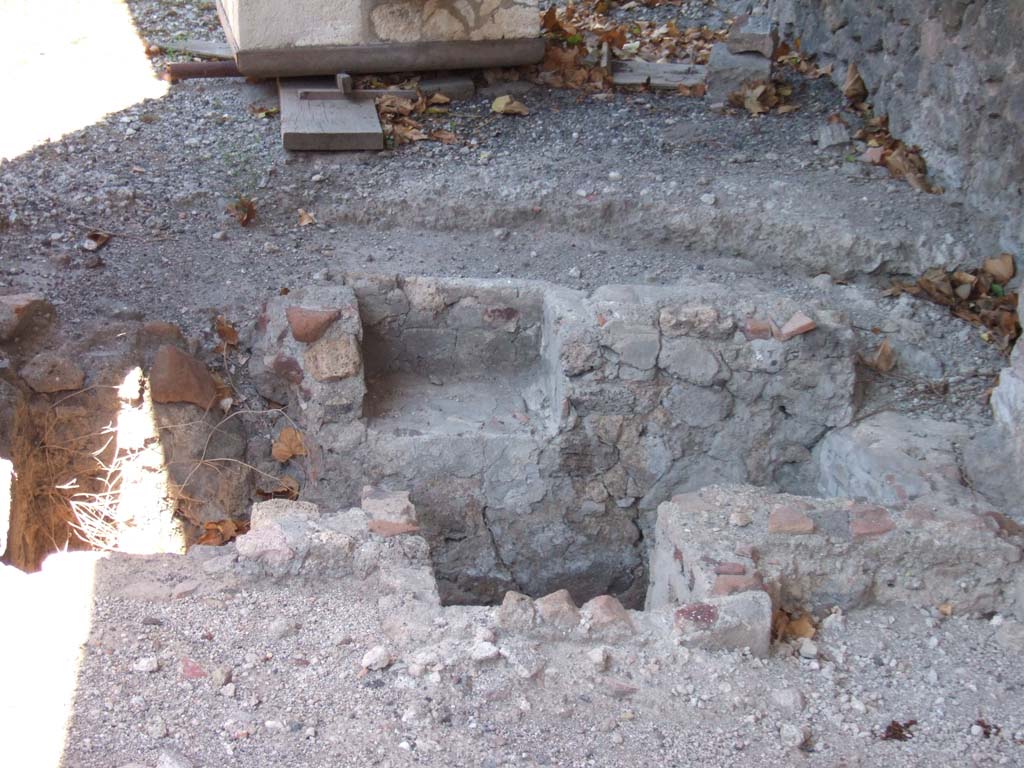
VII.4.25 Pompeii. September 2005. Excavation in floor of shop.
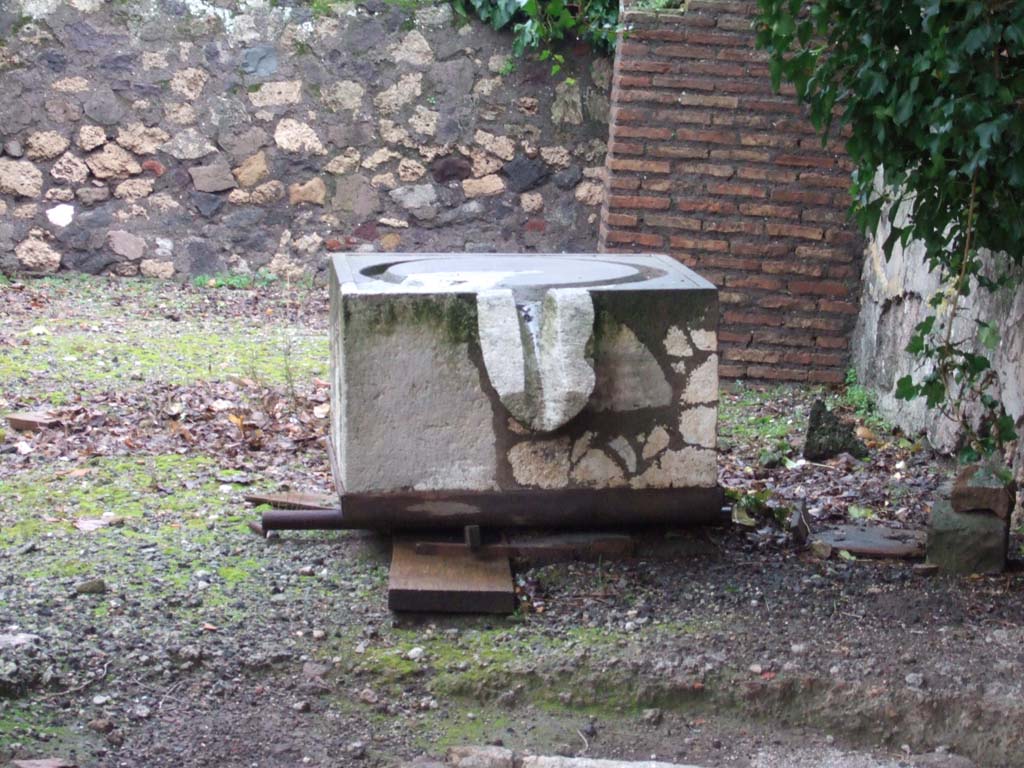
VII.4.25 Pompeii. December 2005. Atrium, oil press found in VII.14.14.
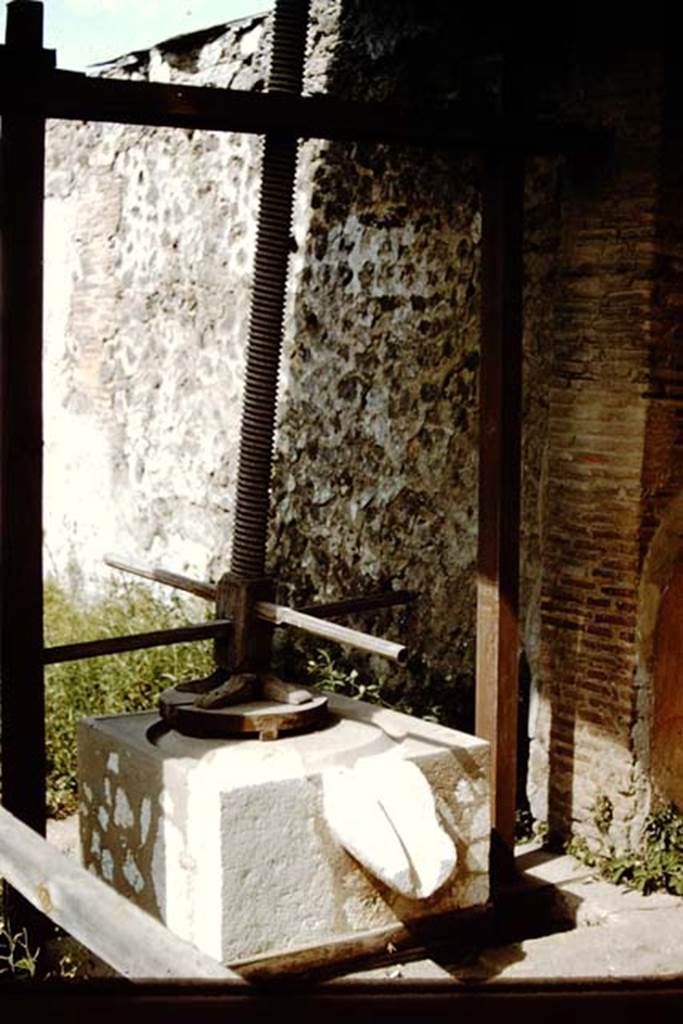
VII.4.25 Pompeii. 1959. Oil press. Photo by Stanley A. Jashemski.
Source: The Wilhelmina and Stanley A. Jashemski archive in the University of Maryland Library, Special Collections (See collection page) and made available under the Creative Commons Attribution-Non-Commercial License v.4. See Licence and use details.
J59f0518
Notizie
degli Scavi, 1900, (p.588-590). (La
fognatura di Pompeii, pp.587-599).

VII.4.25 Pompeii. 1900.
Description of sewage system found in
four properties.
The earliest sewage
system consisted of collecting sewage from under the houses, in cesspools at
the latrines, and leaving it there for a longer or shorter time. These wells
varied in structure and size and, to give an idea, four are mentioned here.
See Notizie degli Scavi di Antichità, 1900,
(p.588)
![VI.10.14 Pompeii. 1900. Il primo [pozzo] nella casa VI.X.14……. Description of sewage system found in VI.10.14.
See Notizie degli Scavi di Antichità, 1900, (p.589).](7%2004%2025_files/image024.jpg)
VI.10.14 Pompeii. 1900. Il primo [pozzo] nella
casa VI.X.14……. Description of
sewage system found in VI.10.14.
See Notizie degli Scavi di Antichità, 1900,
(p.589).

VI.10.14 Pompeii. 1900.
Description of sewage system found in VI.10.14.
The first, in house
no. 14 in Is. X of Reg. VI, is dug in the ancient earth, in an almost
cylindrical shape, 1 metre in diameter at the base and 11.20 metres deep, where
the bottom is formed by lava poured from Vesuvius in prehistoric times. This
well must be said to be truly absorbent, or it can be assumed that the ancients
did not give it greater depth, having found an obstacle in the presence of the
volcanic rock.
See Notizie degli Scavi di Antichità, 1900,
(p.589)
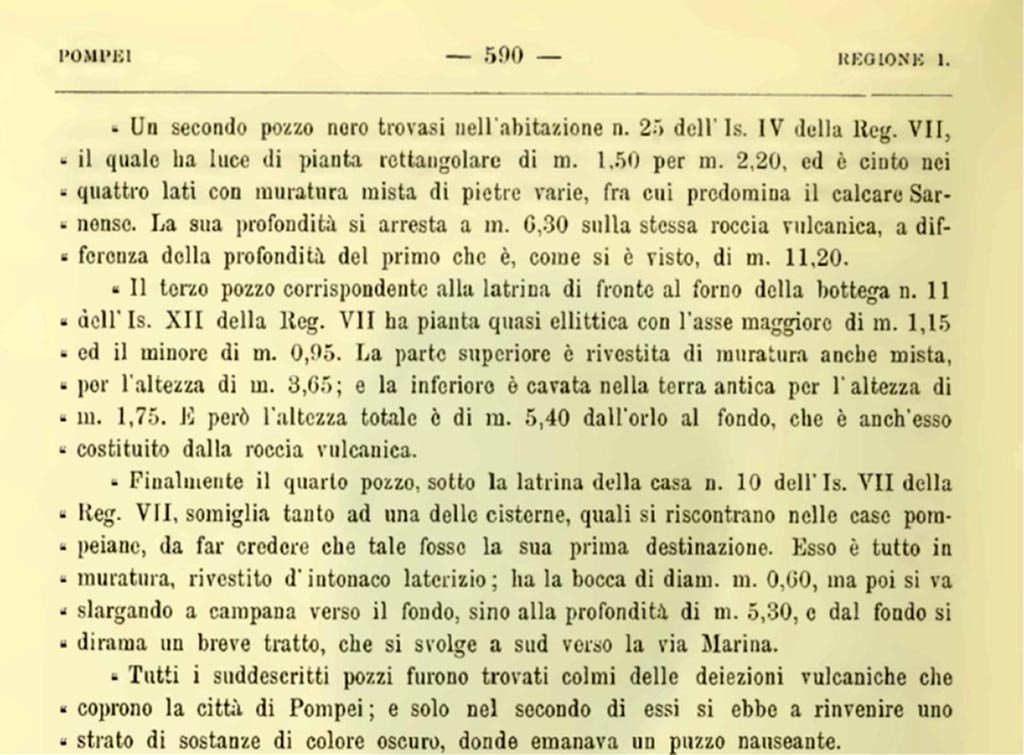
VII.4.25 Pompeii. 1900.
Description of sewage system found in this
property.
A second cesspool is located in house no. 25
of Is. IV of Reg. VII, which has a rectangular floor plan measuring 1.50 m by
2.20 m, and is surrounded on all four sides by mixed
masonry of various stones, among which Sarnense
limestone predominates. Its depth stops at m. 6.30 on the same volcanic rock,
unlike the depth of the first, which is, as we have seen, m. 11.20.
Il terzo pozzo
corrispondente alla latrina di fronte al forno della bottega VII.XII.11………
Finalmente
il quarto pozzo sotto la latrina della casa VII.VII.10……….
All the aforementioned pits were found filled with the volcanic deposits
that cover the city of Pompeii; and only in the second of them was a layer of
dark-colored substances found, from which a nauseating stench emanated.
See Notizie degli Scavi di
Antichità, 1900, (p.590).