VII.4.14 Pompeii. Shop of Aurelius?
Excavated 1824.
According to Fiorelli –
“13. 14. E vi
erano adiacenti due grandi botteghe, nelle quali ora sono temporaneamente
depositati alcuni dolii, rinvenuti fuori di Pompei
presso il Sarno. Essi portano il bollo del fabbricante, M .
LVCCEI, ed uno di essi QVARTIONIS ha pure graffito con la stecca il nome dell’artifice che lo ebbe lavorato, ONESIMVS FECIT: in altro era
indicata la sua capacita di 53 urne, VR LIII.”
See Pappalardo, U., 2001. La Descrizione di Pompei per Giuseppe Fiorelli (1875). Napoli: Massa Editore. (p.89).
(trans: 13. 14. And adjacent were two large shops, in which are now temporarily deposited some dolia, found outside Pompeii near the Sarno. They bear the manufacturer's seal, M . LVCCEI, and one of them QVARTIONIS which also has a graffito scratched with a stick, with the name of the craftsman that had made it, ONESIMVS FECIT: on another was indicated its capacity of 53 urns, VR LIII.)
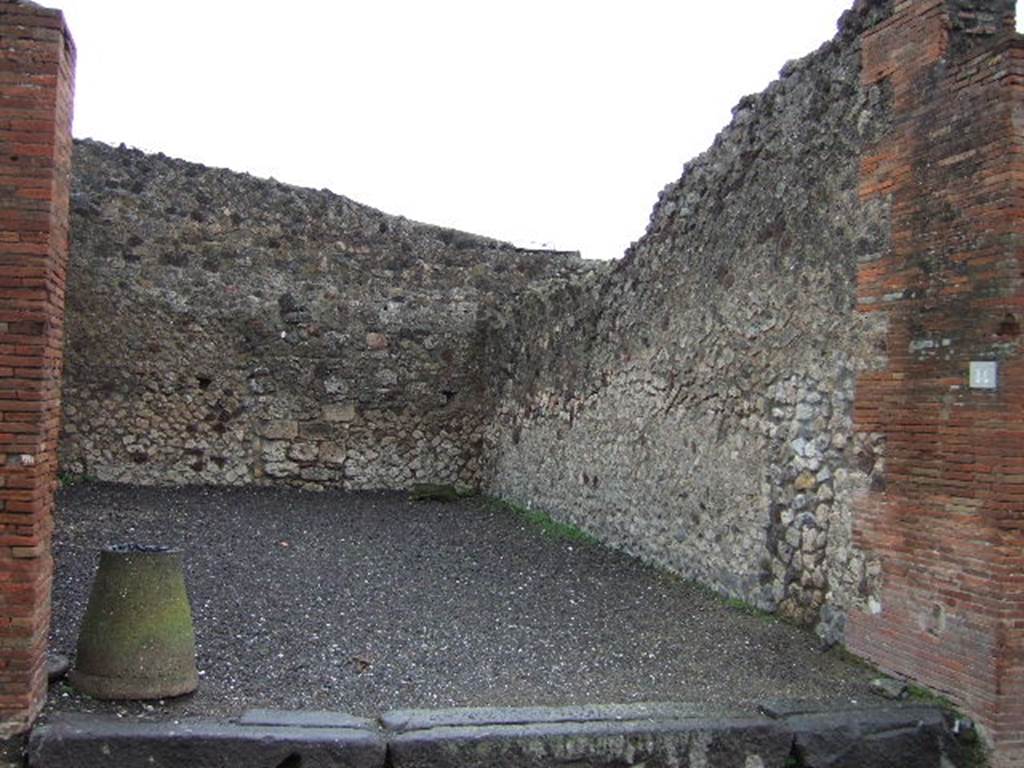
VII.4.14 Pompeii. December 2005. Entrance.
According to Della Corte, the electoral recommendation CIL IV 499, possibly gave the name of Aurelius to be the merchant in this shop.
See Della Corte, M., 1965. Case ed Abitanti di Pompei. Napoli: Fausto Fiorentino. (p.146).
Found in June 1818, on the pilaster between VII.4.14 and 15, on the right, was a painted graffito in black reading:
[Cn(aeum) Allei]um
Maium d(uum)v(irum) i(ure)
d(icundo)
Aurelius civem
bonum fac(it) [CIL IV 499]
Painted in red on the pilaster between VII.4.13 and 14, on the left, was –
Paquium
d(uum)v(irum) i(ure) d(icundo) o(ro)
[CIL IV 500]
See Pagano, M. and Prisciandaro, R., 2006. Studio sulle provenienze degli oggetti rinvenuti negli scavi borbonici del regno di Napoli. Naples: Nicola Longobardi.
(p. 117)
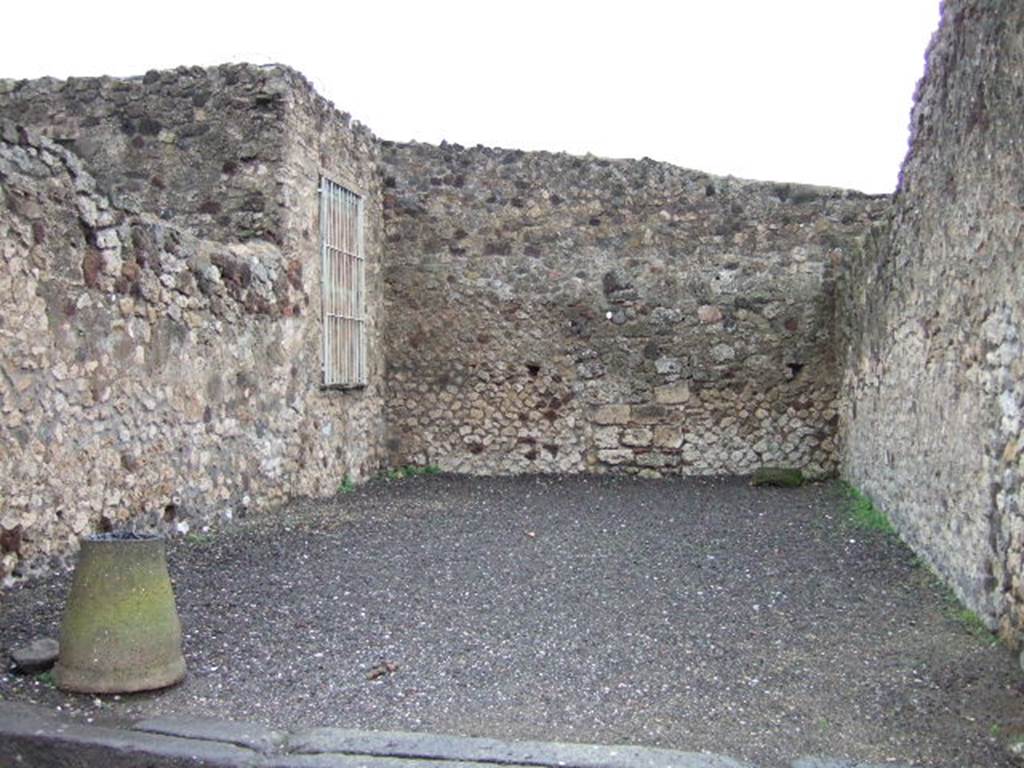
VII.4.14 Pompeii. December 2005. Looking east across shop.
According to Eschebach, on the left would have been the stairs to the upper floor.
See Eschebach, L., 1993. Gebäudeverzeichnis und Stadtplan der antiken Stadt Pompeji. Köln: Böhlau. (p.275)
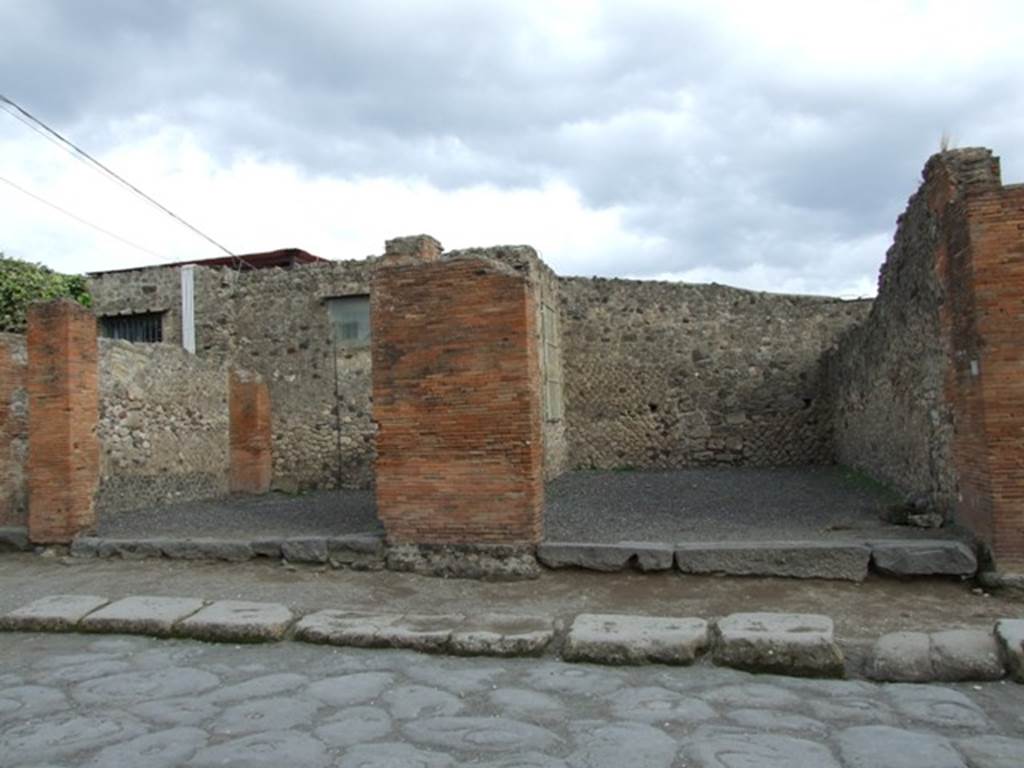
VII.4.13 and VII.4.14 December 2007. Looking east across Via del Foro.
Note how low the pavement is against the sills of the shops, as opposed to the picture below.
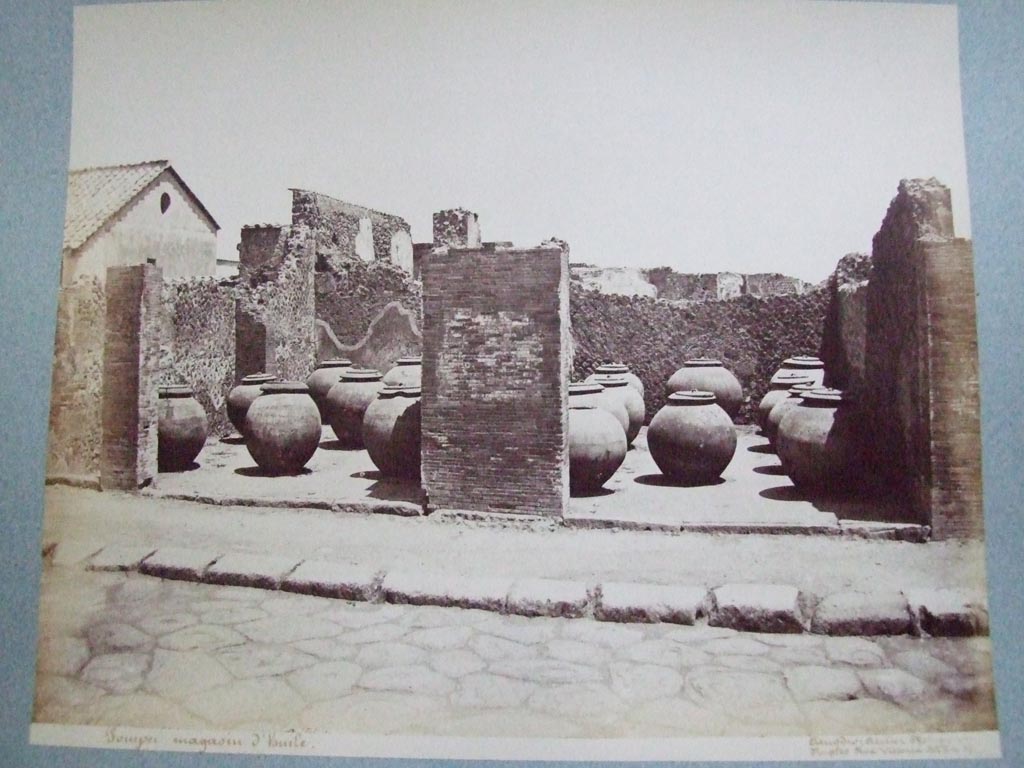
VII.4.13 Pompeii and VII.4.14. Via Foro oil shop. 19th century photograph by Amodio.
Photo courtesy of the Society of Antiquaries, Fox Collection.
Fiorelli says the two adjacent large shops had these dolia temporarily deposited in them.
They had come from outside Pompeii near “il Sarno”.
Some of these are now to be found outside the city wall below the Temple of Venus and the Sarno Baths.
See Pappalardo, U., 2001. La Descrizione di Pompei per Giuseppe Fiorelli (1875). Napoli: Massa Editore. (p.89).
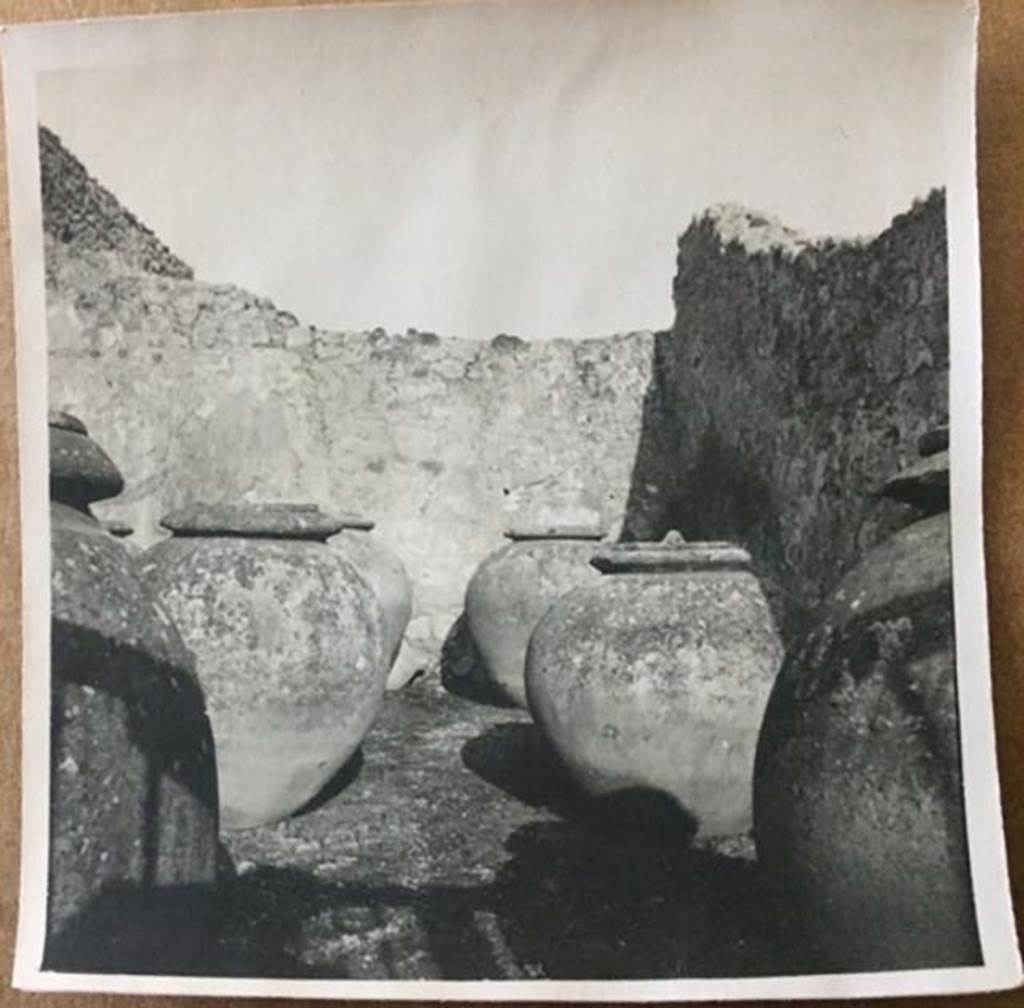
VII.4.14 Pompeii. August 27, 1904. Looking east towards large dolia. Photo courtesy of Rick Bauer.
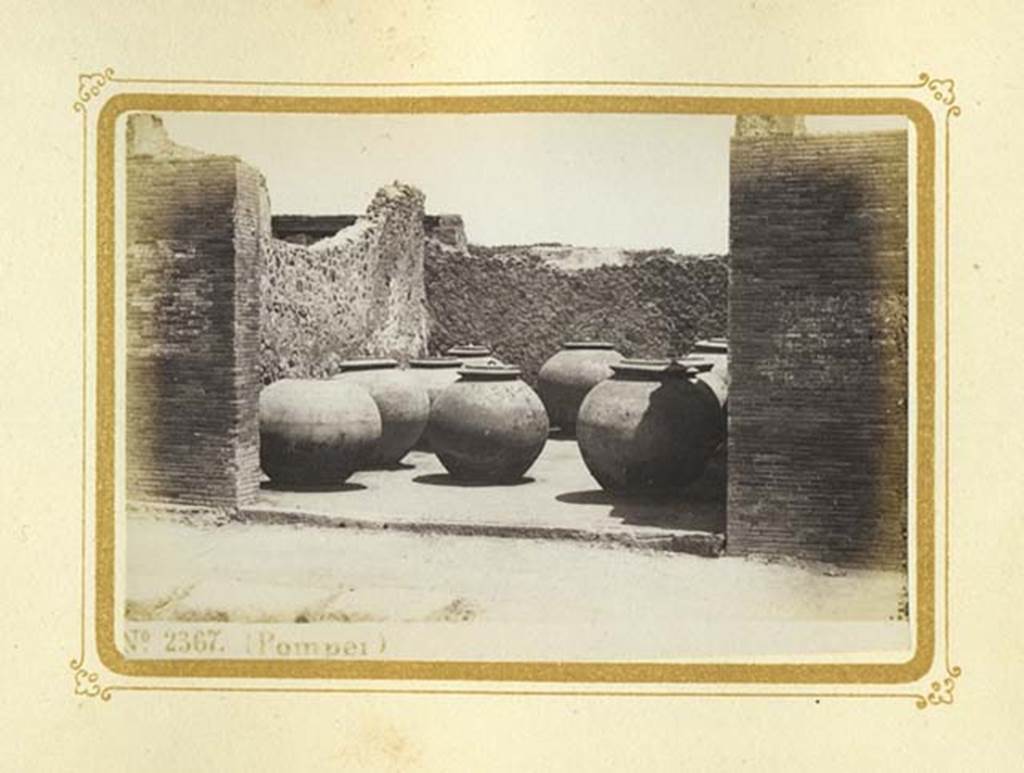
VII.4.14 Pompeii. Album dated January 1875. Looking east towards large dolia. Photo courtesy of Rick Bauer.
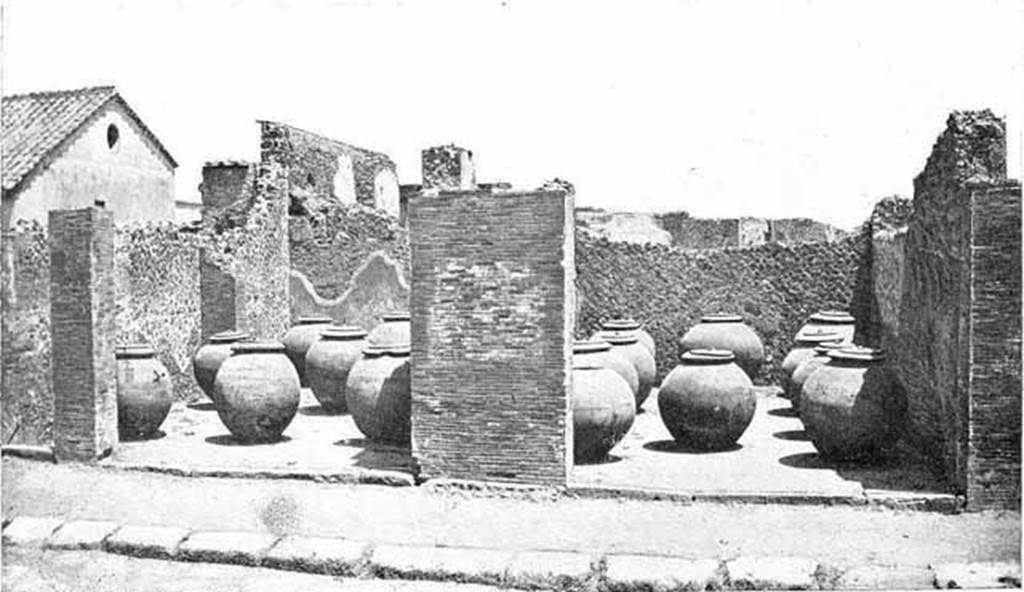
VII.4.13 Pompeii and VII.4.14. 1900. Via Foro oil shop. Photo courtesy of Rick Bauer.
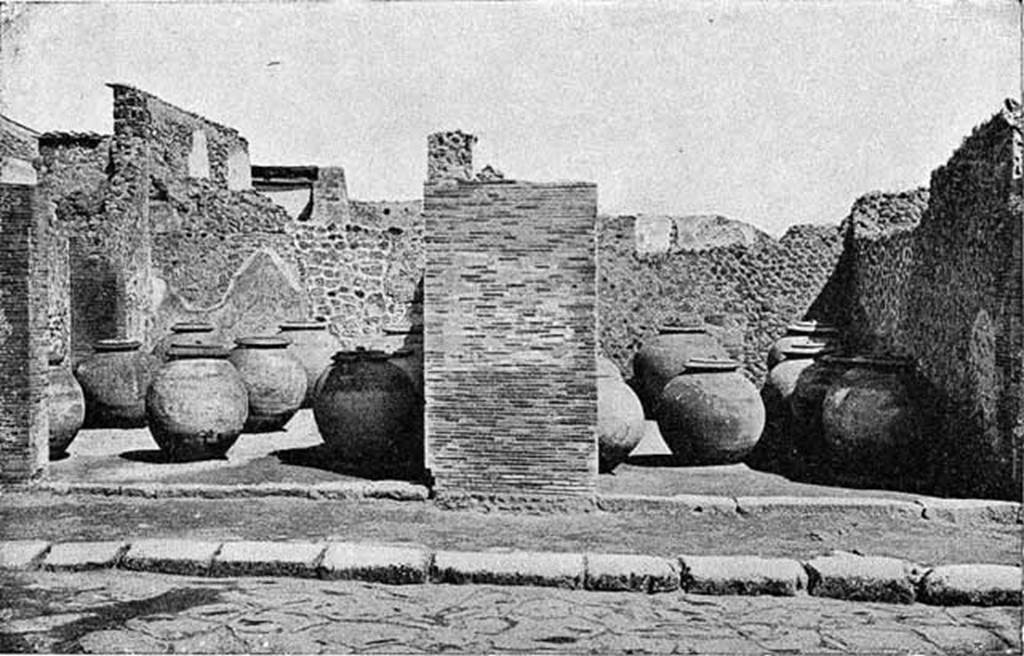
VII.4.13 Pompeii and VII.4.14. 1892. Via Foro oil shop. Photo courtesy of Rick Bauer.
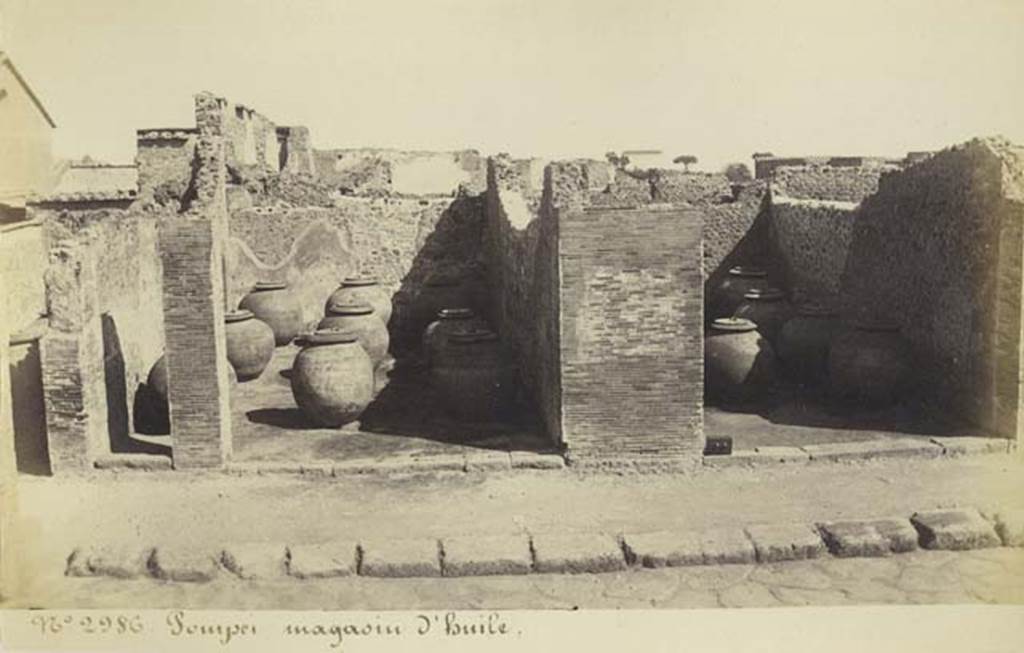
VII.4.13 Pompeii and VII.4.14. Old undated photograph by Amodio, numbered 2986, in an album dated c.1873.
Looking east across Via del Foro. Photo courtesy of Rick Bauer.
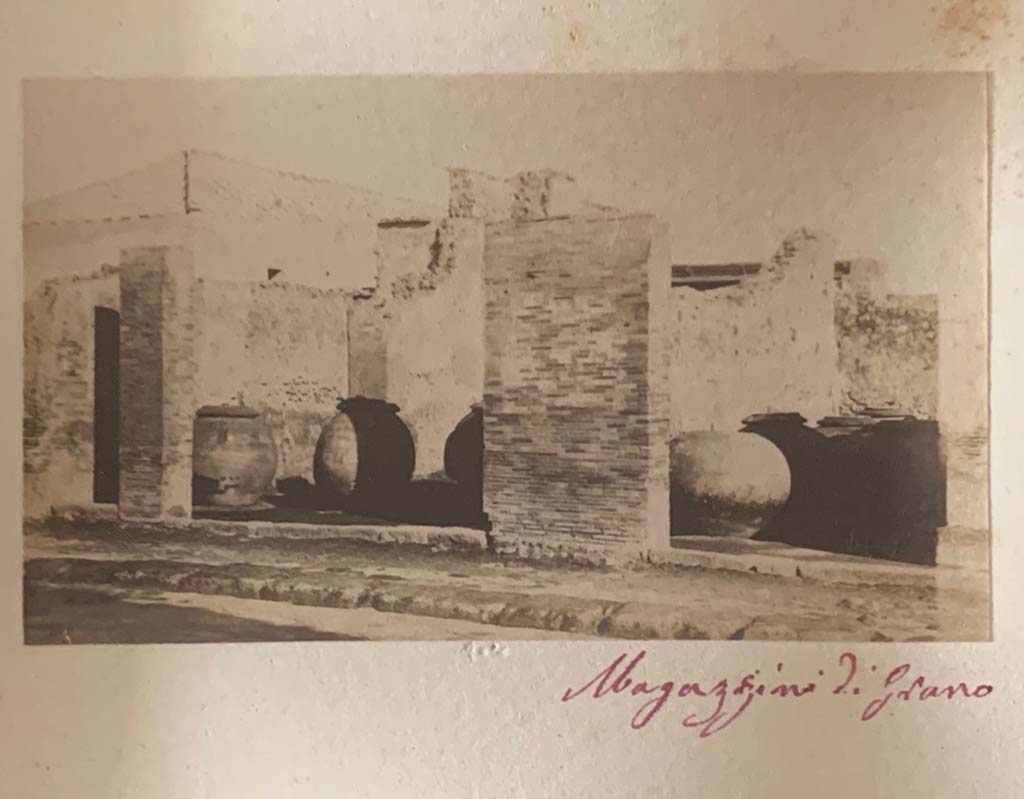
According to the writing,
this was a warehouse for flour. Photo courtesy of Rick Bauer.
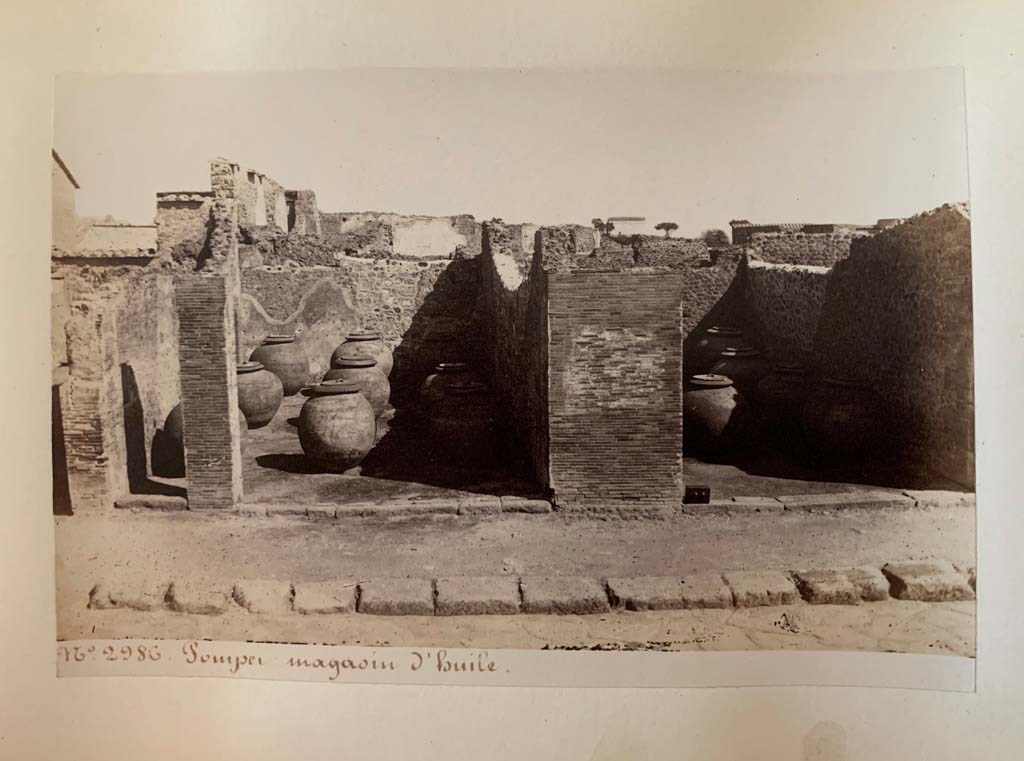
VII.4.13, in centre left, and
14, in centre right. Looking east.
Album by M. Amodio, c.1880,
entitled “Pompei, destroyed on 23 November 79, discovered in 1748”.
According to the writing on
this photo, this was a warehouse (storehouse) for oil. Photo courtesy of Rick
Bauer.