VII.4.1 Pompeii. Tempio della Fortuna Augusta. Temple of Fortuna Augusta.
Excavated 1823, 1826 and 1859. Restored 1908.
VII.4.1
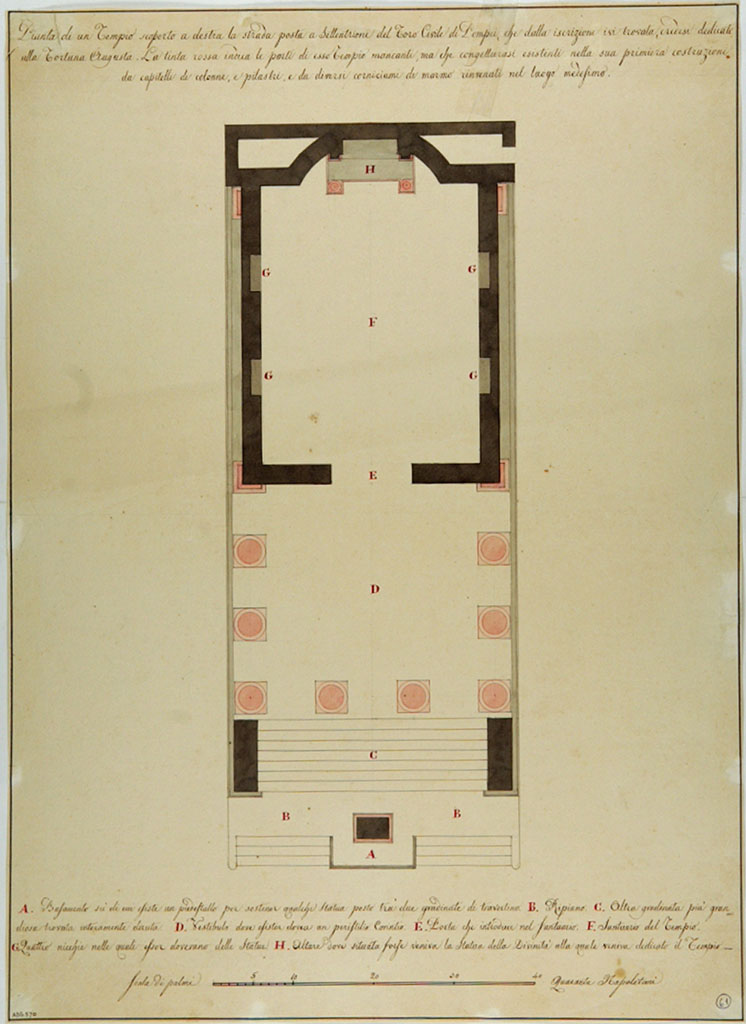
Pompeii. 1811 drawing with watercolours, by Antonio Bonucci, of plan of Temple.
He wrote
that "The parts tinted red indicated the missing parts of this temple but that
can be conjectured as existing in its first construction from the capitals of
the columns and pilasters and from several marble cornices found in it.”
Under the
plan, he wrote –
A. Base, on which was a pedestal which
supported some statue placed between two sets of travertine steps.
B. Terrace.
C. Other grander steps found entirely
ruined.
D. Vestibule, where a Corinthian
Peristyle would have existed.
E. Door, which introduced into the
Sanctuary of the Temple.
F. Temple Sanctuary.
G. 4 niches in which some statues would
have been placed.
H. Altar, where the statue of the
Divinity would have been placed, to whom the Temple was dedicated.
Ha scritto
che "La tinta
rossa indica le parti di esso Tempio mancanti, ma che congetturasi esistenti
nella sua primiera costruzione da capitelli di colonne, e pilastri e da diversi
cornicioni di marmo rinvenuti nel luogo medesimo".
Sotto il
piano, ha scritto –
A. Basamento su di cui esiste un piedistallo per
sostenere qualche Statua posta tra due gradinate di travertino.
B. Ripiano.
C. Altra gradinata più grandiosa trovata
intieramente diruta.
D. Vestibulo dove esister dovea un Peristilio
Corintio.
E. Porta che introduce nel Santuario del Tempio.
F. Santuario del Tempio.
G. Quattro nicchie nelle quali esser dovevano
delle Statue.
H. Altare dove situata forse veniva la Statua
della Divinità alla quale veniva dedicato il Tempio.
Now in Naples Archaeological Museum. Inventory number ADS 570.
Photo © ICCD. https://www.catalogo.beniculturali.it/
Utilizzabili alle condizioni della licenza Attribuzione
- Non commerciale - Condividi allo stesso modo 2.5 Italia (CC BY-NC-SA 2.5 IT)
![VII.4.1 Pompeii. 1854. Niccolini plan by L. Schioppa of Temple and architectural details.
According to Niccolini the numbers show:
1: Two sets of four steps giving access to a marble covered podium with iron railings and two gates
2: Statue base or altar consecrated to offerings with wide staircase behind
3: Pronaos or portico surrounded by eight columns and four beautiful pillars,
4: Temple cella with four niches
5: Aedicula where the statue of Fortuna once stood, with marble inscription (25) on the front
6: Via del Foro portico
7: Pillar of lava with inscription
M. TVLLII. M. F
AREA. PRIVATE
8: Access to 9, 10 and 11, rooms used by ministers of temple?
9: Room used by ministers of temple?
10: Room with flanking staircase, used by ministers of temple?
11: Room used by ministers of temple?
12: Casa di Bacco
13: Via della Fortuna and paving
14: Surrounding buildings on the other side of Via della Fortuna [VI.10]
15: One of the two capitals in the cella that supported the pediment of the aedicule of Fortuna
16: One of 3 identical capitals found that surmounted the pillars around the 4 niches
17: Base of capital 16
18: Capital that surmounted the fluted column of the pronaos
19: Cross section of external corner of the façade of the cella, pillars made of a single piece of marble
20: External frame of the temple
21: External architrave or lintel
22: Pediment of the aedicule above lintel 25
23: Cornice fragment, location unknown
24: Internal architrave or lintel
25: Marble lintel with dedication inscription
See Niccolini F, 1854. Le case ed i monumenti di Pompei: Volume Primo. Napoli, Tempio della Fortuna, Tav. I, pp. 1-8.](7%2004%2001_files/image003.jpg)
VII.4.1
Pompeii. 1854. Niccolini plan by L. Schioppa of Temple and architectural
details.
According to Niccolini the numbers show:
1: Two sets of four steps giving access to a marble covered podium with iron railings and two gates
2: Statue base or altar consecrated to offerings with wide staircase behind
3: Pronaos or portico surrounded by eight columns and four beautiful pillars,
4: Temple cella with four niches
5: Aedicula where the statue of Fortuna once stood, with marble inscription (25) on the front
6: Via del Foro portico
7: Pillar of lava with inscription
M. TVLLII. M. F
AREA.
PRIVATE
8: Access to 9, 10 and 11, rooms used by ministers of temple?
9: Room used by ministers of temple?
10: Room with flanking staircase, used by ministers of temple?
11: Room used by ministers of temple?
12: Casa di Bacco
13: Via della Fortuna and the sidewalk came from the ancient works of crushed and well-polished gravel
14: Surrounding buildings on the other side of Via della Fortuna [VI.10]
15: One of the two capitals in the cella that supported the pediment of the aedicule of Fortuna
16: One of 3 identical capitals found that surmounted the pillars around the 4 niches
17: Base of capital 16
18: Capital that surmounted the fluted column of the pronaos
19: Cross section of external corner of the façade of the cella, pillars made of a single piece of marble
20: External frame of the temple
21: External architrave or lintel
22: Pediment of the aedicule above lintel 25
23: Cornice fragment, location unknown
24: Internal architrave or lintel
25: Marble lintel with dedication inscription
VII.4.1
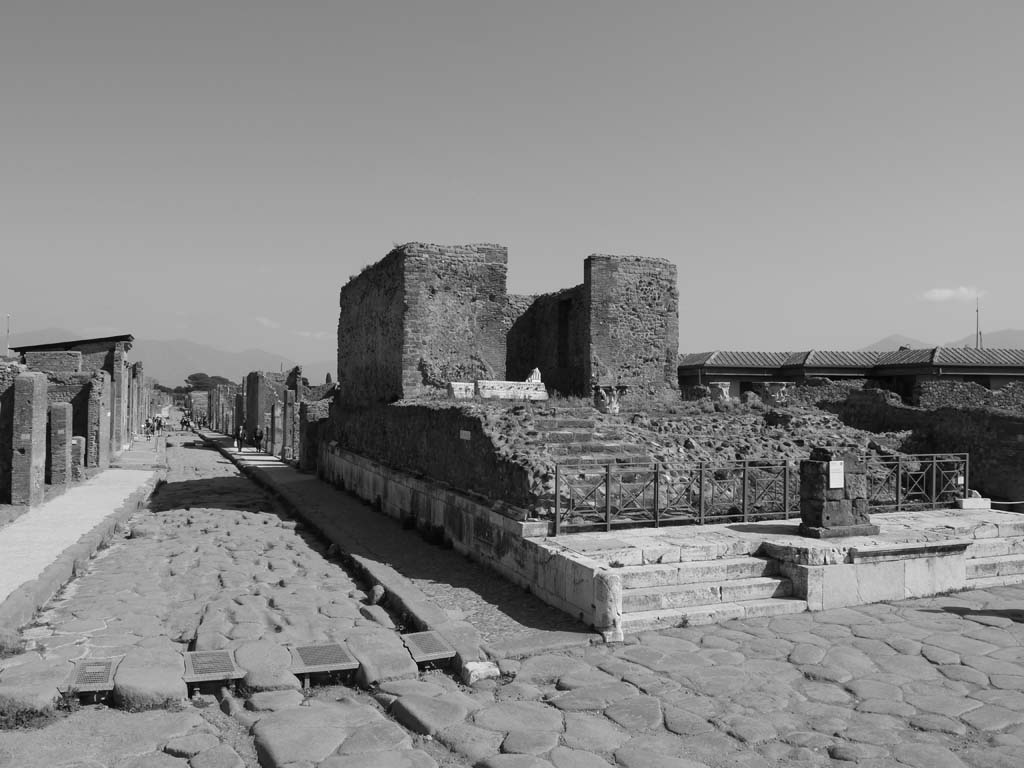
Pompeii, on right. March 2019. Looking east towards Via della Fortuna, on left,
from junction with Via del Foro, on right.
Foto Anne Kleineberg, ERC Grant 681269 DÉCOR.
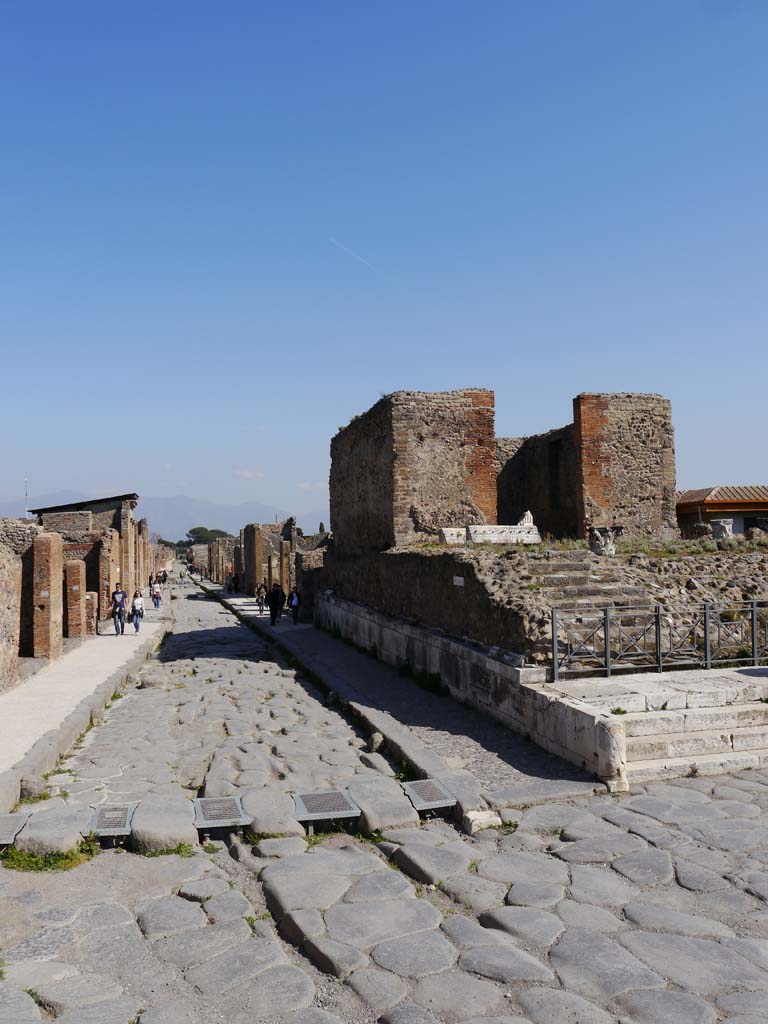
VII.4.1 Pompeii, on right. March 2019. Looking
east from junction, with Temple on right.
Foto
Anne Kleineberg, ERC Grant 681269 DÉCOR.
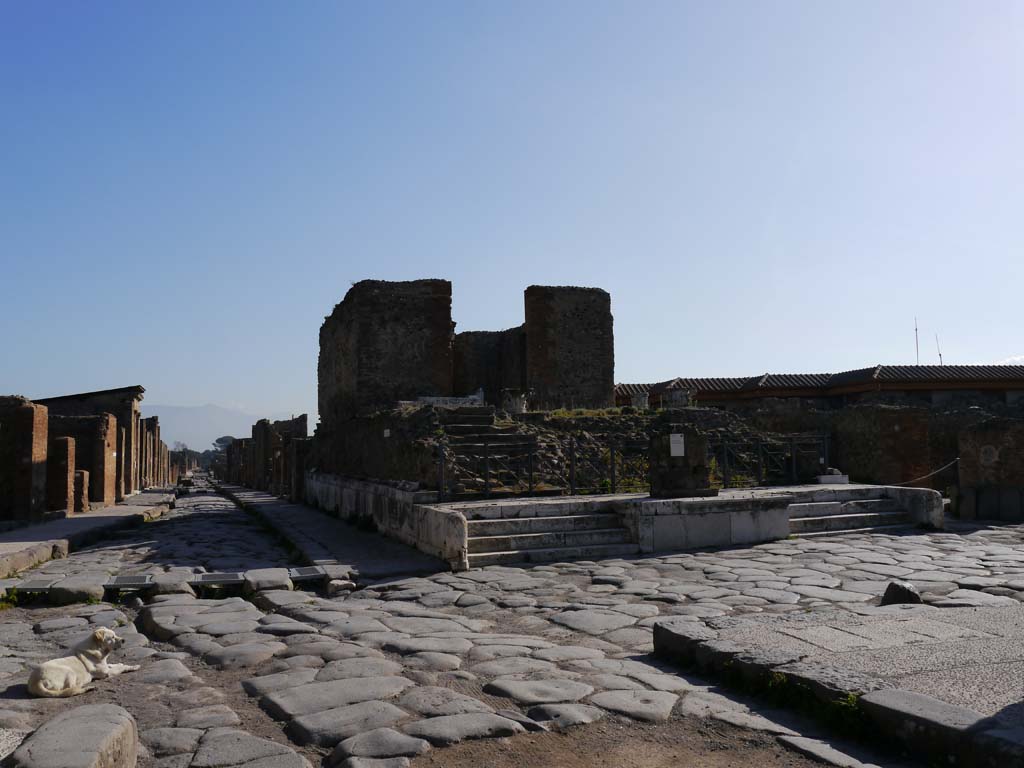
VII.4.1, Pompeii. March 2019.
Looking south-east from junction of Via del Foro and Via della Fortuna.
Foto
Anne Kleineberg, ERC Grant 681269 DÉCOR.
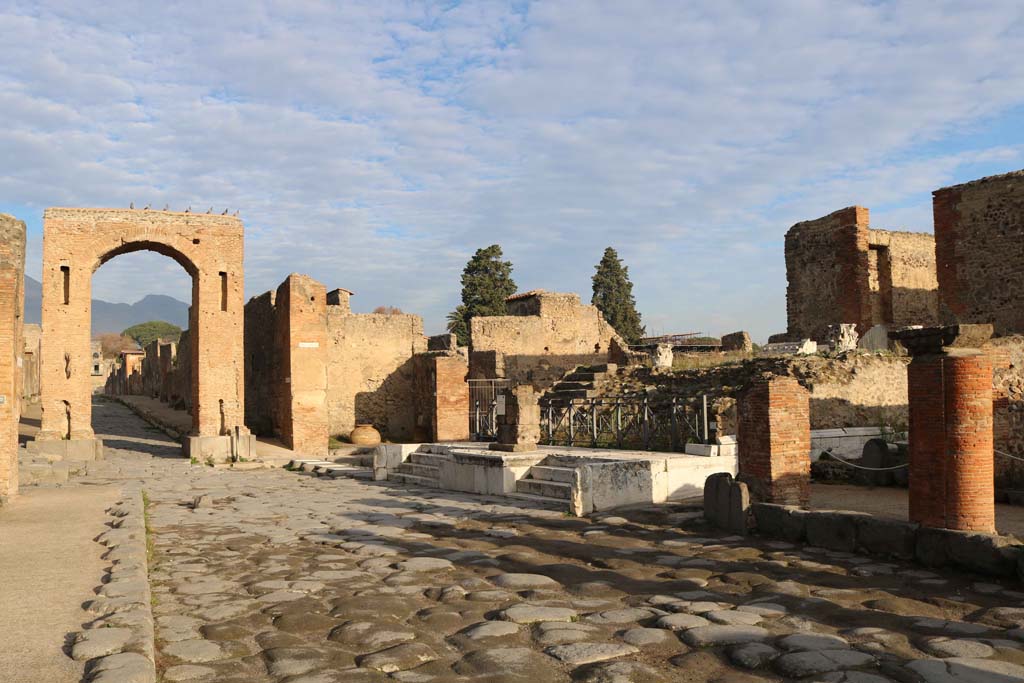
VII.4.1 Pompeii, December 2018.
Looking towards north-east
side of Via del Foro, with Temple, in centre. Photo courtesy of Aude Durand.
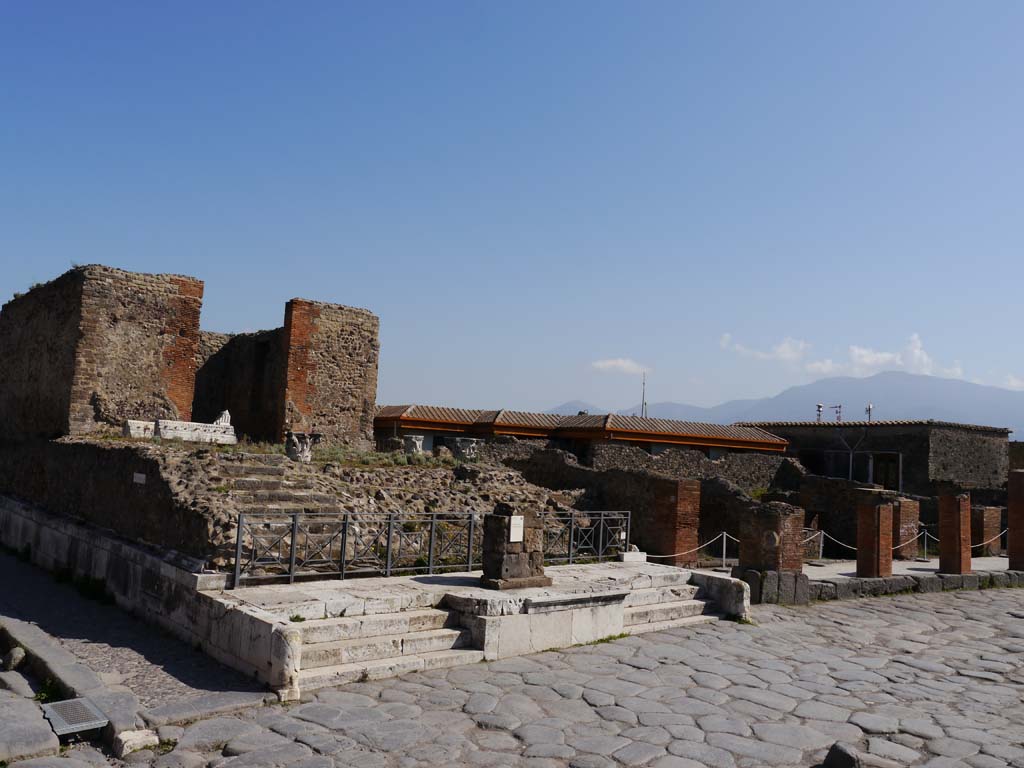
VII.4.1 Pompeii. March 2019.
Looking south-east to Temple, on east side of Via del Foro.
Foto
Anne Kleineberg, ERC Grant 681269 DÉCOR.
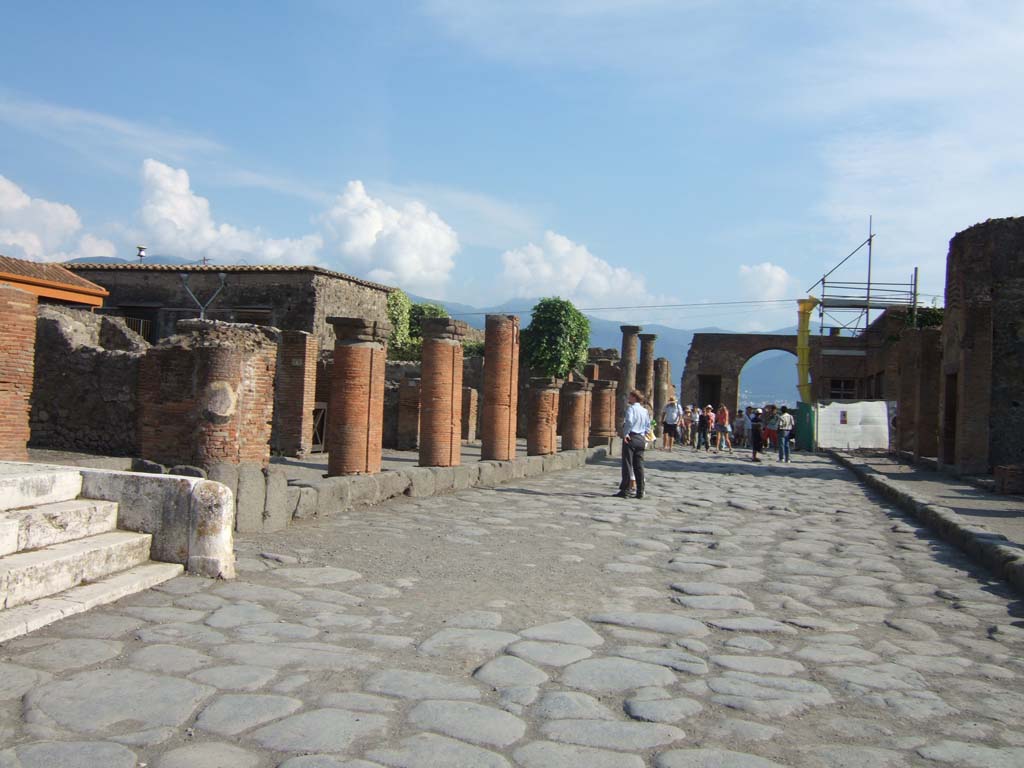
VII.4.1 Pompeii, on left. September 2005. Via del Foro, looking south towards portico on Via del Foro. VII.5 on right.
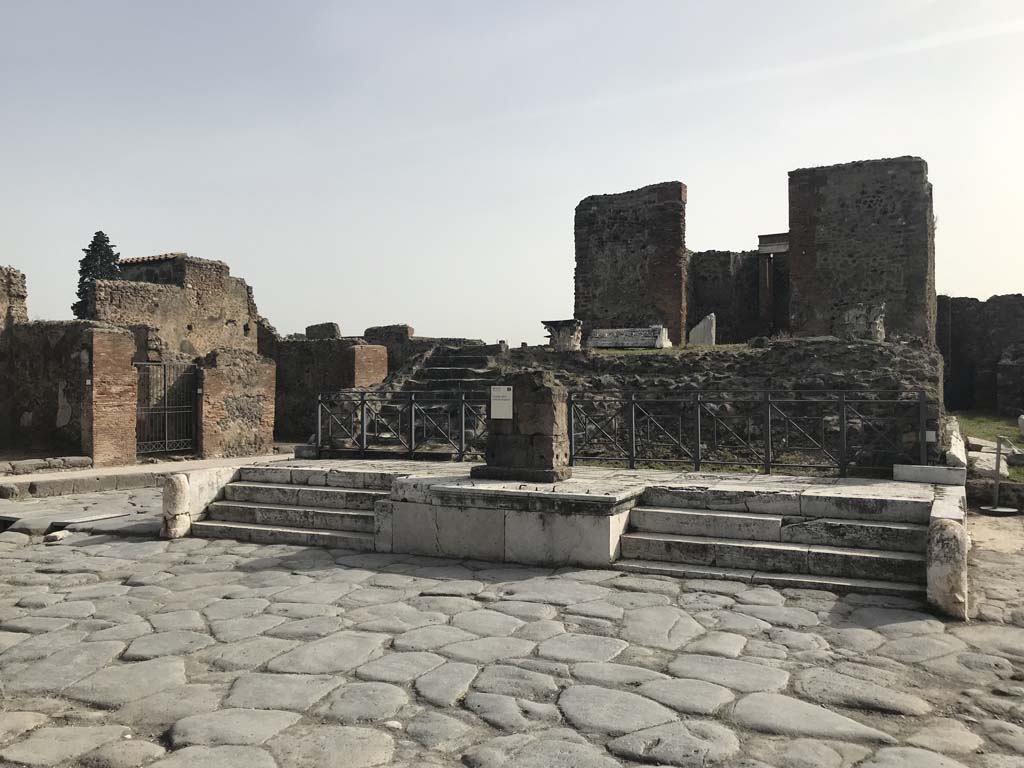
VII.4.1, Pompeii. April 2019. Looking east towards the Temple.
According to Niccolini, the front platform of the temple would
have had iron railings with gates at the altar end of each set of steps.
See Niccolini F,
1854. Le case ed i monumenti di Pompei: Volume Primo. Napoli, Tempio
della Fortuna, Tav. I, p. 2.
Photo courtesy of Rick
Bauer.
According to Nicola
Pagano –
“Il prospetto
del tempio offre una bella scala di marmo bianco, dopo la quale si elevavano
quattro colonne, essendosene rinvenuti i soli capitelli.
La cella era
coperta da tetto, e le mure erano rivestite di marmo. Vi si rinvenne una
iscrizione frammentata colle parole: -
"The prospect of the temple offers a beautiful white marble staircase, above which four columns would have risen, but only the four capitals have been found. The cella was covered by a roof, and the walls were covered with marble. Here was found a fragmented inscription with the words:
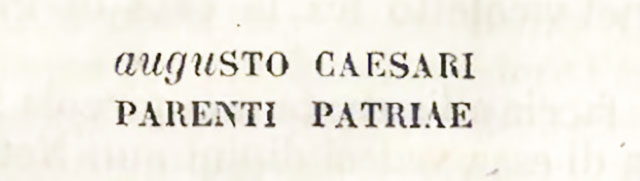
(Augu)ṣto Caesari
p̣arenti patriae
![VII.4.1 Pompeii. Dedicatory inscription to Augustus Caesar.
[Augu]sto Caesari
[...] parenti patriae [CIL X 823]
Now in Naples Archaeological Museum. Inventory number 3810.](7%2004%2001_files/image012.jpg)
VII.4.1 Pompeii. Dedicatory inscription to Augustus Caesar.
According to Epigraphik-Datenbank Clauss/Slaby (See www.manfredclauss.de) this read
[Augu]ṣto Caesari
[Divi f(ilio)], p̣arenti patriae [CIL
X 823]
Now in Naples Archaeological Museum. Inventory number 3810.
Nel fondo era una nicchia innanzi alla quale era un’ara. Il santuario era
fiancheggiato da due statue, che furono trovate cadute sul pavimento. La nicchia era sormontata da un frotespizio
di marmo, che ora osservasi sul pavimento, in fronte al quale leggesi la
seguente iscrizione:
At the rear was a niche with an altar in front of it. The shrine was flanked by two statues, which were found fallen on the floor. The niche was topped with a marble frontespiece, which now can be observed on the floor, in front of which the following inscription could be read -

M TVLLIVS M
F D V I D TER QVINQ AVGVR TR MIL
A POP AEDEM FORTVNAE AVGVST SOLO ET PEQ SVA
Marco Tullio
figlio di Marco, tre volte Duumviro per amministrar la giustizia, augure e
tribuno dei soldati eletto dal popolo, elevo dalle fondamenta e a proprie spese
il Tempio della Fortuna Augusta.
Marcus Tullius
son of Marcus, three times Duumvir to administer justice, augur and tribune of
the soldiers elected by the people, raised from the foundations and at his own
expense the Temple of Fortuna Augusta.
![VII.4.1 Pompeii. Dedicatory inscription on the architrave in the temple.
According to Epigraphik-Datenbank Clauss/Slaby (See www.manfredclauss.de) this reads
M(arcus) Tullius M(arci) f(ilius) d(uum)v(ir) i(ure) d(icundo) ter(tium) quinq(uennalis) augur tr(ibunus) mil(itum)
a pop(ulo) aedem Fortunae August(ae) solo et peq(unia!) sua [CIL X 820]
Now in Naples Archaeological Museum, inventory number MN 3853.
Nel mezzo della scalinata elevasi un’altr’ara per le offerte pubbliche, innanzi alla quale sono alcuni perni di ferro, che facevano parte di un cancello.”
In the middle of the staircase stood another altar for public offerings, before which are some iron pins, which were part of a gate.”
See Pagano, N. (1868). Guida di Pompei, 2nd ed. (p.46)](7%2004%2001_files/image014.jpg)
VII.4.1 Pompeii. Dedicatory inscription on the architrave in the temple.
According to Epigraphik-Datenbank Clauss/Slaby (See www.manfredclauss.de) this reads
a
pop(ulo) aedem Fortunae
August(ae) solo et peq(unia!)
sua [CIL X 820]
Now in Naples Archaeological Museum, inventory number MN 3853.
Nel mezzo
della scalinata elevasi un’altr’ara per le offerte pubbliche, innanzi alla
quale sono alcuni perni di ferro, che facevano parte di un cancello.”
In the middle of the staircase stood another altar for public offerings, before which are some iron pins, which were part of a gate.”
See Pagano, N.
(1868). Guida di Pompei, 2nd ed. (p.46)
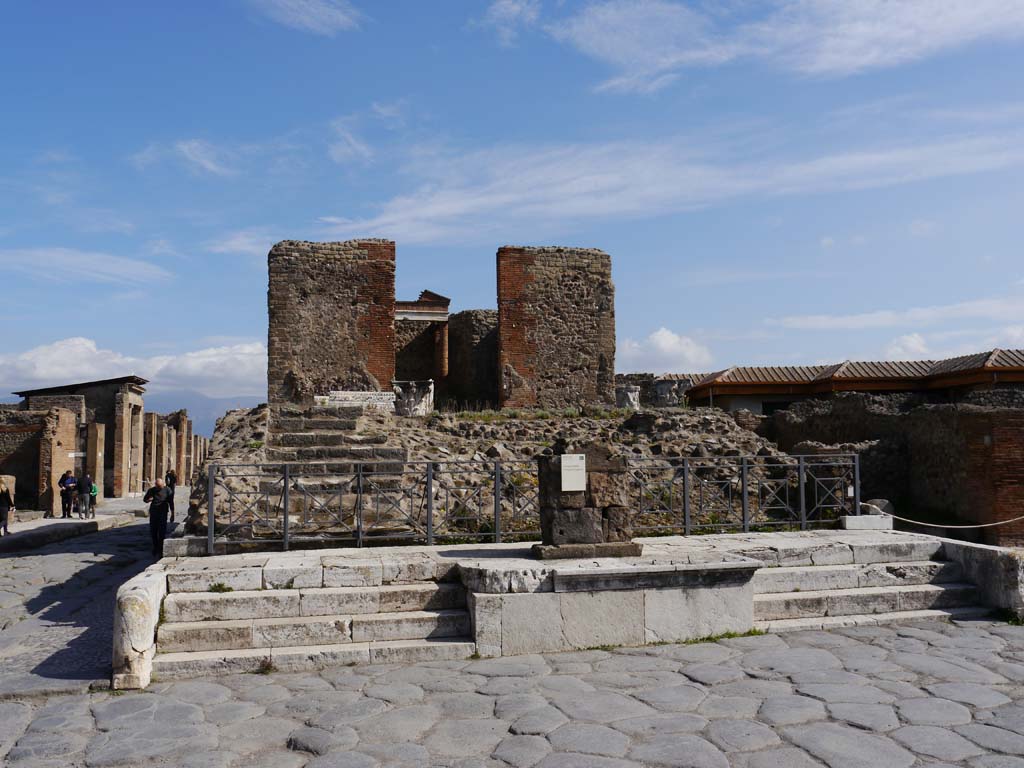
VII.4.1 Pompeii. March 2019. Looking east to
Temple on Via del Foro.
Foto Anne Kleineberg, ERC
Grant 681269 DÉCOR.
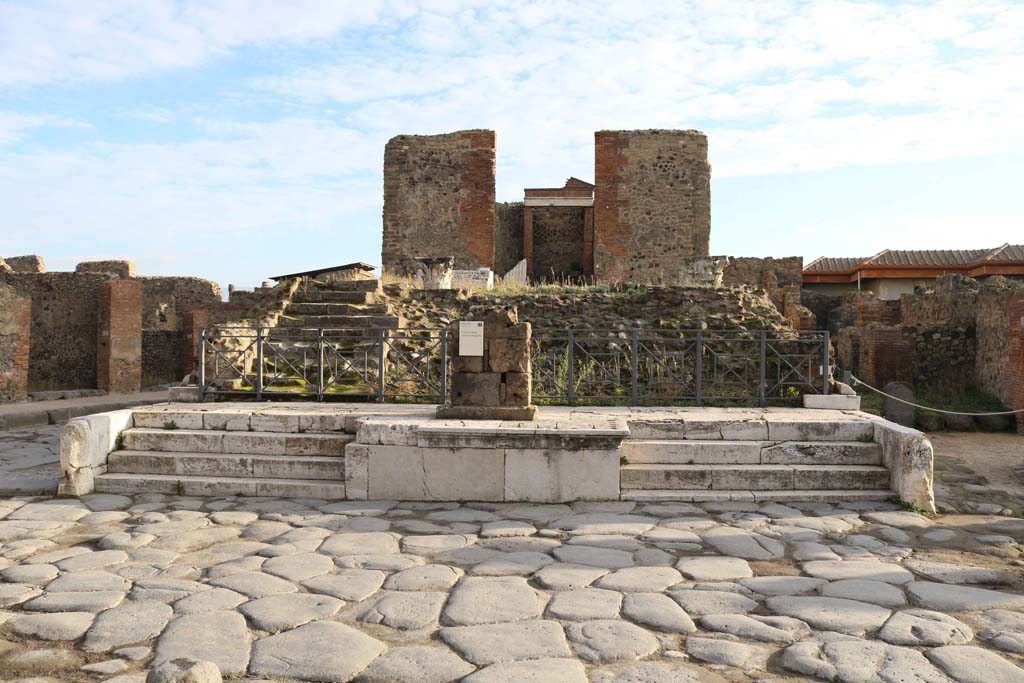
VII.4.1 Pompeii. December 2018. Looking
east towards Temple from Via del Foro. Photo courtesy of Aude
Durand.
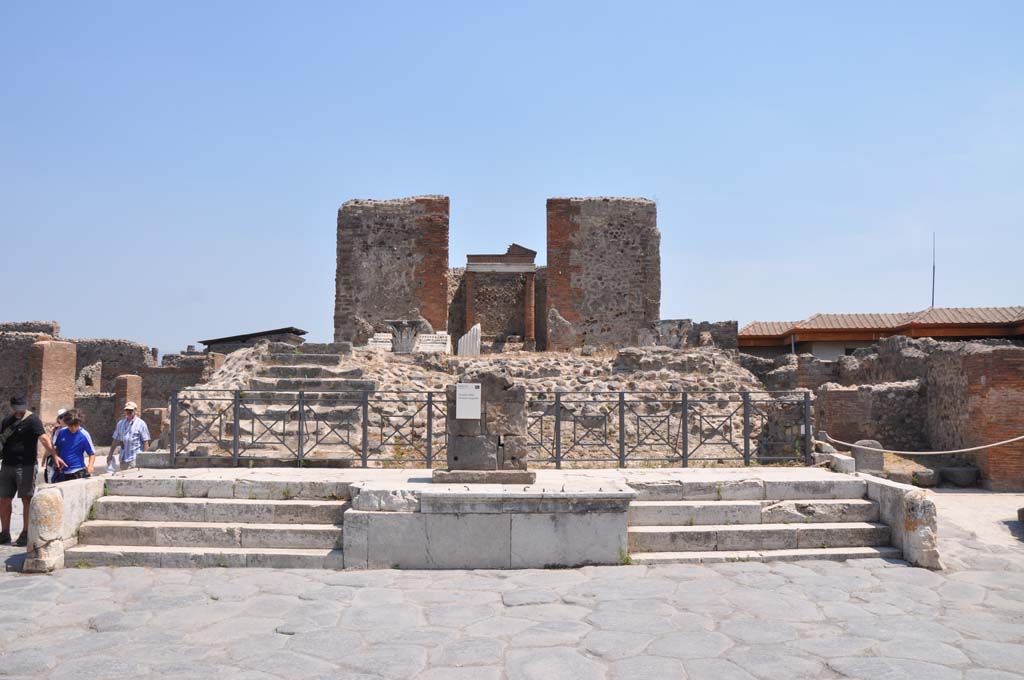
VII.4.1 Pompeii. July 2017. Looking east
towards Temple from Via del Foro.
Foto Anne Kleineberg, ERC
Grant 681269 DÉCOR.
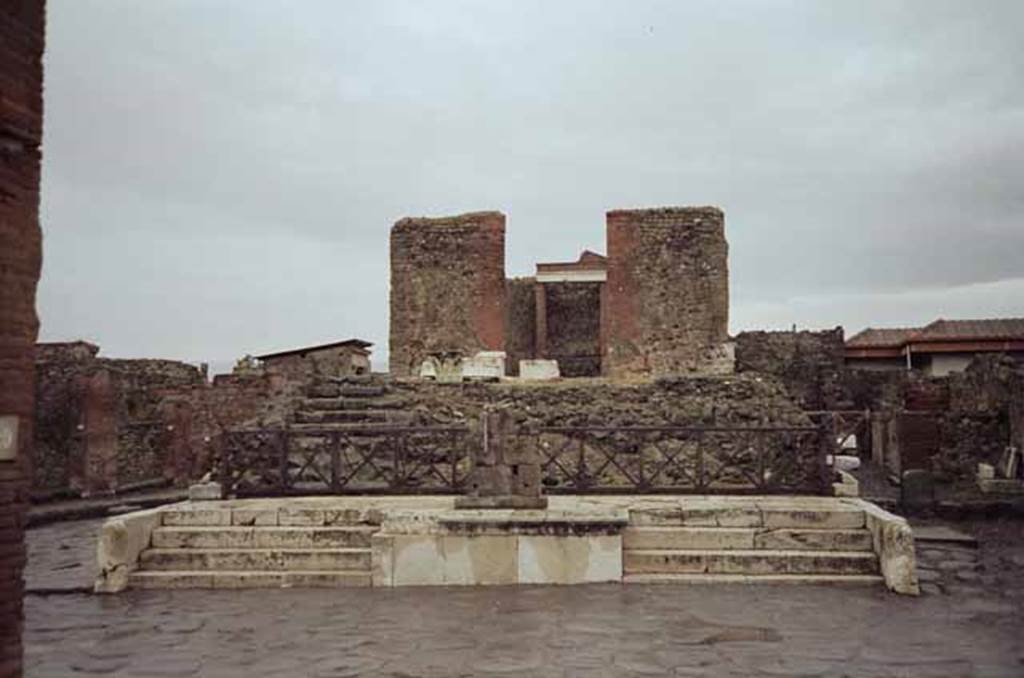
VII.4.1 Pompeii. May 2010. Looking east from Via del Foro. Photo courtesy of Rick Bauer.
Two small staircases of four steps led up from the via on each end. These led to a platform and were on either side of a rectangular altar.
After this platform, another nine steps led up to the pronaos or entrance hall to the temple.
These steps were all found in a ruined state, but the ones on the left had been restored by the time Breton wrote in 1870.
Originally this podium would have had four white marble Corinthian columns across its façade, together with another column and pillar behind on either side.
Three capitals from these columns have been found, together with other architectural elements all in white marble.
See Breton, Ernest. 1870. Pompeia, Guide de visite a Pompei, 3rd ed. Paris, Guerin.
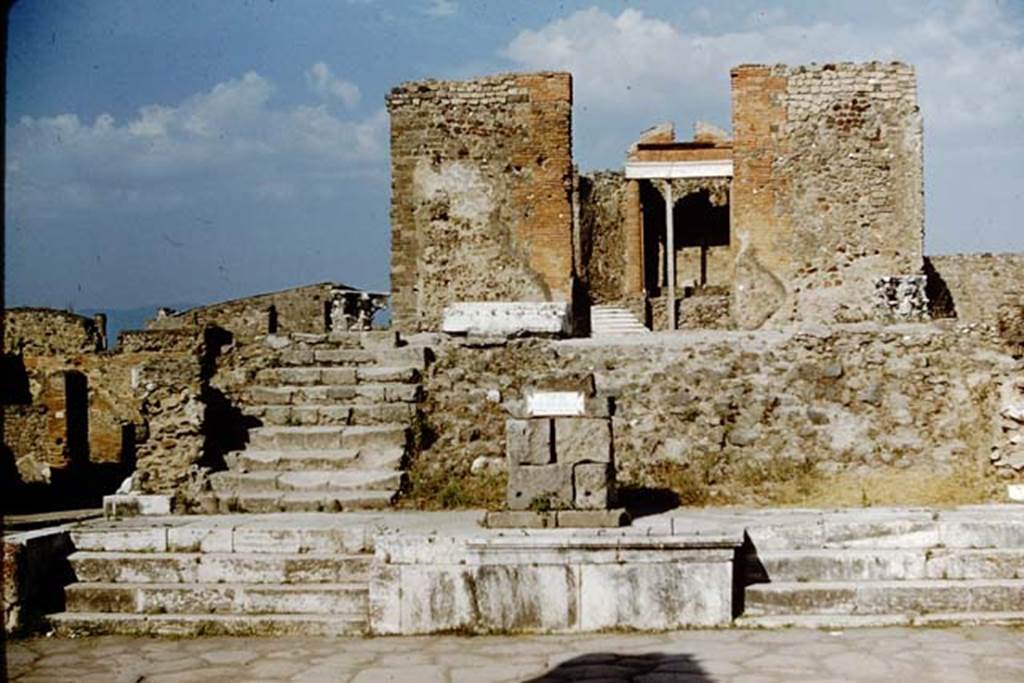
VII.4.1 Pompeii. 1959. Looking east from Via del Foro. Photo by Stanley A. Jashemski.
Source: The Wilhelmina and Stanley A. Jashemski archive in the University of Maryland Library, Special Collections (See collection page) and made available under the Creative Commons Attribution-Non-Commercial License v.4. See Licence and use details.
J59f0520
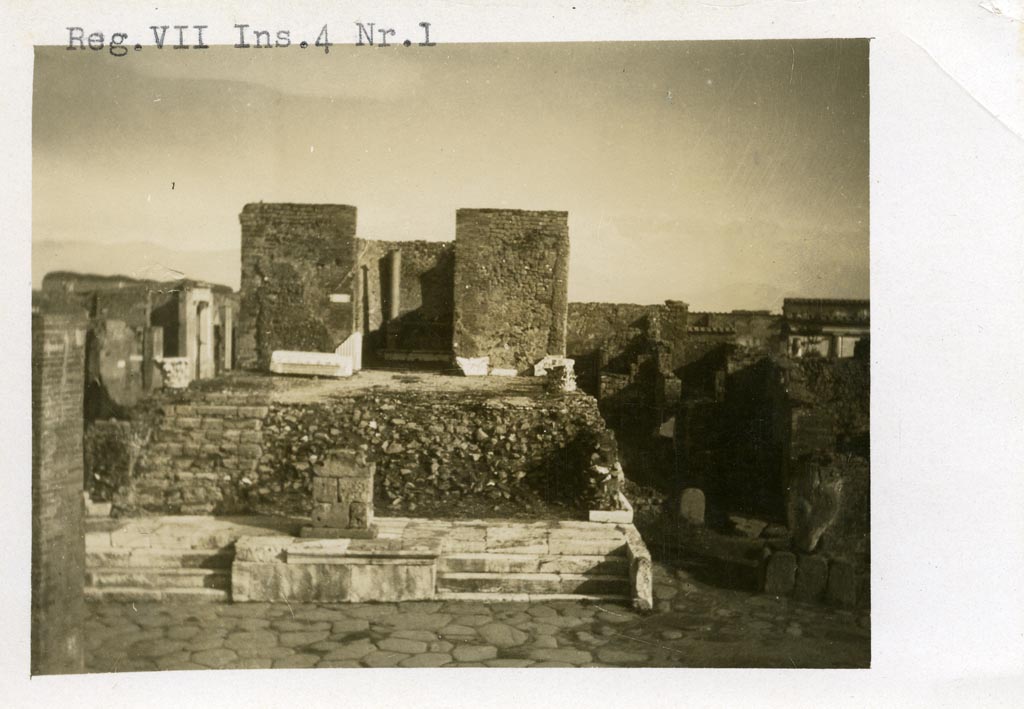
VII.4.1 Pompeii. Pre-1937-39. Looking east from Via del Foro.
Photo courtesy of American Academy in Rome, Photographic Archive. Warsher collection no. 166.
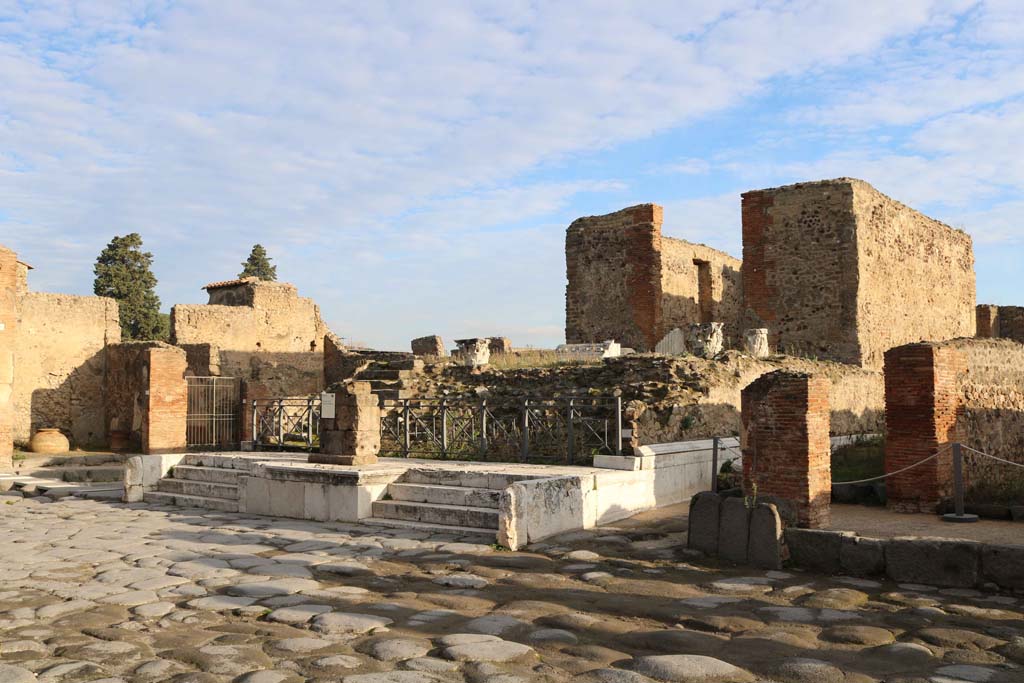
VII.4.1 Pompeii, on left, with VII.4.2, in centre. December 2018.
Looking north-east
on Via del Foro towards steps to Temple. Photo
courtesy of Aude Durand.
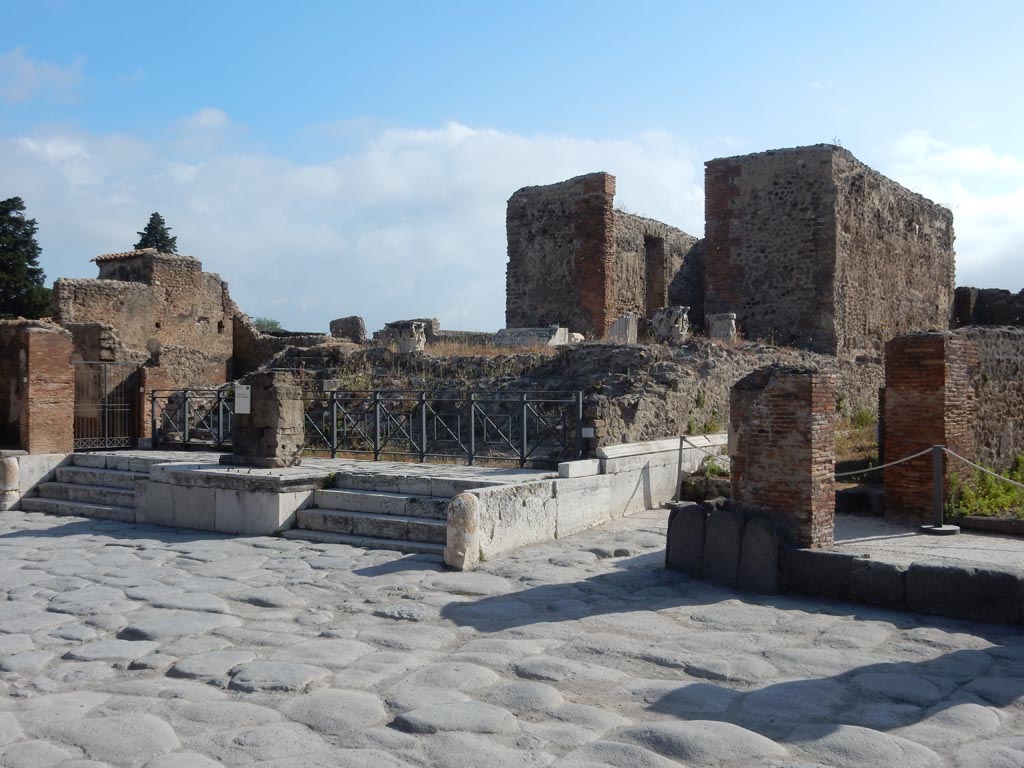
VII.4.1 Pompeii, on left, with VII.4.2, in centre. May 2017. Looking north-east on Via del Foro. Photo courtesy of Buzz Ferebee.
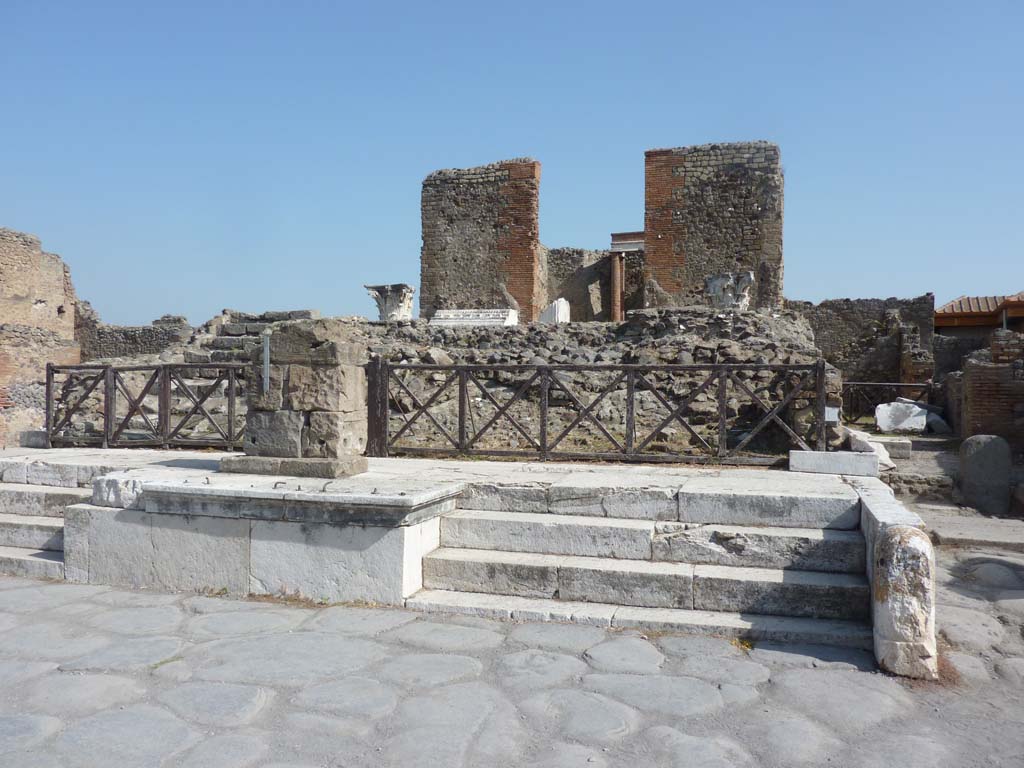
VII.4.1 Pompeii, on left, with VII.4.2, on right. October
2014. Looking north-east on Via del Foro.
Foto Annette Haug, ERC
Grant 681269 DÉCOR.
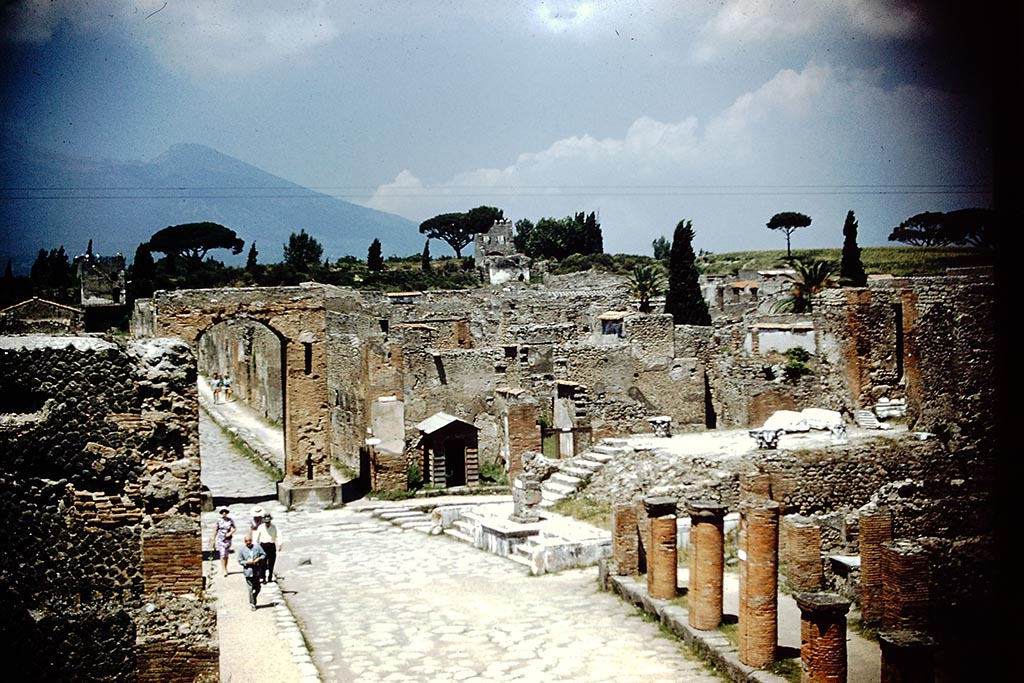
VII.4.1 Pompeii. 1959. Looking north along Via del Foro with temple on the right. Photo by Stanley A. Jashemski.
Source: The Wilhelmina and Stanley A. Jashemski archive in the University of Maryland Library, Special Collections (See collection page) and made available under the Creative Commons Attribution-Non-Commercial License v.4. See Licence and use details.
J59f0091
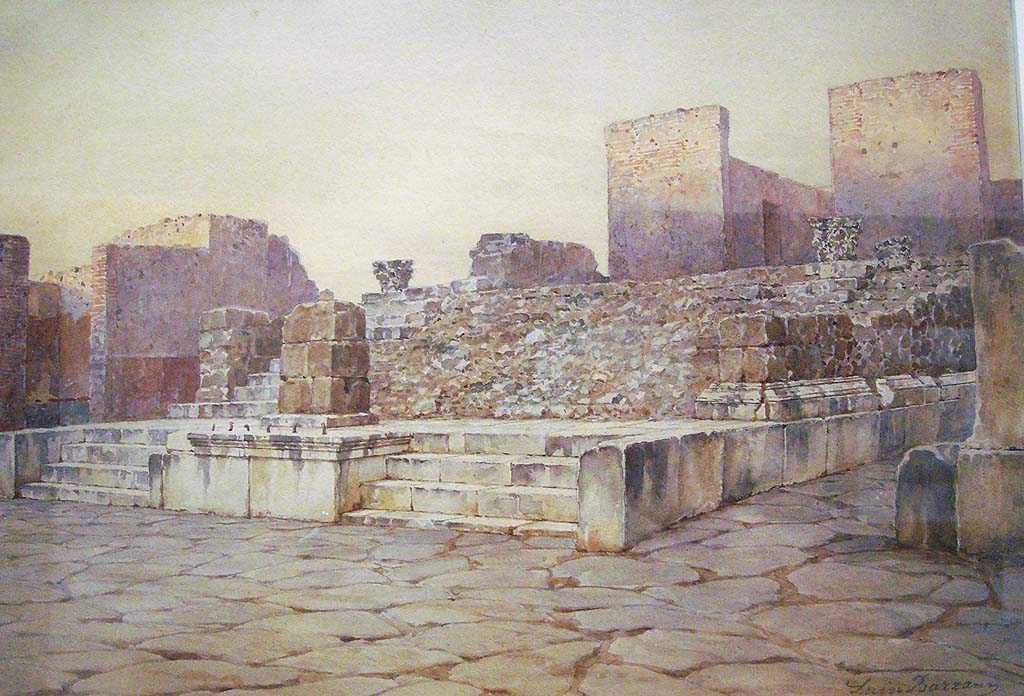
VII.4.1 Pompeii. Watercolour by Luigi Bazzani, looking
north-east towards Temple of Fortuna Augusta on Via del Foro.
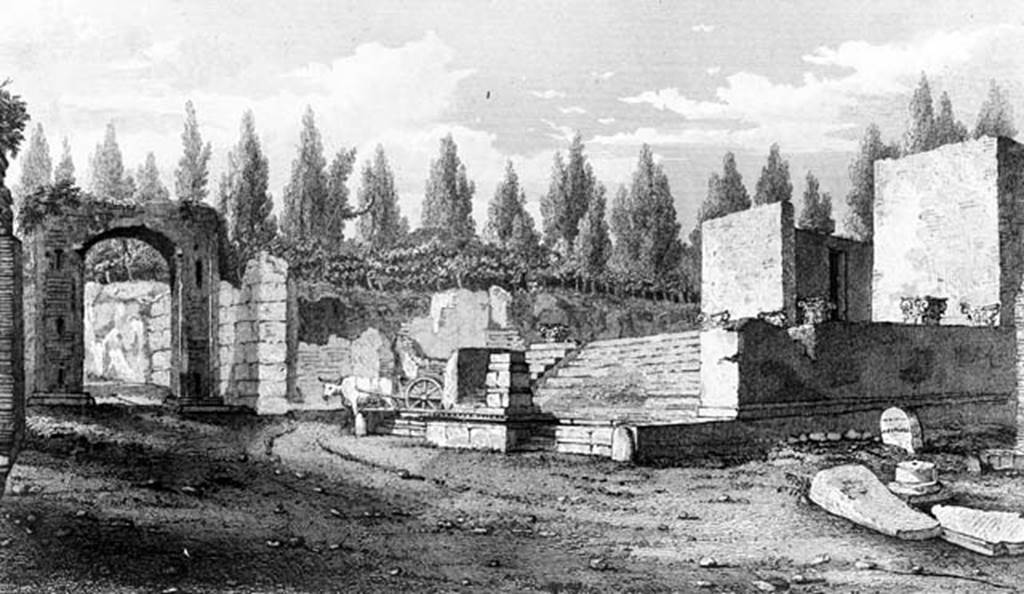
VII.4.1 Pompeii. W.367. Drawing of Temple of Fortuna Augusta.
See Gell, W, 1832. Pompeiana: Vol 1. London: Jennings and Chaplin. (p.70, pl. XX)
Photo by Tatiana Warscher. Photo © Deutsches Archäologisches Institut, Abteilung Rom, Arkiv.
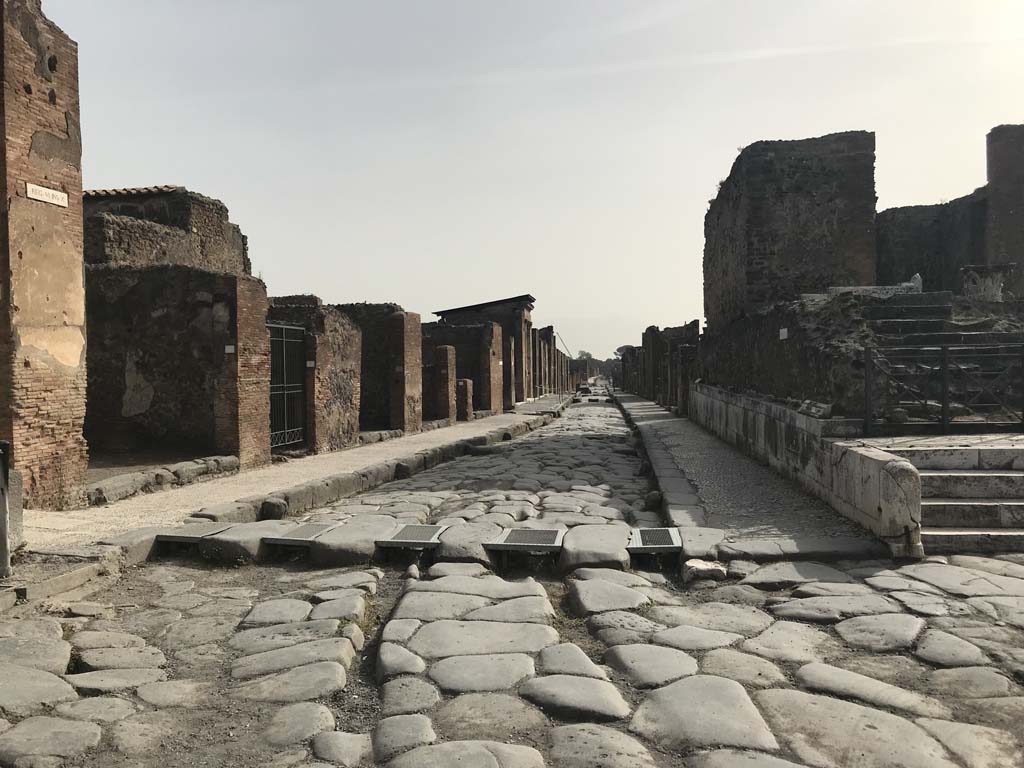
VII.4.1 Pompeii. April 2019.
Looking east along an empty Via della Fortuna with the Temple on the right. Photo courtesy of Rick Bauer.
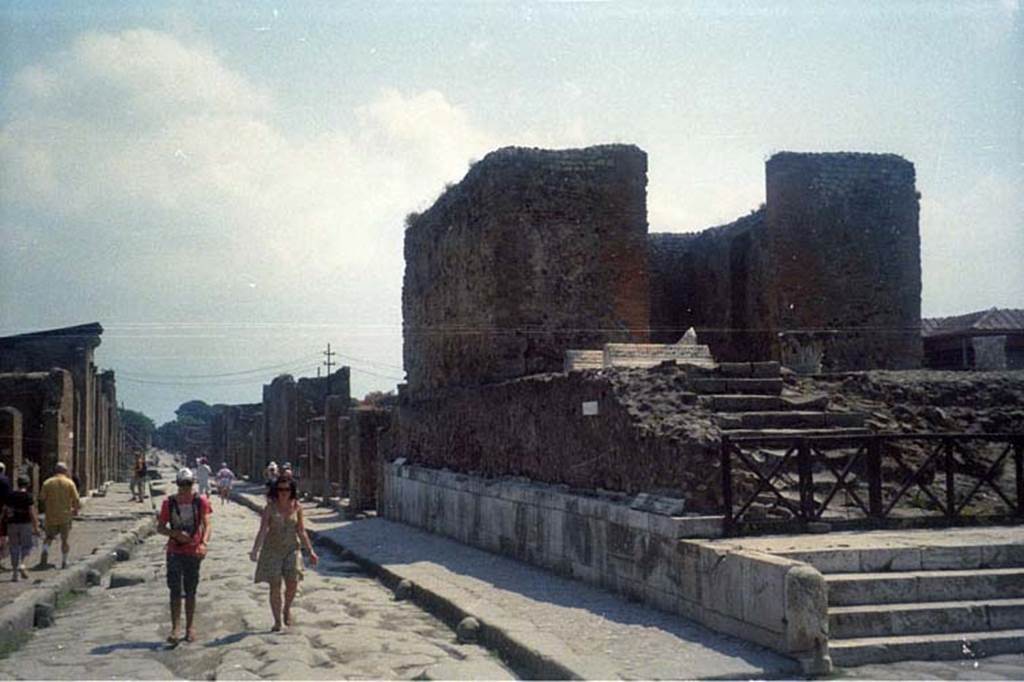
VII.4.1 Pompeii. July 2011. Looking east along Via della Fortuna showing the Temple on the right. Photo courtesy of Rick Bauer.
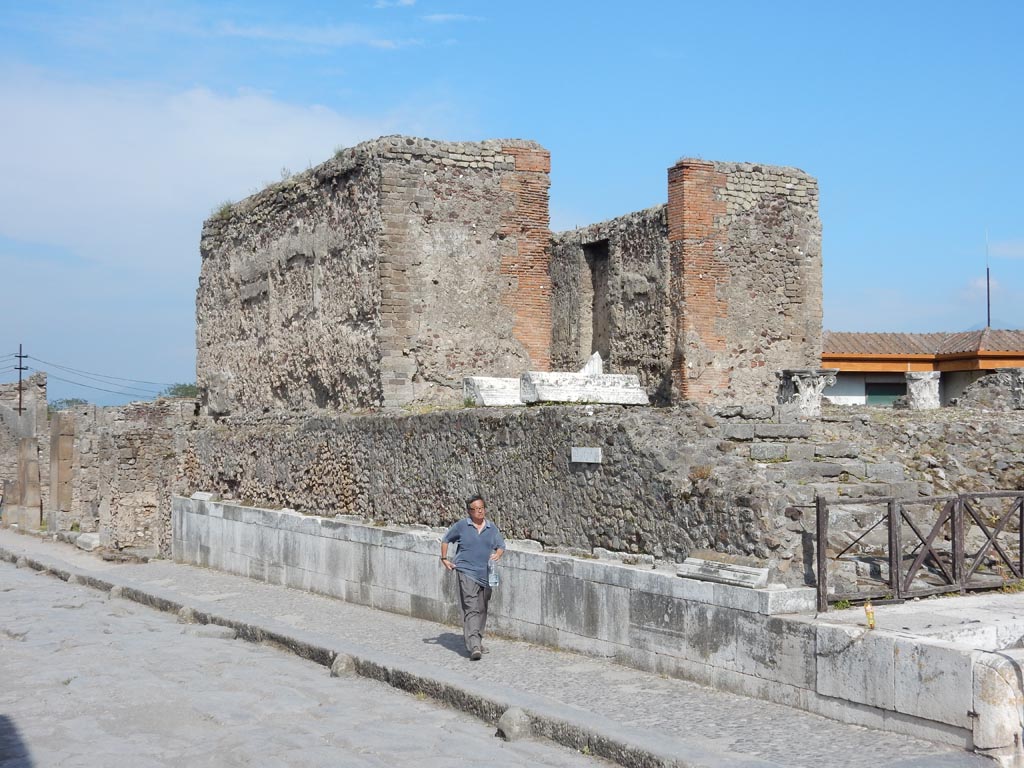
VII.4.1 Pompeii. May 2015. Looking south-east along north wall of temple. Photo courtesy of Buzz Ferebee.
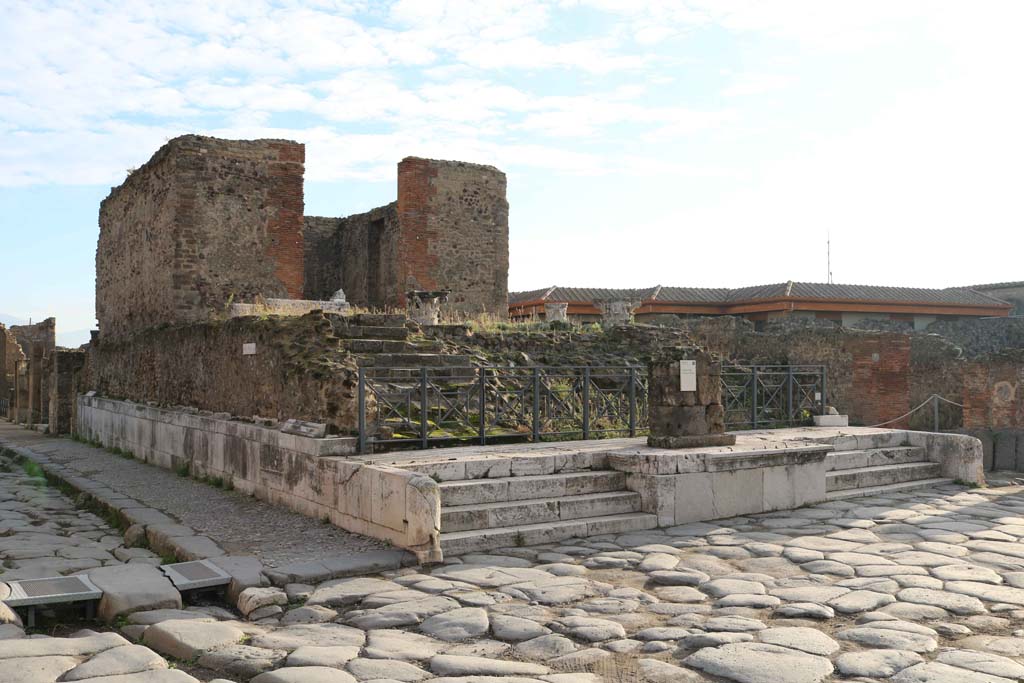
VII.4.1 Pompeii. December 2018. Looking
south-east from crossroads towards entrances. Photo
courtesy of Aude Durand.
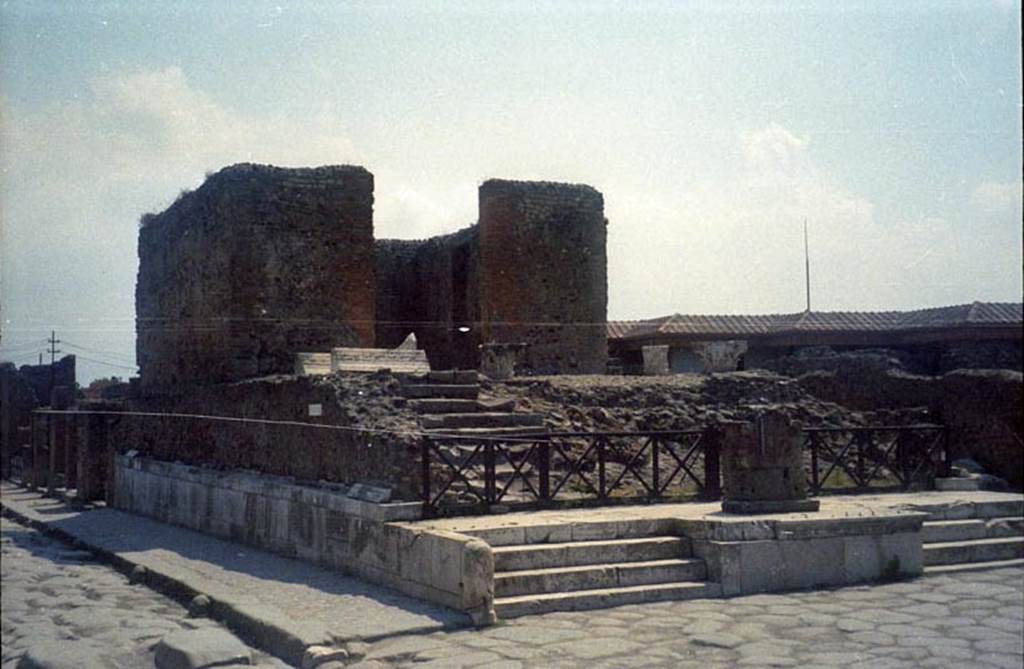
VII.4.1 Pompeii. July 2011. Looking south-east from crossroads towards entrances. Photo courtesy of Rick Bauer.
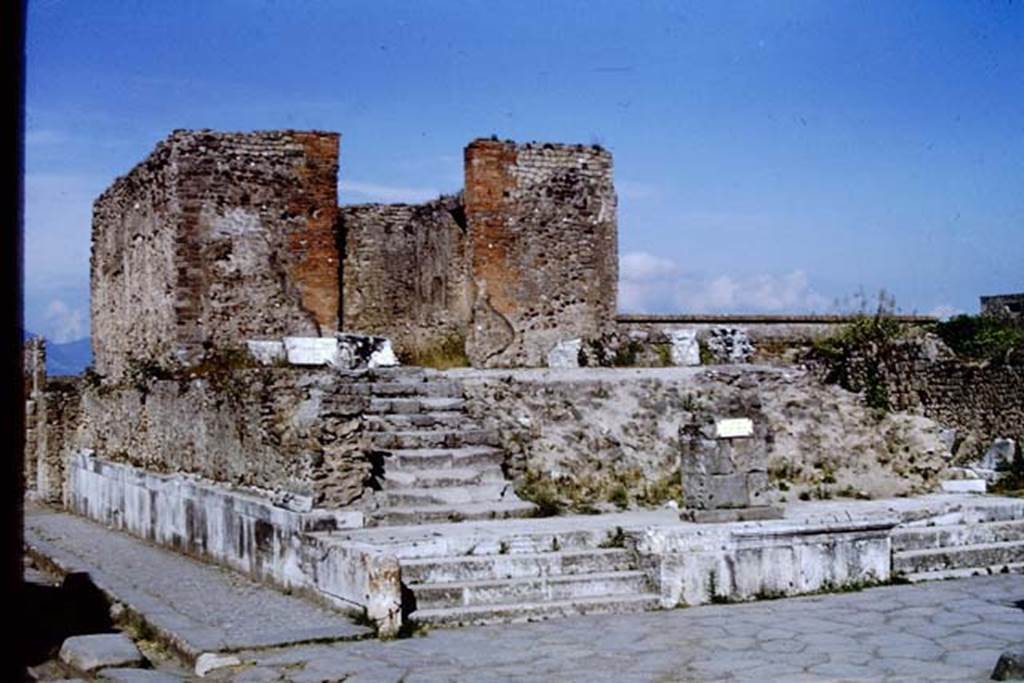
VII.4.1 Pompeii. 1968. Looking south-east from crossroads towards entrances. Photo by Stanley A. Jashemski.
Source: The Wilhelmina and Stanley A. Jashemski archive in the University of Maryland Library, Special Collections (See collection page) and made available under the Creative Commons Attribution-Non-Commercial License v.4. See Licence and use details.
J68f0370
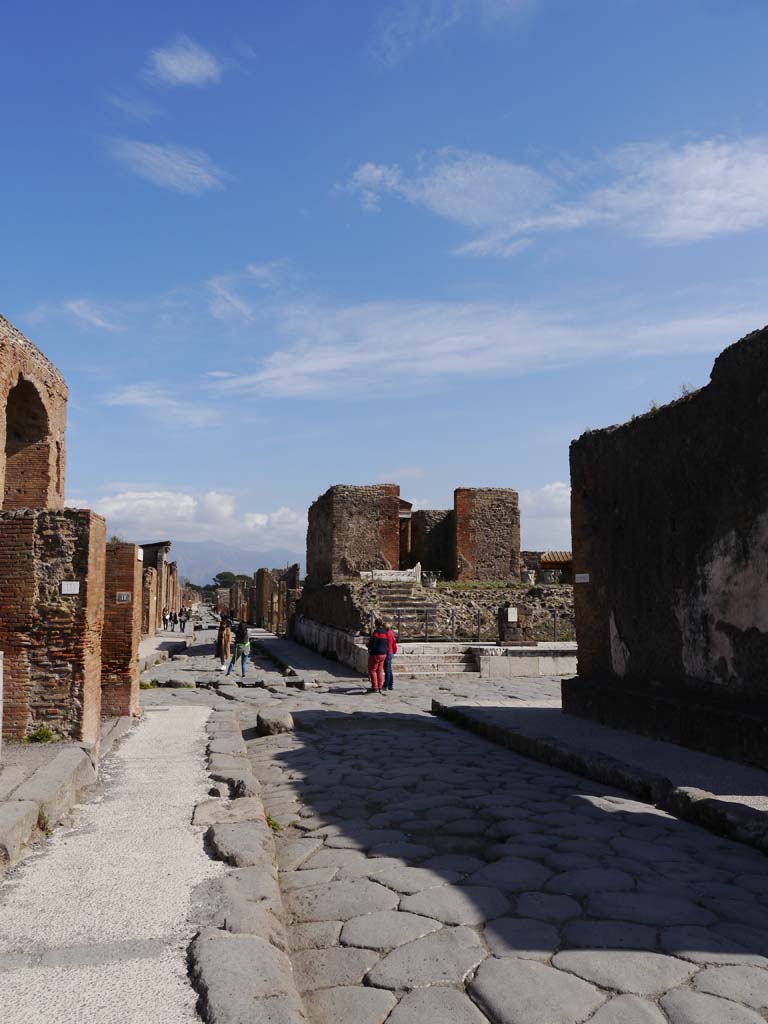
Via delle Terme, Pompeii.
March 2019.
Looking east towards junction at crossroads,
with VII.4.1 centre right.
Foto Anne Kleineberg, ERC
Grant 681269 DÉCOR.
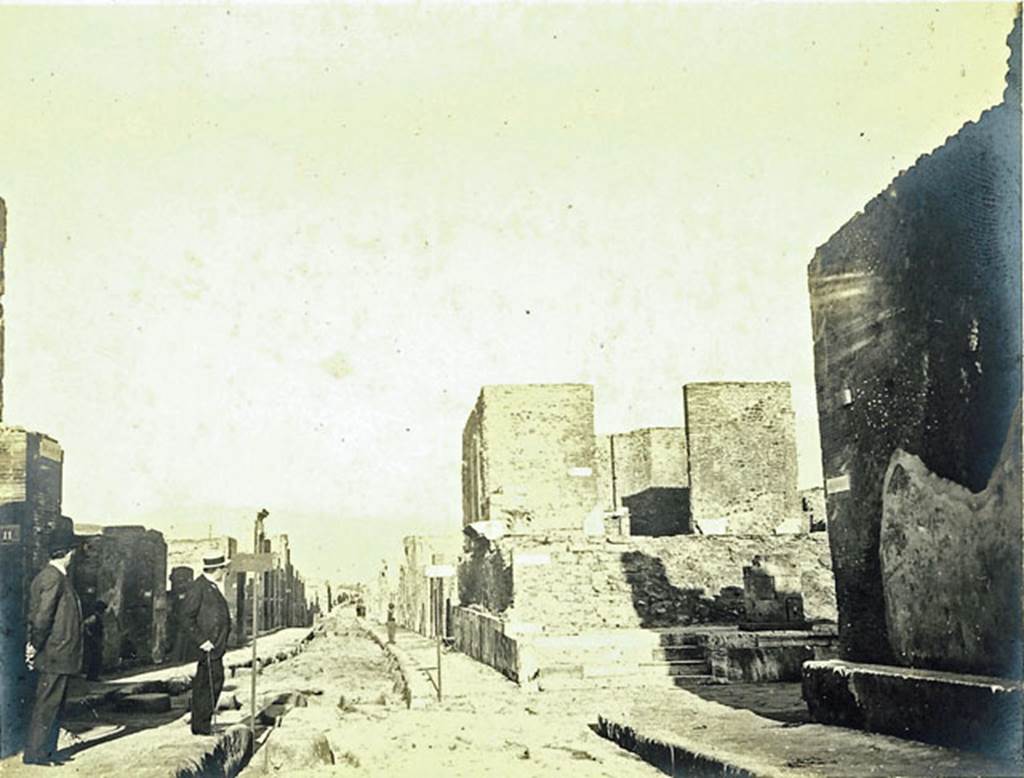
VII.4.1 Pompeii. About 1909, looking east towards crossroads outside entrance. Photo courtesy of Rick Bauer.
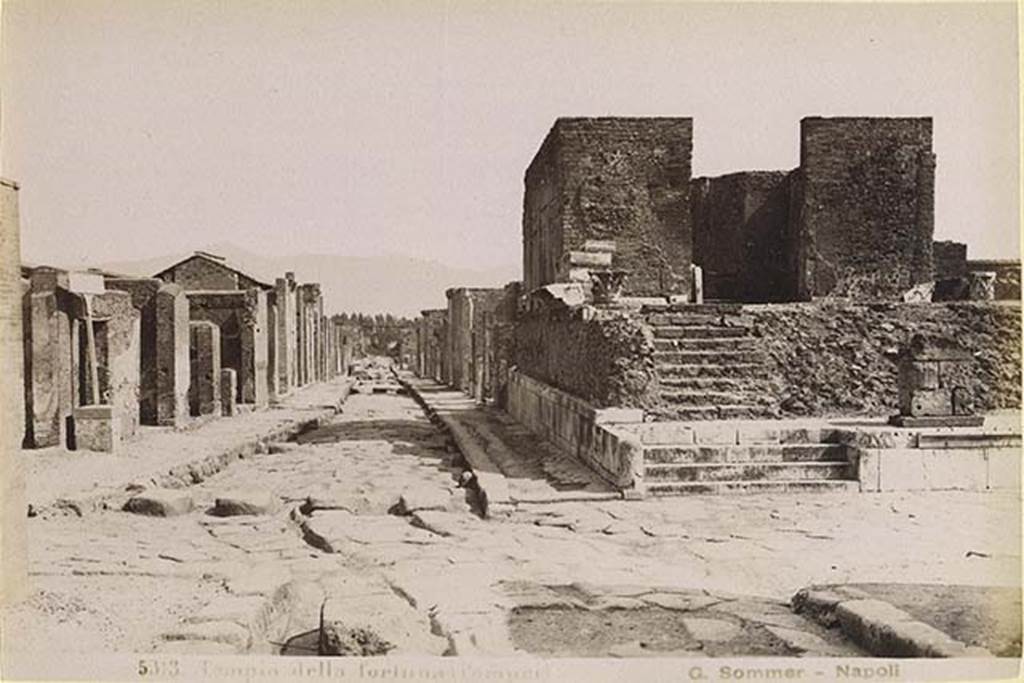
VII.4.1 Pompeii.
19th century photo by G. Sommer. Looking east towards crossroads outside entrance. Photo courtesy of Rick Bauer.
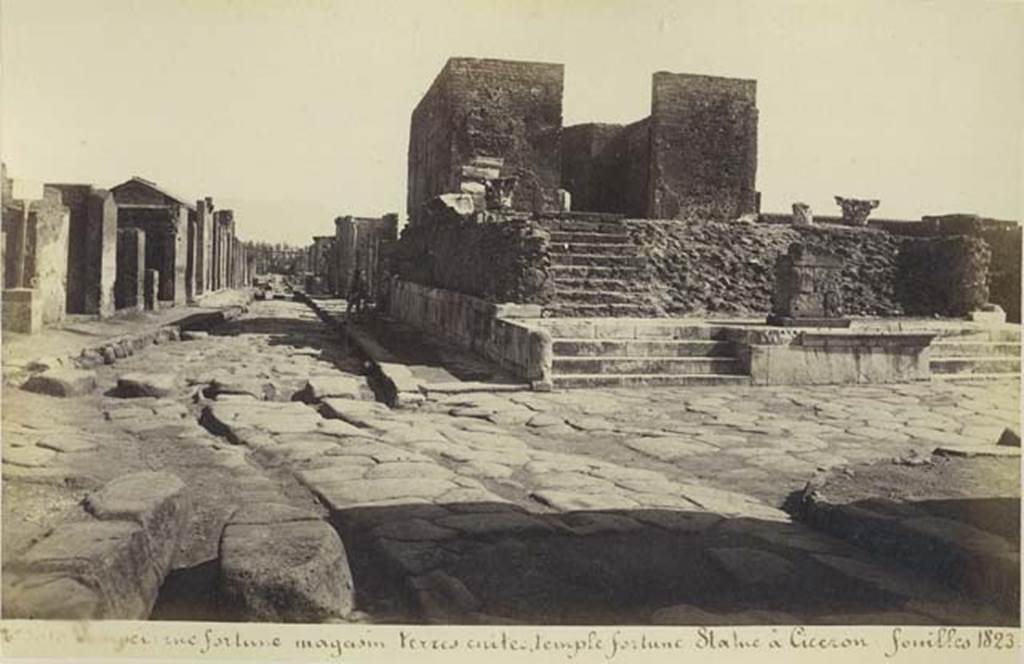
VII.4.1 Pompeii.
Undated photograph by Amodio, numbered 3016, from an album dated c.1873. Looking east. Photo courtesy of Rick Bauer.
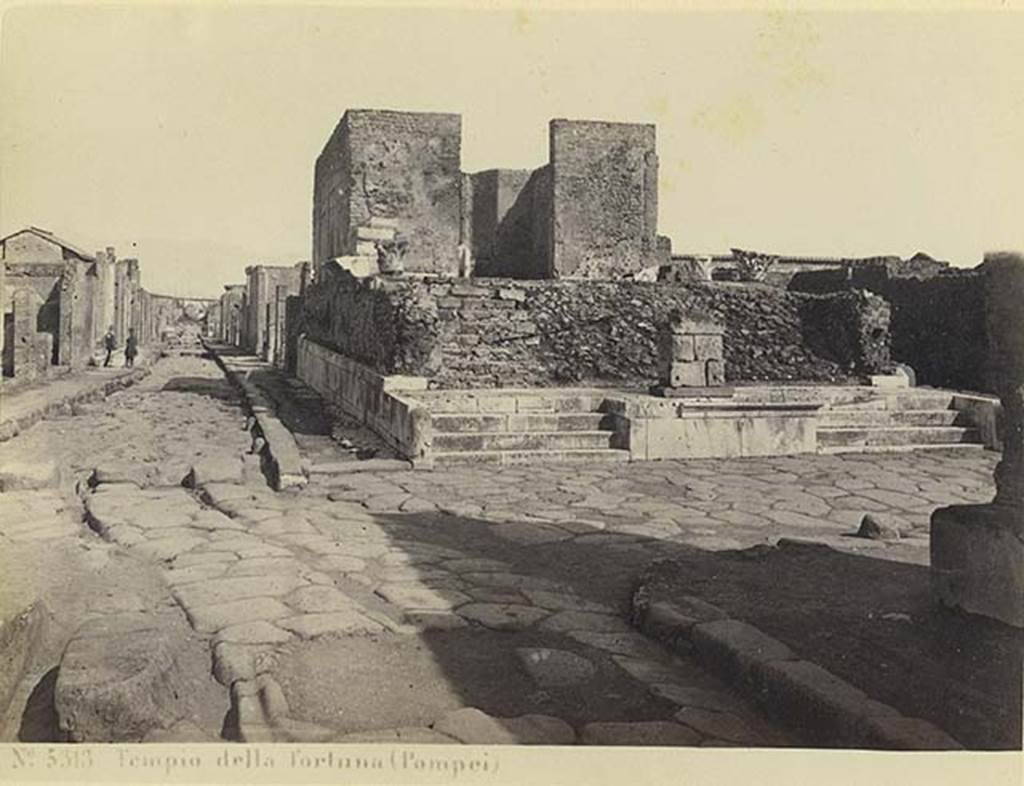
VII.4.1 Pompeii. 19th century photo by G. Sommer. Looking east across crossroads to temple. Photo courtesy of Rick Bauer.
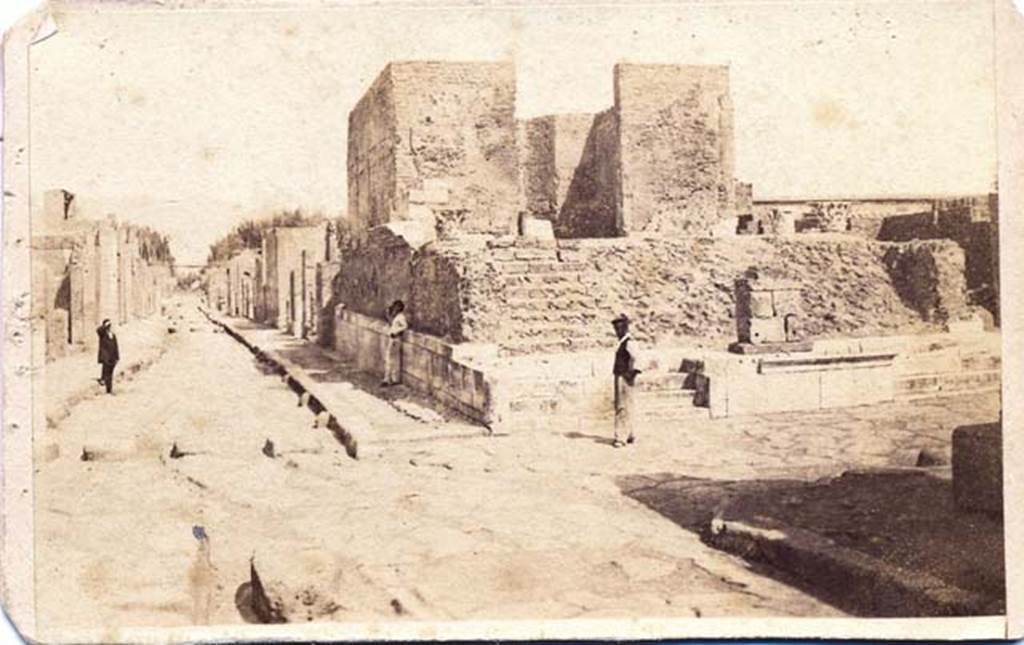
VII.4.1 Pompeii. Between 1867 and 1874, looking east towards crossroads outside entrance.
Photo by Sommer and Behles. Photo courtesy of Charles Marty.
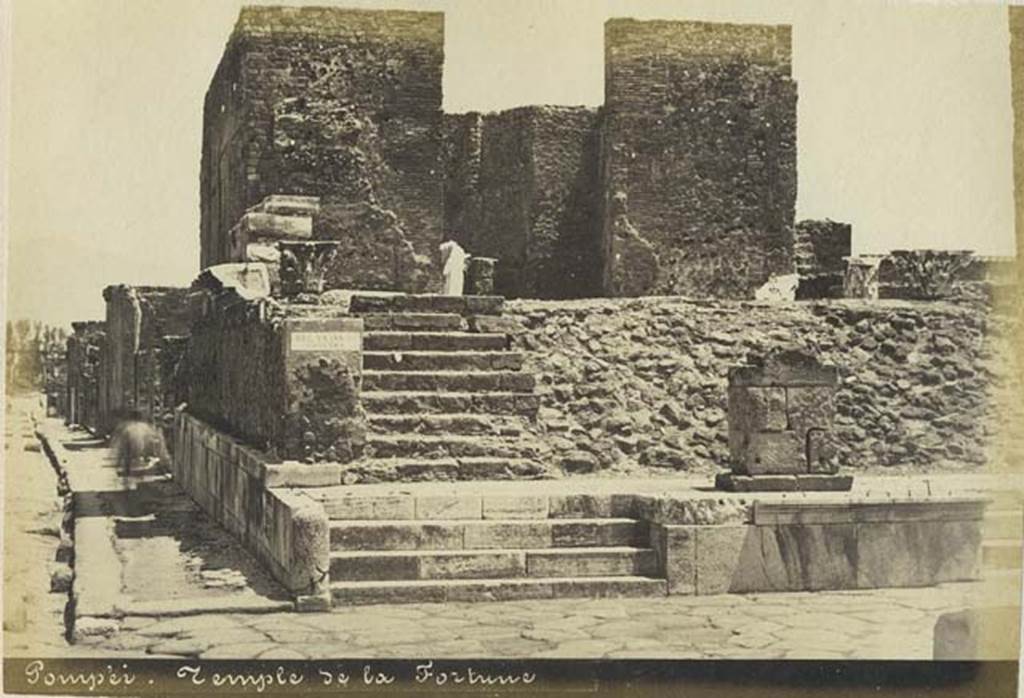
VII.4.1 Pompeii. Undated photograph by Mauri, numbered 011. Looking east to temple. Photo courtesy of Rick Bauer.
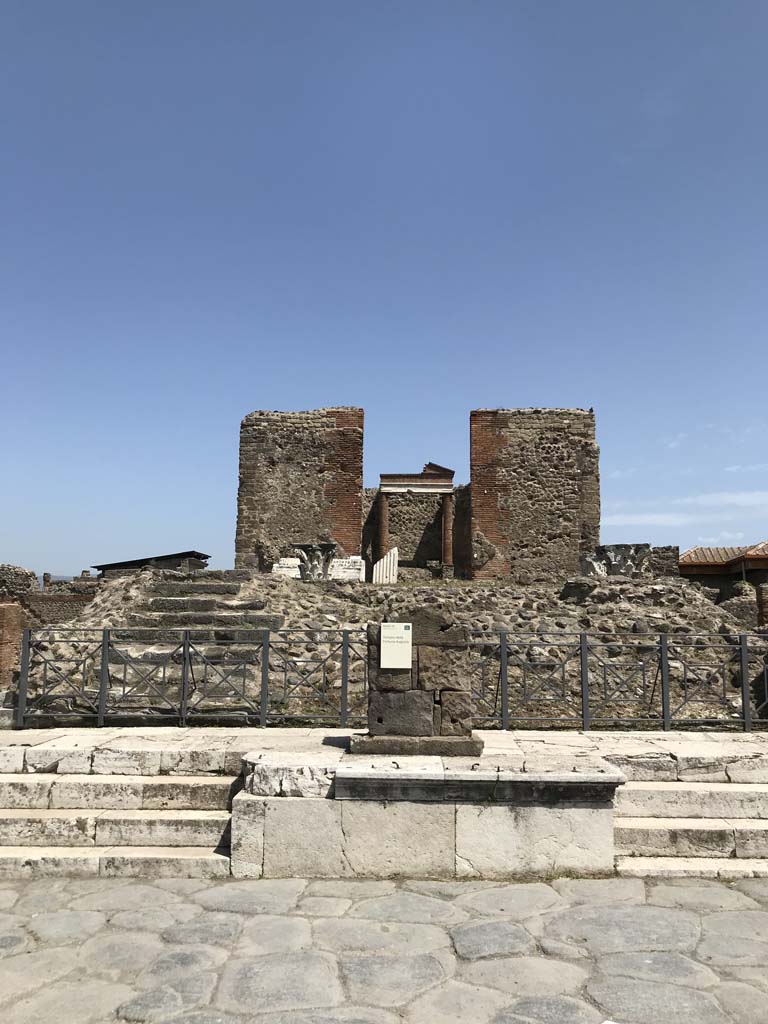
VII.4.1 Pompeii. April 2019. Looking east from Via del Foro. Photo courtesy of Rick Bauer.
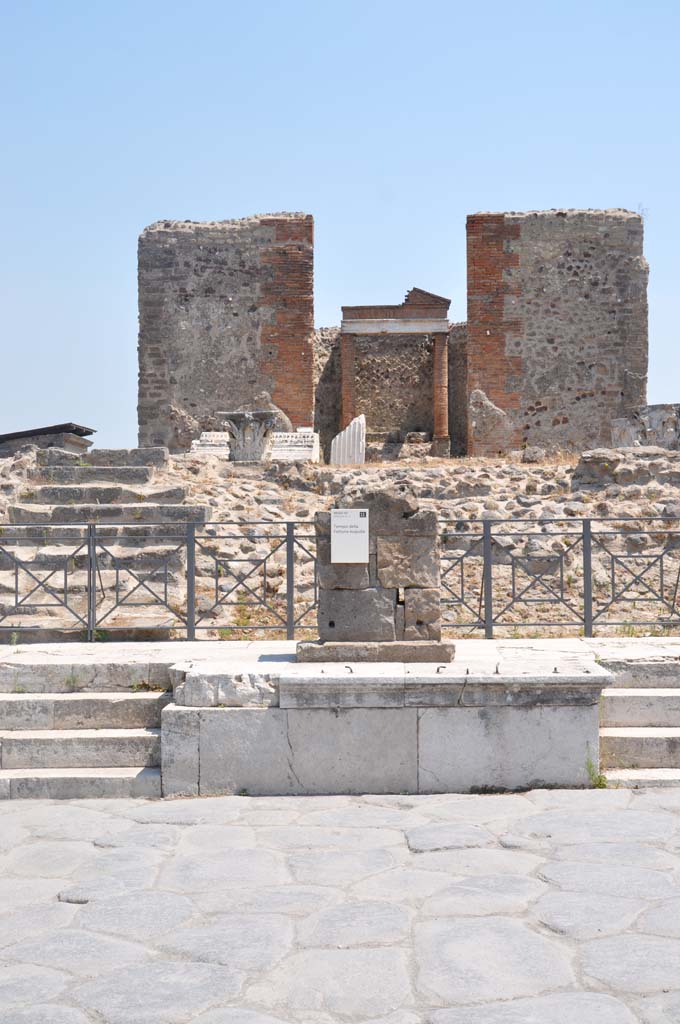
VII.4.1
Pompeii. July 2017. Looking east from Via del Foro.
Foto Anne Kleineberg, ERC Grant 681269 DÉCOR.
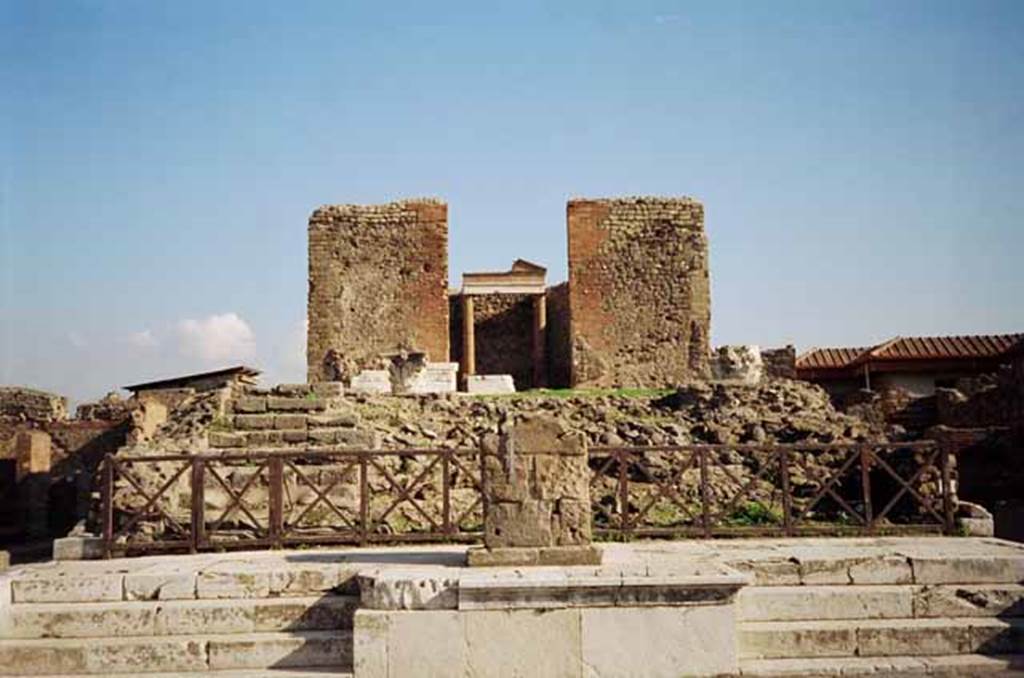
VII.4.1 Pompeii. May 2010. Looking east from Via del Foro. Photo courtesy of Rick Bauer.
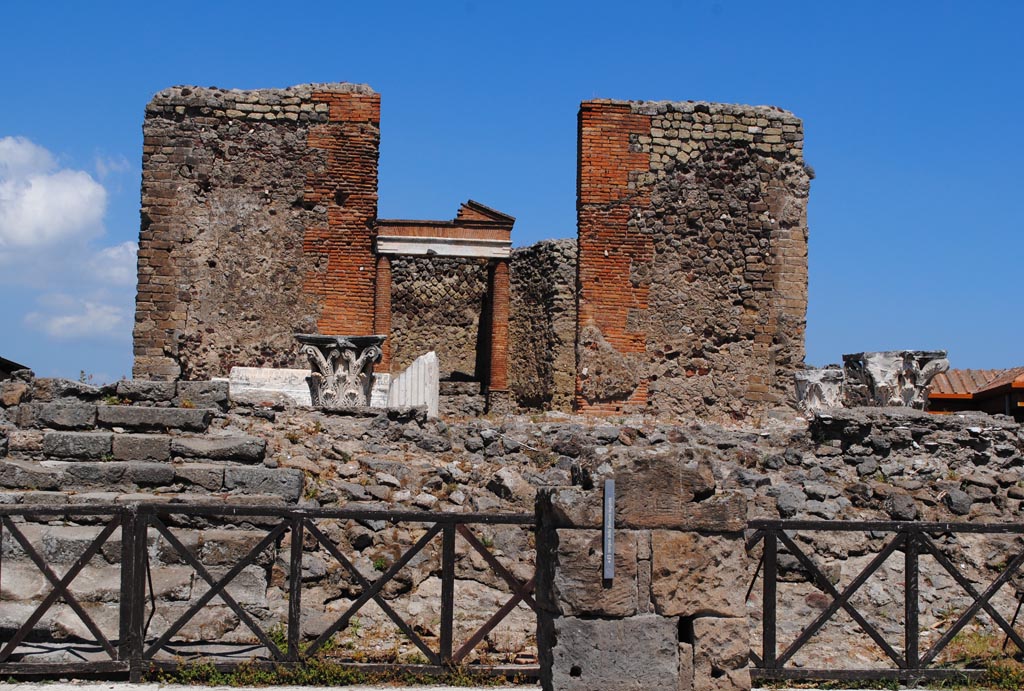
VII.4.1 Pompeii. July 2012. Looking east towards Temple of Fortuna.
Photo courtesy of John Vanko. His father took the identical photo in February 1952, see below.
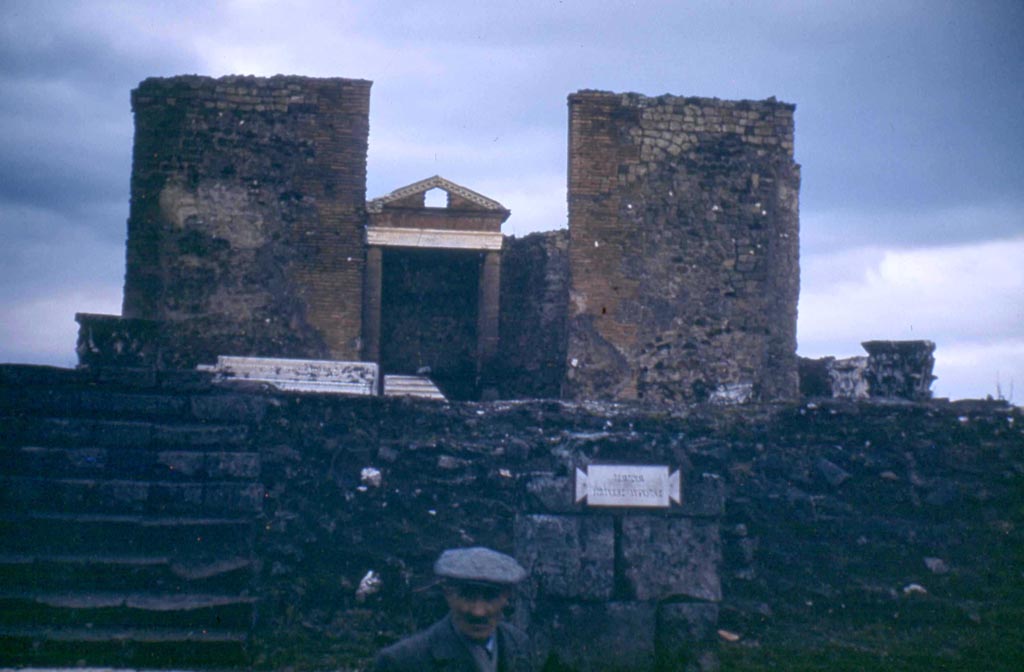
VII.4.1 Pompeii. February 1952. Looking east towards Temple of Fortuna.
Photo courtesy of John Vanko. His father took this photo in 1952, identical to the one above.
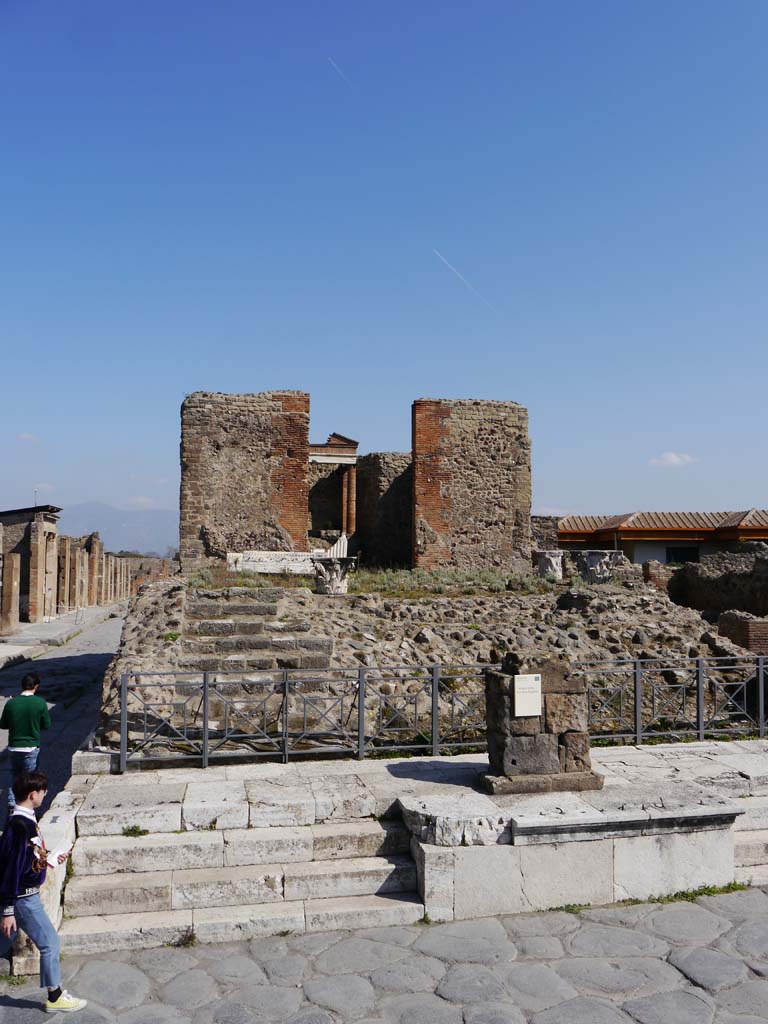
VII.4.1 Pompeii. March 2019. Looking towards
steps at north end on Via del Foro.
Foto Anne Kleineberg, ERC
Grant 681269 DÉCOR.
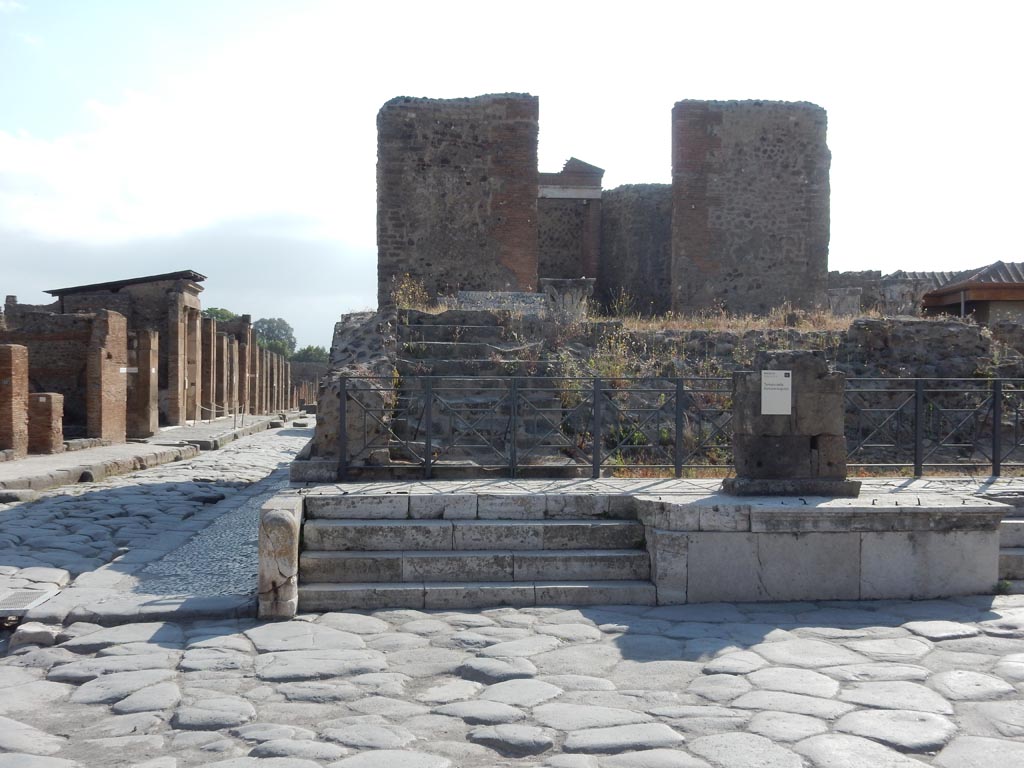
VII.4.1 Pompeii. May 2017. Looking east on Via del Foro towards steps at north end. Photo courtesy of Buzz Ferebee.
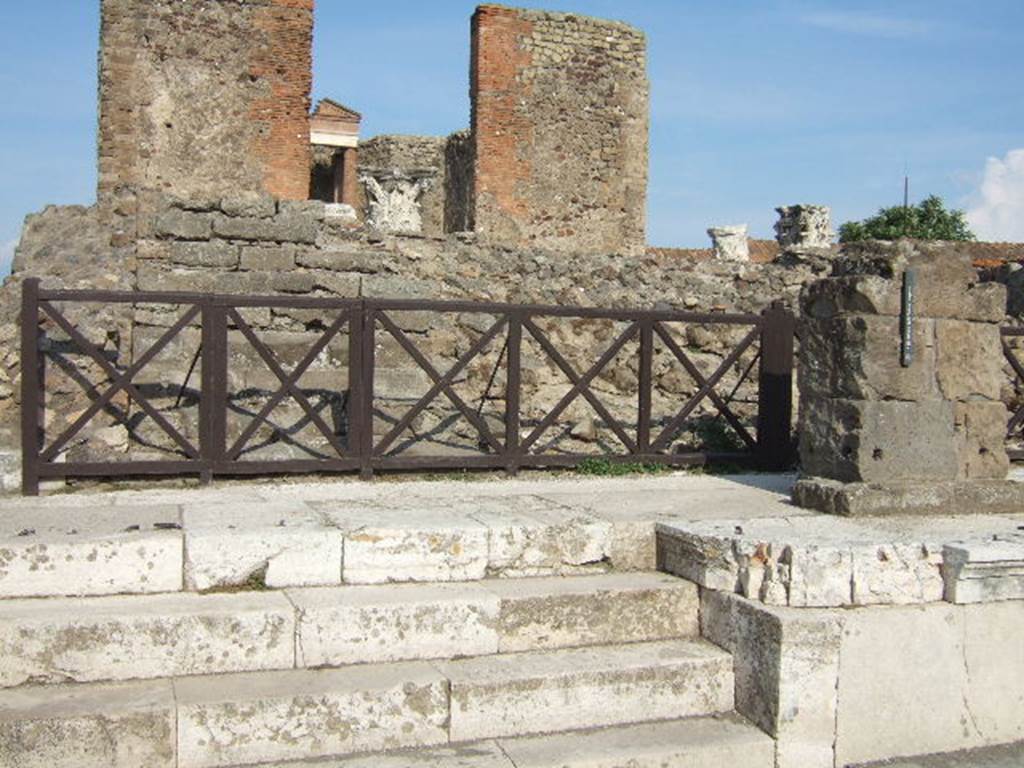
VII.4.1 Pompeii. September 2005. Entrance on Via del Foro, with steps at north end.
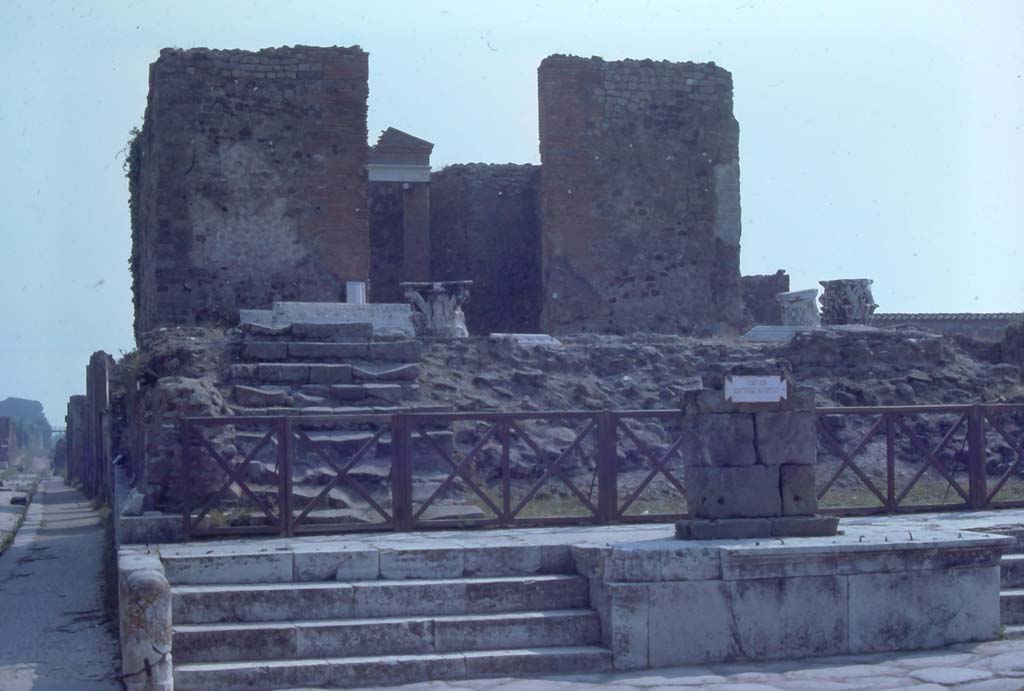
VII.4.1 Pompeii, 8th August 1976. Looking east towards entrance on
Via del Foro.
Photo courtesy of Rick Bauer, from Dr George Fay’s slides
collection.
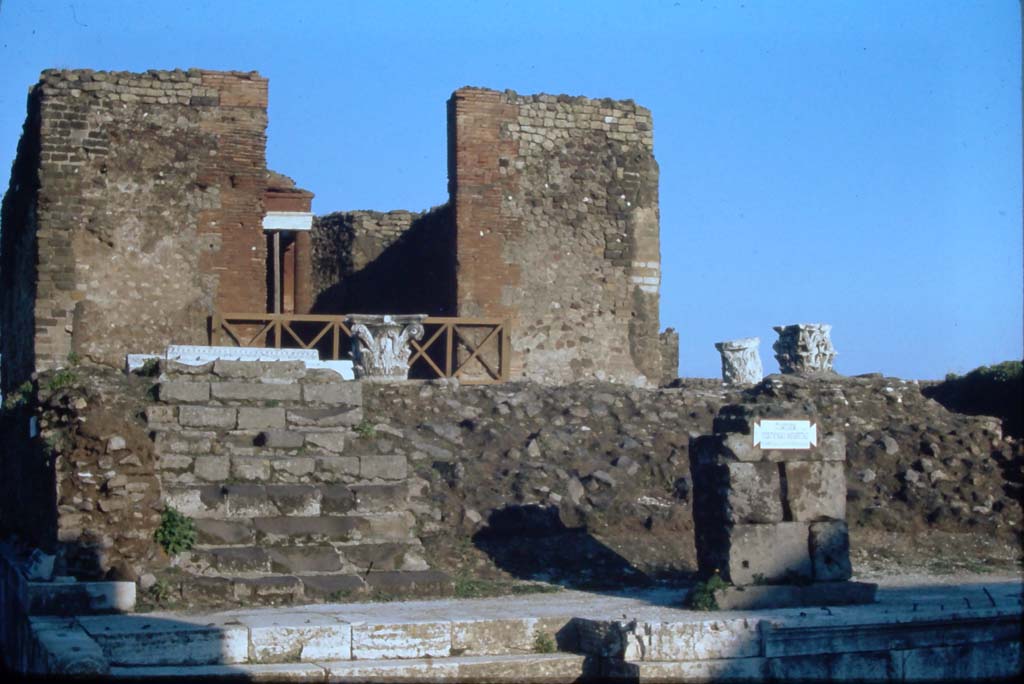
VII.4.1 Pompeii. 4th December 1971. Looking east towards upper
podium/portico.
Photo courtesy of Rick Bauer, from Dr George Fay’s slides
collection.