VII.3.29 Pompeii. Domus M. Spuri Mesoris or House of M. Spurius Mesor.
Excavated 1868.
Part 4 Part 1 Part 2 Part 3 Plan
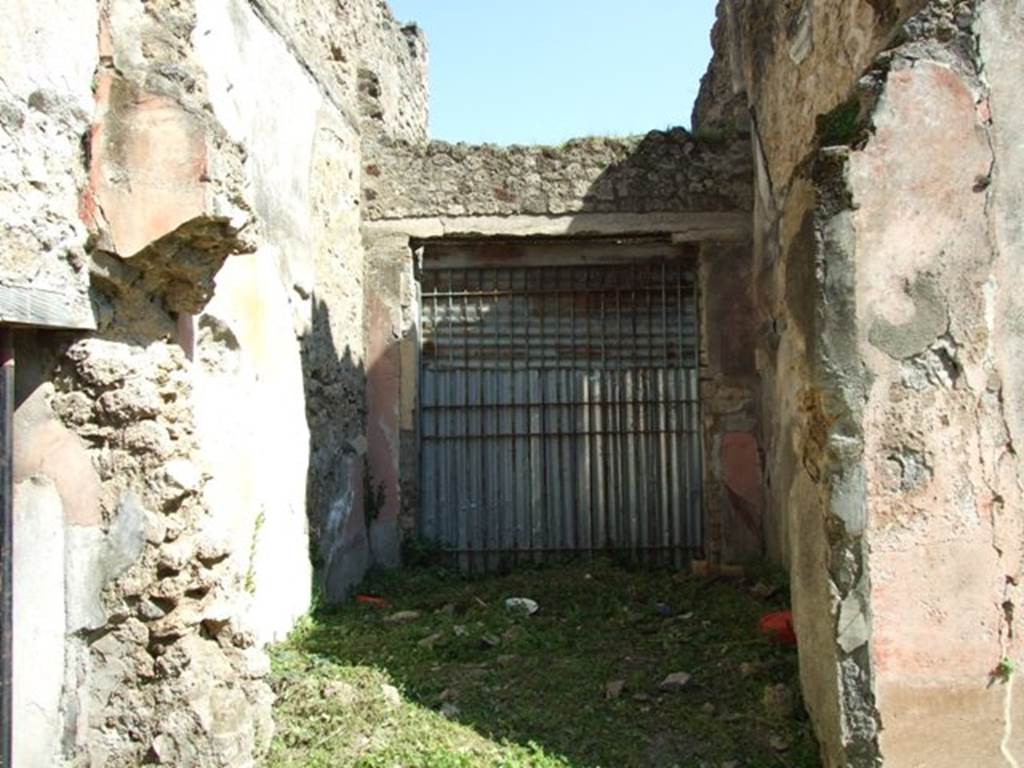
VII.3.29 Pompeii. March 2009. Room 11, room next to tablinum, on west side of peristyle. The access to other rooms on the east side is blocked.
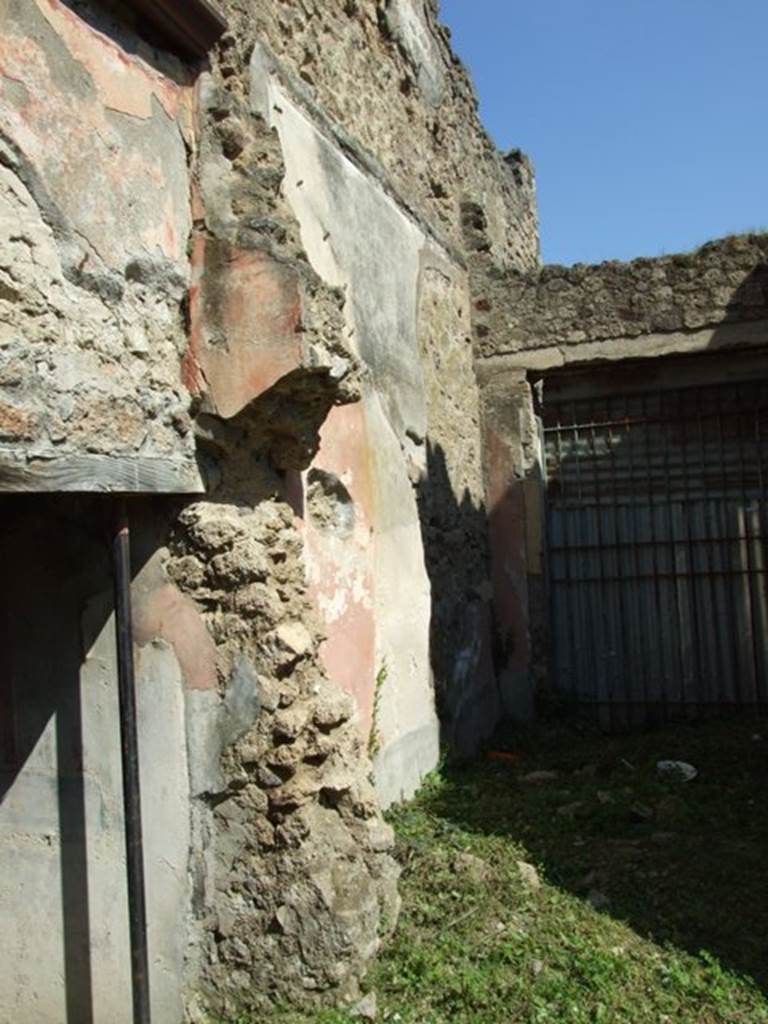
VII.3.29 Pompeii. March 2009. Room 11, north wall of room next to tablinum.
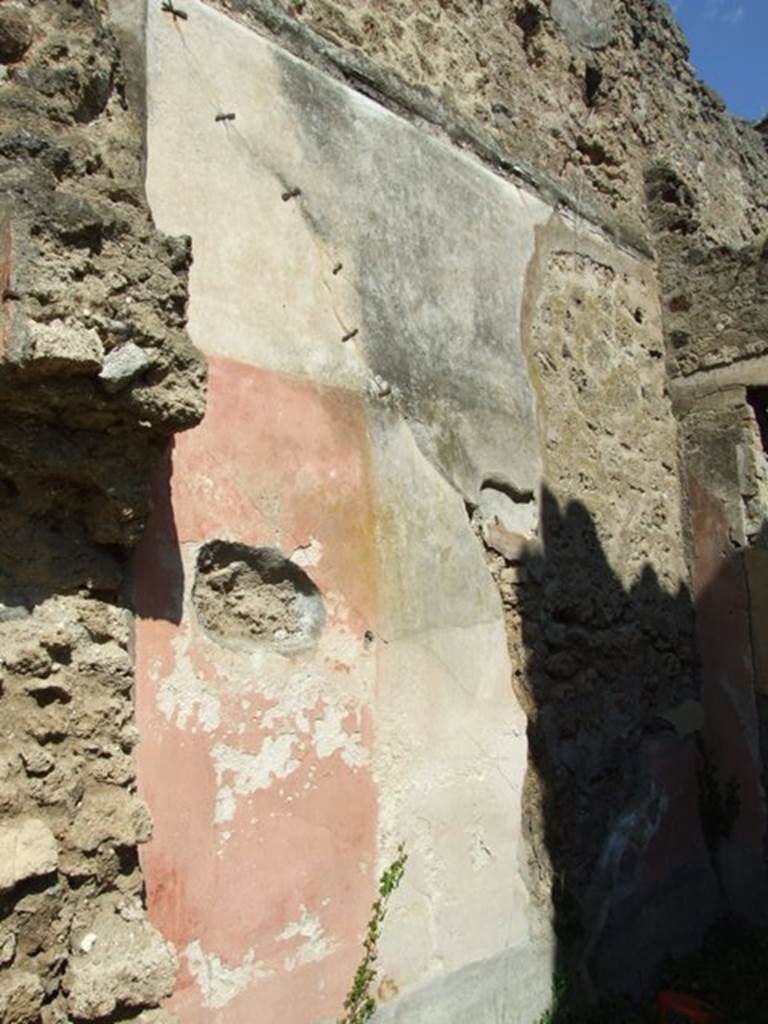
VII.3.29 Pompeii. March 2009. Room 11, north wall of room next to tablinum.
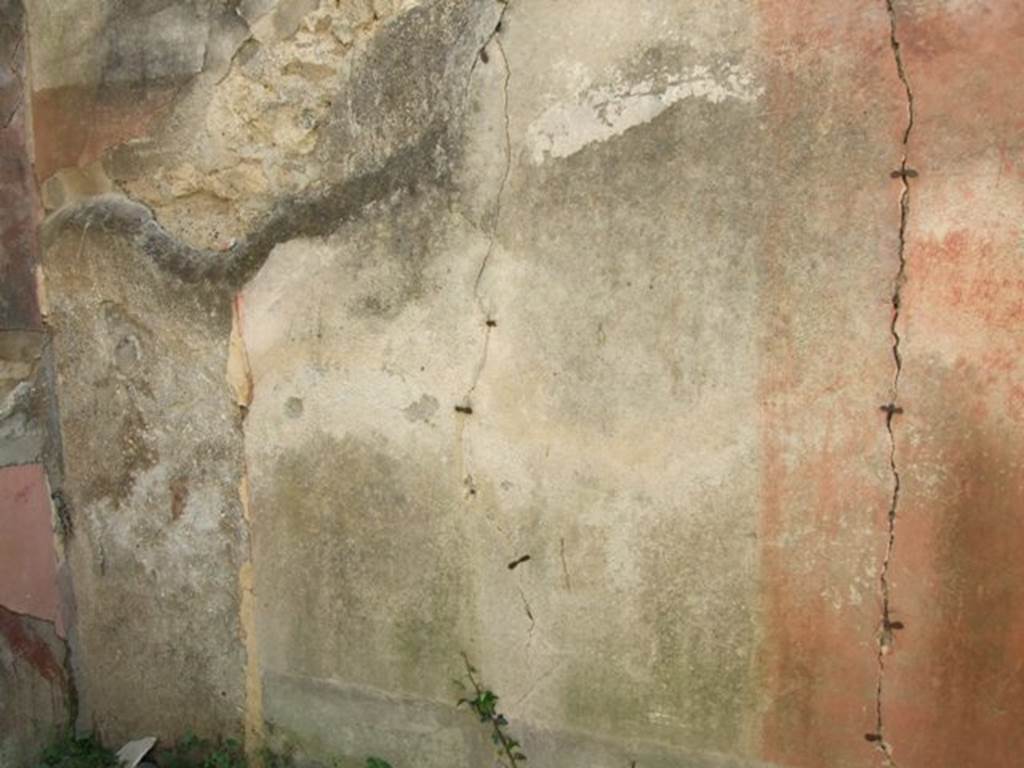
VII.3.29 Pompeii. March 2009. Room 11, south wall of room next to tablinum.
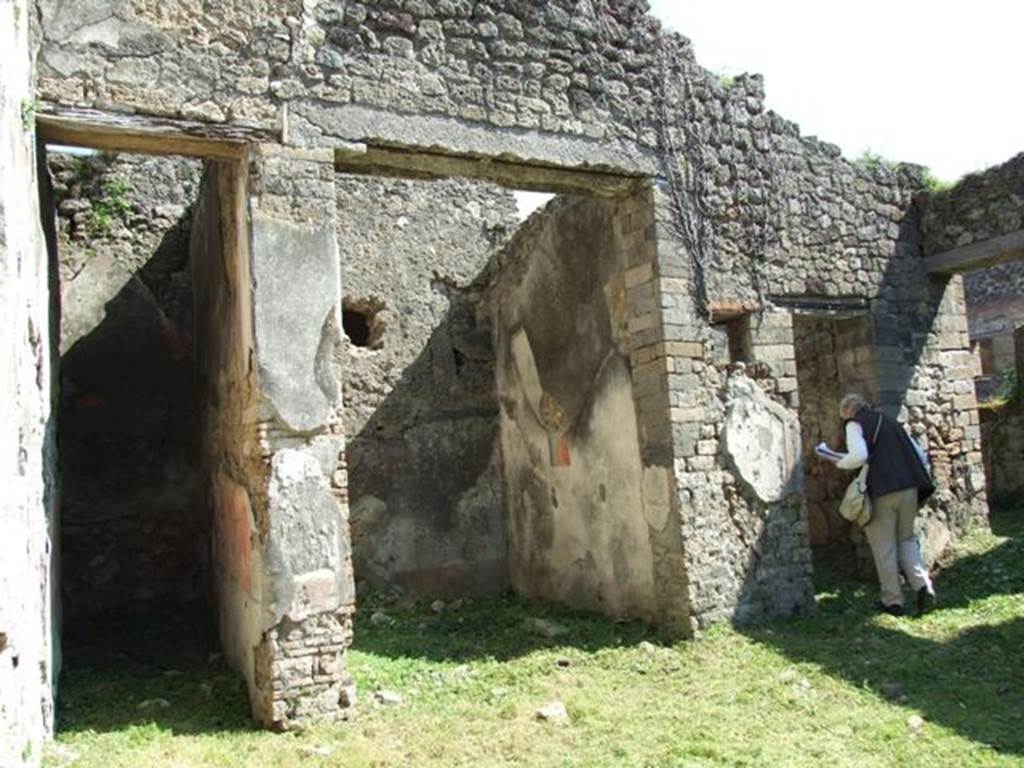
VII.3.29 Pompeii. March 2009. Room 1, looking east across atrium. Rooms on east side, doorways to rooms 12, 13 and 14.
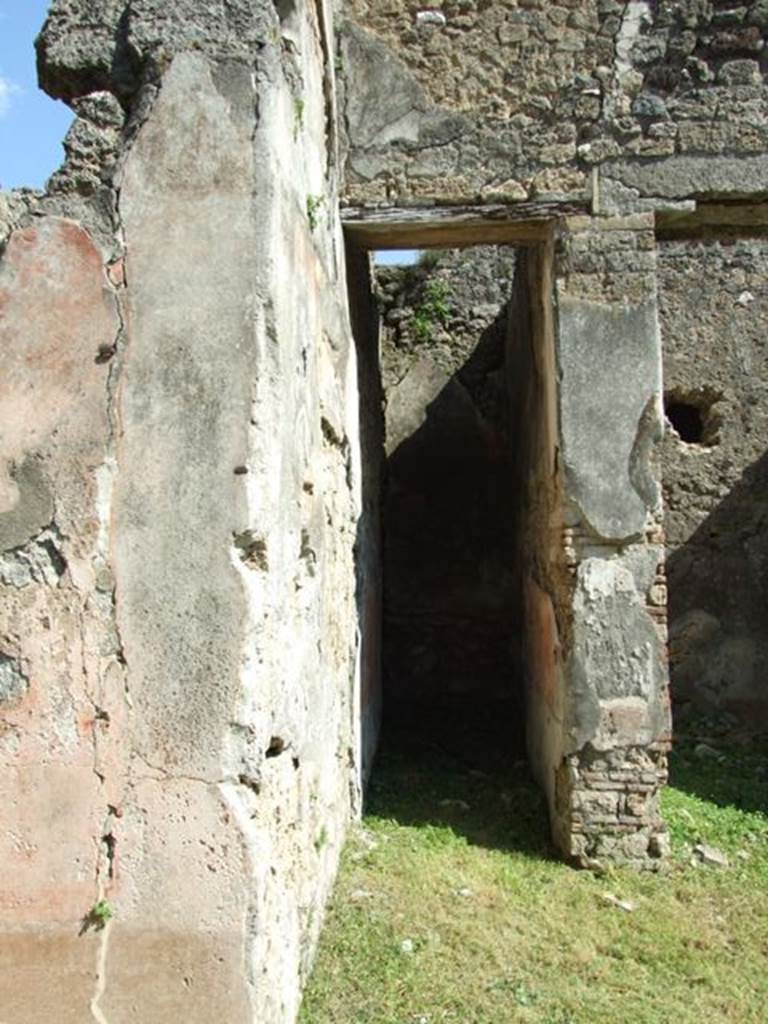
VII.3.29 Pompeii. March 2009. Doorway to room 12, corridor leading to garden area (not accessible)
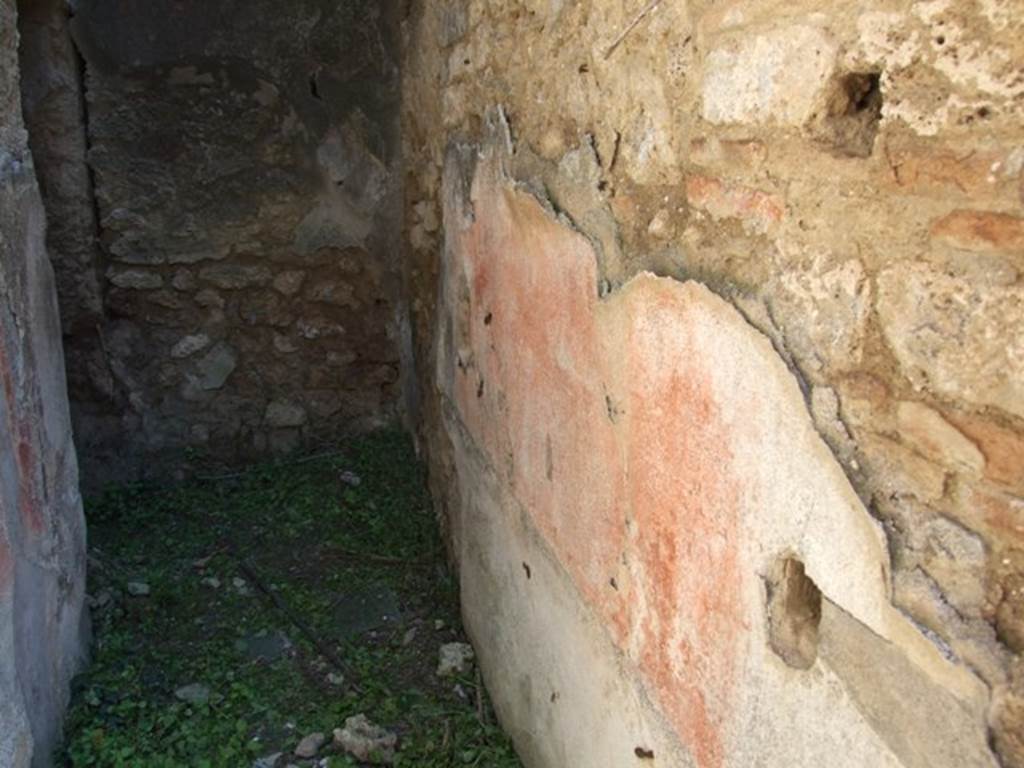
VII.3.29 Pompeii. March 2009. Room 12, looking east along corridor. Remains of painted plaster on south wall.
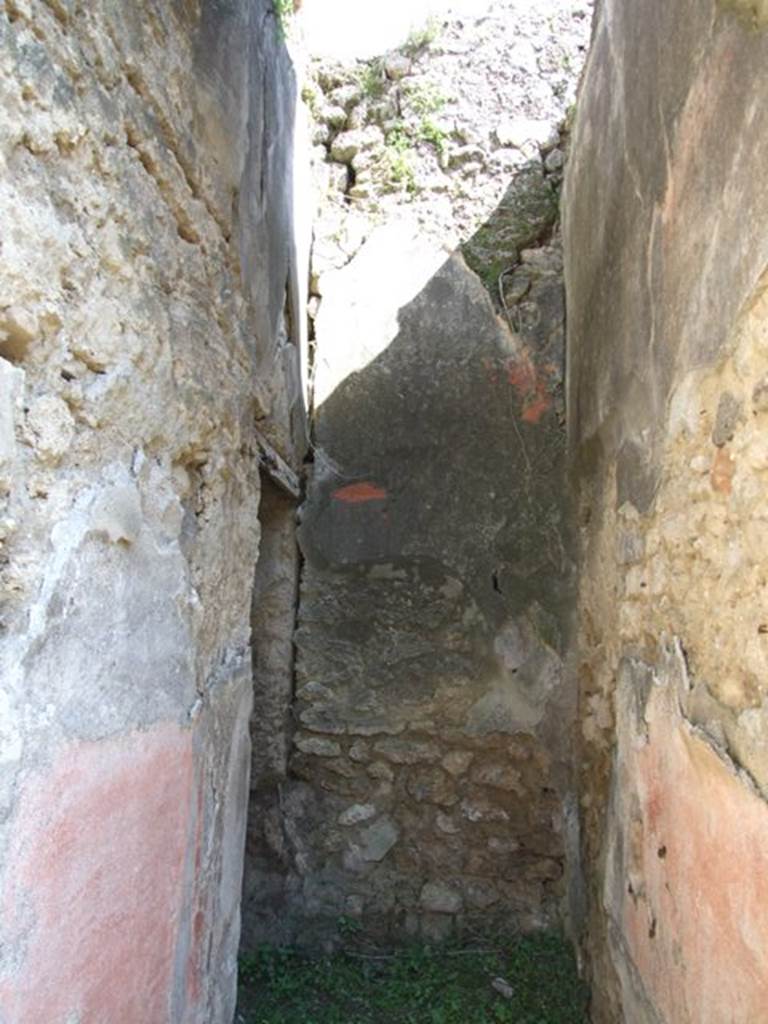
VII.3.29 Pompeii. March 2009. Room 12, corridor. Looking east.
On the east side of the corridor was the garden area.
According to Boyce, in the south-west corner of the portico of the garden was a semi-circular niche.
Its vaulted ceiling was adorned with a painted shell.
Painted on the wall above the niche was a pediment and below it a single serpent beside an altar.
See Boyce G. K.,
1937. Corpus of the Lararia of Pompeii.
Rome: MAAR 14. (p.65, no: 270, Pl. 4,1)
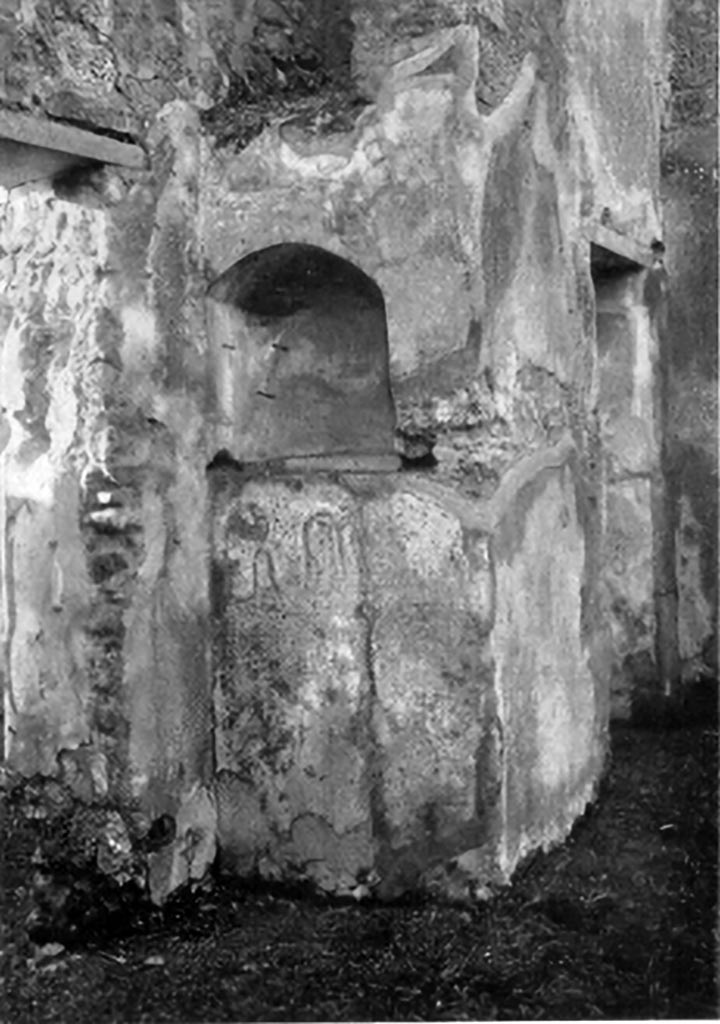
VII.3.29 Pompeii. According to Boyce, in the south-west corner of the portico of the garden was a semi-circular niche.
Its vaulted ceiling was adorned with a painted shell.
Painted on the wall above the niche was a pediment and below it a single serpent beside an altar.
See Boyce G. K., 1937. Corpus
of the Lararia of Pompeii. Rome:
MAAR 14. (p.65, no: 270, Pl. 4,1)
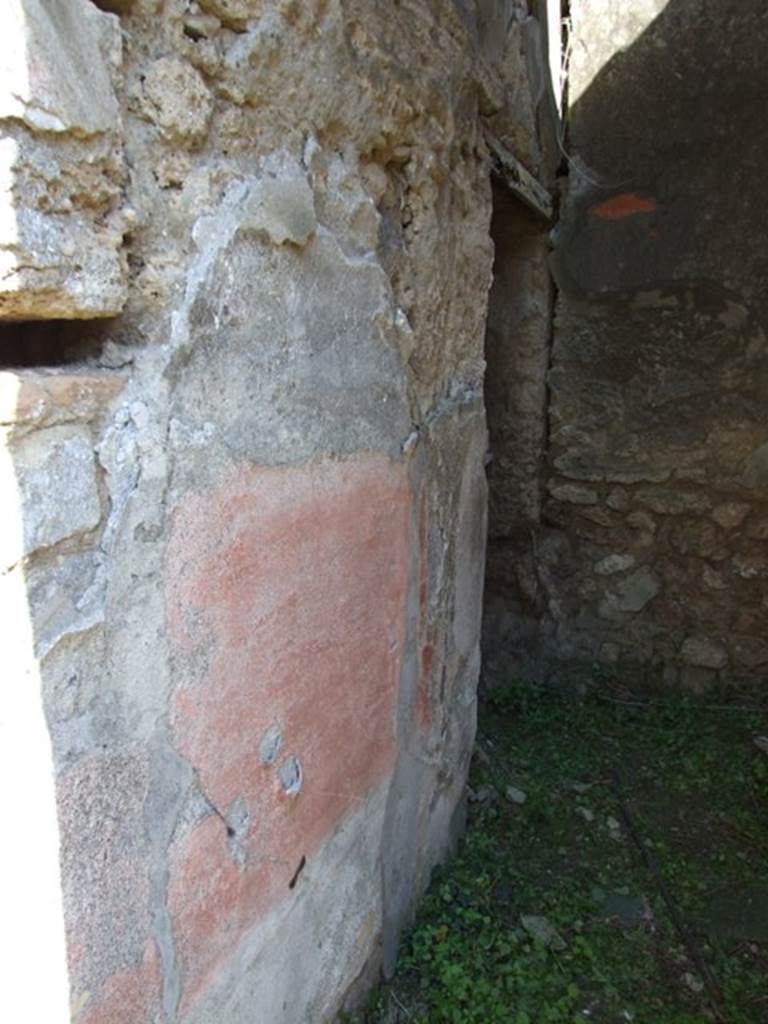
VII.3.29 Pompeii. March 2009. Room 12, north wall of corridor with doorway to garden area (no access).
In this area were also a large exedra or triclinium, another triclinium and a niche shrine.
According to Richardson, the best rooms of the house were the pair of dining rooms opening onto a small garden.
These opened off a small square area that contained the lararium niche.
One of the triclinia opened directly to the garden by a large window with a low sill and had fine black and red decoration.
The decoration was once very fine with large paintings in the centre panels, and delicate architecture in the upper zone.
Only ruins of this now remain but drawings were made of it when it was freshly excavated.
Two paintings were taken to Naples Museum, inventory numbers 120085 and 120086.
See Sogliano, A., 1879. Le pitture murali campane scoverte negli anni 1867-79. Napoli: (p. 101 no: 548 – 120085, and p.126 no: 616 – 120086)
See Richardson, L., 1988. Pompeii: An Architectural History. Baltimore: John Hopkins University Press. (p. 222-3)
One of the triclinia had a mosaic set into its floor with the name M. SPVRIVS MESOR.
According to Della Corte, he thought possibly M. Spurius Mesor (or Mensor) was not the owner, but a mosaicist that worked there and signed his work.
See Della Corte, M., 1965. Case ed Abitanti di Pompei. Napoli: Fausto Fiorentino. (p.148).
According to Sogliano, the following paintings were seen in an exedra/triclinium.
Exedra, a painted flying cupid with deep basket and two birds (p.55, no.268)
Exedra, a painted flying cupid with cornucopia (p. 57, no. 296)
Exedra, painted cupids at the hunt, a cupid directs his bow
against a cricket, in front of which another cupid armed with a lance turns to
flee. (p.65, no.376)
See Sogliano, A., 1879. Le pitture murali campane scoverte negli anni 1867-79. Napoli: Giannini.
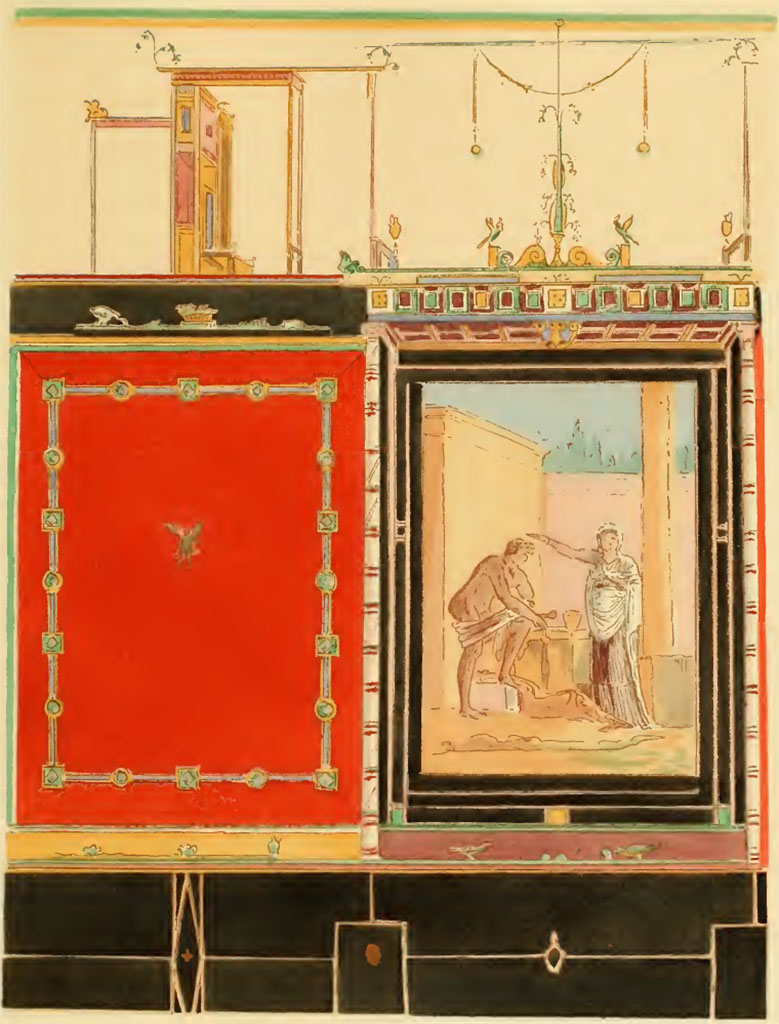
VII.3.29 Pompeii. Undated painting by Pierre
Gusman showing south wall of triclinium.
The central wall painting is now in Naples Museum. Inventory number 120086.
(XVI. Oecus de la maison
de Spurius Mesor (Région IV, 3, 39). Au musée de Naples.)
See Gusman P., 1924. La
Décoration Murale de Pompei. Paris : Morancé, pl. XVI.
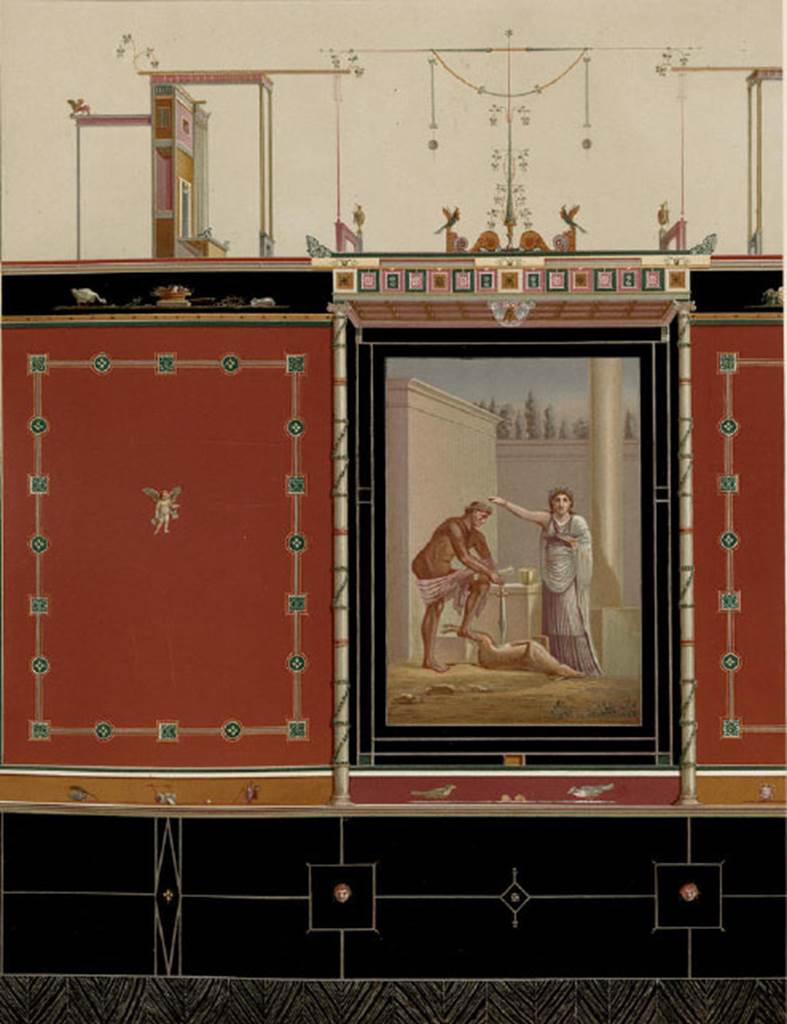
VII.3.29 Pompeii. Drawing published by Mau in 1882 of south wall of the triclinium.
The central wall painting is now in Naples Museum. Inventory number 120086.
According to Sogliano, Heydemann thought the painting was of Hercules.
Helbig proposed that the painting represented Achilles at the altar of Diana.
Brizio recognised the atonement of Orestes after killing his mother.
See Sogliano, A.,
1879. Le pitture murali campane scoverte
negli anni 1867-79. Napoli:
(p. 101 no: 548 – 120085, and p.126 no: 616 – 120086)
See Mau, A. 1882.
Geschichte der Decorativen Wandmalerei in
Pompeji. Berlin: Reimer, Taf. XII.
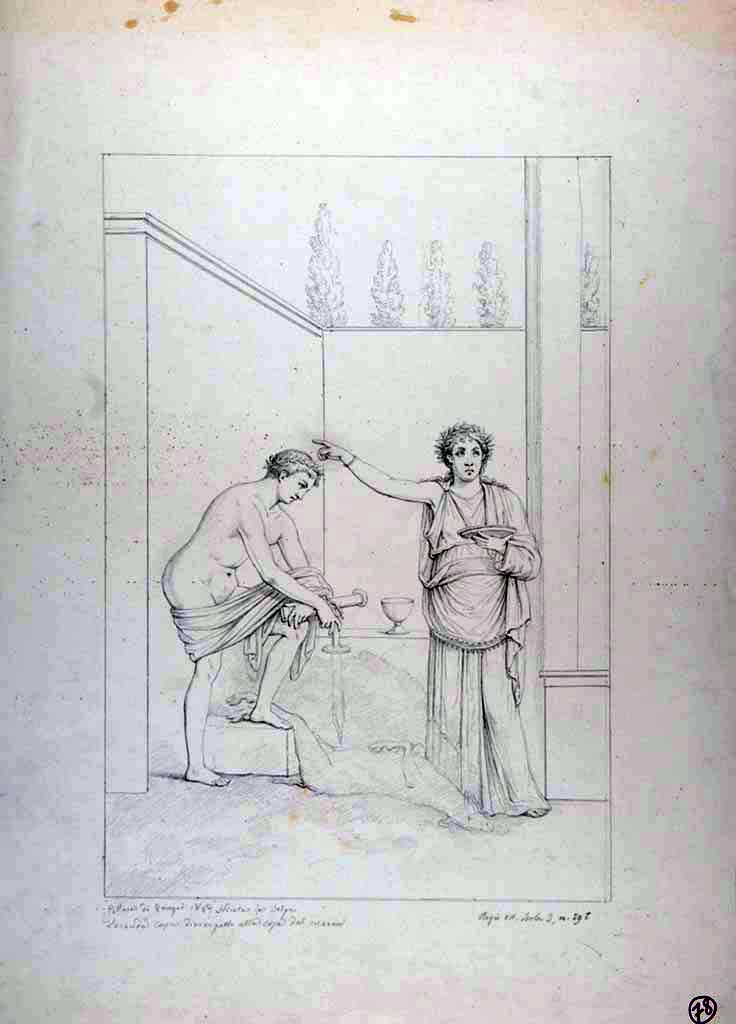
VII.3.29 Pompeii. Drawing by Nicola La Volpe of painting from south wall of triclinium.
Now in Naples Archaeological Museum. Inventory number ADS 565.
Photo © ICCD. https://www.catalogo.beniculturali.it
Utilizzabili alle
condizioni della licenza Attribuzione - Non commerciale - Condividi
allo stesso modo 2.5 Italia (CC BY-NC-SA 2.5 IT)
The original fresco is now in Naples Museum, inventory number 120086.
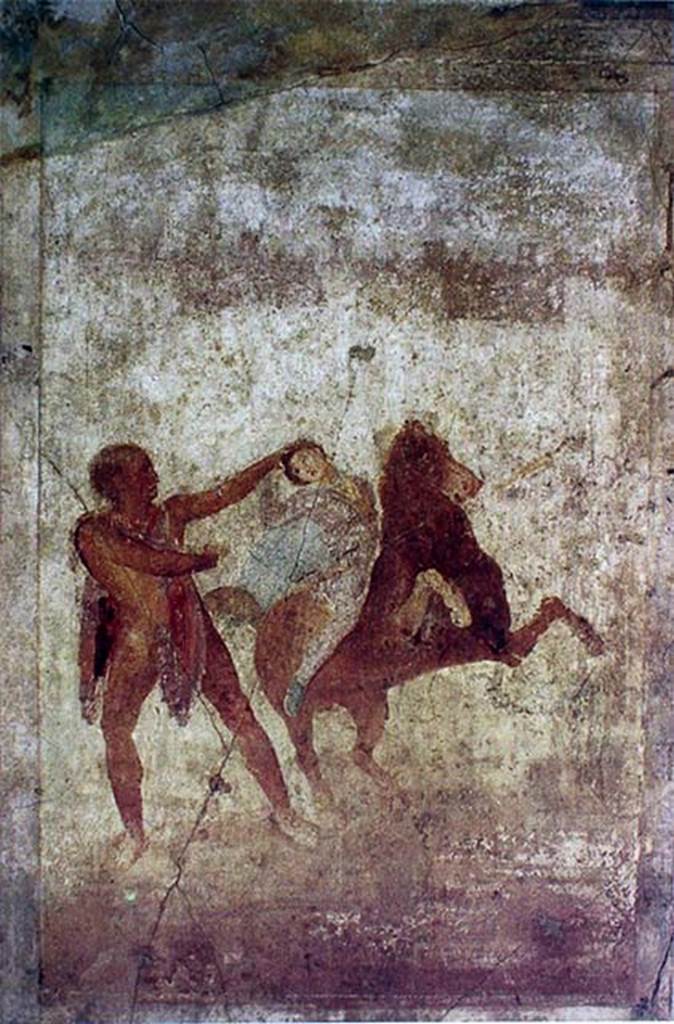
VII.3.29 Pompeii. Painting of a hero and an Amazon on horseback from north wall of the triclinium.
Now in Naples Archaeological Museum. Inventory number 120085.
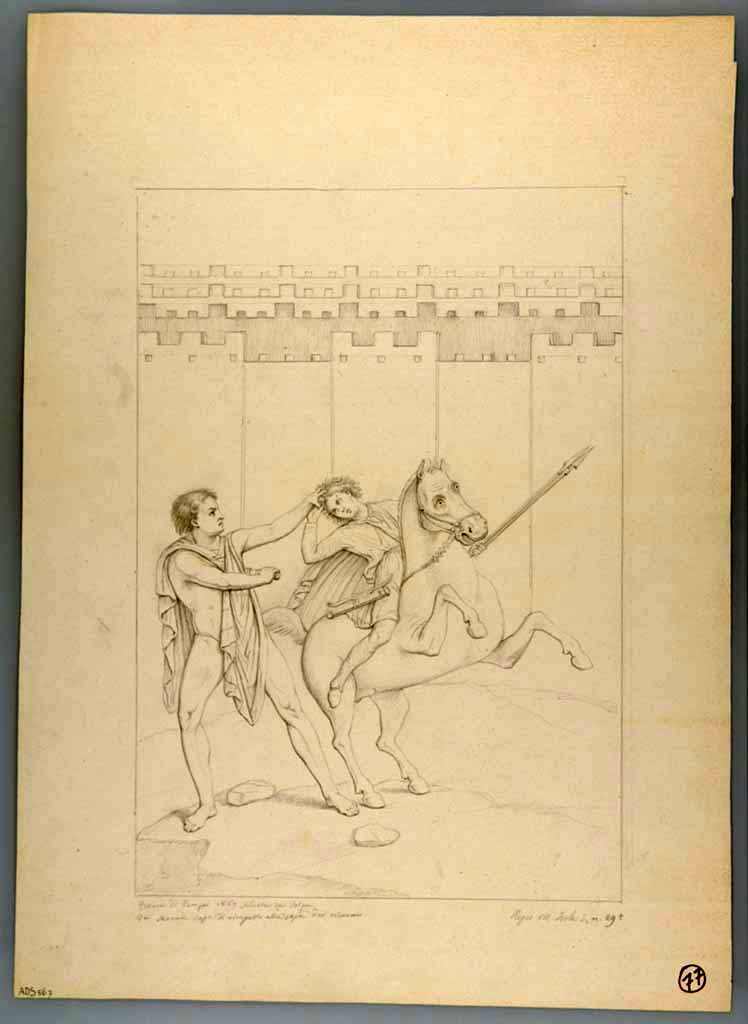
VII.3.29 Pompeii. 1867 drawing by N. La Volpe of painting of a hero and an Amazon on horseback from north wall of the triclinium.
Now in Naples Archaeological Museum. Inventory number ADS 567.
Photo © ICCD. https://www.catalogo.beniculturali.it
Utilizzabili alle
condizioni della licenza Attribuzione - Non commerciale - Condividi
allo stesso modo 2.5 Italia (CC BY-NC-SA 2.5 IT)
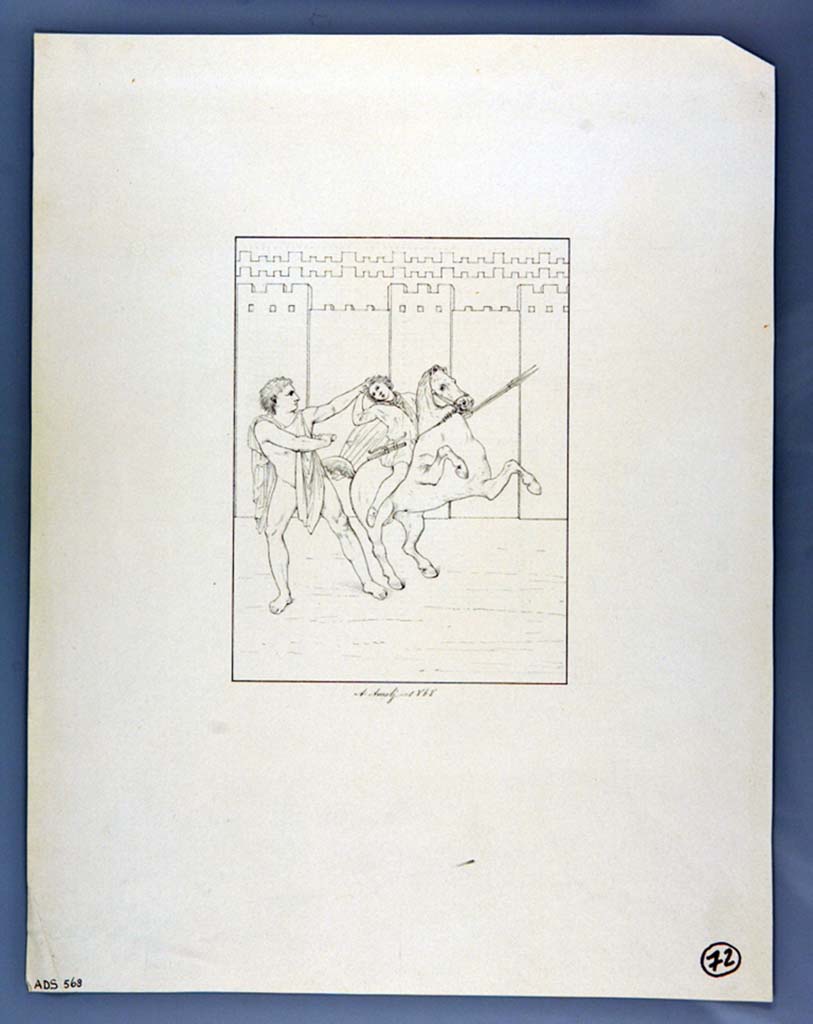
VII.3.29 Pompeii. 1868 drawing by A. Aurelj of painting of a hero and an Amazon on horseback from north wall of the triclinium.
Now in Naples Archaeological Museum. Inventory number ADS 568.
Photo © ICCD. http://www.catalogo.beniculturali.it
Utilizzabili alle
condizioni della licenza Attribuzione - Non commerciale - Condividi
allo stesso modo 2.5 Italia (CC BY-NC-SA 2.5 IT)
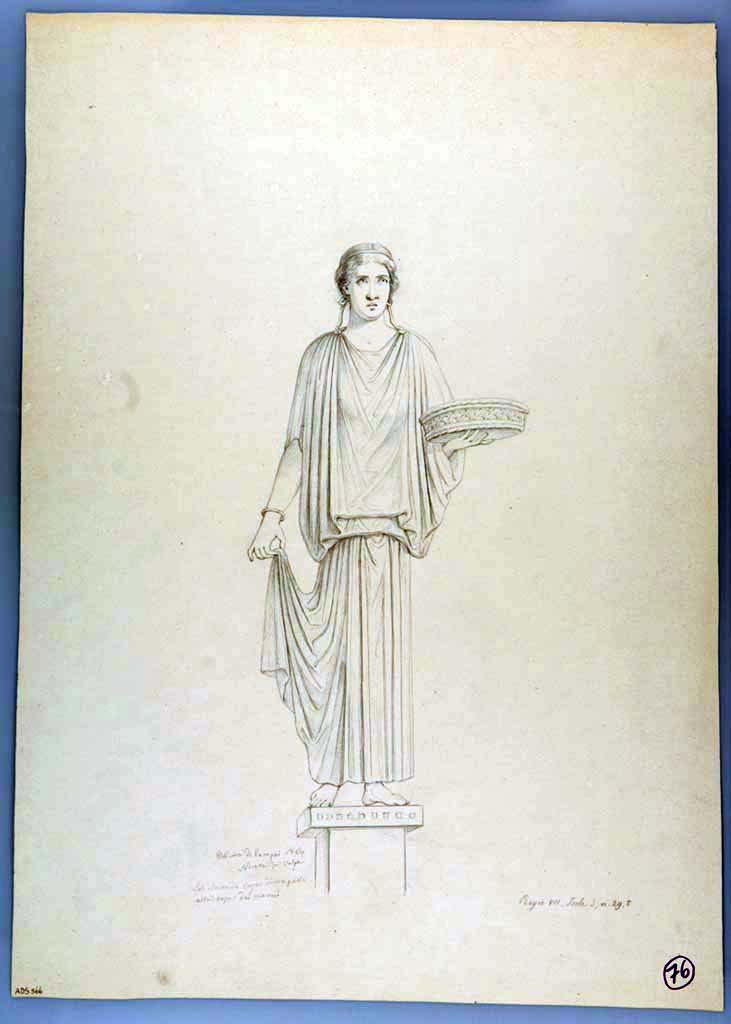
VII.3.29 Pompeii. Drawing by Nicola La Volpe, 1864, of a part of the frieze from west wall
of triclinium.
Now in Naples Archaeological Museum. Inventory number ADS 566.
Photo © ICCD. https://www.catalogo.beniculturali.it/
Utilizzabili alle condizioni della licenza Attribuzione
- Non commerciale - Condividi allo stesso modo 2.5 Italia (CC BY-NC-SA 2.5 IT)
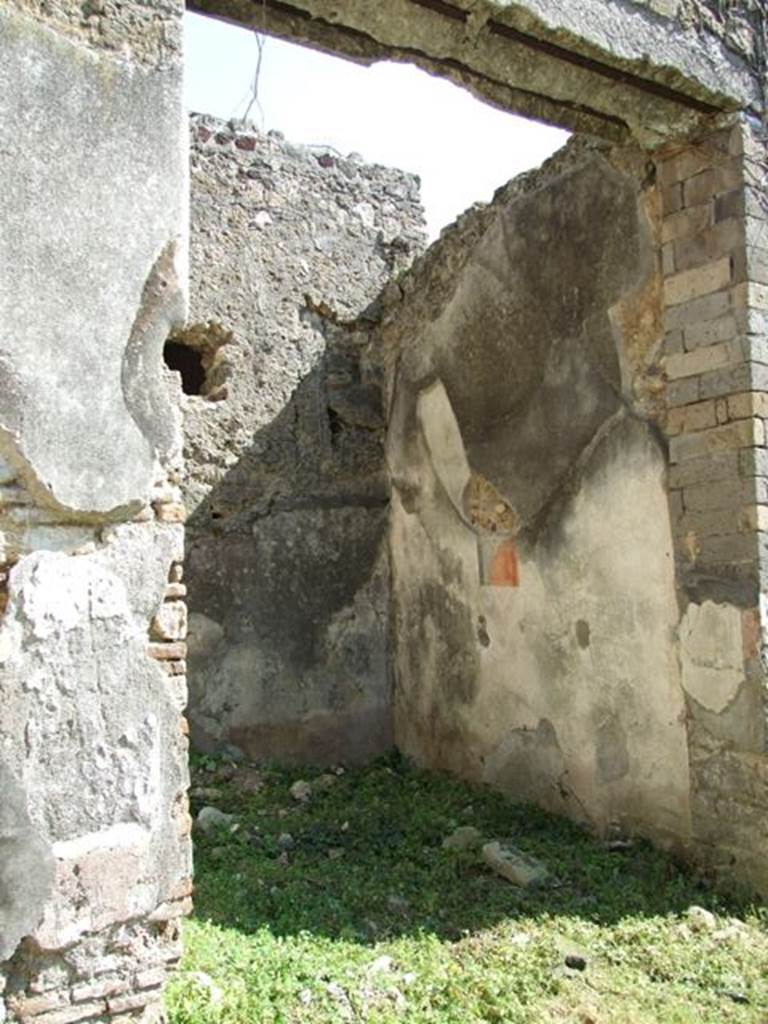
VII.3.29 Pompeii. March 2009. Room 13, ala on east side of atrium, looking towards south wall.
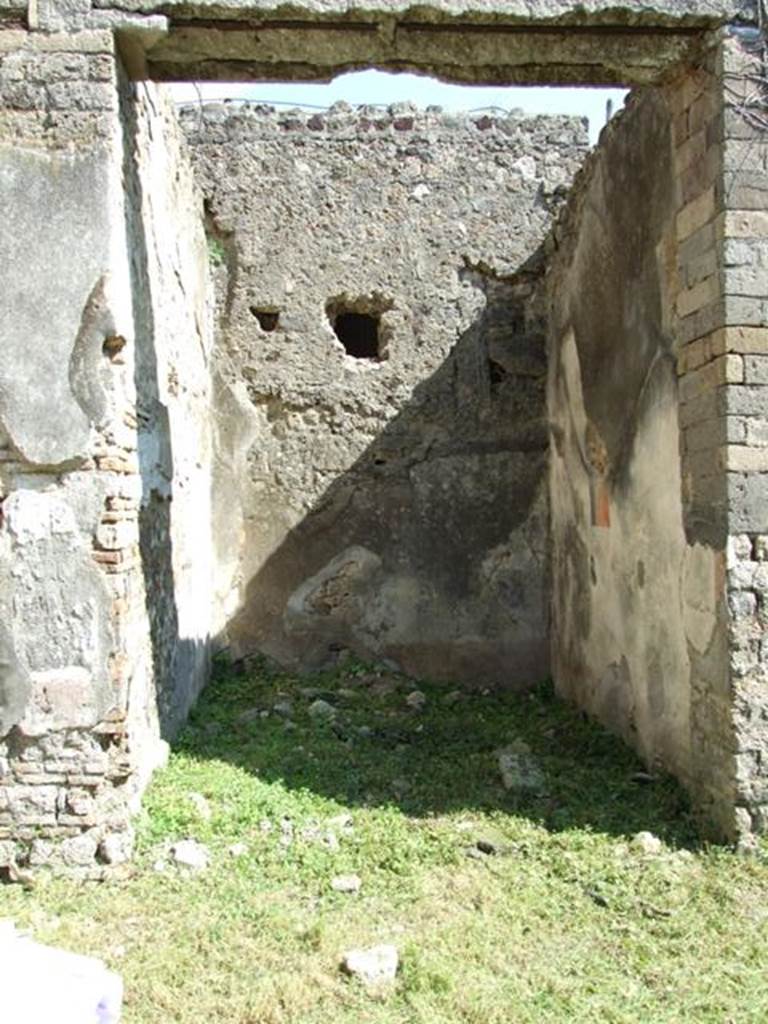
VII.3.29 Pompeii. March 2009. Room 13, ala, looking east.
According to Fiorelli, in the ala were three circular paintings, one with the heads of Bacchus, Silenus and a young Satyr, another with that of a Satyr and Bacchante, and the third with the heads of bearded Hercules crowned with ivy, and Omphale, the club in her left hand and her right hand on the shoulder of the hero.
See Pappalardo, U., 2001. La Descrizione di Pompei per Giuseppe Fiorelli (1875). Napoli: Massa Editore. (p.87).
According to Sogliano, in the eastern ala, on the left side, were painted heads of a crowned Satyr looking towards a Bacchante crowned with reeds/canes who had a very melancholy expression.
See Sogliano, A., 1879. Le pitture murali campane scoverte negli anni 1867-79. Napoli: Giannini. (p.49, no.232).
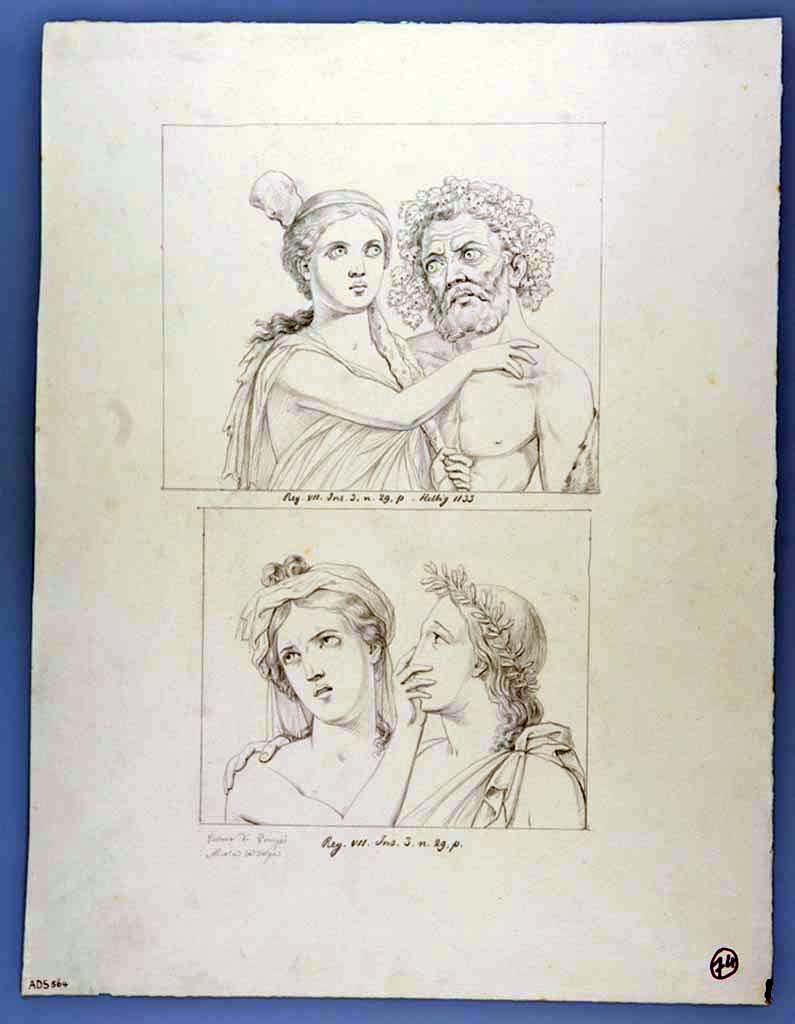
VII.3.29 Pompeii. Room 13, ala on east side of atrium. South wall. Drawing by Nicola La Volpe of two vignettes;
The first shows the bust of a bearded Hercules, crowned with vine leaves, who looks towards Omphale with the cudgel in her left hand, supporting her right hand on the hero's shoulder;
In the vignette beneath a maiden (maenad?) with a hand near to the mouth of a youth who wears a crown of olive branch, and he in turn puts his arm on her shoulders.
Now in Naples Archaeological Museum. Inventory number ADS 564.
Photo © ICCD. https://www.catalogo.beniculturali.it
Utilizzabili alle
condizioni della licenza Attribuzione - Non commerciale - Condividi
allo stesso modo 2.5 Italia (CC BY-NC-SA 2.5 IT)
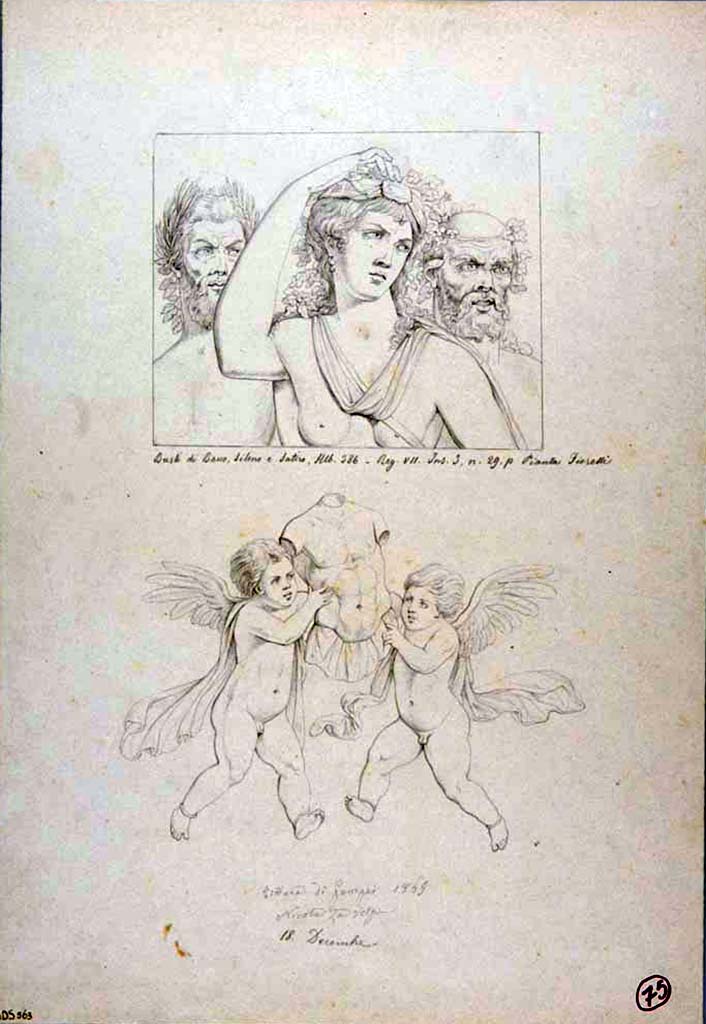
VII.3.29 Pompeii. Room 13, ala on east side of atrium. South wall.
18th December 1865 drawing by Nicola La Volpe of two vignettes.
In the first are depicted the busts of three characters of the Bacchic cortege: in the centre is a Maenad with bare breasts who holds the right arm on the head, at whose shoulders are, on the left, a pine-crowned Satyr and, on the right, Silenus crowned with ivy.
In the second panel are depicted two winged cupids in flight, with bracelets at the ankles, and they carry, between them, a large golden breastplate.
Now in Naples Archaeological Museum. Inventory number ADS 563.
Photo © ICCD. https://www.catalogo.beniculturali.it
Utilizzabili alle
condizioni della licenza Attribuzione - Non commerciale - Condividi
allo stesso modo 2.5 Italia (CC BY-NC-SA 2.5 IT)
Helbig
identified the heads as Bacchus, Silenus and Satyr.
The lower
drawing, from a painted panel in the atrium, was of two cupids carrying a large
golden breast-plate.
The
drawings show paintings that are now totally faded.
See Helbig, W., 1868. Wandgemälde der vom Vesuv verschütteten Städte Campaniens. Leipzig: Breitkopf und Härtel, (386).
Kuivalainen describes –
A composition of three busts, heads slightly turned to their left. The one in the middle is an effeminate youth wearing a chlamys, which forms an arch on his naked chest; his long and curly hair is tied with a taenia, which he touches with the delicate fingers of his right hand. On the youth’s left stands a sprightly, bearded satyr with a pine wreath on his head. On the right side stands Silenus with a ribbon and leaves at his temples. All three are intensively looking to their left.
He comments –
The effeminate Bacchus had, according to Helbig, a thyrsus across his chest, while La Volpe depicted him with the arching sleeve of a cloak and a leather band. This gesture by Bacchus appears every now and then in Pompeian wall paintings, notwithstanding the posture of his bodily frame.
See Kuivalainen, I., 2021. The
Portrayal of Pompeian Bacchus. Commentationes Humanarum Litterarum 140. Helsinki: Finnish Society of Sciences
and Letters, (F17, p.172).
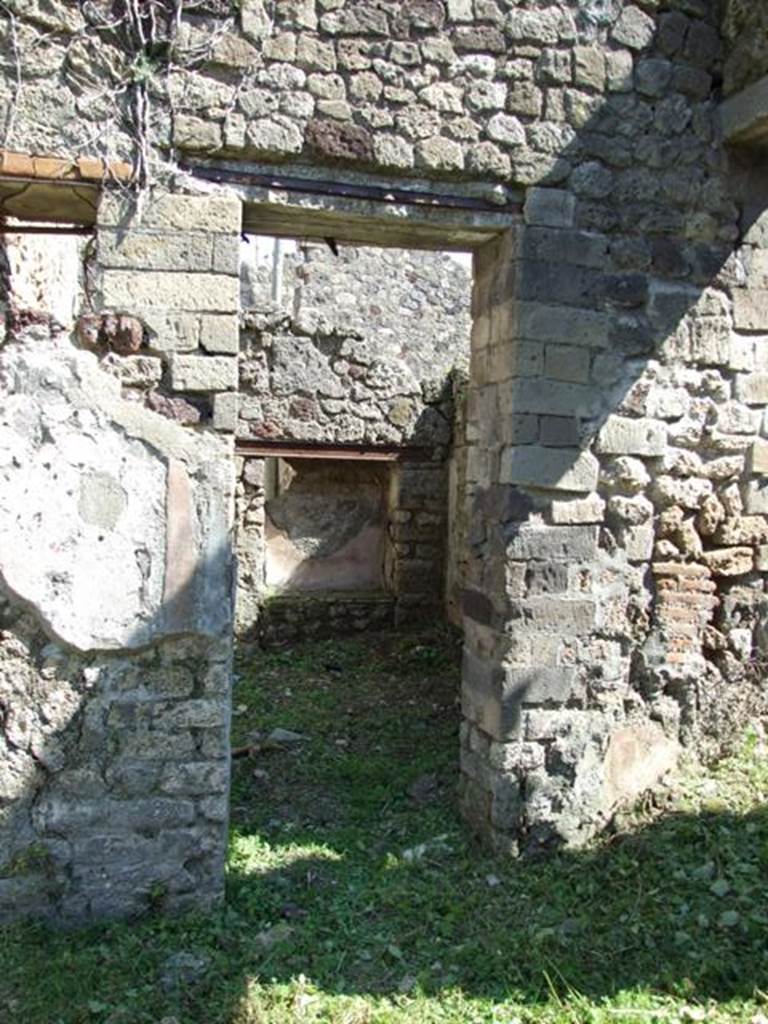
VII.3.29 Pompeii. March 2009. Doorway to room 14, cubiculum.
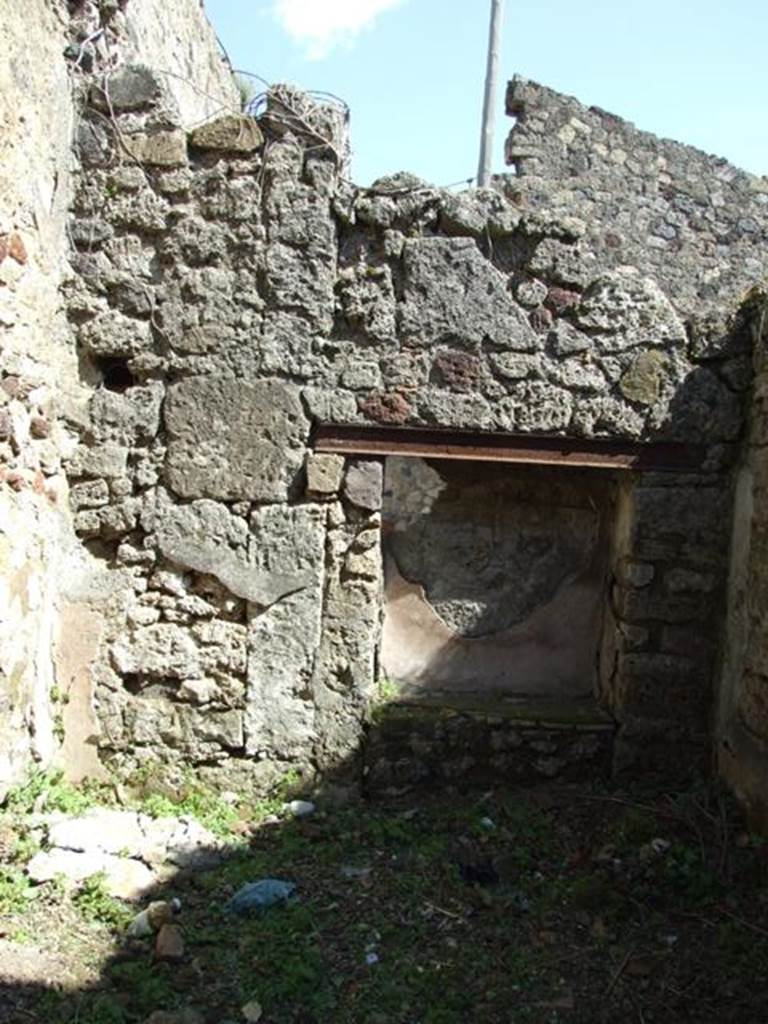
VII.3.29 Pompeii. March 2009. Room 14, cubiculum. East wall with recess.
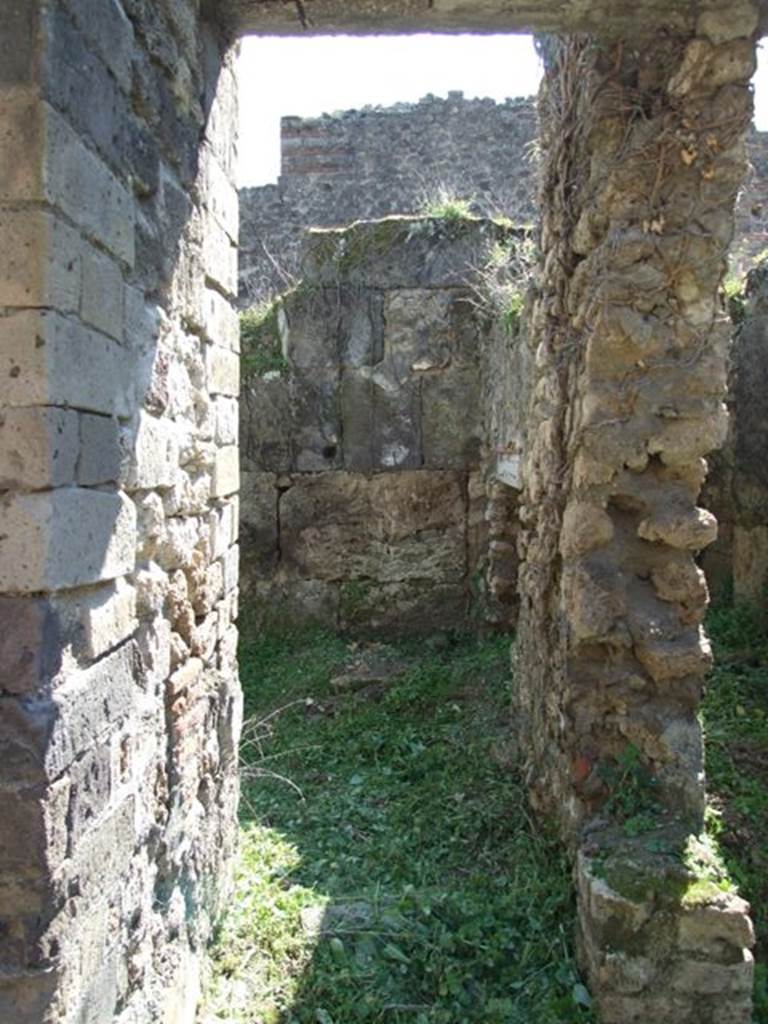
VII.3.29 Pompeii. March 2009. Doorway to room 15, kitchen and latrine. Looking south.
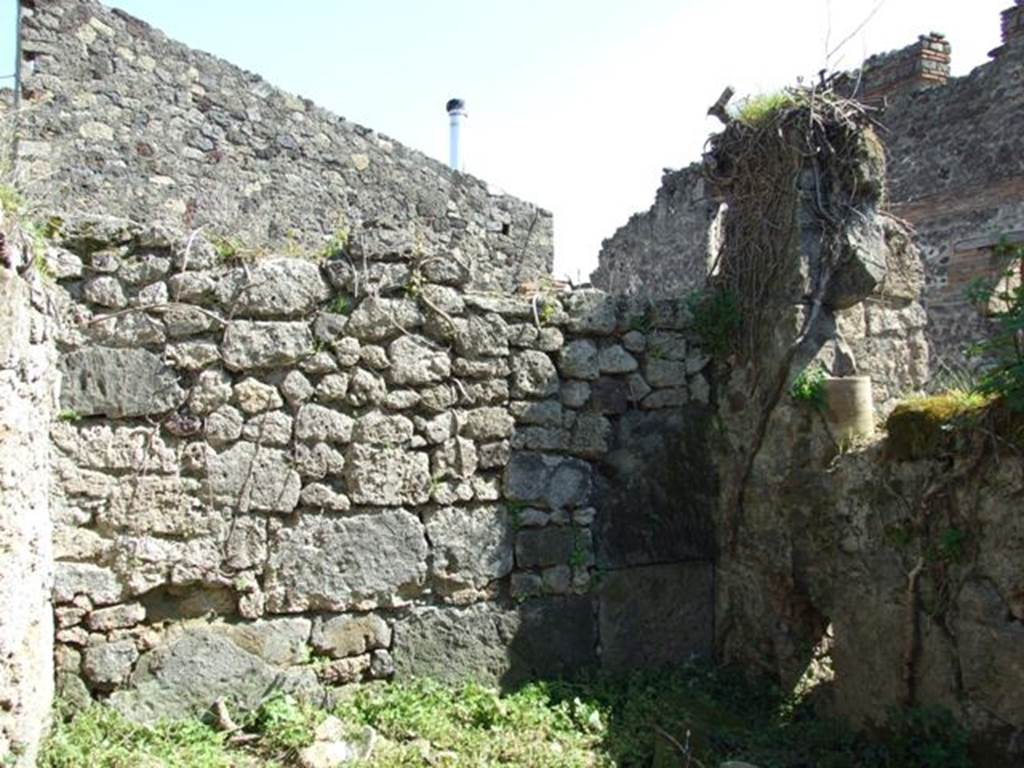
VII.3.29 Pompeii. March 2009. Room 15, east wall of kitchen, with downpipe in south-east corner.
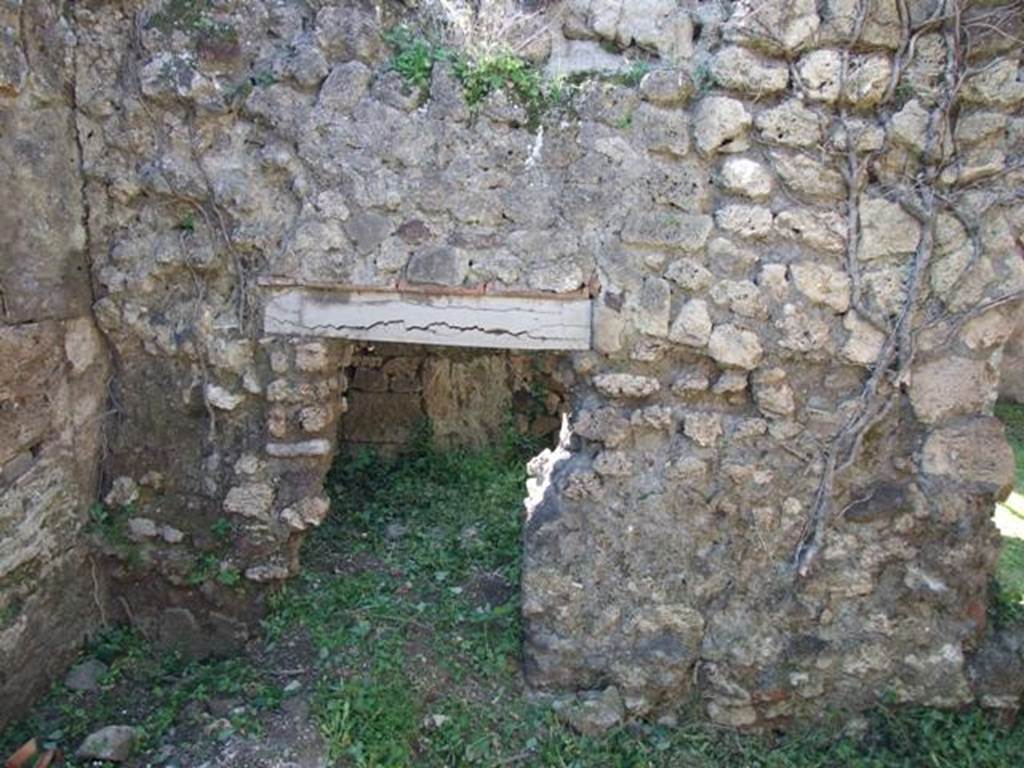
VII.3.29 Pompeii. March 2009. Room 15, kitchen and latrine. Small door to area under the stairs to upper floor.
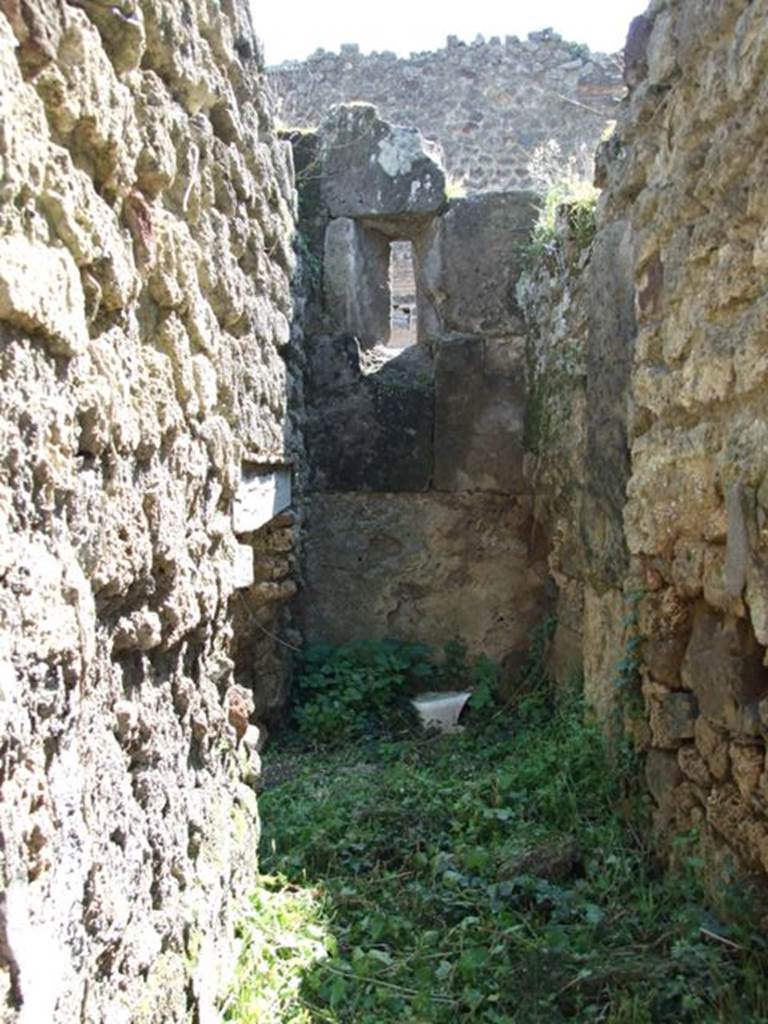
VII.3.29 Pompeii. March 2009. Room 16, in foreground, stairs to upper floor.
In background, small door from kitchen to area under stairs.
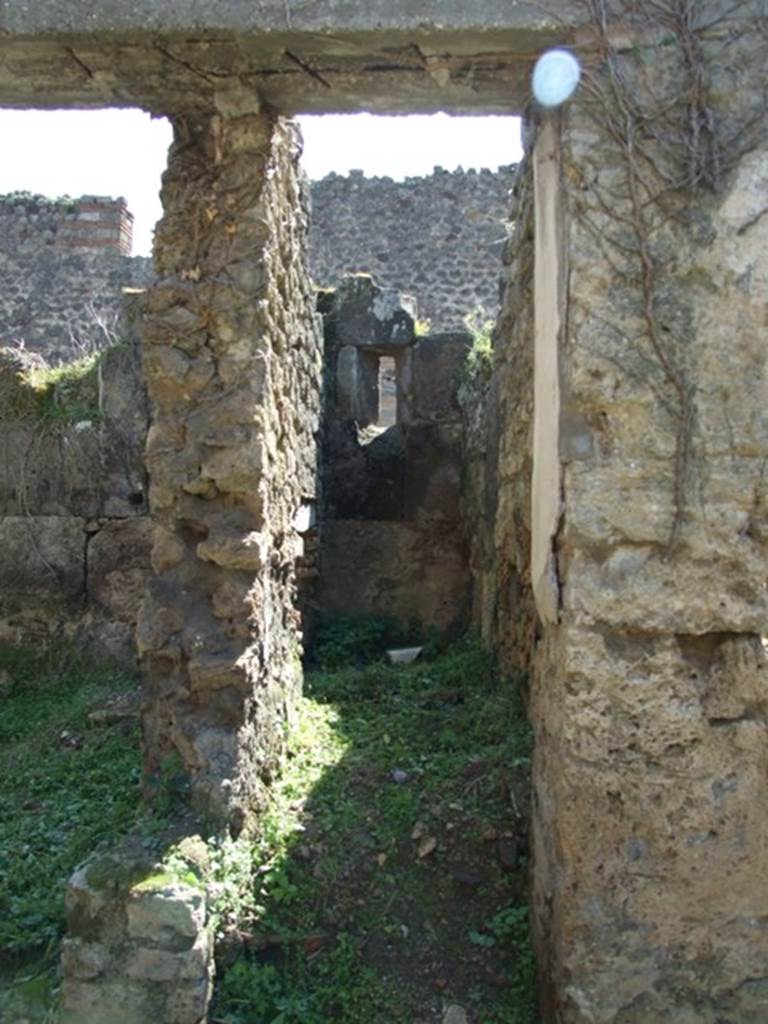
VII.3.29 Pompeii. March 2009. Doorway to room 16, stairs to upper floor.