VII.3.11 Pompeii. Casa di Ercole Fanciullo.
Entrance to dwelling house, with steps to upper floor.
Linked to VII .3.12, VII .3.13, VII .3.14,
VII.3.15 and VII.3.17.
Excavated 1837, 1843, 1849 and 1867. (Strada della Fortuna 26).
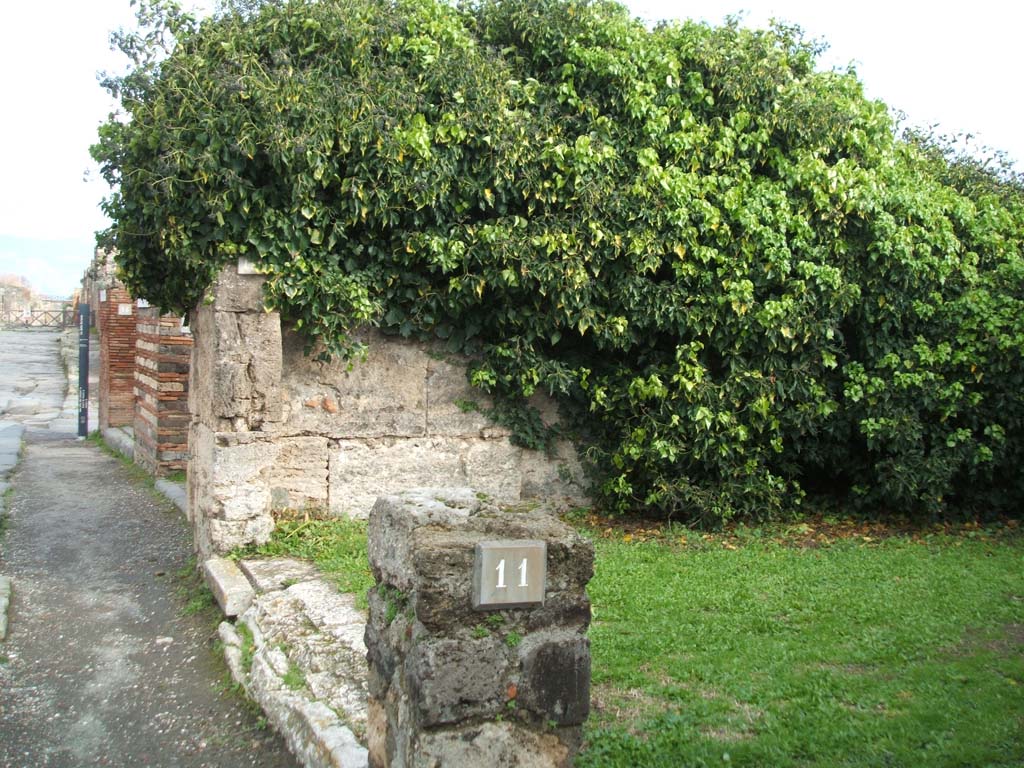
VII.3.12 and VII.3.11 Pompeii. December 2004. Looking east along Via della Fortuna.
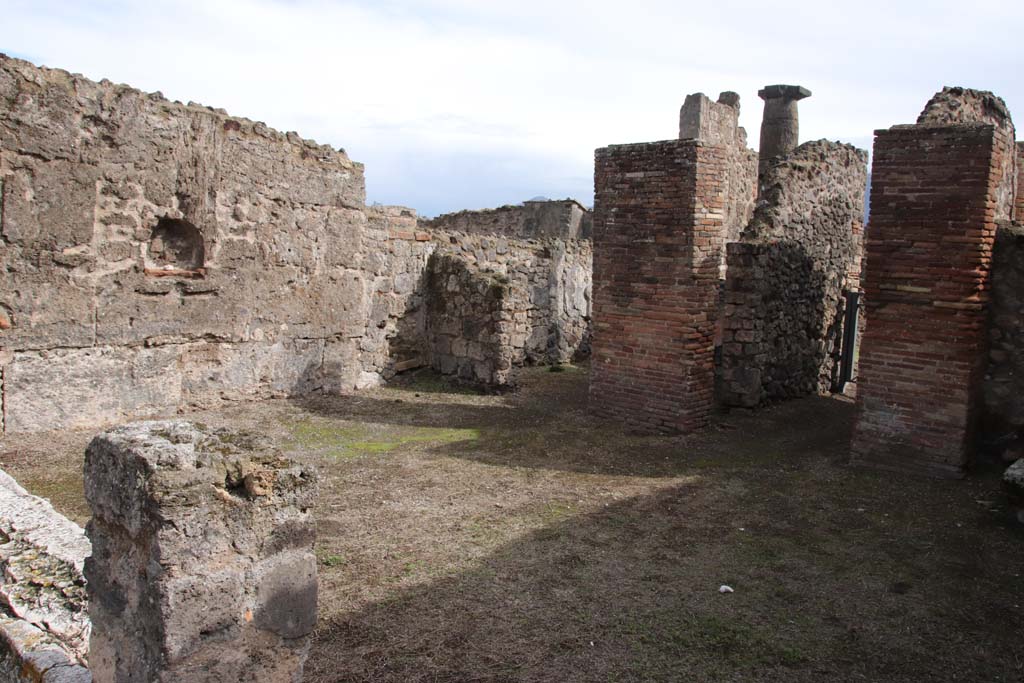
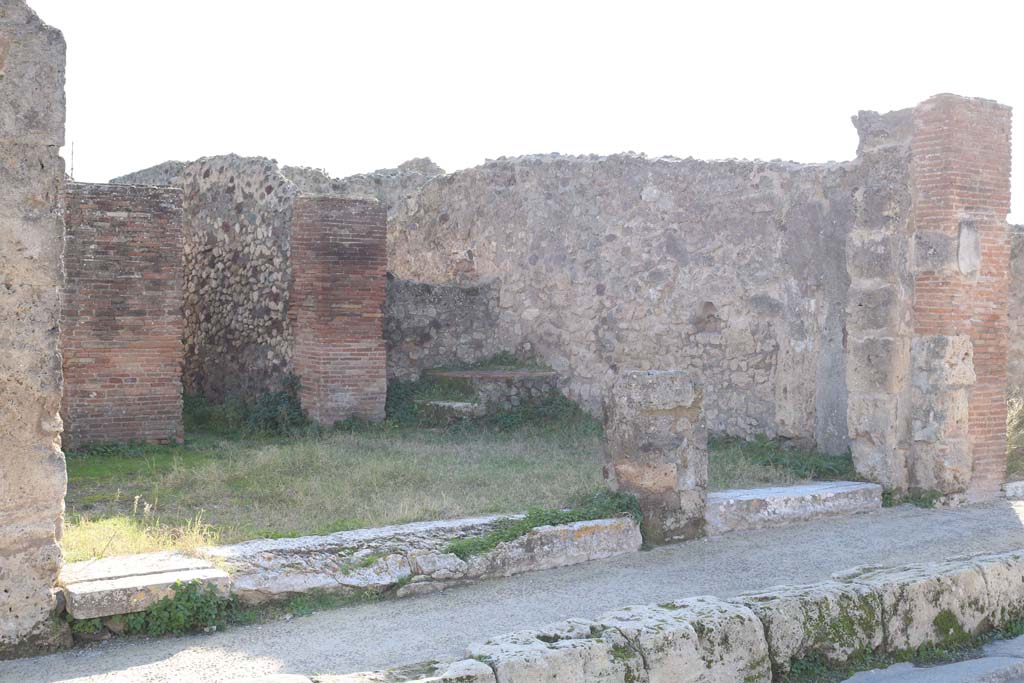
VII.3.12 on left and VII.3.11 Pompeii. December 2018. Looking south-west from Via della Fortuna. Photo courtesy of Aude Durand.
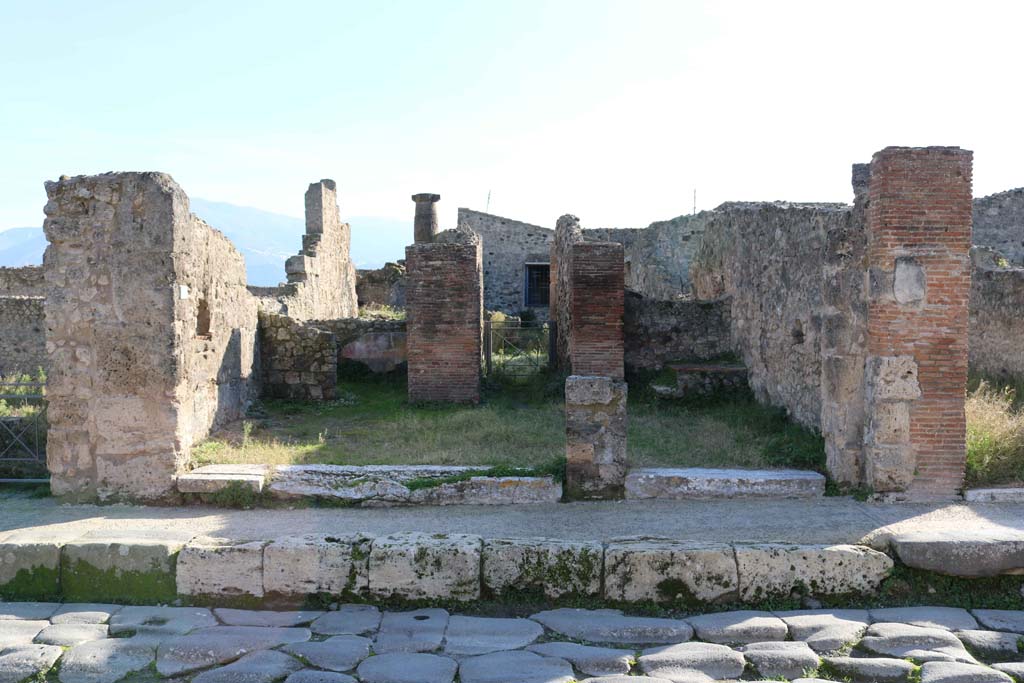
VII.3.12 on left and VII.3.11, on right, Pompeii. December 2018. Looking south to both entrances. Photo courtesy of Aude Durand.
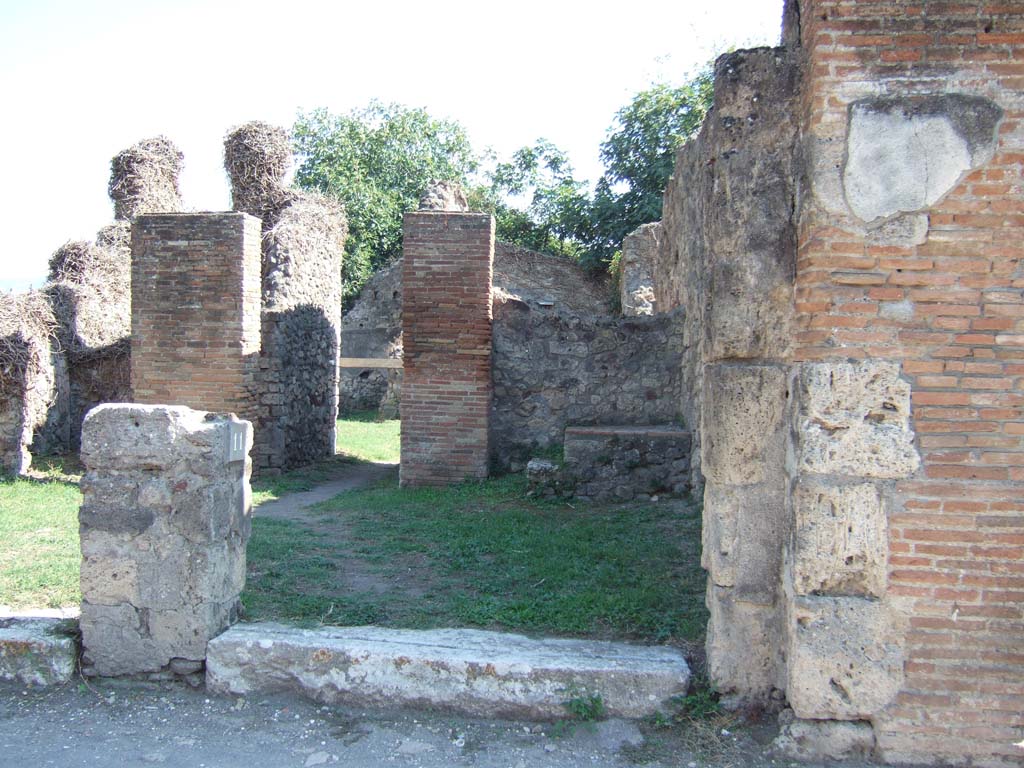
VII.3.11 Pompeii. September 2005. Looking south at entrance with steps to upper floor.
According to Helbig, on the outside wall between Strada della Fortuna 26 and 25, (VII.3.11 and VII.3.10),
on the right, there was a faint trace of a painted Lar with a situla (a bronze vessel).
See Helbig, W., 1868. Wandgemälde der vom Vesuv verschütteten Städte Campaniens. Leipzig: Breitkopf und Härtel. (no: 93)
According to Frohlich, the painting of a Lar with situla was
found on the façade, exact position unknown. Now destroyed.
See Fröhlich, T., 1991. Lararien und Fassadenbilder in den Vesuvstädten. Mainz: von Zabern. (p. 325, F47).
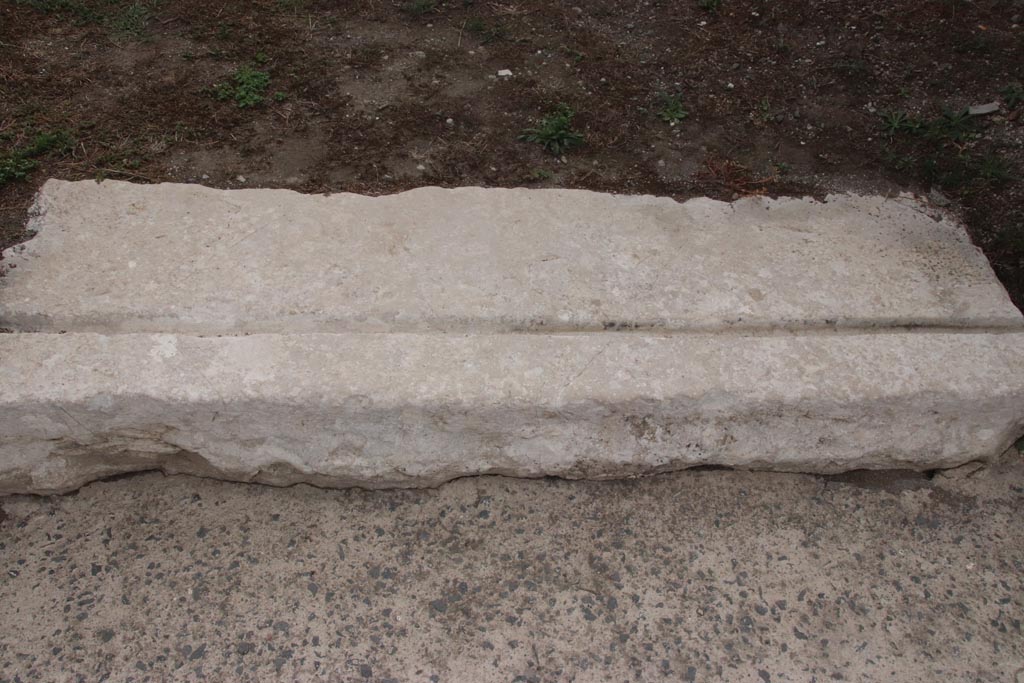
VII.3.11 Pompeii. October
2023. Entrance threshold or sill. Photo courtesy of Klaus Heese.
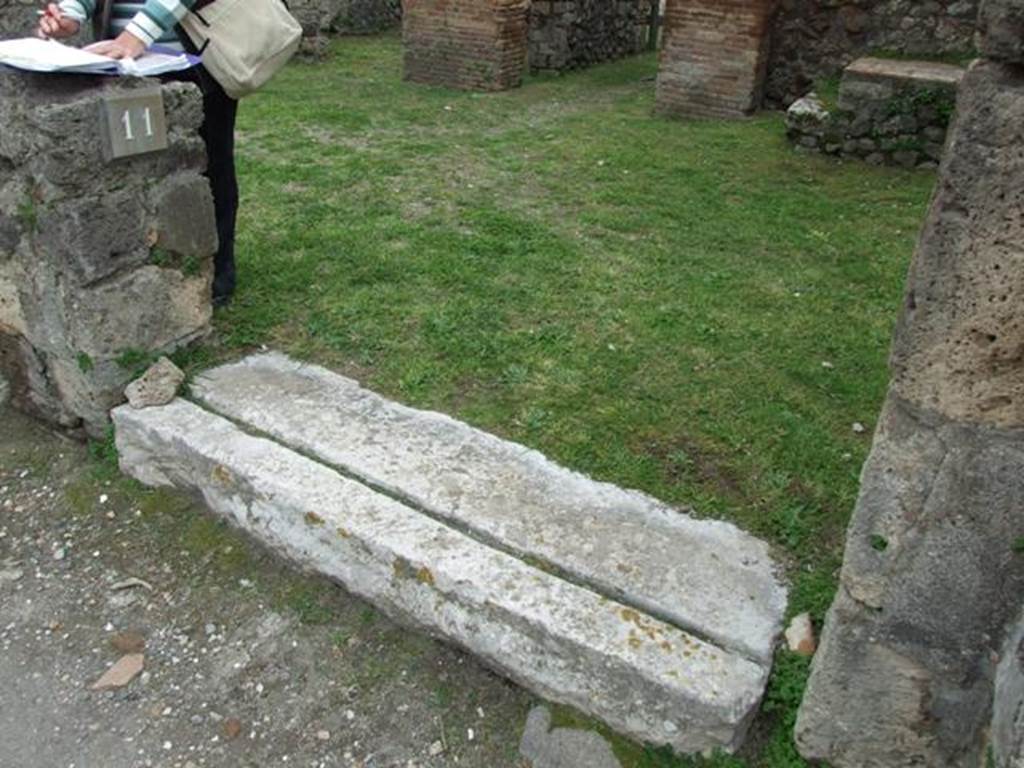
VII.3.11 Pompeii. March 2009. Entrance threshold or sill.
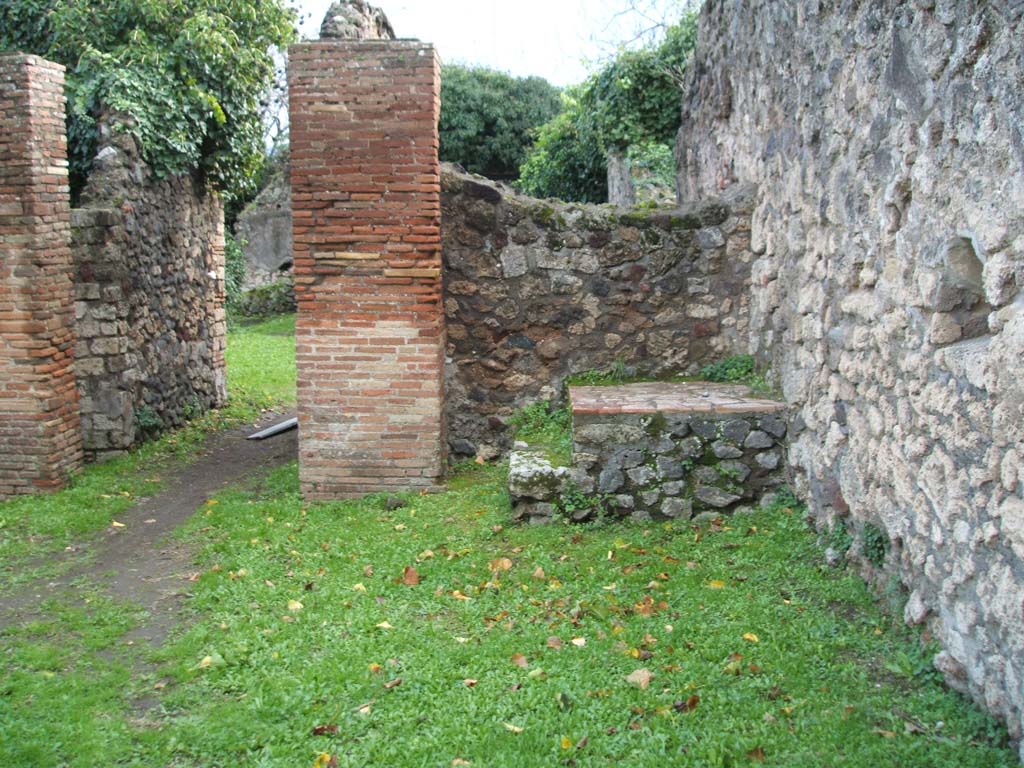
VII.3.11 Pompeii. December 2004. House entrance room, with steps to upper floor.
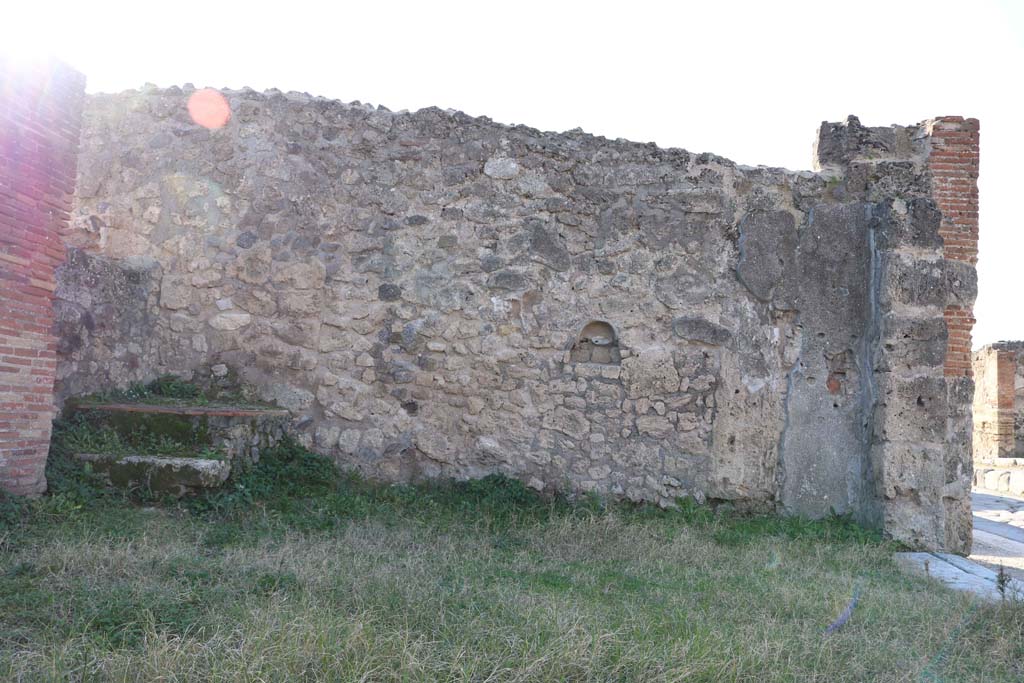
VII.3.11 Pompeii. December 2018. Looking towards west wall with niche. Photo courtesy of Aude Durand.
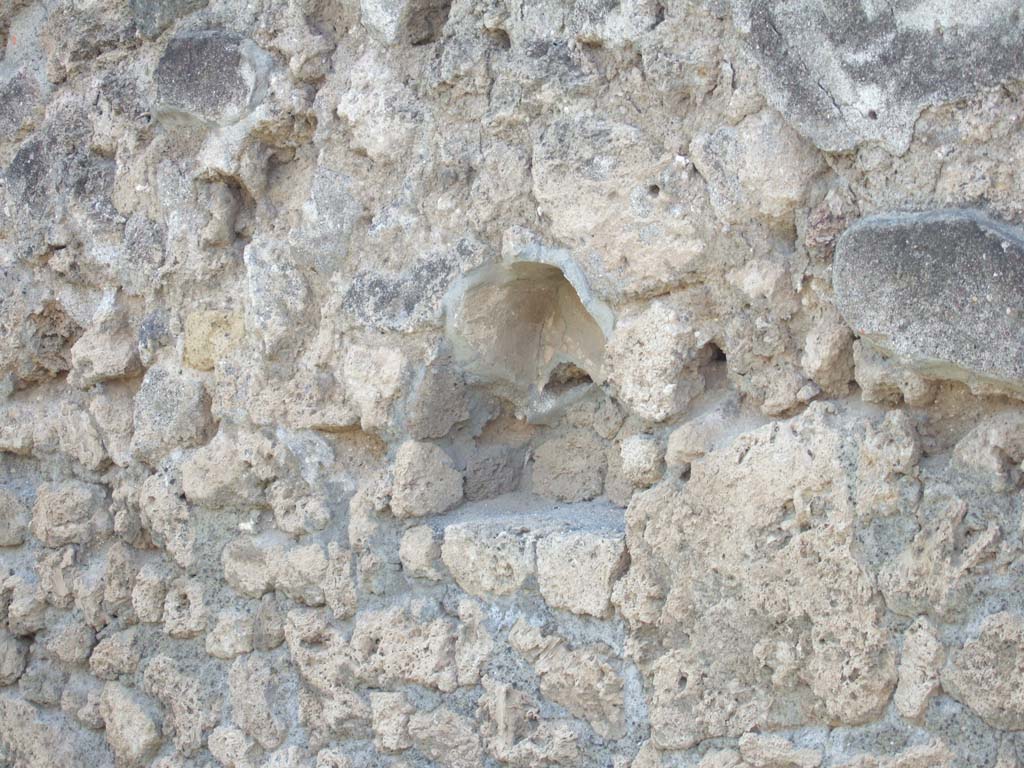
VII.3.11 Pompeii. May 2006. Niche in west wall.
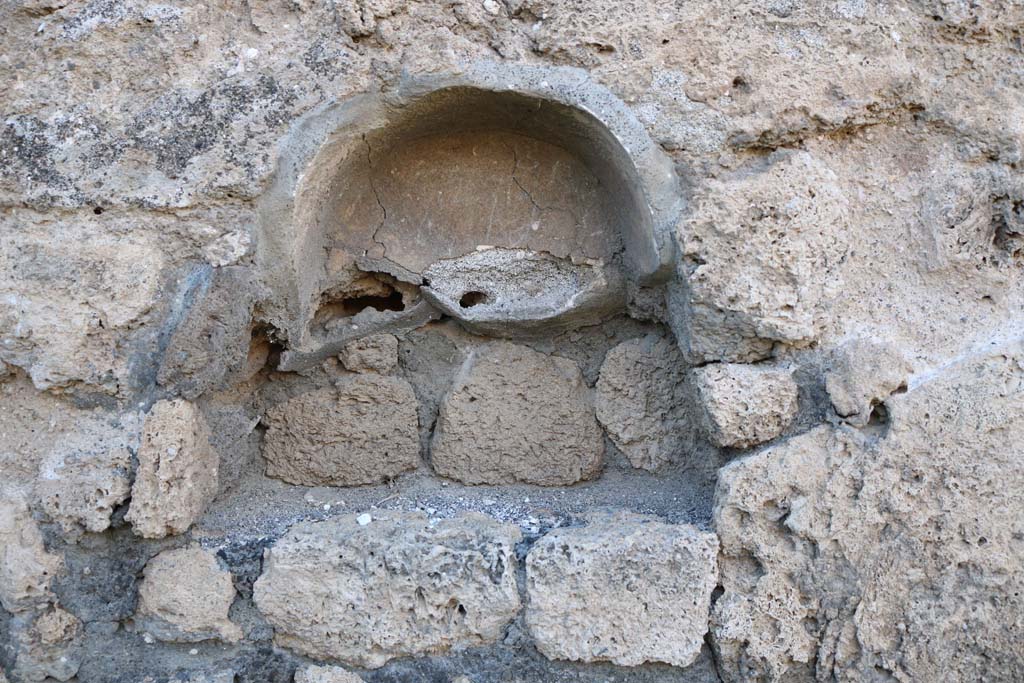
VII.3.11 Pompeii. December 2018. West wall with niche. Photo courtesy of Aude Durand.
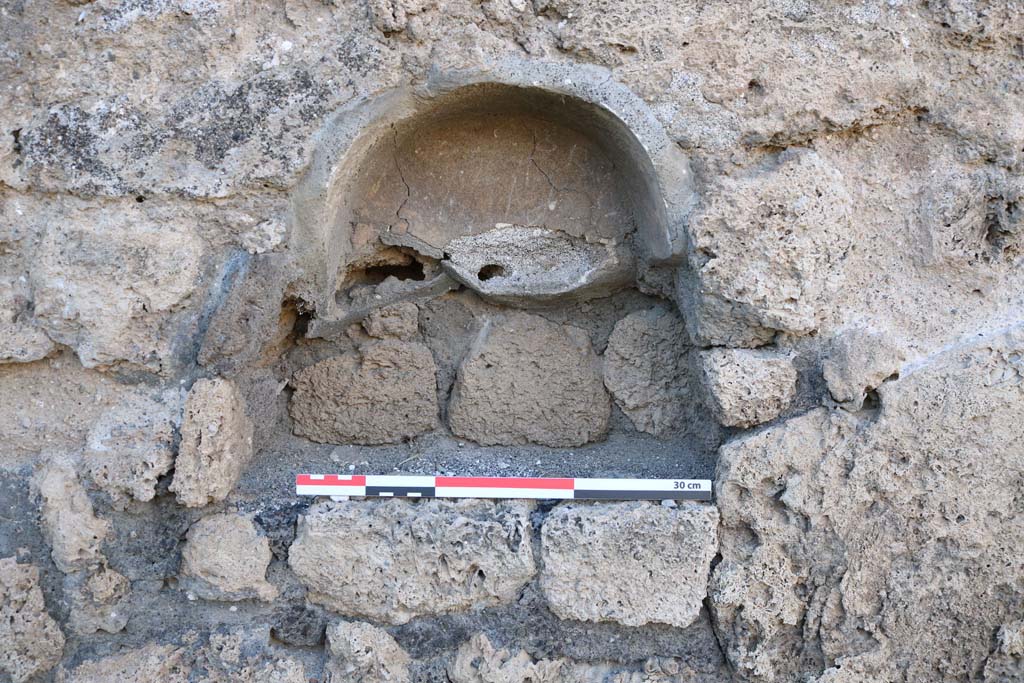
VII.3.11 Pompeii. December 2018. Detail of niche in west wall. Photo courtesy of Aude Durand.
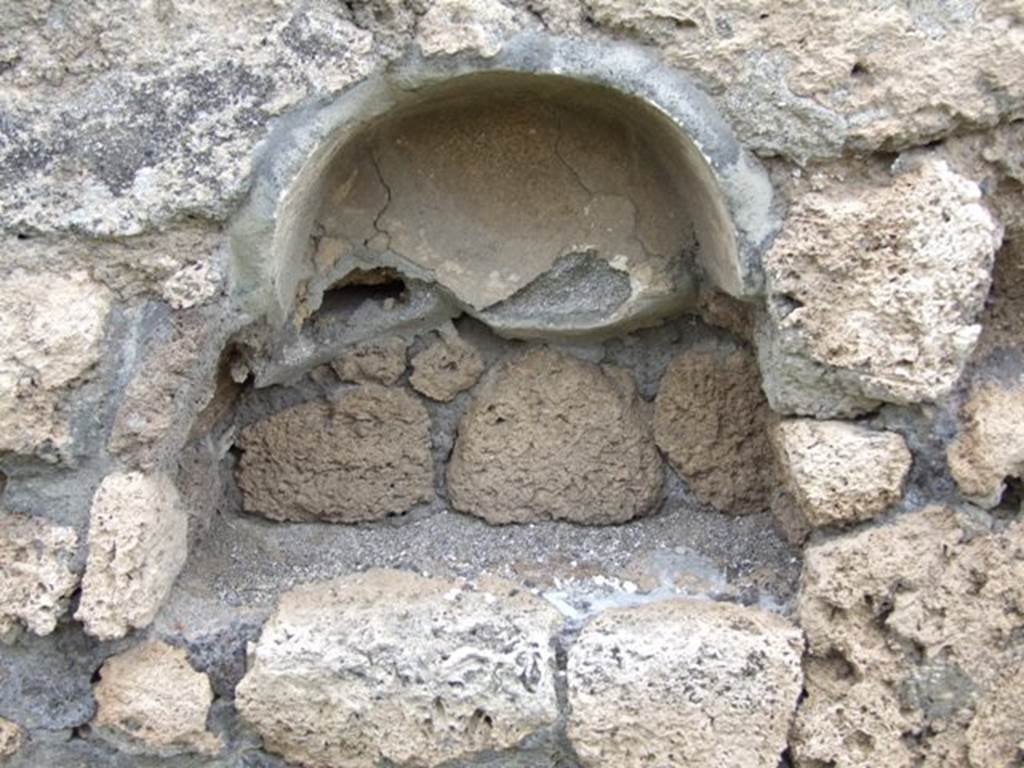
VII.3.11 Pompeii. March 2009. Arched niche in west wall of house entrance room.
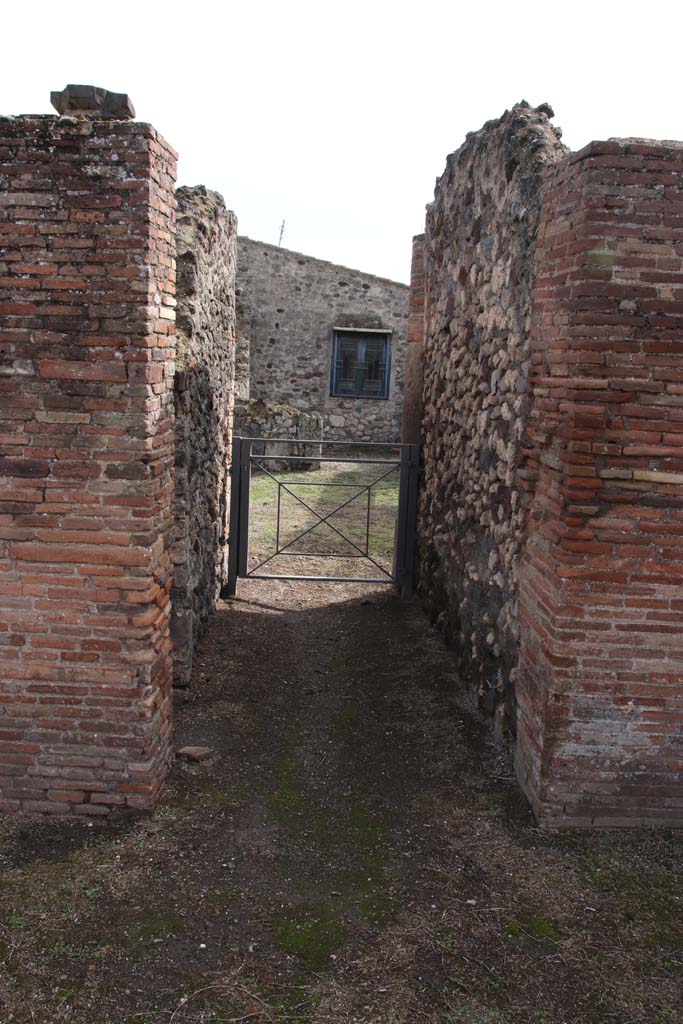
VII.3.11 Pompeii. October 2020.
Looking south along corridor. Photo courtesy of Klaus Heese.
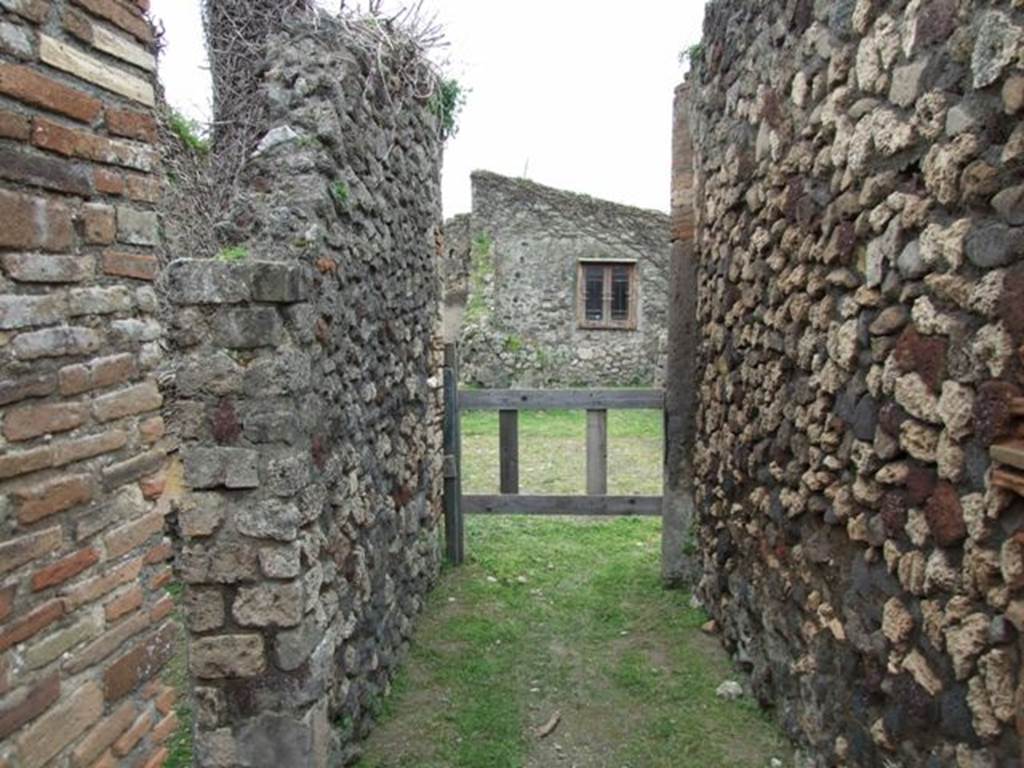
VII.3.11 Pompeii. March 2009. Corridor, looking south to atrium.
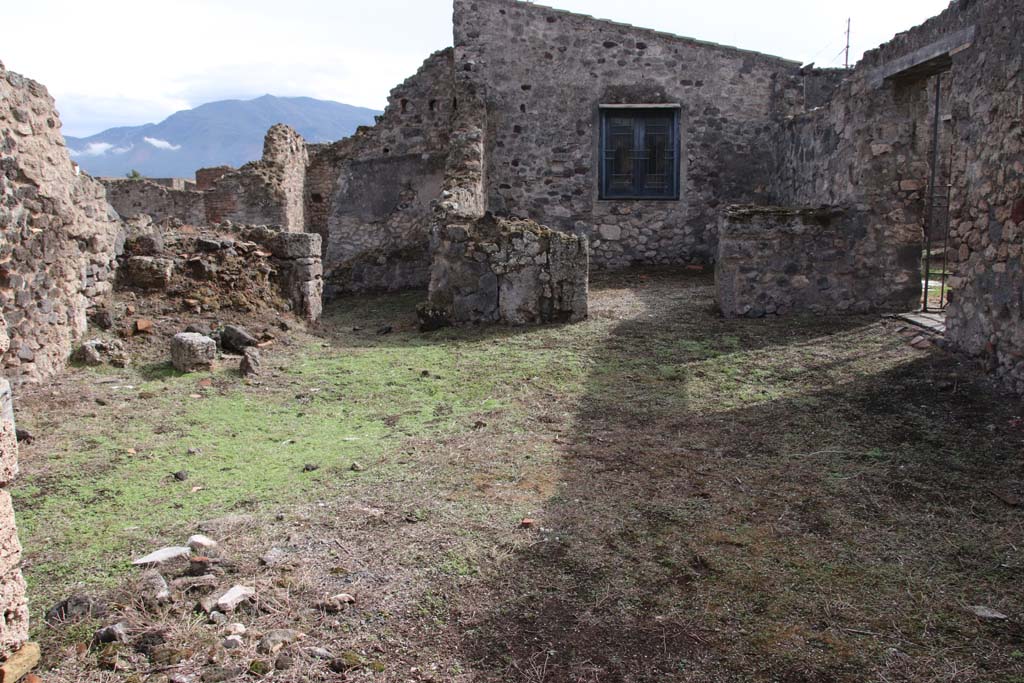
VII.3.11 Pompeii. October 2020.
Looking south across atrium. Photo courtesy of Klaus Heese.
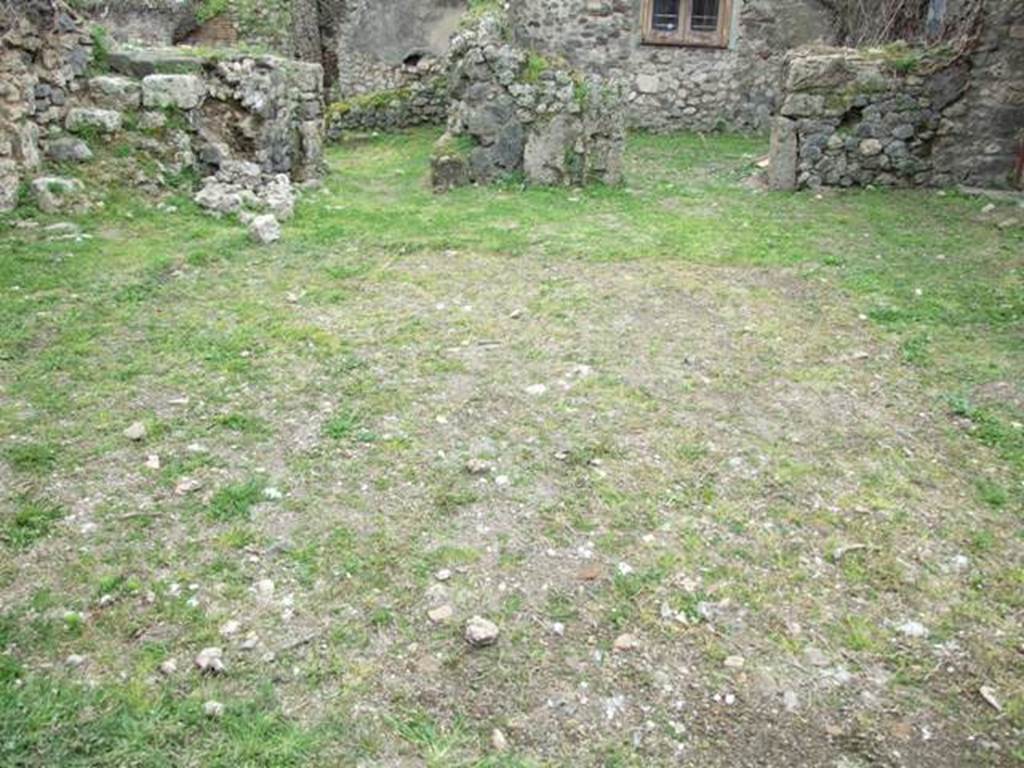
VII.3.11 Pompeii. March 2009. Atrium floor, site of impluvium.
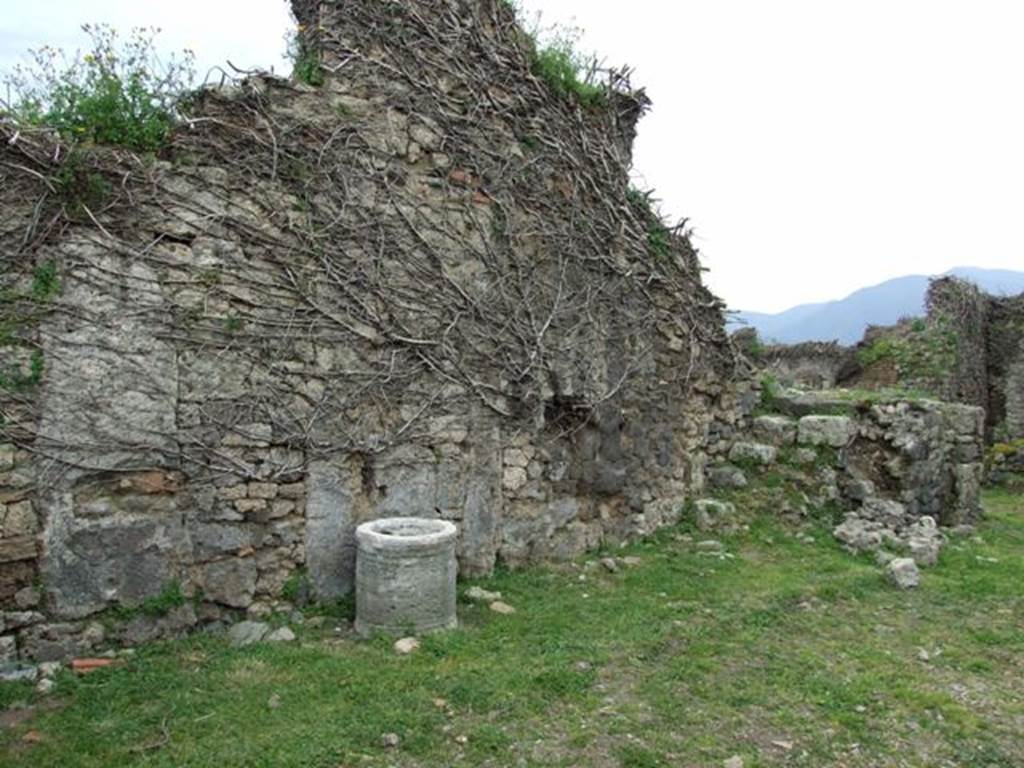
VII.3.11 Pompeii. March 2009. East wall of atrium.
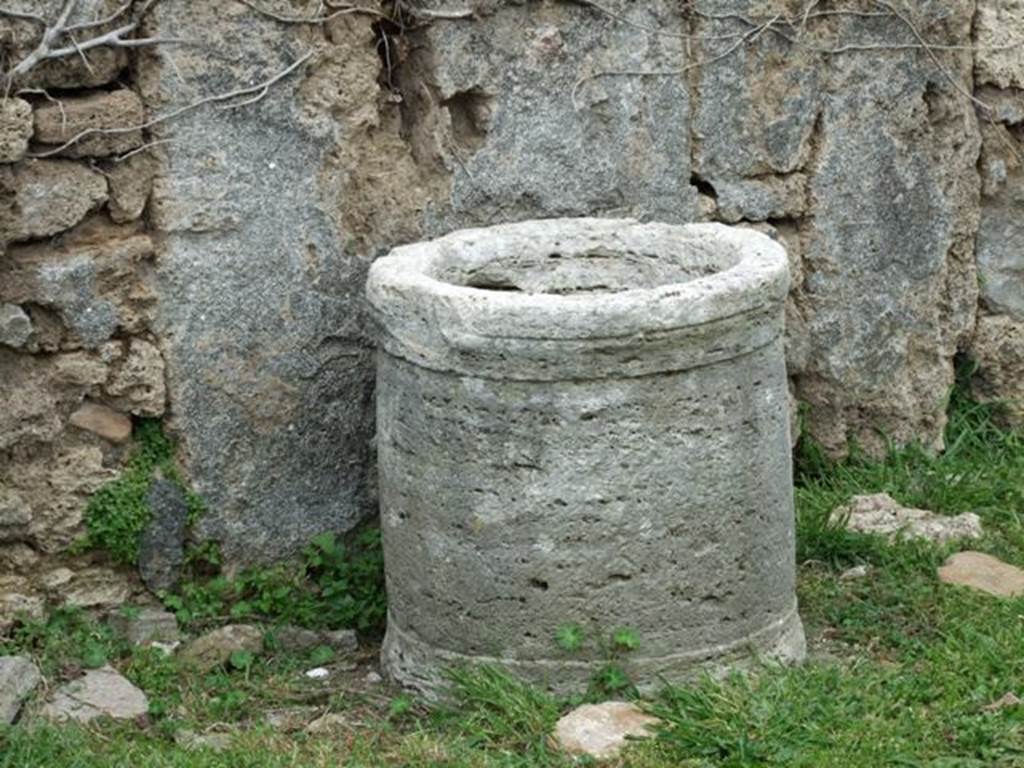
VII.3.11 Pompeii. March 2009. Puteal near east wall of atrium.
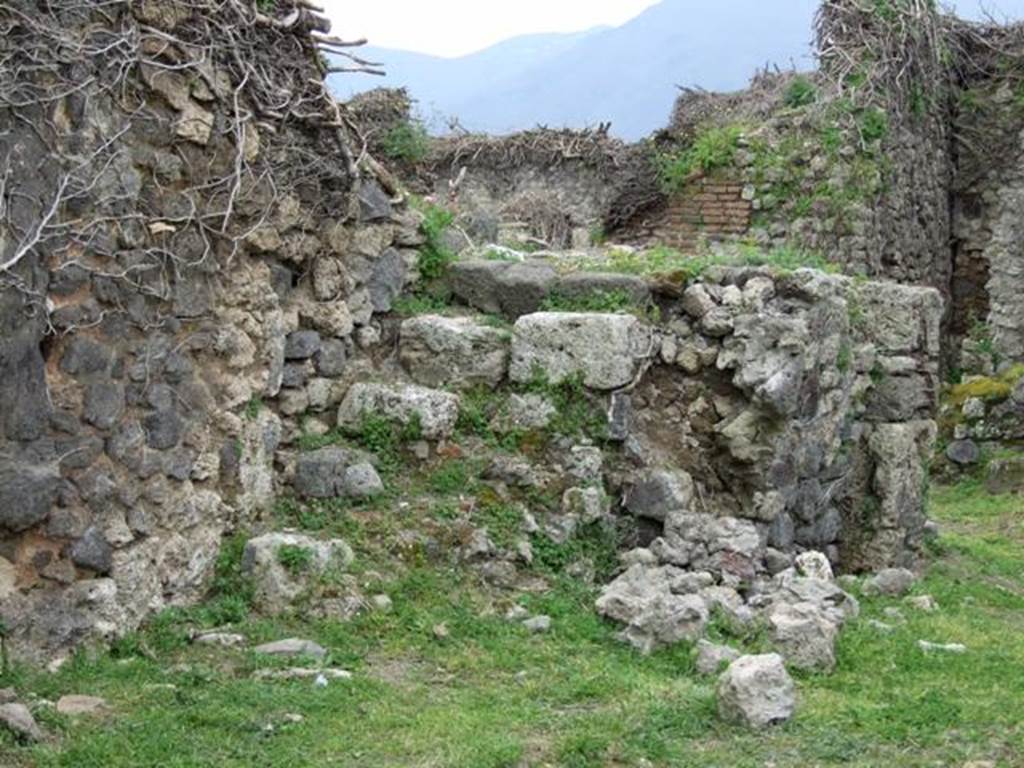
VII.3.11 Pompeii. March 2009. East wall of atrium with steps to upper floor.
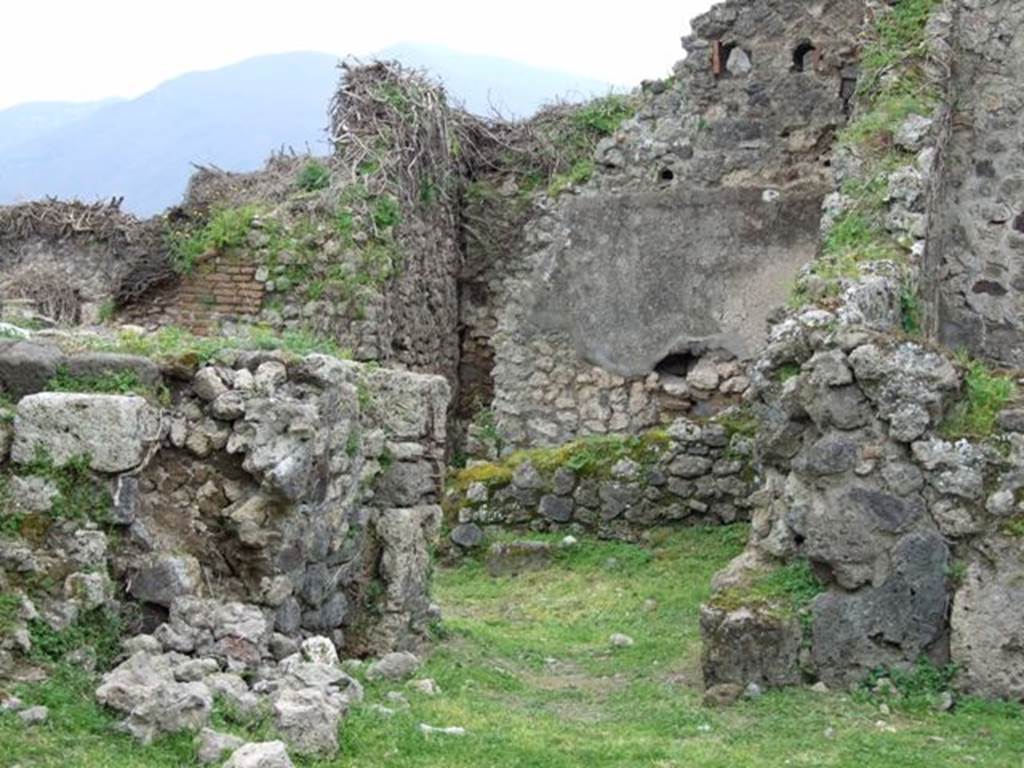
VII.3.11 Pompeii. March 2009. Doorway in south-east corner of atrium to VII.3.13.
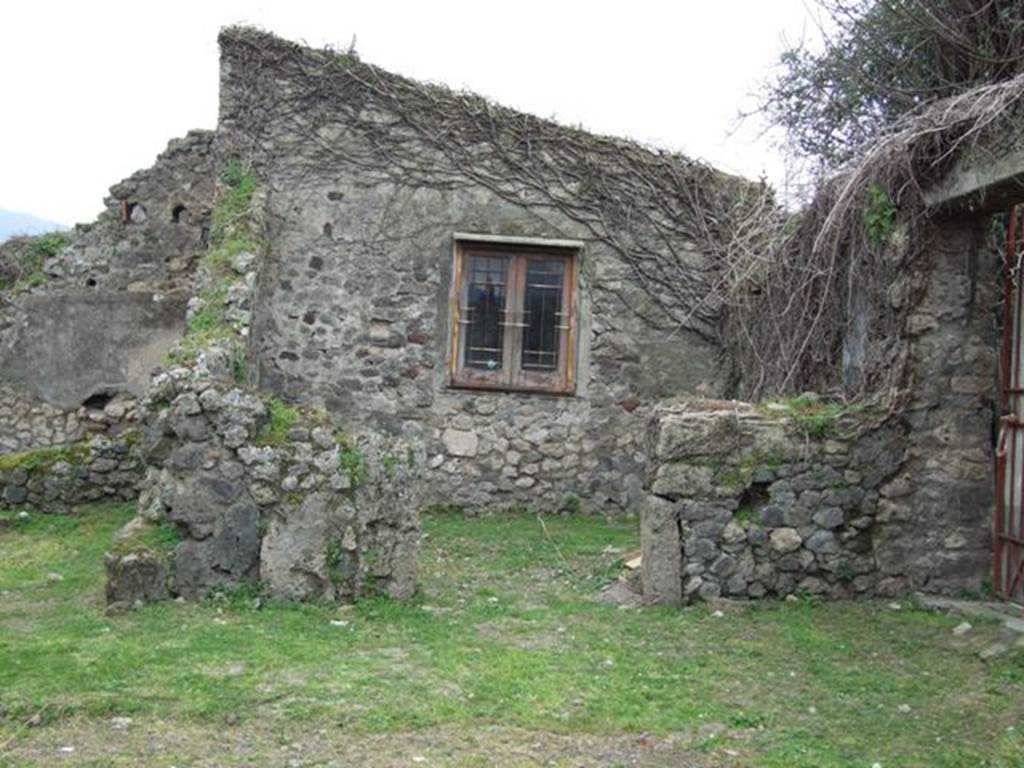
VII.3.11 Pompeii. March 2009. Tablinum on south side of atrium.
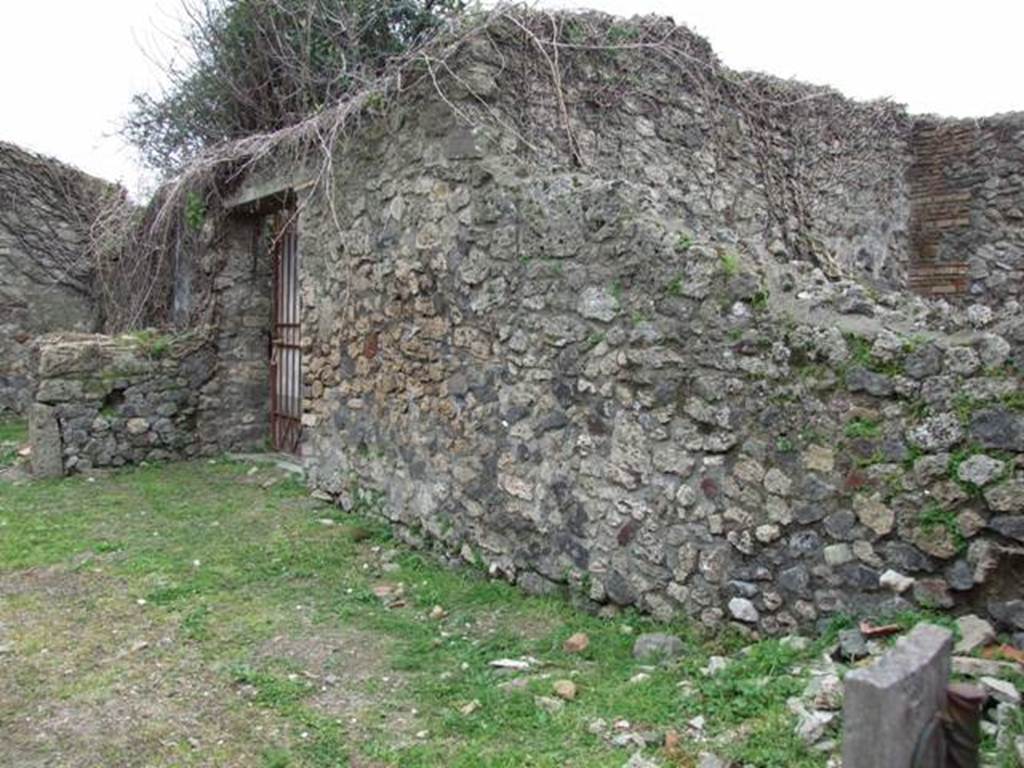
VII.3.11 Pompeii. March 2009. Doorway to garden/peristyle with more surrounding rooms.
According to Boyce, against the back wall of the garden stood an aedicula lararium.
He also said that from the objects found in the dwelling, Fiorelli concluded that it was owned by an Egyptian.
See Boyce G. K., 1937. Corpus
of the Lararia of Pompeii. Rome:
MAAR 14. (p.64, no: 264B)
See Pappalardo, U., 2001. La Descrizione di Pompei per Giuseppe Fiorelli (1875). Napoli: Massa Editore. (p. 86)
According to Giacobello, the aedicula in the garden is no longer conserved.
See Giacobello, F., 2008. Larari Pompeiani: Iconografia e culto dei Lari in ambito domestico. Milano: LED Edizioni. (p. 280)
According to Jashemski, against the rear wall was an aedicula shrine.
The shrine contained statuettes of Lar, Minerva and Harpocrates, as well as a small terracotta altar.
A lamp hung above. On the ground in front of the aedicula was a masonry altar.
The walls on each side of the shrine were painted with trees seen growing behind a wooden fence.
See Jashemski, W. F., 1993. The Gardens of Pompeii, Volume II: Appendices. New York: Caratzas. (p. 177).
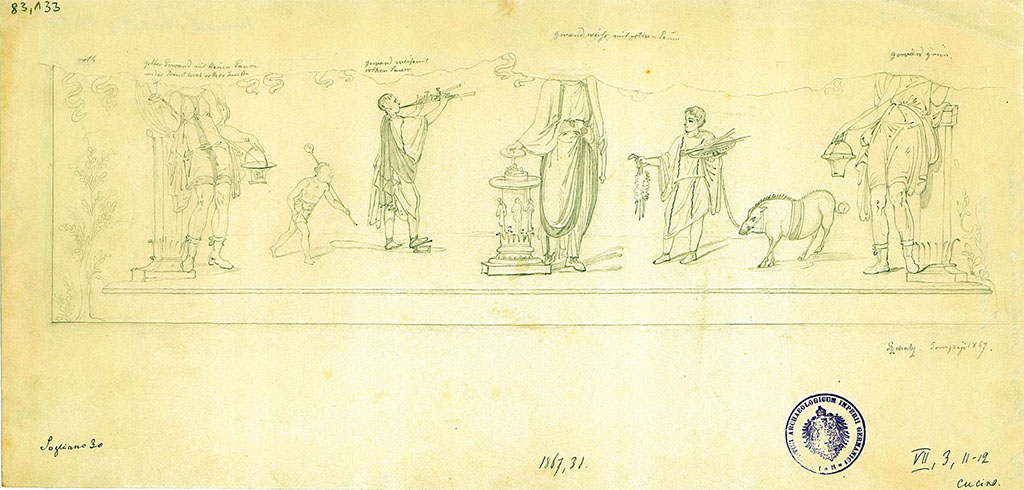
VII.3.11 Pompeii. 1867 drawing by Schulz of lararium painting in the kitchen, now destroyed.
DAIR 83.133.
Photo © Deutsches Archäologisches Institut, Abteilung Rom, Arkiv.
According to Boyce, In the wall of the kitchen was set a niche and between it and the hearth was the lararium painting (w. 2.32) in two zones.
In the centre of the upper zone (top damaged, h. uncertain) stands a blazing altar and to the r. of it the Genius, wearing a toga praetexta and holding in the left a cornucopia, in the right a patera above the altar.
Behind him comes a camillus in white tunic, carrying in right hand garlands and taeniae, in the left, with which he leads by a string a hog adorned with vittae, a large shallow dish containing several spits.
On the opposite side of the altar stands the tibicen in white tunic and red toga (sic) with his right foot upon a scabellum; behind him a very small, nude popa carries in his right the sacrificial knife, in his left a malleus.
On each side of this group is a Lar with rhyton and situla, leaning with one arm upon a pillar.
In the lower zone (h. 0.90) are two serpents confronted at an altar furnished with eggs and fruit.
See Boyce G. K., 1937. Corpus
of the Lararia of Pompeii. Rome:
MAAR 14, p.64, no. 265, pl. 19,1.
See Fröhlich, T.,
1991. Lararien und Fassadenbilder in den
Vesuvstädten. Mainz: von
Zabern, p. 285, L82, Abb. 4.
See Giacobello, F., 2008. Larari Pompeiani: Iconografia e culto dei Lari in ambito domestico. Milano: LED Edizioni. (p.191-2)
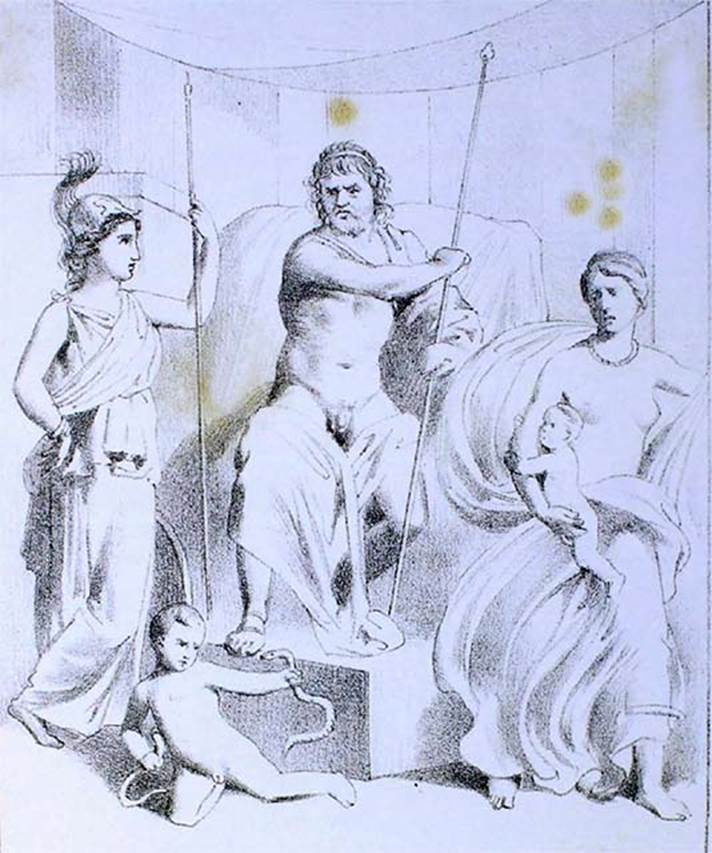
VII.3.11 Pompeii.
Cubiculum/oecus east wall. Drawing by L. Schulz, 1867, of a painting of young Hercules strangling the serpents.
See Archäologische Zeitung 1868, Taf. IV lower.
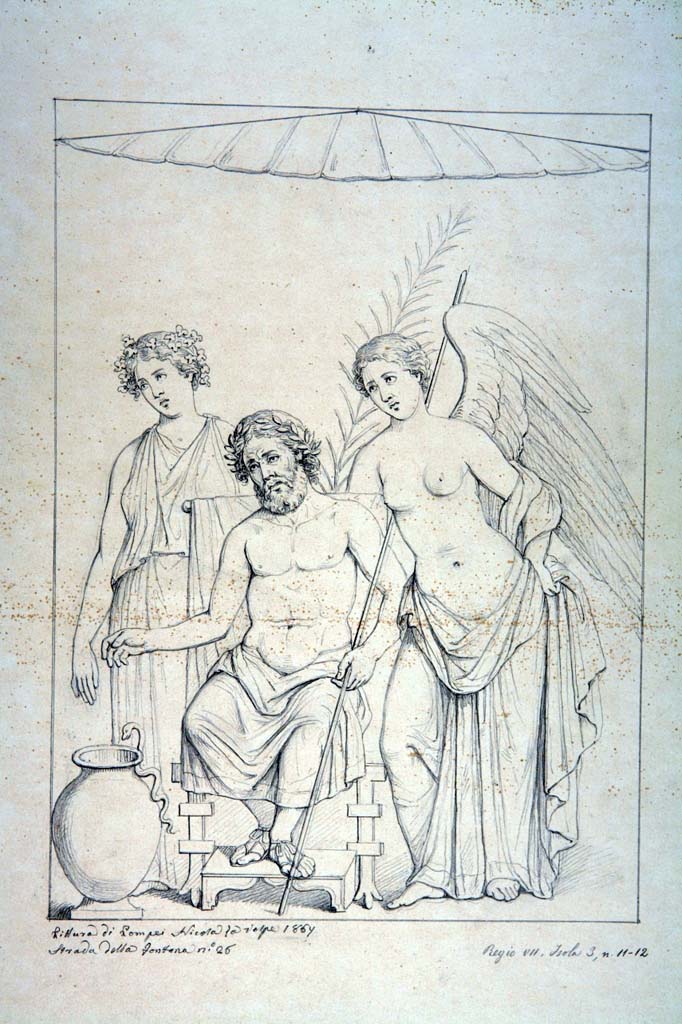
VII.3.11 Pompeii.
Drawing by
Nicola La Volpe, 1867, of a painting of Jove on his throne with two female
figures, described as being from the same east wall as the above.
This was
seen at the centre of one of the walls of a room described as an oecus, or a cubiculum,
on the east side of the peristyle.
Now in Naples Archaeological Museum. Inventory number ADS 559.
Photo © ICCD. https://www.catalogo.beniculturali.it
Utilizzabili alle condizioni della licenza Attribuzione
- Non commerciale - Condividi allo stesso modo 2.5 Italia (CC BY-NC-SA 2.5 IT)
Nothing now
remains of the original painting as the oecus/cubiculum has lost all of its
plaster.
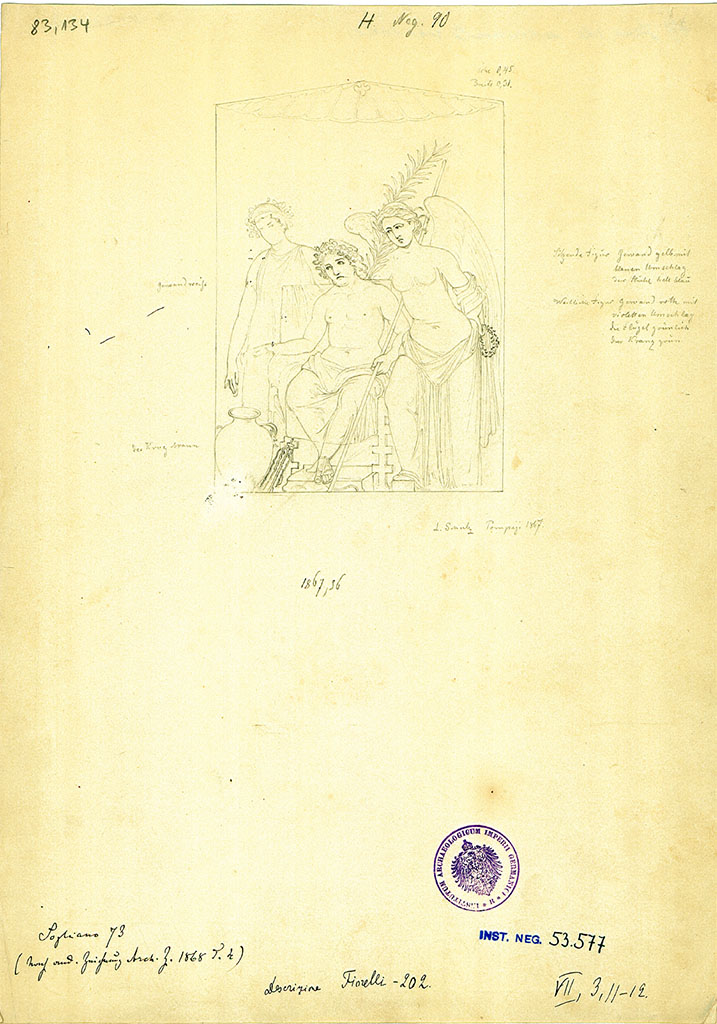
VII.3.11 Pompeii. Drawing by L. Schulz, 1867, of a painting of Jove on his throne with two
female figures.
DAIR 83.134. Photo
© Deutsches Archäologisches Institut, Abteilung Rom, Arkiv.
See Archäologische Zeitung 1868, Taf. IV
upper.
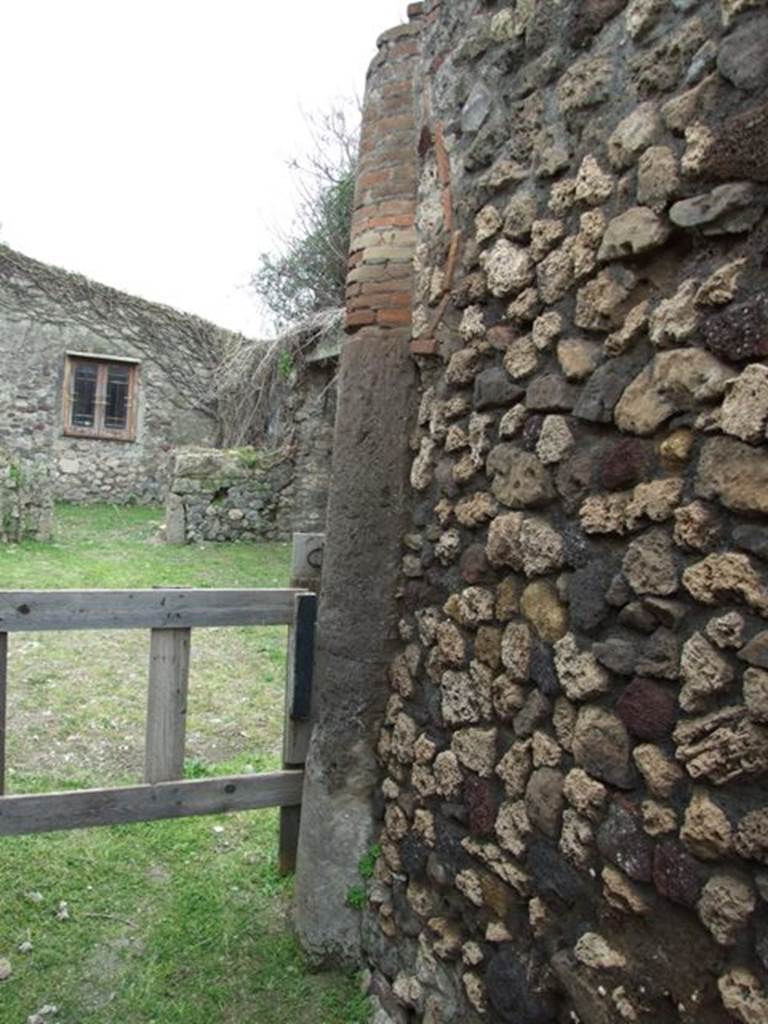
VII.3.11 Pompeii. March 2009. Brick and tufa column on south-west side of corridor.
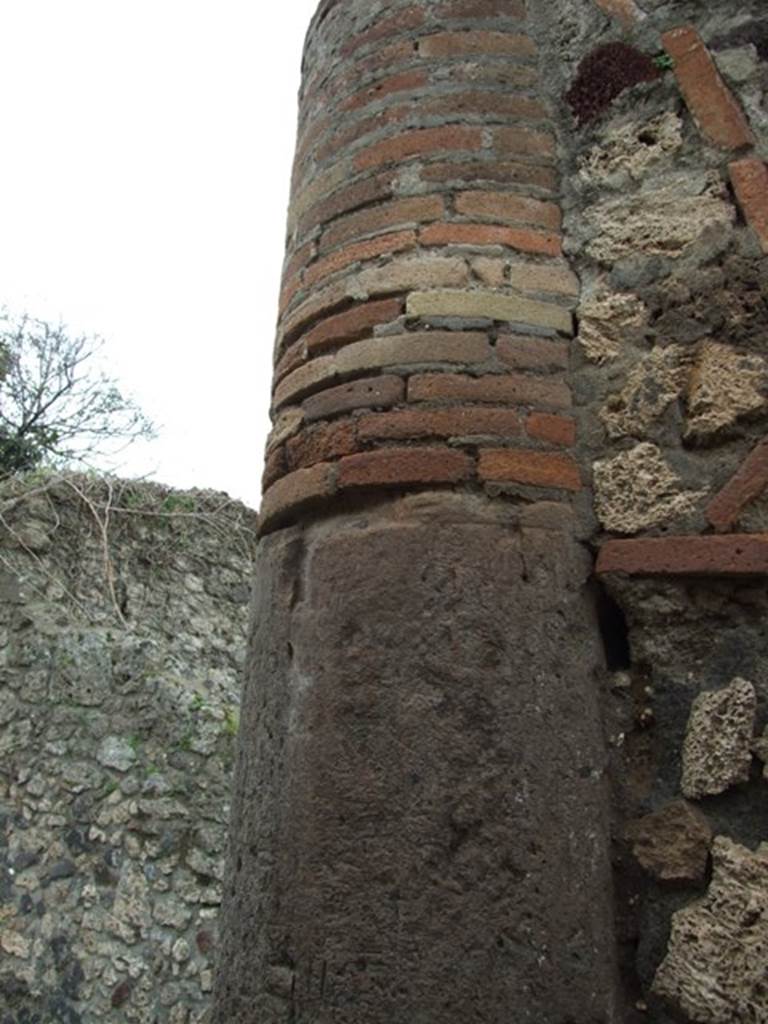
VII.3.11 Pompeii. March 2009. South-west side of corridor. Upper part of brick and tufa column.
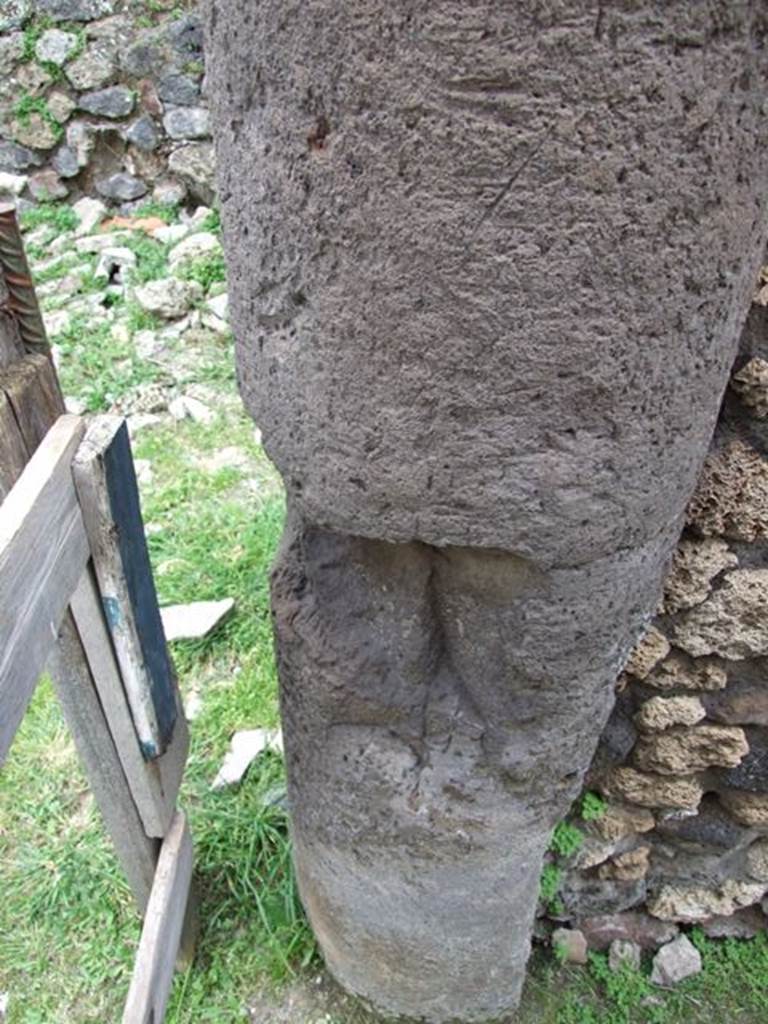
VII.3.11 Pompeii. March 2009. South-west side of corridor. Lower tufa part of column.
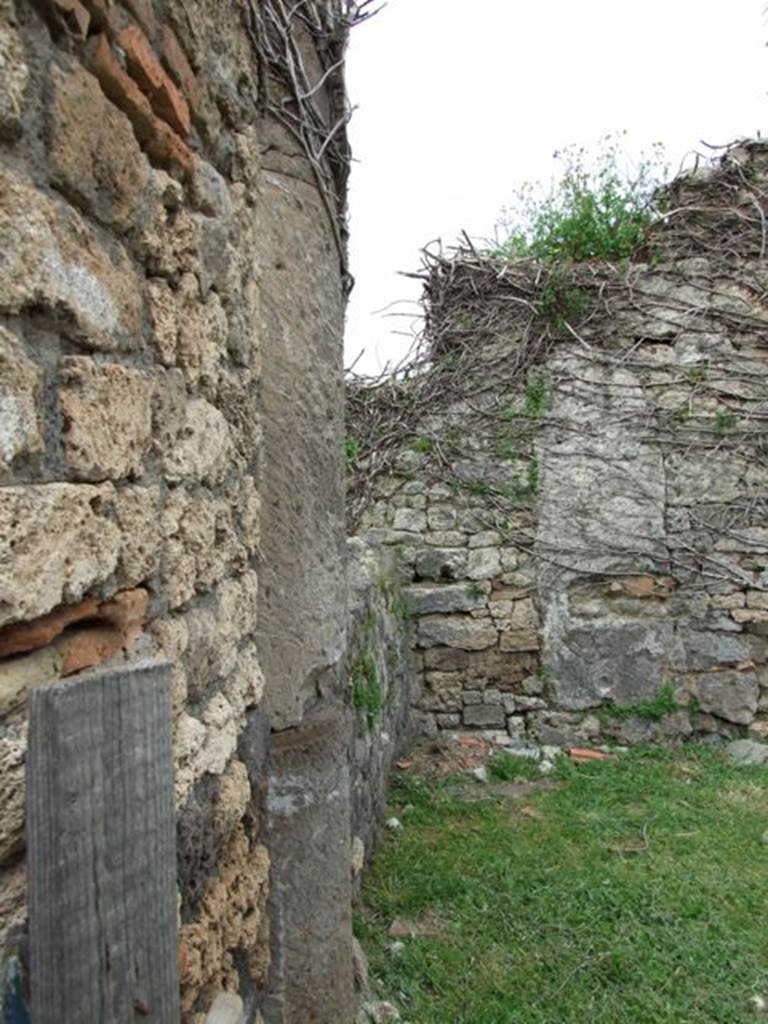
VII.3.11 Pompeii. March 2009. East side of north wall of atrium, with second tufa column.
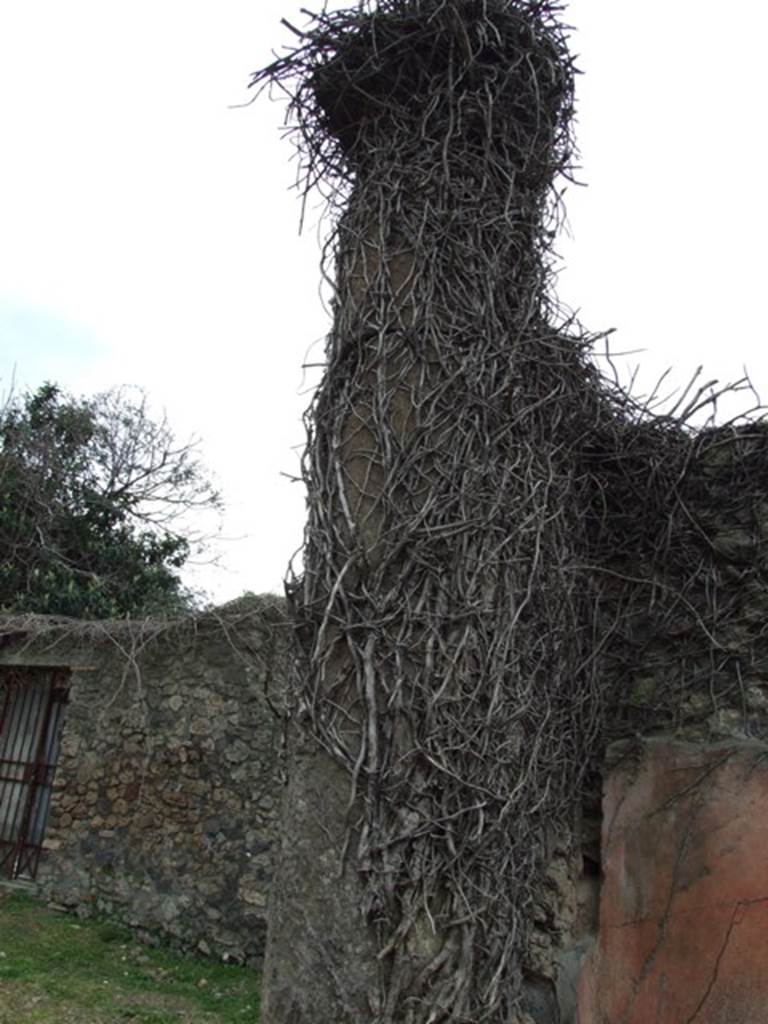
VII.3.11 Pompeii. March 2009. Second tufa column in north wall of atrium.
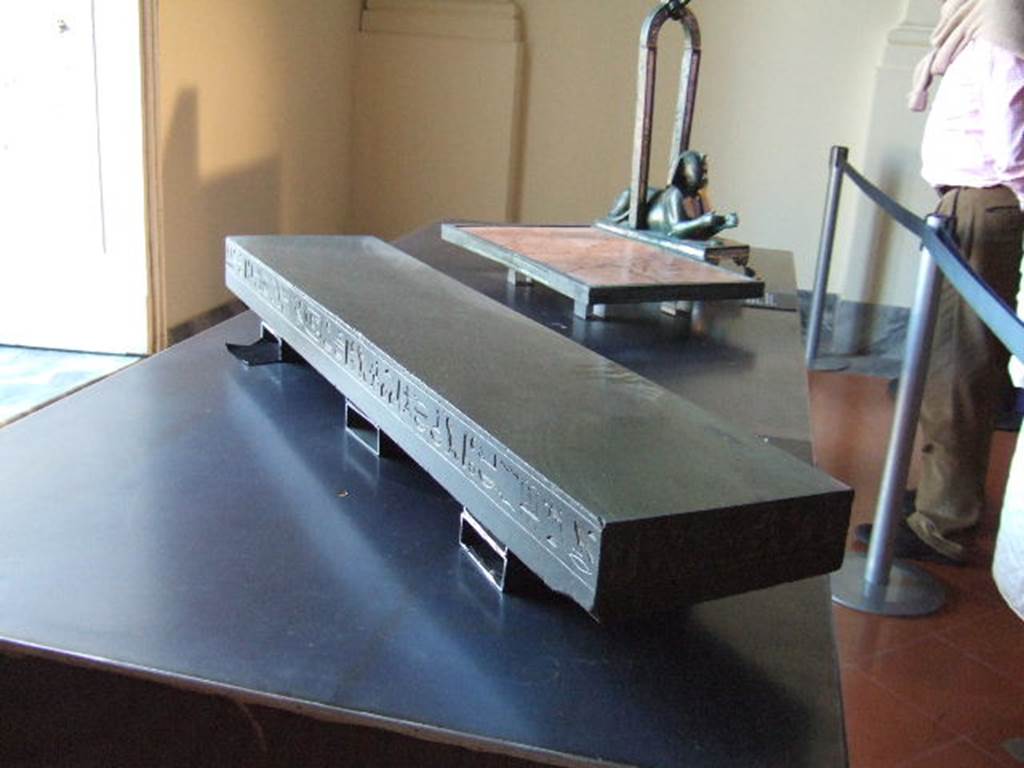
Basalt slab with a dedication from the Sacred banquet of Psammetico II, sovereign of twenty sixth dynasty of Egypt.
It was reused as a threshold to the triclinium. Now in Naples Archaeological Museum.
Fiorelli states that this was found in the triclinium of VII.3.11 which is linked to VII.3.13.
See Pappalardo, U., 2001. La Descrizione di Pompei per Giuseppe Fiorelli (1875). Napoli: Massa Editore. (p.86).
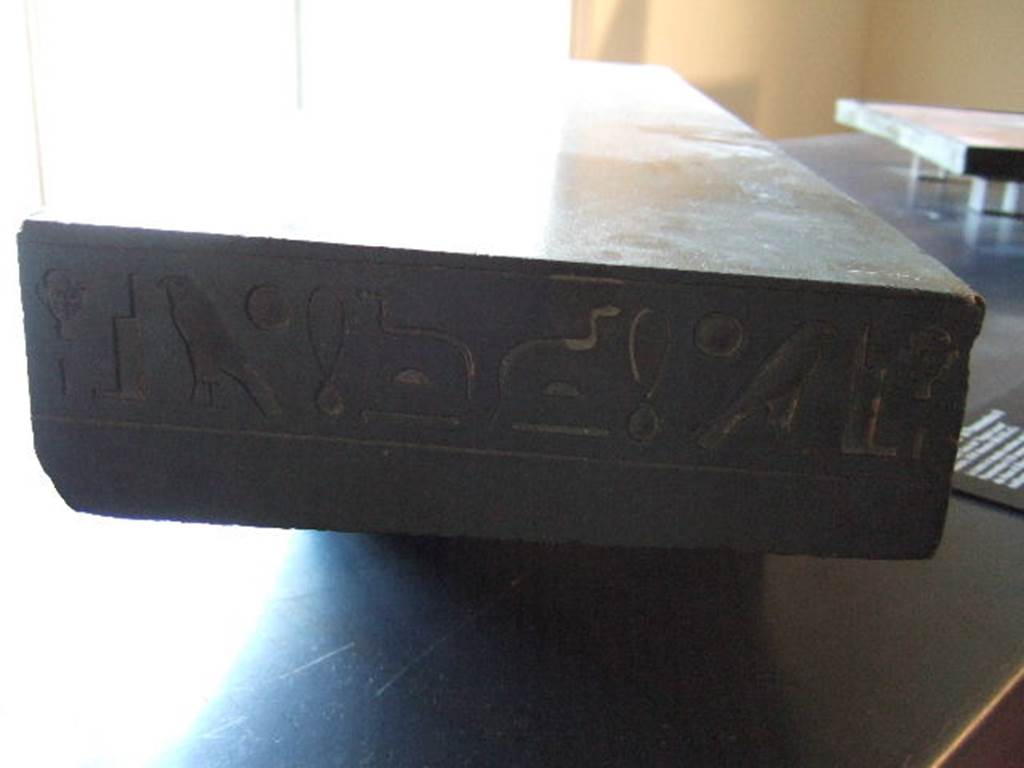
VII.3.11 Pompeii. Part of the dedication on the Sacred banquet of Psammetico II. Now in Naples Archaeological Museum.
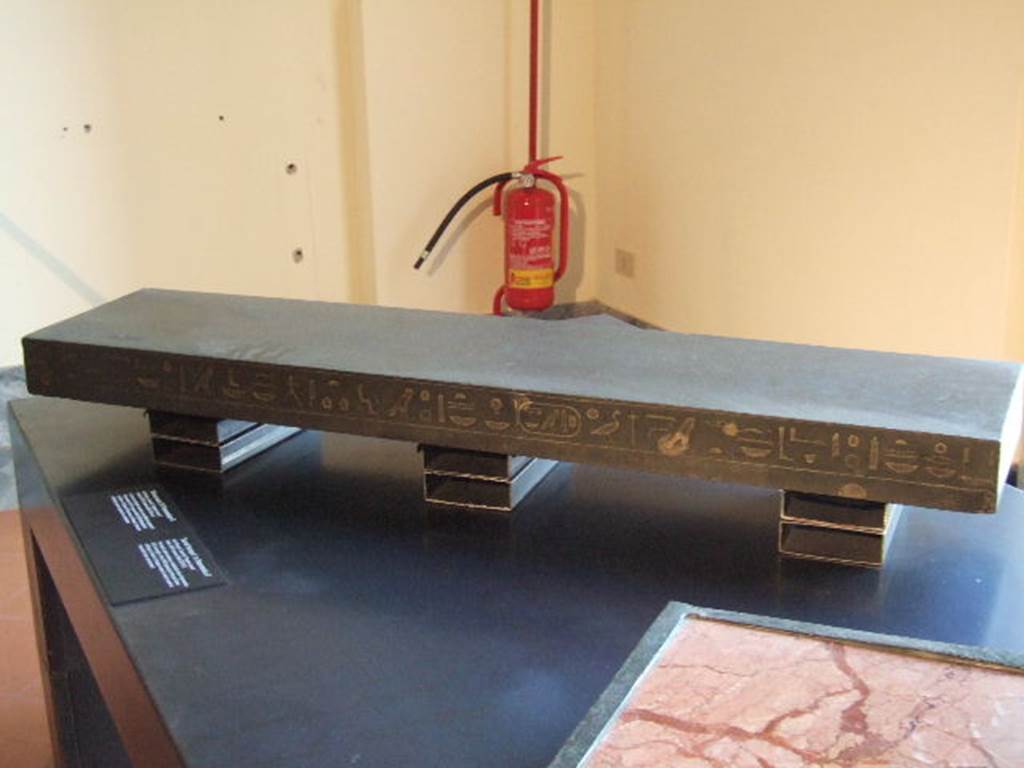
VII.3.11 Pompeii. Part of the dedication on the Sacred banquet of Psammetico II. Now in Naples Archaeological Museum.
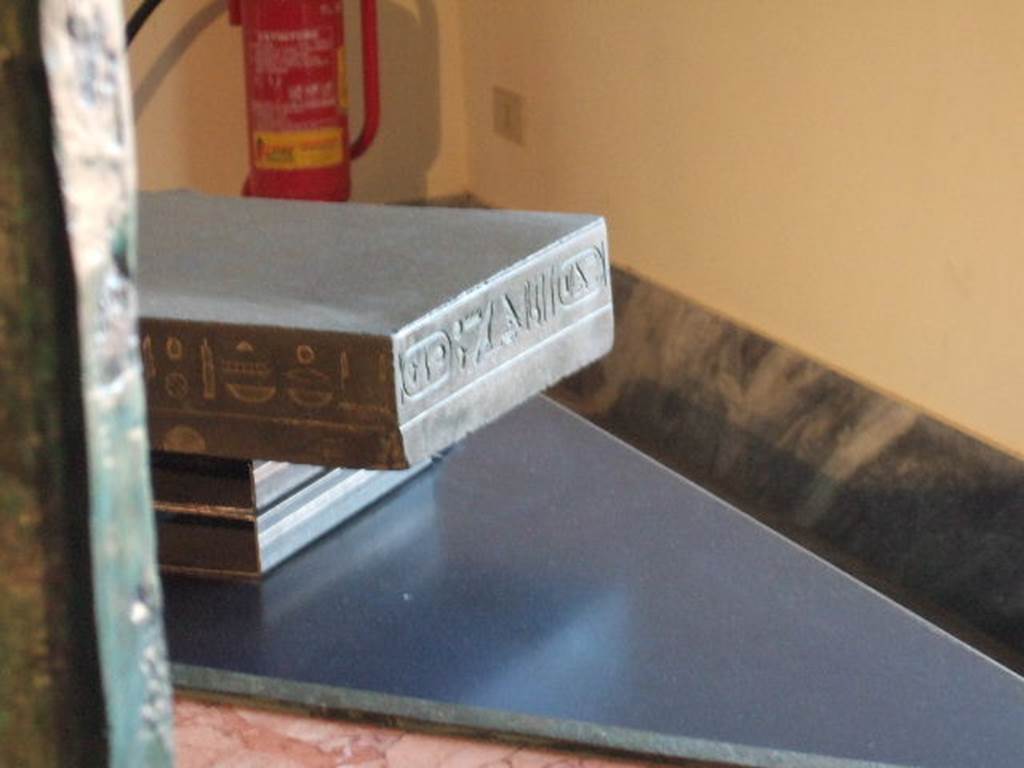
VII.3.11 Pompeii. Part of the dedication on the Sacred banquet of Psammetico II. Now in Naples Archaeological Museum.