VI.14.38 Pompeii. Casa di C. Poppaeus
Firmus.
Excavated 1834, 1845, 1874. Bombed in 1943.
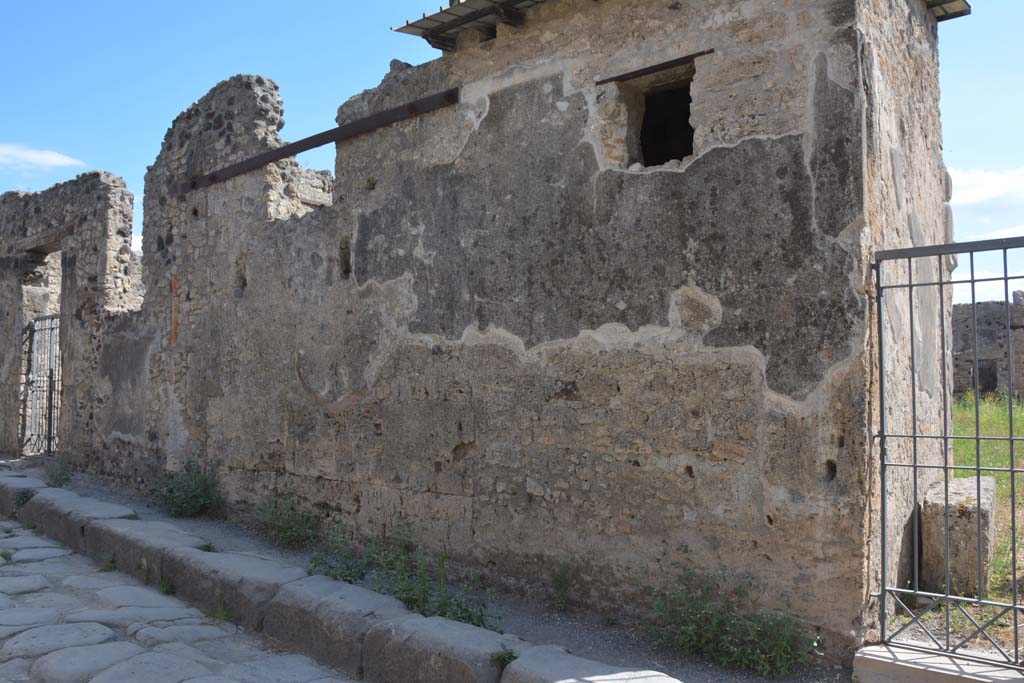
VI.14.38, on right, Pompeii. July 2017. Looking north towards
façade on north side of entrance doorway.
Foto Annette Haug, ERC
Grant 681269 DÉCOR.
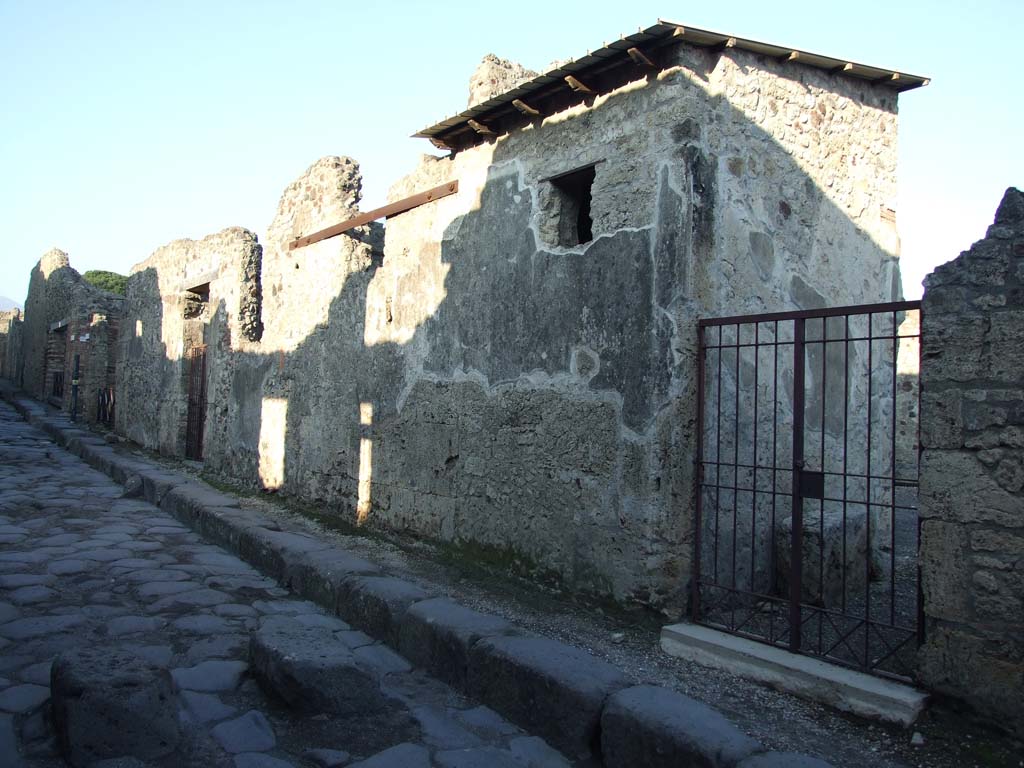
Wall between VI.14.37 and VI.14.38 on Vicolo dei Vettii. December 2007. Looking north.
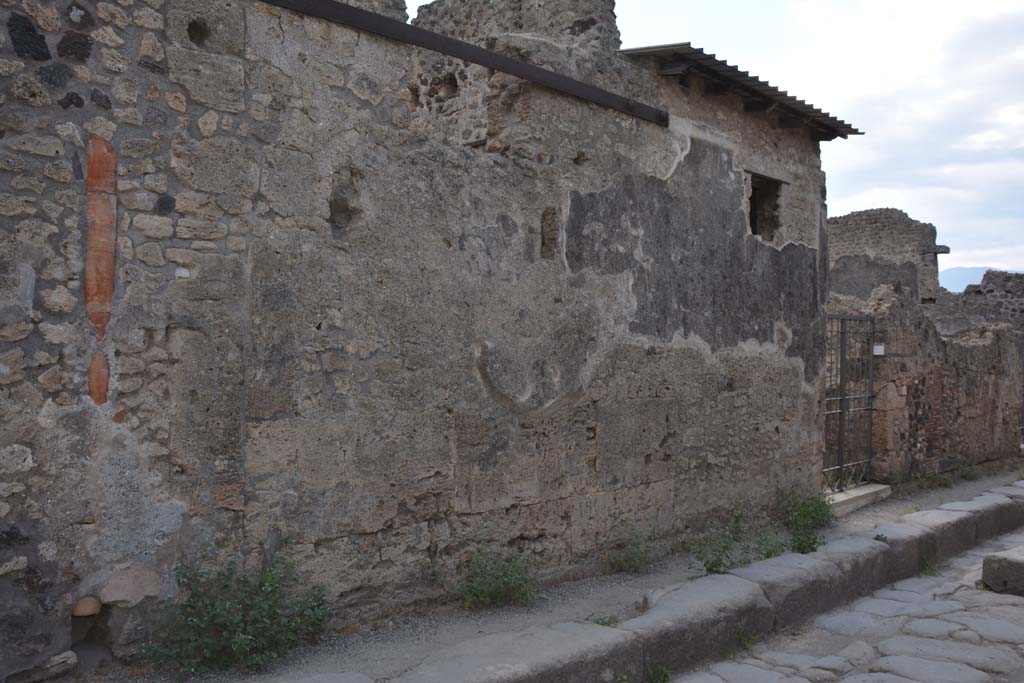
VI.14.38 Pompeii. July 2017. Looking south along façade on north
side of entrance doorway in Vicolo dei Vettii.
Foto Annette Haug, ERC
Grant 681269 DÉCOR.
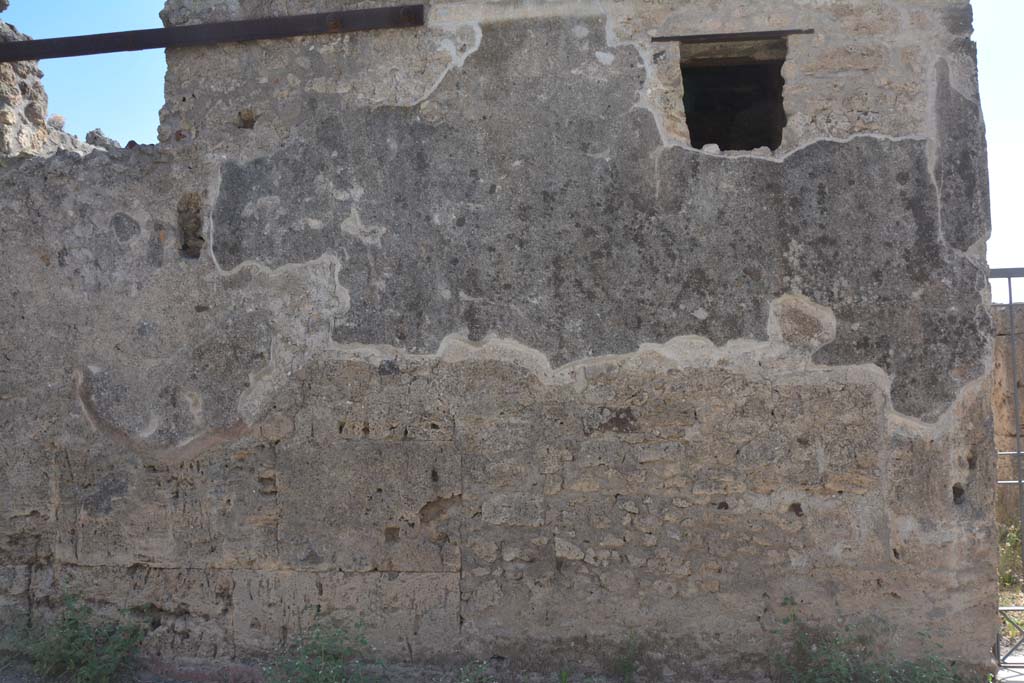
VI.14.38 Pompeii. July 2017. Detail from north side of entrance
doorway.
Foto Annette Haug, ERC
Grant 681269 DÉCOR.
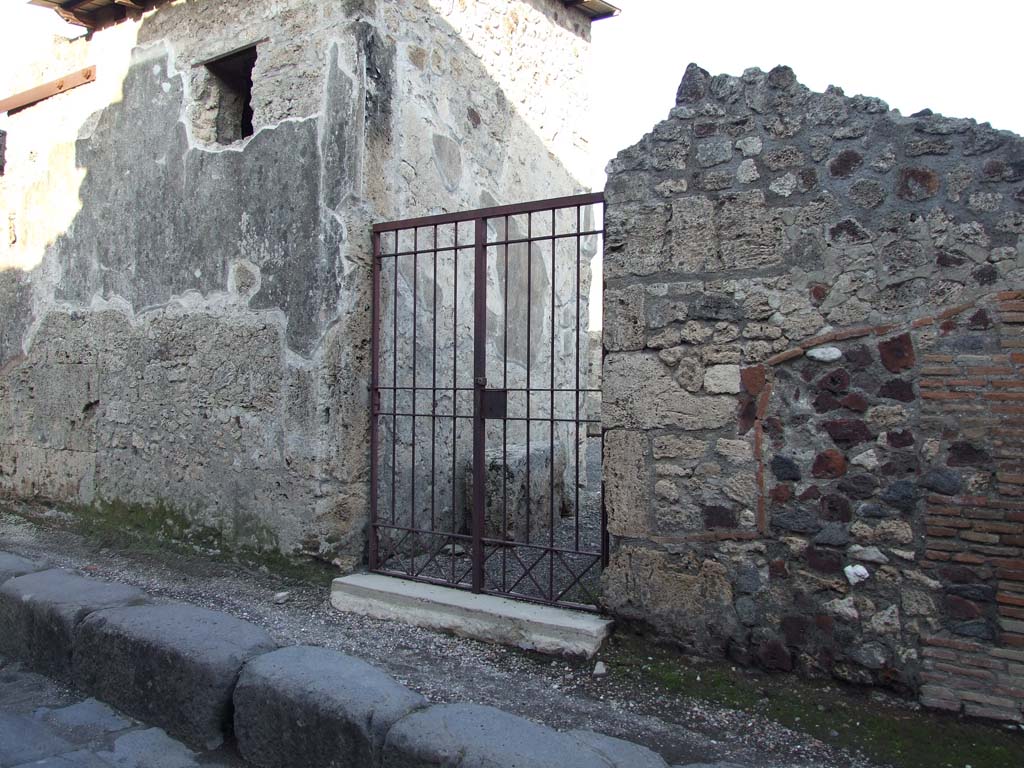
VI.14.38 Pompeii.
December 2007. Entrance doorway.
![VI.14.38 Pompeii. December 2005. Entrance doorway.
According to Cooley, the translation of an electoral recommendation found here, read –
Helvius Sabinus an honest young man [CIL IV 6684]
See Cooley, A. and M.G.L., 2004. Pompeii: A Sourcebook. London: Routledge. (p.120)
According to Epigraphik-Datenbank Clauss/Slaby (See www.manfredclauss.de), it read –
Helvium Sab[inum]
iuvenem pro[bum] [CIL IV 6684]](6%2014%2038_files/image007.jpg)
VI.14.38 Pompeii. December 2005. Entrance doorway.
According to Cooley, the translation of an electoral recommendation found here, read –
Helvius Sabinus an honest young man [CIL IV 6684]
See Cooley, A. and M.G.L., 2004. Pompeii: A Sourcebook. London: Routledge. (p.120)
According to Epigraphik-Datenbank Clauss/Slaby (See www.manfredclauss.de), it read –
Helvium
Sab[inum]
iuvenem
pro[bum] [CIL IV 6684]
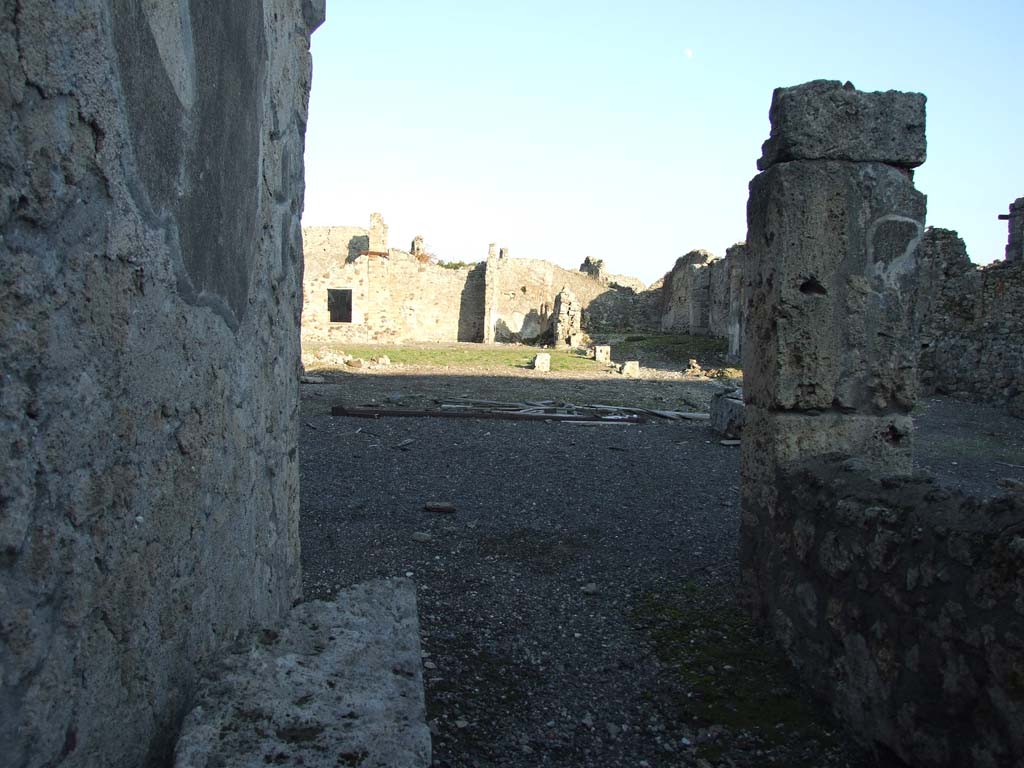
VI.14.38 Pompeii. December 2007. Looking east across atrium, tablinum and peristyle, from entrance doorway.
According to Garcia y Garcia, this house was badly hit by the 1943 bombing.
It caused the destruction of the atrium floor, including the impluvium and the marble table.
Also destroyed were the two rooms nearby on the north side of the atrium with their decoration, the south wall of the peristyle and the loss of the IV Style painted plaster in two rooms adjacent to the north-east of this.
The stucco of four of the columns in the peristyle also collapsed.
Today the house still appears a complete ruin.
See Garcia y
Garcia, L., 2006. Danni di guerra a Pompei. Rome: L’Erma di Bretschneider. (p.91-93, incl. photos).
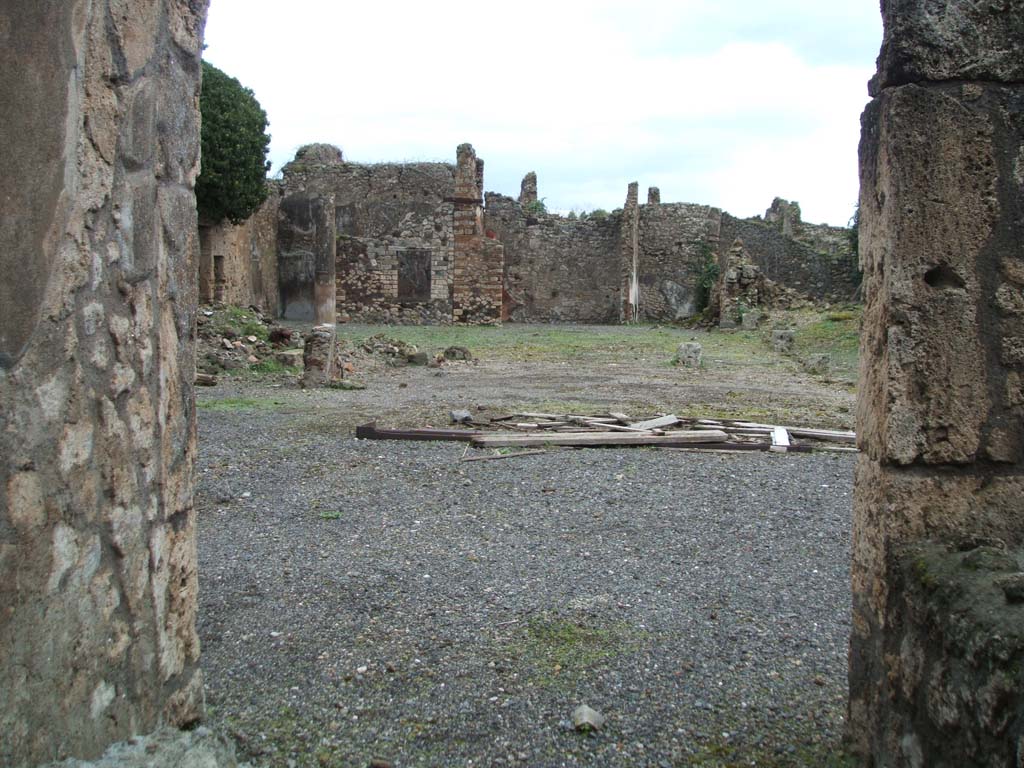
VI.14.38 Pompeii. December 2004. Looking east from entrance corridor.
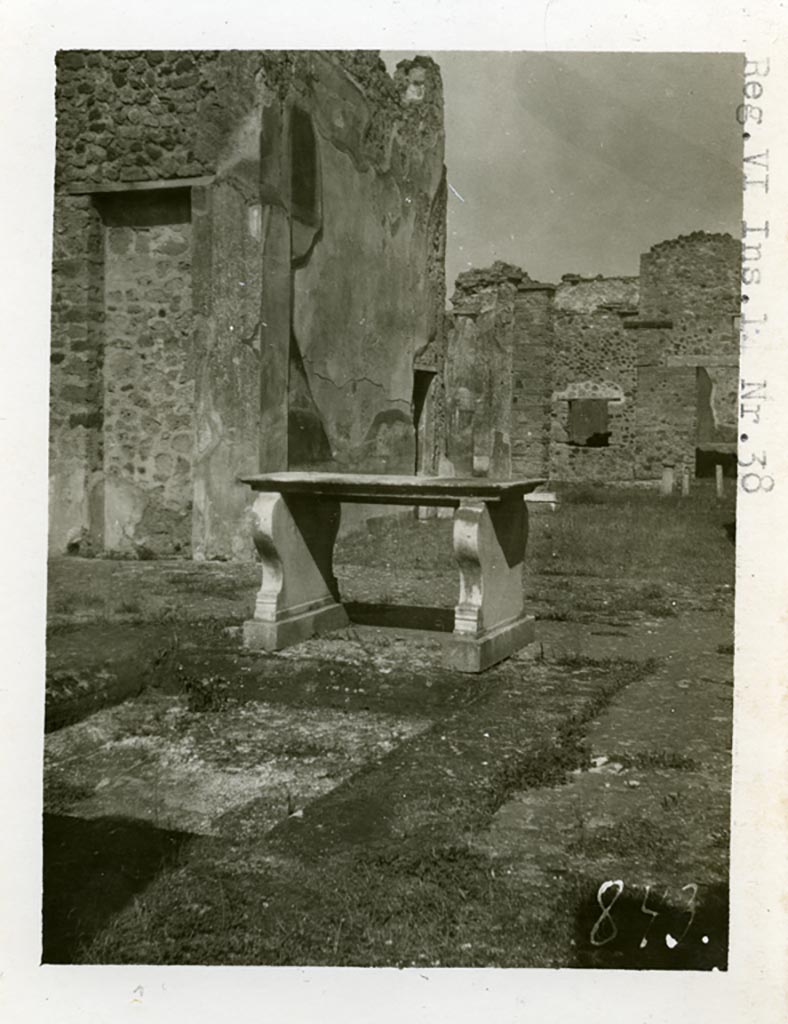
VI.14.38 Pompeii but shown as VI.1?.38 on photo. Pre-1937-39.
Looking north-east across impluvium and marble table in atrium, across tablinum to peristyle area.
Photo courtesy of American Academy in Rome, Photographic Archive. Warsher collection no. 843.
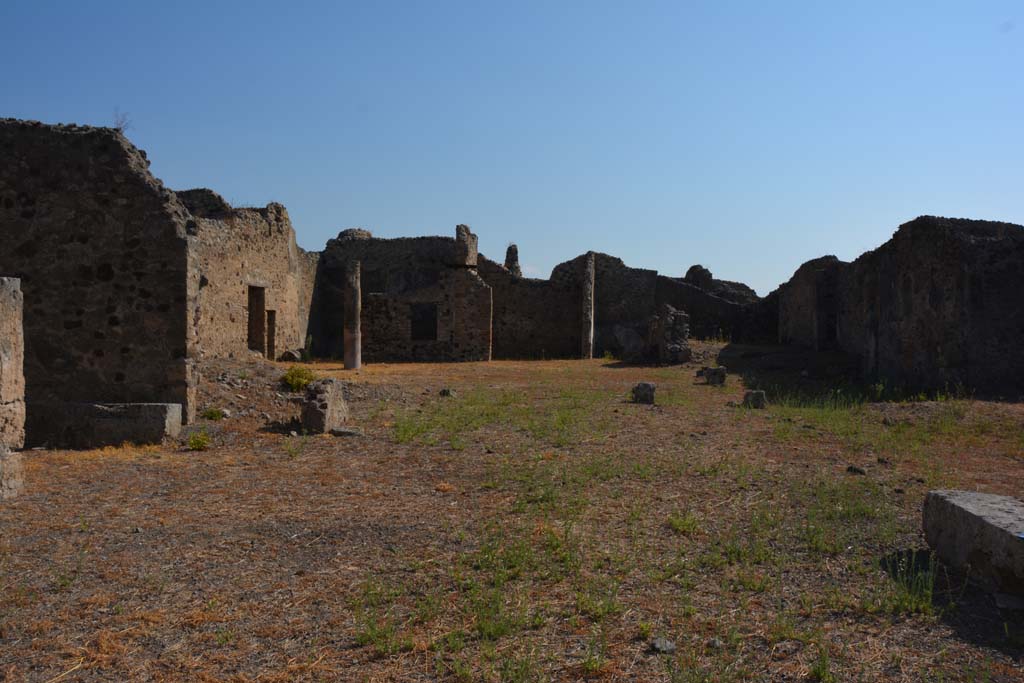
VI.14.38 Pompeii. September 2019. Looking east across atrium
towards peristyle and rear rooms.
Foto Annette Haug, ERC
Grant 681269 DÉCOR.
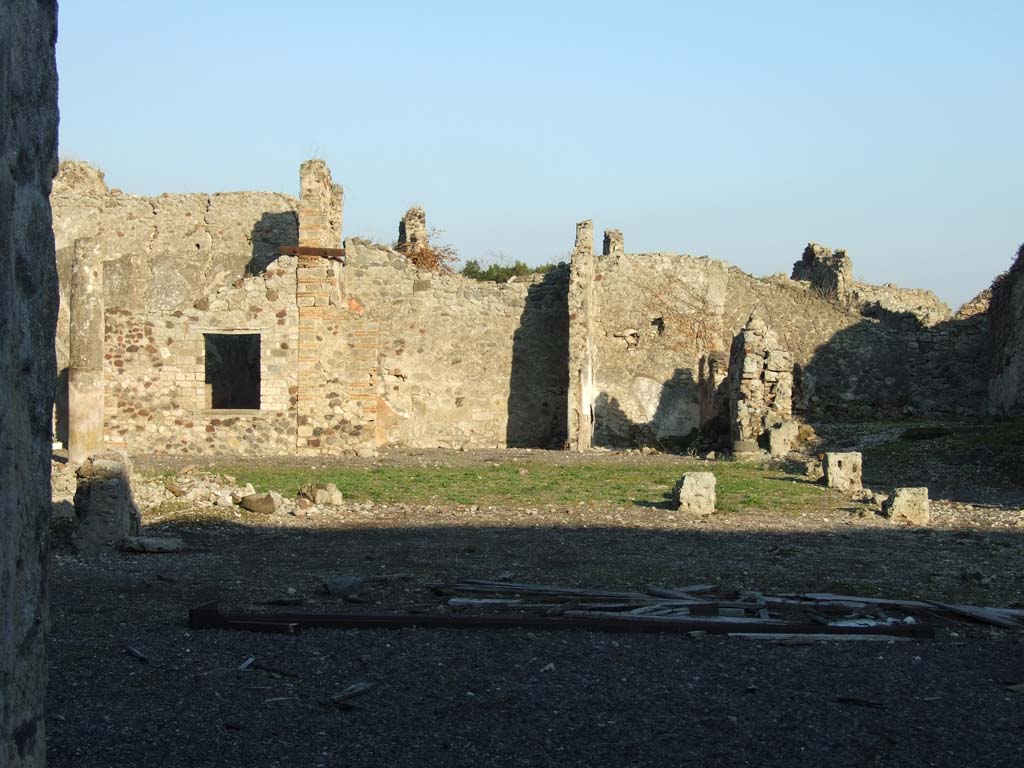
VI.14.38 Pompeii. December 2007. Site of tablinum, and peristyle, looking east to rear rooms.
Jashemski reported that the middle panel of the right (south) wall of the tablinum, instead of having the usual large painting, was plain yellow and contained a small garden scene. This was reported but not described by Mau.
The left (north) wall was almost completely destroyed at the time of the eruption.
See Jashemski, W. F., 1993. The Gardens of Pompeii, Volume II: Appendices. New York: Caratzas. (p.398, with ref: Mau, BdI (1878), p.115)
According to Jashemski, the peristyle garden at the rear of the tablinum would have been visible from the entrance.
The tablinum would have been completely open on both its east and west ends.
The garden was enclosed on the north, west and south sides by a portico, supported at the time of the eruption by nine columns.
There was a cistern opening without a puteal on both the north and south sides between the two west columns.
In the garden were two marble table supports, and a monopodium without the basin which it probably supported.
In the south-west corner of the peristyle were the ruins of an arched niche.
See Jashemski, W. F., 1993. The Gardens of Pompeii, Volume II: Appendices. New York: Caratzas. (p.150-51)
According to Boyce, in the south-west corner of the peristyle were the ruins of an arched niche, with heavy projecting floor.
See Boyce G. K.,
1937. Corpus of the Lararia of Pompeii.
Rome: MAAR 14. (p.53, no.205)
See Giacobello, F., 2008. Larari Pompeiani:
Iconografia e culto dei Lari in ambito domestico. Milano: LED Edizioni,
(p.275 no.V55)
![VI.14.38 Pompeii. December 2007. North-east corner of peristyle, and rear rooms.
According to Della Corte, this other commodious and ample dwelling of another member of the same family, C. Poppaeus Firmus, was proved by finding his name on an amphora in the peristyle. It read –
C. Poppaeo Firmo [CIL IV 5880]
and then another amphora, with the name of this same citizen expressed by only initials -
C. P(oppaeo) F(irmo) [CIL IV 6153]
and then another, which Della Corte thought was wrongly attributed as being from the house to the east. This read –
C. P(oppaeo) Fir(mo) [CIL IV 5881]
See Della Corte, M., 1965. Case ed Abitanti di Pompei. Napoli: Fausto Fiorentino. (p.83)
According to Epigraphik-Datenbank Clauss/Slaby (See www.manfredclauss.de), these read –
C(aio) Poppaeo Firmo [CIL IV 5880]
P LXXV PT XIII
C(ai) P() F() [CIL IV 6153]
C(ai) P(oppaei) Fir(mi) [CIL IV 5881]](6%2014%2038_files/image013.jpg)
VI.14.38 Pompeii. December 2007. North-east corner of peristyle, and rear rooms.
According to Della Corte, this other commodious and ample dwelling of another member of the same family, C. Poppaeus Firmus, was proved by finding his name on an amphora in the peristyle. It read –
C. Poppaeo
Firmo [CIL IV 5880]
and then another amphora, with the name of this same citizen expressed by only initials -
C.
P(oppaeo) F(irmo) [CIL IV 6153]
and then another, which Della Corte thought was wrongly attributed as being from the house to the east. This read –
C. P(oppaeo) Fir(mo) [CIL IV 5881]
See Della Corte, M., 1965. Case ed Abitanti di Pompei. Napoli: Fausto Fiorentino. (p.83)
According to Epigraphik-Datenbank Clauss/Slaby (See www.manfredclauss.de), these read –
C(aio) Poppaeo
Firmo [CIL IV 5880]
P LXXV PT XIII
C(ai) P()
F() [CIL IV 6153]
C(ai) P(oppaei)
Fir(mi) [CIL IV 5881]
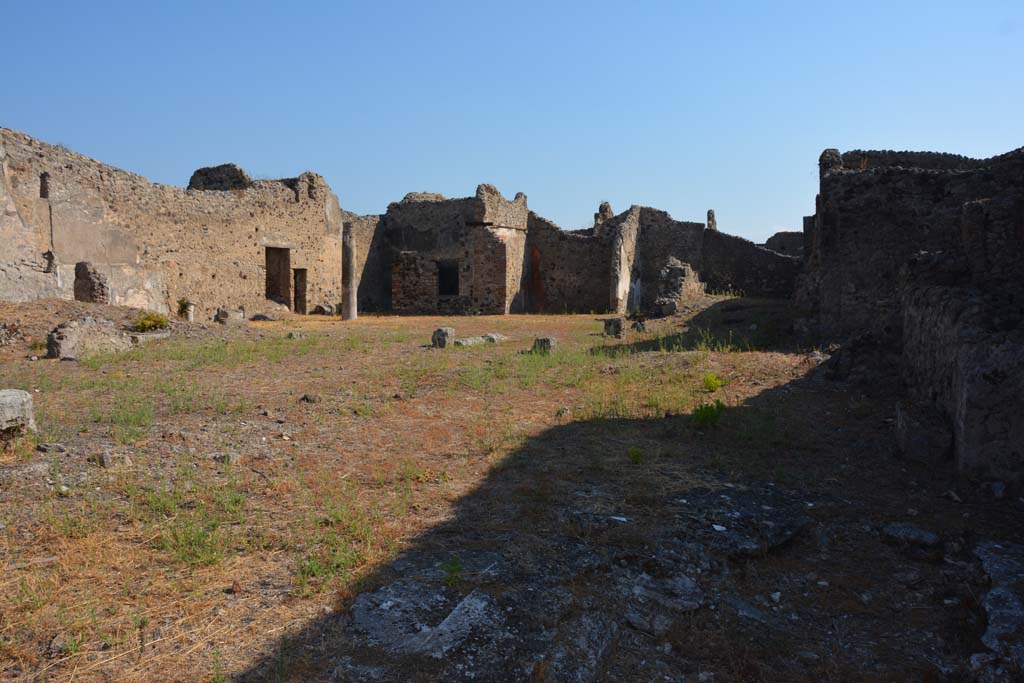
VI.14.38, on left, Pompeii. September 2019. Looking north-east from VI.14.39, as there is no longer a dividing wall.
Foto Annette Haug, ERC
Grant 681269 DÉCOR.
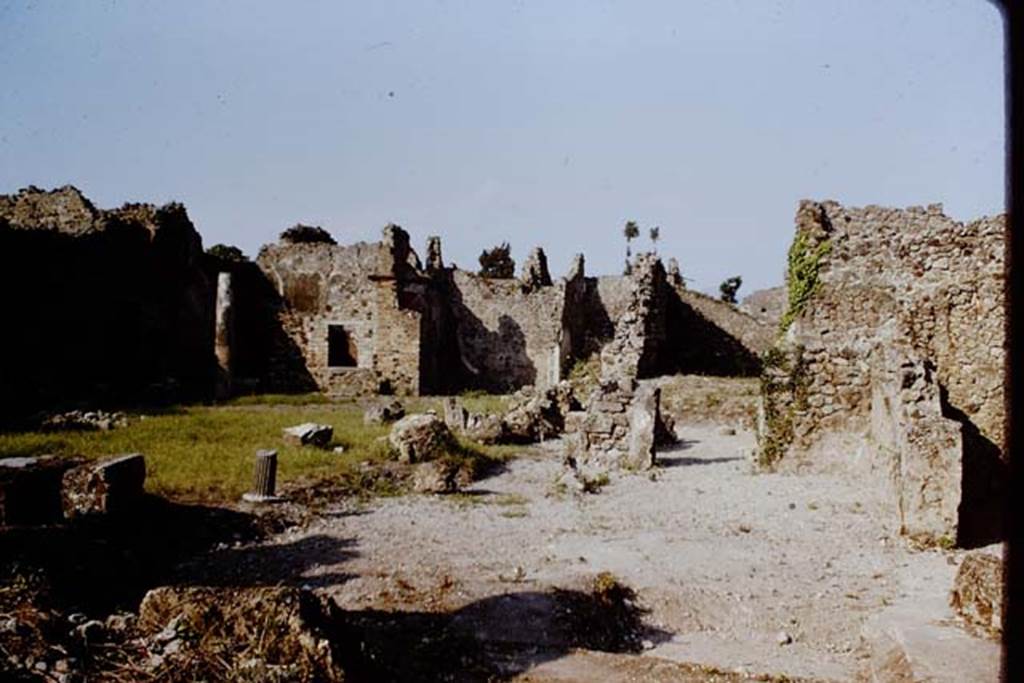
VI.14.38 on left, Pompeii. 1966.
VI.14.39 is on the right of the photo, as there is no longer a dividing wall. Looking east. Photo by Stanley A. Jashemski.
Source: The Wilhelmina and Stanley A. Jashemski archive in the University of Maryland Library, Special Collections (See collection page) and made available under the Creative Commons Attribution-Non Commercial License v.4. See Licence and use details.
J66f0335
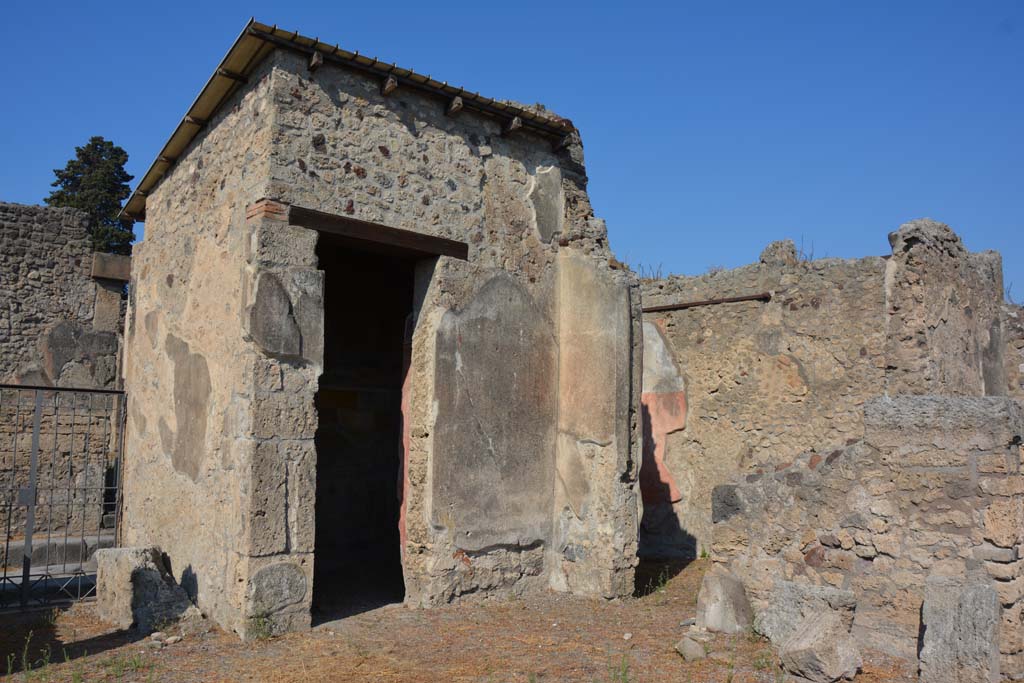
VI.14.38 Pompeii. September 2019. North-west corner of atrium,
with entrance corridor, on left.
Foto Annette Haug, ERC
Grant 681269 DÉCOR.
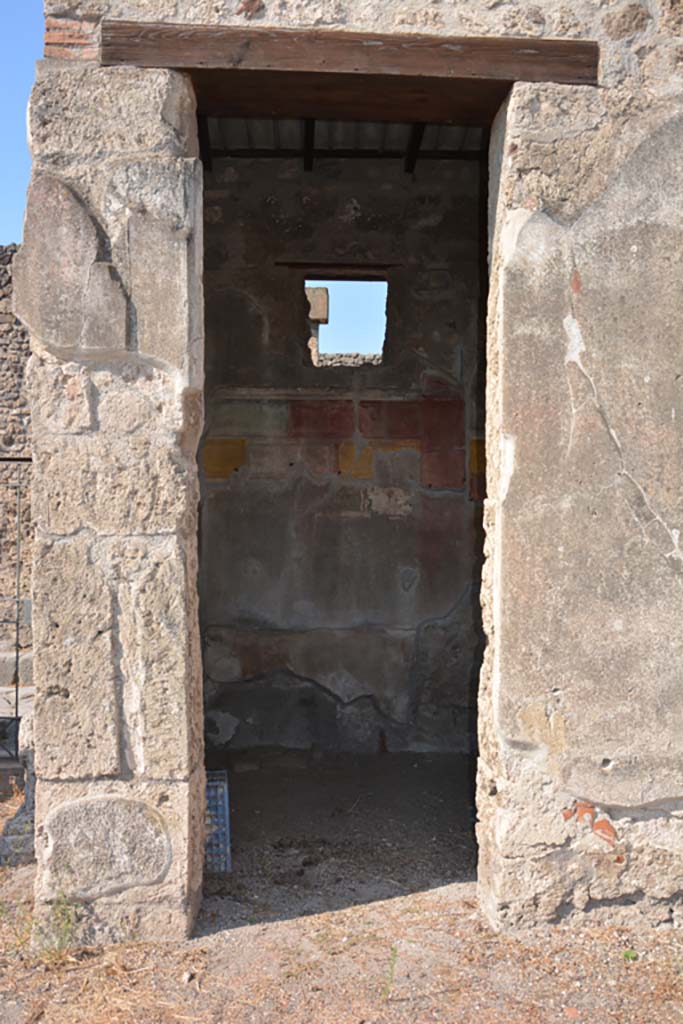
VI.14.38 Pompeii. September 2019.
Looking west through doorway to cubiculum on north side of
entrance doorway.
Foto Annette Haug, ERC
Grant 681269 DÉCOR.
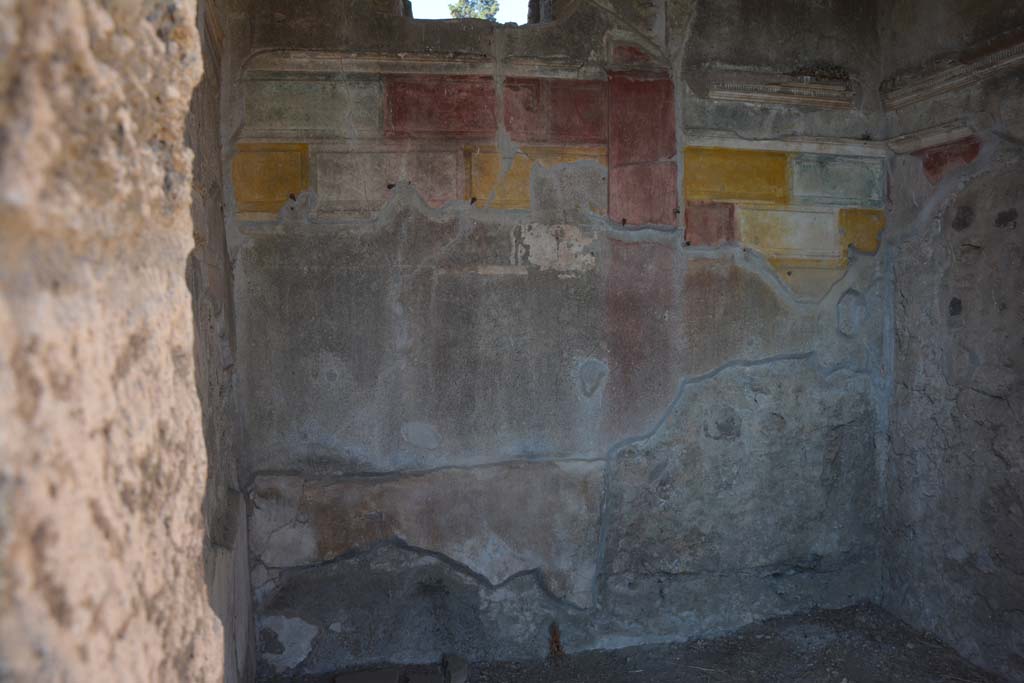
VI.14.38 Pompeii. September 2019. Looking through doorway towards
lower west wall showing two distinctive parts to wall.
On the left the anteroom, with an alcove on the right.
Foto Annette Haug, ERC
Grant 681269 DÉCOR.
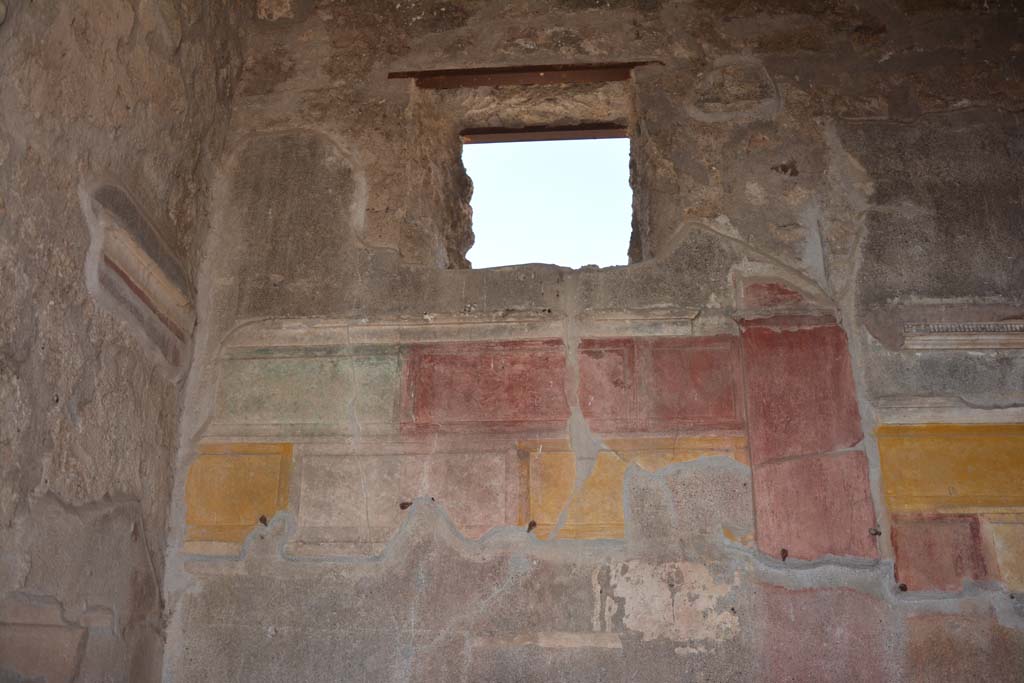
VI.14.38 Pompeii. September 2019. Upper west wall at south end of
cubiculum with window overlooking Vicolo dei Vettii.
Foto Annette Haug, ERC
Grant 681269 DÉCOR.
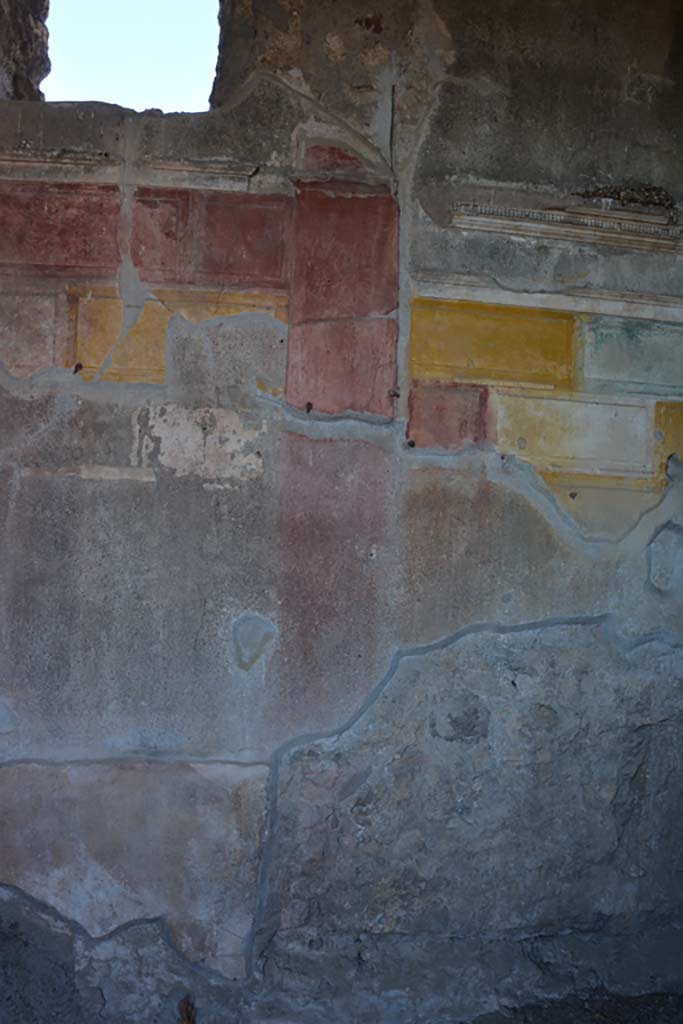
VI.14.38 Pompeii. September 2019. Lower west wall.
Foto Annette Haug, ERC
Grant 681269 DÉCOR.
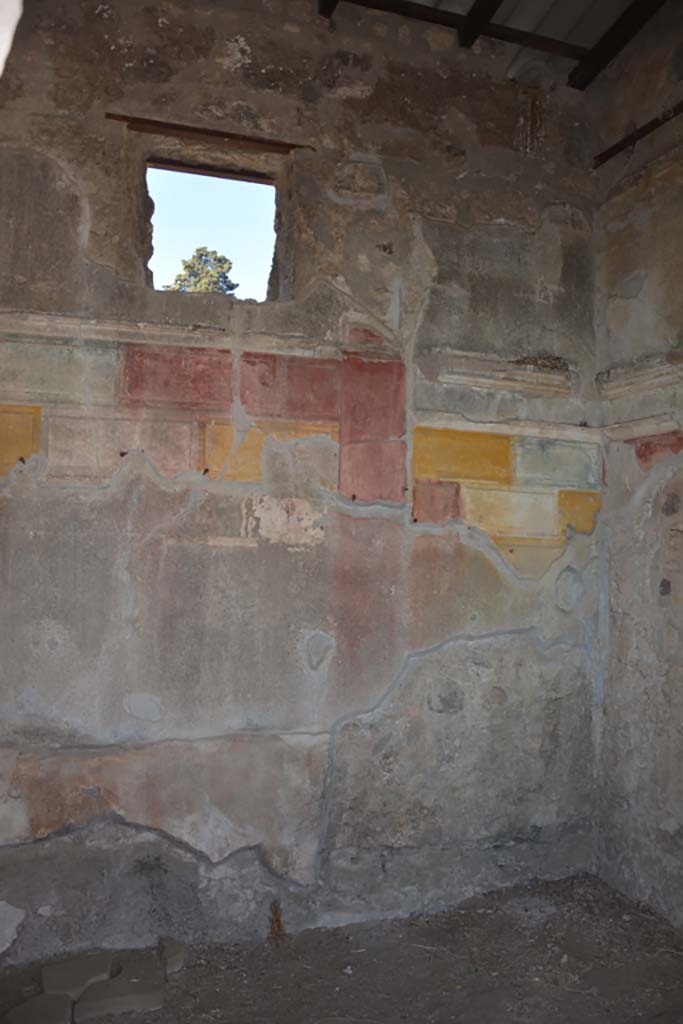
VI.14.38 Pompeii. September 2019.
Looking towards west wall at north end.
Foto Annette Haug, ERC Grant 681269 DÉCOR.
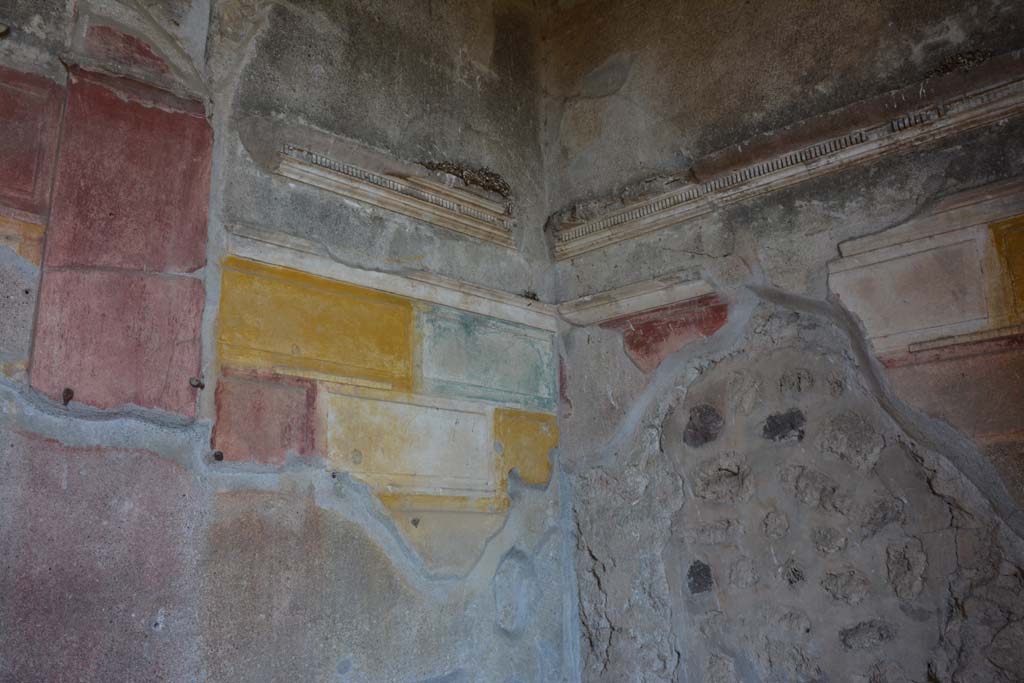
VI.14.38 Pompeii. September 2019. Upper west wall at north end,
north-west corner and north wall.
Foto Annette Haug, ERC
Grant 681269 DÉCOR.
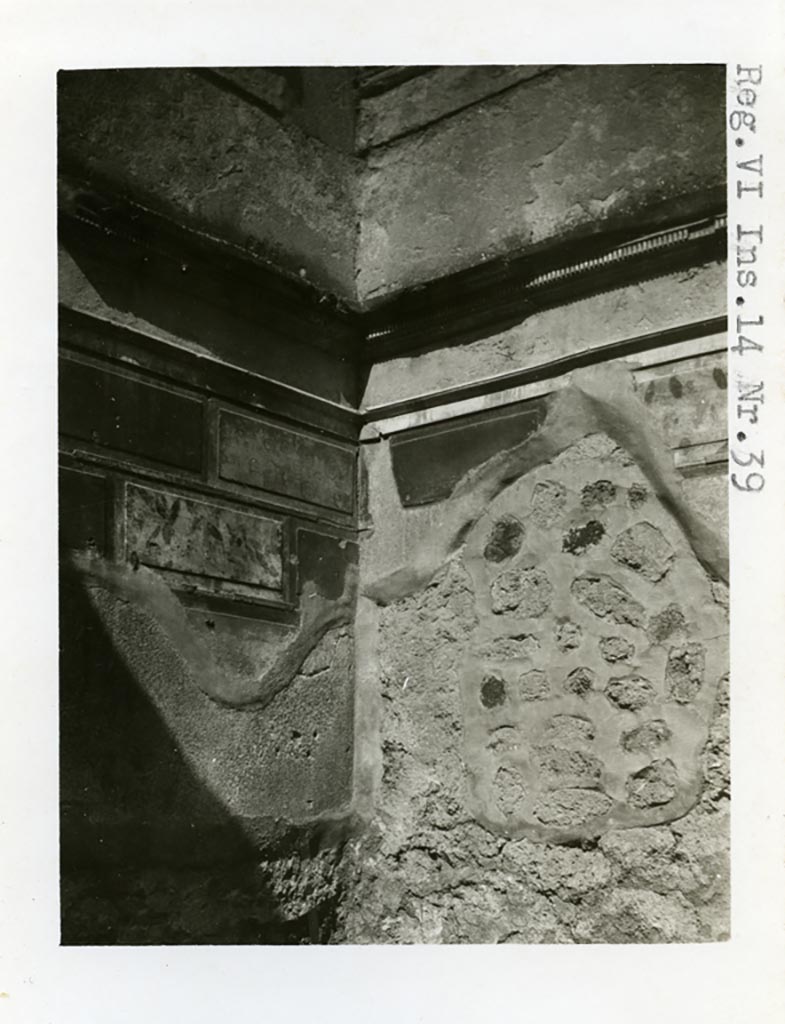
VI.14.38 Pompeii but numbered as VI.14.39. Pre-1937-39.
North-west corner of cubiculum on north side of entrance doorway.
Photo courtesy of American Academy in Rome, Photographic Archive. Warsher collection no. 1812.
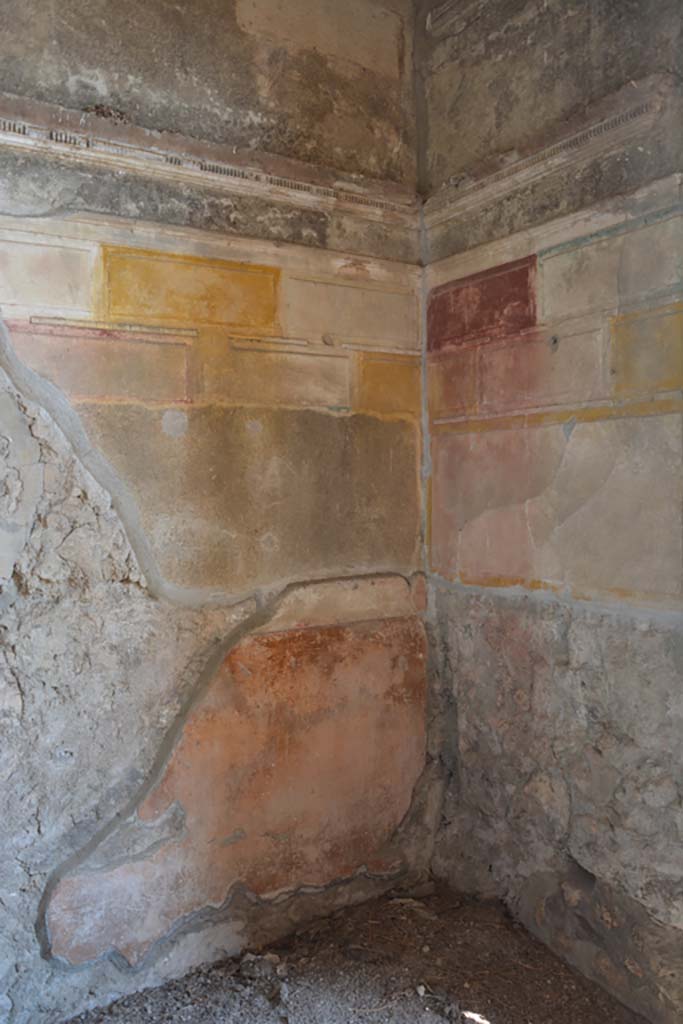
VI.14.38 Pompeii. September 2019. North wall at east end in
north-east corner.
Foto Annette Haug, ERC
Grant 681269 DÉCOR.
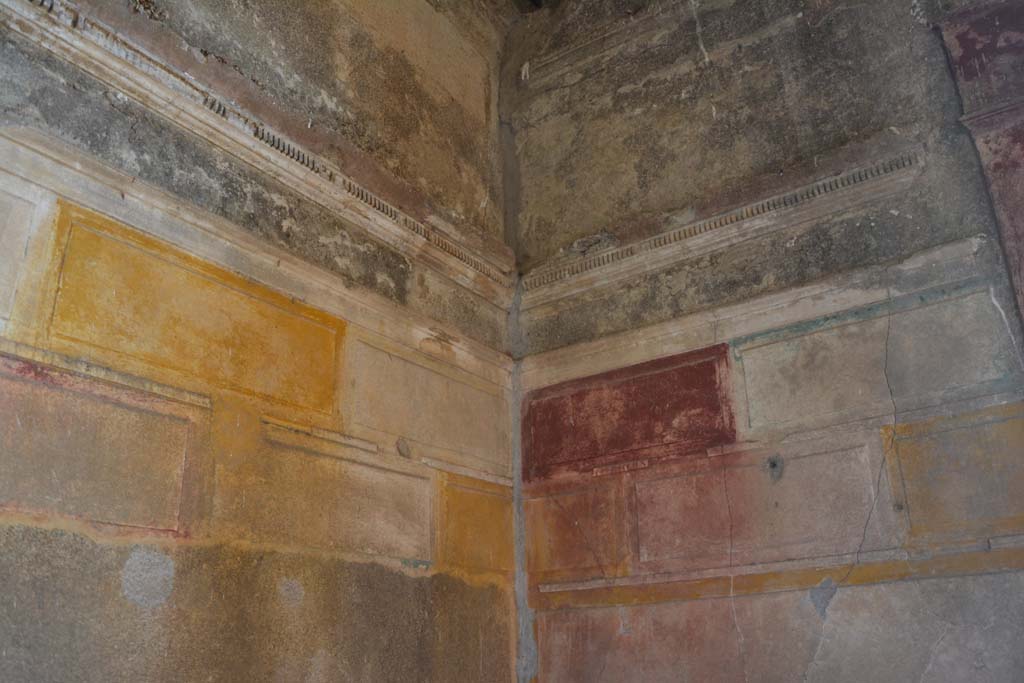
VI.14.38 Pompeii. September 2019. Detail of upper north and east
walls from north-east corner.
Foto Annette Haug, ERC
Grant 681269 DÉCOR.
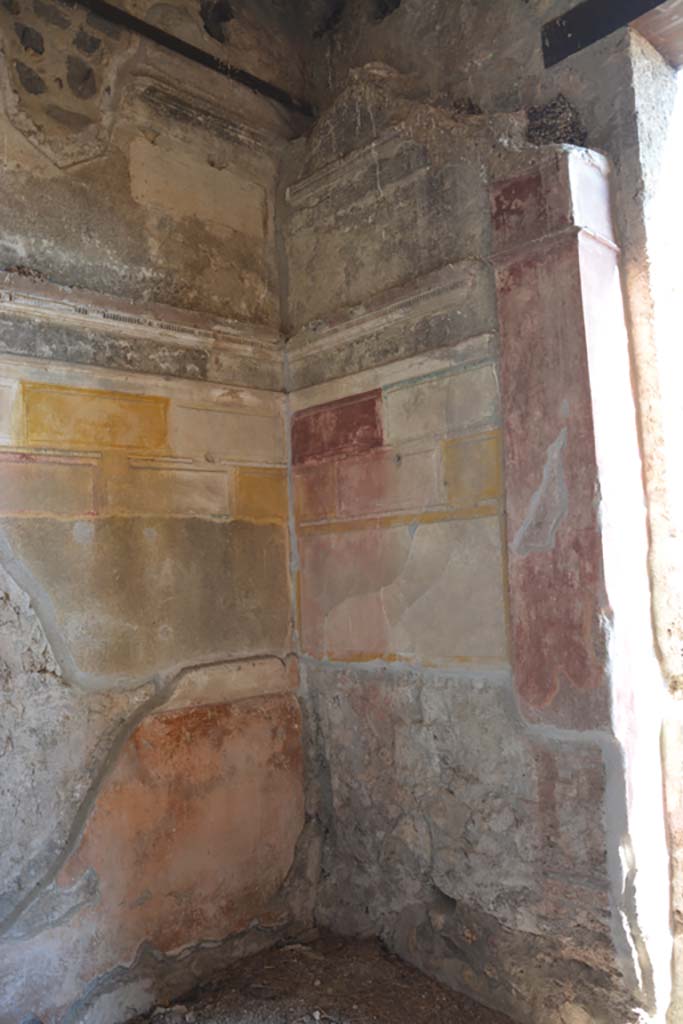
VI.14.38 Pompeii. September 2019. North-east corner.
Foto Annette Haug, ERC
Grant 681269 DÉCOR.
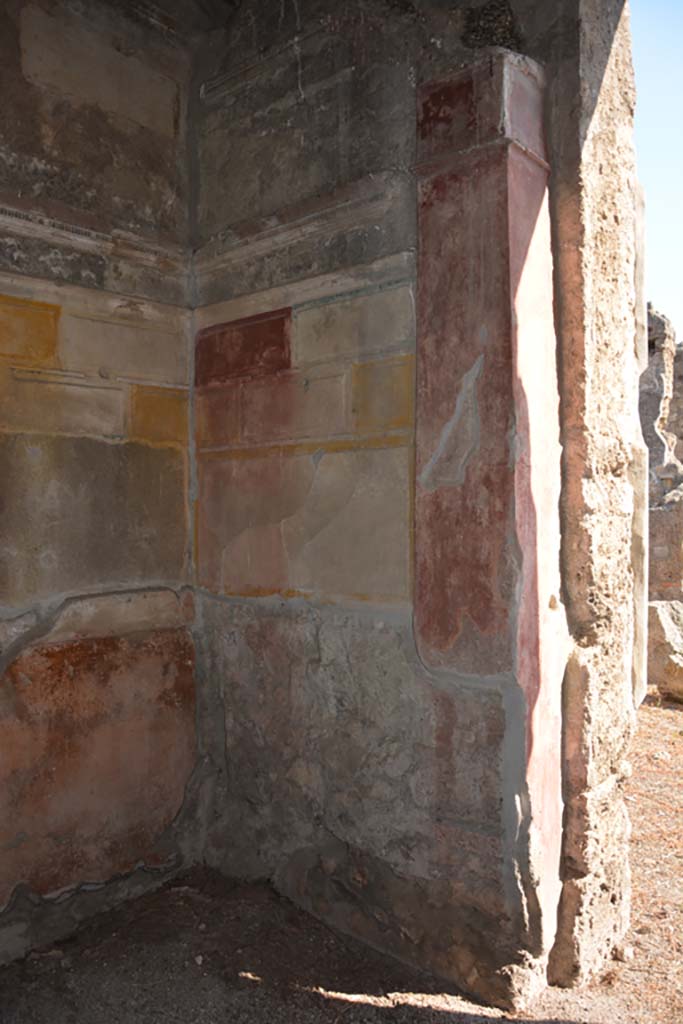
VI.14.38 Pompeii. September 2019.
North-east corner, with doorway to atrium in east wall.
Foto Annette Haug, ERC
Grant 681269 DÉCOR.
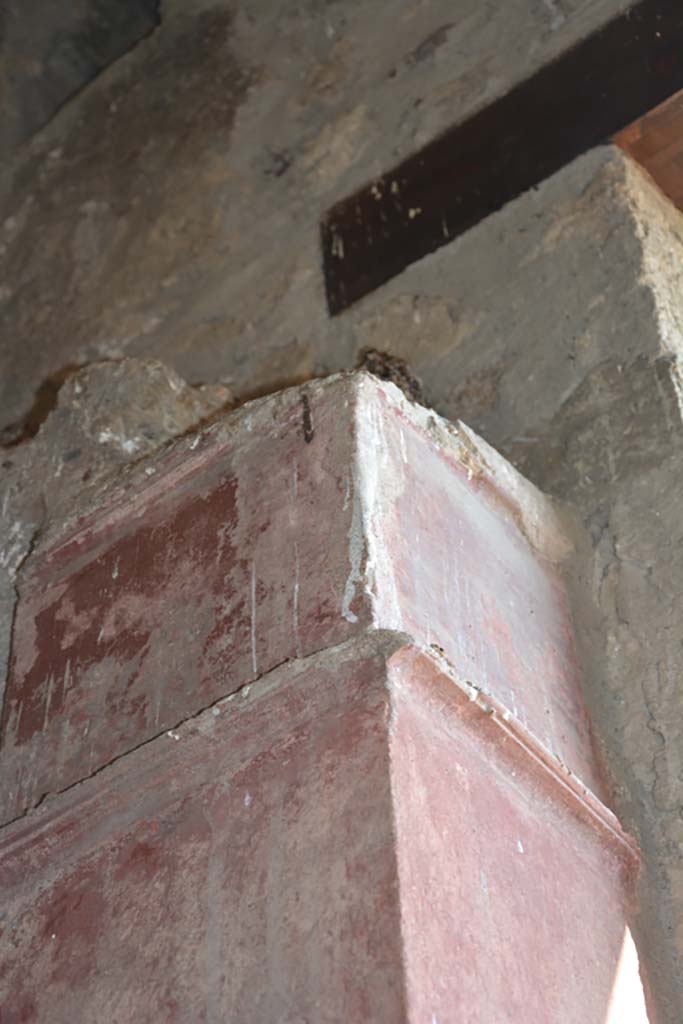
VI.14.38 Pompeii. September 2019.
Detail from east wall of cubiculum on north side of entrance
corridor.
Foto Annette Haug, ERC
Grant 681269 DÉCOR.
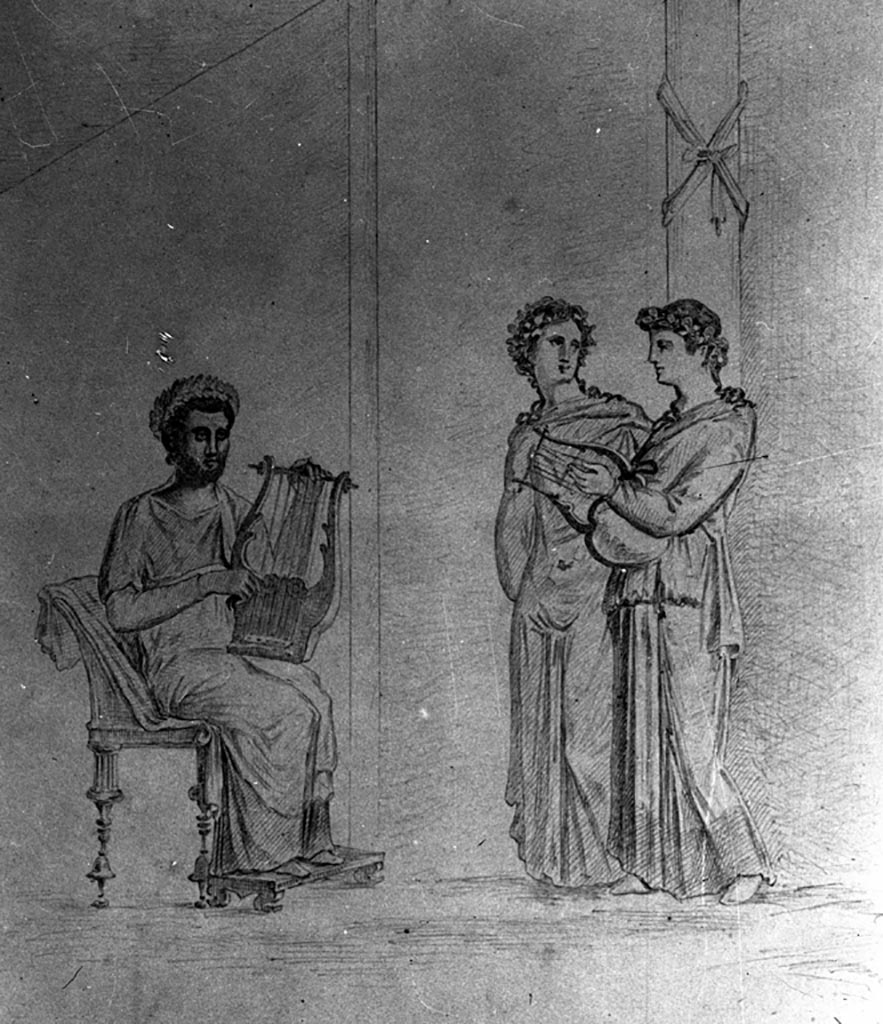
VI.14.38 Pompeii. W.86. Drawing of Pindar and Corinna.
According to Schefold, the painting was found in the triclinium (e) in the north-east corner of the atrium, on the door (south) wall.
See Schefold, K., 1957. Die Wände Pompejis. Berlin: De Gruyter. (p.136)
According to Schefold, found in room “e” on the north side of the atrium, was a painting of Pindar, Myrtis and Korinna.
See Schefold, K., 1962. Vergessenes Pompeji. Bern: Francke, (p. 82 and Picture on 55,1)
See Sogliano, A., 1879. Le pitture murali campane scoverte negli anni 1867-79. Napoli: Giannini. (p. 132, no. 644, described as a musical contest).
According to Bragantini, this painting was found in the centre of the south wall of triclinium (e).
See
Bragantini, de Vos, Badoni, 1983. Pitture e Pavimenti di Pompei, Parte 2. Rome: ICCD. (p.293)
Photo by Tatiana
Warscher. Photo © Deutsches Archäologisches Institut, Abteilung Rom, Arkiv.
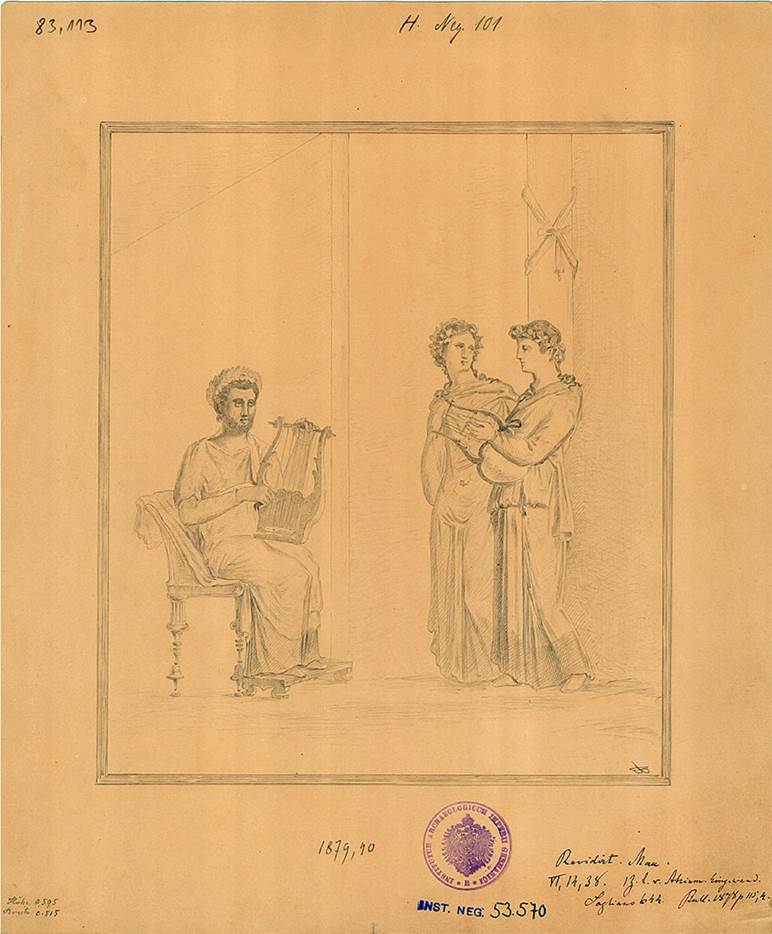
VI.14.38 Pompeii. 1879 drawing of painting of Pindar and Corinna from centre of the south wall of triclinium (e).
DAIR 83.113. Photo
© Deutsches Archäologisches Institut, Abteilung Rom, Arkiv.
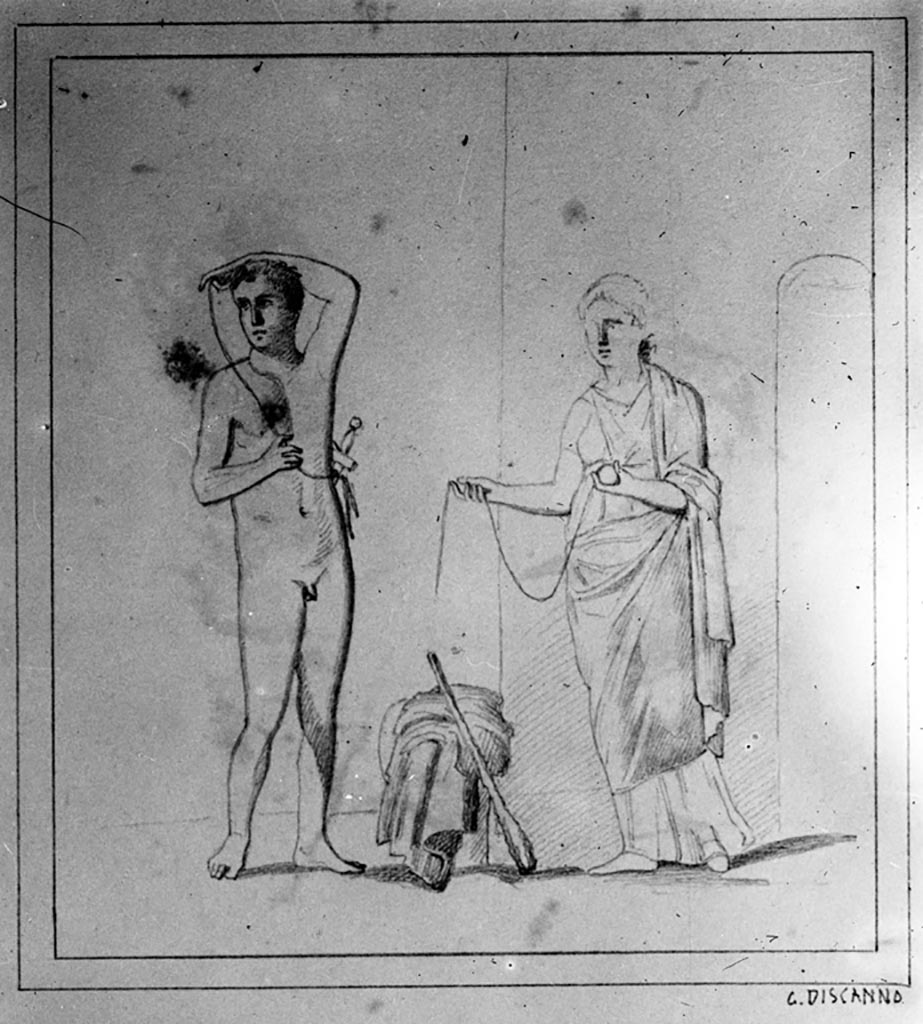
VI.14.38 Pompeii. W.87. Drawing by Discanno of wall painting of Theseus receiving the ball of string from Ariadne.
According to Schefold, this was found on the left wall of triclinium to the left of the tablinum, room “L”.
See Schefold, K.,
1957. Die Wände Pompejis. Berlin: De Gruyter. (p.136)
Photo by Tatiana
Warscher. Photo © Deutsches Archäologisches Institut, Abteilung Rom, Arkiv.
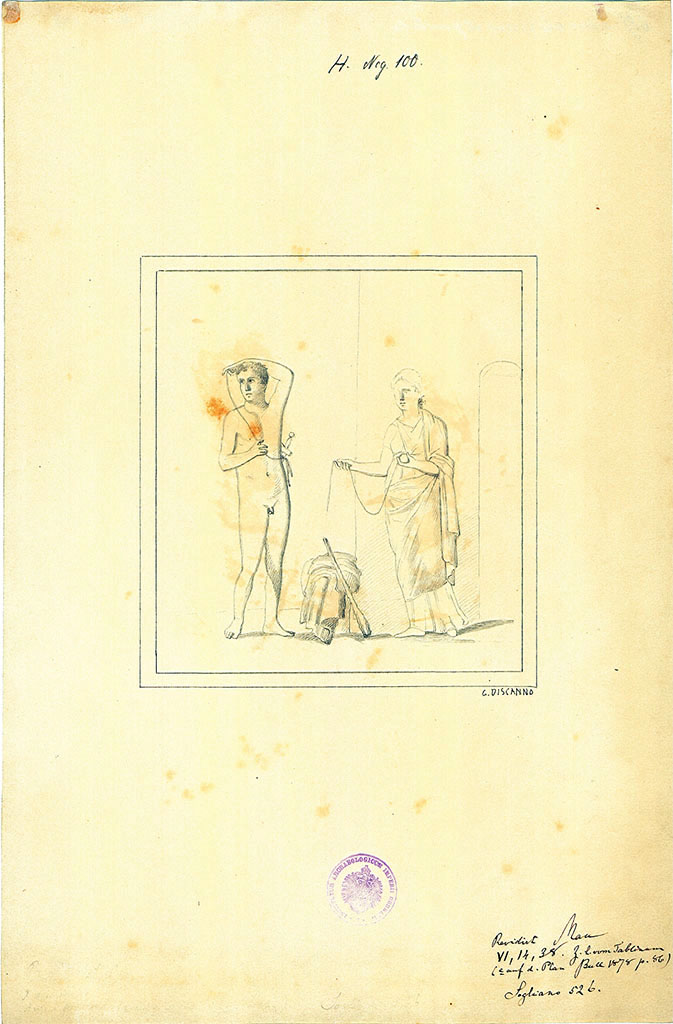
VI.14.38 Pompeii. Drawing by Discanno of wall painting of Theseus receiving the ball of string from Ariadne.
According to Schefold, this was found on the left wall of triclinium to the left of the tablinum, room “L”.
See Schefold, K.,
1957. Die Wände Pompejis. Berlin: De Gruyter. (p.136)
DAIR 83.112. Photo
© Deutsches Archäologisches Institut, Abteilung Rom, Arkiv.
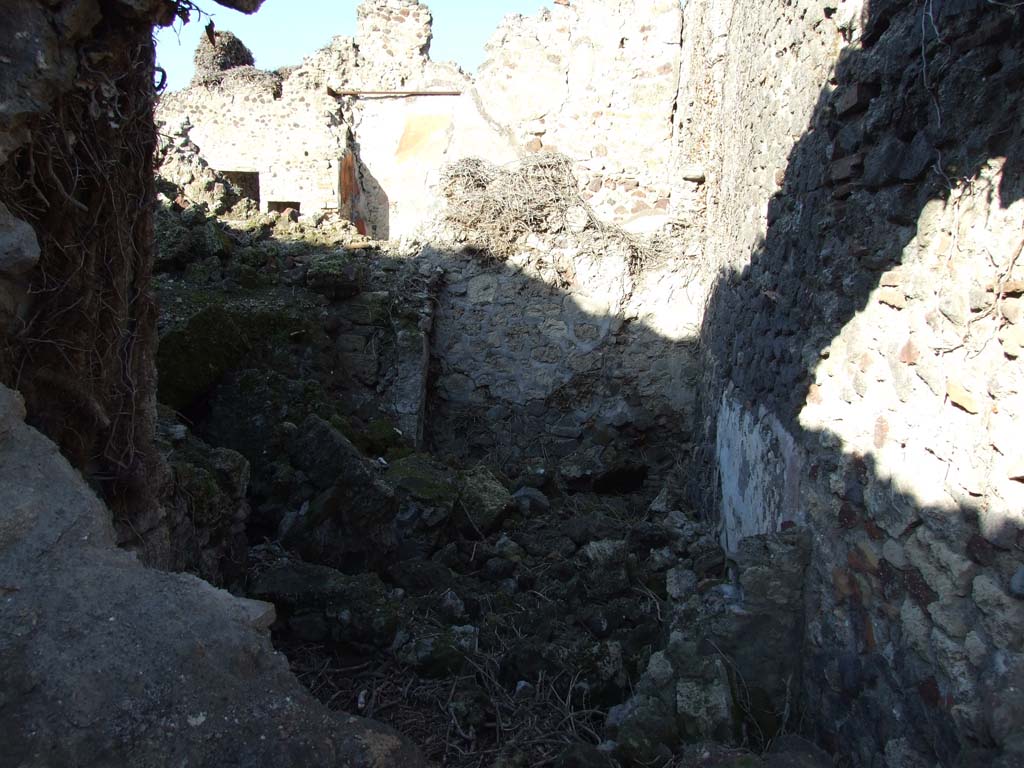
VI.14.38 Pompeii. December 2007. Looking north to rooms at rear (east) of peristyle, in background.
VI.14.39 is in foreground looking north into rear rooms. Taken from VI.14.22.
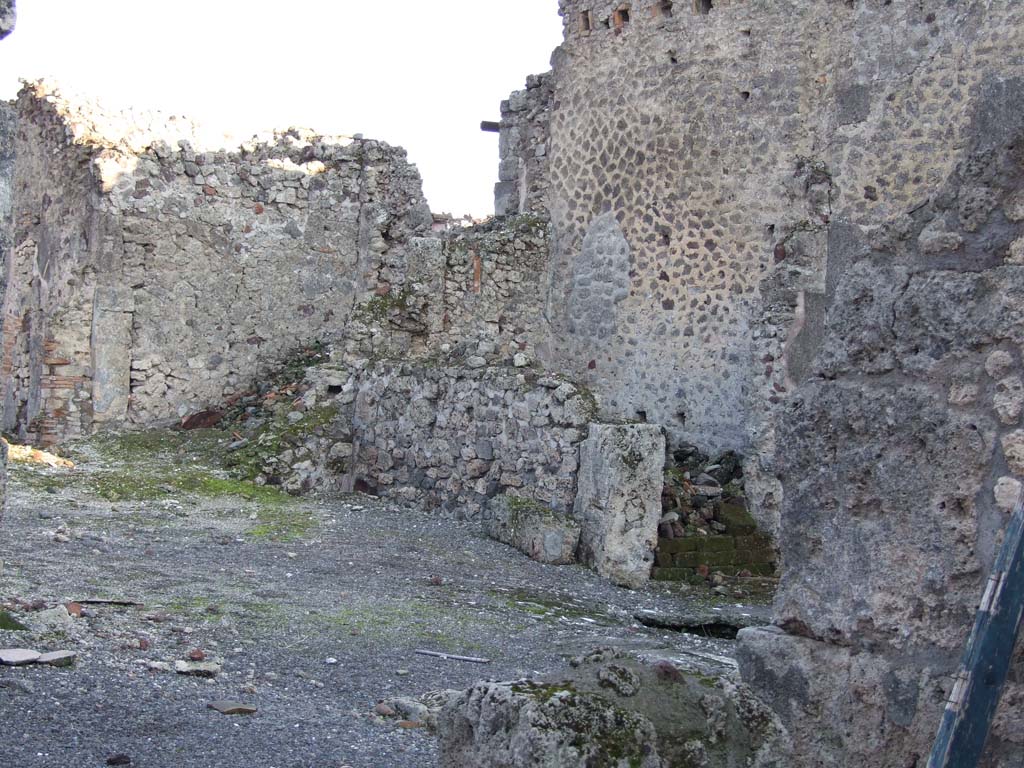
VI.14.38 Pompeii. December 2007. Looking south-east across to atrium of VI.14.39, Casa Lucrum Gaudium, also bombed in 1943.
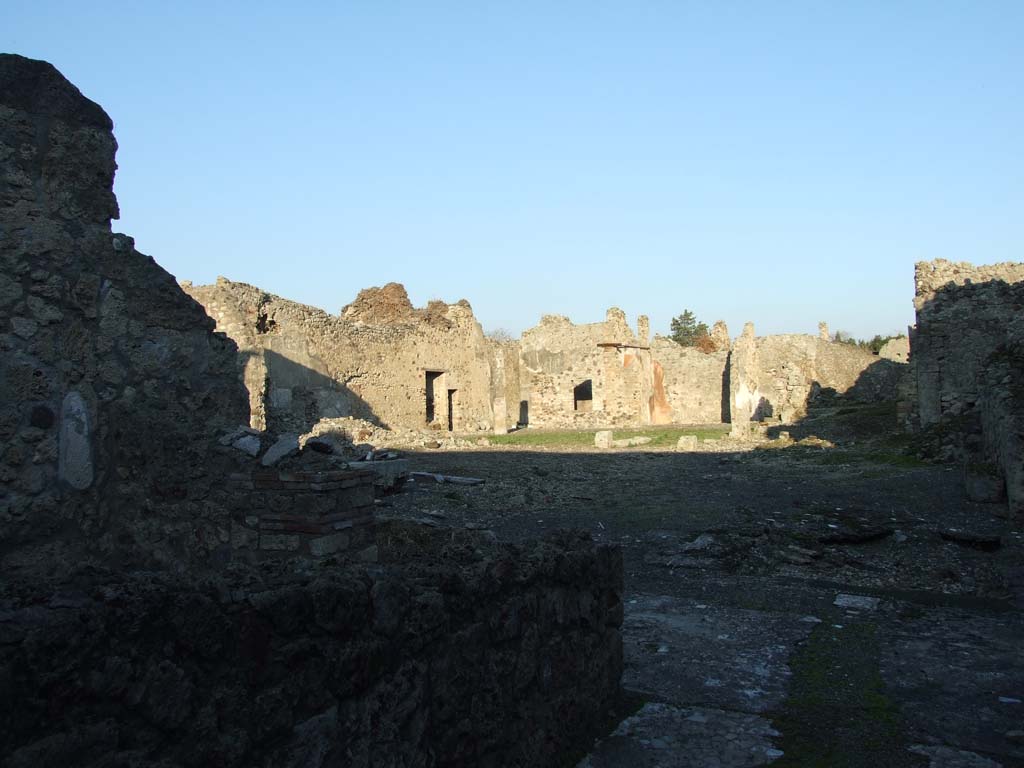
VI.14.38 Pompeii. December 2007. Looking east across area of two houses VI.14.38 and 39, destroyed by bombing in 1943.
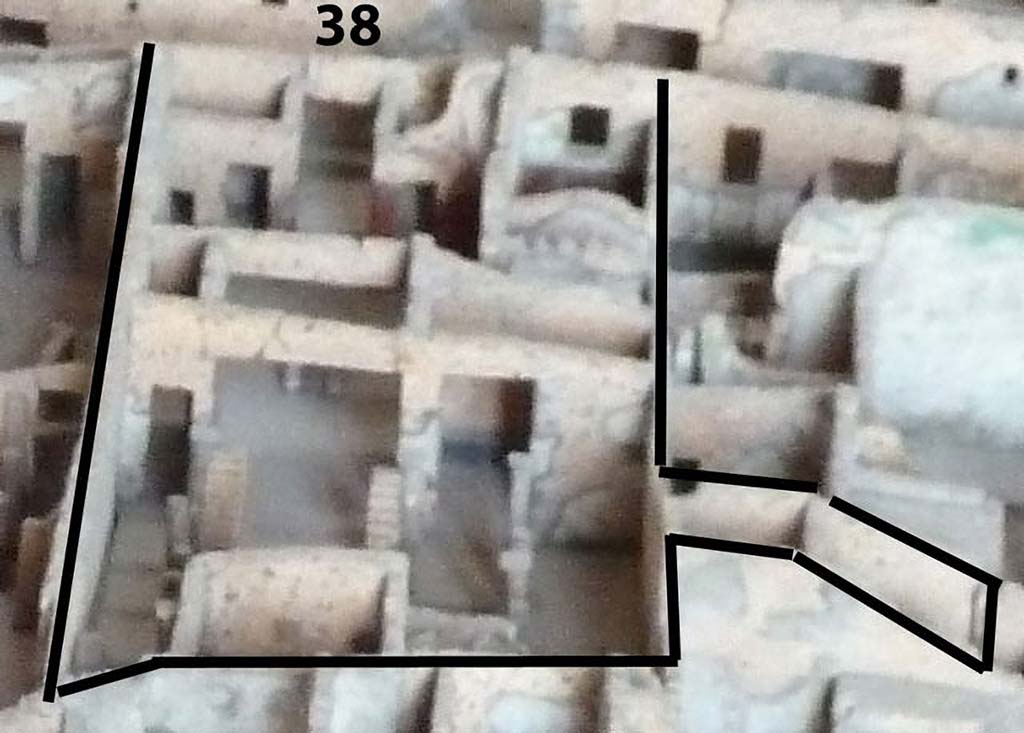
VI.14.38 Pompeii. Looking west, from rear, across cork model in Naples Archaeological Museum.
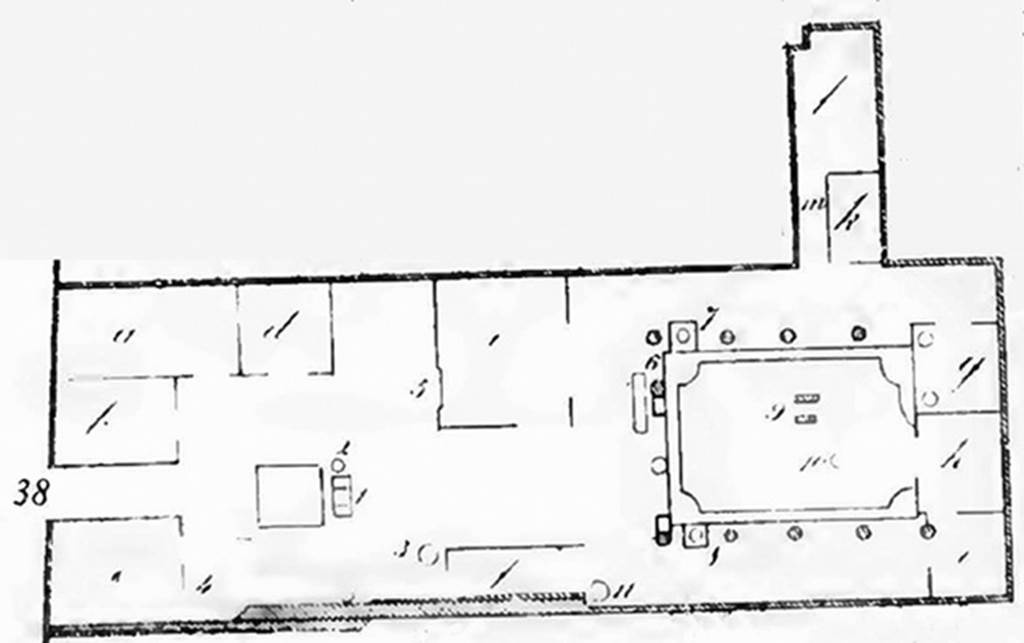
VI.14.38 Pompeii. Plan as shown in BdI 1878, p. 86.
For description, See
Bullettino dell’Instituto di
Corrispondenza Archeologica (DAIR), 1878, p. 109-120.
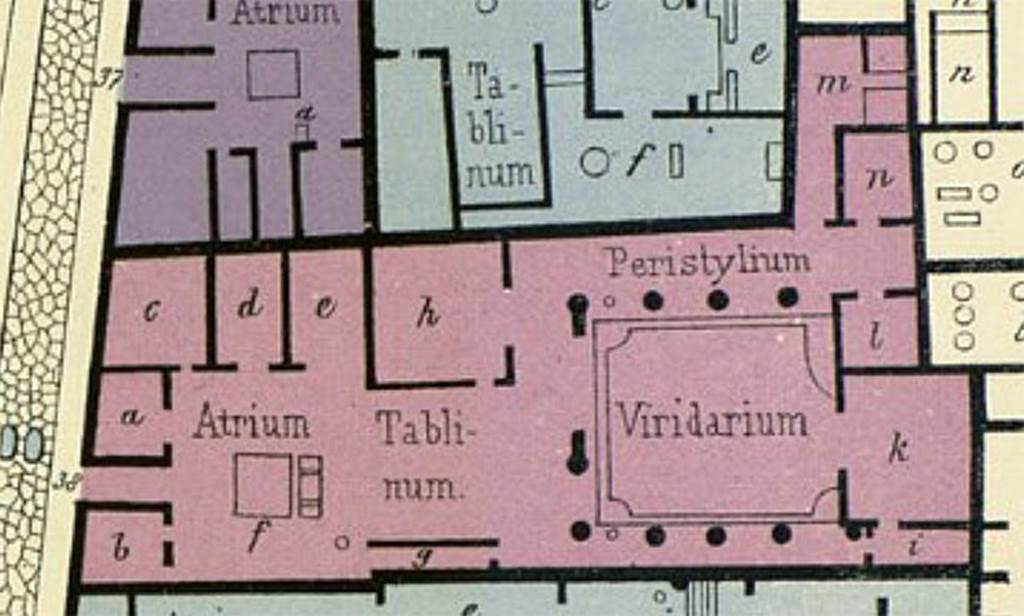
VI.14.38 Pompeii. Plan by Emile Presuhn showing entrance at VI.14.38.
See Presuhn E., 1878. Pompei : Les dernières fouilles de 1874 a 1878. Leipzig : Weigel, Section V, Taf. I.