VI.14.37 Pompeii. Domus, and Officina
lignaria of Potitus.
Excavated 1877.
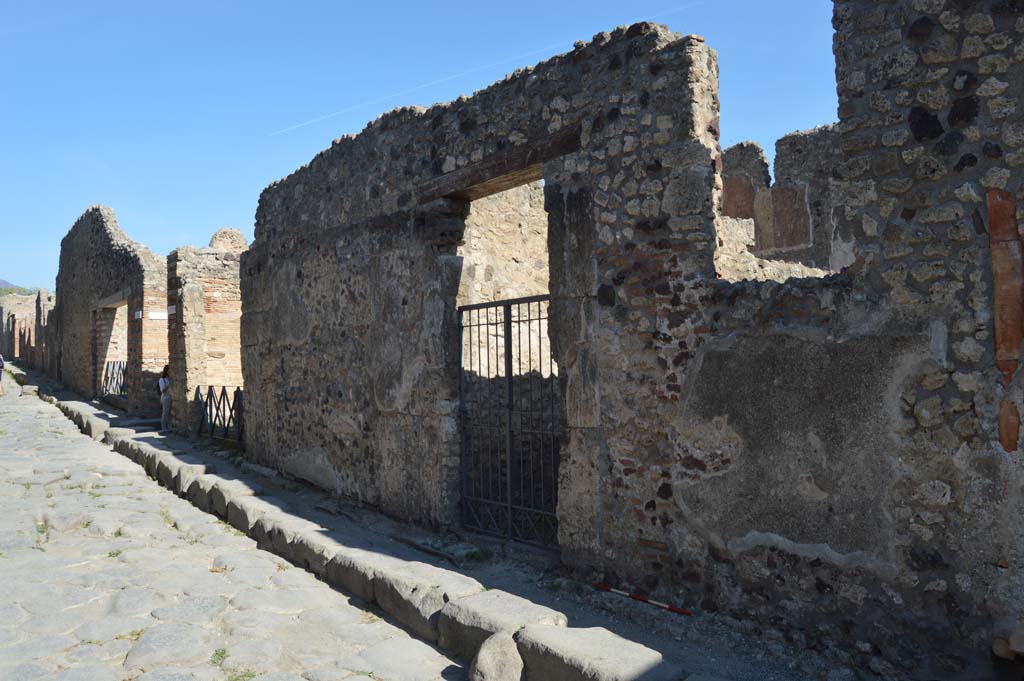
Foto Taylor Lauritsen, ERC Grant 681269 DÉCOR.
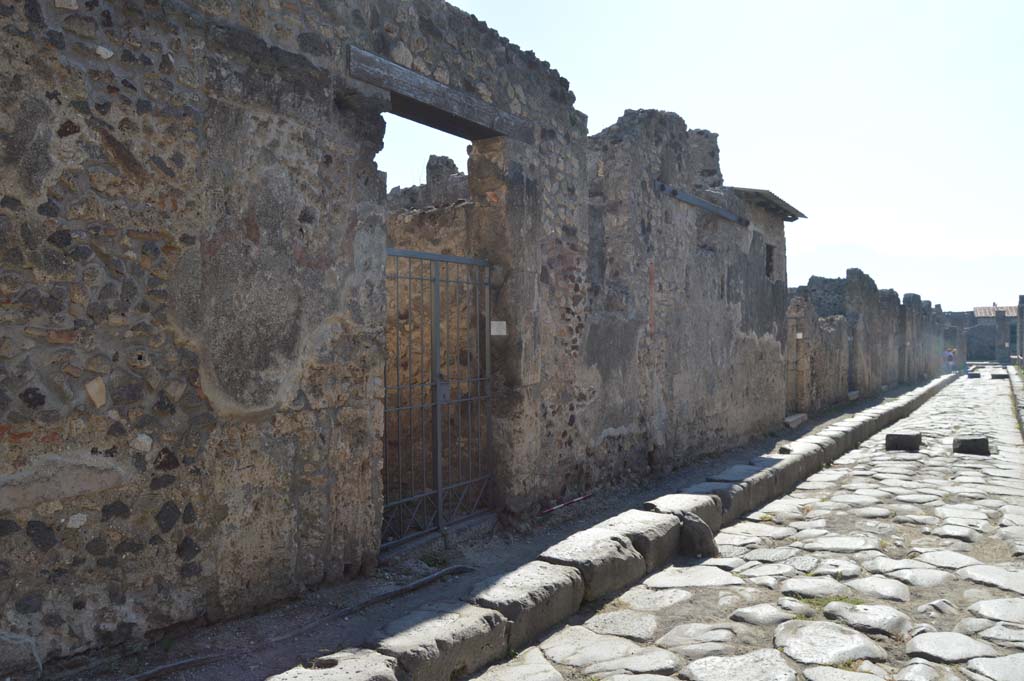
VI.14.37 Pompeii. October 2017.
Looking south along east side
of Vicolo dei Vettii towards junction with Via della Fortuna, on right.
Foto Taylor Lauritsen, ERC Grant 681269 DÉCOR.
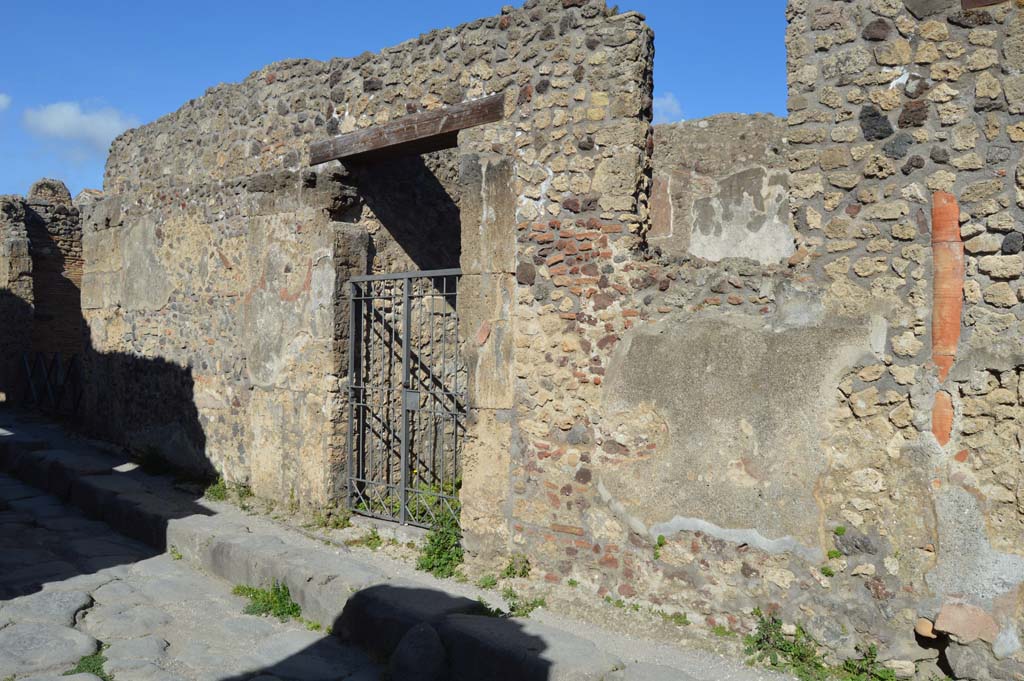
VI.14.37 Pompeii. March 2019.
Looking north-east towards entrance doorway and front façade.
Foto Taylor Lauritsen, ERC Grant 681269 DÉCOR.
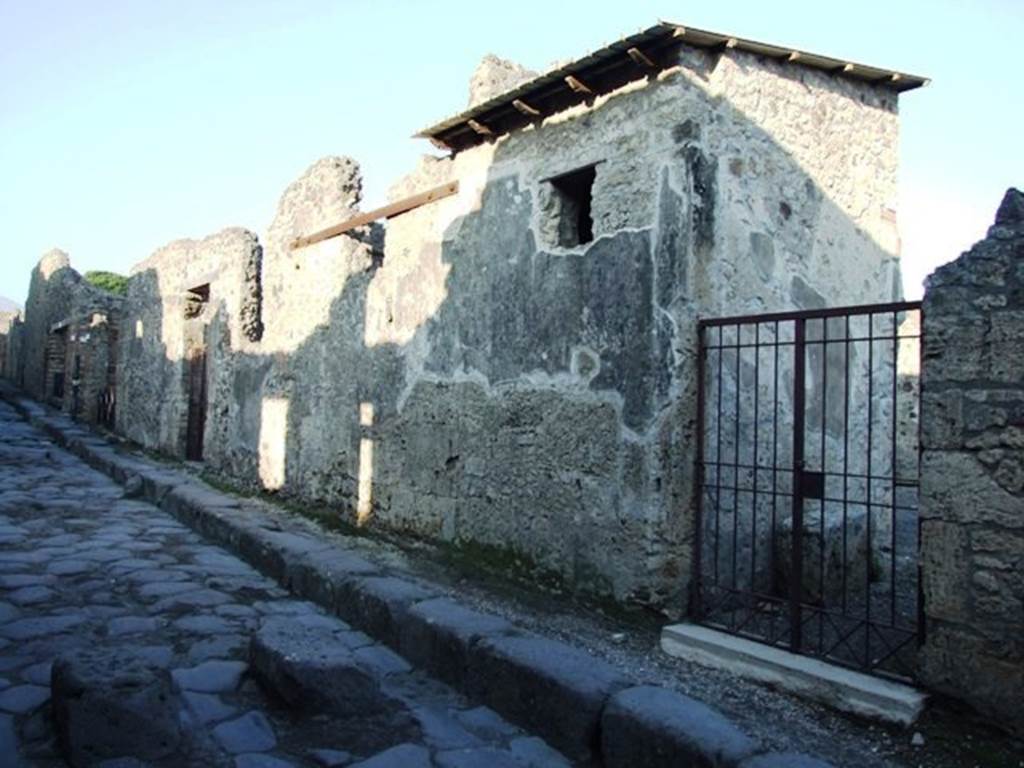
Wall between VI.14.37 and VI.14.38 on Vicolo dei Vettii, December 2007.
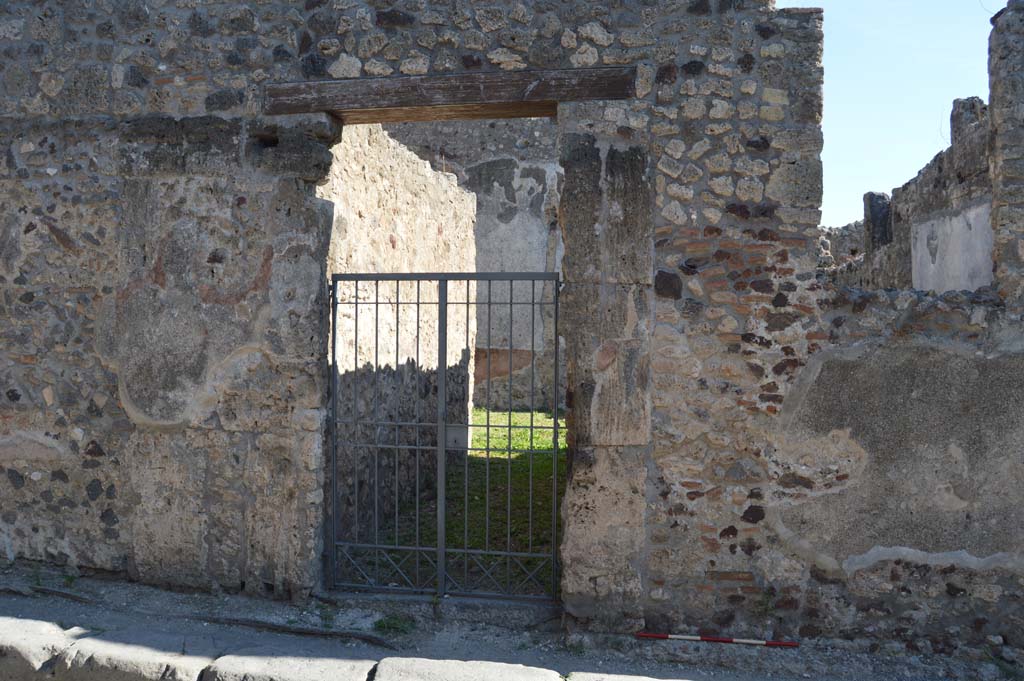
VI.14.37 Pompeii. October 2017. Looking east
into entrance doorway.
Foto Taylor Lauritsen, ERC
Grant 681269 DÉCOR.
![VI.14.37 Pompeii. December 2005. Entrance doorway. According to Della Corte, this was a modest house furnished with an upper floor, from which space for the Bar of Salvius had been taken originally. Probably the upper floor was used for living in, and the lower floor was occupied by the workshop. The paintings that adorned the right pilaster of the entrance, showed the industry that was carried on here. Mercury with purse and caduceus, and a carpenter sawing a beam with the help of a lad. On a seal/signet found here was –
Potiti
Popp. Sabini
(P.P.S) [CIL X 8058, 71]
See Della Corte, M., 1965. Case ed Abitanti di Pompei. Napoli: Fausto Fiorentino. (p.83, S.75)
According to Epigraphik-Datenbank Clauss/Slaby (See www.manfredclauss.de), this read –
Potiti
Popp(aei) Sabini
P(otiti) P(oppaei) S(abini) [CIL X 8058, 71]](6%2014%2037_files/image009.jpg)
VI.14.37 Pompeii. December 2005. Entrance doorway.
According to Della Corte, this was a modest house furnished with an upper floor, from which space for the Bar of Salvius had been taken originally.
Probably the upper floor was used for living in, and the lower floor was occupied by the workshop.
The paintings that adorned the right pilaster of the entrance, showed the industry that was carried on here.
Mercury, with purse and caduceus, and a carpenter sawing a beam with the help of a lad.
On a seal/signet found here was –
Potiti
Popp. Sabini
(P.P.S) [CIL X 8058, 71]
See Della Corte,
M., 1965. Case ed Abitanti di Pompei.
Napoli: Fausto Fiorentino. (p.83, S.75)
According to Epigraphik-Datenbank Clauss/Slaby (See www.manfredclauss.de), this read –
Potiti
Popp(aei) Sabini
P(otiti)
P(oppaei) S(abini) [CIL X 8058, 71]
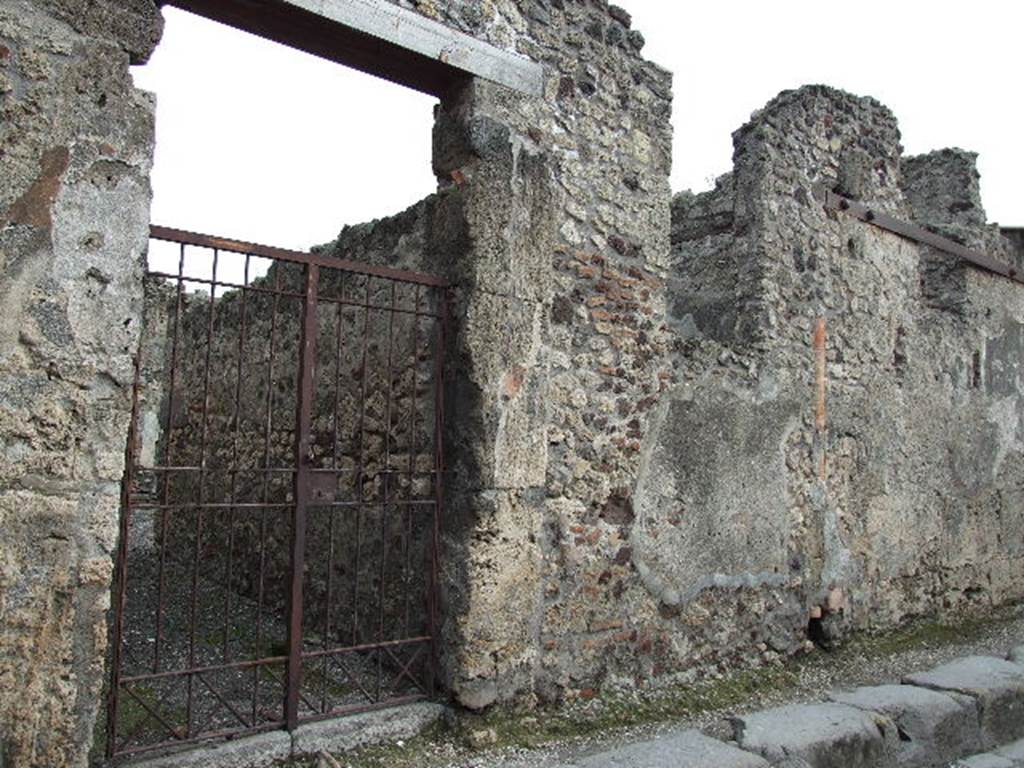
VI.14.37 Pompeii. December 2007.To right of entrance (south side), Frohlich says there were two wall paintings.
On the left-hand side of the right wall was a picture of two men, at either end of a large saw, cutting a beam.
On the right-hand side of the right wall, the picture was of Mercury.
See Fröhlich, T., 1991, Lararien und Fassadenbilder in den Vesuvstädten. Mainz: von Zabern. (F42: p.324).
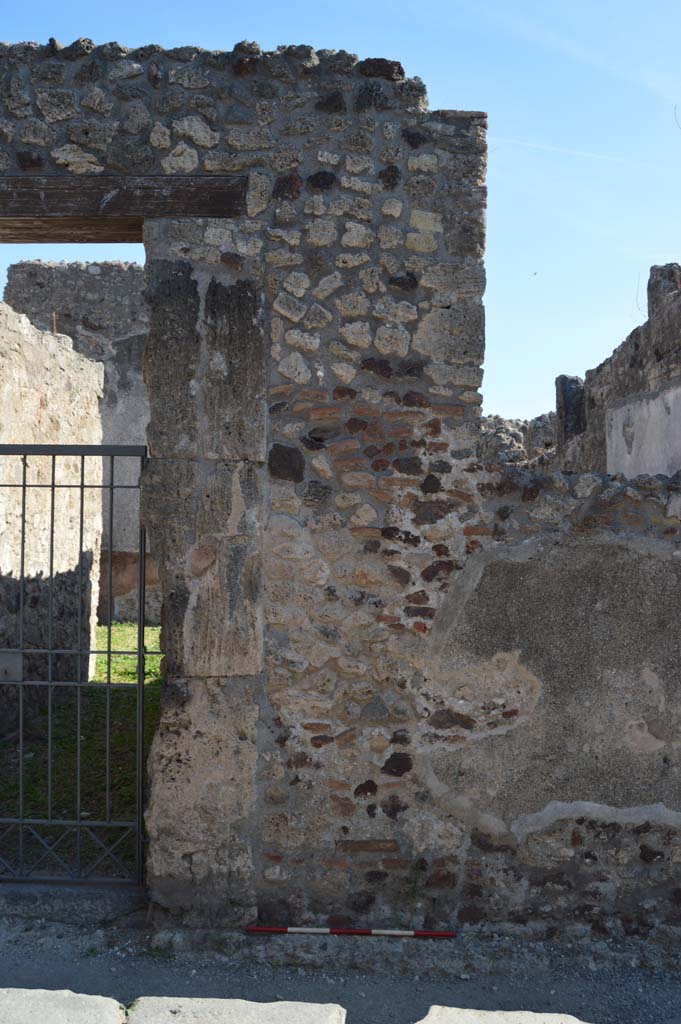
VI.14.37 Pompeii. October 2017. Detail of right
(south) side of entrance doorway.
Foto Taylor Lauritsen, ERC Grant 681269 DÉCOR.
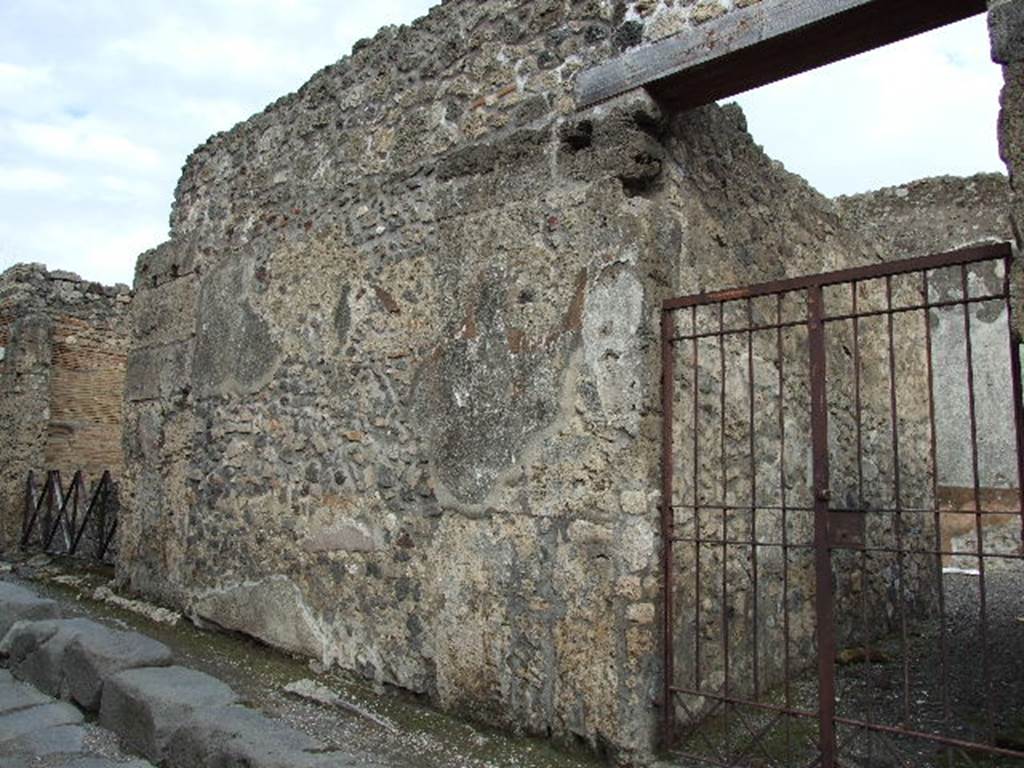
VI.14.37 Pompeii. December 2007. Wall to the left of entrance.
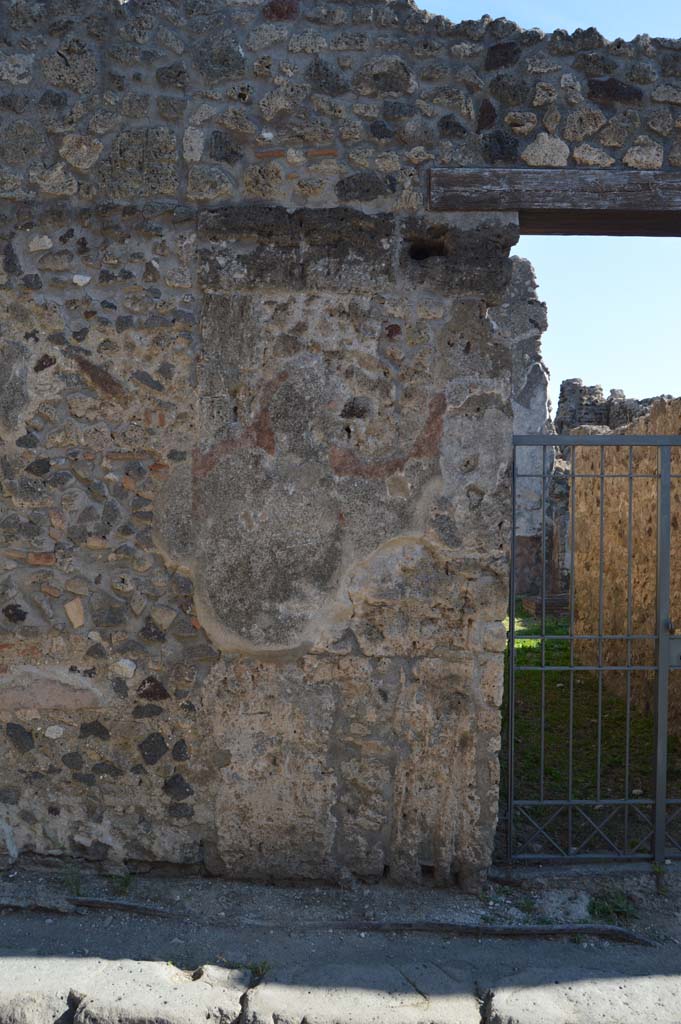
VI.14.37 Pompeii. October 2017. Detail of left
(north) side of entrance doorway.
Foto Taylor Lauritsen, ERC Grant 681269 DÉCOR.
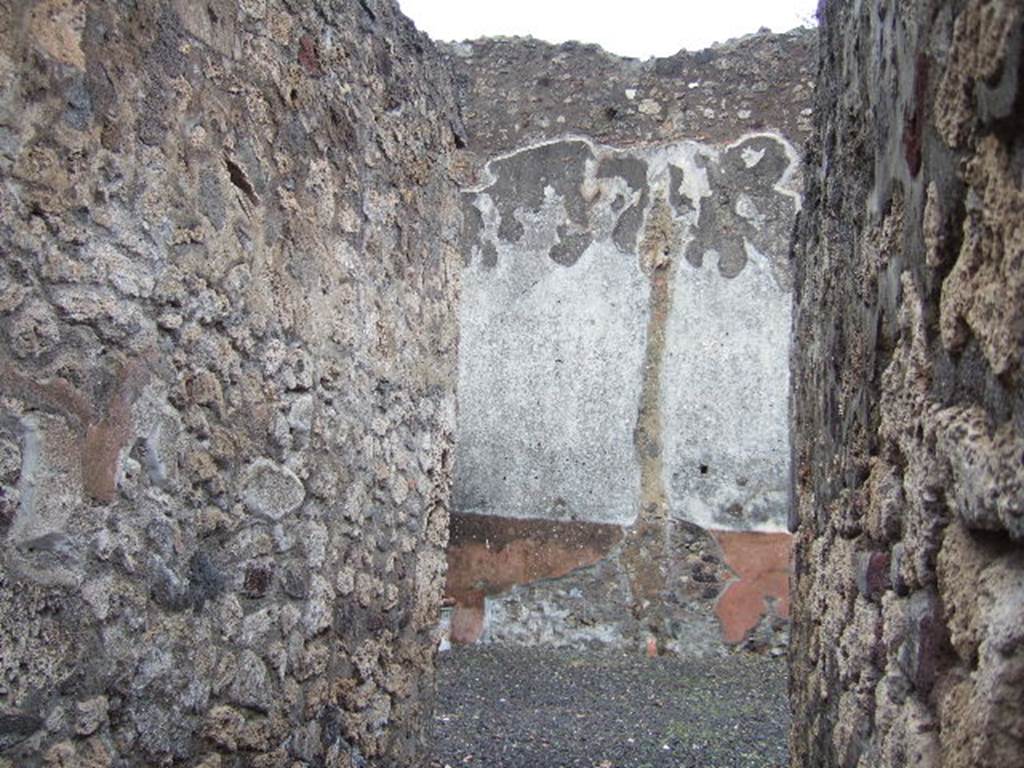
VI.14.37 Pompeii. December 2005. Looking east across atrium.
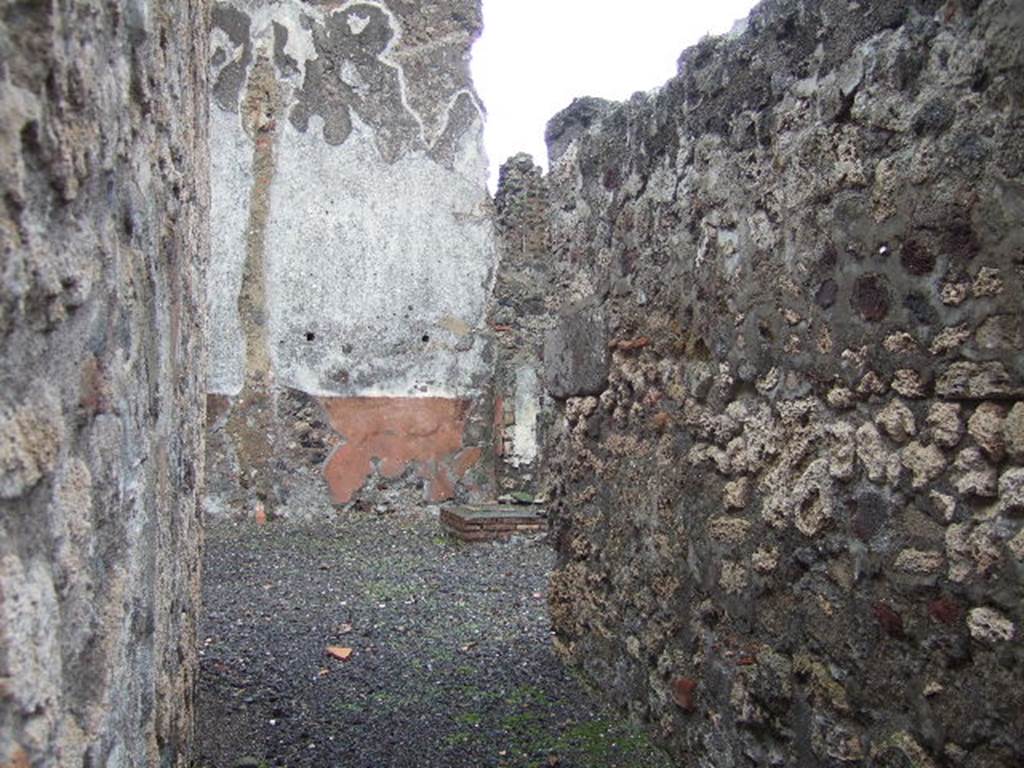
VI.14.37 Pompeii. December 2005. Looking across atrium towards east wall, from entrance doorway.
![VI.14.37 Pompeii. According to Presuhn, this scratched inscription was found on a white painted wall in the atrium.
CHADIUS VENTRIO
EQUES NATUS ROMANUS INTER
BETA ET BRASSICA
Which he translates as:
Chadius Ventrio, Roman knight born between cabbage and beets
See Presuhn E., 1878. Pompeji: Die Neuesten Ausgrabungen von 1874 bis 1878. Leipzig: Weigel. (Abtheilung V, Plate III, p. 5).
According to Epigraphik-Datenbank Clauss/Slaby (See www.manfredclauss.de) this reads as
G(aius!) Hadius Ventrio
eques natus Romanus inter
beta(m) et brassica(m) [CIL IV 4533]](6%2014%2037_files/image021.jpg)
VI.14.37 Pompeii. According to Presuhn, this scratched inscription was found on a white painted wall in the atrium.
CHADIUS VENTRIO
EQUES NATUS
ROMANUS INTER
BETA ET BRASSICA
Which he translates as:
Chadius Ventrio, Roman knight born between cabbage and beets
See Presuhn E., 1878. Pompeji: Die Neuesten Ausgrabungen von 1874 bis 1878. Leipzig: Weigel. (Abtheilung V, Plate III, p. 5).
According to Epigraphik-Datenbank Clauss/Slaby (See www.manfredclauss.de) this reads as
G(aius!) Hadius
Ventrio
eques natus
Romanus inter
beta(m) et
brassica(m) [CIL IV 4533]