VI.14.27 Pompeii. Casa di
Memmius Auctus.
Excavated 1873 and 1875.
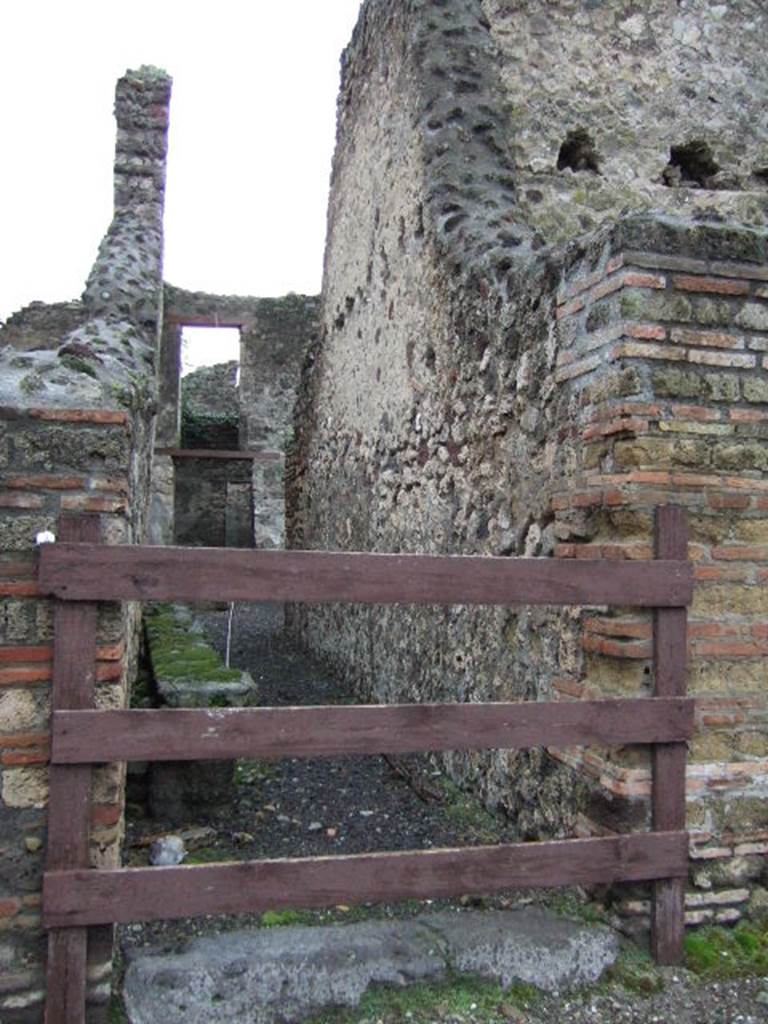
VI.14.27 Pompeii.
December 2005. Entrance doorway.
According to BdI, this was a very simple and narrow house.
The fauces, or entrance corridor, was 7.90m long.
See Bullettino dell’Instituto di Corrispondenza
Archeologica (DAIR), 1876, (p.46-48).
![VI.14.27 Pompeii. September 2004. Looking west along entrance corridor towards a doorway leading to the small room, perhaps the kitchen, in the south-west corner of the atrium. The room above would have been accessible by stairs leaning against the south wall of the atrium.
According to Wallace-Hadrill, this corridor led to the atrium and five rooms, wine containers were found at the rear. It was thought to be an establishment of a vinarius (wine-dealer). No decoration was found in any room.
See Wallace-Hadrill, A. (1994): Houses and Society in Pompeii and Herculaneum. Princeton Univ. Pr., (p.213)
According to Della Corte, this house was named following the discovery of a seal/signet belonging to – M. Memmius Auctus [CIL X 8058, 50]
See Della Corte, M., 1965. Case ed Abitanti di Pompei. Napoli: Fausto Fiorentino. (p.96, S.59 with Note 1)
According to Jashemski, in a small courtyard at the rear of the house, excavated in 1875, four small marble busts of philosophers were found. They are now in Naples Archaeological Museum with inventory numbers 110872-110875. They had been cut down, as if to be placed back to back as double-herms, but no two herms, according to Dwyer, seemed to fit together. Perhaps they were being stored here. There were also four terracotta dolias embedded in the soil.
See Jashemski, W. F., 1993. The Gardens of Pompeii, Volume II: Appendices. New York: Caratzas. (p.150)
See Dwyer: Pomp Sculpture, p.128.
According to Garcia y Garcia, several dividing and perimeter walls were destroyed due to the 1943 bombing. Also the impluvium and stairs to the south of the atrium, and the collapse of the omaba in the west wall of the large room to the north of the atrium, that now appears open never having been built again.
See Garcia y Garcia, L., 2006. Danni di guerra a Pompei. Rome: L’Erma di Bretschneider. (p.91)](6%2014%2027_files/image005.jpg)
VI.14.27 Pompeii. September 2004.
Looking west along entrance corridor towards a doorway leading to the small room, perhaps the kitchen, in the south-west corner of the atrium.
The room above would have been accessible by stairs leaning against the south wall of the atrium.
According to Wallace-Hadrill, this corridor led to the atrium and five rooms, wine containers were found at the rear.
It was thought to be an establishment of a vinarius (wine-dealer). No decoration was found in any room.
See Wallace-Hadrill, A. (1994): Houses and Society in Pompeii and Herculaneum. Princeton Univ. Pr., (p.213)
According to Della Corte, this house was named following the discovery of a seal/signet belonging to –
M. Memmius Auctus [CIL X 8058, 50]
See Della Corte,
M., 1965. Case ed Abitanti di Pompei. Napoli:
Fausto Fiorentino. (p.96, S.59 with Note 1)
According to Jashemski, in a small courtyard at the rear of the house, excavated in 1875, four small marble busts of philosophers were found.
They are now in Naples Archaeological Museum with inventory numbers 110872-110875.
They had been cut down, as if to be placed back to back as double-herms, but no two herms, according to Dwyer, seemed to fit together.
Perhaps they were being stored here.
There were also four terracotta dolia embedded in the soil.
See Jashemski, W. F., 1993. The Gardens of Pompeii, Volume II: Appendices. New York: Caratzas. (p.150)
See Dwyer E: Pompeian Sculpture, p.128.
According to Garcia y Garcia, several dividing and perimeter walls were destroyed due to the 1943 bombing, also the impluvium and stairs to the south of the atrium, and the collapse of the doorway, walled up in antiquity, in the west wall of the large room to the north of the atrium, that now appears open never having been built again.
See Garcia y
Garcia, L., 2006. Danni di guerra a Pompei. Rome: L’Erma di Bretschneider. (p.91).
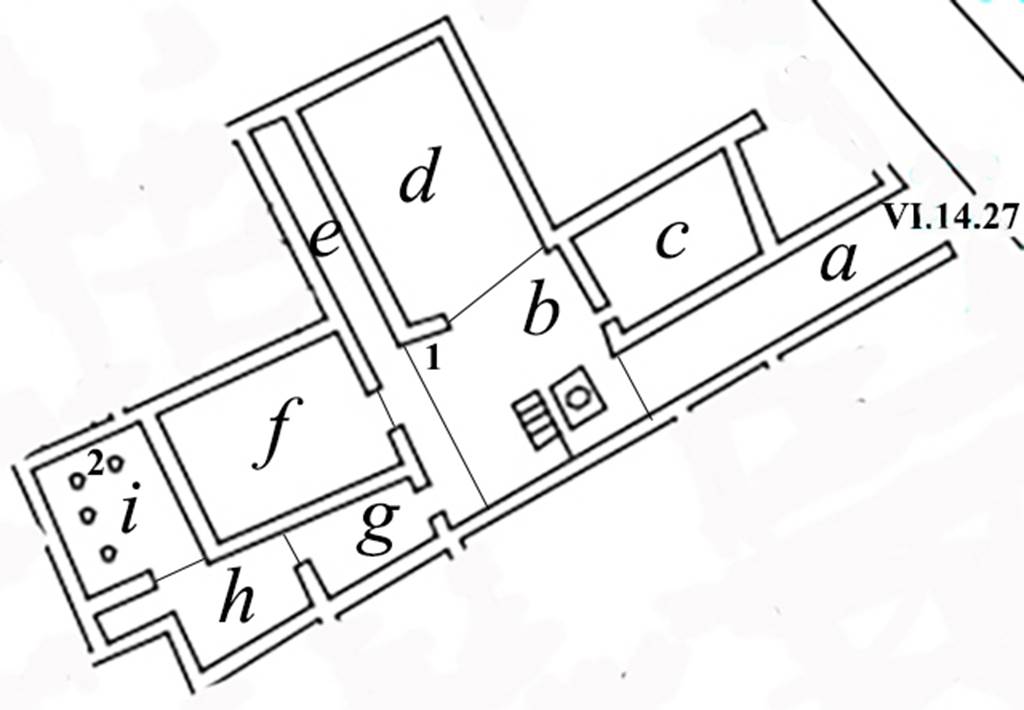
VI.14.27 Pompeii. Plan of house showing location of some of the finds.
In room “b”, at no. 1, was found
The statue of Venus Anadyomene. Now in Naples Archaeological Museum. Inventory number 110602.
In room “i”, at no. 2, were found
A marble bust of Epicurus. Now in Naples Archaeological Museum. Inventory number 110872.
A marble bust of bearded Pseudo-Seneca. Now in Naples Archaeological Museum. Inventory number 110873.
A marble herm of Dionysus. Now in Naples Archaeological Museum. Inventory number 110874.
A marble herm of a Dionysian female. Now in Naples Archaeological
Museum. Inventory number 110875.
See Carrella A. et al. Marmo Pompeiana nel Museo Archeologico Nazionale di Napoli. SAP 26: 2008. Roma: L’Erma di Bretschneider, pp. 92-95.
According to Boyce, in the south wall of the small in the south-west corner, room “h” (kitchen?), was a tall rectangular niche.
Its floor projected far beyond the surface of the wall.
Boyce added the note that in the small atrium “b” the following statuettes were found –
5 in bronze, of Isis, Anubis, an old seated man, and the two Lares.
1 in marble, of Venus Anadyomene, adorned with necklace and bracelets of gold.
1 in silver, of Harpocrates leaning upon a tree trunk, with a small dog on either side of him. Inventory number 110626?
1 of terracotta, of a goddess reclining on a couch.
At least the first five of these figures are thought to have been contained in a wooden chest, the lock of which was found by excavators.
Also found were a mirror, coins and small bronze objects.
See Boyce G. K., 1937. Corpus
of the Lararia of Pompeii. Rome:
MAAR 14. (p. 53, no. 202)
See Giornale di Scavi, N.S. 3, 1875, p. 172.
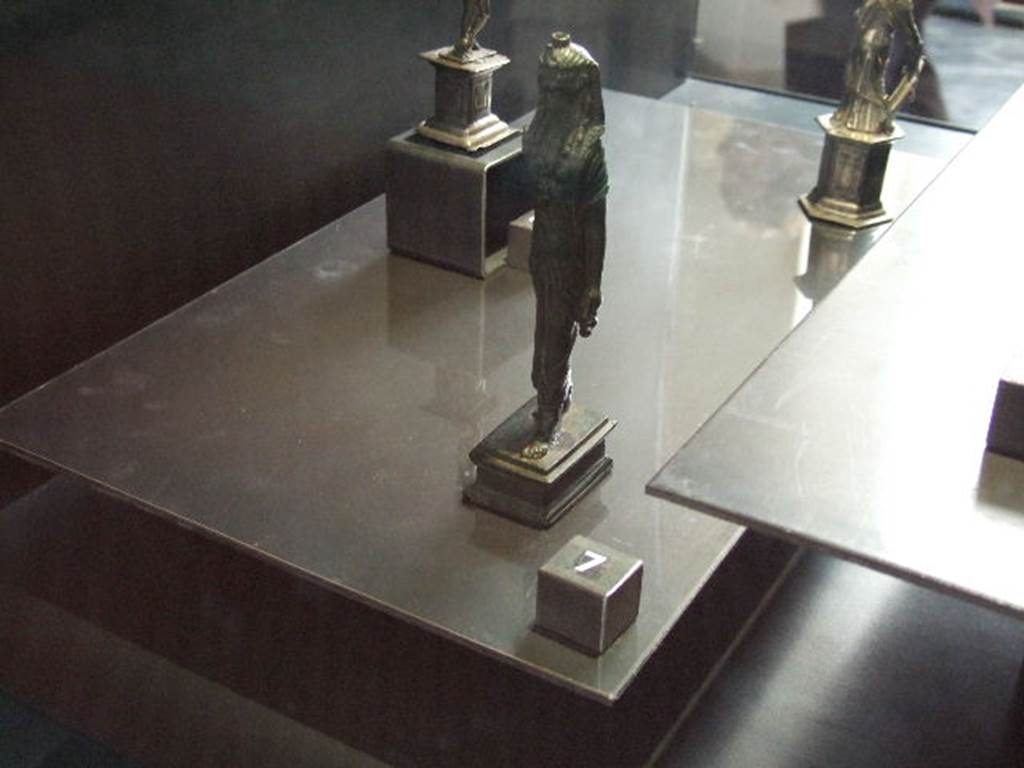
VI.14.27 Pompeii. Found in room “b”. Bronze statuette of Isis found in house.
Now in Naples Archaeological Museum. Inventory number
110605?
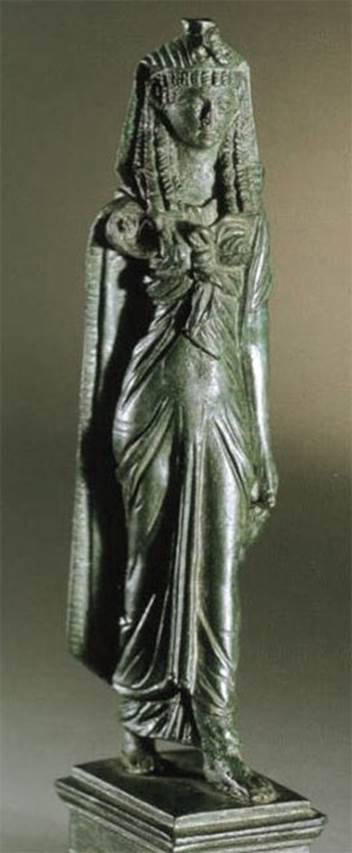
VI.14.27 Pompeii. Found in room “b”. Bronze statuette of Isis.
Now in Naples Archaeological Museum. Inventory number 110605?
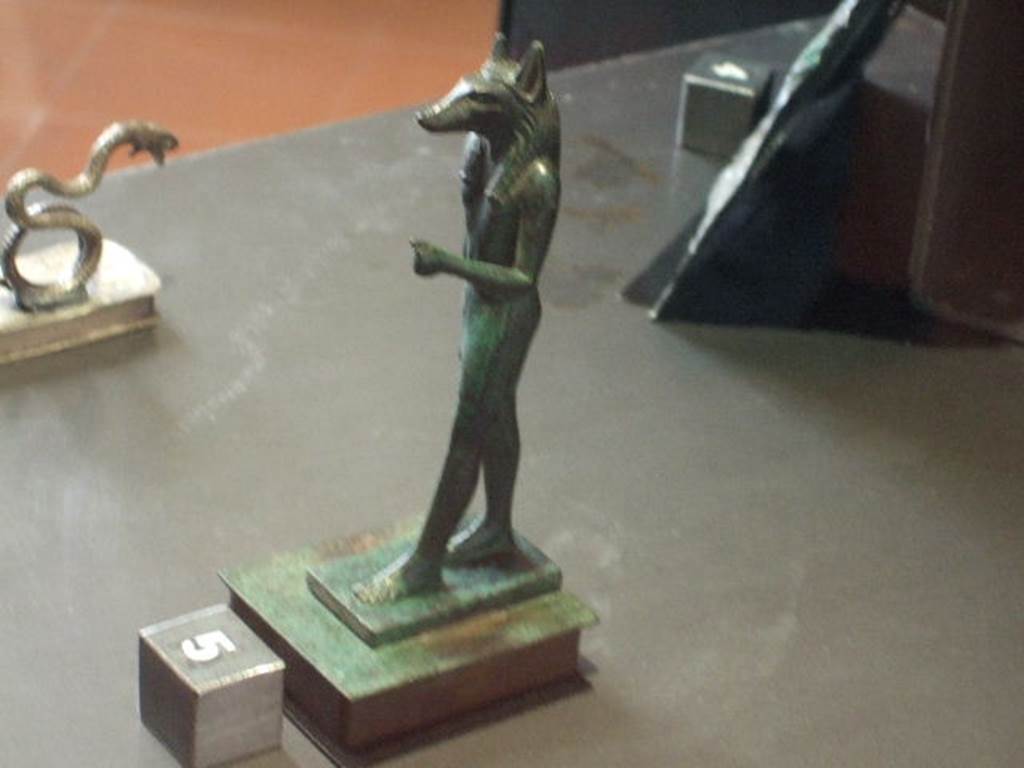
VI.14.27 Pompeii Found in room “b”, a bronze statuette of the dog faced Egyptian god Anubis.
Now in Naples Archaeological Museum. Inventory number 110606.
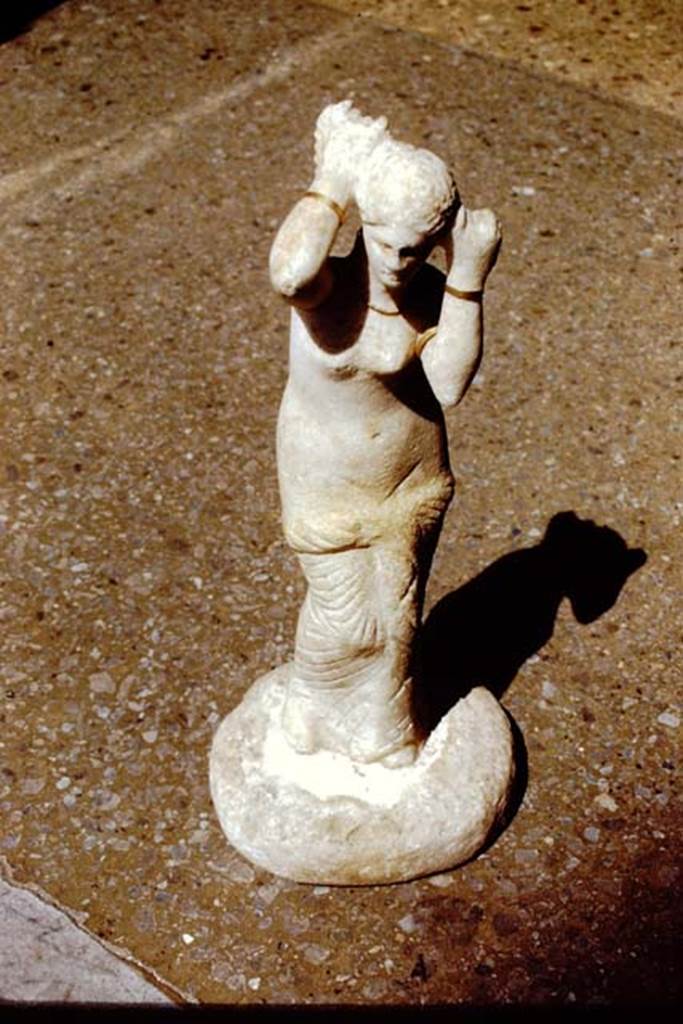
VI.14.27 Pompeii. 1971.
Found in room “b”. Marble statuette of Venus, found in the atrium on 16th April 1875.
Now in Naples Archaeological Museum. Inventory number 110602.
Photo by Stanley A. Jashemski.
Source: The Wilhelmina and Stanley A. Jashemski archive in
the University of Maryland Library, Special Collections (See collection page)
and made available under the Creative Commons Attribution-Non Commercial License
v.4. See Licence and use details.
J71f0274
See Studi della Soprintendenza archeologica di Pompei, no.26: Marmora Pompeiana nel Museo Archeologico Nazionale di Napoli. (p.93).
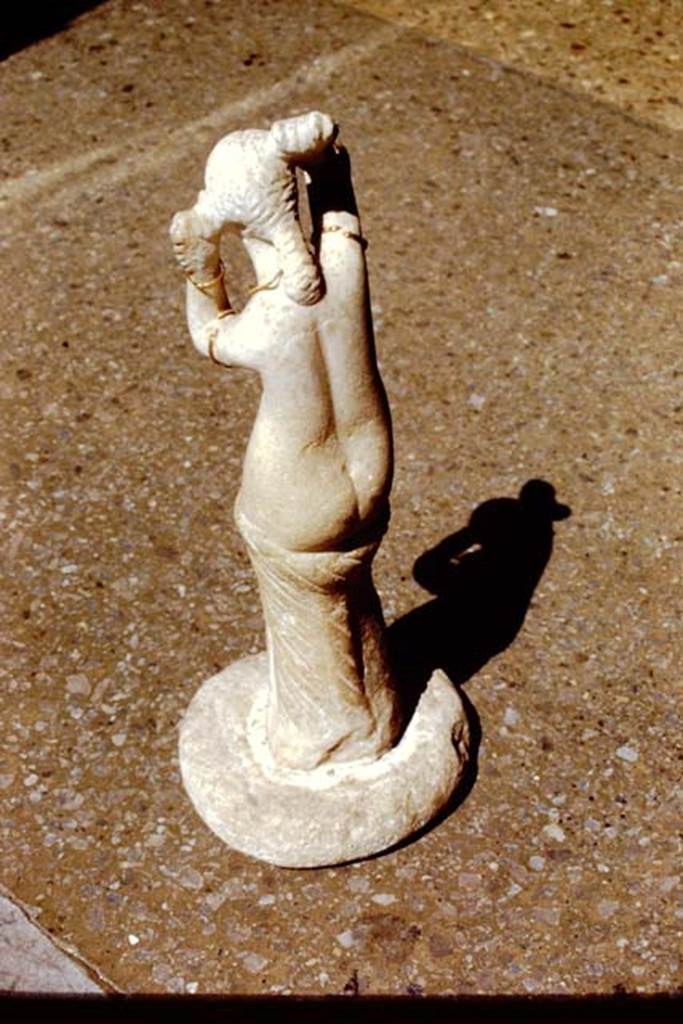
VI.14.27 Pompeii. 1971.
Found in room “b”. Rear of marble statuette of Venus, found in the atrium on 16th April 1875.
Now in Naples Archaeological Museum. Inventory number 110602.
Photo by Stanley A. Jashemski.
Source: The Wilhelmina and Stanley A. Jashemski archive in the University of Maryland Library, Special Collections (See collection page) and made available under the Creative Commons Attribution-Non Commercial License v.4. See Licence and use details.
J71f0273
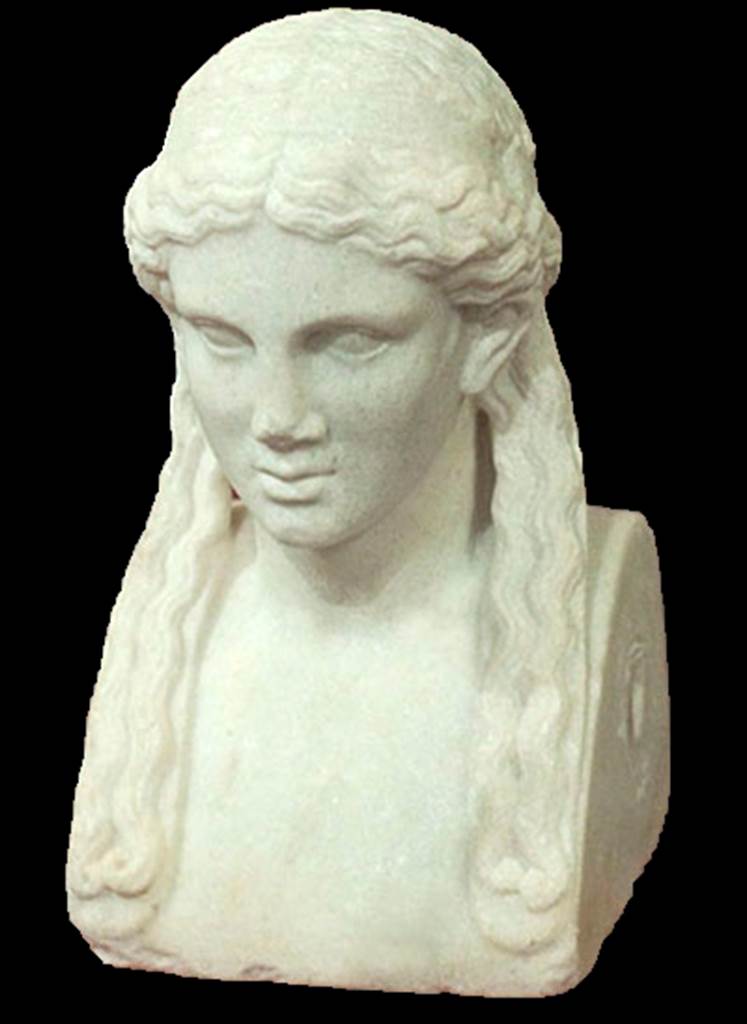
VI.14.27 Pompeii. Found in a small courtyard “i” at the rear of the house was a marble herm of Dionysus.
Now in Naples Archaeological Museum. Inventory number 110874.
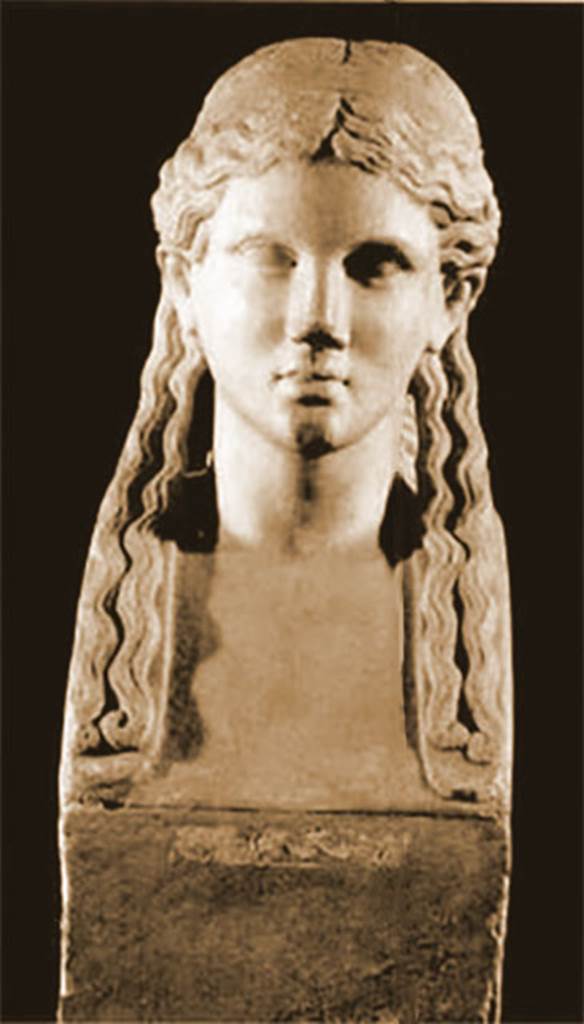
VI.14.27 Pompeii. Room i. Marble herm of Dionysus.
Now in Naples Archaeological Museum. Inventory number 110874.
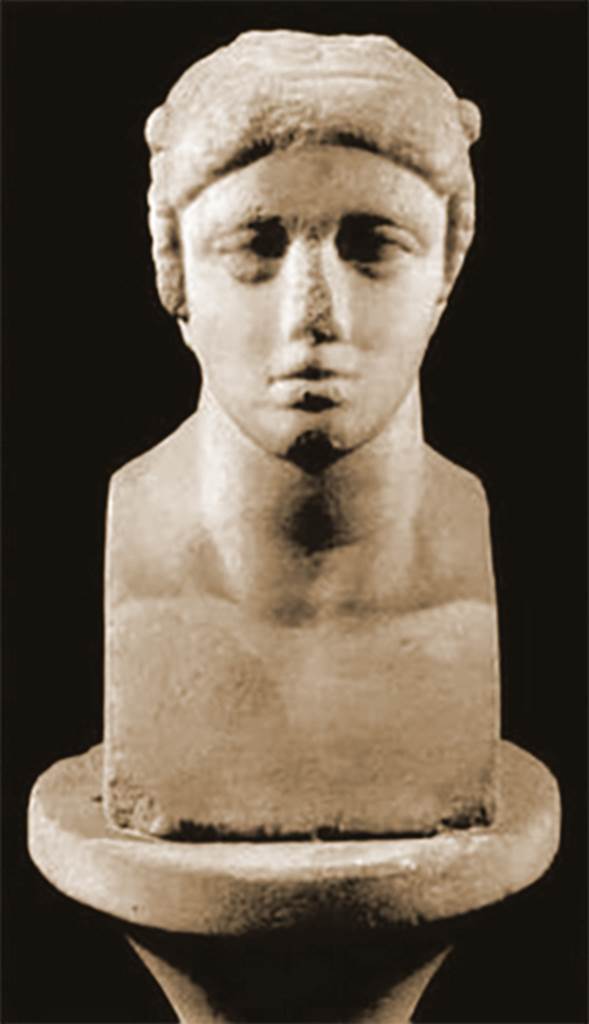
VI.14.27 Pompeii. Room i. Marble herm of a Dionysian female.
Now in Naples Archaeological Museum. Inventory number 110875.
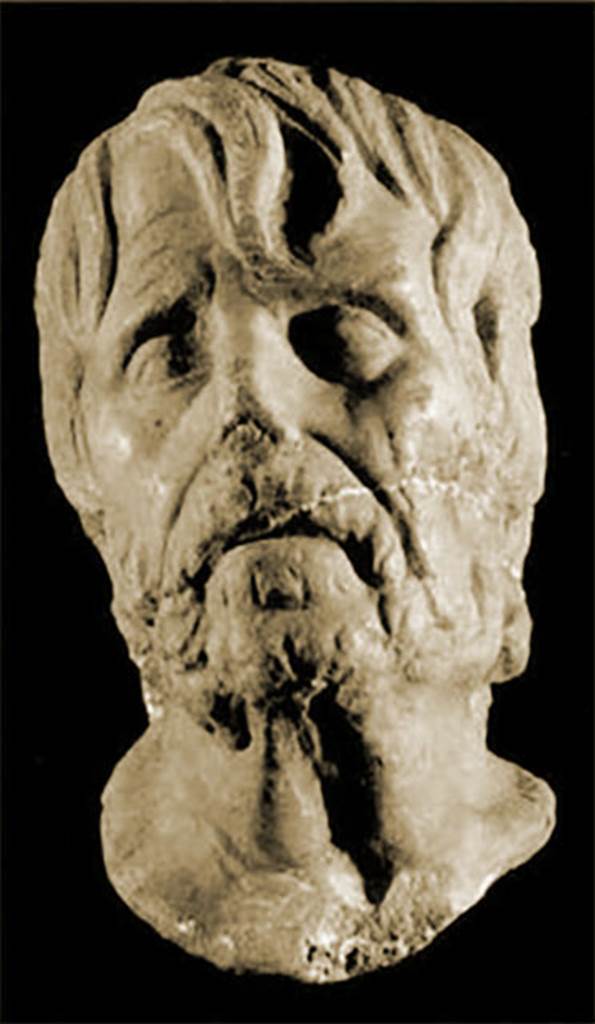
VI.14.27 Pompeii. Room i. Marble bust of bearded Pseudo-Seneca.
Now in Naples Archaeological Museum. Inventory number 110873.
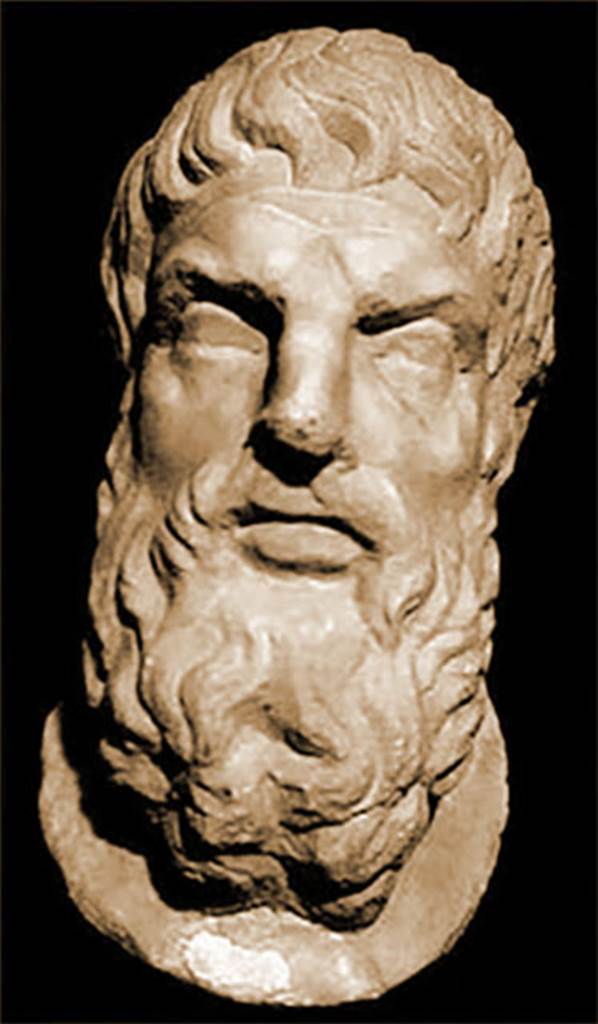
VI.14.27 Pompeii. Room i. Marble bust of Epicurus.
Now in Naples Archaeological Museum. Inventory number 110872.
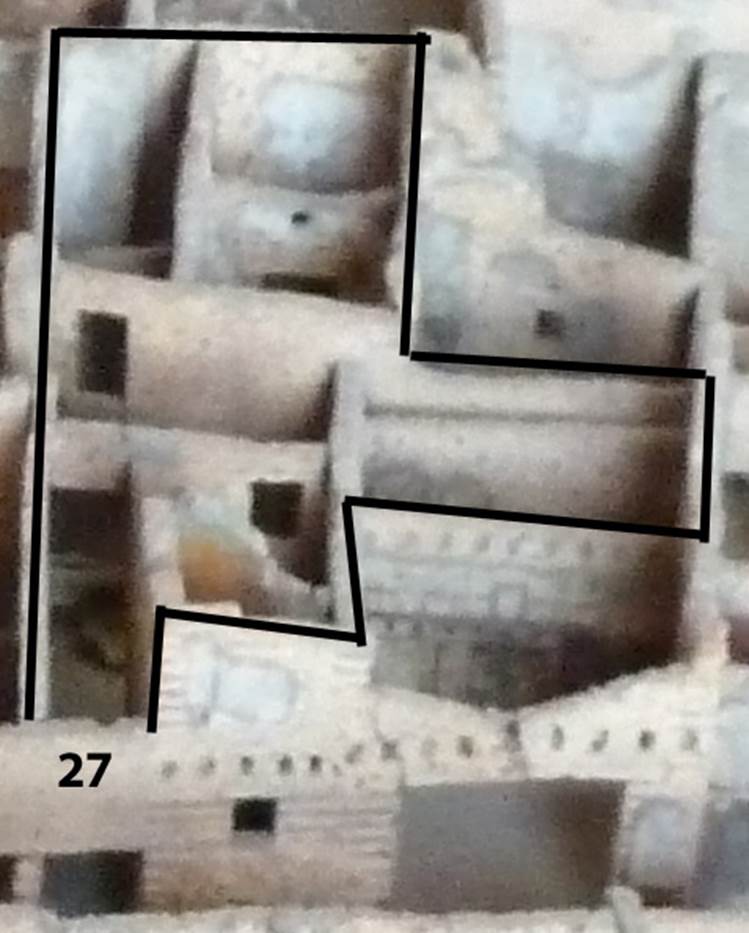
VI.14.27 Pompeii. May 2010. House as shown on cork model in Naples Museum, looking west from Via del Vesuvio.