VI.14.17 Pompeii. Shop. Linked
to VI.14.16 and VI.14.12.
Excavated 1834, 1836, 1844 and 1874.
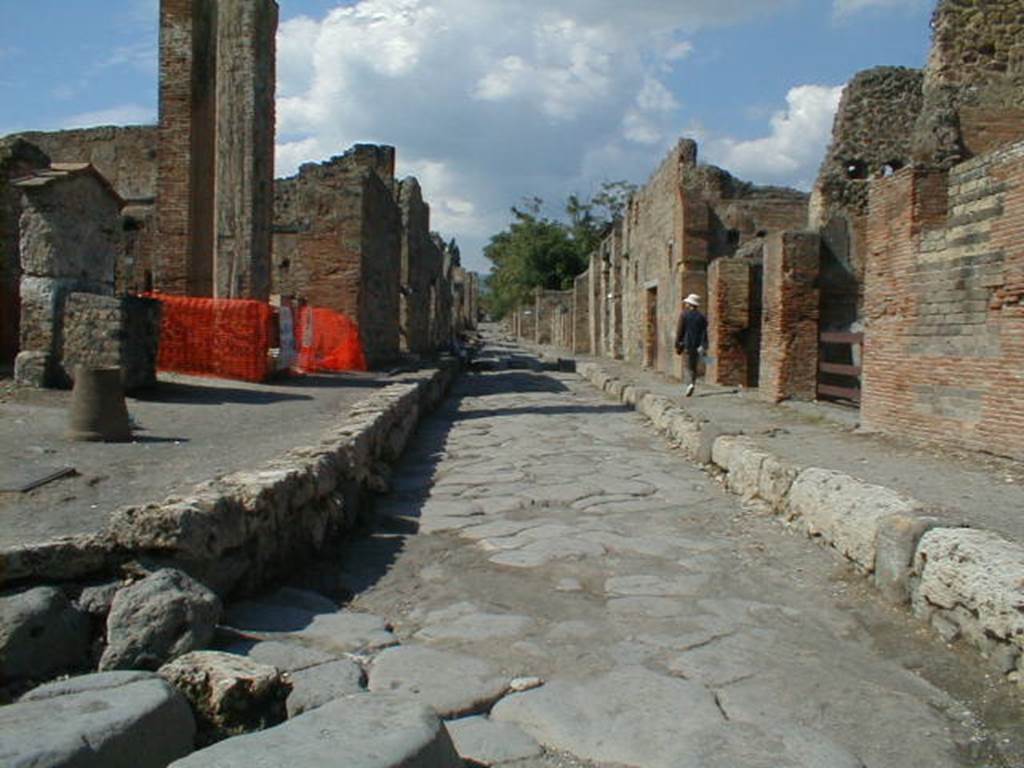
VI.14.17 Pompeii, on left. September 2005. Via del Vesuvio, looking north. V.1, on right.
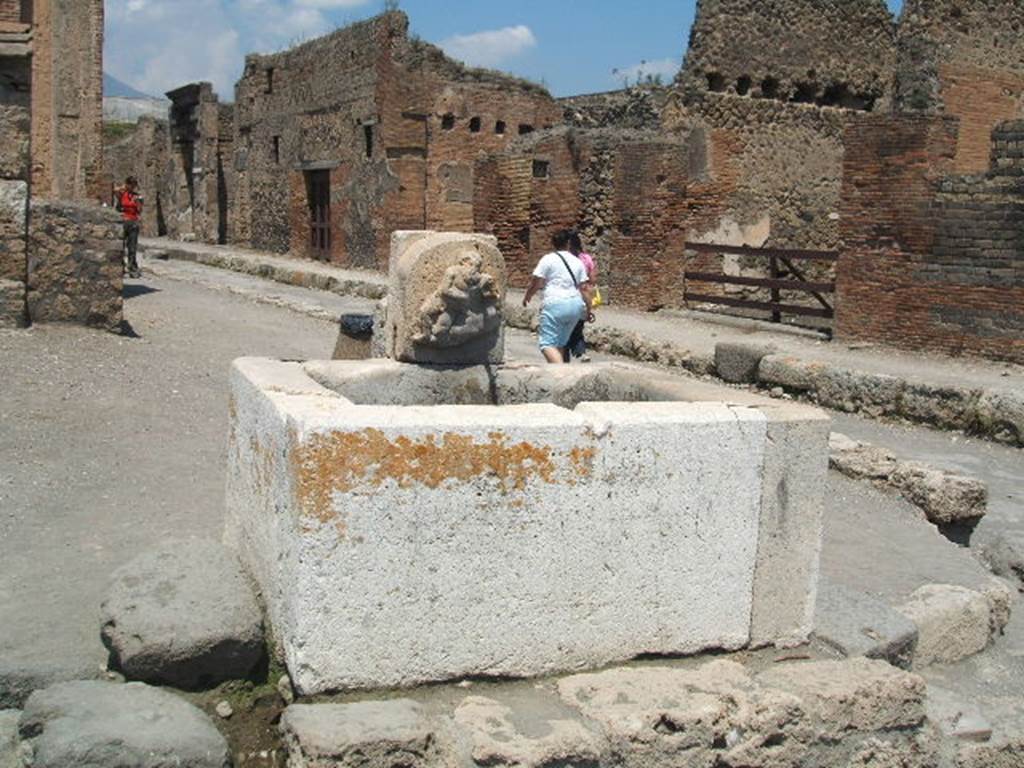
Fountain outside VI.14.17, Pompeii, May 2005.
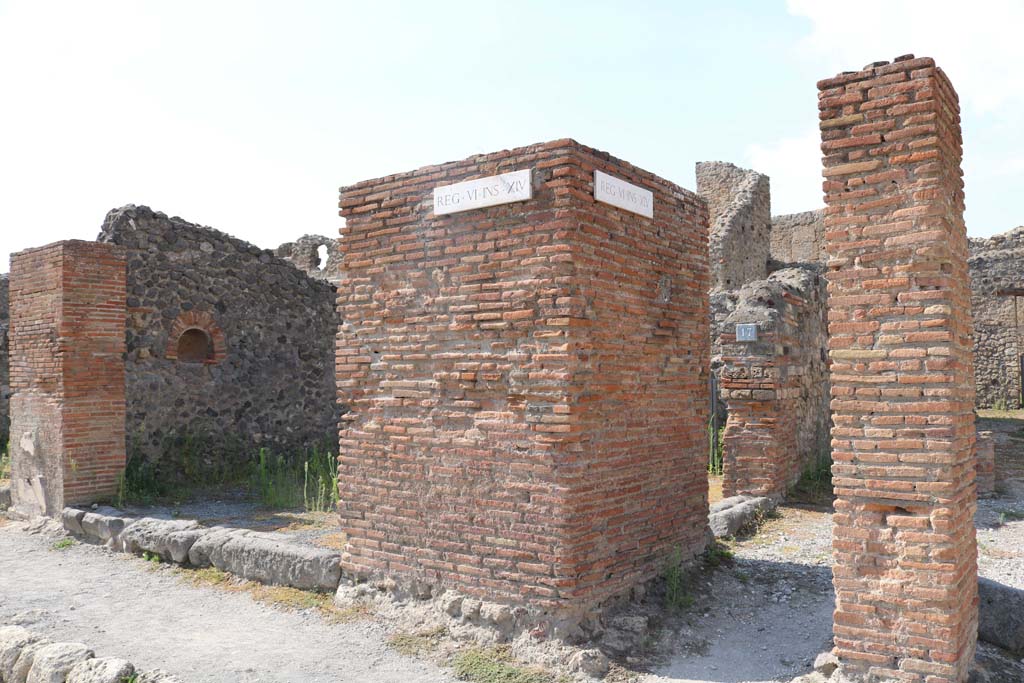
VI.14.16, Pompeii,
linked to VI.14.17, Pompeii. December
2018.
Looking north-west towards the two entrances. Photo courtesy of Aude Durand.
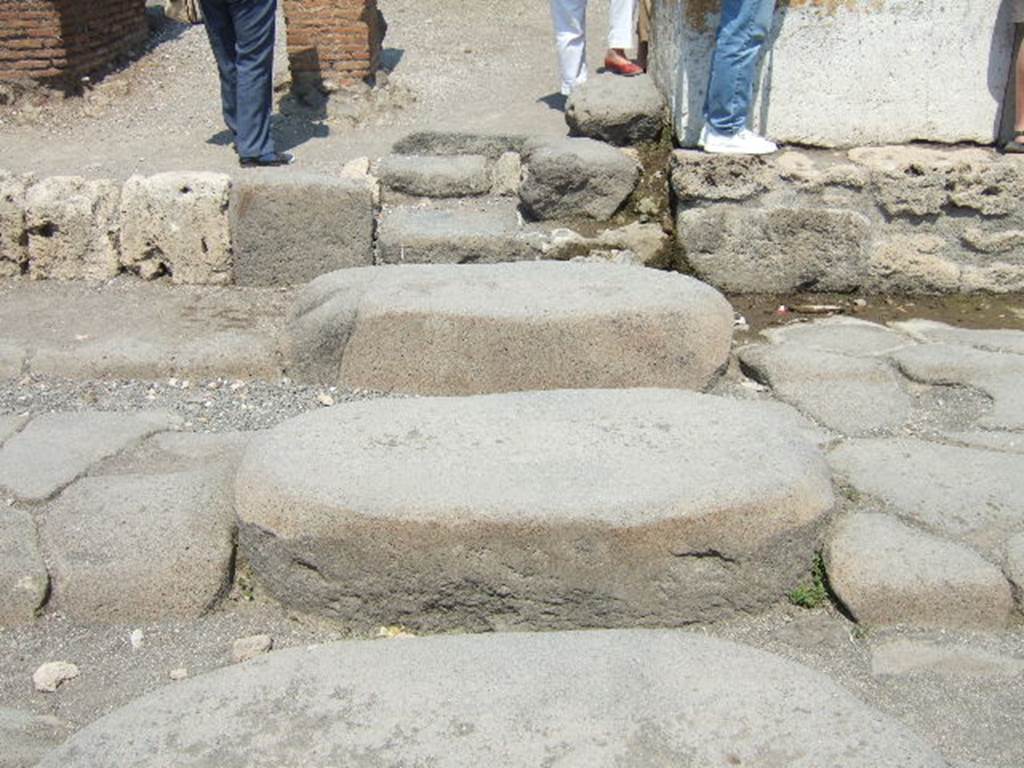
Stepping stones and step outside VI.14.17 on Via della Fortuna, Pompeii. September 2005.
On the left of the photo can be seen the end pilaster of VI.14, and then a masonry pilaster of a portico.
This south entrance of the portico on the west side of the road, was originally known as Strada della Fortuna 28.
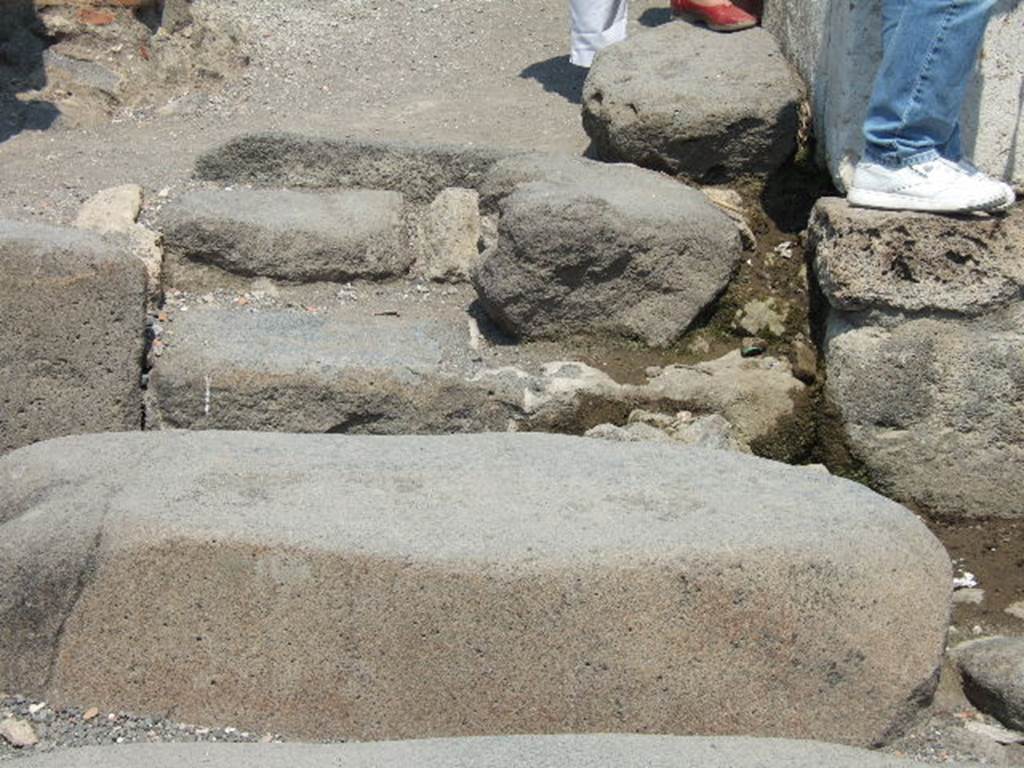
Stepping stone and step outside VI.14.17 on Via della Fortuna, Pompeii. September 2005.
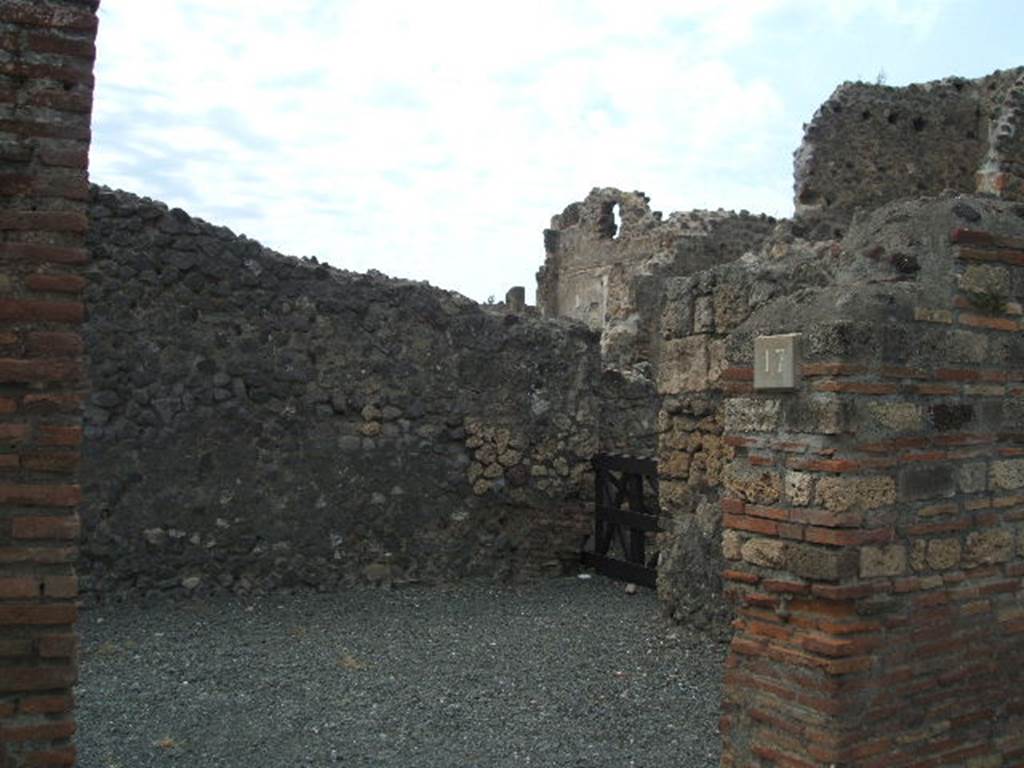
VI.14.17 Pompeii. May 2006. Entrance doorway, looking west across linked area with VI.14.16.
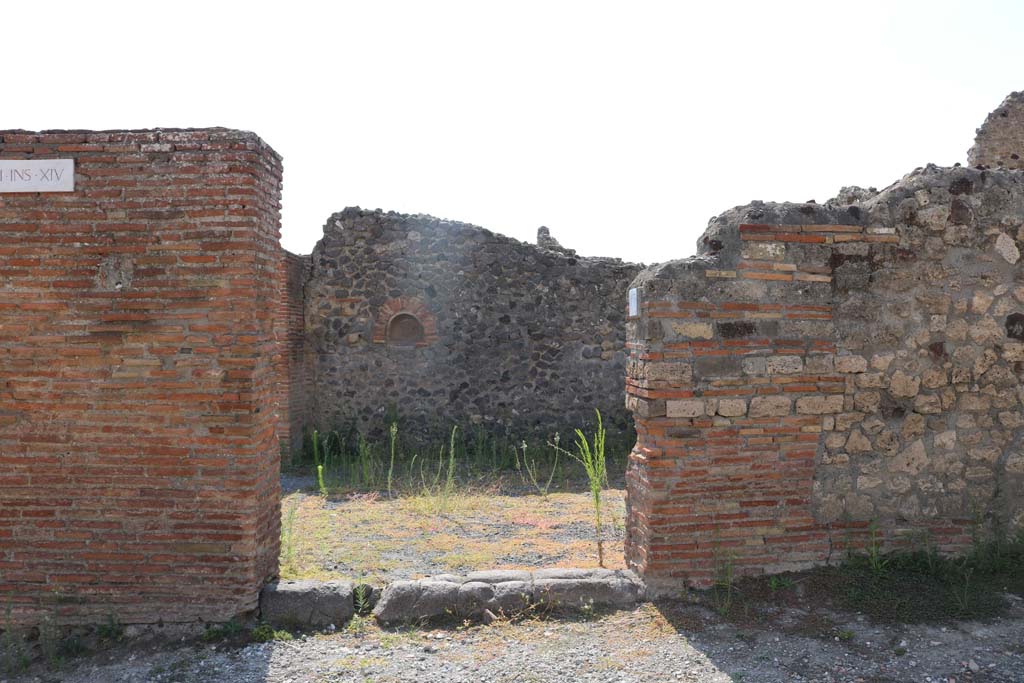
VI.14.17 Pompeii. December 2018. Looking through entrance
doorway towards west wall with niche. Photo courtesy of Aude Durand.
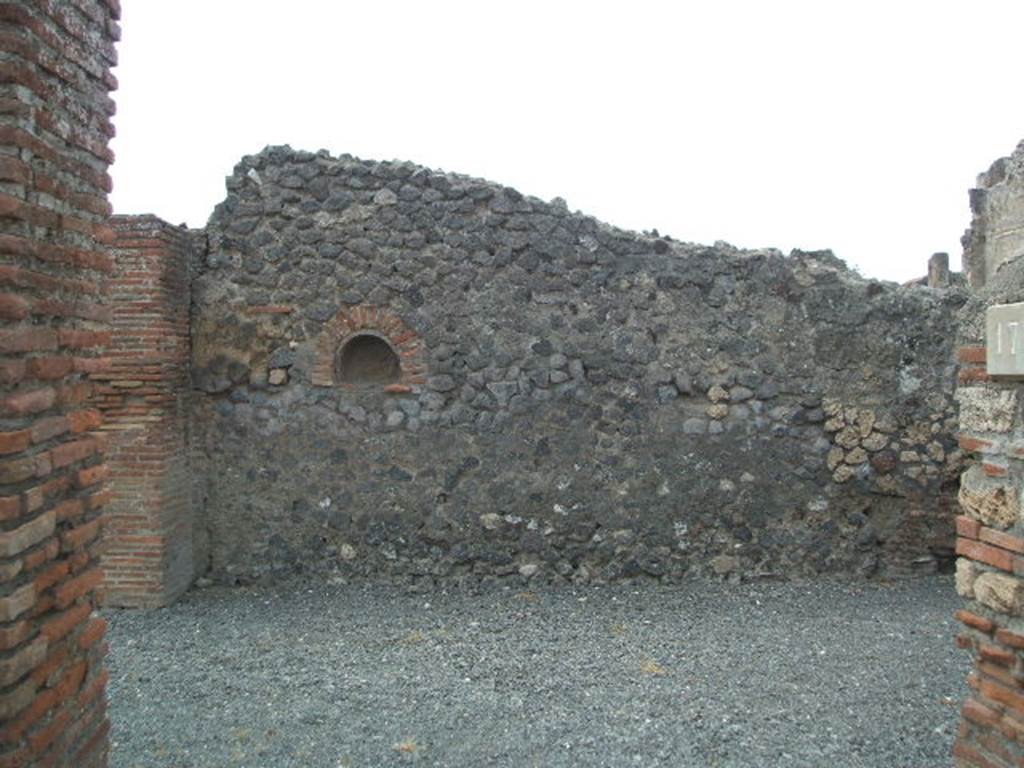
VI.14.17 Pompeii. May 2006. Looking west towards west wall, from entrance.
According to Boyce, in the west wall of the main room was an arched niche.
See Boyce G. K., 1937. Corpus of the Lararia of Pompeii. Rome: MAAR 14. (p.52, no. 198)
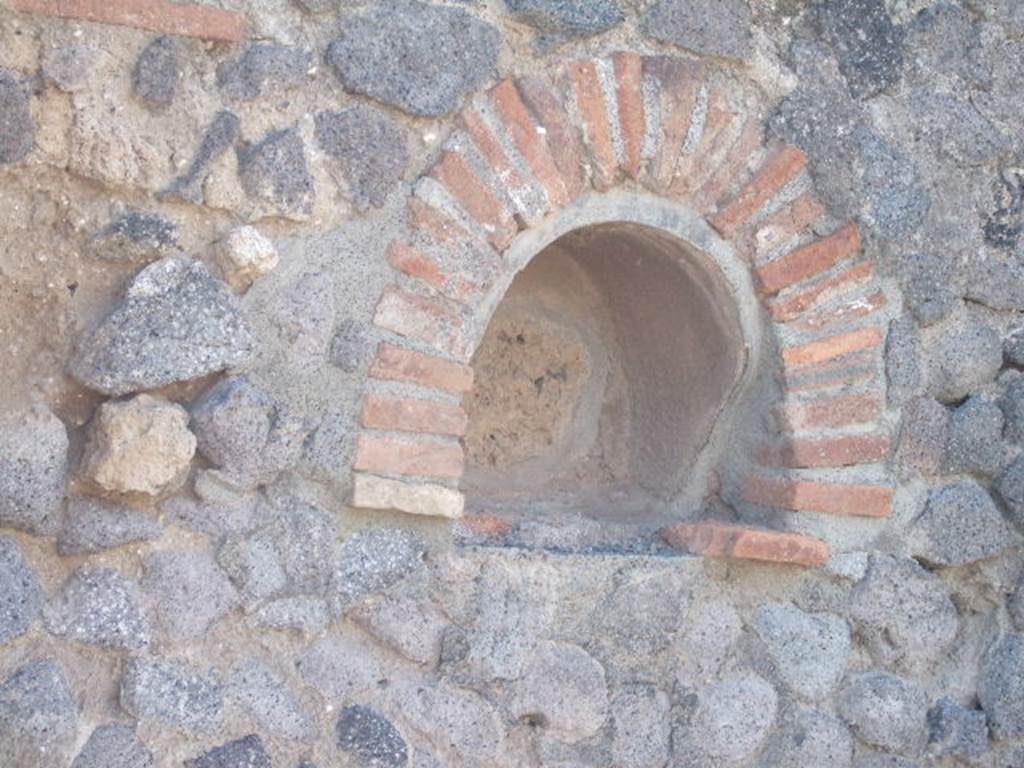
VI.14.17 Pompeii. May 2005. Niche in west wall.
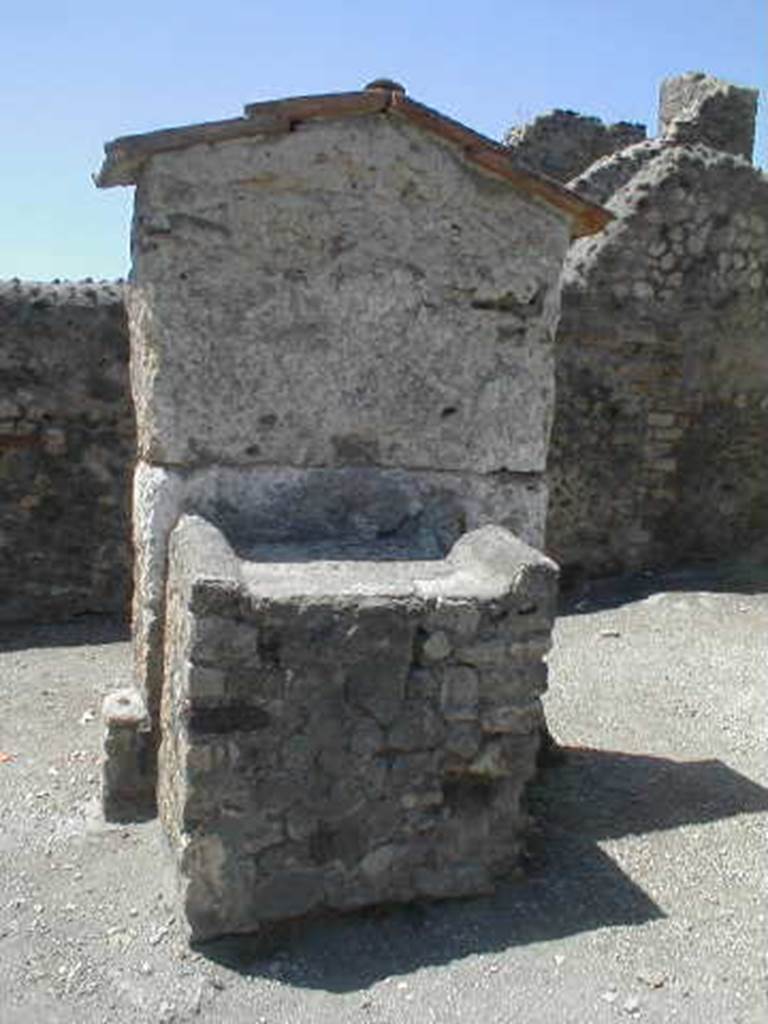
Street compitum (altar) outside VI.14.17/VI.14.18, May 2005.
According to Mau, the rear of the altar was a wall terminating in a gable.
This was made of modern reproduction tiles.
On this wall was a painted altar with four worshippers clad in togas, and a fluteplayer, the inseparable accompaniment of a Roman sacrificial scene.
At the sides were two Lares, represented as youths, in loose tunics confined with a girdle.
In one hand, they held high, a drinking horn (rhyton) from which a jet of wine flowed into a small pail (situla) held in the other hand.
See Mau, A., 1907, translated by Kelsey, F. W., Pompeii: Its Life and Art. New York: Macmillan. (p. 234).
See Helbig, W., 1868. Wandgemälde der vom Vesuv verschütteten Städte Campaniens. Leipzig: Breitkopf und Härtel. (41)