VI.13.18 Pompeii. Rear entrance
of VI.13.13. Excavated 1874, 1876.
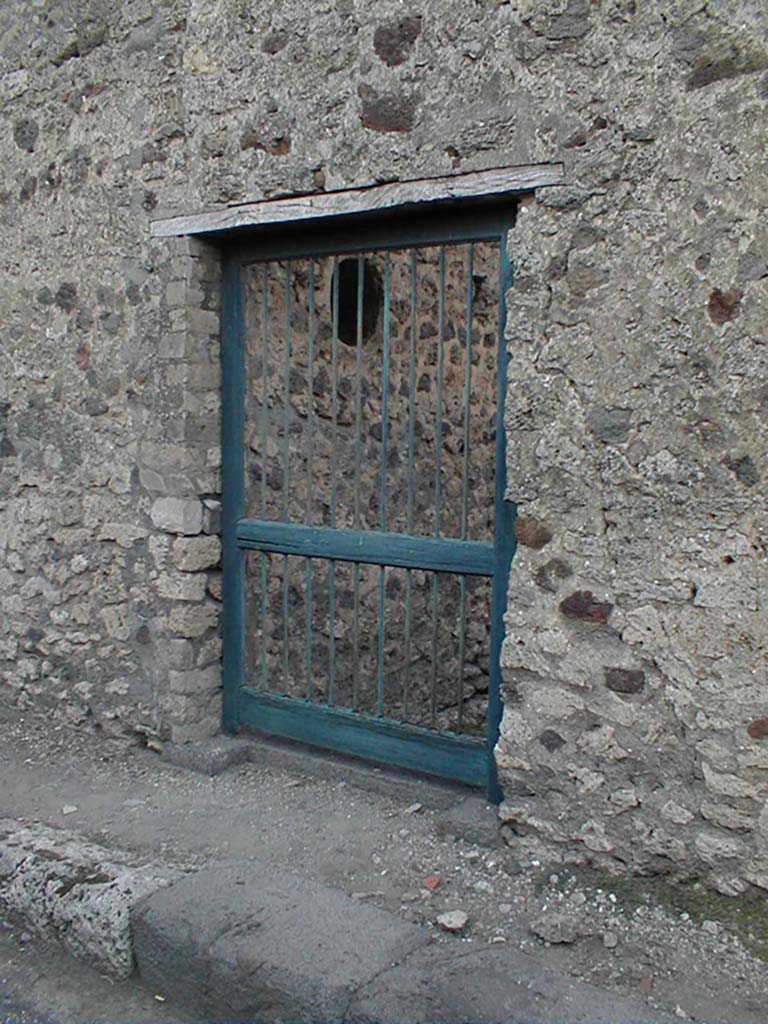
VI.13.18 Pompeii. September 2005. Entrance doorway, looking east.
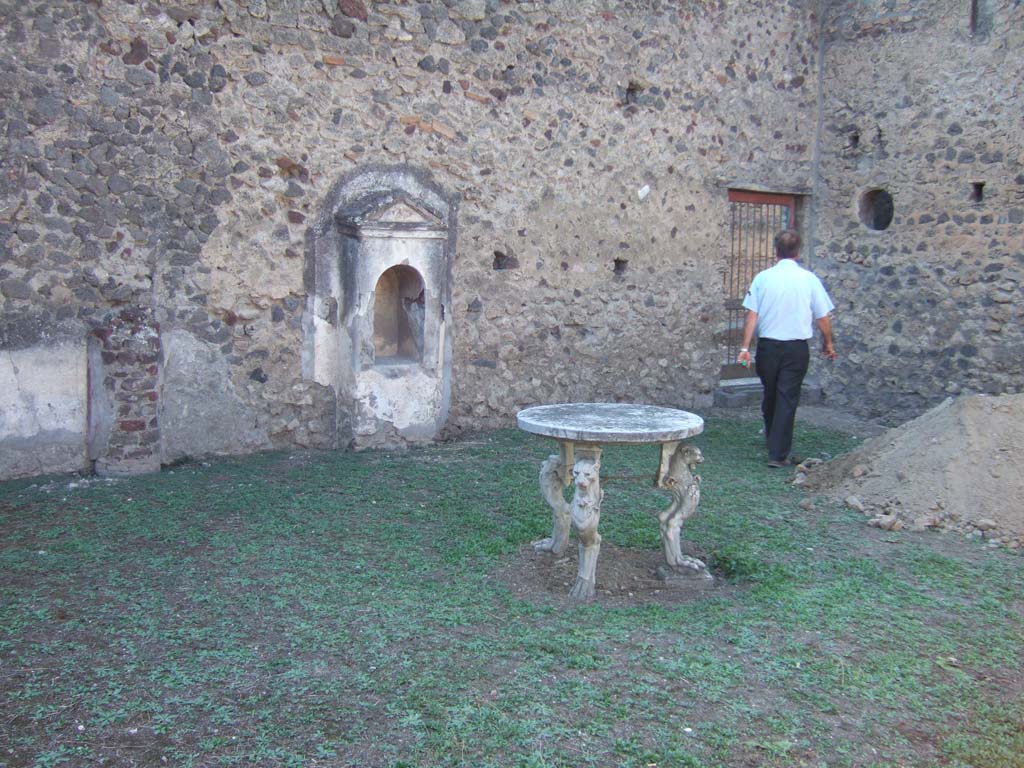
VI.13.13 Pompeii. September 2005. Looking north-west across garden towards rear posticum at VI.13.18.
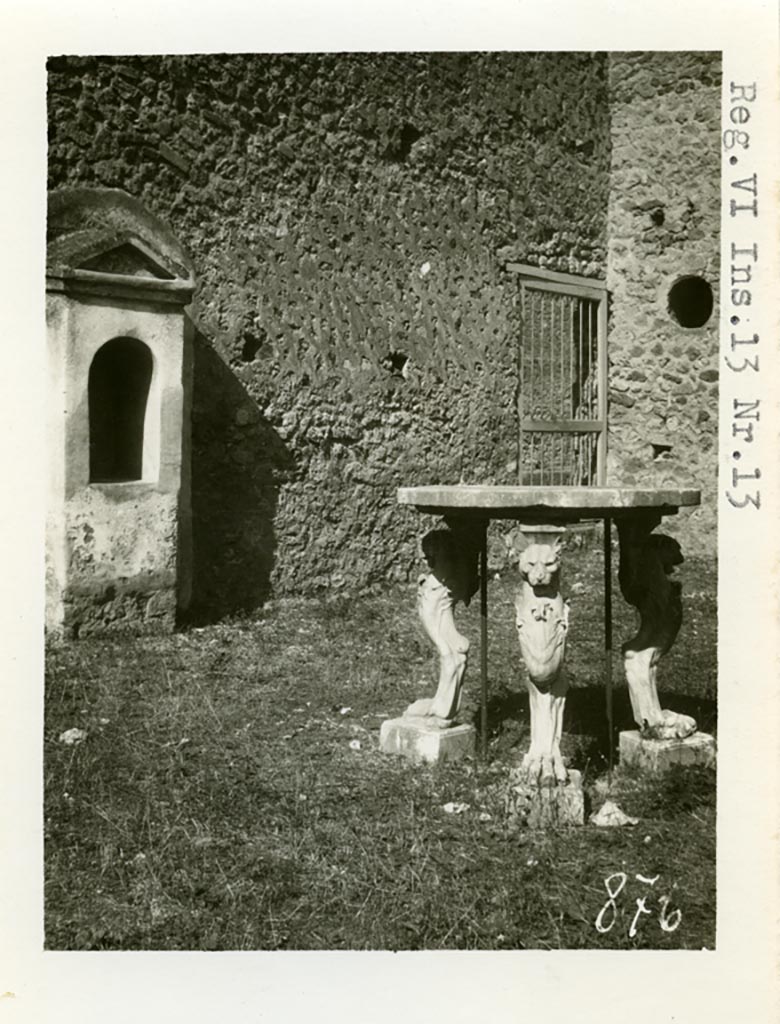
Photo courtesy of American Academy in Rome, Photographic Archive. Warsher collection no. 876.
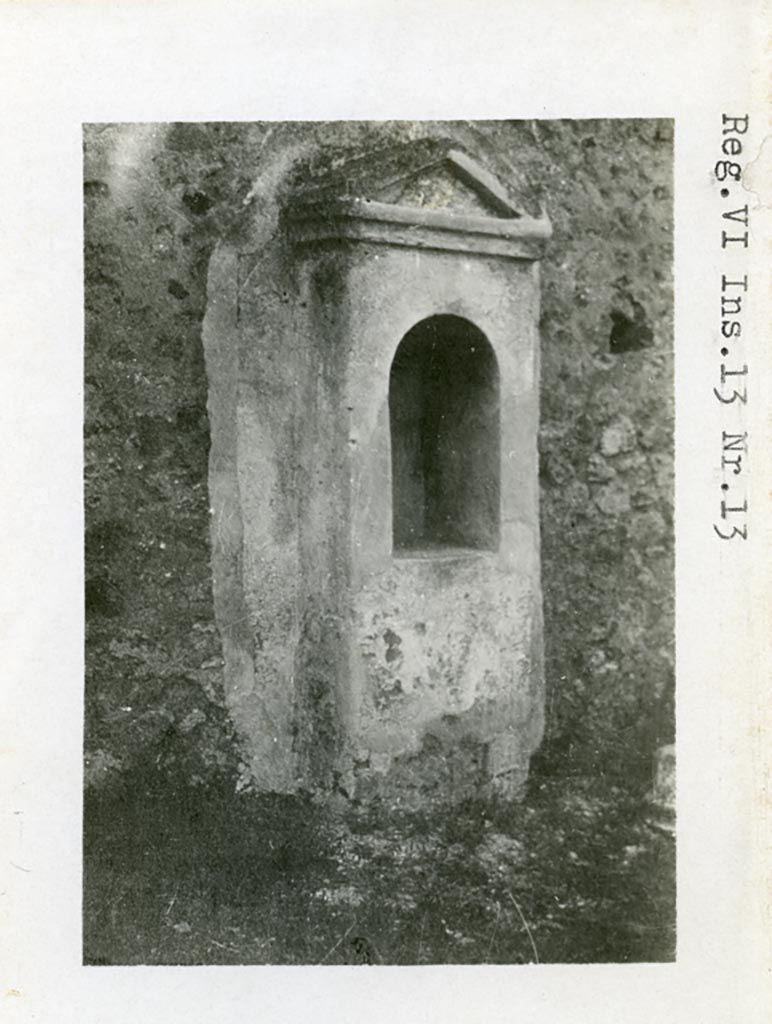
VI.13.13/18 Pompeii. Pre-1937-39. Aedicula shrine standing against the west garden wall.
Photo courtesy of American Academy in Rome, Photographic Archive. Warsher collection no. 613.
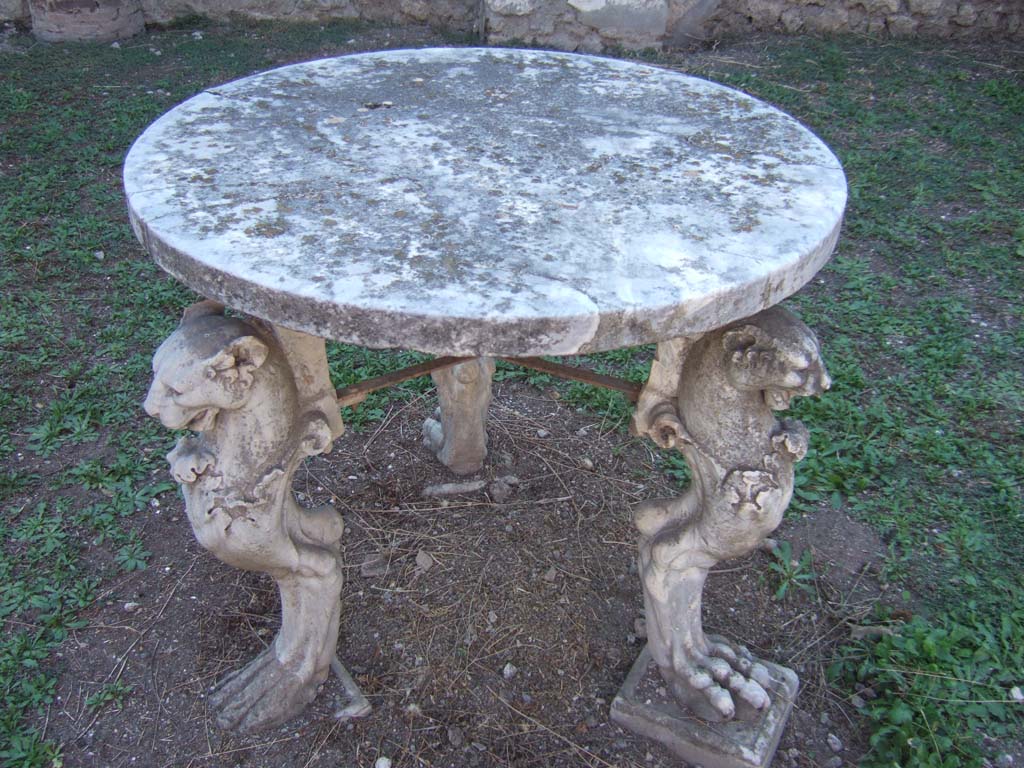
VI.13.18 Pompeii. September 2005. Round marble table.
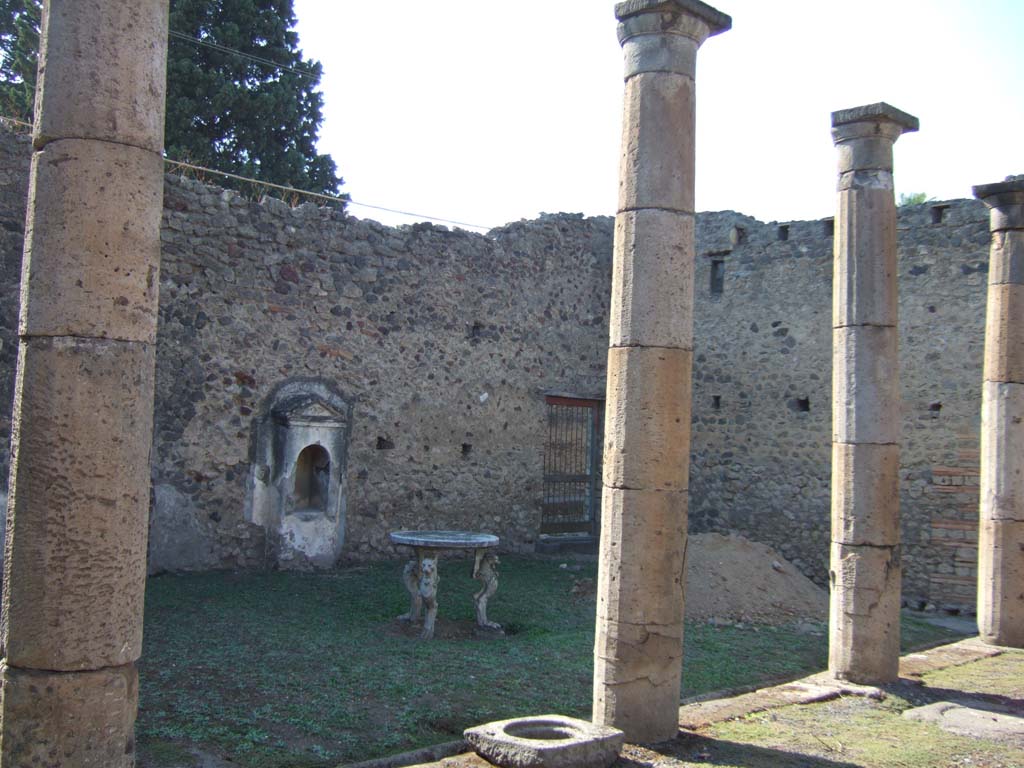
VI.13.18 Pompeii. September 2005. Looking west across peristyle garden.
According to Jashemski, the garden was enclosed by a portico on the south and east side.
It was supported by six columns and one engaged column.
An aedicula shrine stood against the west garden wall.
In the middle of the garden was a round marble table with three legs.
The upper part of the legs represented the head of a wild animal rising out of a leafy ornament.
The lower part was of the feet of a lion or leopard.
The puteal, a very old one, came into view during the 1943 bombing.
This also made it possible to measure the cistern, which is about two metres deep.
See Jashemski, W. F., 1993. The Gardens of Pompeii, Volume II: Appendices. New York: Caratzas, (p.147-48).
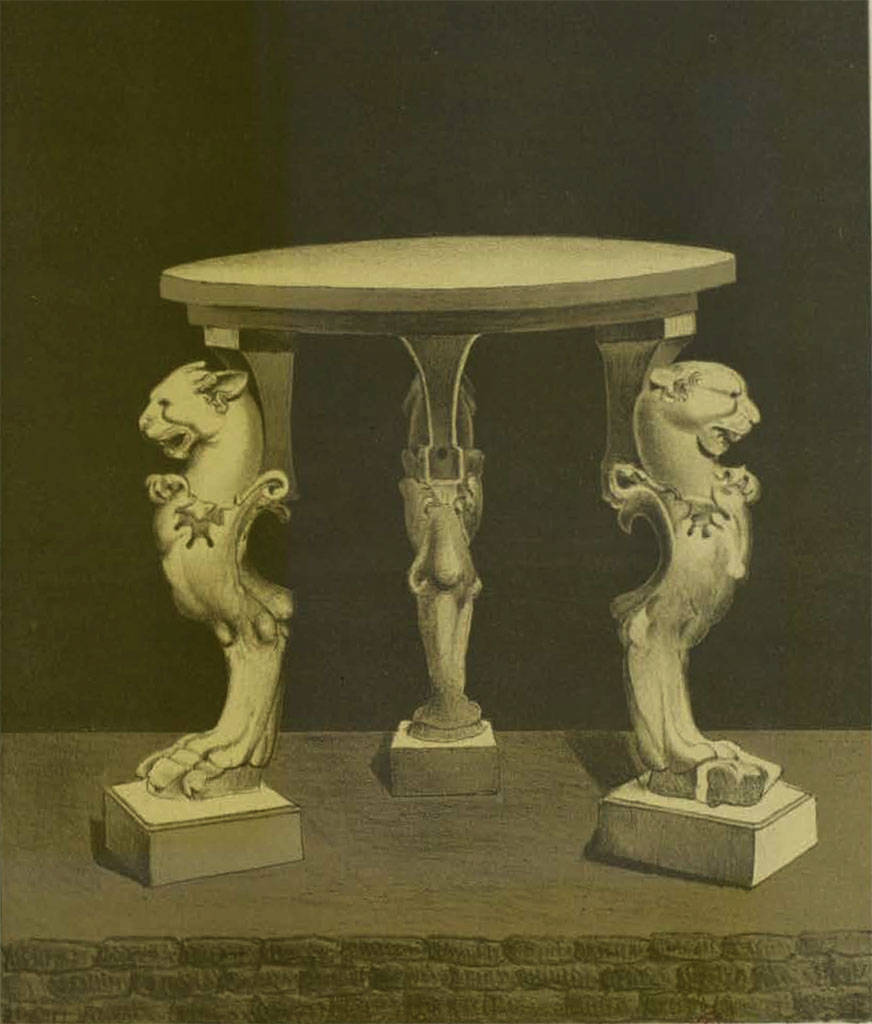
VI.13.13 Pompeii. Drawing of marble table in peristyle, “whose feet are artistically worked”.
See Presuhn, E. Pompei les dernières fouilles de 1874-75,
section VI, plate V.
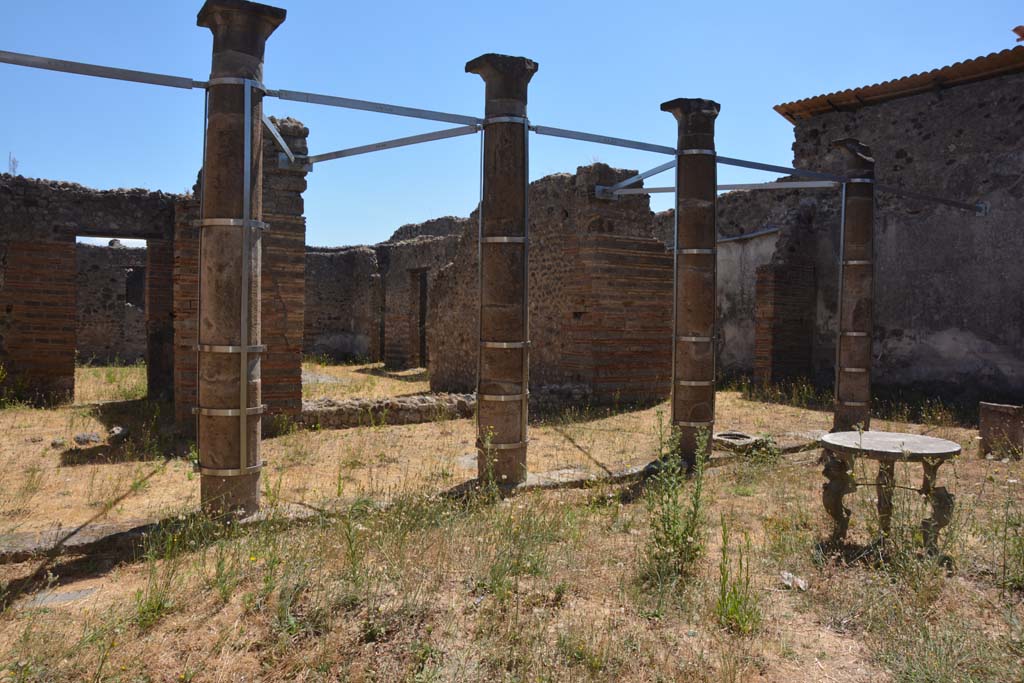
VI.13.13/18 Pompeii. July 2017. Looking east from garden
area, across east portico to tablinum of VI.13.13, in centre.
Foto Annette Haug, ERC
Grant 681269 DÉCOR.
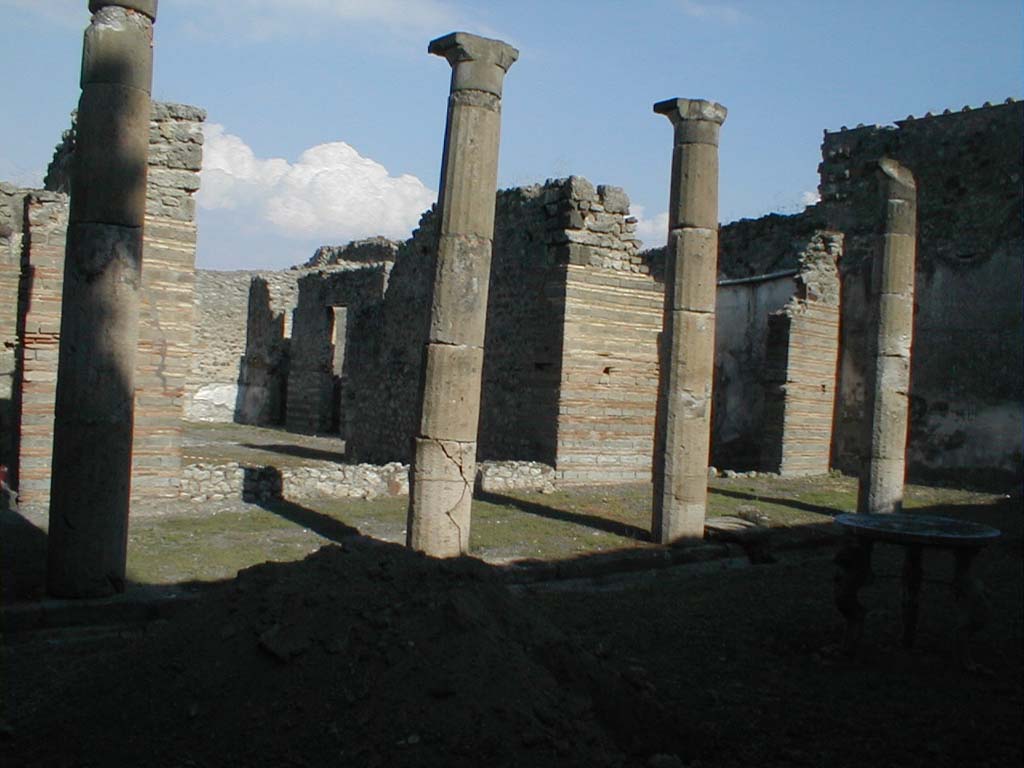
VI.13.18 Pompeii. September 2005. Looking east from garden area, across east portico to tablinum of VI.13.13.
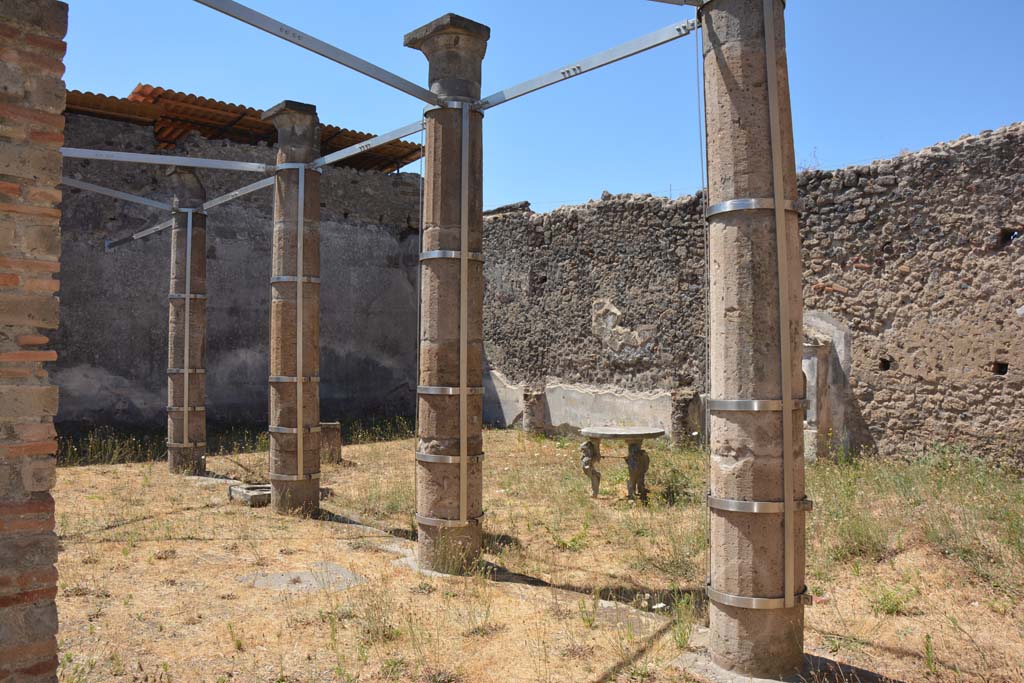
VI.13.13/18 Pompeii. July 2017. Looking south-west across east
portico.
Foto Annette Haug, ERC
Grant 681269 DÉCOR.