VI.13.2 Pompeii. Casa del Gruppo
dei Vasi di Vetro.
Linked to VI.13.1, VI.13.3,
VI.13.4, VI.13.20 and VI.13.21.
Partially excavated c.1830’s and fully excavated in 1874.
Badly
damaged by bombing in 1943. (Strada
della Fortuna 49).
Part 1
Part 2
![VI.13.2 Pompeii. December 2005. Entrance doorway.
According to Pagano and Prisciandaro, a graffito found in May 1831 on the left pilaster between VI.13.1 and 2, was –
Holconium Priscum
verecundissimum d(ignum) r(ei) p(ublicae) aed(ilem) o(ro) v(os) f(aciatis) dignissimum. [CIL IV 309]
Found on the right pilaster, between VI.13.2 and 3, painted in red, was –
Samellium Modestum iuvenum probum aed(ilem) [CIL IV 286]
See Pagano, M. and Prisciandaro, R., 2006. Studio sulle provenienze degli oggetti rinvenuti negli scavi borbonici del regno di Napoli. Naples: Nicola Longobardi, (p.145) PAH III, 119](6%2013%2002_files/image002.jpg)
VI.13.2 Pompeii. December 2005. Entrance doorway.
According to Pagano and Prisciandaro, a graffito found in May 1831 on the left pilaster between VI.13.1 and 2, was –
Holconium
Priscum
verecundissimum d(ignum) r(ei) p(ublicae) aed(ilem) o(ro) v(os) f(aciatis) dignissimum. [CIL IV 309]
Found on the right pilaster, between VI.13.2 and 3, painted in red, was –
Samellium
Modestum iuvenum probum aed(ilem) [CIL
IV 286]
See Pagano, M. and Prisciandaro, R., 2006. Studio sulle provenienze degli oggetti rinvenuti negli scavi borbonici del regno di Napoli. Naples: Nicola Longobardi, (p.145) PAH III, 119
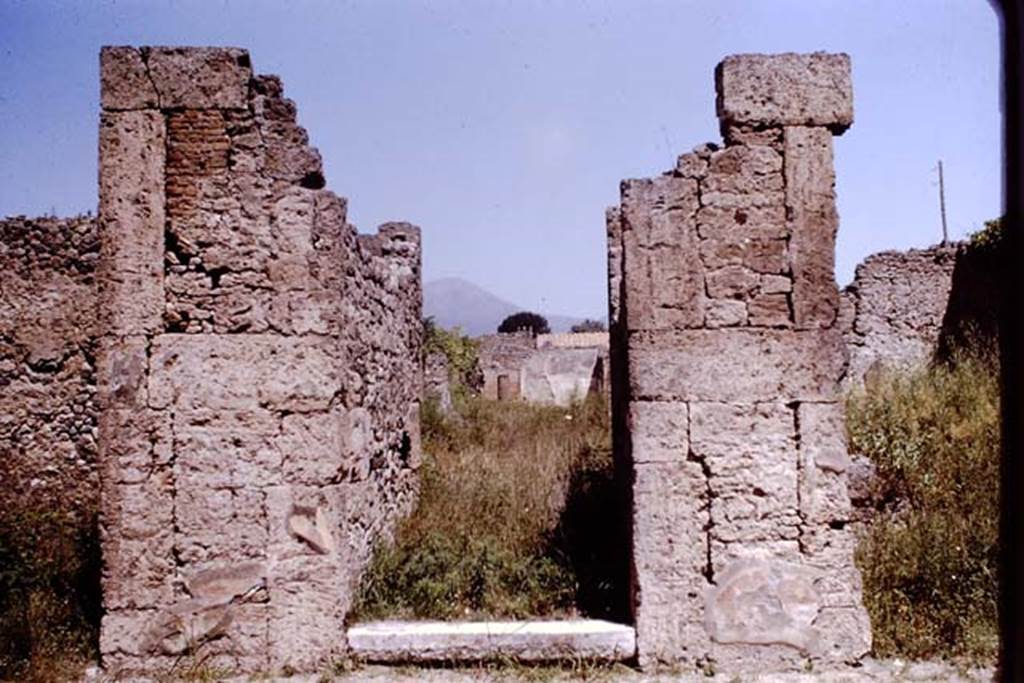
VI.13.2 Pompeii. 1964. Entrance doorway, looking north. Photo by Stanley A. Jashemski.
Source: The Wilhelmina and Stanley A. Jashemski archive in the University of Maryland Library, Special Collections (See collection page) and made available under the Creative Commons Attribution-Non-Commercial License v.4. See Licence and use details.
J64f1092
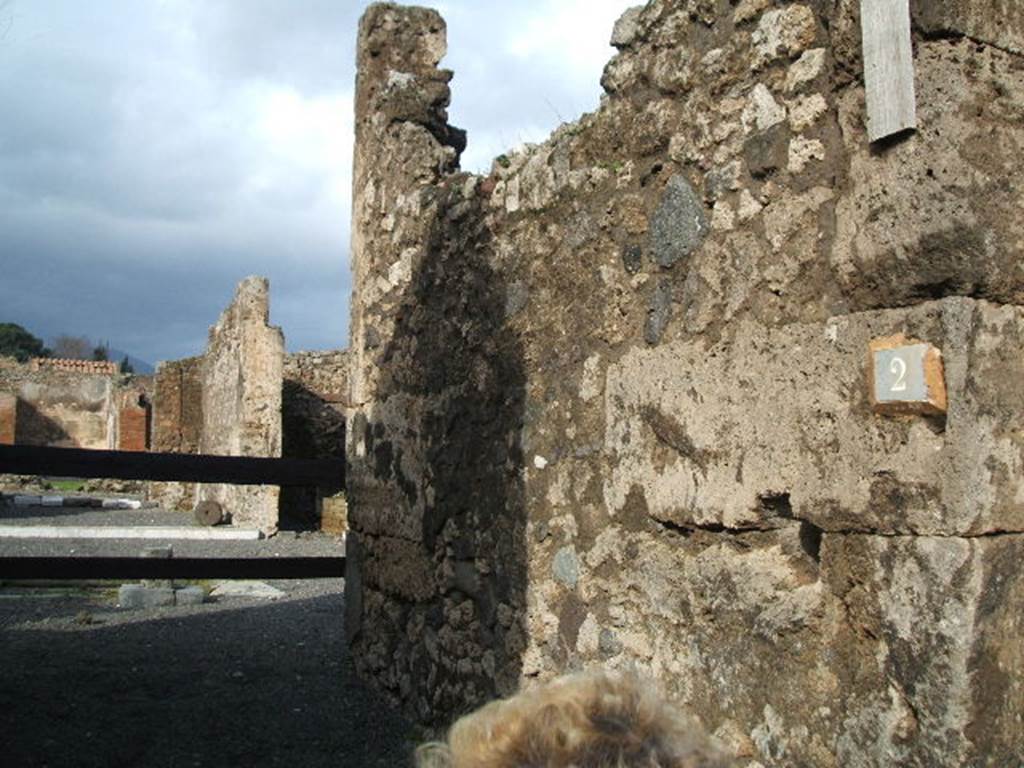
VI.13.2 Pompeii. December 2004. East wall of vestibule and fauces.
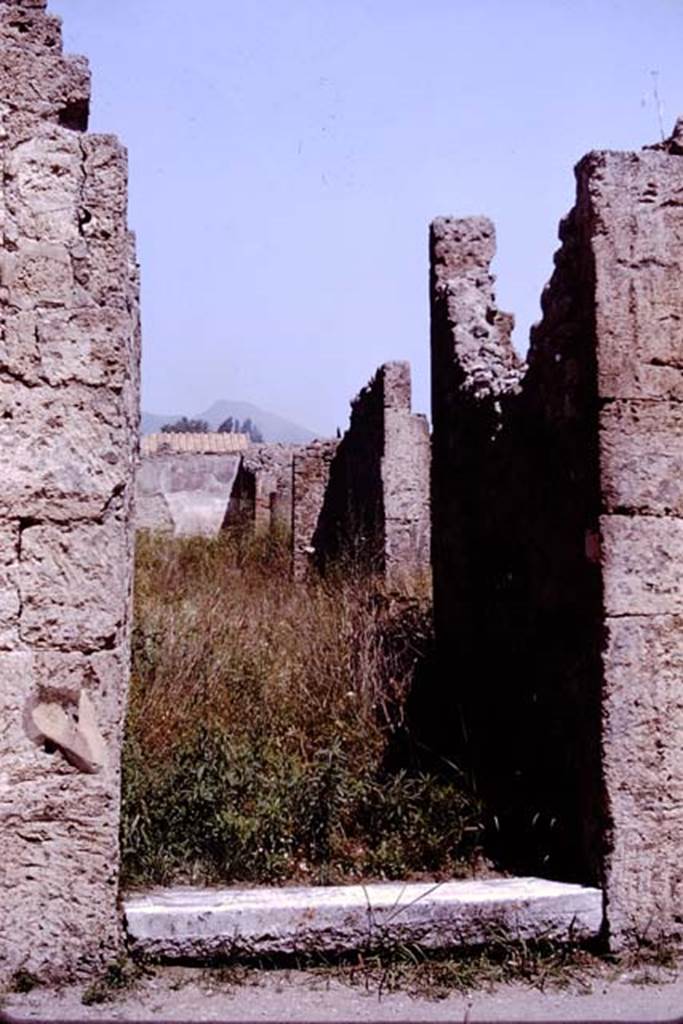
VI.13.2 Pompeii. 1964.
Looking towards east wall of vestibule and entrance corridor. Photo by Stanley A. Jashemski.
Source: The Wilhelmina and Stanley A. Jashemski archive in the University of Maryland Library, Special Collections (See collection page) and made available under the Creative Commons Attribution-Non-Commercial License v.4. See Licence and use details.
J64f1093
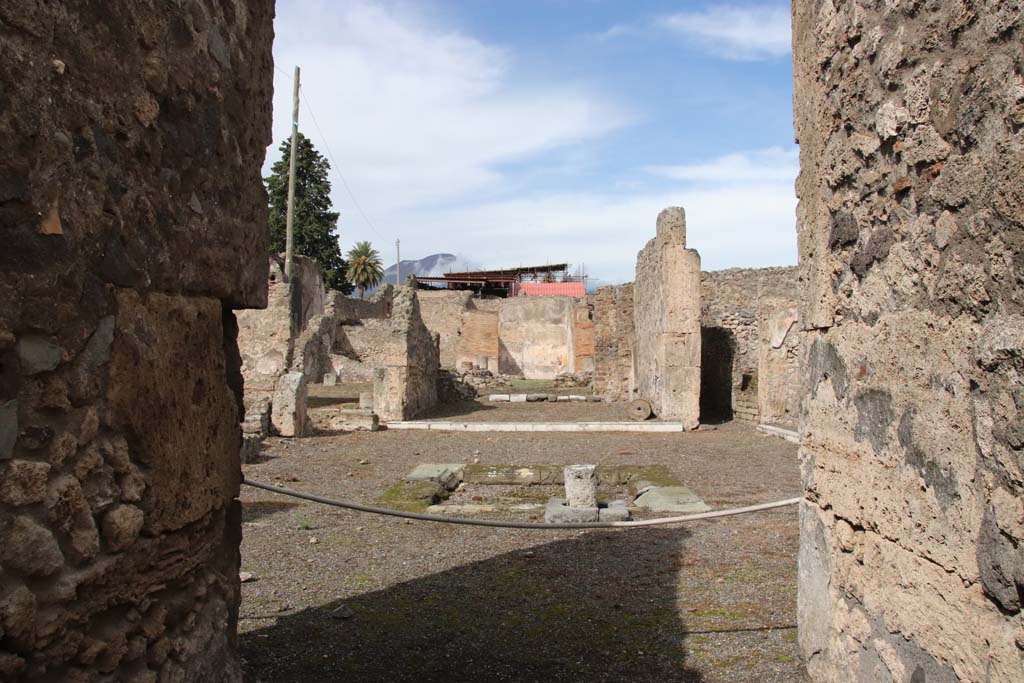
VI.13.2 Pompeii. October 2020. Looking north across atrium from entrance corridor. Photo courtesy of Klaus Heese.
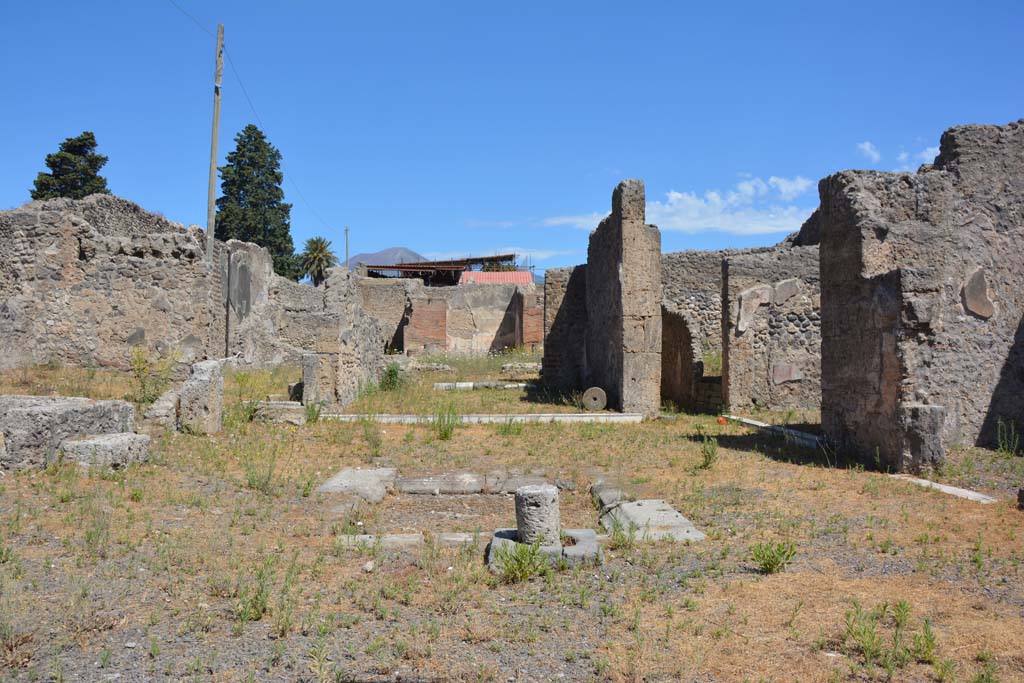
VI.13.2 Pompeii. July 2017. Looking north across impluvium in
atrium towards tablinum.
Foto Annette Haug, ERC
Grant 681269 DÉCOR.
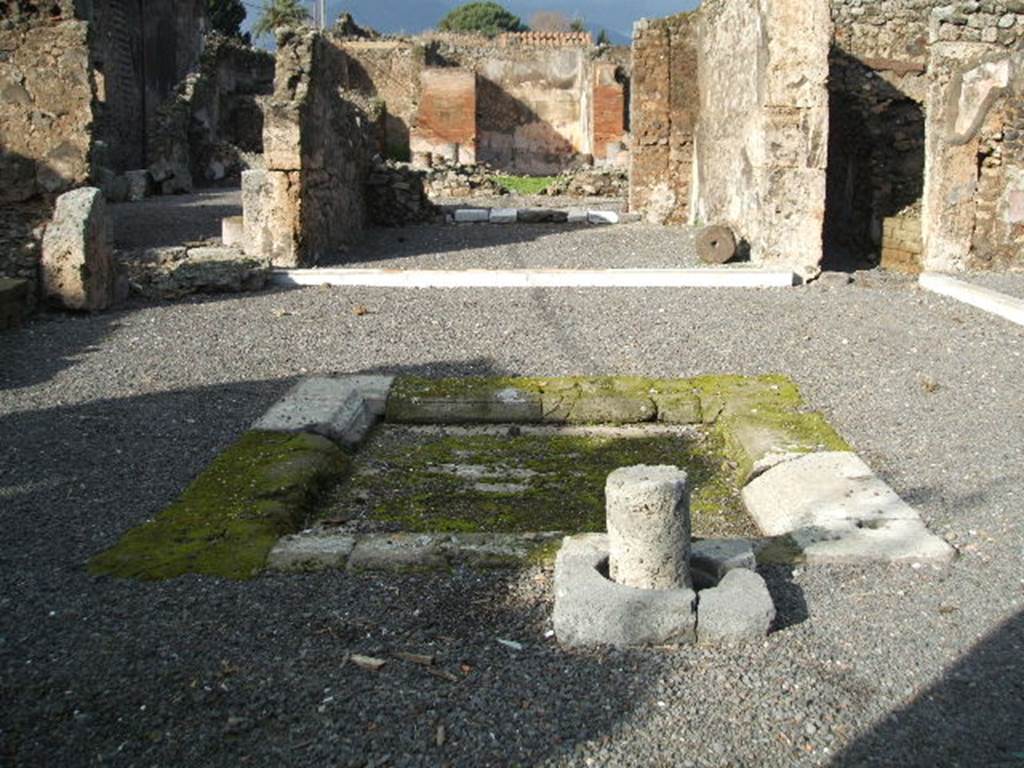
VI.13.2 Pompeii. December 2004. Atrium and impluvium.
On 13th September 1943 at 17.00 hours much damage was done when two bombs landed here.
One caused the demolition and destruction of three rooms on the west side of the atrium, with a large part of the perimeter wall onto Vicolo del Fauno.
The other damaged another three rooms on the south-east side, together with the perimeter wall on the east side.
The south-west of the peristyle was also destroyed together with surrounding areas, including the lararium on the east side.
See Garcia y Garcia,
L., 2006. Danni di guerra a Pompei. Rome: L’Erma di Bretschneider. (p. 85)
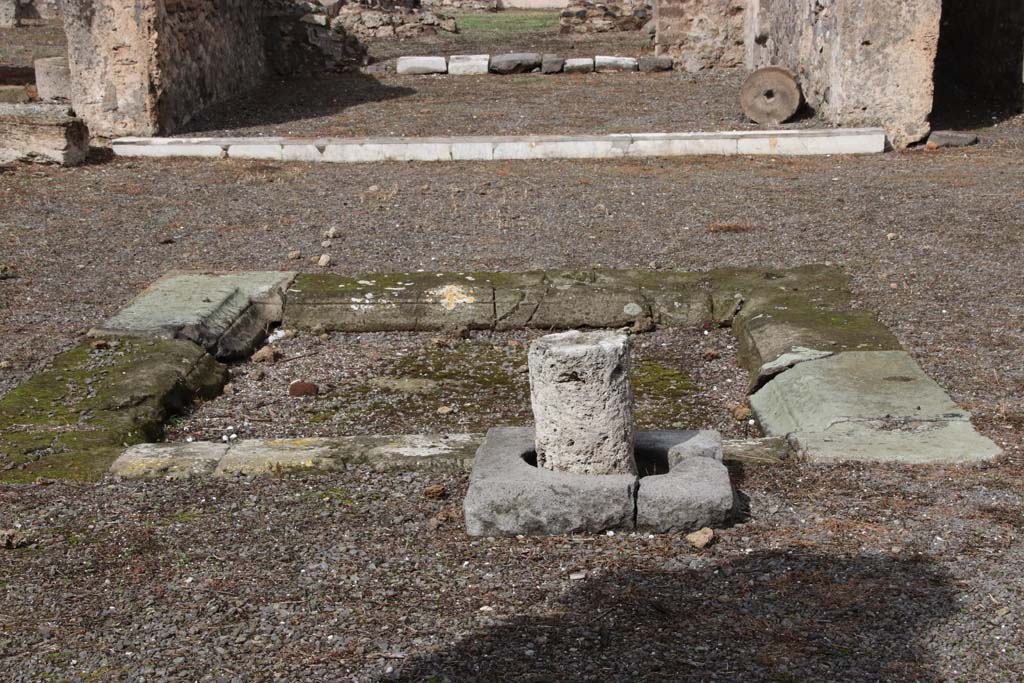
VI.13.2 Pompeii. October 2020. Looking north across impluvium in atrium. Photo courtesy of Klaus Heese.
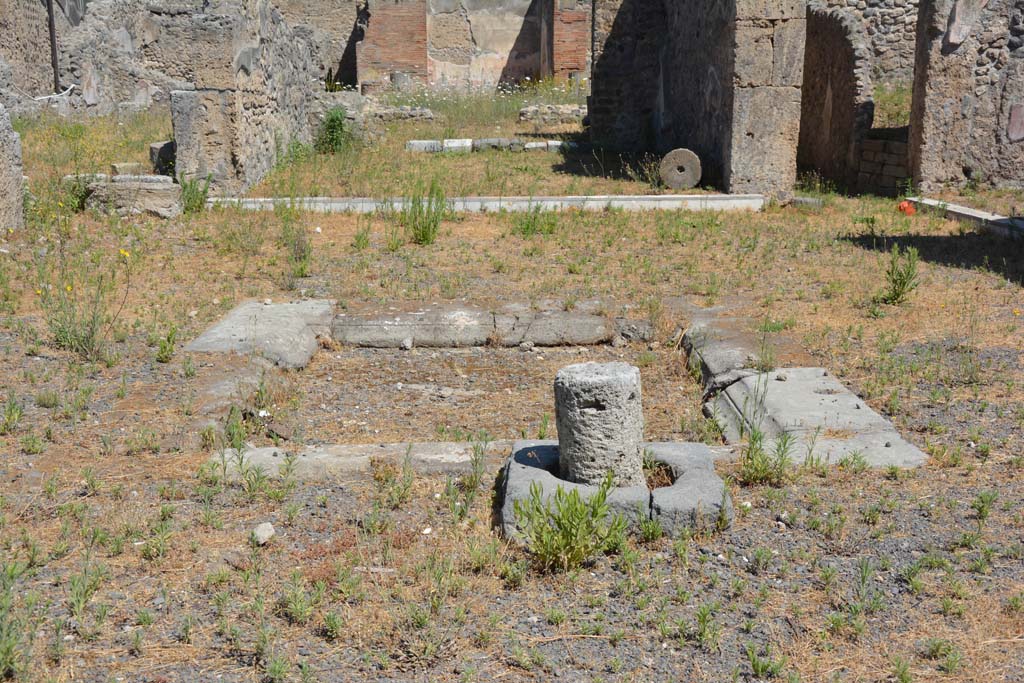
VI.13.2 Pompeii. July 2017. Looking north across impluvium
in atrium.
Foto Annette Haug, ERC
Grant 681269 DÉCOR.
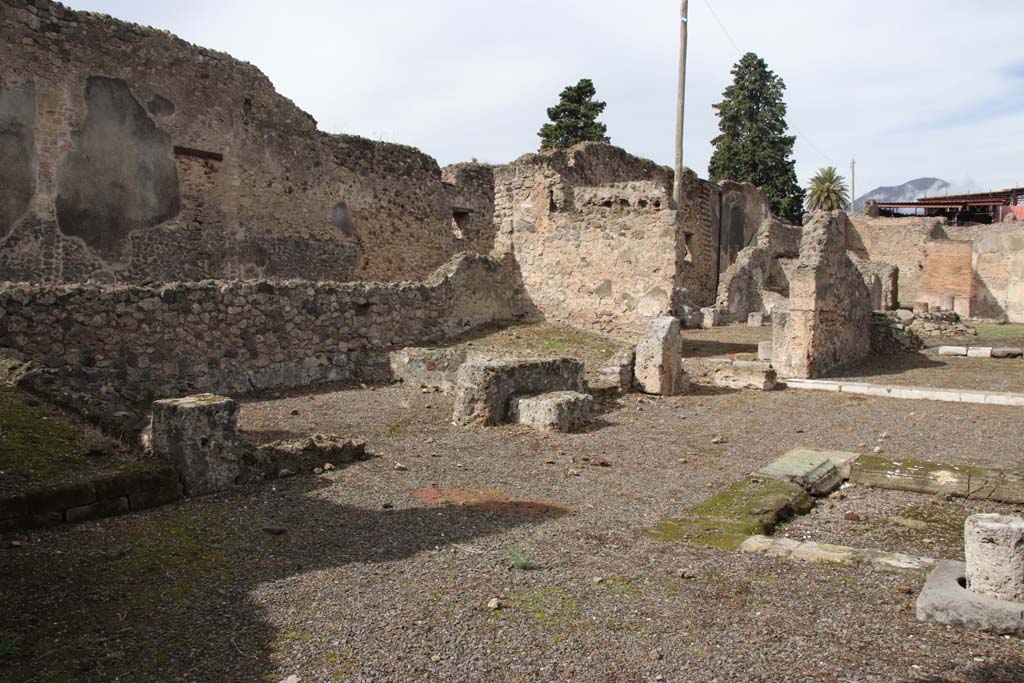
VI.13.2 Pompeii. October 2020.
Looking towards west side of atrium and site of demolished cubiculum, and other rooms. Photo courtesy of Klaus Heese.
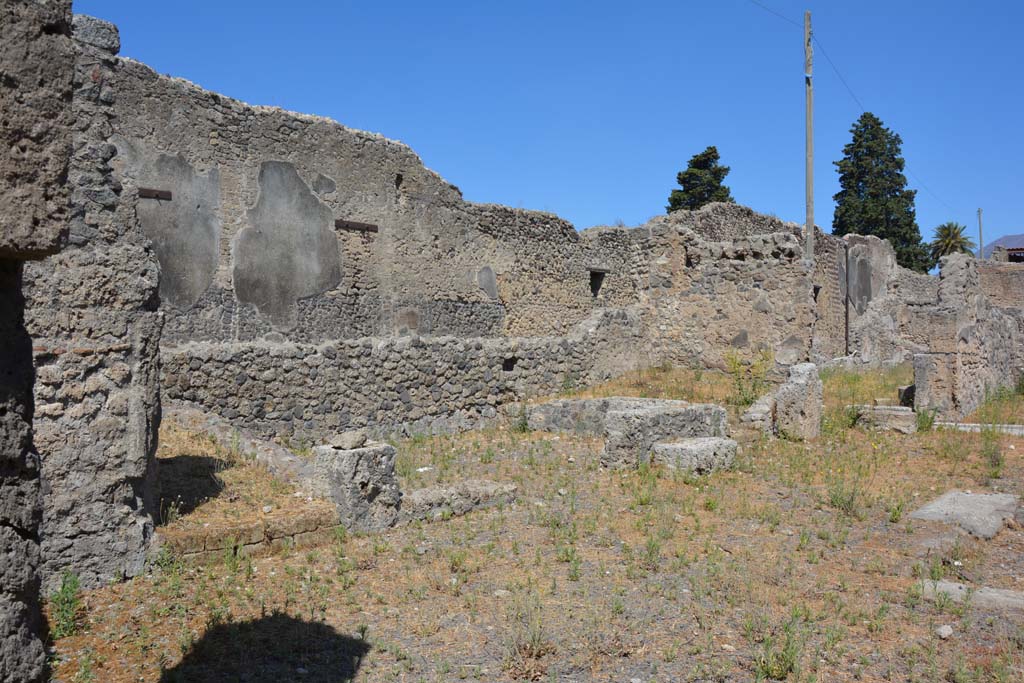
VI.13.2 Pompeii. July 2017. Looking towards west side of
atrium and site of demolished cubiculum, and other rooms.
Foto Annette Haug, ERC
Grant 681269 DÉCOR.
Destroyed
and demolished by 1943 bombing.
Photo
© Danmarks Kunstbibliotek, inventory number ark_6189.
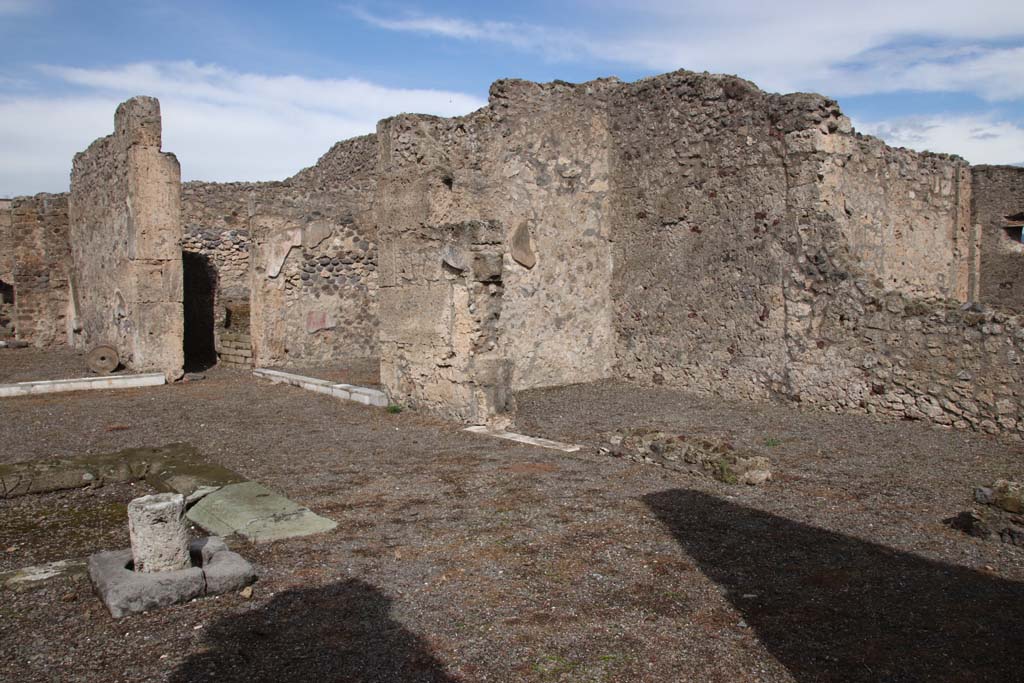
VI.13.2 Pompeii. October
2020. Looking north-east across atrium, towards rooms
on east side. Photo courtesy of Klaus Heese.
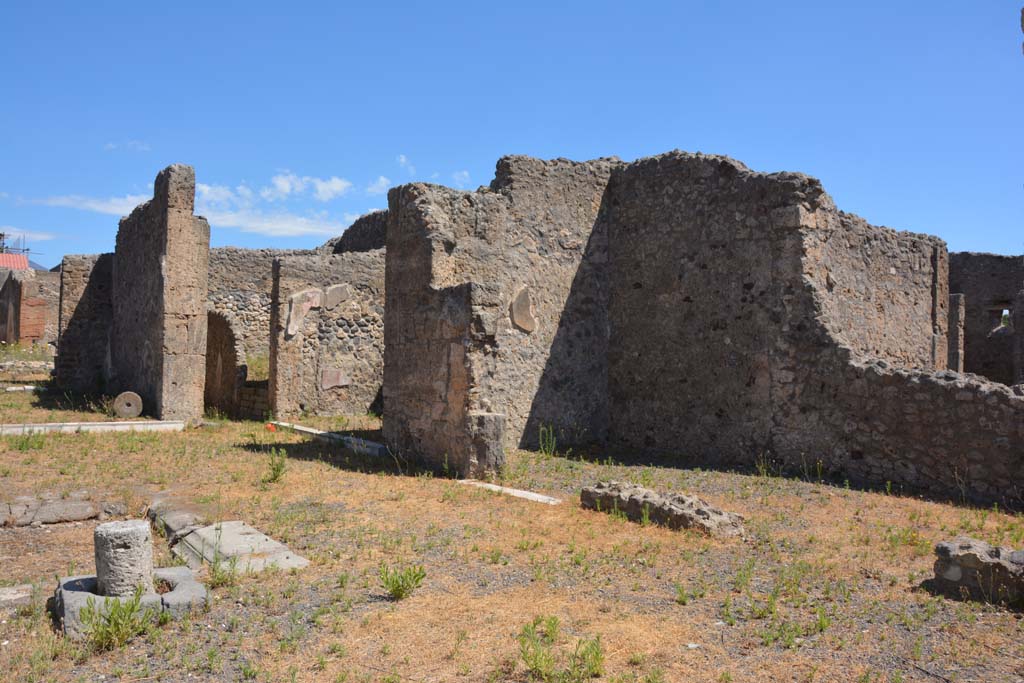
VI.13.2
Pompeii. July 2017. Looking north-east across atrium, towards rooms on
east side.
Foto Annette Haug, ERC Grant 681269 DÉCOR.
VI.13.2 Pompeii. July 2017. Doorway to cubiculum 5, on east side
of atrium.
Foto Annette
Haug, ERC Grant 681269 DÉCOR.
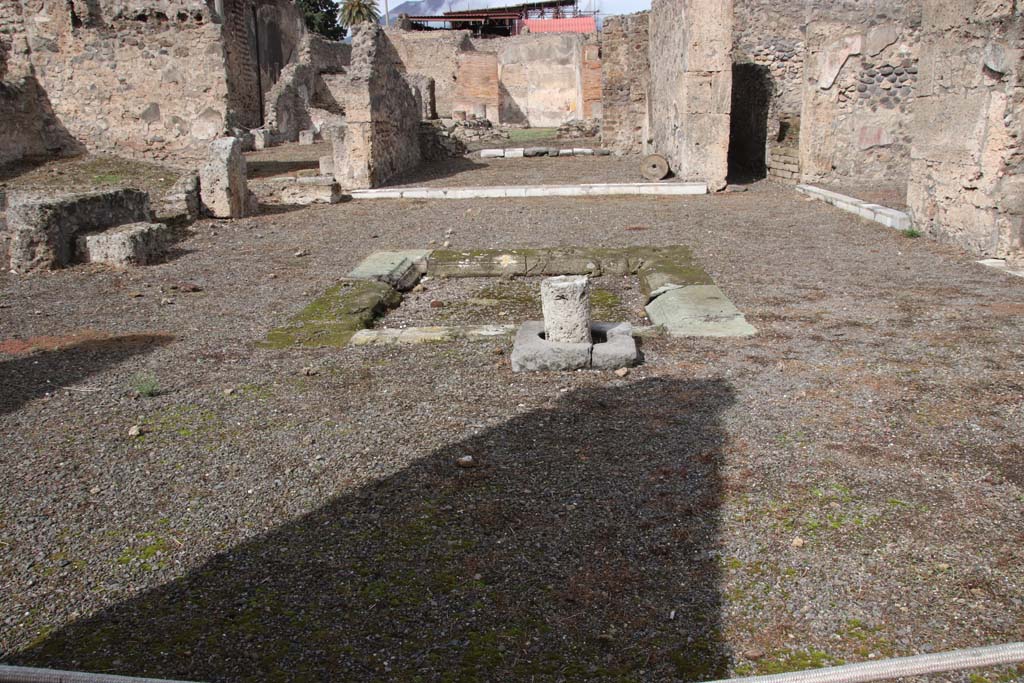
VI.13.2 Pompeii. October 2020.
Looking north across impluvium in atrium, through tablinum to peristyle. Photo courtesy of Klaus Heese.
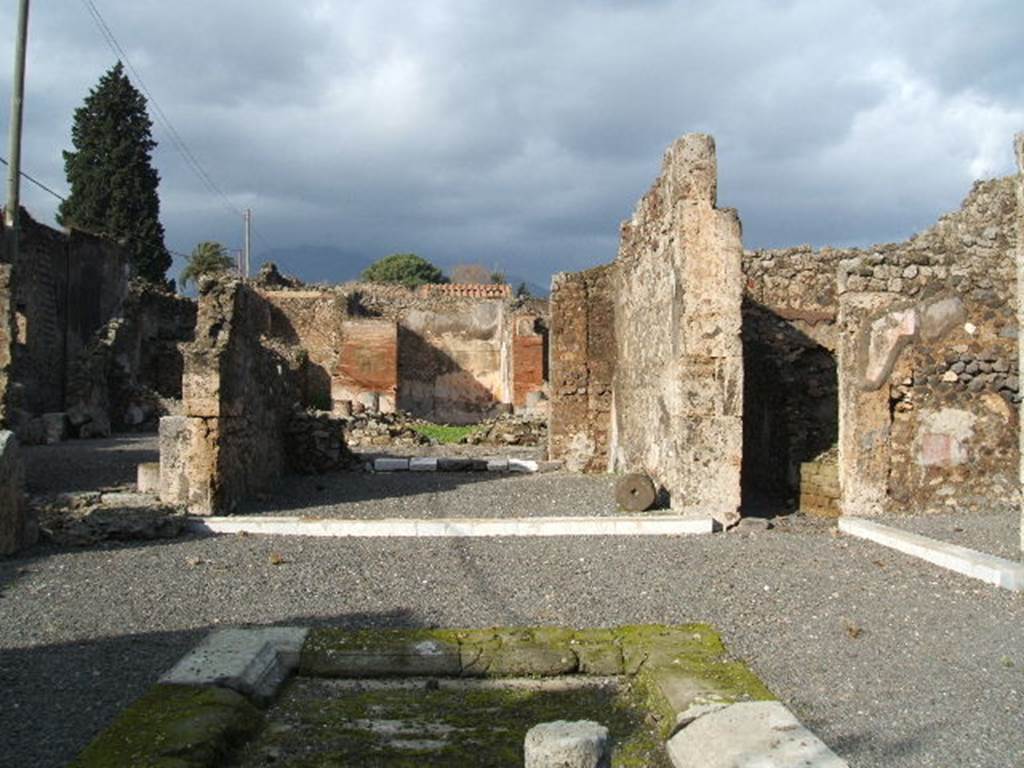
VI.13.2 Pompeii. December 2004. Looking north across atrium, through tablinum to peristyle.
According to Bragantini in PPP, the threshold of the tablinum was faced with marble.
See Bragantini, de Vos, Badoni, 1983. Pitture e Pavimenti di Pompei, Parte 2. Rome: ICCD, p. 262-3.
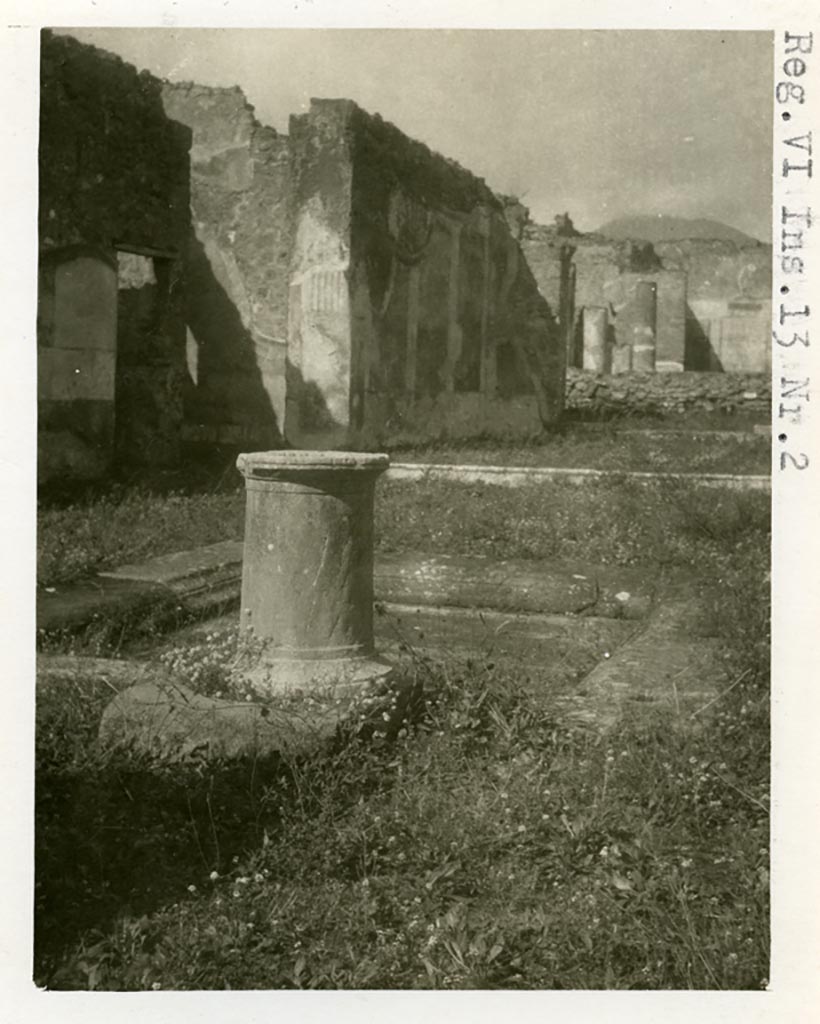
Looking across impluvium in atrium towards the west wall of the tablinum, still with painted decoration.
Photo courtesy of American Academy in Rome, Photographic Archive. Warsher collection no. 1423.
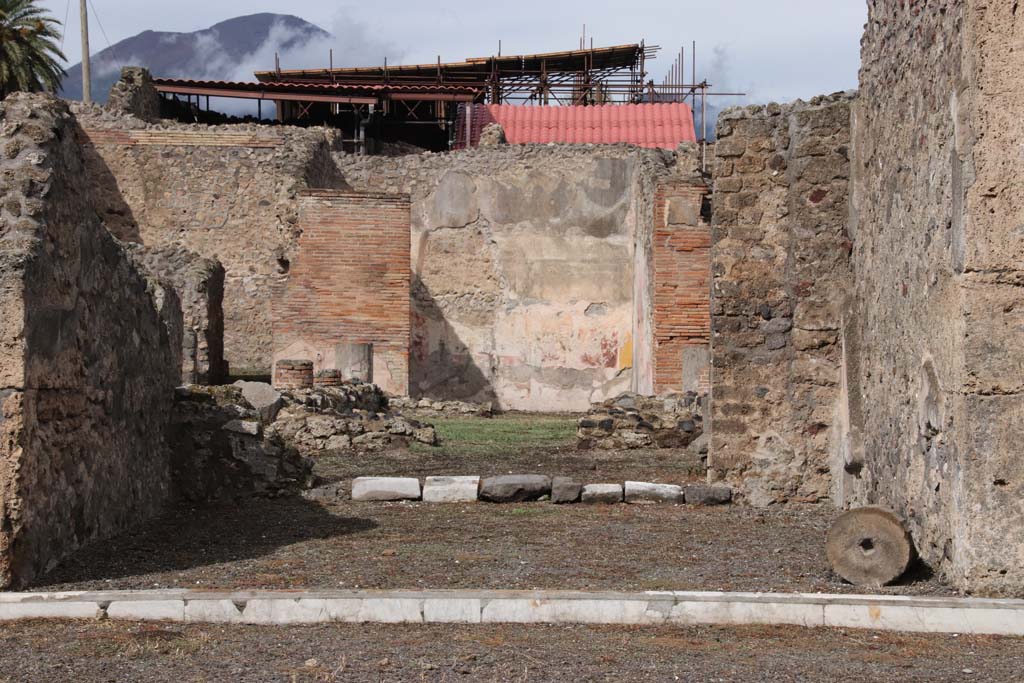
VI.13.2 Pompeii. October 2020. Looking north towards tablinum. Photo courtesy of Klaus Heese.
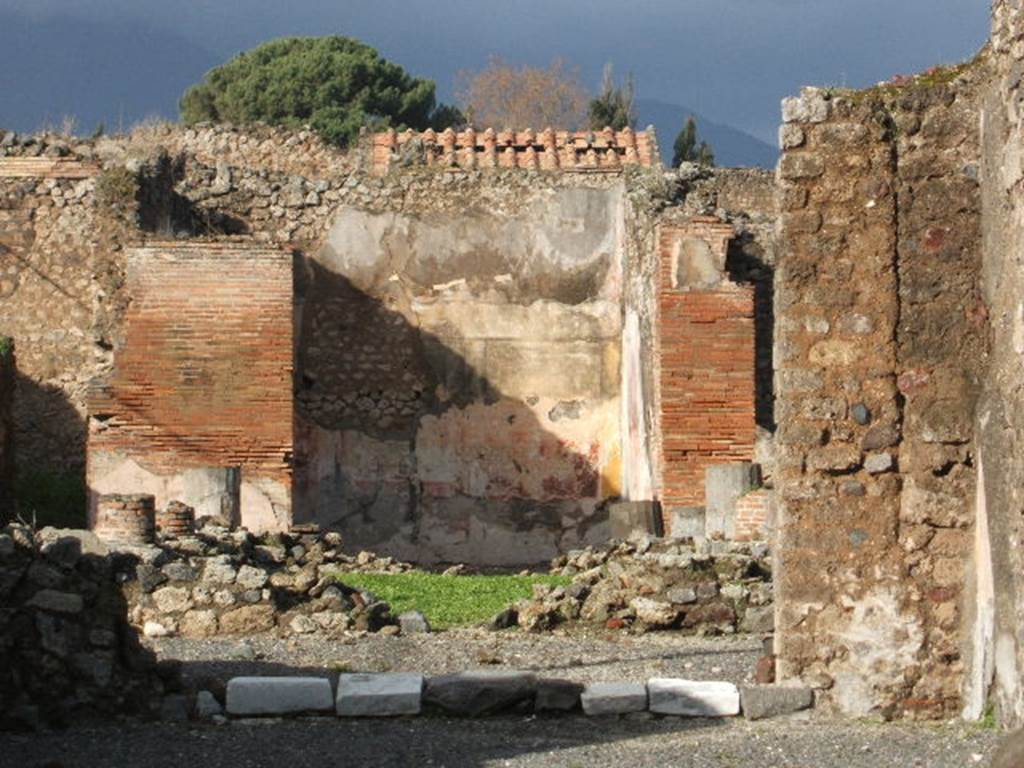
VI.13.2 Pompeii. December 2004. Looking north from tablinum across peristyle to summer triclinium.
On the right is the north-east corner of the tablinum.
According to Bragantini, the floor of cocciopesto had a black and white mosaic around its edge.
The border was edged with a black band between two rows of white tesserae.
On the northern end of the east wall, it was still possible to see a small portion of red paint as well as the floor of cocciopesto.
See Bragantini, de Vos, Badoni, 1983. Pitture e Pavimenti di Pompei, Parte 2. Rome: ICCD. (p.263, tablino ‘8’).
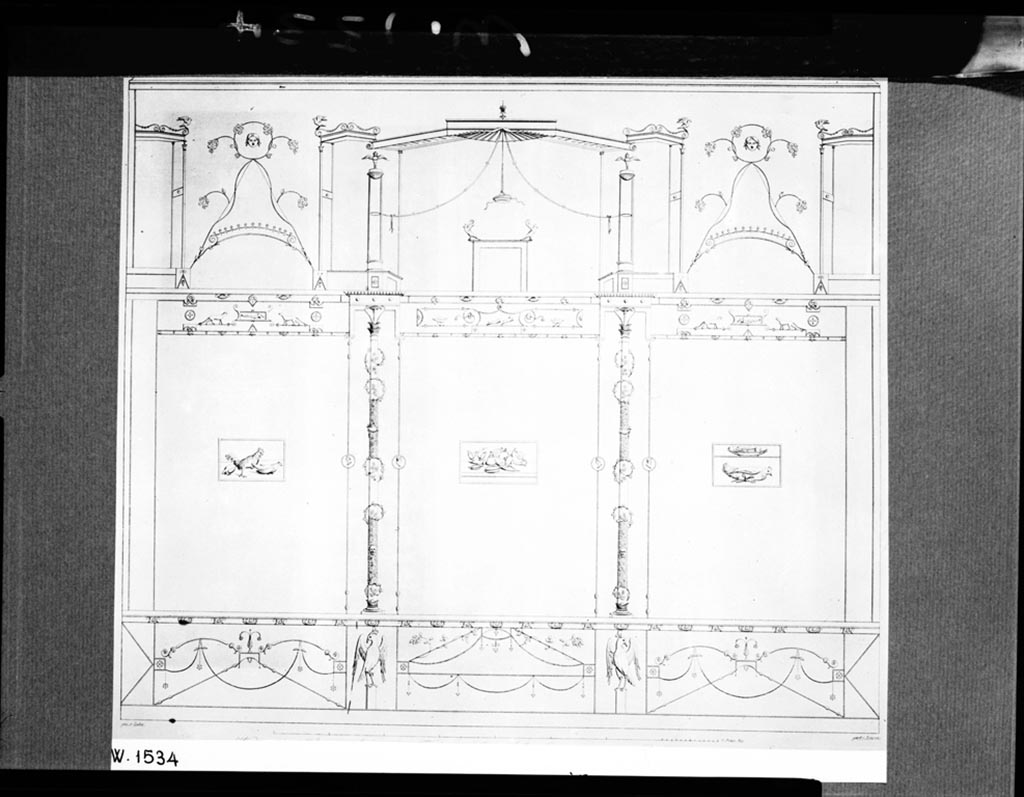
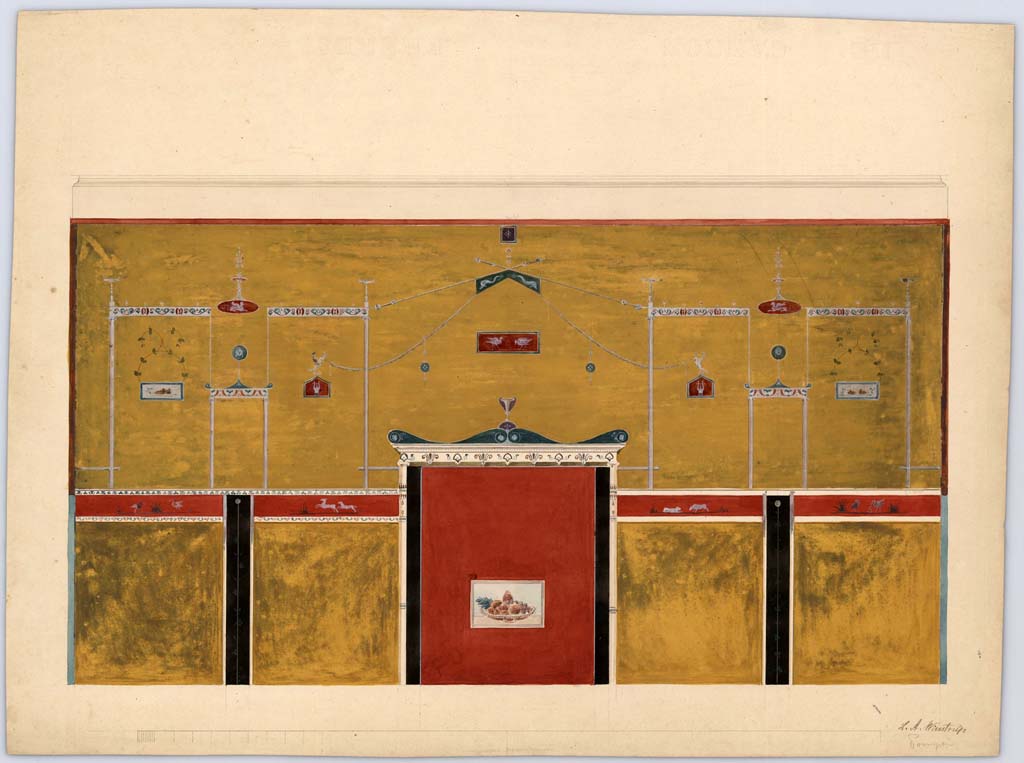
VI.13.2 Pompeii. W.1534. Drawing of east wall of tablinum, see Zahn II 86 below.
Photo by Tatiana Warscher. With kind permission of DAI Rome, whose copyright it remains.
The painted panel in the centre of the panel on the left showed a cock and chickens.
The painted central panel showed glass bottles, vases, etc.
The painted panel on the right showed a plate of fruits, above a chicken.
According to Breton, the tablinum was paved in mosaic, and the walls decorated with six paintings on a red background.
These showed cocks and chickens, a plate of fruits, and a beautiful group of vases, bottles or glasses, in various forms.
See Breton, Ernest. 1870. Pompeia, Guide de visite a Pompei, 3rd ed. Paris, Guerin.
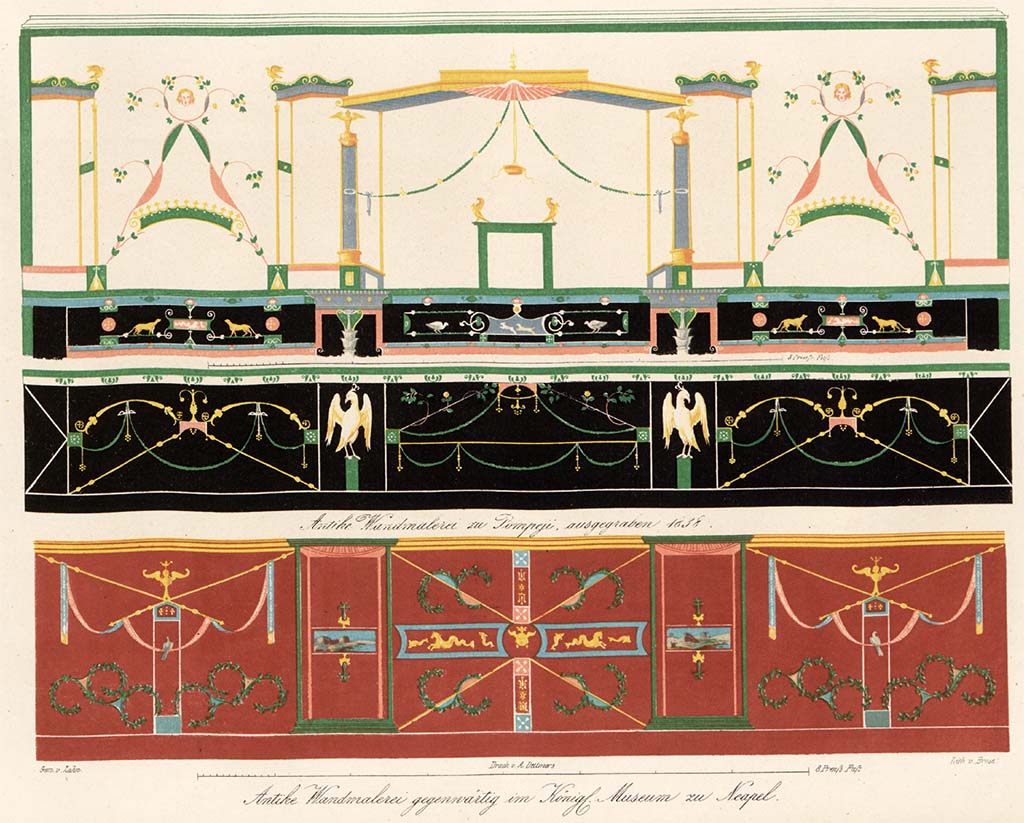
The lower (red) painting of a zoccolo was seen and painted in Naples Museum.
See Zahn W., 1849. Ornamente aller klassischen
Kunst-Epochen nach den Originalen in ihren eigenthümlichen Farben. Berlin:
Reimer, Taf. 95.
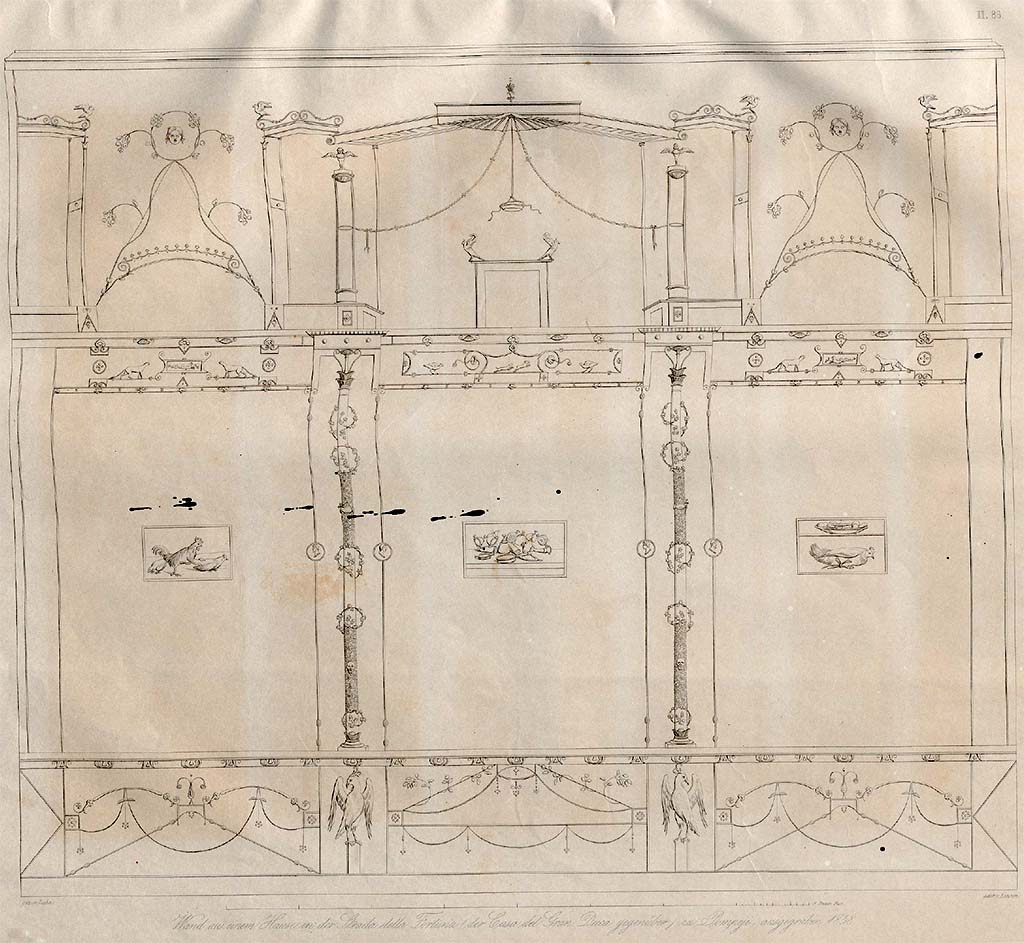
VI.13.2 Pompeii. Pre-1842 drawing by Zahn of east wall of tablinum
See Zahn, W., 1842. Die schönsten Ornamente und merkwürdigsten Gemälde aus Pompeji, Herkulanum und Stabiae: II. Berlin: Reimer, Taf. 86.
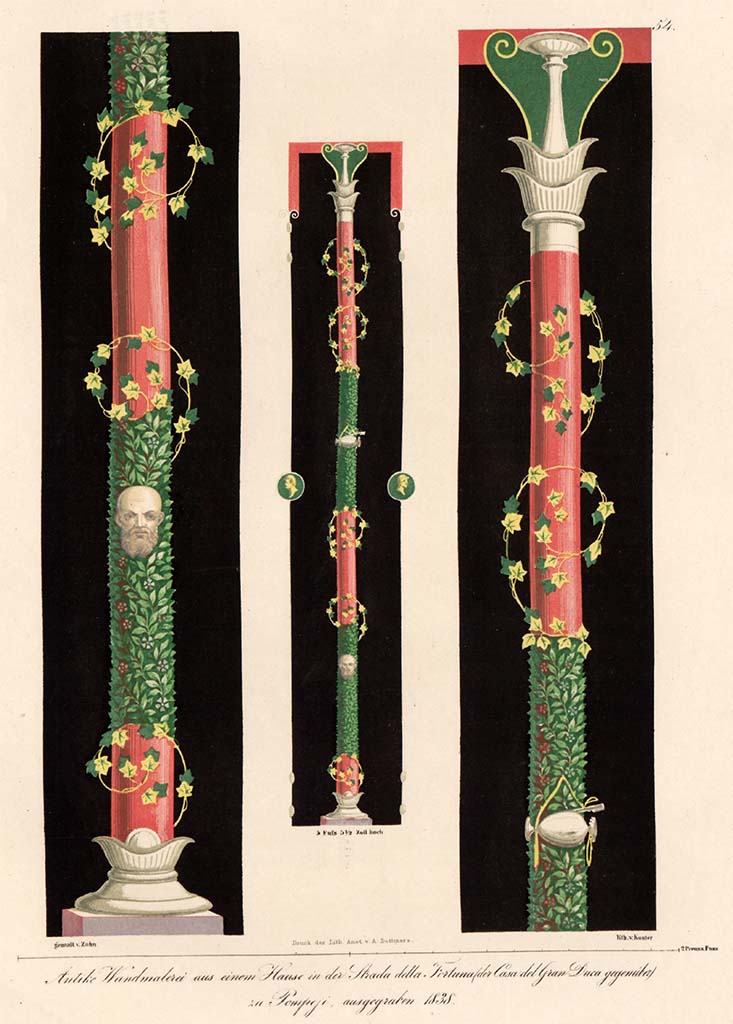
VI.13.2 Pompeii. Pre-1849. Painting by Zahn of a candelabra from the decoration of the tablinum walls.
In the centre is the complete candelabra, on the left is the
detail of the lower part, on the right, the upper part.
54: Antique wall painting from House in Strada della Fortuna,
opposite Casa del Gran Duca, in Pompeii, excavated 1838.
See Zahn W., 1849. Ornamente
aller klassischen Kunst-Epochen nach den Originalen in ihren eigenthümlichen
Farben. Berlin: Reimer, Taf. 54).
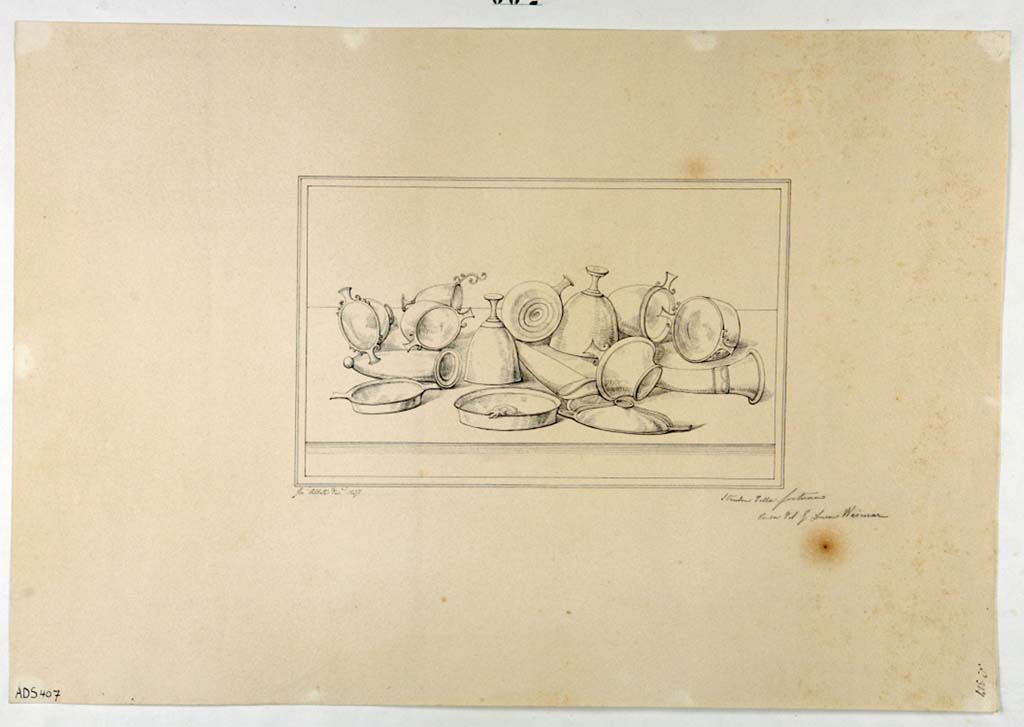
VI.13.2 Pompeii. 1837. East wall of the tablinum, central panel. Drawing by G. Abbate of bronze vessels, including cups, plates, a flask and a drinking horn,
Now in Naples Archaeological Museum. Inventory number ADS 407.
Photo © ICCD. https://www.catalogo.beniculturali.it
Utilizzabili alle
condizioni della licenza Attribuzione - Non commerciale - Condividi
allo stesso modo 2.5 Italia (CC BY-NC-SA 2.5 IT)
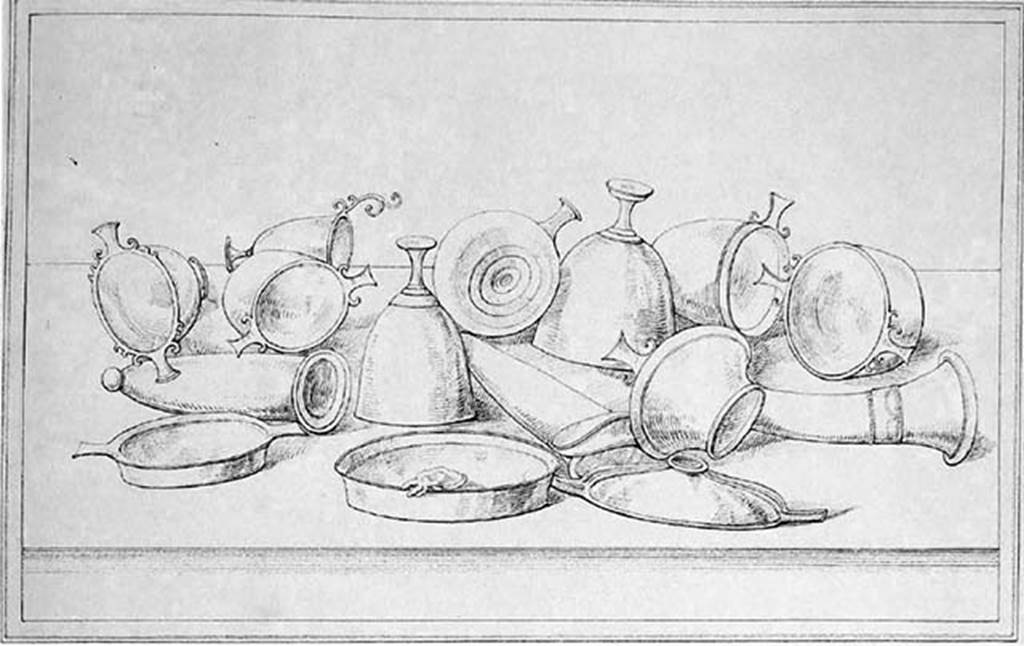
VI.13.2 Pompeii. 1837. East wall of the tablinum, central panel.
Drawing by G. Abbate of bronze vessels, including cups, plates, a flask and a drinking horn,
According to
CulturaItalia, -
“Il disegno
raffigura un corredo di recipienti metallici, probabilmente in bronzo, disposti
in ordine sparso su un piano.
Si riconoscono
"skyphoi", "kàntharoi", tegami, un "rhyton"”.
(trans): The drawing depicts a set of metal containers,
probably in bronze, arranged in no particular order onto a flat surface.
You can recognize "skyphoi",
"kàntharoi", tegami, and a "rhyton".
Photo courtesy of CulturaItalia and its contributors whose copyright it remains.
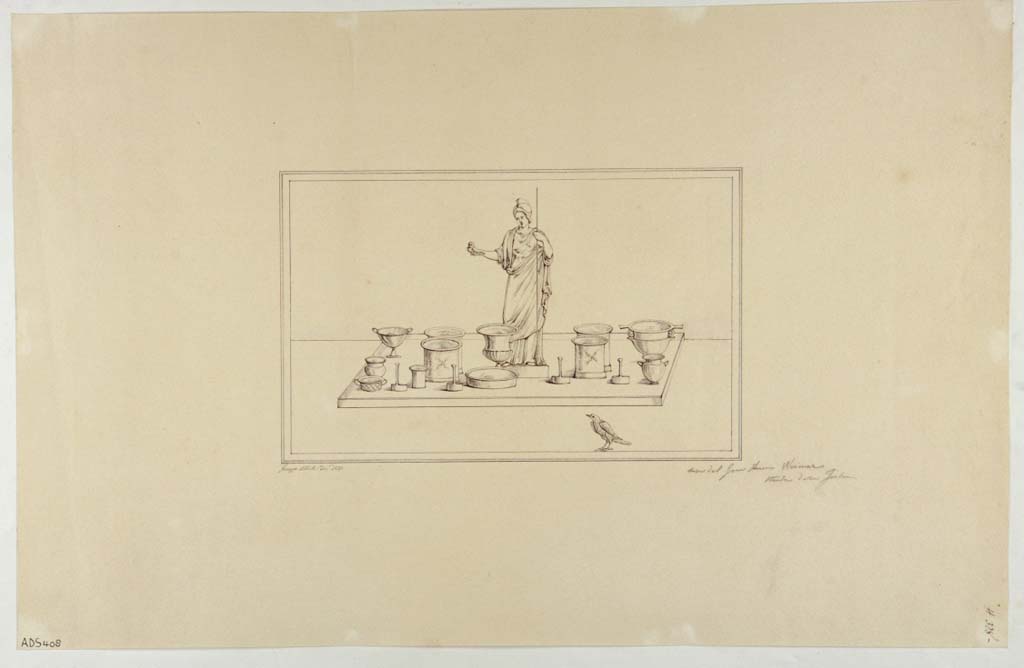
VI.13.2 Pompeii. 1837. East wall of the tablinum, central panel. Drawing by G. Abbate of drinking vessels arranged around a statue of Athena.
Now in Naples Archaeological Museum. Inventory number ADS 408.
Photo © ICCD. https://www.catalogo.beniculturali.it
Utilizzabili alle
condizioni della licenza Attribuzione - Non commerciale - Condividi
allo stesso modo 2.5 Italia (CC BY-NC-SA 2.5 IT)
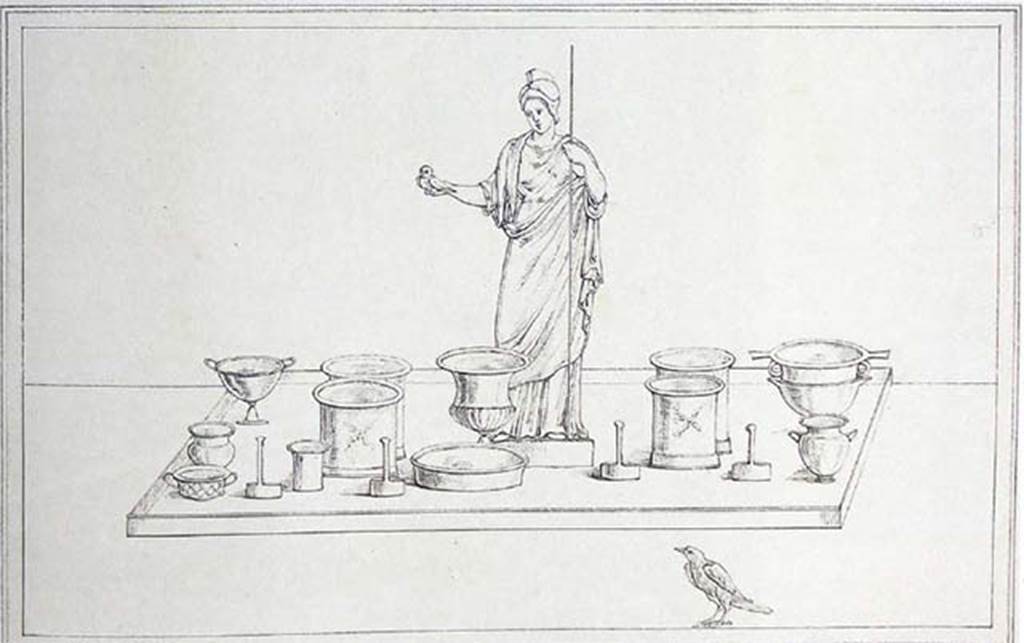
VI.13.2 Pompeii. 1837. Tablinum. Drawing by G. Abbate of drinking vessels arranged around a statue of Athena.
According to
CulturaItalia, “Il disegno raffigura un gruppo di vasi potori, probabilmente in
argento a giudicare dalle forme, disposti in maniera ordinata su una mensa
intorno ad una statuetta di Atena, con elmo e civetta nella destra. Tra i
recipienti si riconoscono "skyphoi", "kàntharoi",
"simpula". In basso, verso destra, è raffigurato un volatile.”
(trans): The drawing depicts a group of drinking vessels,
probably silver judging by the shapes, arranged in an orderly manner on a table
around a statue of Athena, wearing a helmet and holding an owl in her right
hand. Among the containers, you can recognize "simpula", "kàntharoi",
"skyphoi". At the bottom, to the right, a bird is depicted.
Photo courtesy of CulturaItalia and its contributors whose copyright it remains.
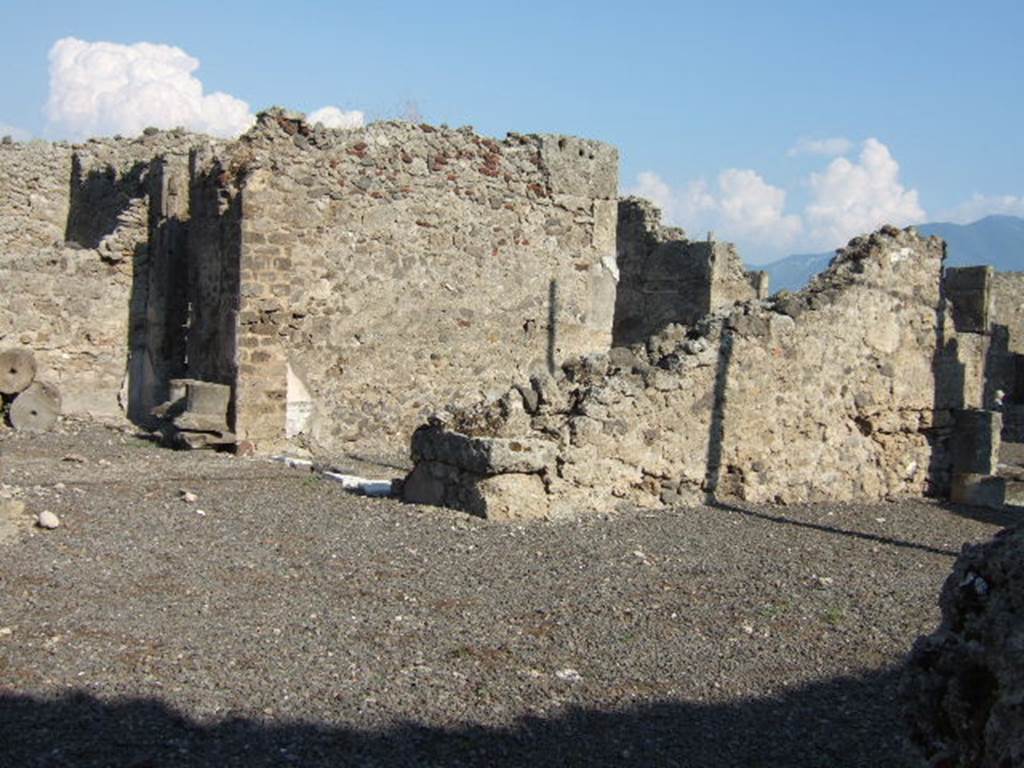
VI.13.2 Pompeii. September 2005. Looking south-east towards rear of andron, the east wall of tablinum and oecus, on the right.
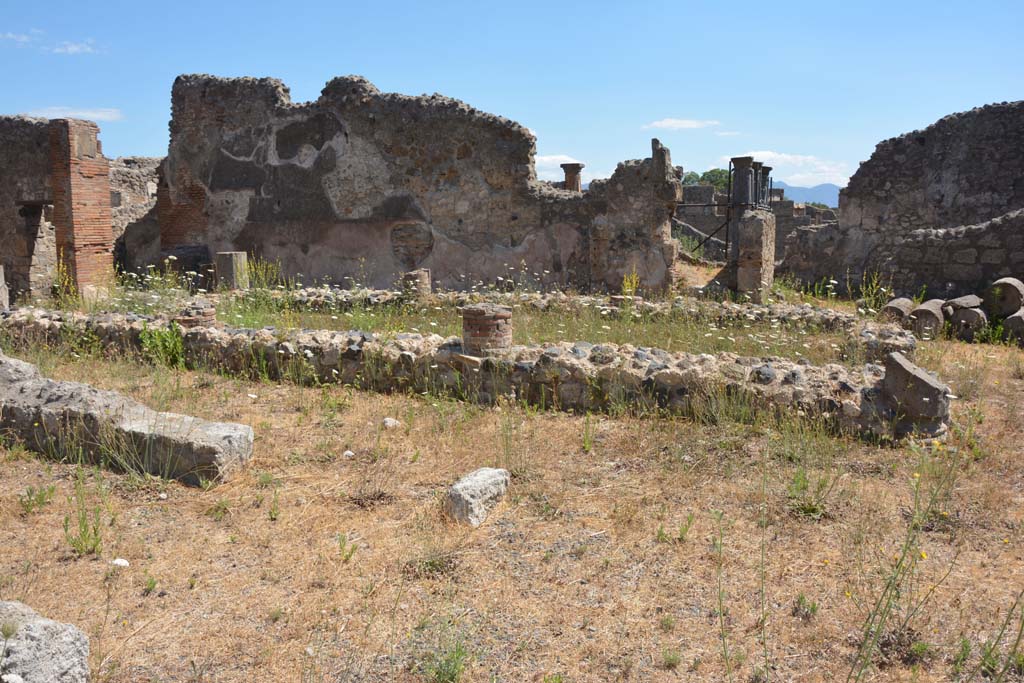
VI.13.2 Pompeii. July 2017. Looking north-east across garden area
from west side.
Foto Annette Haug, ERC
Grant 681269 DÉCOR.
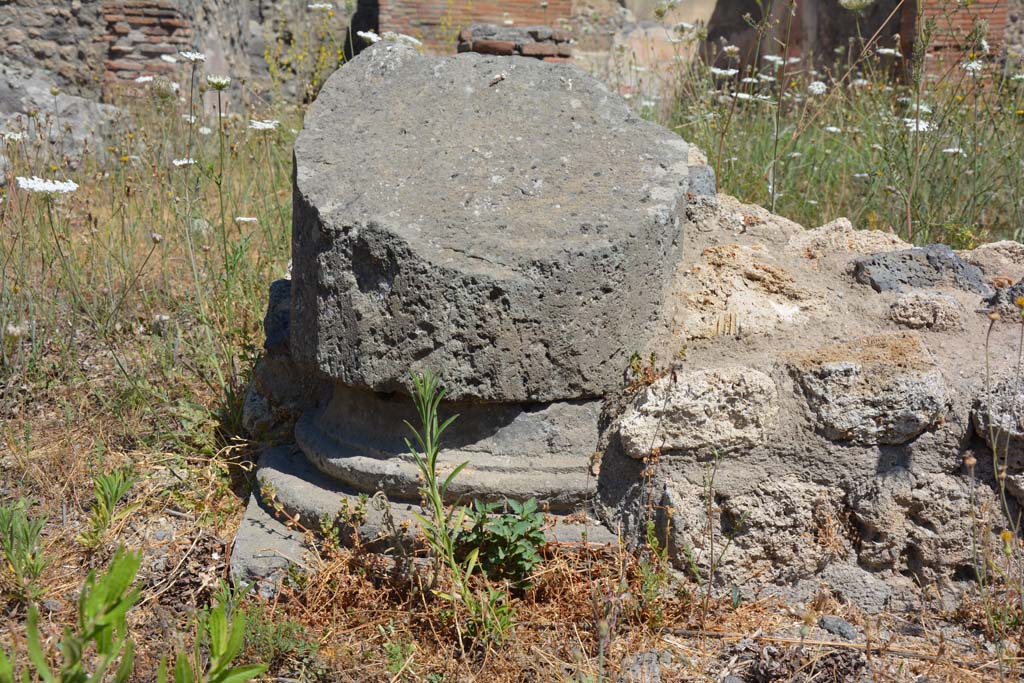
VI.13.2 Pompeii. July 2017. Detail from south-west corner of
garden area.
Foto Annette Haug, ERC
Grant 681269 DÉCOR.
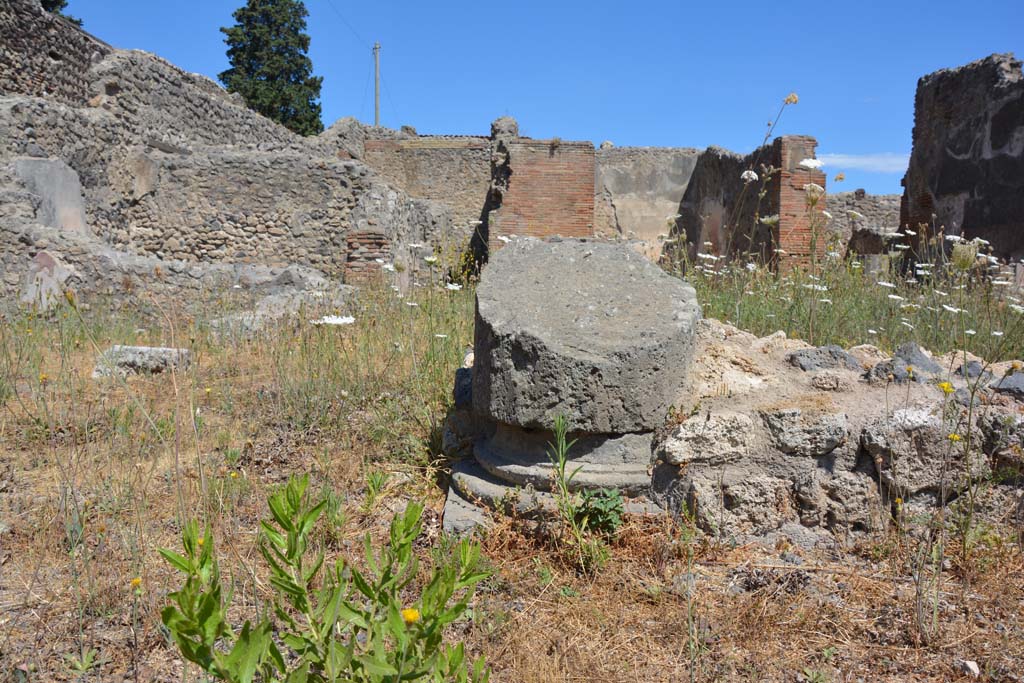
VI.13.2 Pompeii. July 2017. Looking north along west side of
garden area.
Foto Annette Haug, ERC
Grant 681269 DÉCOR.
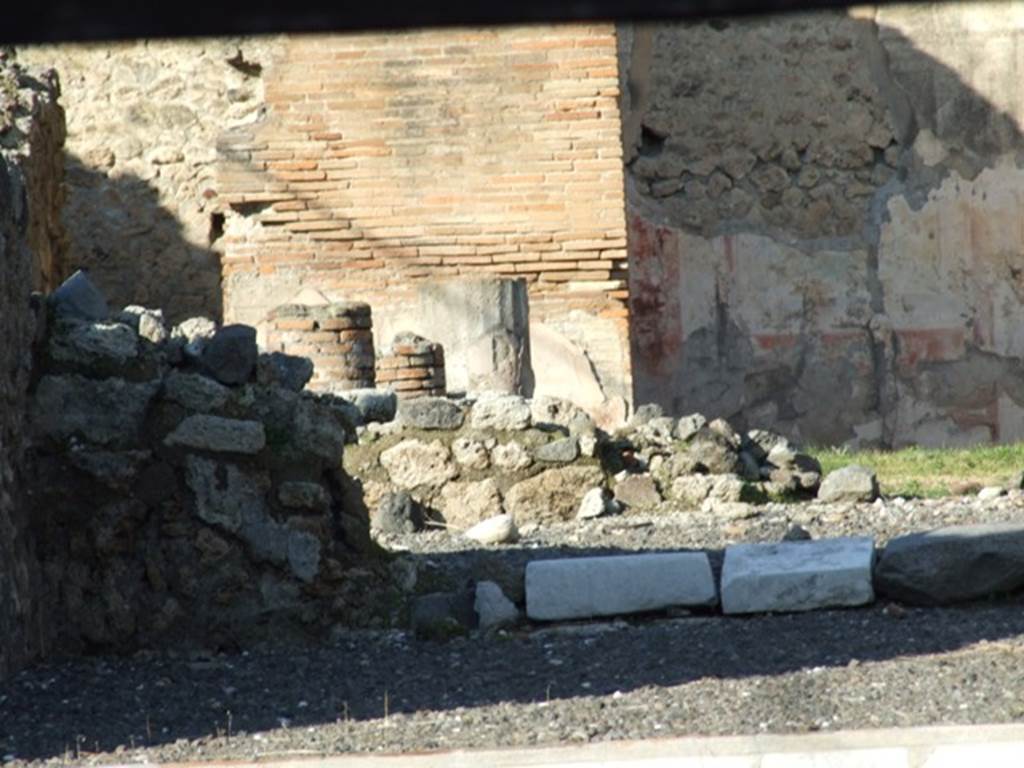
VI.13.2 Pompeii. December 2007. Looking north from tablinum into remains of peristyle on west side.
VI.13.2 Pompeii. October 2020.
Looking north from tablinum across peristyle towards summer triclinium. Photo courtesy of Klaus Heese.
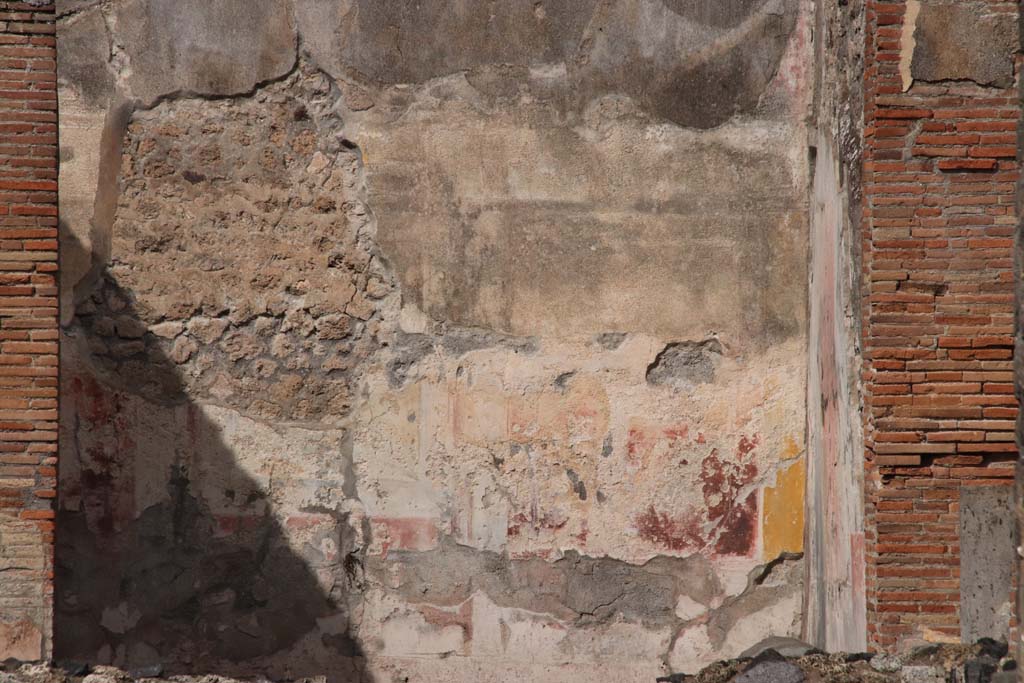
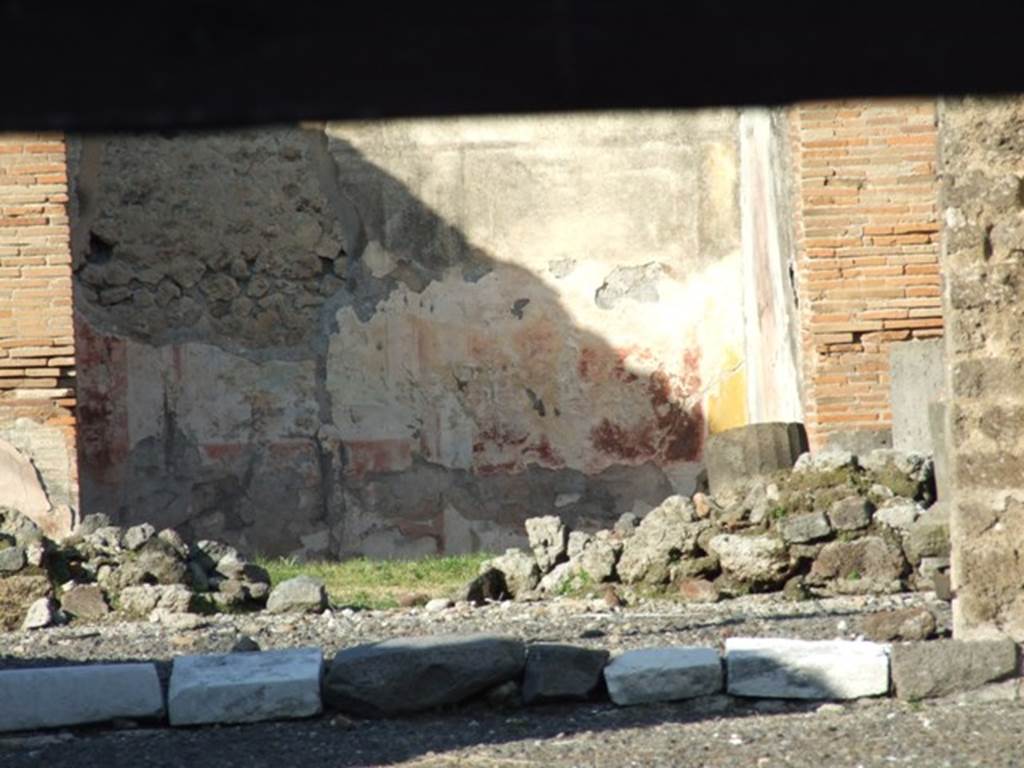
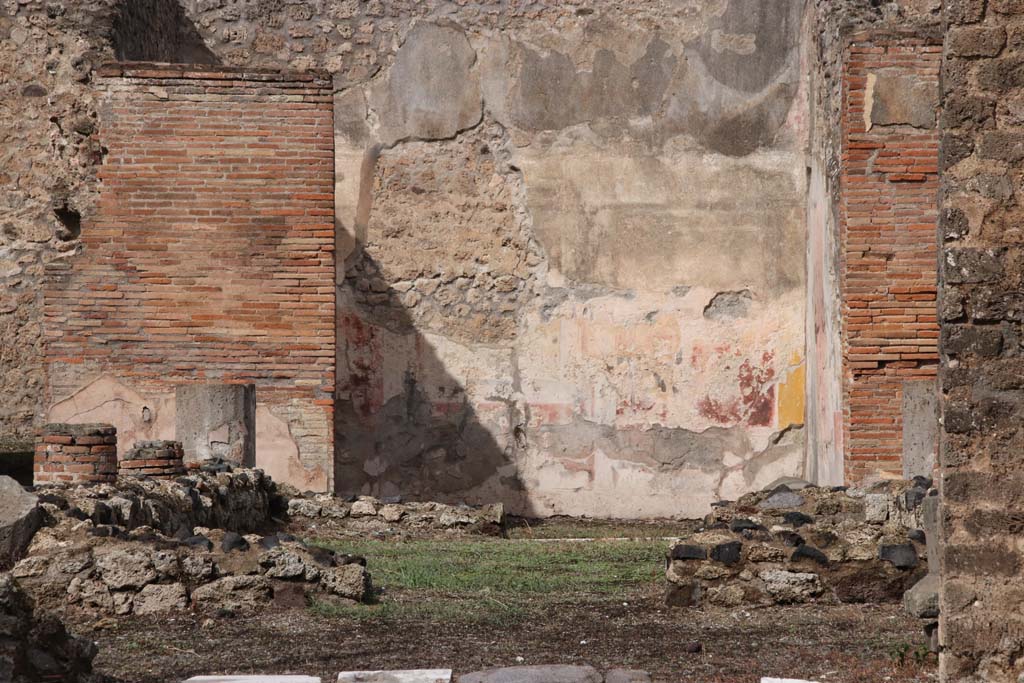
VI.13.2 Pompeii. December 2007.
Looking north from east side of tablinum towards the summer triclinium, with remains of painted decoration.
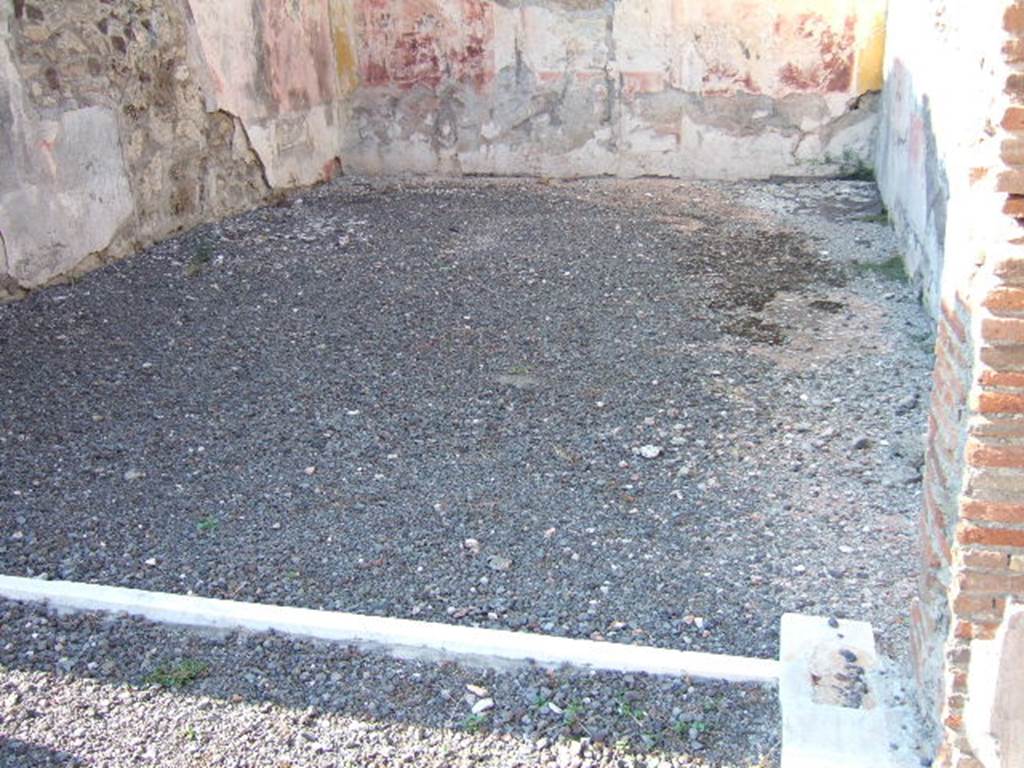
VI.13.2 Pompeii. September 2005. Looking north from peristyle into summer triclinium.
According to Bragantini in PPP, the flooring of the triclinium was cocciopesto.
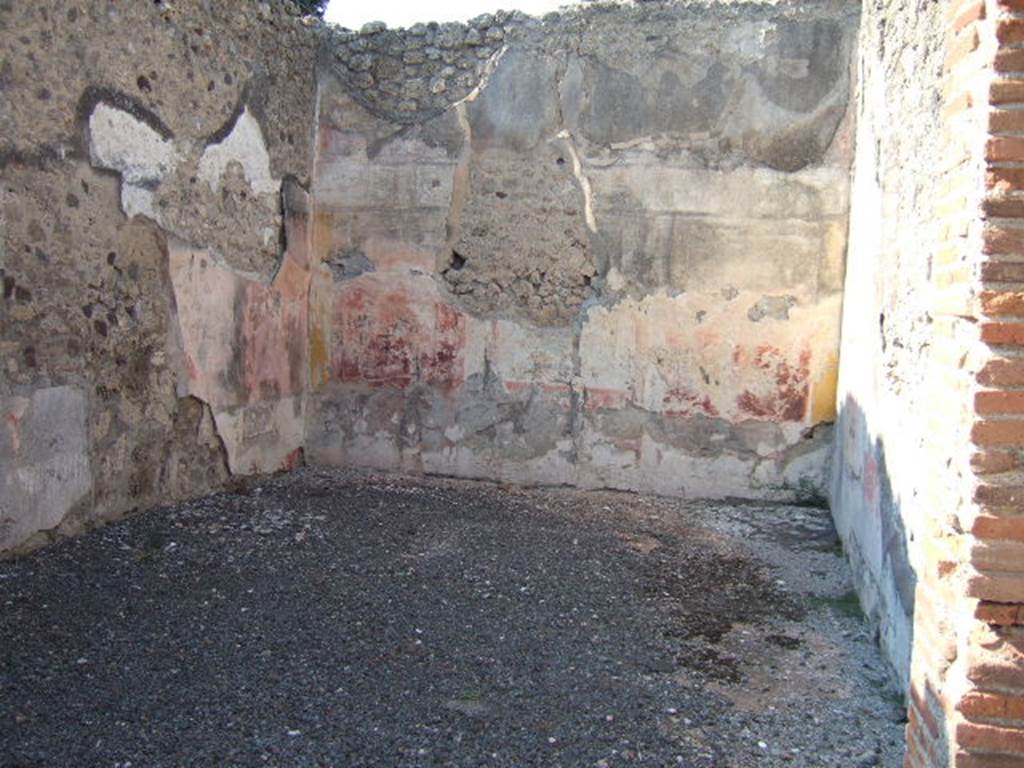
VI.13.2 Pompeii. September 2005. Summer triclinium, looking north.
According to RdSPomp, found on the west wall (on the left) was the painting of Medea and the daughters of Pelias.
This was detached from the west wall and taken to the Naples Museum.
See Rivista di Studi Pompeiani, XVI, 2005
(p.190) and note 56.
The west wall would have had a red plinth, and a black zoccolo.
In the central aedicula panel would have been a painting of Medea and the daughters of Pelias.
The side panels would have been red, separated by narrow yellow compartments painted with silver candelabra design.
See Bragantini, de Vos, Badoni, 1983. Pitture e Pavimenti di Pompei, Parte 2. Rome: ICCD. (p.263, triclinio ‘20’).
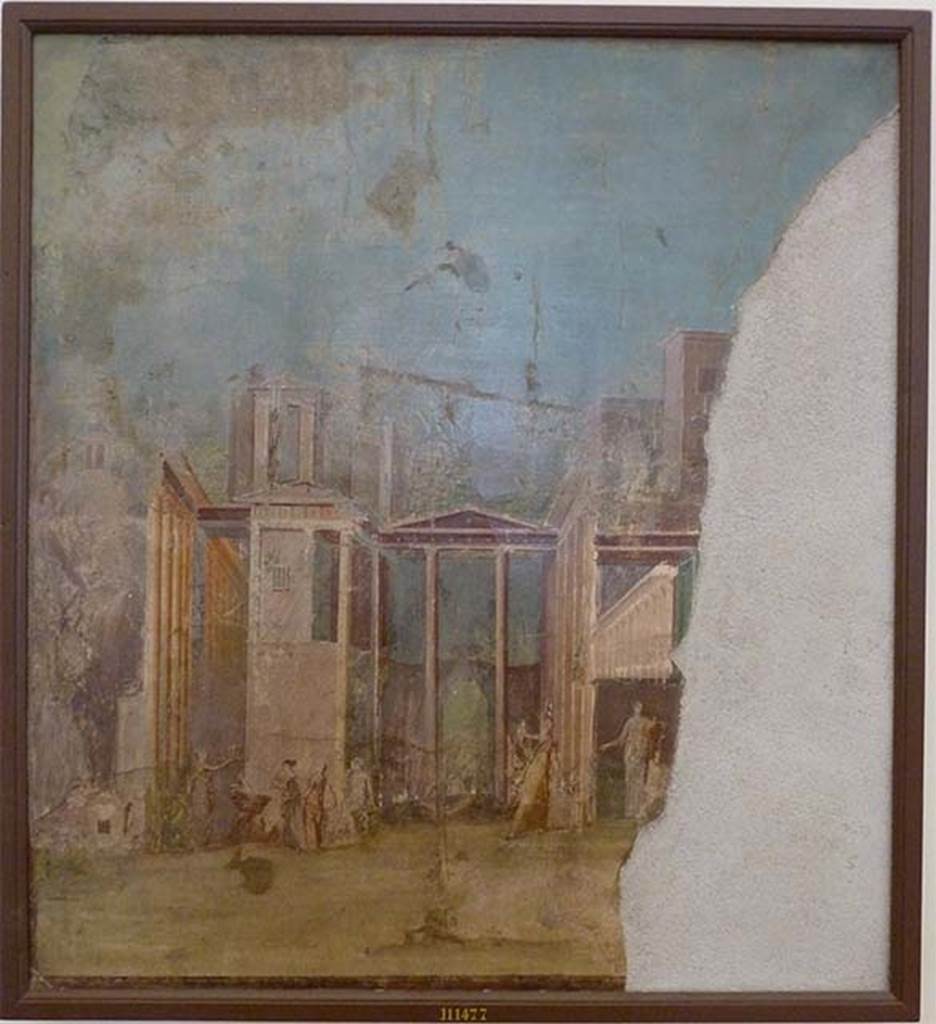
VI.13.2 Pompeii. May 2010. Wall painting of Medea and the daughters of Pelias, from summer triclinium.
Now in Naples Archaeological Museum. Inventory number 111477.
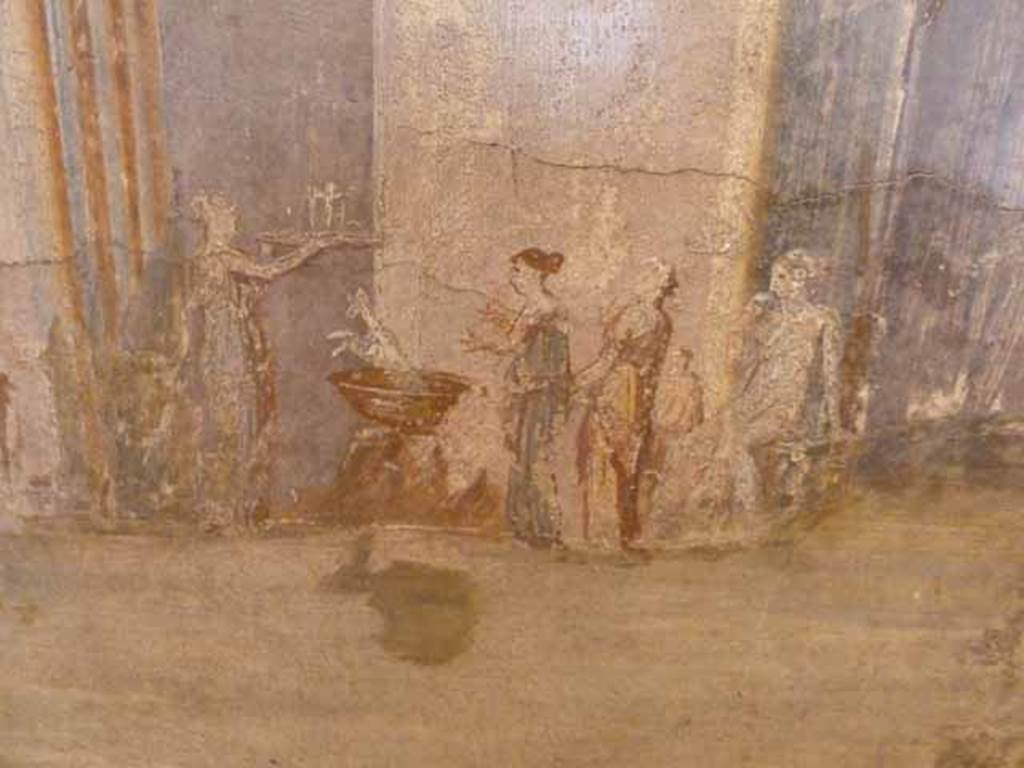
VI.13.2 Pompeii. May 2010. Detail from wall painting in summer triclinium.
Daughters of King Pelias being tricked by Medea, with a magic cauldron.
Now in Naples Archaeological Museum. Inventory number 111477.
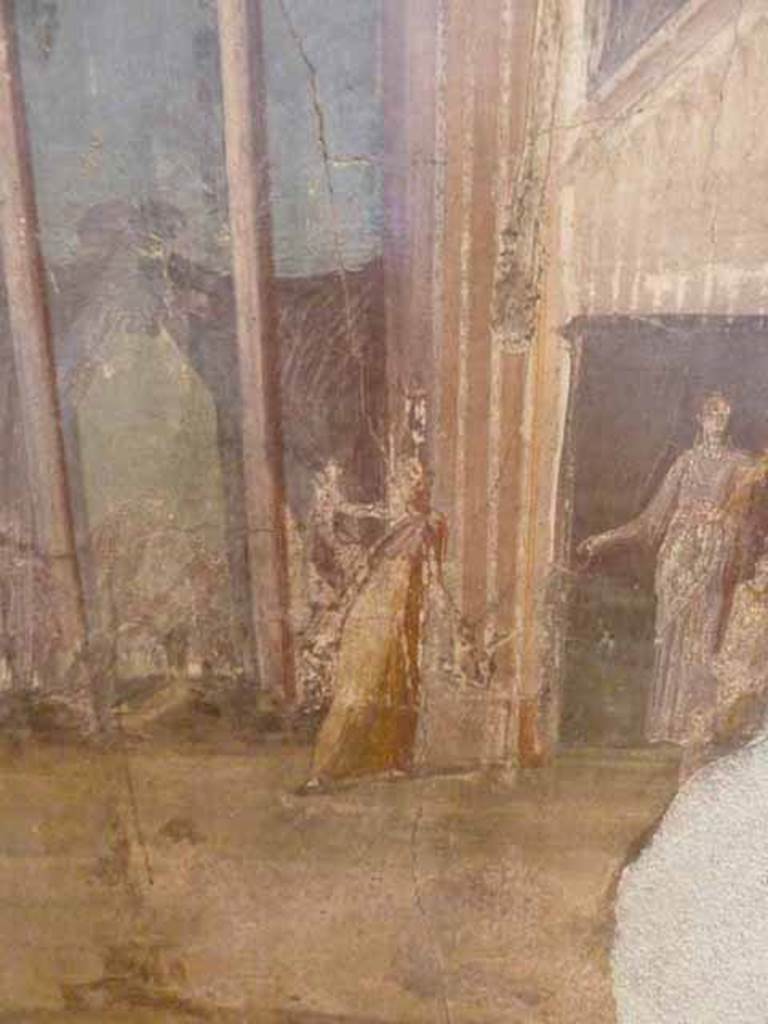
VI.13.2 Pompeii. May 2010. Detail from wall painting in summer triclinium.
An Incredulous Alcestis is keeping her own counsel.
Now in Naples Archaeological Museum. Inventory number 111477.
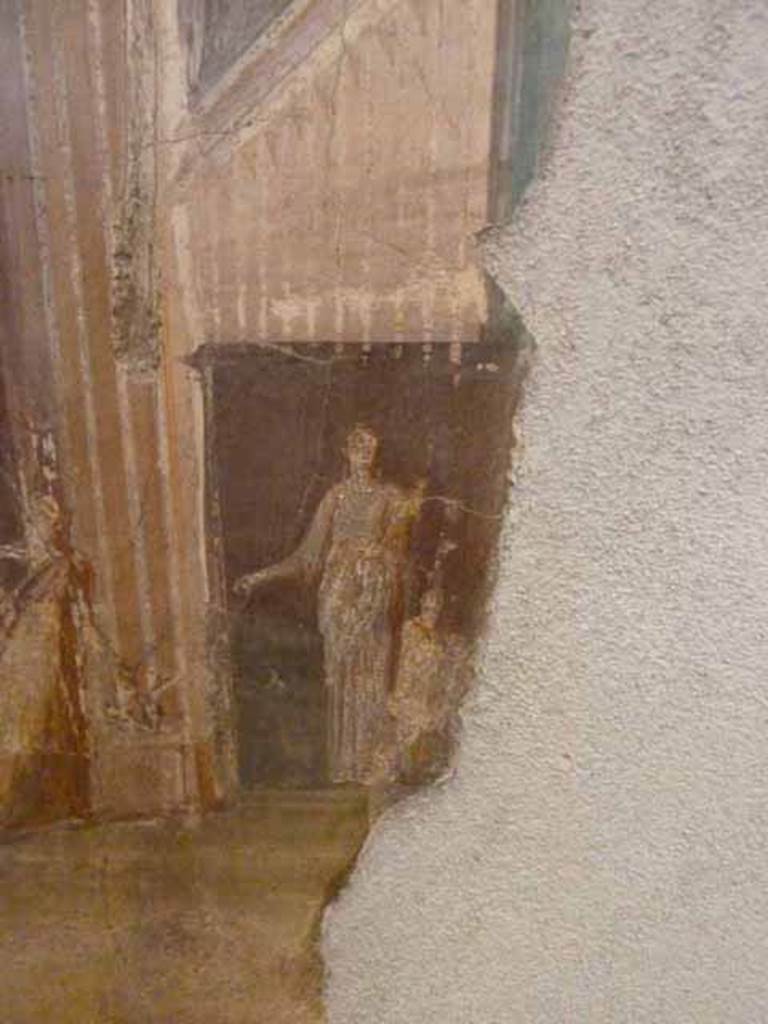
VI.13.2 Pompeii. May 2010. Detail from wall painting in summer triclinium.
Medea characterised as a priestess of Artemis.
Now in Naples Archaeological Museum. Inventory number 111477.
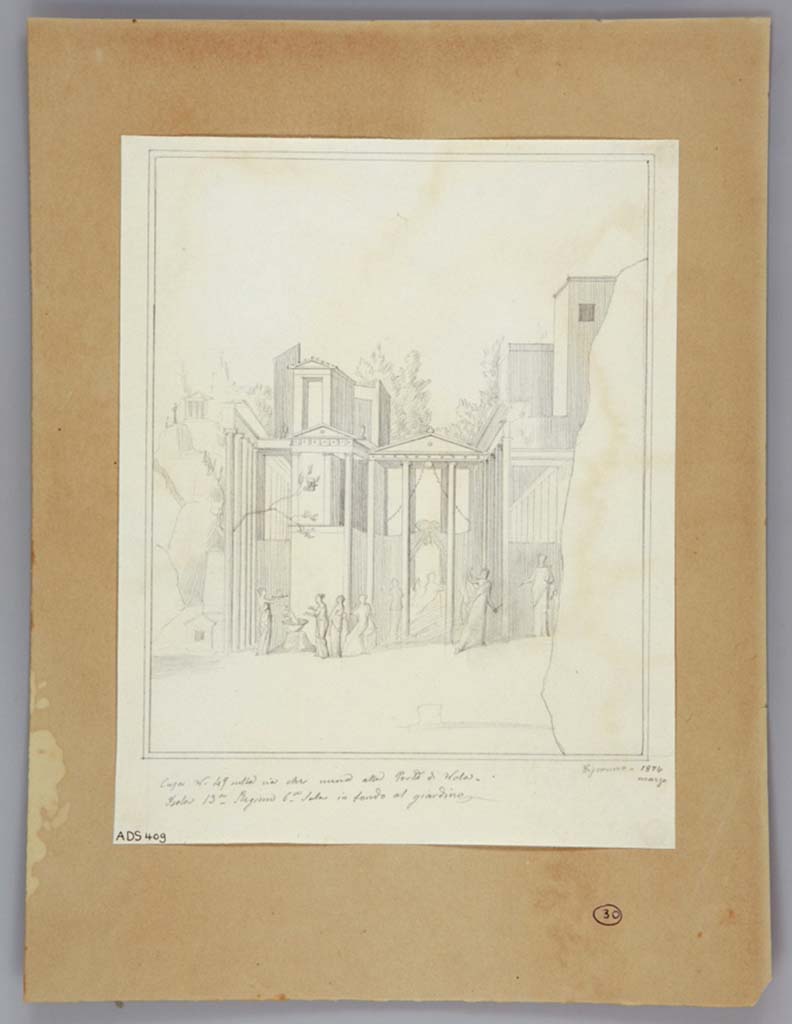
VI.13.2 Pompeii.
Drawing by Geremia Discanno, March 1847, of painting of Medea and the daughters of Pelias found in summer triclinium at rear of peristyle.
Now in Naples Archaeological Museum. Inventory number ADS 409.
Photo © ICCD. https://www.catalogo.beniculturali.it
Utilizzabili alle condizioni della licenza Attribuzione
- Non commerciale - Condividi allo stesso modo 2.5 Italia (CC BY-NC-SA 2.5 IT)
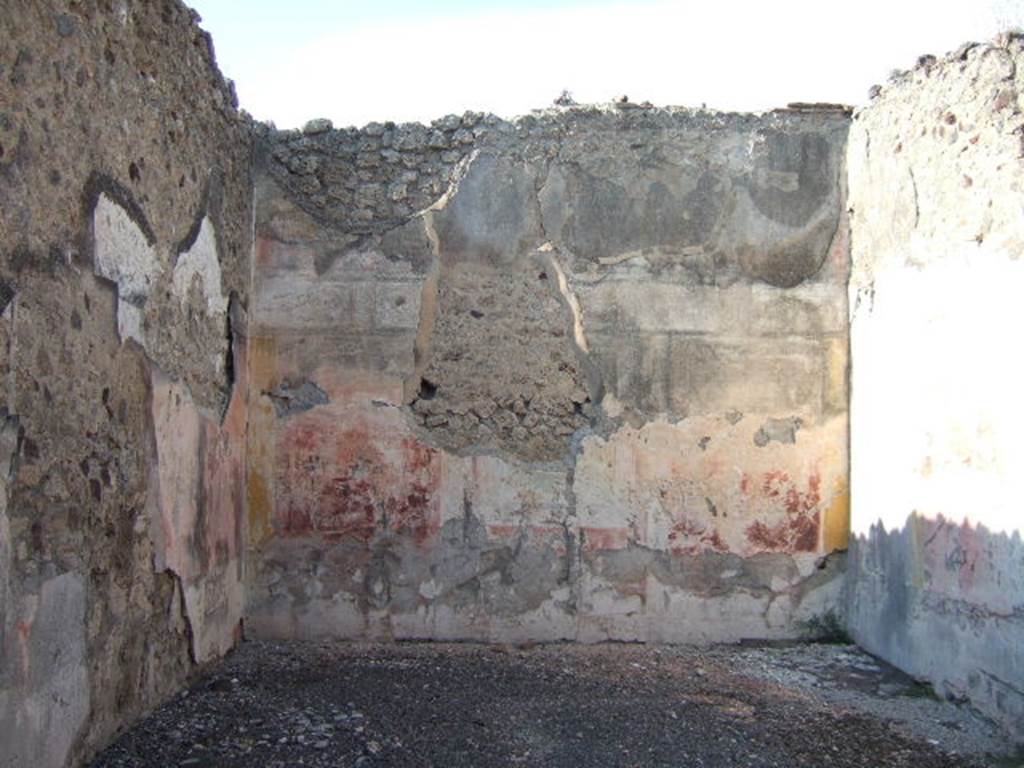
VI.13.2 Pompeii. September 2005. Summer triclinium, looking north.
According to Bragantini, upon excavation the north wall was seen with a red plinth and a black zoccolo.
The middle zone had a central aedicula panel with a blue background, with painted medallion of a sacred landscape.
The side panels were red, separated by narrow black compartments.
At the corners, were narrow yellow panels with a design of silver painted candelabra.
The frieze had still-lives of fruit, vases, etc, and the upper zone of the wall was red.
The east wall, on the right, was similar to the west wall, with a red plinth and black zoccolo.
A central aedicula with blue background had a red predella and a painted sacred landscape.
The red side panels were separated by narrow yellow compartments with painted silver candelabra design.
See Bragantini, de Vos, Badoni, 1983. Pitture e Pavimenti di Pompei, Parte 2. Rome: ICCD. (p.263, triclinio ‘20’).