VI.10.4 Pompeii. Casa di Caprasia e Nymphius. Rear entrance at VI.10.18.
Linked to VI.10.3. Excavated 1828, 1831. (Strada di Mercurio 6).
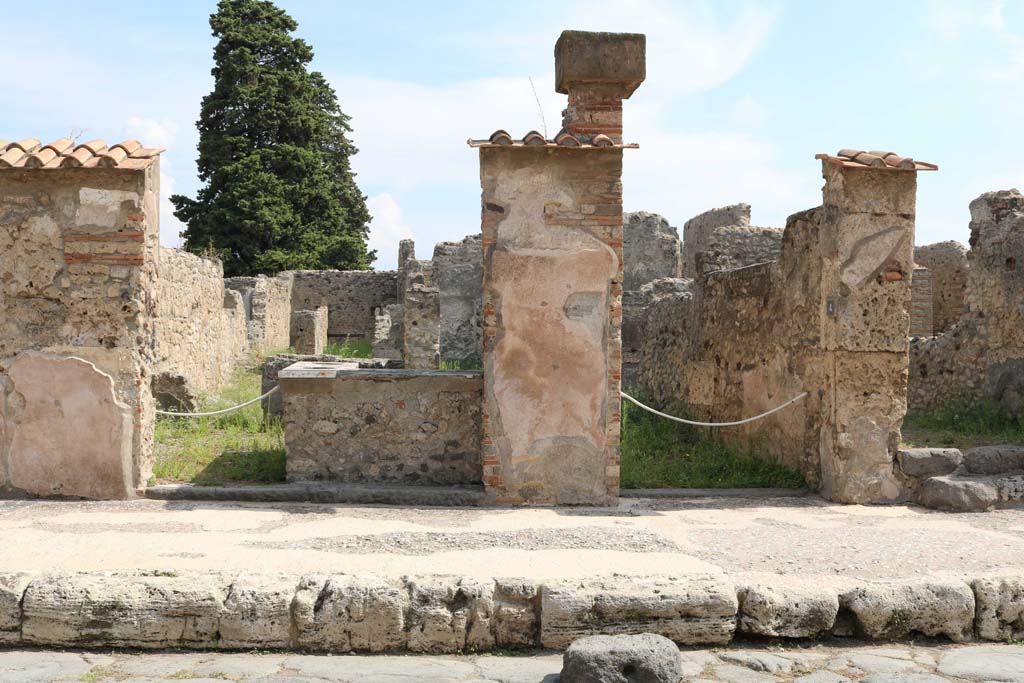
VI.10.4 Pompeii, on right. December 2018.
Looking east on Via di Mercurio towards entrance doorways, with
VI.10.3, on left. Photo courtesy of Aude Durand.
![VI.10.4 Pompeii. December 2005. Entrance doorway.
According to Leach, a respectable tavern couple, Caprasia and Nymphius, supported the campaign of their down-the-street neighbours the Vettii. She said that given that Caprasia’s name showed a family affiliation with Vettius’s adoptive son Caprasius, the connection drew her attention to the social dynamics of the neighbourhood. See Leach, E.W: The Social Life of Painting in Ancient Rome and on the Bay of Naples.
According to Della Corte, Caprasia lived on this insula, together with Nymphius, perhaps her husband. They ran the caupona at number 3, from the front of the dwelling at number 4. A written recommendation was found on the pilaster between 6 and 7 - Caprasia cum Nymphio rog(at) una et vicini [CIL IV 171] See Della Corte, M., 1965. Case ed Abitanti di Pompei. Napoli: Fausto Fiorentino. (p.55)
According to Epigraphik-Datenbank Clauss/Slaby (See www.manfredclauss.de), this read as –
A(ulum) Vettium Firmum
aed(ilem) o(ro) v(os) f(aciatis) dign(um) est
una et vicini o(ro) v(os) f(aciatis) [CIL IV 171]
According to Coarelli and Pesando, CIL IV 171 reads as –
A VETTIVM FIRMVM
AED O V F DIGN EST
CAPRASIA CVM NYMPHIO ROG
VNA ET VICINI O V F
See Coarelli, F. and Pesando, F. (a cura di), 2006. Rileggere Pompei, Volume 1: L’insula 10 della Regio VI. Roma: L’Erma di Bretschneider. (p. 106-7).](6%2010%2004_files/image004.jpg)
VI.10.4 Pompeii.
December 2005. Entrance doorway.
According to Leach, a respectable tavern couple, Caprasia and Nymphius, supported the campaign of their down-the-street neighbours the Vettii.
She said that given that Caprasia’s name showed a family affiliation with Vettius’s adoptive son Caprasius, the connection drew her attention to the social dynamics of the neighbourhood.
See Leach, E.W: The Social Life of Painting in Ancient Rome and on the Bay of Naples.
According to Della Corte, Caprasia lived on this insula, together with Nymphius, perhaps her husband.
They ran the caupona at number 3, from the front of the dwelling at number 4.
A written recommendation was found on the pilaster between 6 and 7 - Caprasia cum Nymphio rog(at) una et vicini [CIL IV 171]
See Della Corte, M., 1965. Case ed Abitanti di Pompei. Napoli: Fausto Fiorentino. (p.55)
According to Epigraphik-Datenbank Clauss/Slaby (See www.manfredclauss.de), this read as –
A(ulum)
Vettium Firmum
aed(ilem)
o(ro) v(os) f(aciatis) dign(um) est
una et
vicini o(ro) v(os) f(aciatis)
[CIL IV 171]
According to Coarelli and Pesando, CIL IV 171 reads as –
A VETTIVM FIRMVM
AED O V F DIGN
EST
CAPRASIA CVM
NYMPHIO ROG
VNA ET VICINI O V
F
See Coarelli, F. and Pesando, F. (a cura di), 2006. Rileggere Pompei, Volume 1: L’insula 10 della Regio VI. Roma: L’Erma di Bretschneider. (p. 106-7).
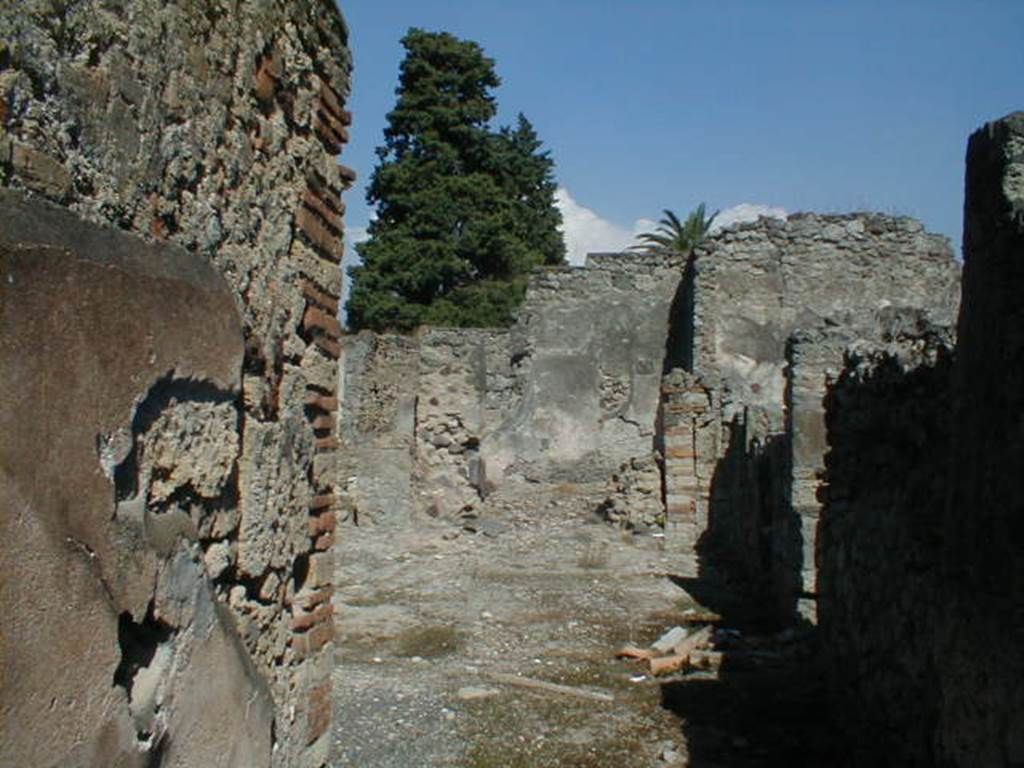
VI.10.4 Pompeii. September 2004. Looking east from entrance corridor.
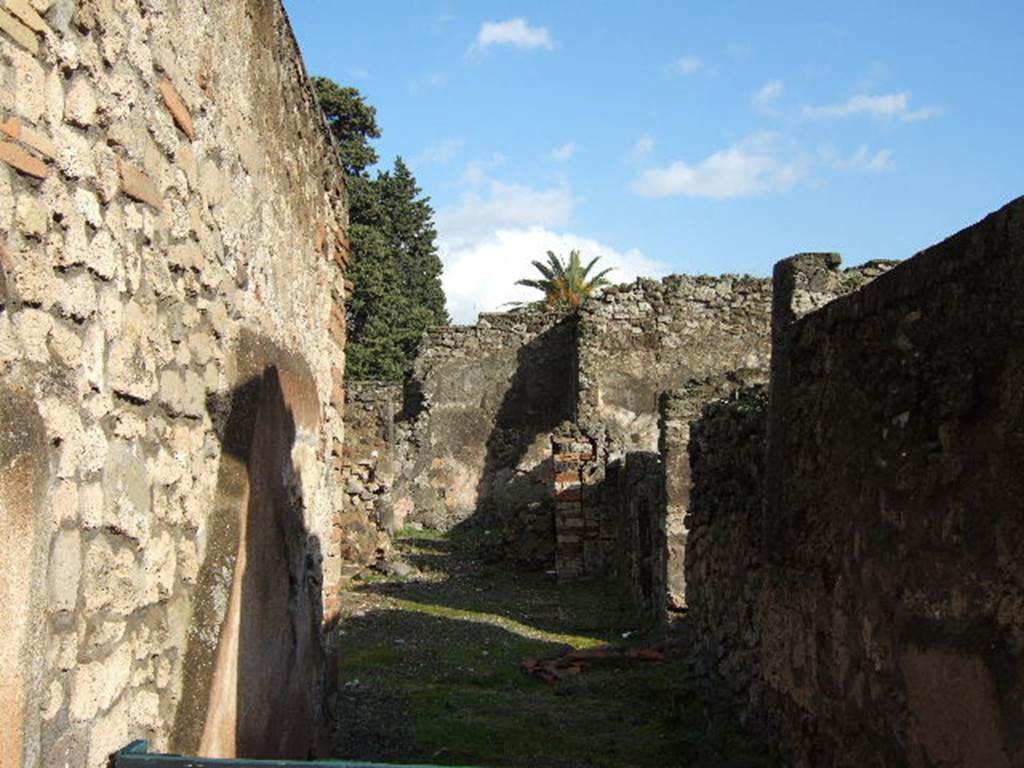
VI.10.4 Pompeii. December 2005. Looking east from entrance corridor.
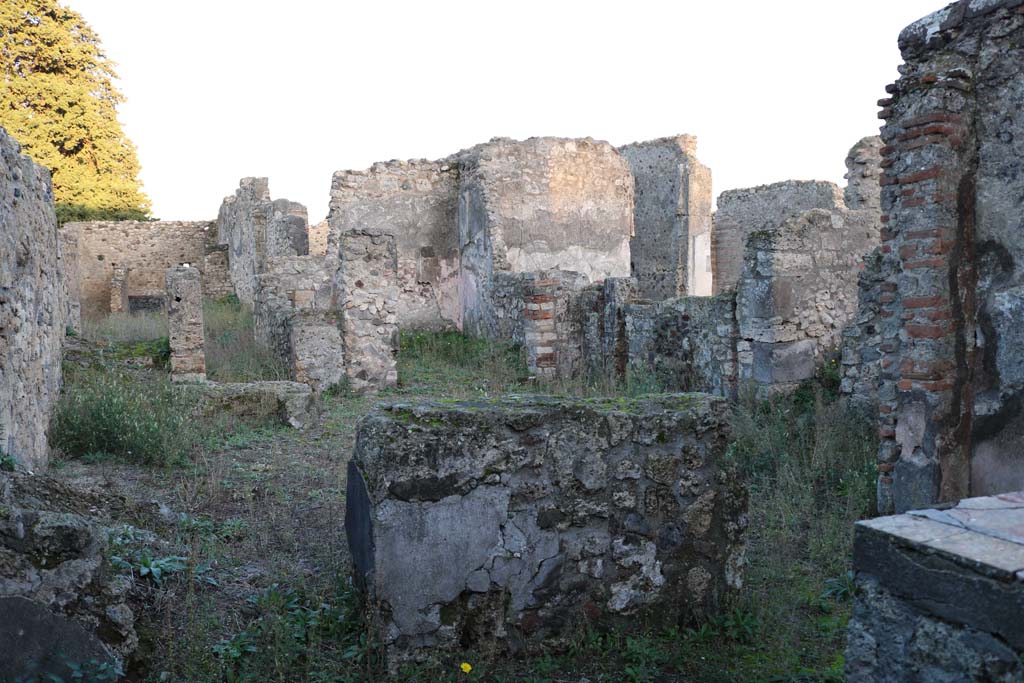
VI.10.4 Pompeii. December 2018. Looking east across
atrium, from linked bar at VI.10.3. Photo courtesy of Aude Durand.
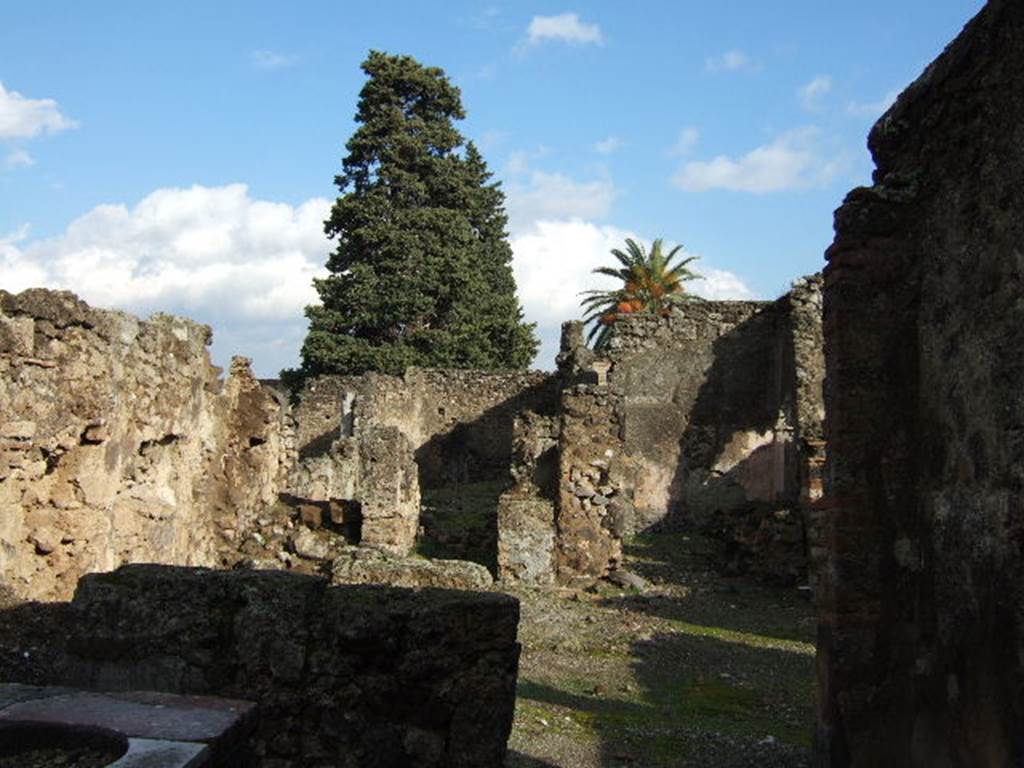
VI.10.4 Pompeii. December 2005. Looking east across atrium.
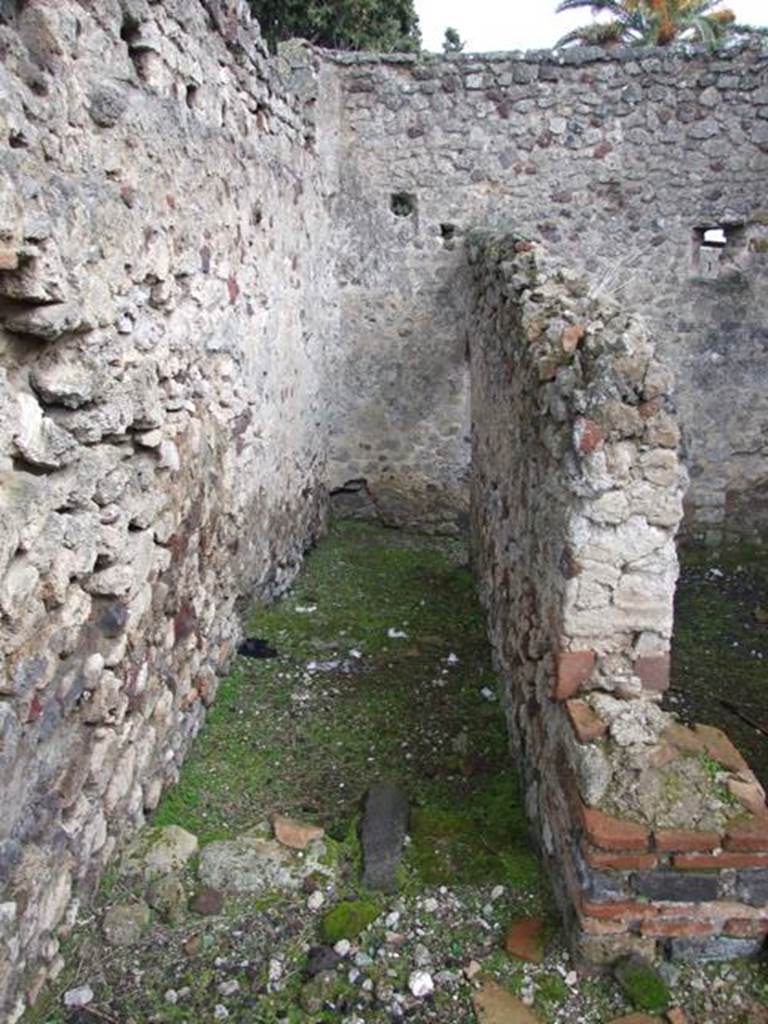
VI.10.4 Pompeii. March 2009. Rear corridor, on north side of triclinium, looking east.
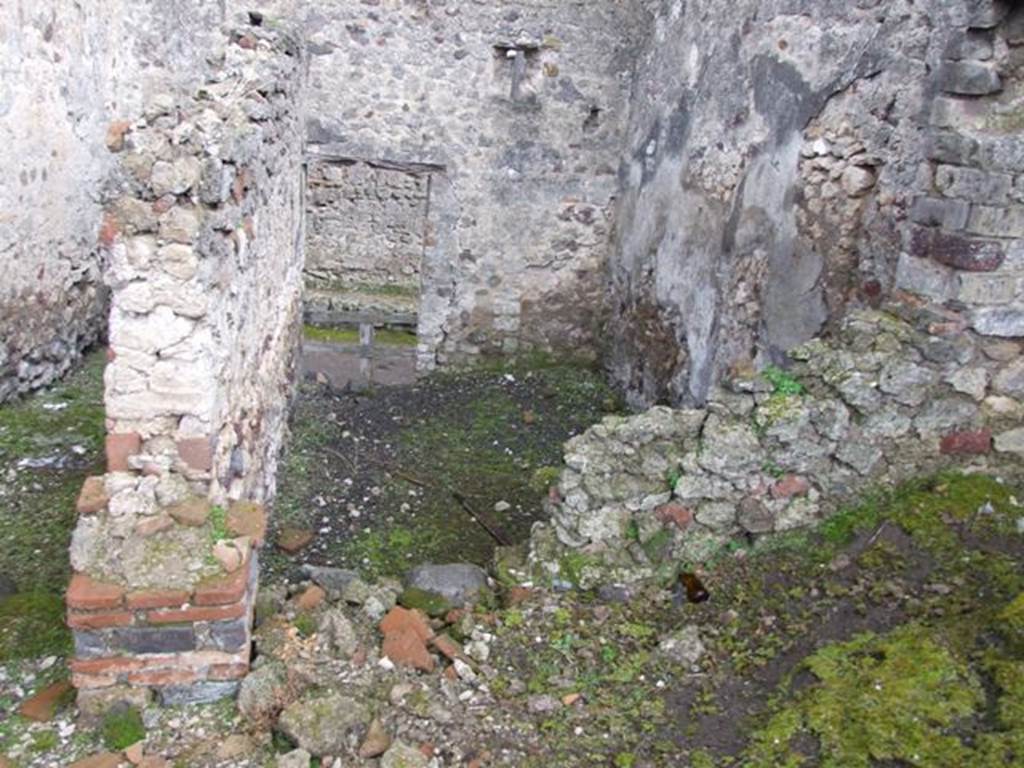
VI.10.4 Pompeii. March 2009. Triclinium at rear of house, with rear entrance at VI.10.18, taken from garden area. Looking east.
The corridor is on the left of the photo, next to it was a window in the west wall of the triclinium.
This would have been the window Jashemski said looked out onto the garden area.
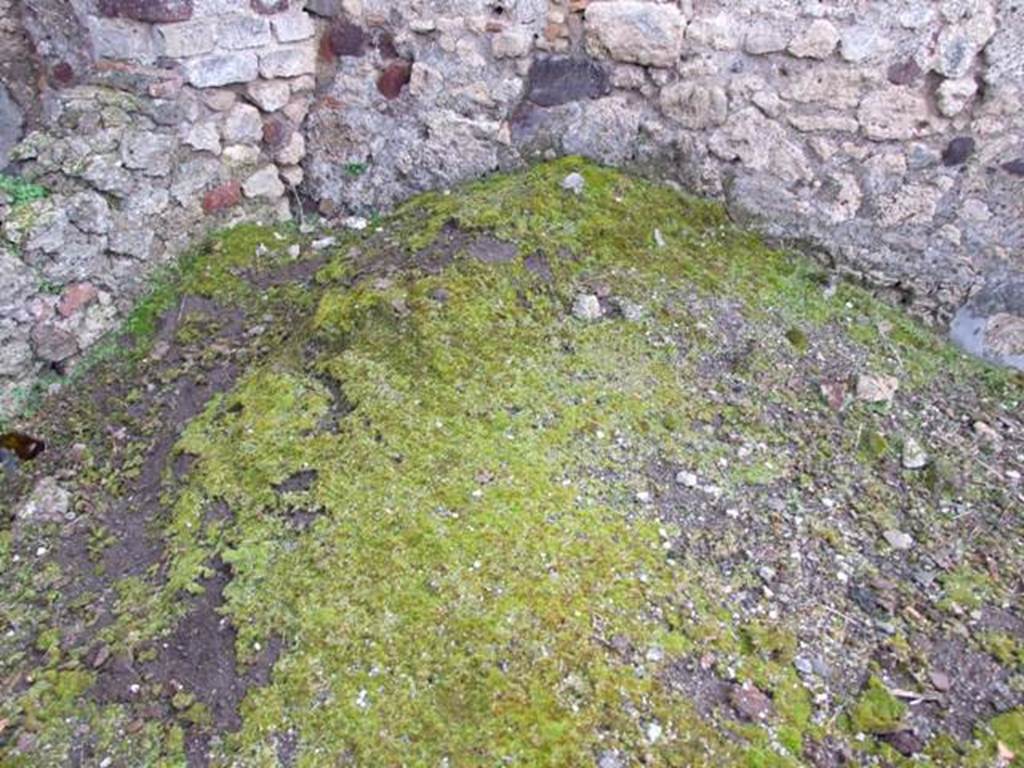
VI.10.4 Pompeii. March 2009. South-east corner of courtyard or garden area.
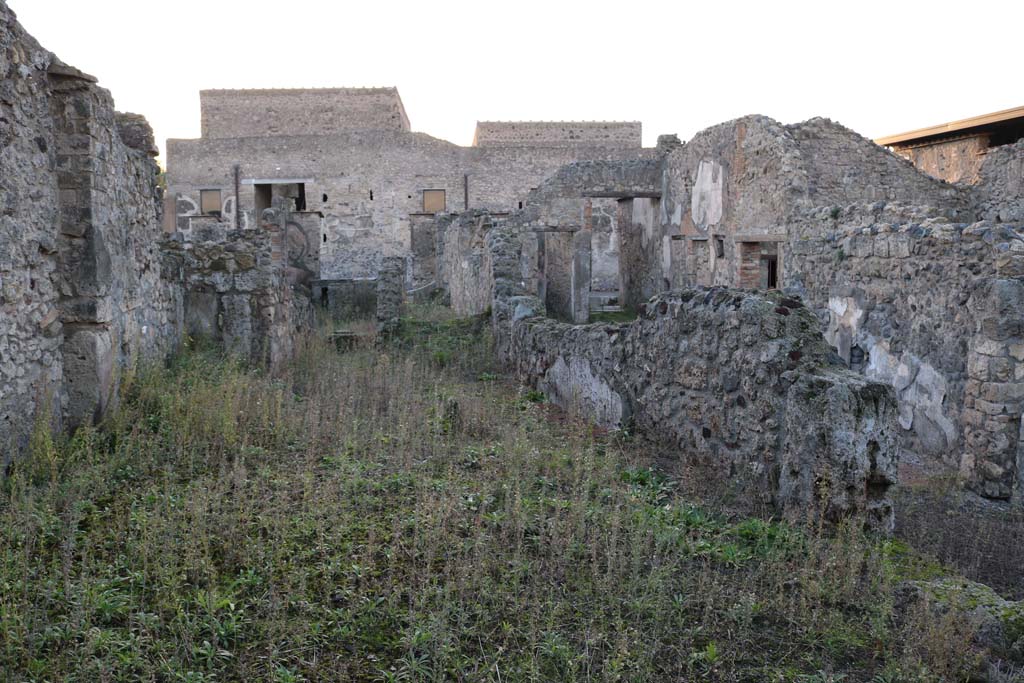
VI.10.4 Pompeii. December 2018.
Looking
west to front of house, and bar at VI.10.3, from garden area. Photo courtesy of
Aude Durand.
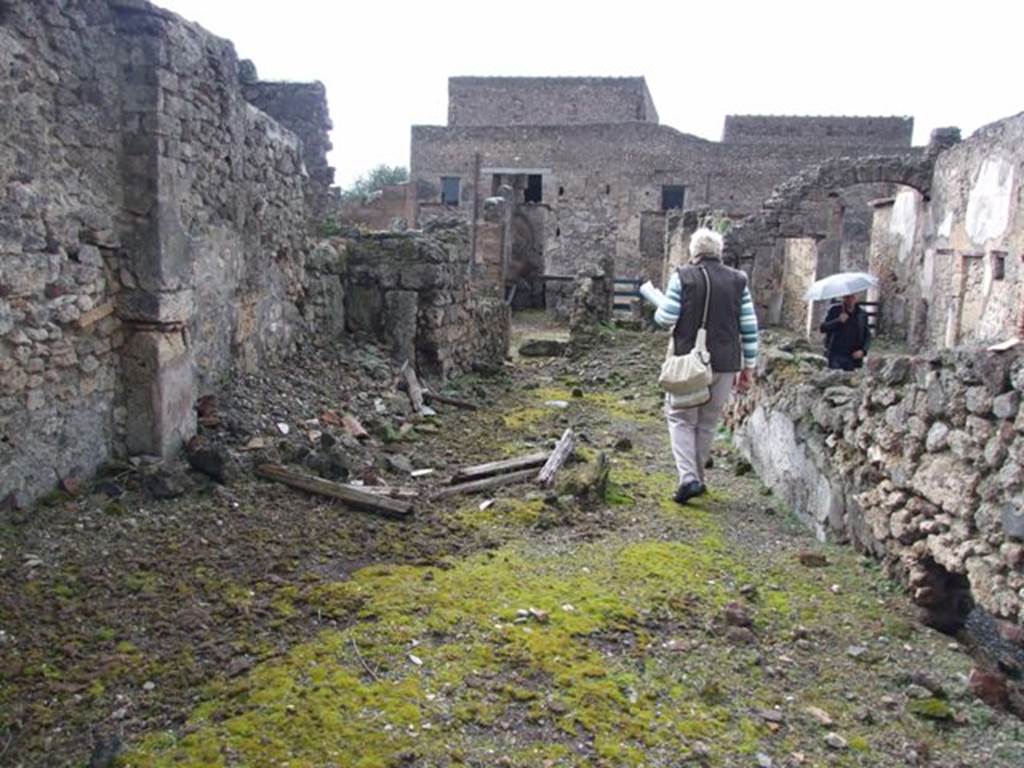
VI.10.4 Pompeii. March 2009. Looking west along north wall to front of house.
The courtyard or garden area is on the front left of the photo.
According to Jashemski, the little courtyard was probably planted or decorated with potted plants.
This would have been the area on which the window of the triclinium at the rear of the house opened.
See Jashemski, W. F., 1993. The Gardens of Pompeii, Volume II: Appendices. New York: Caratzas. (p.141)
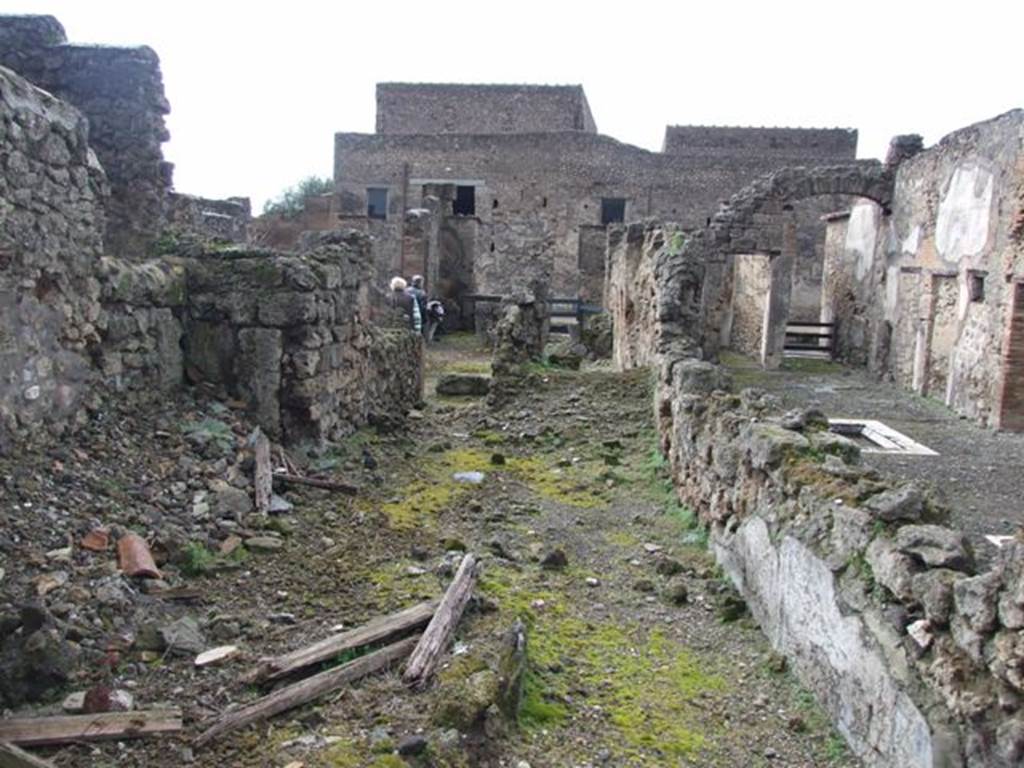
VI.10.4 Pompeii. March 2009. Looking west to front of house, from garden area.
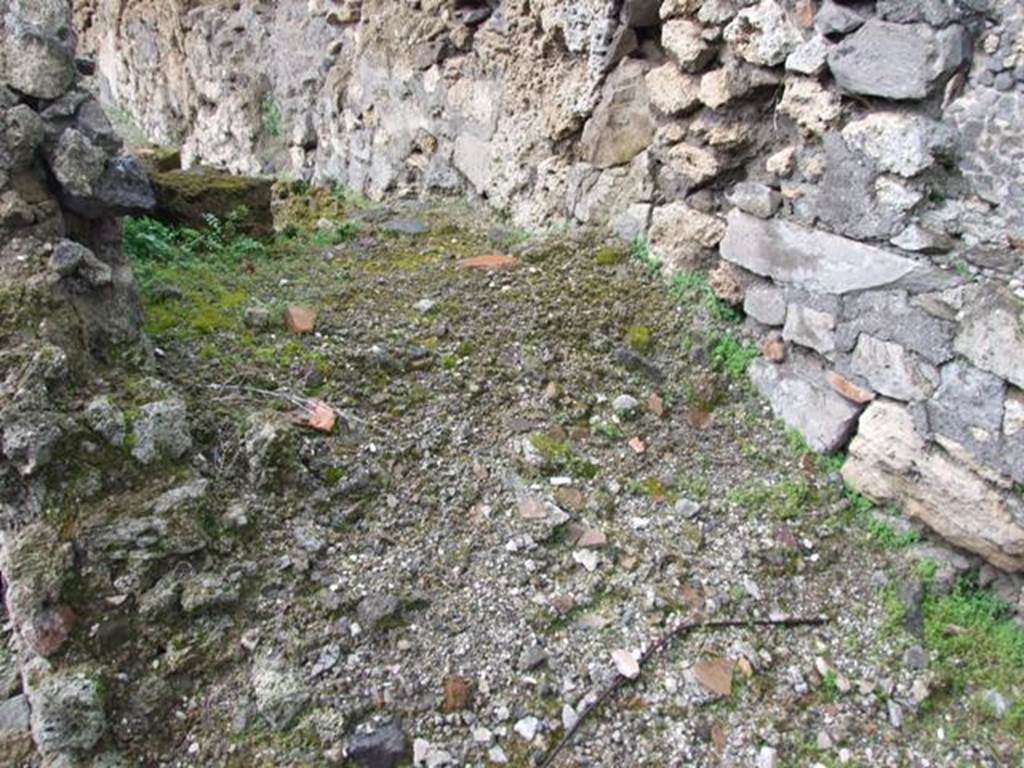
VI.10.4 Pompeii. March 2009. Remains of structure on north-west side of corridor area.
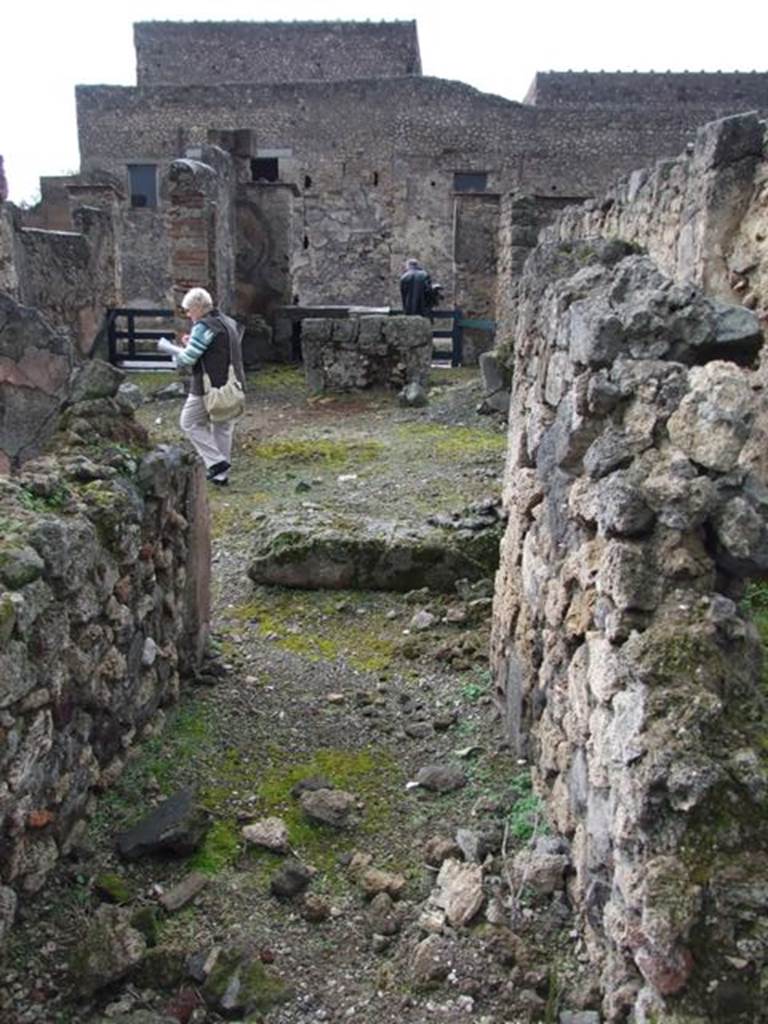
VI.10.4 Pompeii. March 2009. Looking west along corridor, into atrium.
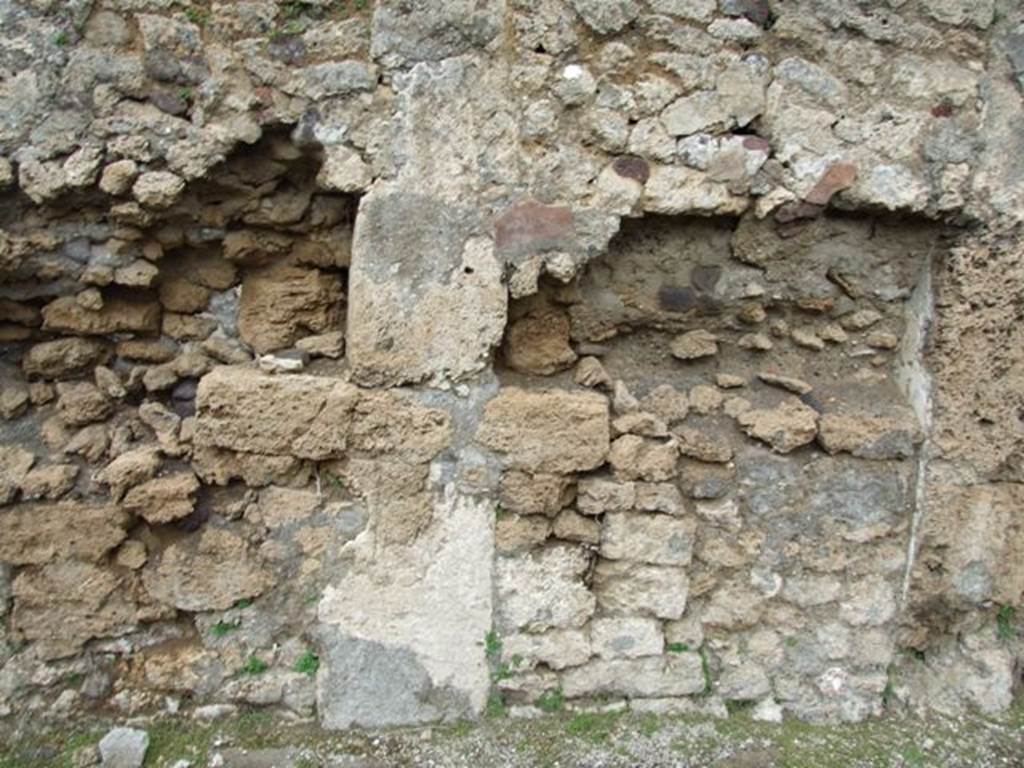
VI.10.4 Pompeii. March 2009. North wall of atrium.
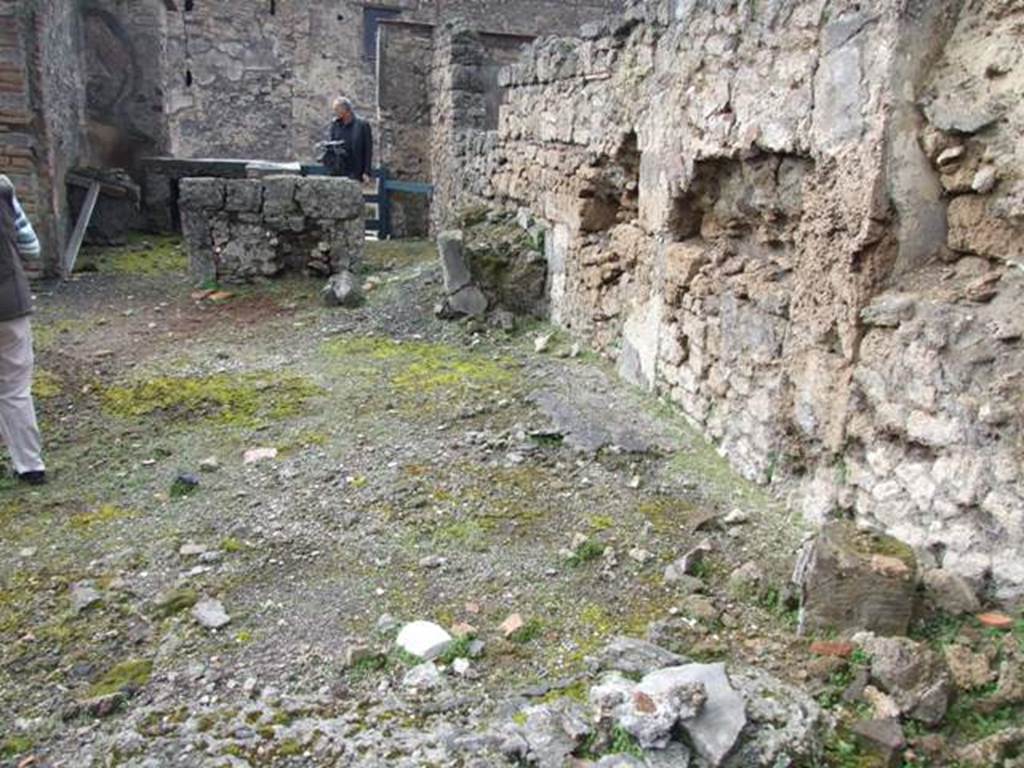
VI.10.4 Pompeii. March 2009. Looking along north wall of atrium area to two doorways into rear of VI.10.3.
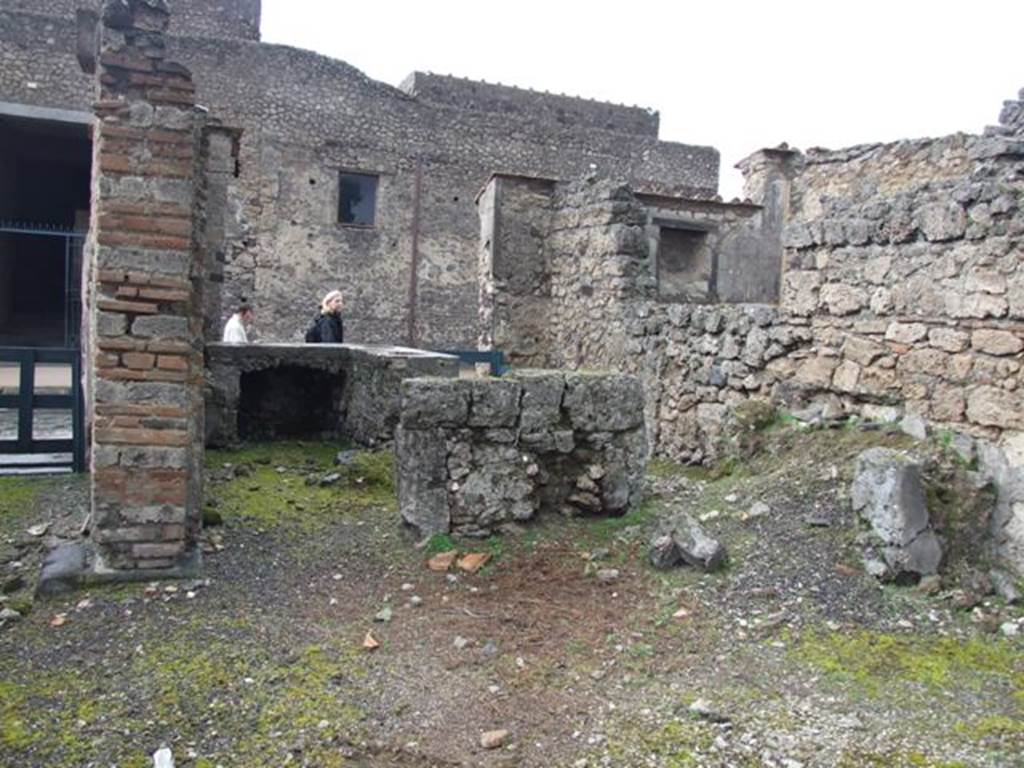
VI.10.4 Pompeii. March 2009. Atrium area with two doorways into rear of VI.10.3.
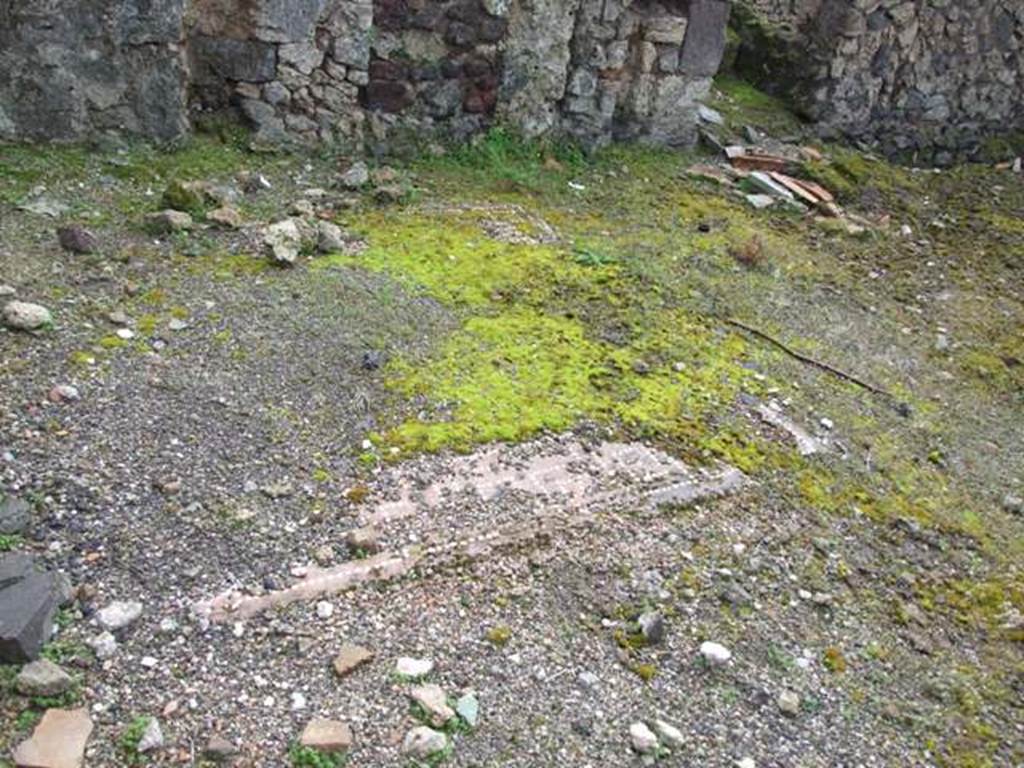
VI.10.4 Pompeii. March 2009. Patterned floor on south side of atrium.
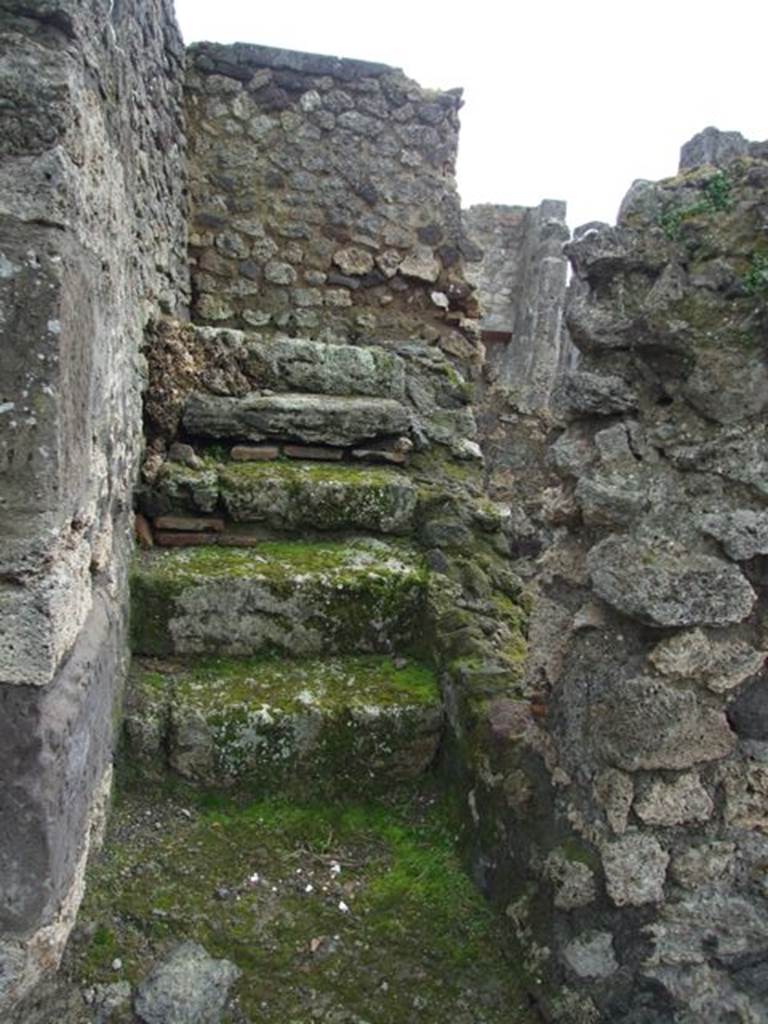
VI.10.4 Pompeii. March 2009. Staircase to upper floor on south side of atrium.
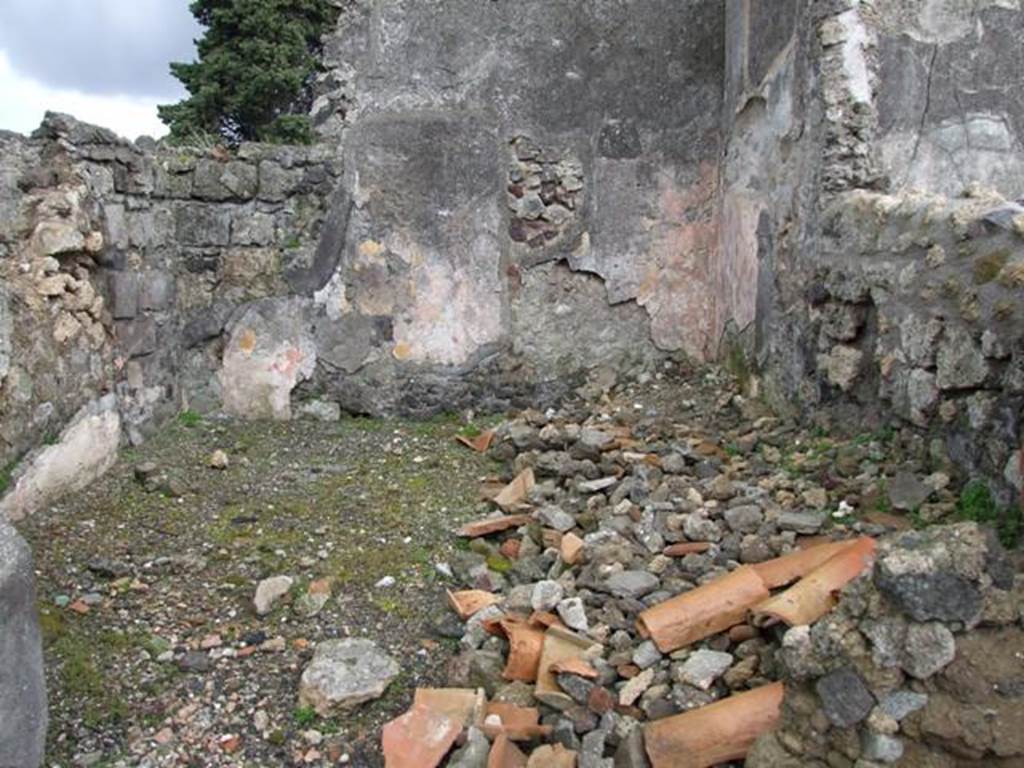
VI.10.4 Pompeii. March 2009.Tablinum on east side of atrium.