VI.7.7 Pompeii. House on Vicolo
di Mercurio.
Excavated 1827, 1835 (and 1838?). Restored 1976.
![VI.7.7 Pompeii. December 2005. Entrance doorway.
According to Pagano and Prisciandaro, painted in red and found in April 1829 between VI.7.6 and 7, (left of doorway) was –
M(arcum) Cerrinium
Vatiam aed(ilem) o(ro) v(os) f(aciatis) scr(ipsit) Issus
dignus est [CIL IV 234]
See Pagano, M. and Prisciandaro, R., 2006. Studio sulle provenienze degli oggetti rinvenuti negli scavi borbonici del regno di Napoli. Naples: Nicola Longobardi, (p.140)](6%2007%2007_files/image003.jpg)
VI.7.7 Pompeii. December 2005. Entrance doorway.
According to Pagano and Prisciandaro, painted in red and found in April 1829 between VI.7.6 and 7, (left of doorway) was –
M(arcum)
Cerrinium
Vatiam
aed(ilem) o(ro) v(os) f(aciatis) scr(ipsit) Issus
dignus est [CIL IV 234]
See Pagano, M. and Prisciandaro, R., 2006. Studio sulle provenienze degli oggetti rinvenuti negli scavi borbonici del regno di Napoli. Naples: Nicola Longobardi, (p.140)
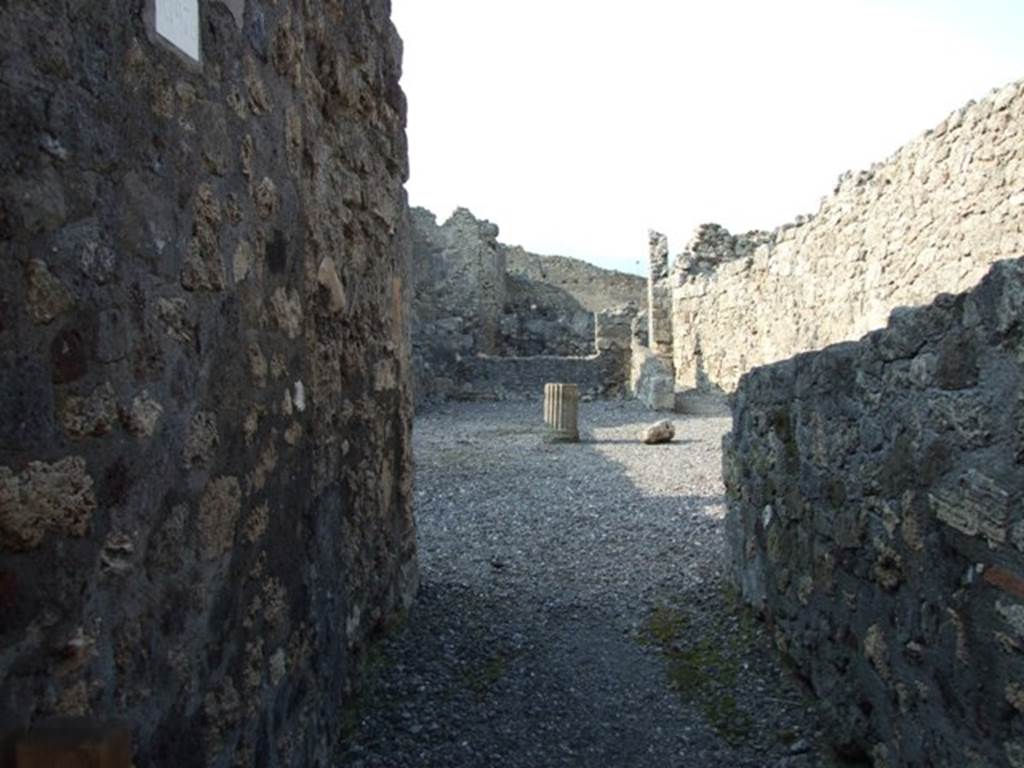
VI.7.7 Pompeii. March 2009. Looking north along entrance fauces.
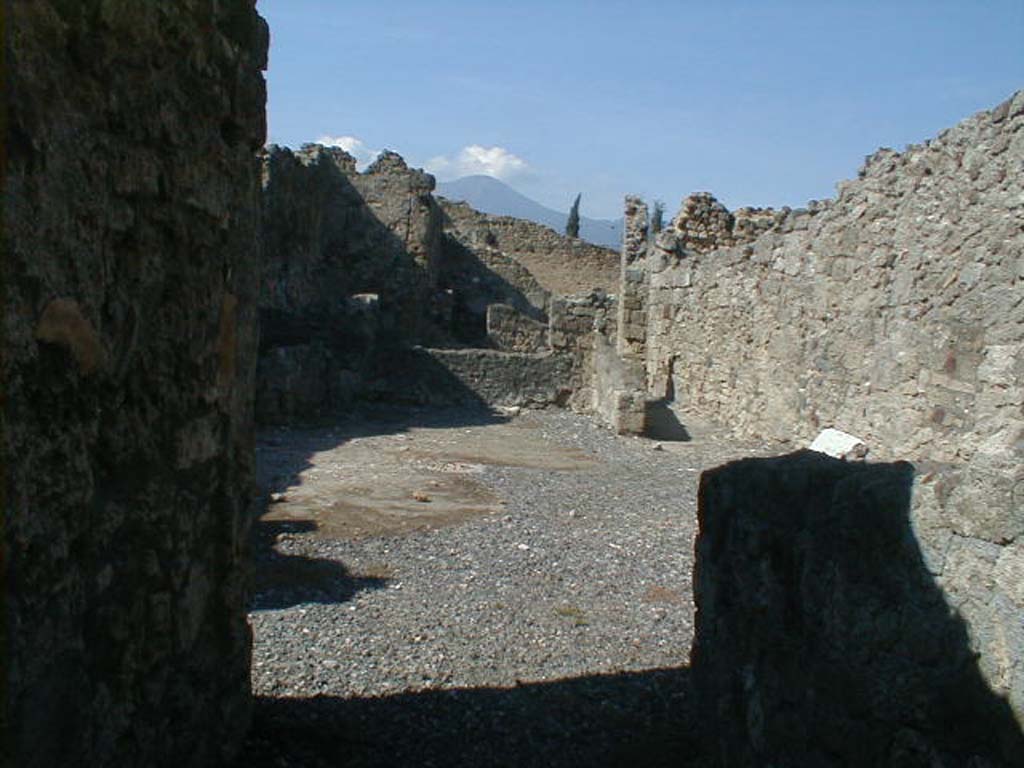
VI.7.7 Pompeii. September 2004. Looking north across atrium to tablinum.
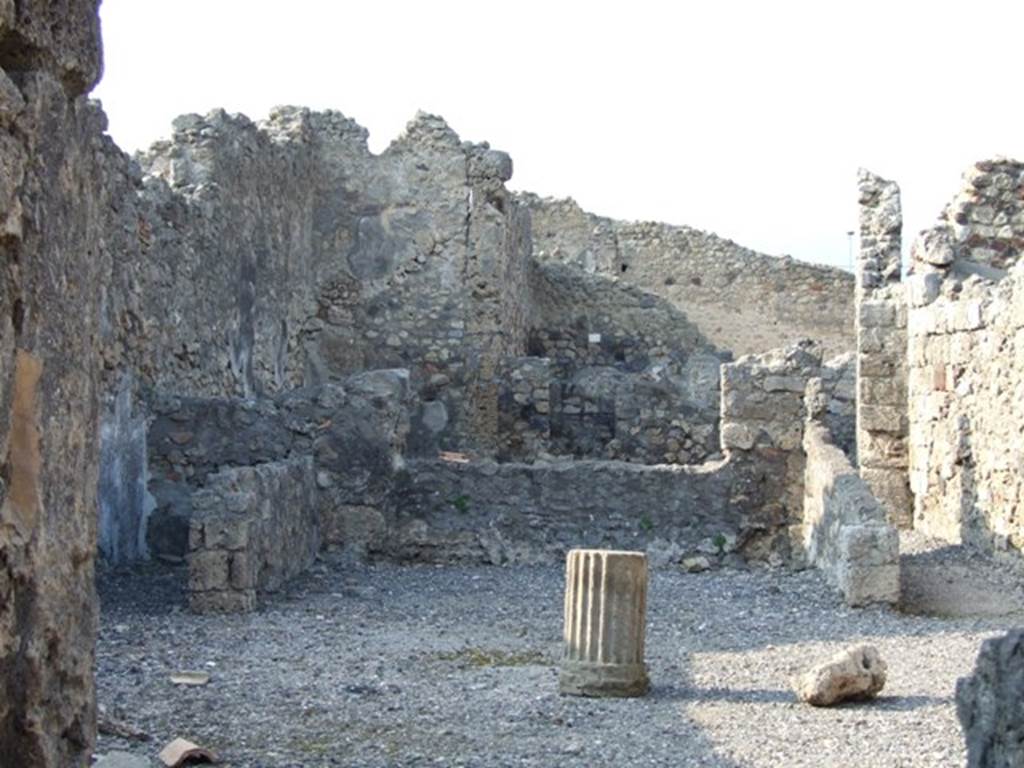
VI.7.7 Pompeii. March 2009. Looking north across atrium to tablinum.
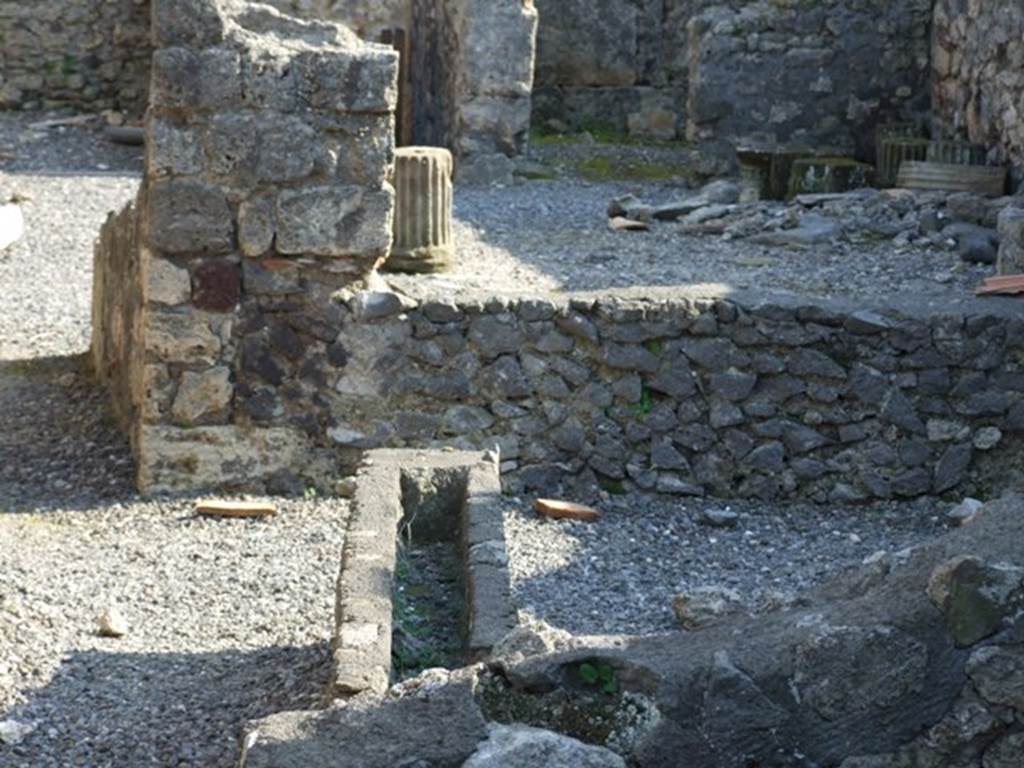
VI.7.7 Pompeii. March 2009. Rear wall of tablinum, with window onto south portico and garden area. Looking south.
According to Jashemski, the garden (excavated in 1835) at the rear of the tablinum had a roofed passageway on the south and east.
She wrote, Fiorelli had said these were supported by two brick columns which were joined by a low wall.
This low wall enclosed the garden on the south and east. The top of the low wall contained a planting space.
The large window in the tablinum overlooked the garden area.
See Jashemski, W. F., 1993. The Gardens of Pompeii, Volume II: Appendices. New York: Caratzas. (p.129)
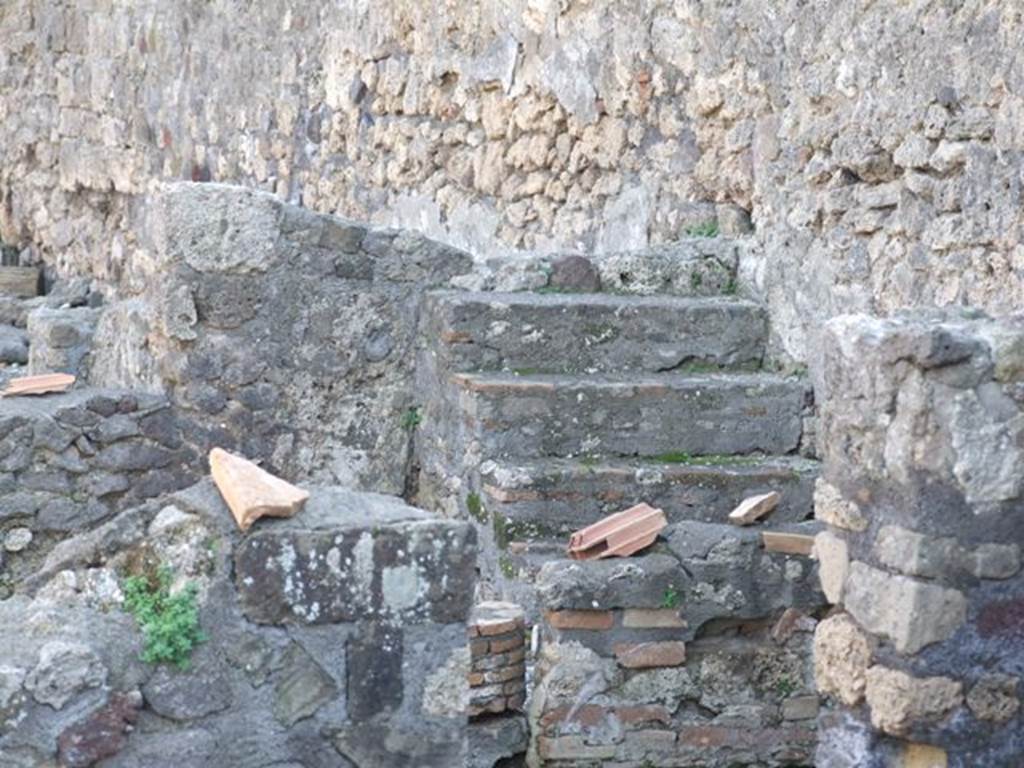
VI.7.7 Pompeii. March 2009. Staircase against the west wall of the south portico. Looking south.
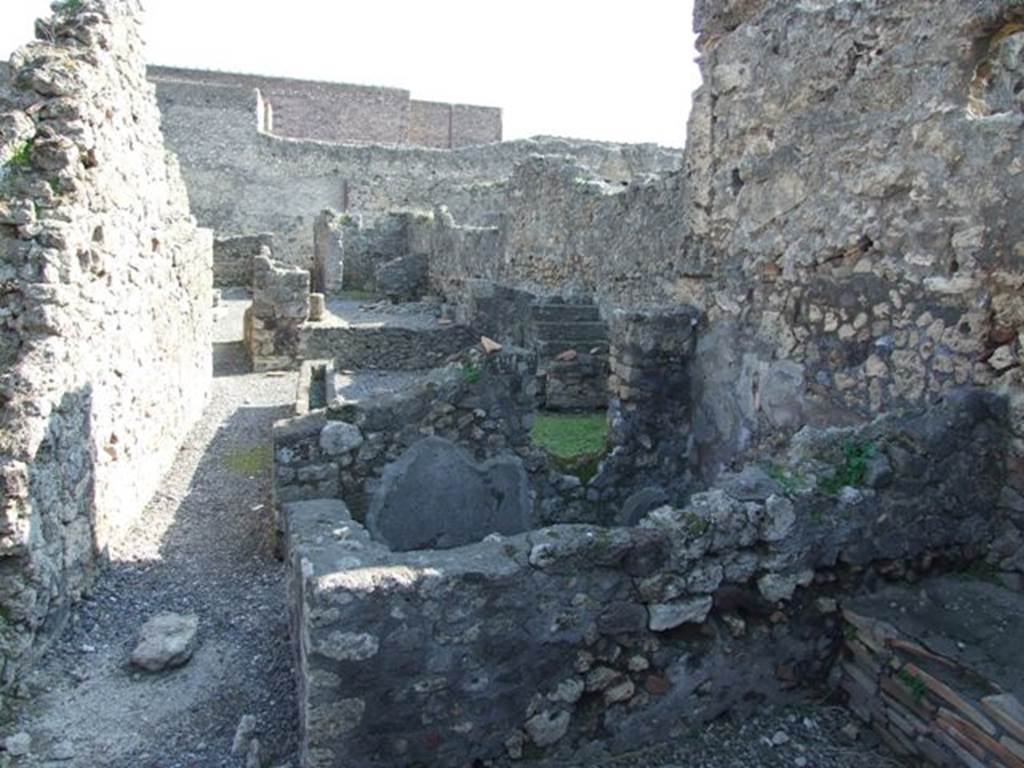
VI.7.7 Pompeii. March 2009. Looking south from kitchen area, along corridor to front entrance.
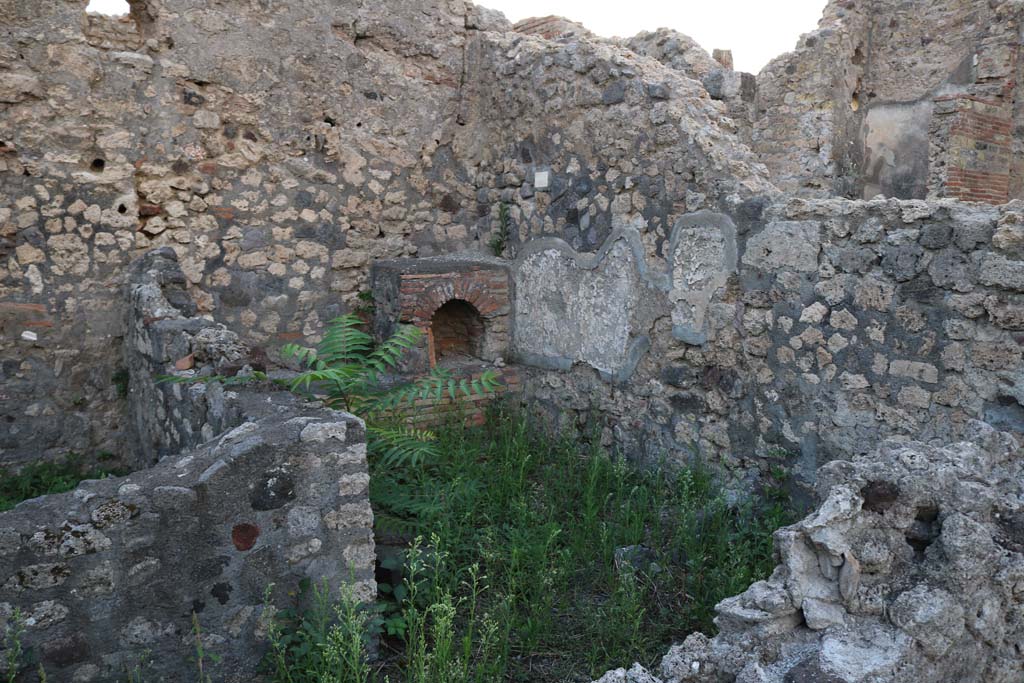
VI.7.7 Pompeii. December 2018.
Looking north-west towards kitchen area at rear of house, photo taken from VI.7.11. Photo courtesy of Aude Durand.
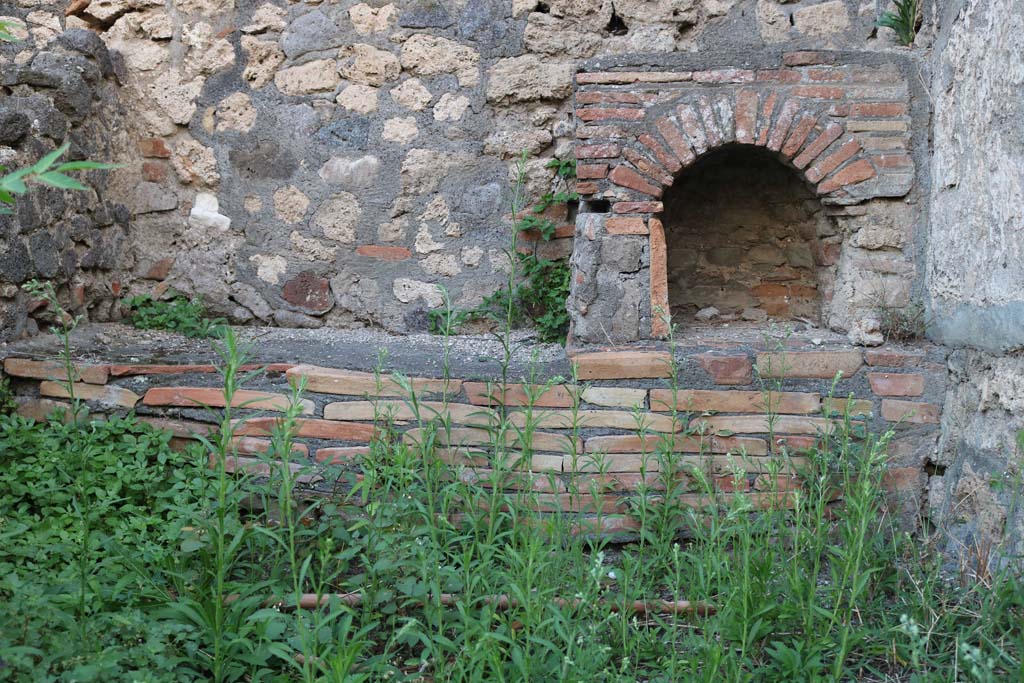
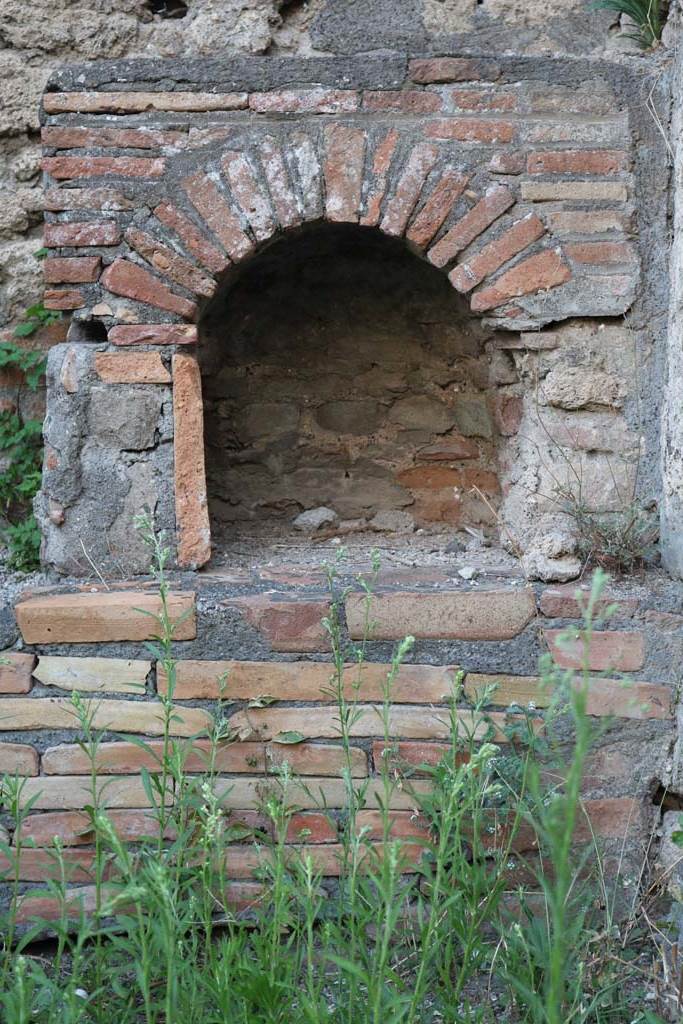
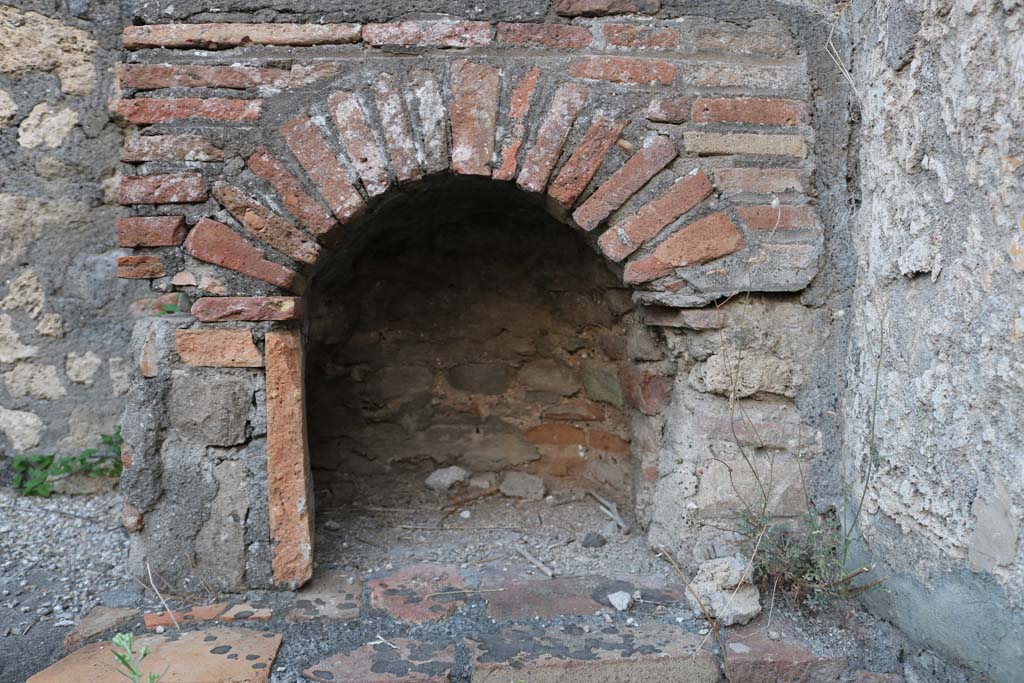
VI.7.7 Pompeii. December 2018.
Looking west to oven
at north end of hearth/bench in kitchen area. Photo courtesy of Aude Durand.
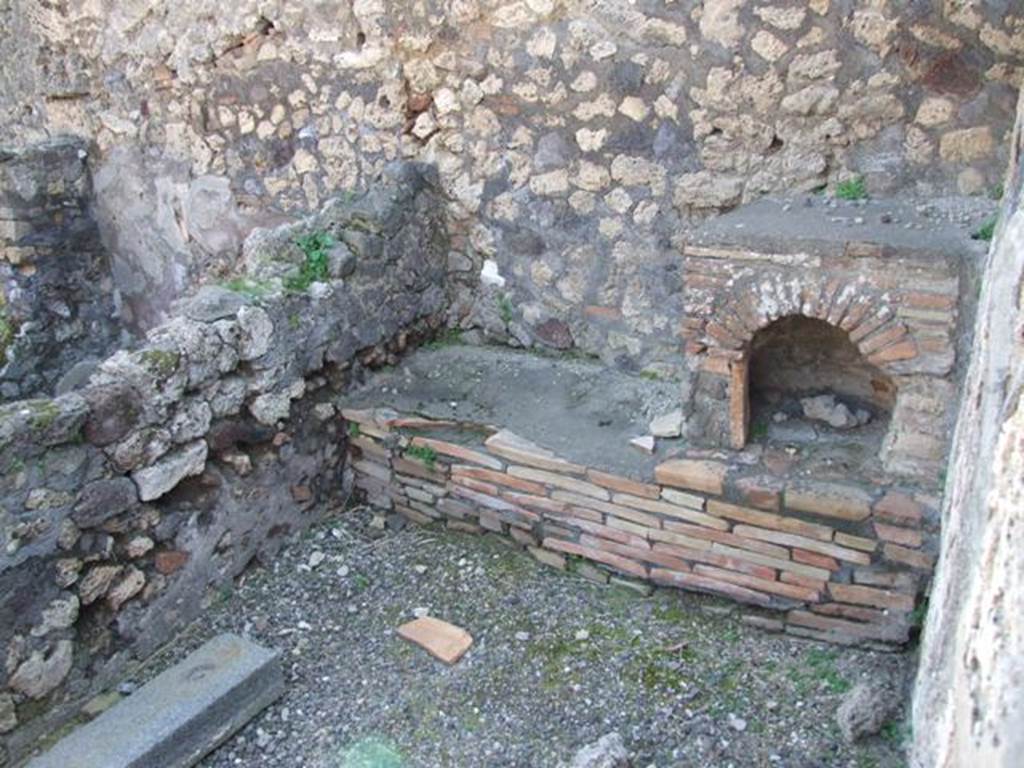
VI.7.7 Pompeii. March 2009. Kitchen area at rear of house.
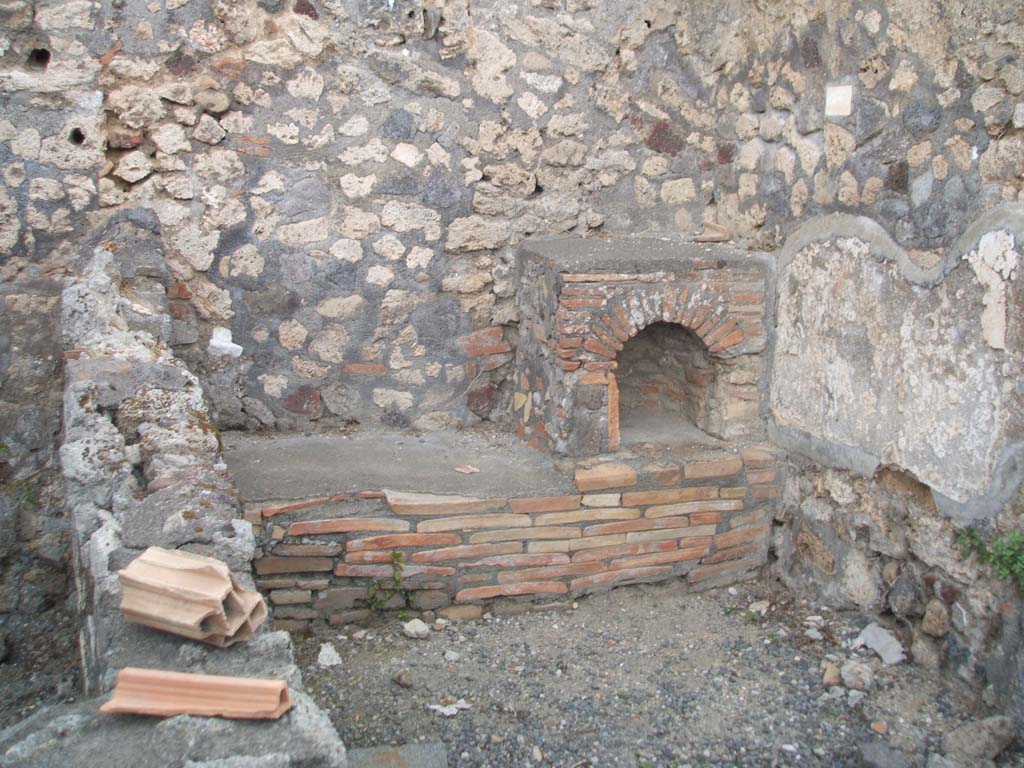
VI.7.7 Pompeii. December 2005. Kitchen, with bench and hearth against the west wall.
According to Boyce, on the north wall of the kitchen was a lararium painting.
Only a fragment was preserved, painted on a white background.
In the centre was the Genius with a cornucopia and patera standing before a burning altar.
Behind him was a camillus, above and behind the altar was the figure of the tibicen.
On either side of this group stood the Lares in yellow tunic and green pallium.
Beyond the Lar on the left was a small popa pushing a hog towards the right.
The corresponding figure on the right of the right Lar was missing, as was the whole outer section of the plaster on this side.
In the lower zone was the customary altar with the two serpents.
See Boyce G. K., 1937. Corpus of the Lararia of Pompeii. Rome: MAAR 14. (p.47, no.163)
Boyce added a note that said Helbig (58) wrongly assigned this shrine to VI.7.9.
See Helbig, W., 1868. Wandgemälde der vom Vesuv verschütteten Städte Campaniens. Leipzig: Breitkopf und Härtel. (58).
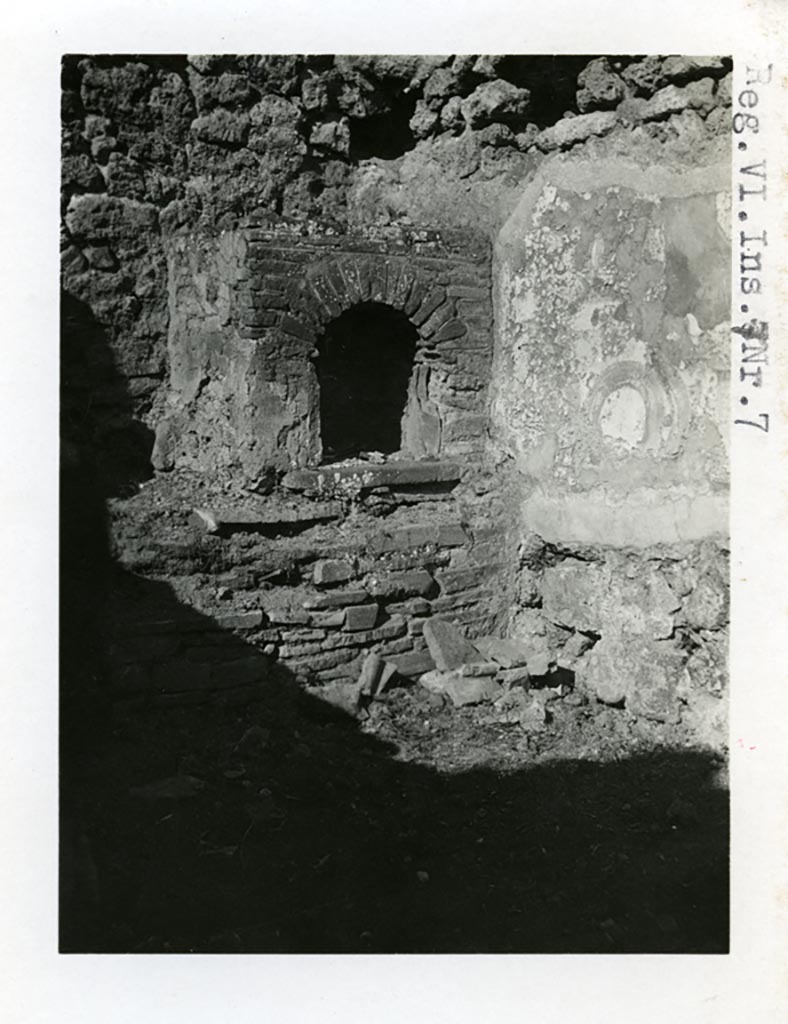
Kitchen, with bench and oven against the west wall, and remains of lararium painting on north wall.
Photo courtesy of American Academy in Rome, Photographic Archive. Warsher collection no. 1589.
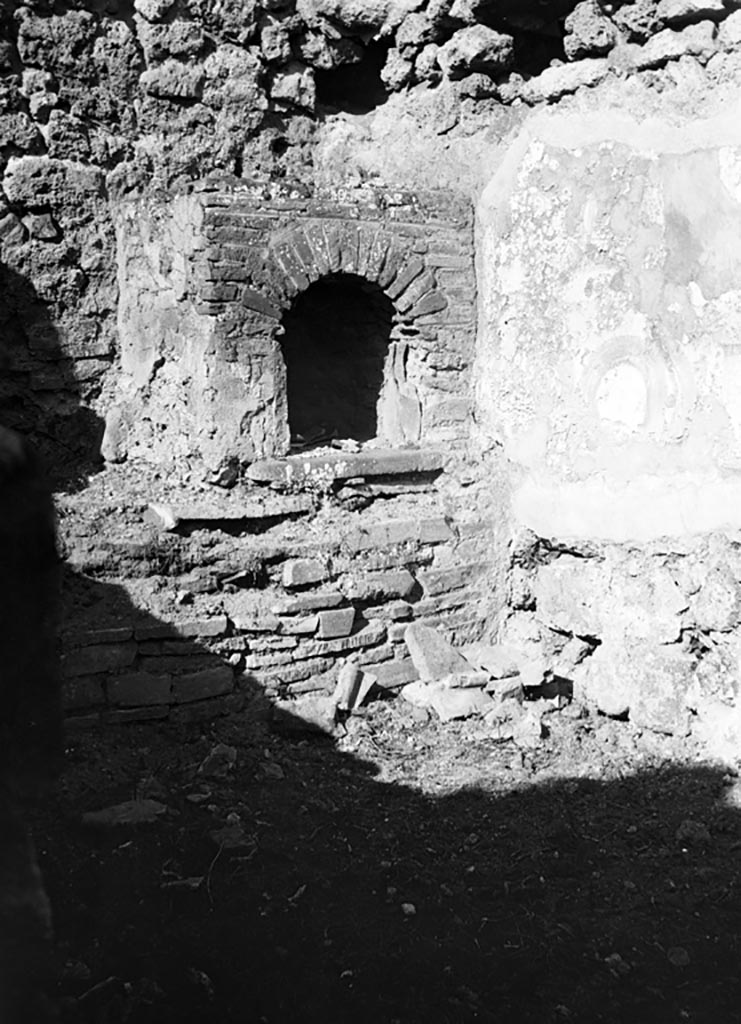
VI.7.7 Pompeii. W.1295. West wall with niche, or oven.
On the north wall, on a white background was the painted household lararium.
Photo by Tatiana
Warscher. Photo © Deutsches Archäologisches Institut, Abteilung Rom, Arkiv.
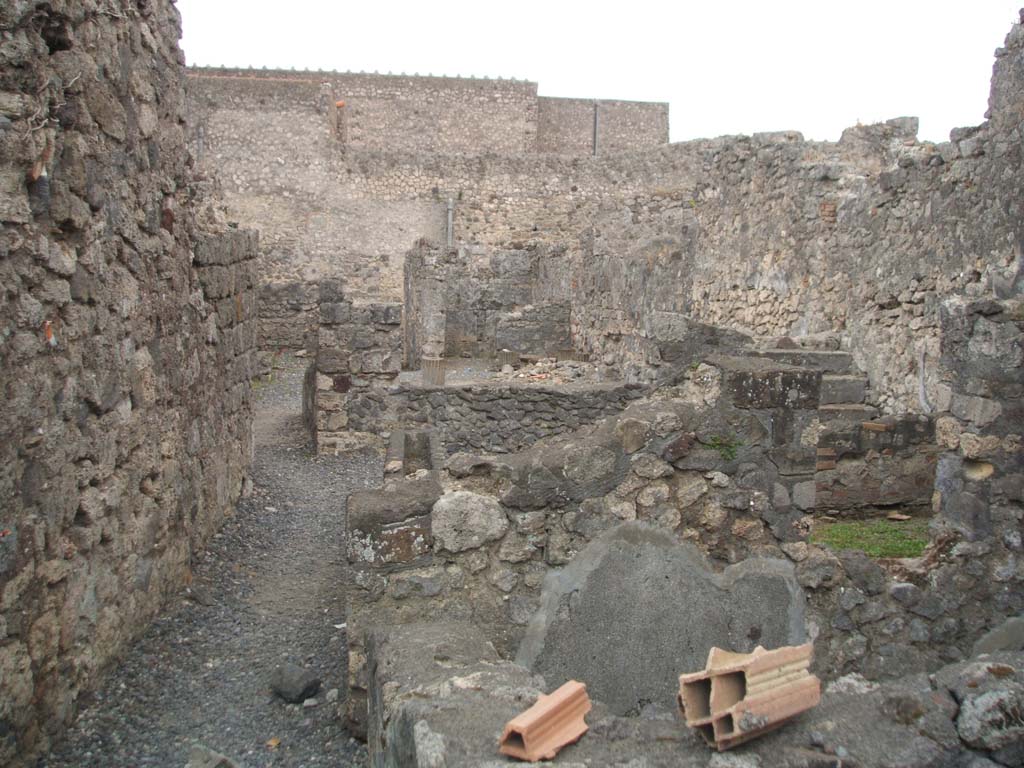
VI.7.7 Pompeii. December 2005. Looking south towards entrance.