VI.7.6 Pompeii. Casa di Ercole. Linked to VI.7.4 and VI.7.5.
Excavated 1835. Restored 1976.
Part 1 Part 2
Part 3 Part 4 Part 5 Plan
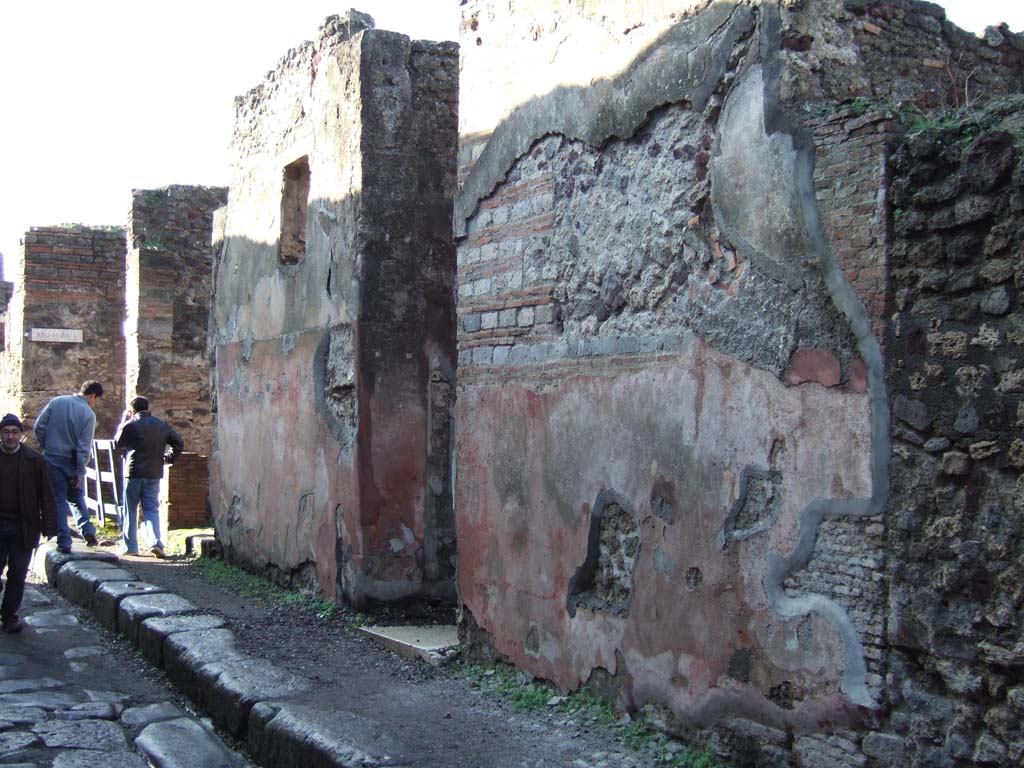
VI.7.6 Pompeii. December
2005. Vicolo di Mercurio, looking west.
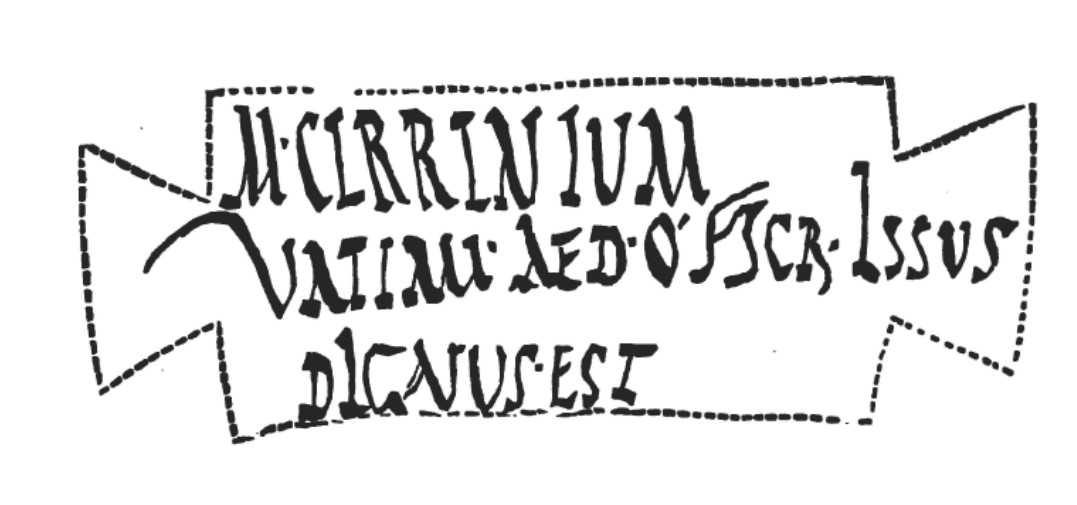
Drawing of inscription on “tabella” as drawn in Real Museo Borbonico, 1830, vol. VI, p.9 of “Relazione degli Scavi di Pompei. Da Maggio 1829 fino ad Ottobre 1830.”
According to Pagano and Prisciandaro, painted in red and found in April 1829 between VI.7.6 and 7, (right of doorway) was –
M(arcum)
Cerrinium
Vatiam
aed(ilem) o(ro) v(os) f(aciatis) scr(ipsit) Issus
dignus est [CIL IV 234]
See Pagano, M. and Prisciandaro, R., 2006. Studio sulle provenienze degli oggetti rinvenuti negli scavi borbonici del regno di Napoli. Naples: Nicola Longobardi, (p.140).
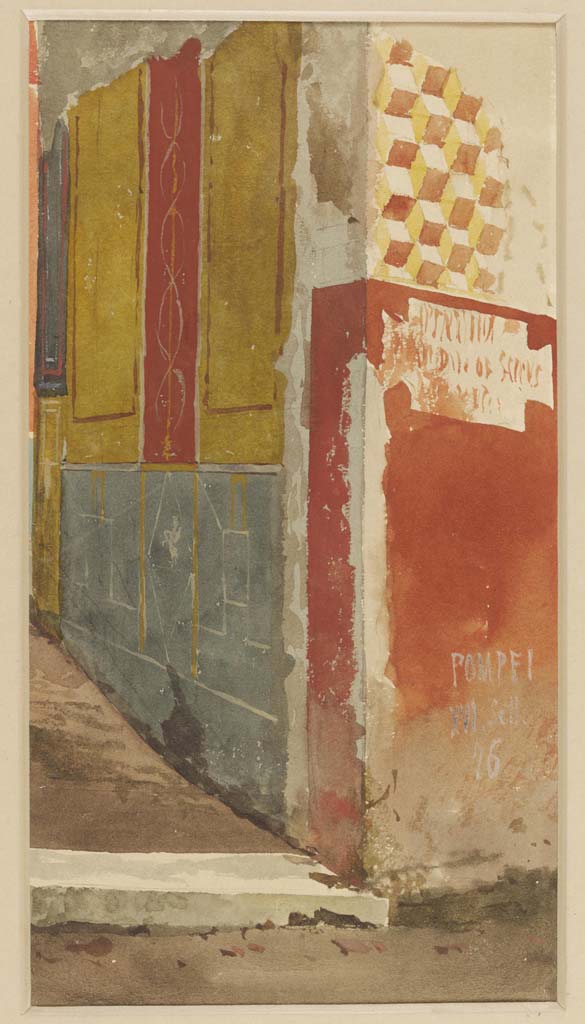
VI.7.6 Pompeii. 16th September 1876. Watercolour by Luigi Bazzani.
Looking
towards entrance doorway on north side of Vicolo di Mercurio.
Photo
© Victoria and Albert Museum. Inventory number 2058-1900.
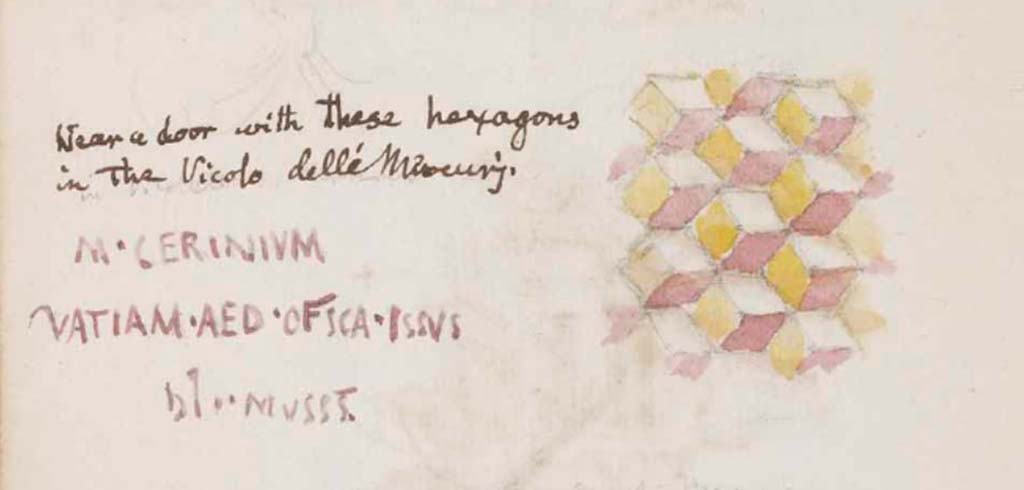
VI.7.6 Pompeii. c.1830. Drawing by Gell showing inscription and hexagons from Vicolo di Mercurio.
See Gell, W. Sketchbook of Pompeii, c.1830.
See book from Van Der Poel Campanian Collection on Getty website http://hdl.handle.net/10020/2002m16b425
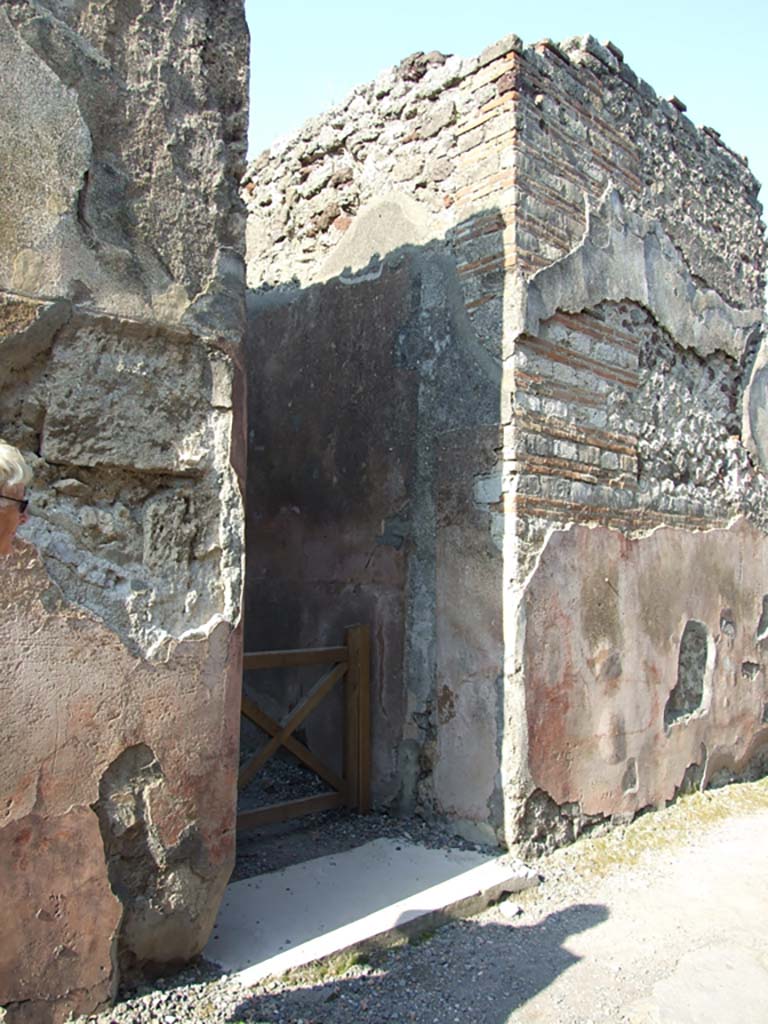
VI.7.6 Pompeii. March 2009. Entrance doorway.
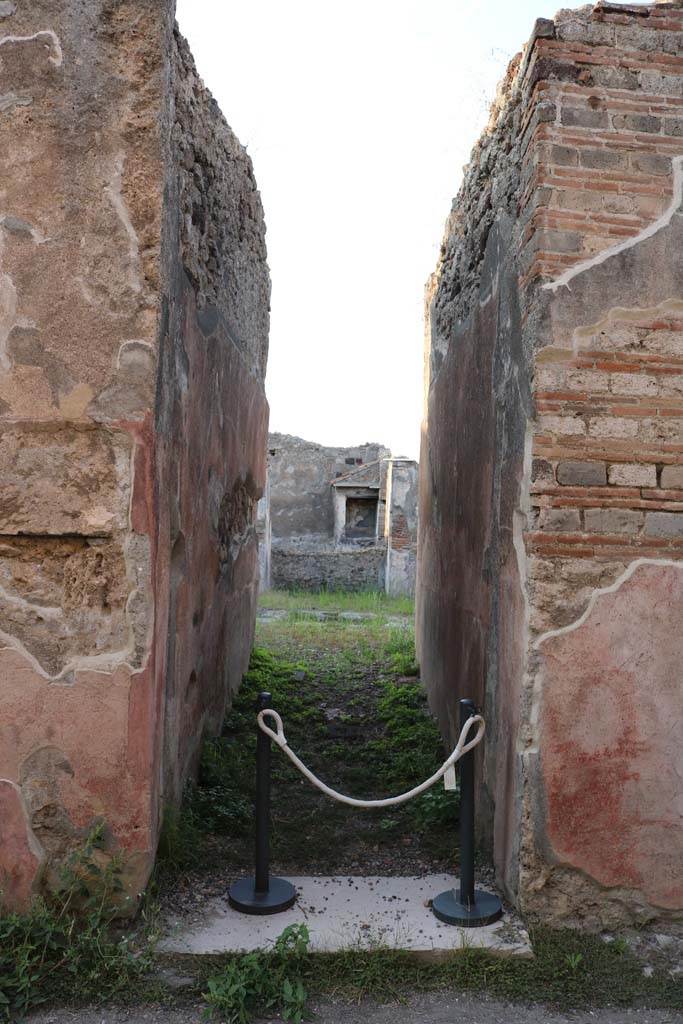
VI.7.6 Pompeii. December 2018.
Looking north along entrance corridor to atrium, tablinum and lararium in garden.
Photo courtesy of Aude Durand.
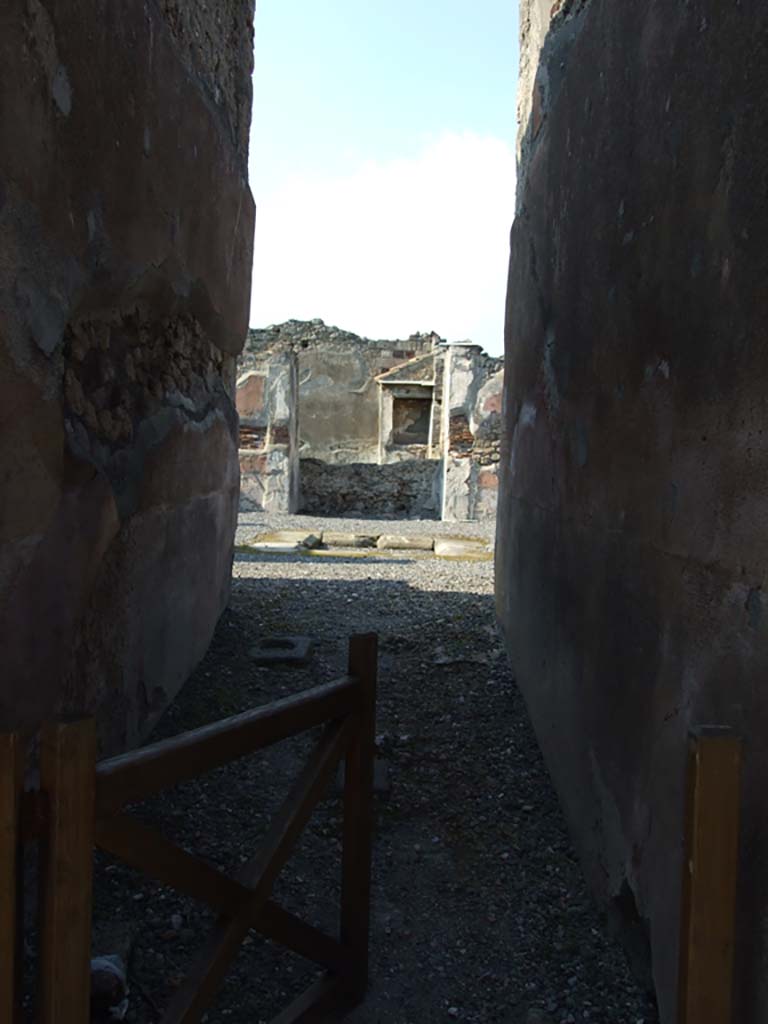
VI.7.6 Pompeii. March 2009. Looking north along entrance corridor to atrium, tablinum and garden.
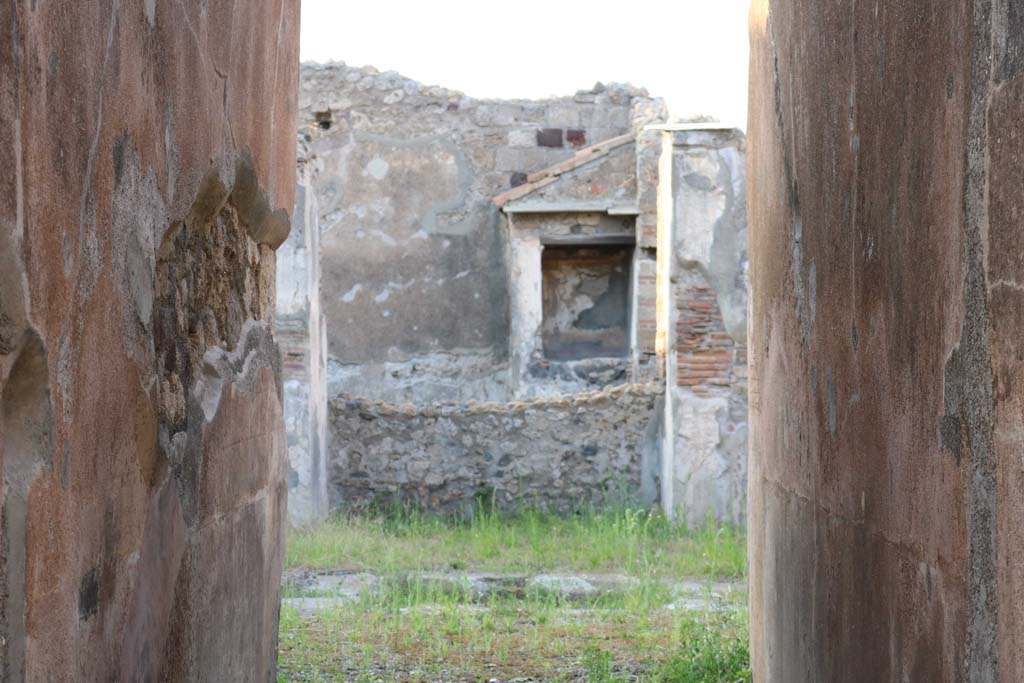
VI.7.6 Pompeii. December 2018.
Looking north across
atrium towards tablinum and garden
with lararium. Photo courtesy of Aude Durand.
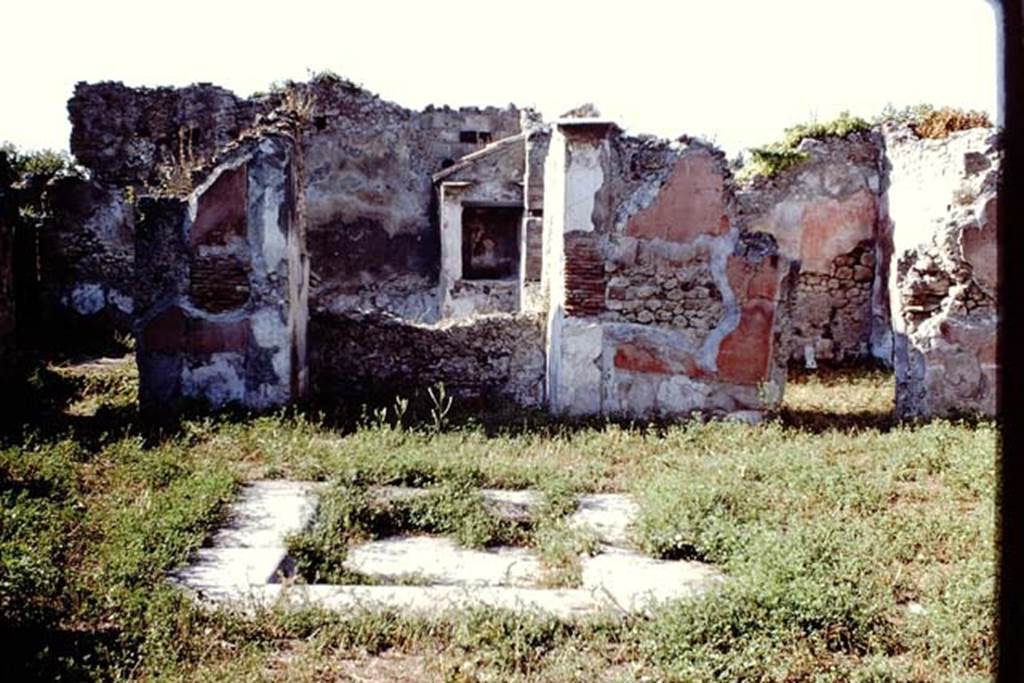
VI.7.6 Pompeii. 1968. Looking north across atrium towards tablinum, garden and doorway to triclinium. Photo by Stanley A. Jashemski.
Source: The Wilhelmina and Stanley A. Jashemski archive in the University of Maryland Library, Special Collections (See collection page) and made available under the Creative Commons Attribution-Non Commercial License v.4. See Licence and use details.
J68f2323
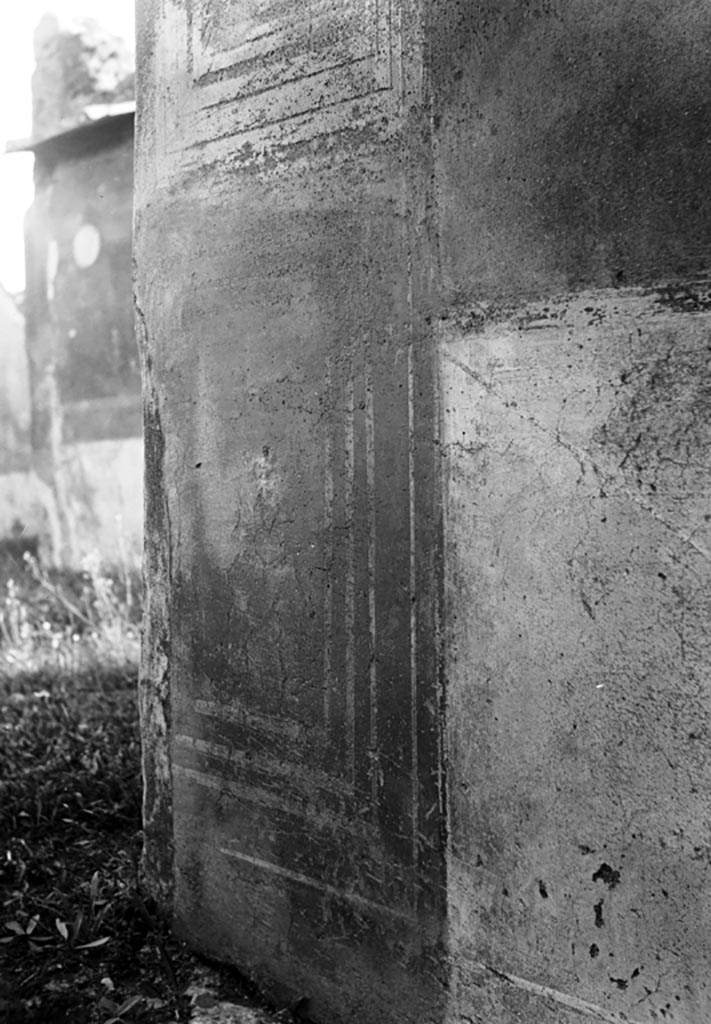
VI.7.6 Pompeii. W.1280. Decorative plaster at north end of east wall of entrance corridor, near atrium.
Photo by Tatiana
Warscher. Photo © Deutsches Archäologisches Institut, Abteilung Rom, Arkiv.
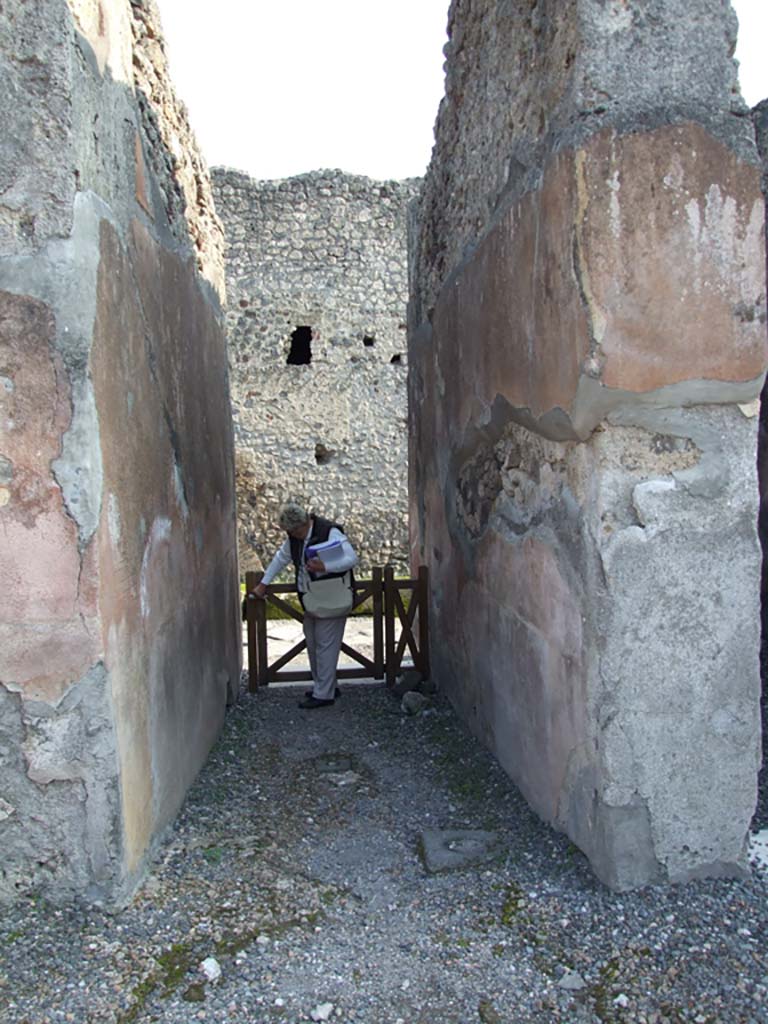
VI.7.6 Pompeii. March 2009. Entrance corridor or fauces, looking south to entrance.
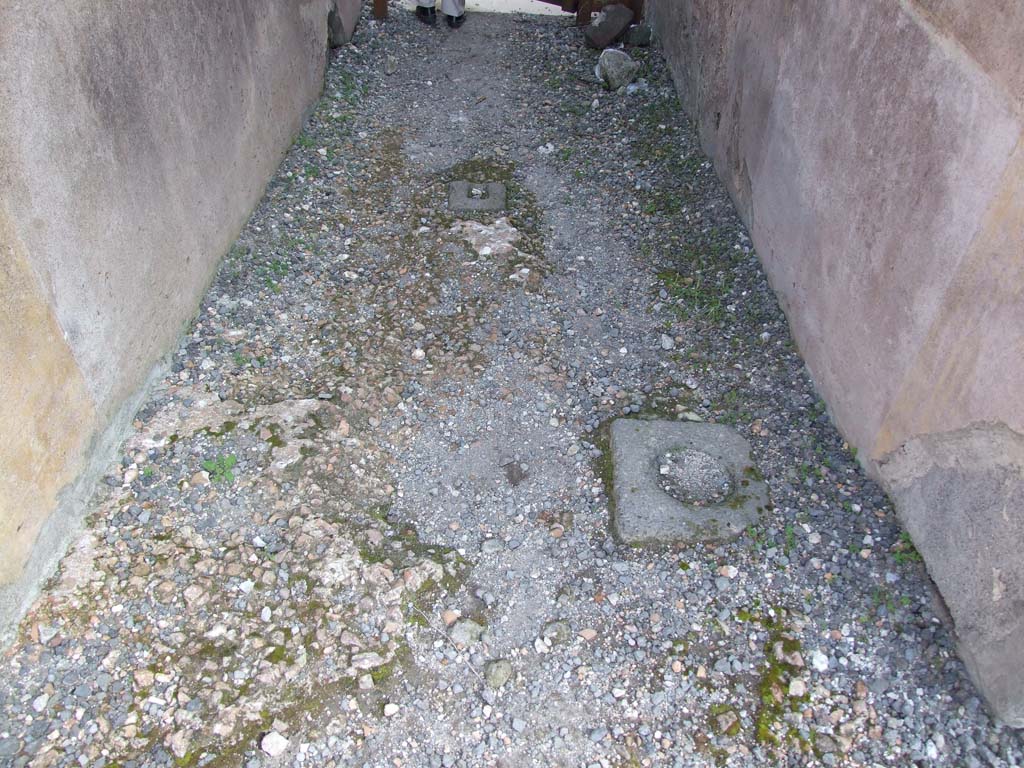
VI.7.6 Pompeii. March 2009. Floor of entrance corridor or fauces.
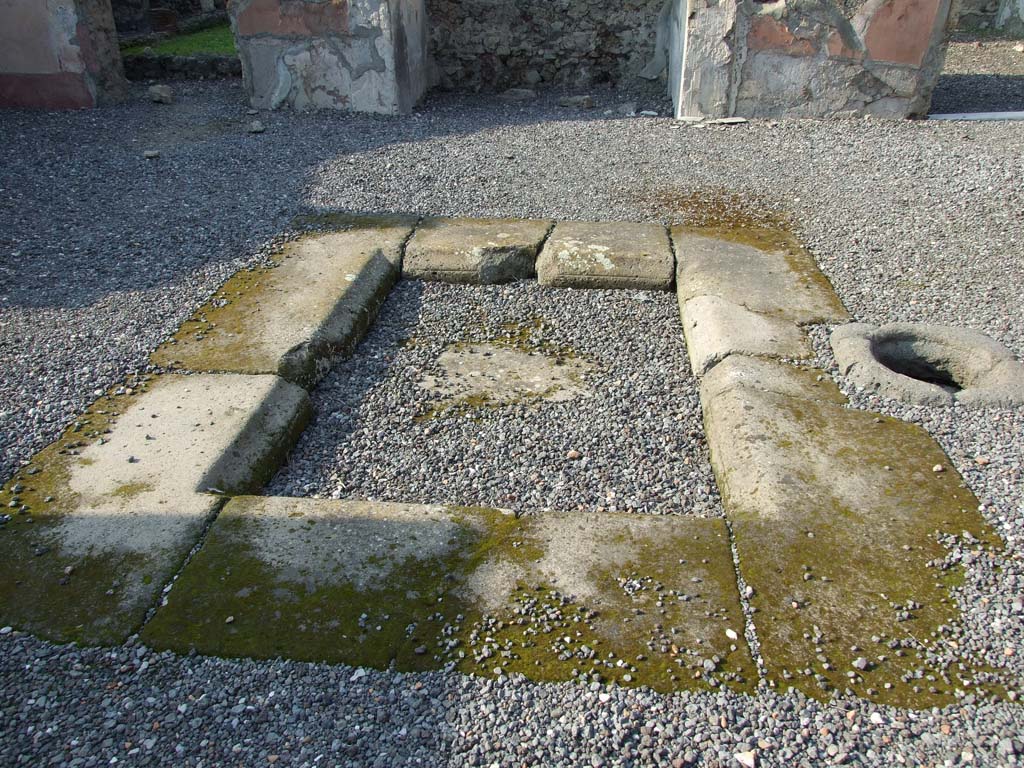
VI.7.6 Pompeii. March 2009. Room 1, atrium, looking north across impluvium.
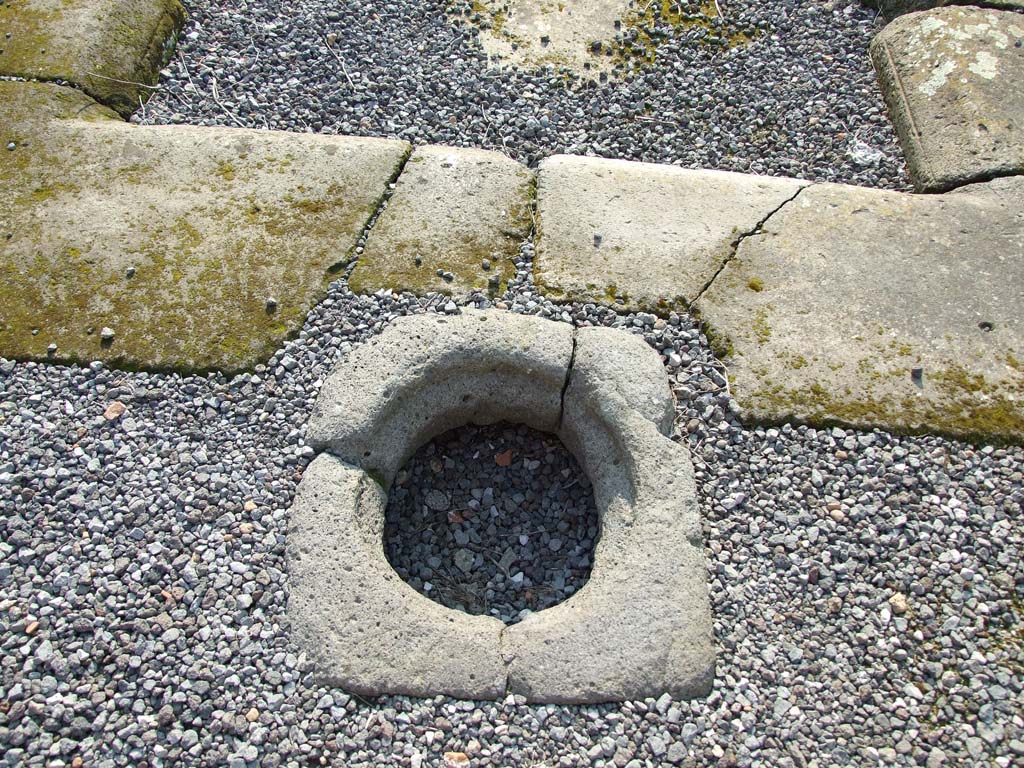
VI.7.6 Pompeii. March 2009. Room 1, cistern mouth near impluvium in atrium.
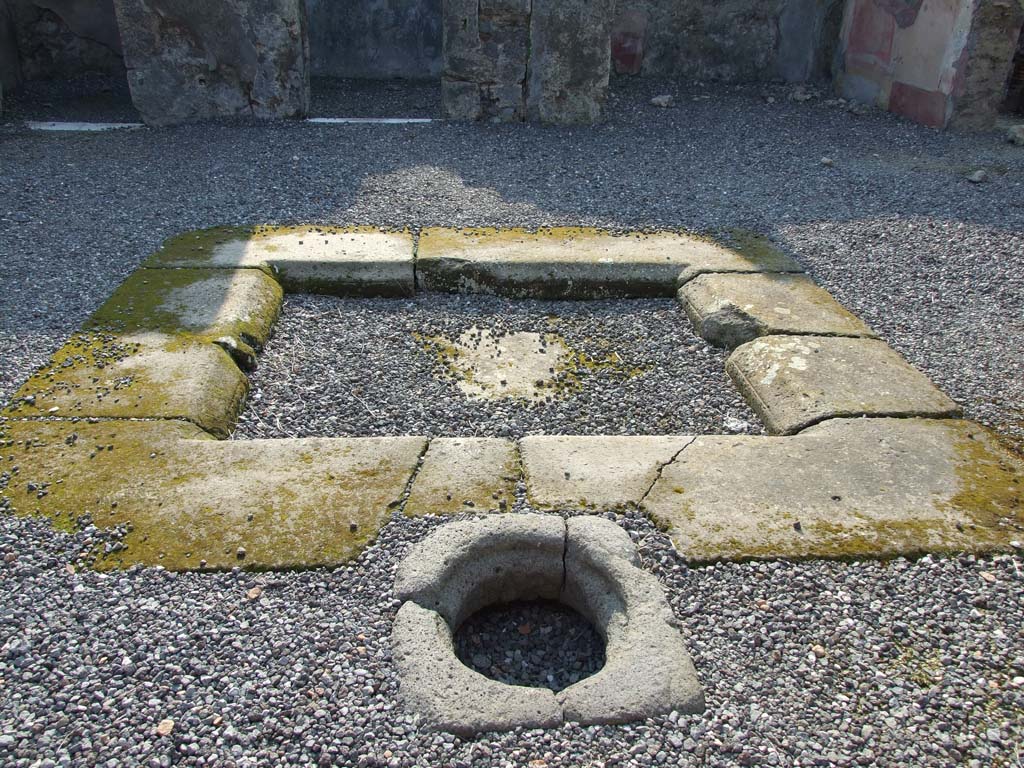
VI.7.6 Pompeii. March 2009. Room 1, impluvium and cistern-mouth in atrium.
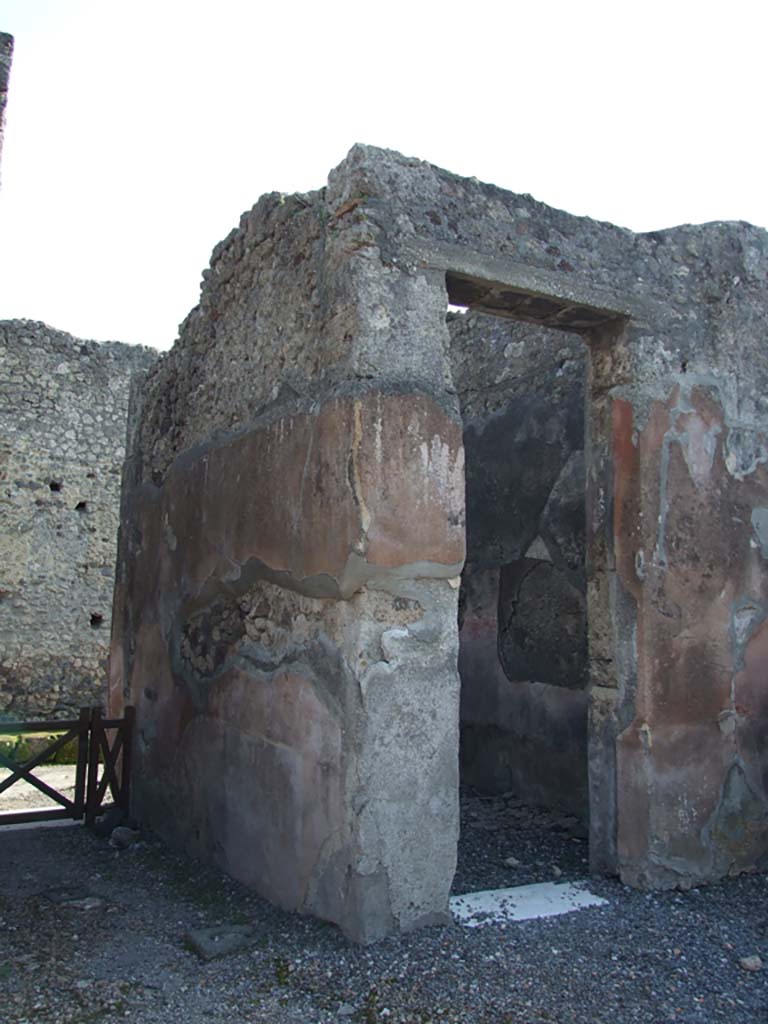
VI.7.6 Pompeii. March 2009. Doorway to room 2.
![VI.7.6 Pompeii. March 2009. Room 2, looking south across cubiculum.
According to Varone, CIL IV 1410 was found on one of the walls of this cubiculum.
It was next to a painting of a serpent, bringer of good fortune, found in 1835.
Venus enim
plagiaria
est quia exsanguni
meum petit
in vies tumultu
pariet optet
sibi ut bene
naviget
quod et
Ario sua r(ogat) [CIL IV 1410]
Varone translated this as –
Venus is a weaver of webs; from the moment that she sets out to attack my dearest,
she will lay temptations along his way:
he must hope for a good voyage, which is also the wish of his Ario.
See Varone, A., 2002. Erotica Pompeiana: Love Inscriptions on the Walls of Pompeii, Rome: L’erma di Bretschneider. (p.25-26)](6%2007%2006_files/image021.jpg)
VI.7.6 Pompeii. March 2009. Room 2, looking south across cubiculum.
According to Varone, CIL IV 1410 was found on one of the walls of this cubiculum.
It was next to a painting of a serpent, bringer of good fortune, found in 1835.
Venus enim
plagiaria
est quia
exsanguni
meum petit
in vies tumultu
pariet optet
sibi ut bene
naviget
quod et
Ario sua
r(ogat) [CIL IV 1410]
Varone translated this as –
Venus is a weaver of webs; from the moment that she sets out to attack my dearest,
she will lay temptations along his way:
he must hope for a good voyage, which is also the wish of his Ario.
See Varone, A., 2002. Erotica Pompeiana: Love Inscriptions on the Walls of Pompeii, Rome: L’erma di Bretschneider. (p.25-26)
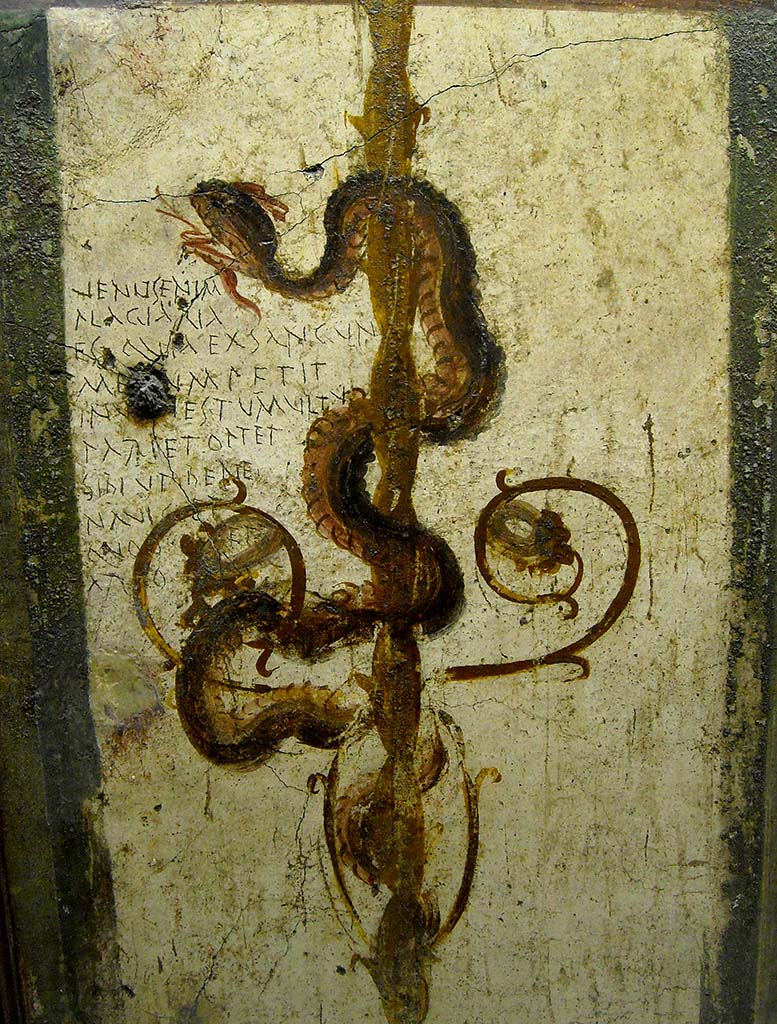
VI.7.6 Pompeii. Found in 1835, room 2, cubiculum. Painting of a serpent, bringer of good fortune.
Now in Naples Archaeological Museum. Inventory number 4694.
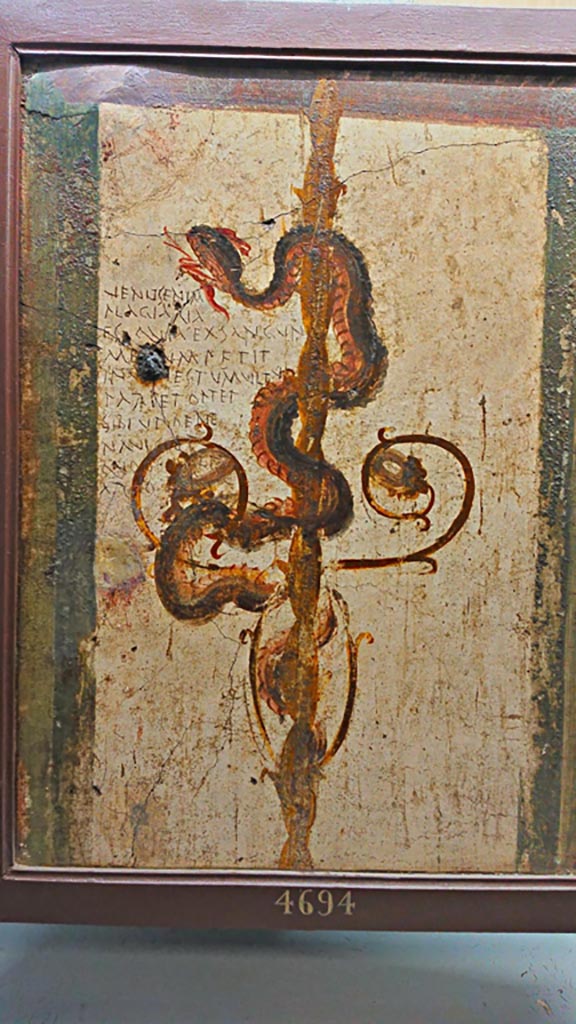
VI.7.6 Pompeii. Found in 1835, room 2, cubiculum.
Detail of painting of a serpent, bringer of good fortune, with graffiti.
Now in Naples Archaeological Museum. Inventory number 4694.
Photo courtesy of
Giuseppe Ciaramella, June 2017.
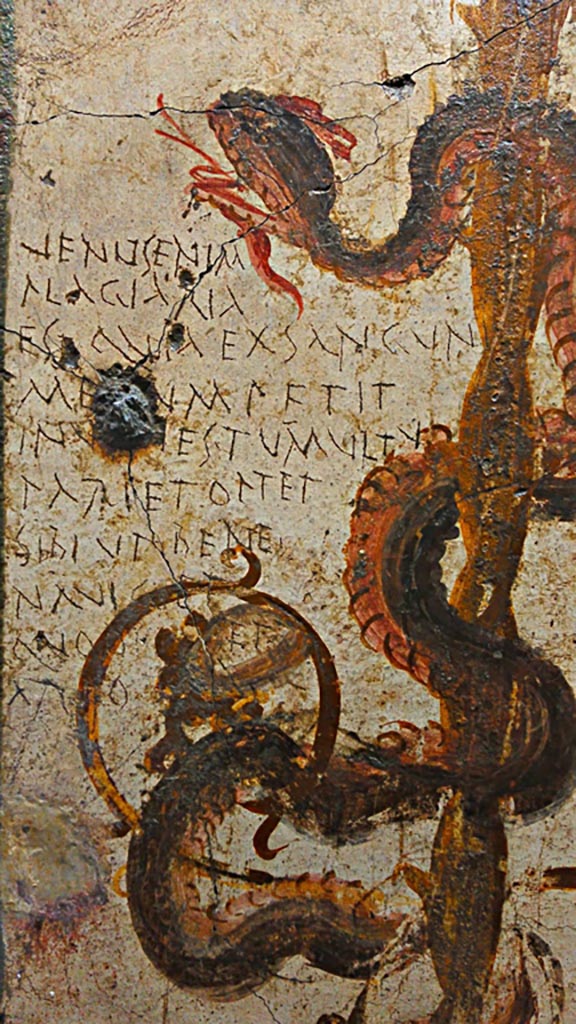
VI.7.6 Pompeii. Found in 1835, room 2, cubiculum.
Detail of painting of a serpent, bringer of good fortune, with graffiti.
Now in Naples Archaeological Museum. Inventory number 4694.
Photo courtesy of Giuseppe Ciaramella, June 2017.
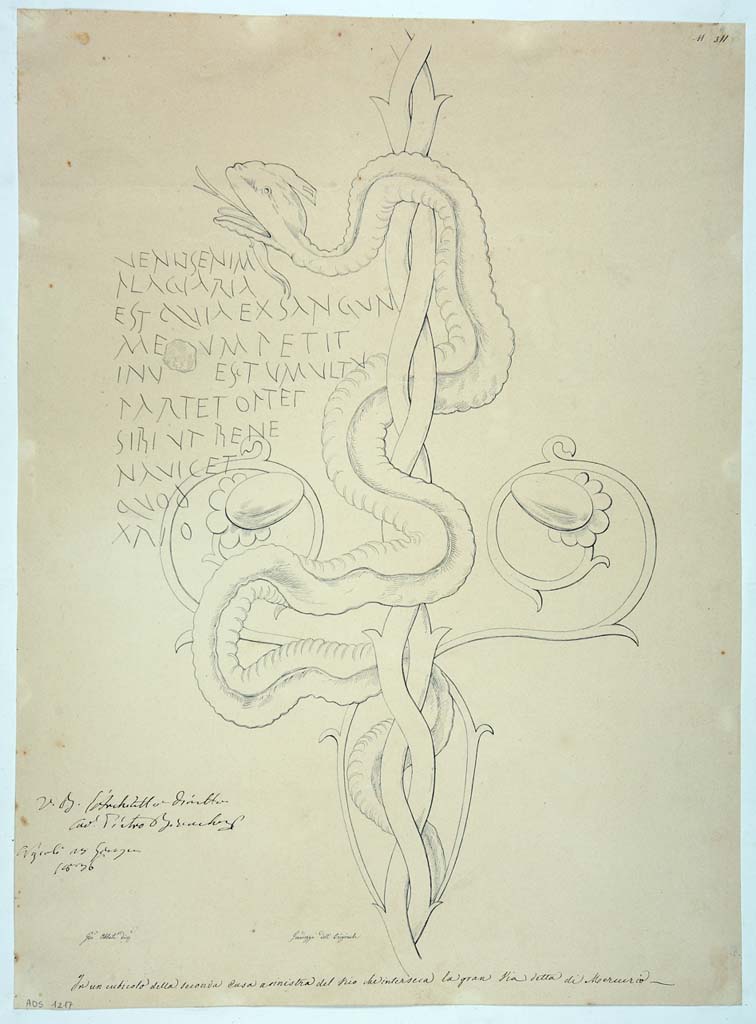
VI.7.6 Pompeii. Pen and ink drawing by Giuseppe Abbate (1836) showing the serpent coiled around a candelabra.
Now in Naples Archaeological Museum. Inventory number ADS 1217.
The original painting was detached from the wall and is now in Naples Archaeological Museum. Inventory number 4694.
The graffiti, CIL IV 1410, can be clearly seen on the left.
Photo © ICCD. https://www.catalogo.beniculturali.it
Utilizzabili alle condizioni della licenza Attribuzione
- Non commerciale - Condividi allo stesso modo 2.5 Italia (CC BY-NC-SA 2.5 IT)
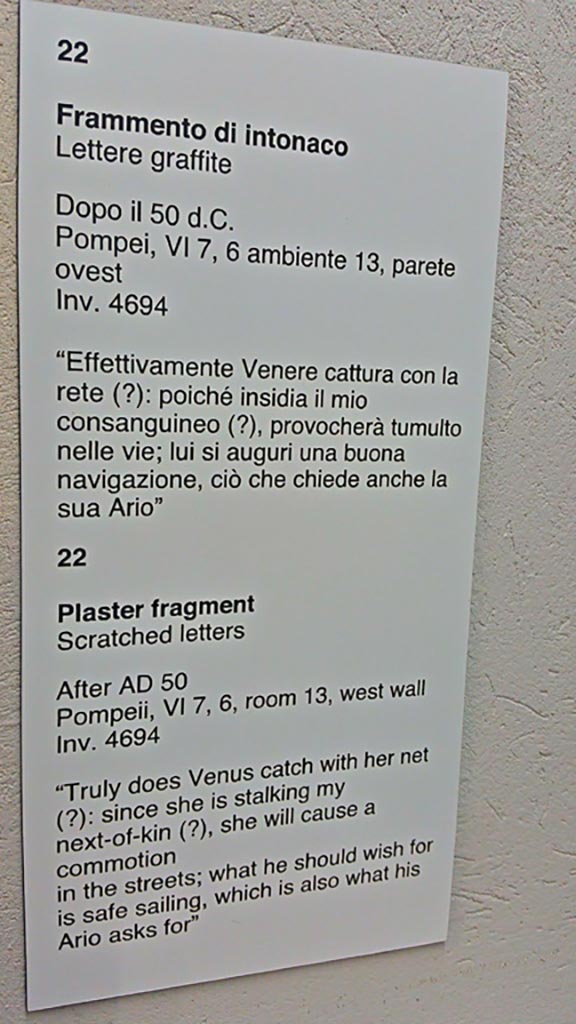
VI.7.6 Pompeii. June 2017.
Information card for inv. 4694 in Naples Archaeological Museum. Photo courtesy of Giuseppe Ciaramella.
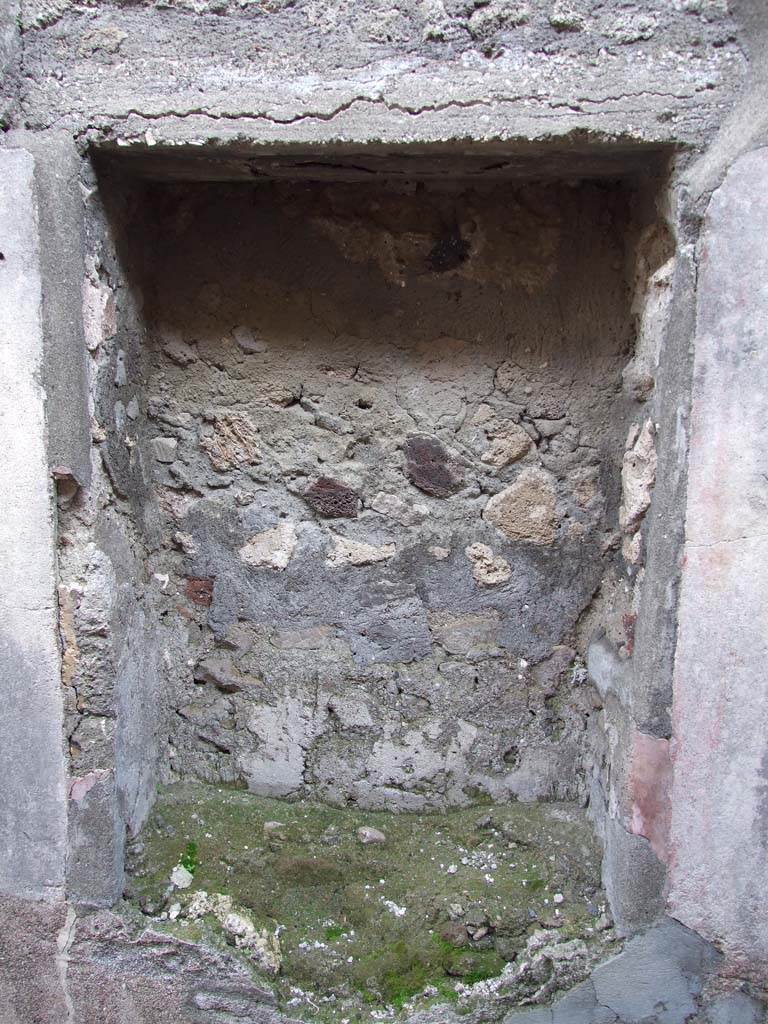
VI.7.6 Pompeii. March 2009. Room 2, recess in east wall of cubiculum.
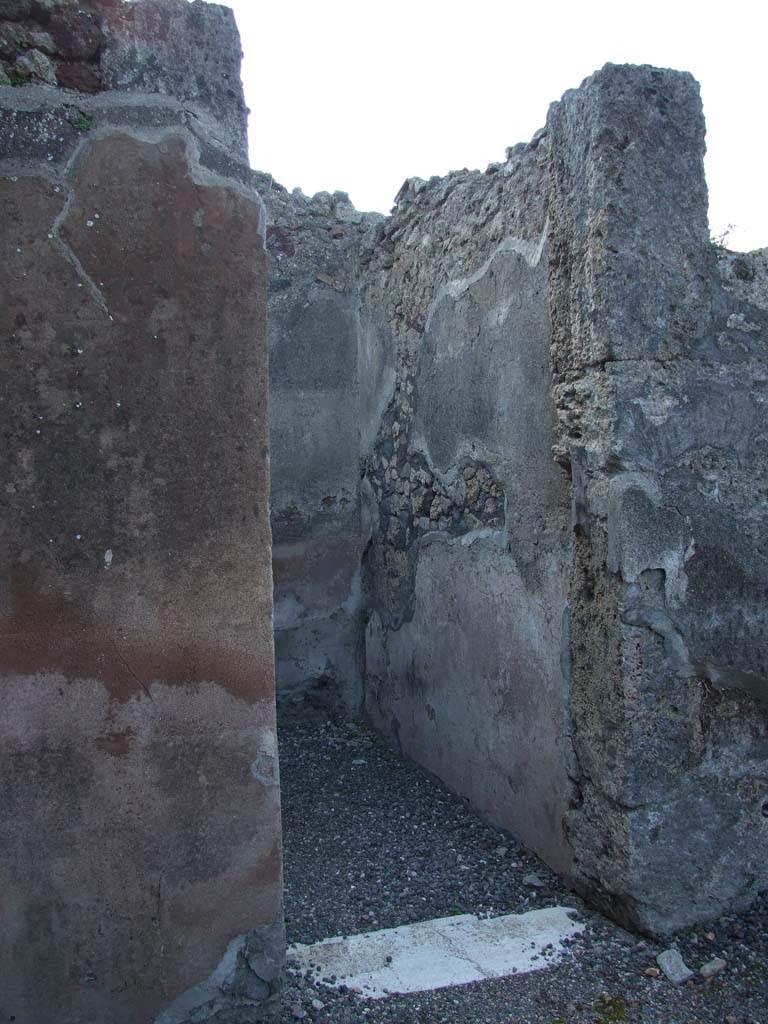
VI.7.6 Pompeii. March 2009. Doorway to room 3.
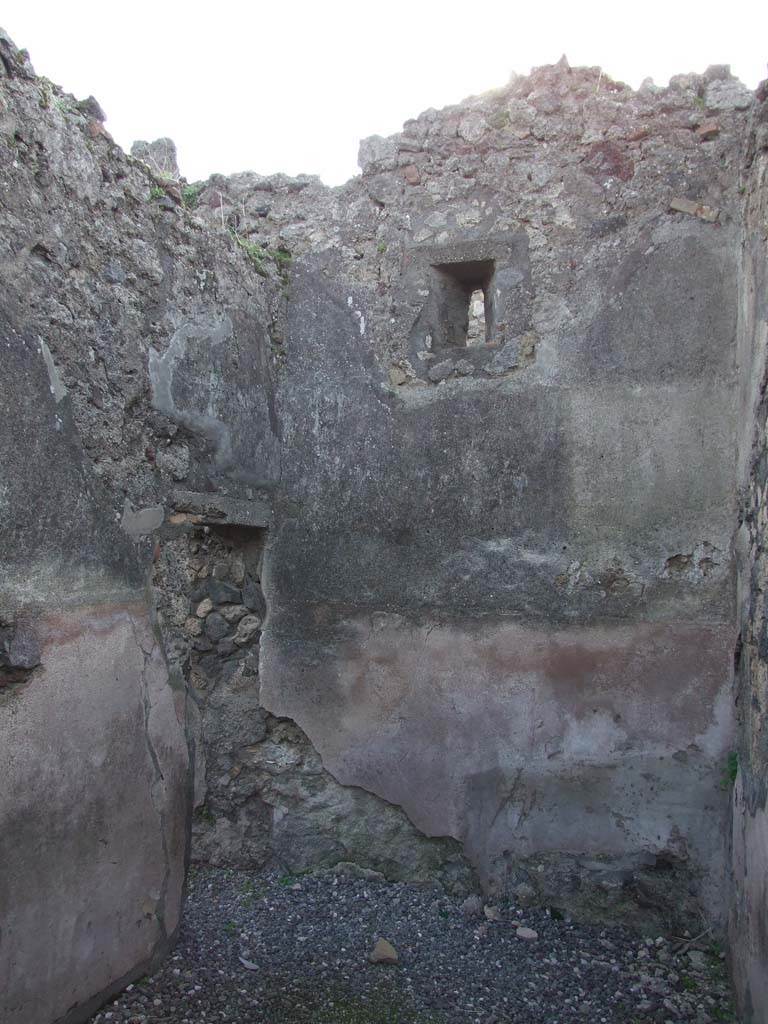
VI.7.6 Pompeii. March 2009. Room 3, looking west into room, which was a rear room of VI.7.4 and VI.7.5
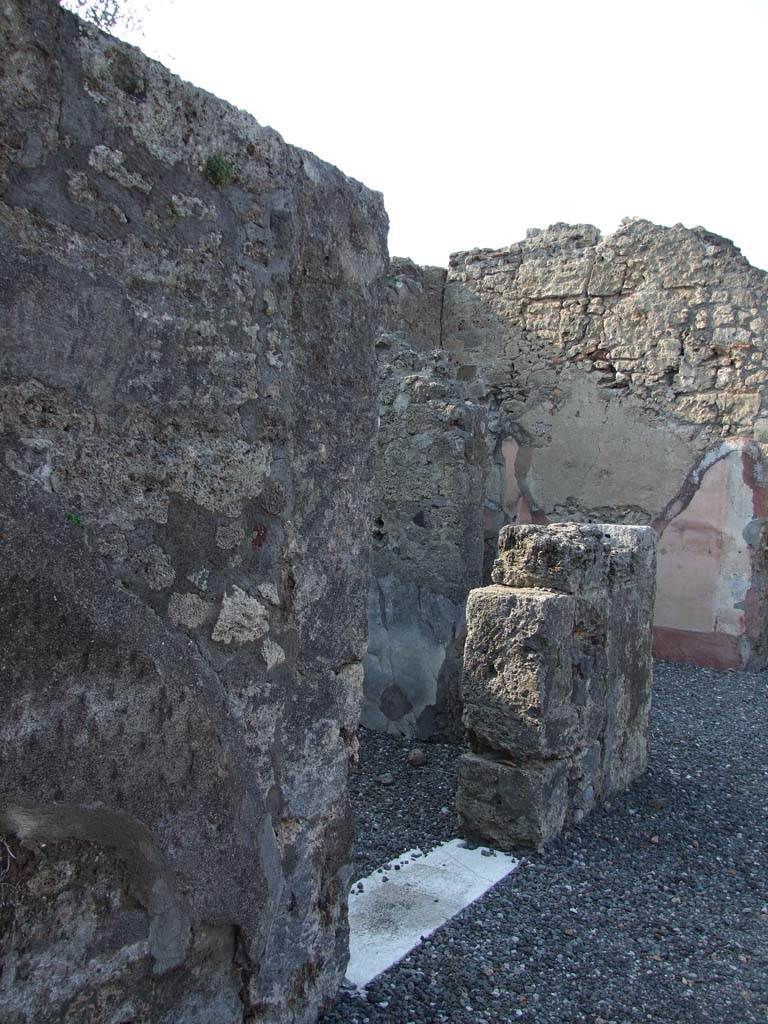
VI.7.6 Pompeii. March 2009. Doorway of room 4.
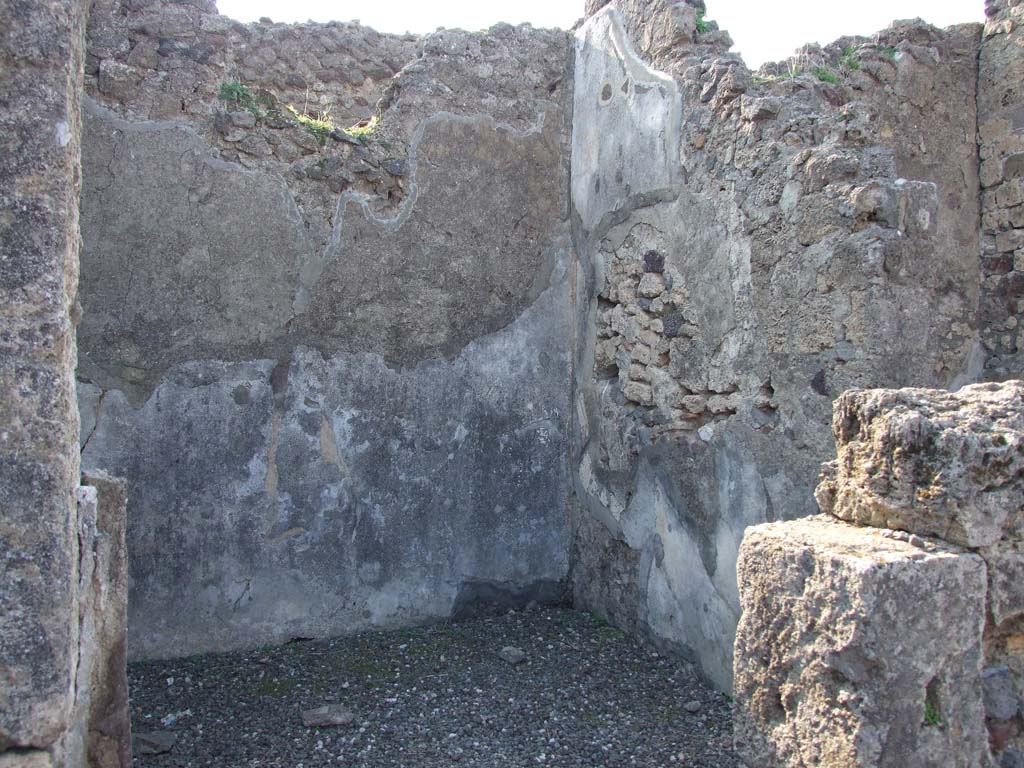
VI.7.6 Pompeii. March 2009. Room 4, west wall
Part 2 Part 3
Part 4 Part 5 Plan