VI.7.3 Pompeii. Casa con Atrio
Tetrastilo.
Excavated 1835. Restored 1976.
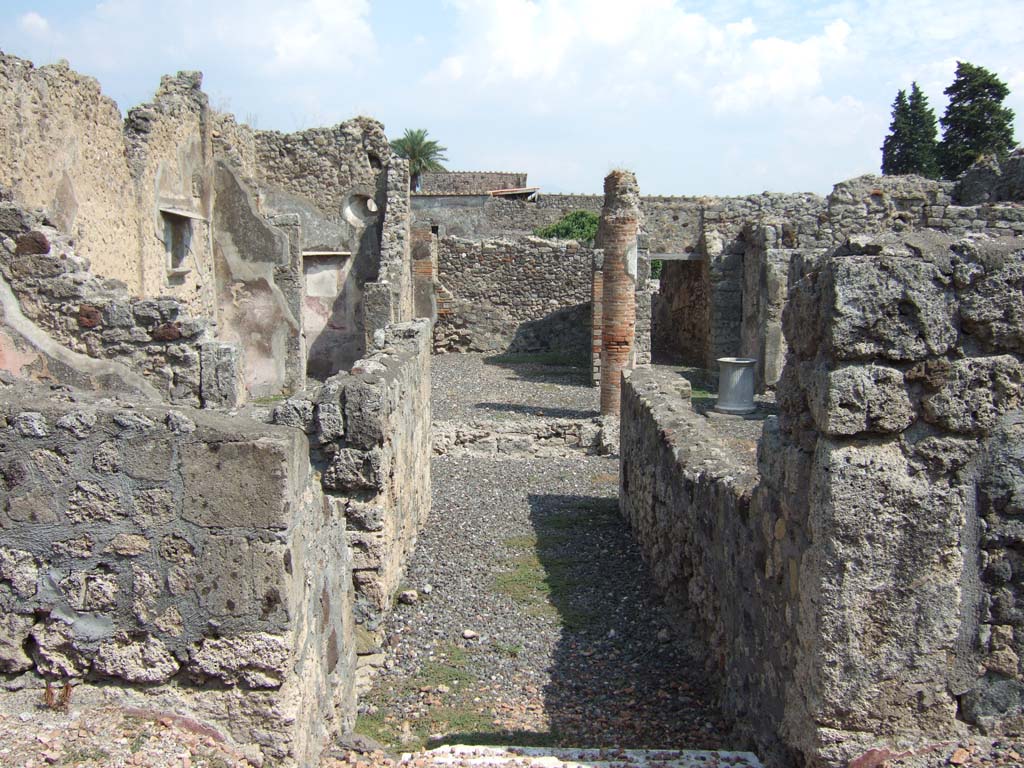
VI.7.3 Pompeii. September 2005. Entrance doorway, looking east.
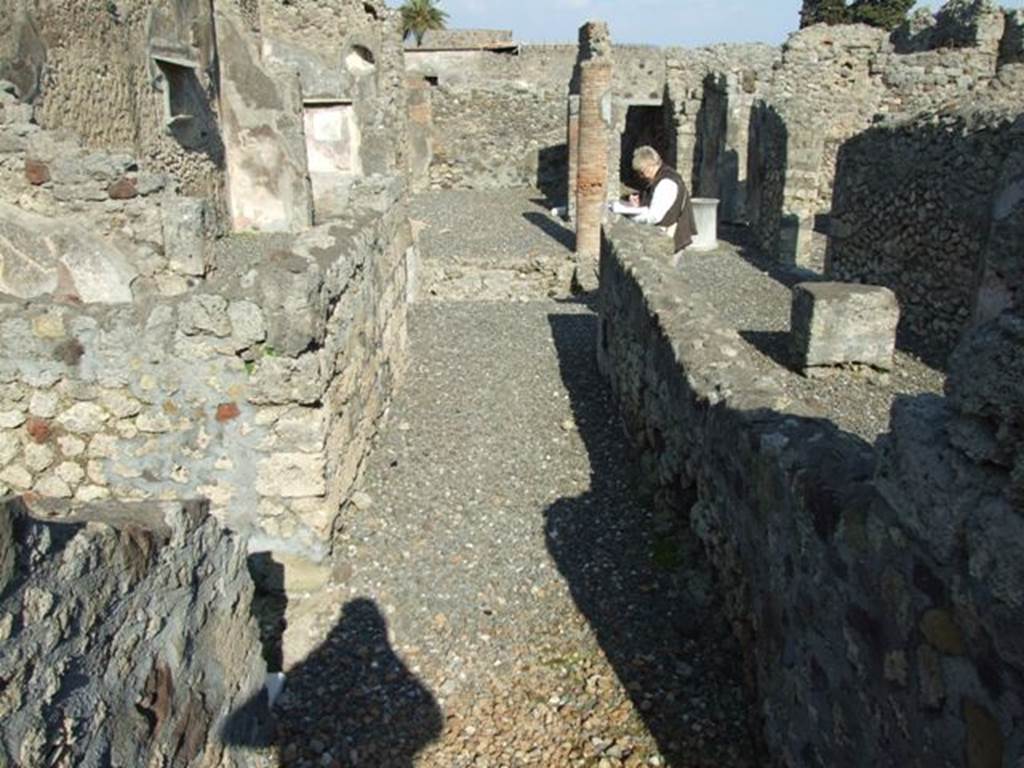
VI.7.3 Pompeii. March 2009. Looking east to atrium from entrance fauces.
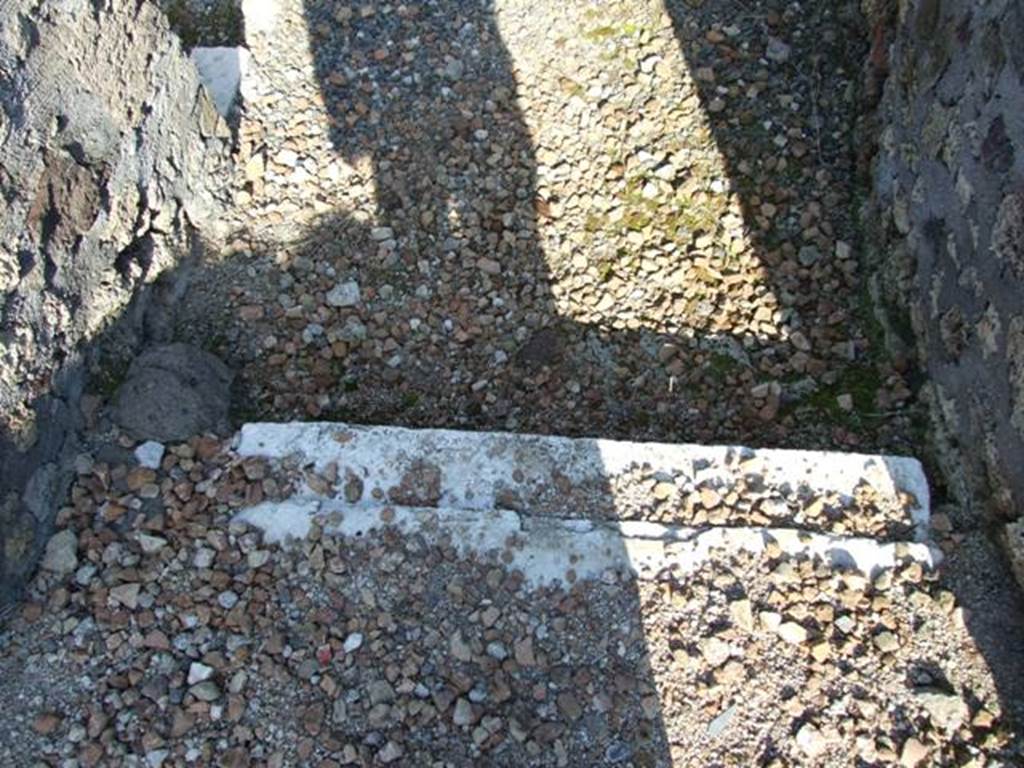
VI.7.3 Pompeii. March 2009. Marble step at entrance.
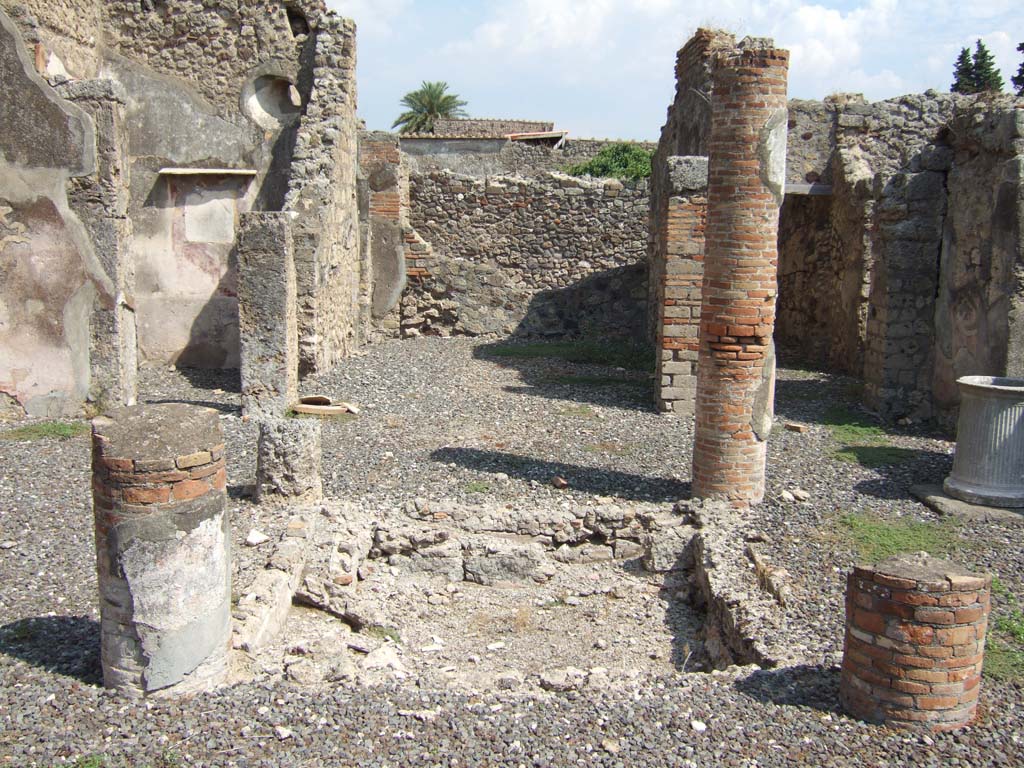
VI.7.3 Pompeii. September 2005. Room 1, atrium, looking east
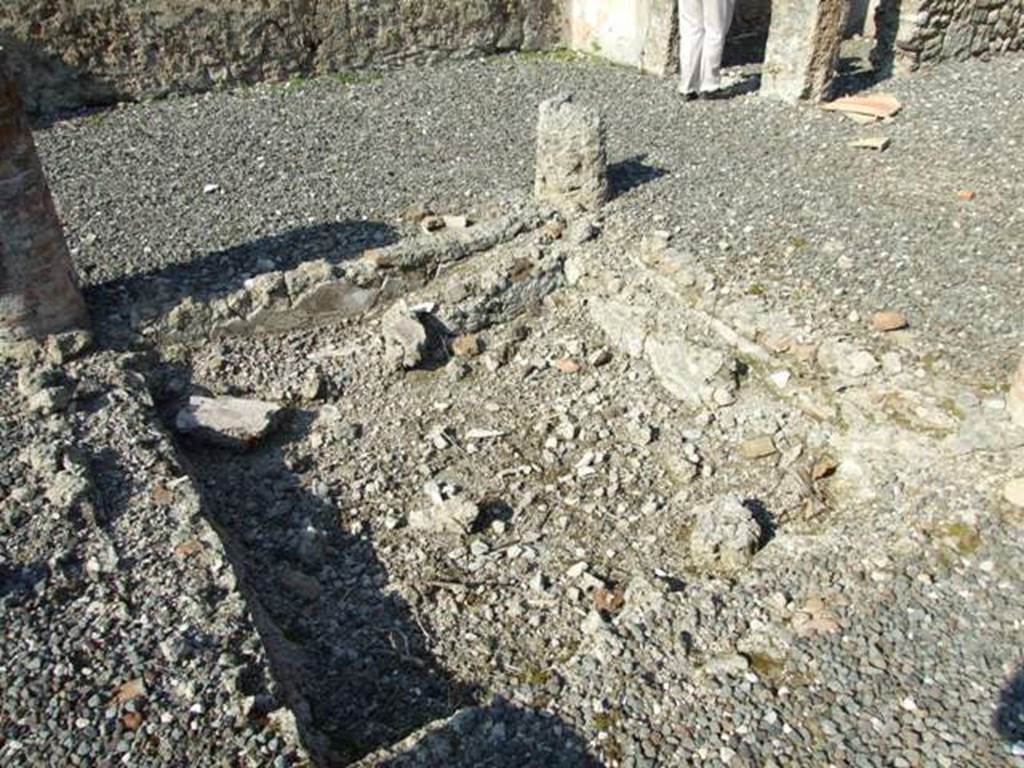
VI.7.3 Pompeii. March 2009. Room 1, atrium with remains of impluvium. Looking north-east.
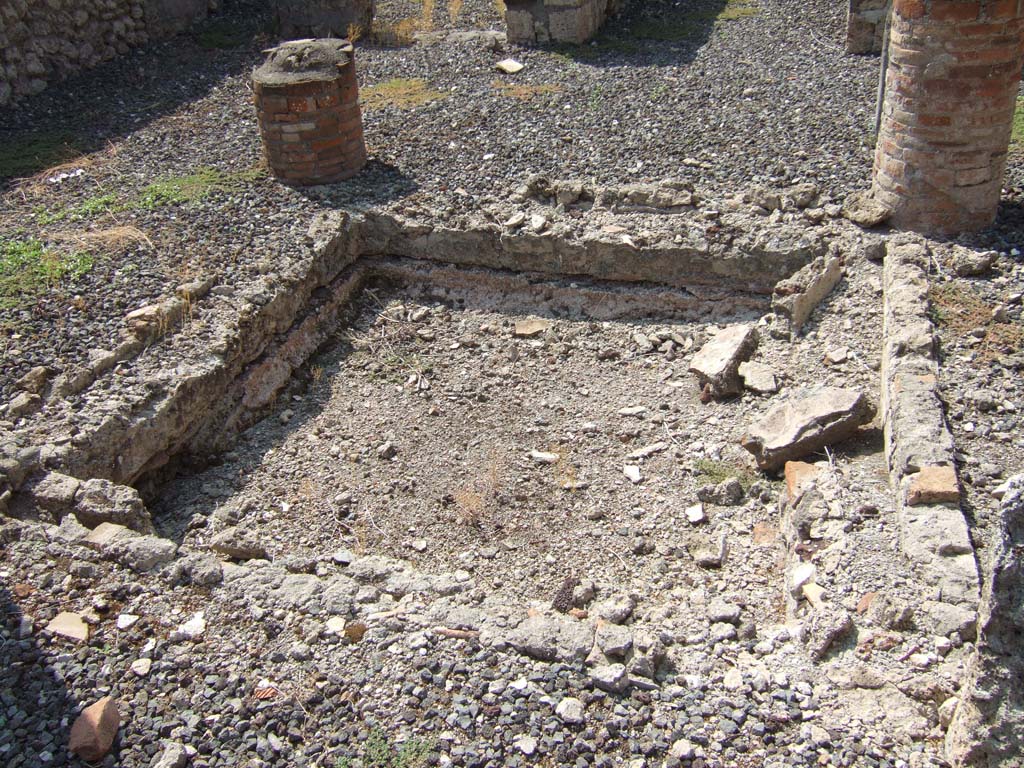
VI.7.3 Pompeii. September 2005. Room 1, impluvium in atrium, looking west.
According to Jashemski, Fiorelli thought the tetrastyle atrium had been given the character of a garden by planting flowers.
These had been planted in the little channels (canaletti) enclosing the impluvium.
Today this is ruined, and nothing remains.
See Jashemski, W. F., 1993. The Gardens of Pompeii, Volume II: Appendices. New York: Caratzas. (p.129)
See Pappalardo, U., 2001. La Descrizione di Pompei per Giuseppe Fiorelli (1875). Napoli: Massa Editore. (p.57)
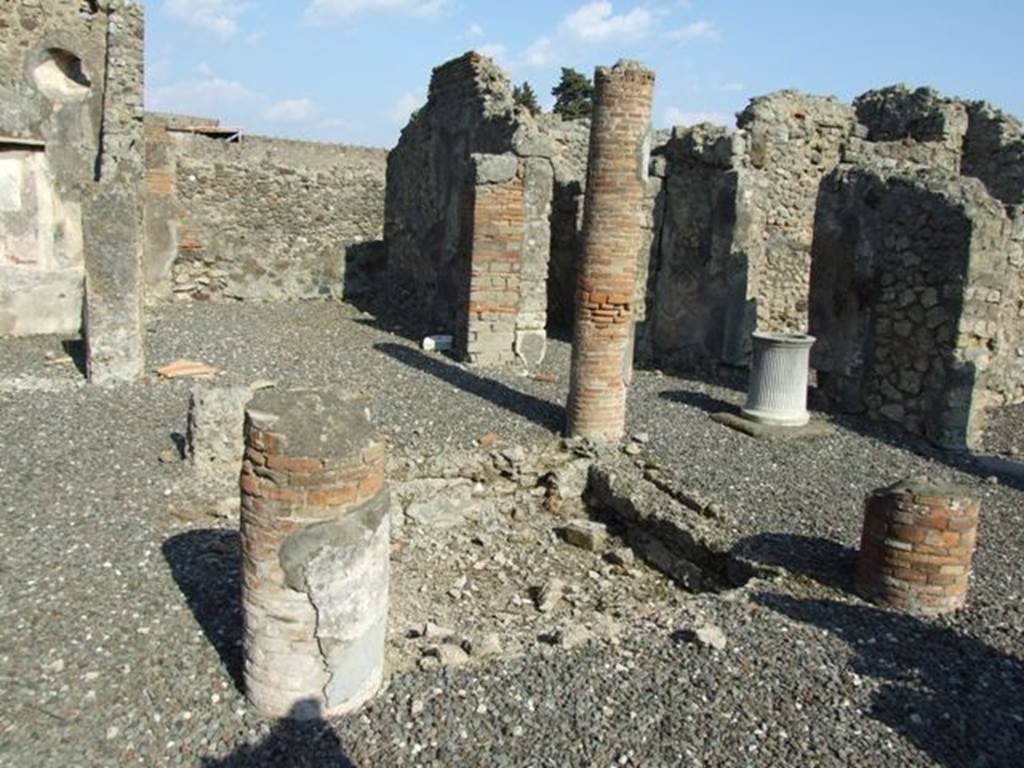
VI.7.3 Pompeii. March 2009. Room 1, atrium, looking east across impluvium.
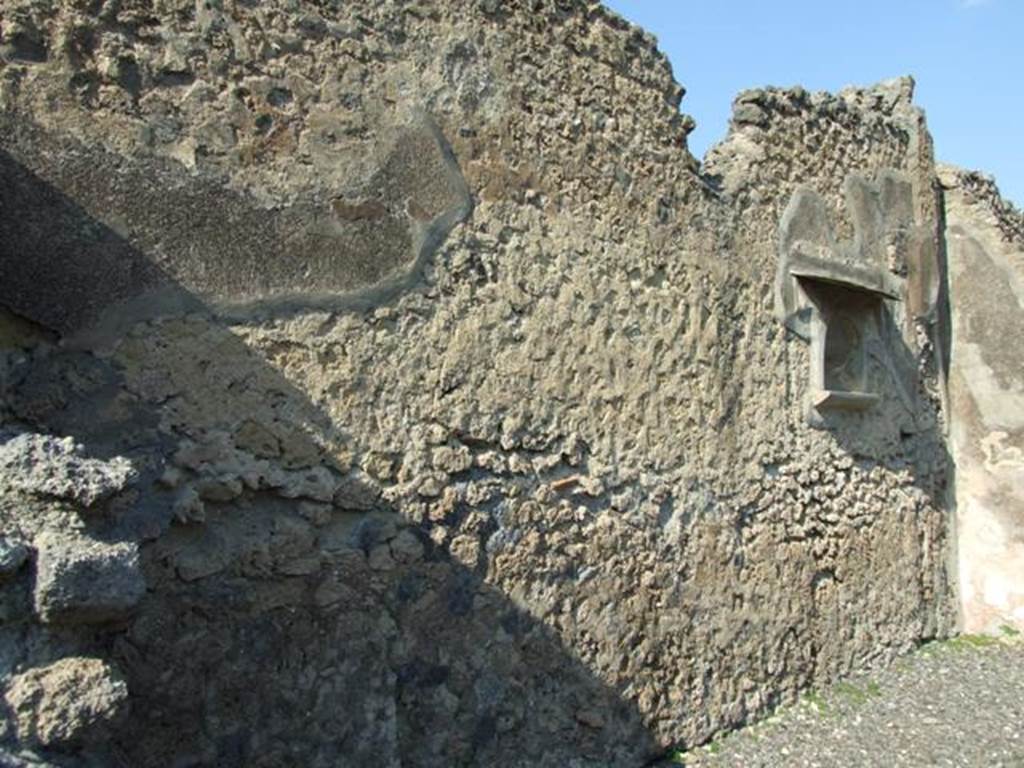
VI.7.3 Pompeii. March 2009. Room 1, north wall of atrium, with niche.
According to Fiorelli, under the niche was found an alphabet written by a child of the house, still getting used to writing his letters- AXBVC
See Pappalardo, U., 2001. La Descrizione di Pompei per Giuseppe Fiorelli (1875). Napoli: Massa Editore. (p.57)
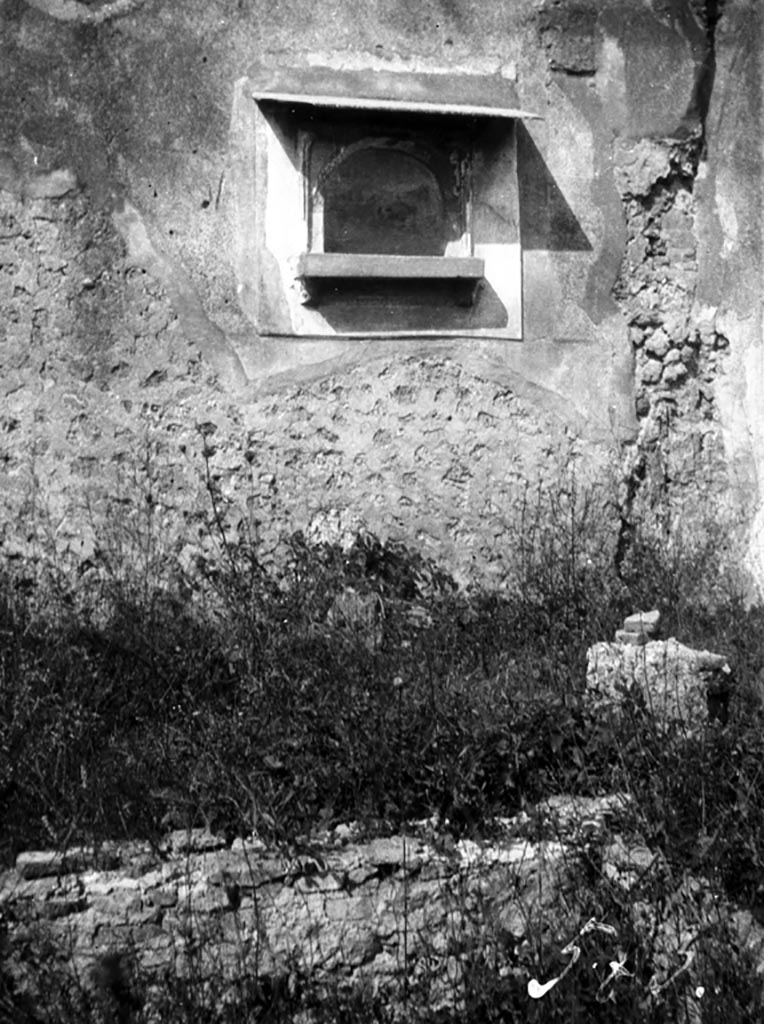
VI.7.3 Pompeii. W 1276. North wall of atrium with niche.
Photo by Tatiana
Warscher. Photo © Deutsches Archäologisches Institut, Abteilung Rom, Arkiv.
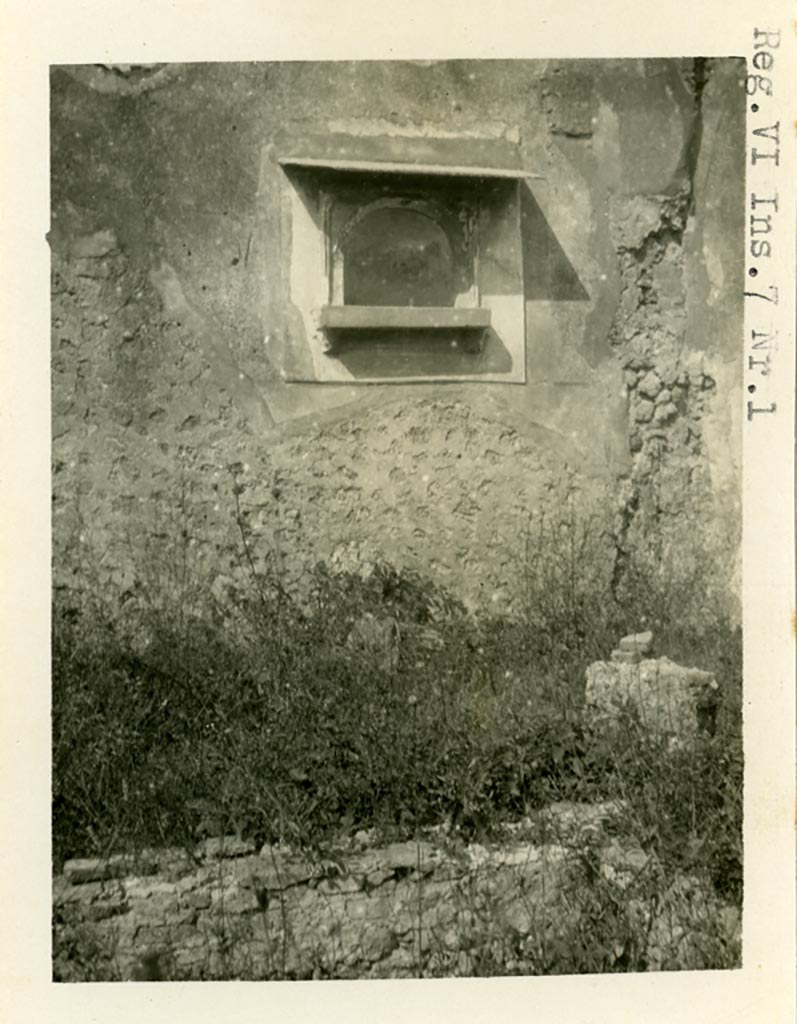
VI.7.3 Pompeii but shown as VI.7.1 on photo. Pre-1937-39. Niche on north wall of atrium.
Photo courtesy of American Academy in Rome, Photographic Archive. Warsher collection no. 573.
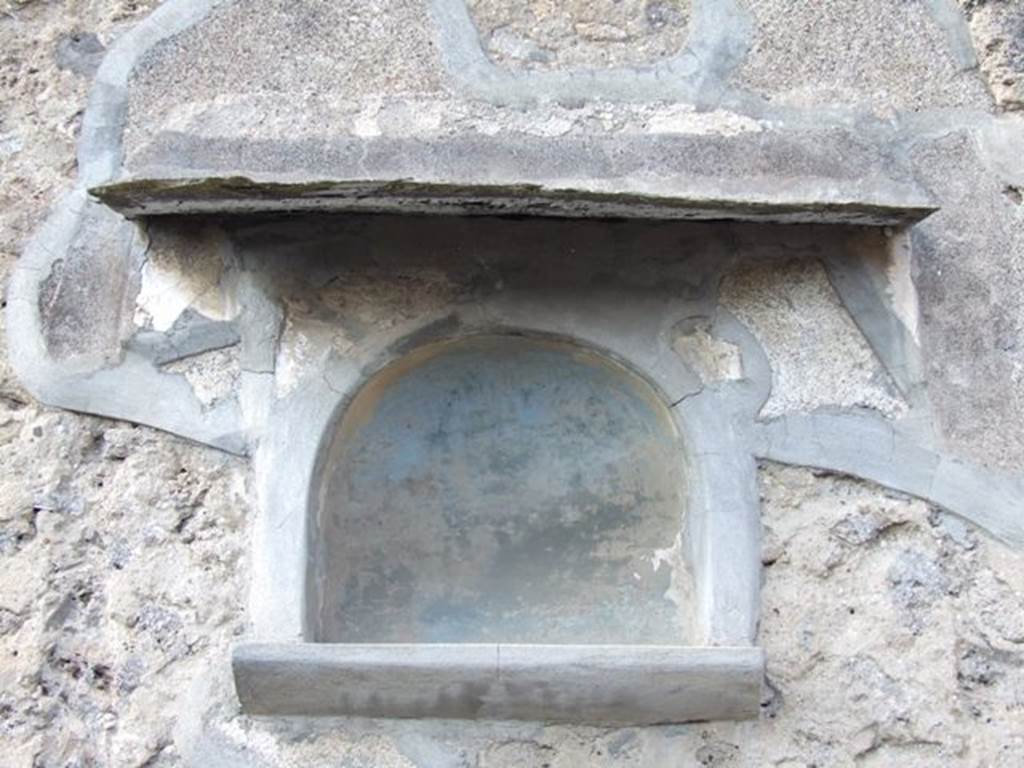
VI.7.3 Pompeii. March 2009. Room 1, niche on north wall of atrium.
According to Boyce, this was a carefully executed arched niche.
Below it was a heavy cornice adorned with a frieze of polychrome stucco work projecting from the wall.
The niche itself was originally framed by an aedicula façade, of which only the half-columns at the sides remained.
A stucco cornice running around the curve of the arch was also visible to Boyce.
See Boyce G. K., 1937. Corpus of the Lararia of Pompeii. Rome: MAAR 14. (p.47, no.160, and Pl.6,3)
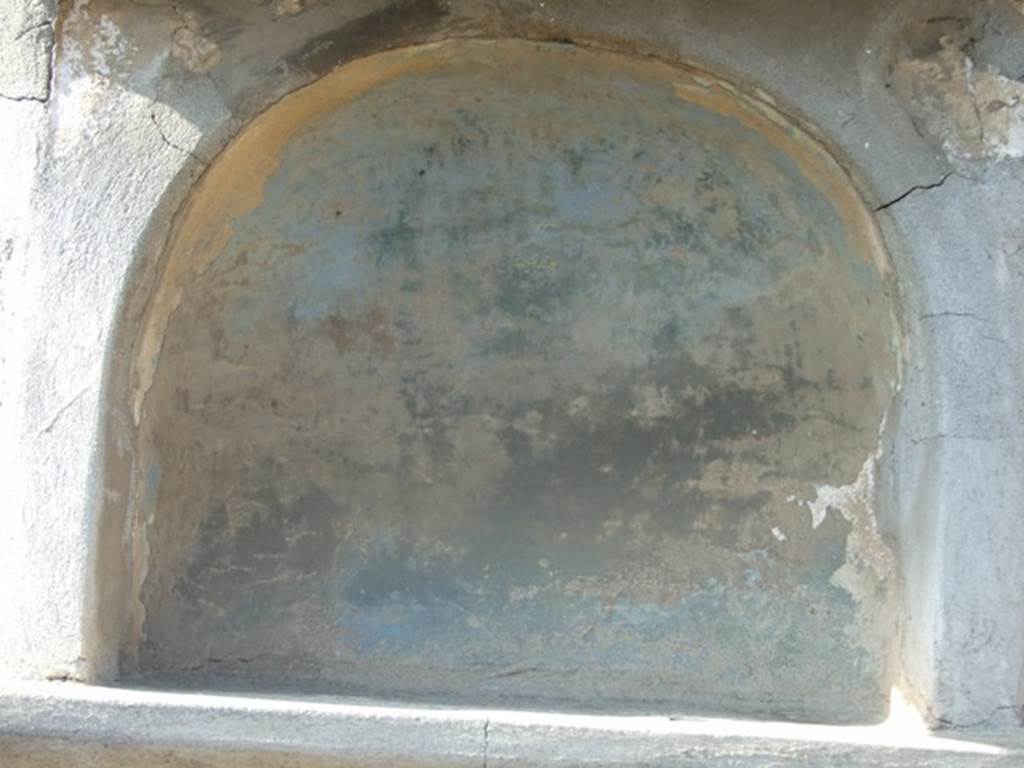
VI.7.3 Pompeii. March 2009. Niche.
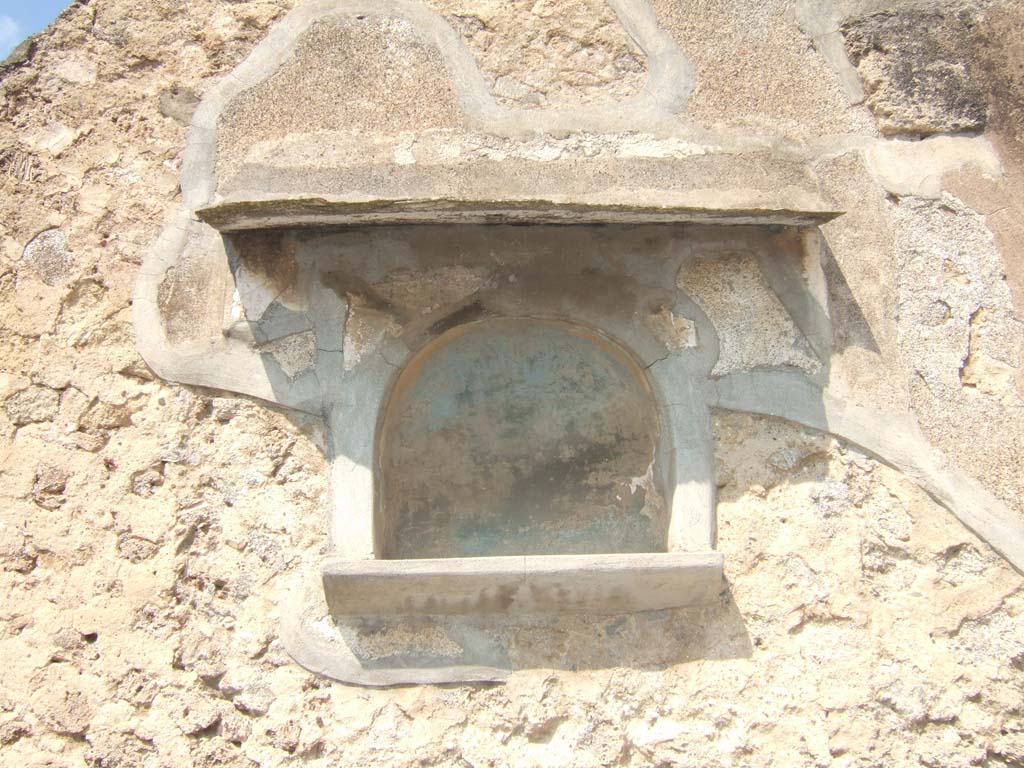
VI.7.3 Pompeii. September 2005. Niche in north wall of atrium.
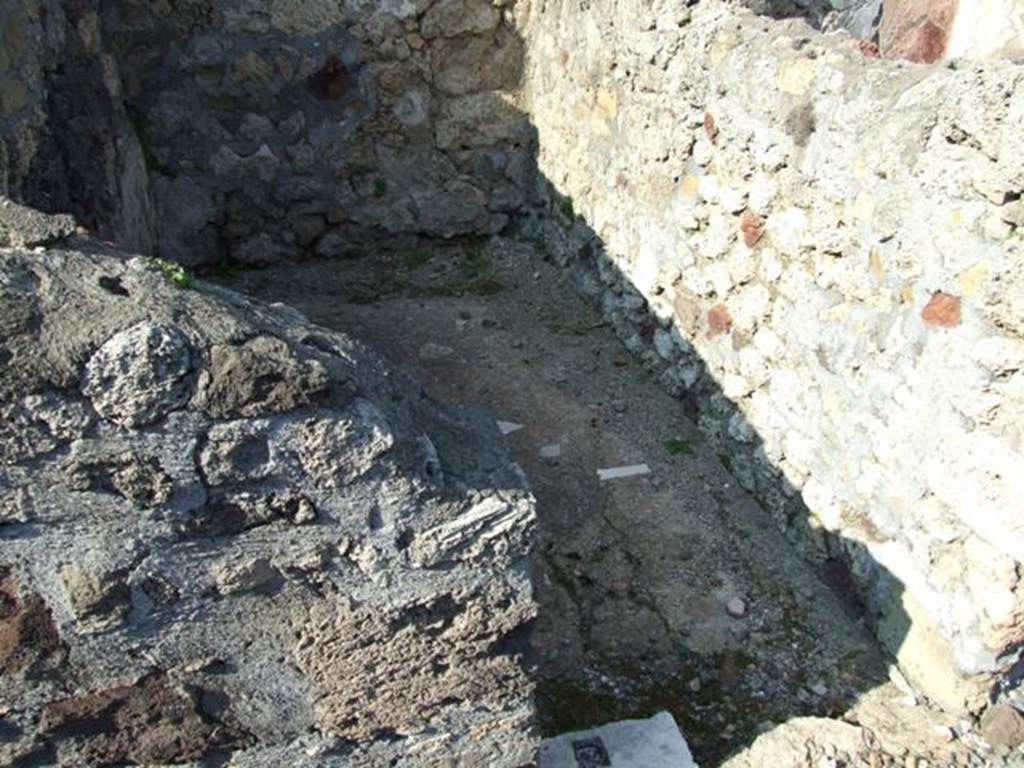
VI.7.3 Pompeii. March 2009. Doorway to room 2.
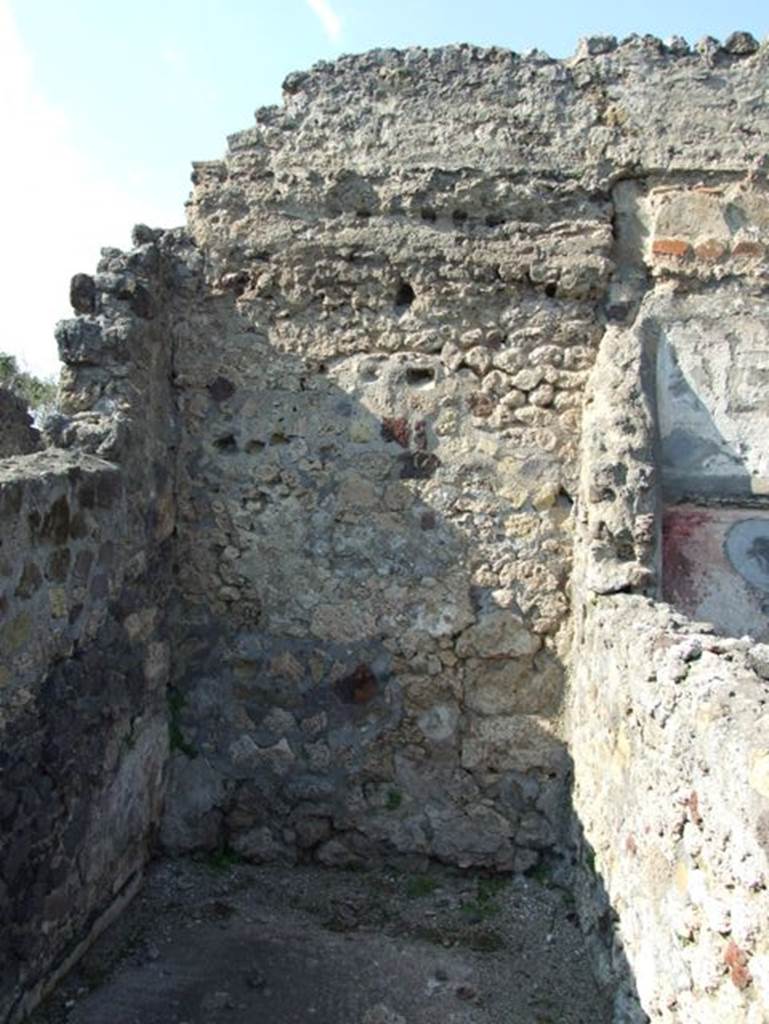
VI.7.3 Pompeii. March 2009. Room 2, north wall.
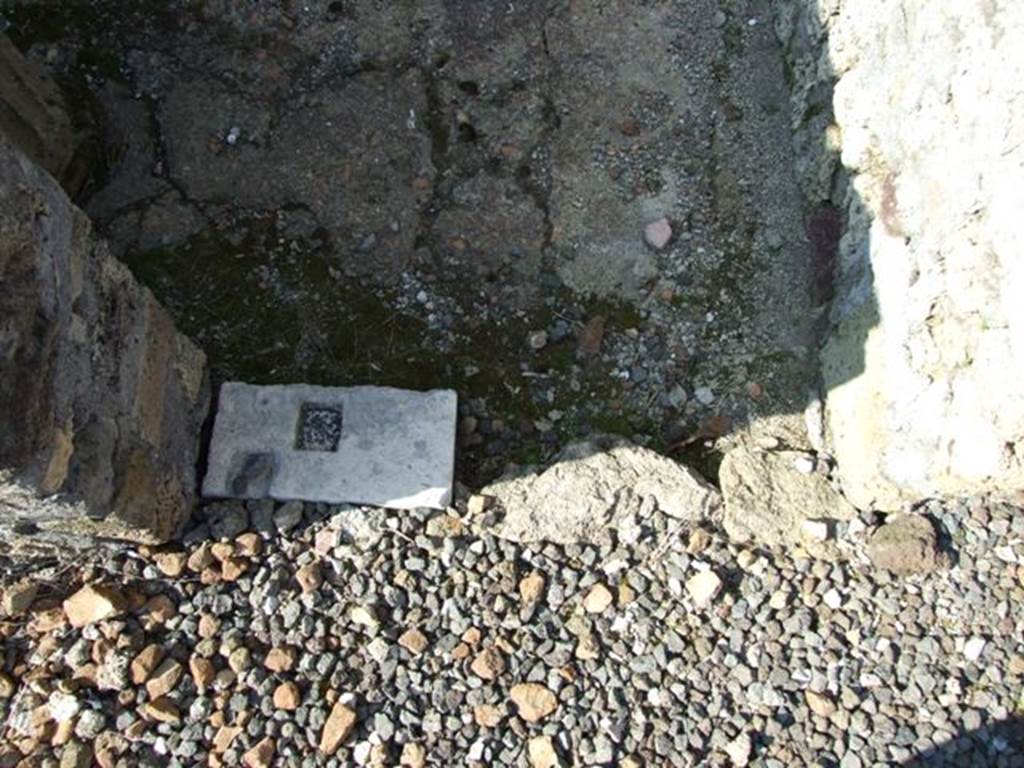
VI.7.3 Pompeii. March 2009. Room 2, marble threshold with hole for door post.
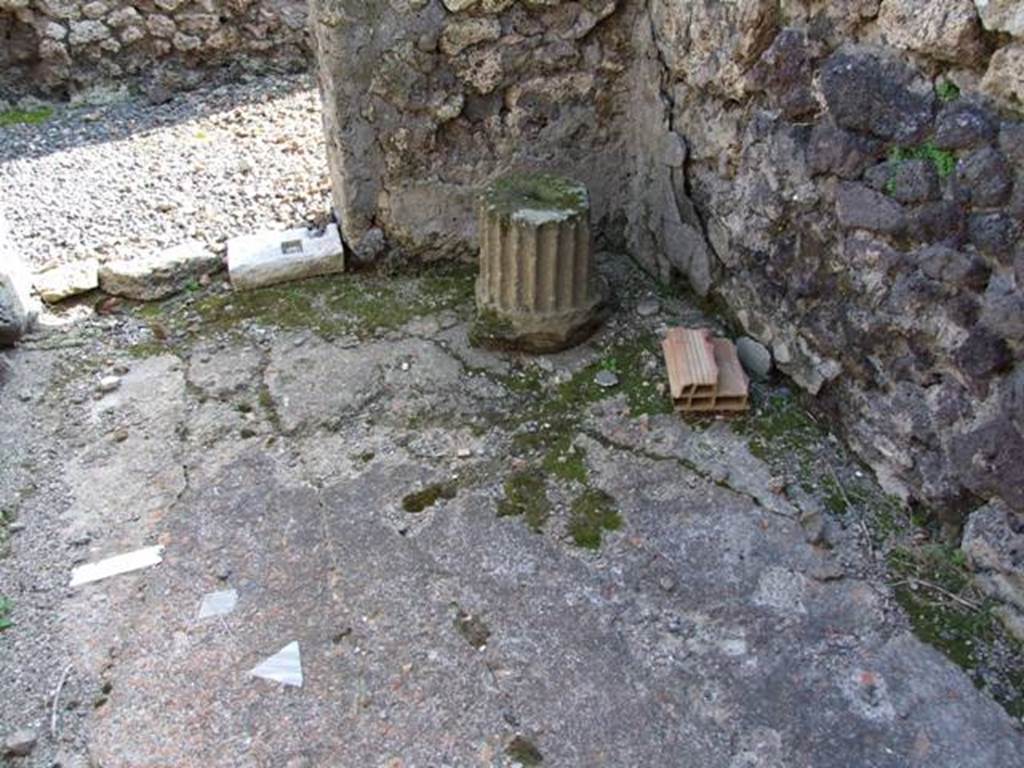
VI.7.3 Pompeii. March 2009. Room 2, looking south to doorway.
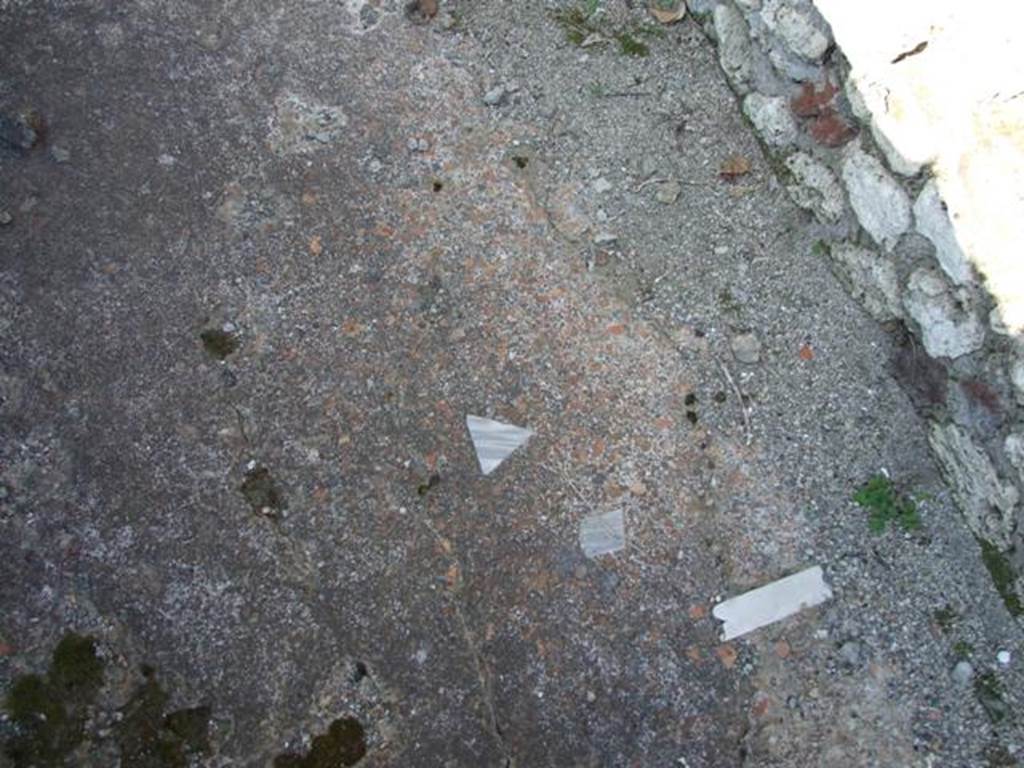
VI.7.3 Pompeii. March 2009. Room 2, remains of flooring.