VI.3.3 Pompeii. House of the Baker or Casa del Forno.
Linked to VI.3.27 and VI.3.28. Excavated 1809.
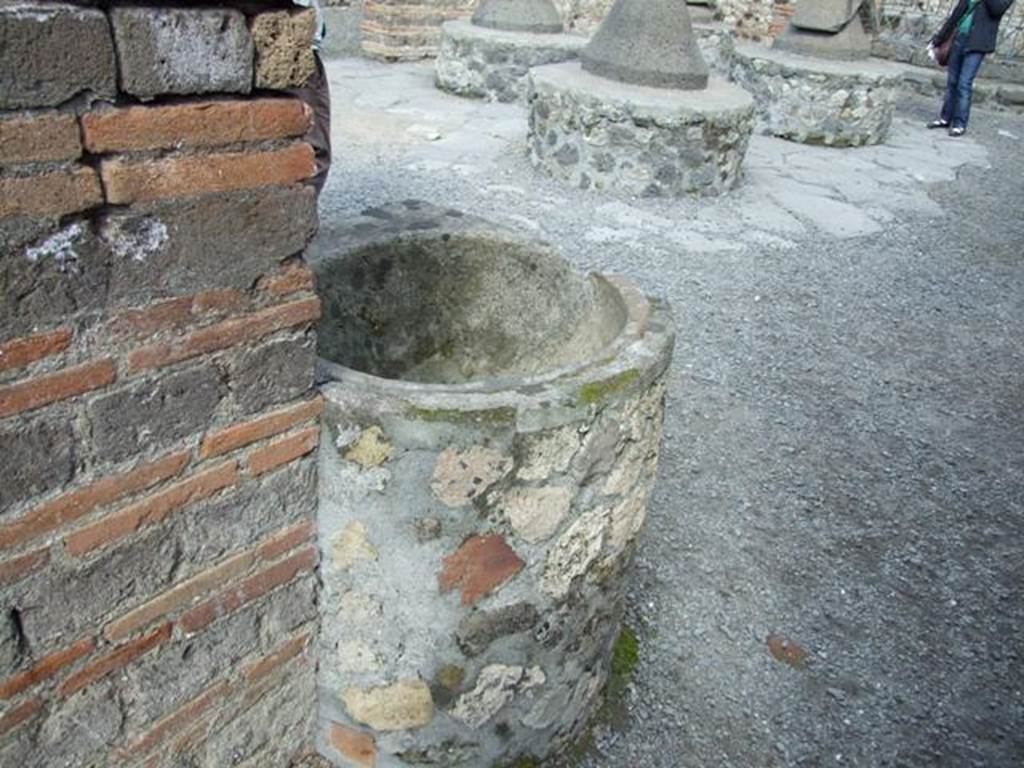
VI.3.3 Pompeii. March 2009. Room 7, water basin.
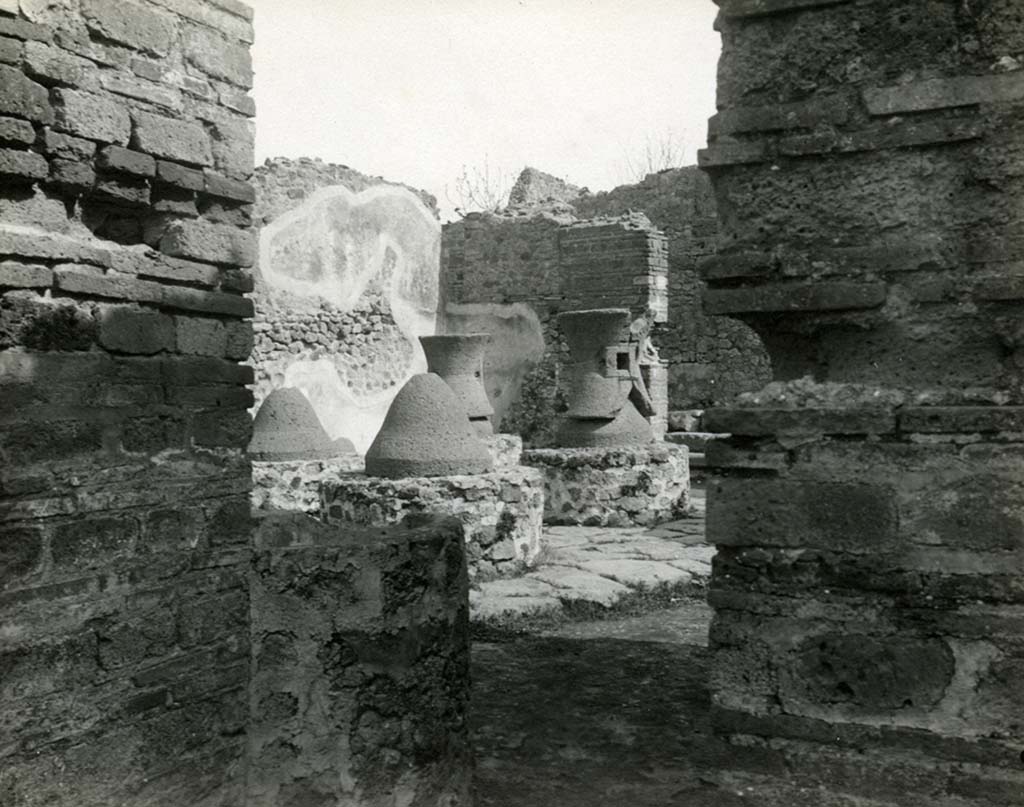
VI.3.3 Pompeii. 1913. Room 7, doorway from room 5, looking east across mills, towards rear entrance at VI.3.27.
Photo by Esther Boise Van Deman (c) American Academy in Rome.
VD_Archive_Ph_211.
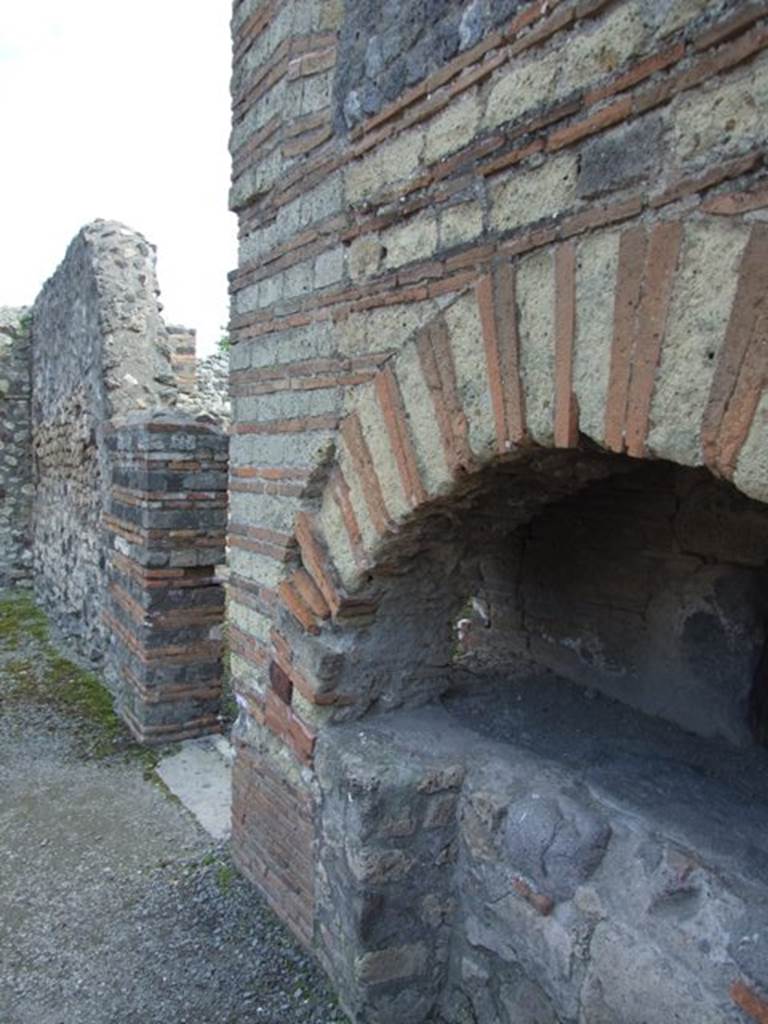
VI.3.3 Pompeii. March 2009. Room 7, doorway to room 6, on east side of the oven.
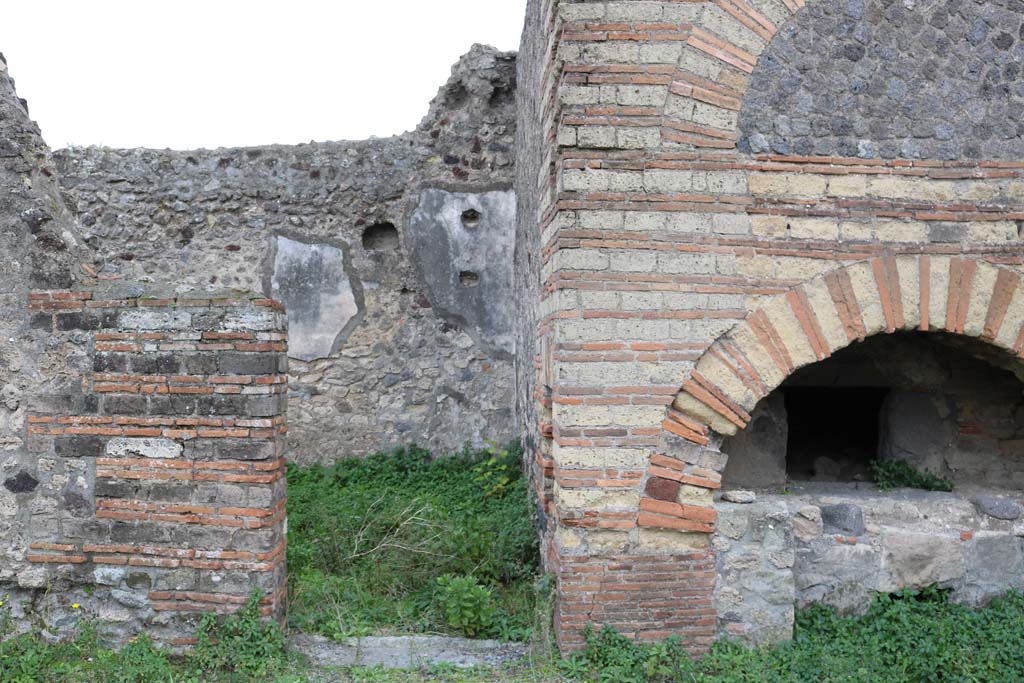
VI.3.3 Pompeii. December 2018.
Room 7, looking south to doorway to room 6 on east side of oven. Photo courtesy of Aude Durand.
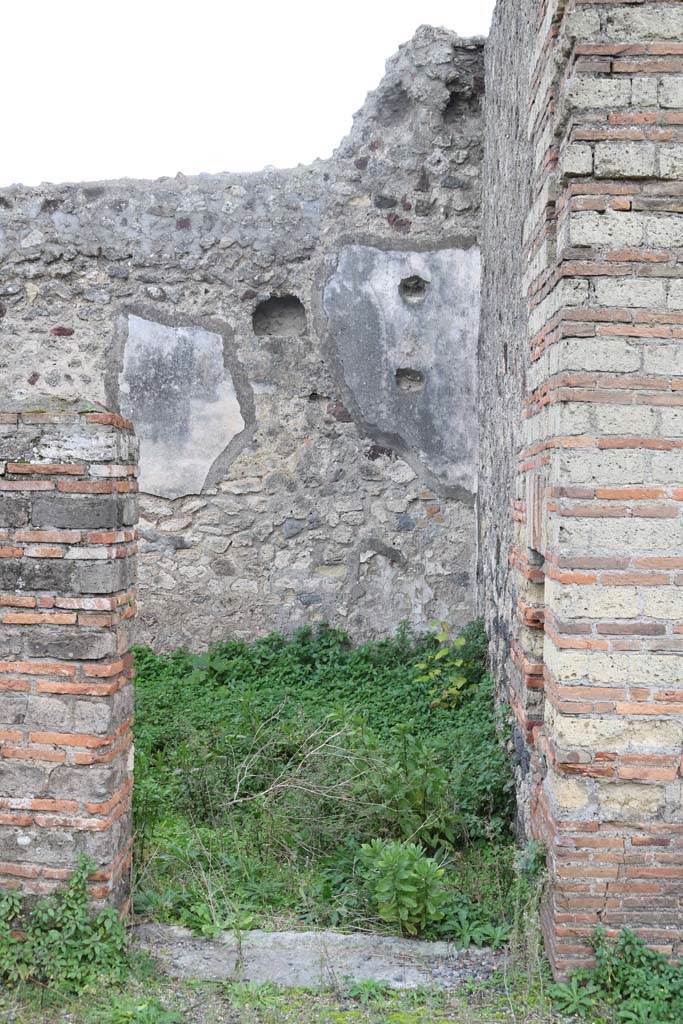
VI.3.3 Pompeii. December 2018.
Room 6, looking south through doorway. Photo courtesy of Aude Durand.
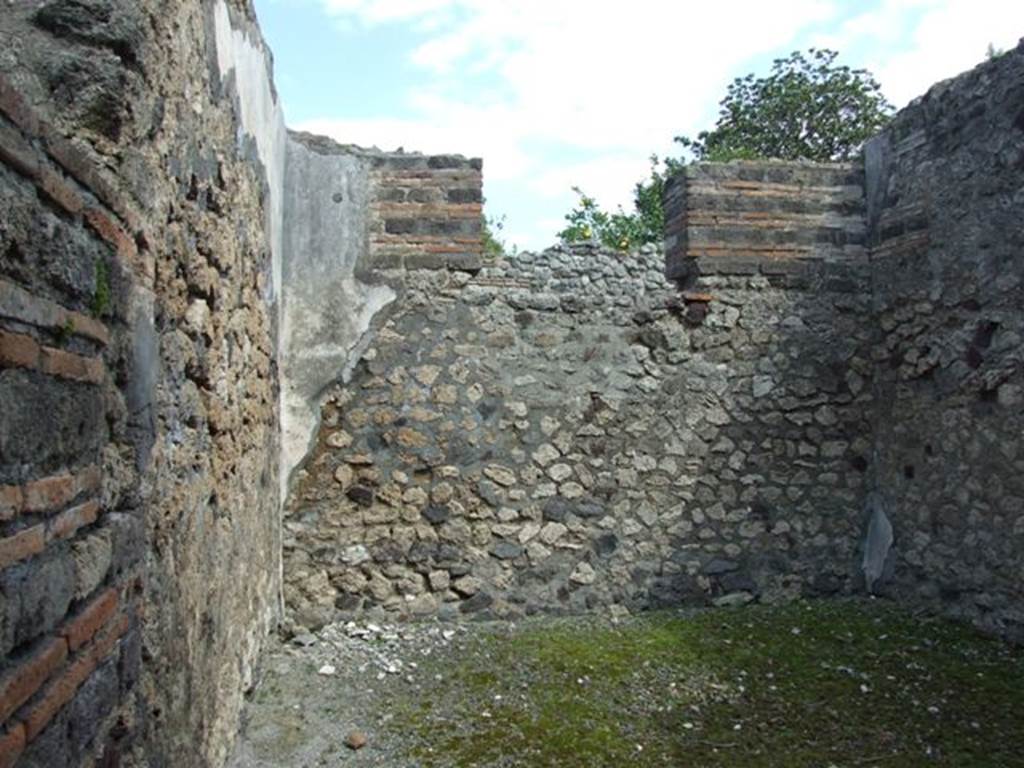
VI.3.3 Pompeii. March 2009. Room 6, kneading room. Looking east.
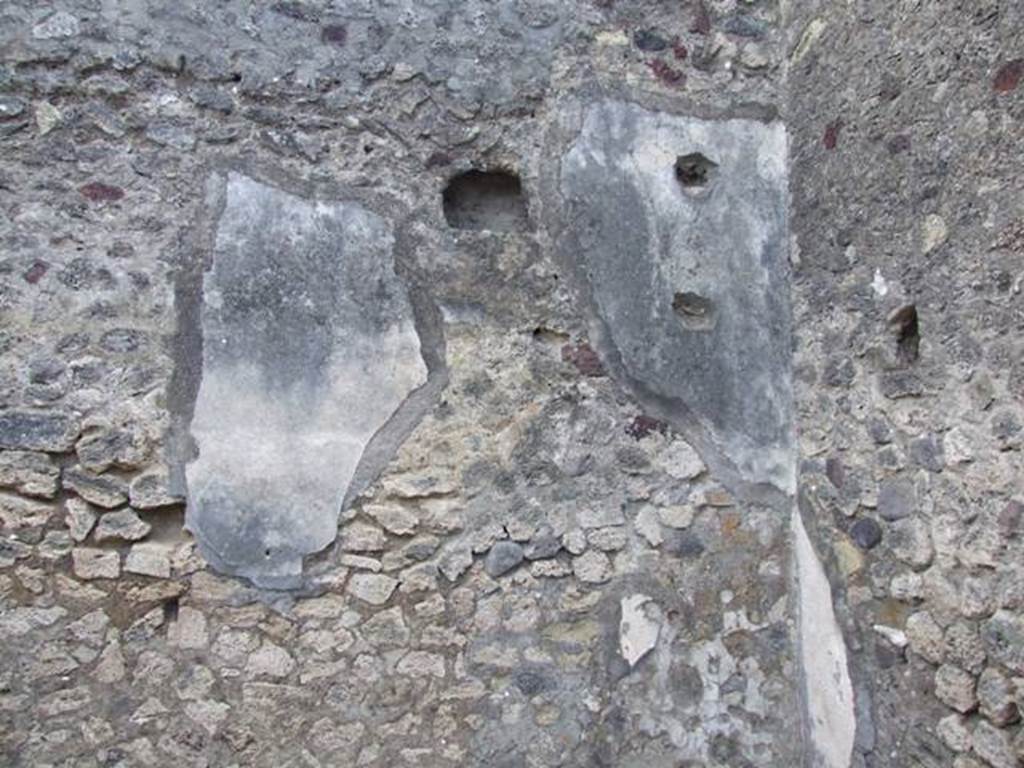
VI.3.3 Pompeii. March 2009. Room 6, south wall of kneading room with holes for shelving supports.
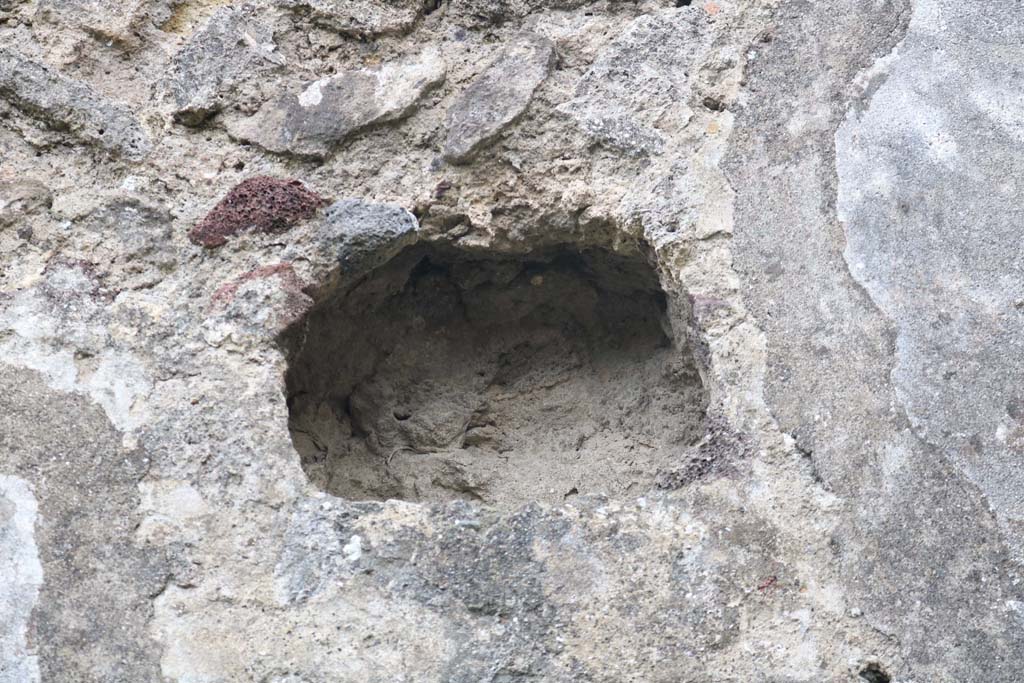
VI.3.3 Pompeii. December 2018. Room 6, niche in upper south wall near shelving supports. Photo courtesy of Aude Durand.
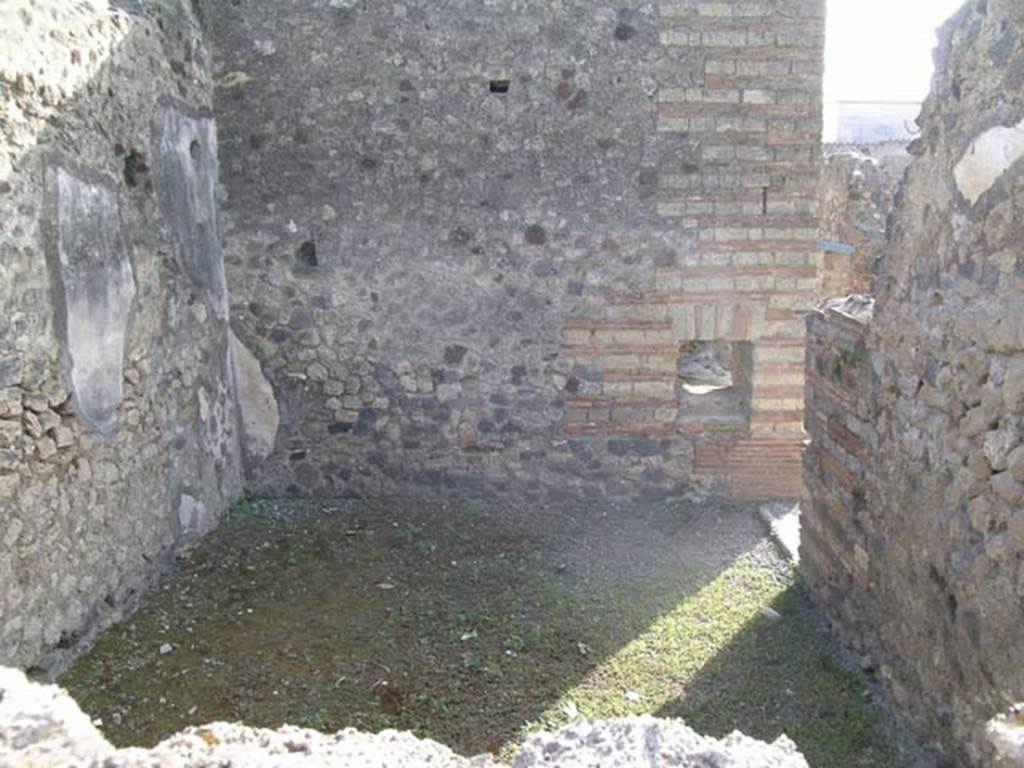
VI.3.3 Pompeii. June 2005. Room 6, looking towards west wall. Photo courtesy of Nicolas Monteix.
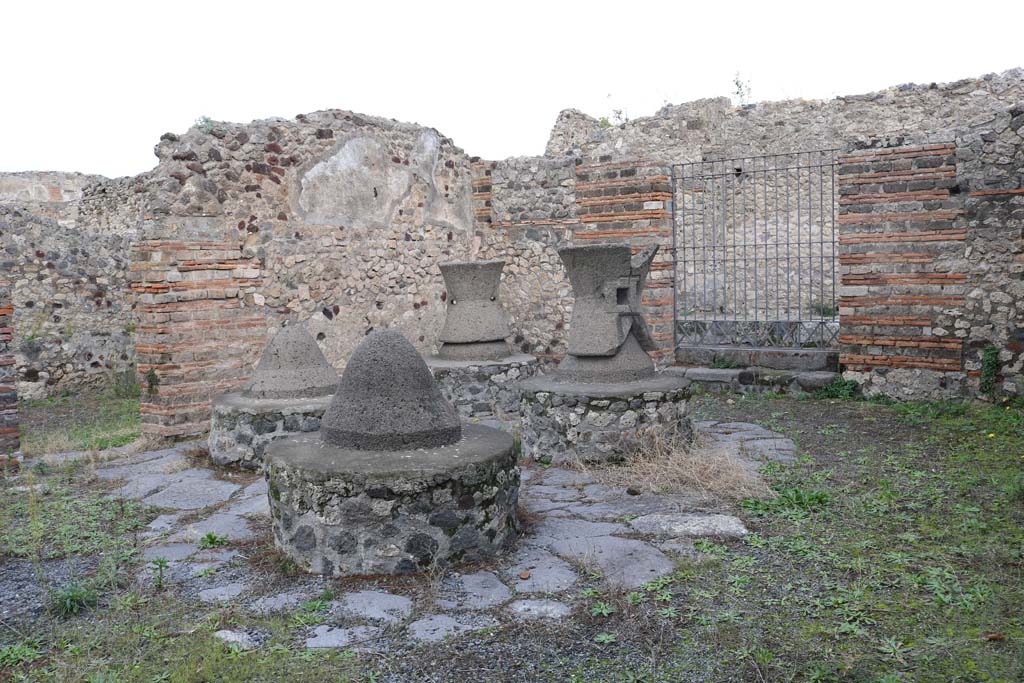
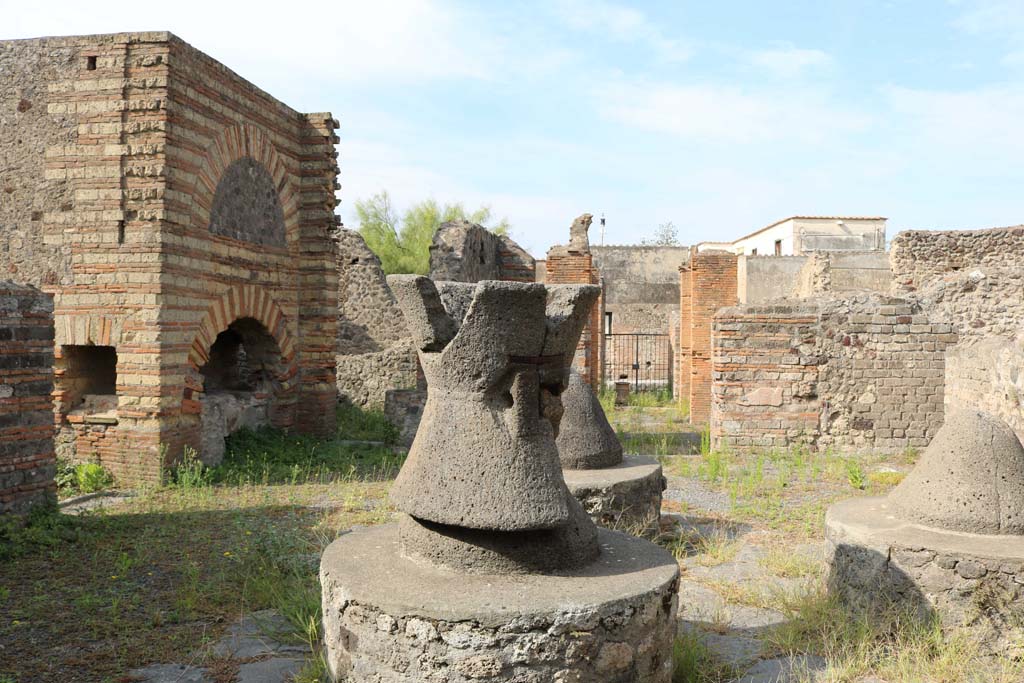
VI.3.3 Pompeii. December 2018.
Room 7, looking north-east across mills towards entrance at VI.3.27. Photo courtesy of Aude Durand.
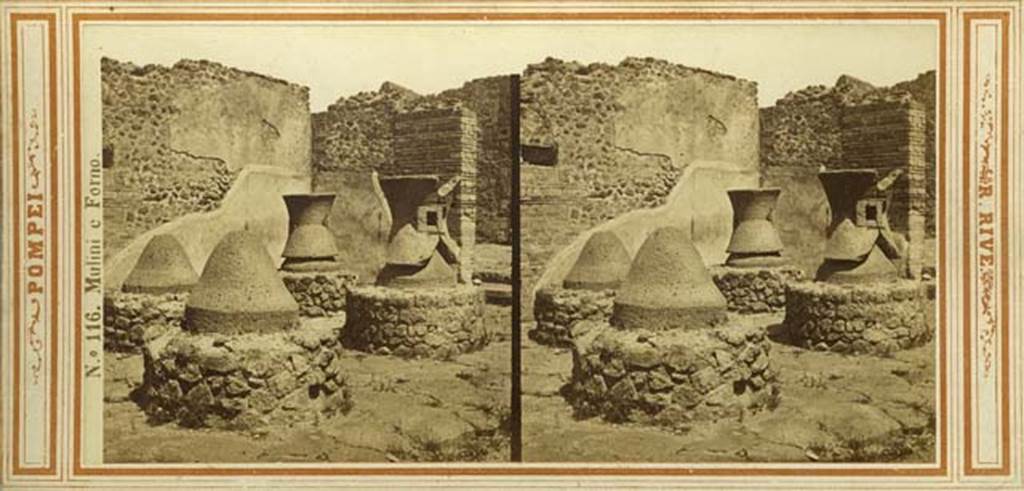
VI.3.3 Pompeii. Stereoview of mills in bakery, by R. Rive, c.1860-1870s. Photo courtesy of Rick Bauer.
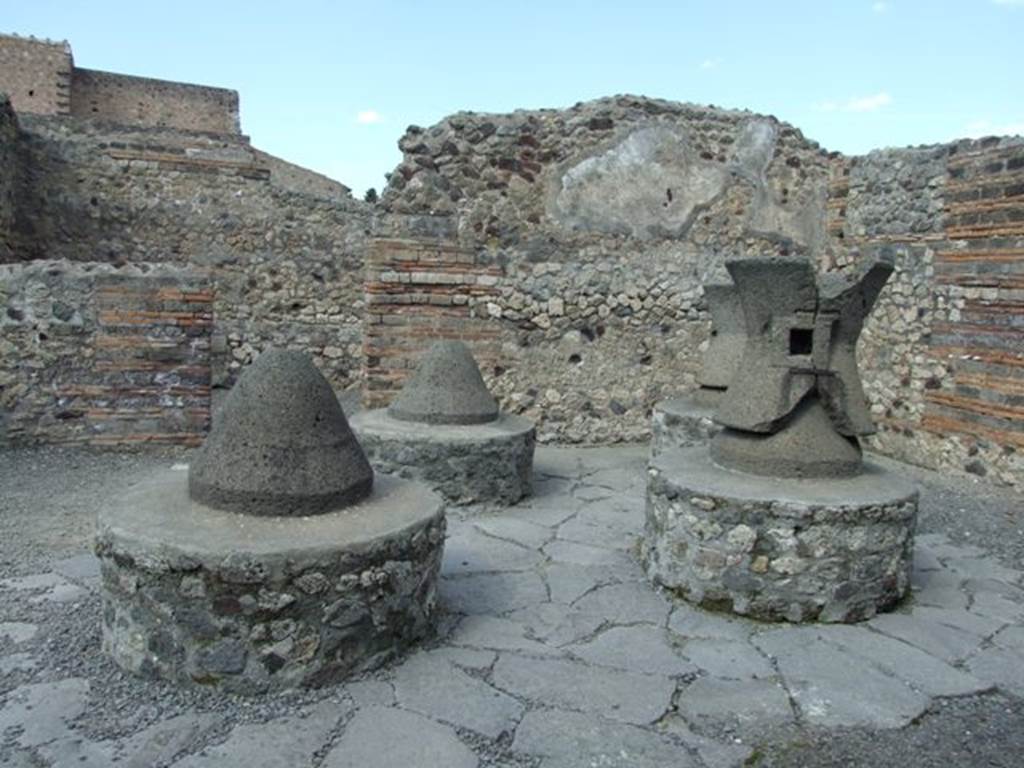
VI.3.3 Pompeii. March 2009. Room 7, looking north-east across mills.
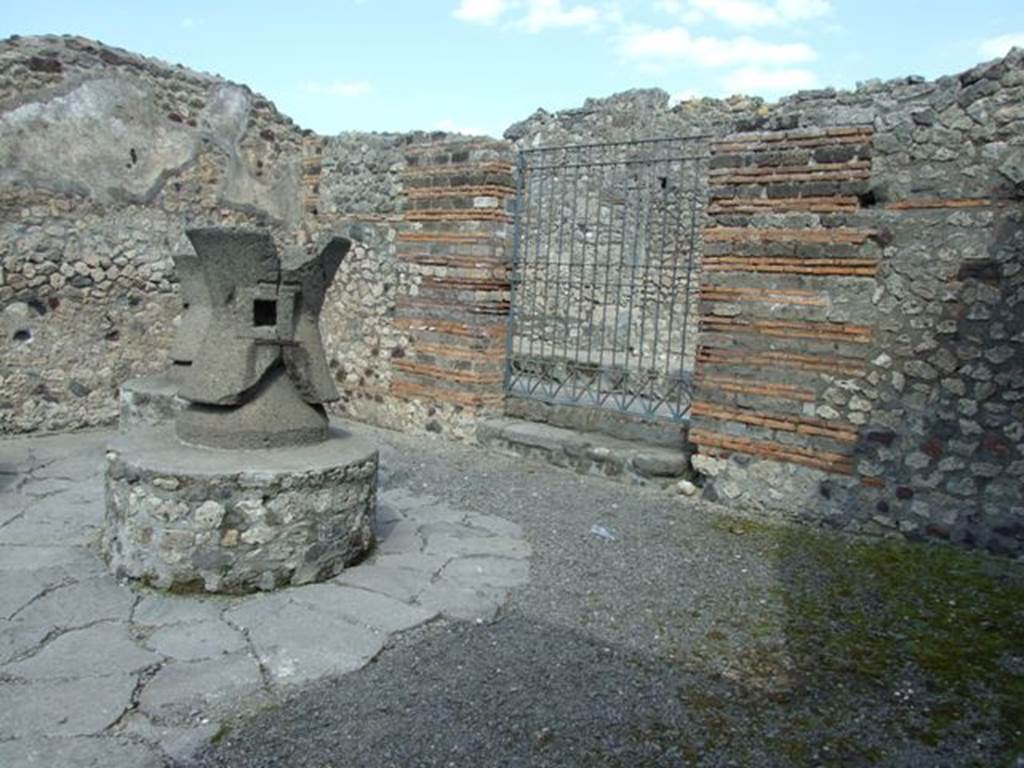
VI.3.3 Pompeii. March 2009. Room 7, looking north-east towards entrance at VI.3.27.
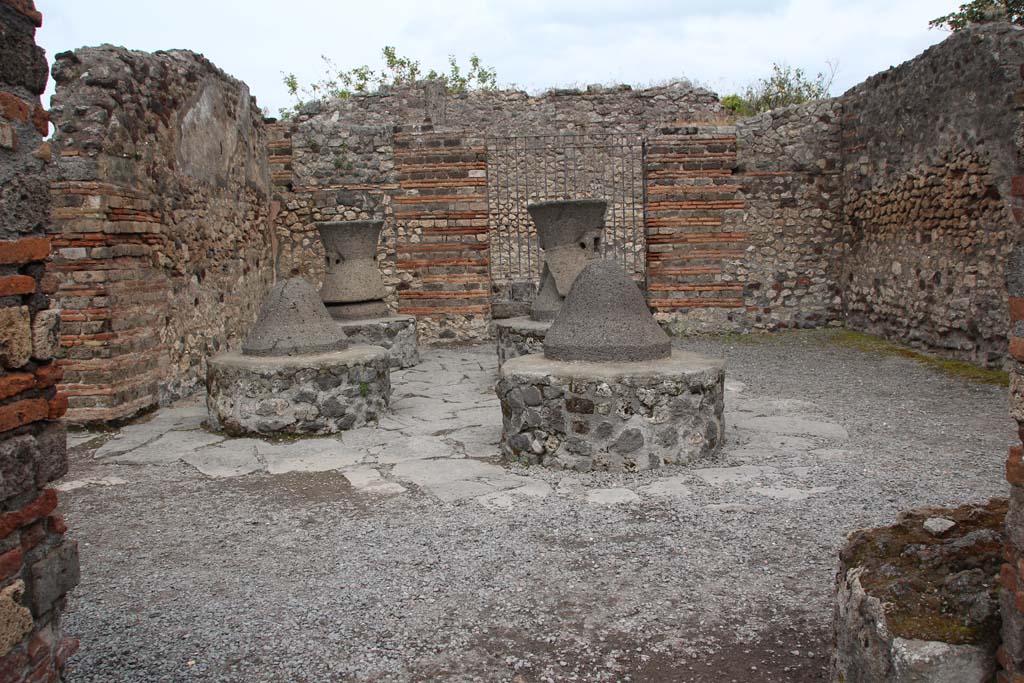
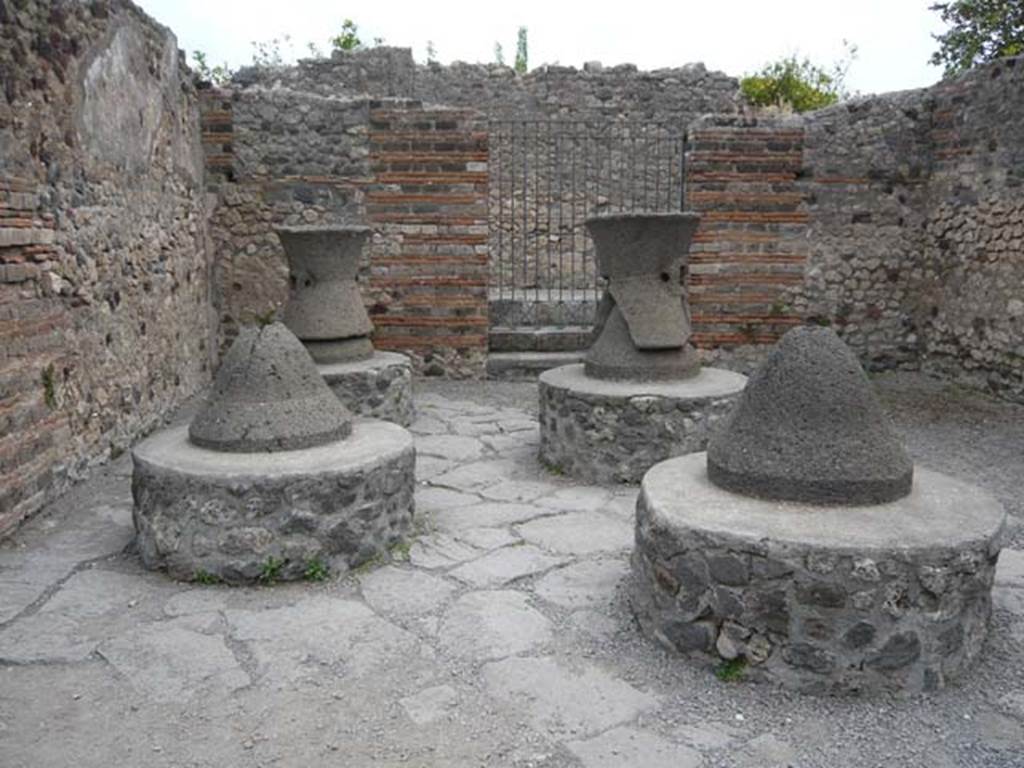
VI.3.3 Pompeii. May 2012. Room 7, looking east across mill-room towards entrance at VI.3.27. Photo courtesy of Buzz Ferebee.
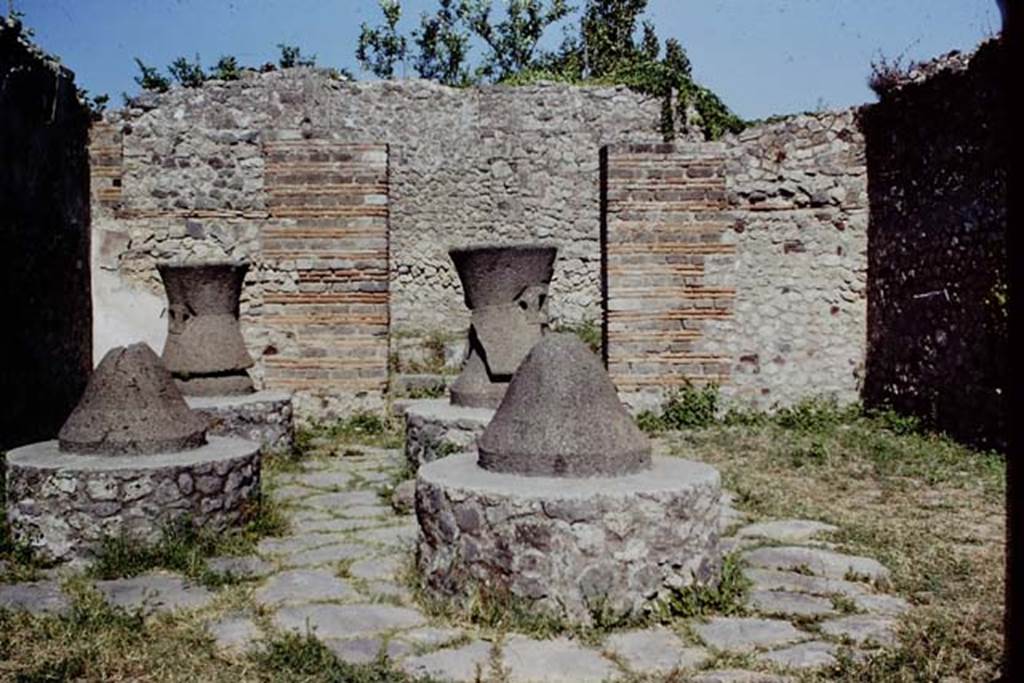
VI.3.3 Pompeii. 1968.
Room 7, looking east across mill-room towards entrance at VI.3.27. Photo by Stanley A. Jashemski.
Source: The Wilhelmina and Stanley A. Jashemski archive in the University of Maryland Library, Special Collections (See collection page) and made available under the Creative Commons Attribution-Non-Commercial License v.4. See Licence and use details.
J68f1982
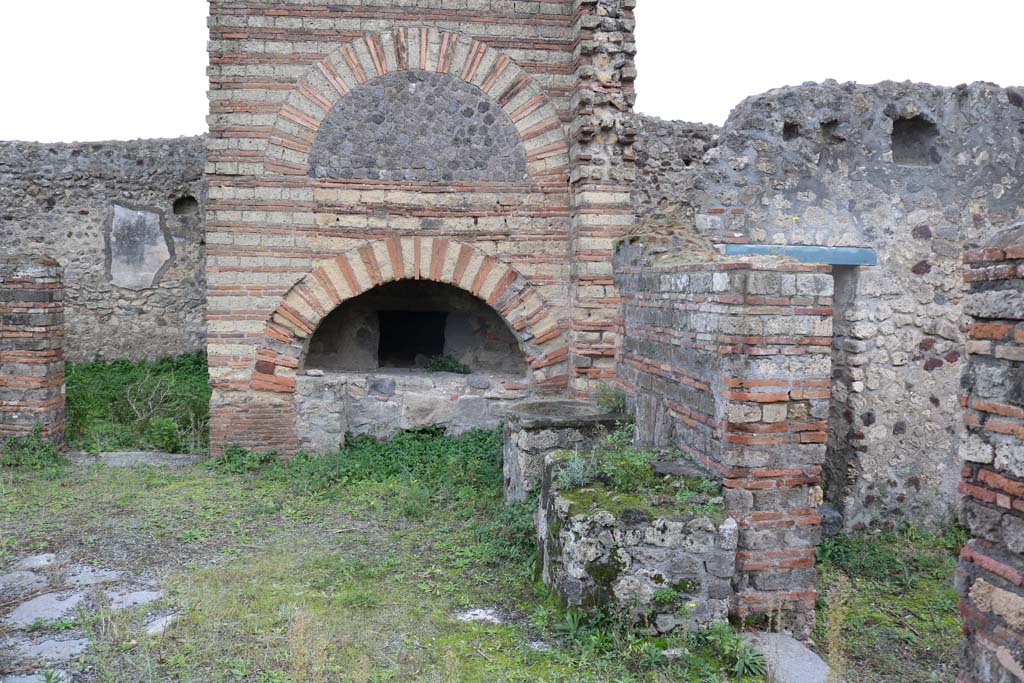
VI.3.3 Pompeii. December 2018.
Room 7, looking south from near doorway to room 4, on right, across site of household shrine towards oven. Room 6 doorway is on the left.
Photo courtesy of Aude Durand.
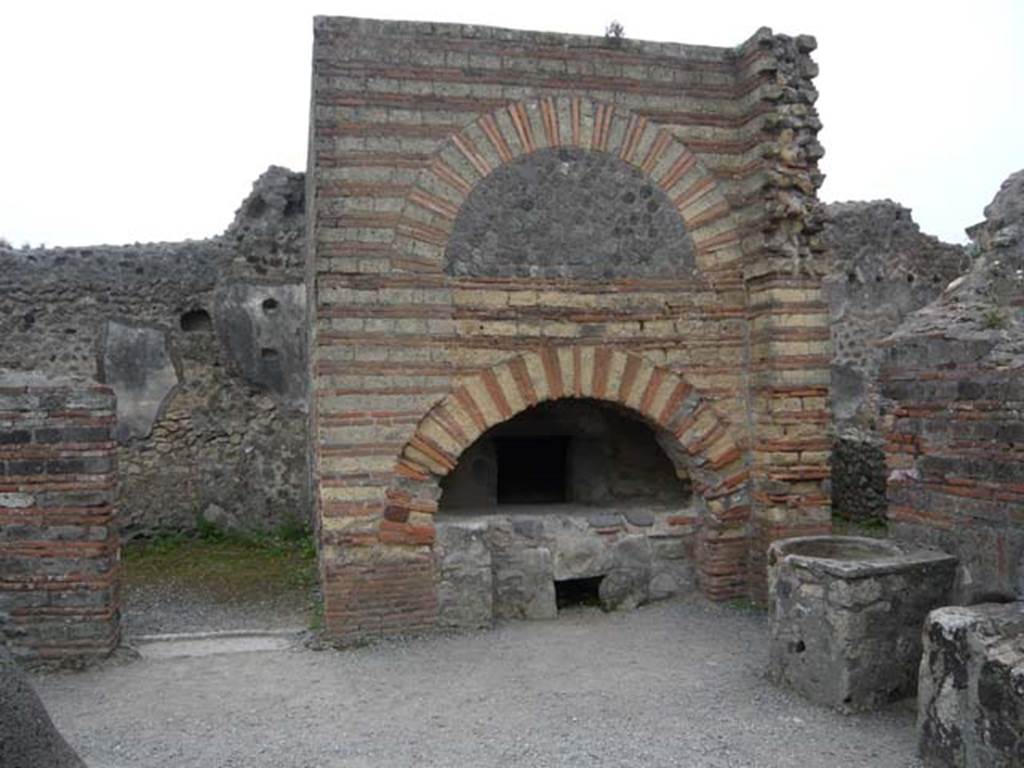
VI.3.3 Pompeii. May 2012. Room 7, looking south towards oven, and doorway to room 6, on left. Photo courtesy of Buzz Ferebee.
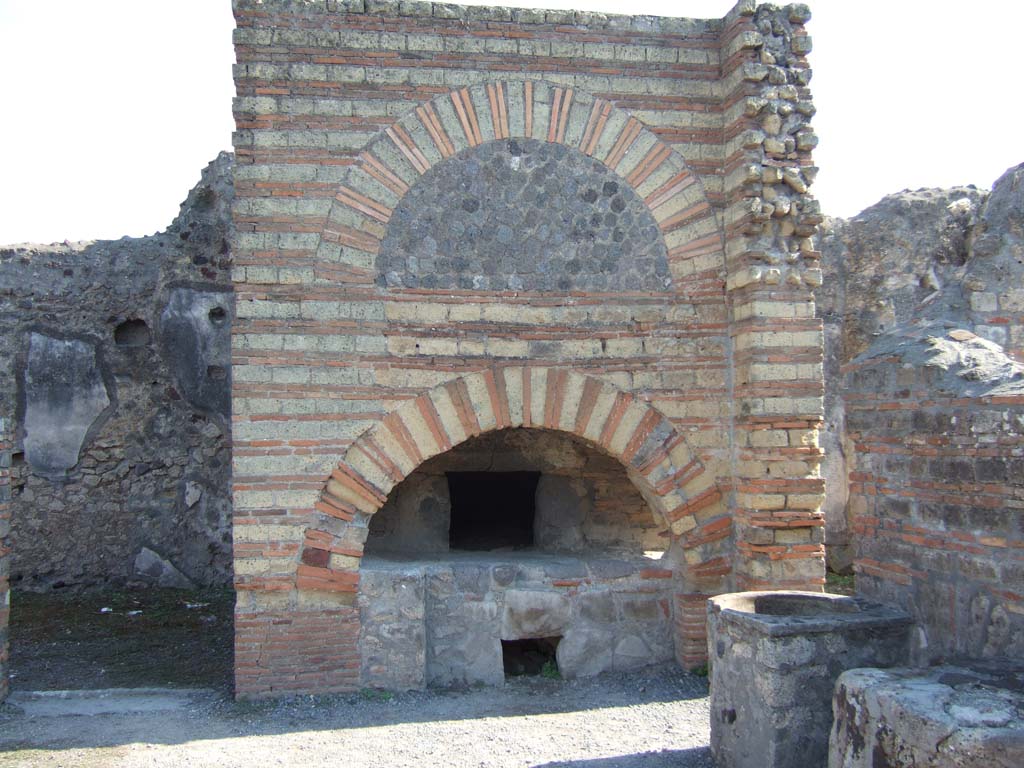
VI.3.3
Pompeii. September 2005. Room 7, oven.
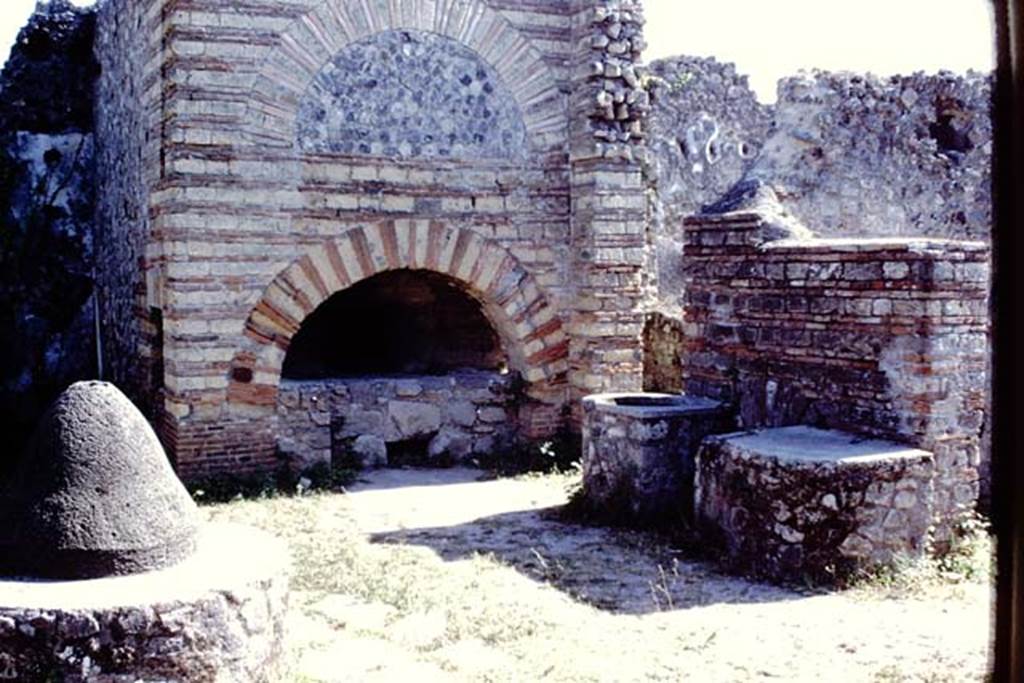
VI.3.3 Pompeii. 1968. Room 7, looking south across mill-room towards oven. Photo by Stanley A. Jashemski.
Source: The Wilhelmina and Stanley A. Jashemski archive in the University of Maryland Library, Special Collections (See collection page) and made available under the Creative Commons Attribution-Non-Commercial License v.4. See Licence and use details.
J68f1983
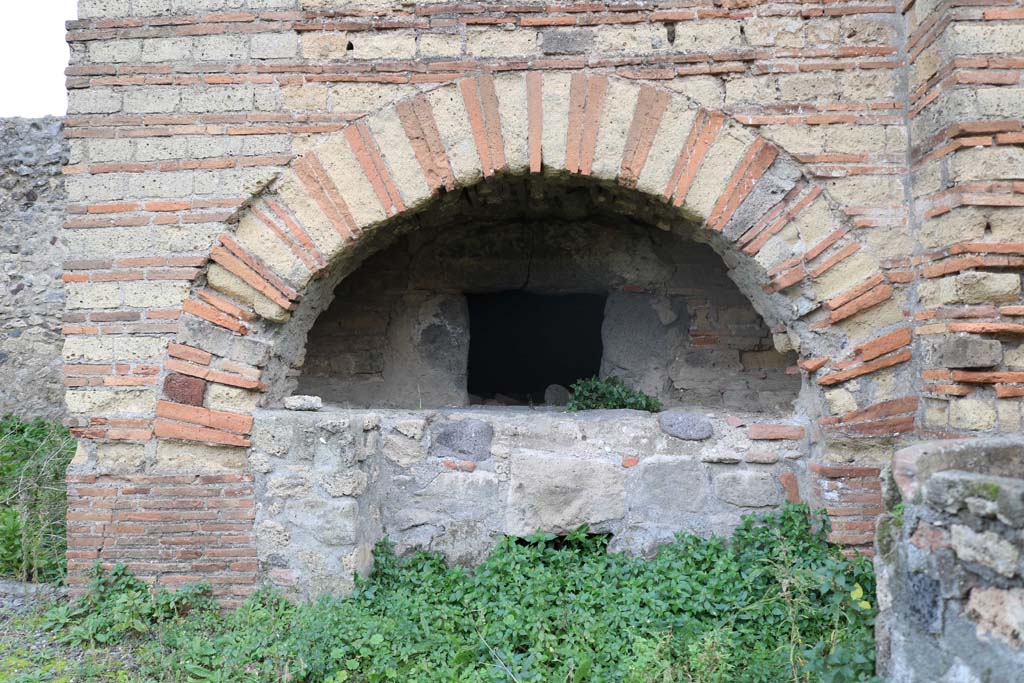
VI.3.3 Pompeii. December 2018. Room 7, detail of oven. Photo courtesy of Aude Durand.
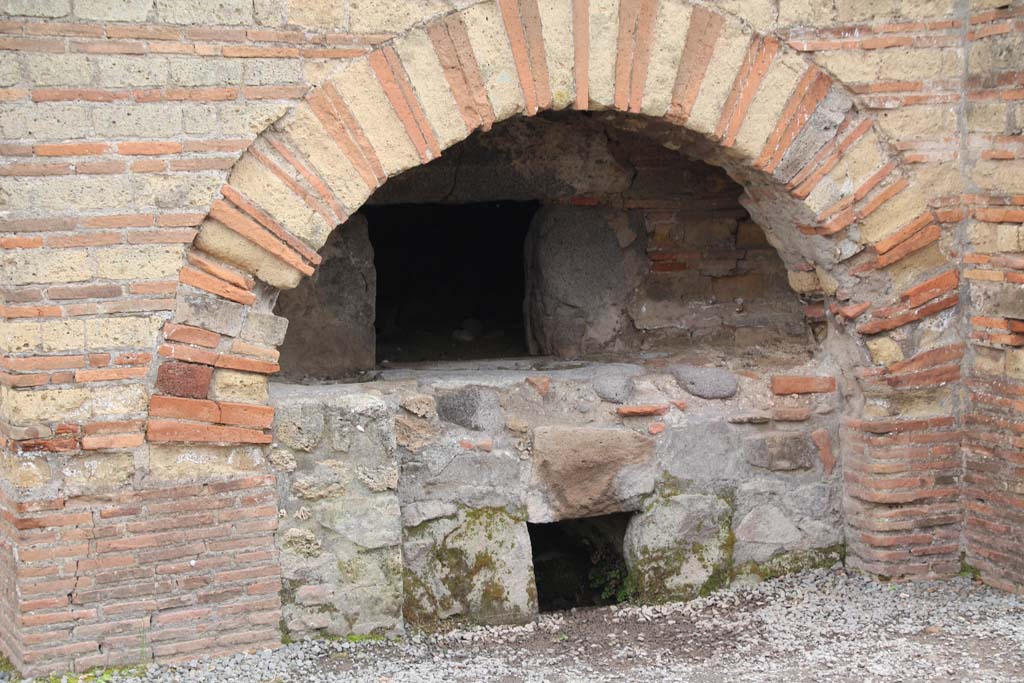
VI.3.3 Pompeii. April 2014. Room 7, detail of oven. Photo courtesy of Klaus Heese.
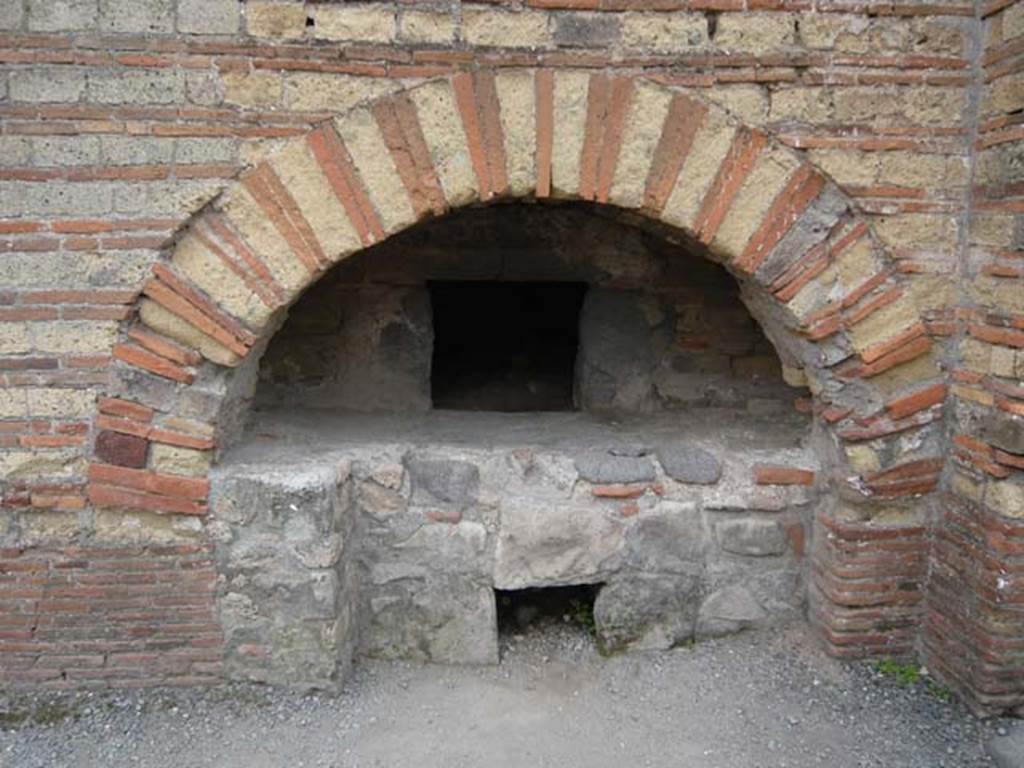
VI.3.3 Pompeii. May 2012. Room 7, detail of oven. Photo courtesy of Buzz Ferebee.
VI.3.3 Pompeii. December 2018.
Room 7, looking west from mill-room through doorway leading to atrium, and entrance doorway. Photo courtesy of Aude Durand.
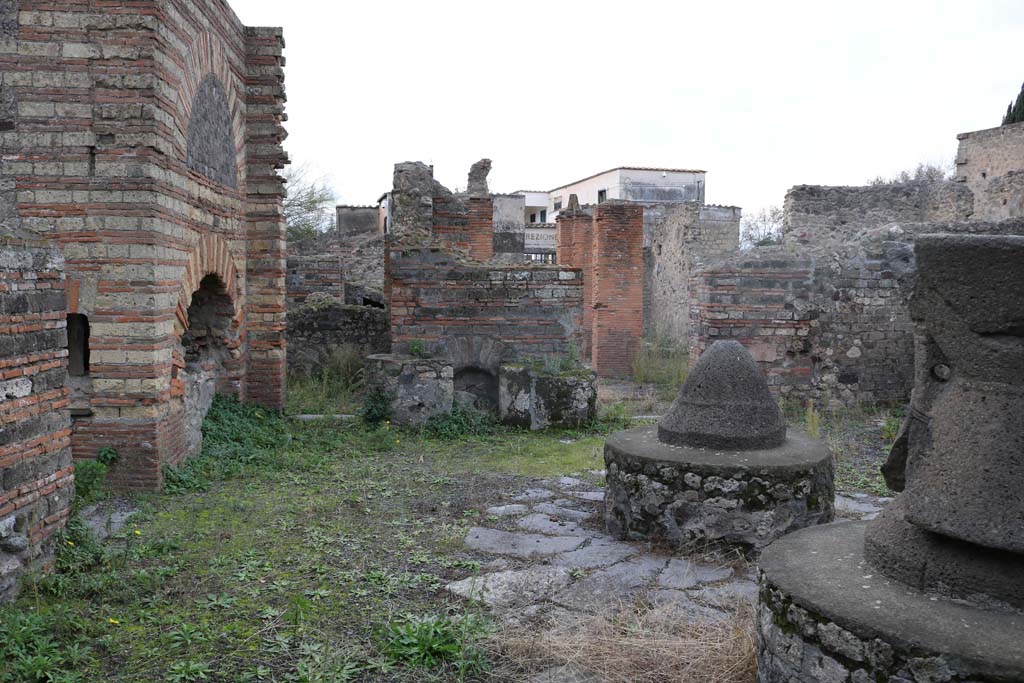
VI.3.3 Pompeii. December 2018.
Room 7, looking west across south side of mill-room towards doorways to rooms 5 and 4. Photo courtesy of Aude Durand.
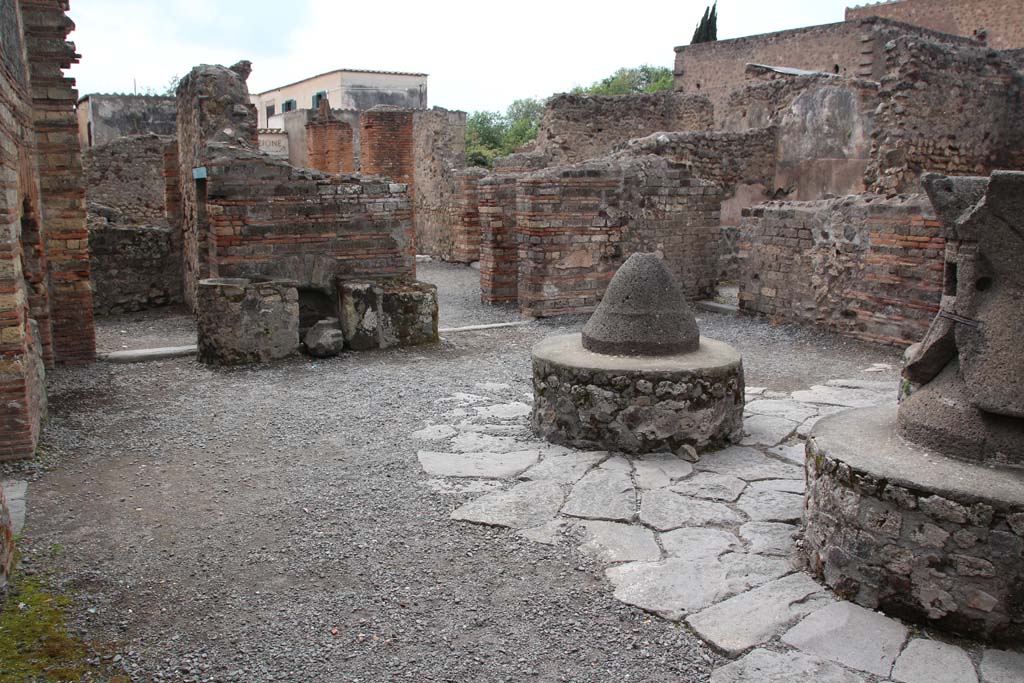
Room 7, looking west across south side of mill-room towards room 5, on left. Photo courtesy of Klaus Heese.
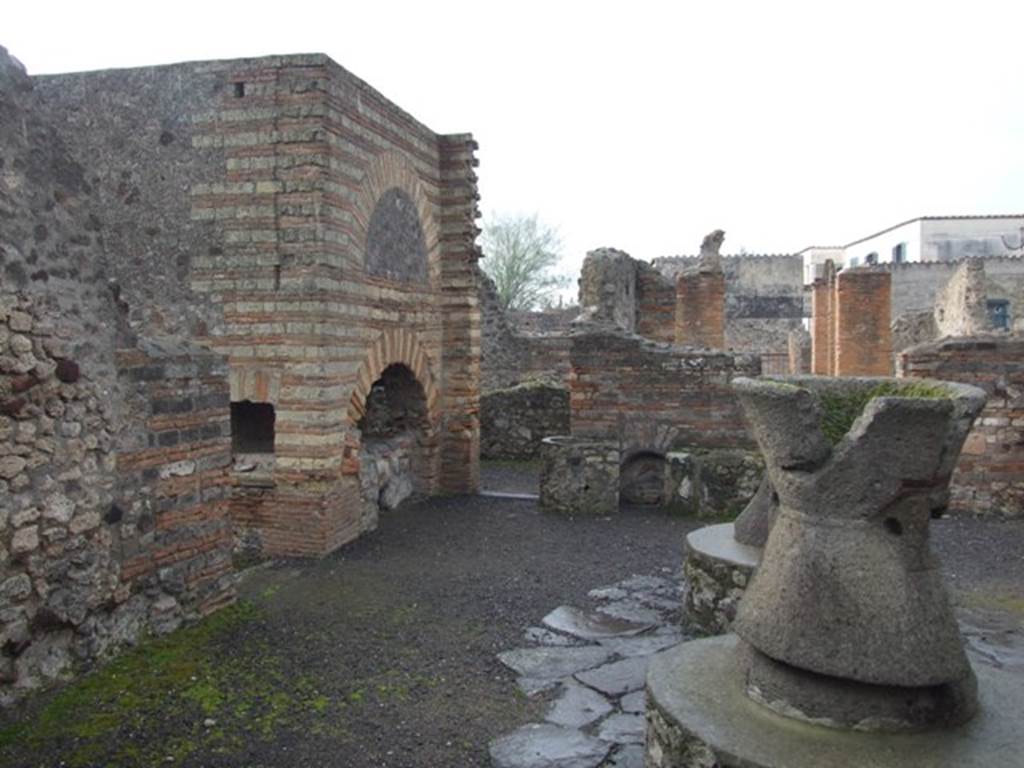
VI.3.3 Pompeii. December 2007. Room 7, looking west across mill-room towards room 5.
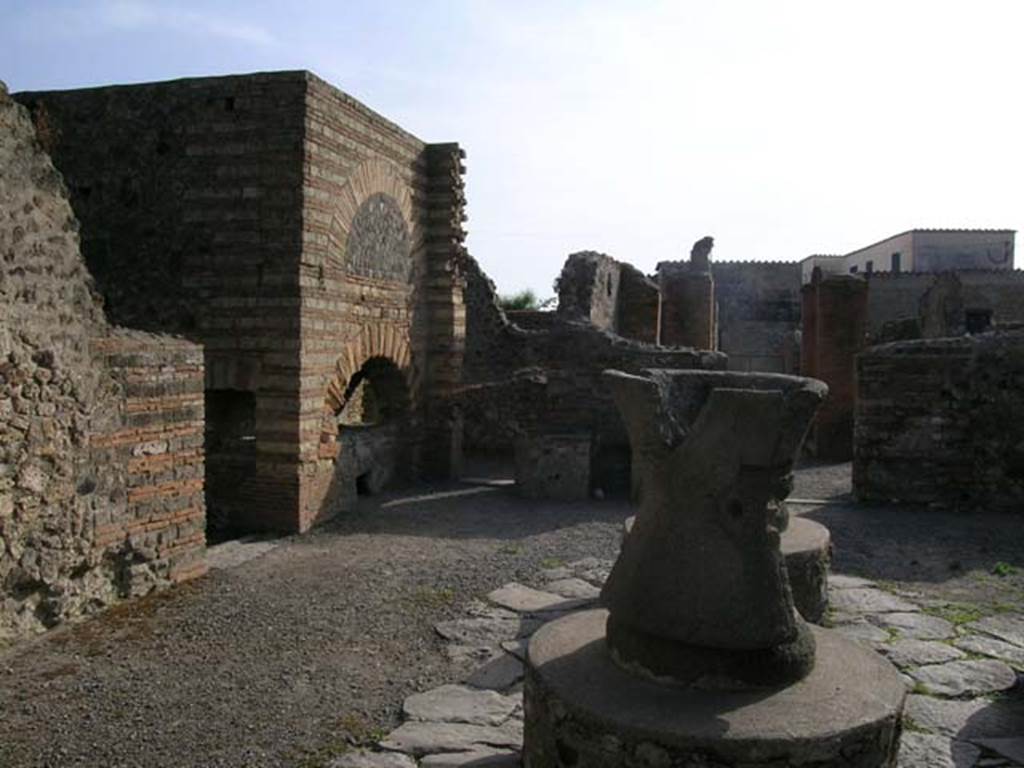
VI.3.3 Pompeii. June 2005. Room 7, looking west across mill-room. Photo courtesy of Nicolas Monteix.
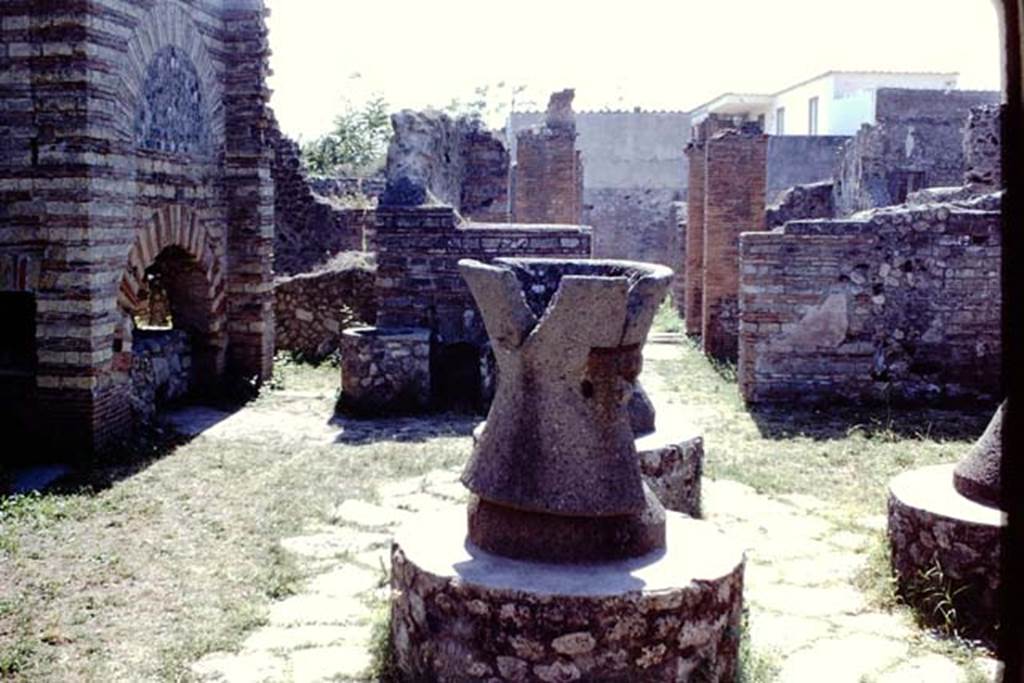
VI.3.3 Pompeii. 1968.
Room 7, looking west across mill-room towards oven, doorway to room 5, and doorway to room 4, and 1, the atrium. Photo by Stanley A. Jashemski.
Source: The Wilhelmina and Stanley A. Jashemski archive in the University of Maryland Library, Special Collections (See collection page) and made available under the Creative Commons Attribution-Non-Commercial License v.4. See Licence and use details.
J68f1979
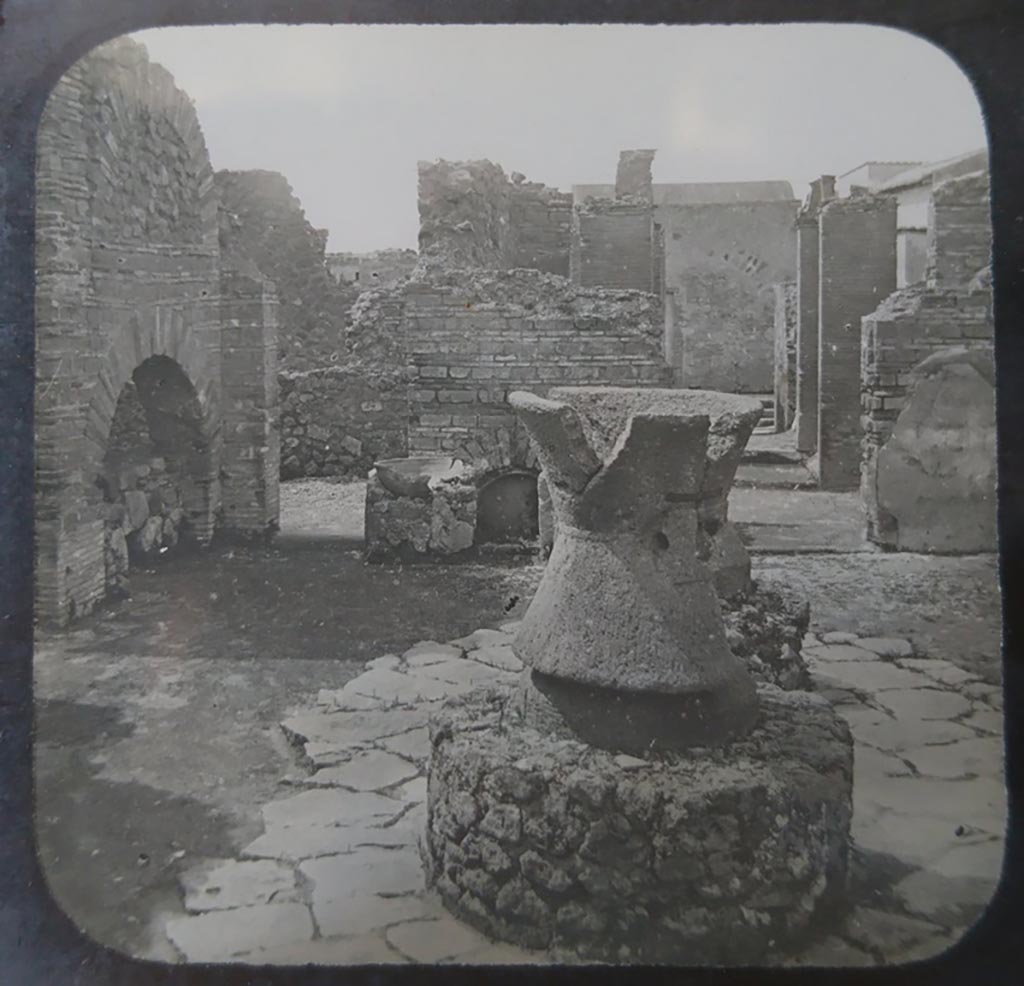
VI.3.3
Pompeii. c.1900. C. and G. Lantern slide published by A. Laverne. Room 7, looking
west across bakery.
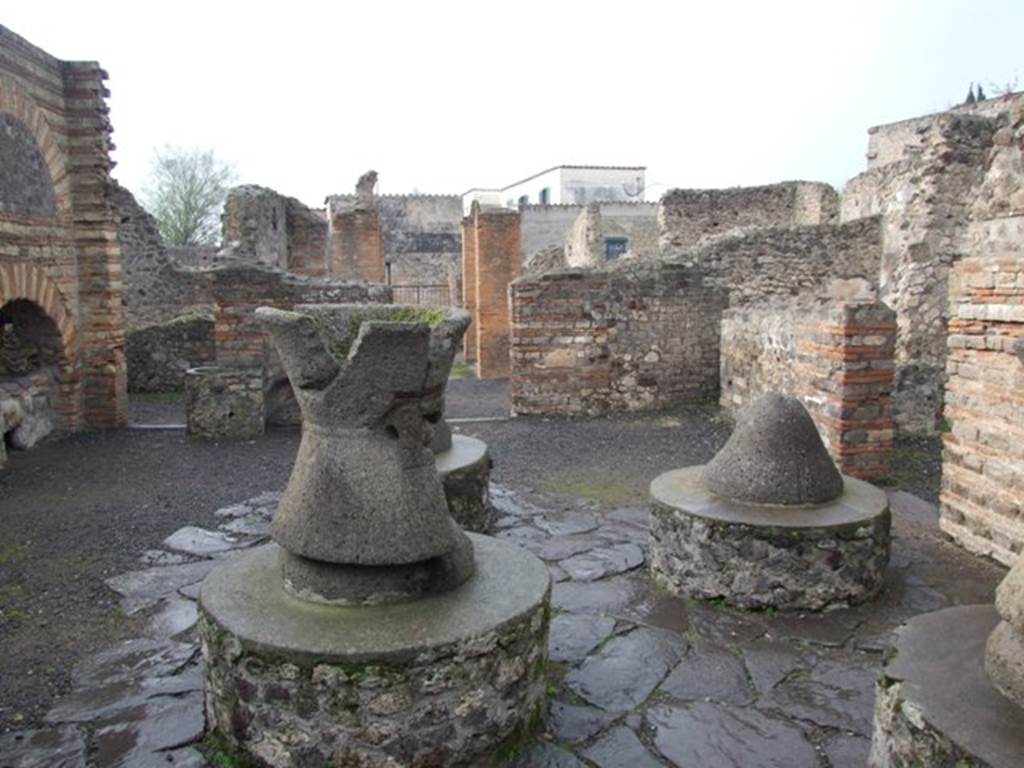
VI.3.3 Pompeii. December 2007. Room 7, looking towards the west side and north-west corner.
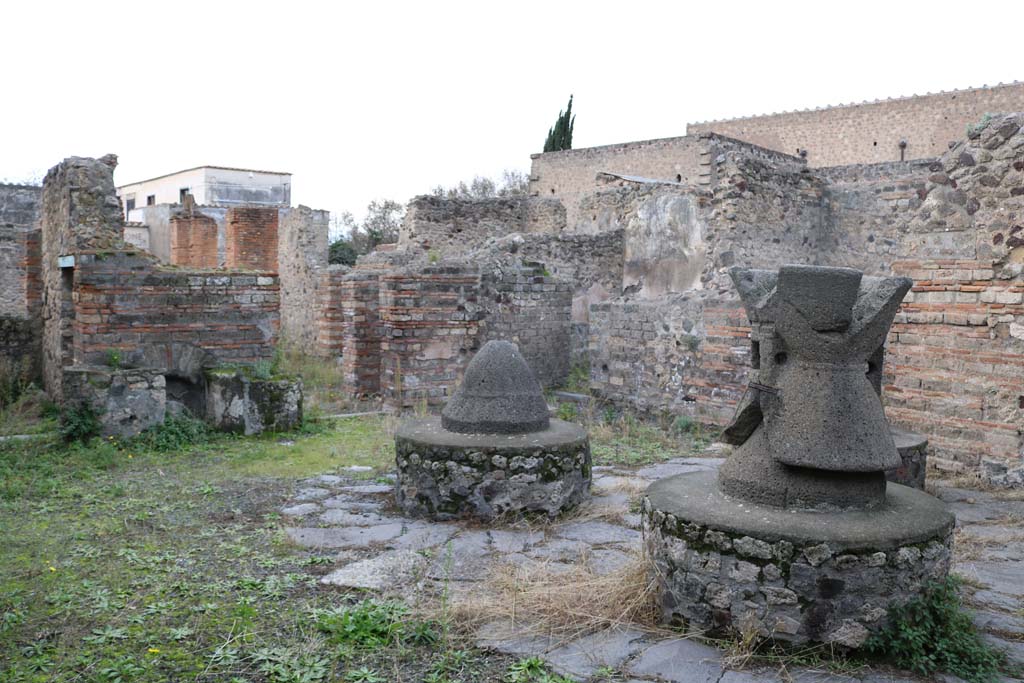
VI.3.3 Pompeii. December 2018. Room 7, looking north-west across mill-room. Photo courtesy of Aude Durand.
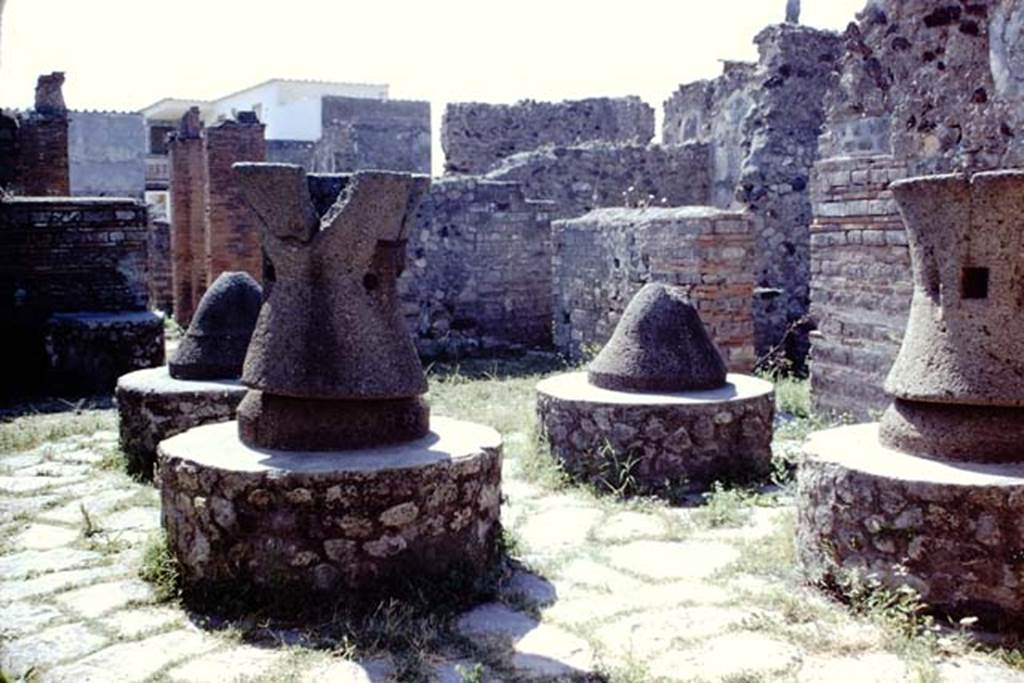
VI.3.3 Pompeii. 1968.
Room 7, looking across mill-room towards the north-west corner and doorways to kitchen and stable. Photo by Stanley A. Jashemski.
Source: The Wilhelmina and Stanley A. Jashemski archive in the University of Maryland Library, Special Collections (See collection page) and made available under the Creative Commons Attribution-Non-Commercial License v.4. See Licence and use details.
J68f1977
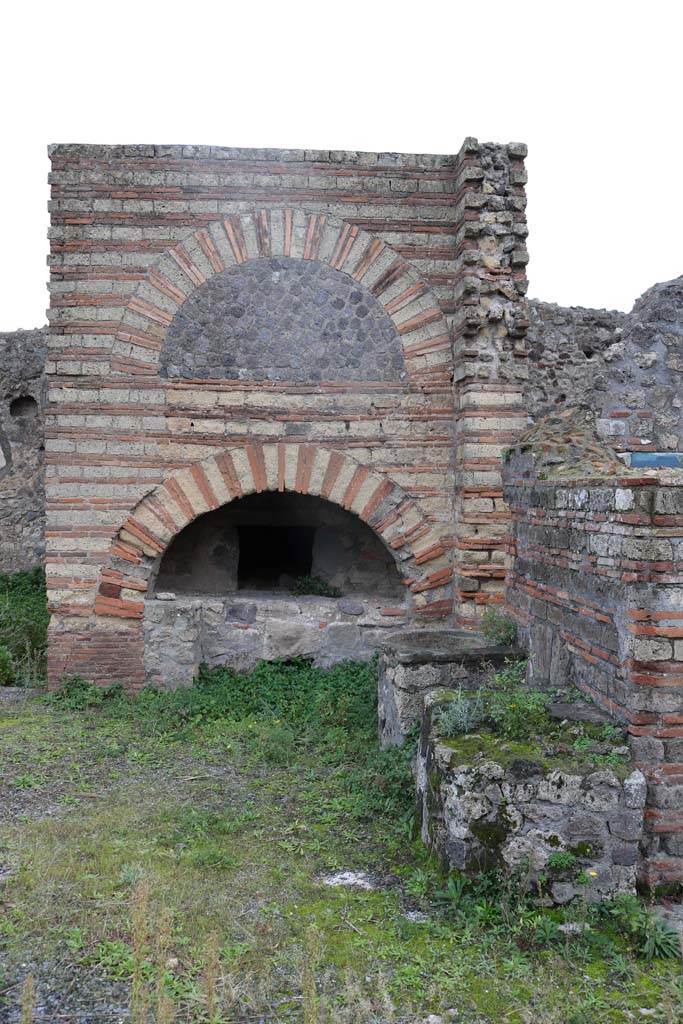
VI.3.3 Pompeii. December 2018.
Room 7, looking south across site of household shrine towards oven. Photo courtesy of Aude Durand.
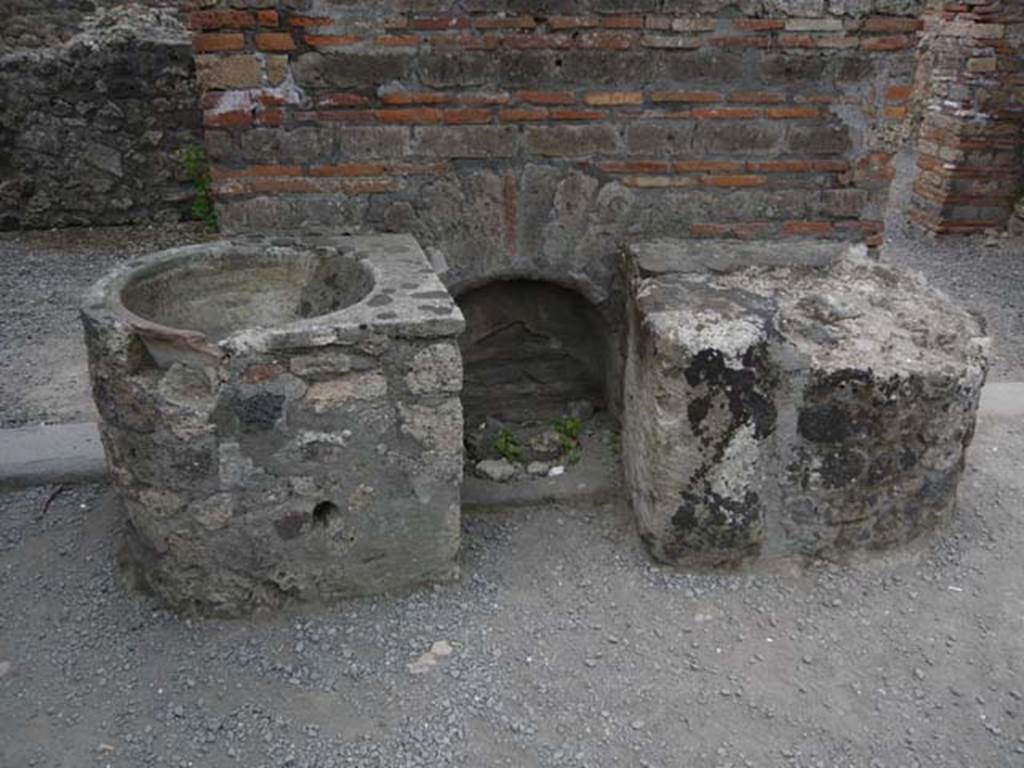
VI.3.3 Pompeii. May 2012. Room 7, wall on west side, site of household shrine. Photo courtesy of Buzz Ferebee.
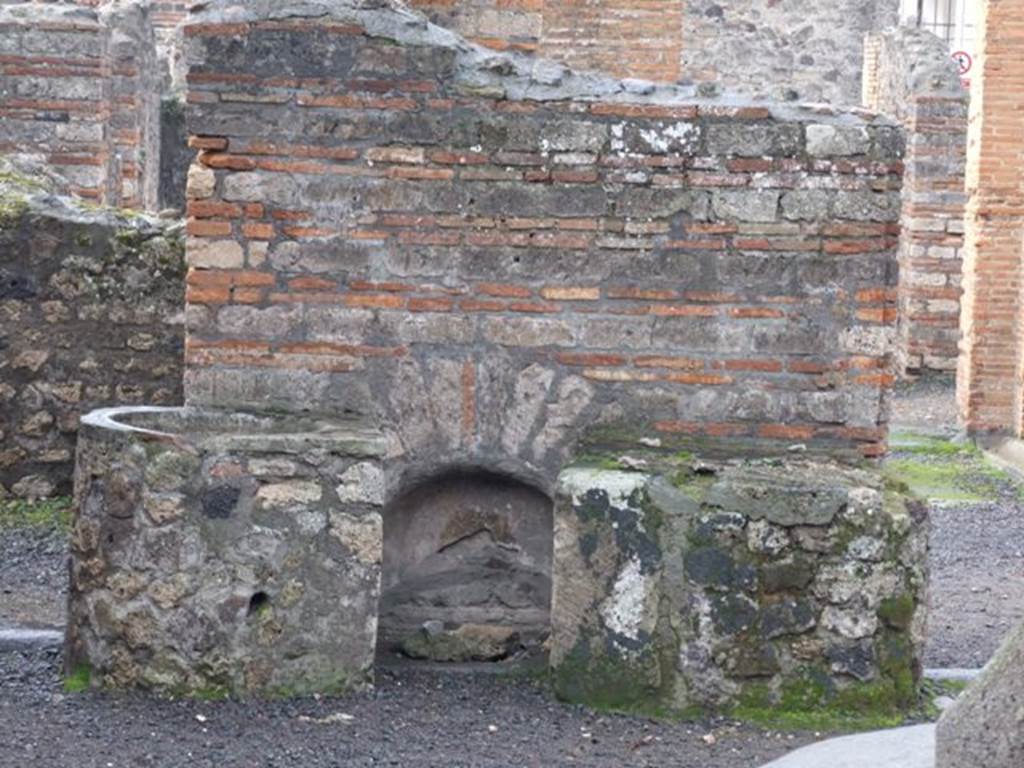
VI.3.3 Pompeii. December 2007. Site of the household shrine.
Mau stated “at “c” there is a cistern curb, with a large earthen(ware) vessel for holding water on either side, while the wall above was ornamented with a painting representing Vesta, the patron goddess of bakers, between the two Lares”.
See Mau, A., 1907, translated by Kelsey F. W. Pompeii: Its Life and Art. New York: Macmillan. (p. 388-92).
Helbig stated “In the Pistrinum: Indistinct Sacred painting”.
See Helbig, W., 1868. Wandgemälde der vom Vesuv verschütteten Städte Campaniens. Leipzig: Breitkopf und Härtel. (85).
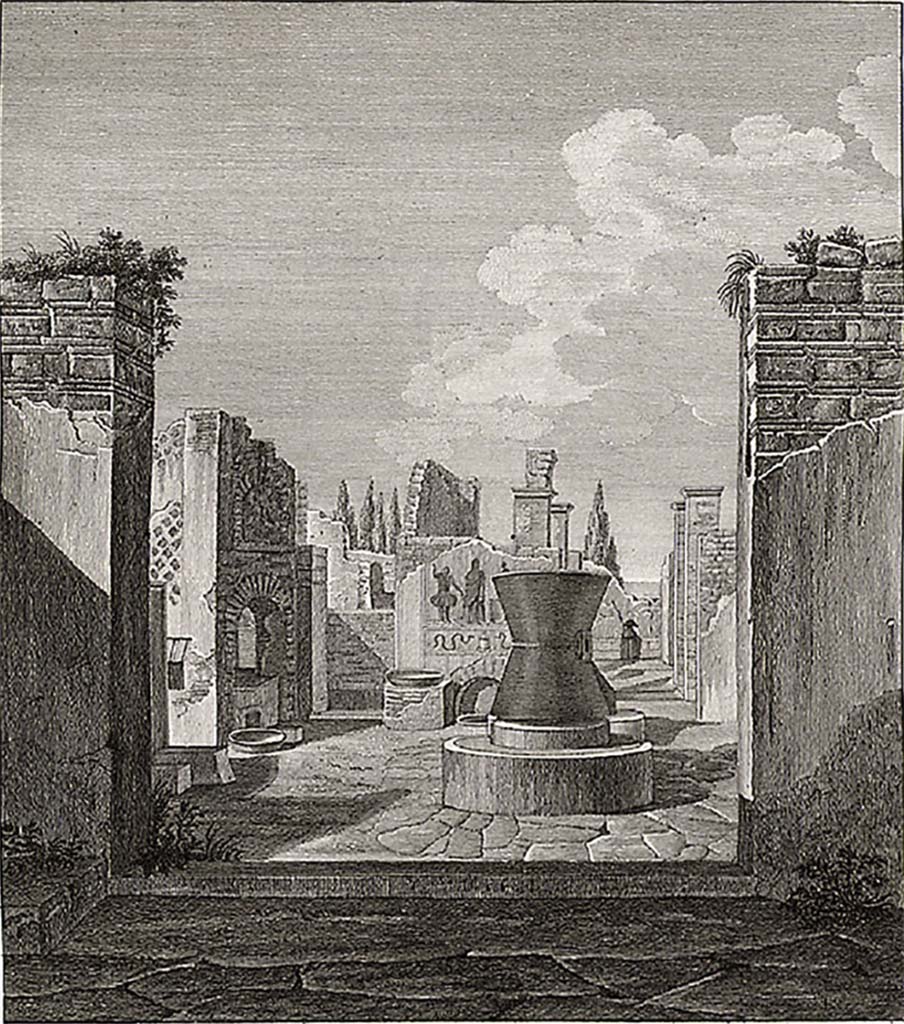
VI.3.3 Pompeii. Mazois sketch of house and bakery with lararium painting.
See Mazois, F., 1824. Les Ruines de Pompei : Second Partie. Paris: Firmin Didot, Tav. XIX fig. 1.
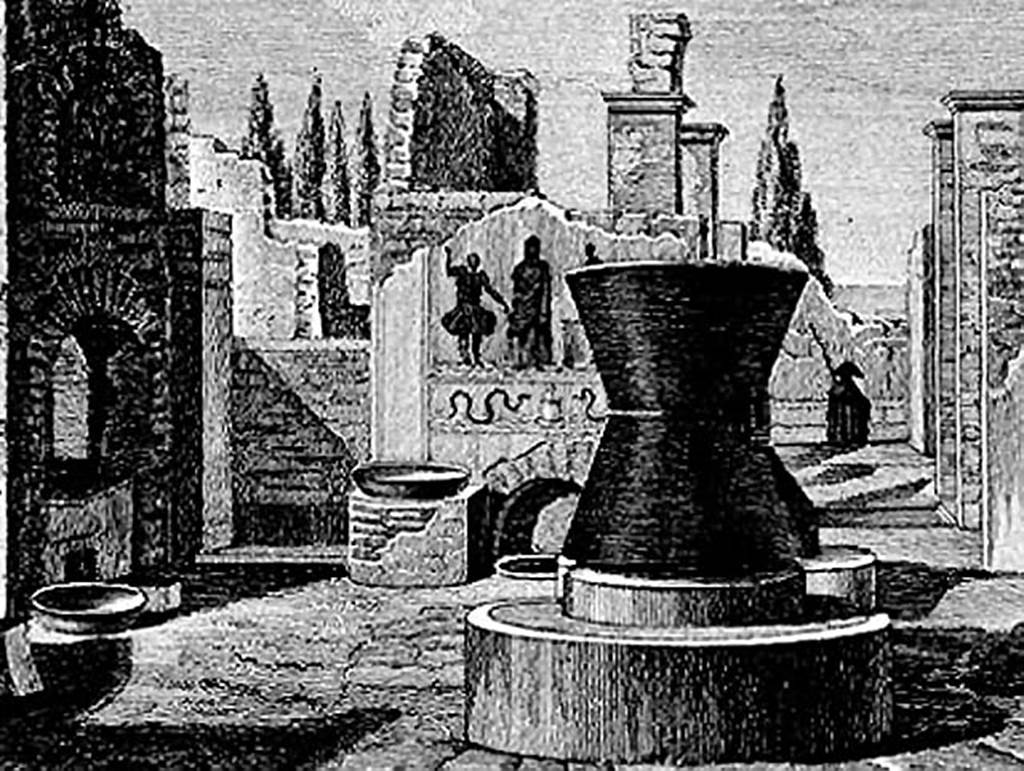
VI.3.3 Pompeii. Detail from Mazois sketch of lararium painting. In the middle of the lararium is a painted round altar.
To the left of the altar is the goddess Fornax (as identified by Mazois) in a long robe.
Fornax was the goddess of bread and baking. On the left of the goddess is Lar.
In the right half, which is obscured by the mill, was possibly Vesta with another Lar on the outside.
In the lower zone are two serpents approaching a round altar, one from each side.
See Fröhlich, T., 1991. Lararien und Fassadenbilder in den Vesuvstädten. Mainz:
von Zabern. (L59).
See Mazois, F., 1824. Les Ruines de Pompei: Second Partie. Paris: Firmin Didot, Tav. XIX fig. 1.
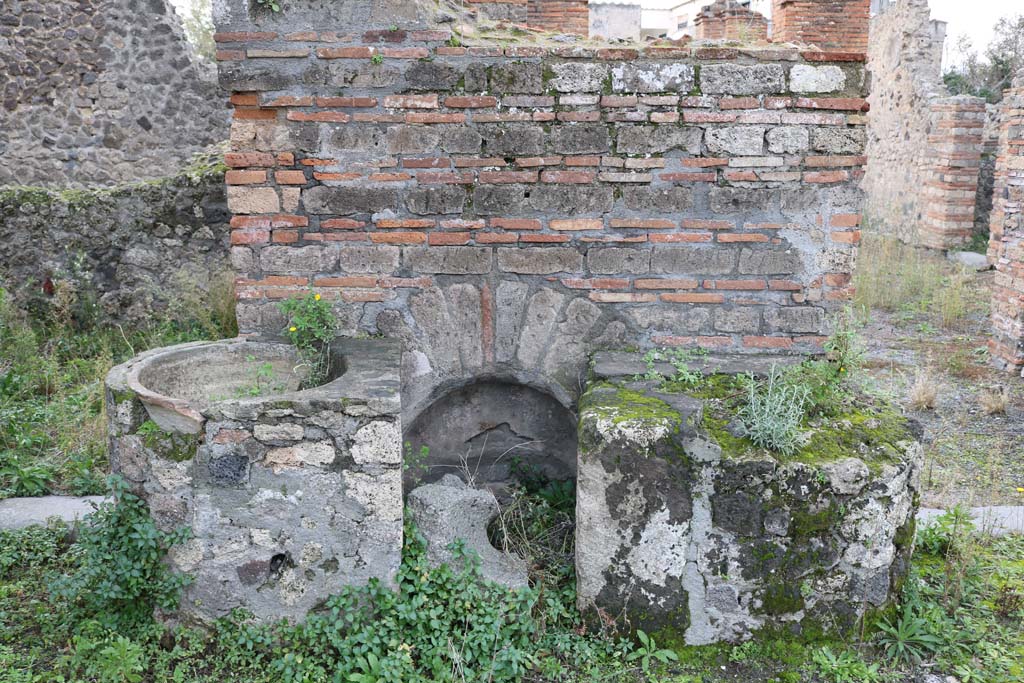
VI.3.3 Pompeii. December 2018.
Room 7, west wall with site of household shrine above cistern mouth/well head and a vessel for holding water on either side.
Photo
courtesy of Aude Durand.
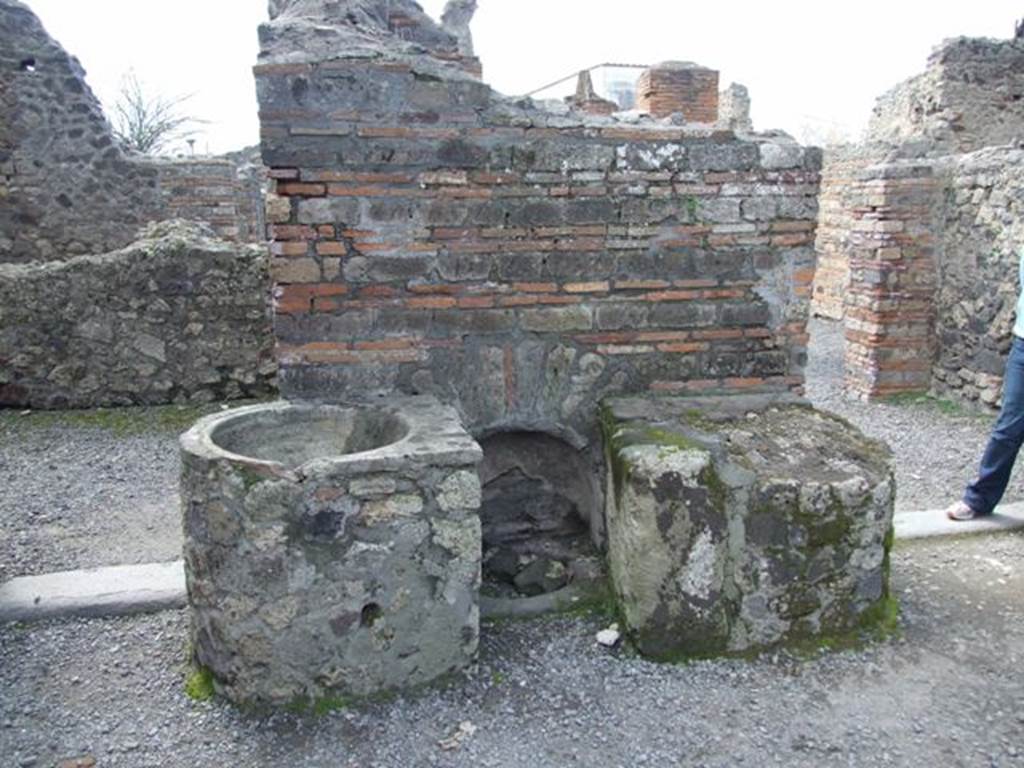
VI.3.3 Pompeii. March 2009. Room 7, west wall with cistern mouth/well head and a vessel for holding water on either side.
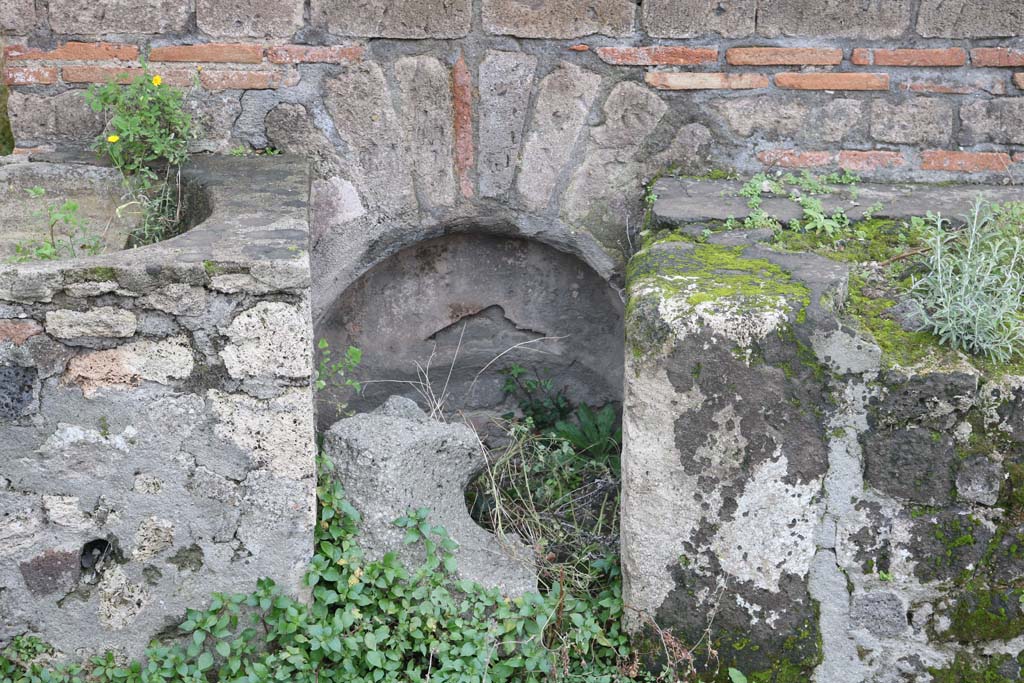
VI.3.3 Pompeii. December 2018. Room 7, cistern mouth/well head. Photo courtesy of Aude Durand.
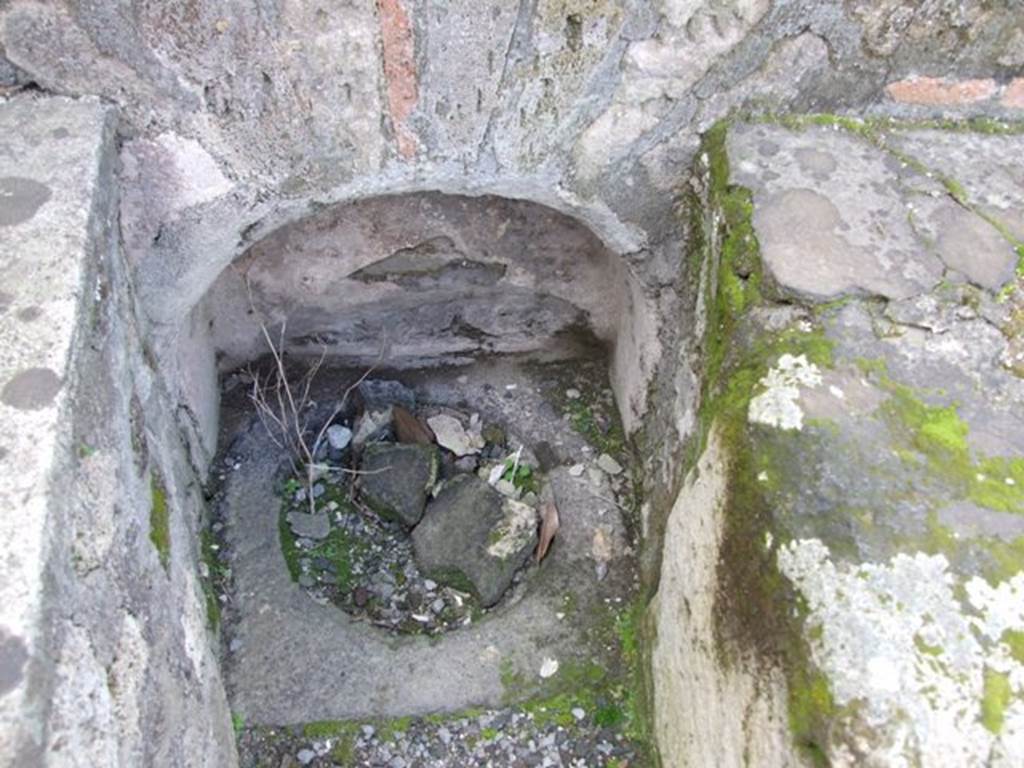
VI.3.3 Pompeii. March 2009. Room 7, cistern mouth/well head.
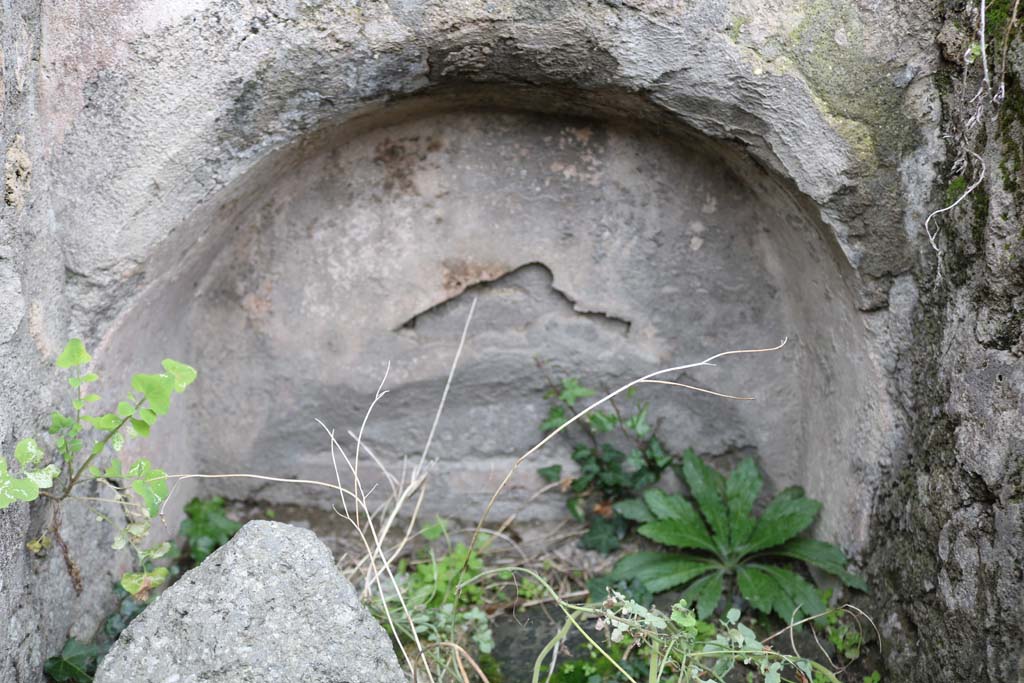
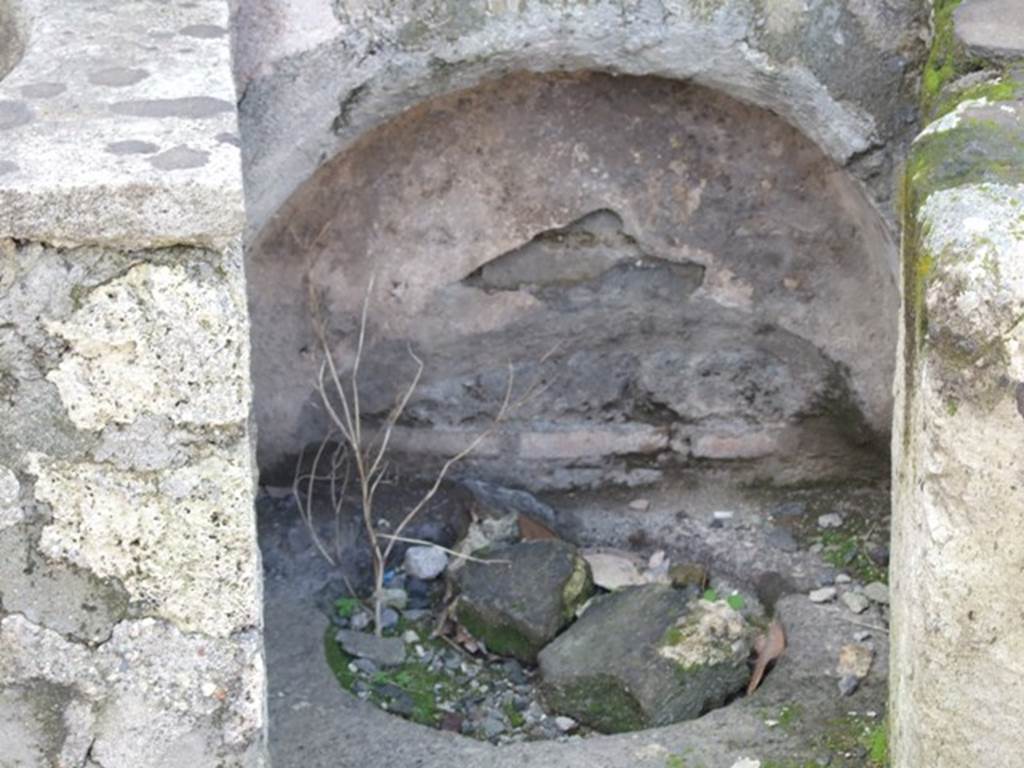
VI.3.3 Pompeii. March 2009. Room 7, cistern mouth/well head with a water basin on both sides.
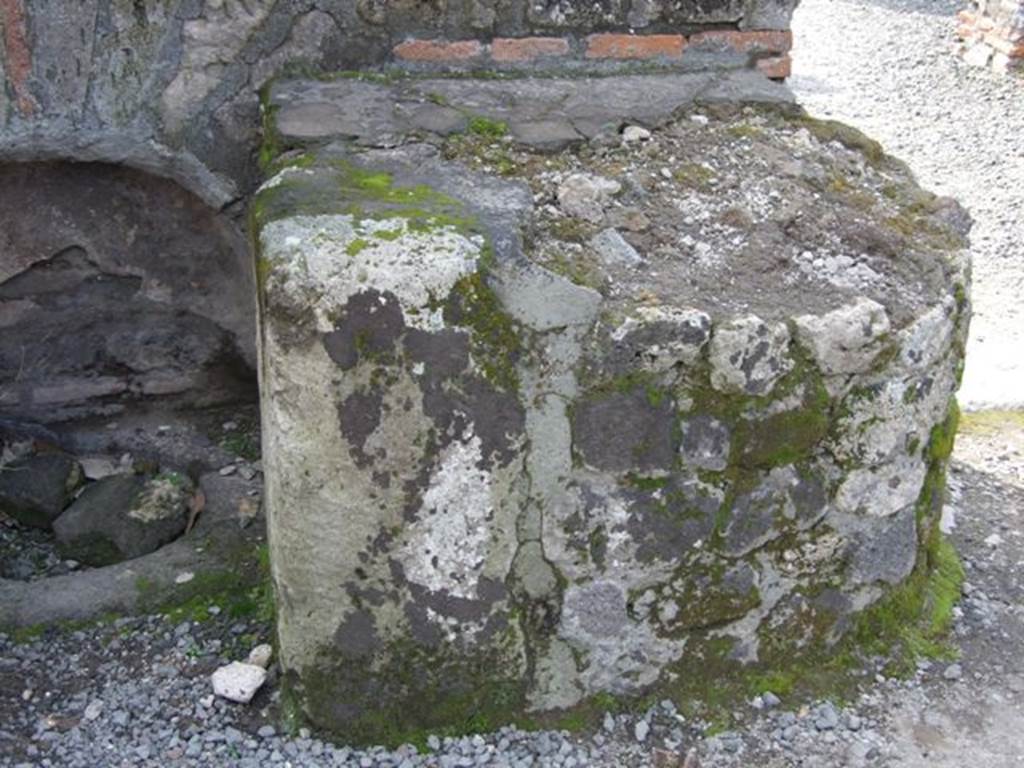
VI.3.3 Pompeii. March 2009. Room 7, base for large earthenware vessel for holding water on north side of cistern mouth/well head.
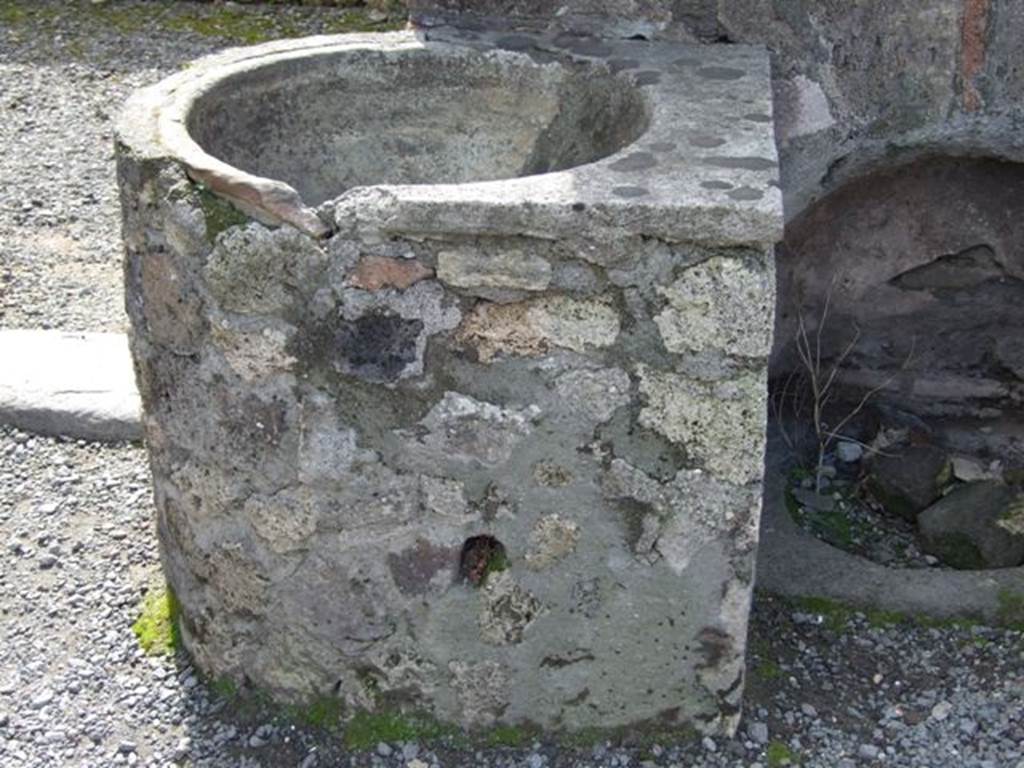
VI.3.3 Pompeii. March 2009. Room 7, large earthenware vessel for holding water on south side of cistern mouth/well head.