VI.2.28 Pompeii. Hospitium. Excavated 1812?
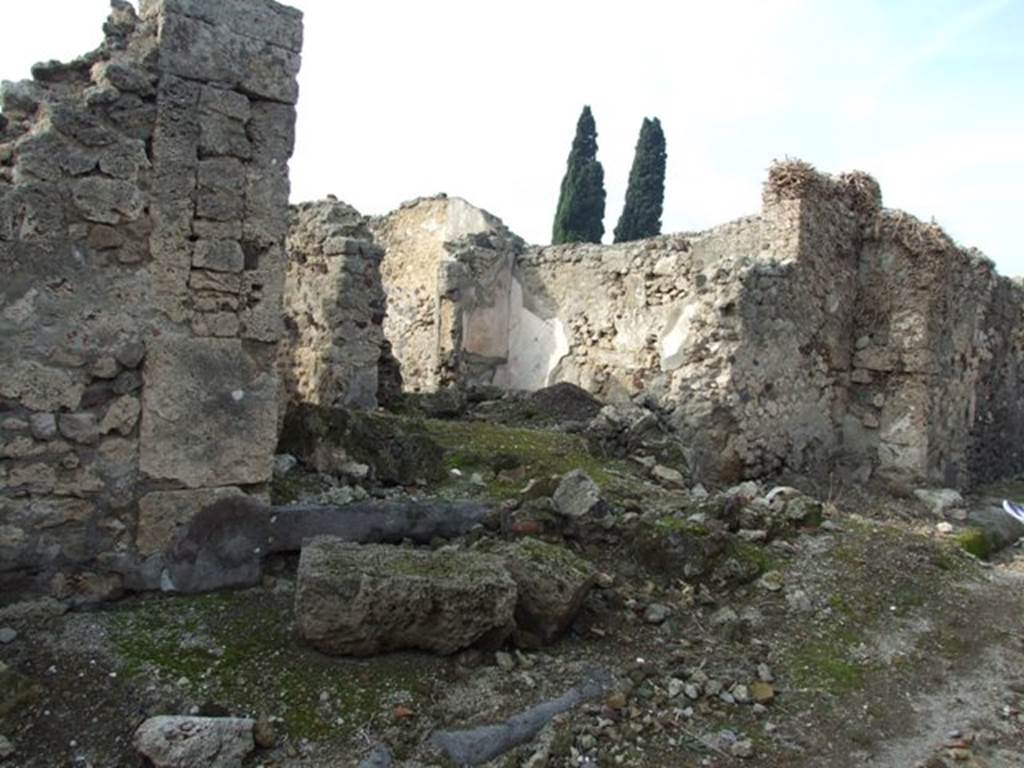
VI.2.28 Pompeii. December 2007. Entrance doorway, looking north-west from vicolo, towards site of stairs to upper floor and triclinium.
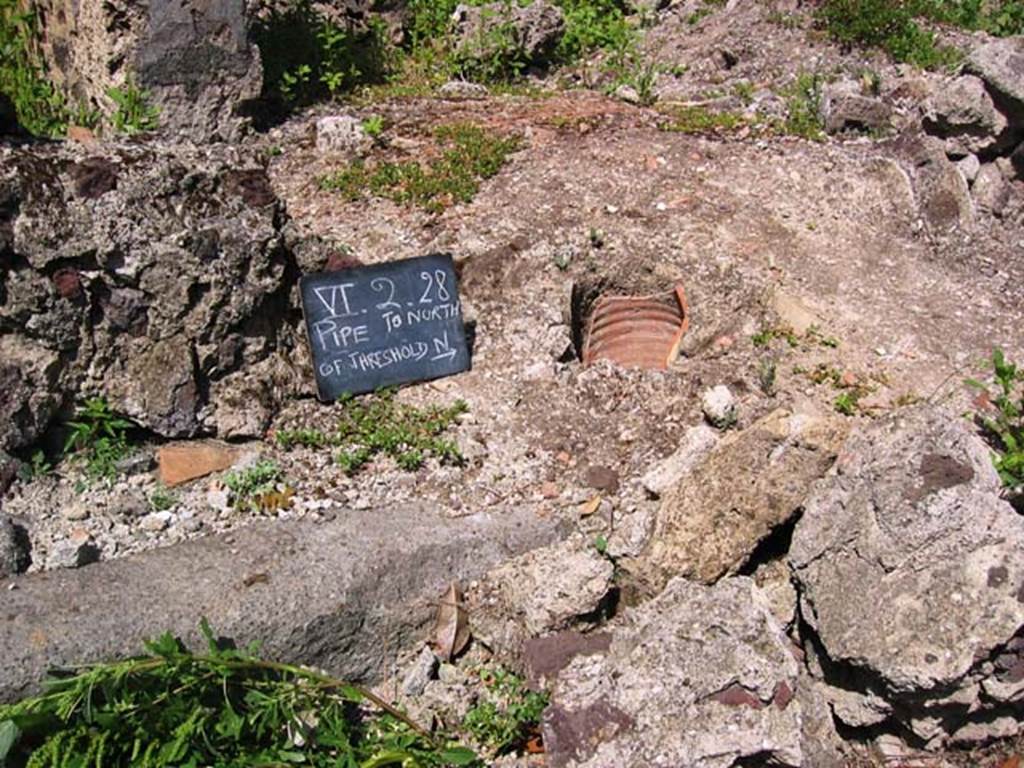
VI.2.28 Pompeii. July 2008. Remains of pipe, near threshold. Photo courtesy of Barry Hobson.
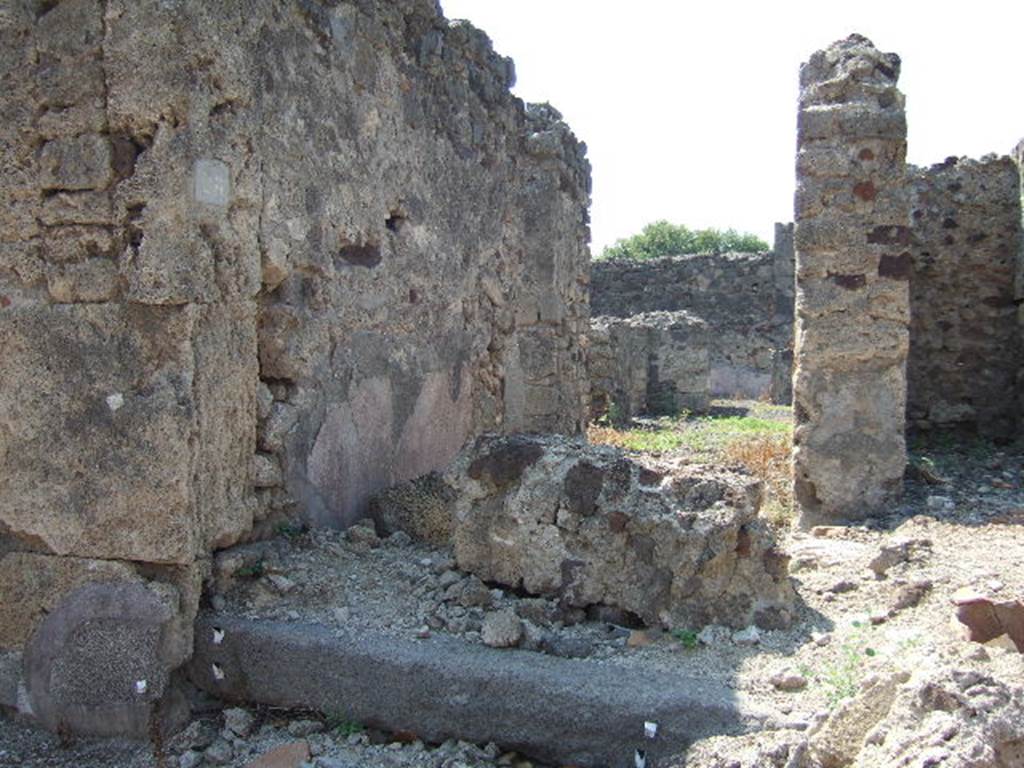
VI.2.28 Pompeii. September 2005. Entrance doorway, looking west.
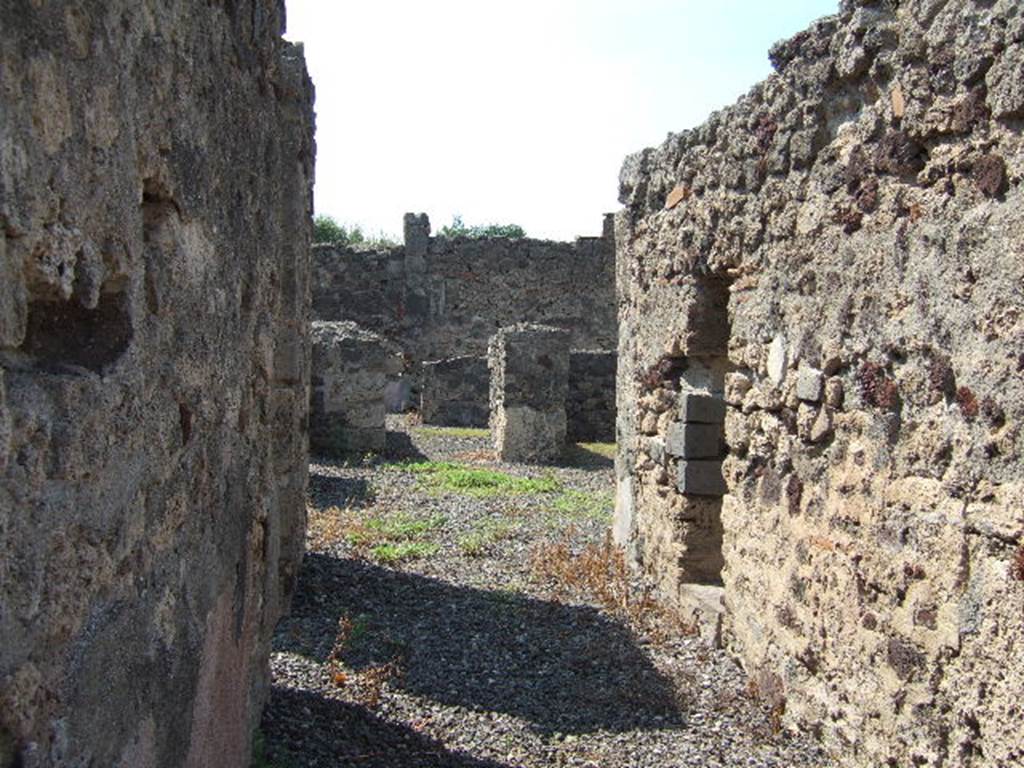
VI.2.28 Pompeii. September 2005. Looking west along entrance corridor.
The doorway on the right would have led into a small narrow room with steps to upper floor.
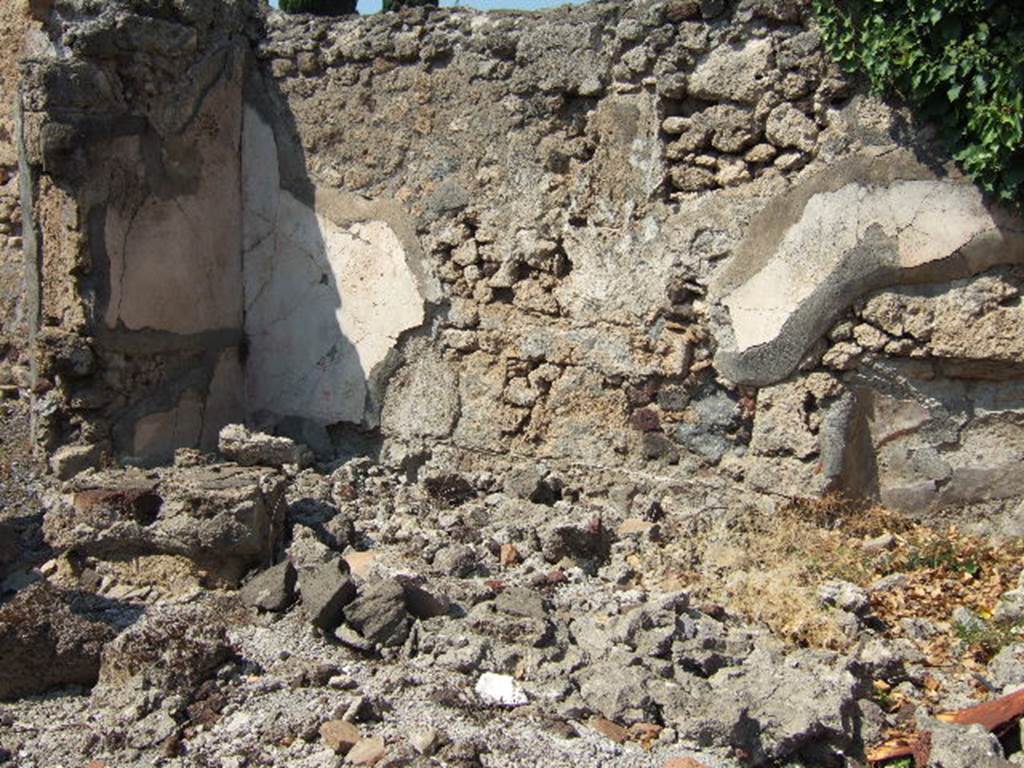
VI.2.28 Pompeii. September 2005. North wall of triclinium on north side of entrance corridor.
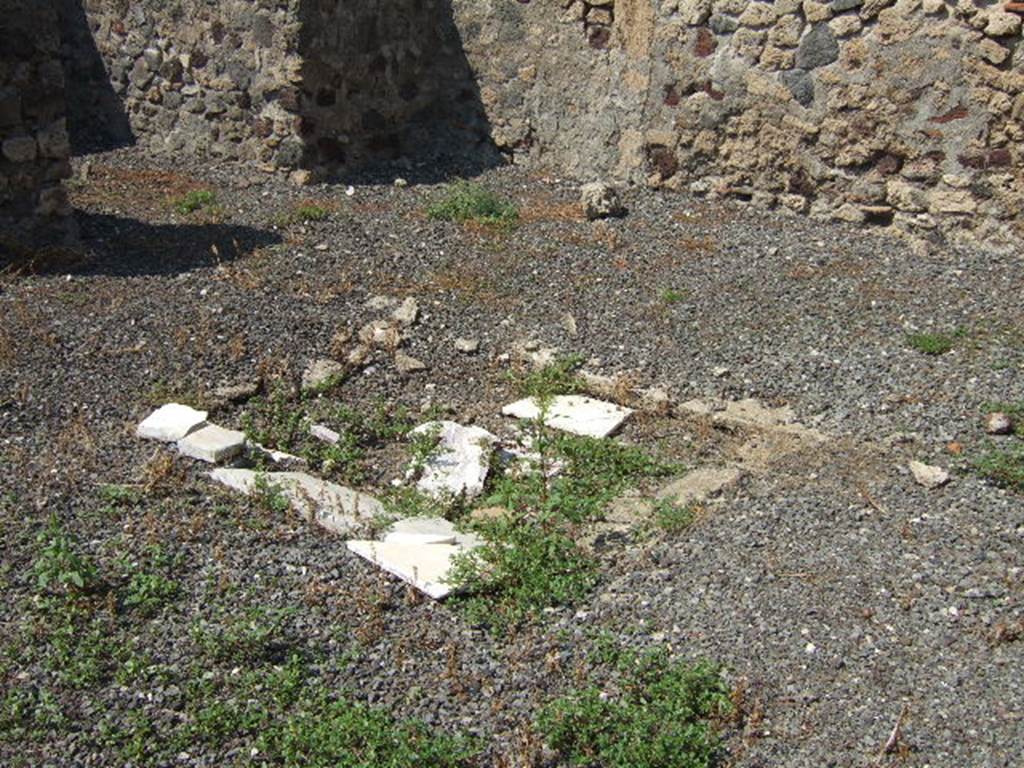
VI.2.28 Pompeii. September 2005. Looking north-west across atrium, with remains of impluvium.
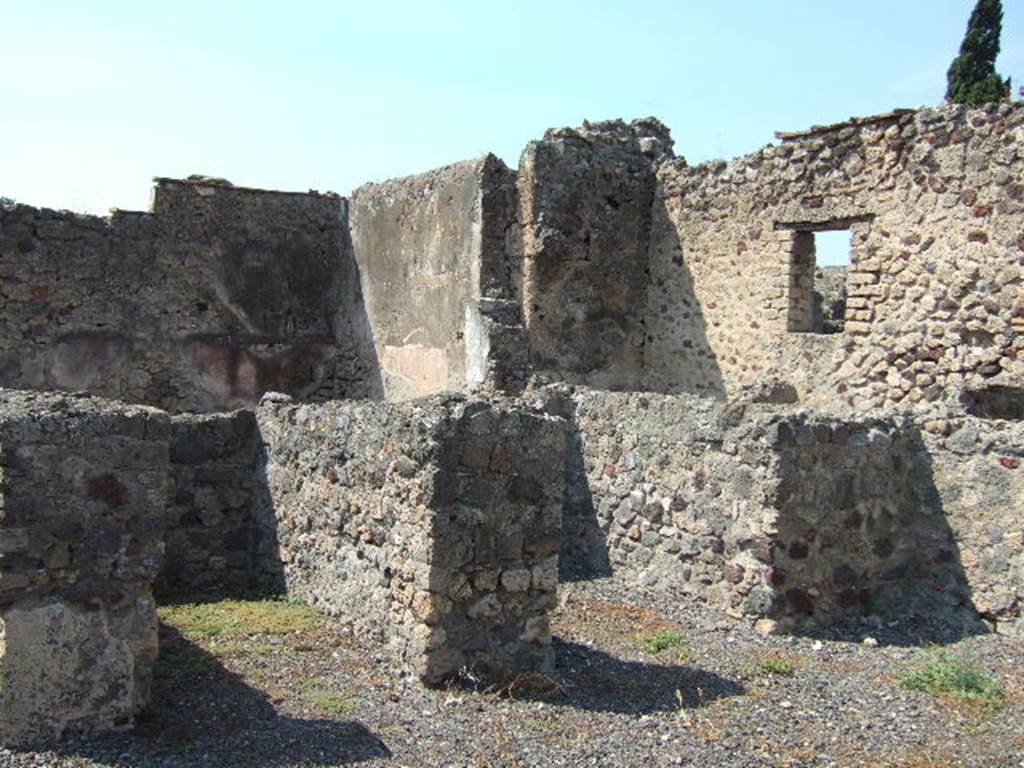
VI.2.28 Pompeii. September 2005.
Looking north-west from atrium across remains of two small cubicula, towards kitchen and latrine near north wall, rear of house and small garden area.
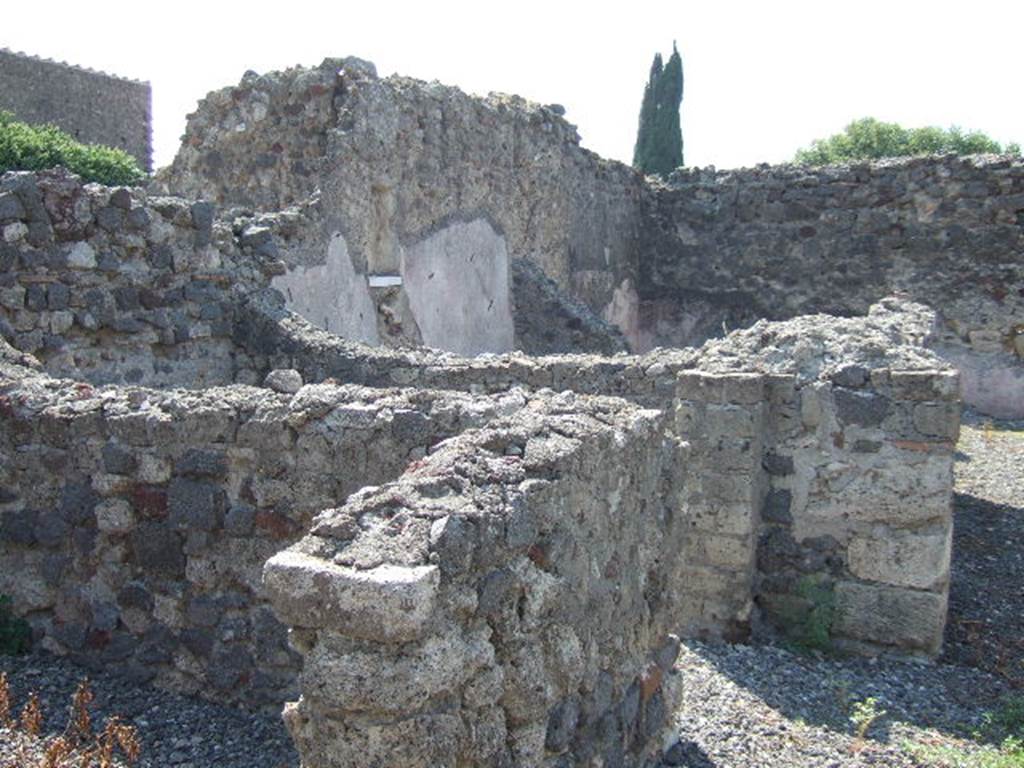
VI.2.28 Pompeii. September 2005. Looking south-west towards rear of house and small garden area.
The remains of two cubicula can be seen on the left, and in the upper middle would have been the Oecus.
On the south wall of the oecus, the lararium niche can be made out, above a white shelf.
At the rear of the oecus, across the rear of the house, would have been the garden area.
According to Giacobello, in the south wall of the oecus was a square niche with the residue of white plaster and shelf in marble.
See Giacobello, F., 2008. Larari Pompeiani: Iconografia e culto dei Lari in ambito domestico. Milano: LED Edizioni. (p.290)
According to Boyce, in the south wall of the oecus which opens off the garden is a rectangular niche.
The walls of the niche are coated with stucco and painted green.
The floor of the niche is a thick slab of marble; the reports called it la nicchia per I Penati.
See Boyce G. K., 1937. Corpus of the Lararia of Pompeii. Rome: MAAR 14. (p.44, no.143)
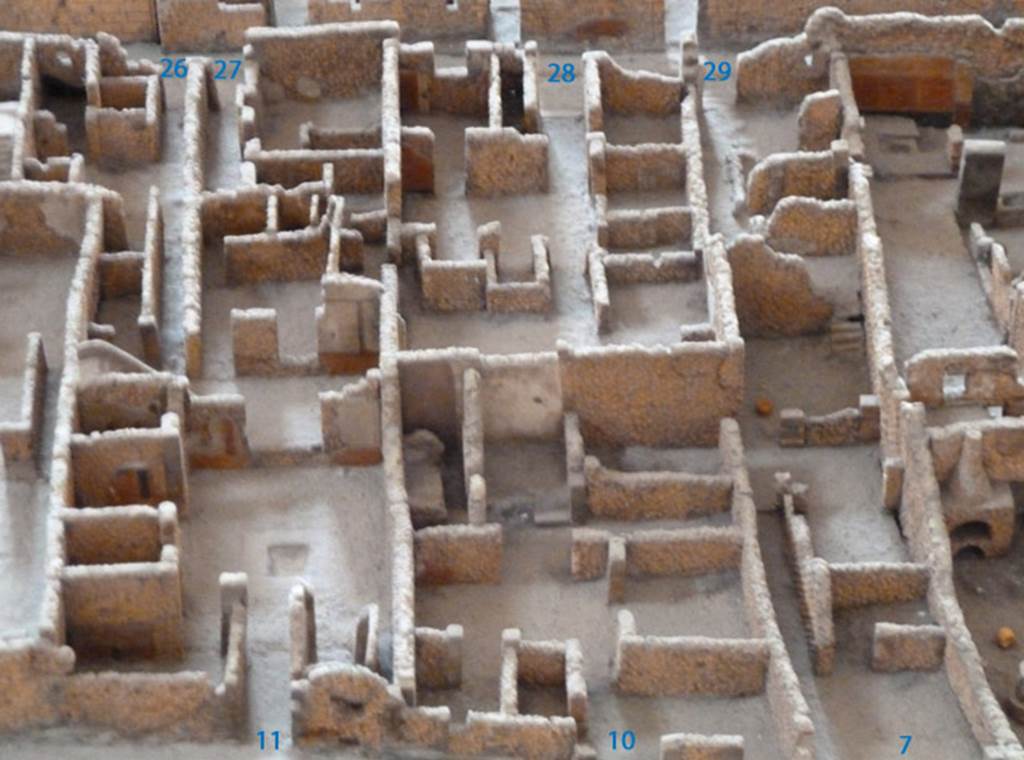
VI.2.28 Pompeii, in top middle. Viewed from the model in the Naples Archaeological Museum.