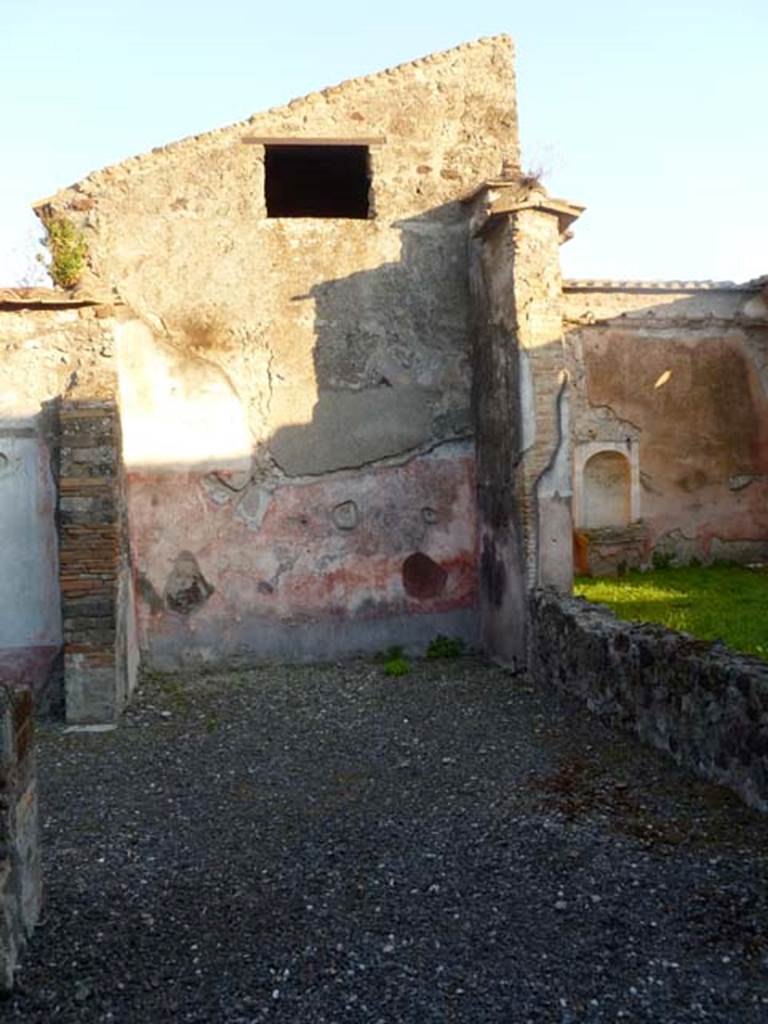
60222 p2


        PompeiiinPictures

   Home     Pompeii Plan    Regio I    Regio II    Regio III    Regio IV    Regio V    Regio VI    Regio VII    Regio VIII    Regio IX

   VI.1     VI.2     VI.3     VI.4     VI.5     VI.6     VI.7     VI.8     VI.9     VI.10     VI.11     VI.12     VI.13     VI.14     VI.15     VI.16     VI.17


VI.2.22 Pompeii. House of M. Pupius or Casa di Apollo or Casa delle Danzatrici.

Linked to VI.2.15.       
Part 2.                                      Part 1


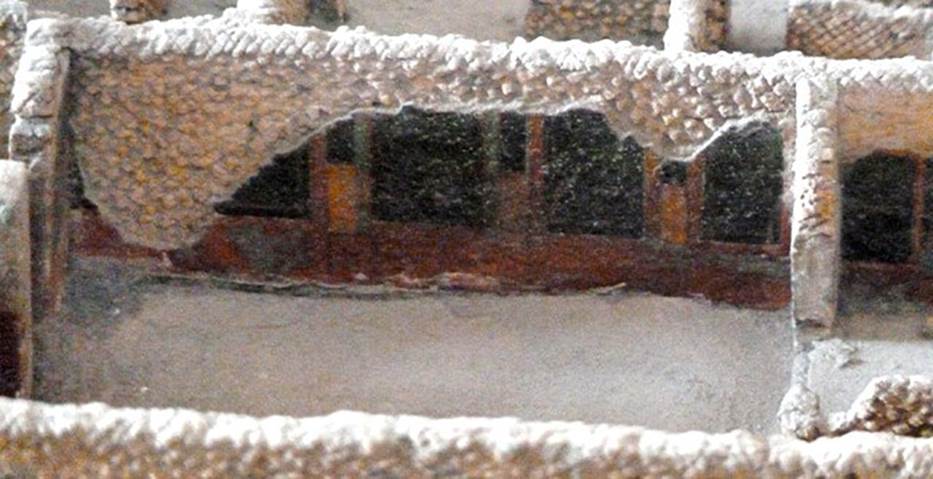
VI.2.15 Pompeii. May 2010. Looking east from rear entrance in Vicolo di Narciso, into peristyle area. Model as viewed in Naples Archaeological Museum.
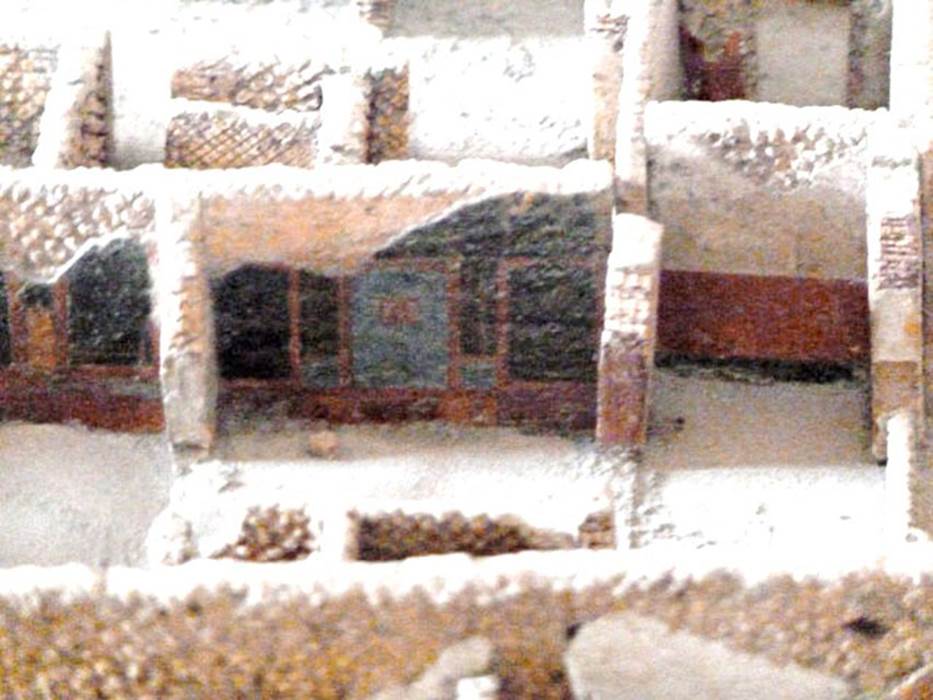
VI.2.22 Pompeii. May 2010.

Looking east from rear entrance in Vicolo di Narciso, into peristyle area.

Model as viewed in Naples Archaeological Museum.
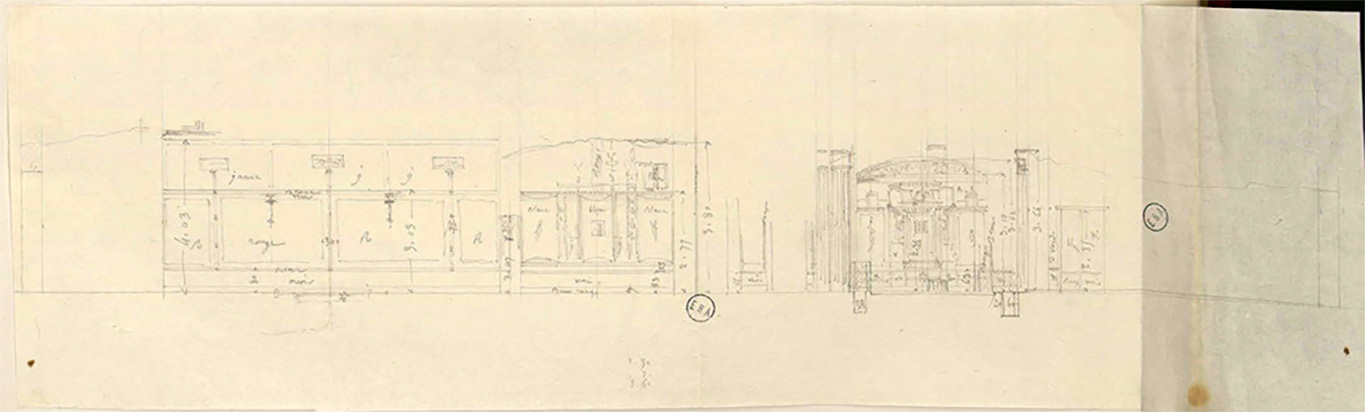
 

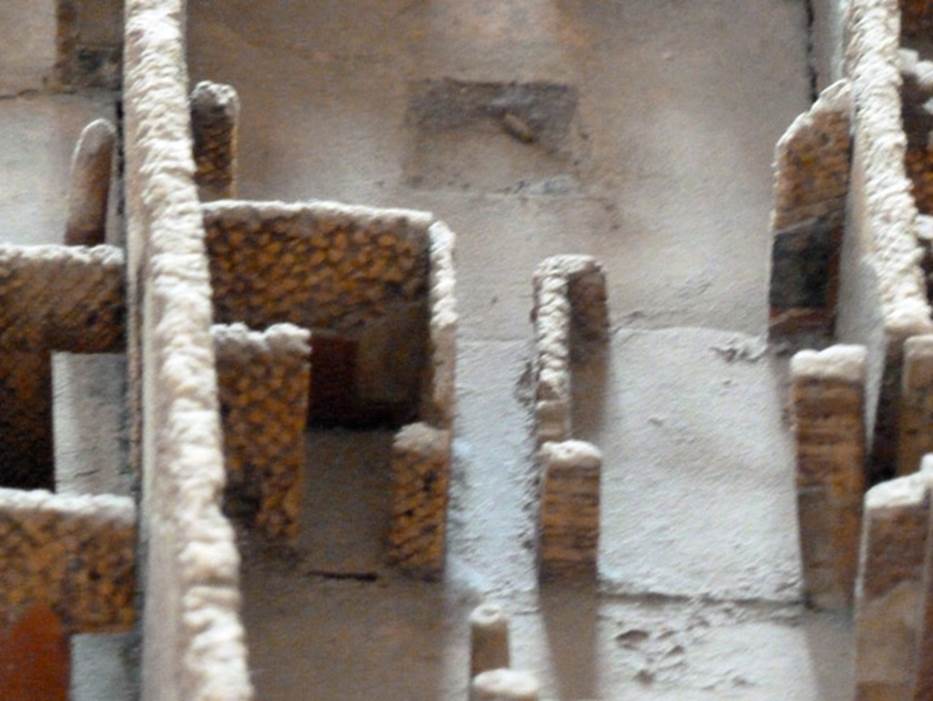
VI.2.22 Pompeii. May 2010. Looking east across peristyle, towards east wall. Model as viewed in Naples Archaeological Museum.
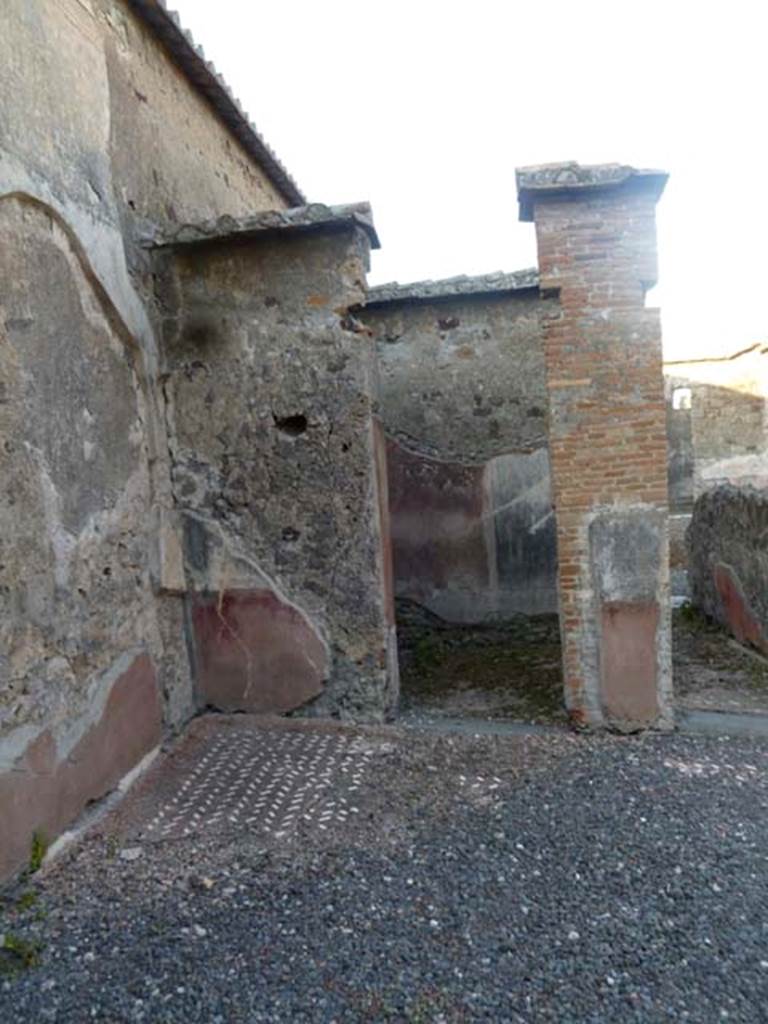
According to Giacobello, the wall with the aedicula was painted with a garden painting, not conserved. See Giacobello, F., 2008. Larari Pompeiani: Iconografia e culto dei Lari in ambito domestico.  Milano: LED Edizioni. (p.269)

VI.2.22 Pompeii. May 2010. Looking east across peristyle, towards east wall.

Model as viewed in Naples Archaeological Museum.

According to Giacobello, the wall with the aedicula was painted with a garden painting, not conserved.

See Giacobello, F., 2008. Larari Pompeiani: Iconografia e culto dei Lari in ambito domestico.  Milano: LED Edizioni. (p.269)


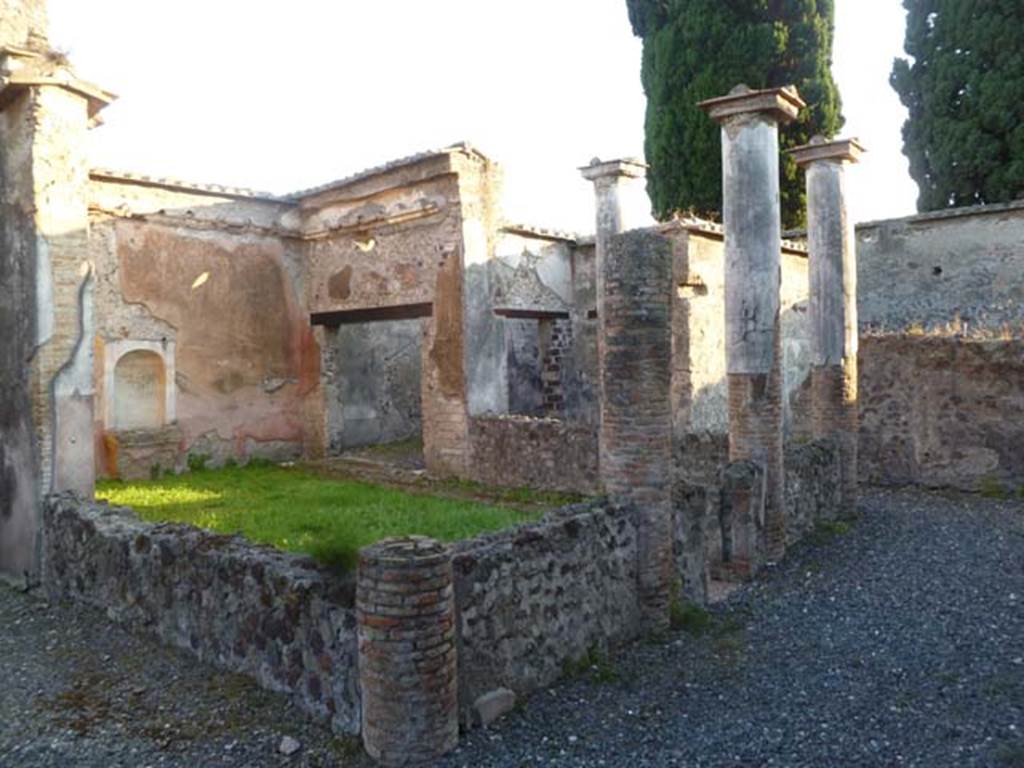
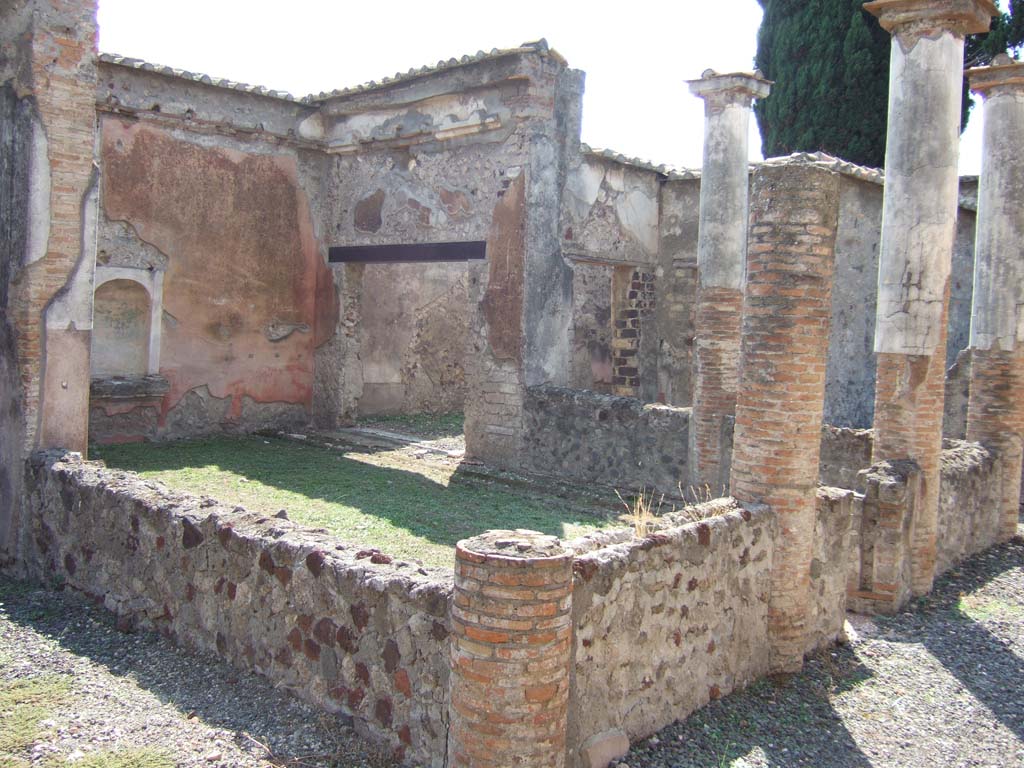
VI.2.22 Pompeii. September 2005. Aedicula niche in south wall of pseudo-peristyle.  According to Jashemski, this peristyle garden, excavated in 1811, was enclosed by a portico on the north and part of the east and west sides. The portico was supported by five columns, red below, fluted and white above. They were joined by a low wall. There was an aedicula lararium (2.55m high) in the centre of the south wall.  
This once held a beautiful bronze statue of Apollo (Naples Archaeological Museum inv no: 5613).  Dwyer pointed out that the Apollo was not found in the niche, however, but in the north colonnade of the peristyle, according to a report of Soprastante Pasquale Scognamiglio which Dwyer found in the archives of the Soprintendenza at Naples (VIII c8, Apr 3 1811). The Apollo was immediately reburied and discovered two days later in the presence of Queen Maria Carolina.  An earlier report of Scogmaniglio (Mar 21 1811) mentioned a niche identical to the one in this house.   But this house became confused with the one next door (VI.2.16/21) which became known as the House of the Apollo, and the statue was said to have been found there.  Dwyer points out that the only niche in the garden of VI.2.16/21 is modern and it is only 0.67m high. See Jashemski, W. F., 1993. The Gardens of Pompeii, Volume II: Appendices. New York: Caratzas. (p.122 and fig 134 for the Bronze Apollo)

VI.2.22 Pompeii. September 2005. Aedicula niche in south wall of pseudo-peristyle.

According to Jashemski, this peristyle garden, excavated in 1811, was enclosed by a portico on the north and part of the east and west sides.

The portico was supported by five columns, red below, fluted and white above.

They were joined by a low wall.

There was an aedicula lararium (2.55m high) in the centre of the south wall. 

This once held a beautiful bronze statue of Apollo (Naples Archaeological Museum inv no: 5613).

Dwyer pointed out that the Apollo was not found in the niche, however, but in the north colonnade of the peristyle, according to a report of Soprastante Pasquale Scognamiglio which Dwyer found in the archives of the Soprintendenza at Naples (VIII c8, Apr 3 1811).

The Apollo was immediately reburied and discovered two days later in the presence of Queen Maria Carolina.

An earlier report of Scogmaniglio (Mar 21 1811) mentioned a niche identical to the one in this house. 

But this house became confused with the one next door (VI.2.16/21) which became known as the House of the Apollo, and the statue was said to have been found there.  Dwyer points out that the only niche in the garden of VI.2.16/21 is modern and it is only 0.67m high.

See Jashemski, W. F., 1993. The Gardens of Pompeii, Volume II: Appendices. New York: Caratzas. (p.122 and fig 134 for the Bronze Apollo)


VI.2.15 Pompeii. May 2010. Looking south towards Lararium on south wall of peristyle. Model as viewed in Naples Archaeological Museum.

VI.2.22 Pompeii. May 2010.

Looking south towards lararium on south wall of peristyle.

Model as viewed in Naples Archaeological Museum.


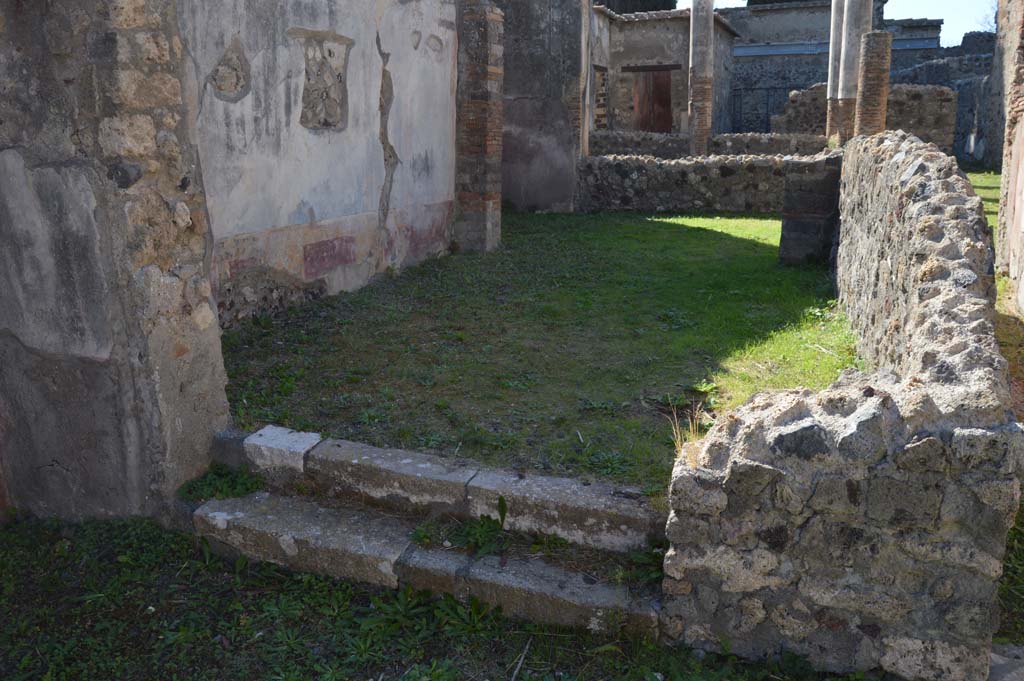
VI.2.22 Pompeii. September 2005. Pseudo-peristyle, looking south west.

VI.2.22 Pompeii. September 2005. Pseudo-peristyle, looking south-west towards doorway to large room.


VI.2.22 Pompeii. December 2007. West portico exit, with cistern head and marble puteal.

VI.2.22 Pompeii. December 2007. West portico, with cistern head and marble puteal.


VI.2.22 Pompeii. December 2007.  Painted wall decoration on west wall of peristyle, above doorway to triclinium.

VI.2.22 Pompeii. December 2007.

Painted wall decoration on west wall of peristyle, above doorway to triclinium.


VI.2.22 Pompeii. December 2007. Aedicula niche lararium. According to Boyce, in the centre of the south wall of the pseudoperistyle stands a fine aedicula. On a rectangular base painted red, a heavy projecting ledge adorned with triple bands of stucco supports a platform.
On this platform rest the bases of two tall, fluted columns with bases and capitals, all coated with white stucco. The columns in turn supported a pediment. The back wall within the aedicula is hollowed out to form a niche, and painted blue. See Boyce G. K., 1937. Corpus of the Lararia of Pompeii. Rome: MAAR 14. (p.44, and Pl.35,2)

VI.2.22 Pompeii. December 2007. Aedicula niche lararium.

According to Boyce, in the centre of the south wall of the pseudoperistyle stands a fine aedicula.

On a rectangular base painted red, a heavy projecting ledge adorned with triple bands of stucco supported a platform.

On this platform rested the bases of two tall, fluted columns with bases and capitals, all coated with white stucco.

The columns in turn supported a pediment.

The back wall within the aedicula is hollowed out to form a niche, and painted blue.

See Boyce G. K., 1937. Corpus of the Lararia of Pompeii. Rome: MAAR 14. (p.44, and Pl.35,2)


VI.2.22 Pompeii. December 2007. Peristyle niche.  The rear of the aedicula was hollowed out to form a semi-circular niche which was painted blue.

VI.2.22 Pompeii. December 2007. Peristyle niche.

The rear of the aedicula was hollowed out to form a semi-circular niche which was painted blue.


VI.2.22 Pompeii. December 2007. The base of the aedicula niche was painted red. The projecting ledge had three bands of stucco ornament , and two tall fluted columns rested on it. They supported the pediment. The columns and the pediment are now all vanished. See Boyce G. K., 1937. Corpus of the Lararia of Pompeii. Rome: MAAR 14.(142, p44).

VI.2.22 Pompeii. December 2007. The base of the aedicula niche was painted red.

The projecting ledge had three bands of stucco ornament , and two tall fluted columns rested on it.

They supported the pediment. The columns and the pediment are now all vanished.

See Boyce G. K., 1937. Corpus of the Lararia of Pompeii. Rome: MAAR 14.(142, p44).


VI.2.22 Pompeii. December 2007.  Remains of one of the columns on the base.

VI.2.22 Pompeii. December 2007. Remains of one of the columns on the base.


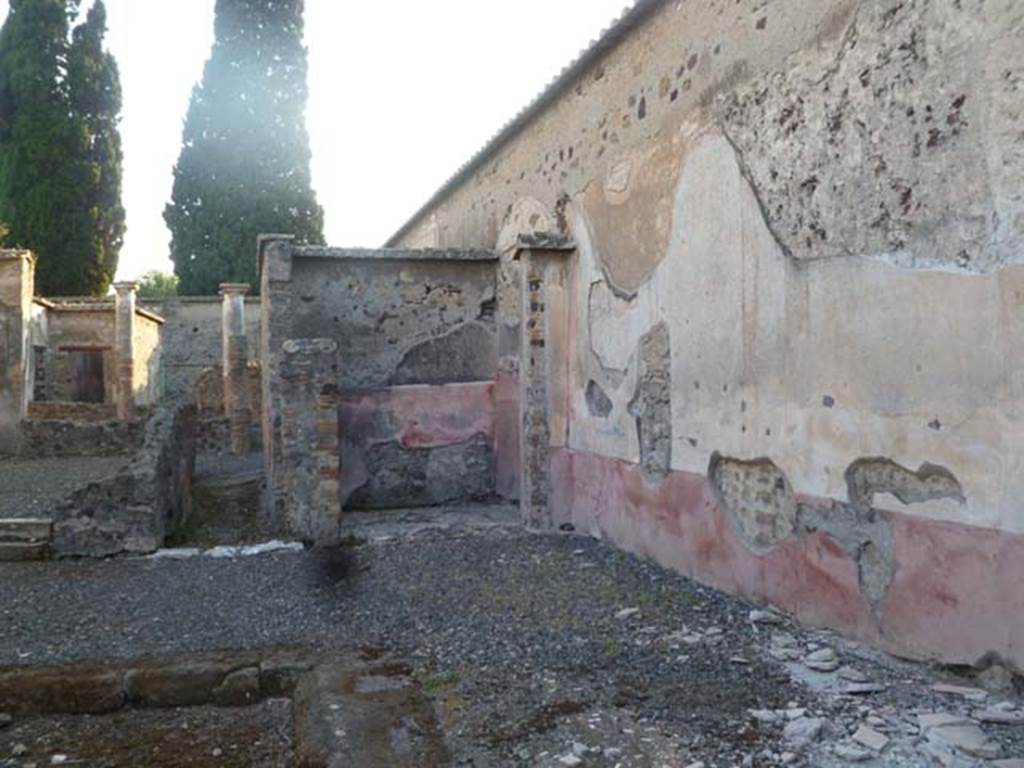
VI.2.22 Pompeii. September 2005. Looking east across peristyle from triclinium in south-west corner.

VI.2.22 Pompeii. September 2005.

Looking east across peristyle from triclinium in south-west corner.


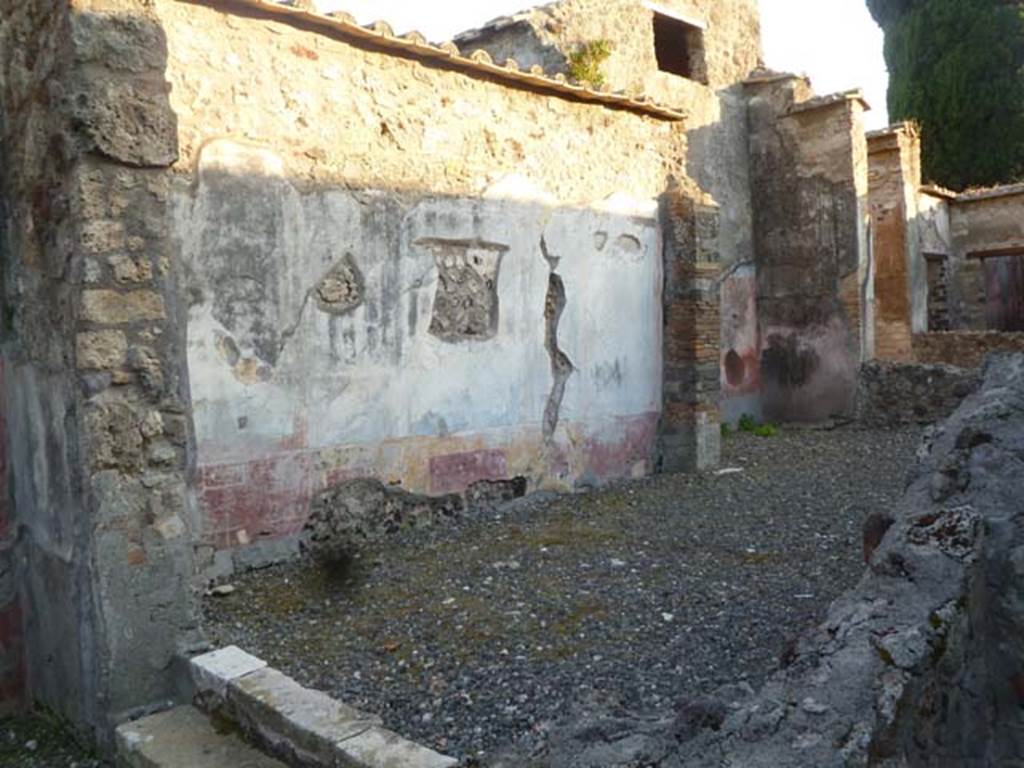
VI.2.22 Pompeii. September 2005. Looking west into triclinium in south-west corner of peristyle. On the right can be seen the doorway into a cubiculum on south side of rear doorway at VI.2.15.

VI.2.22 Pompeii. September 2005. Looking west into triclinium in south-west corner of peristyle.

On the right can be seen the doorway into a cubiculum on south side of rear doorway at VI.2.15.


VI.2.22 Pompeii. 1840. Perseus showing Andromeda the head of Medusa reflected in water, from the triclinium on west side of peristyle. See Roux, H., 1840. Herculanem et Pompei recueil general des Peintures, Bronzes, Mosaiques : Tome 3. Paris: Didot. (pl. 97) See Helbig, W., 1868. Wandgemälde der vom Vesuv verschütteten Städte Campaniens. Leipzig: Breitkopf und Härtel. (1193). See Breton, Ernest. 1870. Pompeia, Guide de visite a Pompei, 3rd ed. Paris, Guerin.

VI.2.22 Pompeii. 1840. Perseus showing Andromeda the head of Medusa reflected in water, from the triclinium on west side of peristyle.

See Roux, H., 1840. Herculanem et Pompei recueil general des Peintures, Bronzes, Mosaiques : Tome 3. Paris: Didot. (pl. 97)

See Helbig, W., 1868. Wandgemälde der vom Vesuv verschütteten Städte Campaniens. Leipzig: Breitkopf und Härtel. (1193).

See Breton, Ernest. 1870. Pompeia, Guide de visite a Pompei, 3rd ed. Paris, Guerin.


VI.2.22 Pompeii. September 2005. Cubiculum on south side of rear doorway at VI.2.15. Looking west.

VI.2.22 Pompeii. September 2005.

Cubiculum on south side of rear doorway at VI.2.15. Looking west.


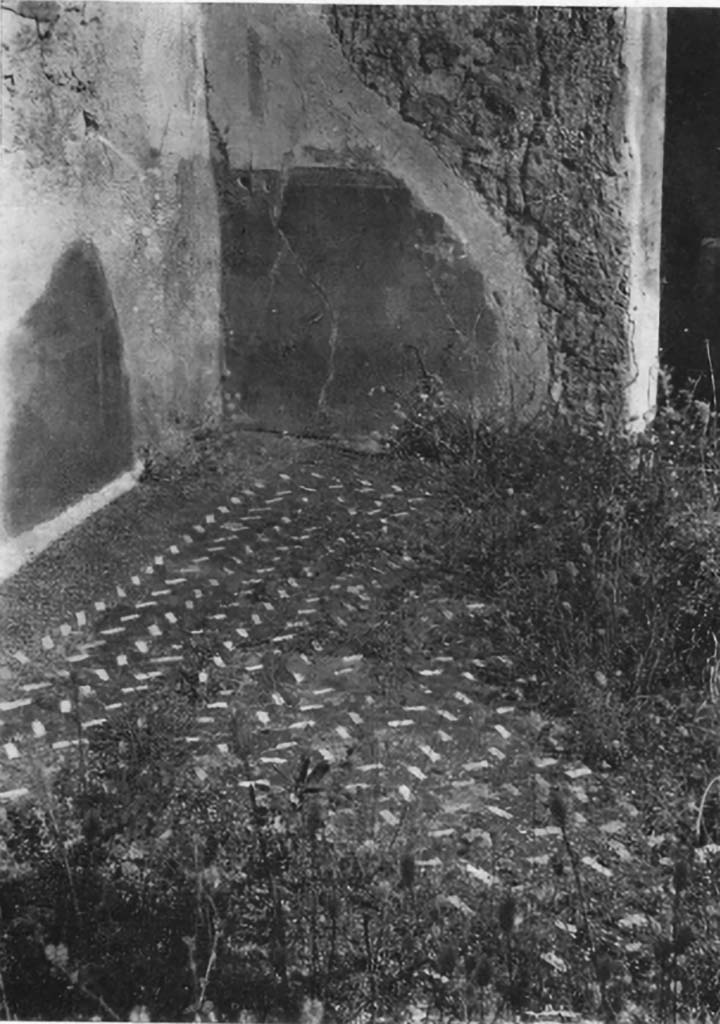
VI.2.22 Pompeii. September 2005. Recess in north wall of cubiculum.

VI.2.22 Pompeii. September 2005. Recess in north wall of cubiculum.


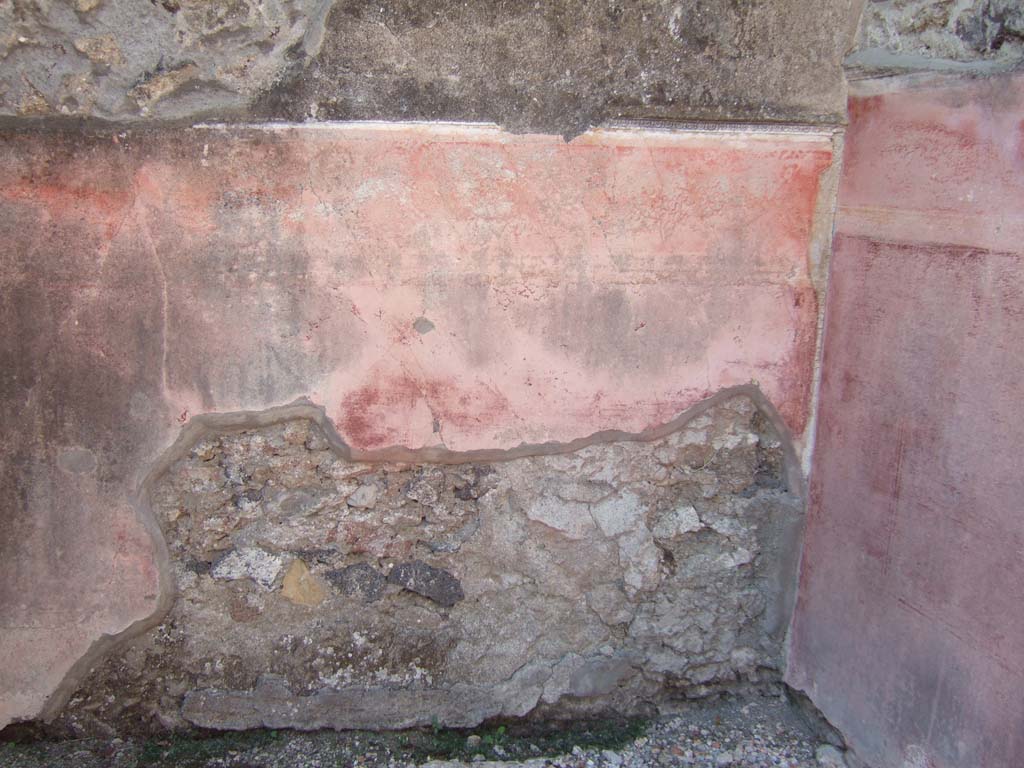
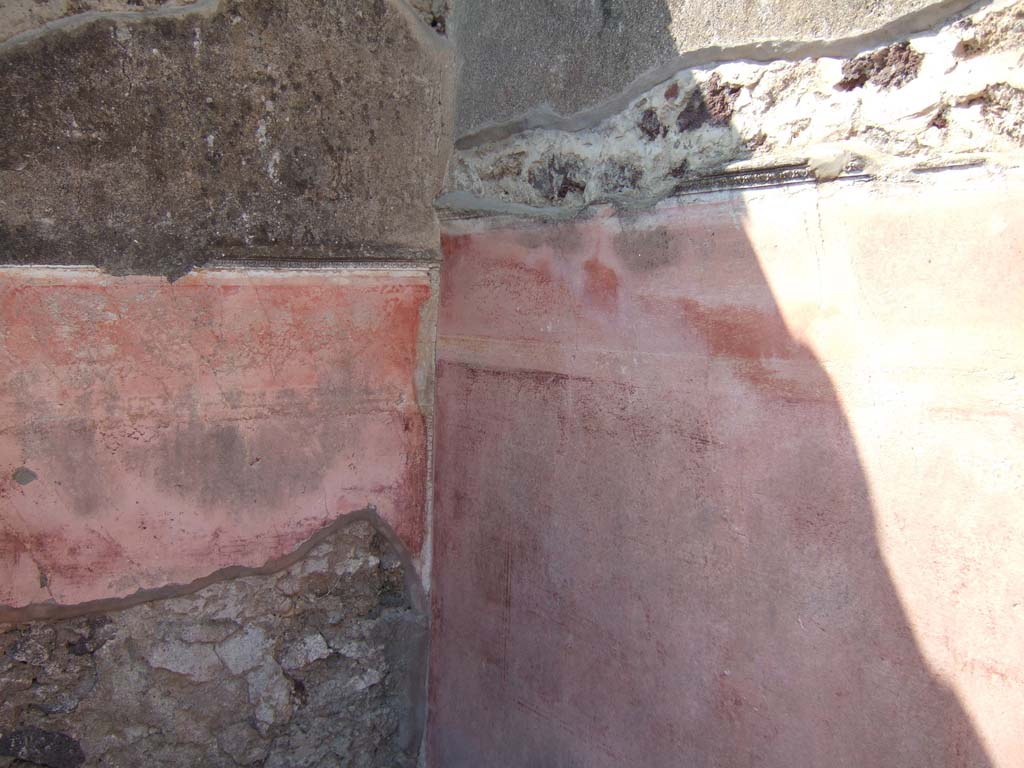
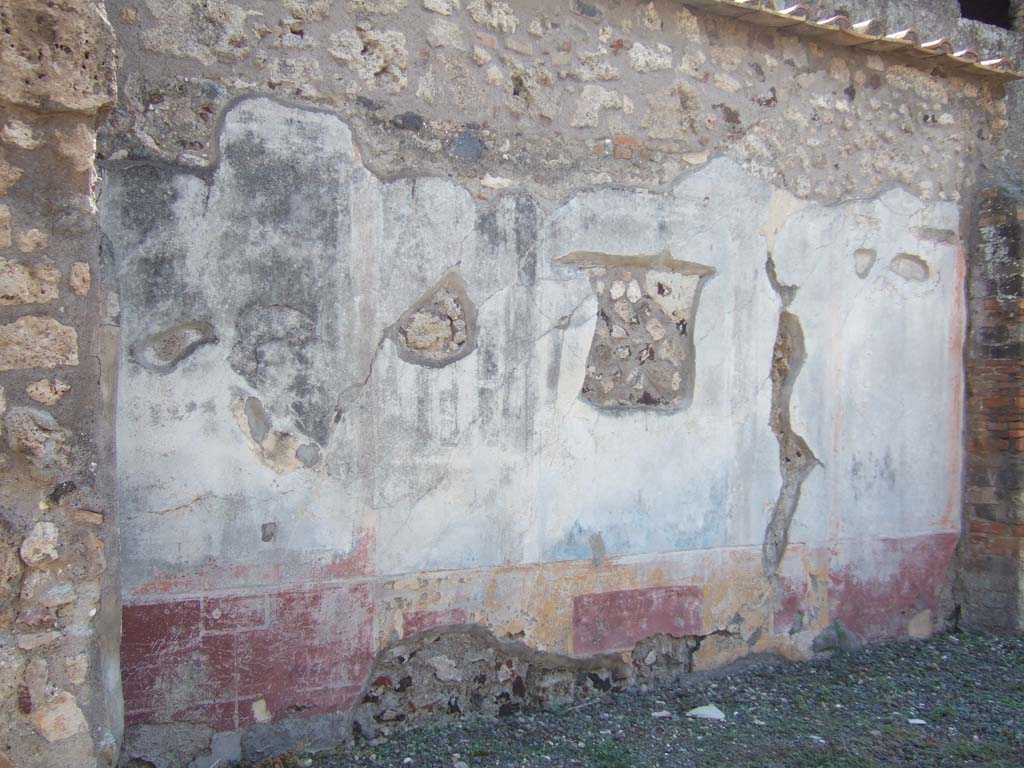
VI.2.22 Pompeii. September 2005. South wall of cubiculum and south-west corner.

VI.2.22 Pompeii. September 2005. South wall of cubiculum and south-west corner.


VI.2.22 House of M. Pupius or Casa di Apollo.  Rear entrance at VI.2.15.  September 2005.

VI.2.15 Pompeii. September 2005. Rear entrance at VI.2.15.


Part 1