VI.2.16
Pompeii. Casa del Narciso.
Rear entrance at VI.2.21. Excavated 1811, 1818.
Part 1 Part 2
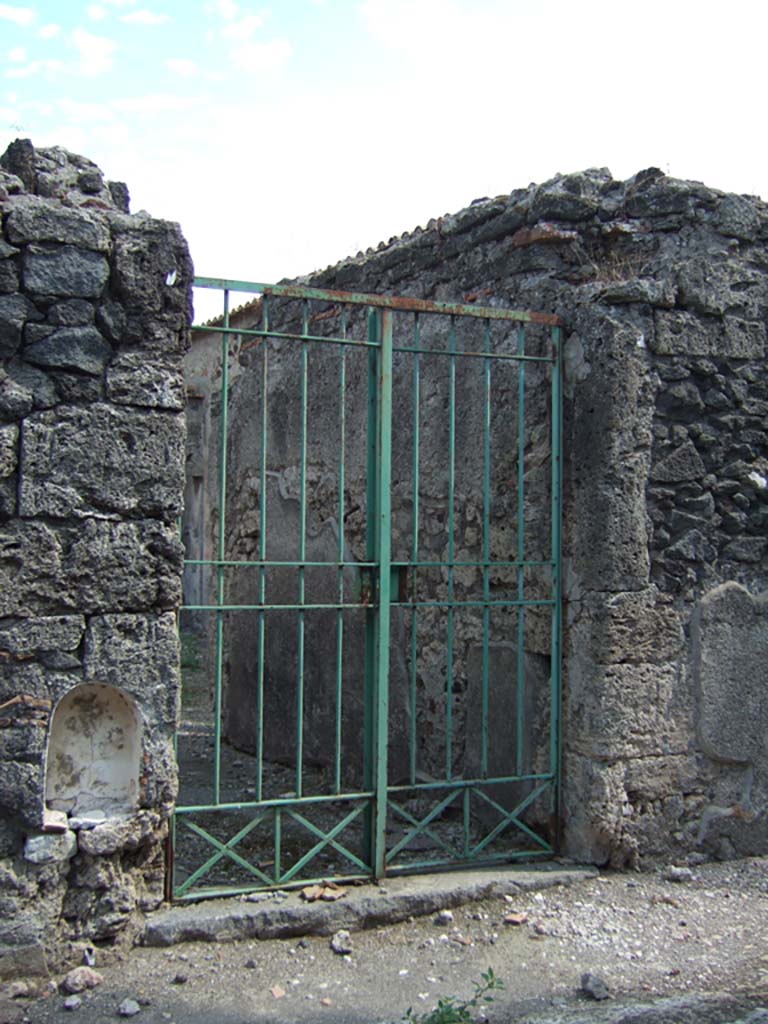
VI.2.16 Pompeii. September
2005. Entrance doorway.
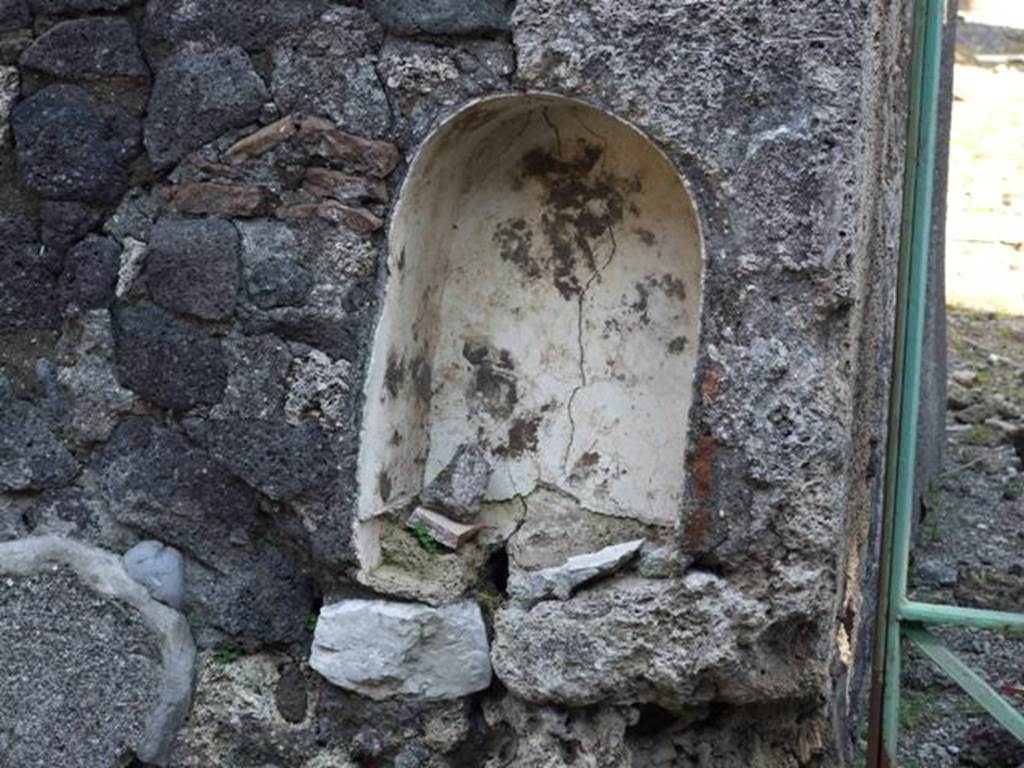
VI.2.16 Pompeii. March 2009. Niche on exterior north side of entrance.
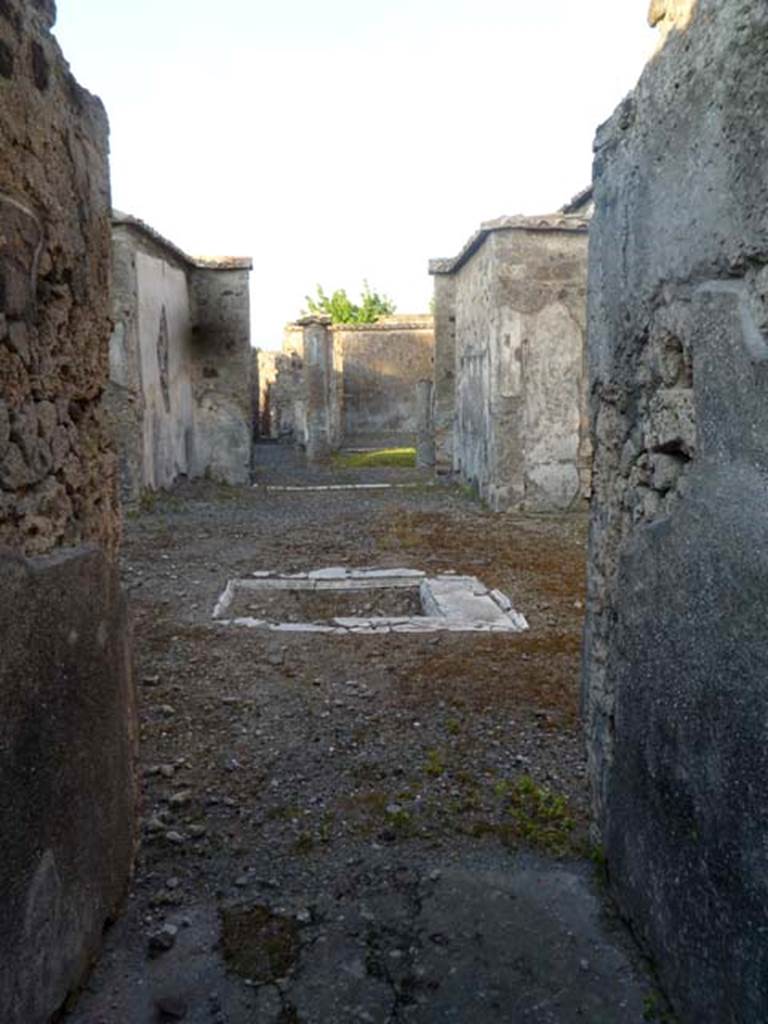
VI.2.16 Pompeii. May 2011. Looking east from entrance corridor across atrium towards peristyle.
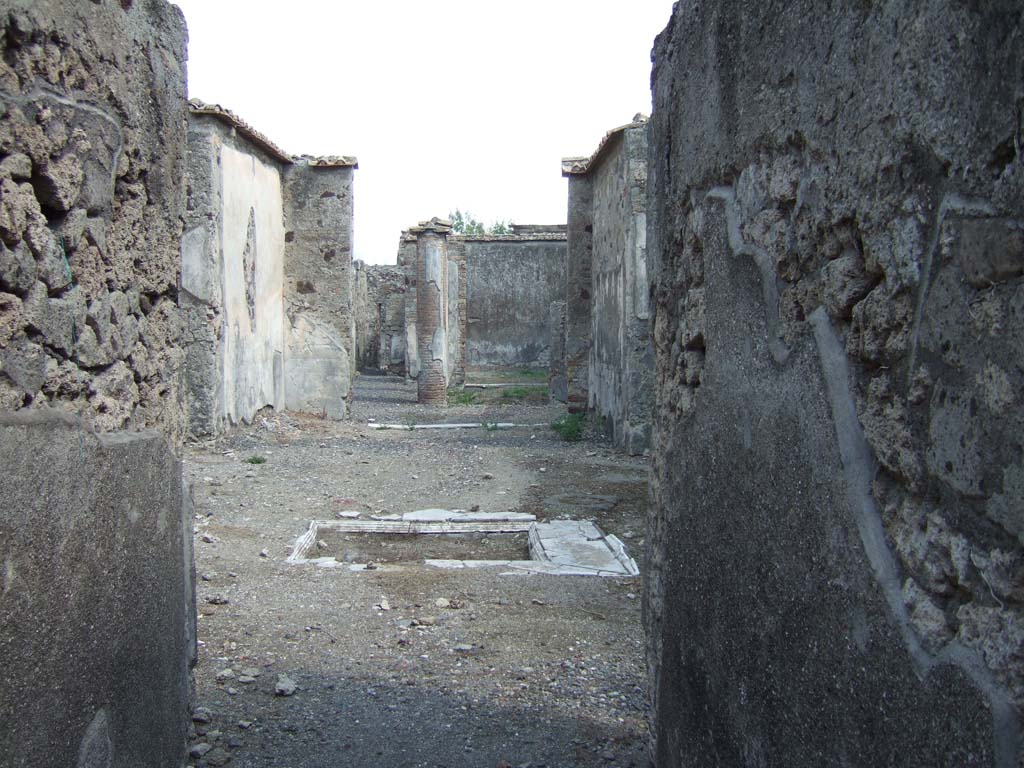
VI.2.16 Pompeii. September 2005. Looking east from entrance fauces across atrium and impluvium.
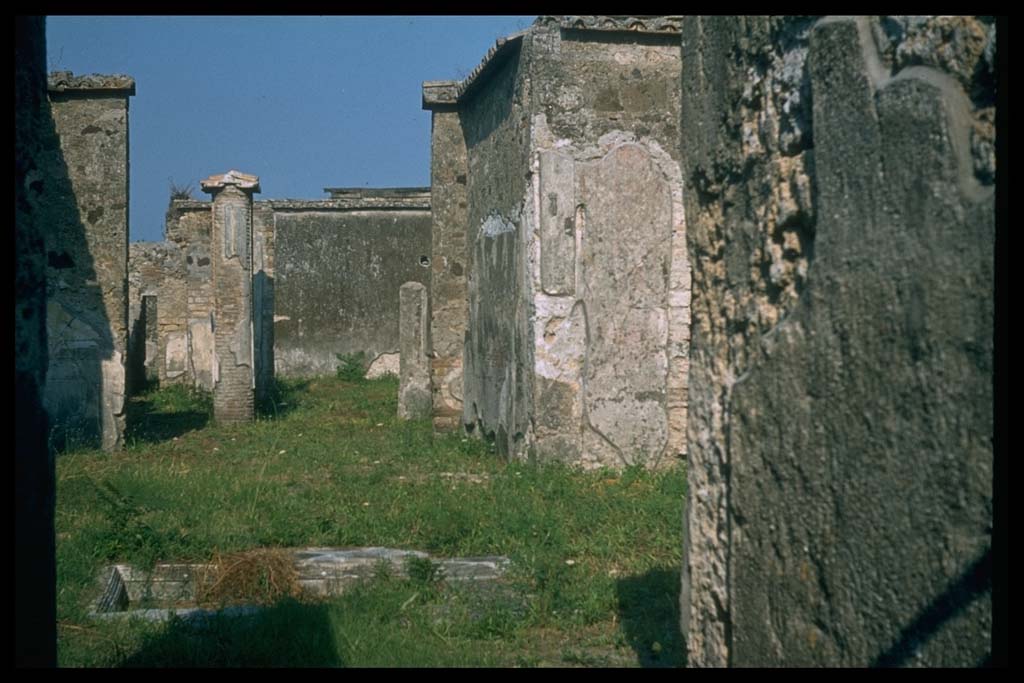
VI.2.16 Pompeii. Looking east from entrance fauces across atrium and impluvium.
Photographed 1970-79 by Günther Einhorn, picture courtesy of his son Ralf Einhorn.
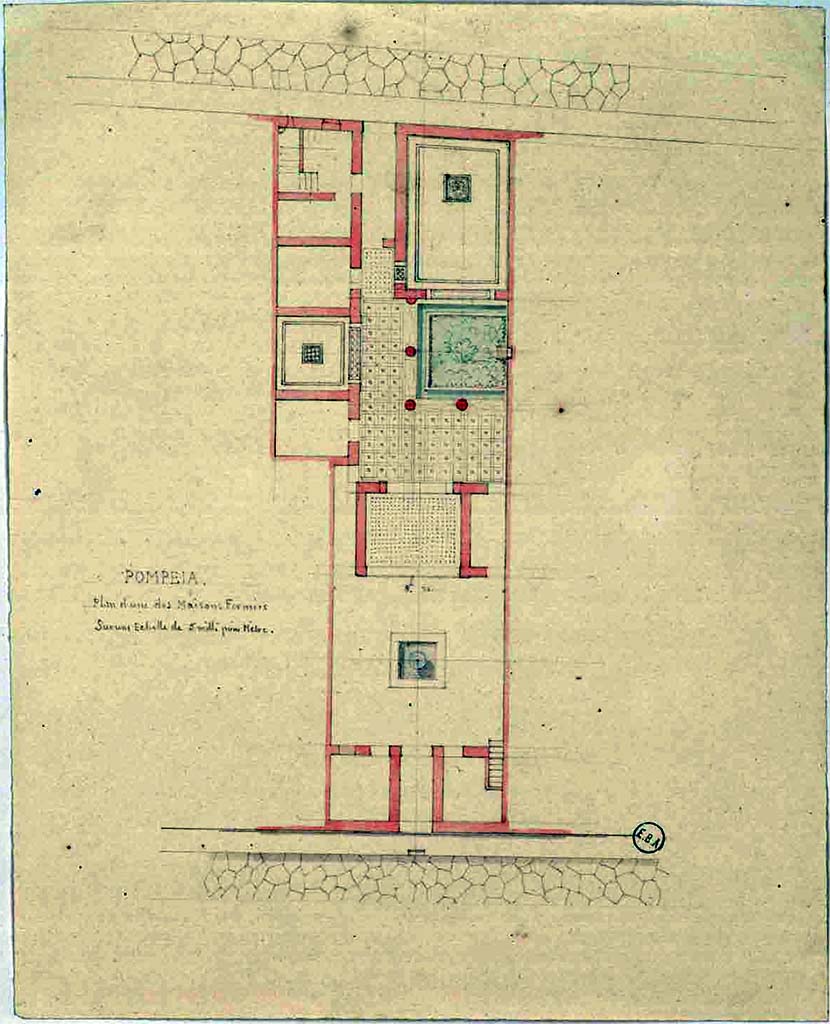
VI.2.16 Pompeii. Plan of house, including flooring.
The main entrance at VI.2.16 is the lower one. The rear entrance at VI.2.21 is the upper one.
See Lesueur, Jean-Baptiste Ciceron. Voyage en Italie de Jean-Baptiste Ciceron Lesueur (1794-1883), pl. 10.
See Book on INHA reference INHA NUM PC 15469 (04) « Licence Ouverte / Open Licence » Etalab
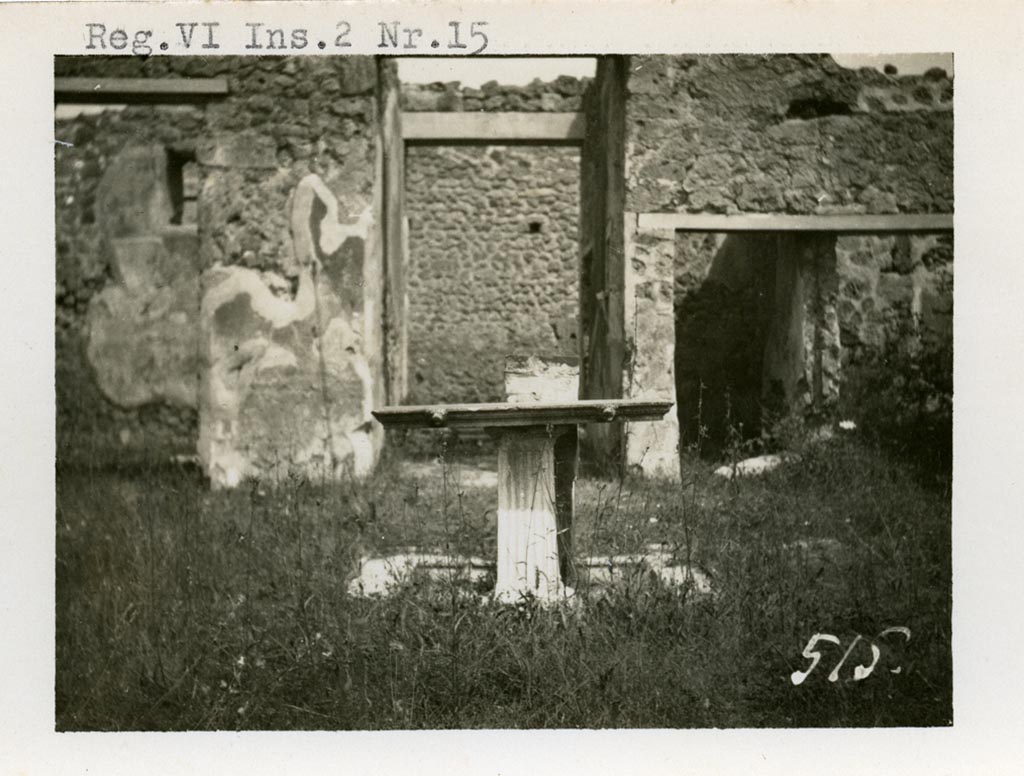
Mystery photo.
VI.2.15 Pompeii, according to Warsher. Pre-1937-39. Looking towards entrance doorway.
Photo courtesy of American Academy in Rome, Photographic Archive. Warsher collection no. 515.
(Note: the doorway at VI.2.15 is a rear doorway into the peristyle area, therefore - without an impluvium in the centre.
This may be the entrance at VI.2.16 into an atrium with marble impluvium and a round marble table, but be aware this may not be from this house at all.)
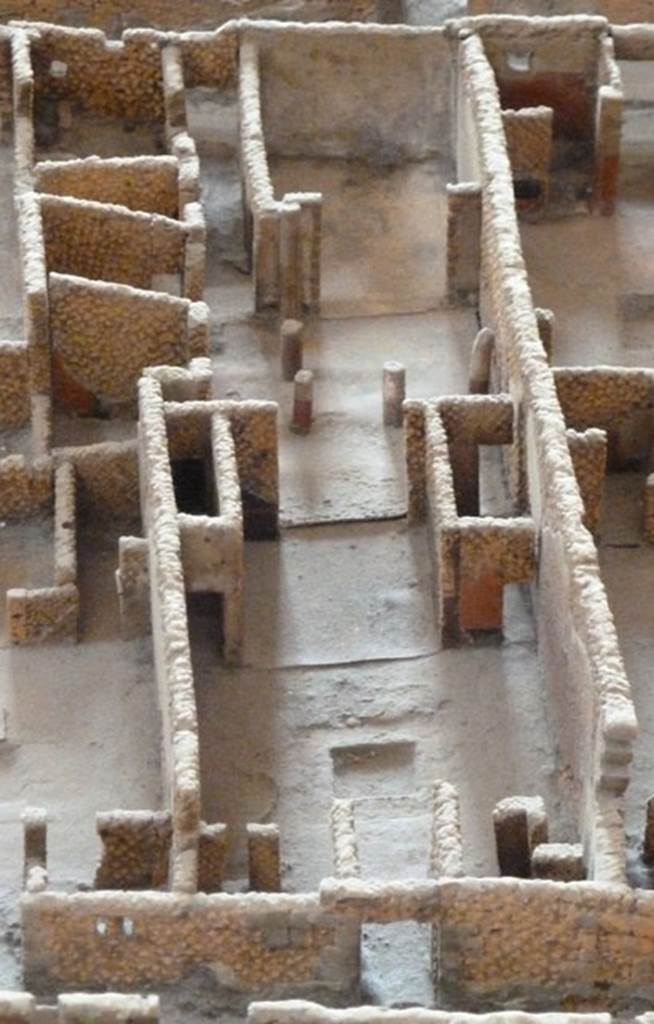
VI.2.16 Pompeii. May 2010.
Looking east from entrance in Vicolo di Narciso towards other entrance at VI.2.21 in Vicolo di Modesto.
Model as viewed in Naples Archaeological Museum.
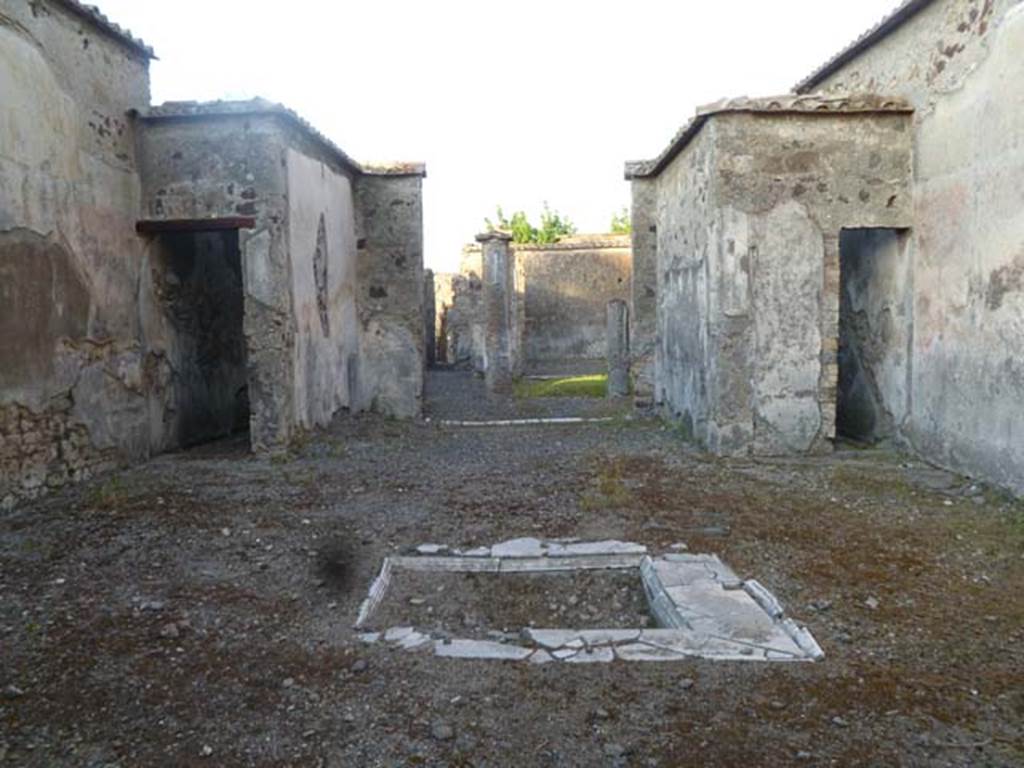
VI.2.16 Pompeii. May 2011. Looking east across atrium and impluvium.
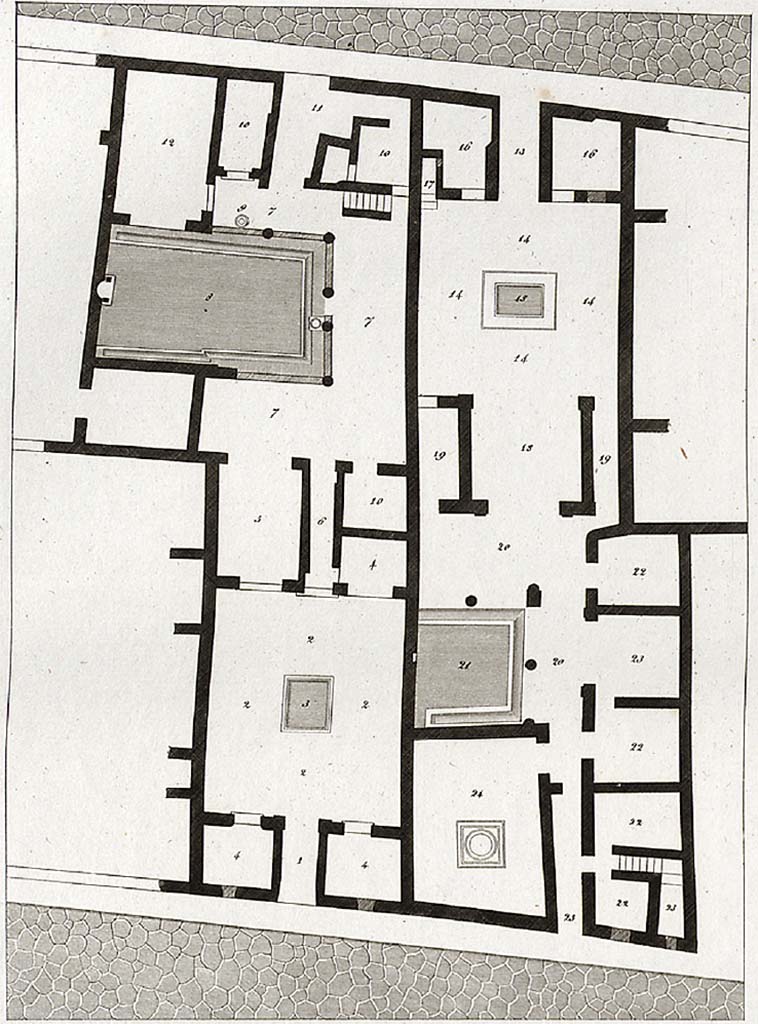
VI.2.16 Pompeii. 1824 plan by Mazois. Entrance VI.2.16 is at the top of the right-hand house.
VI.2.21 is at the bottom of the same house. VI.2.22 is the
entrance of the left-hand house.
See Mazois, F., 1824. Les Ruines de Pompei : Second Partie.
Paris : Firmin Didot, Planche XXIV.
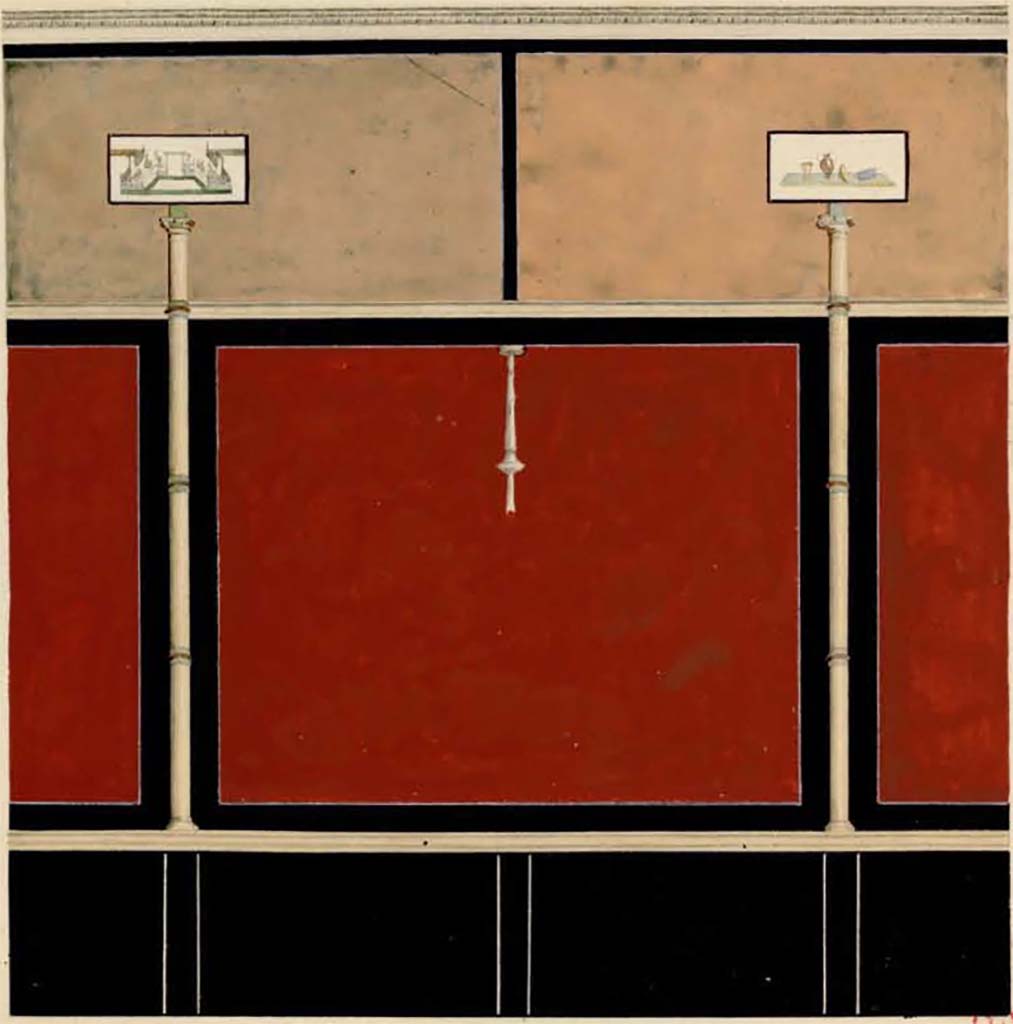
VI.2.16 Pompeii. 1 July 1832. Painting of atrium wall, described
as III Candelabra Style, painted by Charles Auguste Questel.
The middle zone was sub-divided into wide red panels separated by
narrow black compartments in front of which were painted narrow columns. The
zoccolo was painted black.
The upper zone was painted white with paintings of gardens and
various votive objects.
The wide red panels were also crossed by candelabra, (note these
were absent in the reproduction of this room by Mazois.)
See
Charles-Auguste Questel (1807-1888) Voyage en Italie et Sicile. Août 1831 -
novembre 1832, pl. 37/120.
INHA identifiant numérique: NUM MS 512. Document placé sous « Licence Ouverte / Open Licence » Etalab
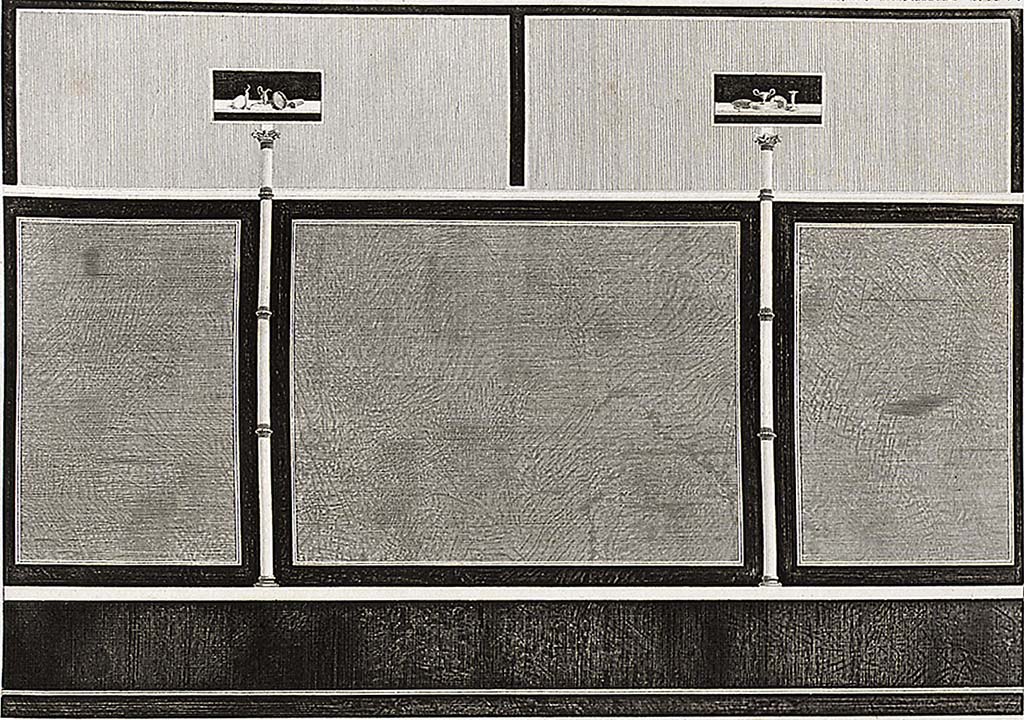
VI.2.16 Pompeii. c.1811. Painting of wall of atrium by Mazois.
See Mazois, F., 1824. Les Ruines de Pompei : Second Partie.
Paris: Firmin Didot, pl. XXV, fig. I.
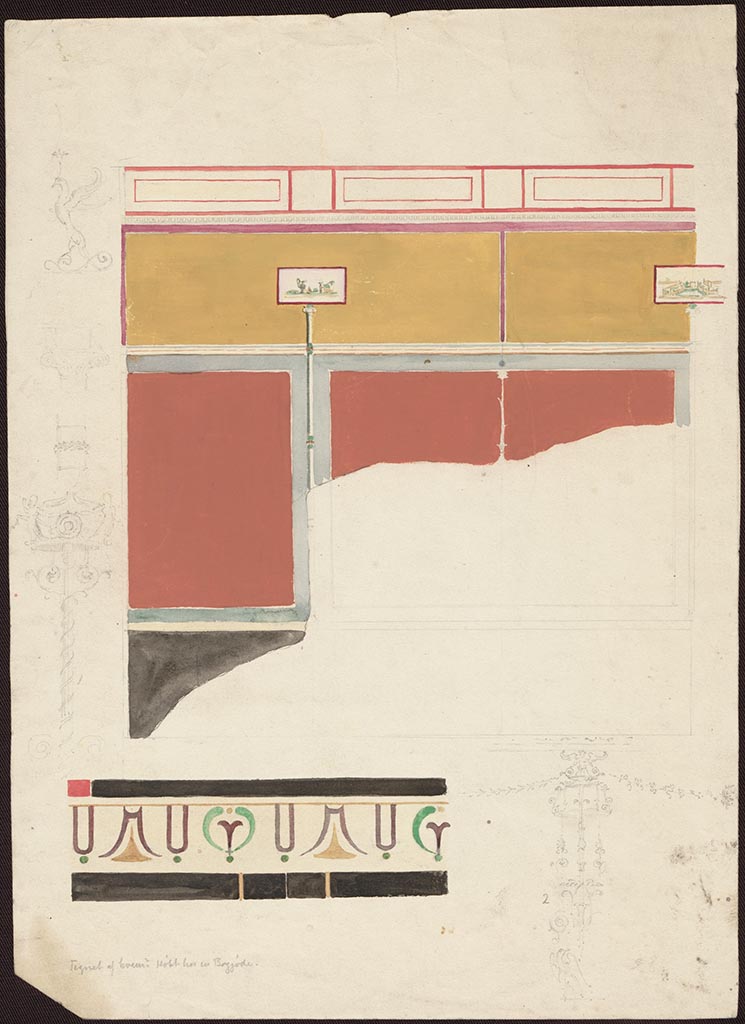
VI.2.16 Pompeii. Undated painting of part of atrium wall by Martin
Borch (1852-1937).
Photo © Danmarks Kunstbibliotek, inv. no. ark_16452.
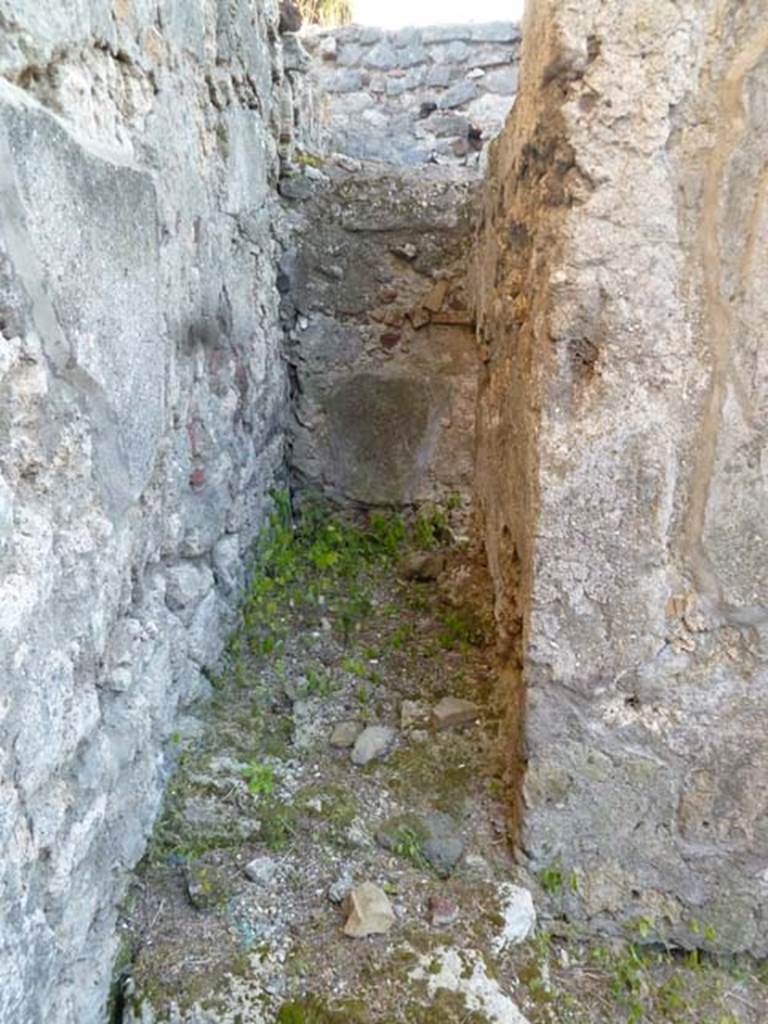
VI.2.16 Pompeii. May 2011. Looking west into room in south-west corner of atrium.
According to Fiorelli, this was the stairs to the upper floor.
According to Hobson, the narrow room with a step up over a threshold stone and a window at the far end was possibly a latrine.
However, an area in the kitchen with a low wall, on which a screen might have been stood and again with a window, suggests the position of a latrine.
Either or both could be a latrine.
See Hobson, B., 2009. Latrinae et foricae: Toilets in the Roman World. London; Duckworth. (p.68)
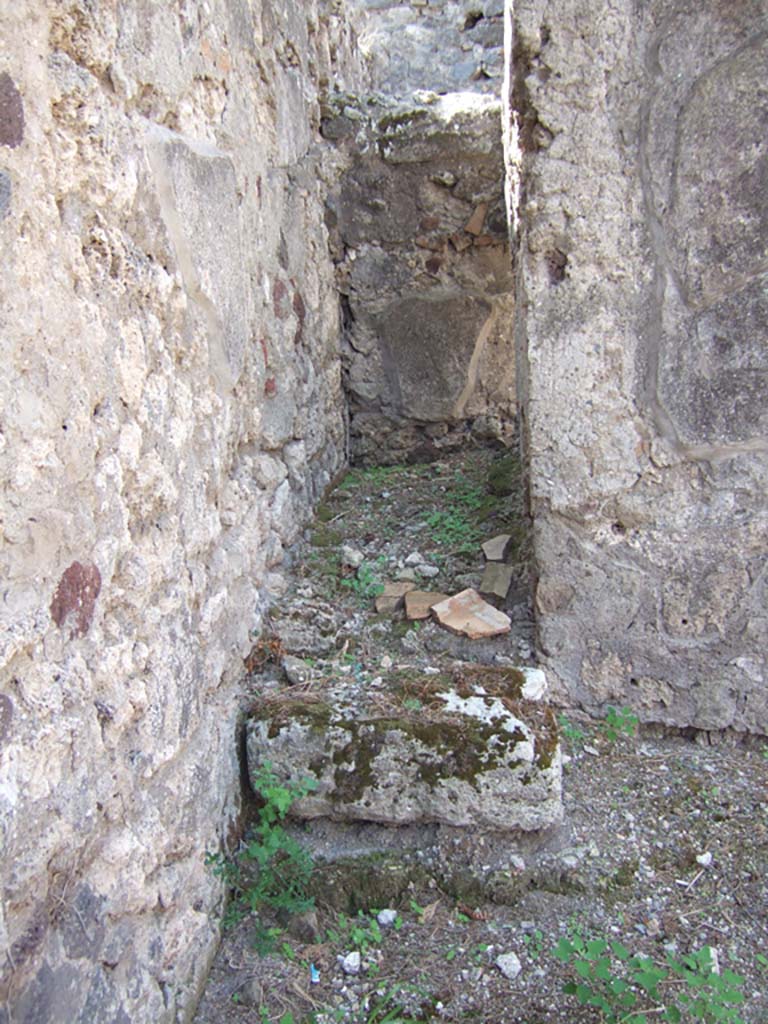
VI.2.16 Pompeii. September 2005. Looking west from south-west corner of atrium.
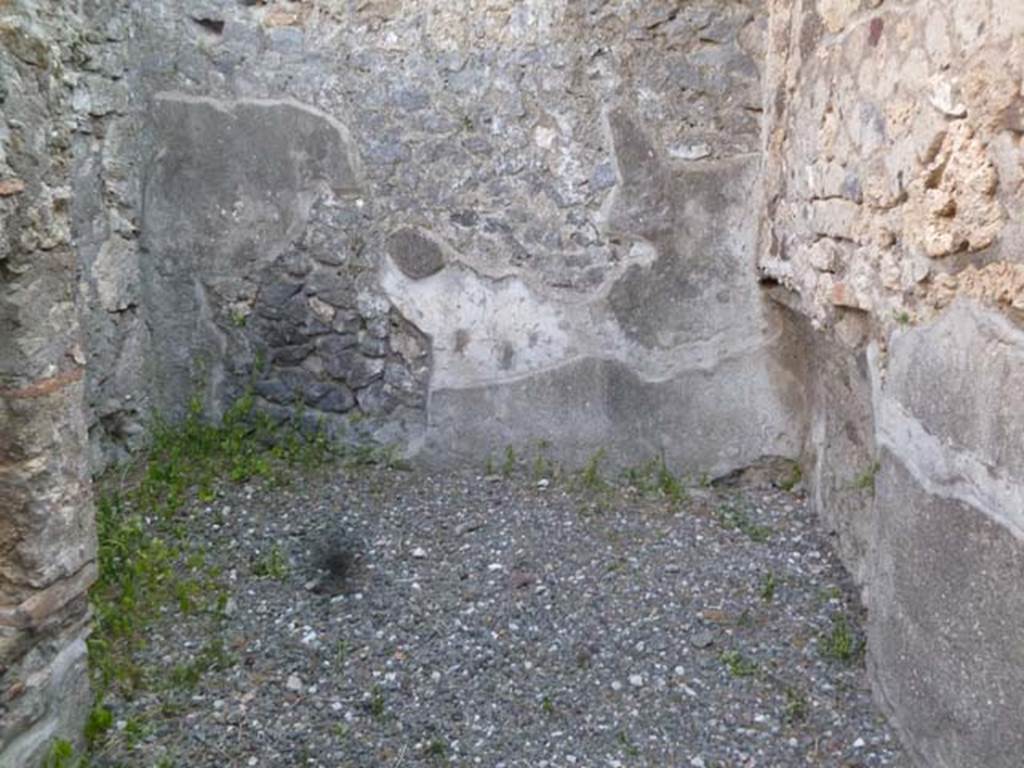
VI.2.16 Pompeii. May 2011. Looking west into cubiculum in south-west corner of atrium.
On the left, in the south wall, was a niche set into the short stretch of masonry in “opera incerta” as the rear wall, then recovered with raw/rough plaster.
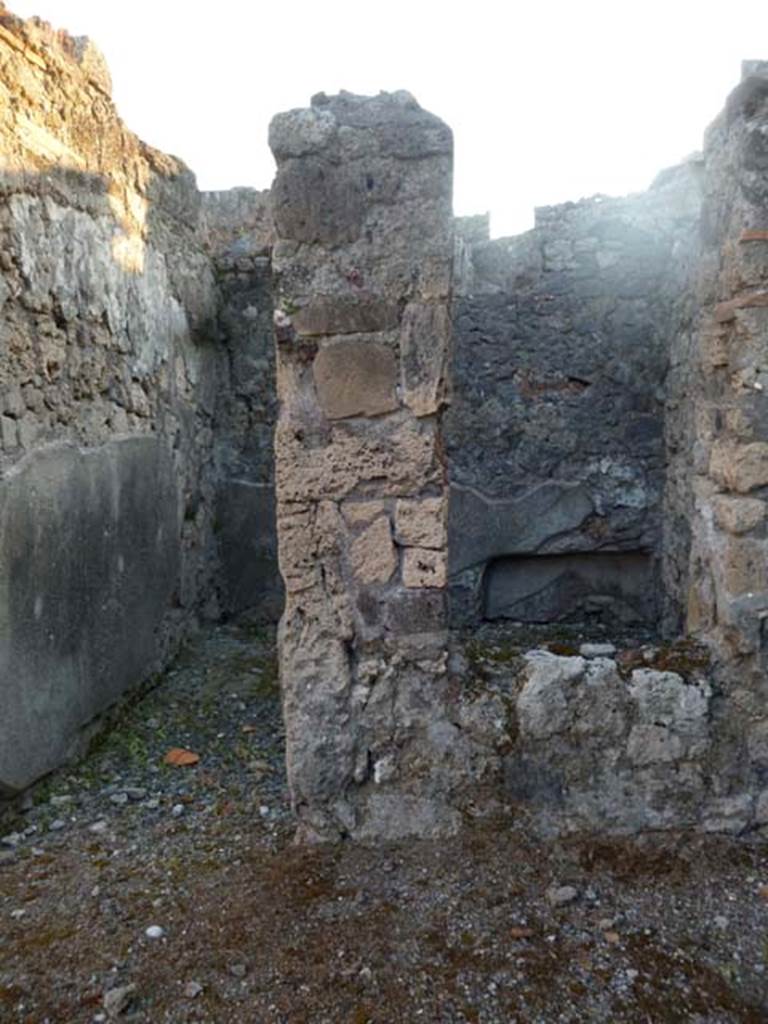
VI.2.16 Pompeii. May 2011. Looking west to doorway and window in cubiculum looking into atrium.
At the north end of the west wall, the bed recess can be seen.
This cubiculum was in the north-west corner of the atrium, on the north side of the entrance corridor.
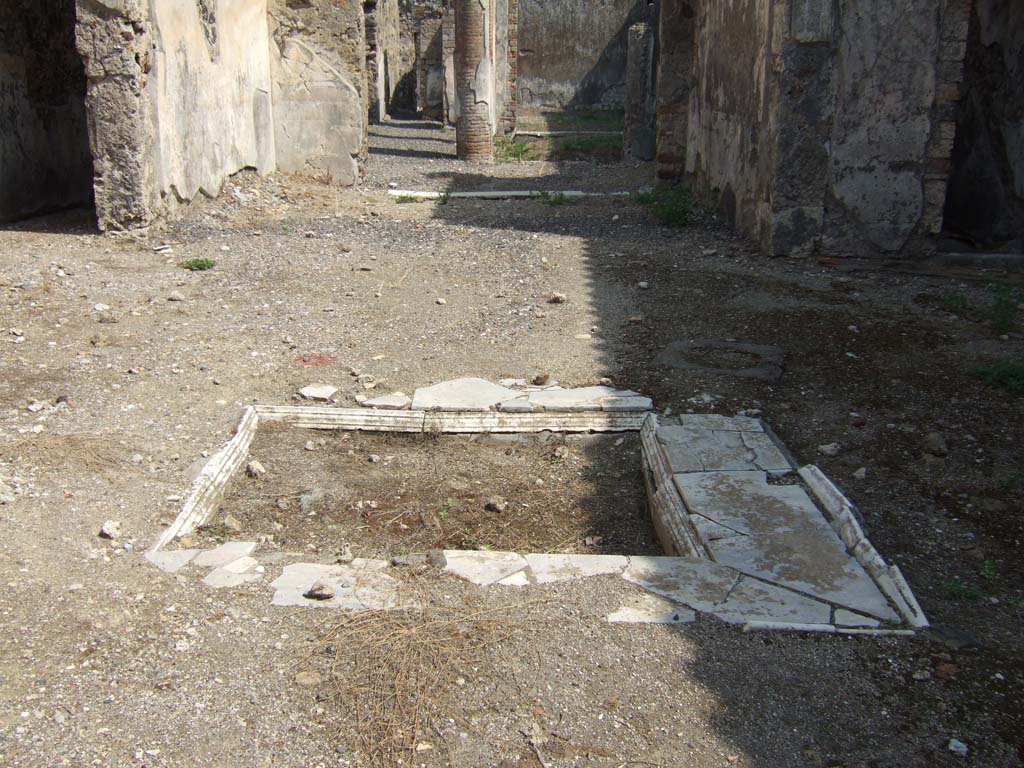
VI.2.16 Pompeii. September 2005. Looking east across marble impluvium in atrium towards tablinum and peristyle.
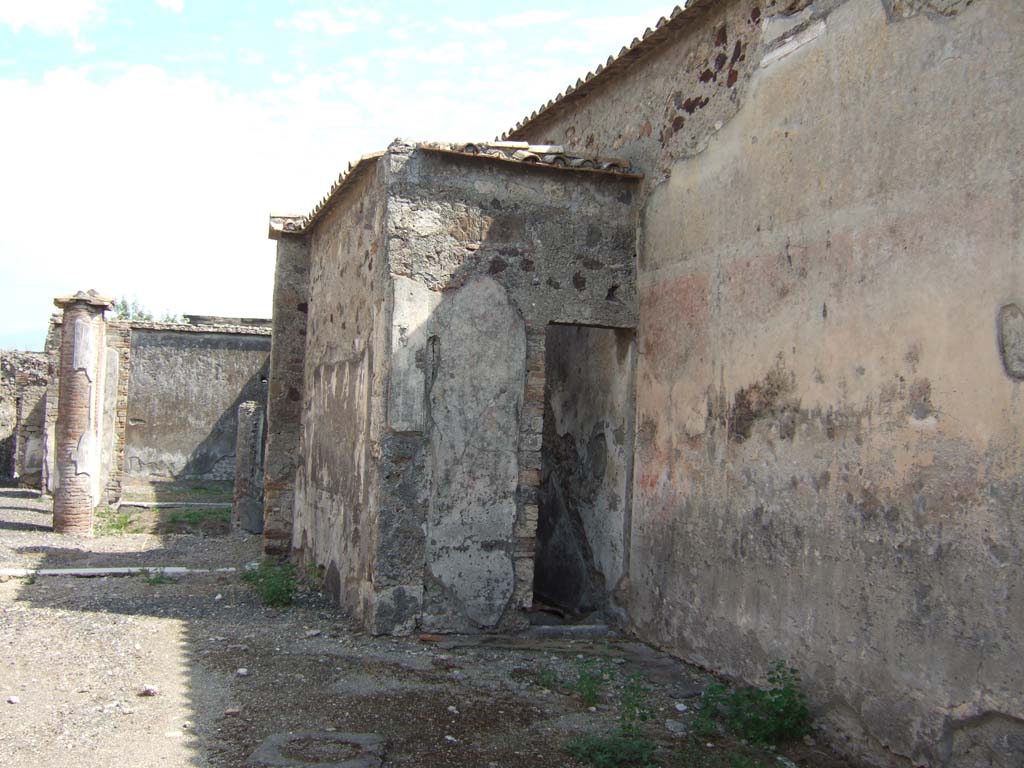
VI.2.16 Pompeii. September 2005. Looking east across atrium towards south wall of atrium and tablinum, on right.
According to PPM (1979) –
“On the south wall of the atrium, in addition to being able to see the zoccolo/dado,
you could still see the traces of the candelabra that crossed the compartments
of the middle area and which supported the painted squares in the upper area.”
See Carratelli,
G. P., 1990-2003. Pompei: Pitture e
Mosaici. IV. Roma: Istituto della enciclopedia italiana, (p. 207).
The doorway led to a second set of stairs to the upper floor with the outline of the stairs visible on the south wall.
Under these stairs was an area used as a storeroom, according to Fiorelli.
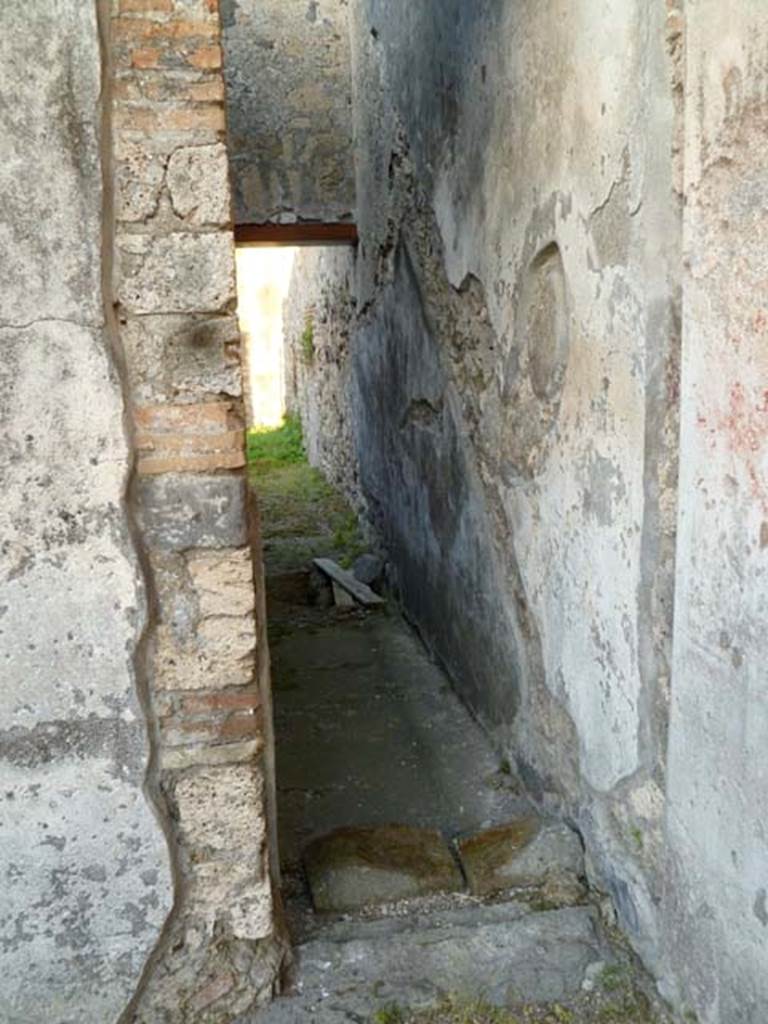
VI.2.16 Pompeii. May 2011. Looking east into area with stairs to upper floor, and storeroom below.
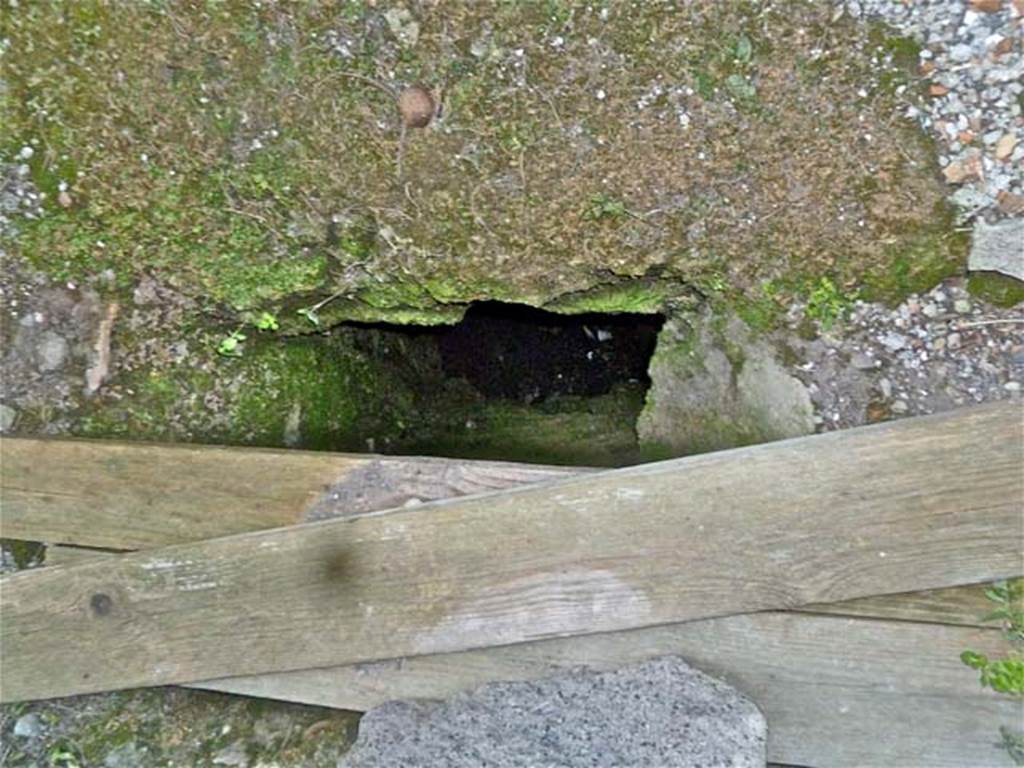
VI.2.16 Pompeii. May 2011. Flooring near south wall of corridor with stairs and storeroom below.
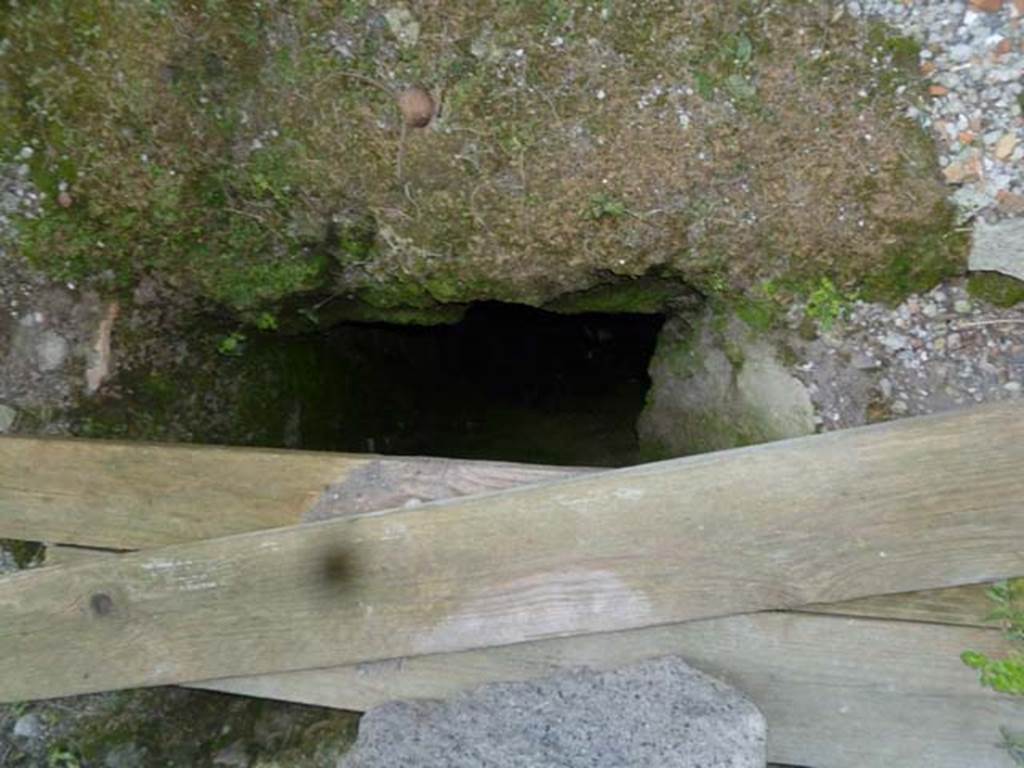
VI.2.16 Pompeii. May 2011. Detail of area of flooring.
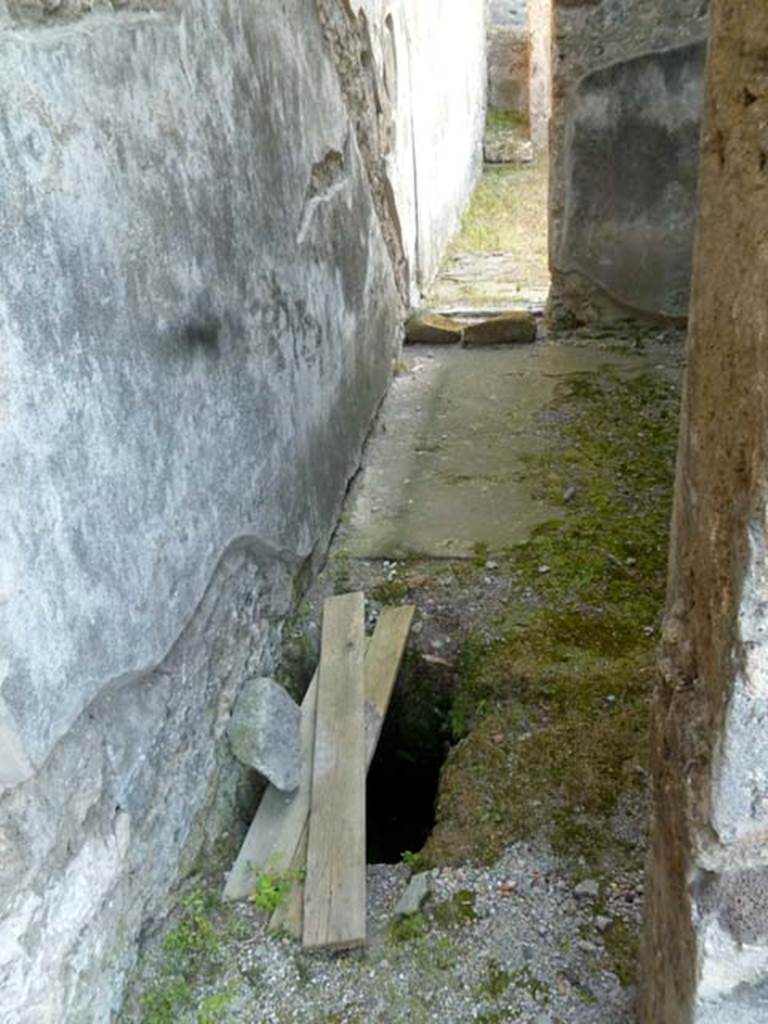
VI.2.16 Pompeii. May 2011. Looking west into area with stairs to upper floor at far end, and storeroom below.