VI.2.1 Pompeii. Thermopolium, popina with two back rooms.
Excavated 1806-8. Rear entrance at VI.2.32.
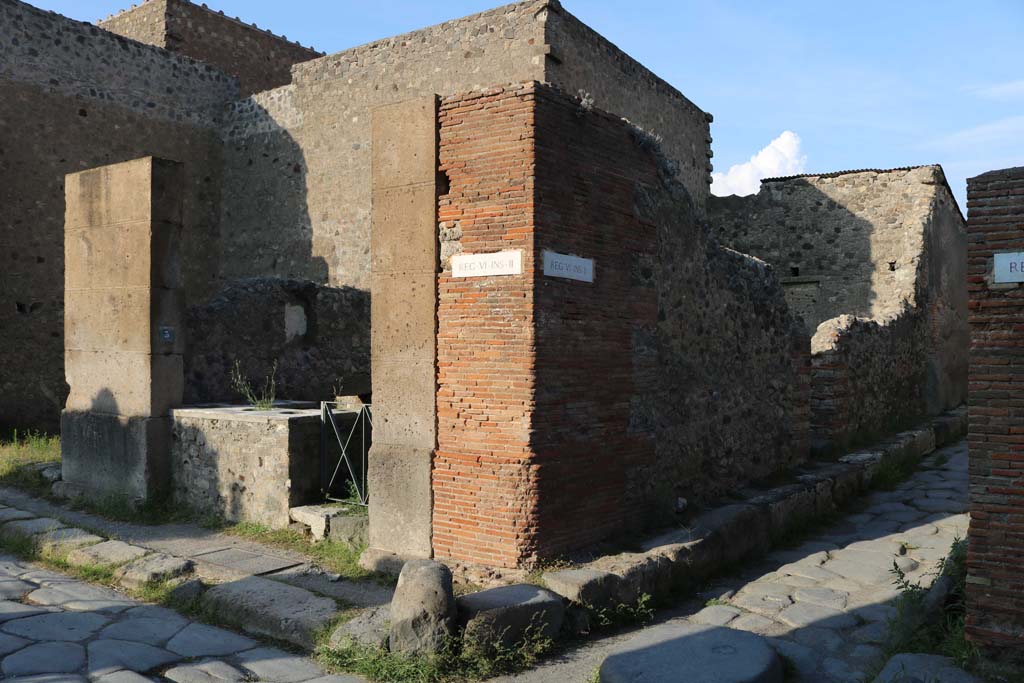
VI.2.1 Pompeii.
December 2018. Looking north-east to entrance doorway on Via Consolare, on
left.
On the right, in Vicolo di Mercurio, is the
side/rear entrance at VI.2.32. Photo courtesy of Aude Durand.
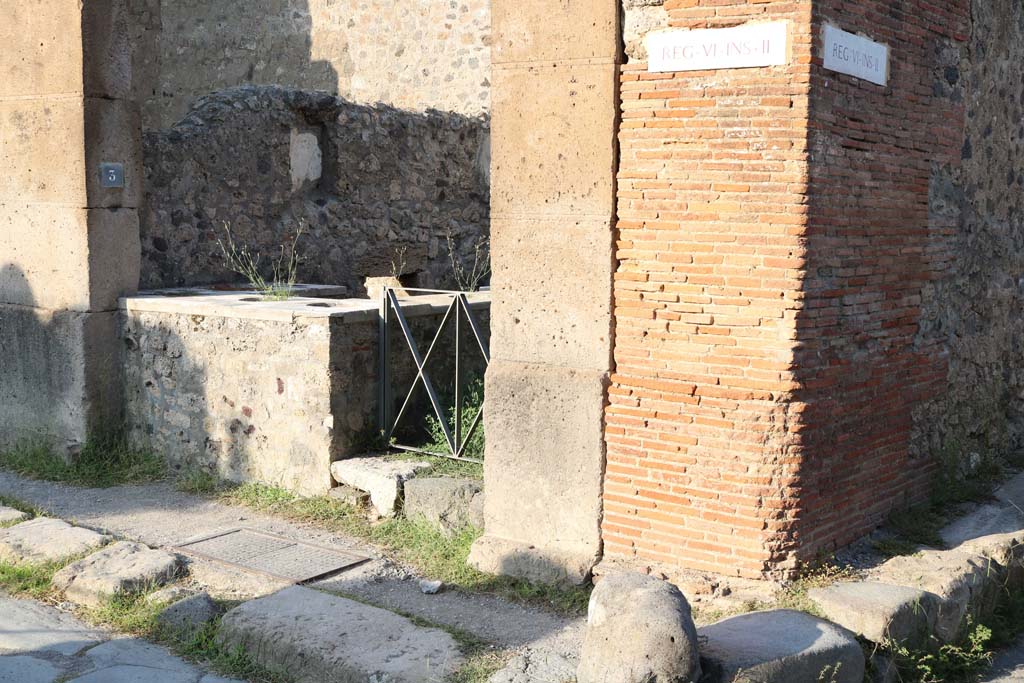
VI.2.1 Pompeii. December 2018. Entrance doorway on Via
Consolare. Photo courtesy of Aude Durand.
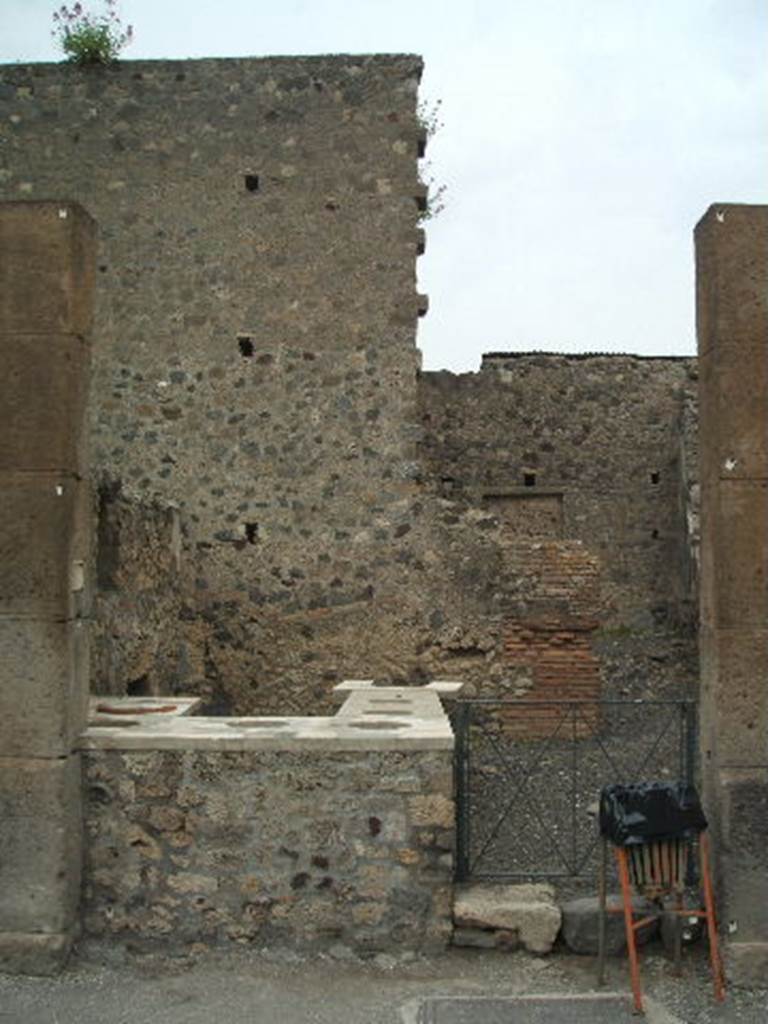
VI.2.1 Pompeii. May 2005. Entrance doorway, looking east across Via Consolare.
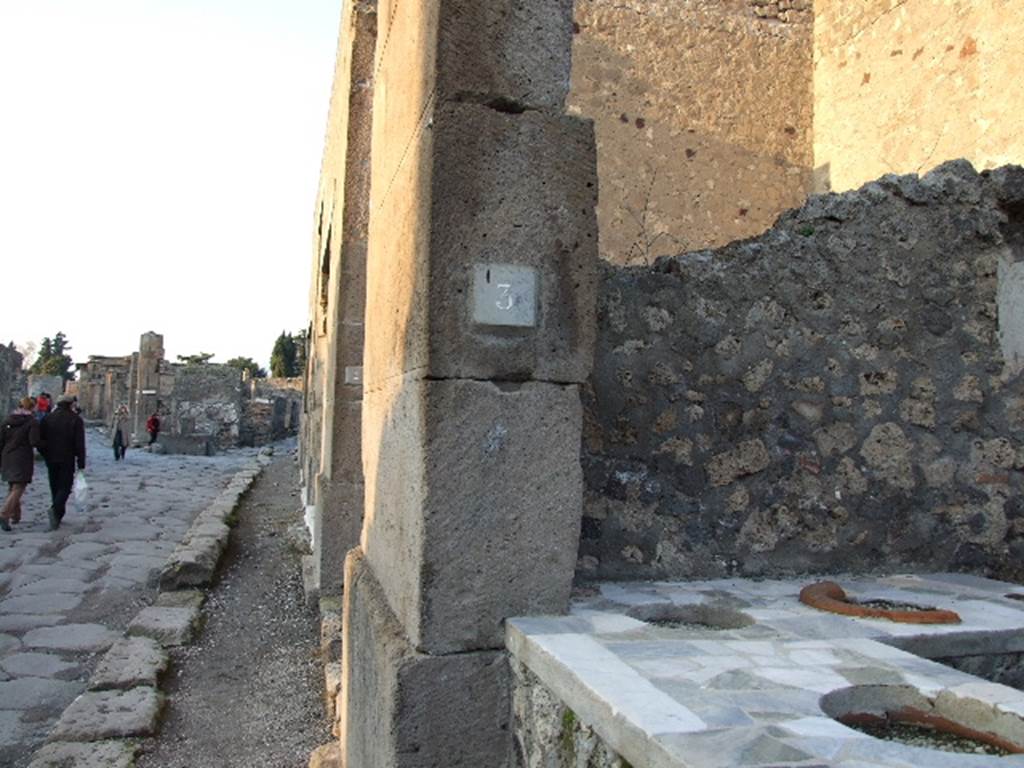
VI.2.1 Pompeii. December 2006. North side of entrance, with wrong number attached.
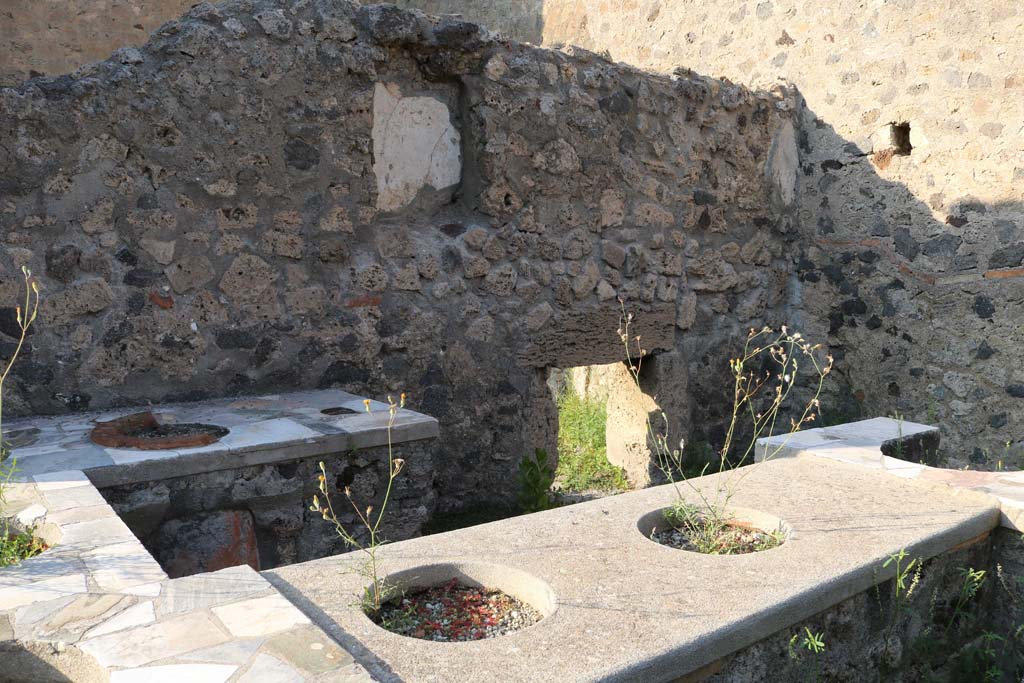
VI.2.1 Pompeii. December 2018.
Looking north-east across counter in bar-room. Photo courtesy of Aude Durand.
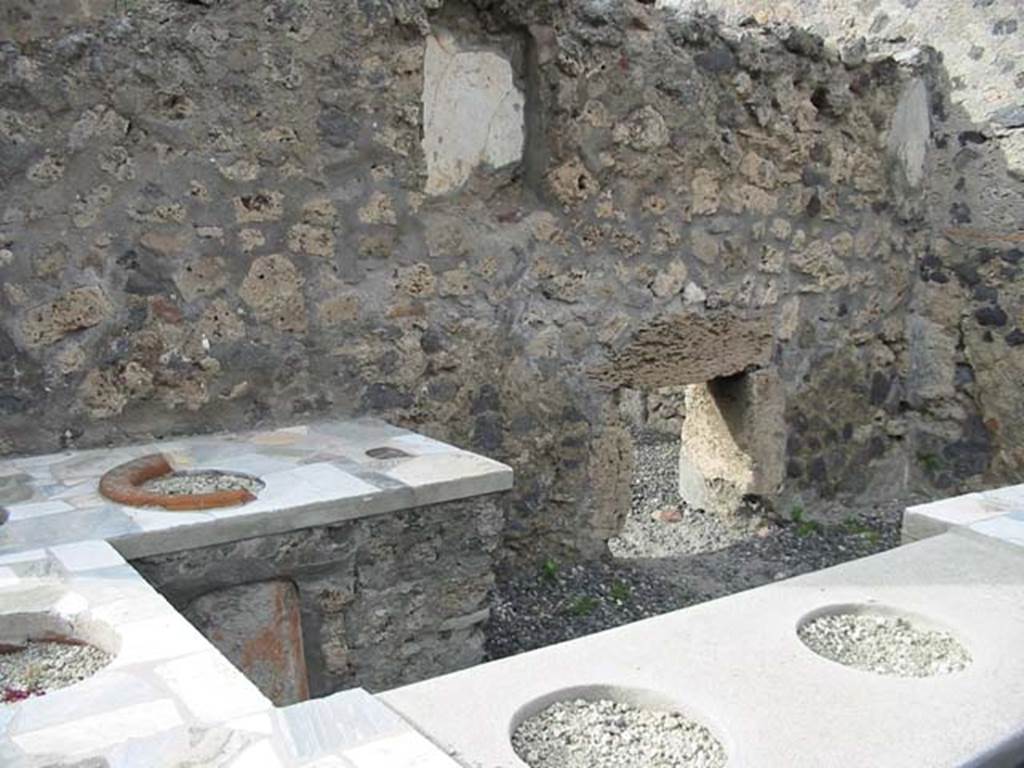
VI.2.1 Pompeii. May 2003. Looking towards north wall of bar-room. Photo courtesy of Nicolas Monteix.
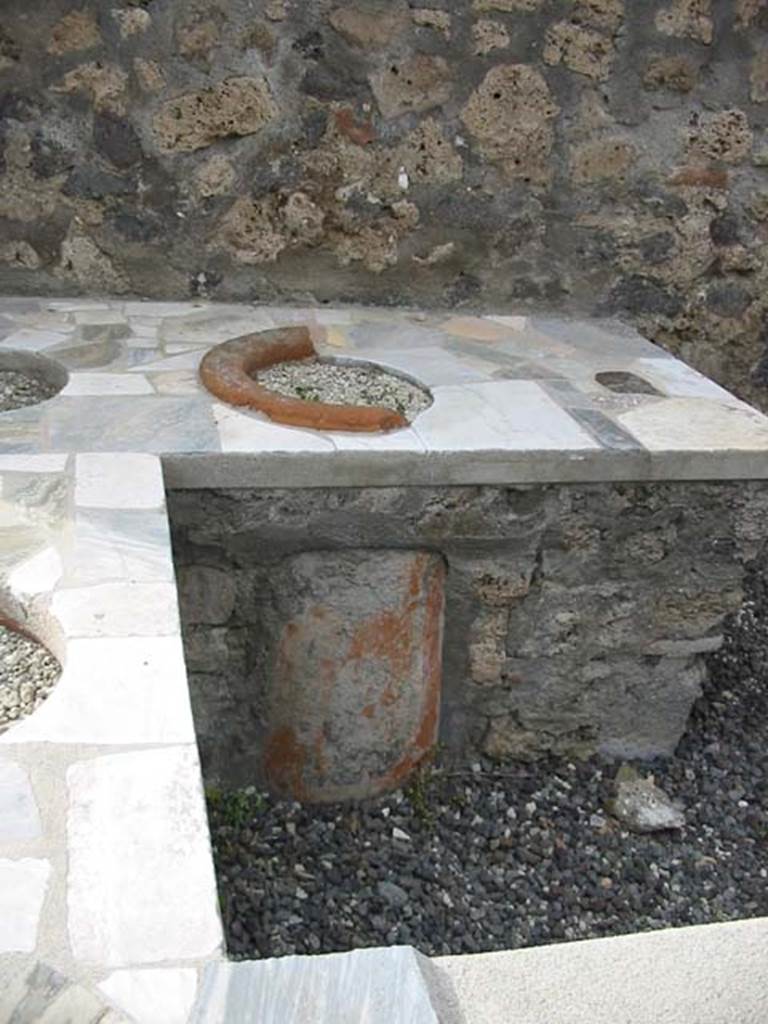
VI.2.1 Pompeii. May 2003.
Base of terracotta urn embedded into counter. Photo courtesy of Nicolas Monteix.
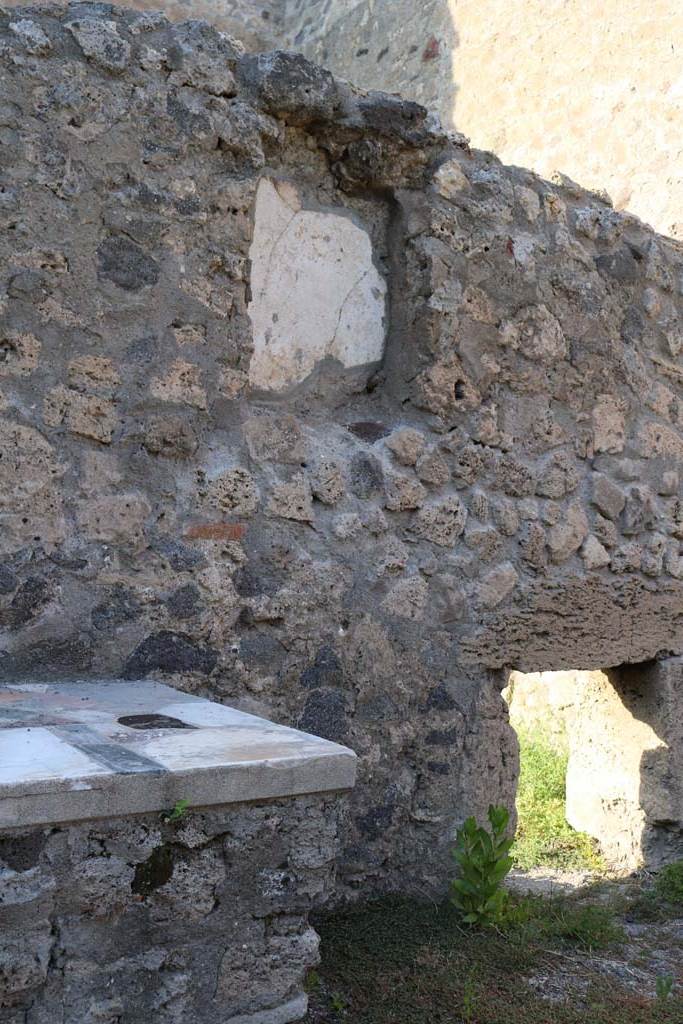
VI.2.1 Pompeii. December 2018.
North wall of
bar-room with niche. Photo
courtesy of Aude Durand.
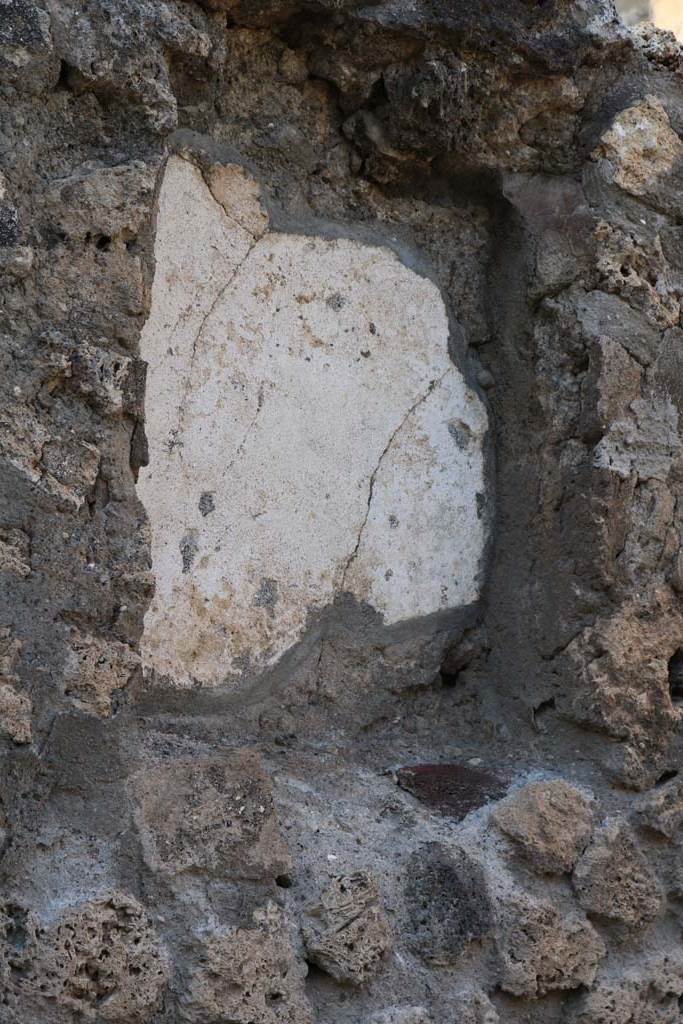
VI.2.1 Pompeii. December 2018.
Detail of niche in north wall of bar-room. Photo
courtesy of Aude Durand.
According to Boyce, the large rectangular niche had its inside walls painted green.
Fiorelli
referred to it as “la nicchia dei Penati”
See Boyce G. K., 1937. Corpus of the Lararia of Pompeii. Rome: MAAR 14. (p44, No.138)
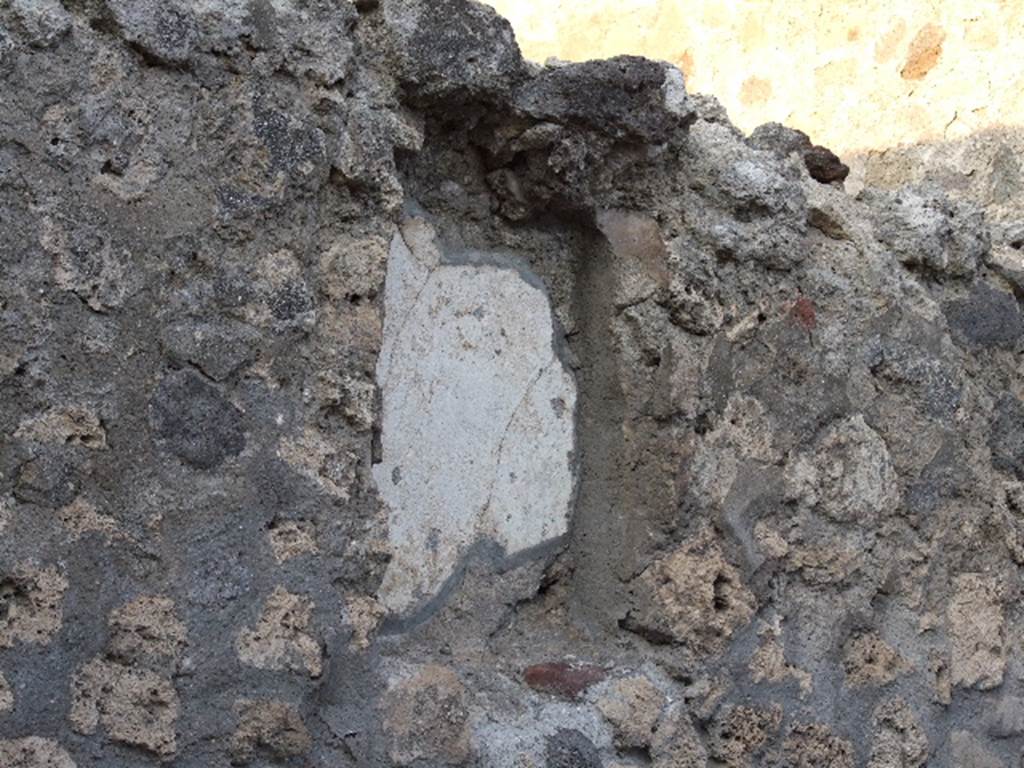
VI.2.1 Pompeii.
December 2006. Niche in north wall.
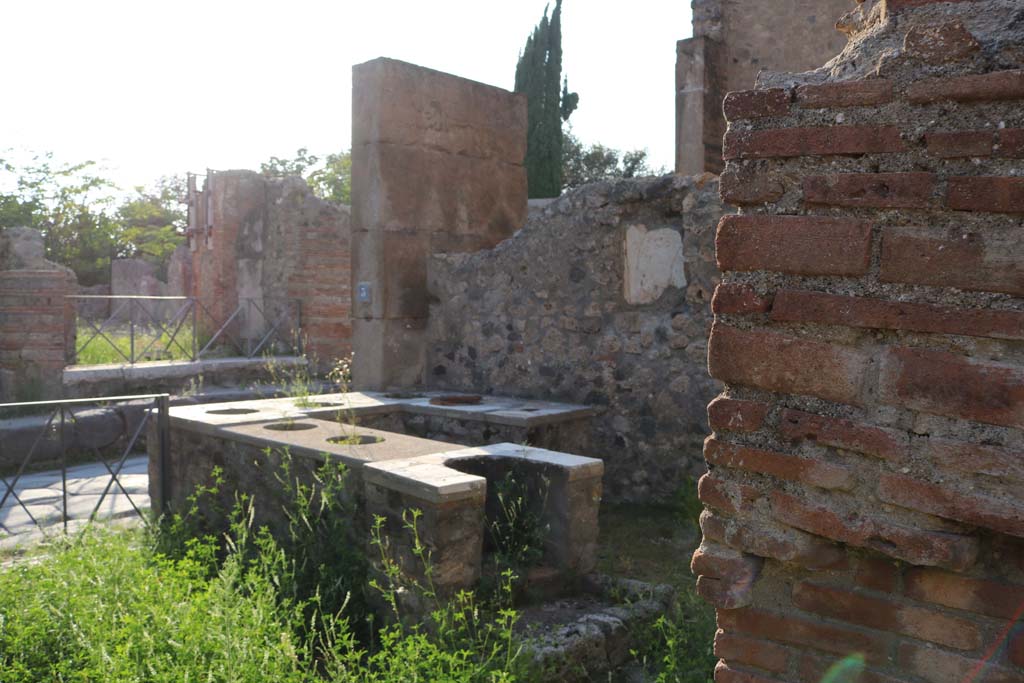
VI.2.1 Pompeii. December 2018.
Looking north-west across bar-room, from
rear. Photo courtesy of Aude Durand.
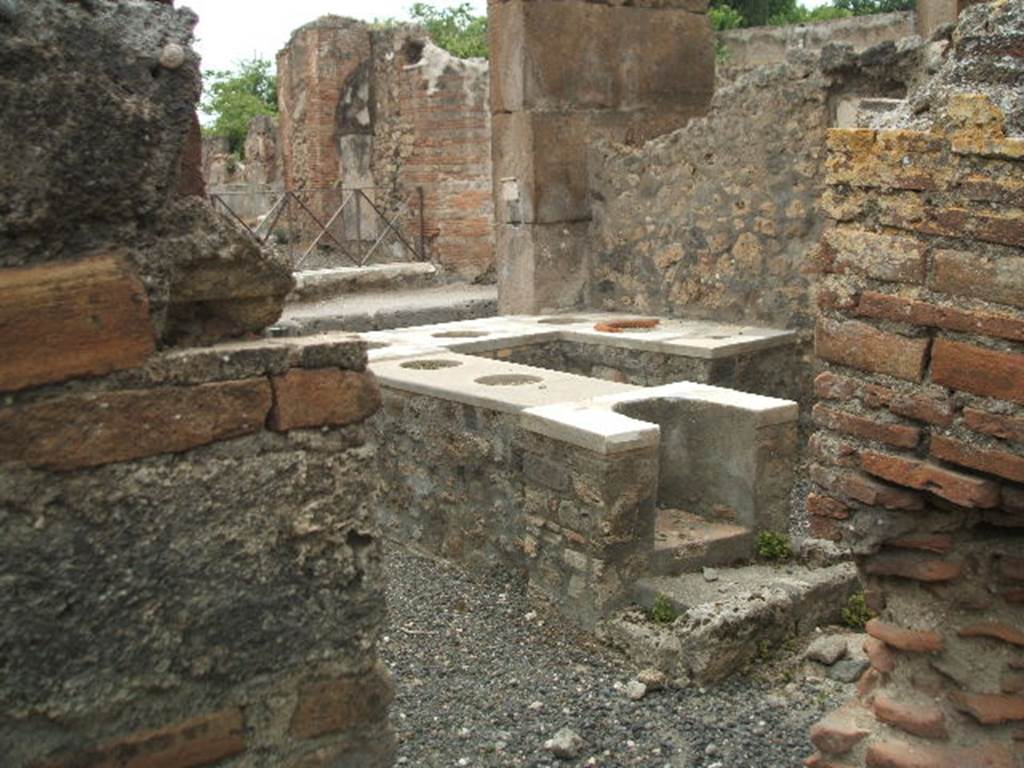
VI.2.1 Pompeii. May 2005. Looking from rear. Marble counter with six urns and a hearth.
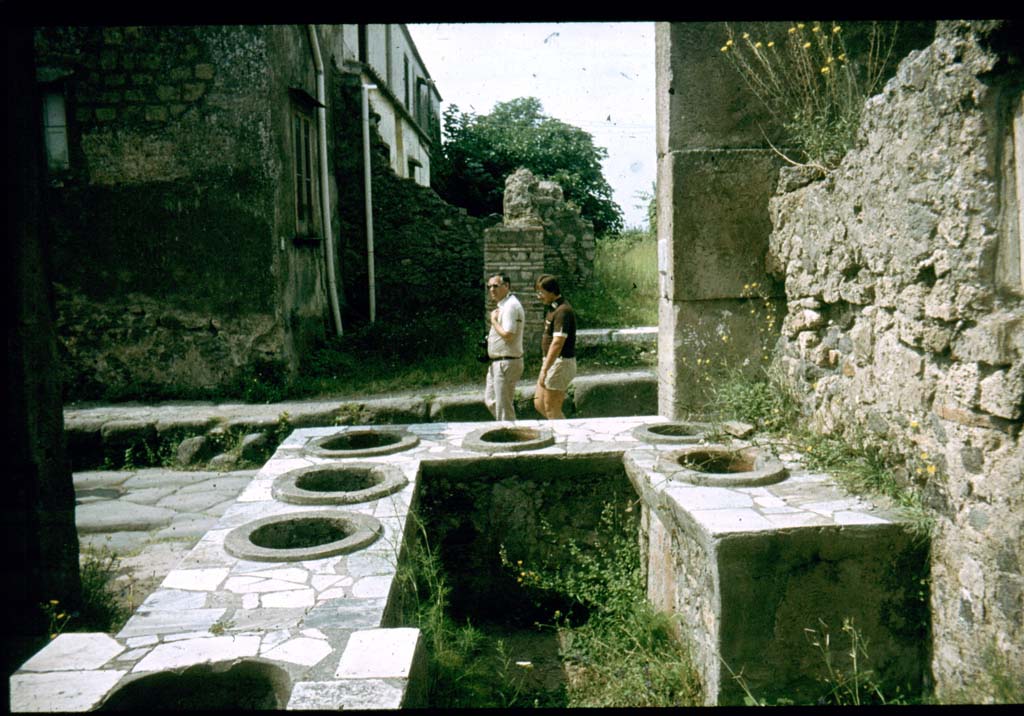
VI.2.1 Pompeii. Looking from rear of counter onto Via Consolare.
Photographed 1970-79 by Günther Einhorn, picture courtesy of his son Ralf Einhorn.
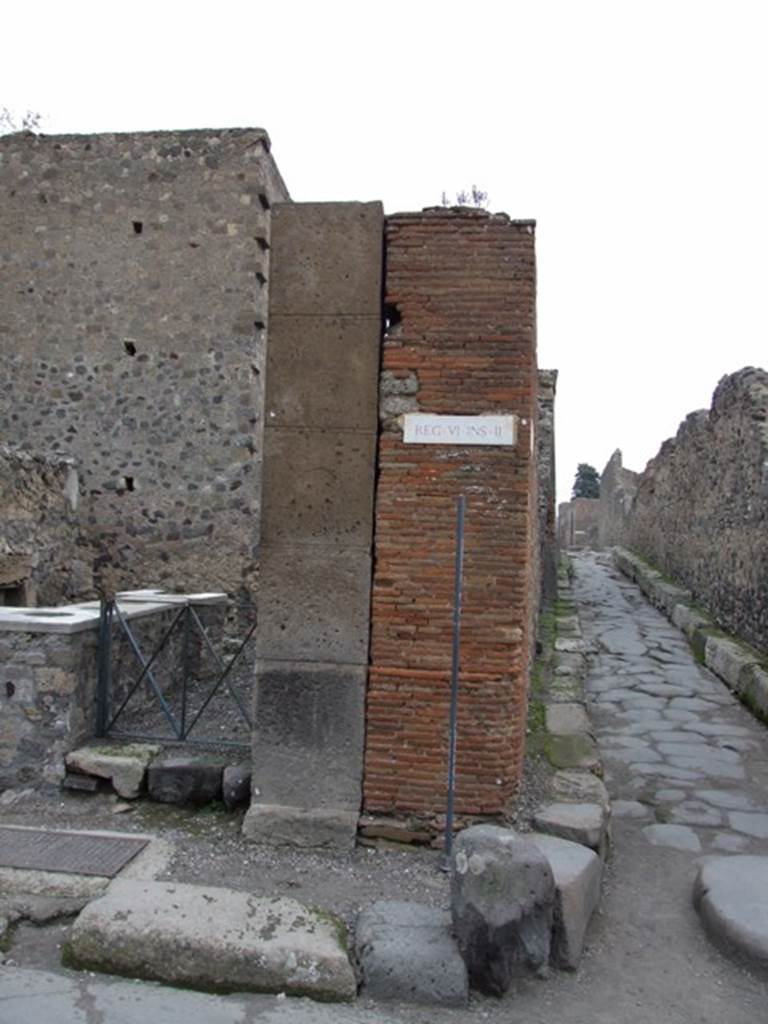
VI.2.1 Pompeii. December 2007. South side of entrance.
Corner of Via Consolare and Vicolo di Mercurio. Looking east.
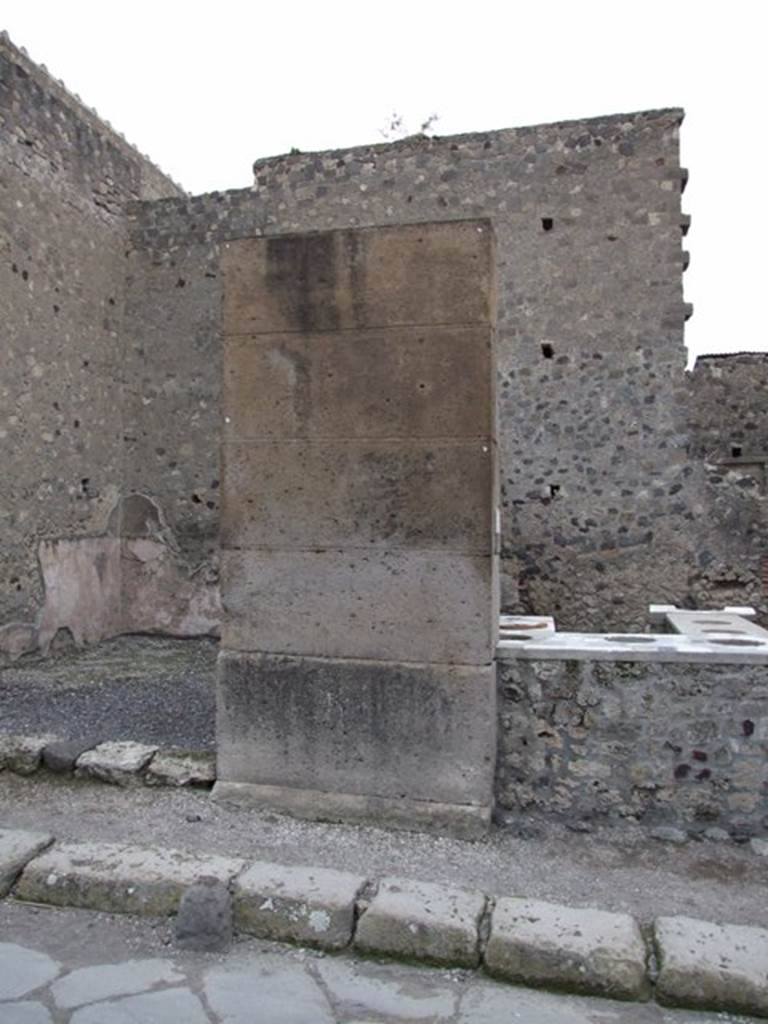
VI.2.1 Pompeii. December 2007. Pilaster between VI.2.2 and VI.2.1. Possible site of eituns?
According to Cooley, Oscan inscriptions (eituns) came to light when the plaster had peeled off the walls after excavation.
These were painted on the outer walls of houses near street corners.
An example has been found at VI.2.4.
These eituns were thought to relate to the military operations from the time of Sulla’s besiege of Pompeii.
See Cooley, A. and M.G.L., 2004. Pompeii: A Sourcebook. London: Routledge. (p.19)
According to Antonini, the site of the eituns was to the left of doorway numbered VI.2.1, as above.
The one found here is known as Vetter 23. It read –
eksuk. amvianud.
eituns
anter. tiurri.
XII. ini. ver(u)
sarinu. puf.
faamat
m(a)r(a(hi)s).
aadiriis. v(iibieis)
See Antonini, R.
(2007): Contributi pompeiani II-IV,
in Quaderni di Studi Pompeiani, 1/2007, (p.47)
According to Cooley, this translated as –
“Go by this route between the 12th tower and the Salt Gate, where Maras Atrius, son of Vibius, gives instructions”.
She added the note that the Salt Gate is the Oscan name for what is now known as the Herculaneum Gate.