V.7.6 Pompeii. House of Paris. Previously unexcavated doorway.
Only the southern street fronts of the insula were excavated in 1907-8.
In 2018 excavations took place here as part of a scheme to improve drainage.
According to CTP, there is a discrepancy in the number of doorways, not made any easier to correct by the new modern brick walling.
CTP said that according to the plan by Eschebach in 1969, there were six entrances marked, but his number 2 doorway was now missing behind the restored brick wall. This should now leave five entrances.
There is however written documentation that Mau and Spano described seven entrances on this south front. Then Spano mentioned eight entrances.
If V.7.6 is known as the House of Paris because of the graffiti on its façade, and we can see another doorway on the east side of it, that doorway should be V.7.7.
If V.7.6 and V.7.7 are accounted for, there must be two doorways V.7.2 and V.7.3, perhaps also even V.7.4, behind the modern brick wall.
See Van der Poel, H. B., 1986. Corpus Topographicum Pompeianum, Part IIIA. Austin: University of Texas. (p.82)
The doorways will remain a mystery until the rest of the insula is brought to light again.
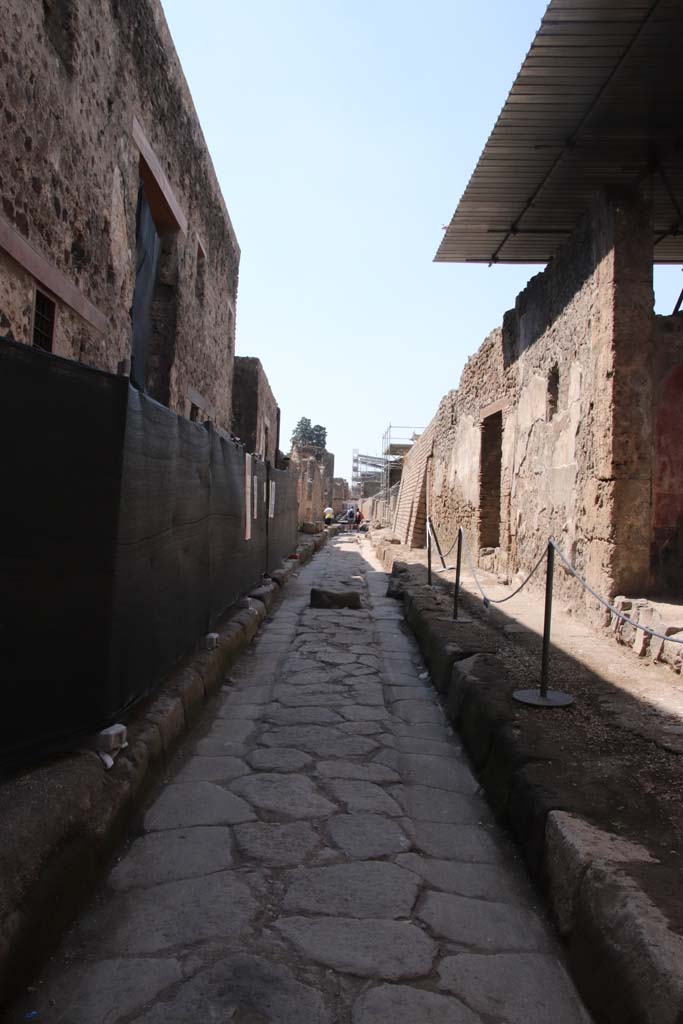
Vicolo delle Nozze d’Argento. September 2021.
Looking west between
V.2, on left, and V.7.7, near right, with smaller doorway and window of V.7.6, farther
on right.
Photo
courtesy of Klaus Heese.
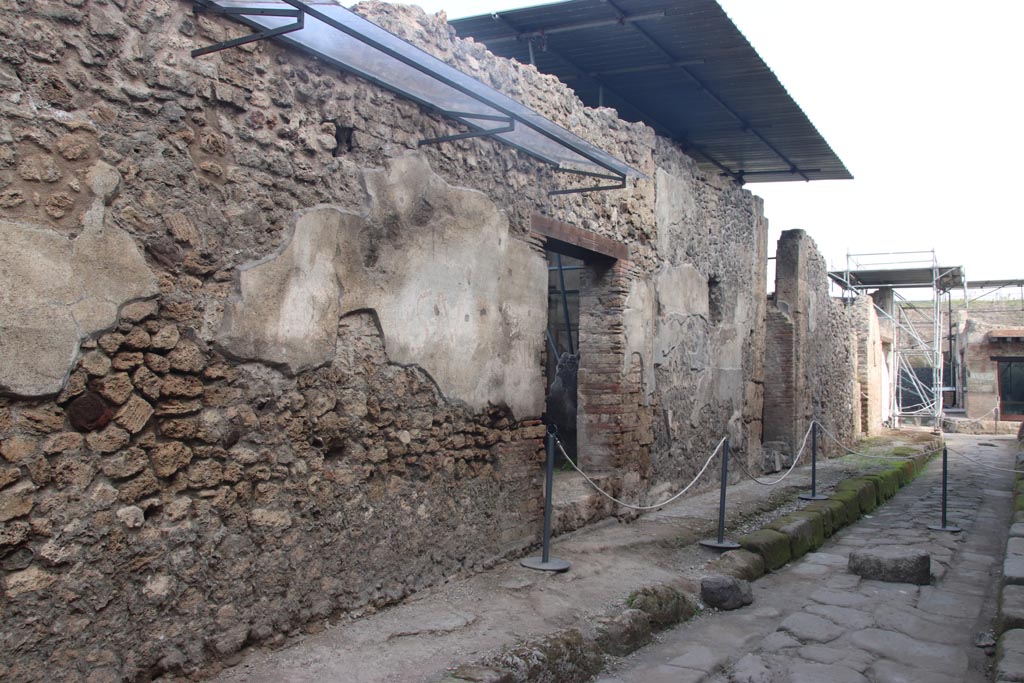
V.7.6
Pompeii. October 2023.
Looking east along north side of Vicolo
delle Nozze d'Argento towards entrance doorway, in centre. Photo
courtesy of Klaus Heese.
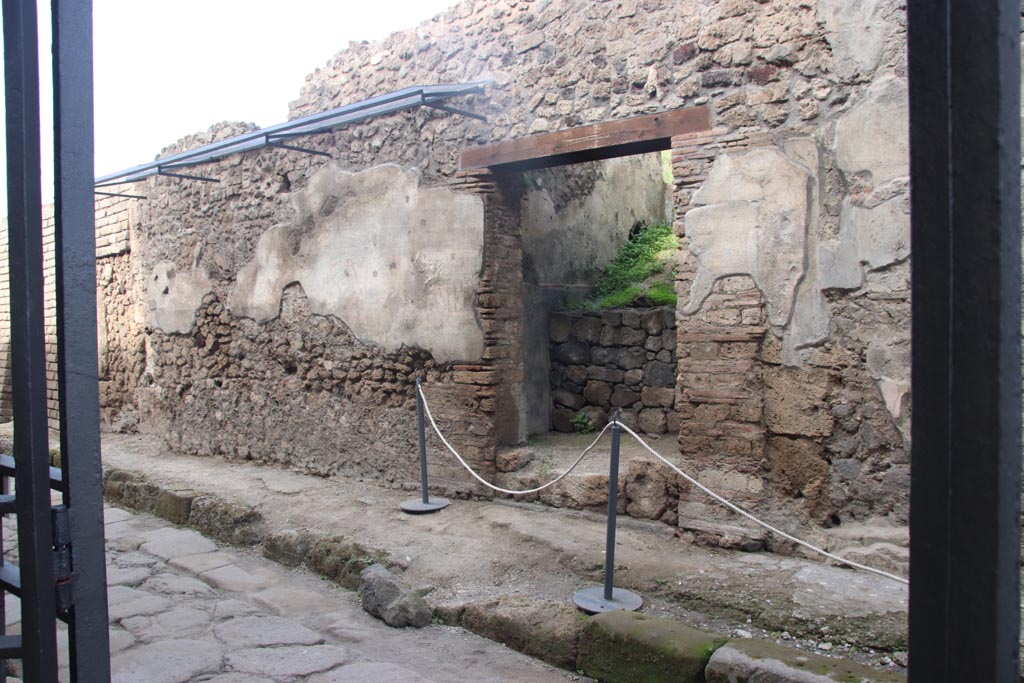
V.7.6
Pompeii. October 2023. Looking east towards entrance doorway and remaining
plaster with graffiti. Photo
courtesy of Klaus Heese.
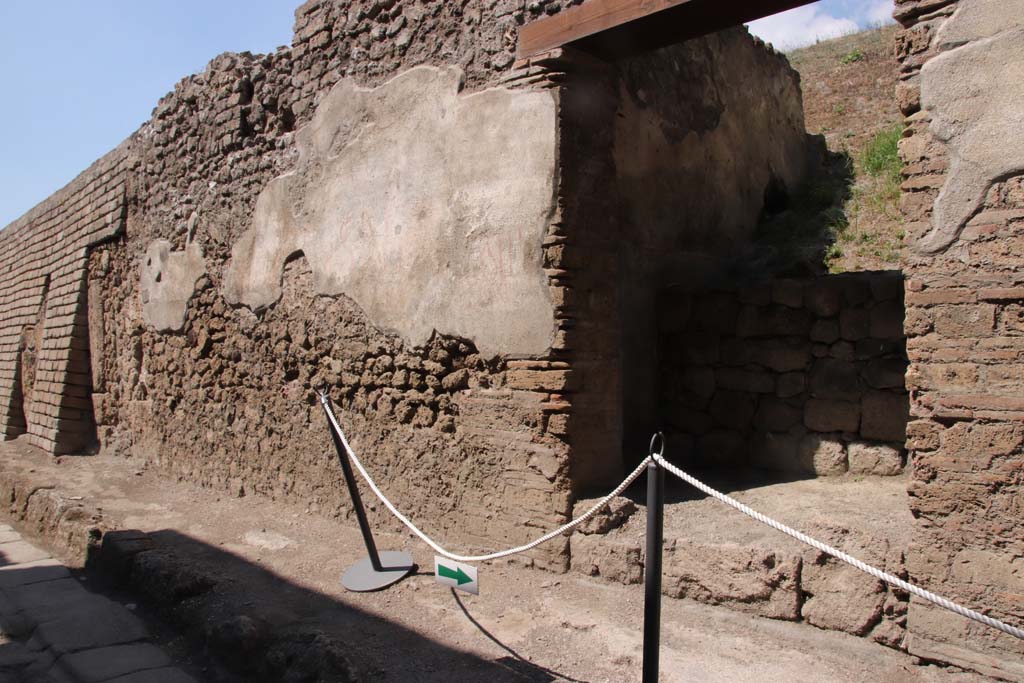
V.7.5, on left and V.7.6, on right, Pompeii. September 2021.
Entrance doorway with remaining plaster with graffiti, looking west along north side of Vicolo delle Nozze d’Argento.
Photo
courtesy of Klaus Heese.
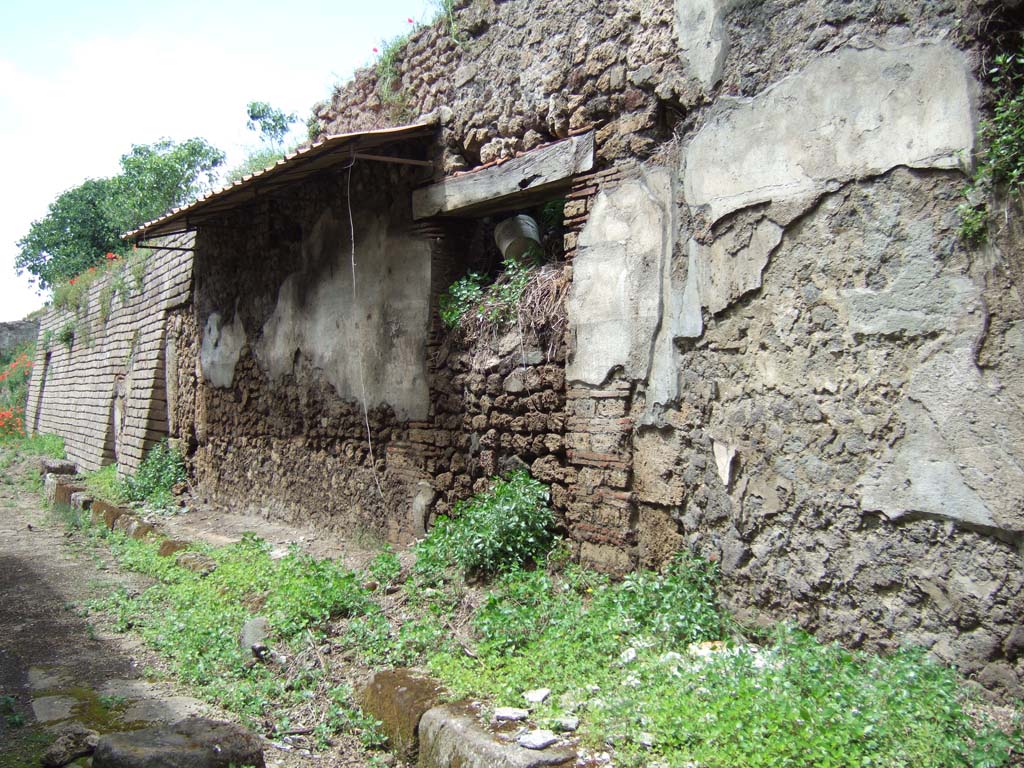
V.7.5 and V.7.6 Pompeii. May 2006.
Entrance doorways on either side of painted plaster with graffiti. Looking north-west along Vicolo delle Nozze d’Argento.
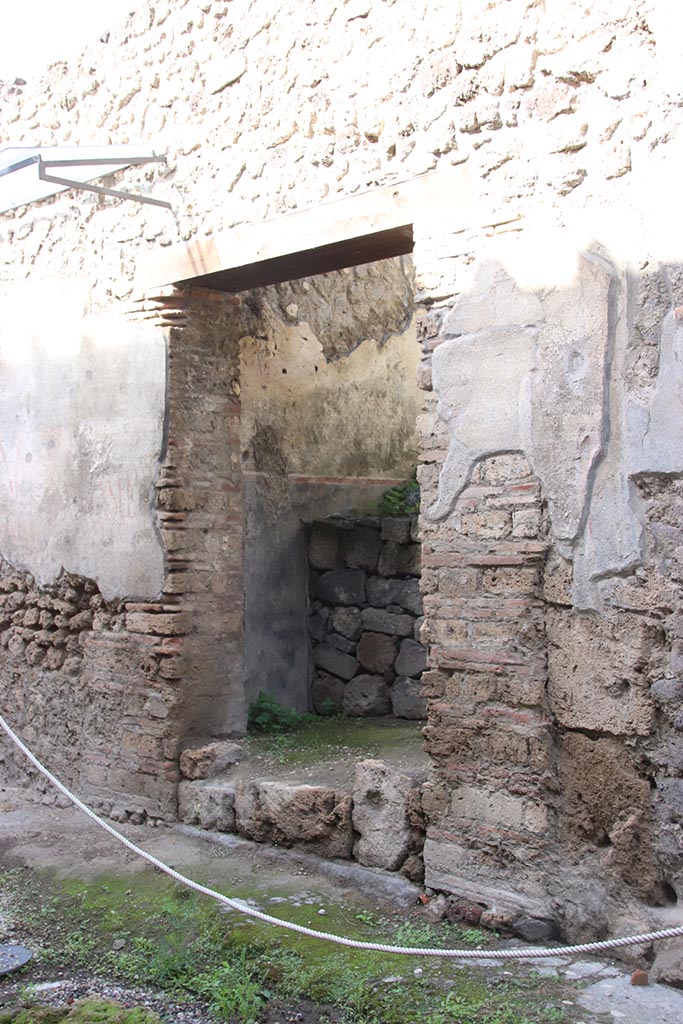
V.7.6 Pompeii. October 2024. Entrance doorway.
Photo courtesy of Klaus Heese.
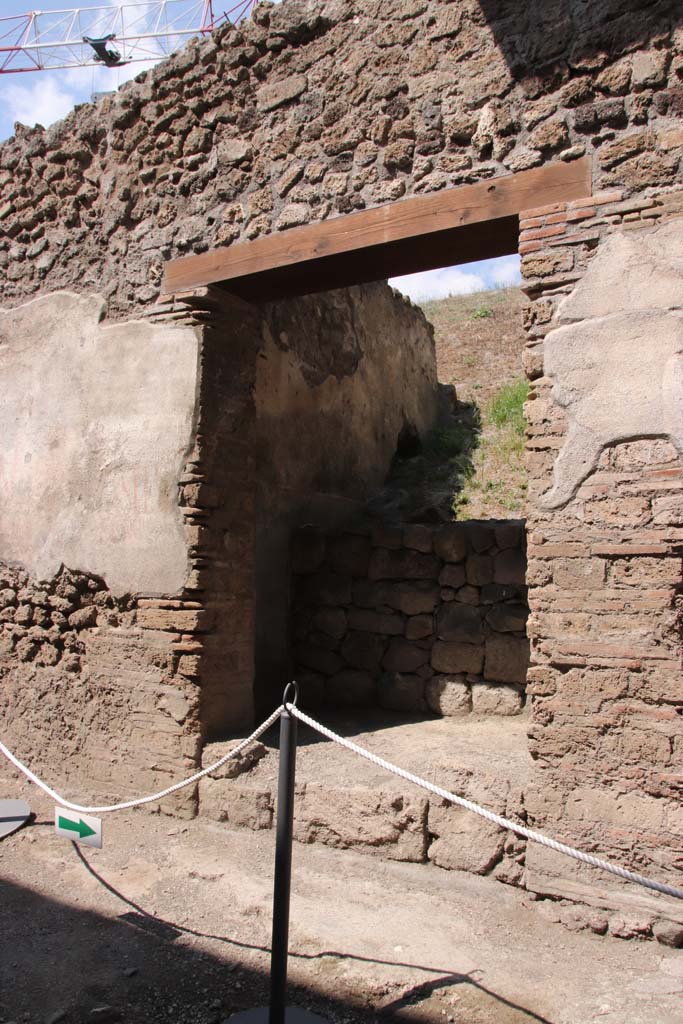
V.7.6 Pompeii. September 2021. Entrance doorway.
Photo courtesy of Klaus Heese.
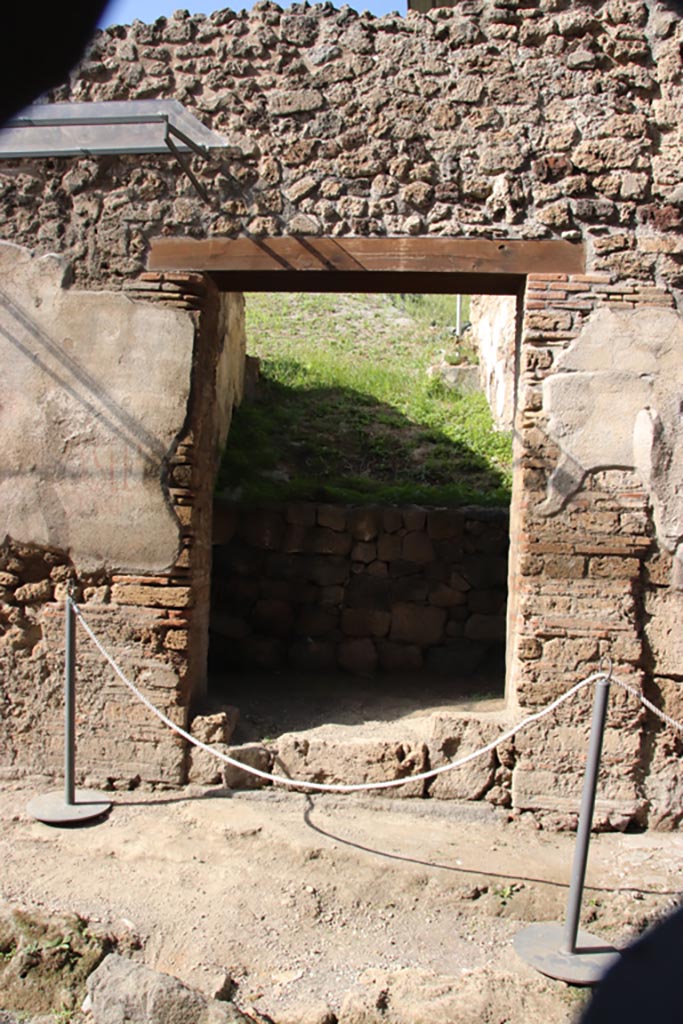
V.7.6
Pompeii. October 2023.
Looking
north through entrance doorway. Photo courtesy of Klaus Heese.
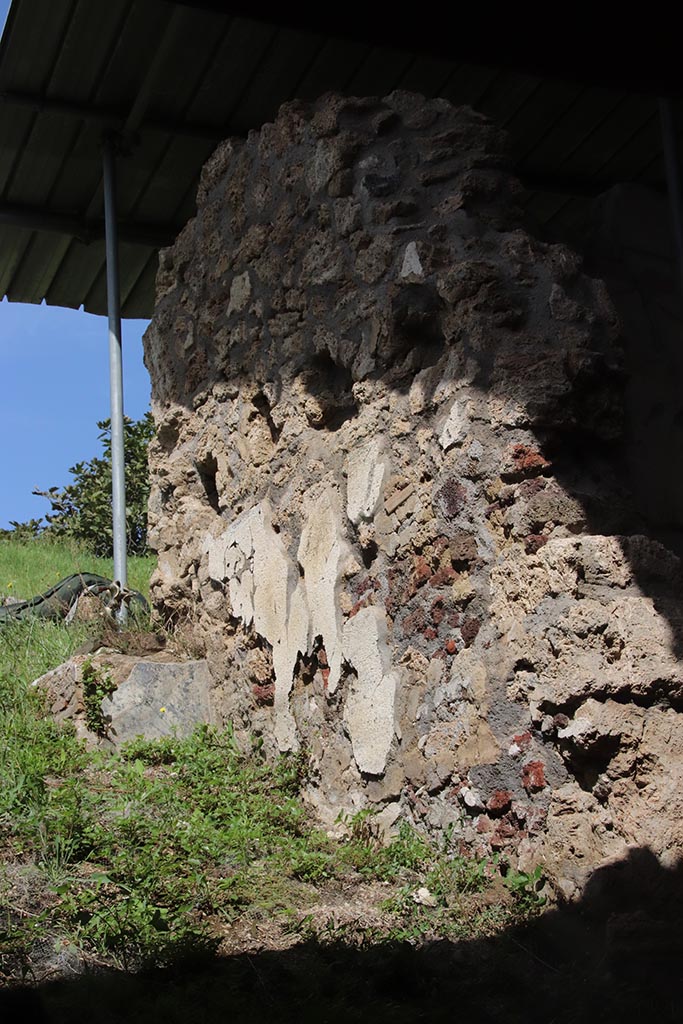
Looking through
entrance doorway towards upper wall on east side. Photo courtesy of Klaus Heese.
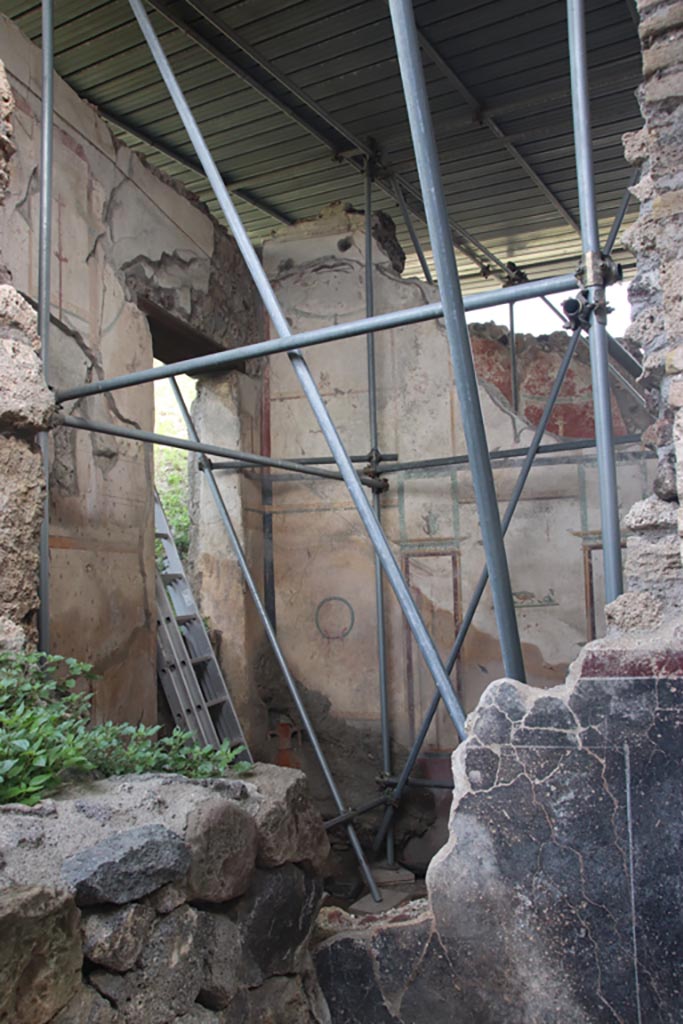
V.7.6
or 7 Pompeii. October 2023.
Looking
towards room on east side of entrance doorway. Photo courtesy of Klaus Heese.
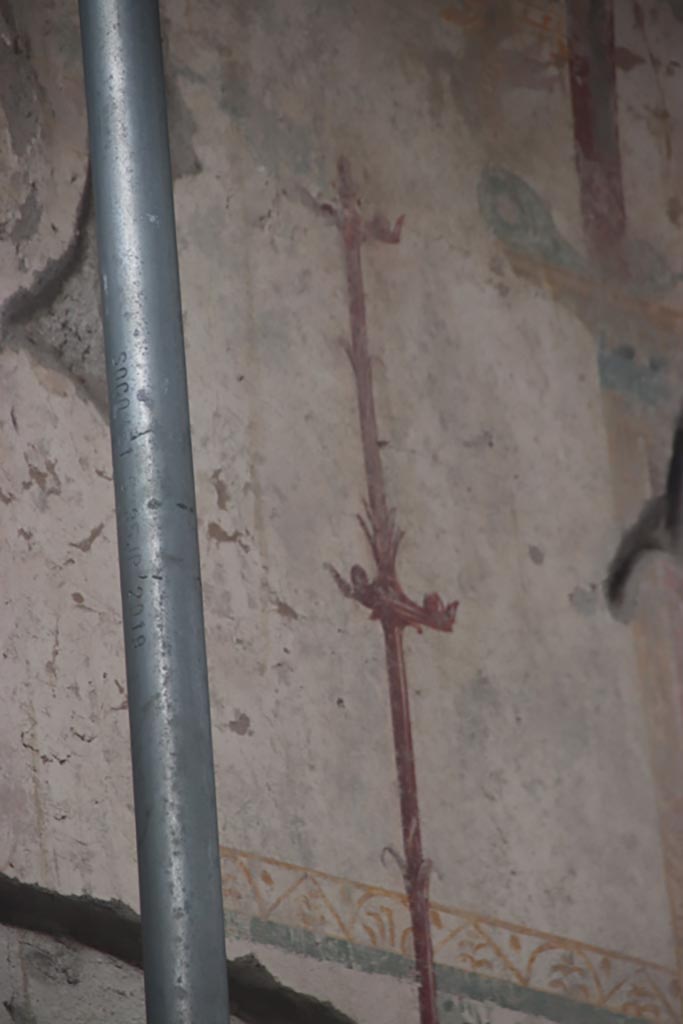
V.7.6 or 7 Pompeii. October
2023.
Detail of painted
candelabra on north wall of room on east side. Photo courtesy of Klaus Heese.
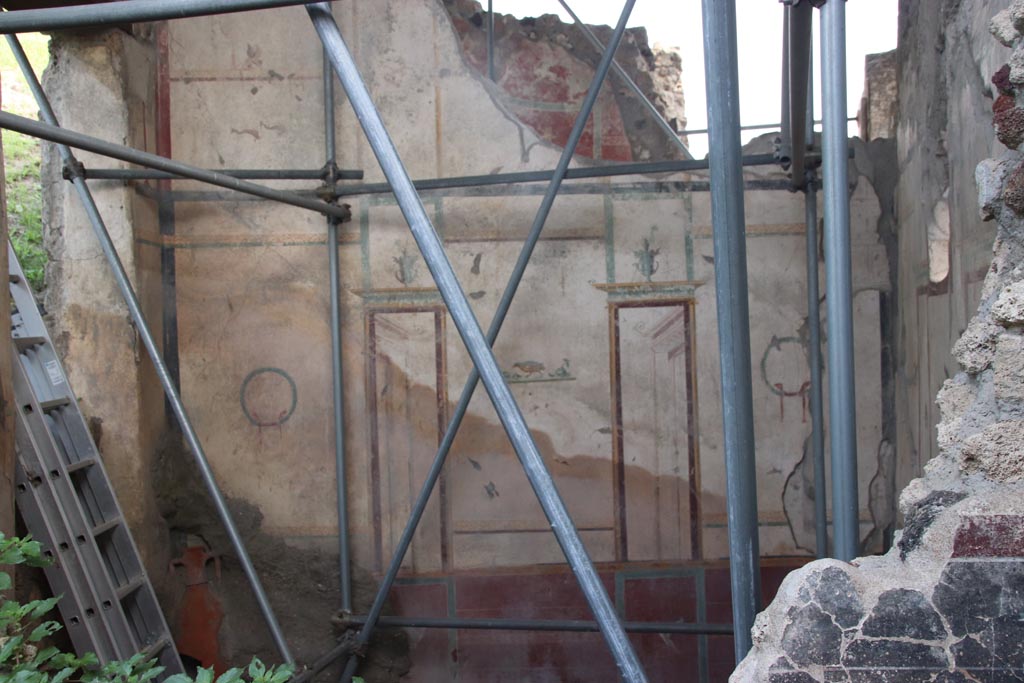
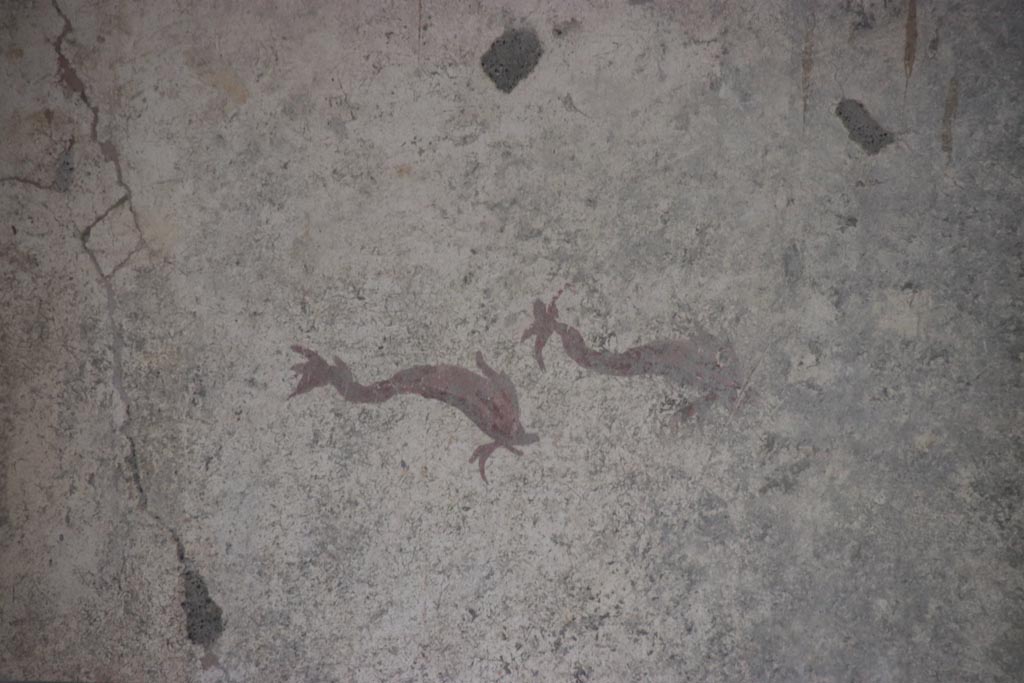
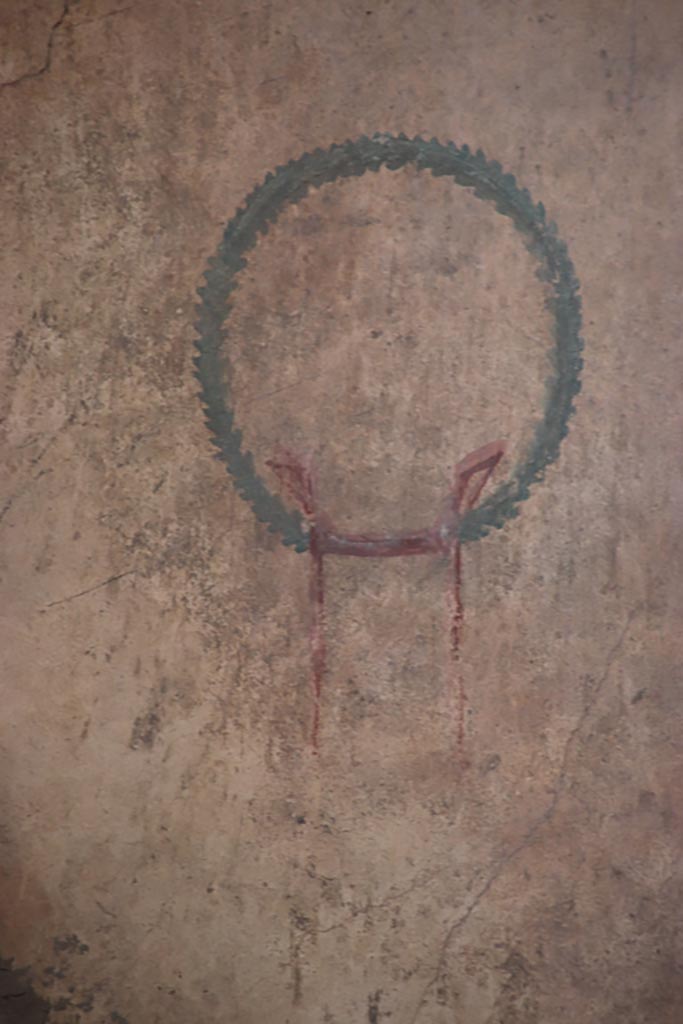
V.7.6 or 7 Pompeii.
October 2023. Detail from east wall at north end. Photo courtesy of Klaus
Heese.
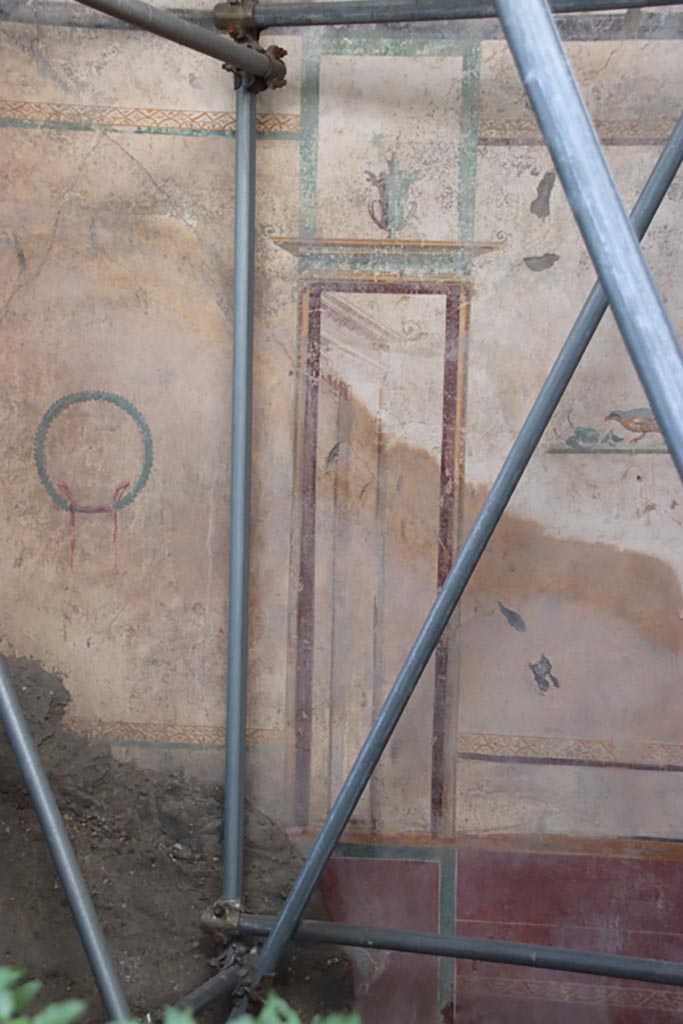
V.7.6 or 7 Pompeii.
October 2023.
Painted decoration on
north side of central panel on east wall. Photo courtesy of Klaus Heese.
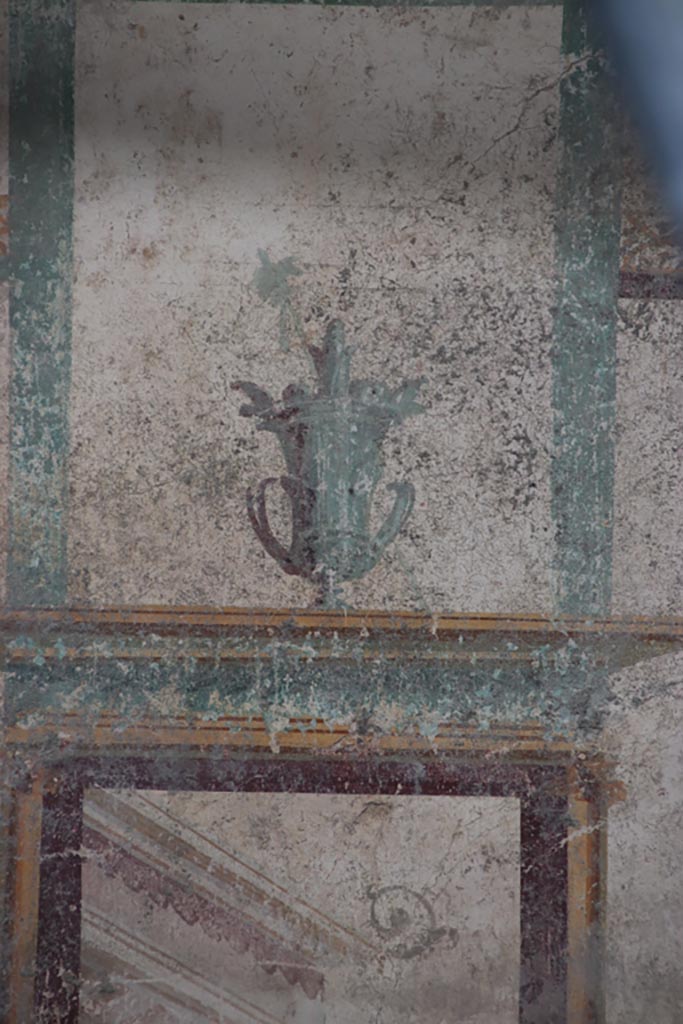
V.7.6 or 7 Pompeii.
October 2023. Detail from east wall in centre. Photo courtesy of Klaus Heese.
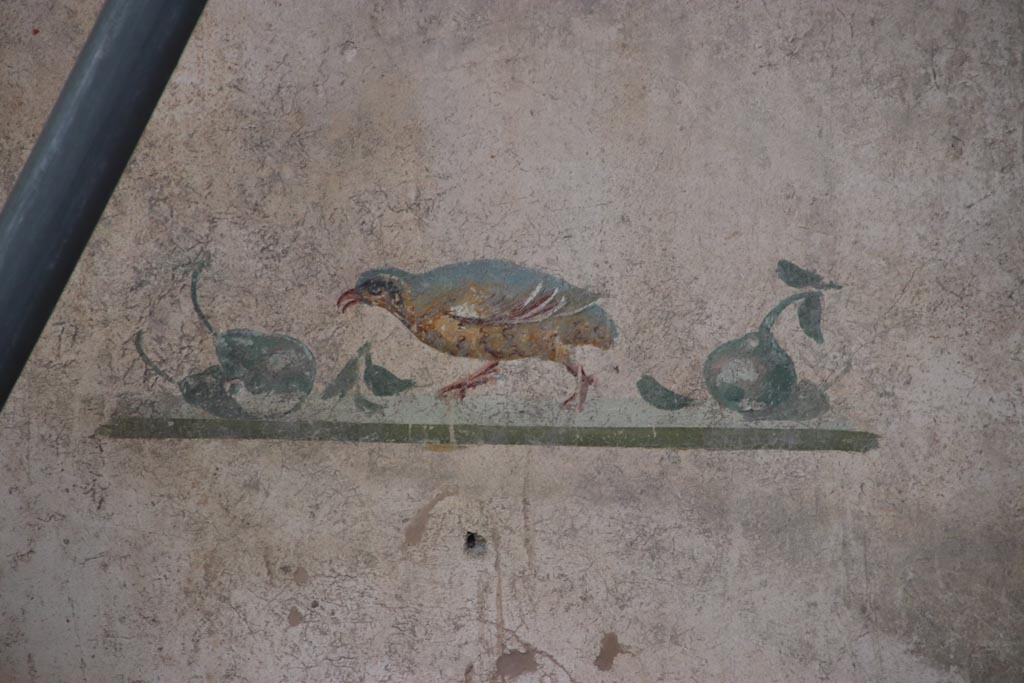
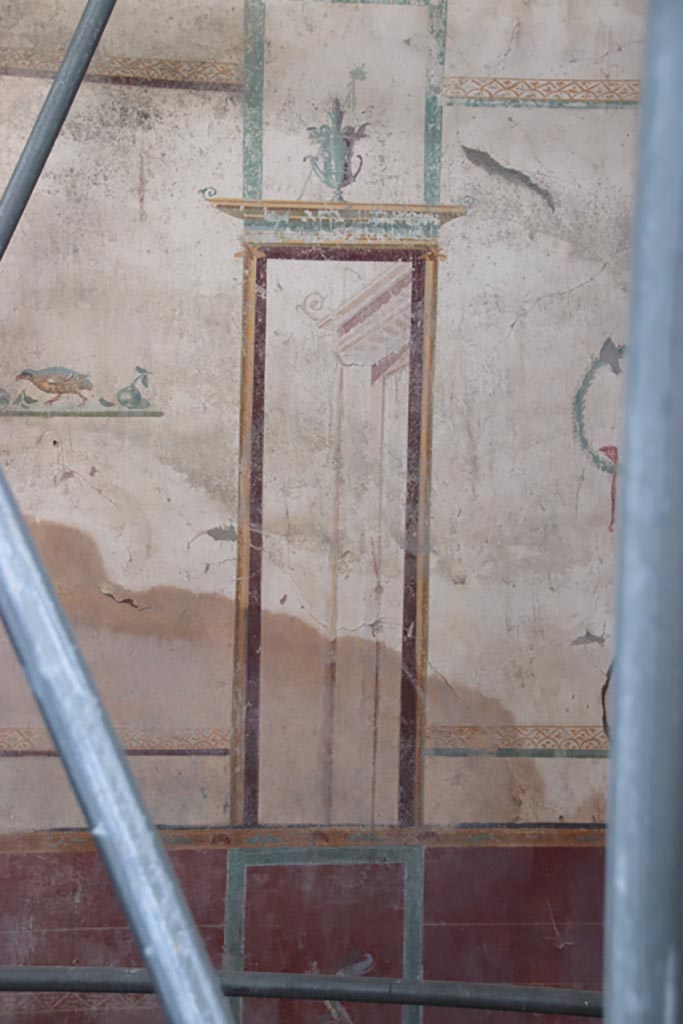
V.7.6 or 7 Pompeii.
October 2023.
Painted
decoration on south side of central panel on east wall. Photo courtesy of Klaus
Heese.
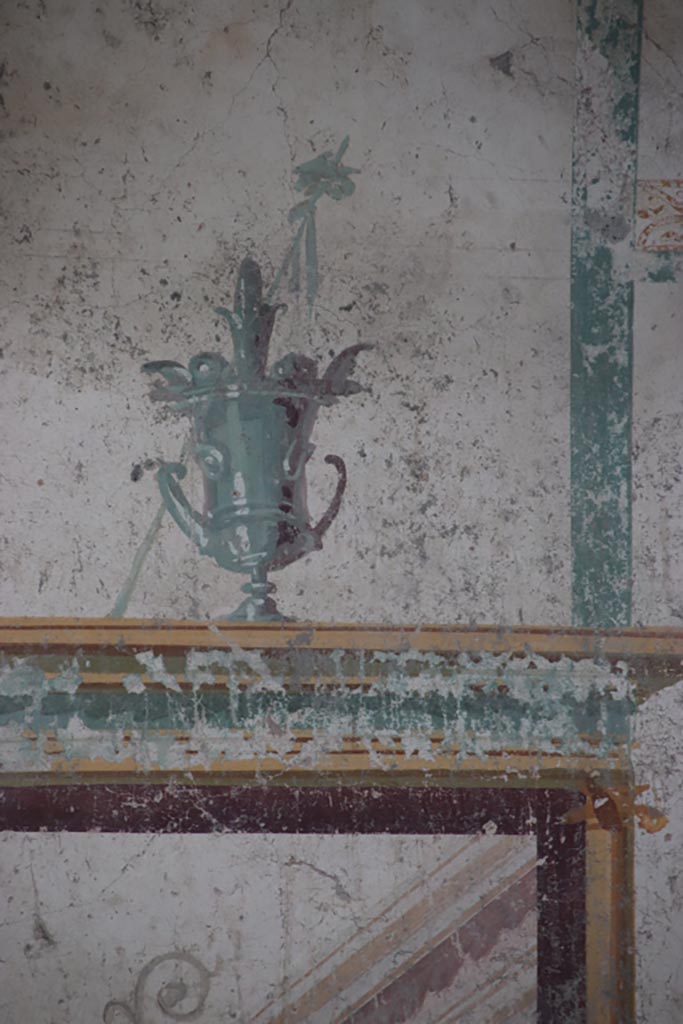
V.7.6 or 7 Pompeii.
October 2023. Detail from south side of central panel. Photo courtesy of Klaus
Heese.
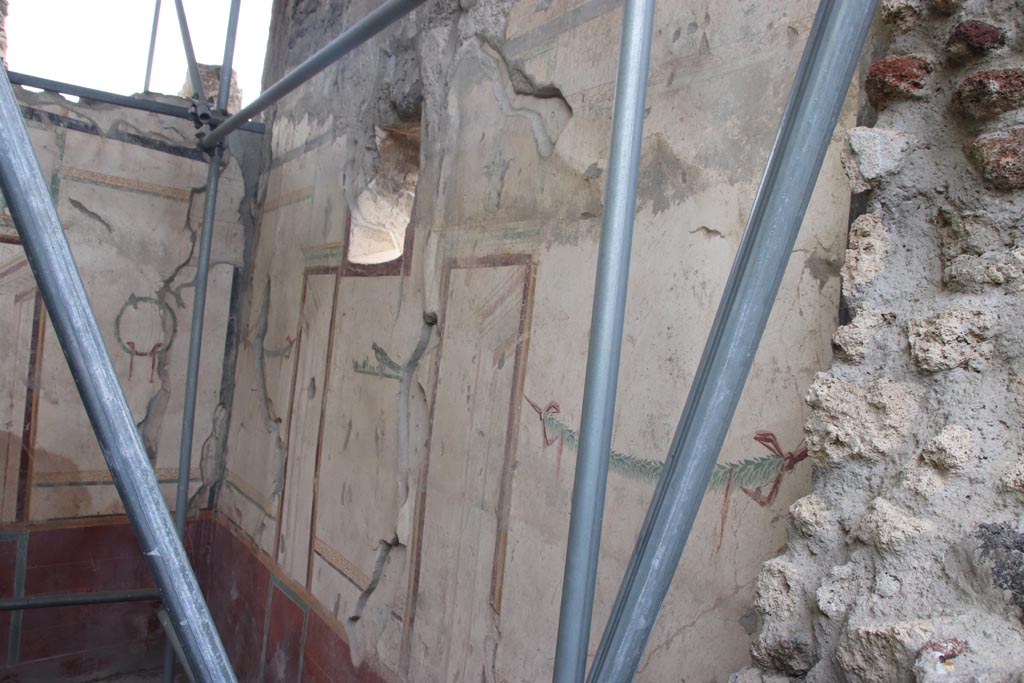
V.7.6 or 7 Pompeii.
October 2023. Looking east along south wall. Photo courtesy of Klaus Heese.
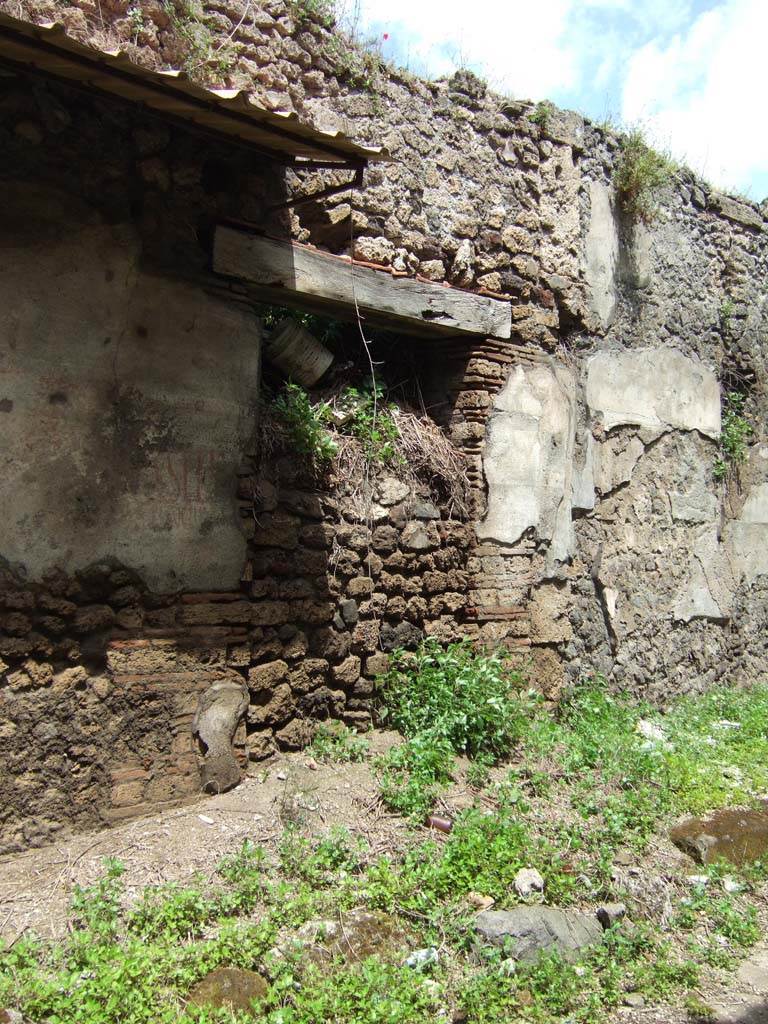
V.7.6 Pompeii. May 2006. Entrance doorway.
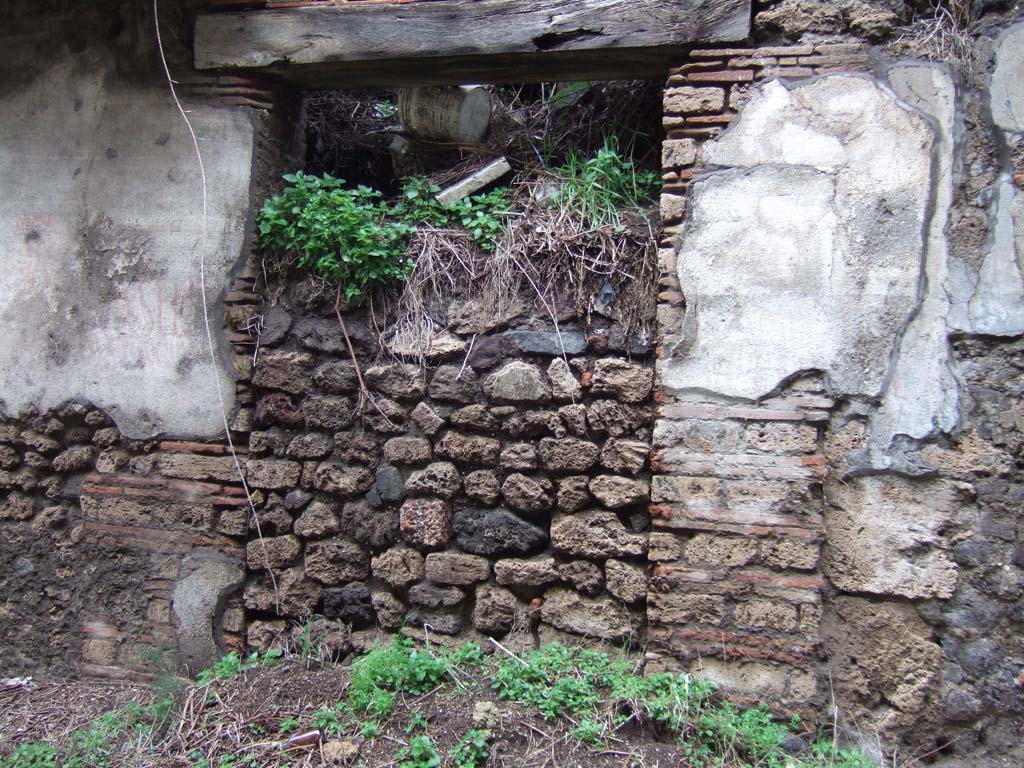
V.7.6 Pompeii. December 2005. Entrance doorway.
![V.7.6 Pompeii. December 2005. Entrance doorway.
According to Della Corte, this house was attributed to Paris from a recommendation in support of the candidates Albucium and Casellium.
This was written on the doorpost to the right of the entrance – Paris rogat [CIL IV 7051]
See Della Corte, M., 1965. Case ed Abitanti di Pompei. Napoli: Fausto Fiorentino. (p.103)
According to Varone and Stefani, CIL IV 7051 and 7052 were found on the east (right) side of the doorpost.
CIL IV 7052 was written earlier and was older. Also found higher up the wall on the right, between V.7.6 and 7, was CIL IV 7053. None are now visible.
On the west (left) side of the doorpost can be seen CIL IV 7049. See below, partly visible.
See Varone, A. and Stefani, G., 2009. Titulorum Pictorum Pompeianorum, Rome: L’erma di Bretschneider, (310-314)
According to Epigraphik-Datenbank Clauss/Slaby (See www.manfredclauss.de), these read as:
Albucium
et Casellium aed(iles) o(ro) v(os) f(aciatis)
Paris rogat [CIL IV 7051]
] Sitti[um [CIL IV 7052]
Cn(aeum) Helvium
Sabinum aed(ilem) o(ro) v(os) f(aciatis) [CIL IV 7053]](5%2007%2006_files/image025.jpg)
V.7.6 Pompeii. December 2005. Entrance doorway.
According to Della Corte, this house was attributed to Paris from a recommendation in support of the candidates Albucium and Casellium.
This was written on the doorpost to the right of the entrance – Paris rogat [CIL IV 7051]
See Della Corte, M., 1965. Case ed Abitanti di Pompei. Napoli: Fausto Fiorentino. (p.103)
According to Varone and Stefani, CIL IV 7051 and 7052 were found on the east (right) side of the doorpost.
CIL IV 7052 was written earlier and was older. Also found higher up the wall on the right, between V.7.6 and 7, was CIL IV 7053. None are now visible.
On the west (left) side of the doorpost can be seen CIL IV 7049. See below, partly visible.
See Varone, A. and Stefani, G., 2009. Titulorum Pictorum
Pompeianorum, Rome:
L’erma di Bretschneider, (310-314)
According to Epigraphik-Datenbank Clauss/Slaby (See www.manfredclauss.de), these read as:
Albucium
et Casellium
aed(iles) o(ro) v(os)
f(aciatis)
Paris rogat
[CIL IV 7051]
]
Sitti[um [CIL IV 7052]
Cn(aeum) Helvium
Sabinum aed(ilem)
o(ro) v(os) f(aciatis)
[CIL IV 7053]
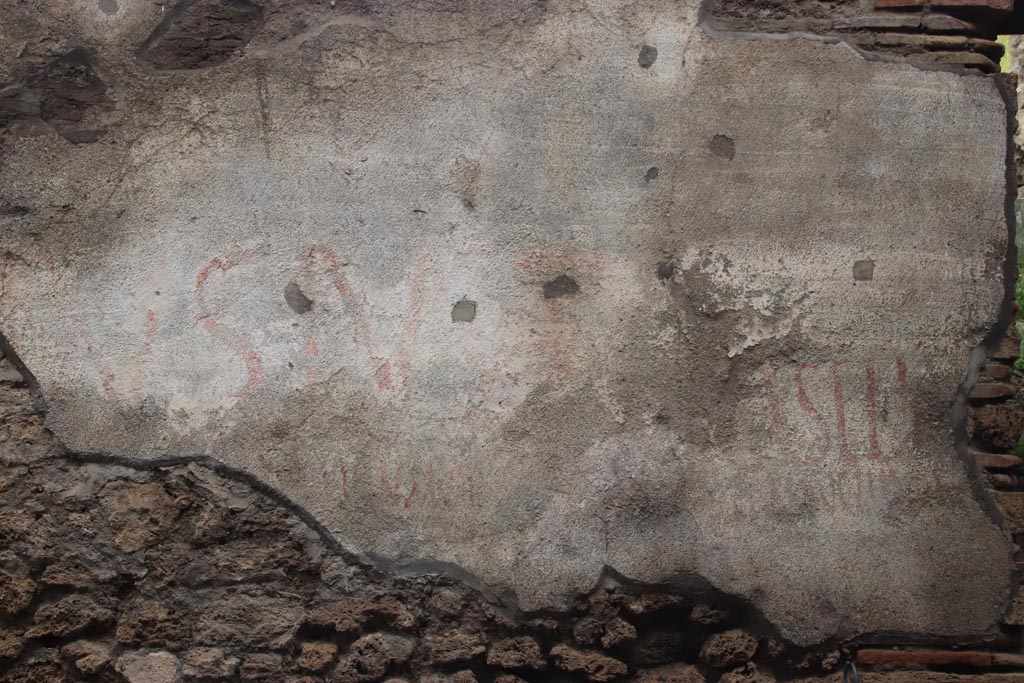
V.7.6
Pompeii. October 2023. Plaster and graffiti (CIL IV 7049) on wall
between V.7.5 and V.7.6. Photo courtesy of
Klaus Heese.
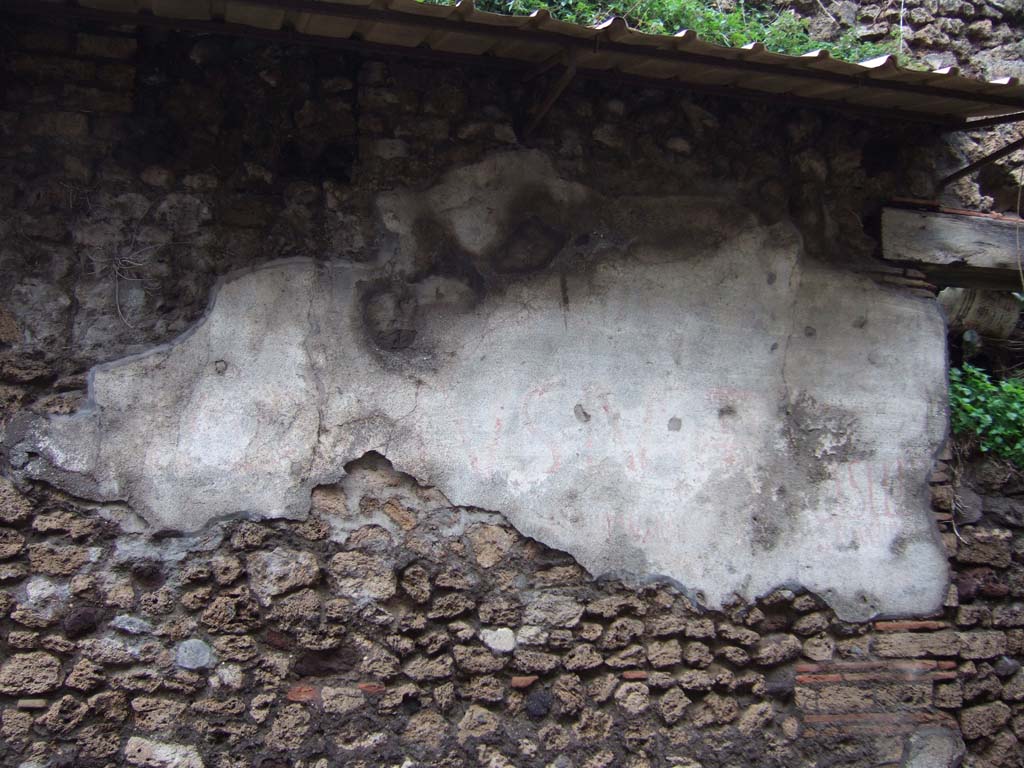
V.7.6 Pompeii. December 2005. Plaster on wall between V.7.5 and V.7.6.
On the west (left) side of the doorpost can be seen CIL IV 7049. Partly visible.
Between V.7.5 and 6, faintly visible would have been CIL IV 7050.
See Varone, A. and Stefani, G., 2009. Titulorum Pictorum
Pompeianorum, Rome:
L’erma di Bretschneider, (p.310-14)
Della Corte stated that another graffito in support of Albucium was found to the left of the house of Paris.
This was from the neighbours of Albucius.
Della Corte used this to support his argument that the house of the Silver Wedding belonged to Albucius, as the recommendation was painted opposite its doorway. It read –
L. Albucium Celsum aedilem o. v. f.
Vicini rogant [CIL IV 7048]
See Della Corte, M., 1965. Case ed Abitanti di Pompei. Napoli: Fausto Fiorentino. (p.104)
According to Epigraphik-Datenbank Clauss/Slaby (See www.manfredclauss.de), these read as:
Albucium
//
aed(ilem) o(ro)
v(os) f(aciatis)
Vicini
rog(ant) [CIL IV 7048]
Samellium
aed(ilem) Iuvenem
p(robum) o(ro) v(os) f(aciatis) [CIL
IV 7049]
Casellium
et Albucium
aed(iles) [CIL IV 7050]
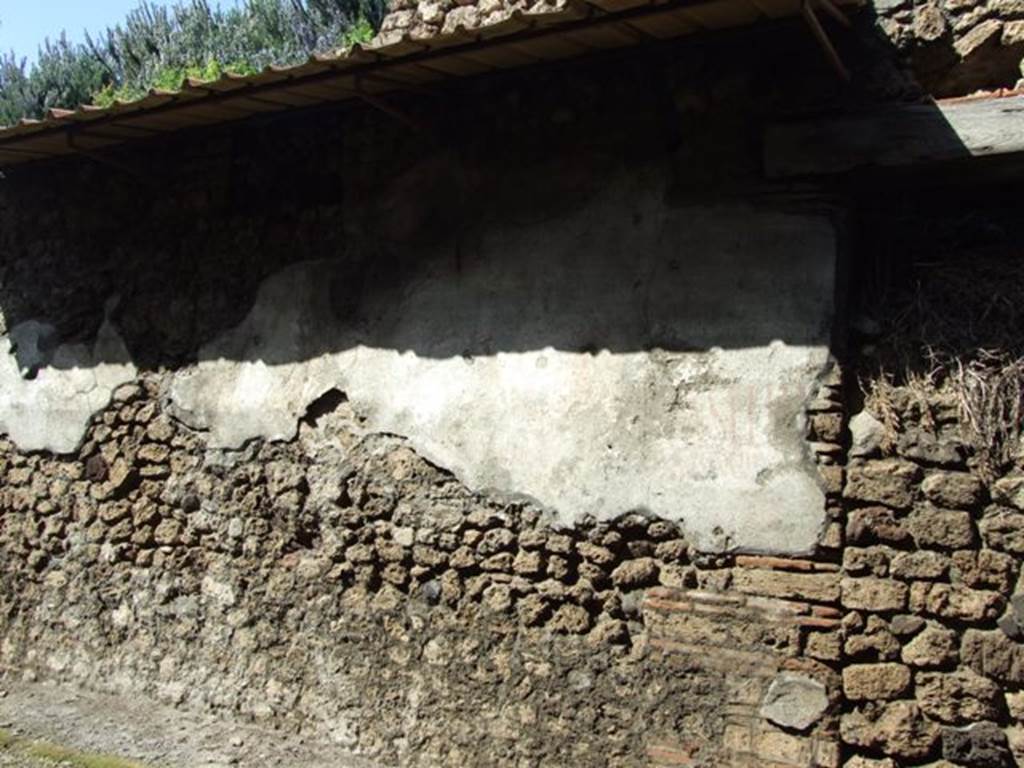
V.7.6 Pompeii. March 2009. West side of doorway, plaster on front wall.
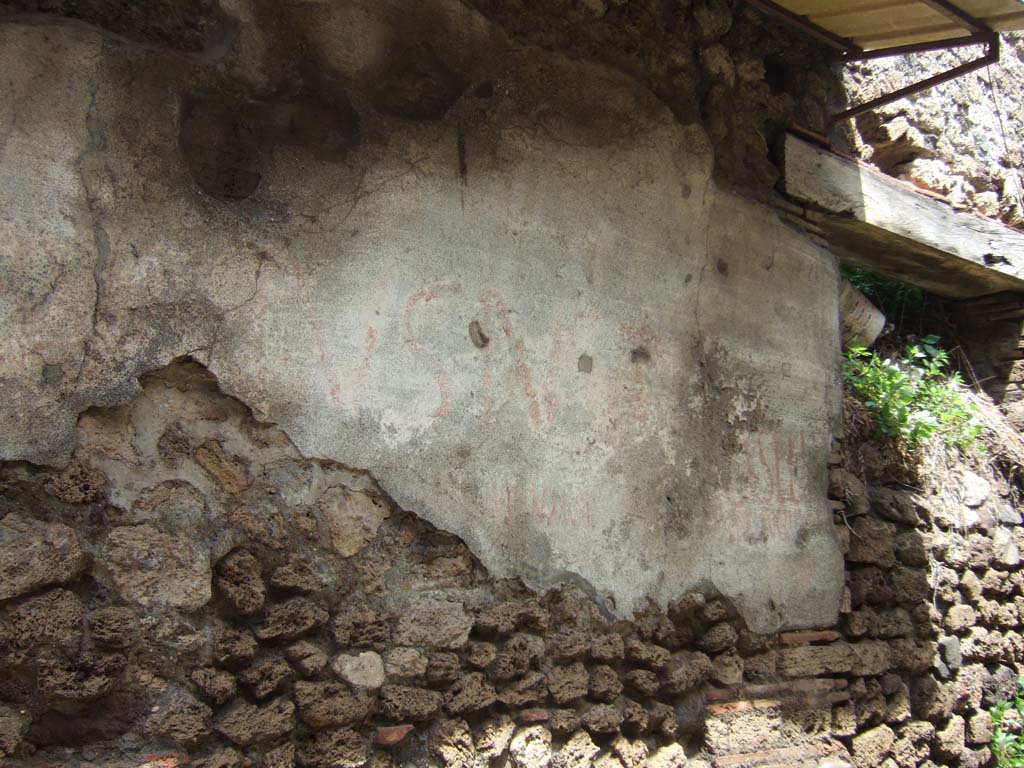
V.7.6 Pompeii. May 2006. Remains of painted graffiti on front wall, west of doorway.
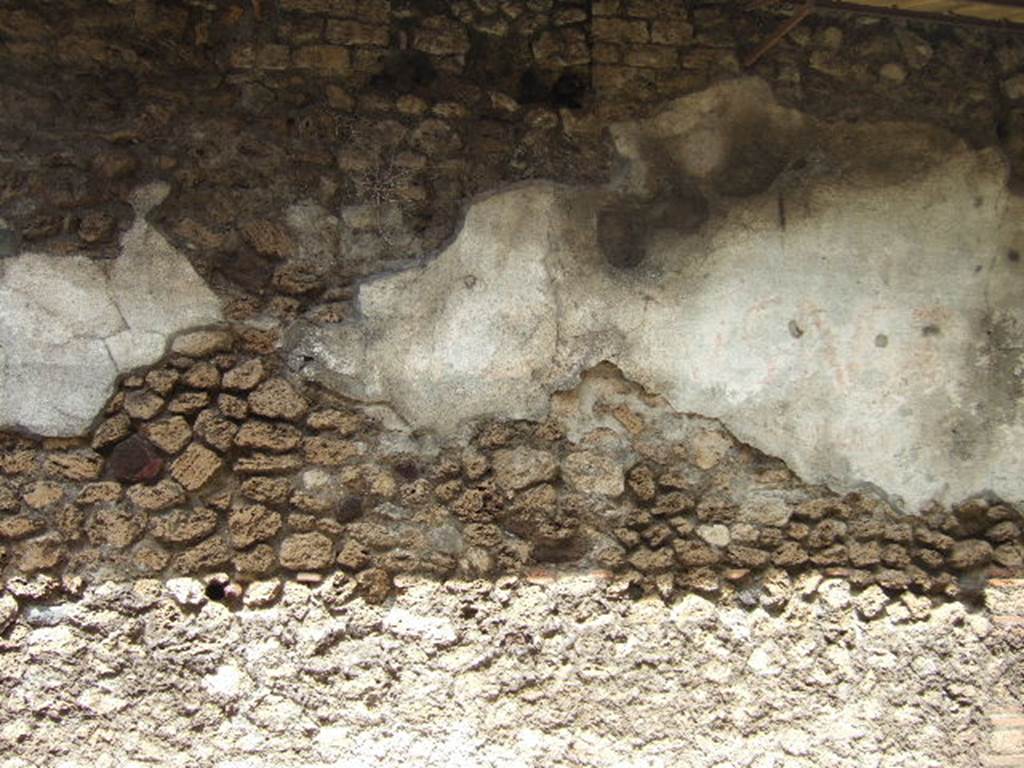
V.7.6 Pompeii. March 2009. West side of doorway, plaster on front wall.
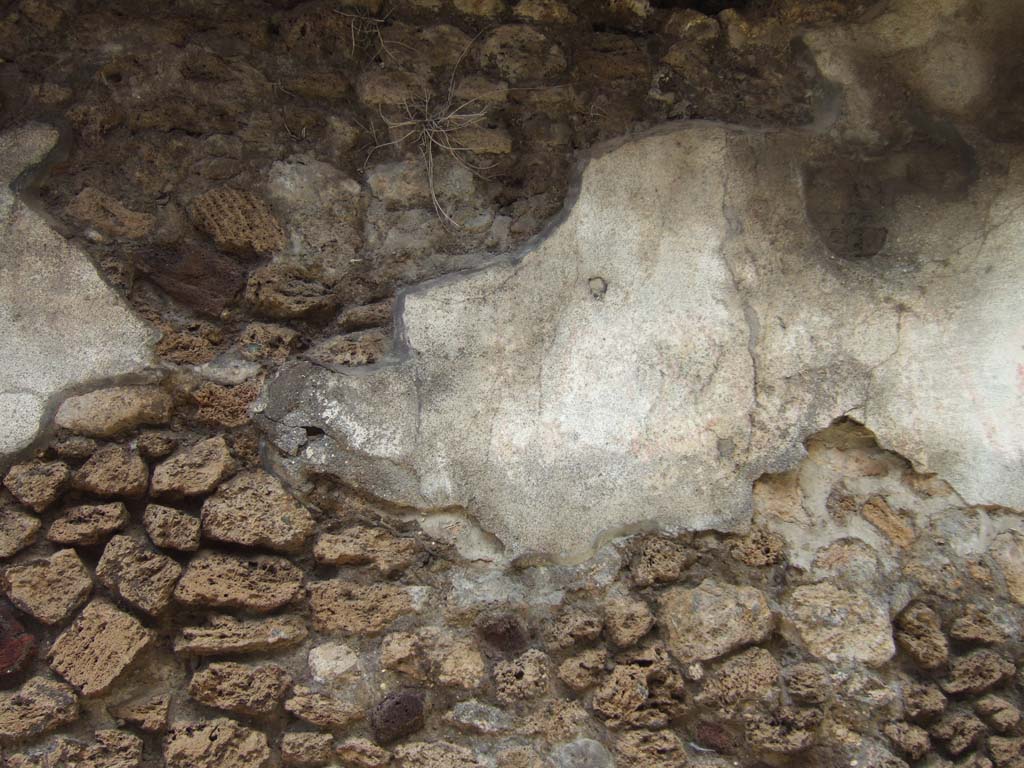
V.7.6 Pompeii. May 2006. Remains of plaster on west side of doorway.
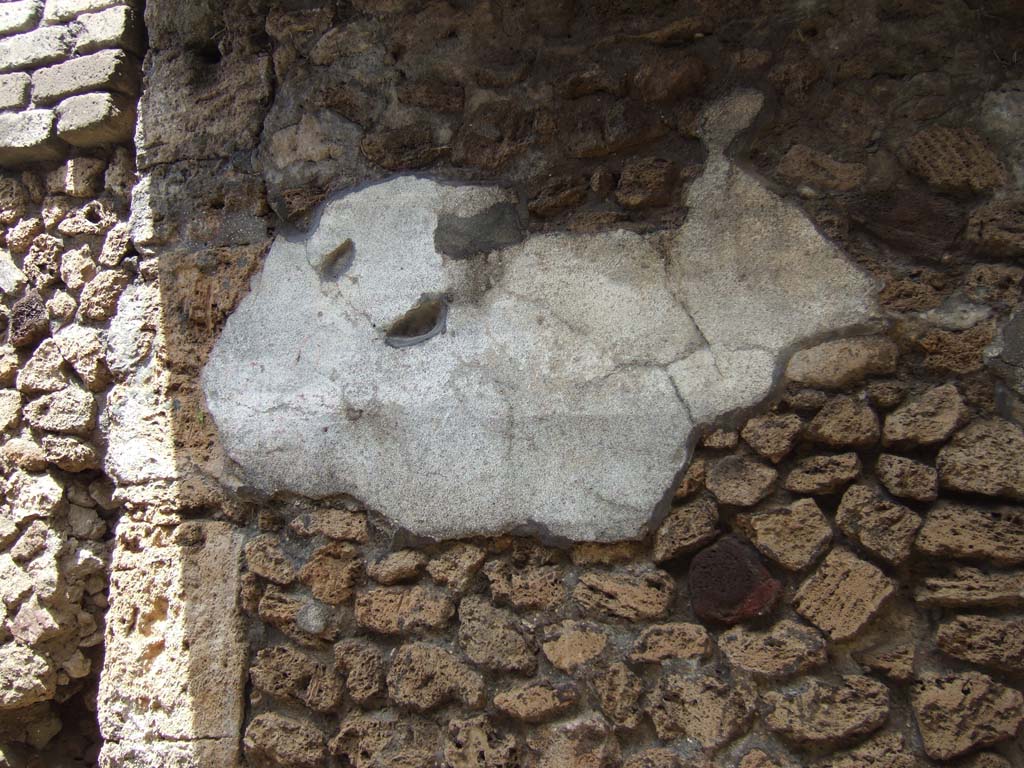
V.7.6 Pompeii. May 2006. Remains of plaster, on east side of V.7.5, between V.7.5 and 6.
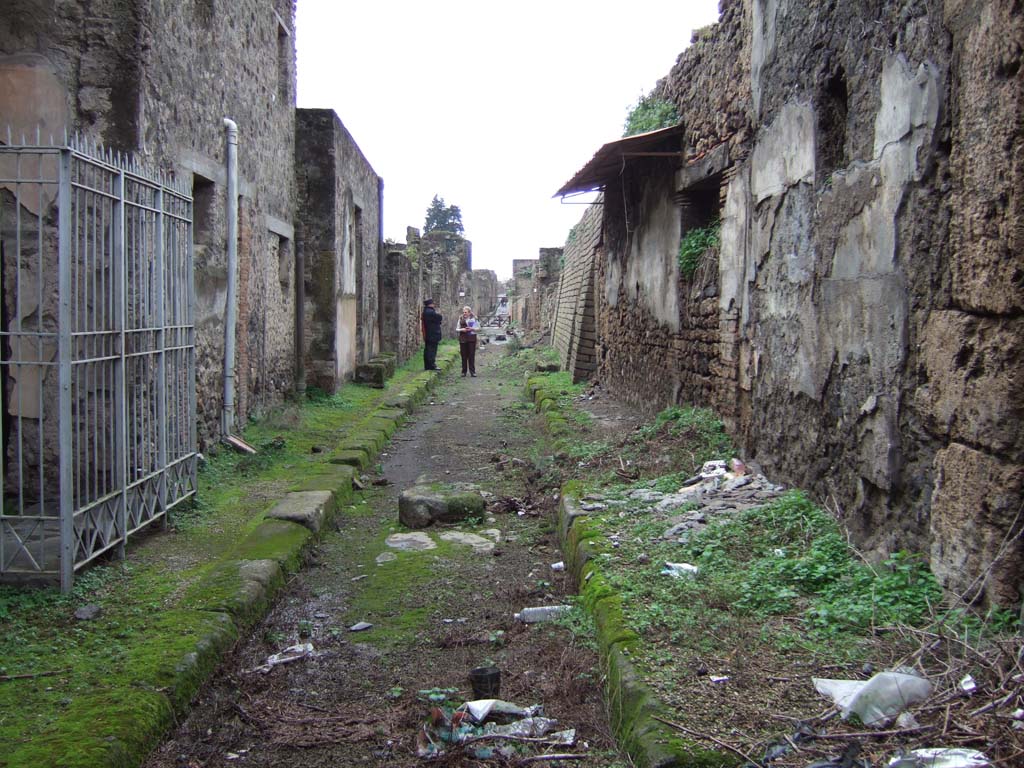
V.2.i Pompeii, on left. December 2005. Vicolo delle Nozze d’Argento looking west from near V.7.7, on right.
According to NdS –
“The facing wall, the north wall (of the vicolo), offers in various ways a better decoration.
In the first section to the left, a high zoccolo covered with signinum and the usual white plaster at the top, with in the middle, a doorway which looks like the entrance to a house, followed, on the right, by a window.
Then comes a second doorway, entrance of a dwelling, tapered at the top, and with high zoccolo of signinum, partitioned in alternating squares with yellow horizontal and vertical bands and white edgings. To the left of the doorway, a window and another smaller one on the right.
It is followed by a third tapered doorway, which is also the same entrance to a house, with the left side wall unadorned and the right one covered in rough white plaster, in which a window opened preserving the iron grating and the imprint of the outside wooden appearance.
After this window, the wall forms a slight projection, and, covered with rough plaster, was interrupted by a large workshop doorway, followed by another tapered narrower one, and so too a third.
After the latter, a fourth doorway is seen, which forms the entrance doorway of a house, which was first-rate.
It is tapered and had a high black zoccolo at its sides, divided into squares by red bands and white lines.
On the left a square window, above the zoccolo, and the hint of a smaller second window to the right, in the zoccolo.
Encrusted in the pavement, at the described facade, were pieces of marble set into the mortar.”
(La parete
opposta, settentrionale, offre in vari tratti una decorazione migliore.
Nel primo
tratto a sinistra, un alto zoccolo rivestito di signino e il solito intonaco
bianchiccio in alto con in mezzo un vano che pare l’ingresso di un casa, al
quale segue, a destra, un finestrino.
Viene poi un
secondo vano, ingresso d’abitazione, rastremato in alto, e con alto zoccolo di
signino, scompartito in riquadrature alternate con fascie orizzontali e
verticali gialle e filettature bianche.
A sinistra del
vano un finestrino e un altro piu piccolino a destra.
Segue un terzo
vano, rastremato anche esso e del pari ingresso di una casa, con la parete
laterale di sinistra disadorna e quella di destra rivestita d’intonaco bianco
grezzo, nella quale si apre una finestra conservante la grata di ferro e
l’impronta della mostra di legno all’esterno.
Dopo questa
finestra la parete forma una lieve avancorpo, e, rivestita d’intonaco grezzo,
era interrotta da un largo vano di bottega, al quale ne segue un altro piu
stretto, rastremato, e cosi pure un terzo.
Vien dopo
quest’ultimo un quarto vano, che forma l’ingresso di una casa, che par di
prim’ordine. Esso era rastremato ed ha ai lati un alto zoccolo nero, diviso in
riquadrature mediante fascette rosse e linee bianche.
A sinistra un
finestrino quadrato, al di sopra dello zoccolo, e l’accenno di un secondo a
destra, piu piccolo, nello zoccolo. Nel marciapiede, in corrispondenza della
descritta facciata, dei pezzetti di
marmo incrostati nella malta.)
See Notizie degli Scavi di Antichità, 1910, (p.378)