V.4.13 Pompeii. Domus of M Fabius Secundus and Optata
or Casa delle origine di Roma.
Linked to V.4.12. Excavated 1873, 1899 and 1903.
Part 4 Part 1 Part 2 Part 3 Plan
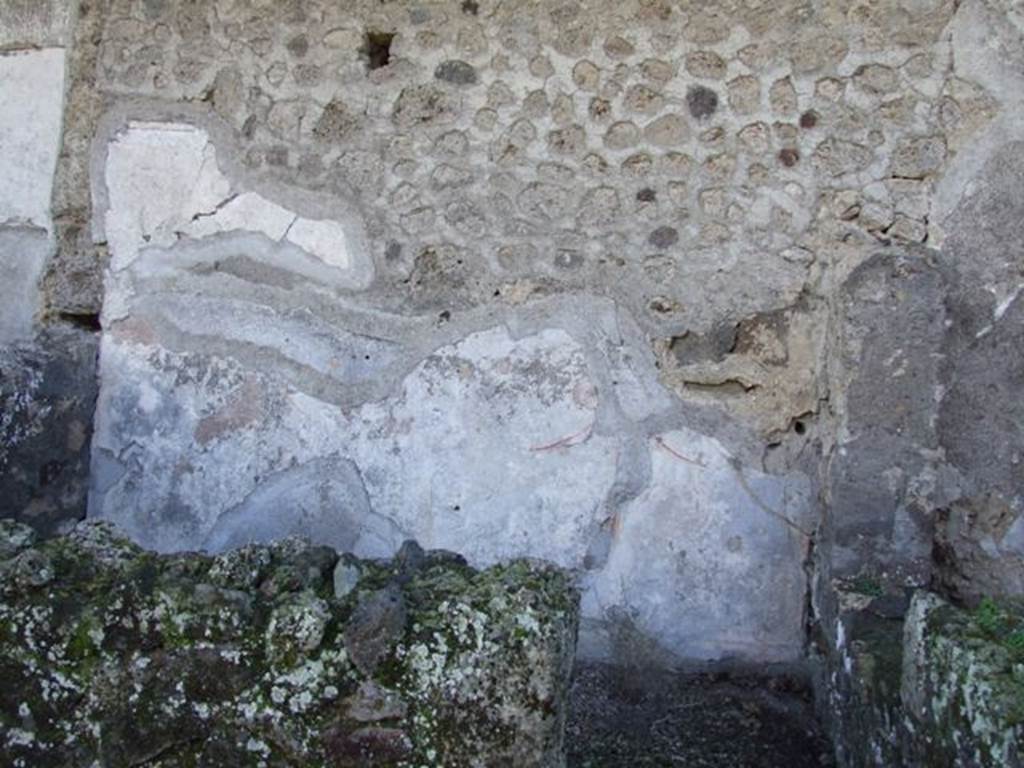
V.4.13 Pompeii. March 2009. Second diaeta on south side. South wall.
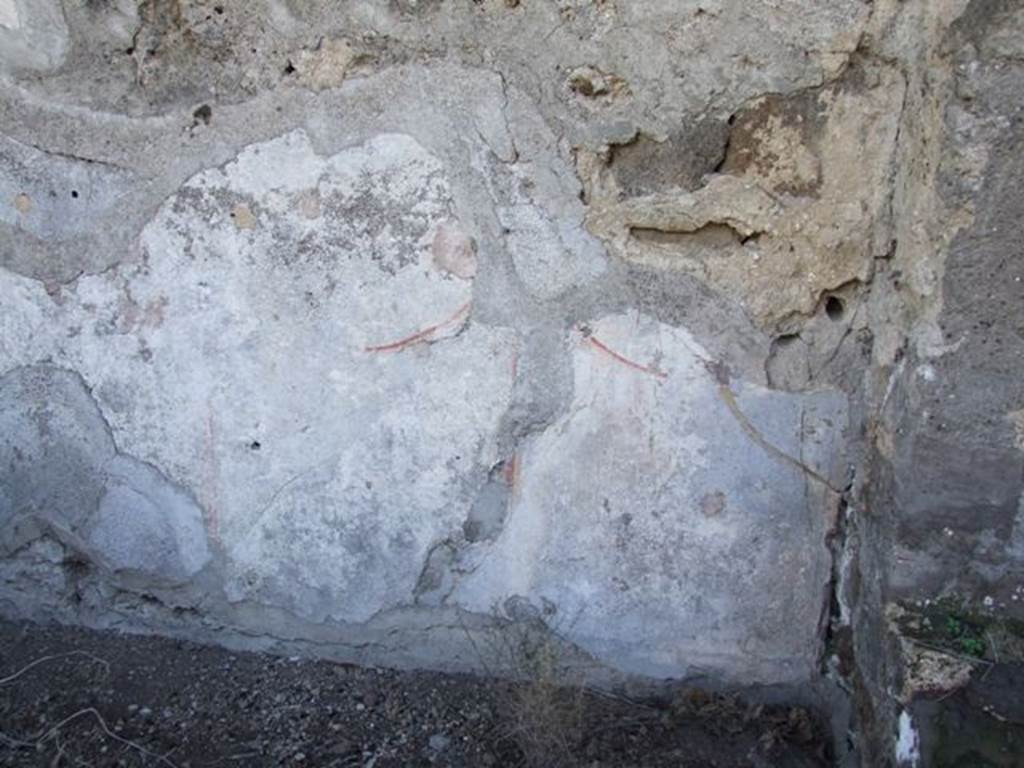
V.4.13 Pompeii. March 2009. Second diaeta on south side. Painted plaster on south wall.
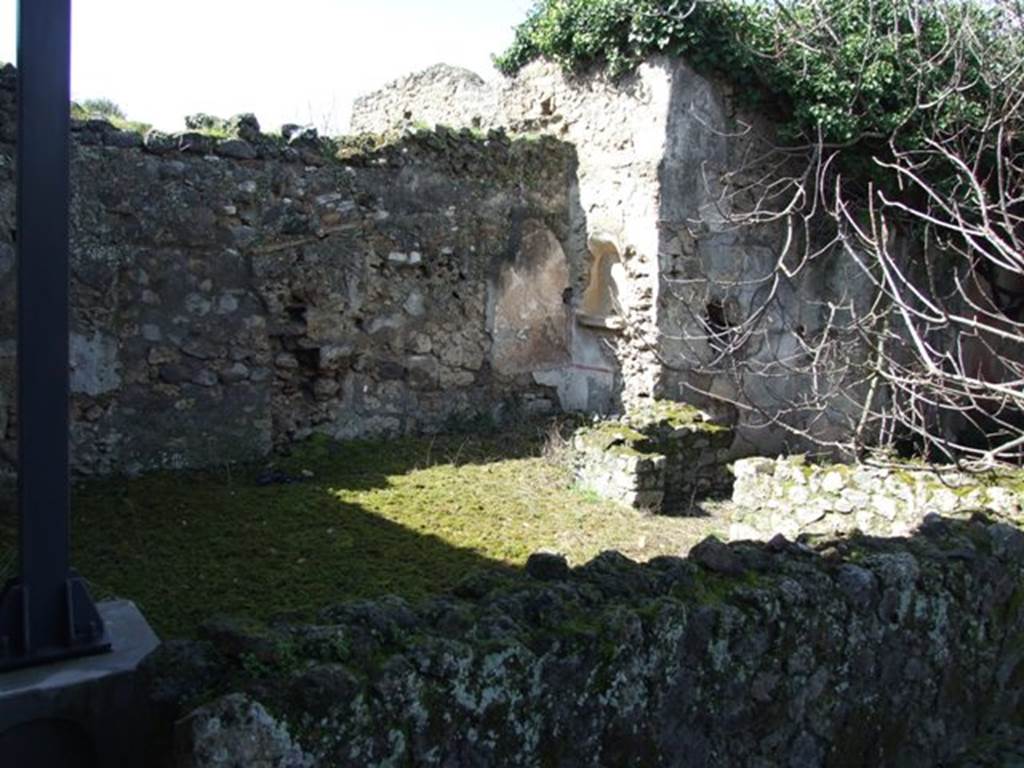
V.4.13 Pompeii. March 2009. Diaeta. Looking north-west across garden.
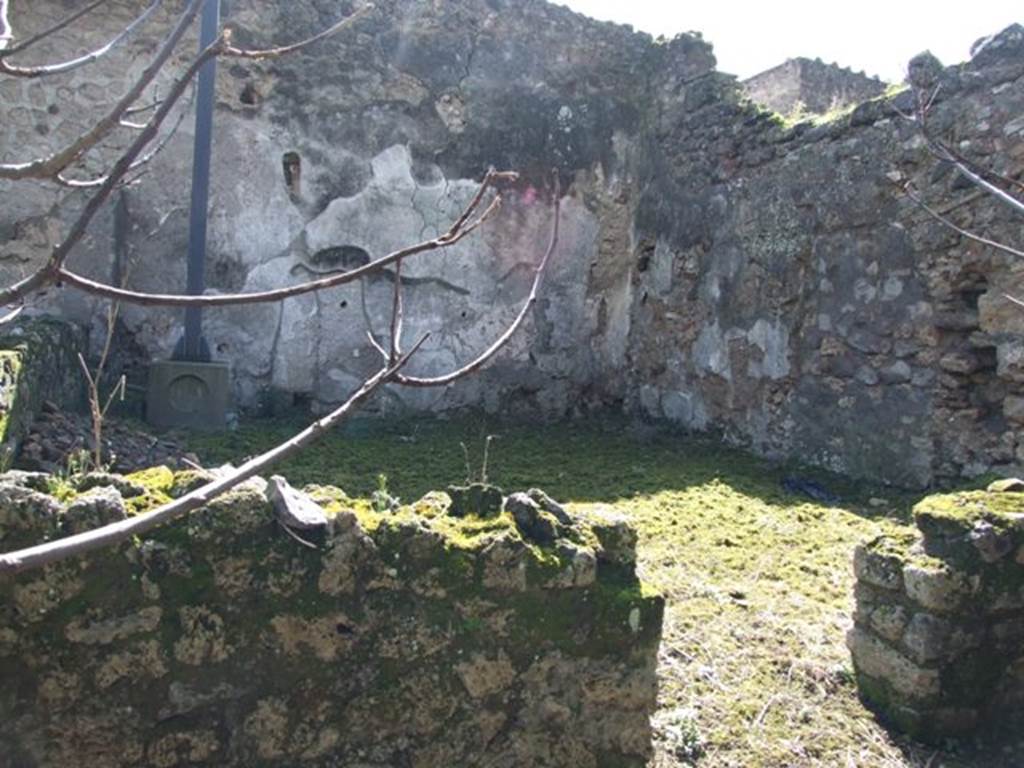
V.4.13 Pompeii. March 2009. Garden, looking south-west through doorway into garden area.
According to Jashemski –
“The garden was separated from a paved open area to the north by a low masonry wall: the wall continued along the east side of the garden, leaving a narrow space between this wall and that of the house for a gutter to collect rainwater which was deposited in the cistern.
In 1903 a small marble head of a satyr with goat’s ears and the horns of a ram (0.20m high), such as were used for garden herms, was found on the low wall.
In the centre of the garden was a masonry triclinium (l. medius, 4.00m; l. imus and l. summus, 3.75m), decorated with painted plants on a yellow background. Between the couches was a masonry table (0.90 x 1.50m) topped with a fine piece of coloured marble.
The excavators also reported deep holes reinforced with potsherds to hold fast the posts of the pergola.
Along both the south and west walls was a row of root cavities (measurements not given), each cavity surrounded by a circular mound of soil to hold water.
There was a masonry altar on the ground in front of the arched niche in the wall in the north-west corner of the garden.
Jashemski’s sources –
Sogliano, NSc. (1905), p.91-92, and fig. 1 (plan) on p.87;
Thedenat, p.88;
Boyce,
p.41, no.126, and pl.11.2;
Soprano,
p.299, no.12 (identifies the structure in the garden as a true triclinium and
not triclinium-shaped seats as Sogliano suggests;
Dohl, p.14.
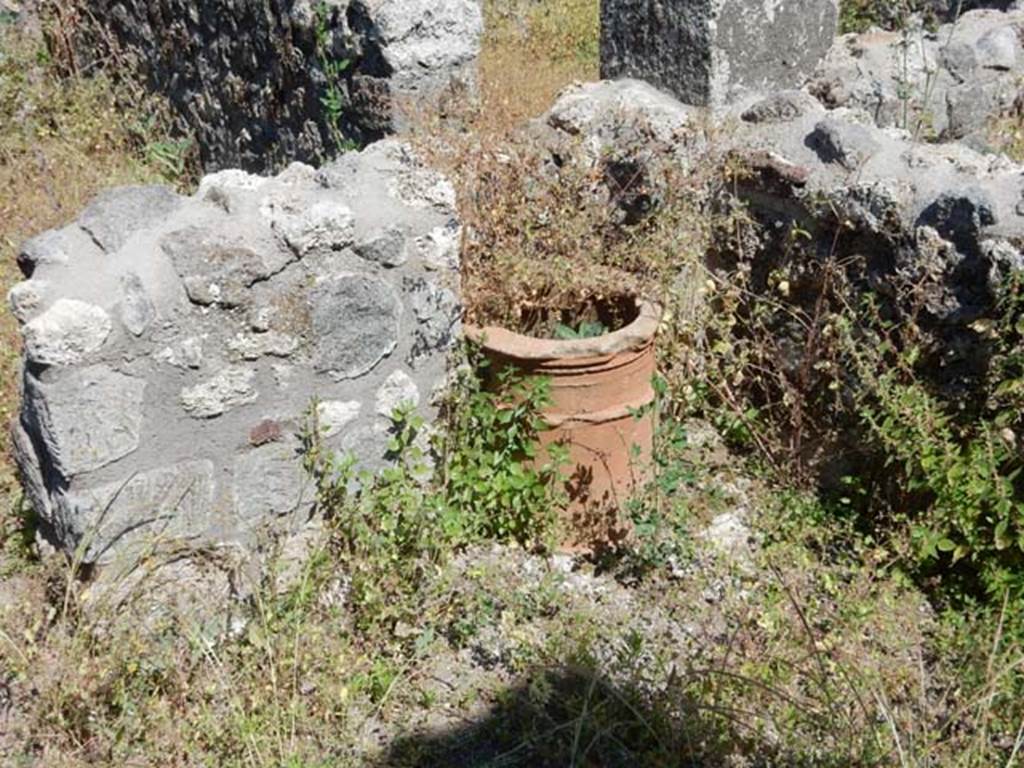
V.4.13 Pompeii. May 2017. Terracotta puteal C in garden area. Photo courtesy of Buzz Ferebee.
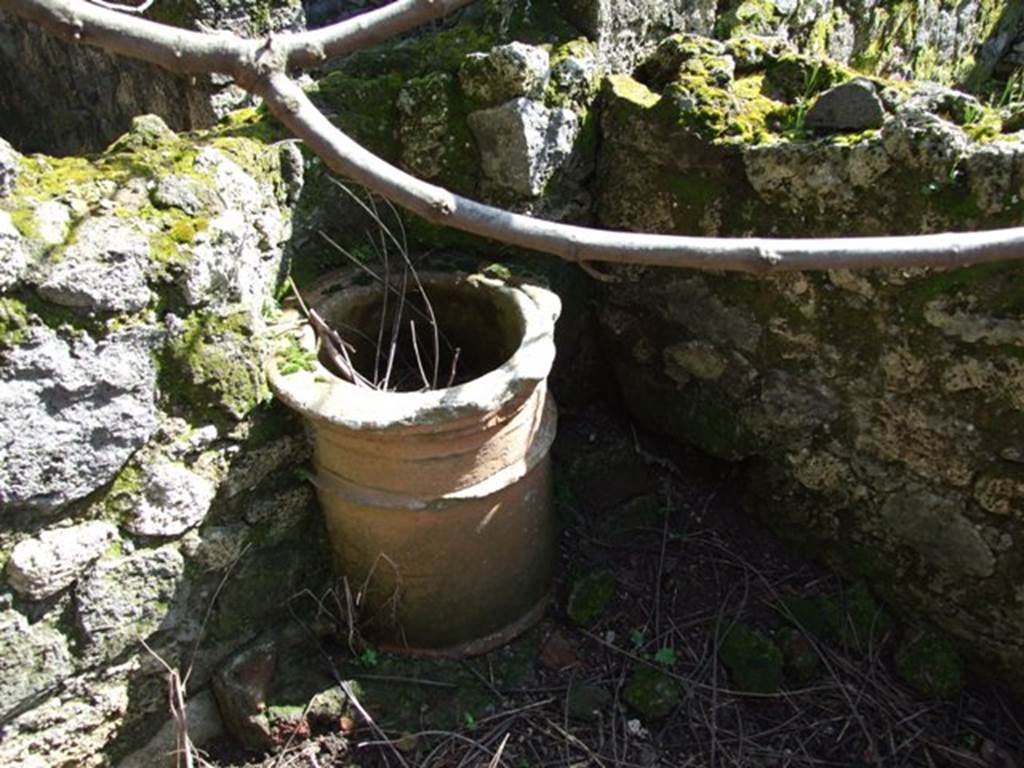
V.4.13 Pompeii. March 2009. Garden, terracotta puteal C.
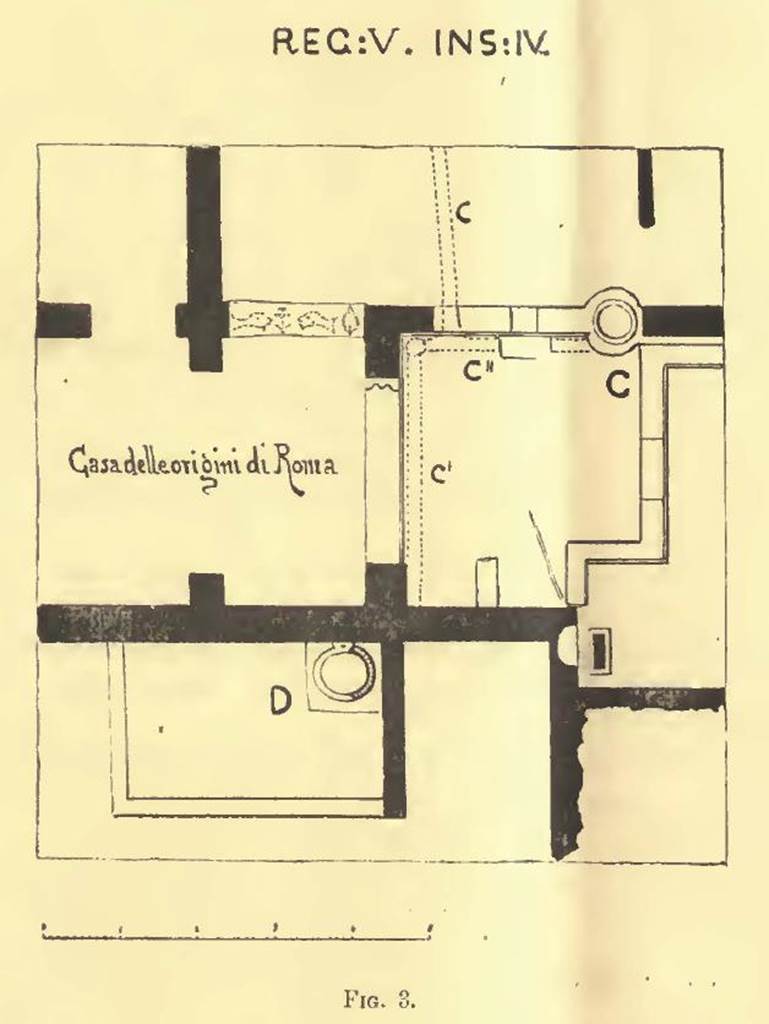
V.4.13 Pompeii.
Fig.3 from Notizie degli Scavi di Antichità, 1905, p.137.
The rear
rooms, and garden area are shown at the top of the drawing.
This
drawing explains the system of using the water from the roof, collected in
cistern D, and then the excess sent to cistern C, linked from the neighbouring
house.
The garden
area and cistern marked D, in house V.4.c, is shown on the lower left.
For
details, see V.4.c.
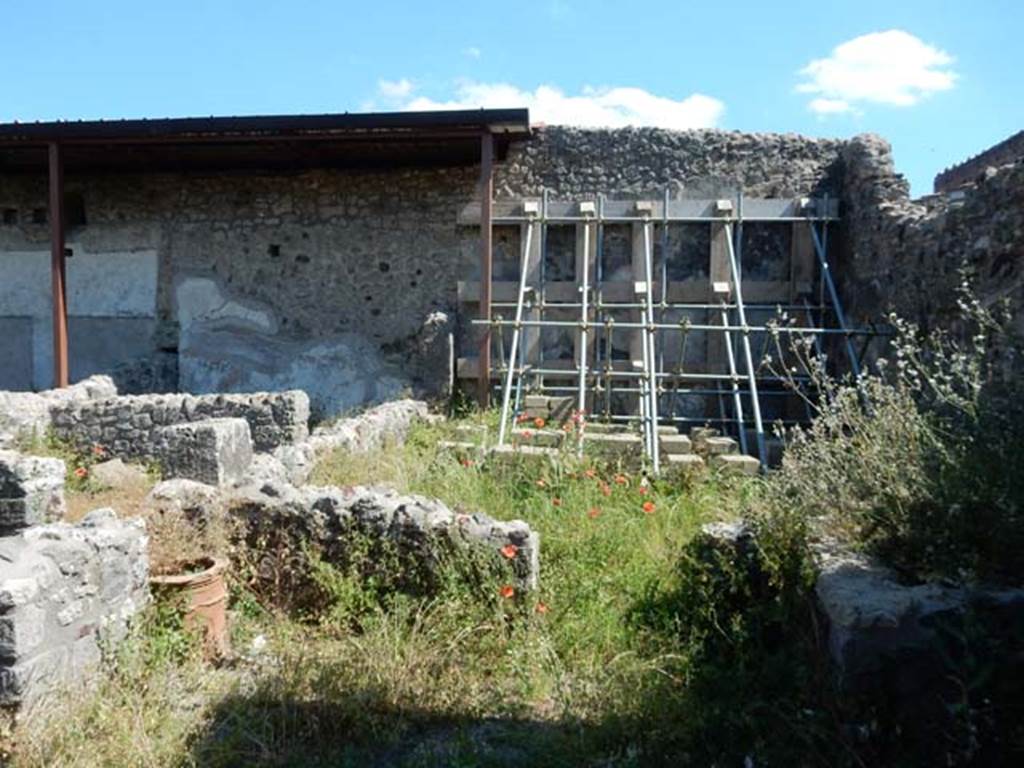
V.4.13 Pompeii. May 2017. Looking south towards garden wall, behind hoarding.
The blocks of stonework could be forming the site of the
triclinium and table! Photo courtesy of Buzz Ferebee.
According to
Soprano –
“Ubicazione:
giardino. L. medius, m. 400; l. imus e l. summus, m.3.75; mensa
m.1.50 per 0.90.
Bibliog. Thedenat, op. c. p.34; “Not. Scavi”, (1905), p.91.
Il Sogliano, descrivendo
questo triclinio afferma trattarsi “di un basso sedile collocato intorno ai tre
lati di una mensa e col quale si volle ricordare la disposizione dei letti
tricliniari in muratura”. Parmi, peraltro, piu esatto riconoscere in questo
“sedile” l’impianto di un vero triclinio.
L’esistenza di
fori circolari nel terreno attesta che il triclinio era ombreggiato da un pergolato.
I letti laterali
sono di eguale lunghezza. La mensa rettangolare, attualmente grezza, era
originariamente rivestita di intonaco e ricoperta da una lastra di marmo
colorato.”
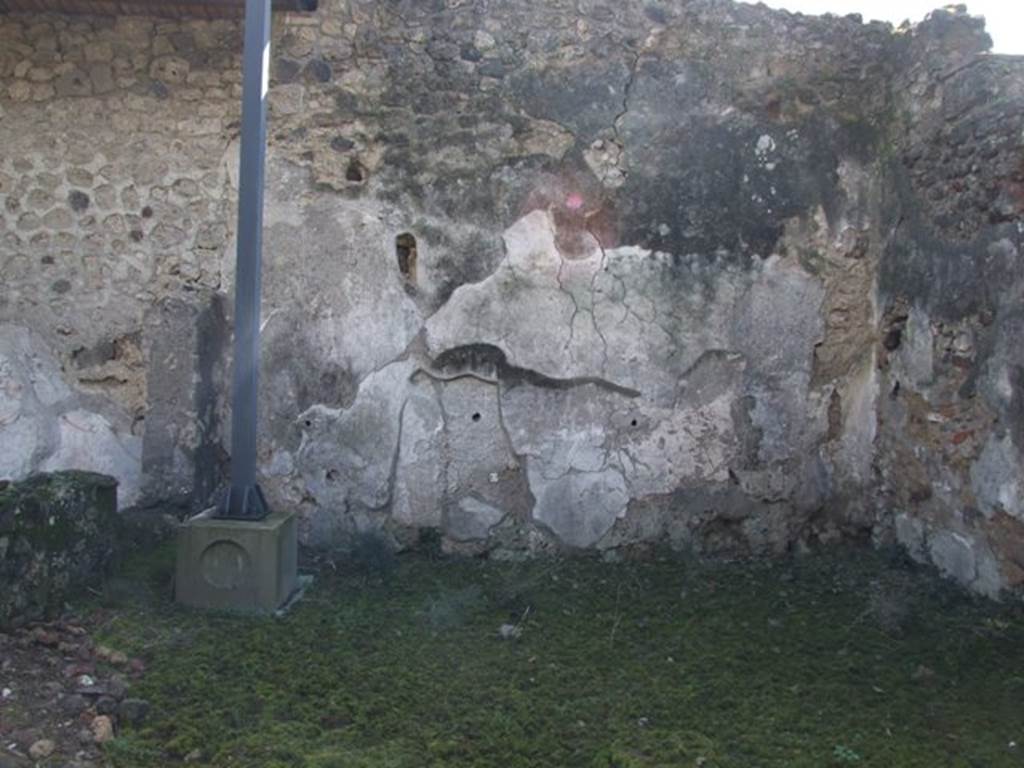
V.4.13 Pompeii. March 2009. Garden, south wall.
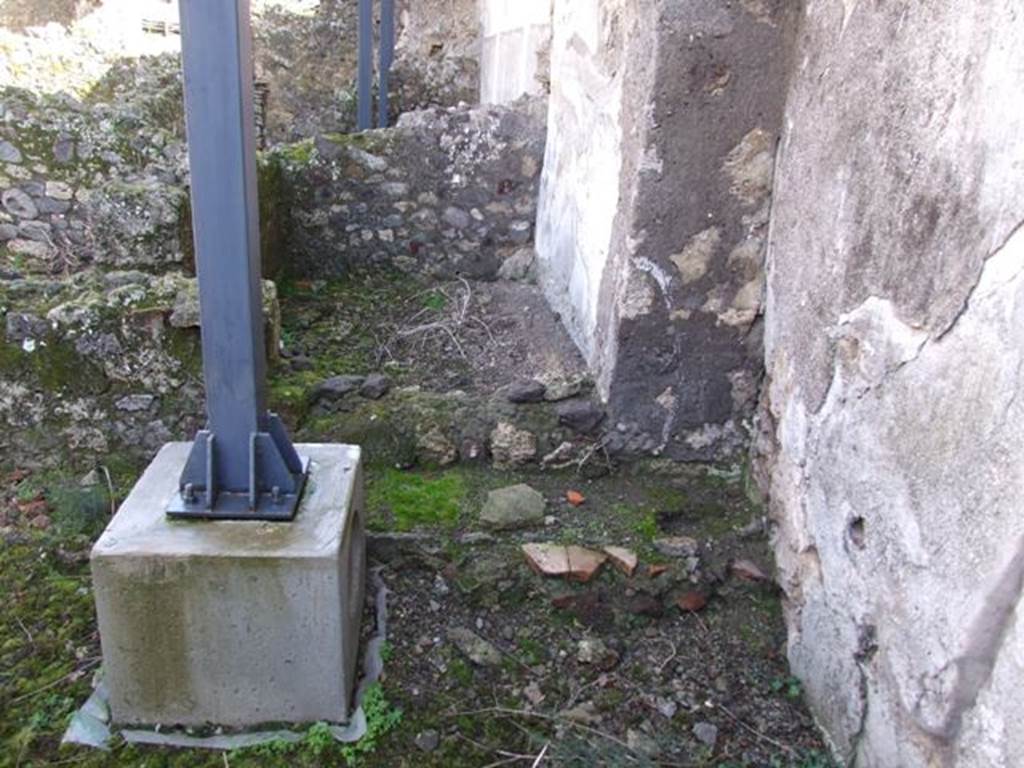
V.4.13 Pompeii. March 2009. Garden, south-east corner. Looking east into diaeta across remains of gutter.
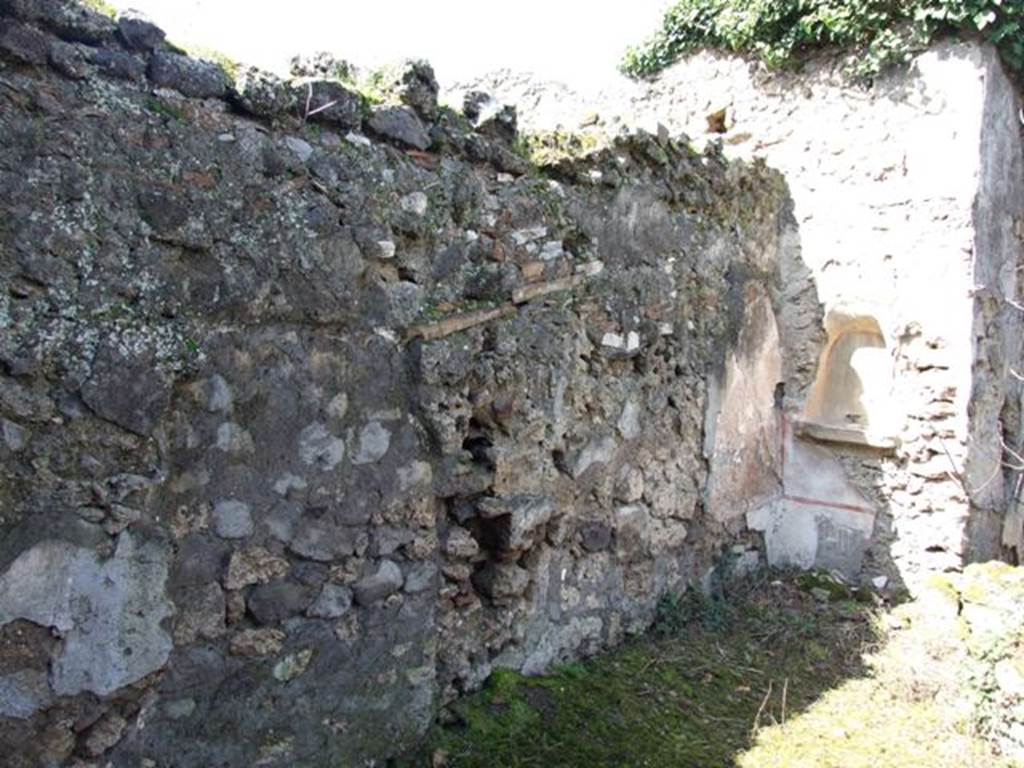
V.4.13 Pompeii. March 2009. Garden, north-west corner.
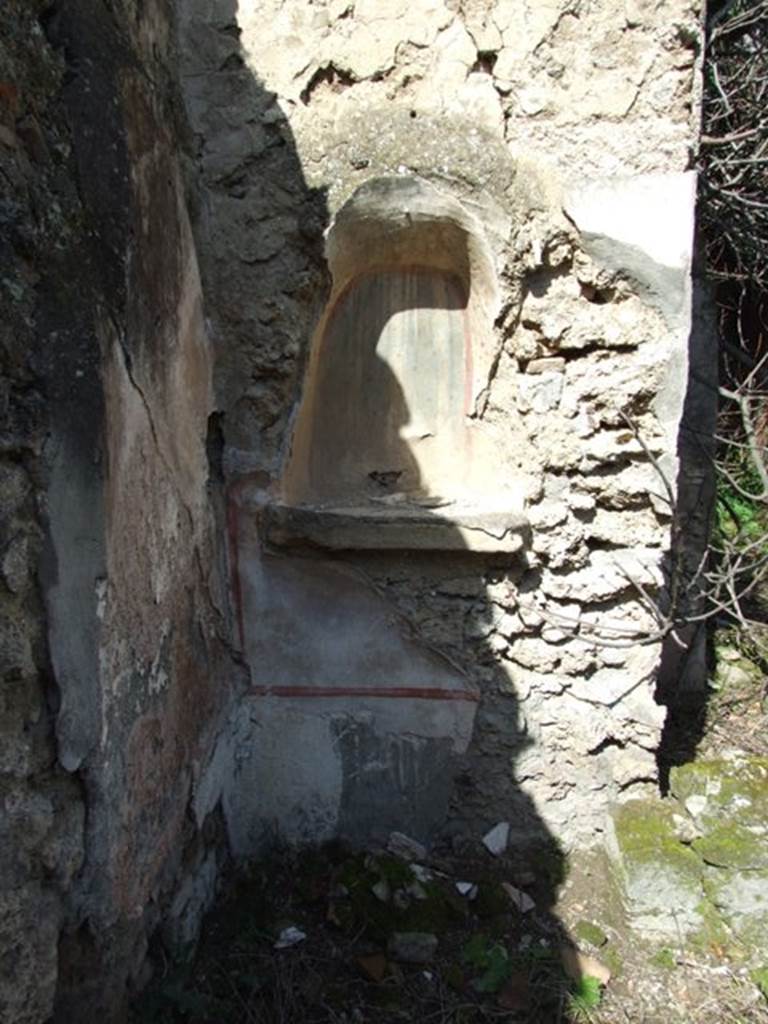
V.4.13 Pompeii. March 2009. Lararium niche in north-west corner of garden.
According to Boyce, on the north side of the garden was a section coated with white stucco and marked off as a panel with broad red stripes.
In it was set a large arched niche.
The corners within the arch were outlined in red, as was the shape of the niche on the surrounding wall.
The rear wall was painted blue, studded with red and yellow spots and yellow stars with red centres.
On the ground before the niche stood a masonry altar covered in stucco.
The altar had a rectangular hollow in its upper surface. In this hollow, traces of burning were seen by the excavators.
Around the corner from this niche, on the west wall of the open area which preceded the garden on the north, was a broad sheet of white plaster.
On this plaster were painted two yellow serpents near a cylindrical altar with fruit, in the background were plants.
In the floor below this painting were the marks left by a square masonry altar.
See Boyce G. K., 1937. Corpus of the Lararia of Pompeii. Rome: MAAR 14. (p.42, no.126, Pl. 11,2)
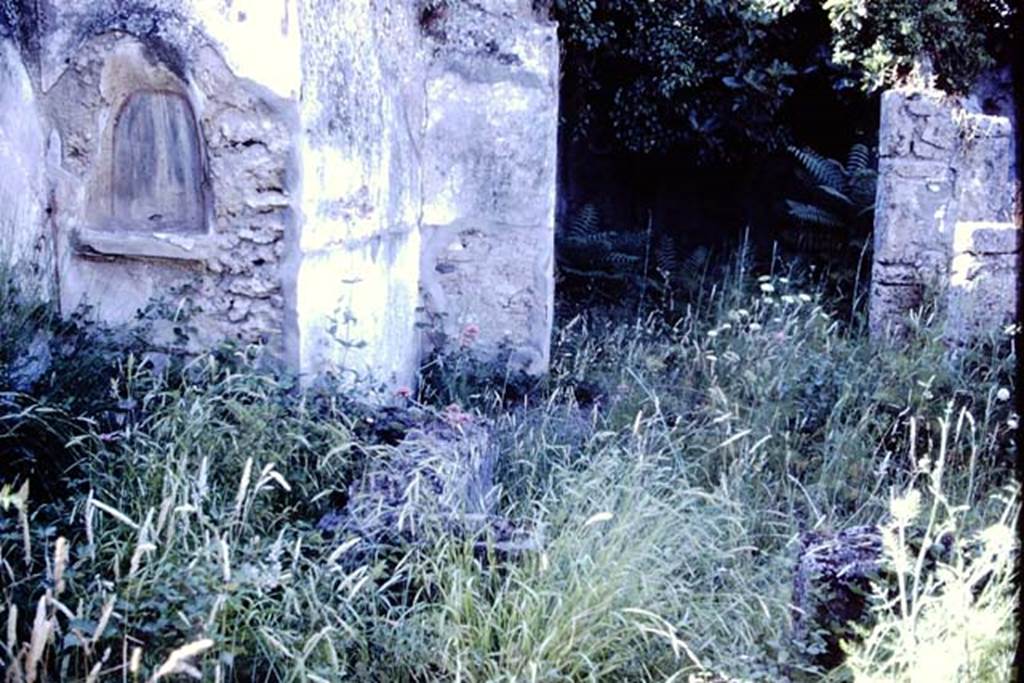
V.4.13 Pompeii, 1978.
Looking towards lararium niche in north-west corner of garden area, and west wall of garden area. Photo by Stanley A. Jashemski.
Source: The Wilhelmina and Stanley A. Jashemski archive in the University of Maryland Library, Special Collections (See collection page) and made available under the Creative Commons Attribution-Non-Commercial License v.4. See Licence and use details.
J78f0279
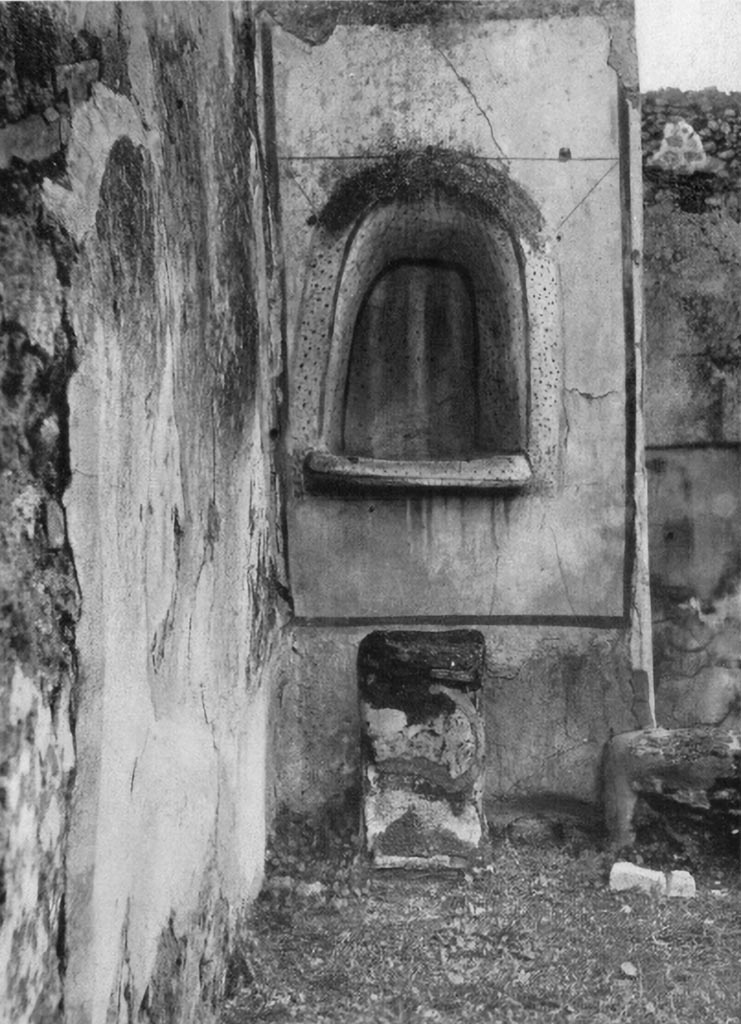
V.4.13 Pompeii. About 1937. Large irregular arched lararium
niche in north-west corner of garden area, with masonry altar. It is set in a
section coated with white stucco and marked off as a panel with broad red
stripes.
See Boyce G. K., 1937. Corpus
of the Lararia of Pompeii. Rome: MAAR 14. (p.41-2, no.126, Pl. 11,2).
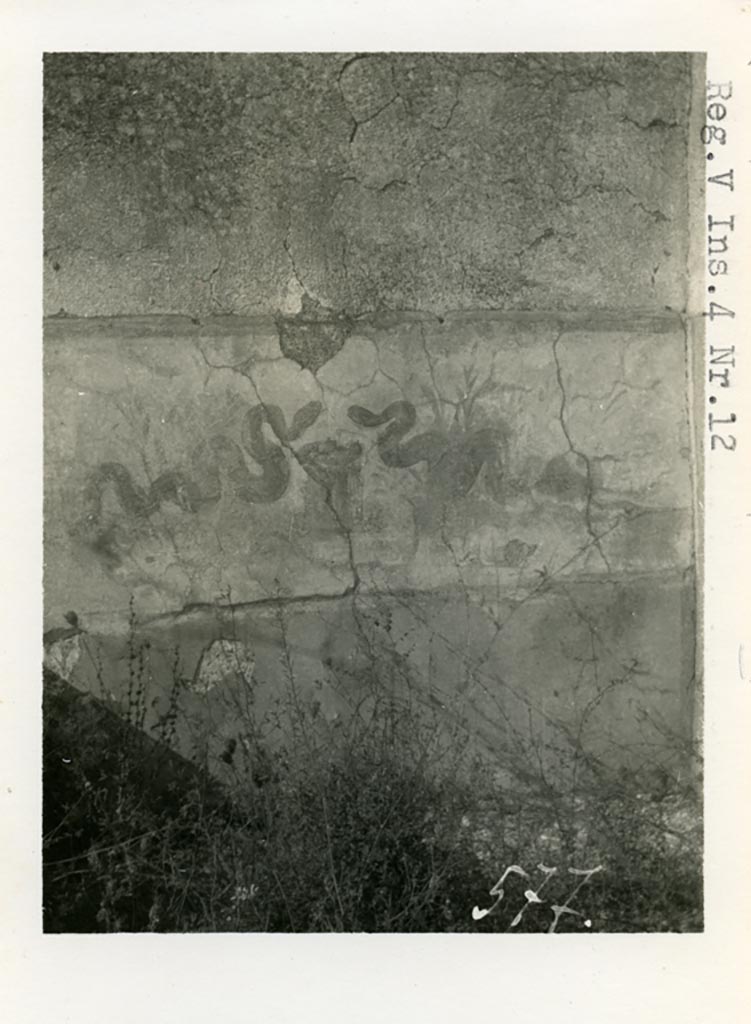
V.4.13 Pompeii but shown as V.14.12 on photo. Pre-1937-39. Two painted serpents.
Photo courtesy of American Academy in Rome, Photographic Archive. Warsher collection no. 577.
According to Boyce –
Around the corner from this niche, on the west wall of the open area which preceded the garden on the north, was a broad sheet of white plaster.
On this plaster were painted two yellow serpents near a cylindrical altar with fruit, in the background were plants.
See Boyce G. K., 1937. Corpus of the Lararia of Pompeii. Rome: MAAR 14. (p.42, no.126, Pl. 11,2).
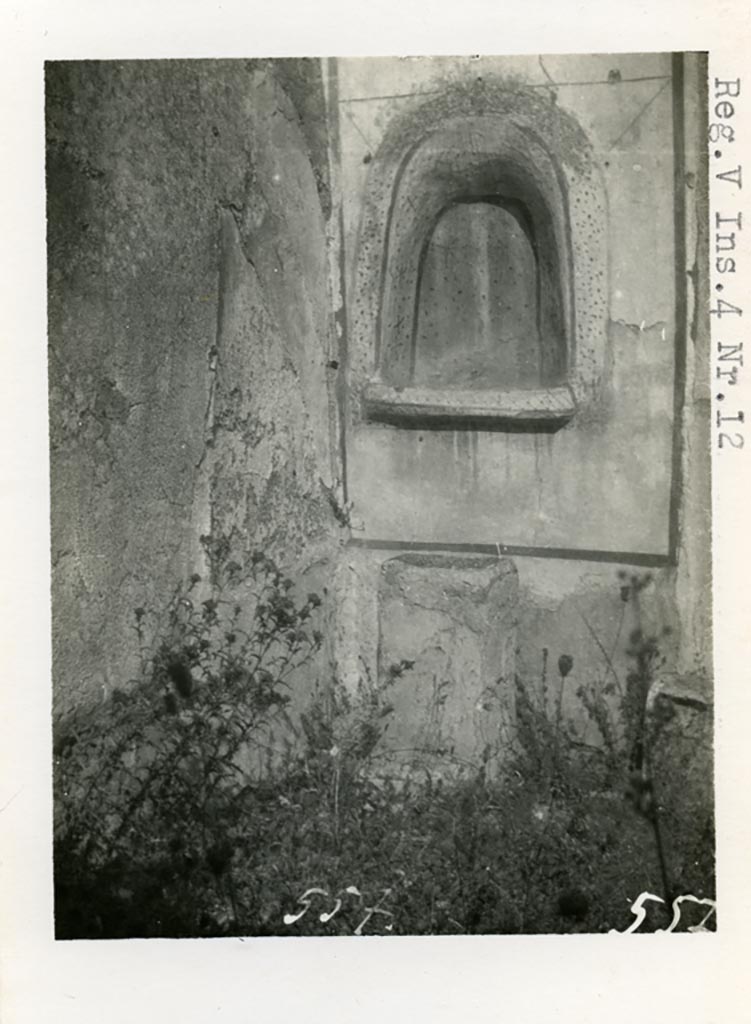
V.4.13 Pompeii but shown as V.4.12 on photo. Pre-1937.
Looking towards lararium niche in north-west corner of garden area, and masonry altar.
Photo courtesy of American Academy in Rome, Photographic Archive. Warsher collection no. 557.
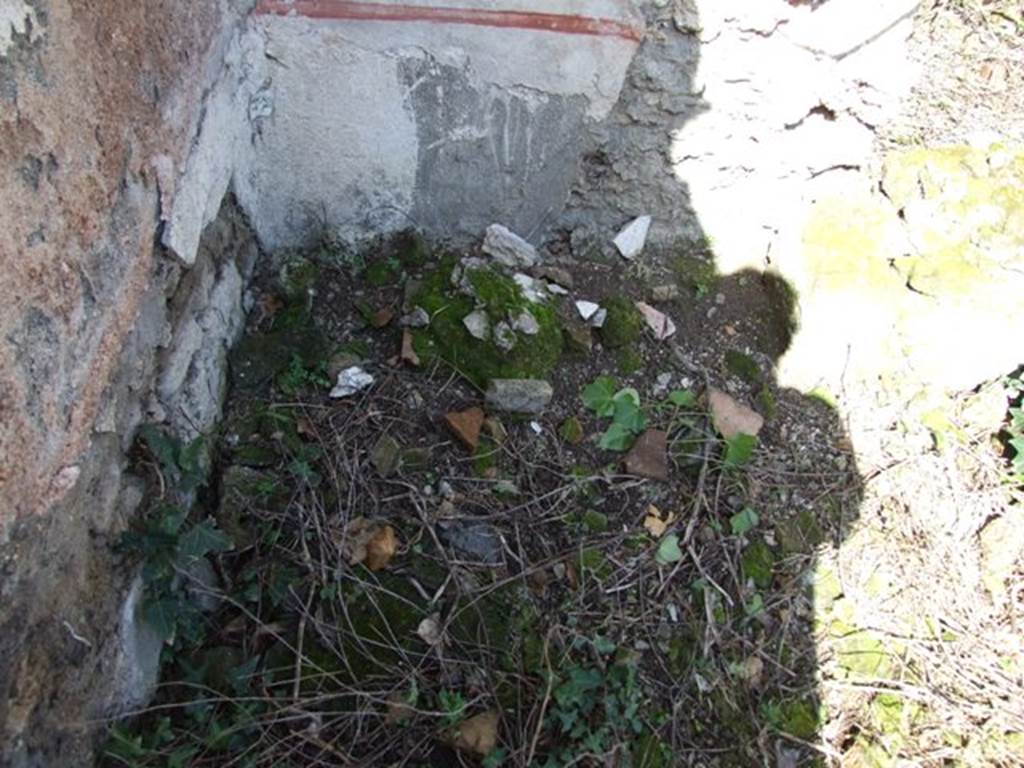
V.4.13 Pompeii. March 2009. Lararium niche in north-west
corner of garden. Site of masonry
altar.
See Giacobello, F., 2008. Larari Pompeiani: Iconografia e culto dei Lari in ambito domestico. Milano: LED Edizioni. (p. 268).
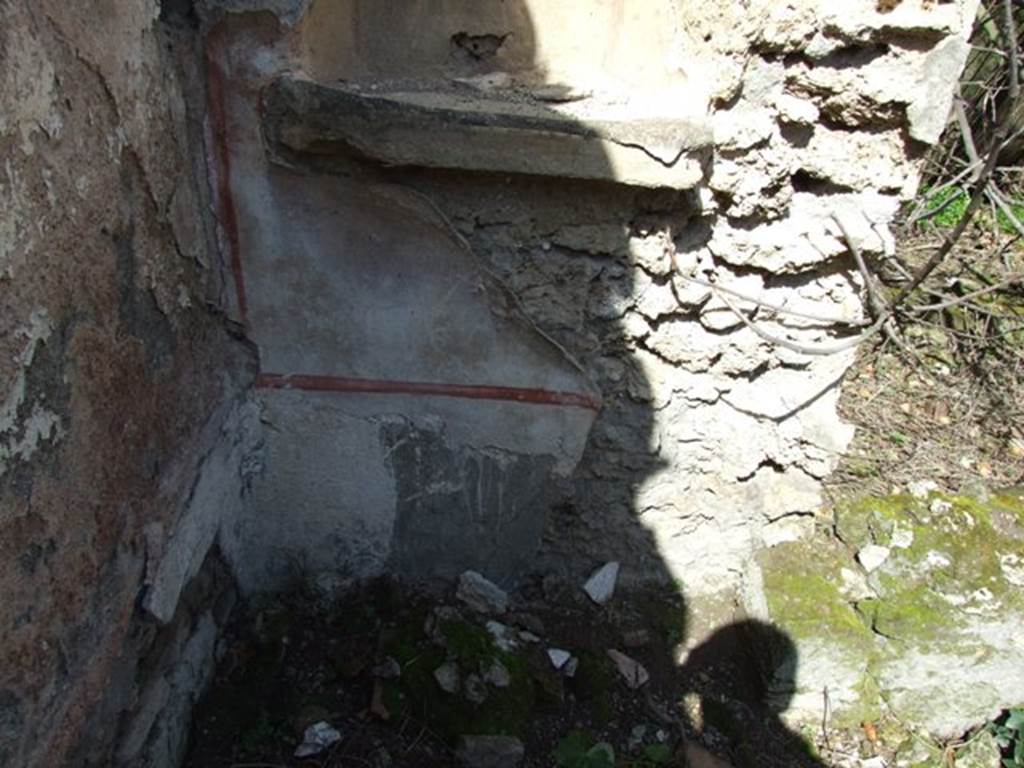
V.4.13 Pompeii. March 2009. Lararium niche in north-west corner of garden. Painted plaster below niche.
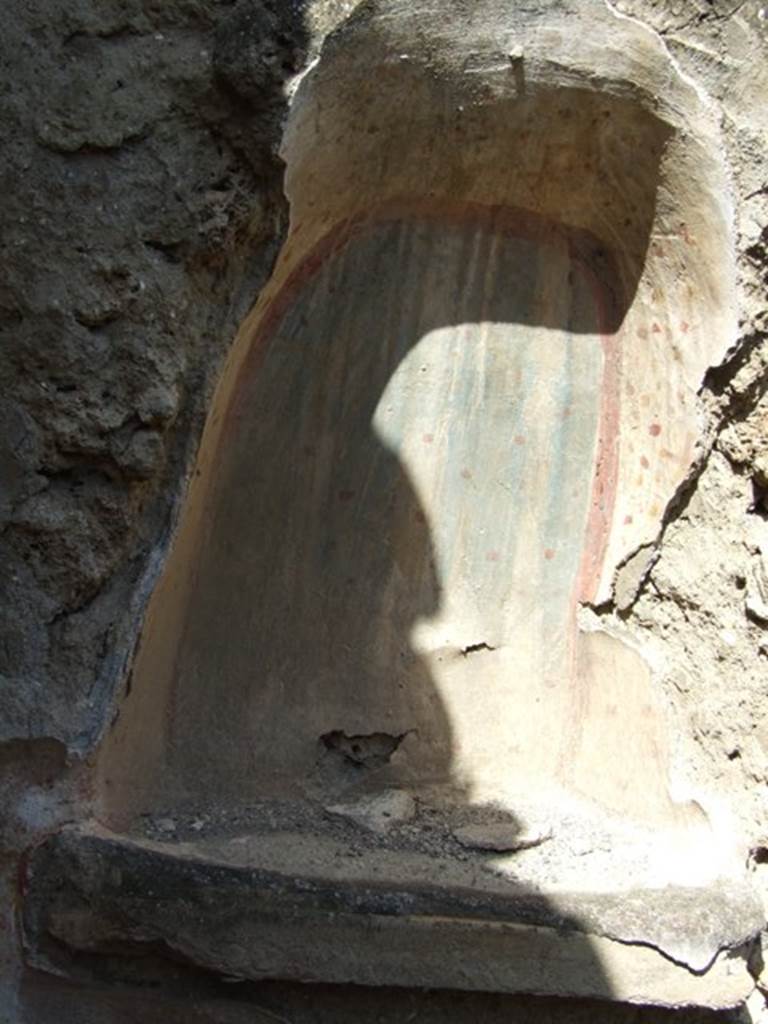
V.4.13 Pompeii. March 2009. Lararium niche in north-west corner of garden. Detail of east side.
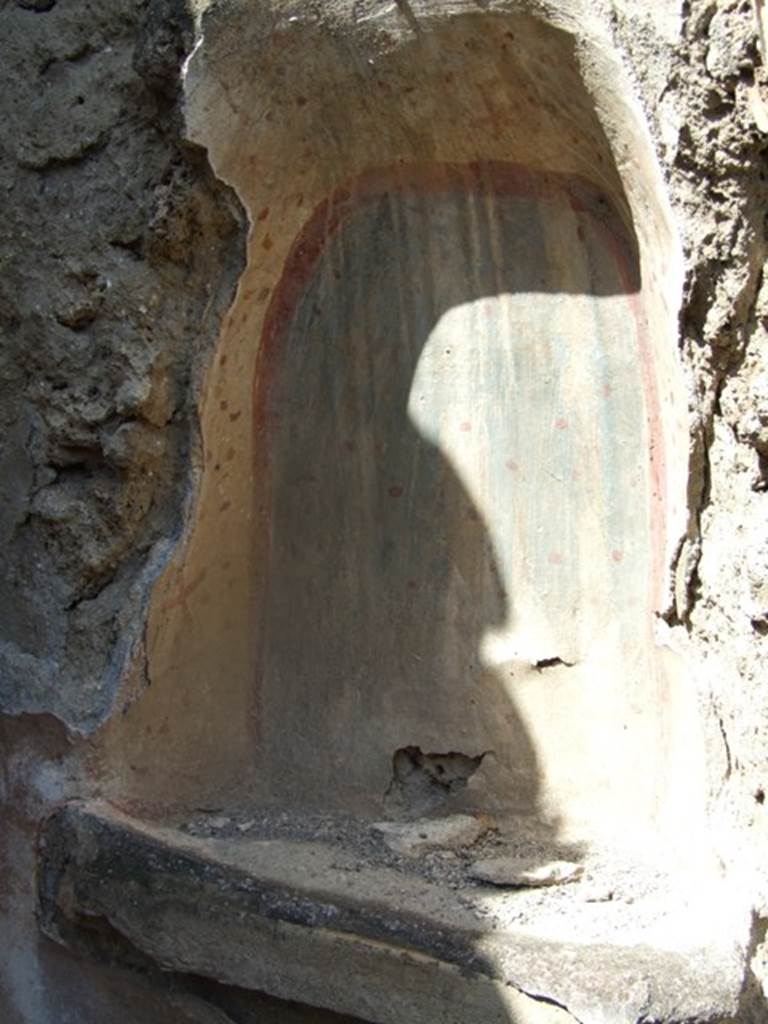
V.4.13 Pompeii. March 2009. Lararium niche in north- west corner of garden.
Remains of painting in niche. Detail of west side.
The niche was painted with red and yellow stylised flowers and yellow stars with red centres.
See Giacobello, F., 2008. Larari Pompeiani: Iconografia e culto dei Lari in ambito domestico. Milano: LED Edizioni. (p. 268).
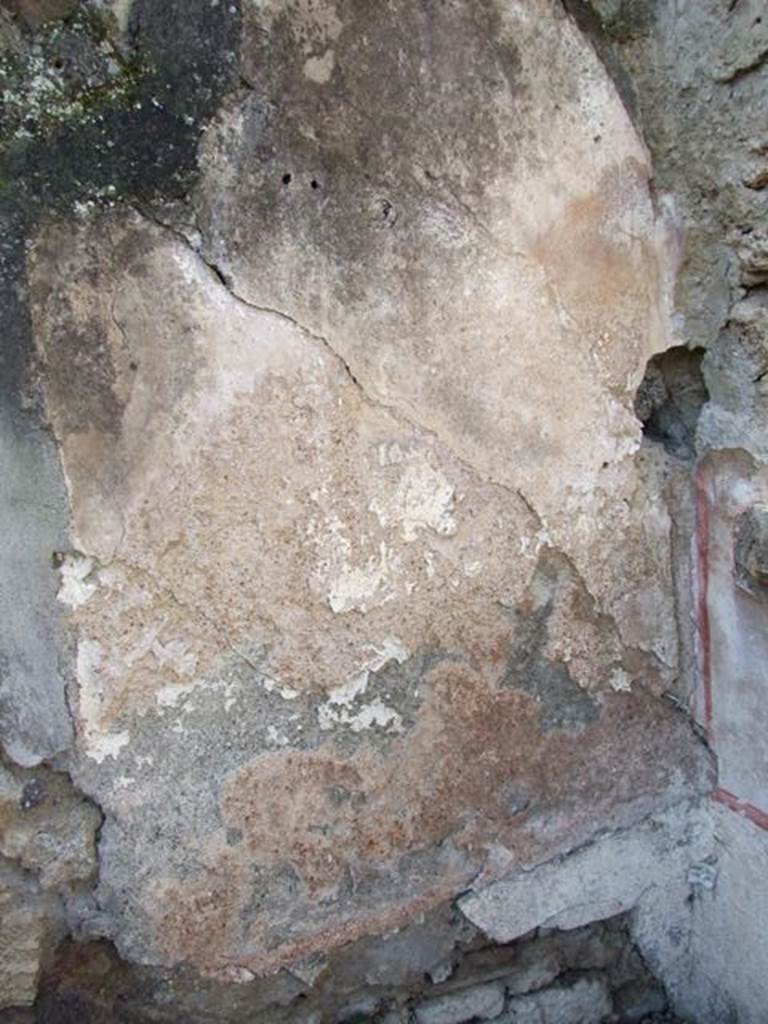
V.4.13 Pompeii. March 2009. West wall of garden on the west side of the niche.
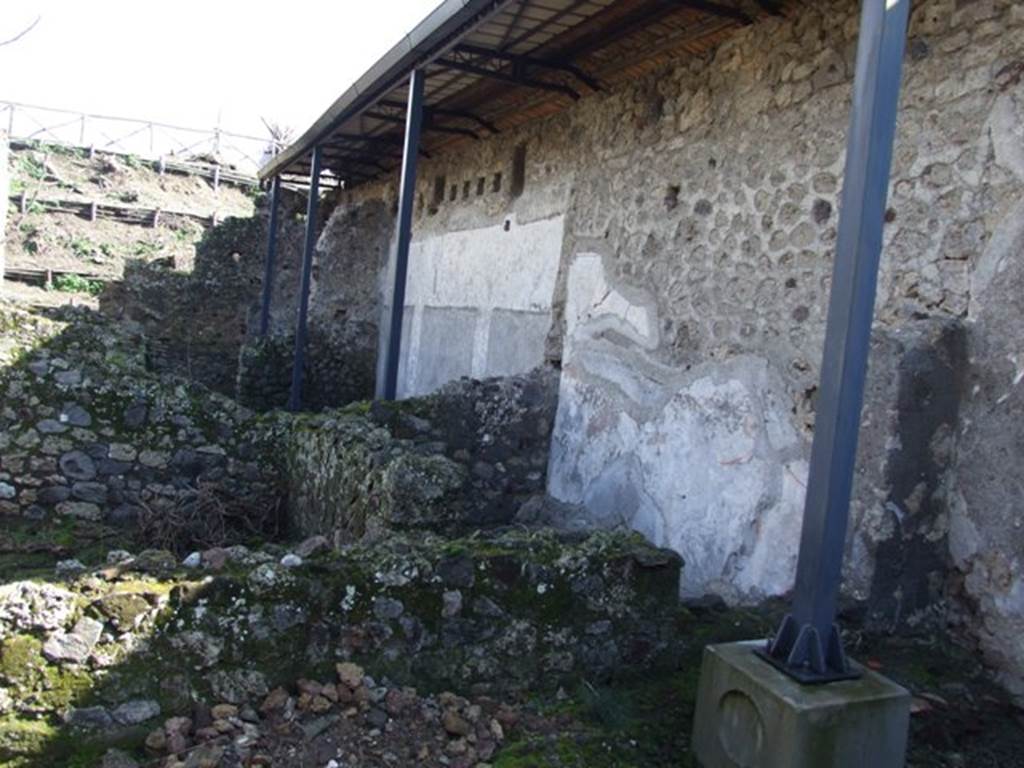
V.4.13 Pompeii. March 2009. Looking east along south wall from garden area.
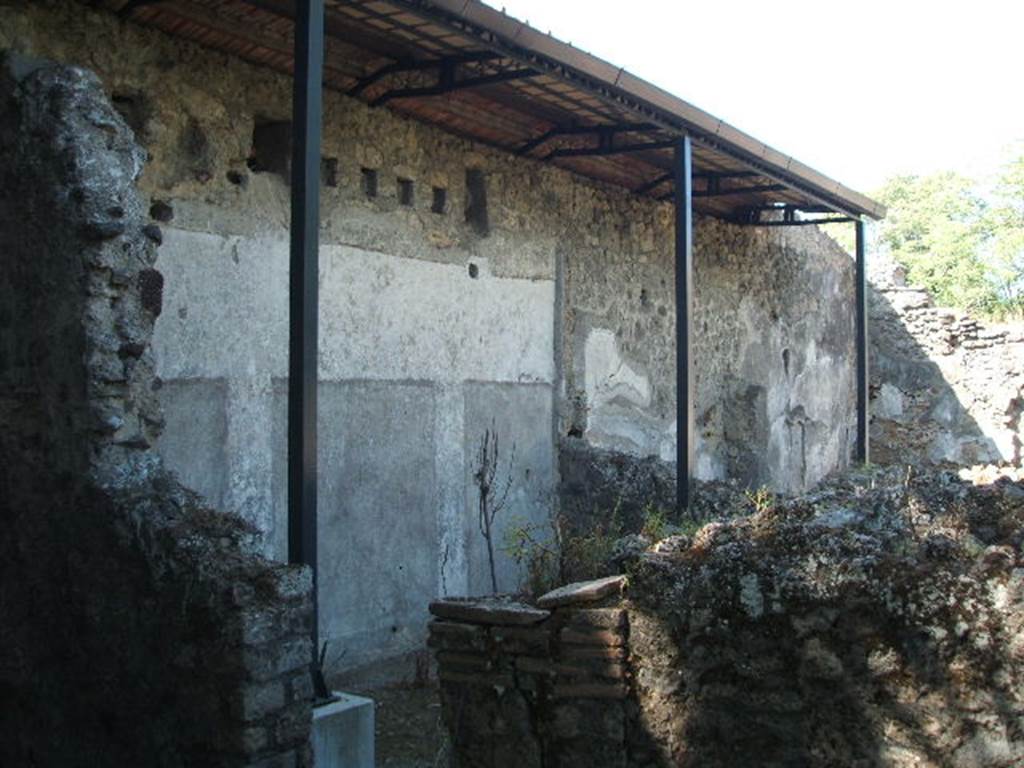
V.4.13 Pompeii. May 2005. Looking west along south wall, from V.4.12.
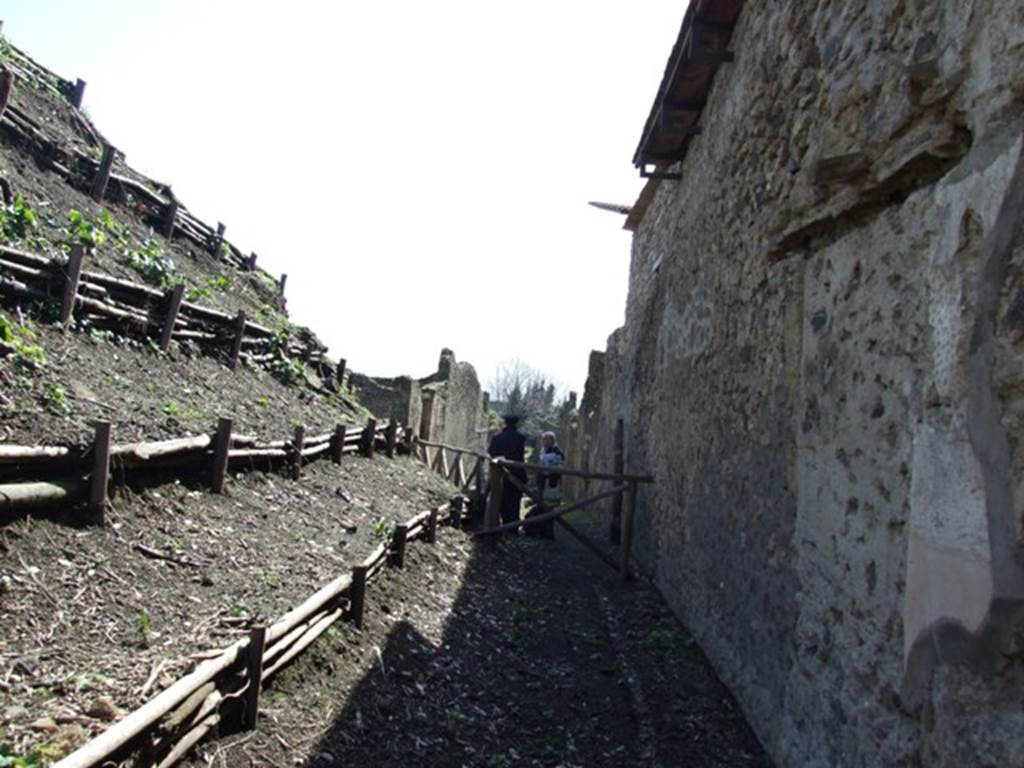
V.4.13 Pompeii. March 2009. Looking south along Via dei Gladiatori from entrance of V.4.12/13.
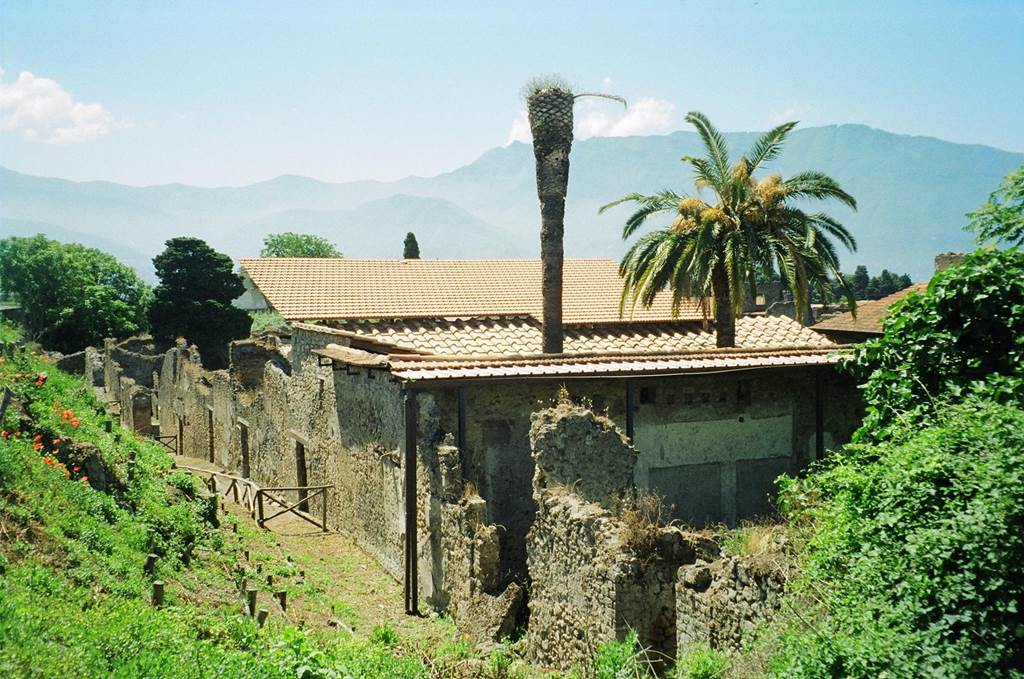
V.4.12/13 Pompeii, on right. May 2010. Looking south along the west side of Vicolo dei Gladiatori. Photo courtesy of Rick Bauer.
Extracts from Notizie degli Scavi di Antichità, 1905 relevant to this house.
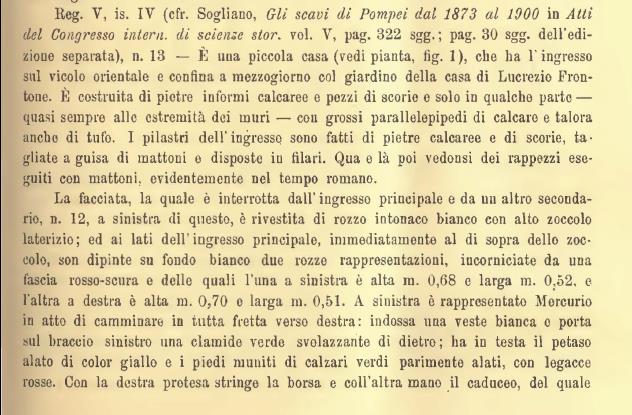
V.4.13 Pompeii. Notizie degli Scavi
di Antichità, 1905, page 85.
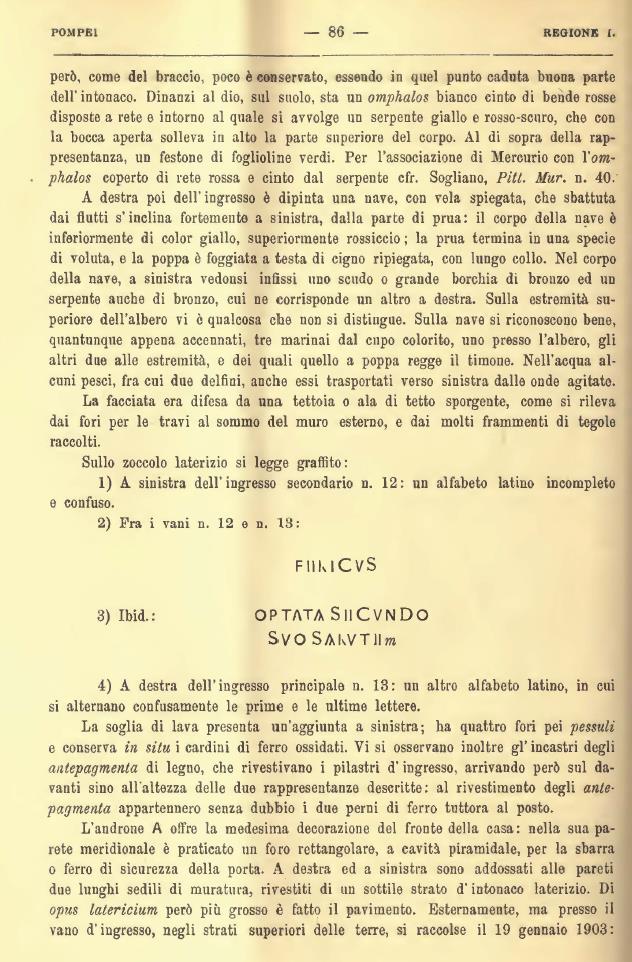
V.4.13 Pompeii. Notizie degli Scavi di Antichità, 1905,
page 86.
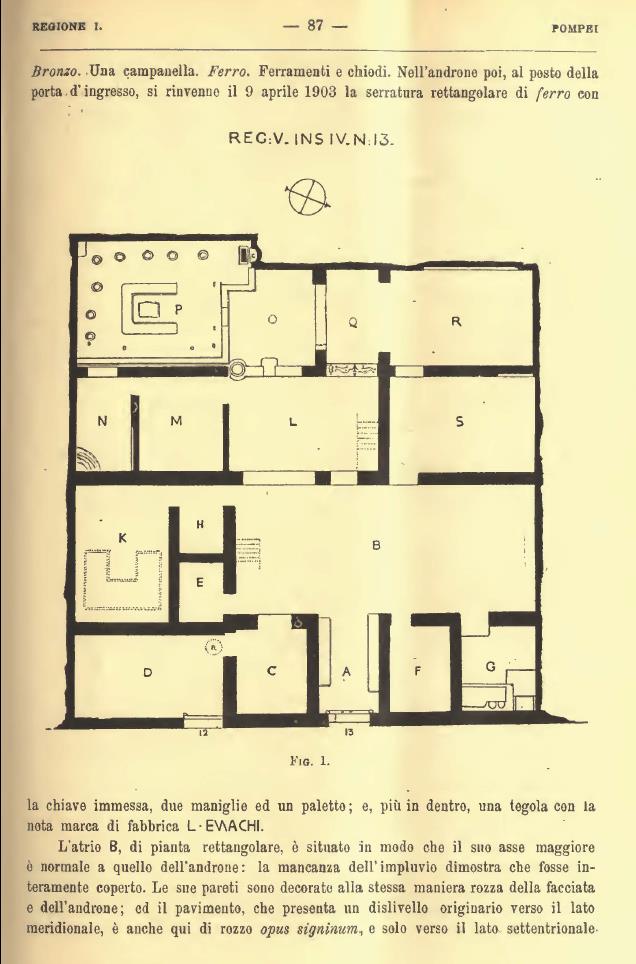
V.4.13 Pompeii. Notizie degli Scavi di Antichità, 1905,
page 87.
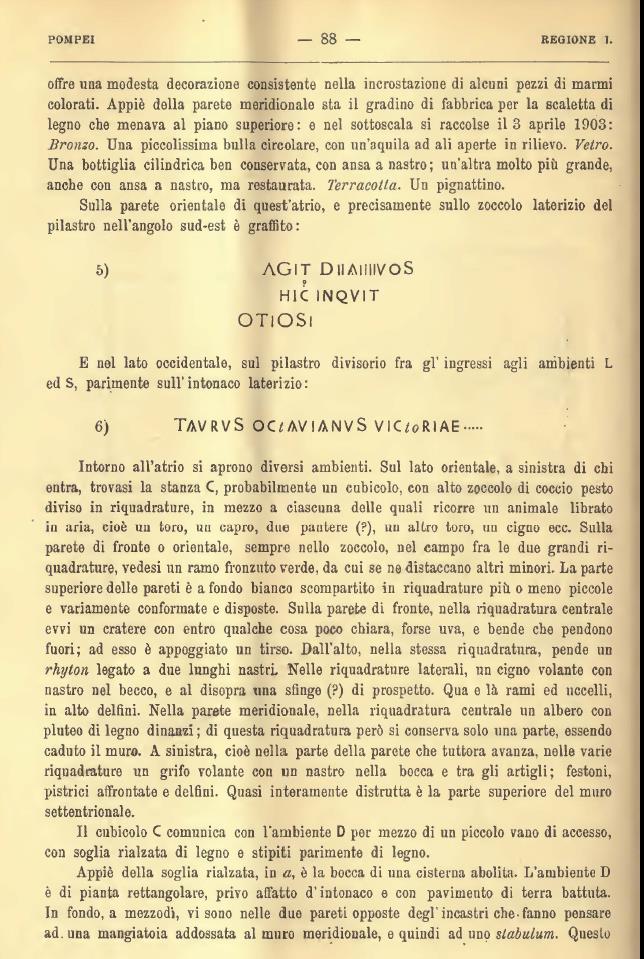
V.4.13 Pompeii. Notizie degli Scavi di Antichità, 1905,
page 88.
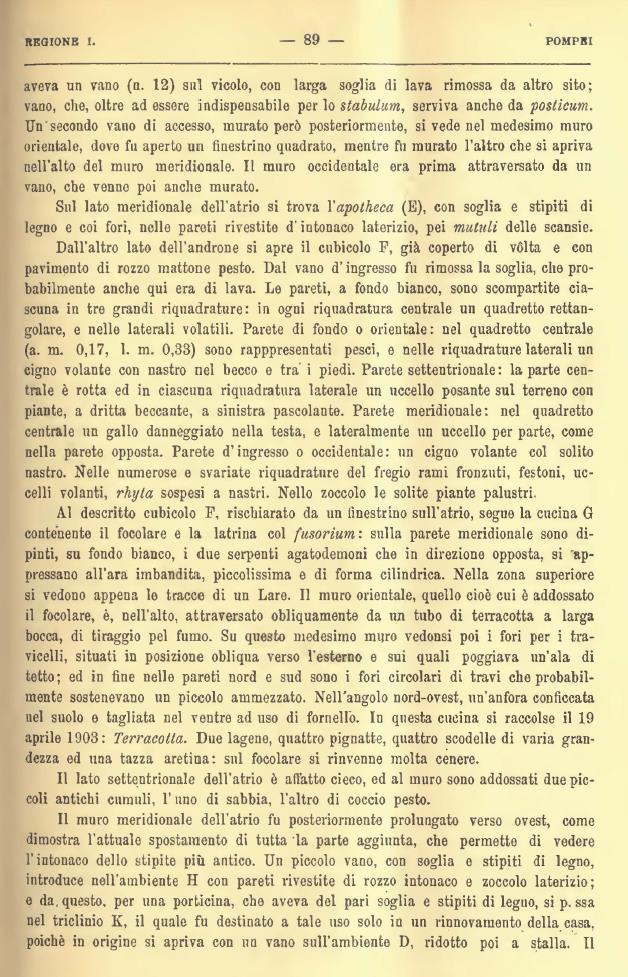
V.4.13 Pompeii. Notizie degli Scavi di Antichità, 1905,
page 89.
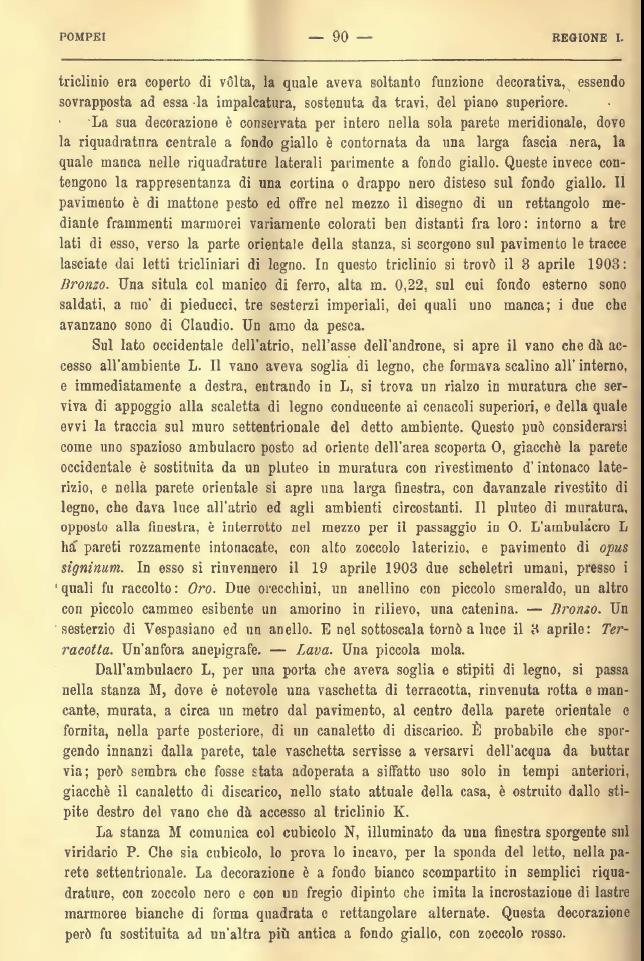
V.4.13 Pompeii. Notizie degli Scavi di Antichità, 1905,
page 90.
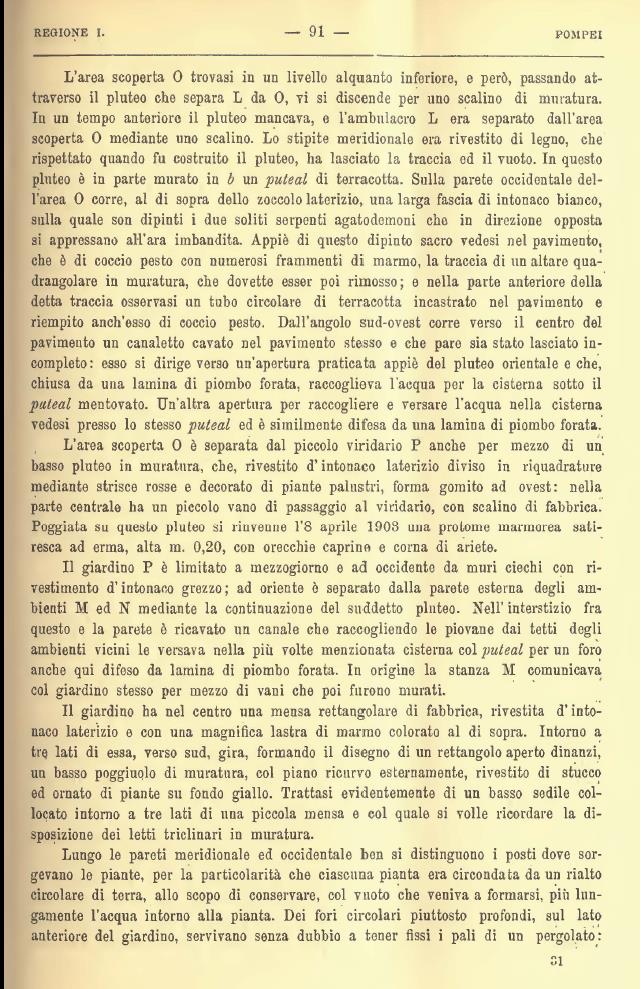
V.4.13 Pompeii. Notizie degli Scavi di Antichità, 1905,
page 91.
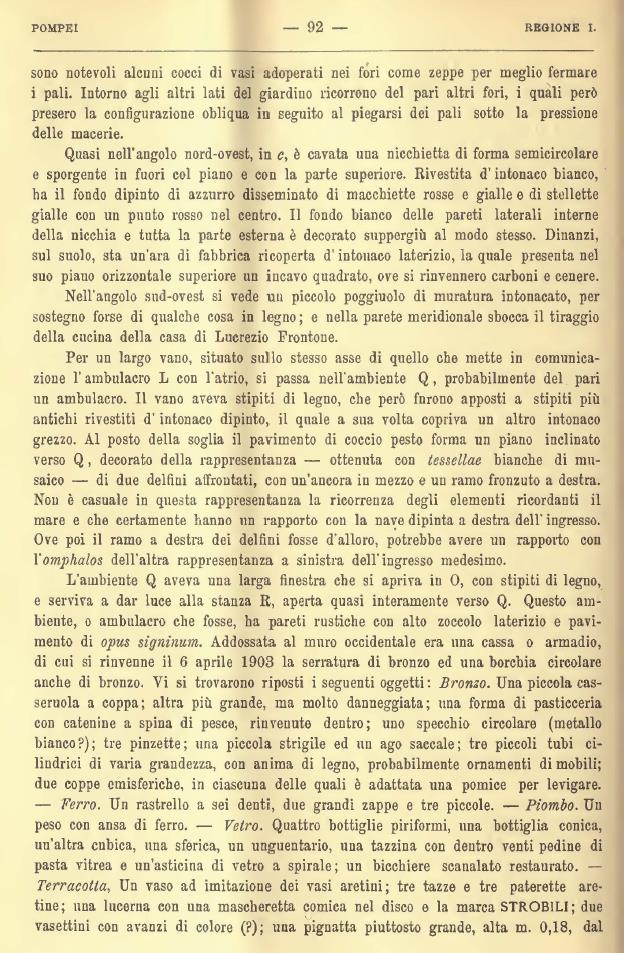
V.4.13 Pompeii. Notizie degli Scavi di Antichità, 1905,
page 92.
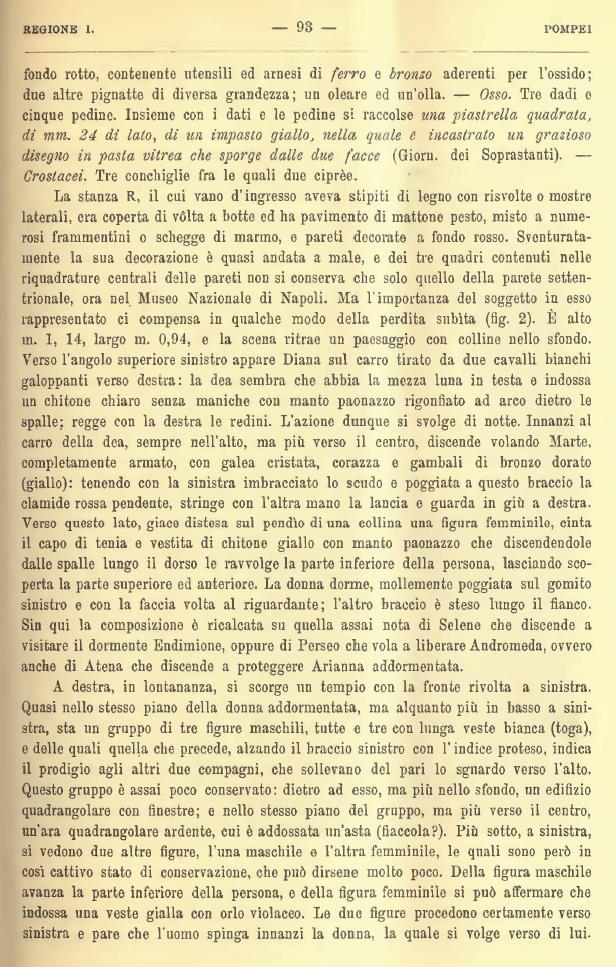
V.4.13 Pompeii. Notizie degli Scavi di Antichità, 1905,
page 93.
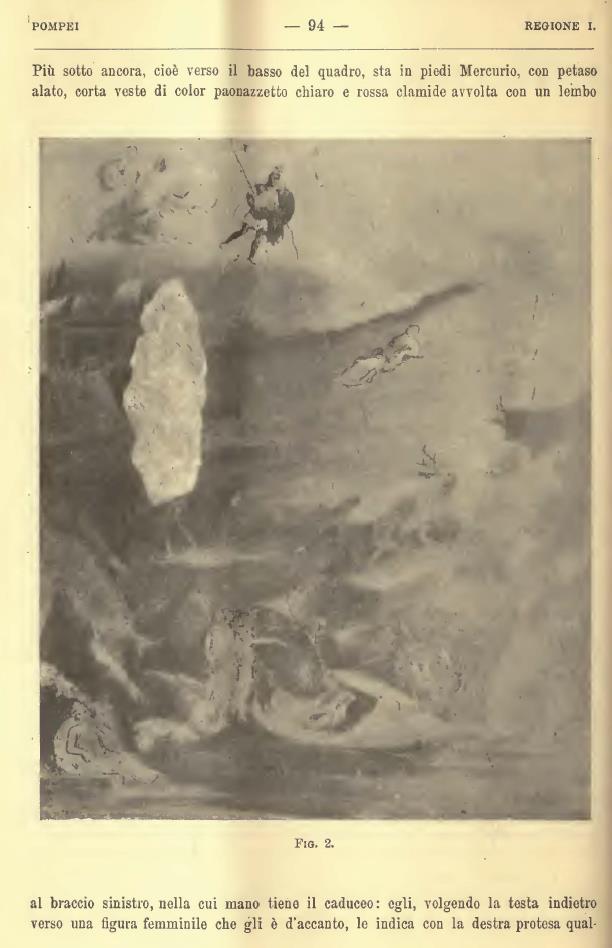
V.4.13 Pompeii. Notizie degli Scavi di Antichità, 1905,
page 94.
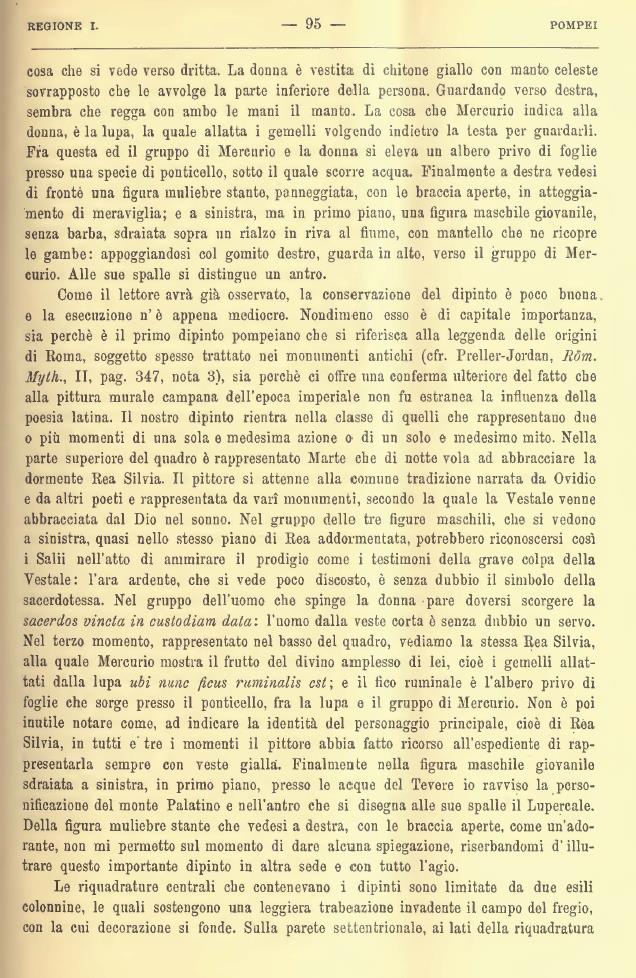
V.4.13 Pompeii. Notizie degli Scavi di Antichità, 1905,
page 95.
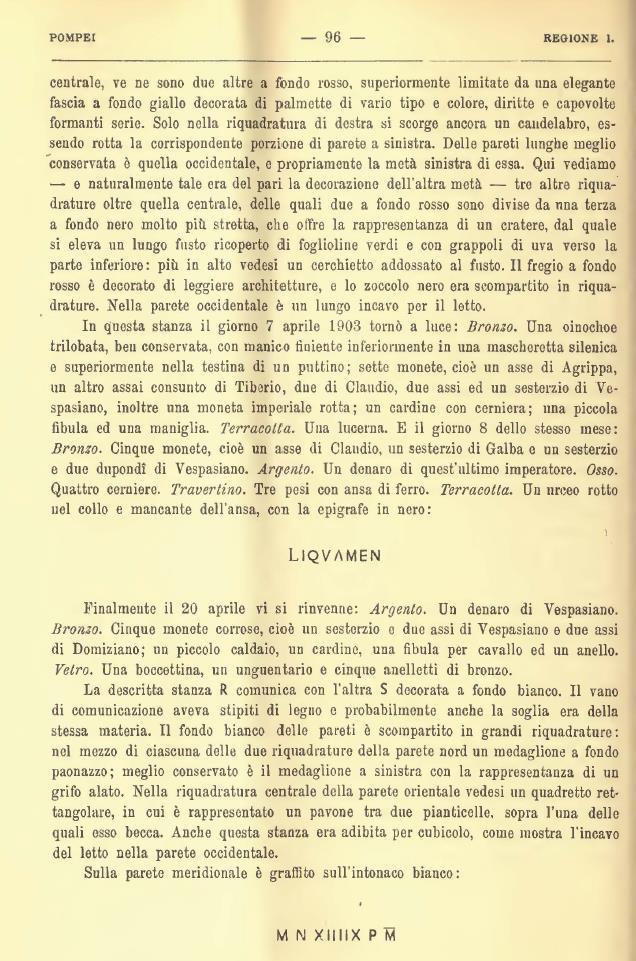
V.4.13 Pompeii. Notizie degli Scavi di Antichità, 1905,
page 96.
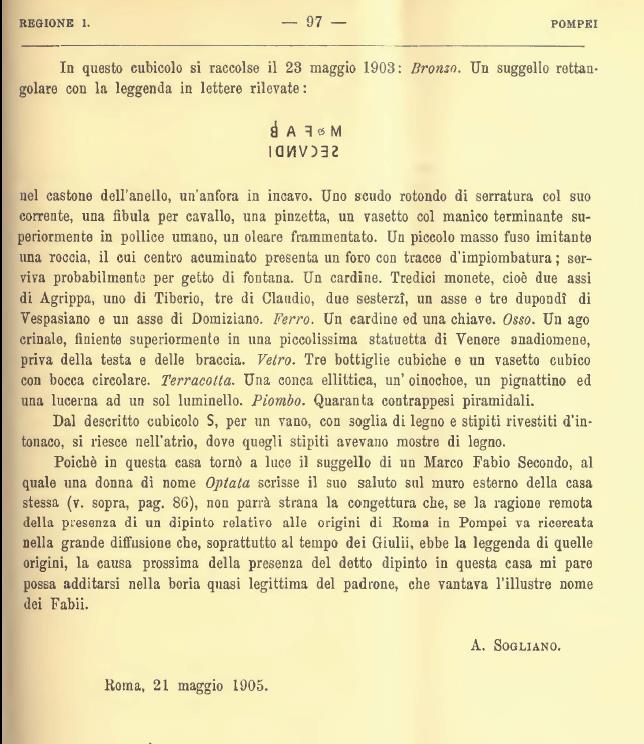
V.4.13 Pompeii. Notizie degli Scavi di Antichità, 1905,
page 97.