V.2.h Pompeii. Casa del Cenacolo.
Excavated 1891 to 1893, 1907. Restored 1975.
Part 2 Part 3
Part 4 Part 5 Part 1 Plan
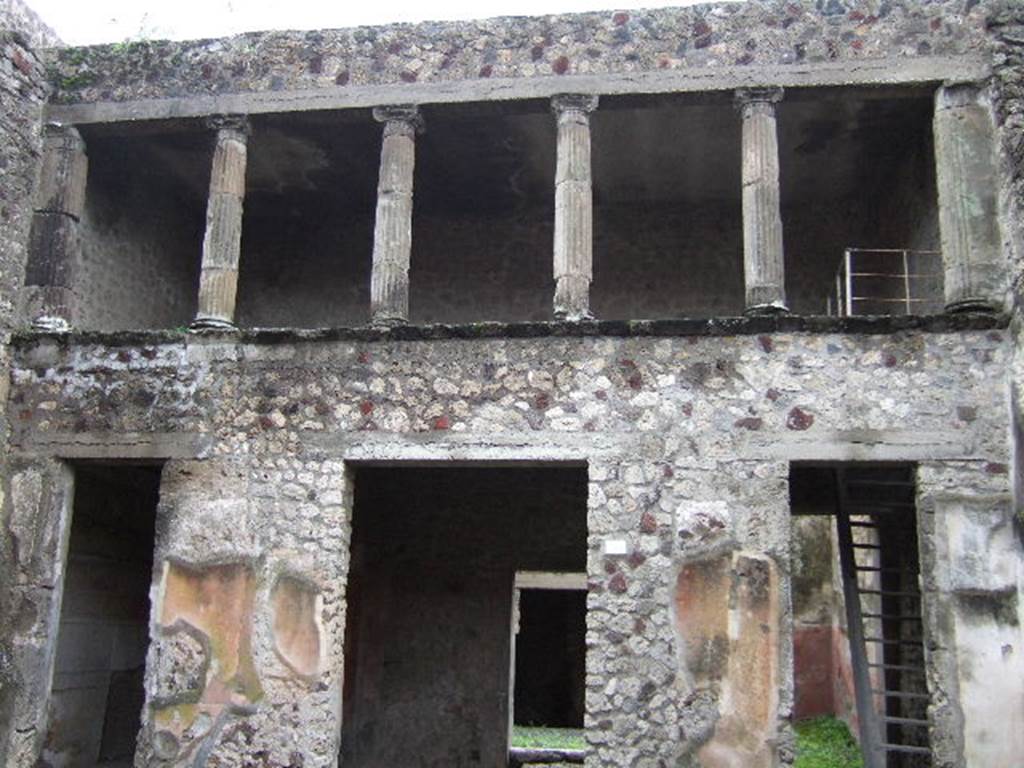
V.2.h Pompeii. December 2005. South side of atrium.
Doorways to cubiculum ‘g’, tablinum ‘f’ (in centre), and room ‘e’ with stairs.
According to NdS, the floor of the atrium was Opus signinum, and the walls were covered with a rustic white plaster, except the two walls flanking the doorway to the tablinum, which were decorated with a yellow background and a black dado.
On the yellow part was a painted peacock of more or less its natural size, before which, on the wall to the right, was a basket full of grapes, and on that to the left were fruits (pomegranates?) placed on the ground.
In both of the walls to the sides of the tablinum, traces of fire could be seen.
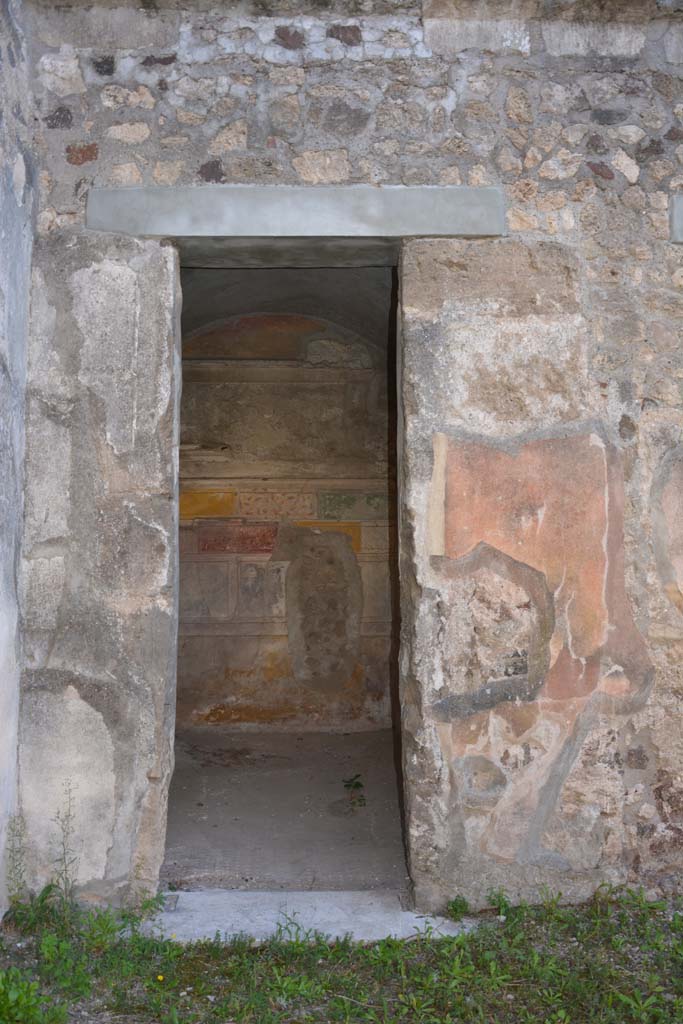
V.2.h Pompeii. October 2019. Cubiculum ‘g’, looking south through
doorway from atrium.
Foto Annette Haug, ERC Grant 681269 DÉCOR.
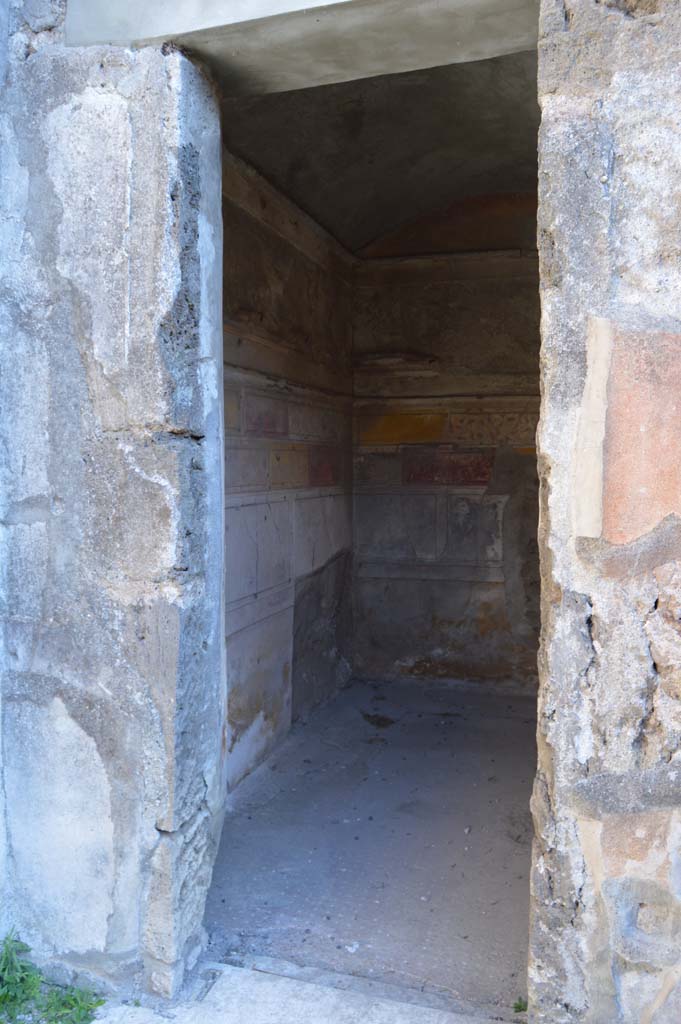
V.2.h Pompeii. October 2017. Looking south through doorway from atrium into cubiculum ‘g’.
Foto Taylor Lauritsen, ERC Grant 681269 DÉCOR.
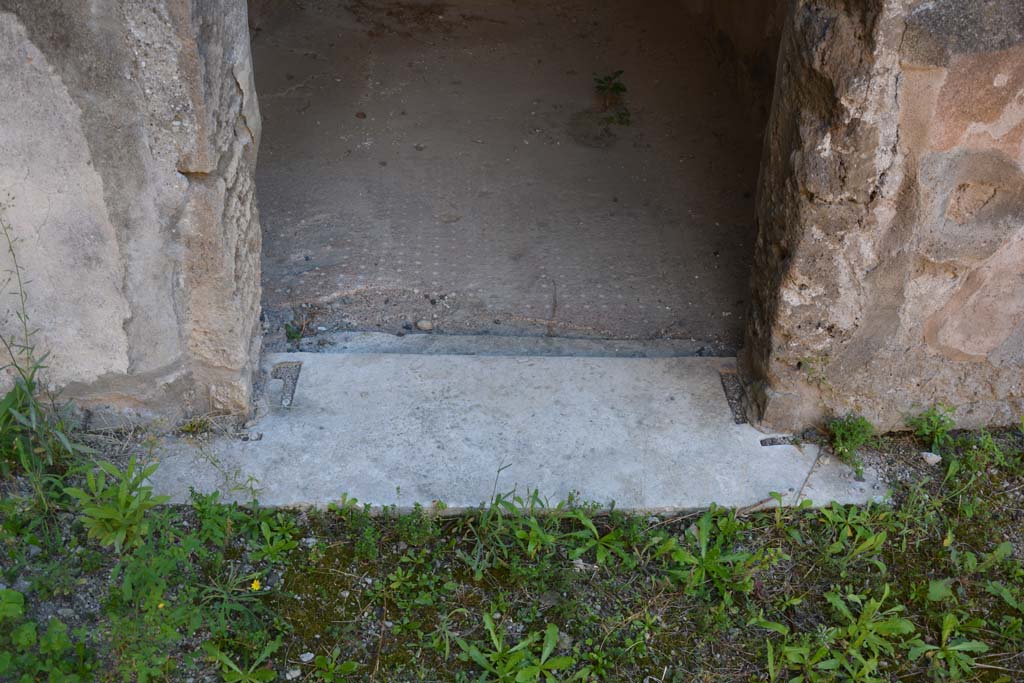
V.2.h Pompeii. October 2019. Cubiculum
‘g’, looking south to threshold of doorway and flooring in cubiculum.
Foto Annette Haug, ERC Grant 681269 DÉCOR.
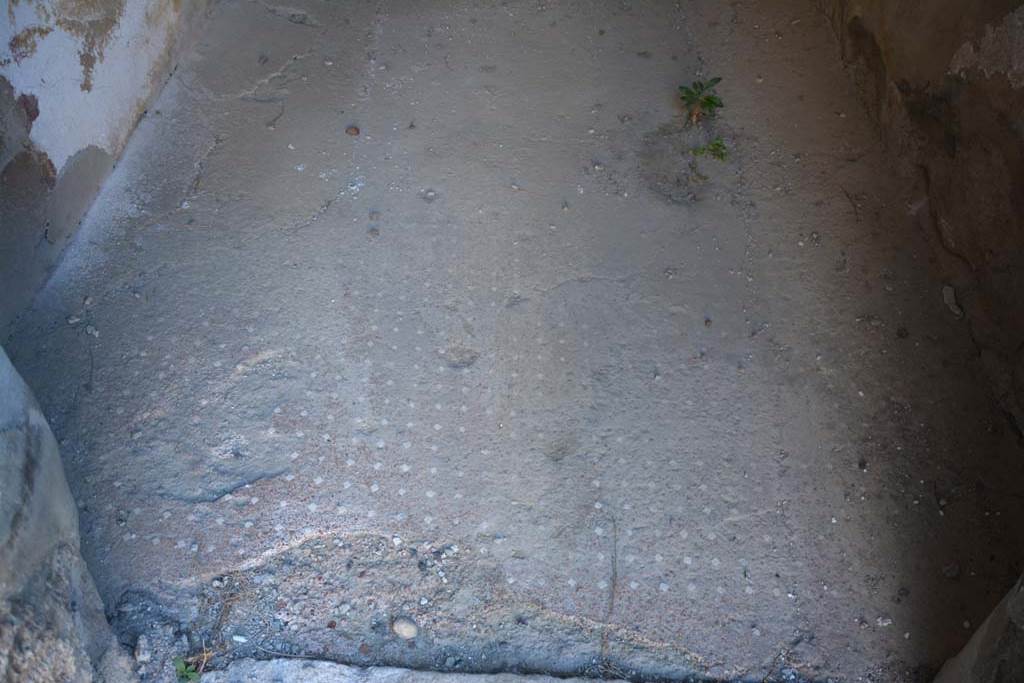
V.2.h Pompeii. October 2019. Cubiculum ‘g’, looking south across
flooring from doorway threshold.
Foto Annette Haug, ERC Grant 681269 DÉCOR.
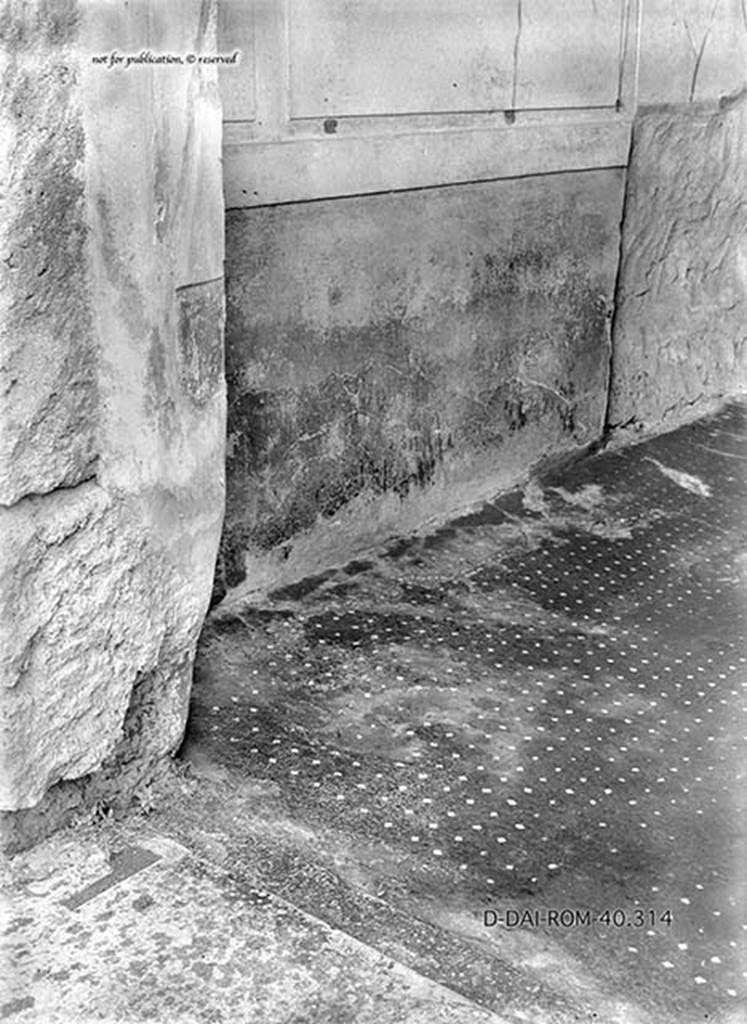
V.2.h Pompeii. 1938 photo of the mosaic floor of cubiculum ‘g’.
DAIR 40.314. Photo © Deutsches Archäologisches Institut, Abteilung Rom, Arkiv.
See http://arachne.uni-koeln.de/item/bauwerksteil/3379
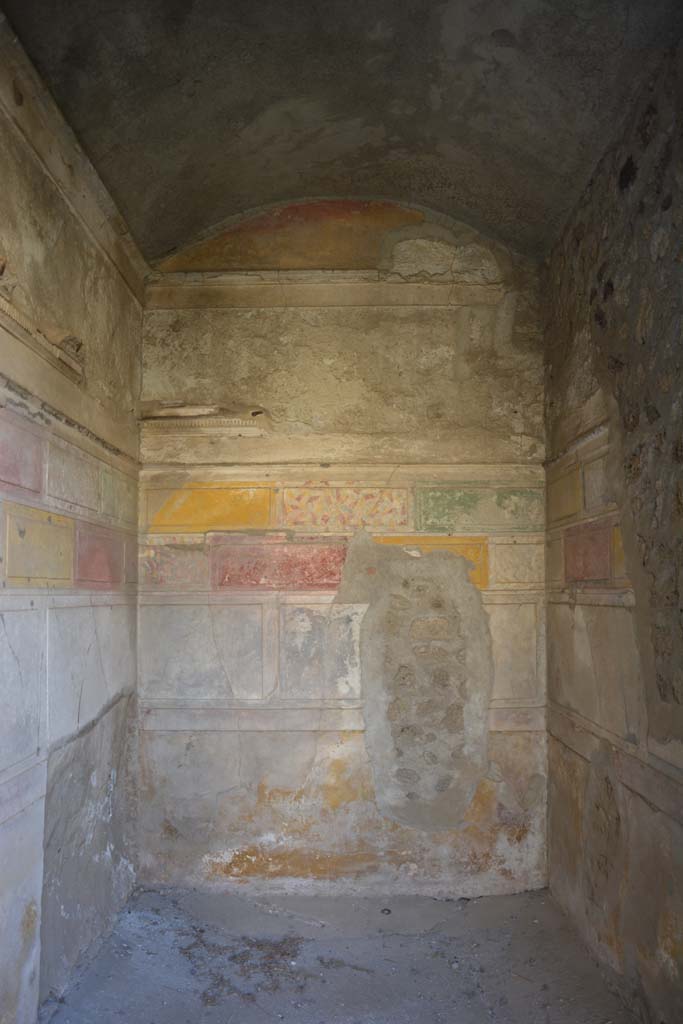
V.2.h Pompeii. October 2019.
Room ‘g’ in south-east corner of the atrium, looking south
from doorway.
Foto Annette Haug, ERC Grant 681269 DÉCOR.
According to NdS, the cubiculum had a threshold of travertine, good flooring of signinum but in large part destroyed, walls decorated in the First Style, and with a vaulted ceiling.
In the east wall, the recess for the bed could be seen.
The front doorway to the room, when it was closed, could be strengthened by a transversal small beam, for which you could see the holes in the doorjambs.
See Notizie degli Scavi di Antichità, 1896, (p.422) where it is referred to as room d.
See Mau in Bullettino dell’Instituto di Corrispondenza
Archeologica (DAIR), VIII, 1893, (p.14-27)
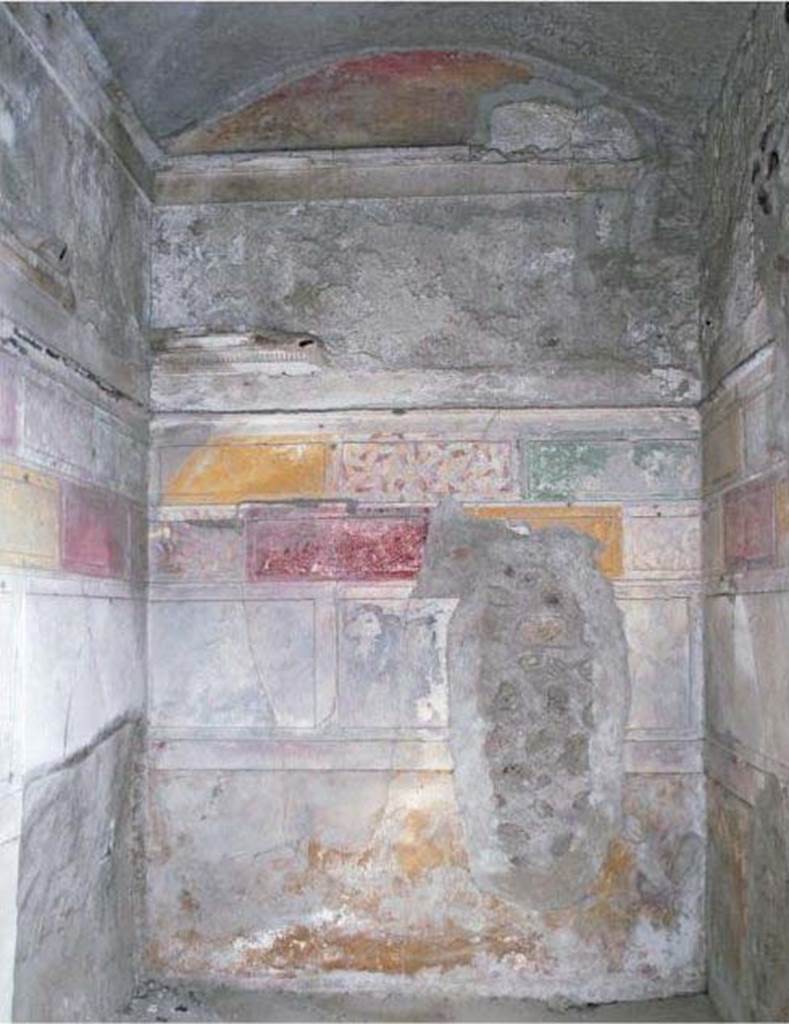
V.2.h Pompeii. December 2005. Room ‘g’, looking south from doorway.
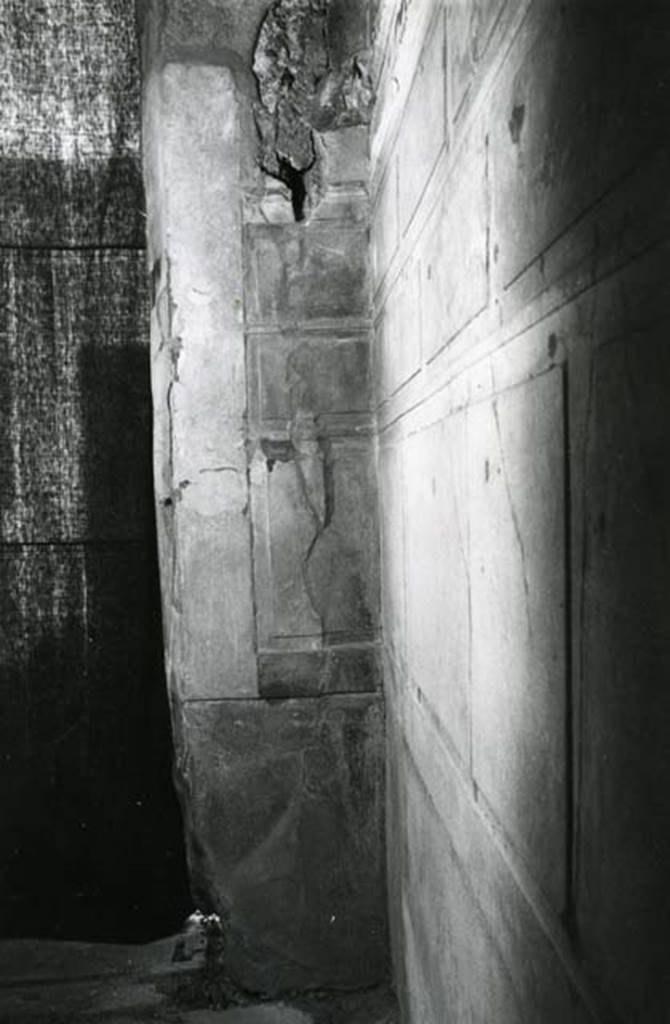
V.2.h Pompeii. 1972. Cubiculum ‘g’, entrance, N wall, right side. (NE corner)
Photo courtesy of Anne Laidlaw.
American Academy in Rome, Photographic Archive. Laidlaw collection _P_72_20_4.
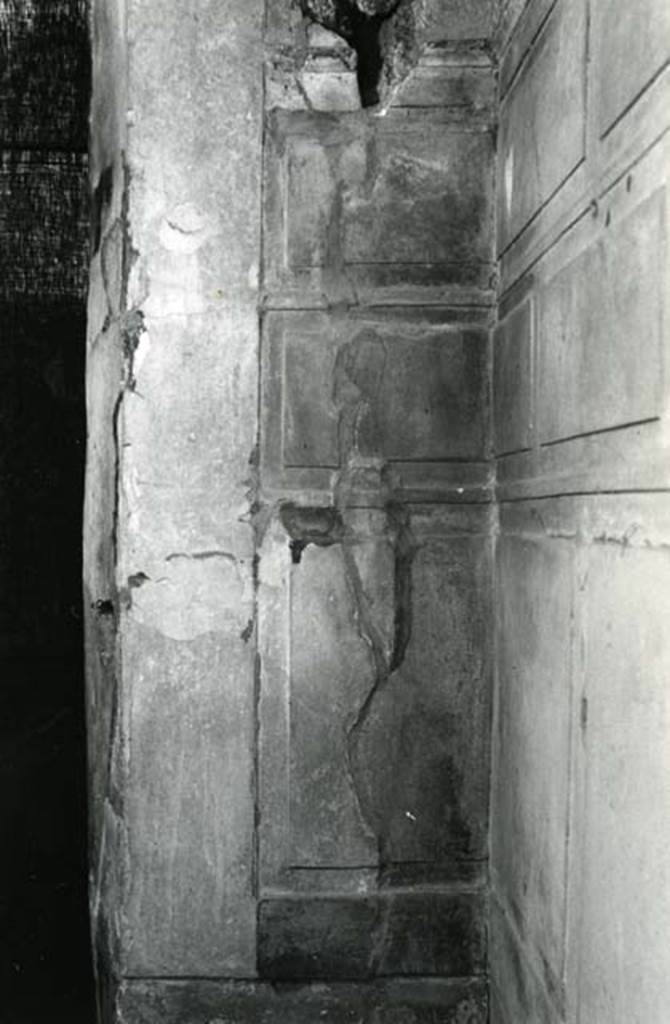
V.2.h Pompeii. 1972. Cubiculum ‘g’, entrance, N wall, right side. Photo courtesy of Anne Laidlaw.
American Academy in Rome, Photographic Archive. Laidlaw collection _P_72_20_1.
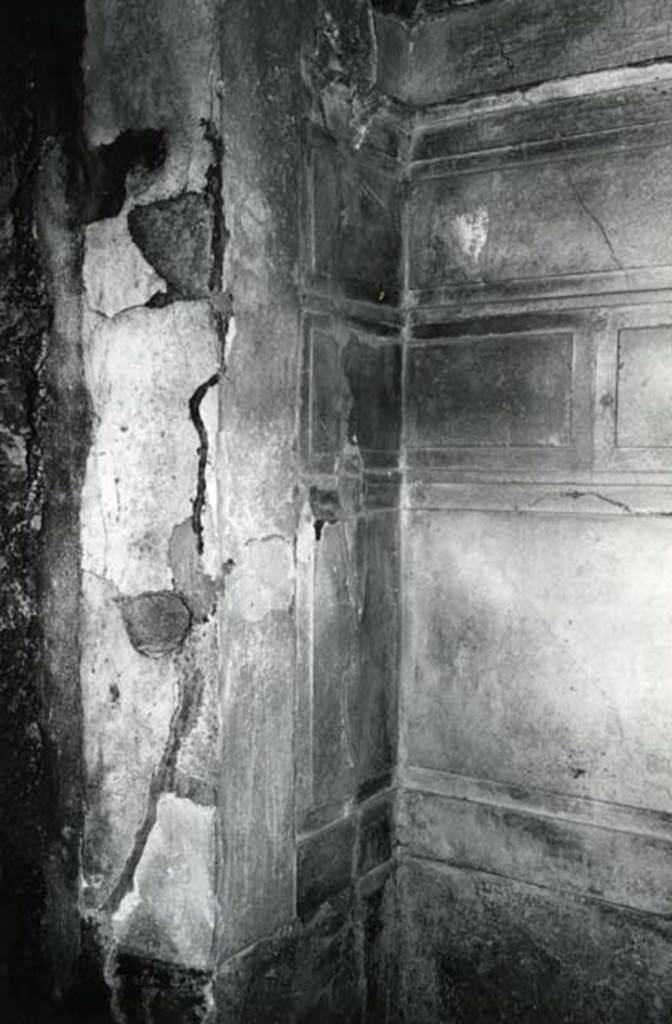
V.2.h Pompeii. 1972. Cubiculum ‘g’, right front NE corner. Photo courtesy of Anne Laidlaw.
American Academy in Rome, Photographic Archive. Laidlaw collection _P_72_20_14.
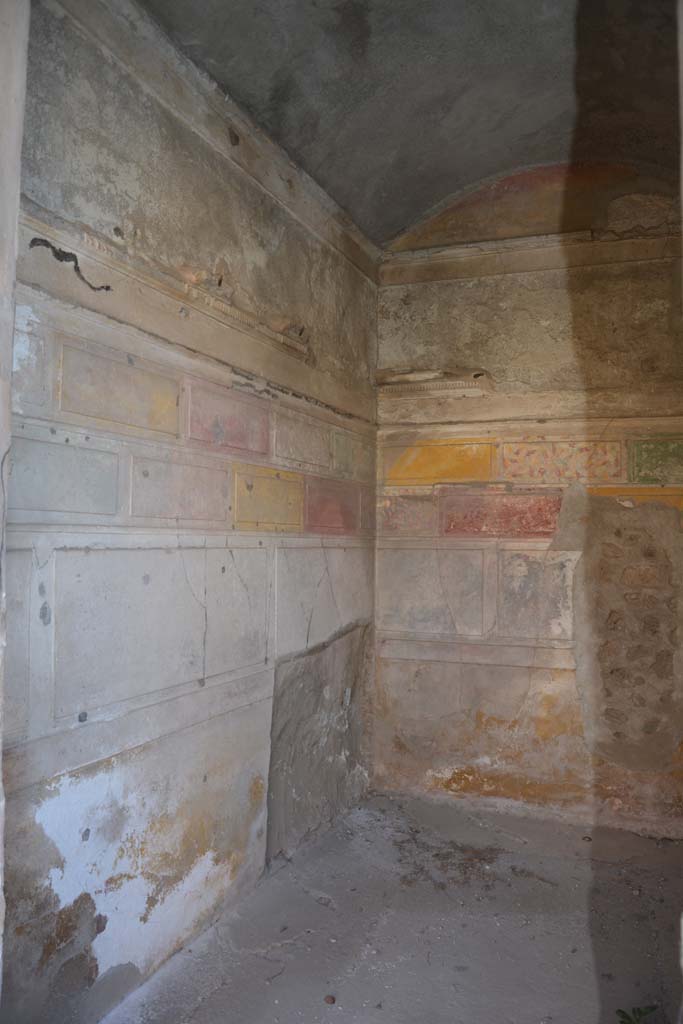
V.2.h Pompeii. October 2019.
Cubiculum ‘g’, looking south along east wall towards south-east
corner with bed recess.
Foto Annette Haug, ERC Grant 681269 DÉCOR.
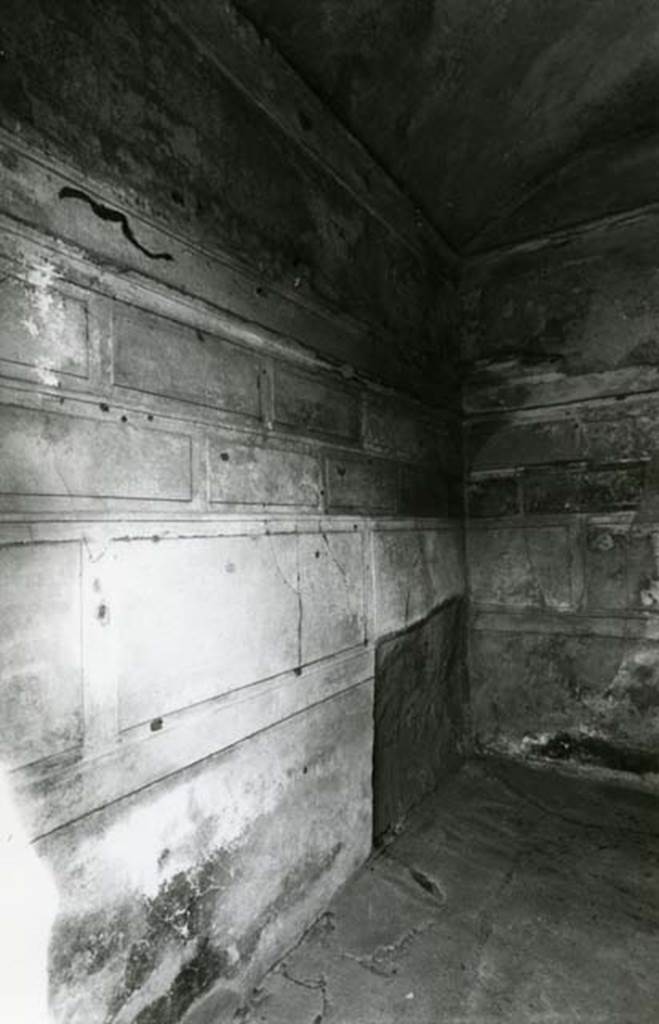
V.2.h Pompeii. 1980. Cubiculum ‘g’, left E wall and SE corner. Photo courtesy of Anne Laidlaw.
American Academy in Rome, Photographic Archive. Laidlaw collection _P_80_1_17.
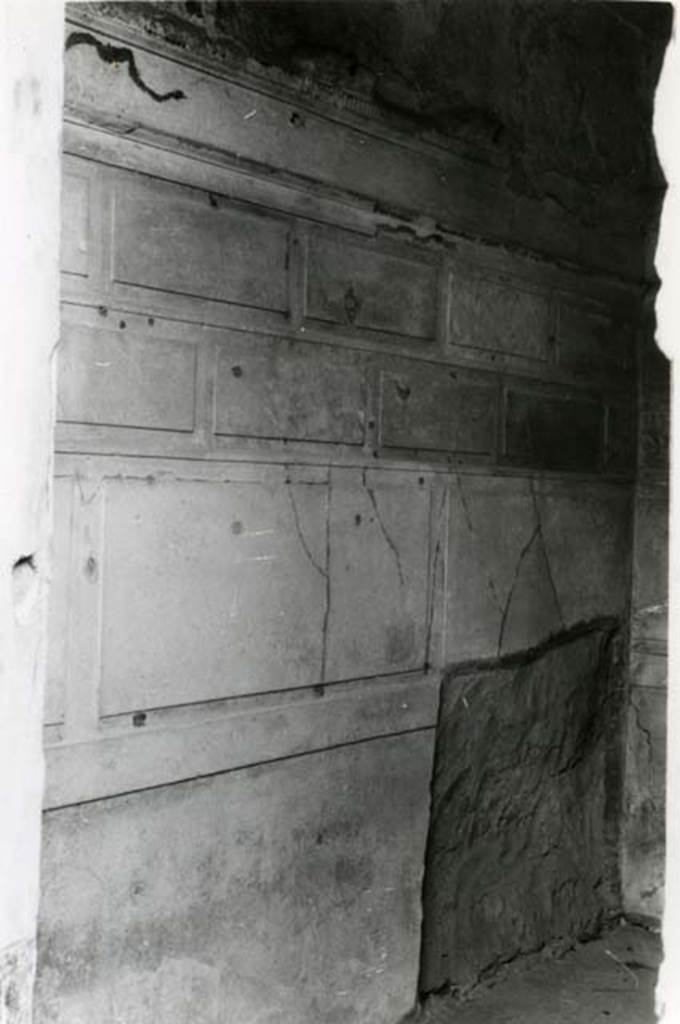
V.2.h Pompeii. 1968. Cubiculum ‘g’, left E side wall, overall. Photo courtesy of Anne Laidlaw.
American Academy in Rome, Photographic Archive. Laidlaw collection _P_68_7_0.
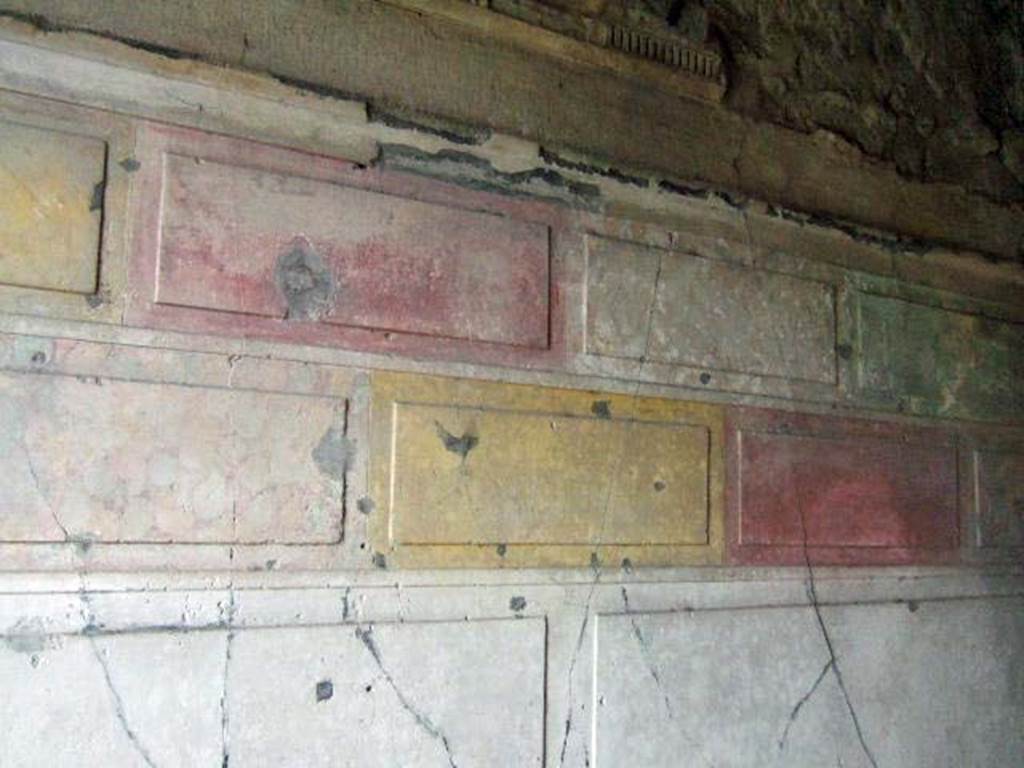
V.2.h Pompeii. December 2005. Cubiculum ‘g’, east wall decorated in First Style.
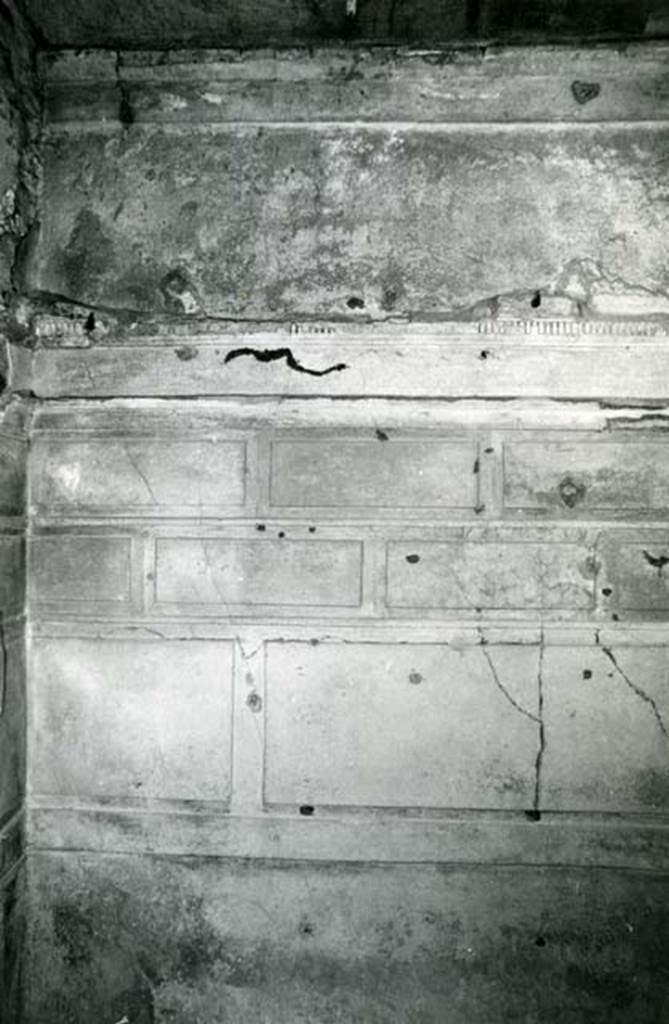
V.2.h Pompeii. 1972. Casa del Cenacolo, cubiculum ‘g’, left E wall. Photo courtesy of Anne Laidlaw.
American Academy in Rome, Photographic Archive. Laidlaw collection _P_72_19_16.
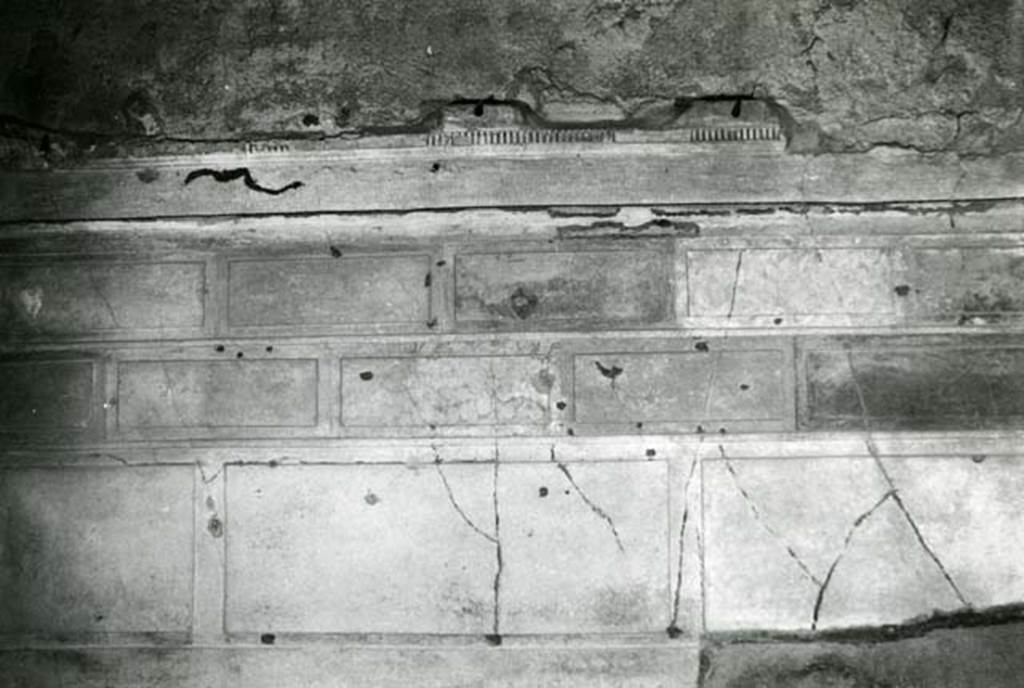
V.2.h Pompeii. 1972. Cubiculum ‘g’, left E wall. Photo courtesy of Anne Laidlaw.
American Academy in Rome, Photographic Archive. Laidlaw collection _P_72_19_19.
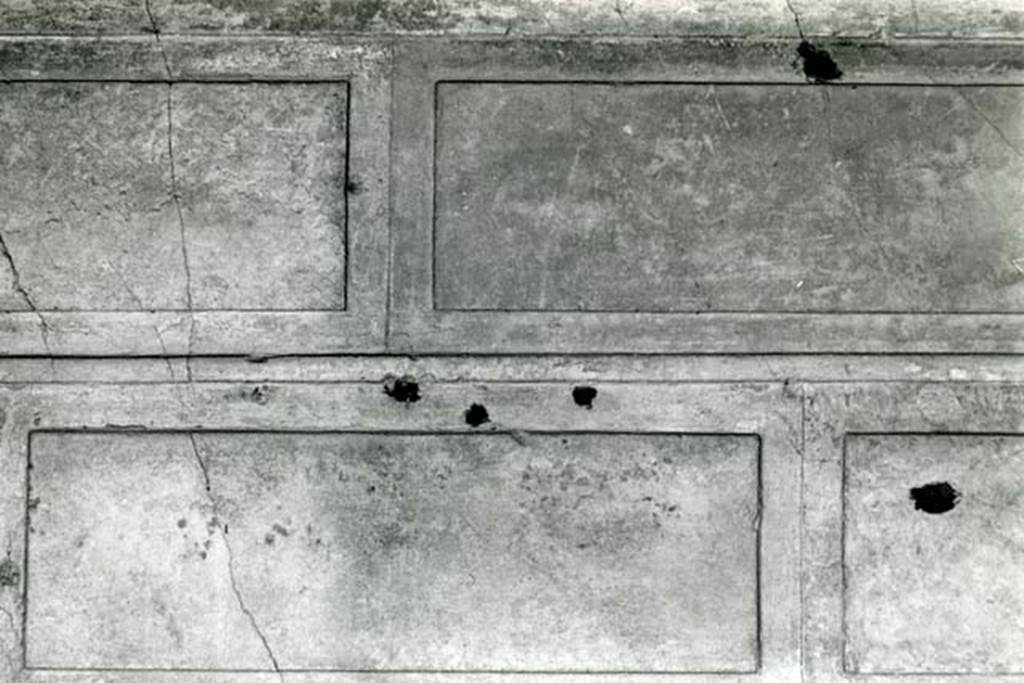
V.2.h Pompeii. 1972. Cubiculum ‘g’, left E wall, detail of execution. Photo courtesy of Anne Laidlaw.
American Academy in Rome, Photographic Archive. Laidlaw collection _P_72_19_34.
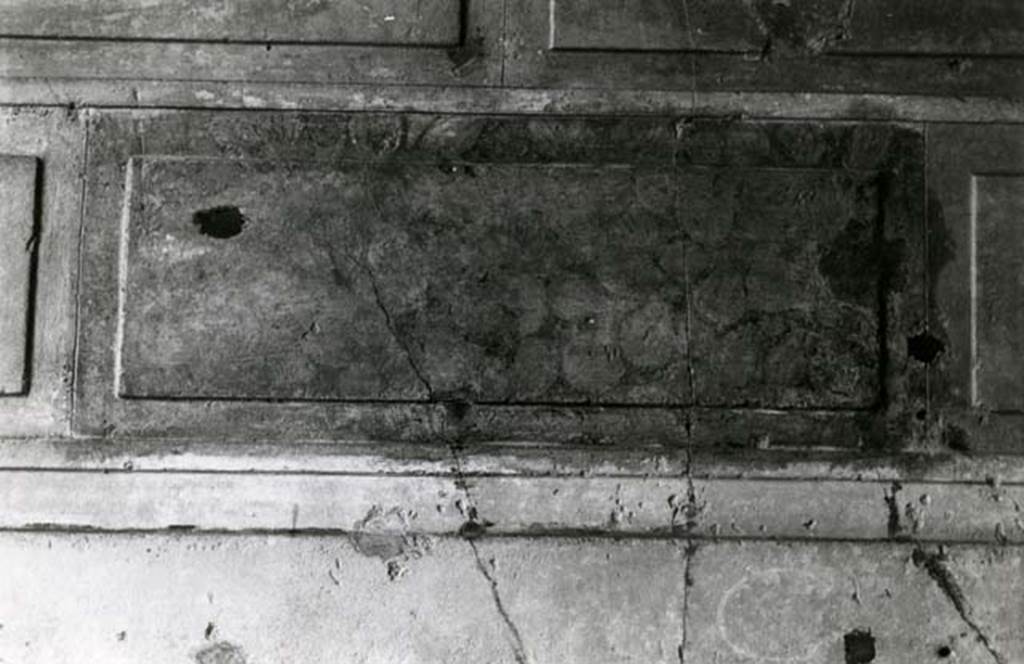
V.2.h Pompeii. 1980. Cubiculum ‘g’, detail of marbling on left E wall. Photo courtesy of Anne Laidlaw.
American Academy in Rome, Photographic Archive. Laidlaw collection _P_80_1_29.
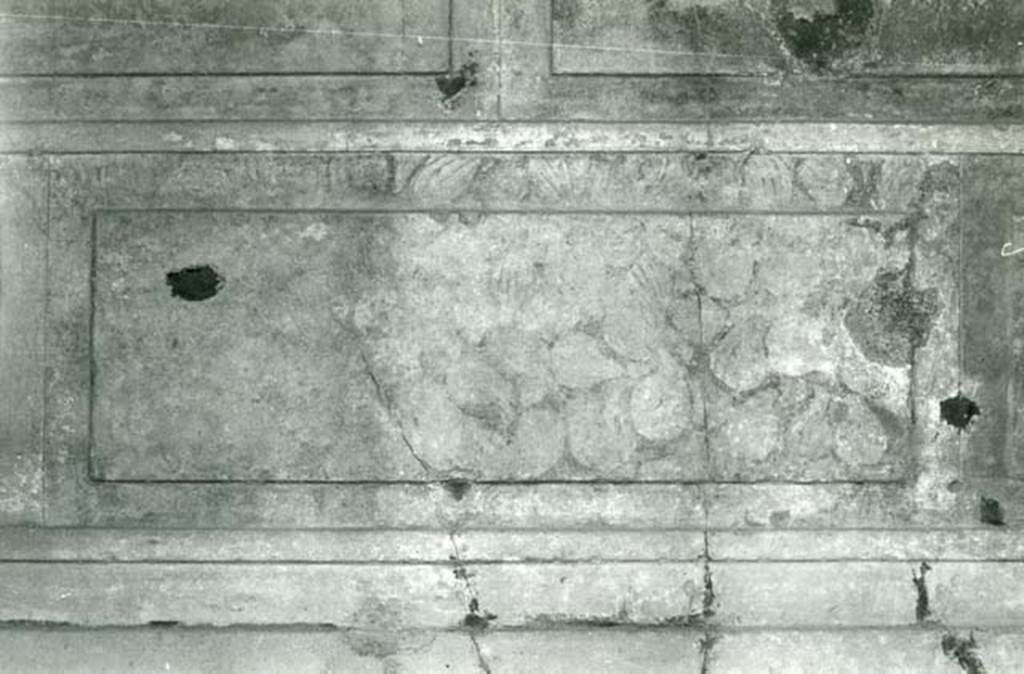
V.2.h Pompeii. 1972. Cubiculum ‘g’, detail of marbling on E wall. Photo courtesy of Anne Laidlaw.
American Academy in Rome, Photographic Archive. Laidlaw collection _P_72_19_9.
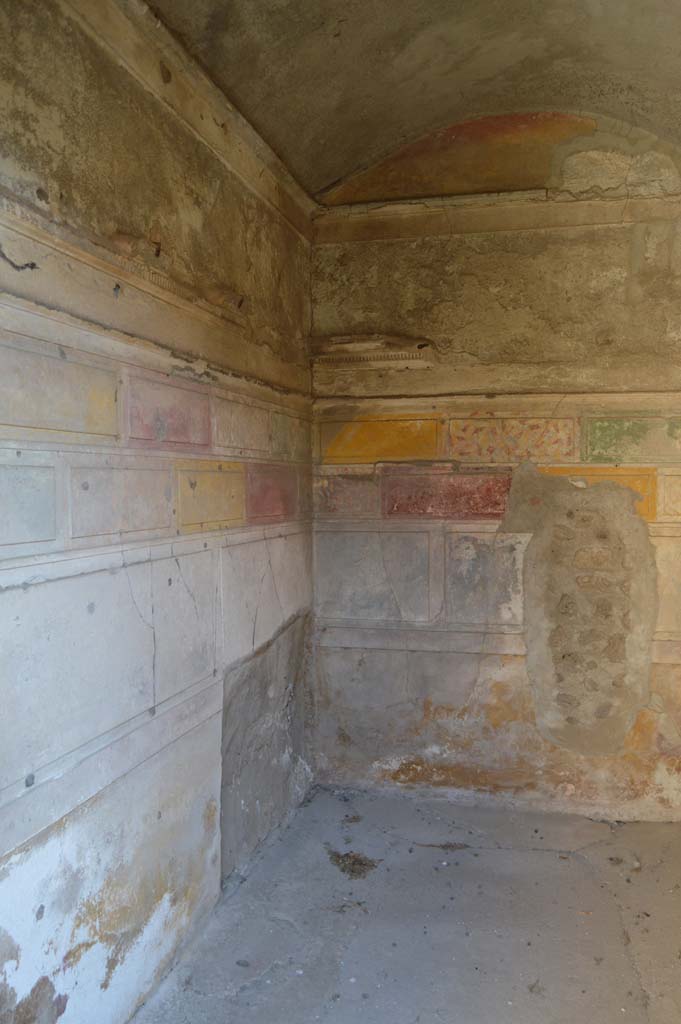
V.2.h Pompeii. October 2017.
Room ‘g’, looking south along the east wall with bed
recess in the south-east corner.
Foto
Taylor Lauritsen, ERC Grant 681269 DÉCOR.
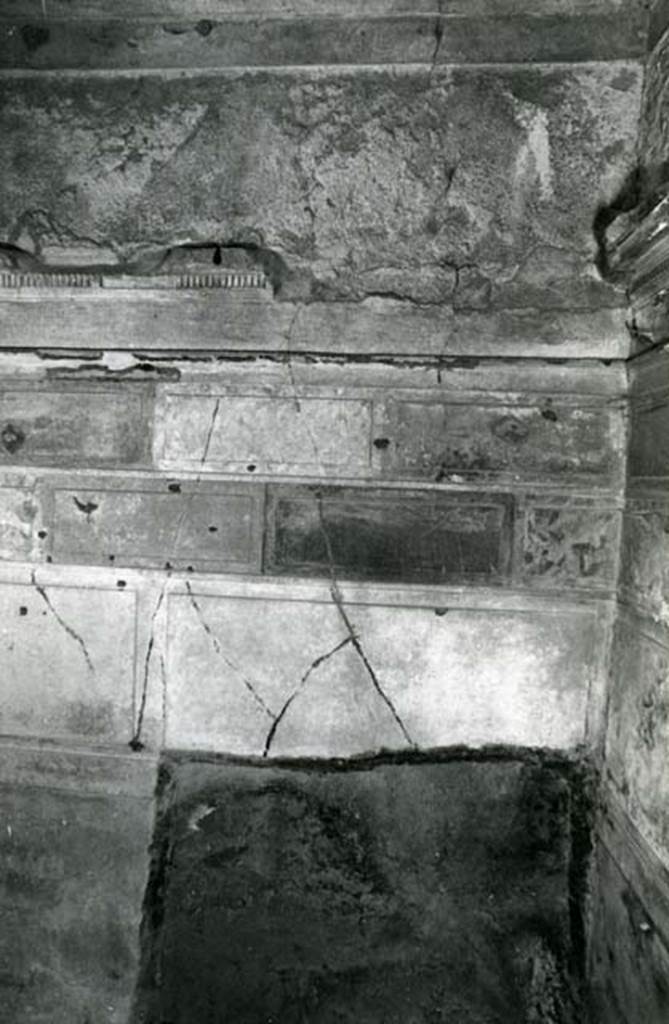
V.2.h Pompeii. 1972. Cubiculum ‘g’, left E wall in SE corner. Photo courtesy of Anne Laidlaw.
American Academy in Rome, Photographic Archive. Laidlaw collection _P_72_19_13.
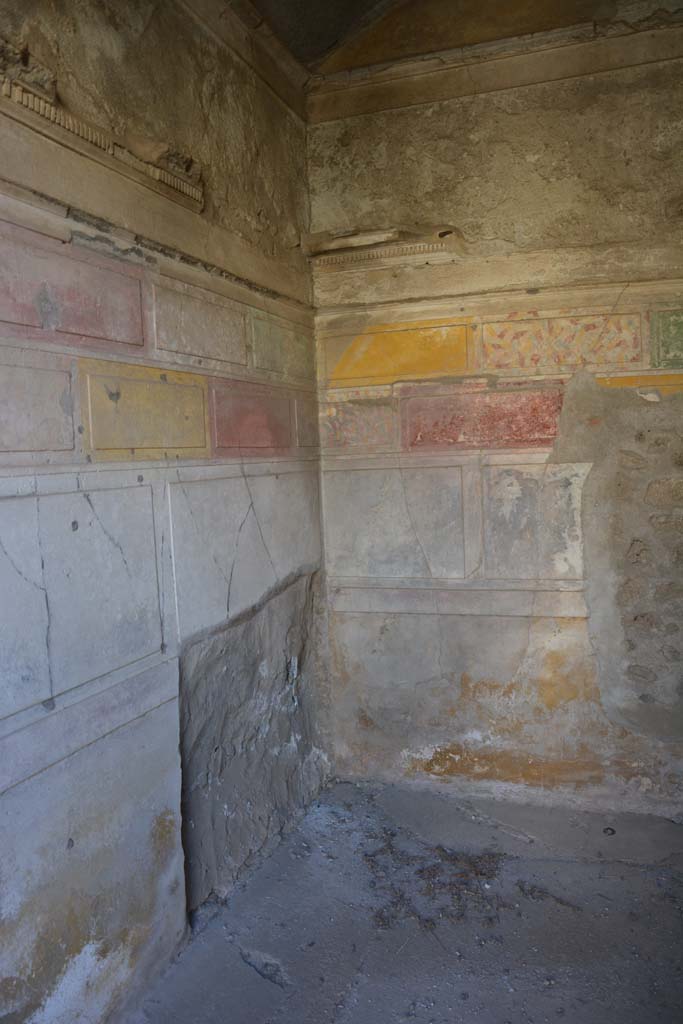
V.2.h
Pompeii. October 2019. Cubiculum ‘g’, looking towards south-east corner.
Foto
Annette Haug, ERC Grant 681269 DÉCOR.
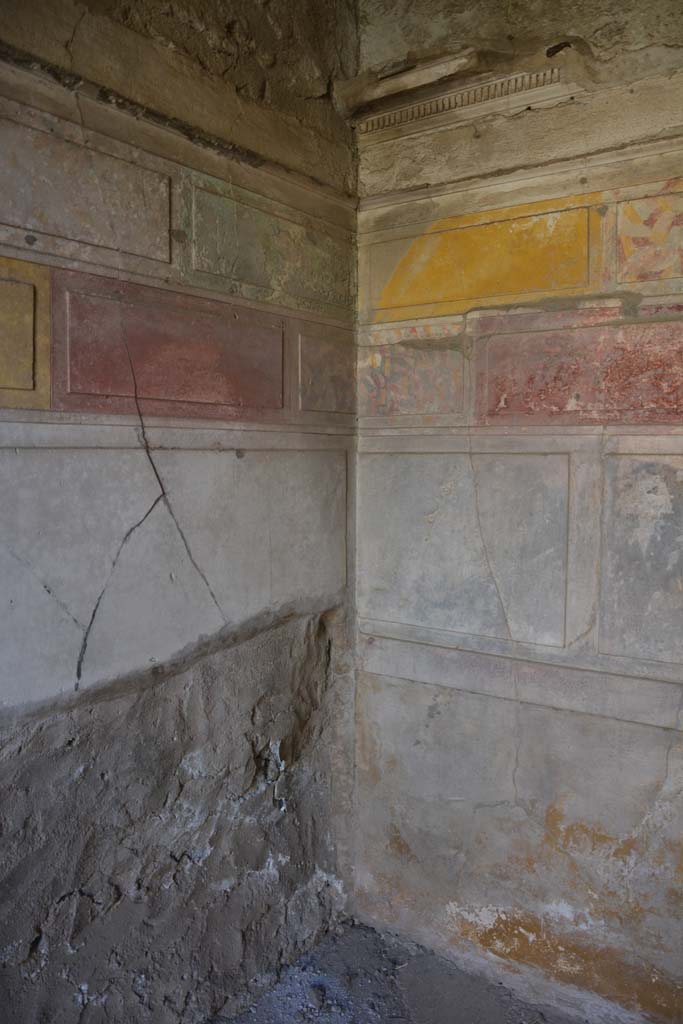
V.2.h
Pompeii. October 2019. Cubiculum ‘g’, south-east corner with bed recess in east
wall.
Foto
Annette Haug, ERC Grant 681269 DÉCOR.
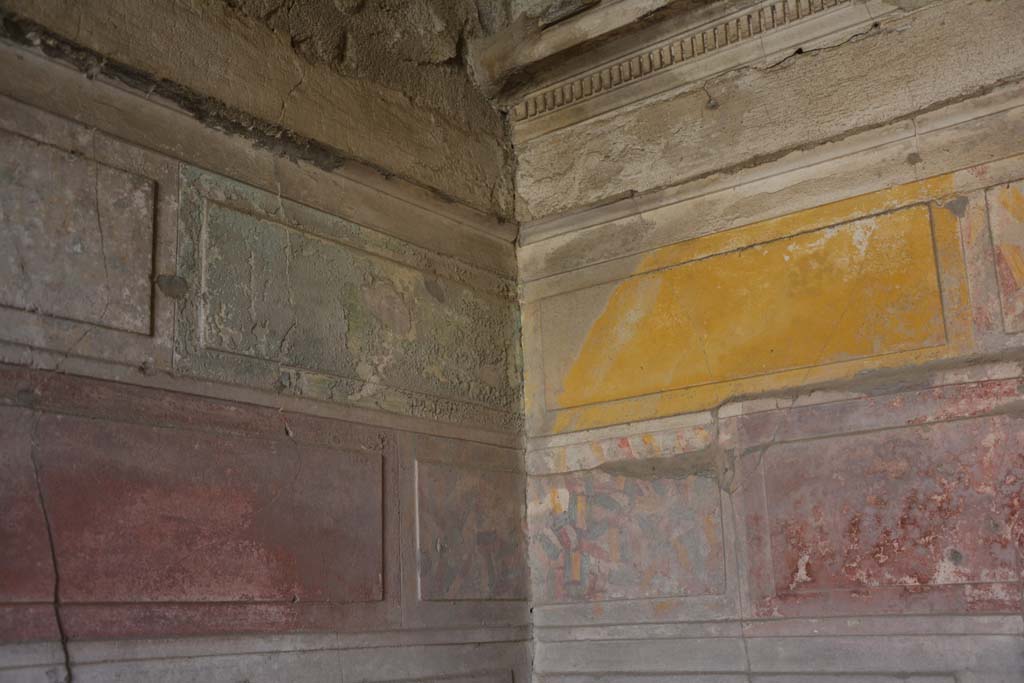
V.2.h Pompeii. October 2019. Cubiculum ‘g’,
detail from south-east corner.
Foto Annette Haug, ERC Grant 681269 DÉCOR.
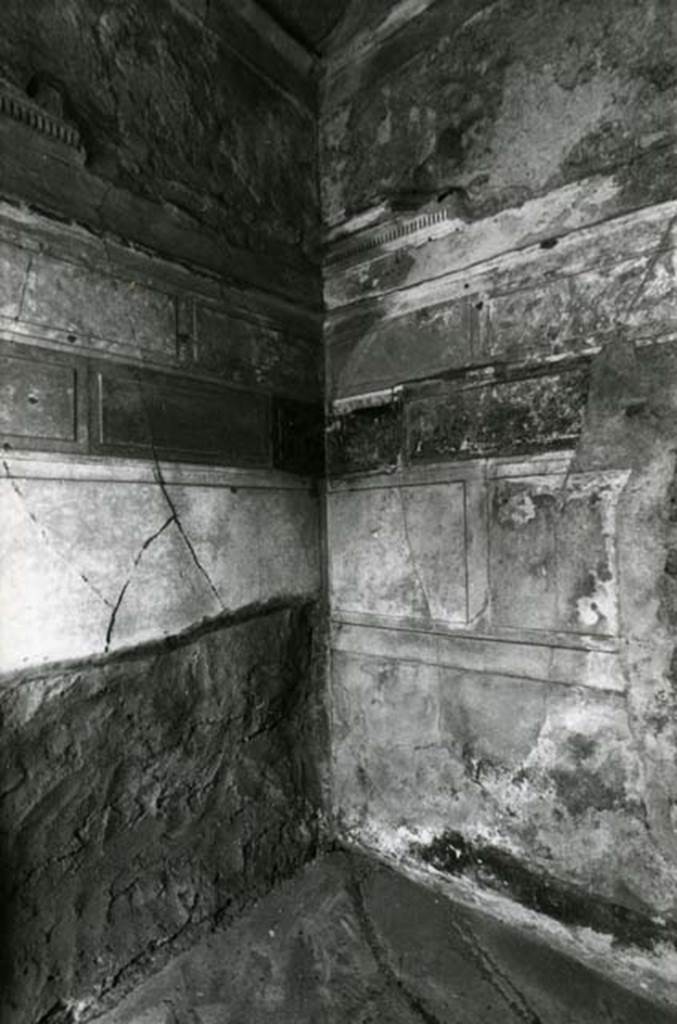
V.2.h Pompeii. 1980. Cubiculum ‘g’, SE corner. Photo courtesy of Anne Laidlaw.
American Academy in Rome, Photographic Archive. Laidlaw collection _P_80_1_23.
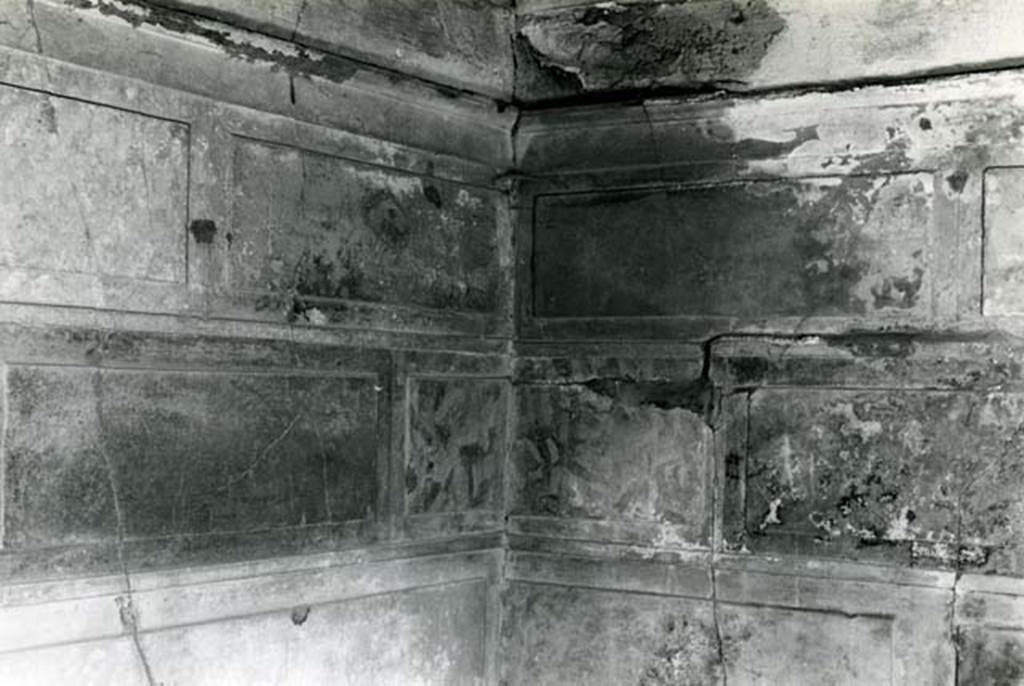
V.2.h Pompeii. 1972. Cubiculum ‘g’, back left SE corner. Photo courtesy of Anne Laidlaw.
American Academy in Rome, Photographic Archive. Laidlaw collection _P_72_19_28.
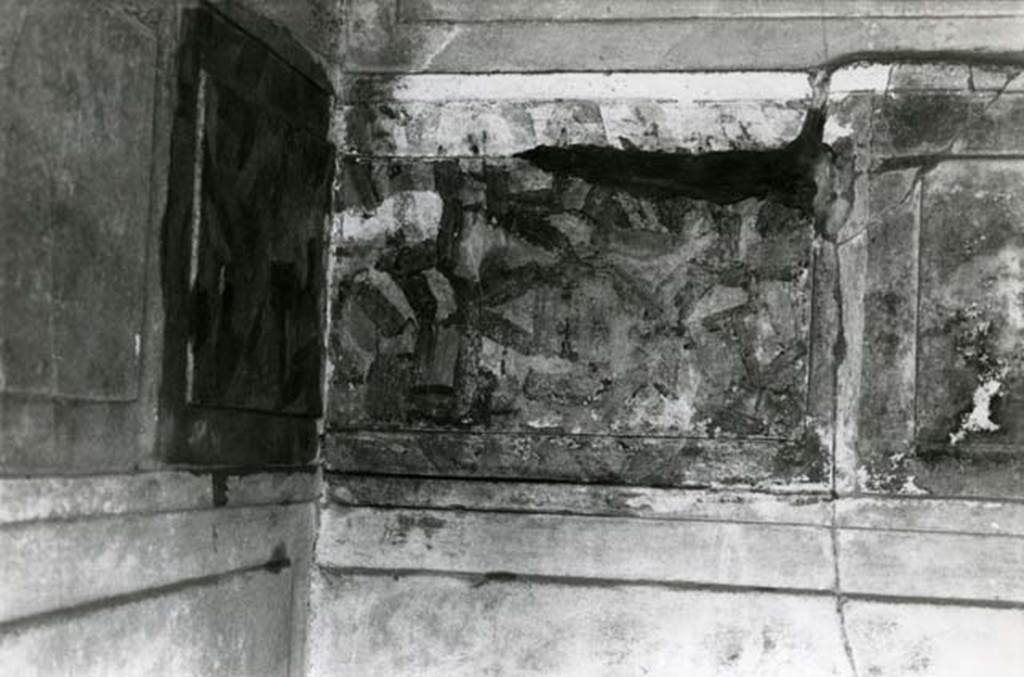
V.2.h Pompeii. 1980. Cubiculum ‘g’, detail of marbling in SE corner. Photo courtesy of Anne Laidlaw.
American Academy in Rome, Photographic Archive. Laidlaw collection _P_80_1_26.
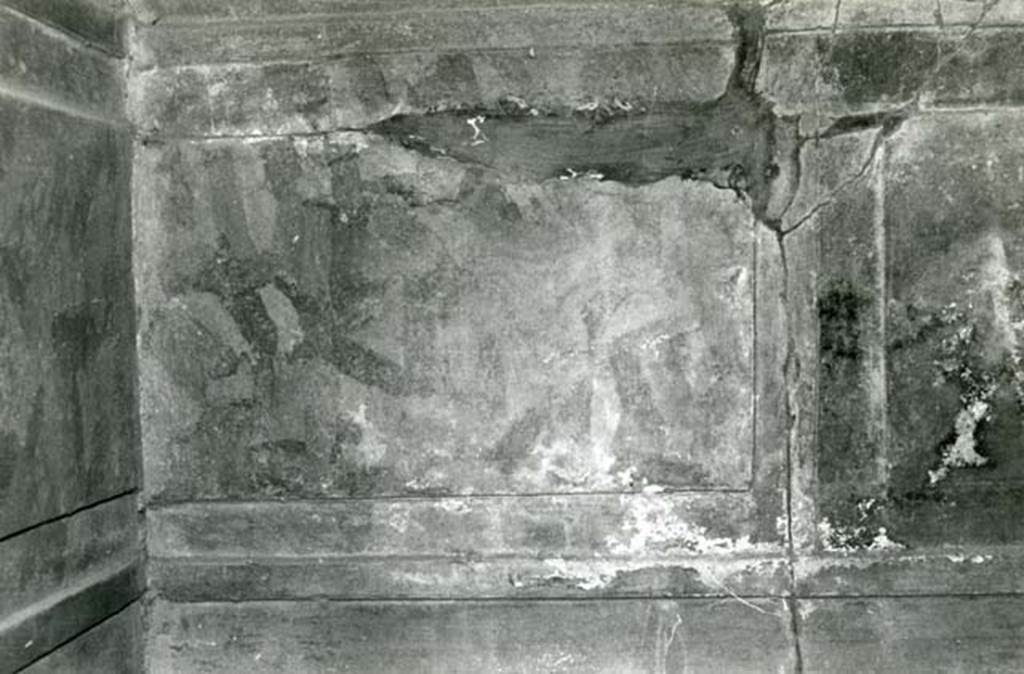
V.2.h Pompeii. 1972. Cubiculum ‘g’, detail of marbling in SE corner. Photo courtesy of Anne Laidlaw.
American Academy in Rome, Photographic Archive. Laidlaw collection _P_72_19_11.
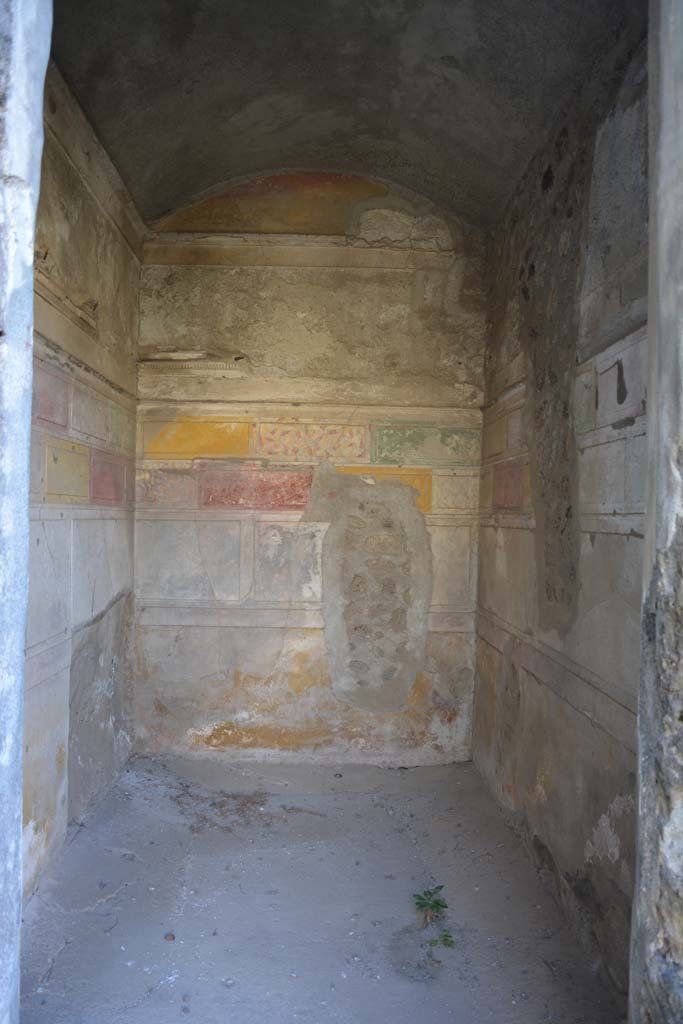
V.2.h
Pompeii. October 2019. Cubiculum ‘g’, looking towards east, south
and west walls.
Foto
Annette Haug, ERC Grant 681269 DÉCOR
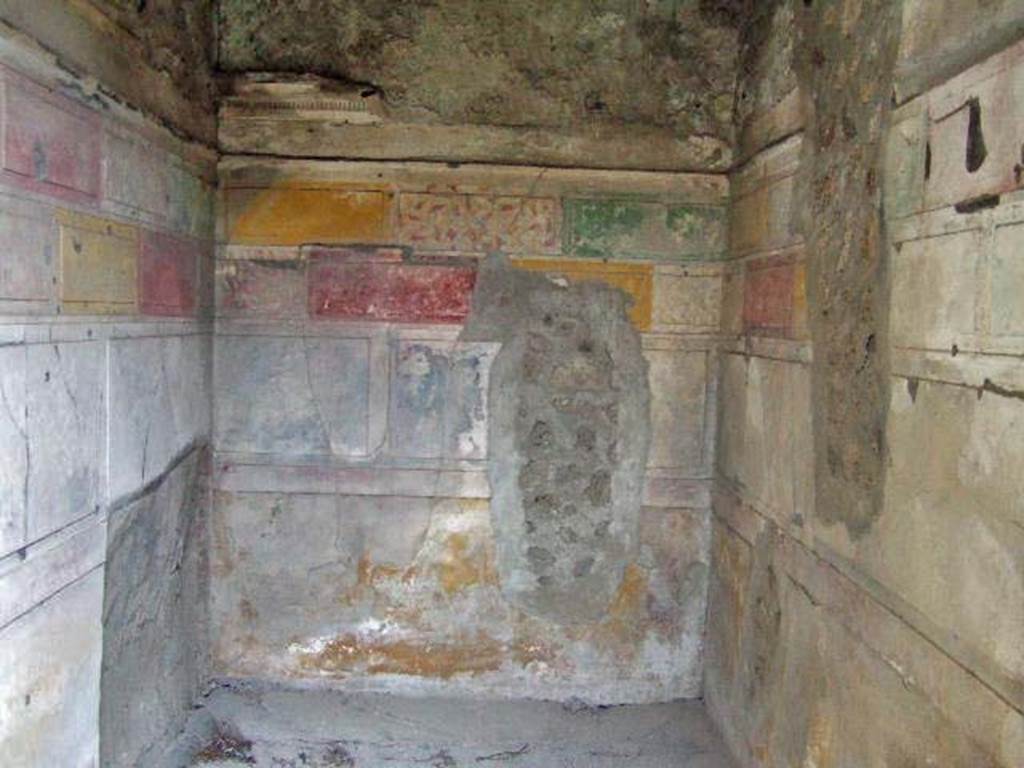
V.2.h Pompeii. December 2005. Room ‘g’ east, south and west walls, looking south.
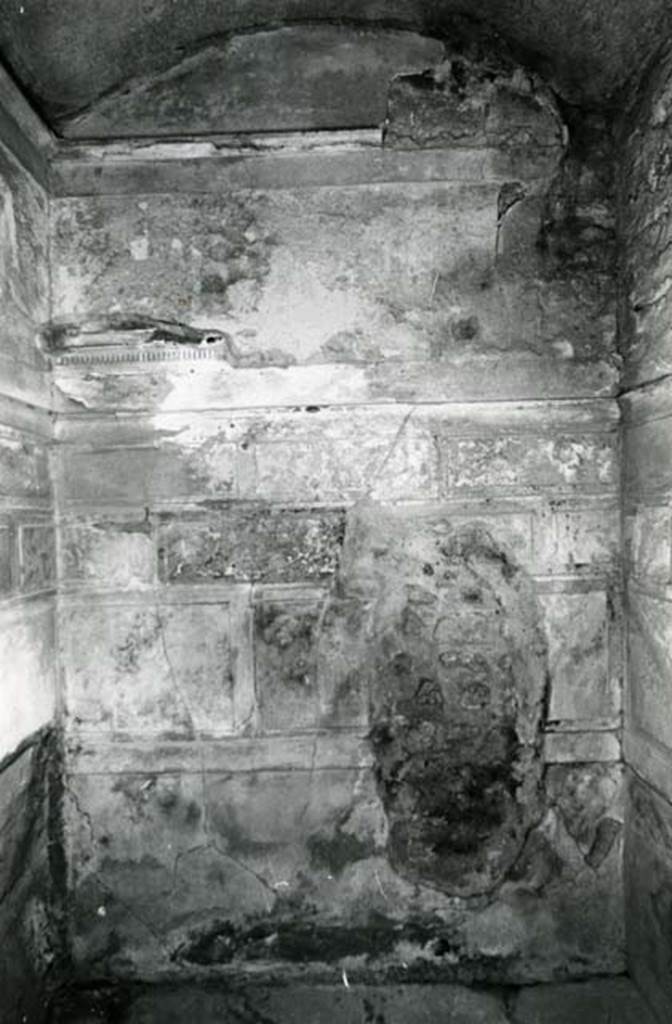
V.2.h Pompeii. 1972. Cubiculum ‘g’, back S wall, main zone overall. Photo courtesy of Anne Laidlaw.
American Academy in Rome, Photographic Archive. Laidlaw collection _P_72_19_22.
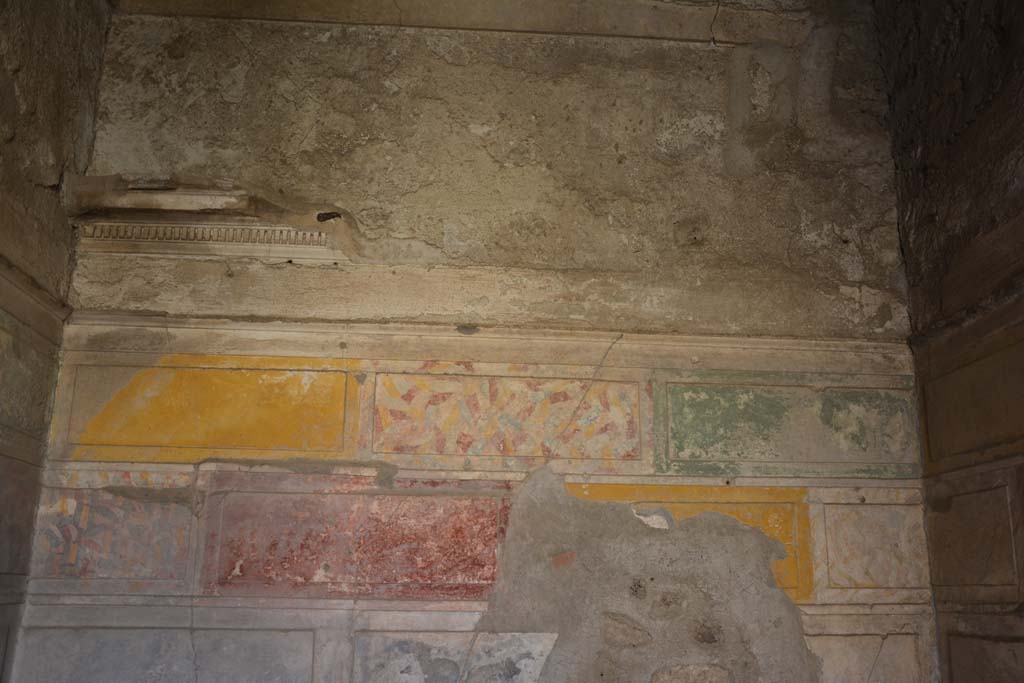
V.2.h Pompeii. October 2019. Cubiculum ‘g’, upper south
wall.
Foto Annette Haug, ERC Grant 681269 DÉCOR.
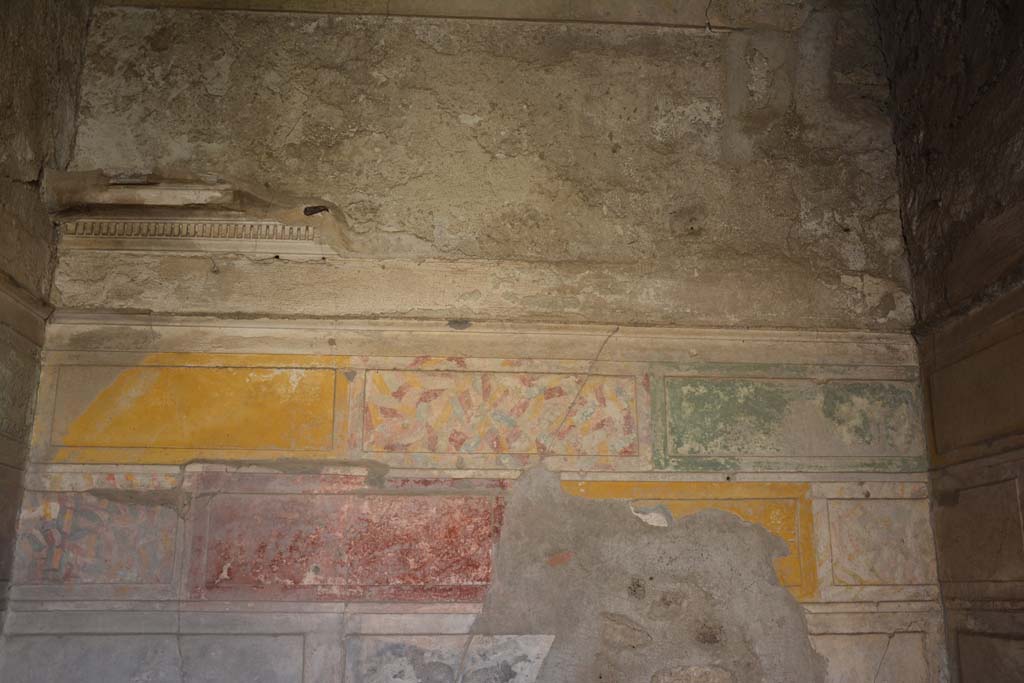
V.2.h Pompeii. October 2019. Cubiculum ‘g’, detail from
upper south wall.
Foto Annette Haug, ERC Grant 681269 DÉCOR.
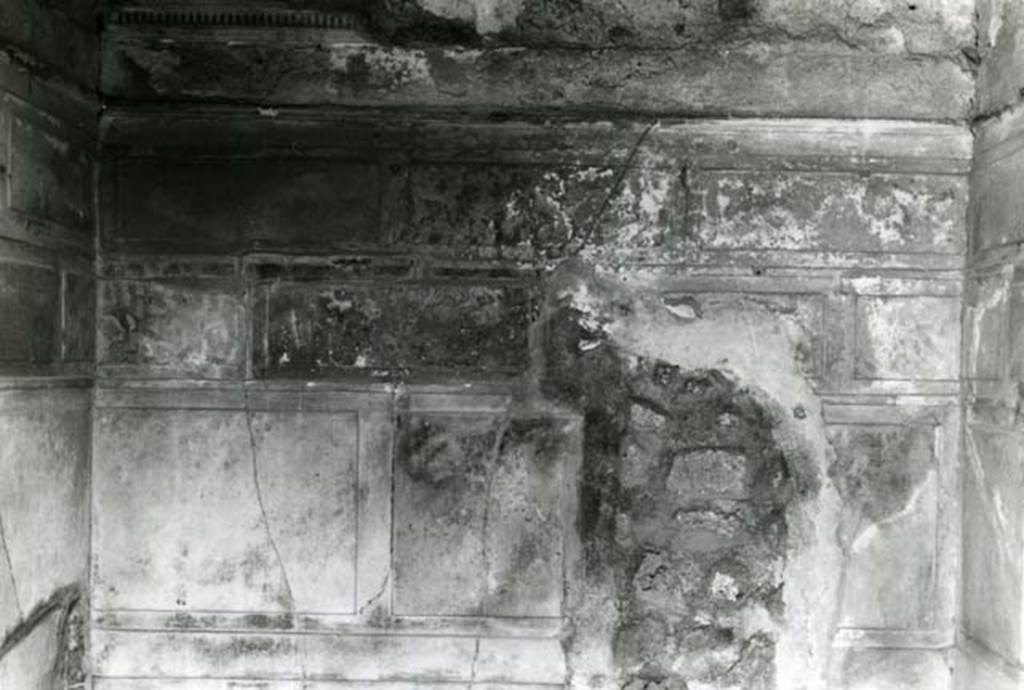
V.2.h Pompeii. 1968. Cubiculum ‘g’, back S wall. Photo courtesy of Anne Laidlaw.
American Academy in Rome, Photographic Archive. Laidlaw collection _P_68_7_4.
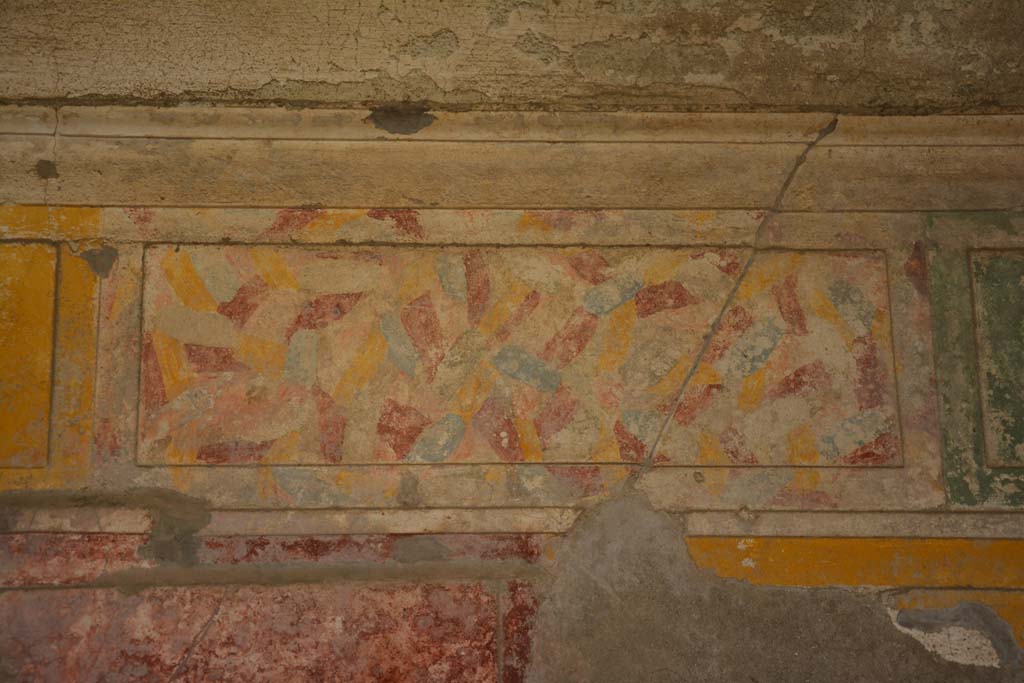
V.2.h Pompeii. October 2019.
Cubiculum ‘g’, detail of panel in centre of upper south wall.
Foto Annette Haug, ERC Grant 681269 DÉCOR.
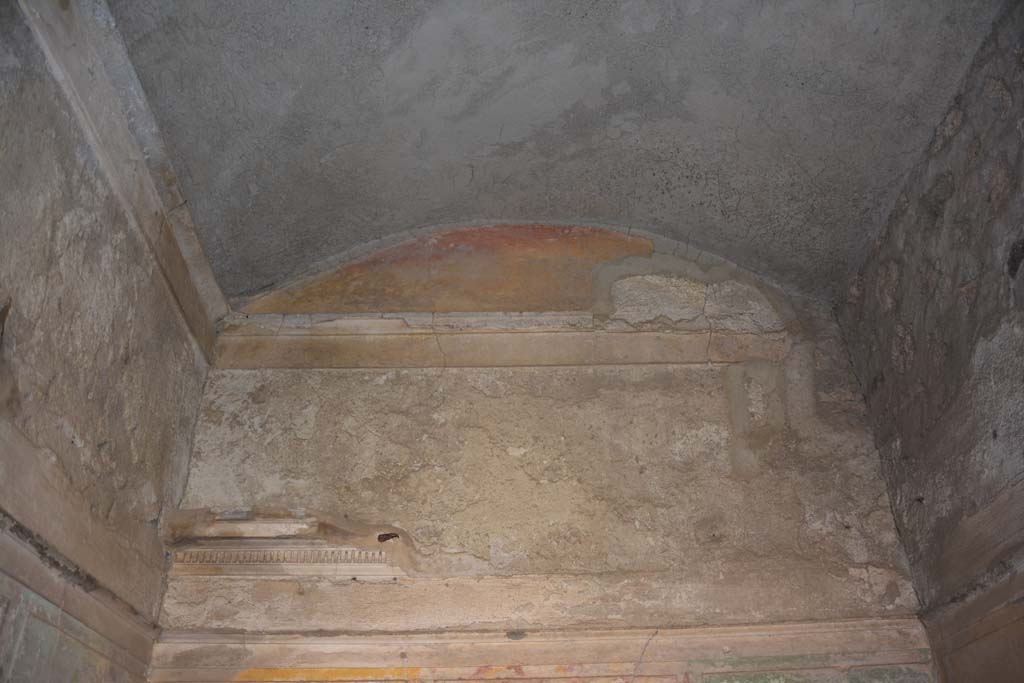
V.2.h Pompeii. October 2019. Cubiculum ‘g’, detail of upper south
wall.
Foto Annette Haug, ERC Grant 681269 DÉCOR.
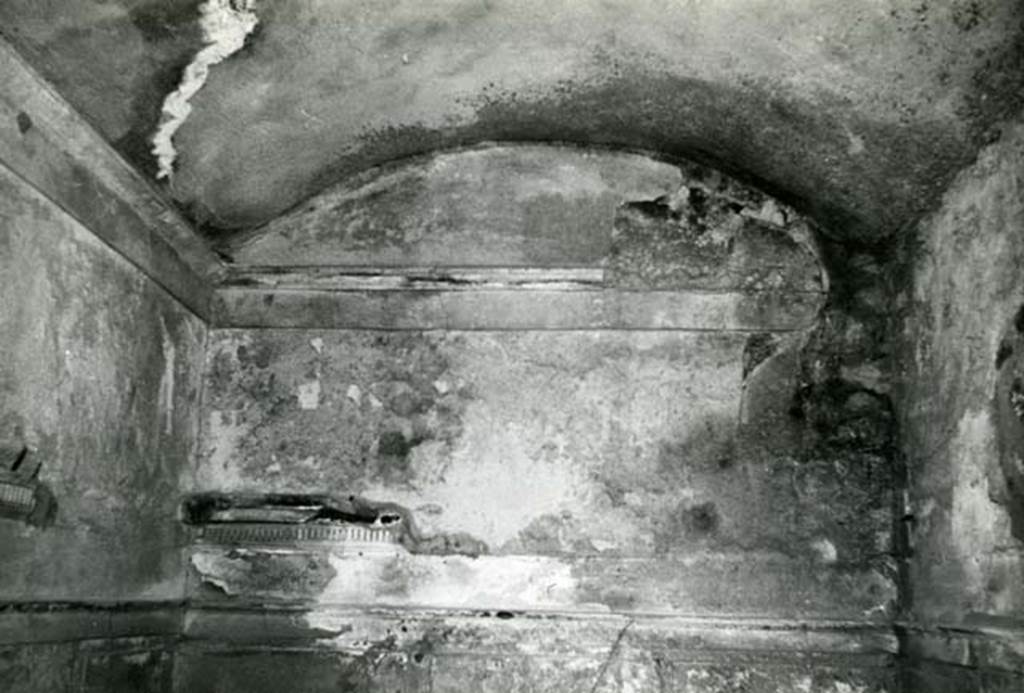
V.2.h Pompeii. 1972. Cubiculum ‘g’, back S wall, lunette. Photo courtesy of Anne Laidlaw.
American Academy in Rome, Photographic Archive. Laidlaw collection _P_72_20_13.
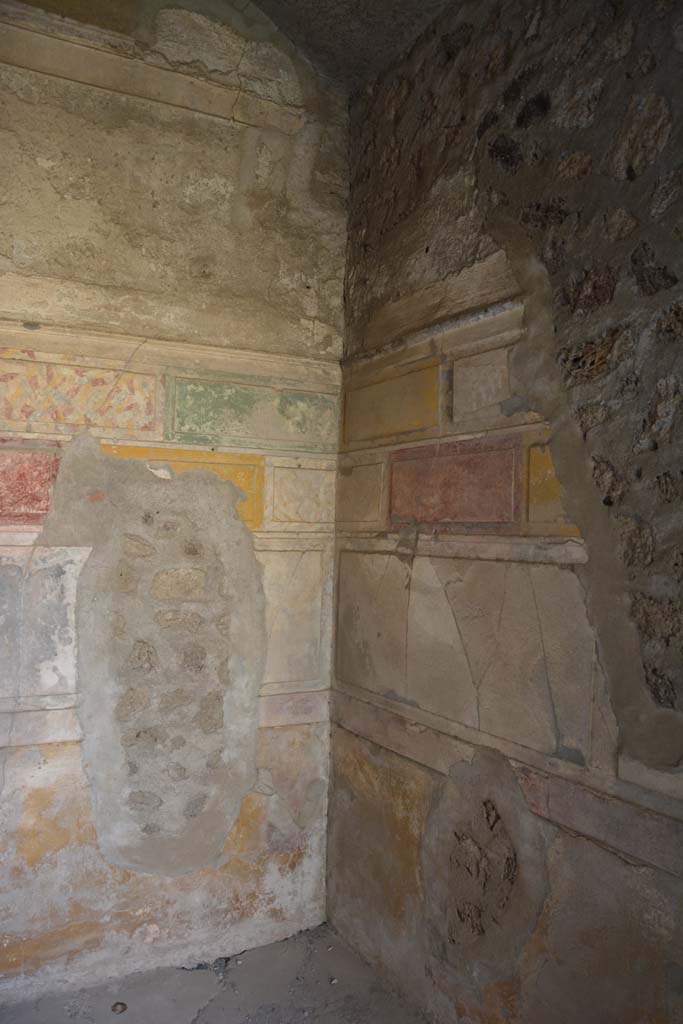
V.2.h Pompeii. October 2019. Cubiculum ‘g’, south-west corner.
Foto Annette Haug, ERC Grant 681269 DÉCOR.
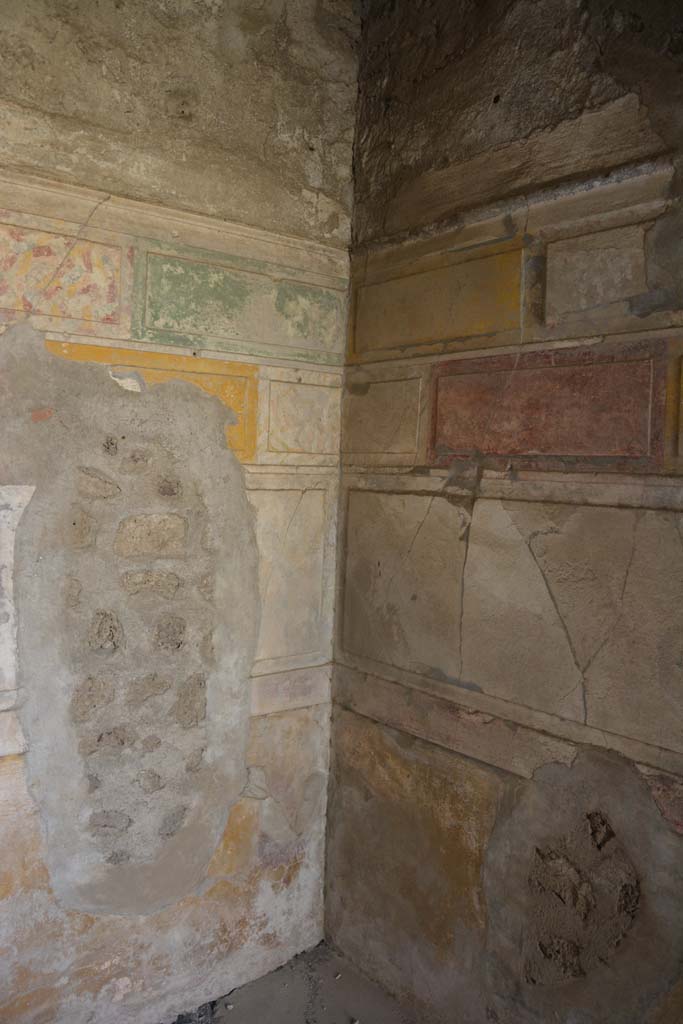
V.2.h Pompeii. October 2019. Cubiculum ‘g’, detail of south-west
corner.
Foto Annette Haug, ERC Grant 681269 DÉCOR.
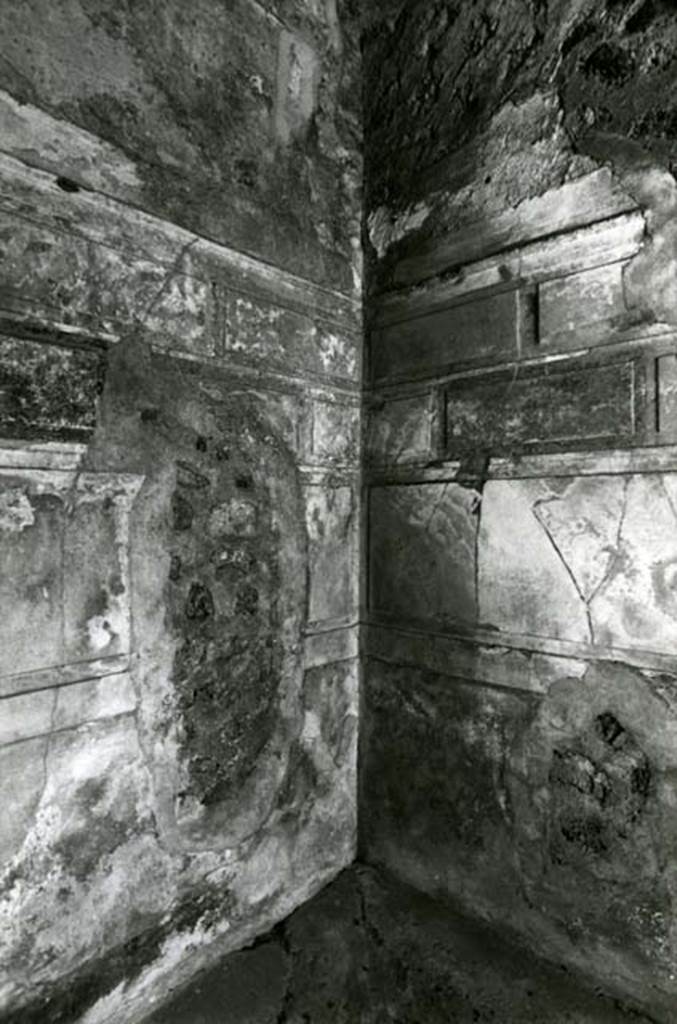
V.2.h Pompeii. 1980. Cubiculum ‘g’, SW corner. Photo courtesy of Anne Laidlaw.
American Academy in Rome, Photographic Archive. Laidlaw collection _P_80_1_20.
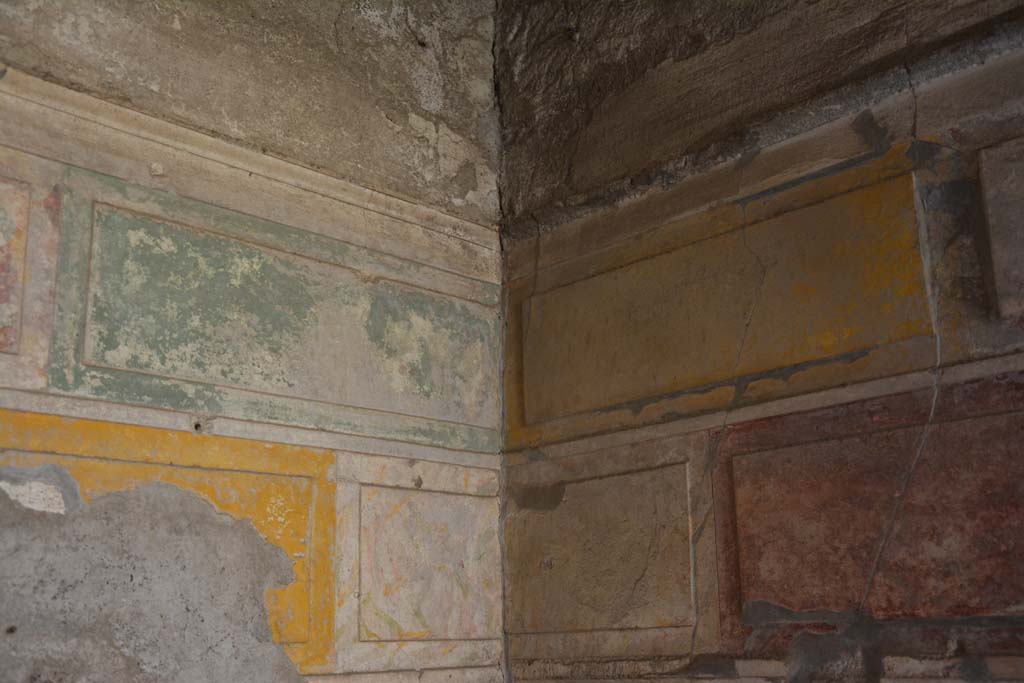
V.2.h Pompeii. October 2019. Cubiculum ‘g’, detail from
south-west corner.
Foto Annette Haug, ERC Grant 681269 DÉCOR.
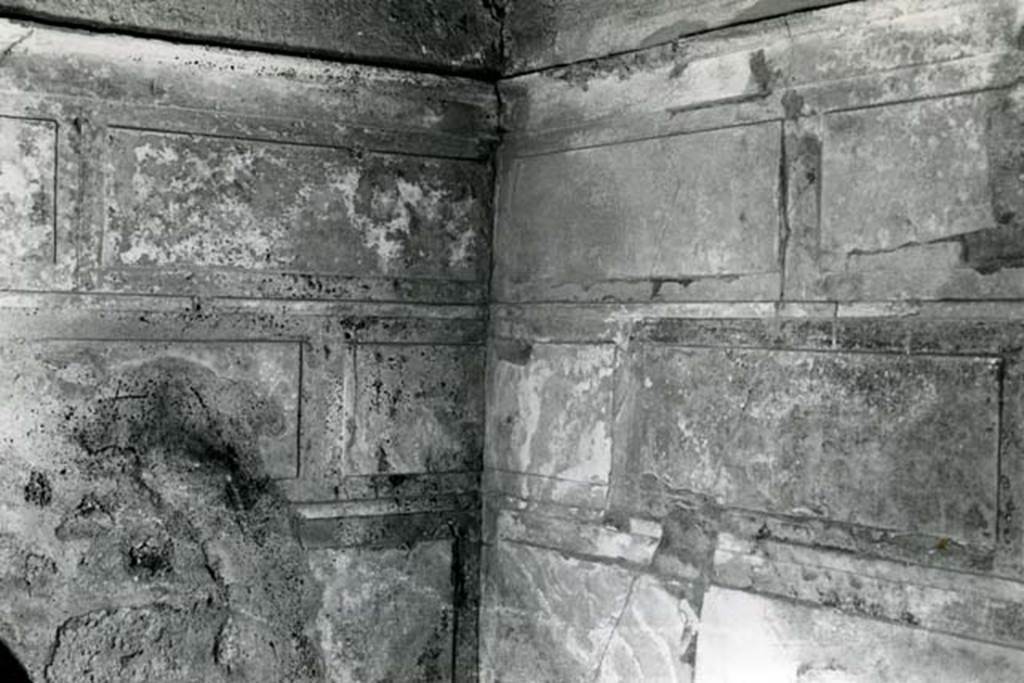
V.2.h Pompeii. 1972. Cubiculum ‘g’, back left SW corner. Photo courtesy of Anne Laidlaw.
American Academy in Rome, Photographic Archive. Laidlaw collection _P_72_19_31.
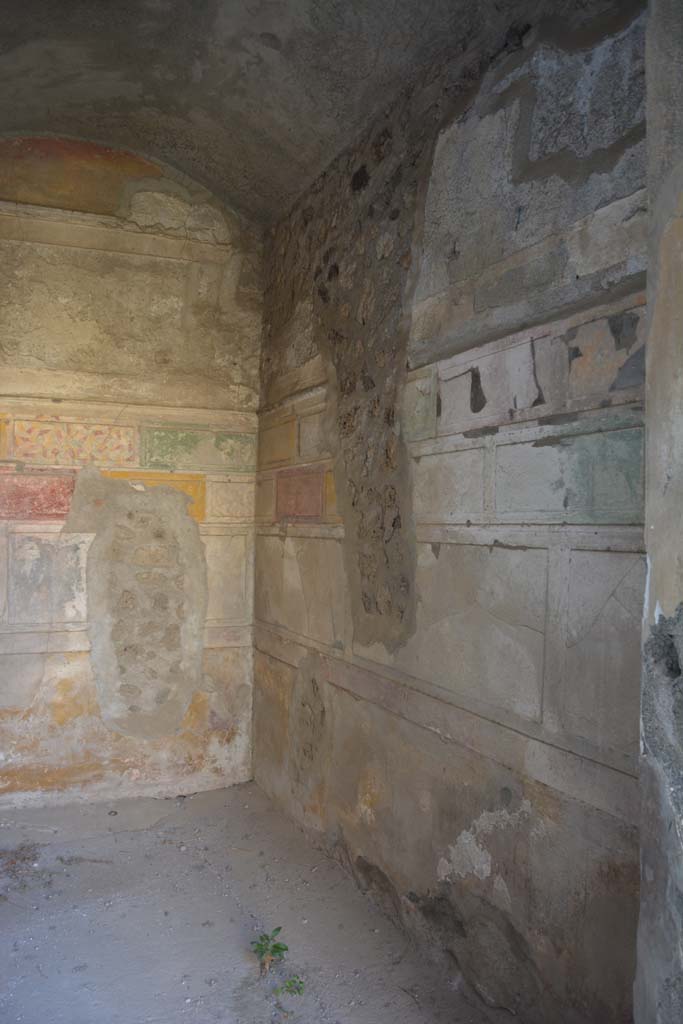
V.2.h Pompeii. October 2019.
Cubiculum ‘g’, looking south along west wall towards south-west
corner.
Foto Annette Haug, ERC Grant 681269 DÉCOR.
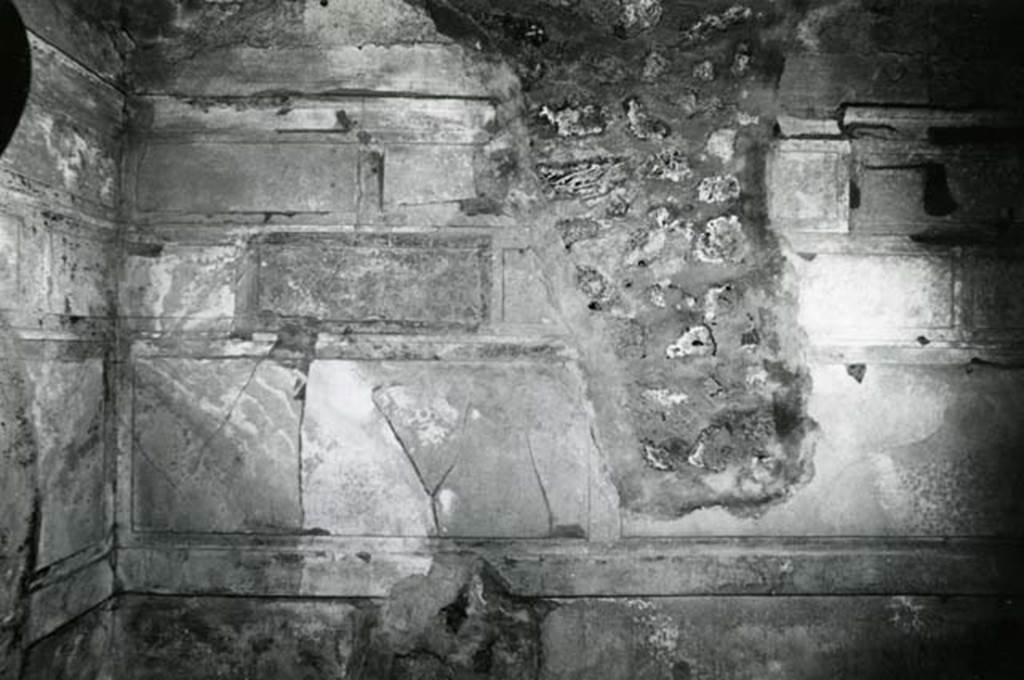
V.2.h Pompeii. 1972. Cubiculum ‘g’, right W wall and SW corner. Photo courtesy of Anne Laidlaw.
American Academy in Rome, Photographic Archive. Laidlaw collection _P_72_20_10.
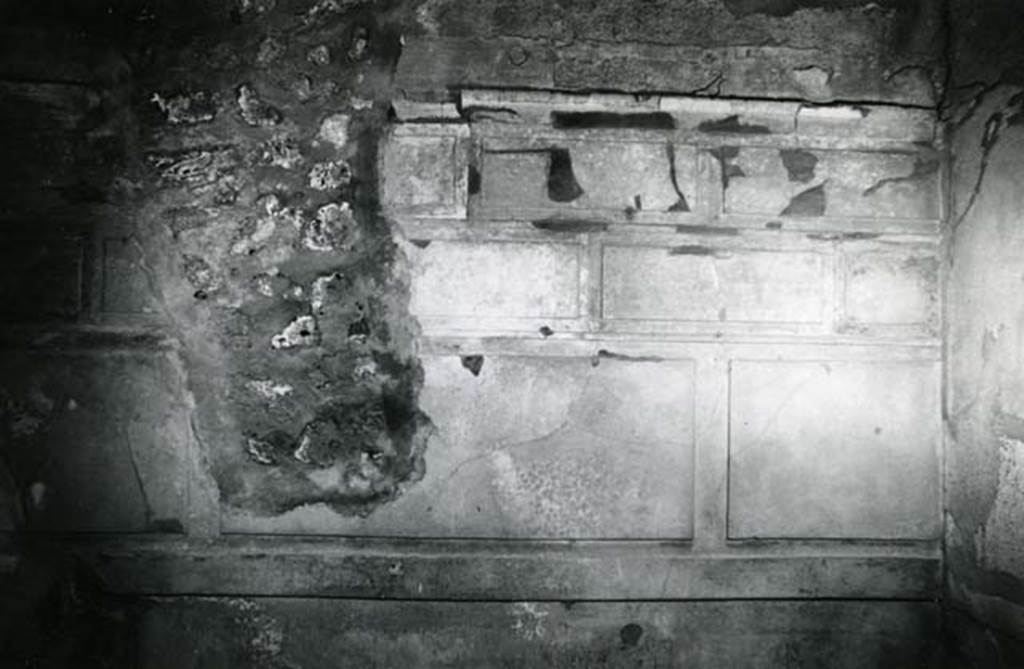
V.2.h Pompeii. 1972. Cubiculum ‘g’, right W wall. Photo courtesy of Anne Laidlaw.
American Academy in Rome, Photographic Archive. Laidlaw collection _P_72_20_7.
Part 3 Part 4 Part 5 Part 1 Plan