V.2.h Pompeii. Casa del Cenacolo.
Excavated 1891 to 1893, 1907. Restored 1975.
Part 1 Part 2
Part 3 Part 4 Part 5 Plan
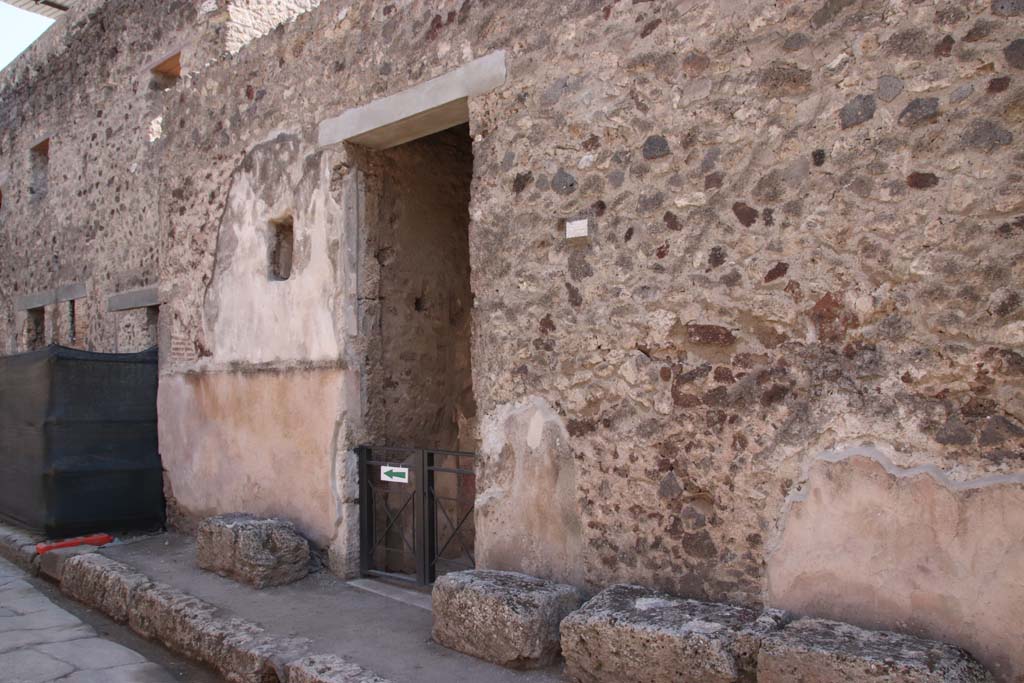
V.2.h Pompeii. September 2021. Looking east along front
façade towards entrance doorway. Photo courtesy of Klaus Heese.
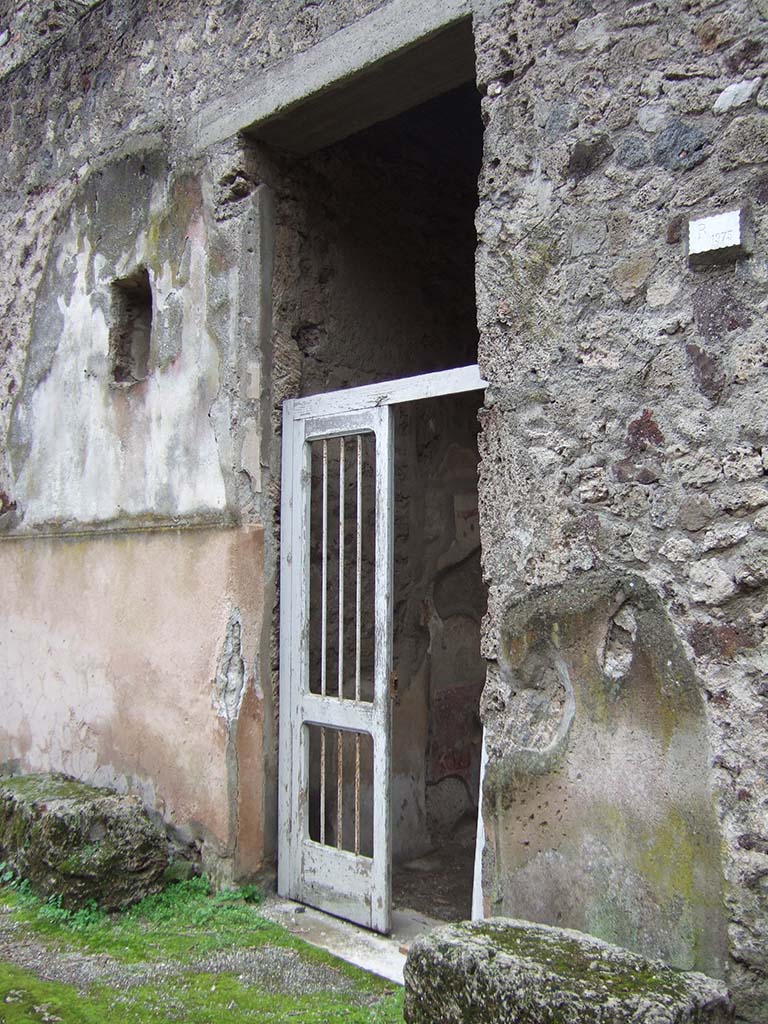
V.2.h Pompeii. December 2005. Entrance doorway.
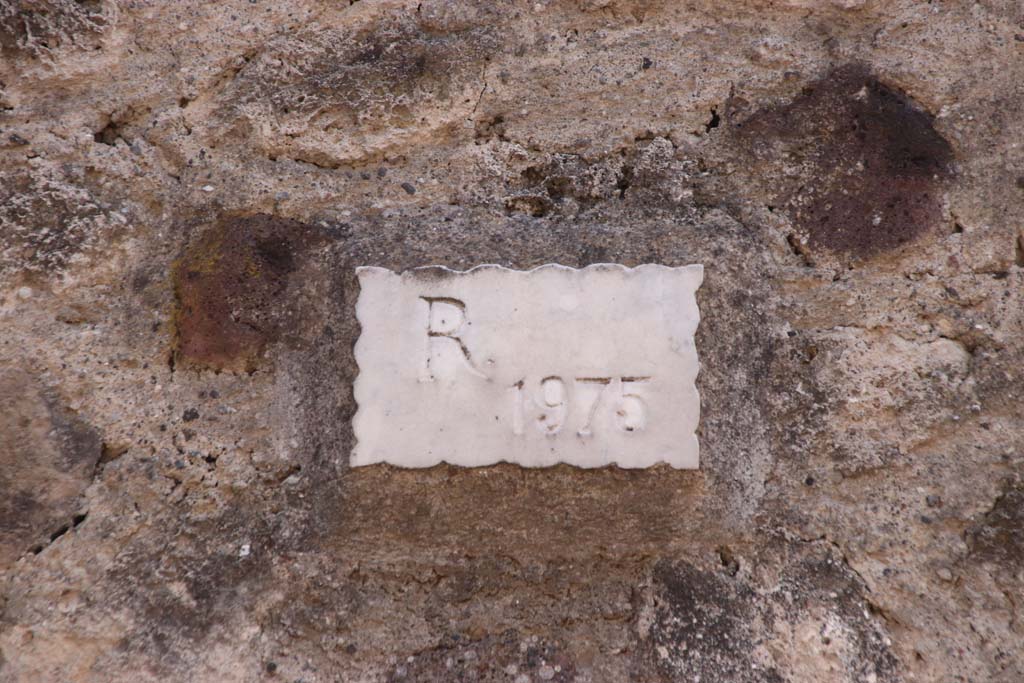
V.2.h Pompeii. September 2021. Plaque
in wall on west of entrance doorway (R 1975) – Restored 1975. Photo courtesy of Klaus Heese.
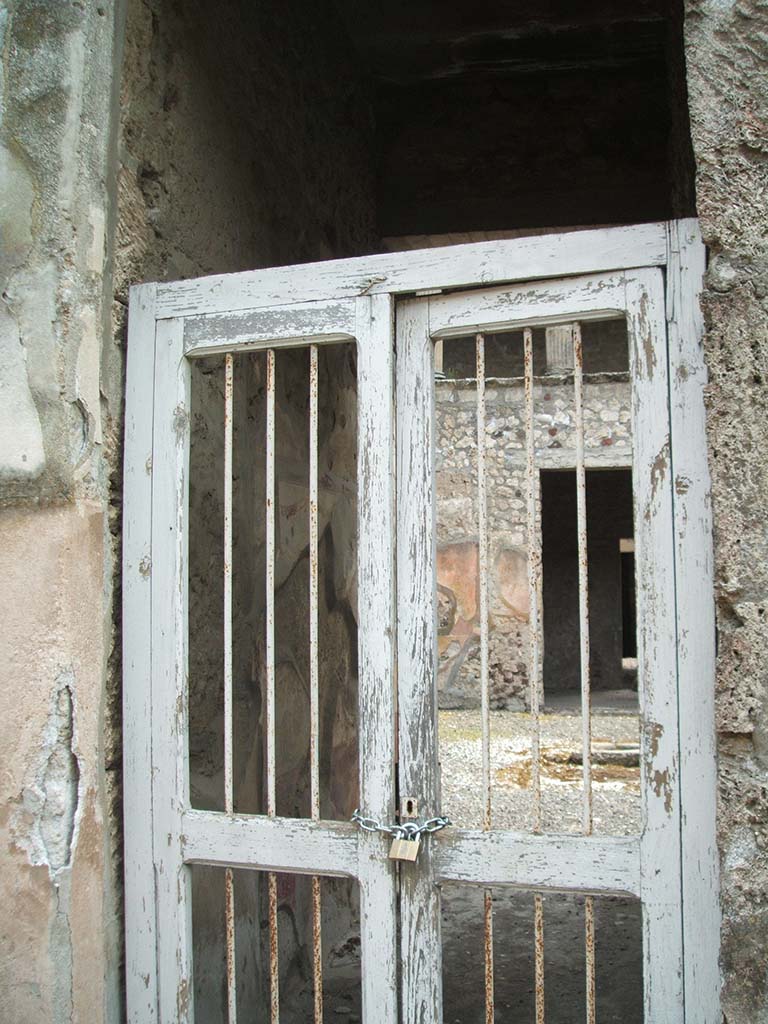
V.2.h Pompeii. May 2005. Looking south through entrance to fauces ‘a’ and atrium ‘d’.
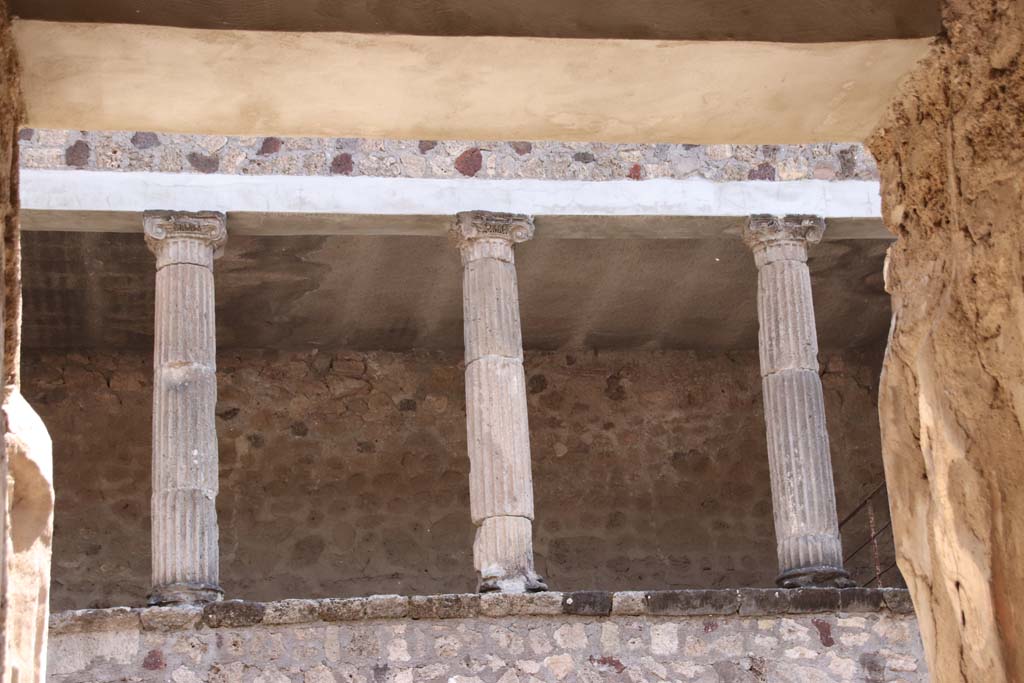
V.2.h Pompeii. September 2021. Three of the upper floor
columns visible from the entrance doorway. Photo courtesy of Klaus Heese.
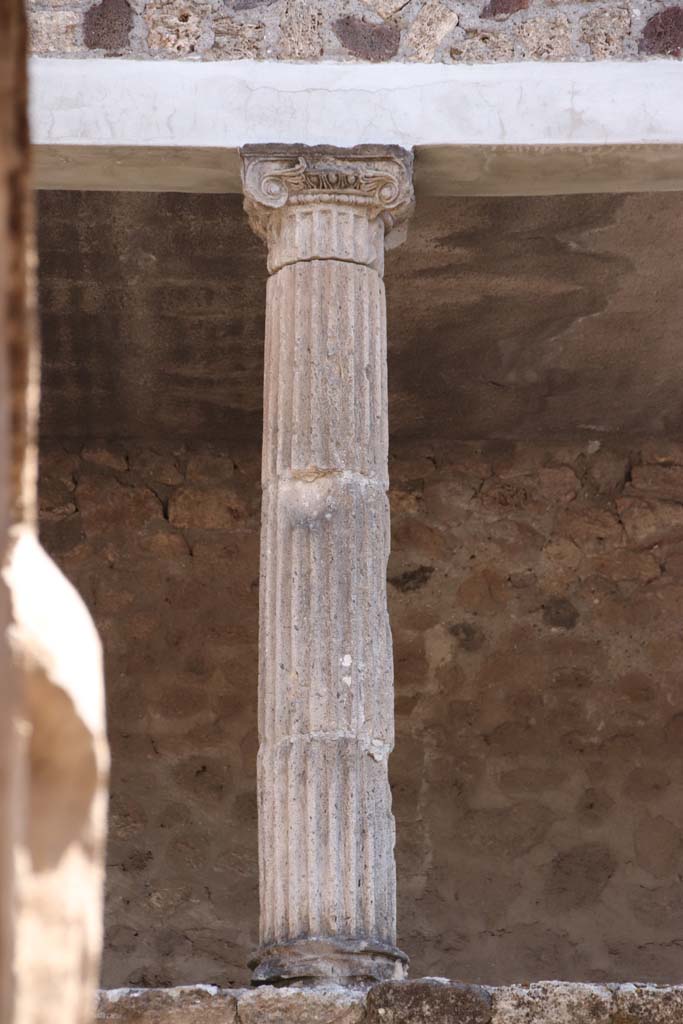
V.2.h Pompeii. September 2021. Detail
of the column seen on the left. Photo
courtesy of Klaus Heese.
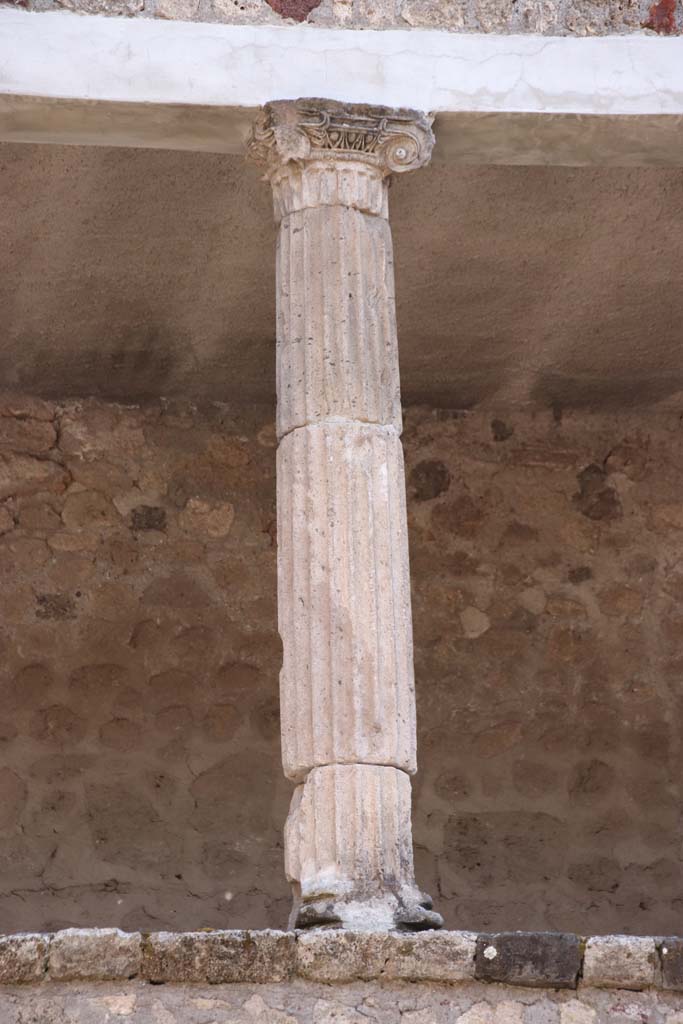
V.2.h Pompeii. September 2021. Detail of the column seen in the centre. Photo courtesy of Klaus Heese.
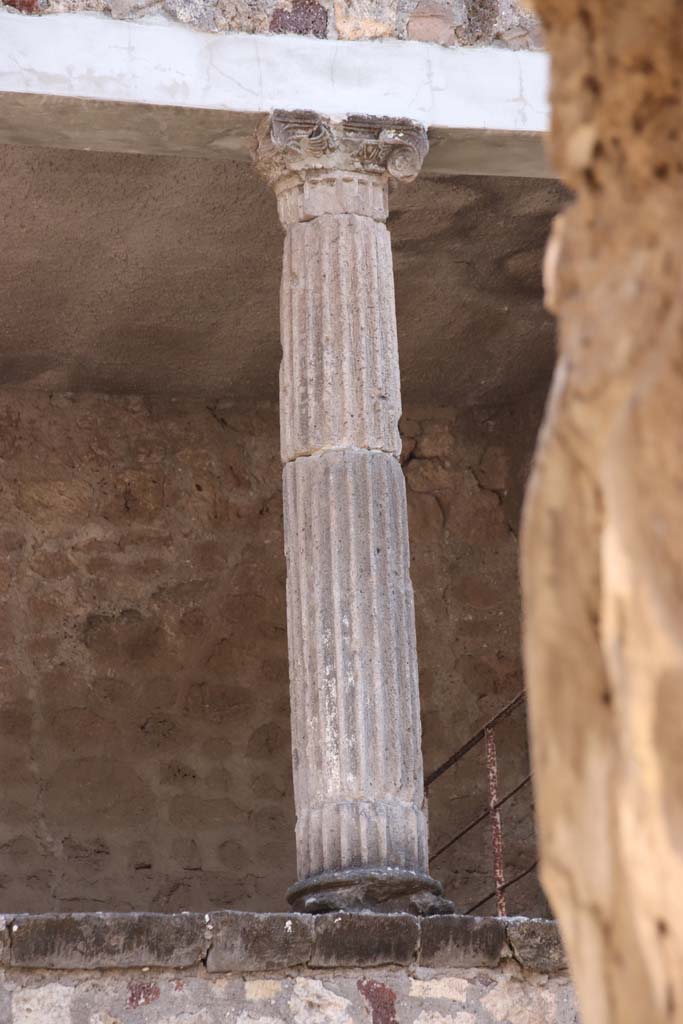
V.2.h Pompeii. September 2021. Detail
of the column seen on the right. Photo
courtesy of Klaus Heese.
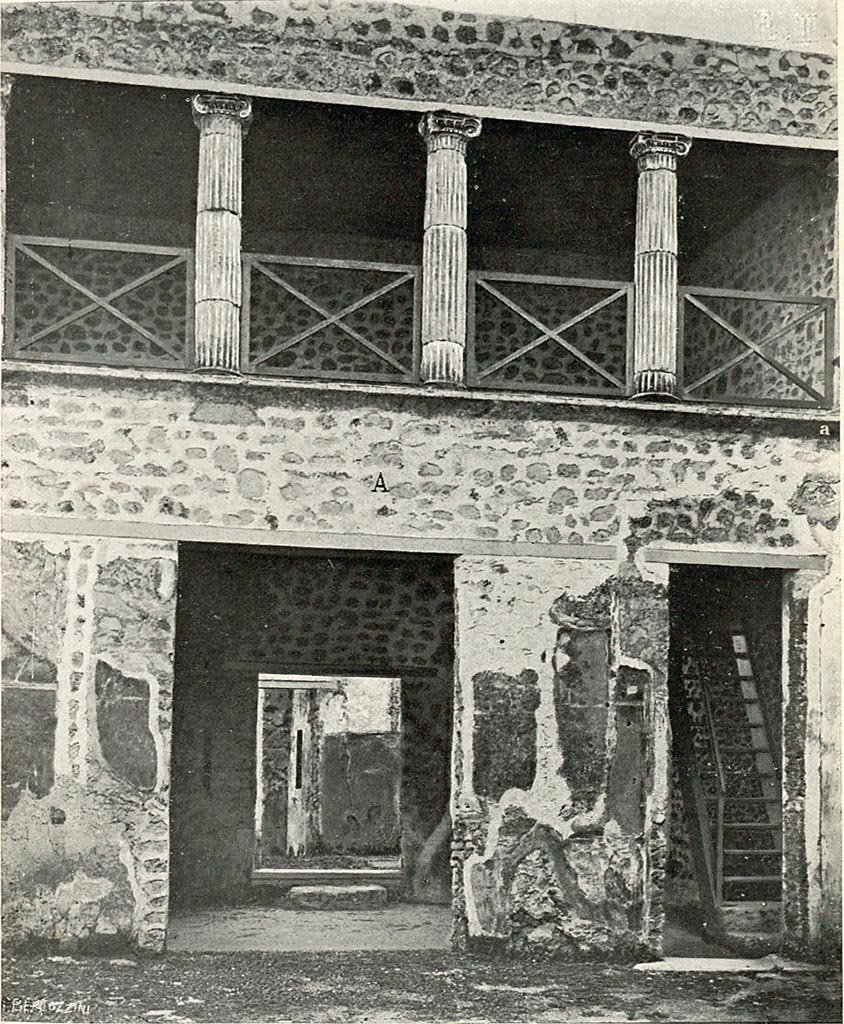
V.2.h
Pompeii. c.1908-1909. Looking south across atrium.
See Sogliano,
A., 1909. Dei lavori eseguiti in Pompei dal i Luglio 1908 a tutto Giugno 1909. Napoli: d’Auria, (fig.3).
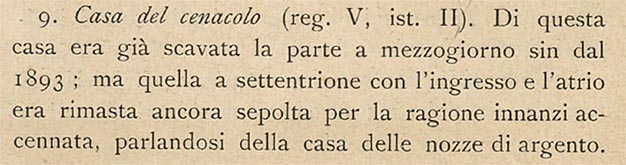
V.2.h
Pompeii. Description of excavation by Sogliano.
See Sogliano, A., 1909. Dei lavori eseguiti in Pompei dal i Luglio 1908 a tutto Giugno 1909. Napoli: d’Auria, (p.16).
According to Sogliano –
“The south part of this house was excavated since 1893; but the northern part with the entrance and atrium remained buried for the reason already mentioned, that we spoke about in the House of the Silver Wedding.
Several bits of fluted columns, the bases and capitals of Nocera tuff found here and there in this house would not have found their ancient place, if the collapse of the upper part of the wall facing the atrium (fig. 3, A), had also brought down a piece (a) of the stylobate, also made of Nocerine tuff, which, adhering to the wall on the right, clearly showed that layout of the half-column with the straight outline of a door, and marked with its original position the level of the floor above the tablinum and the two rooms on its sides, of which only the one on the right is seen in our photo (fig.3).”
See Sogliano, A., 1909. Dei lavori eseguiti in Pompei dal i Luglio 1908 a tutto Giugno 1909. Napoli: d’Auria, (p.16-17).
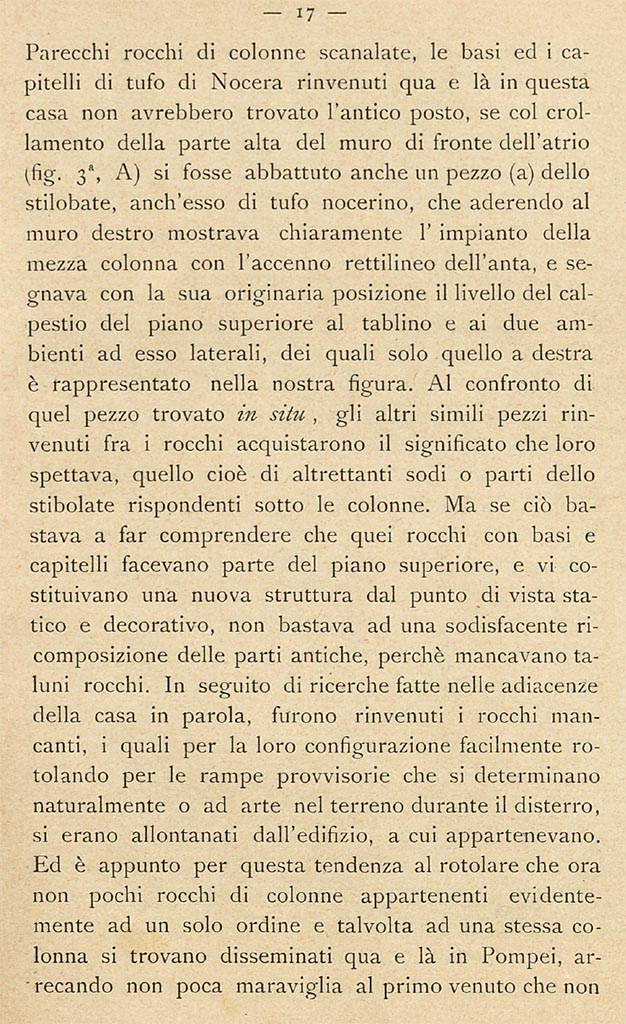
V.2.h
Pompeii. Description of excavation by Sogliano.
See Sogliano, A., 1909. Dei lavori eseguiti in Pompei dal i Luglio 1908 a tutto Giugno 1909. Napoli: d’Auria, (p.17).
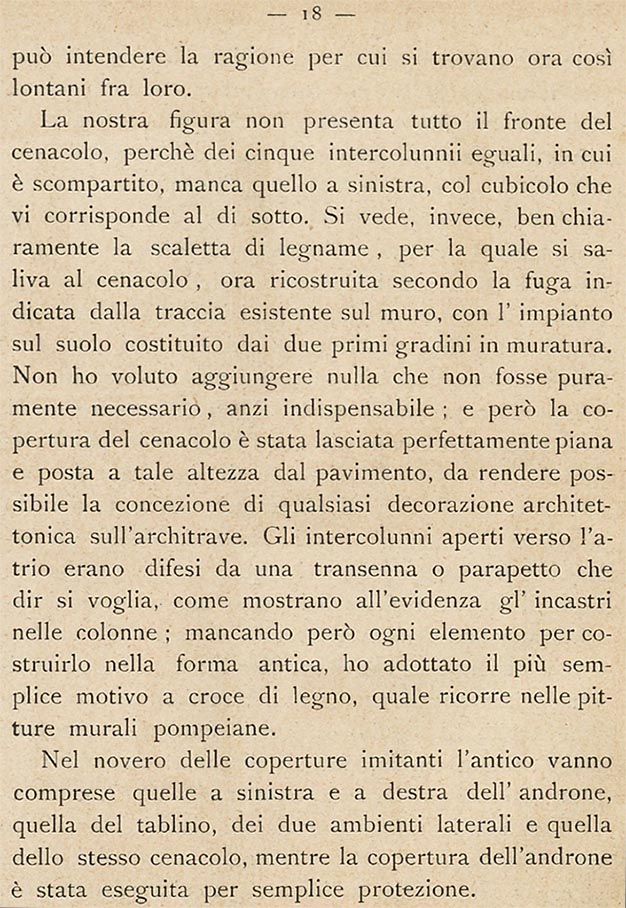
V.2.h Pompeii. Description of excavation by Sogliano.
See Sogliano, A., 1909. Dei lavori eseguiti in Pompei dal i Luglio 1908 a tutto Giugno 1909. Napoli: d’Auria, (p.18).
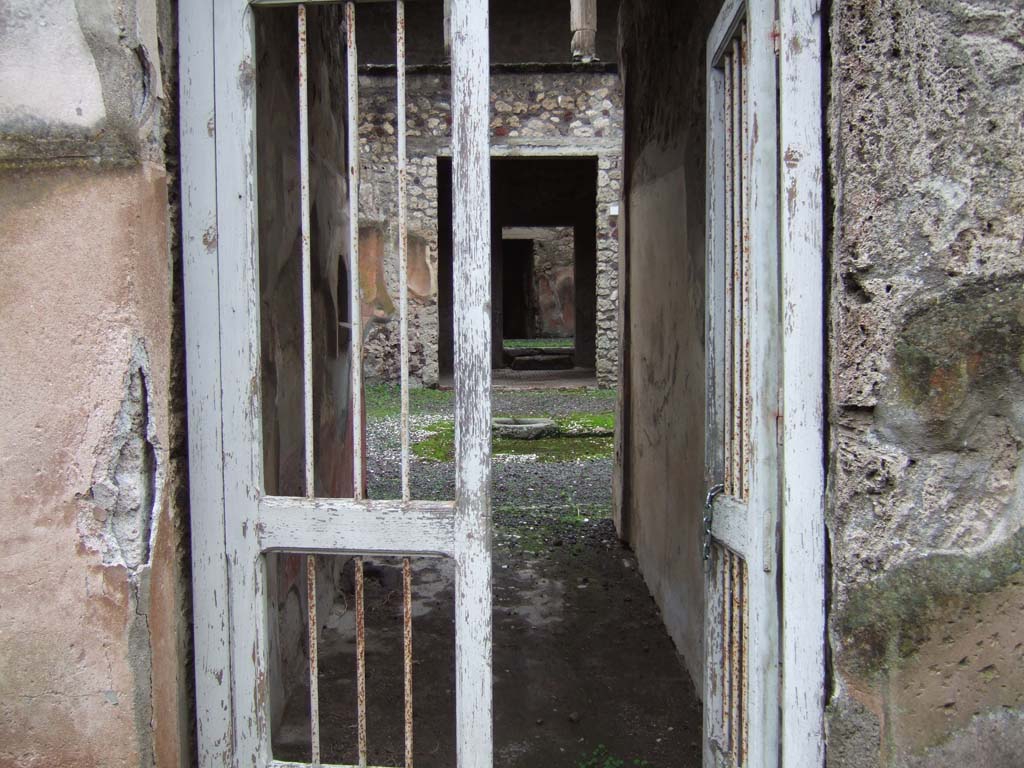
V.2.h Pompeii. December 2005. Looking south along entrance fauces ‘a’ to atrium ‘d’.
In the east wall of the entrance corridor, an arched niche can be seen.
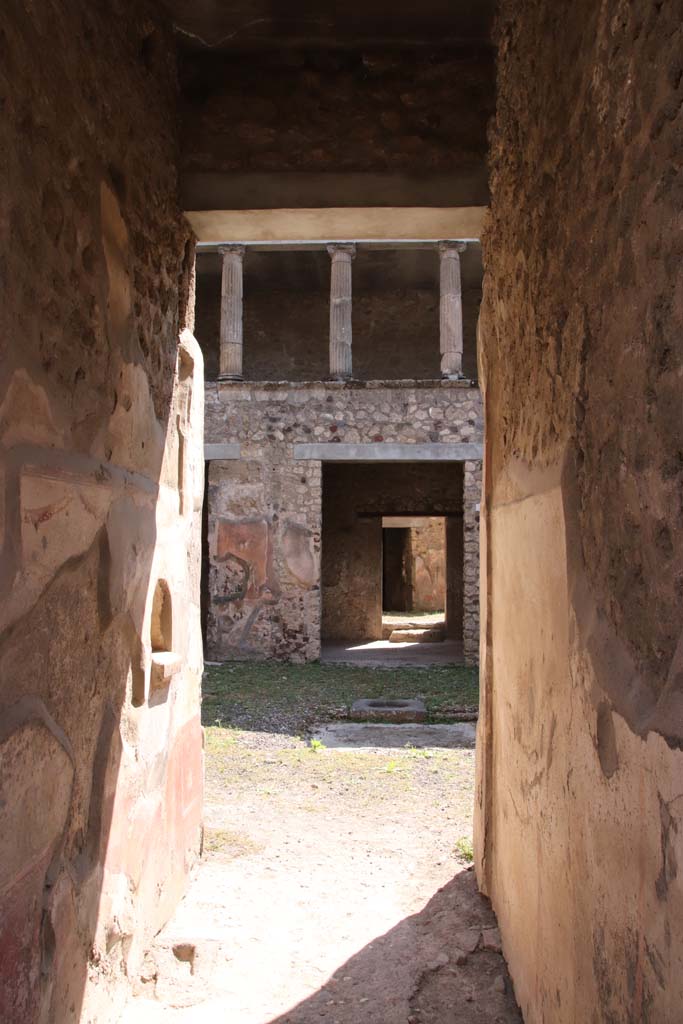
V.2.h Pompeii. September 2021.
Looking south along entrance corridor/fauces, with niche set
into east wall. Photo courtesy of Klaus Heese.
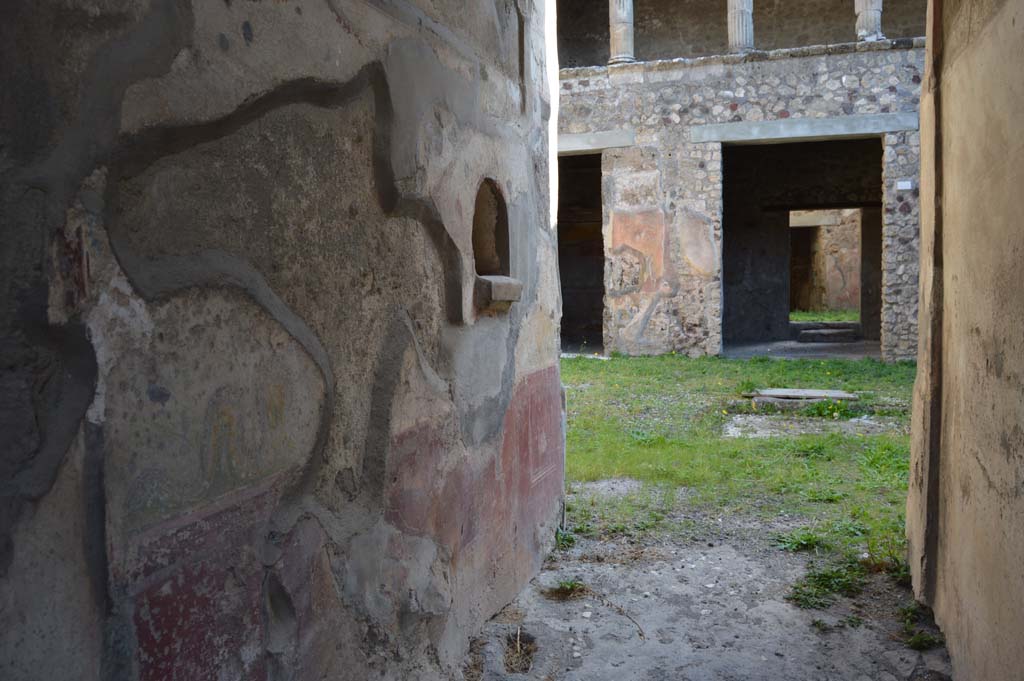
V.2.h Pompeii. October 2017.
Looking south along
east wall of entrance corridor/fauces ‘a’, with niche and remains of painted
decoration.
Foto Taylor Lauritsen, ERC Grant 681269 DÉCOR.
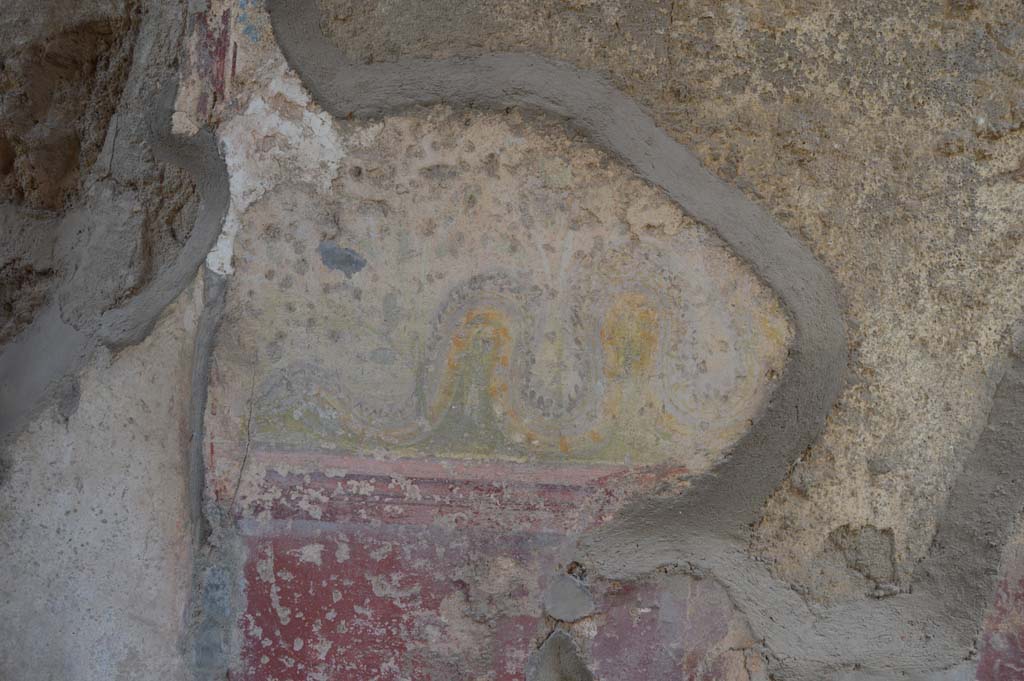
V.2.h Pompeii. October 2017.
North end of east wall of entrance corridor/fauces ‘a’, with
remains of painted serpent on left side of niche.
Foto Taylor Lauritsen, ERC
Grant 681269 DÉCOR.
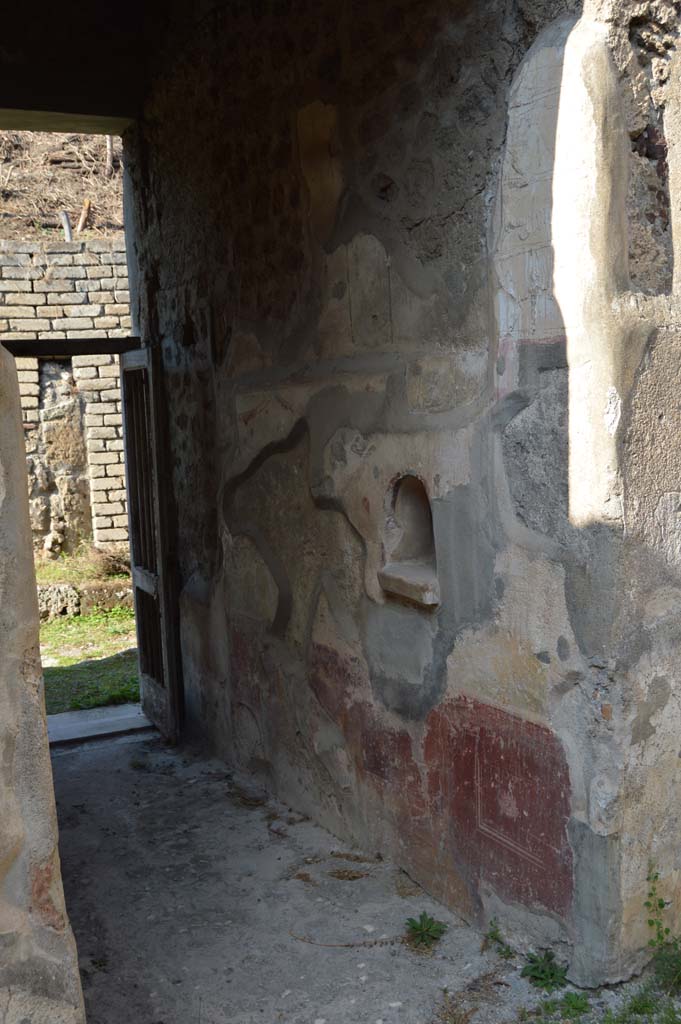
V.2.h Pompeii. October 2017.
Looking
north from south end of east wall of entrance corridor/fauces ‘a’, towards
entrance doorway.
Foto Taylor Lauritsen, ERC Grant 681269 DÉCOR.
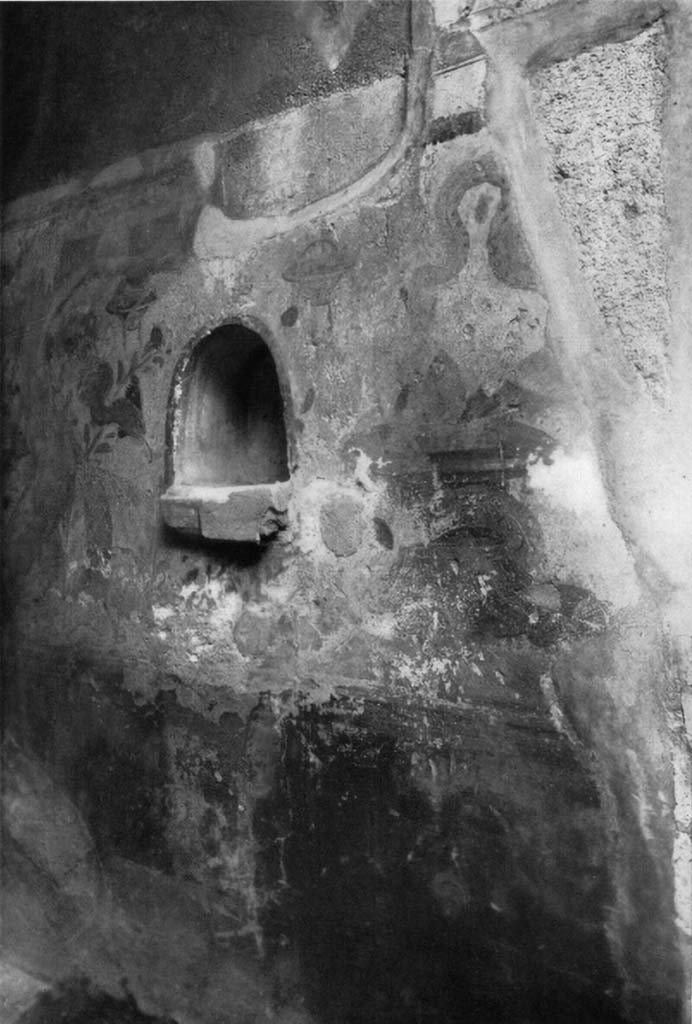
V.2.h Pompeii. c.1930s. In the east wall of the entrance fauces ‘a’ an arched niche can be seen.
According to Boyce, this had a projecting floor and its walls were covered with white stucco.
It was outlined, inside and outside, with red stripes.
The wall beside the niche was painted with the serpents.
To the right of, and below the niche, was painted an unusual altar, resembling a brazier of bronze (see note below*).
Its upper surface was circular and had two handles at the sides.
One of the huge serpents had its body coiled around this altar and was raising its head to the offerings.
The second serpent was painted on the wall to the left of the niche and was raising its head to the niche rather than the altar.
The background was white and adorned with plants, across the top were painted garlands hanging from painted nails.
See Boyce G. K., 1937. Corpus
of the Lararia of Pompeii. Rome:
MAAR 14. (p. 36, no. 106, pl.10,1)
*Boyce added a note on p. 37 that said a similar brazier was found with the painting of the serpents in I.7.10-12.
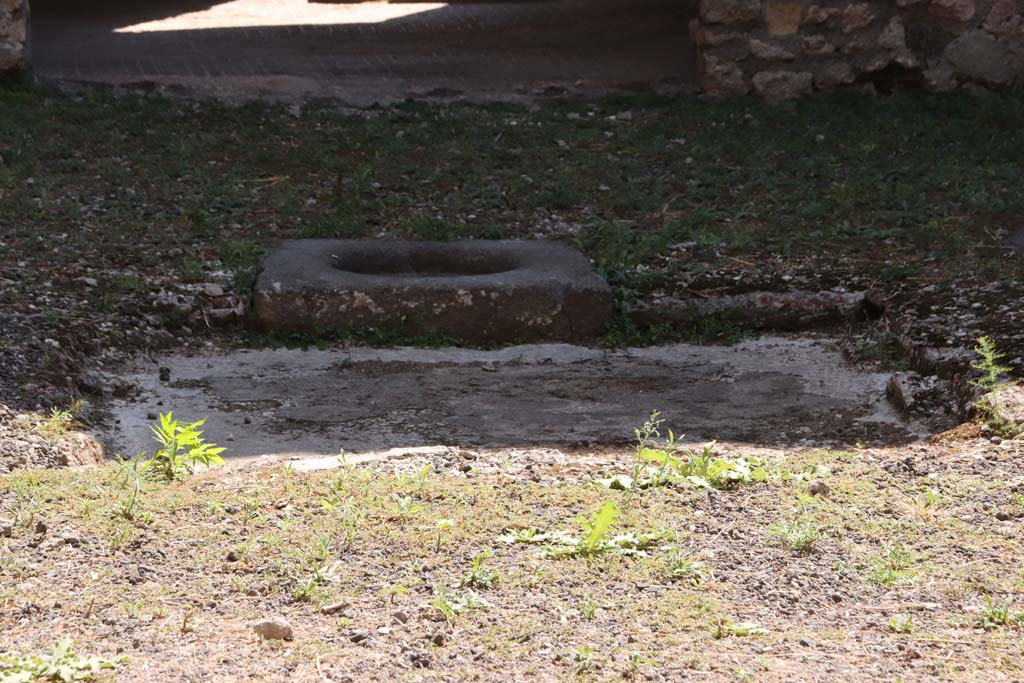
V.2.h Pompeii. September 2021. Looking south towards
impluvium in atrium ‘d’. Photo courtesy of Klaus Heese.
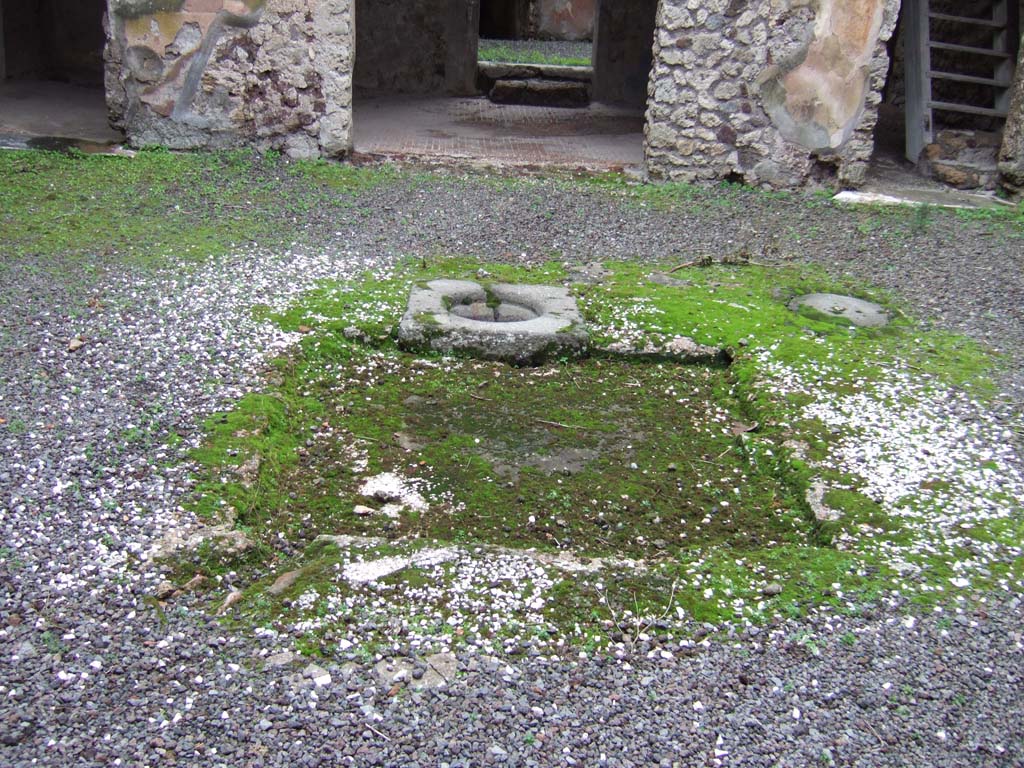
V.2.h Pompeii. December 2005. Impluvium in atrium ‘d’, looking south towards tablinum (f) (in centre).
According to NdS, the small atrium had an impluvium in its centre, with two cistern mouths nearby.
The edge of the impluvium was covered with small irregular flakes of marble that produced the effect of a coarse mosaic.
See Notizie degli Scavi di Antichità, 1896, (p.422). (The atrium is referred to as ‘a’).
See Mau in Bullettino dell’Instituto di Corrispondenza
Archeologica (DAIR), VIII, 1893, (p.14-27).
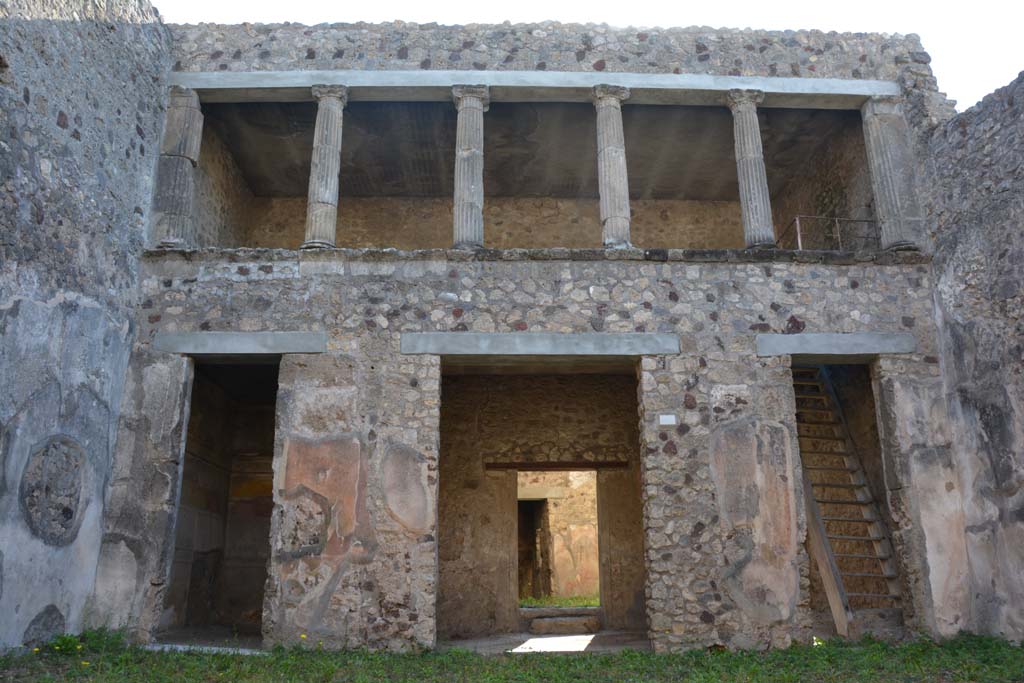
V.2.h Pompeii. October 2019. Looking south across atrium ‘d’.
On the left is the doorway to cubiculum ‘g’,
in the centre is the doorway to the tablinum ‘f’, and on the right is the room
‘e’, with stairs.
Foto Annette Haug, ERC Grant 681269 DÉCOR.
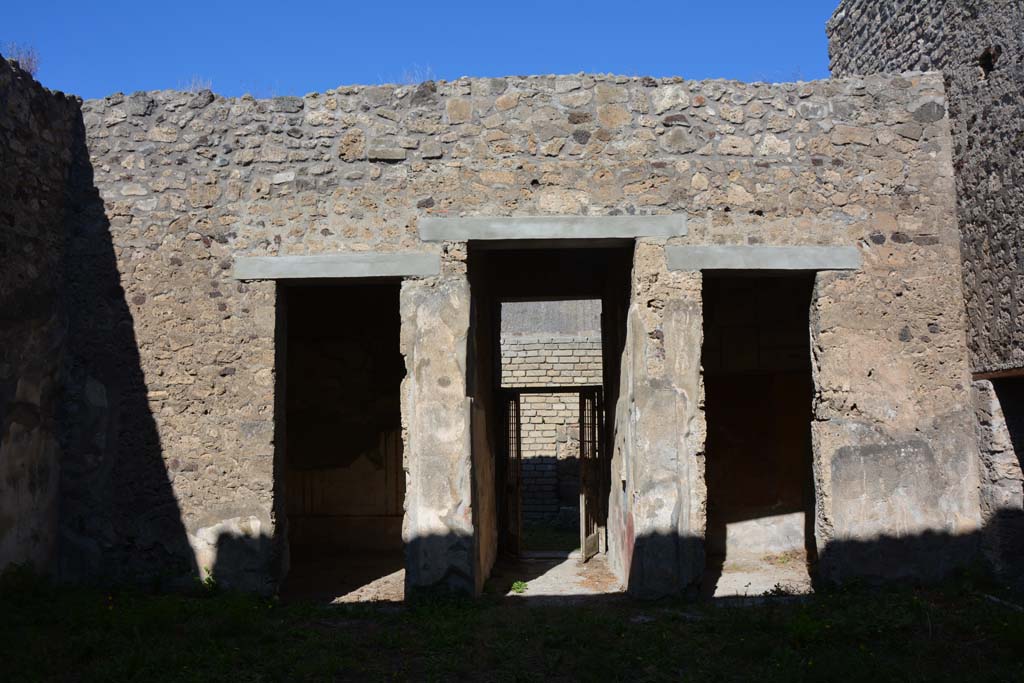
V.2.h Pompeii. October 2019. Looking
towards north side of atrium ‘d’, with entrance doorway, in centre.
Foto Annette Haug, ERC Grant 681269 DÉCOR.
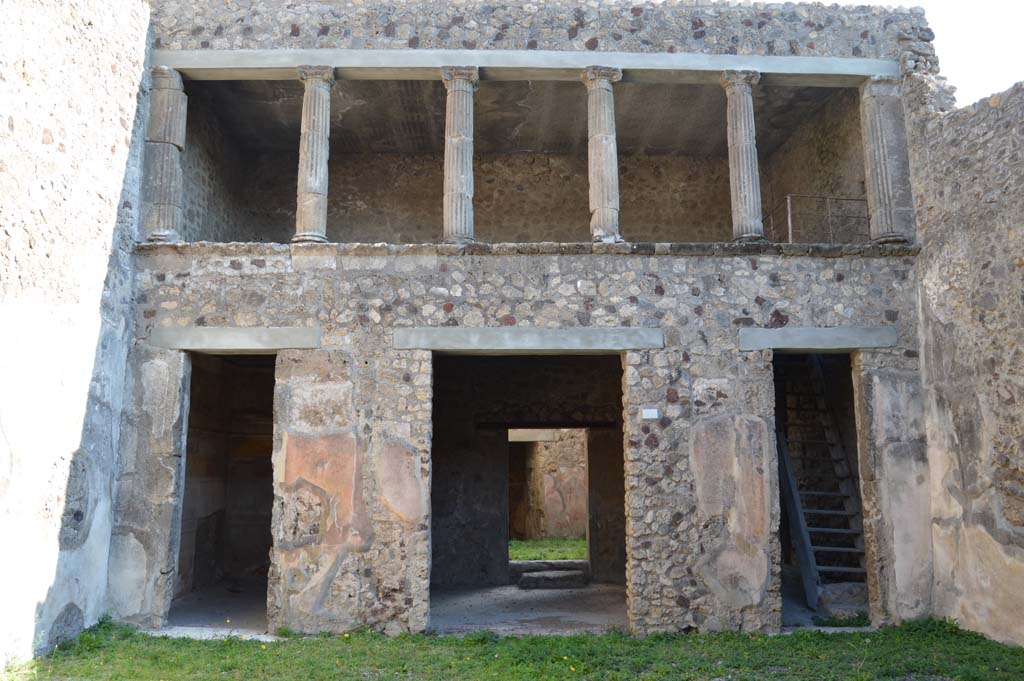
V.2.h Pompeii. October 2017. Looking south across atrium ‘d’.
Foto Taylor Lauritsen, ERC Grant 681269
DÉCOR.
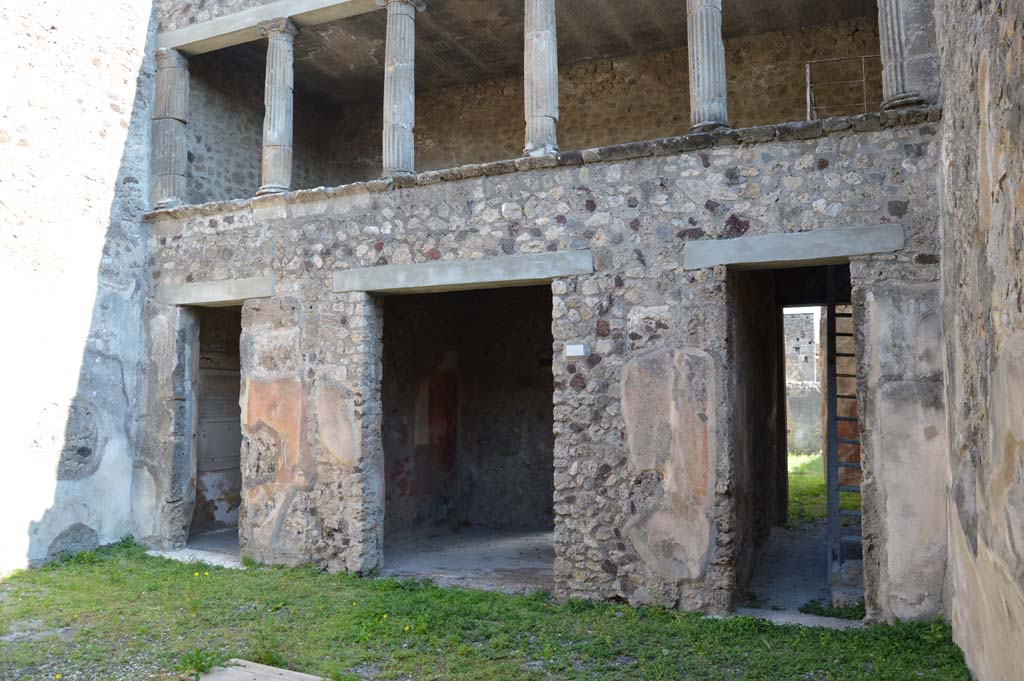
V.2.h Pompeii. October
2017. Looking south-east across atrium ‘d’.
Foto Taylor Lauritsen, ERC Grant 681269
DÉCOR.
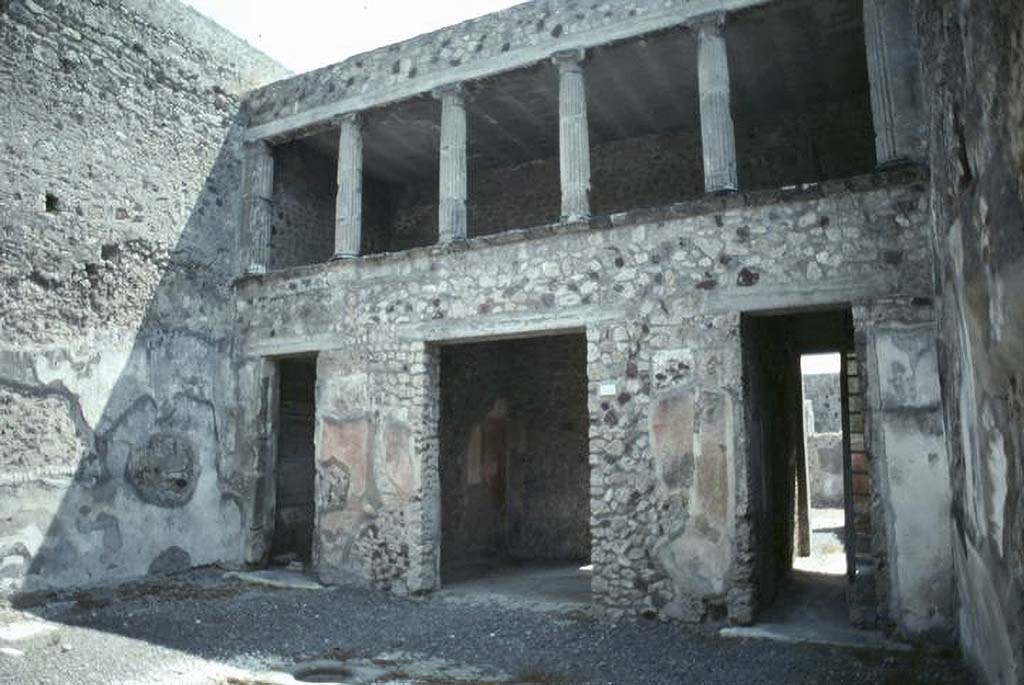
V.2.h Pompeii. 2002. East wall and south side of atrium ‘d’.
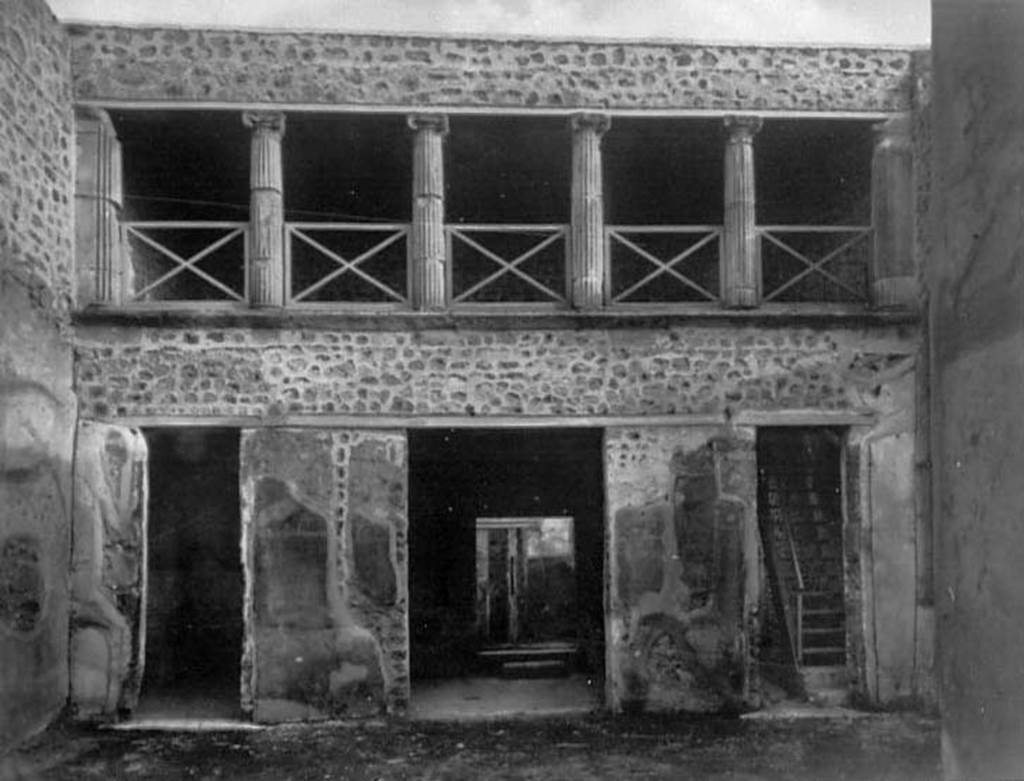
V.2.h Pompeii. Old undated postcard. Upper floor with columns, looking south across atrium.
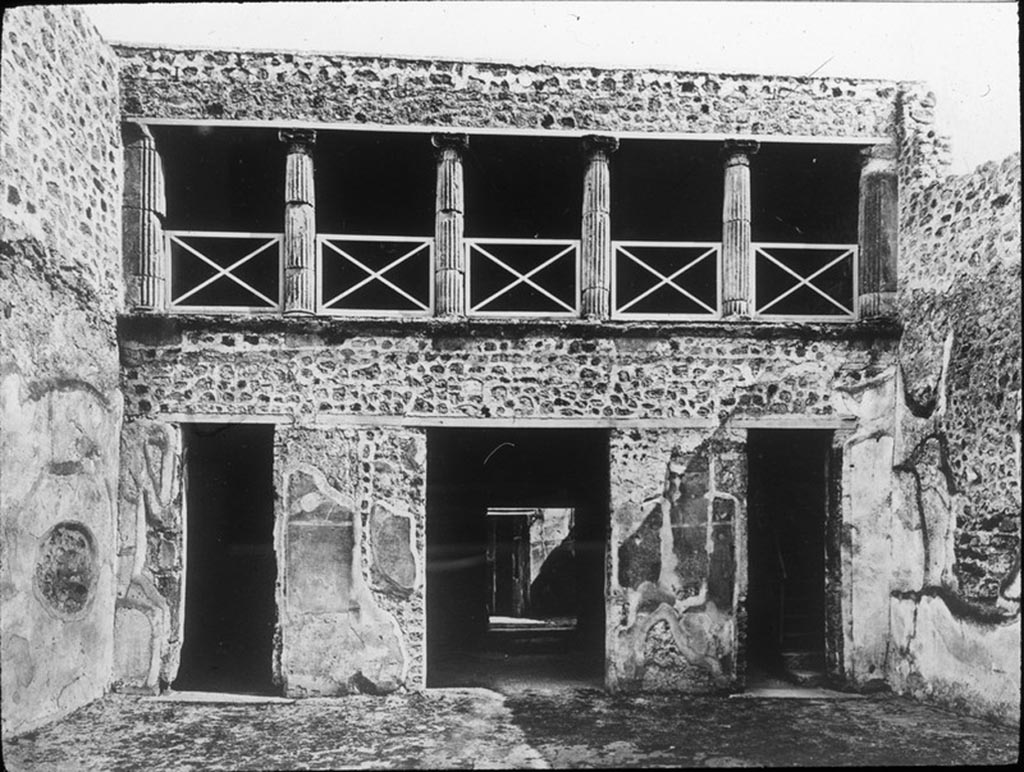
V.2.h Pompeii. Looking across atrium towards south wall, and upper floor with columns.
Photo by
permission of the Institute of Archaeology, University of Oxford. File name
instarchbx202im 003. Source ID. 44511.
See original on Oxford HEIR database
Part 2 Part 3 Part 4 Part 5 Plan