V.2.g Pompeii. House of N. Fufidius Successus.
Excavated 1891, 1907.
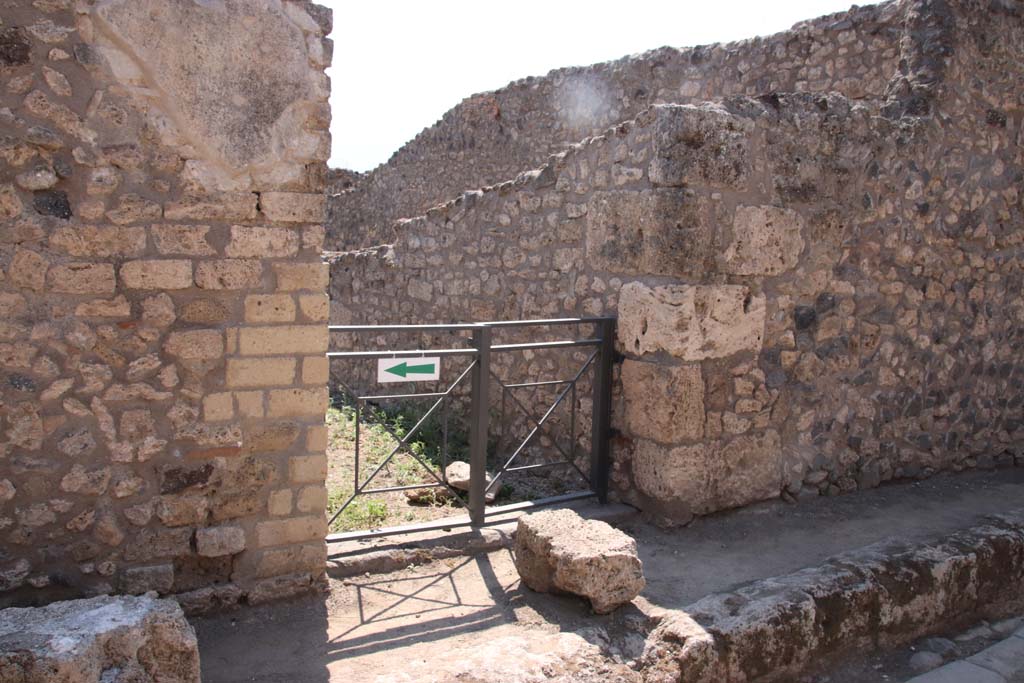
V.2.g Pompeii. September 2021.
Looking south on
Vicolo delle Nozze d’Argento towards entrance doorway. Photo courtesy of Klaus Heese.
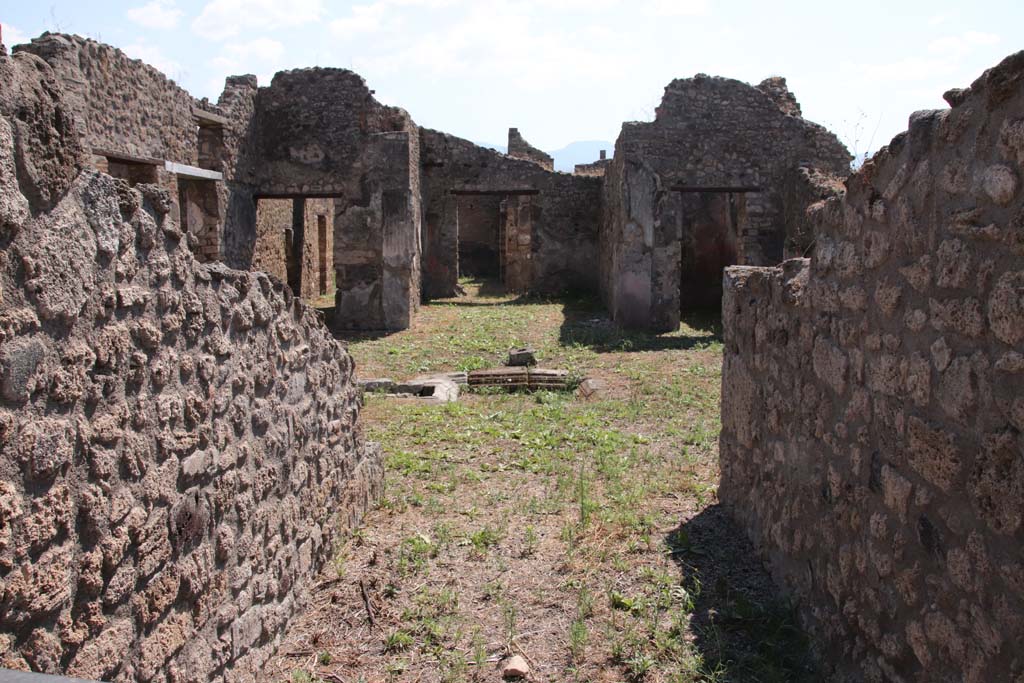
V.2.g Pompeii. September 2021.
Looking south through entrance fauces ‘a’ across room ‘b’ the atrium, towards doorways to corridor ‘l’, room ‘m’ tablinum, and cubiculum ‘h’, on right.
Photo courtesy of Klaus Heese.
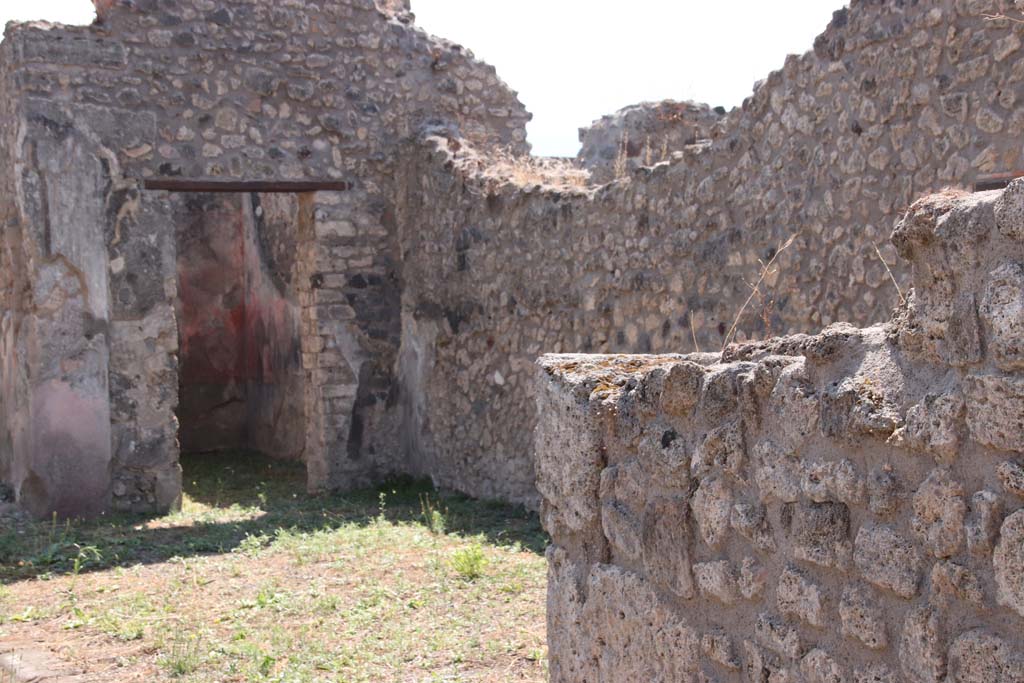
V.2.g Pompeii. September 2021.
Looking
south towards doorway to cubiculum ‘h’, on west side of atrium. Photo courtesy of Klaus Heese.
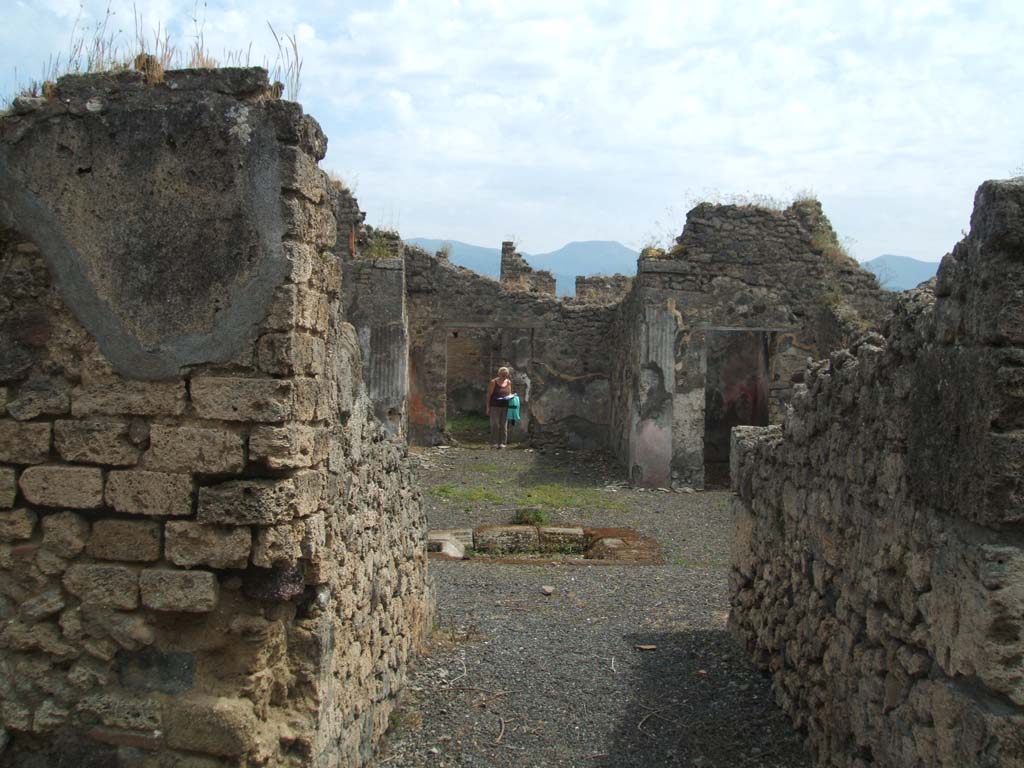
V.2.g Pompeii. May 2005.
Looking south through entrance fauces ‘a’ across room ‘b’ the atrium, towards doorways to room ‘m’ tablinum, and room ‘h’, a cubiculum.
According to NdS, the Tuscan atrium had a tufa impluvium, on the east side of which was the cistern-mouth.
The walls of the atrium did not show anything other than a black dado.
See Notizie degli Scavi di Antichità, 1896,
(p.419)
See Mau in BdI, VIII, 1893, (p.9-14)
According to Della Corte, a signet seal was found here naming the tenant as
N. Fufidius Successus [S.44]
On the wall on the right of the entrance between V.2.g and V.2.f, graffiti were found graffiti that also named -
Fufidius [CIL IV 4245])
Fufidius hic
(habitat?) [CIL IV 4244]
See Della Corte, M., 1965. Case ed Abitanti di Pompei. Napoli: Fausto Fiorentino. (p.107)
According to Epigraphik-Datenbank Clauss/Slaby (See www.manfredclauss.de) CIL IV 4244 may read -
Fufidius
Hiceti sal(utem) [CIL IV 4244]
According to Della Corte, found on two amphorae provenanced from the second house to the west from the House of the Silver Wedding (Nozze di Argento) in November 1909, were two inscriptions.
On one side of the neck was read only the letter M, on the other sides, always in red, were written respectively –
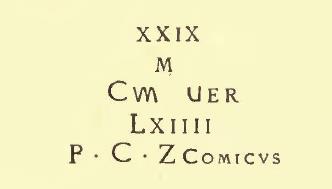 and
and 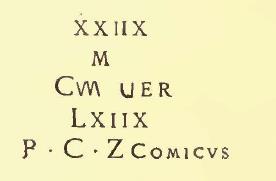
V.2.g Pompeii. Inscriptions on amphorae.
See Notizie degli Scavi di Antichità, 1914, (p.112).
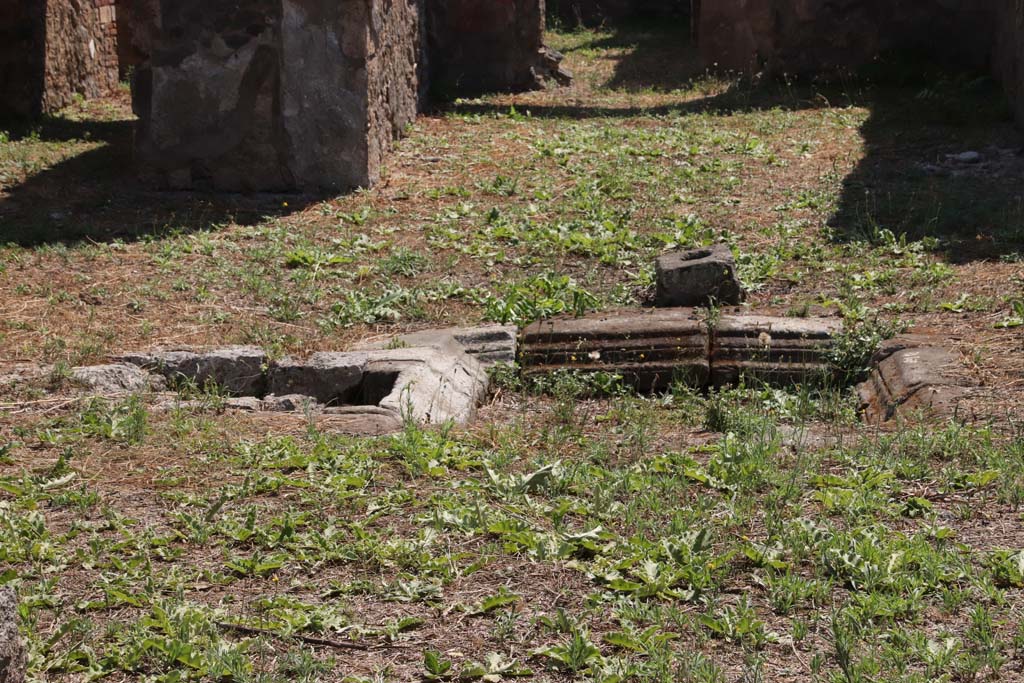
V.2.g Pompeii. September 2021.
Looking south towards impluvium and cistern mouth in room ‘b’ the atrium. Photo courtesy of Klaus Heese.
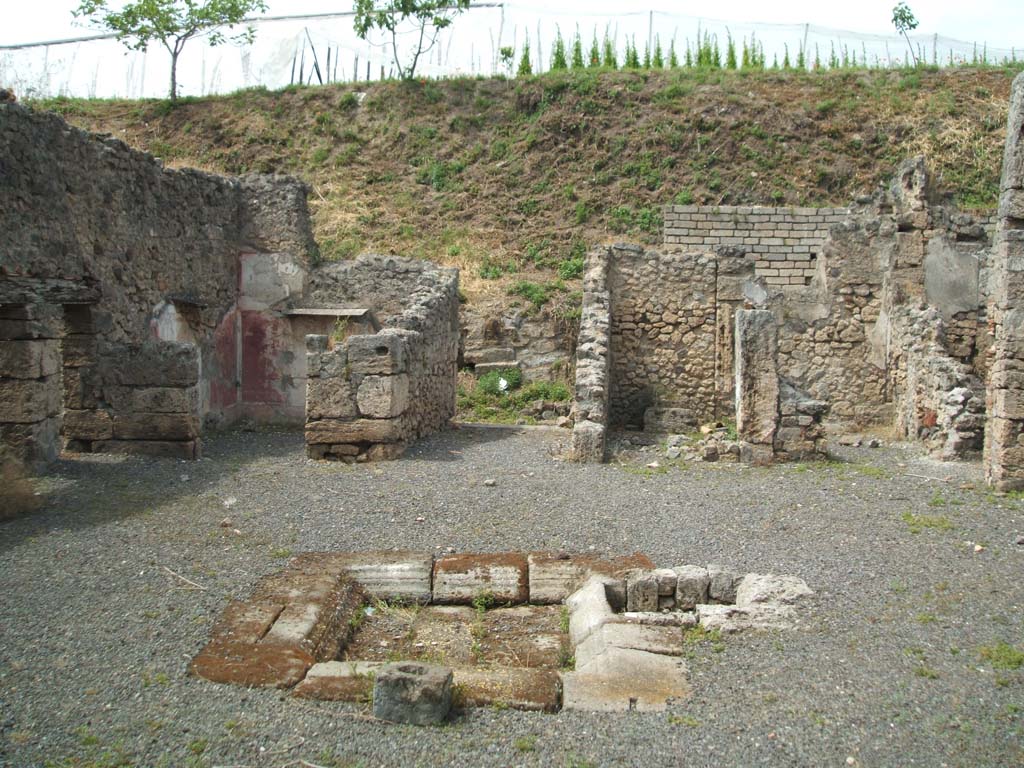
V.2.g Pompeii. May 2005. Looking north across room ‘b’ the atrium, to entrance corridor ‘a’, in centre.
The doorways to room ‘i’, room ‘f’ the kitchen, and room ‘e’ the cubiculum, can be seen on the left of the entrance corridor.
The doorways to room ‘c’ with two entrances separated by a pillar, and room ‘d’ in the north-east corner, can be seen on the right of the entrance corridor.
According to NdS, on the pilaster dividing the fauces (room ‘a’) from the cubiculum on the left of it (room ‘e’), facing south across the atrium, was a lararium niche covered in white plaster.
On the left side of the lararium was a doorway into a cubiculum, room ‘e’.
See Notizie degli Scavi di Antichità, 1896,
(p.419)
According to Boyce, only the pilaster between the fauces and the room to the west had a decorated upper part.
In this pilaster, at a height of I.68m, was a niche for the household gods.
This was coated with white stucco and painted in the Third Style.
See Boyce G. K., 1937. Corpus of the Lararia of Pompeii. Rome: MAAR 14. (p.36, no.104)
According to CTP, the niche at the south-west terminus of the fauces facing the atrium is now lost. (1982).
See Van der Poel, H. B., 1986. Corpus Topographicum Pompeianum, Part IIIA. Austin: University of Texas. (p.72)
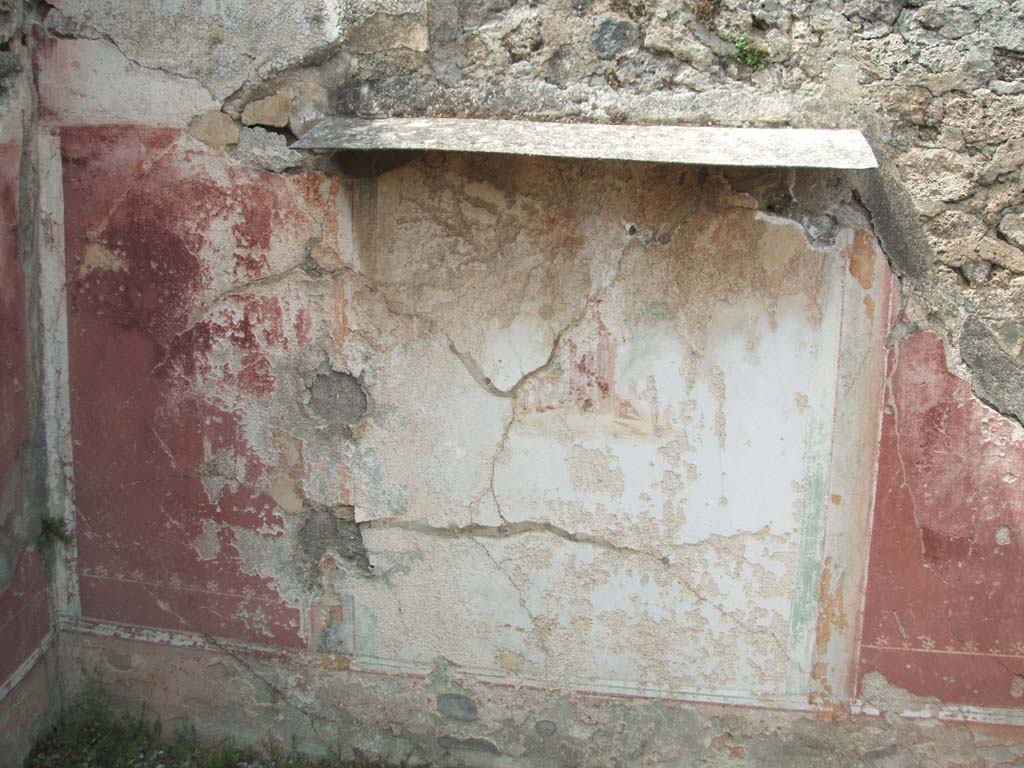
V.2.g Pompeii. May 2005. North wall of room ‘e’, the cubiculum on west side of entrance doorway.
The walls of the cubiculum were decorated with panels of violet.
In the middle of each wall they changed to a white panel, containing the usual rural shrine, here quite crudely painted.
In the middle of the violet panels, flying animals could be seen, such as swans, sphinxes, griffins and tigers.
The frieze was on a white background, divided into panels by stripes of many colours.
In the two lunettes of the vault, fruits and pecking birds were painted.
In the middle of the north lunette was a window overlooking the vicolo.
The yellow dado would have imitated coloured marble.
In general, the decoration was very mediocre.
See Notizie degli Scavi di Antichità, 1896,
(p.419)
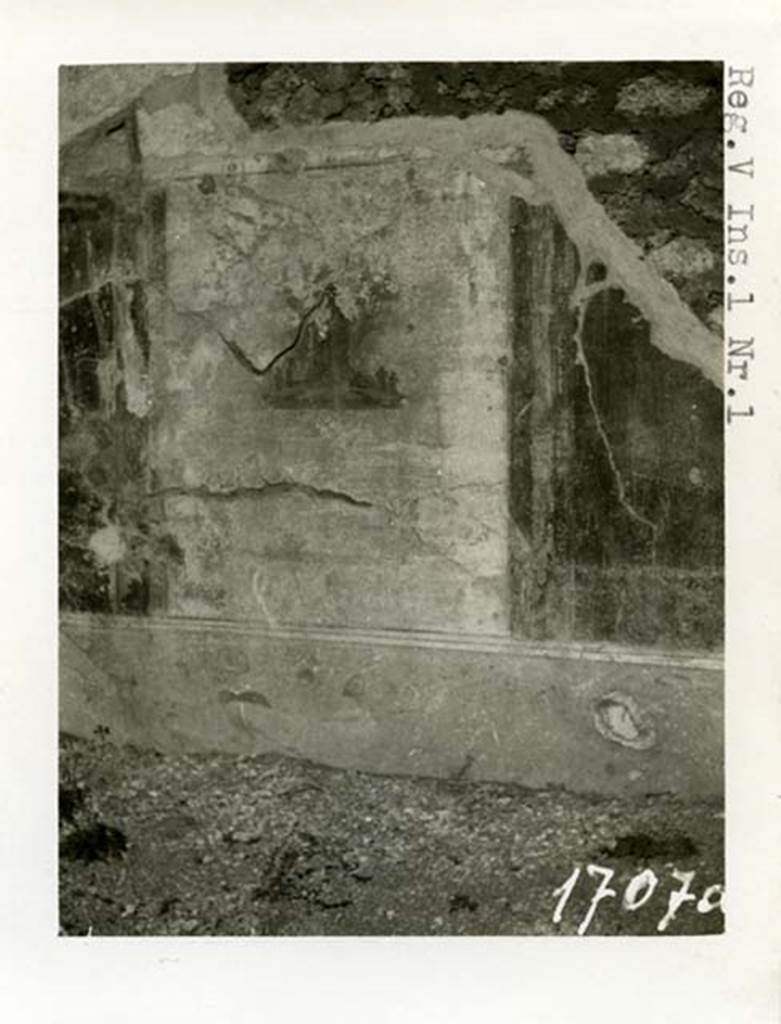
V.2.g Pompeii, although numbered as V.1.1. Pre-1937-39.
North wall of room ‘e’, the cubiculum on west side of entrance doorway.
Photo courtesy of American Academy in Rome, Photographic Archive. Warsher collection no. 1707a.
According to PPM, when discovered this north wall had a pink zoccolo sprinkled with red and white:
The middle zone of the wall had three panels, the middle one being white with the painted sacred landscape, shown above.
The side panels were red with borders edged in “carpet” style and a line, containing a small painting in the centre (griffins, etc).
These panels were separated by a narrow black compartment.
The upper zone of the wall was white and showed traces of a green painted garland.
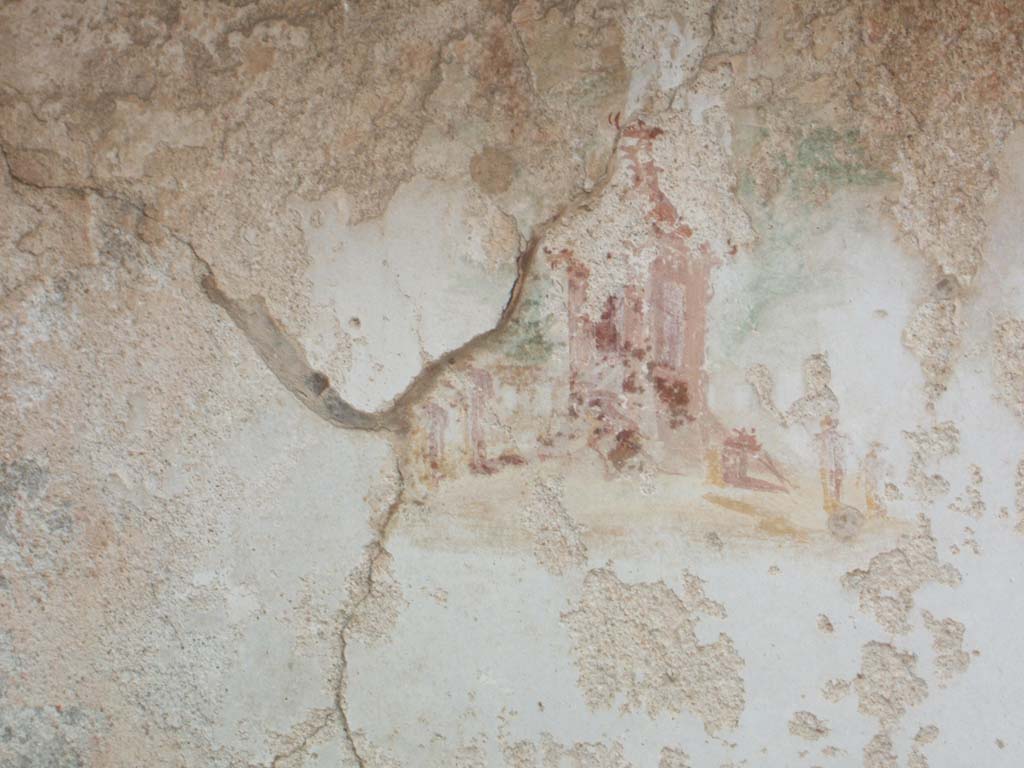
V.2.g Pompeii. May 2005. Room ‘e’, detail from central painting on north wall, showing a rural shrine.
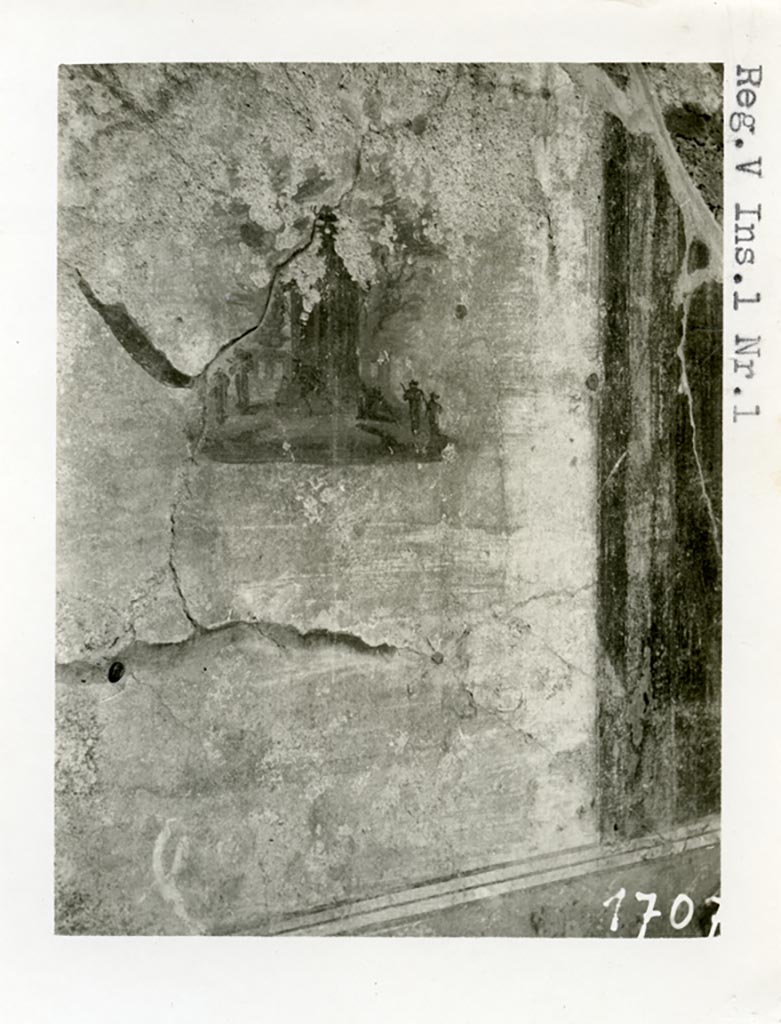
V.2.g Pompeii, although numbered as V.1.1. Pre-1937-39.
Room ‘e’, detail from central painting on north wall, showing a rural shrine.
Photo courtesy of American Academy in Rome, Photographic Archive. Warsher collection no. 1707.
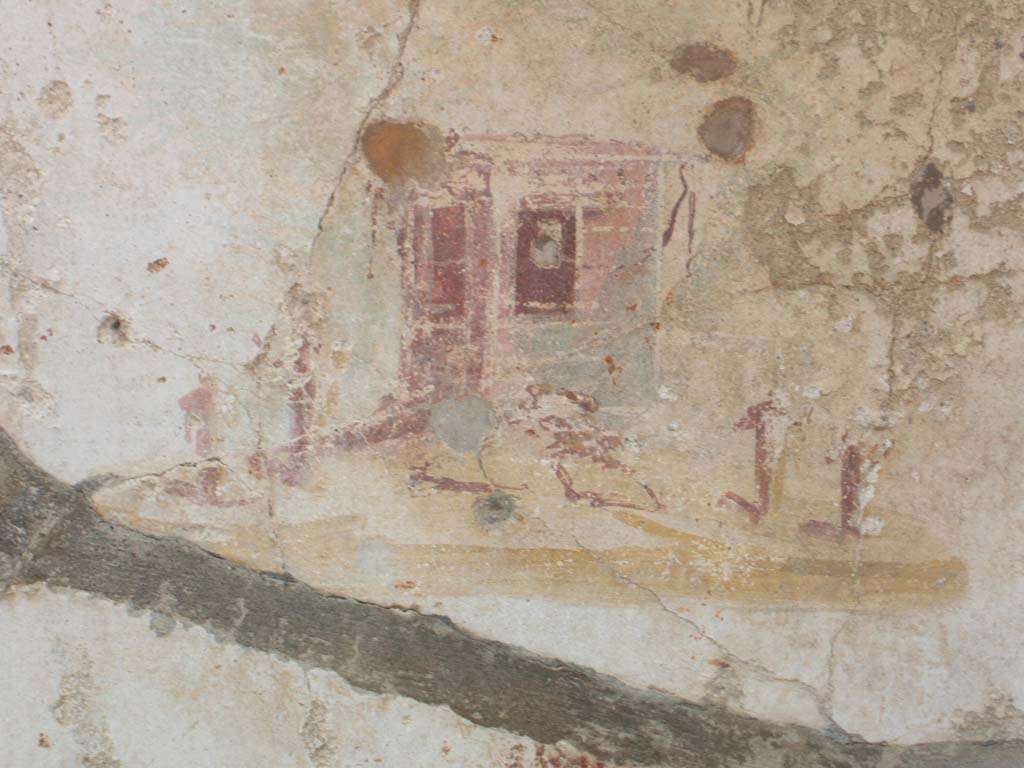
V.2.g Pompeii. May 2005. Room ‘e’, west wall with remains of painted central panel with painted rural shrine.
This west wall was also painted in a similar pattern to the north wall.
The pink zoccolo was scattered with red and white, with a central white panel containing the painting of the sacred landscape.
On either side were red side panels, all separated by narrow black bands (compartments).
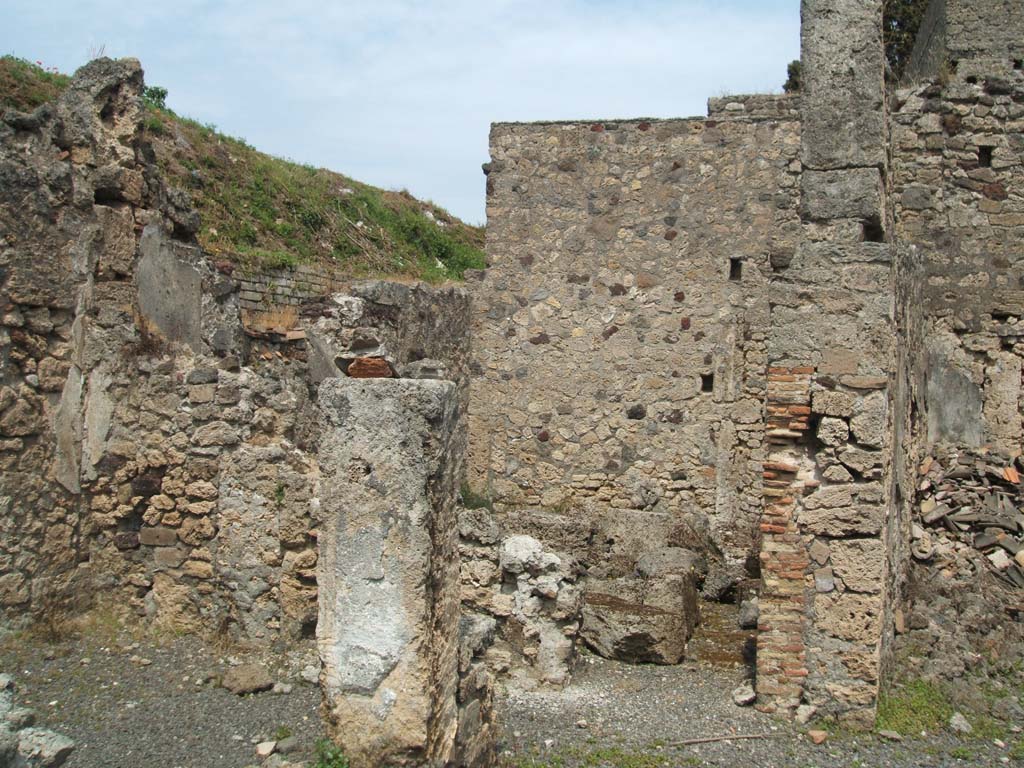
V.2.g Pompeii. May 2005. Looking across western doorway of room ‘c’ including pillar in the middle of the two doorways, on left.
The doorway to room ‘d’ in the north-east corner of atrium, can be seen in the centre.
Part of the doorway to room ‘g’ can be seen on the right.
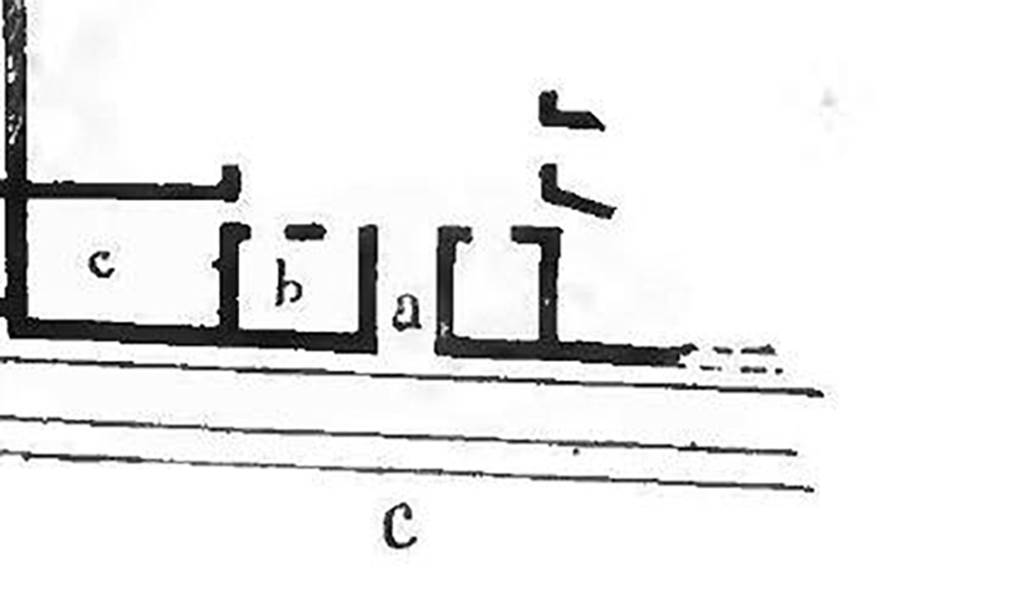
V.2.g Pompeii.
Plan of
rooms on north side of atrium, described as “a” “b” and “c” from Notizie degli
Scavi, 1910, p. 315.
(These
letters correspond to our rooms labelled “a” the entrance corridor, “c”, with
two entrances separated by pillar, and “d” in the north-east corner).
C. Excavation of the second
house to the west of that of the Nozze di Argento
A portion of this
house on its north side also remained to be excavated, namely the façade, the
entrance fauces “a”, and the two rooms “b” and “c” on the east side. See
Notizie degli Scavi, 1910, p.330-331.
(Note 1: for the
description of the preceding part already excavated, see Bollett. Ist.
archeol. germ., VIII, 1893, p.9 etc., tav.1, C:
Notizie degli
Scavi, 1893, p. 419 and
following, and plan on p.418, I.)
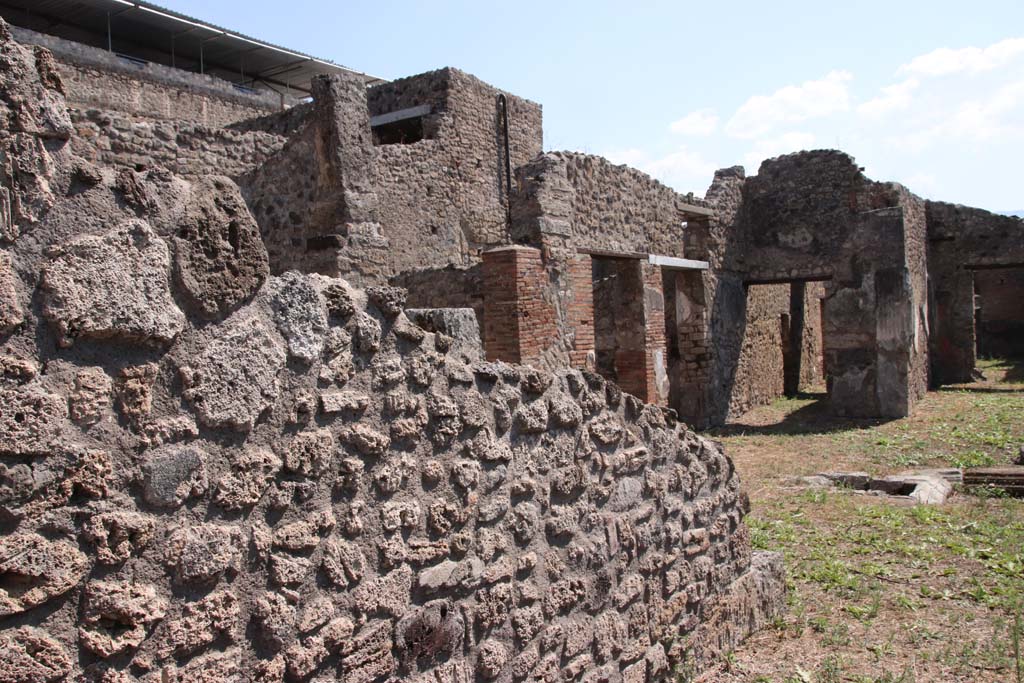
V.2.g Pompeii. September 2021. Looking south towards east
side of atrium with doorway to corridor (l). Photo courtesy of Klaus Heese.
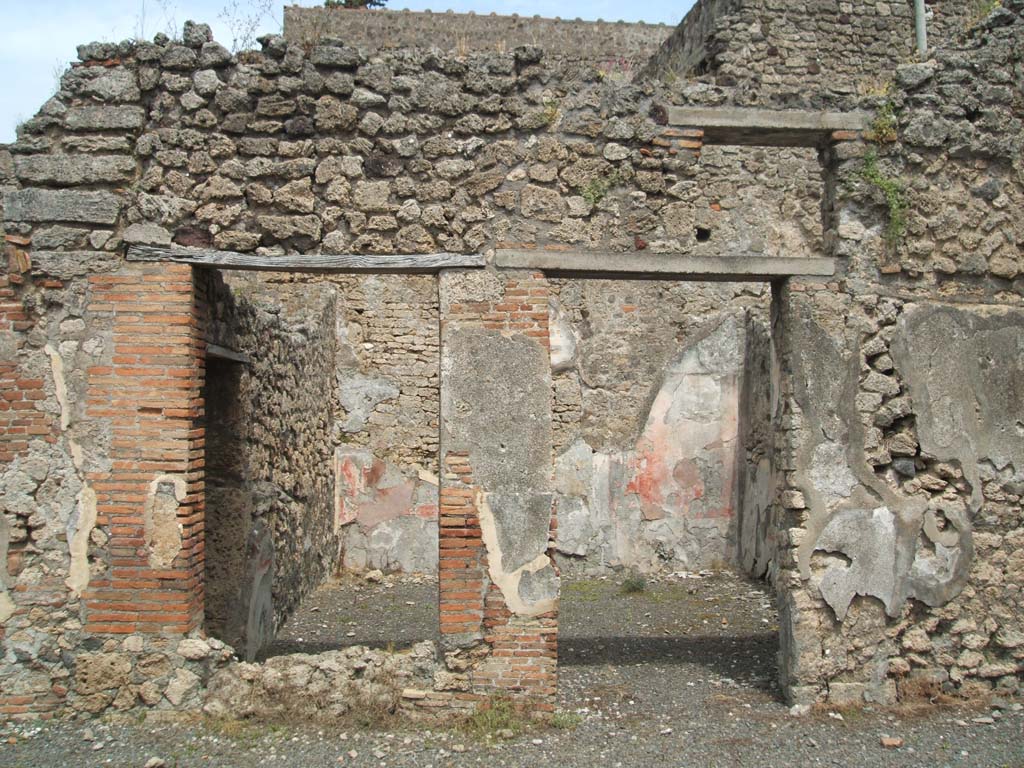
V.2.g Pompeii. May 2005. Room ‘k’ on the east of the atrium, with remains of painted plaster.
According to NdS, this room which had a window onto the atrium, was decorated with opus signinum flooring.
The walls were divided into red and white panels with a white frieze, and black dado.
In the central white panel of each wall was a painting.
When excavated, only the one on the east wall remained, and the lower edge of the one on the south wall.
According to Sogliano, from what he could see and described from the painting on the south wall, he thought it had probably been a representation of Perseus freeing Andromeda.
In each of the panels was a flying figure, painted on a red background.
Also seen on the south wall on the red plaster was a graffito of the following numerals:
XXIIIII
XXIIIII
XXXI
See Notizie degli Scavi di Antichità, 1896,
(p.420)
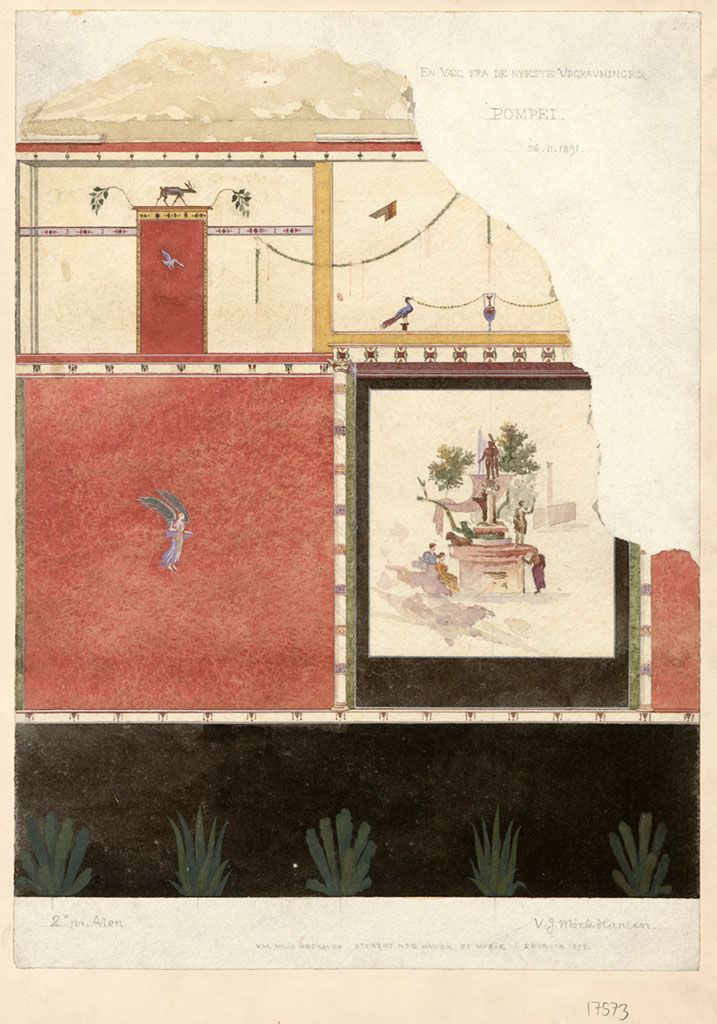
V.2.g Pompeii. 26th November 1891.
Watercolour copy of painting of a sacred landscape, from the east wall of room ‘k’, on the east side of the atrium.
Painting by Volmer Johannes Mørk-Hansen.
At the top is a note “A wall from the latest excavations. Pompeii. 26.11.1891”
At the bottom is a note “Was recently excavated. Crashed during a storm in February 1892” and the signature V. J. Mørk-Hansen.
Now in Danmarks Kunstbibliotek, Copenhagen. Inventory number 17573.
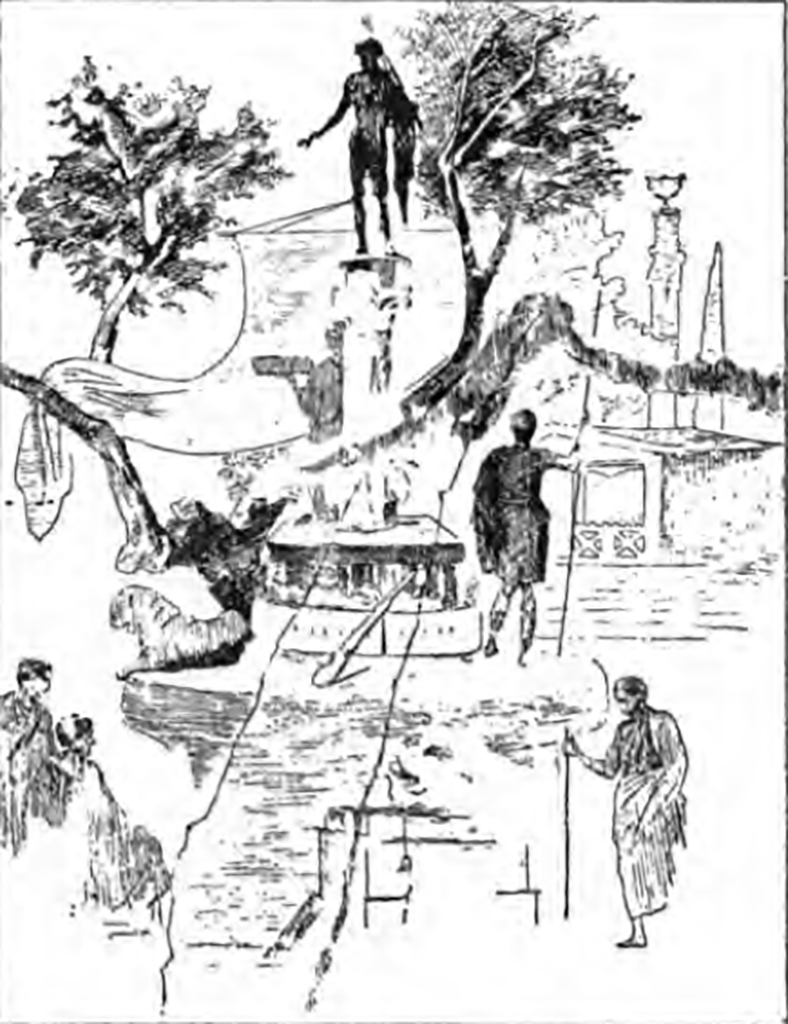
V.2.g Pompeii. About 1892. Drawing of painting of a sacred landscape, from the east wall of room ‘k’, on the east side of the atrium.
In the painting (height 1.22m and 1.10m wide) was a pillar with a bronze statue of Hercules with lion skin and club.
A bronze statue of a figure, possibly an Amazon, stood in front of the column.
A brown skinned man in a robe with a long stick was on the right.
Two women were on the left and one, wearing a yellow robe, was seated.
In the background were sacred trees, an altar and a column with a vase.
See Mau, A., 1893. Mitteilungen des Kaiserlich Deutschen Archaeologischen Instituts, Roemische Abtheilung Volume VIII. (p. 10).
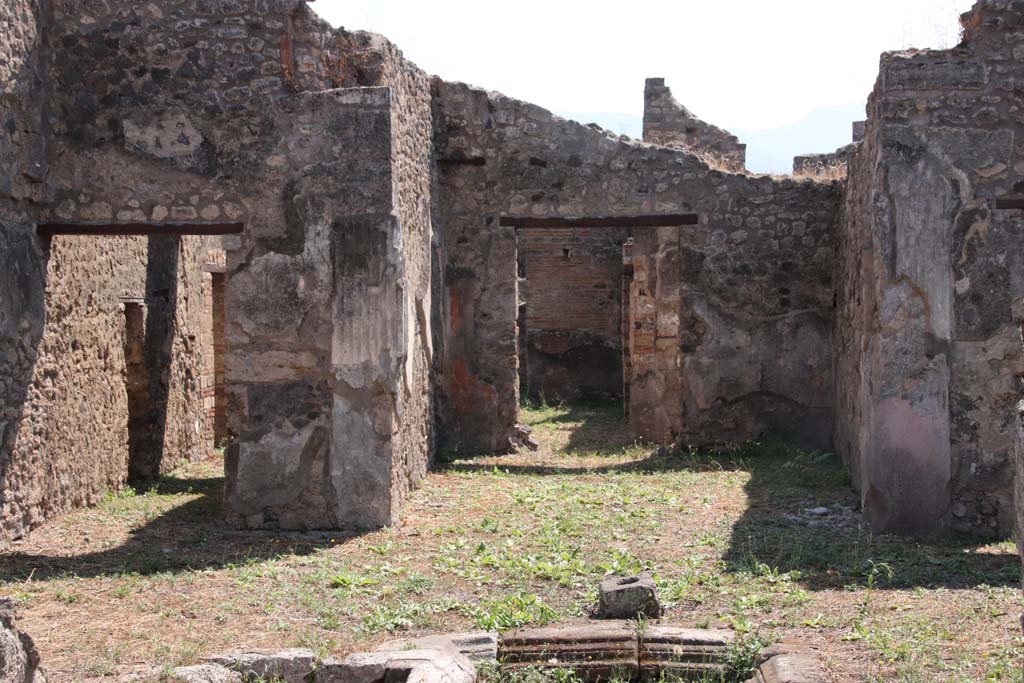
V.2.g Pompeii. September 2021.
Looking south across atrium towards doorway to corridor (l),
on left, and tablinum (m), centre right. Photo courtesy of Klaus Heese.
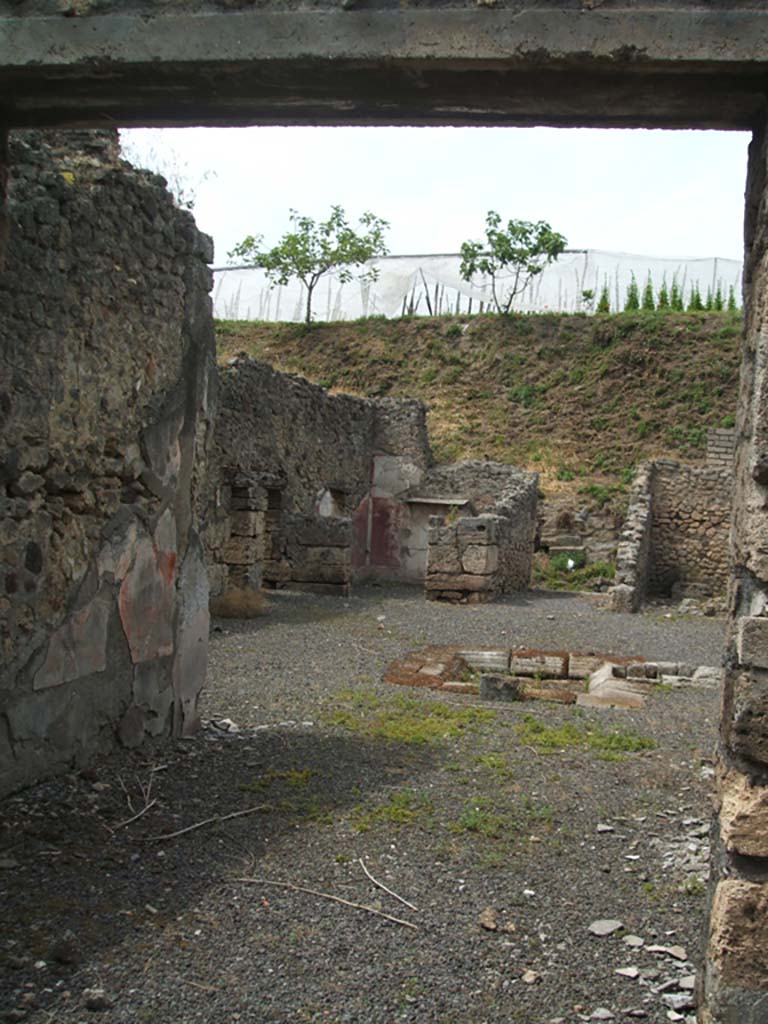
V.2.g Pompeii. May 2005. Looking north through room ‘m’ the tablinum, across atrium to entrance.
According to NdS, the tablinum was on the south side of the atrium between the cubiculum ‘h’ on the left, and the corridor ‘L’ on the right.
The tablinum had a window in its south wall which led onto the north portico of the garden.
It had opus signinum flooring, and walls decorated with red panels except for the central ones which were yellow.
In the middle of all of the panels were small rectangular squares with the usual circular crudely painted landscapes.
At the foot of the east wall was a recess for a bed, and a travertine one-legged support was found there.
Found on the red plaster of the dado of the west door-jamb, on the side pointing towards the entrance, (on the left of this photo), was the graffito:
CAESARIS
See Notizie degli Scavi di Antichità, 1896,
(p.420-21).
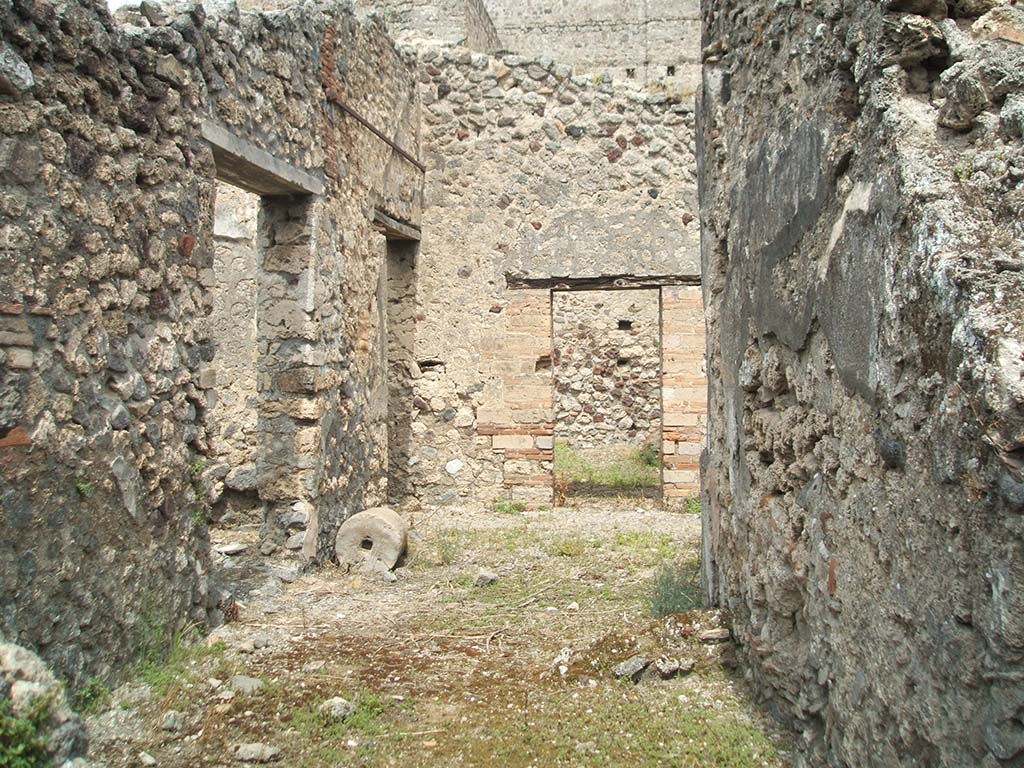
V.2.g Pompeii. May 2005.
Looking east through remains of site of doorway from room ‘o’, across room ‘p’ the portico, towards the doorway into room q, the triclinium.
The rear window/doorway of the tablinum is on the left, followed by the doorway to corridor ‘L’.
According to NdS, the portico was supported by pillars and columns.
Under the portico was the doorway to room ‘q’ the triclinium which when found was quite rustic.
In the south wall, the triclinium had a large window onto the garden, which originally had been a doorway.
The small room ‘o’ had a window overlooking a room in the adjacent house (V.2.f, or V.2.B according to 1896 NdS plan on p.418).
Leaning against the wall outside the doorway to room ‘o’ was a masonry seat.
Encased in the same west wall was a slab of tufa with a phallus in high relief, in the middle of a niche with small pediment, and all painted in red with a yellow cornice.
This was most likely around the corner, on the right of this photo.
See Notizie degli Scavi di Antichità, 1896, (p.421).
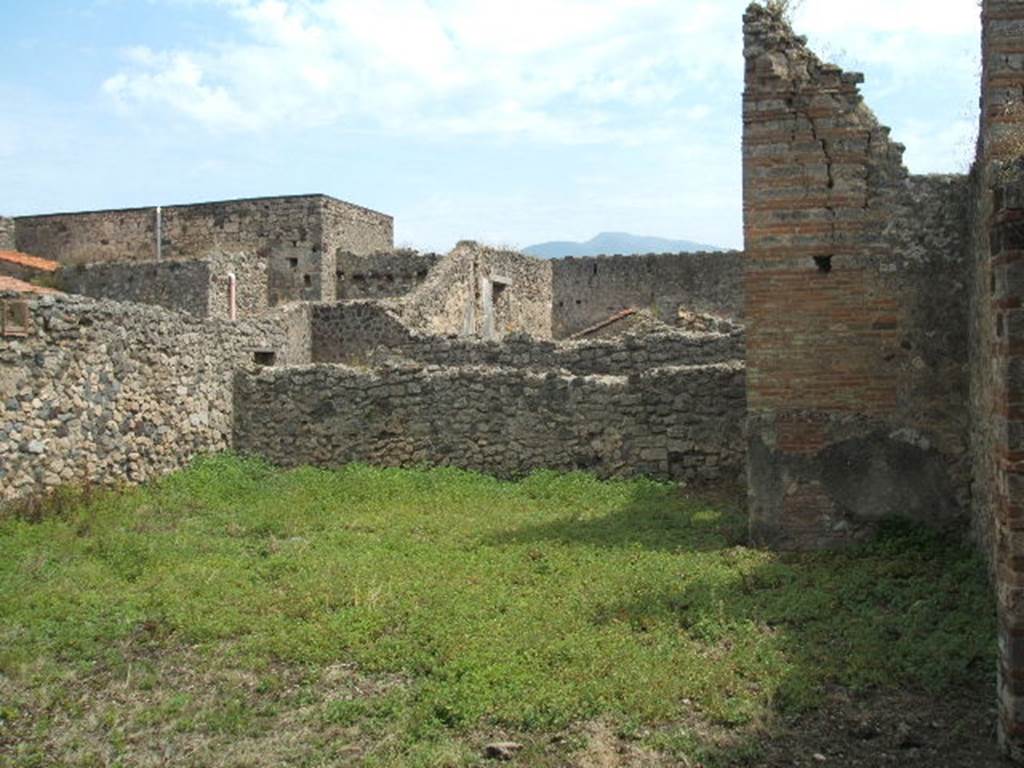
V.2.g Pompeii. Looking south across garden area.
According to Boyce, a slab with a phallus in relief could be found high on the east garden wall (2.50m above the ground).
This was surrounded by an aedicula façade, and was all painted red.
He said that another similar slab could be found against the west wall of the small space preceding the north portico.
Above a masonry bench and embedded in the west wall was a slab of tufa surrounded by an aedicula façade.
This would have been 1.30m above the ground. In the centre of the tufa slab was another phallus in relief.
See Boyce G. K., 1937. Corpus of the Lararia of Pompeii. Rome: MAAR 14. (p.36, no.105)
According to Jashemski, the garden had a wide portico on the north supported by two columns and two pillars.
This was reached by the passageway to the left of the tablinum.
There was a masonry biclinium in the portico.
See Jashemski, W. F., 1993. The Gardens of Pompeii, Volume II: Appendices. New York: Caratzas. (p.112).
According to
Soprano –
Ubicazione:
viridario. L. medius, m.310; l. imus, m.2.65.
Bibliog. Not.Scavi, 1896, p.421; Rom. Mitt, 1893, p.9.
Era un biclinio
con piani inclinati.
Il l. medius
era addossato al muro occidentale del viridario. Non era visibile veruna
traccia d’intonaco, ne vi sono resti della mensa.