II.2.1 Pompeii. Caupona of Astylus and Pardalus. Thermopolium.
Linked to II.2.2. Excavated 1916 and 1918. Bombed 19th September 1943.
(Originally when excavated, this was numbered as Reg. II, Insula 5, no.1).
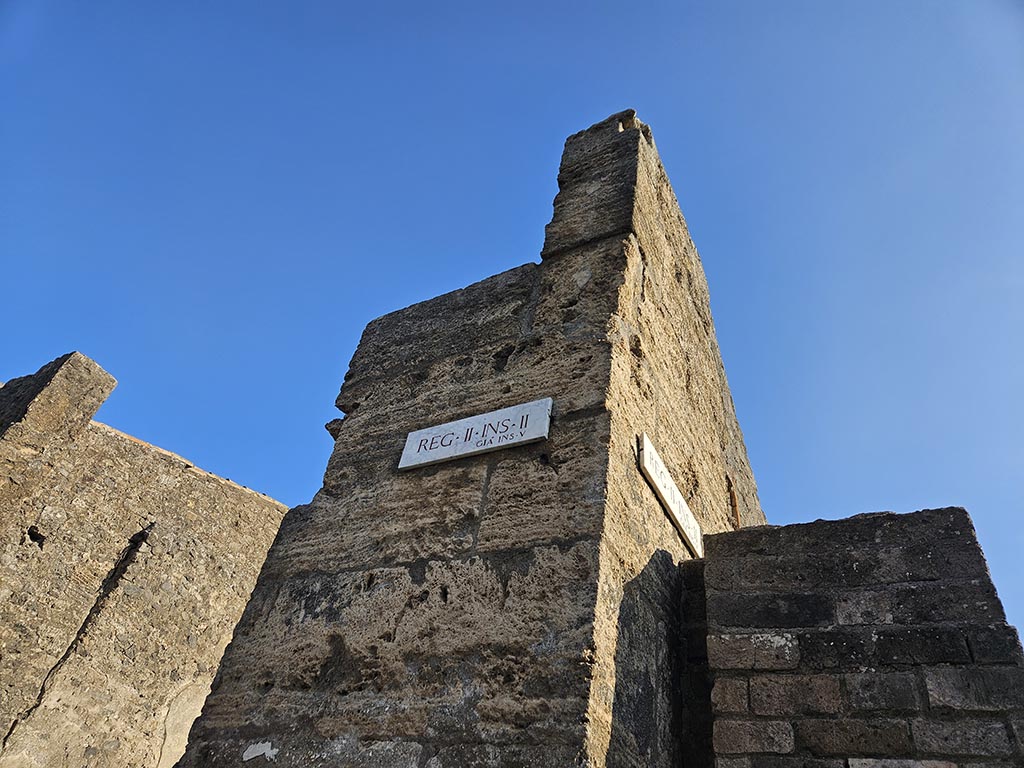
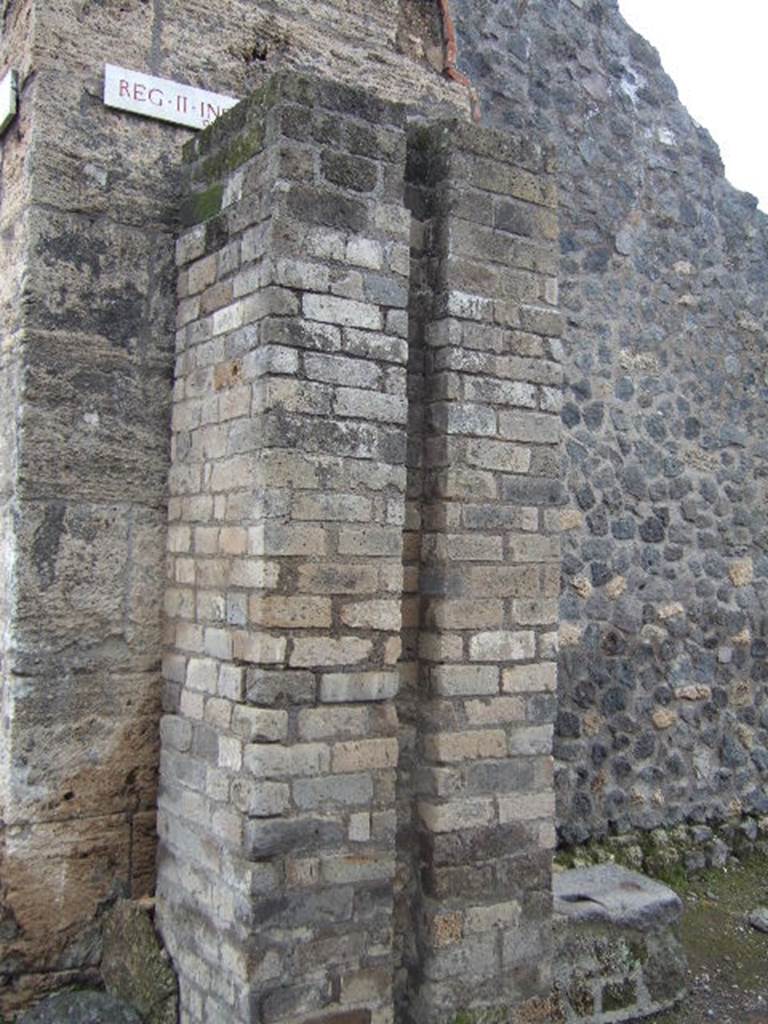
II.2.1 Pompeii. November 2024.
Insula identification plaque describing it originally as Reg. II, Insula V. Photo courtesy of Annette Haug.
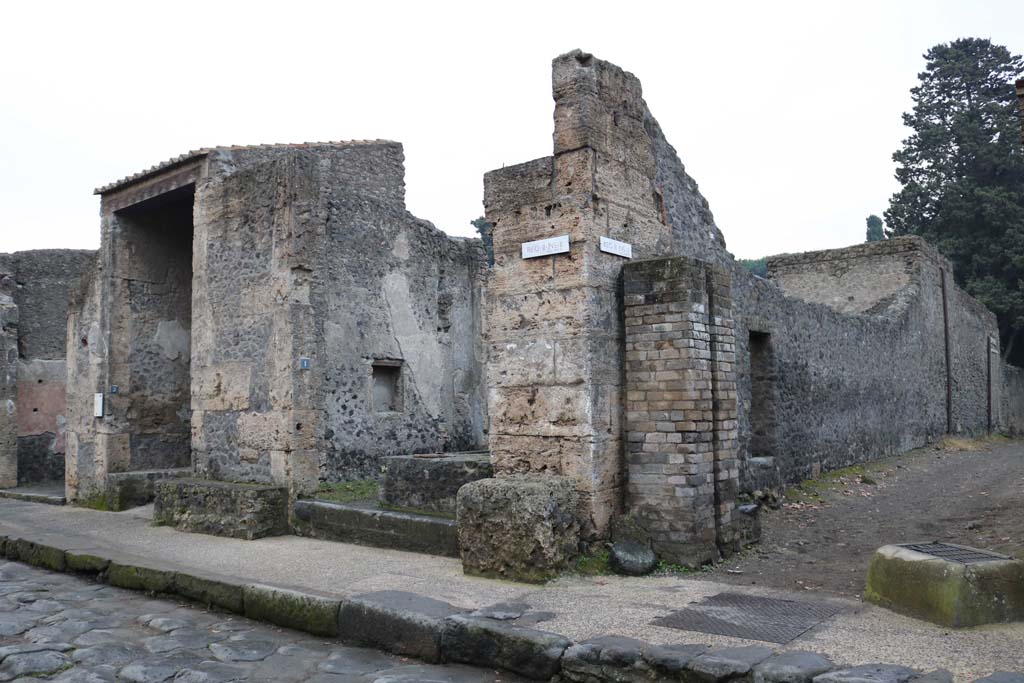
II.2.1 Pompeii. December 2018.
Entrance doorway, centre left, on south side
of Via dell’Abbondanza, with Vicolo di Octavius Quarto, on right. Photo
courtesy of Aude Durand.
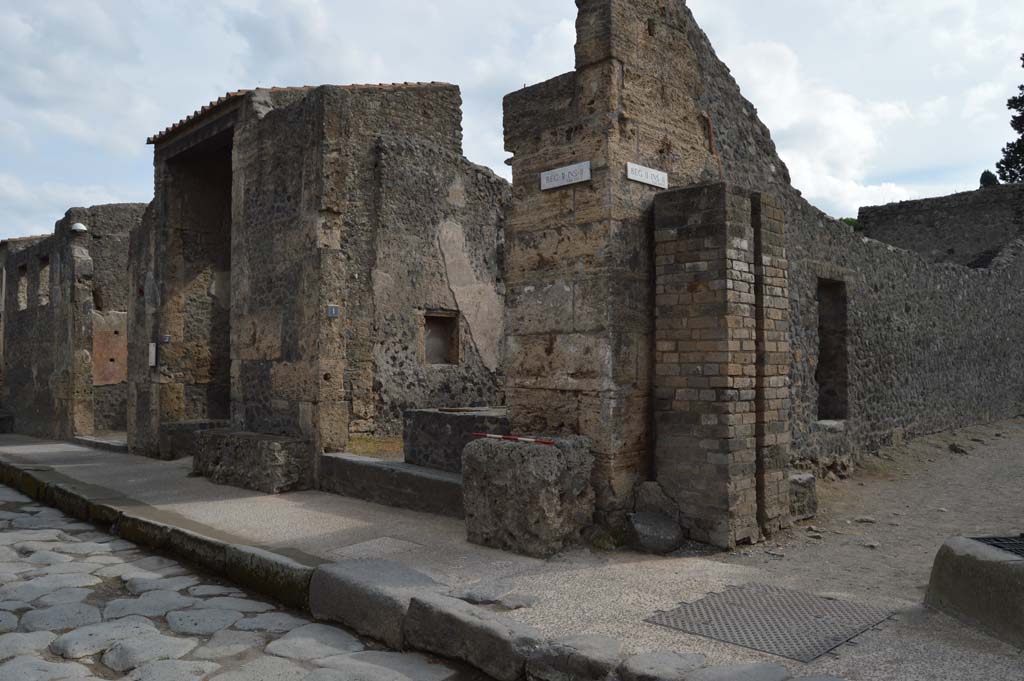
II.2.1
Pompeii. October 2018. Looking south-east towards entrance doorway, in centre.
Foto Taylor Lauritsen, ERC Grant 681269 DÉCOR.
![II.2.1 Pompeii. December 2006. Entrance doorway. According to Della Corte, originally it had been possible to obtain a partial plaster-cast of the door. The managers of the bar, in which many amphorae were found, were Astylus and Pardalus. He made this assumption from the electoral recommendation and a greeting traced to the left of the entrance:
Astylus cup(it) [CIL IV 7525]
Pardalus …. Gramulae (?) (salutem?) [CIL IV 7528]
See Della Corte, M., 1965. Case ed Abitanti di Pompei. Napoli: Fausto Fiorentino. (p.369)
Also found on the left of the entrance, between II.2.2 and II.2.1 was an electoral recommendation, which can be seen at II.2.3
According to Epigraphik-Datenbank Clauss/Slaby (See www.manfredclauss.de), these read as –
Helvium Sabinum
aed(ilem) o(ro) v(os) f(aciatis) Astylus cup[it] [CIL IV 7525]
Parda[lus] Gramulae [CIL IV 7528]
According to Garcia y Garcia, due to the bombing of 19th September 1943, the south and west wall of the caupona were destroyed.
The plaster-cast of the door was lost, and the sales-counter was badly damaged. See Garcia y Garcia, L., 2006. Danni di guerra a Pompei. Rome: L’Erma di Bretschneider. (p.45, incl. fig 40 pre 1943 showing plaster-cast of door, and fig 41)](2%2002%2001_files/image006.jpg)
II.2.1 Pompeii. December 2006. Entrance doorway.
According to Della Corte, originally it had been possible to obtain a partial plaster cast of the door.
The managers of the bar, in which many amphorae were found, were Astylus and Pardalus.
He made this assumption from the electoral recommendation and a greeting traced to the left of the entrance:
Astylus
cup(it) [CIL IV 7525]
Pardalus ….
Gramulae (?) (salutem?)
[CIL IV 7528]
See Della Corte, M., 1965. Case ed Abitanti di Pompei. Napoli: Fausto Fiorentino. (p.369)
Also found on the left of the entrance, between II.2.2 and II.2.1 was an electoral recommendation, which can be seen at II.2.3.
According to Epigraphik-Datenbank Clauss/Slaby (See www.manfredclauss.de), these read as –
Helvium Sabinum
aed(ilem) o(ro)
v(os) f(aciatis) Astylus
cup[it] [CIL IV 7525]
Parda[lus]
Gramulae [CIL IV 7528]
According to Garcia y Garcia, due to the bombing of 19th September 1943, the south and west wall of the caupona were destroyed.
The plaster cast of the door was lost, and the sales-counter was badly damaged.
See Garcia y Garcia, L., 2006. Danni di guerra a Pompei. Rome: L’Erma di Bretschneider. (p.45, incl. fig 40 pre-1943 showing plaster cast of door, and fig 41)
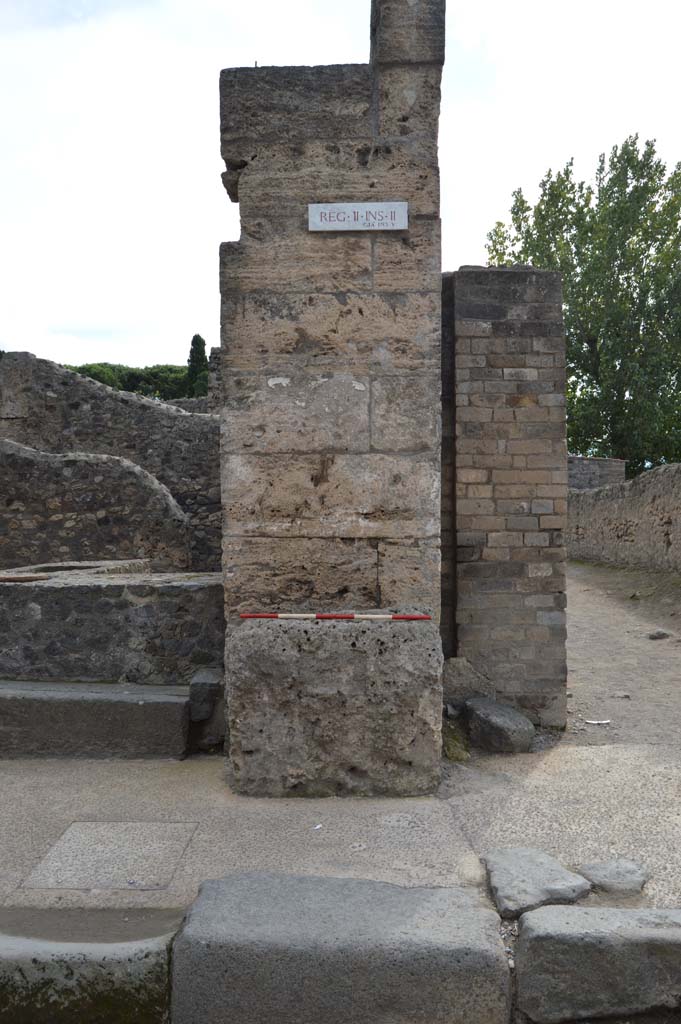
II.2.1 Pompeii. October 2018.
Looking towards west side of
entrance doorway, with a street altar in front of the pilaster.
Foto Taylor Lauritsen, ERC Grant 681269 DÉCOR.
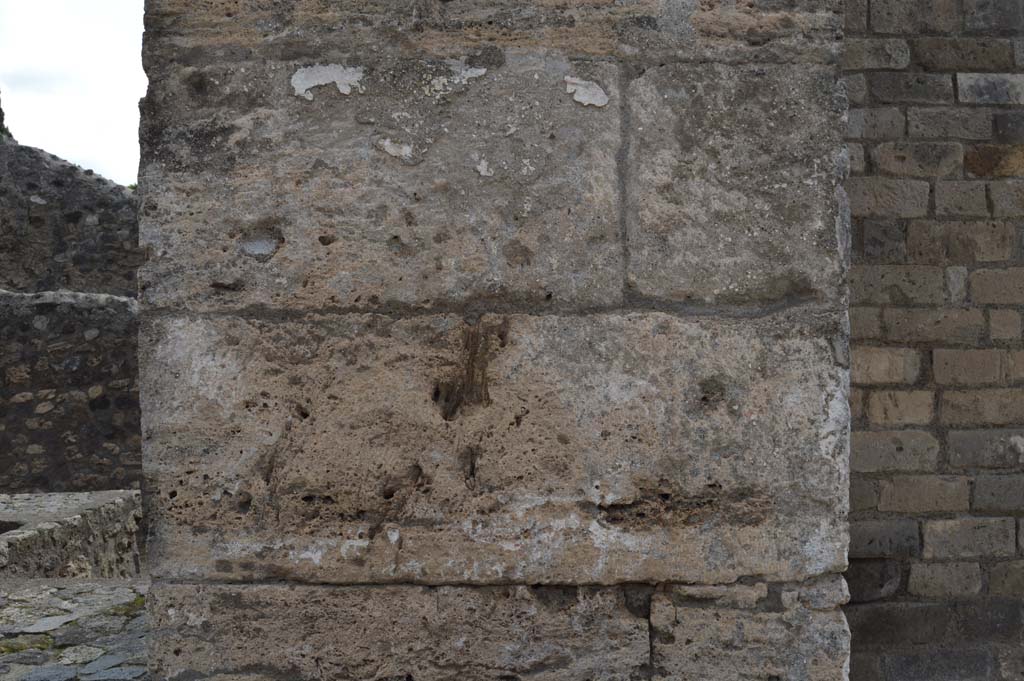
II.2.1 Pompeii. October 2018. Detail from
pilaster on west side of entrance doorway, site of an original painting with
five figures.
Foto Taylor Lauritsen, ERC Grant 681269 DÉCOR.
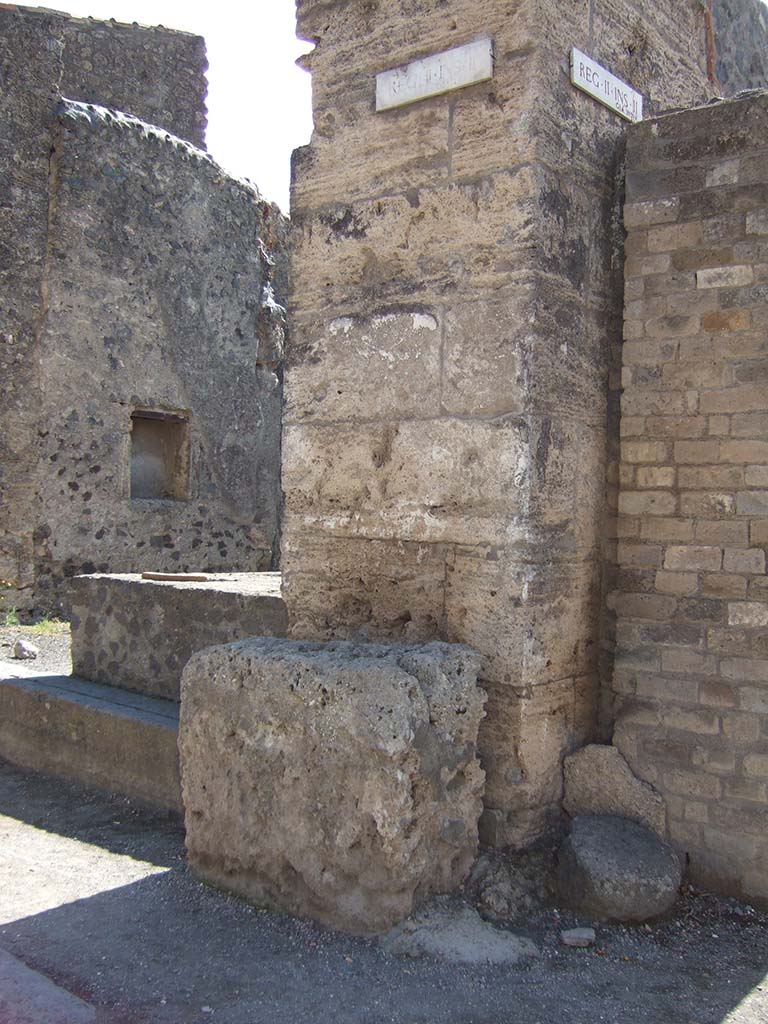
Street altar outside II.2.1 on Via dell’Abbondanza. September 2005.
Above this, the remains of an older painting were visible through a newer lime layer.
This showed five figures, probably the vicomagistri and a tibicen, and a tablet with illegible names.
See Fröhlich, T., 1991. Lararien und Fassadenbilder in den Vesuvstädten. Mainz: von Zabern. (F17, p. 312).
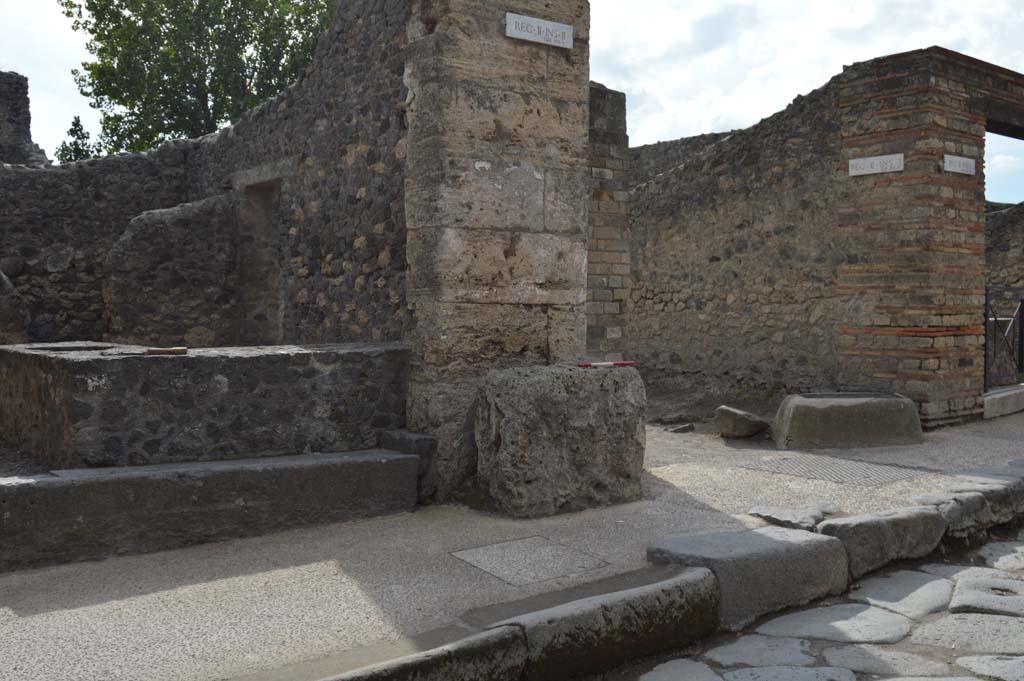
II.2.1 Pompeii. October 2018. Looking
south-west towards entrance doorway and street altar.
Foto Taylor Lauritsen, ERC Grant 681269 DÉCOR.
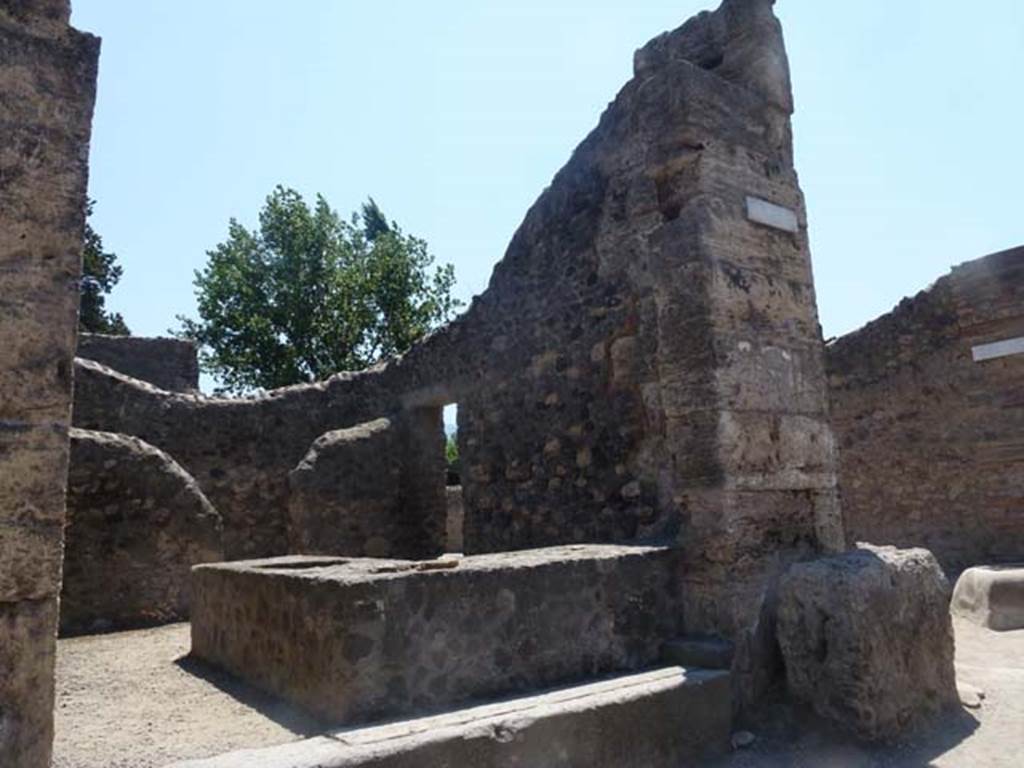
II.2.1 Pompeii. June 2012. Entrance doorway, looking towards west wall. Photo courtesy of Michael Binns.
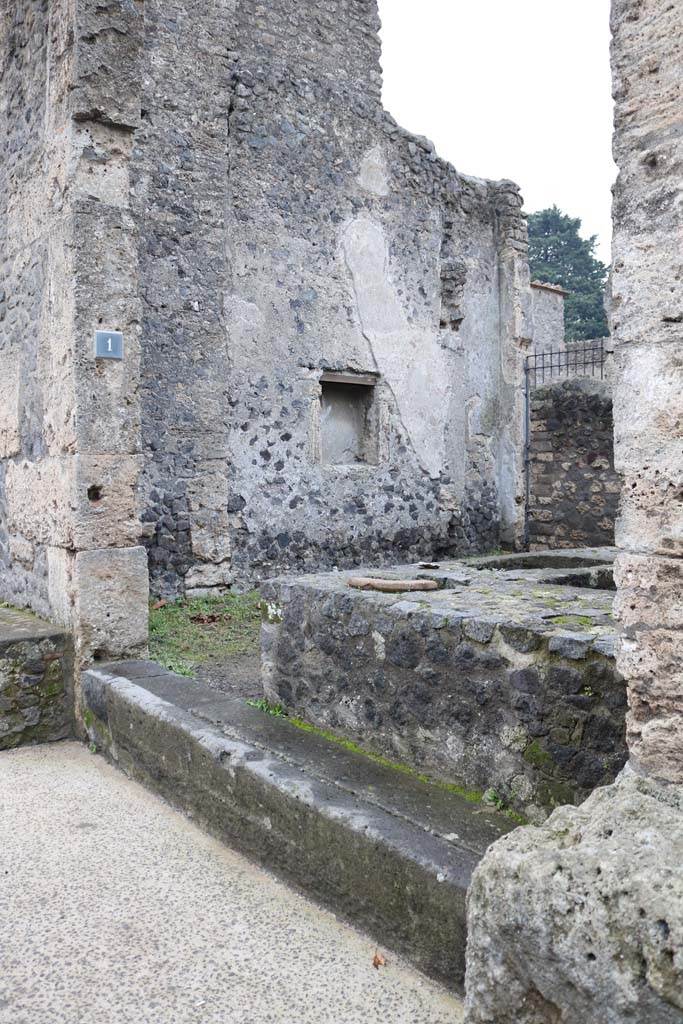
II.2.1 Pompeii. December 2018.
Entrance doorway, looking towards east wall. Photo courtesy of Aude Durand.
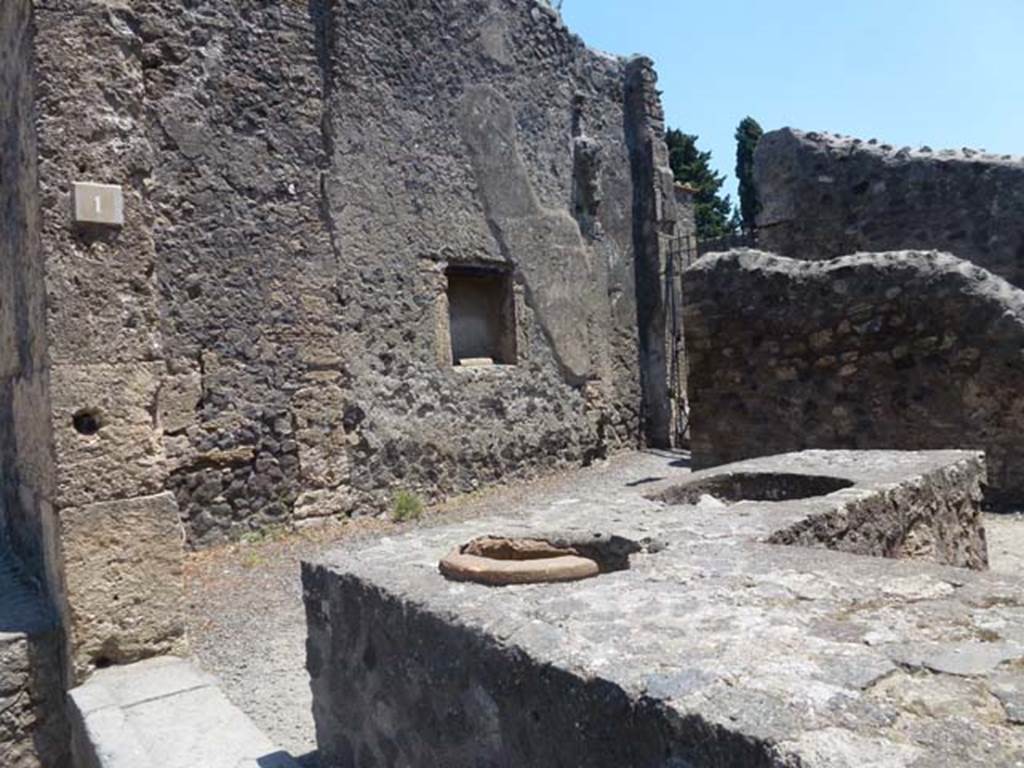
II.2.1 Pompeii. June 2012. Looking towards east wall from entrance doorway. Photo courtesy of Michael Binns.
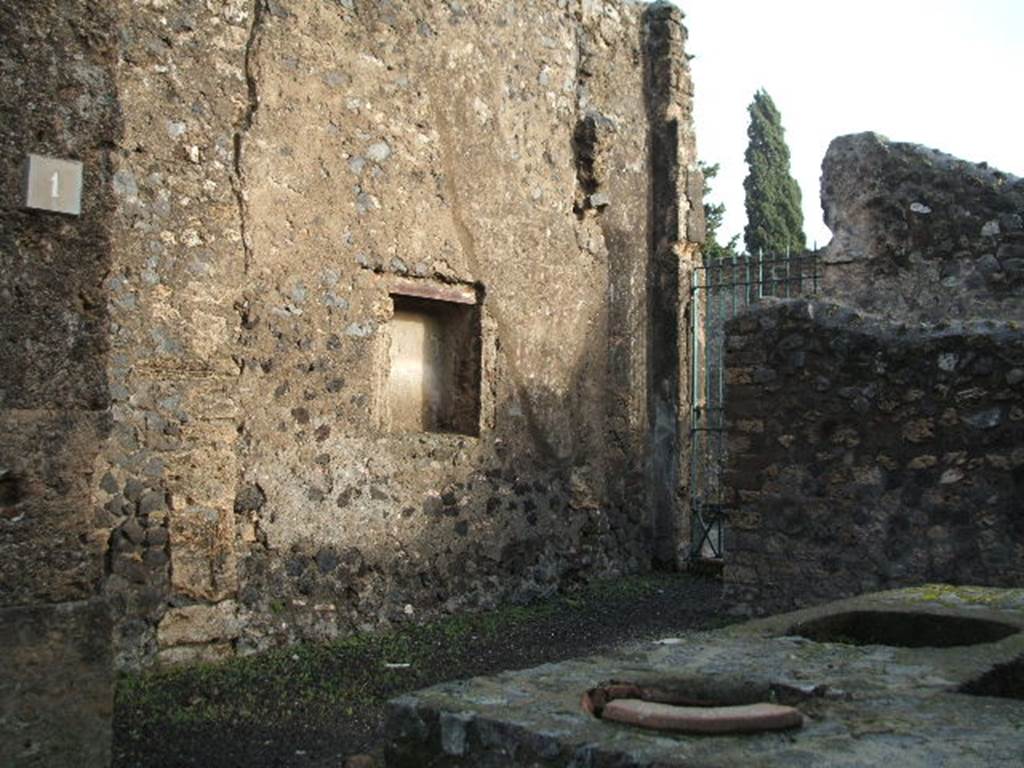
II.2.1 Pompeii. December 2004. East wall.
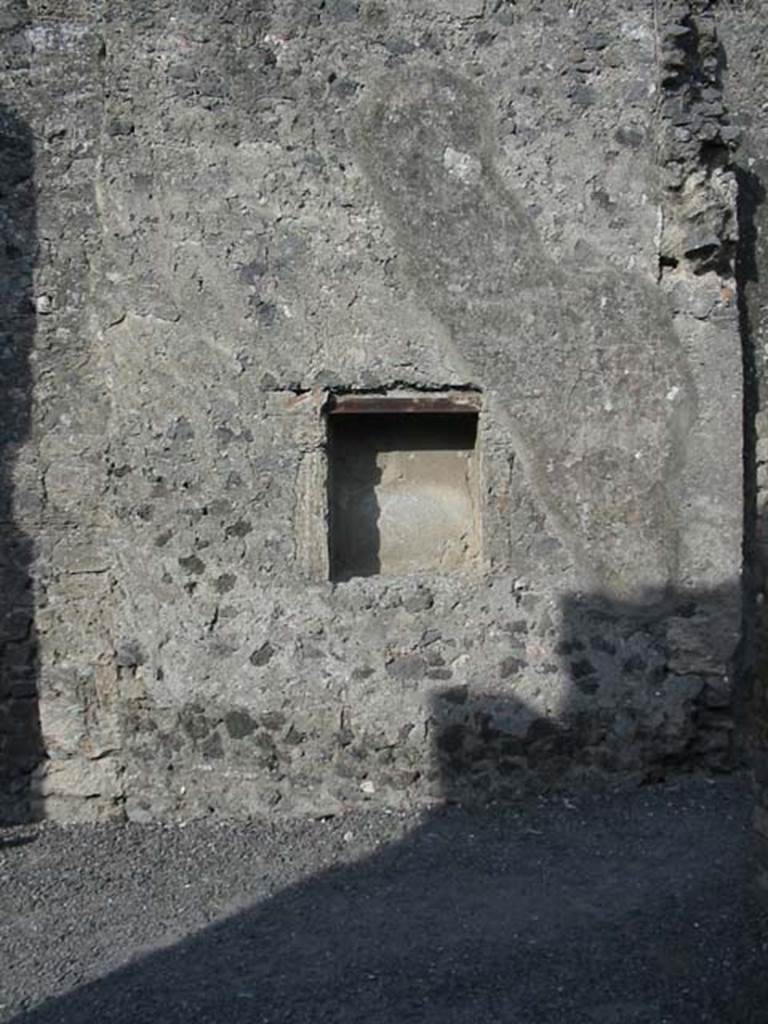
II.2.1 Pompeii. May 2003. Looking towards east wall with niche. Photo courtesy of Nicolas Monteix.
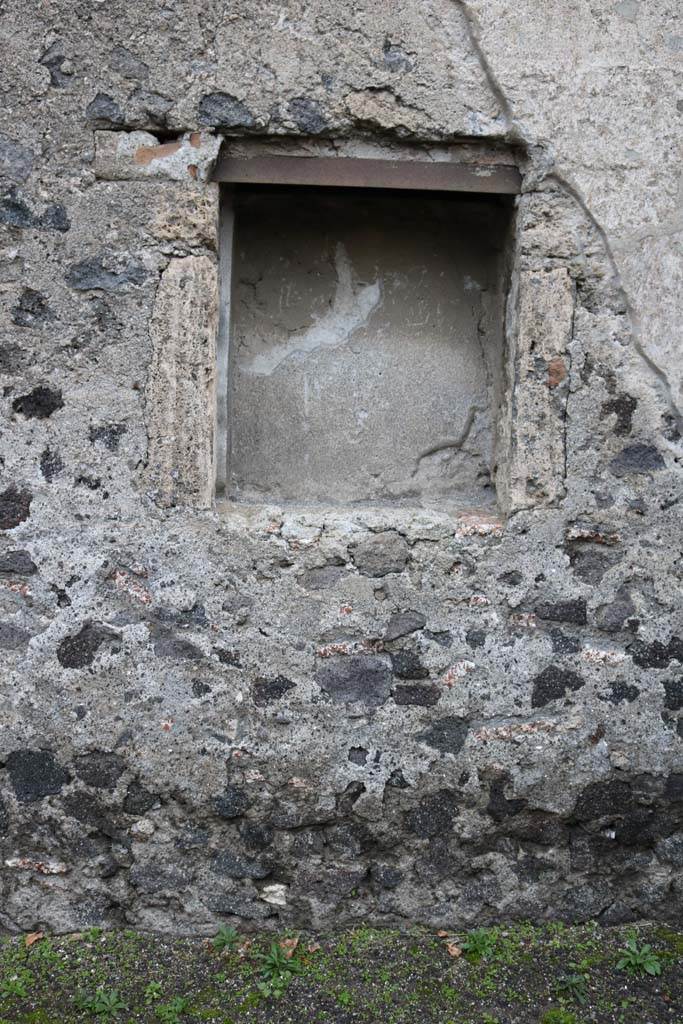
II.2.1 Pompeii. December 2018. Niche set in east wall. Photo courtesy of Aude Durand.
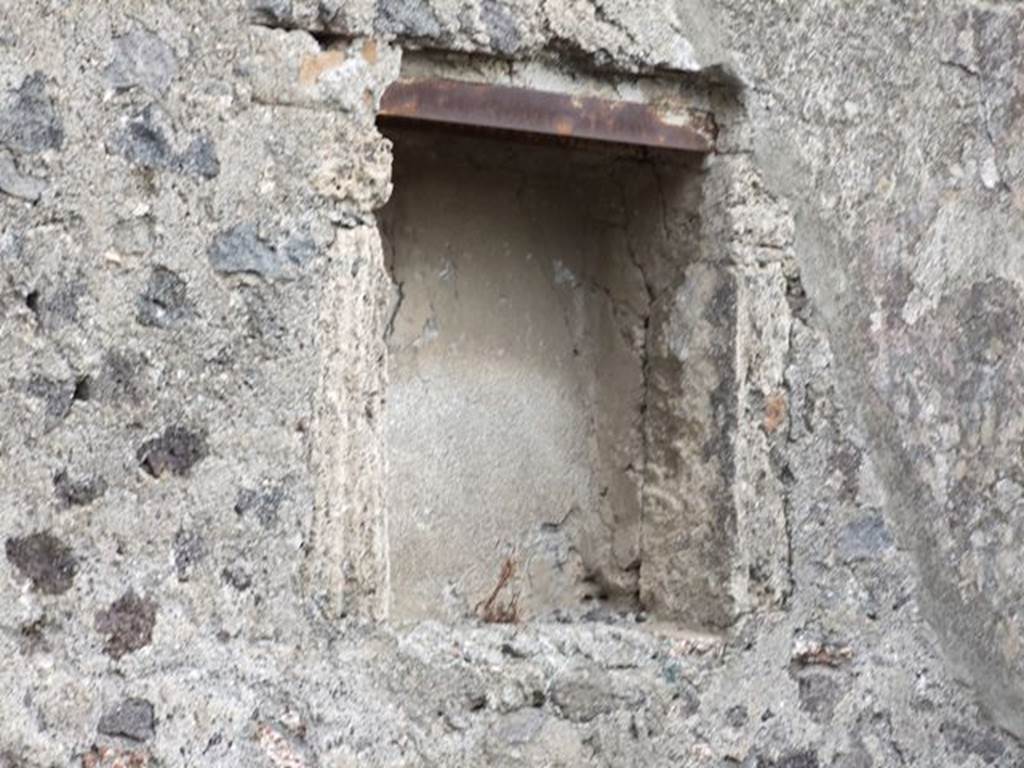
II.2.1 Pompeii. December 2006. Niche on east wall.
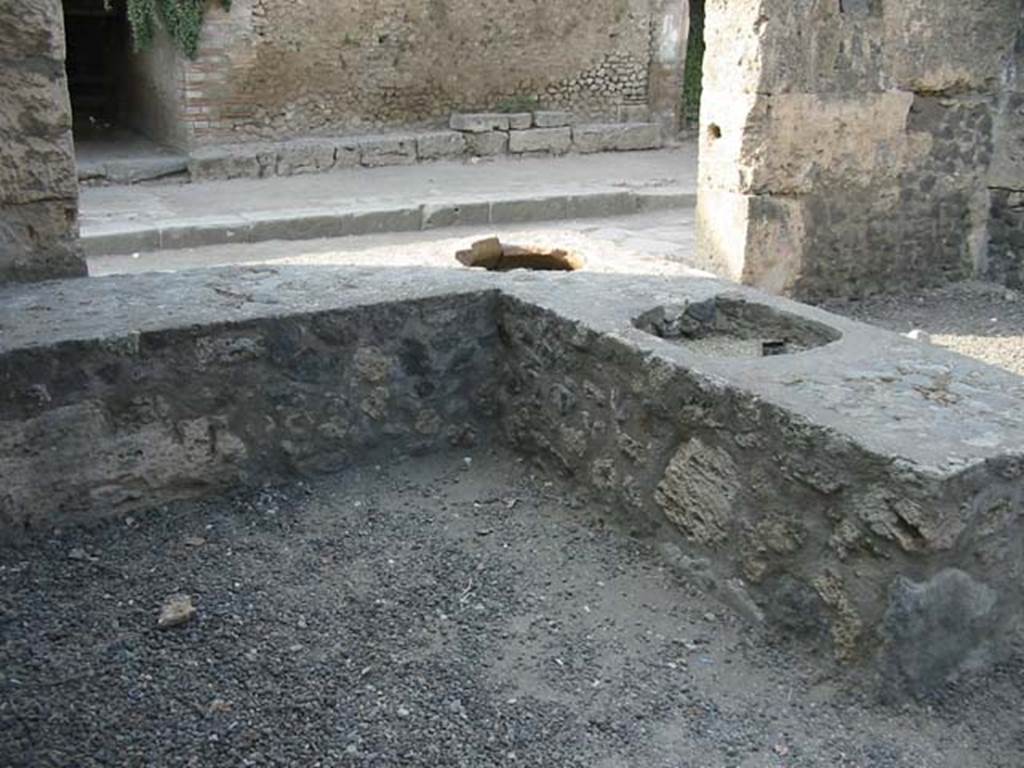
II.2.1 Pompeii. May 2003.
Looking north across counter towards entrance doorway onto Via dell’Abbondanza. Photo courtesy of Nicolas Monteix.
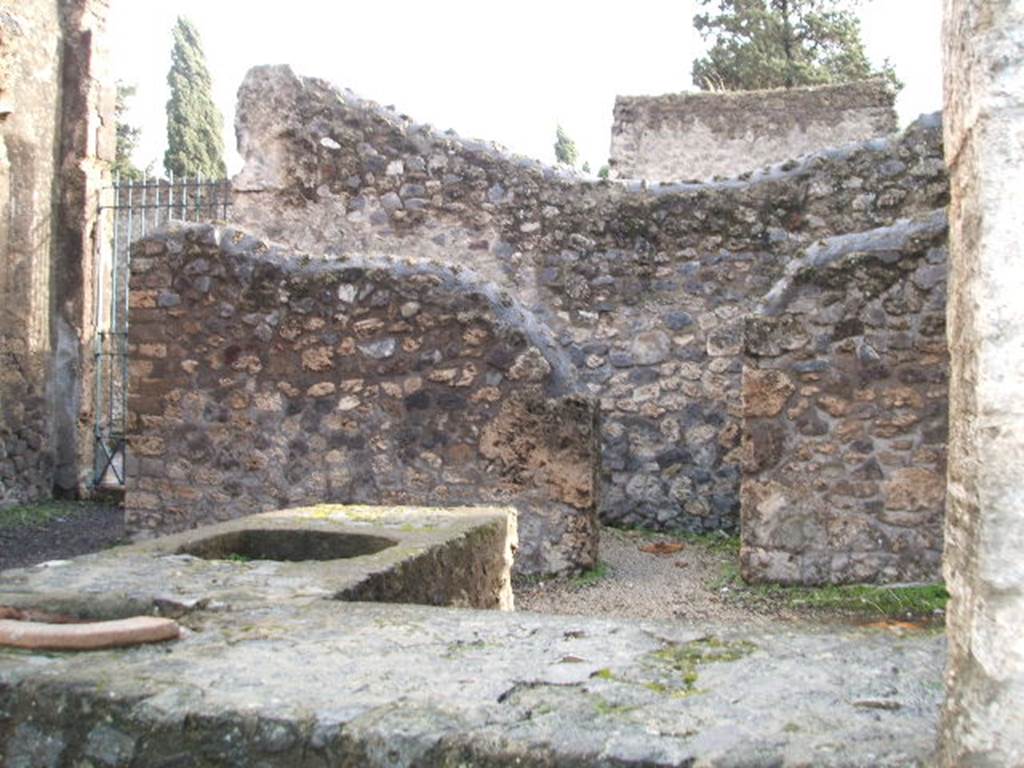
II.2.1 Pompeii. December 2004. Looking across counter to south wall and rear room.
According to Boyce –
on the south wall was an arched niche (h.0.35, w.0.46, d.0.30, h. above floor 1.40) coated with red stucco, the same as covered the walls of the room.
The niche was outlined in yellow.
See Boyce G. K., 1937. Corpus of the Lararia of Pompeii. Rome: MAAR 14. (p.30, no. 62, location given as II.v.1)
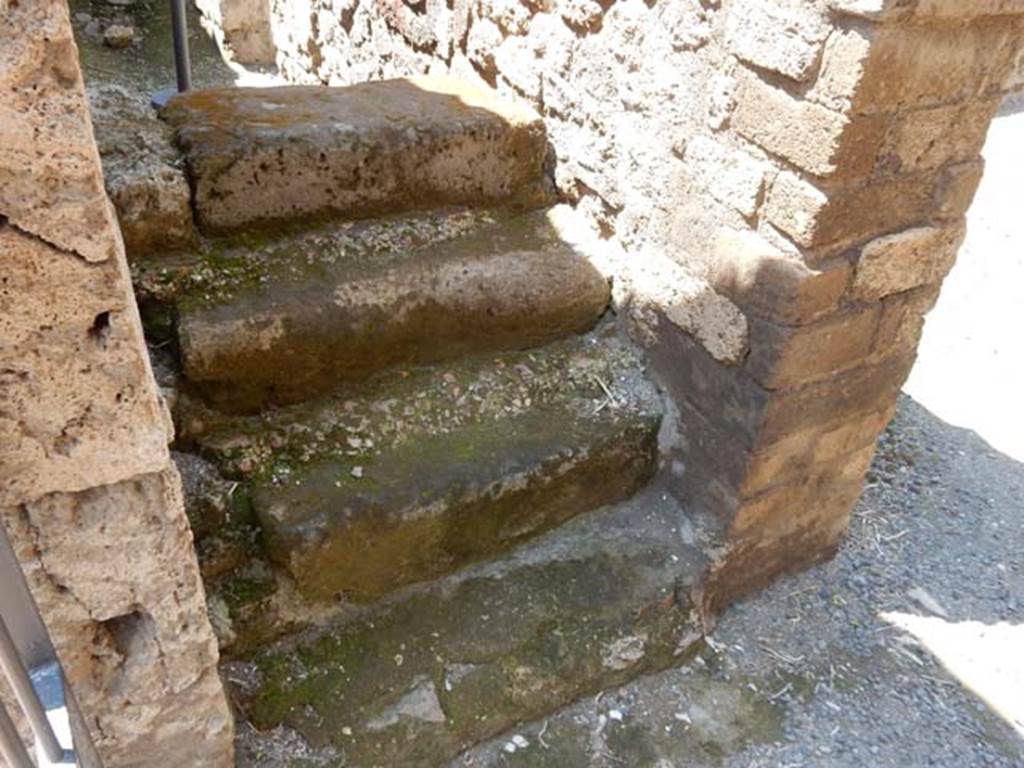
II.2.1 Pompeii. May 2016.
Looking towards stairs from the doorway on the left of the picture, which would have led into the atrium of II.2.2. Photo courtesy of Buzz Ferebee.
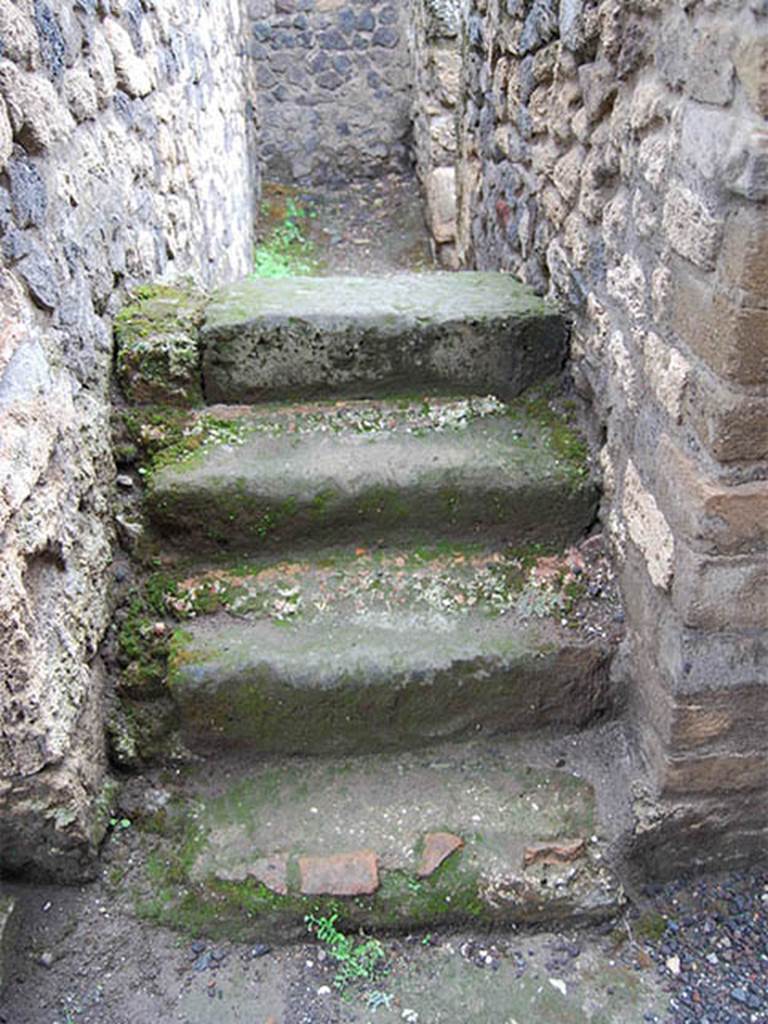
II.2.1 Pompeii. May 2014. Looking west at stairs at rear of bar room, in south-east corner.
The doorway on the left of the picture would have led into the atrium of II.2.2. Photo courtesy of Paula Lock.
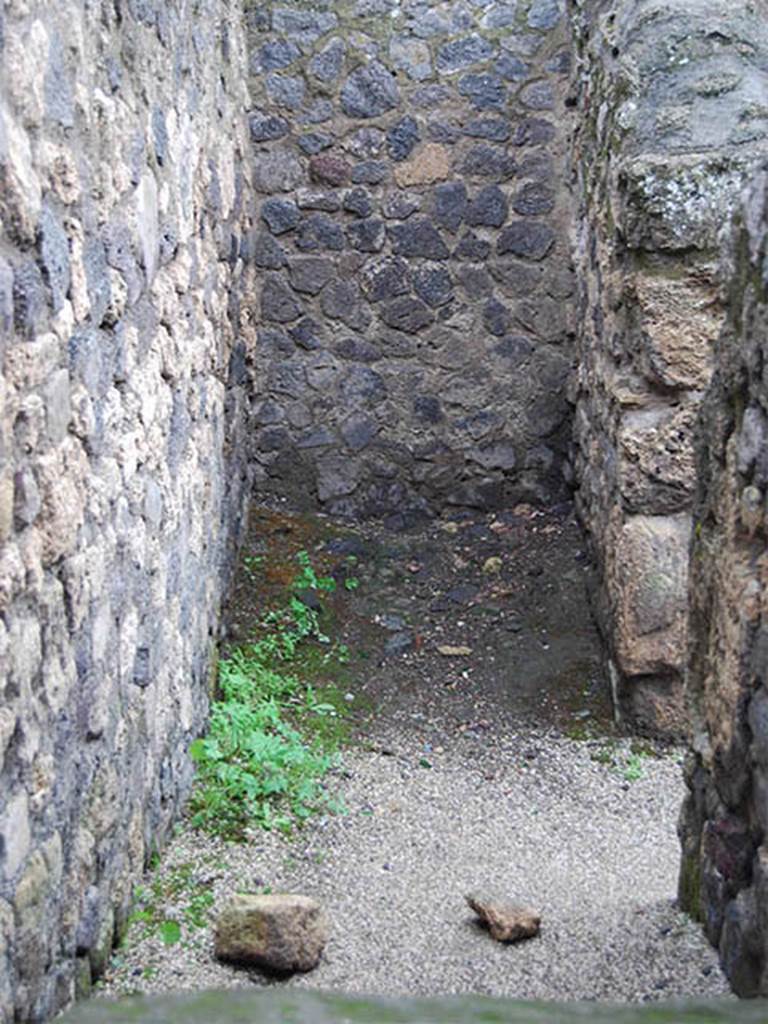
II.2.1 Pompeii. May 2014.
Looking west from stairs into small room under the stairs at rear of shop, in the south-west corner.
Photo courtesy of Paula Lock.
According to NdS, some amphorae were found in this under stairs area, four of which had inscriptions –
![Inscription, written in black.
Della Corte suggests comparison with C(aio) Muttio C(ai) l(iberto) / Capitoni / Muttia C(ai) l(iberta) Salvia / viro suo [CIL X 1073]](2%2002%2001_files/image036.jpg)
Inscription, written in black.
Della Corte suggests comparison with C(aio) Muttio C(ai)
l(iberto) / Capitoni / Muttia C(ai) l(iberta) Salvia / viro suo [CIL X 1073]
![Inscription, written in black.
Della Corte suggests comparison with Si[3] / A[3] / L(uci) C() F() [CIL IV 6052]](2%2002%2001_files/image038.jpg)
Inscription, written in black.
Della Corte suggests comparison with Si[3] / A[3] / L(uci) C() F() [CIL IV 6052]
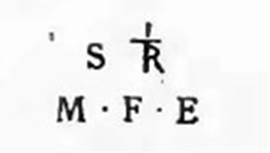
Inscription, written in black.
Della Corte suggests M. F(abi) E(upori) by comparison with CIL IV 117, CIL IV 120, CIL IV 5535.
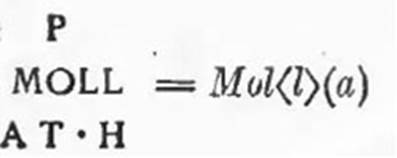
Inscription, written in black.
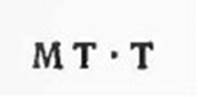
And written in red.
See Della Corte
in Notizie degli Scavi, 1919, (p. 233).
See Epigraphik-Datenbank Clauss/Slaby (www.manfredclauss.de).
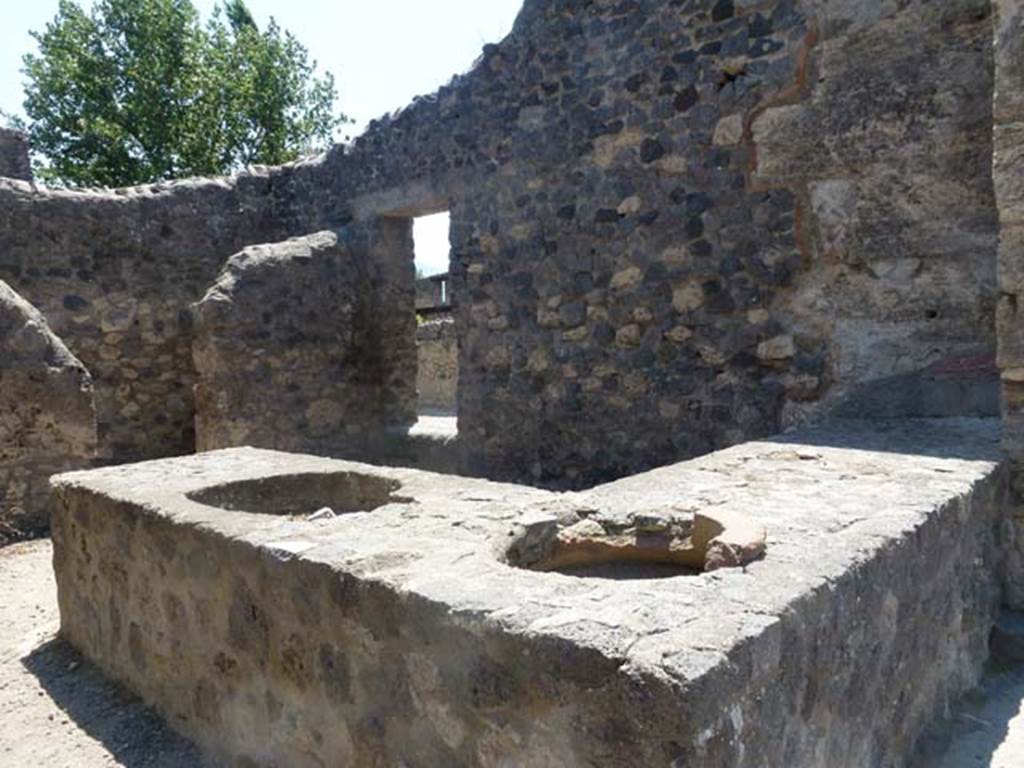
II.2.1 Pompeii. June 2012.
Looking towards west wall with side doorway at II.1.6, leading to Vicolo di Octavius Quarto. Photo courtesy of Michael Binns.
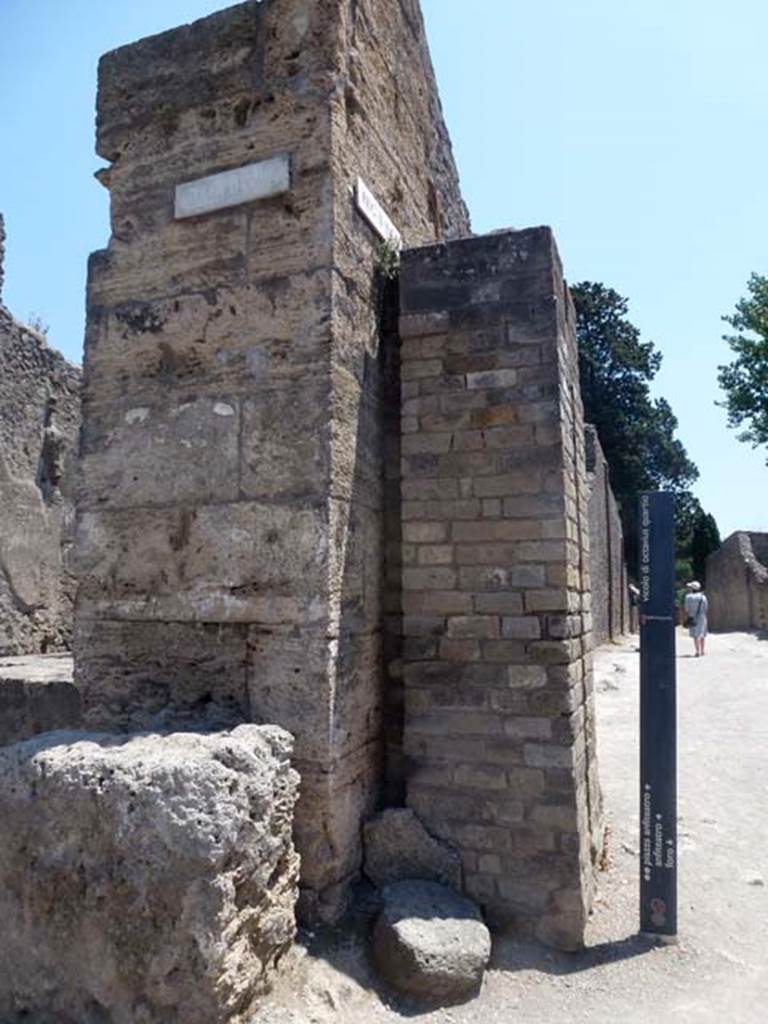
II.2.1 Pompeii. June 2012.
Looking south to restored water column on side wall. Photo courtesy of Michael Binns.
II.2.1 Pompeii. December 2005. Restored water column on side wall.
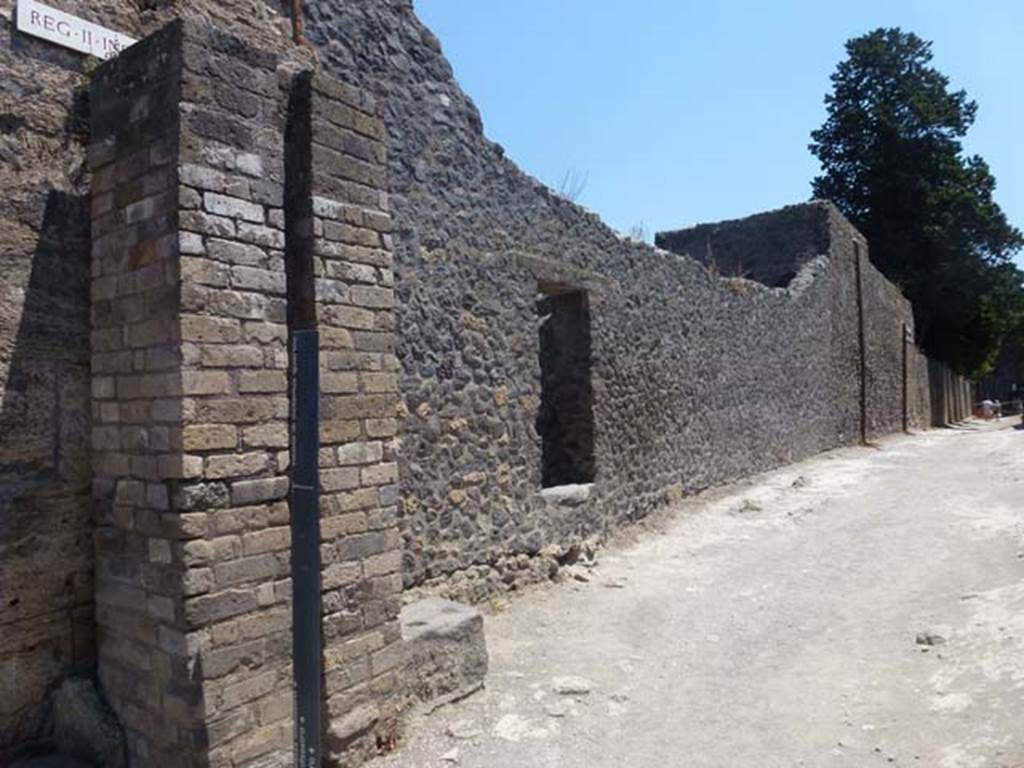
II.2.1 Pompeii. June 2012.
West exterior wall of insula, with restored water column on Vicolo di Octavius Quarto. Photo courtesy of Michael Binns.
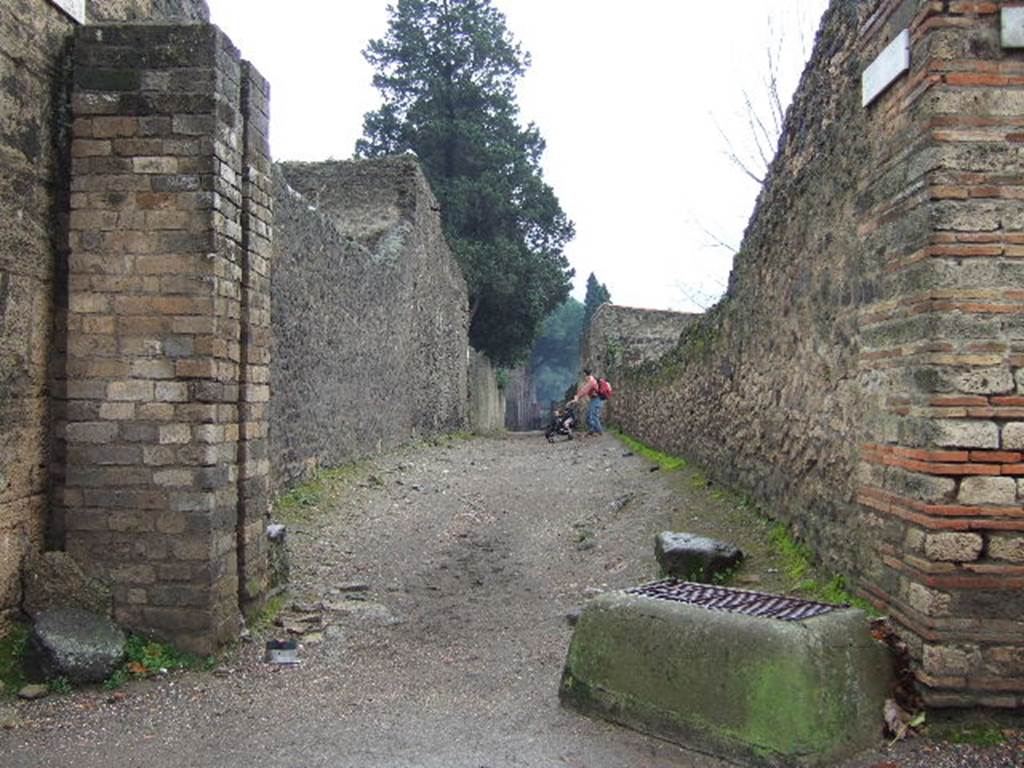
II.2.1 Pompeii. December 2005. Side wall (on left) with restored water column on Vicolo di Octavius Quarto.
According to Garcia y Garcia, the north end of the vicolo between II.2 and II.1 was hit heavily by the bombing.
The pilaster, with the lead container for water on top, was completely destroyed.
This was a unique example from Pompeii, the only one so far discovered here.
See Garcia y
Garcia, L., 2006. Danni di guerra a Pompei. Rome: L’Erma di Bretschneider. (p. 44, figs. 37-39)
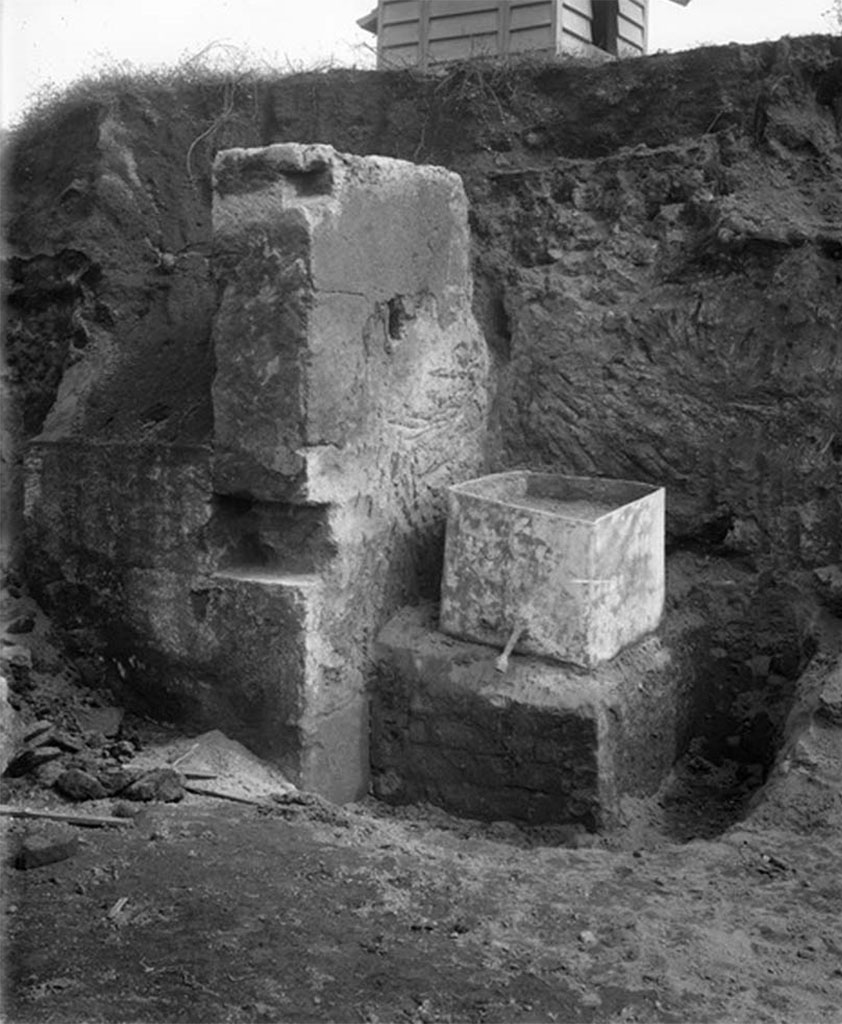
II.2.1 Pompeii. 1916-17. Side wall with water column on Vicolo di Octavius Quarto.
The top of the water column is shown during excavation.
On it was found a lead tank, which had two pipes, presumably one bringing water in and one to take it out.
See 1917. Notizie degli scavi di antichità Vol. 14. Roma: Real Accademia dei Lincei. (p. 255).
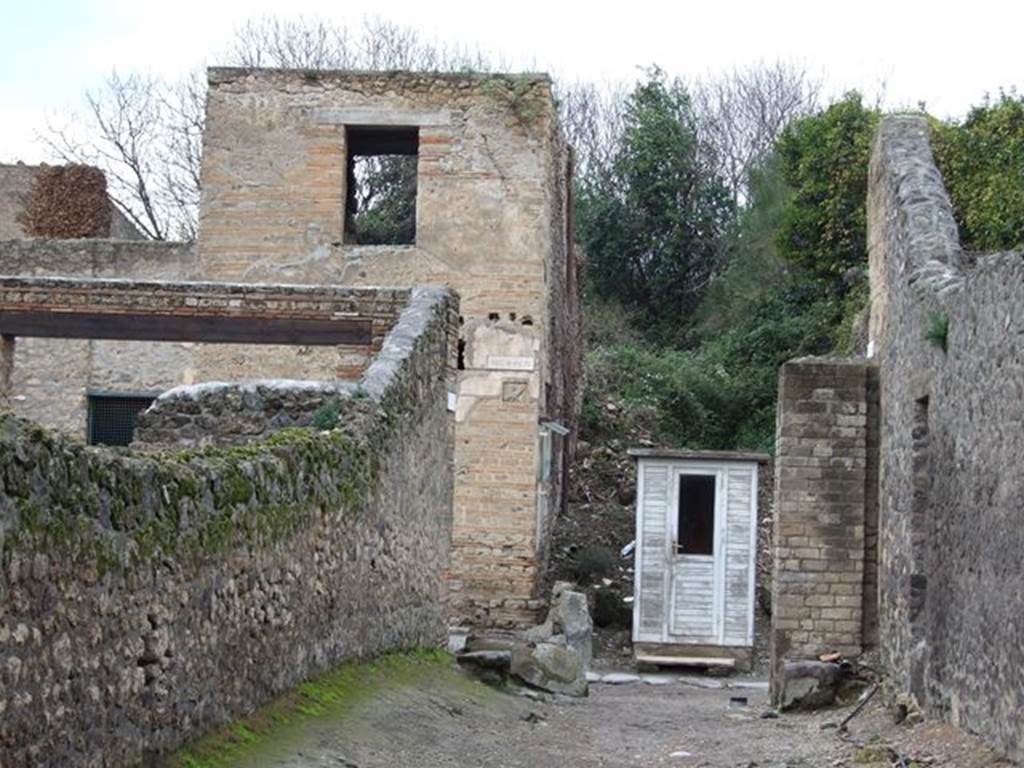
II.1.6 side wall, on left. December 2006. Vicolo di Octavius Quarto looking north. II.2.1 side wall and water tower, on right.