II.1.12
Pompeii. Complesso dei Riti magici or Magic Rites Complex
or Casa di Biria, Sibilla
pompeiana or Officina Magica of Sextilius Pyrricus.
Linked to II.1.11. Excavated 1954, 1957, 1963, 1985.
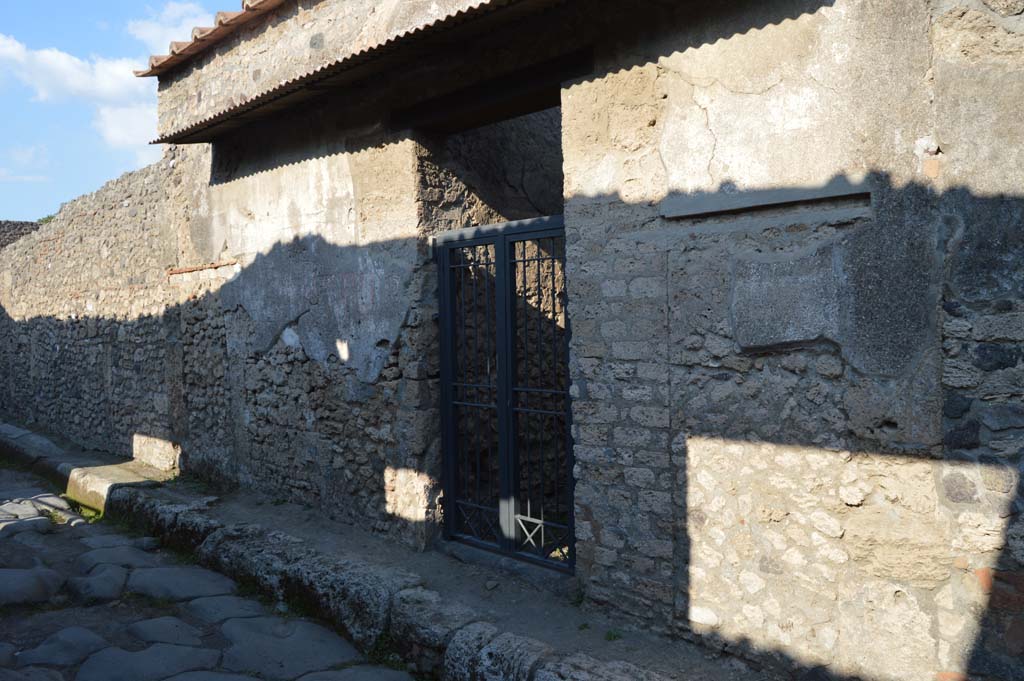
II.1.12 Pompeii. October 2017. Looking north-east towards
entrance doorway on Via di Nocera.
Foto
Taylor Lauritsen, ERC Grant 681269 DÉCOR.
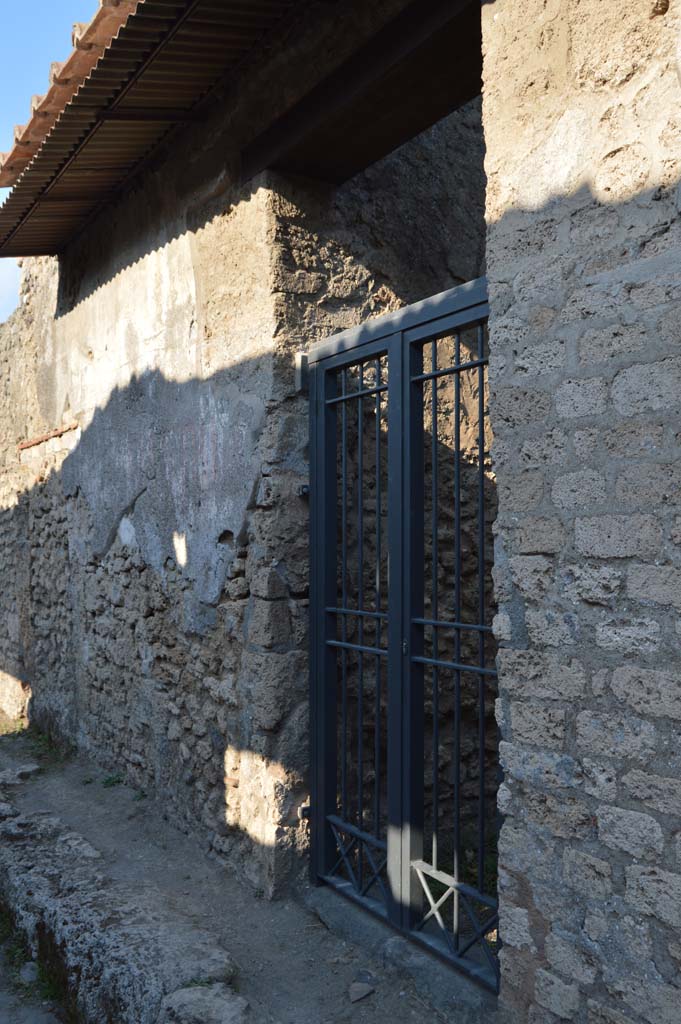
II.1.12 Pompeii. October
2017. Entrance doorway, looking towards north side.
Foto Taylor Lauritsen, ERC Grant 681269 DÉCOR.
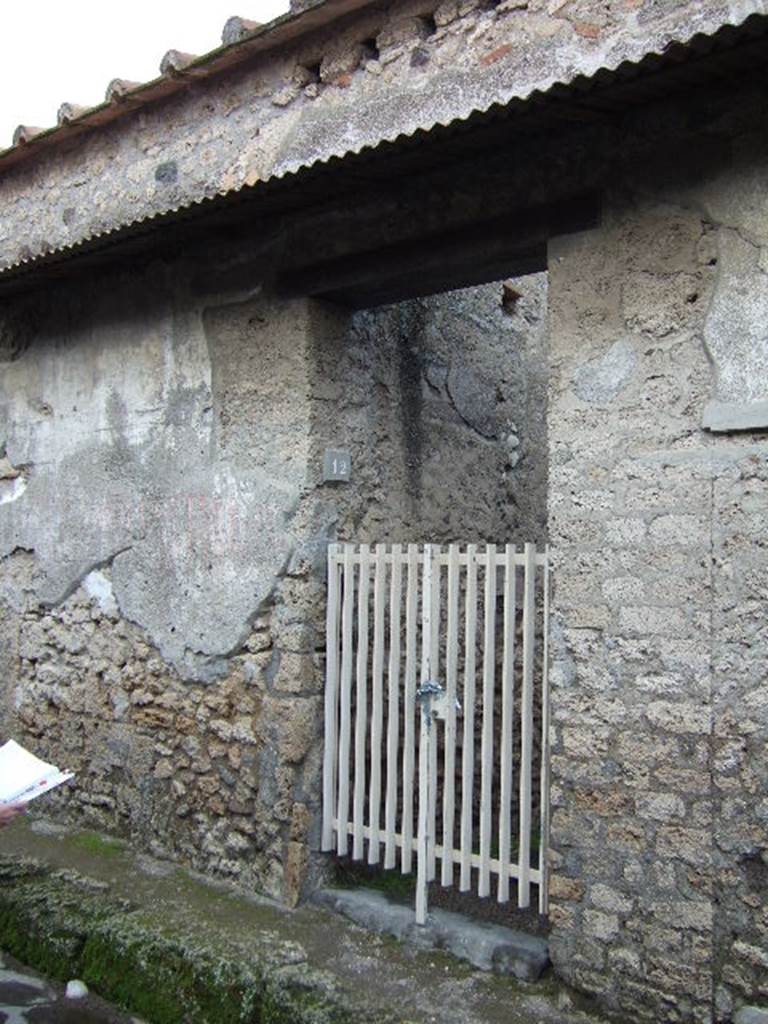
II.1.12 Pompeii. December 2005. Entrance doorway.
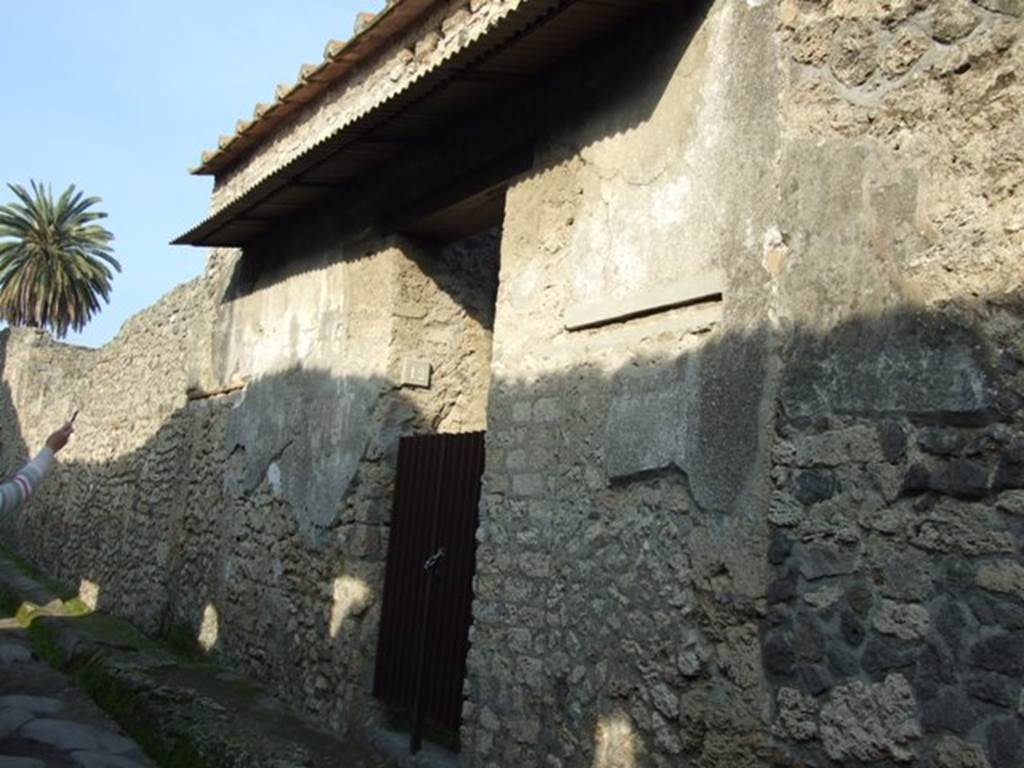
II.1.12 Pompeii. December 2007. Entrance doorway on east side of Via di Nocera.
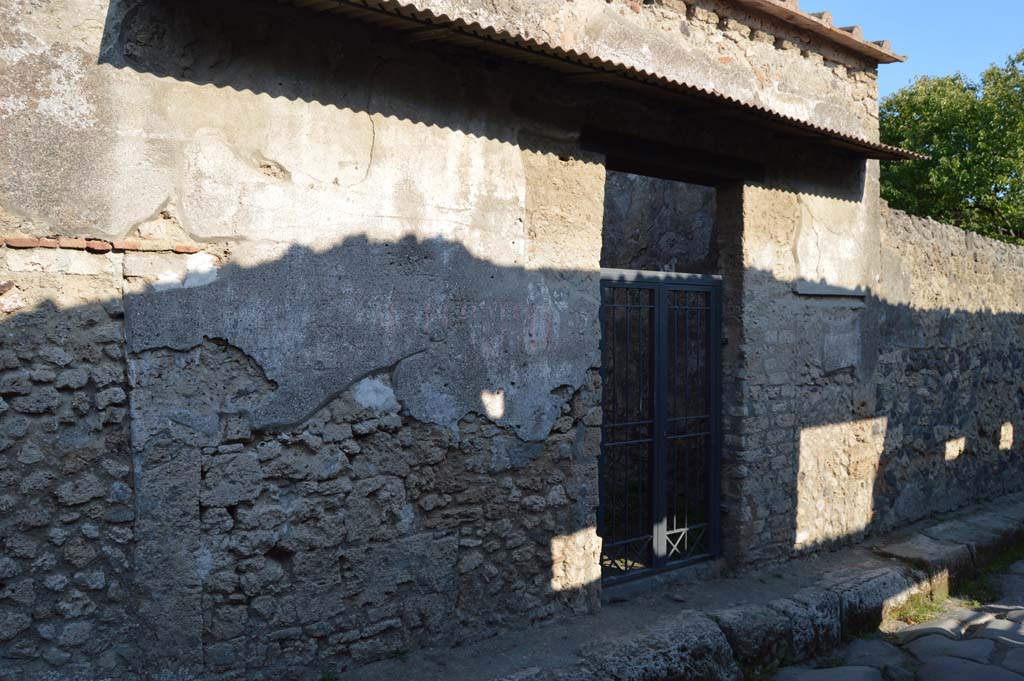
II.1.12 Pompeii. October 2017. Looking
south-east towards entrance doorway on Via di Nocera.
Foto Taylor Lauritsen, ERC Grant 681269 DÉCOR.
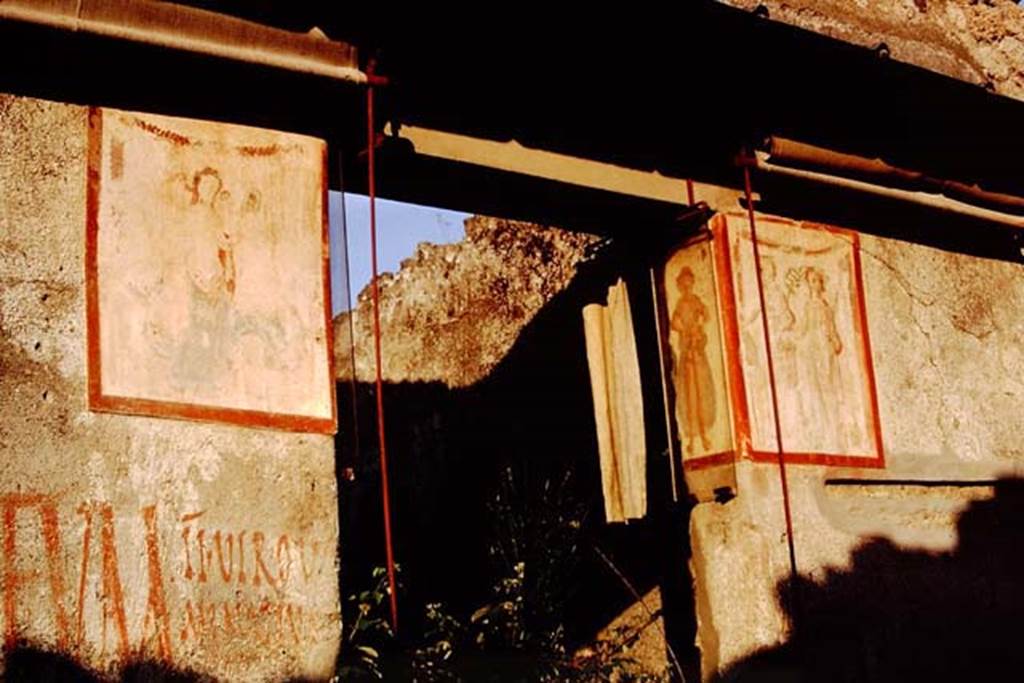
II.1.12 Pompeii, 1968. Entrance doorway on east side of Via di Nocera.
On the left is a faded Venus rising from the sea, with graffiti below it.
On the pilaster facing towards the doorway would have been another painting of a Priapus, but virtually destroyed.
On the right is a faded Bacchus and Mercury, with graffiti below. On the pilaster in the doorway is a painted Priapus.
Photo by Stanley A. Jashemski.
Source: The Wilhelmina and Stanley A. Jashemski archive in the University of Maryland Library, Special Collections (See collection page) and made available under the Creative Commons Attribution-Non Commercial License v.4. See Licence and use details.
J68f0270
![II.1.12 Pompeii, 1958. Entrance doorway on east side of Via di Nocera.
On the left is a faded Venus rising from the sea, with graffiti below it.
According to CIL this reads
N. POPIDIVM RVFVM II VIR O. V. F. MINATIVS ROG
See Corpus Inscriptionum Latinarum Vol. IV, Supp P3, F4, 1970. Berlin:De Gruyter, p. 129.
According to Epigraphik-Datenbank Clauss/Slaby (See www.manfredclauss.de) this read
N(umerium) Popidium Rufum
IIvir(um) o(ro) v(os) f(aciatis)
Minatius / rog(at) [CIL IV 9886]](2%2001%2012_files/image012.jpg)
II.1.12 Pompeii, 1958. Entrance doorway on east side of Via di Nocera.
On the left is a faded Venus rising from the sea, with graffiti below it.
According to CIL this reads
N. POPIDIVM RVFVM II VIR O. V. F. MINATIVS ROG
See Corpus Inscriptionum Latinarum Vol. IV, Supp P3, F4, 1970. Berlin: De Gruyter, p. 129.
According to Epigraphik-Datenbank Clauss/Slaby (See www.manfredclauss.de) this read
N(umerium)
Popidium Rufum
IIvir(um) o(ro)
v(os) f(aciatis)
Minatius /
rog(at) [CIL IV 9886]
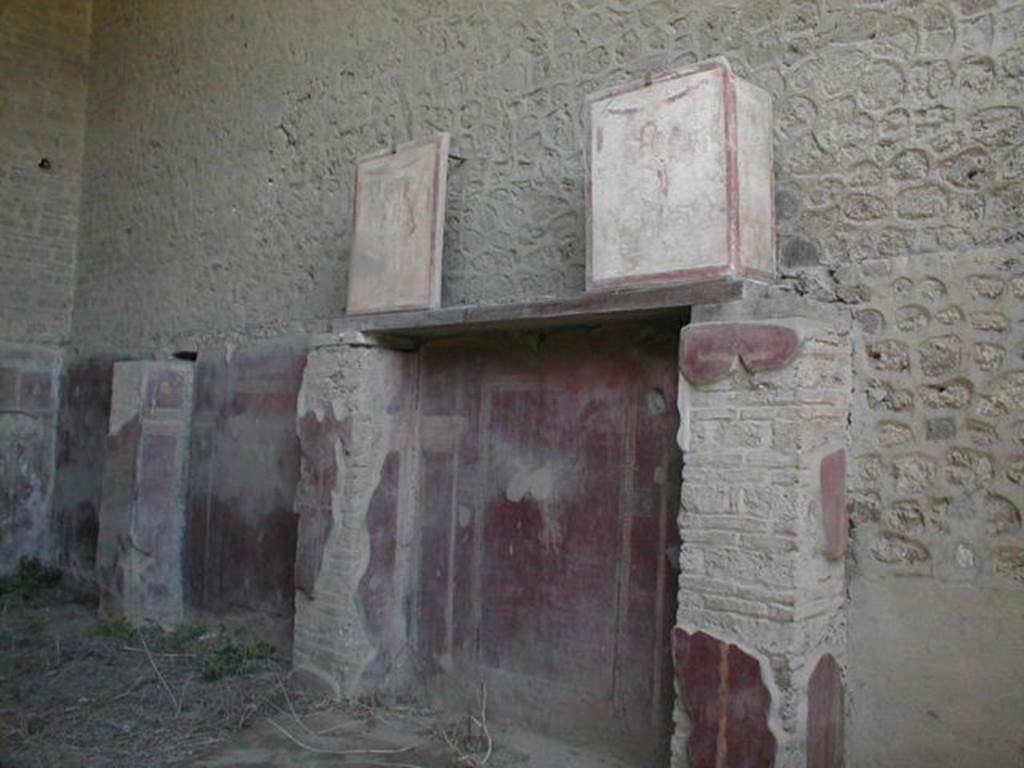
Pompeii. May 2005. Two pilaster paintings (at top on beam) from entrance façade of II.1.12 Complesso dei Riti magici.
These were in III.3.6 and are reversed.
See Fröhlich, T., 1991, Lararien und Fassadenbilder in den Vesuvstädten. Mainz: von Zabern. (F16:p.312, T. 54/1 and 54/2).
Following the collapse in November 2010, these are believed to have been destroyed.
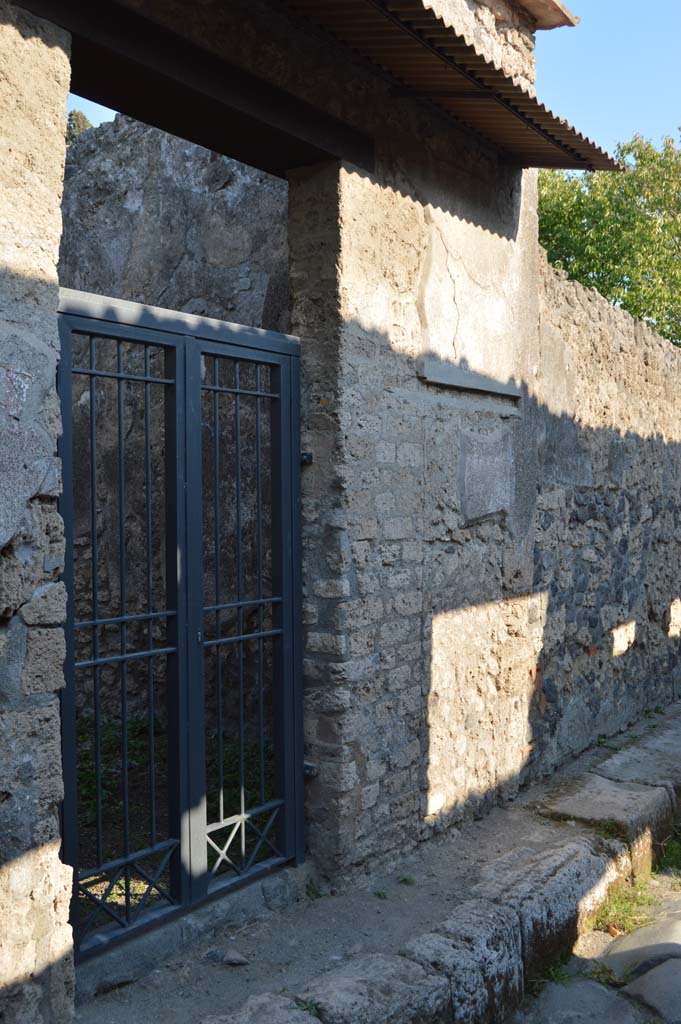
II.1.12 Pompeii, October 2017. Looking towards
south (right) side of entrance doorway.
Foto Taylor Lauritsen, ERC
Grant 681269 DÉCOR.
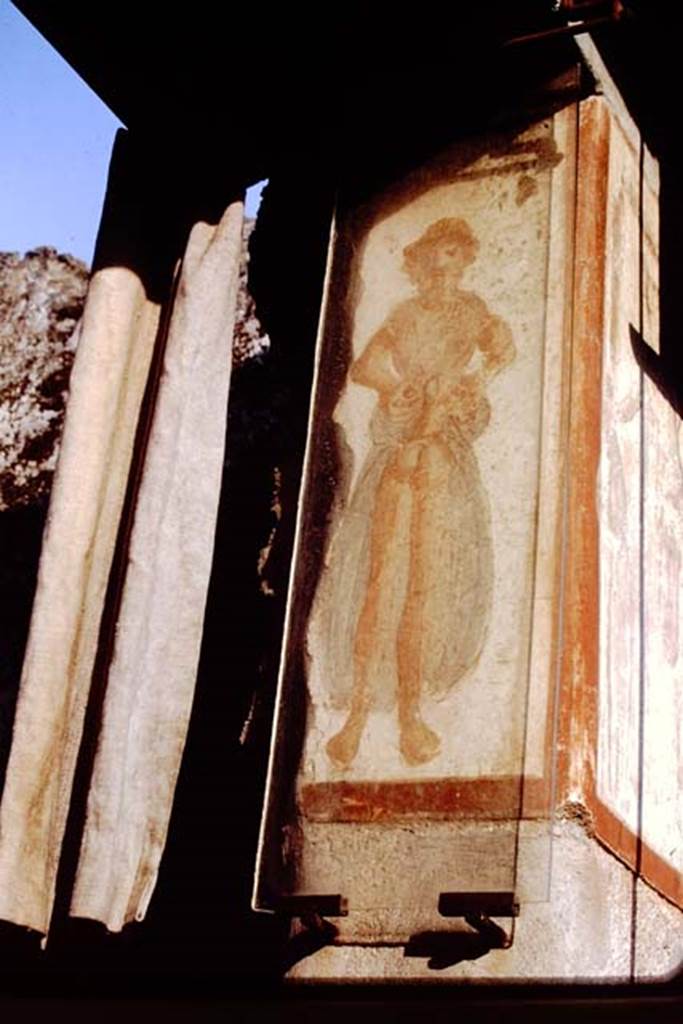
II.1.12 Pompeii, 1968.
Painted Priapus from the south (right) side of the doorway. Photo by Stanley A. Jashemski.
Source: The Wilhelmina and Stanley A. Jashemski archive in the University of Maryland Library, Special Collections (See collection page) and made available under the Creative Commons Attribution-Non Commercial License v.4. See Licence and use details.
J68f0268
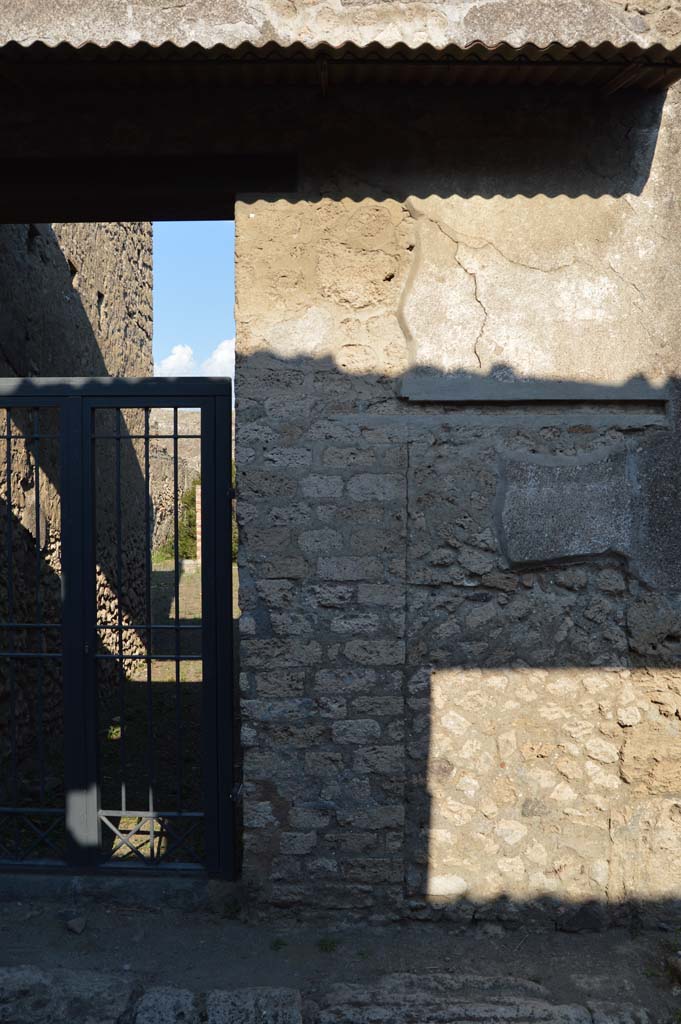
II.1.12 Pompeii, October 2017. Wall on south side of entrance doorway.
Foto Taylor Lauritsen, ERC
Grant 681269 DÉCOR.
![II.1.12 Pompeii. December 2007. Wall on south side of entrance doorway. According to Varone and Stefani, CIL IV 9885 was found on the south side of entrance doorway, near the door jamb, but is not conserved. See Varone, A. and Stefani, G., 2009. Titulorum Pictorum Pompeianorum, Rome: L’erma di Bretschneider, (p.187). According to Epigraphik-Datenbank Clauss/Slaby (See www.manfredclauss.de), it read –
Helvium Sabinum aed(ilem)
Biri cum Biria rog(ant)
d(ignum) r(ei) p(ublicae) v(irum) b(onum) o(ro) v(os) f(aciatis) Onomaste cupide fac(iatis) [CIL IV 9885]](2%2001%2012_files/image020.jpg)
II.1.12 Pompeii. December 2007. Wall on south side of entrance doorway.
According to Varone and Stefani, CIL IV 9885 was found on the south side of entrance doorway, near the doorjamb, but is not conserved.
See Varone, A. and Stefani, G., 2009. Titulorum Pictorum
Pompeianorum, Rome:
L’erma di Bretschneider, (p.187)
![II.1.12 Pompeii. Found in 1958. Wall on south side of entrance doorway.
Inscription below Mercury and Bacchus painting.
HELVIVM SABINVM AED
BIRI CVM BIRIA ROG
D. R. P. V. B. O. V. F. ONOMASTE CVPIDE FAC [CIL IV 9885]
See Corpus Inscriptionum Latinarum Vol. IV, Supp P3, F4, 1970. Berlin:De Gruyter, p. 129.
According to Epigraphik-Datenbank Clauss/Slaby (See www.manfredclauss.de), it read –
Helvium Sabinum aed(ilem)
Biri cum Biria rog(ant)
d(ignum) r(ei) p(ublicae) v(irum) b(onum) o(ro) v(os) f(aciatis) Onomaste cupide fac(iatis) [CIL IV 9885]
According to Cooley this translates as
Biri(us) with Biria ask you to elect Helvius Sabinus aedile, a good man, worthy of public office: Onomastus, vote for him eagerly.
See Cooley, A. and M.G.L., 2004. Pompeii: A Sourcebook. London: Routledge, F52, p. 122.](2%2001%2012_files/image022.jpg)
II.1.12 Pompeii. Found in 1958.
Wall on south side of entrance doorway - inscription below Mercury and Bacchus painting.
HELVIVM SABINVM
AED
BIRI CVM BIRIA
ROG
D. R. P. V. B. O.
V. F. ONOMASTE CVPIDE FAC [CIL IV
9885]
See Corpus Inscriptionum Latinarum Vol. IV, Supp P3, F4, 1970. Berlin: De Gruyter, p. 129.
According to Epigraphik-Datenbank Clauss/Slaby (See www.manfredclauss.de), it read –
Helvium Sabinum
aed(ilem)
Biri cum
Biria rog(ant)
d(ignum) r(ei)
p(ublicae) v(irum) b(onum)
o(ro) v(os) f(aciatis)
Onomaste cupide fac(iatis) [CIL IV 9885]
According to Cooley this translates as
Biri(us) with Biria ask you to elect Helvius Sabinus aedile, a good man, worthy of public office: Onomastus, vote for him eagerly.
See Cooley, A. and M.G.L., 2004. Pompeii: A Sourcebook. London: Routledge, F52, p. 122.
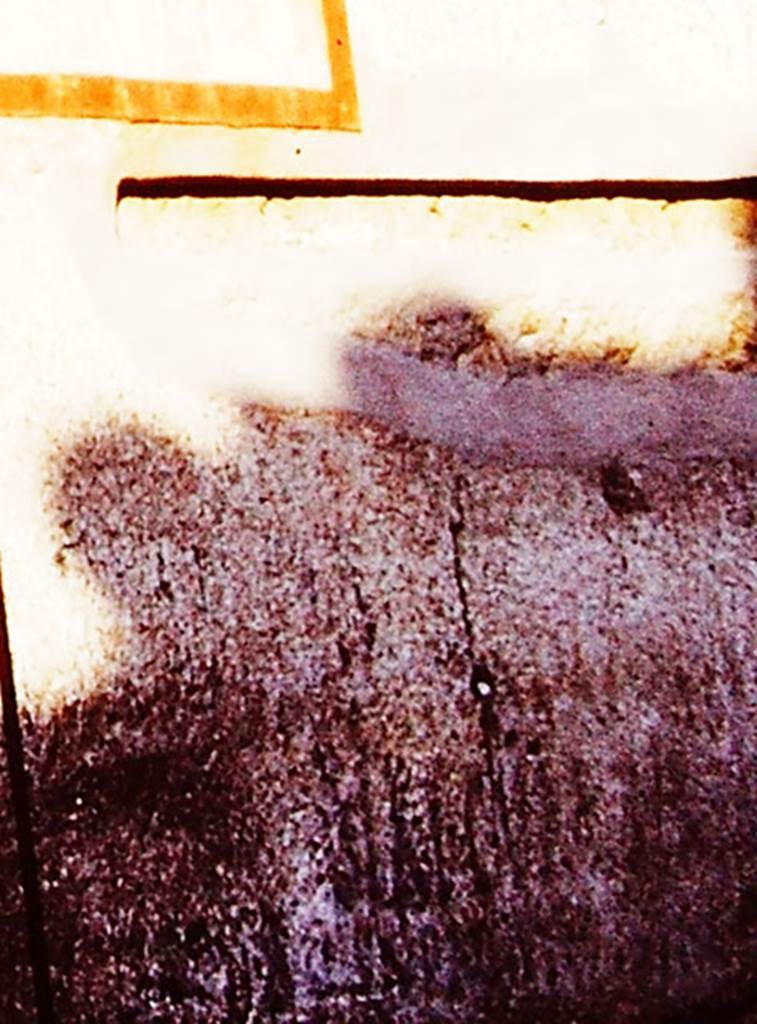
II.1.12 Pompeii. 1968. Wall on south side of entrance doorway.
CIL IV 9885 on south side of doorway. In the shadow the words BIRI CVM BIRIA are visible
Detail from photo by Stanley A. Jashemski.
Source: The Wilhelmina and Stanley A. Jashemski archive in the University of Maryland Library, Special Collections (See collection page) and made available under the Creative Commons Attribution-Non Commercial License v.4. See Licence and use details.
J68f0263
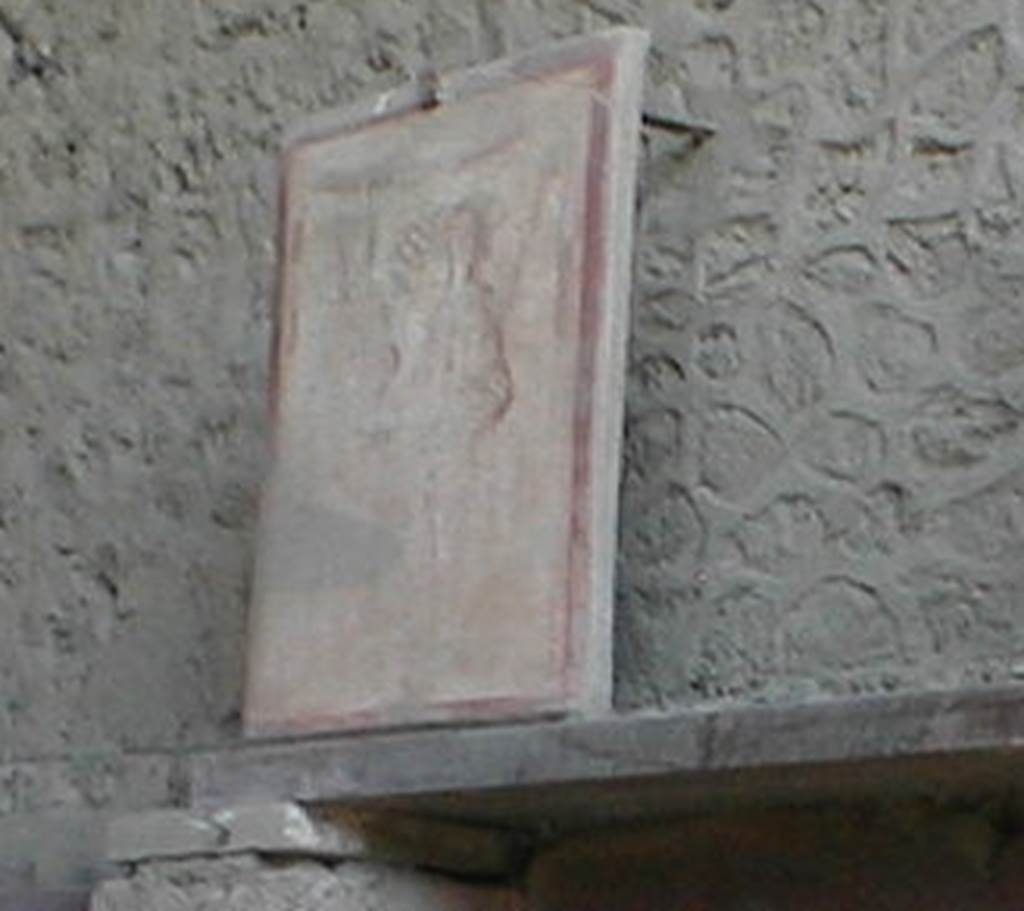
II.1.12 Pompeii. May 2005.
Pilaster painting from south side of entrance façade, painting of Bacchus and Mercury. Currently (May 2005) in III.3.6.
See Fröhlich, T., 1991, Lararien und Fassadenbilder in den Vesuvstädten. Mainz: von Zabern. (F16:p.312, T. 54/1).
Following the collapse of III.3.6 in November 2010, this may have been destroyed.
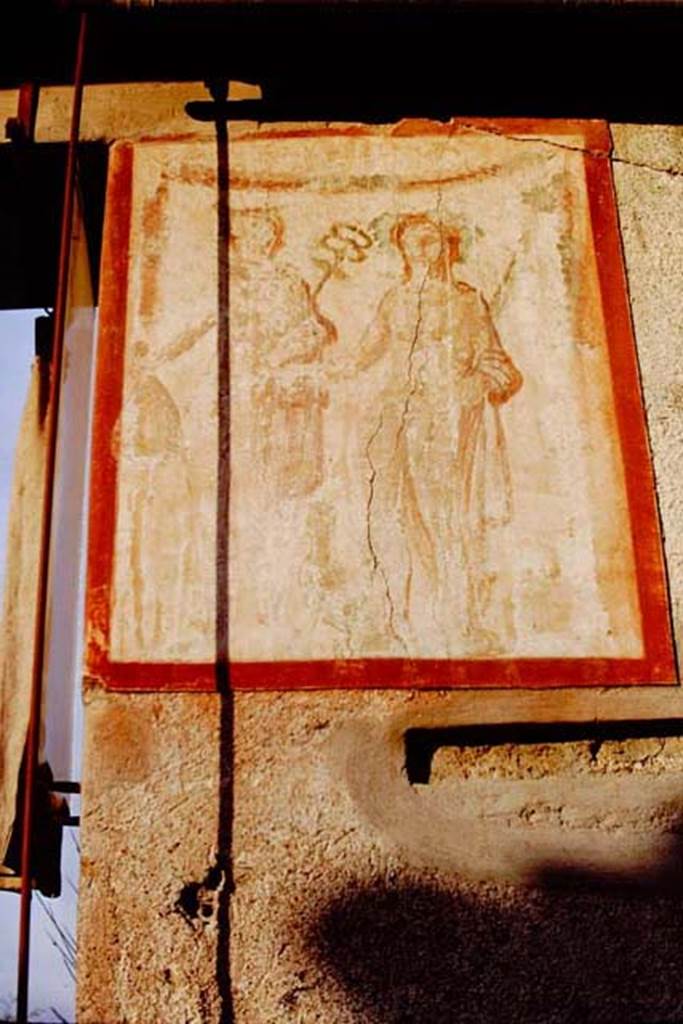
II.1.12 Pompeii, 1968. Pilaster painting from right (south) side of entrance façade.
Painting of Bacchus and Mercury. Photo by Stanley A. Jashemski.
Source: The Wilhelmina and Stanley A. Jashemski archive in the University of Maryland Library, Special Collections (See collection page) and made available under the Creative Commons Attribution-Non Commercial License v.4. See Licence and use details.
J68f0274
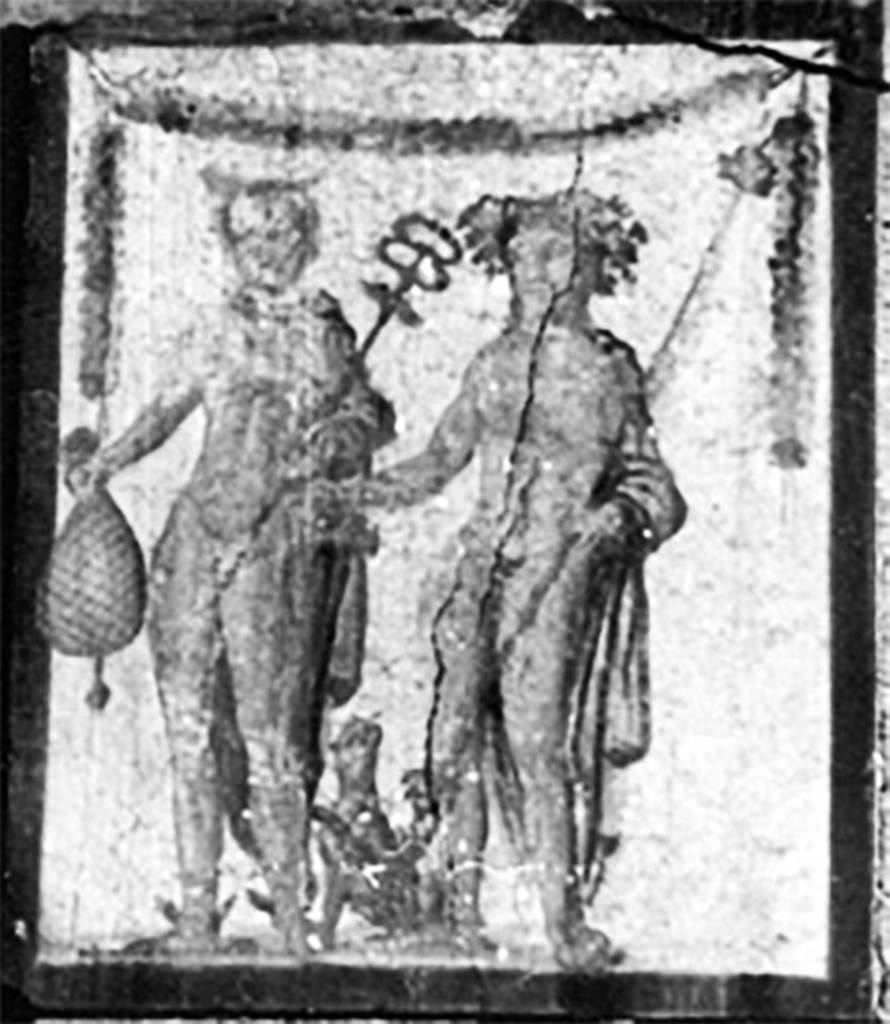
II.1.12 Pompeii. Detail from old undated photograph.
Painting of Bacchus and Mercury from pilaster on south side of entrance façade.
Kuivalainen describes –
A composition of two standing figures on a white background, both turning a little to their right.
On the left stands a youth holding a purse (Frohlich: a patera with liquid running out) in his right hand with a down-stretched arm and, and a caduceus in his left. On the right side, and further towards the front, stands a youth whose posture is almost the same; he wears a red cloak hanging over his left arm, which also supports a thyrsus; in his right hand he has a cantharus, from which he pours wine; on his head is a leafy wreath. The figures are framed with a garland.
Kuivalainen comments –
A half-naked young Bacchus and Mercury are often represented together, the purse being, in addition to the caduceus, a characteristic attribute of Mercury. The cult of Sabazius may have been of importance to many gladiators from Thrace, and of a private nature, associated with Bacchus in the same way as Egyptian Thot was with Mercury.
See Kuivalainen, I., 2021. The Portrayal of Pompeian Bacchus. Commentationes Humanarum Litterarum 140. Helsinki: Finnish Society of Sciences and Letters, (F20, p.174).
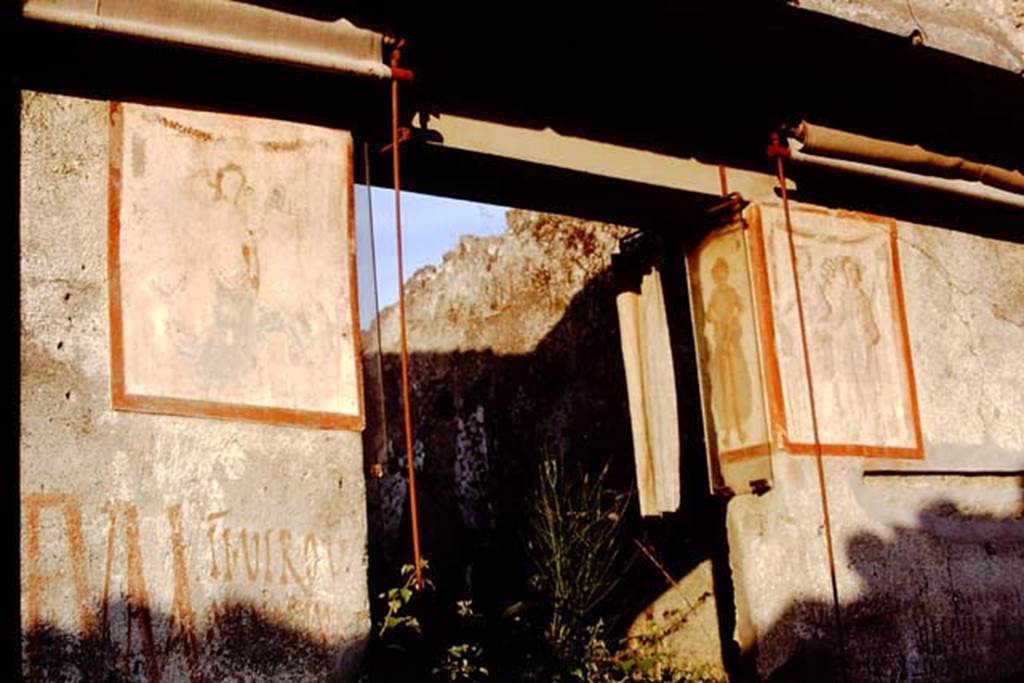
II.1.12 Pompeii, 1968.
Entrance doorway, in this photo, the graffiti can just be seen, under the painting on the right (south) side. Photo by Stanley A. Jashemski.
Source: The Wilhelmina and Stanley A. Jashemski archive in the University of Maryland Library, Special Collections (See collection page) and made available under the Creative Commons Attribution-Non Commercial License v.4. See Licence and use details.
J68f0273
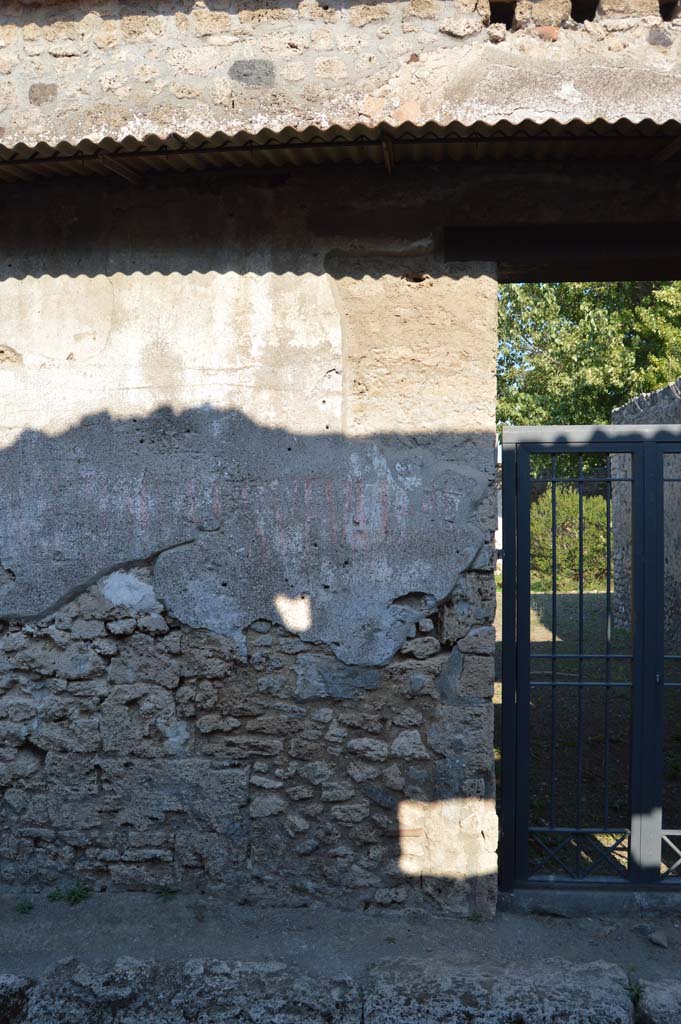
II.1.12
Pompeii. October 2017. Looking towards north side of entrance doorway.
Foto Taylor Lauritsen, ERC Grant 681269 DÉCOR.
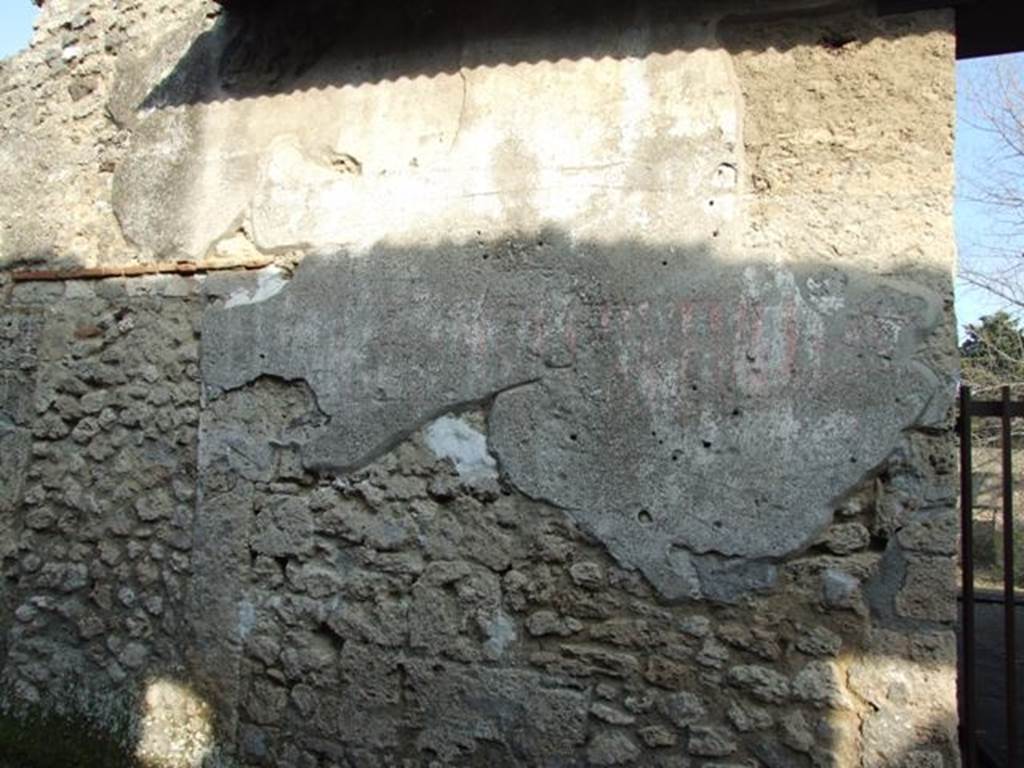
II.1.12 Pompeii. December 2007. Wall on north side of entrance doorway.
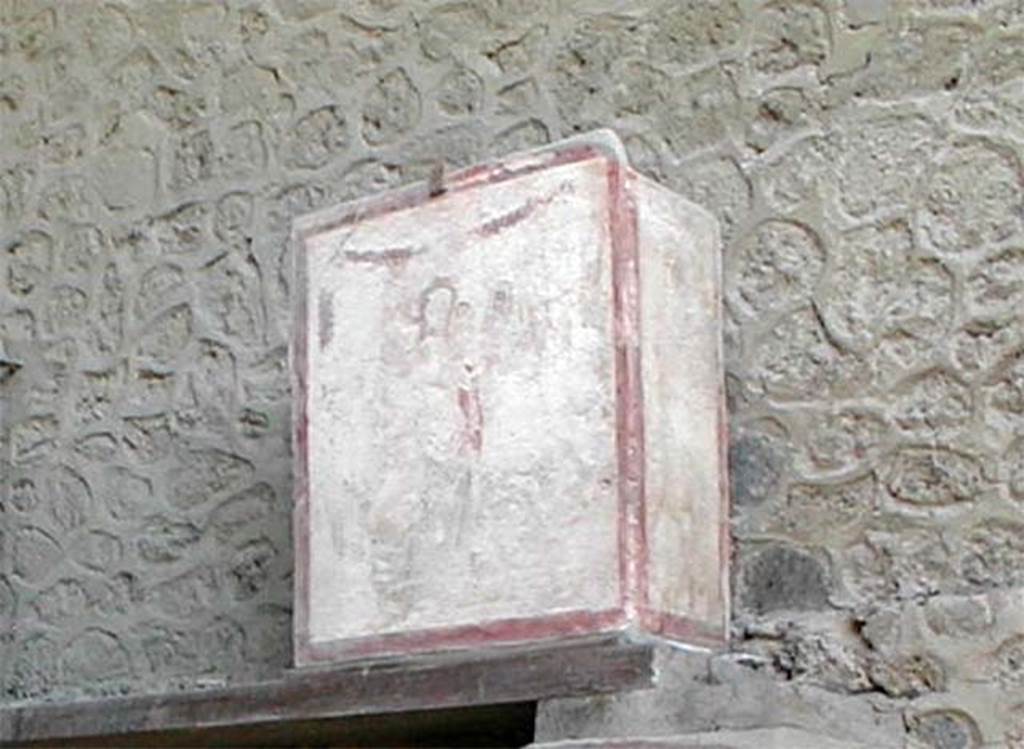
II.1.12 Pompeii. May 2005. Pilaster painting from north side of entrance façade.
Painting of Venus Anadyomene (Venus rising from the sea) with a small naked Eros and a jumping dolphin. This was in III.3.6.
See Fröhlich, T., 1991, Lararien und Fassadenbilder in den Vesuvstädten. Mainz: von Zabern. (F16: p.312, T. 54/2).
Following the collapse of III.3.6 in November 2010, this is believed to have been destroyed.
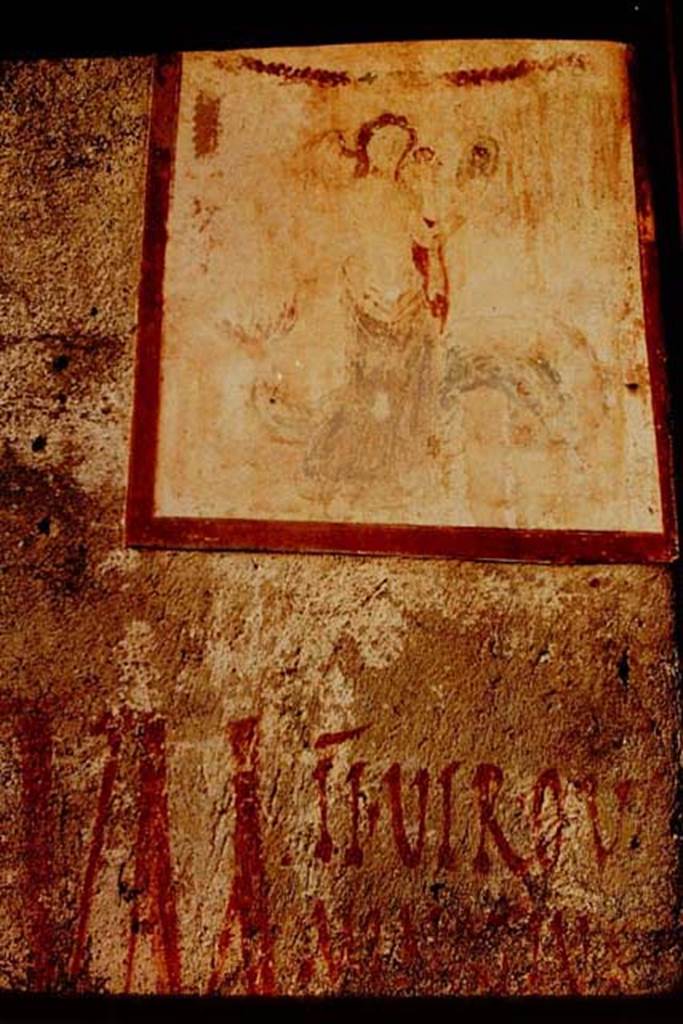
II.1.12 Pompeii, 1968.
Pilaster on north side of entrance façade, painting of Venus with graffiti below it.
Venus Anadyomene (Venus rising from the sea) with a small naked Eros and a jumping dolphin.
Photo by Stanley A. Jashemski.
Source: The Wilhelmina and Stanley A. Jashemski archive in the University of Maryland Library, Special Collections (See collection page) and made available under the Creative Commons Attribution-Non Commercial License v.4. See Licence and use details.
J68f0269
![II.1.12 Pompeii. December 2007. Graffito on north side of entrance.
According to Varone and Stefani, this graffito is what remains of CIL IV 9886 but is now illegible. See Varone, A. and Stefani, G., 2009. Titulorum Pictorum Pompeianorum, Rome: L’erma di Bretschneider, (p.186)
According to Epigraphik-Datenbank Clauss/Slaby (See www.manfredclauss.de), this read –
N(umerium) Popidium Rufum
IIvir(um) o(ro) v(os) f(aciatis)
Minatius
rog(at) [CIL IV 9886]](2%2001%2012_files/image041.jpg)
II.1.12 Pompeii. December 2007. Graffito on north side of entrance.
According to Varone and Stefani, this graffito is what remains of CIL IV 9886 but is now illegible.
See Varone, A. and Stefani, G., 2009. Titulorum Pictorum
Pompeianorum, Rome:
L’erma di Bretschneider, (p.186)
According to Epigraphik-Datenbank Clauss/Slaby (See www.manfredclauss.de), this read –
N(umerium) Popidium
Rufum
IIvir(um) o(ro)
v(os) f(aciatis)
Minatius
rog(at) [CIL IV 9886]
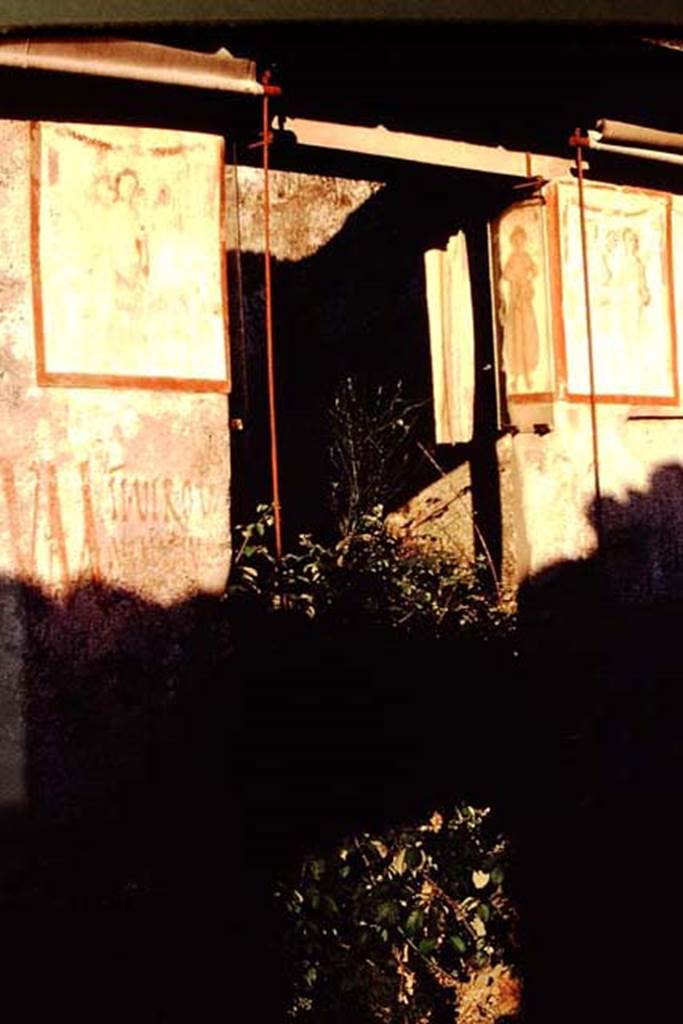
II.1.12 Pompeii, 1968.
Doorway with painted graffiti on left of entrance. Photo by Stanley A. Jashemski.
Source: The Wilhelmina and Stanley A. Jashemski archive in the University of Maryland Library, Special Collections (See collection page) and made available under the Creative Commons Attribution-Non Commercial License v.4. See Licence and use details.
J68f0271
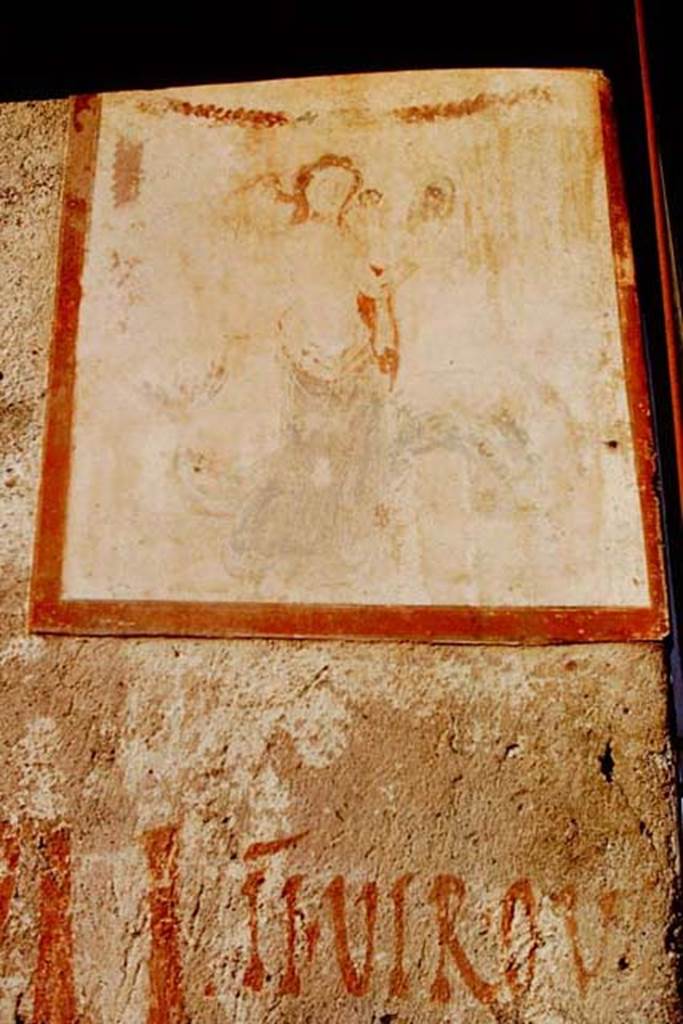
II.1.12 Pompeii, 1968.
Left of entrance doorway with painted Venus and graffiti. Photo by Stanley A. Jashemski.
Source: The Wilhelmina and Stanley A. Jashemski archive in the University of Maryland Library, Special Collections (See collection page) and made available under the Creative Commons Attribution-Non Commercial License v.4. See Licence and use details.
J68f0272
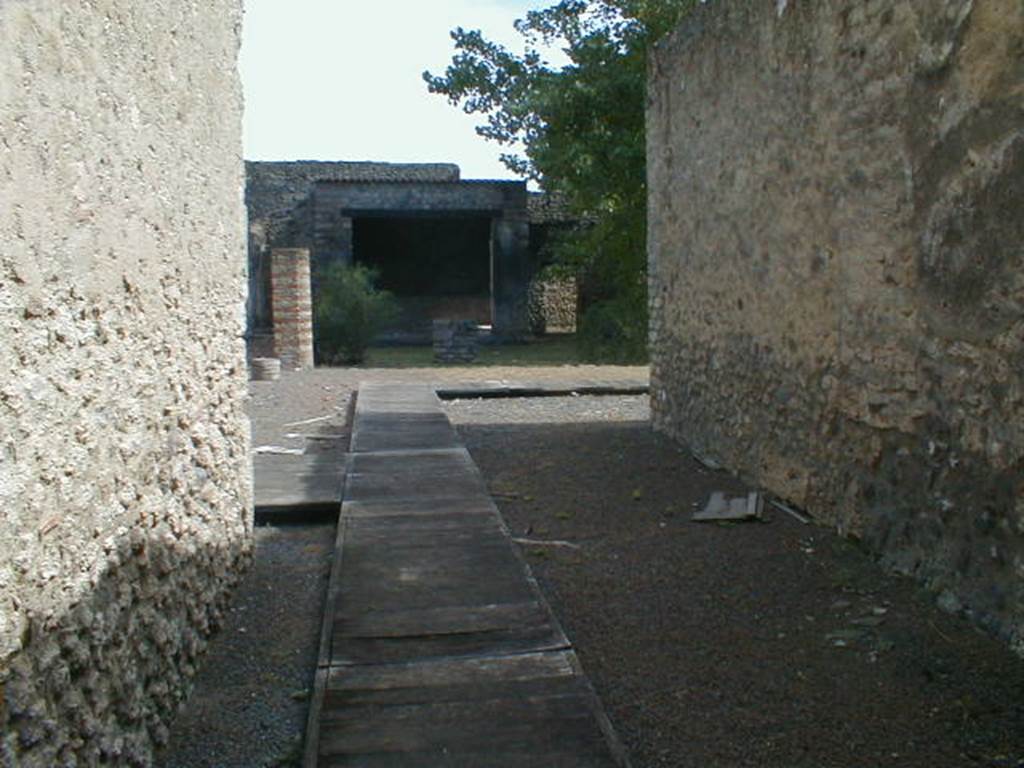
II.1.12 Pompeii. September 2004. Looking east along fauces to an area, originally the atrium that had lost its function.
This area would then have led into the peristyle area, with altar and sacellum, at the rear.
See Pace, R:
(1997). Il “Complesso dei Riti Magici” a
Pompei II.1,11-12 in Rivista di Studi Pompeiani, VIII, 1997, Rome, “L’Erma”
di Bretschneider, (p.73-97)
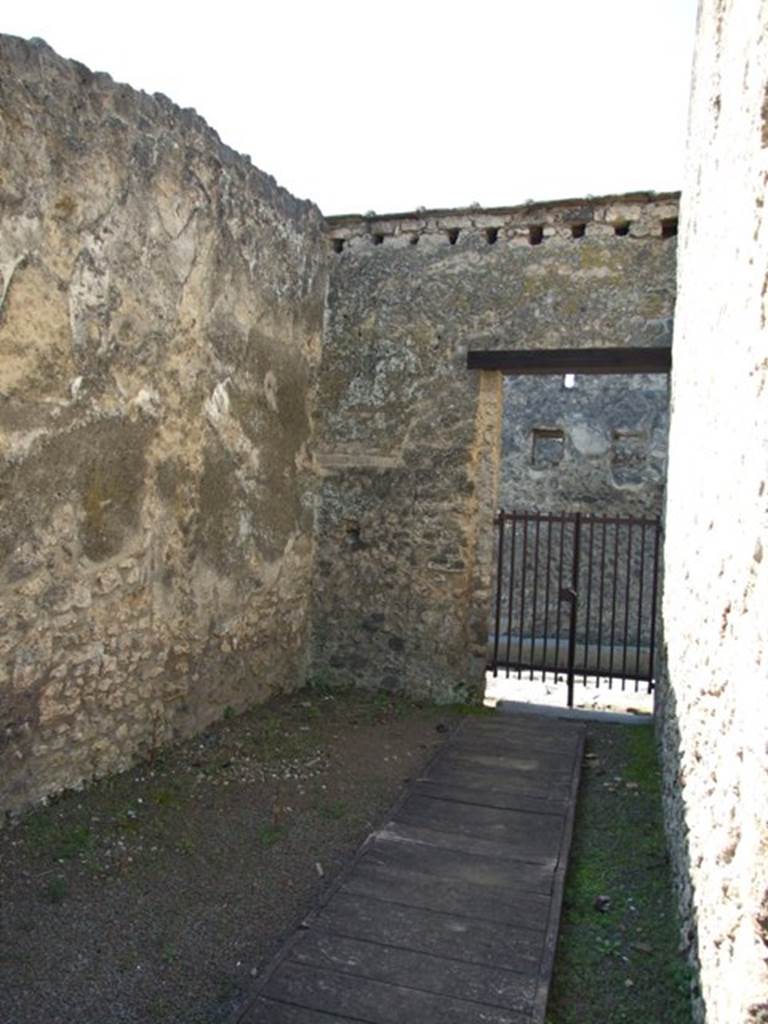
II.1.12 Pompeii. March 2009. Looking west along fauces to front entrance doorway, and Via di Nocera.