I.12.5 Pompeii. Caupona
all’Insegna di Africa o di Alessandria or Caupona of Lutatius.
Excavated 1914 and 1953 to 1955.
(Originally when excavated, this was numbered as Reg. II, Insula 2, no.5).
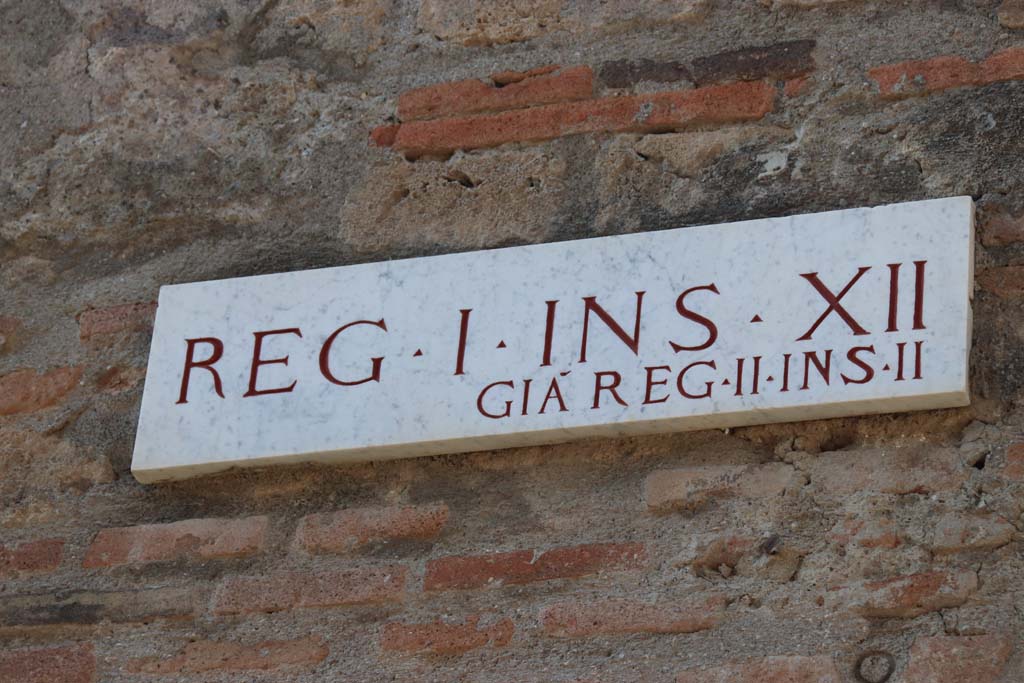
I.12.5 Pompeii, upper east
side façade onto Vicolo dei Fuggiaschi. September
2017.
Insula identification plaque, Reg. I. Ins.
X11, previously known as Reg. II, Ins. 11 (which is Reg.
II, Ins. 2). Photo courtesy of Klaus Heese.
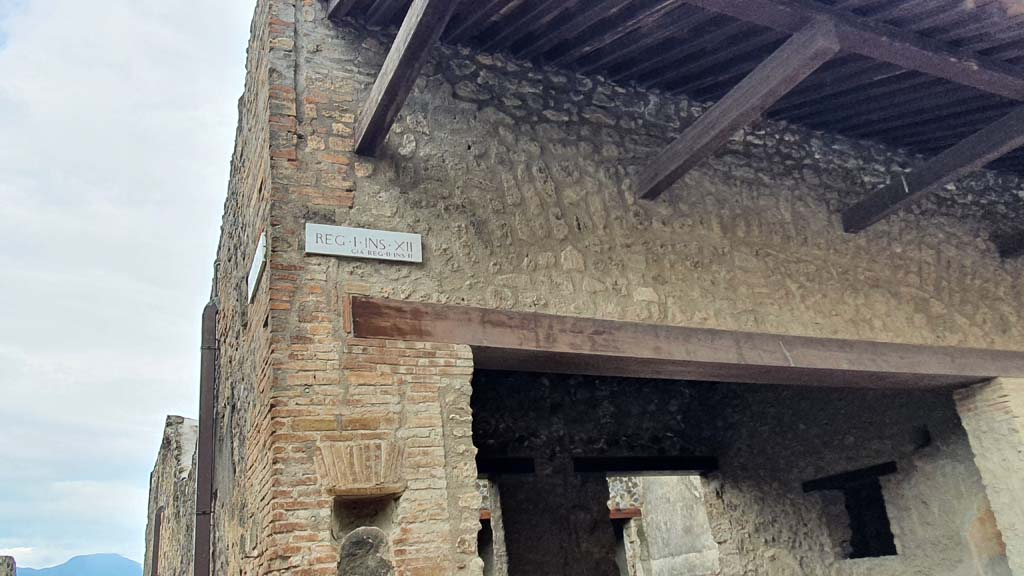
I.12.5 Pompeii. July 2021.
Looking towards upper front facade on south side of Via dell’Abbondanza with Vicolo dei Fuggiaschi, on left.
Foto Annette Haug, ERC Grant 681269 DÉCOR.
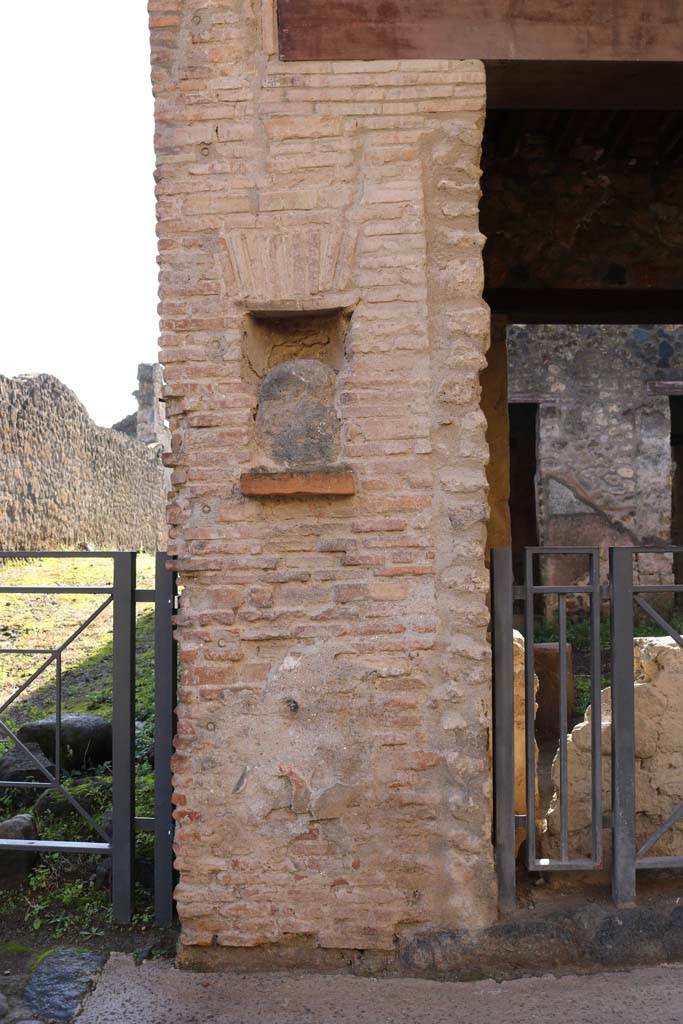
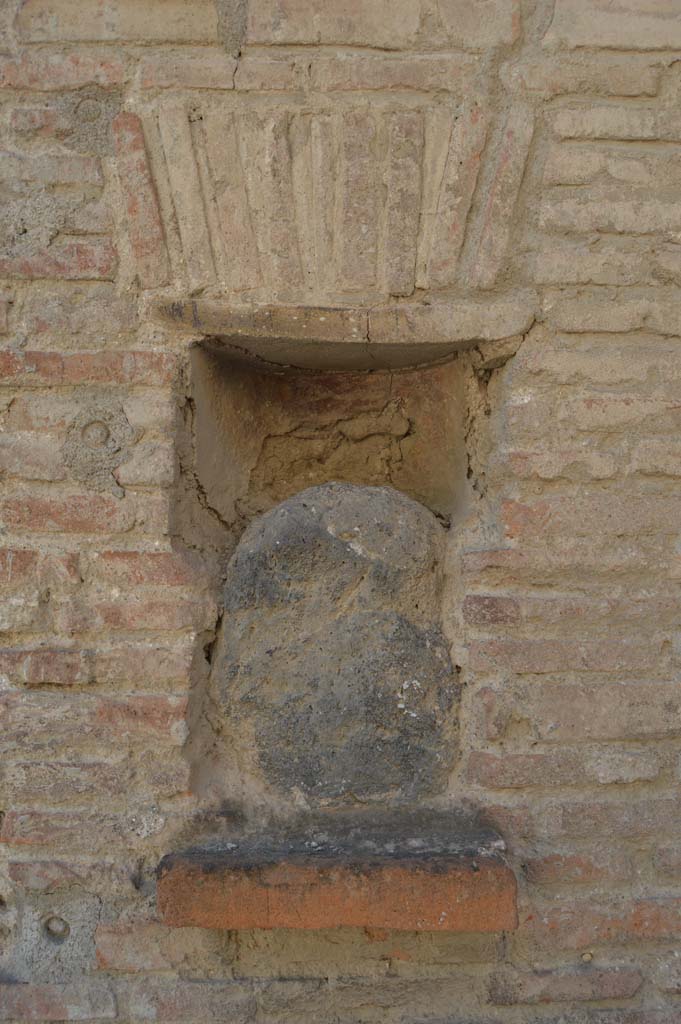
Street shrine or niche at east side of entrance doorway of I.12.5 Pompeii.
December
2018. Photo courtesy of Aude Durand.
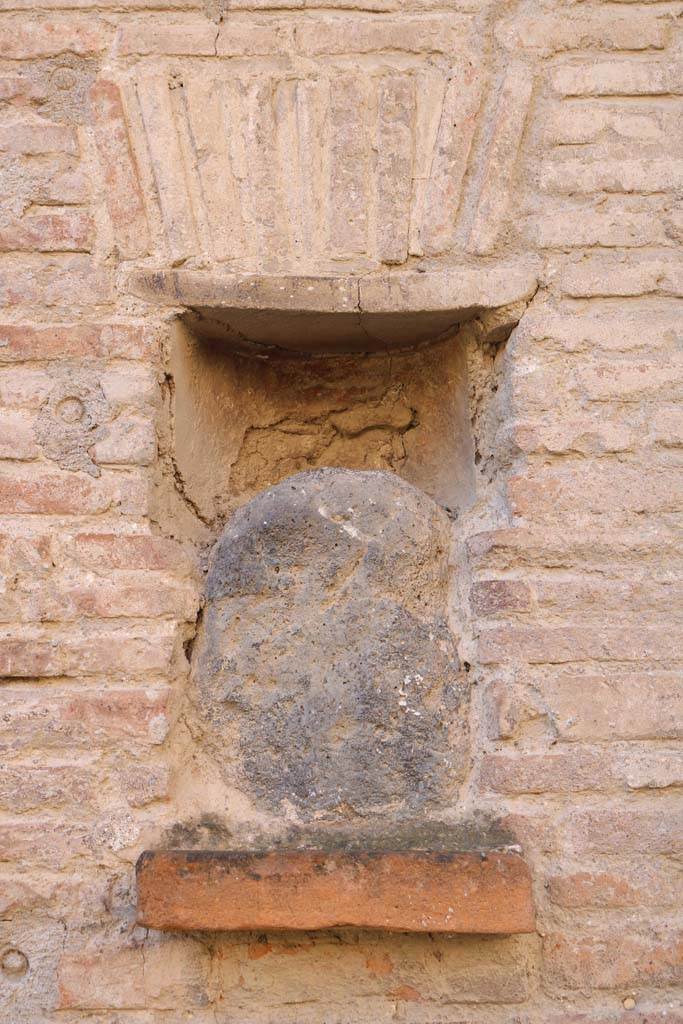
I.12.5 Pompeii. December 2018.
Street shrine or niche at east side of
entrance doorway. Photo courtesy of Aude Durand.
I.12.5
Pompeii. October 2017. Street shrine or niche at east side of entrance
doorway
Foto Taylor Lauritsen, ERC
Grant 681269 DÉCOR.
![Street shrine or niche outside I.12.5 Pompeii. September 2005.
This is on Via dell’ Abbondanza, at the corner with Vicolo dei Fuggiaschi.
According to Della Corte, on the red pilaster which ended the insula on the east side, two electoral programmes were found.
The first –
GAVIVM II VIR. [CIL IV 7442]
The second was immediately below the first -
AMPLIATUM L F AED
VICINI
SVRGITE ET
ROGATE
LVTATI F[ac] [CIL IV 7443]
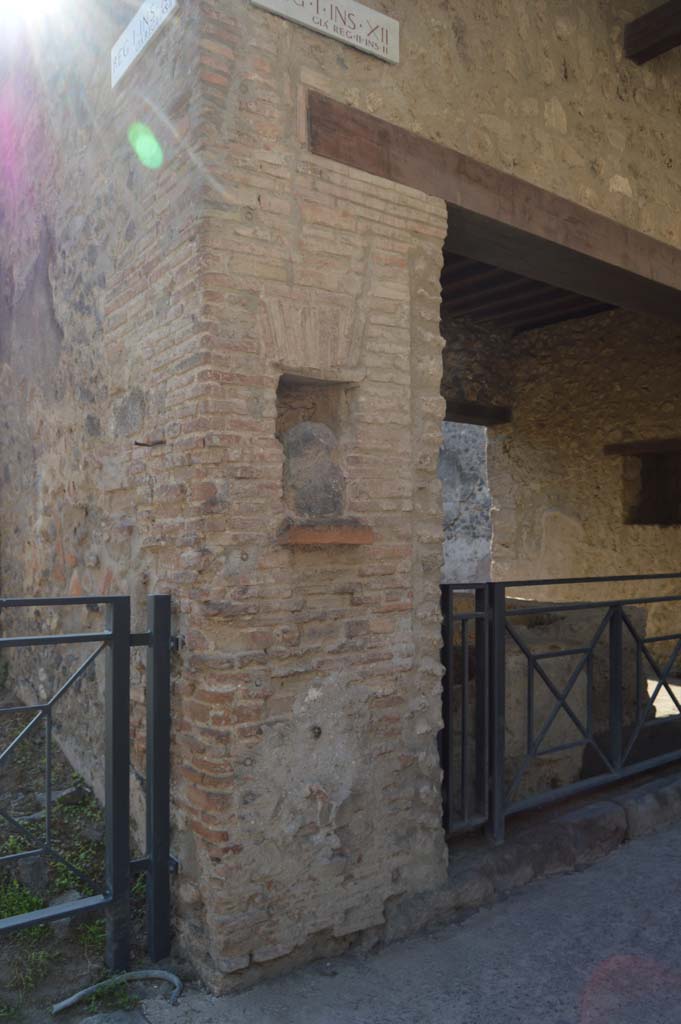
The text was placed towards the right, because the pilaster was interrupted in the middle by a rectangular niche.
In the niche was fixed a coarse rough stone resembling the outline of a human head, not the usual marble bust, as often seen here and there in the street.
See Notizie degli Scavi di Antichità, 1914, (p.204)
See Epigraphik-Datenbank Clauss/Slaby (www.manfredclauss.de).
According to PPM, inserted in the rectangular niche on the left side of the doorway was a blue lava stone, which had been a “lava-bomb” erupted during a prehistoric eruption and which was supposed to have been attributed with sacred and magical values.
This was inserted into an apsed rectangular niche, with the lower level consisting of a tile projecting by about 6 cm and closed into the upper area by another tile with architrave under a flat arch in brick.
See Carratelli, G. P., 1990-2003. Pompei: Pitture e Mosaici. Vol. II. Roma: Istituto della enciclopedia italiana. (p.736)](1%2012%2005_files/image009.jpg)
Street shrine or niche outside I.12.5 Pompeii. September 2005.
This is on Via dell’ Abbondanza, at the corner with Vicolo dei Fuggiaschi.
According to Della Corte, on the red pilaster which ended the insula on the east side, two electoral programmes were found.
The first –
GAVIVM II VIR. [CIL IV 7442]
The second was immediately below the first -
AMPLIATUM L F AED
VICINI
SVRGITE ET
ROGATE
LVTATI F[ac] [CIL IV 7443]
The text was placed towards the right, because the pilaster was interrupted in the middle by a rectangular niche.
In the niche was fixed a coarse rough stone resembling the outline of a human head, not the usual marble bust, as often seen here and there in the street.
See Notizie degli Scavi di Antichità, 1914, (p.204)
See Epigraphik-Datenbank Clauss/Slaby (www.manfredclauss.de).
According to PPM, inserted in the rectangular niche on the left side of the doorway was a blue lava stone, which had been a “lava-bomb” erupted during a prehistoric eruption and which was supposed to have been attributed with sacred and magical values.
This was inserted into an apsed rectangular niche, with the lower level consisting of a tile projecting by about 6 cm and closed into the upper area by another tile with architrave under a flat arch in brick.
See Carratelli,
G. P., 1990-2003. Pompei: Pitture e Mosaici. Vol. II.
Roma: Istituto della enciclopedia italiana. (p.736)
I.12.5 Pompeii. October 2017.
Pilaster with niche on east side of entrance doorway.
Foto Taylor Lauritsen, ERC Grant 681269 DÉCOR.
I.12.5
Pompeii. October 2023. Looking
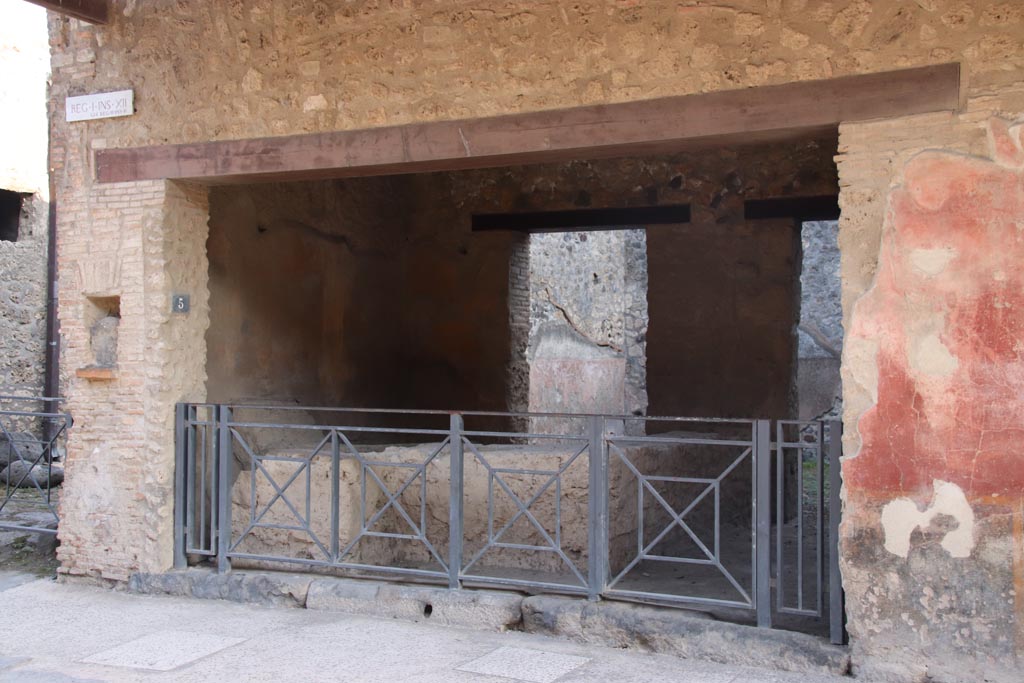
towards entrance doorway on south side of Via dell’Abbondanza. Photo courtesy of Klaus Heese.
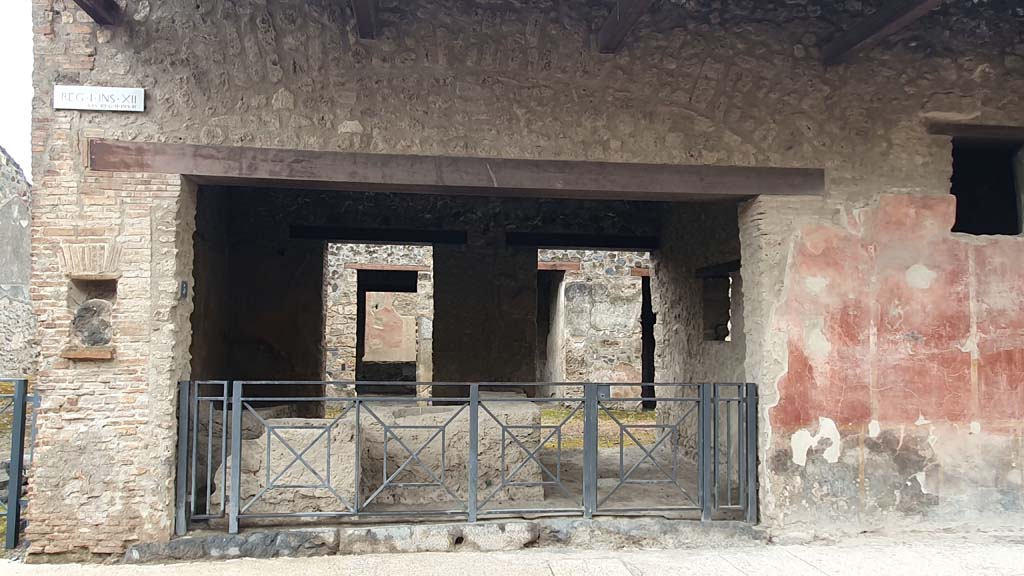
I.12.5 Pompeii. July 2021. Looking south towards entrance doorway.
Foto Annette Haug, ERC Grant 681269 DÉCOR.
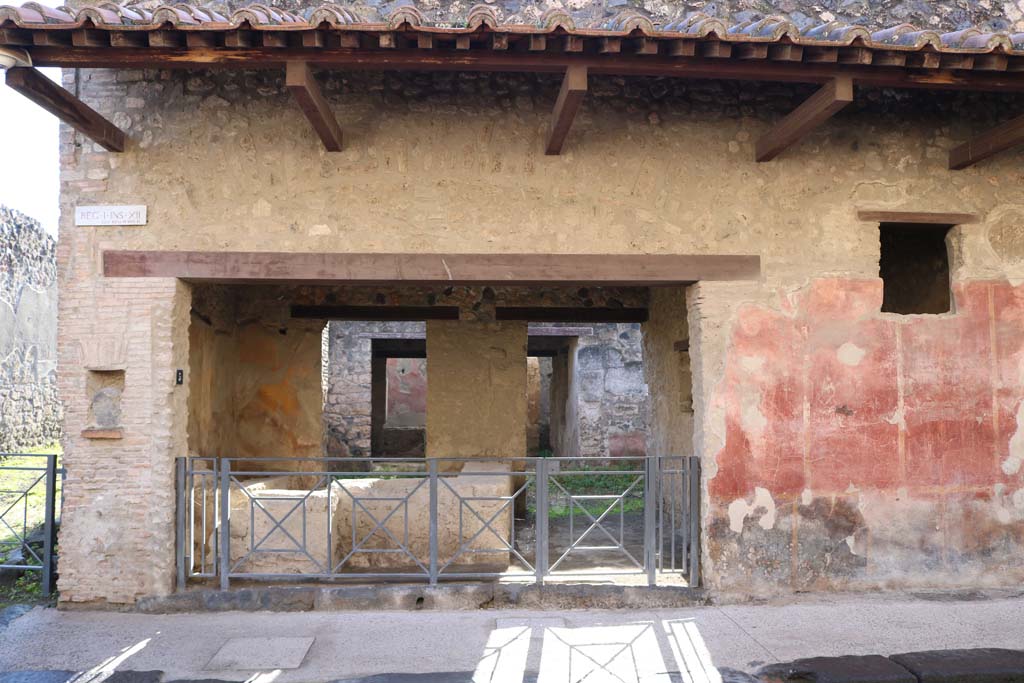
I.12.5 Pompeii. December 2018.
Looking towards entrance doorway on south side of Via
dell’Abbondanza. Photo courtesy of Aude Durand.
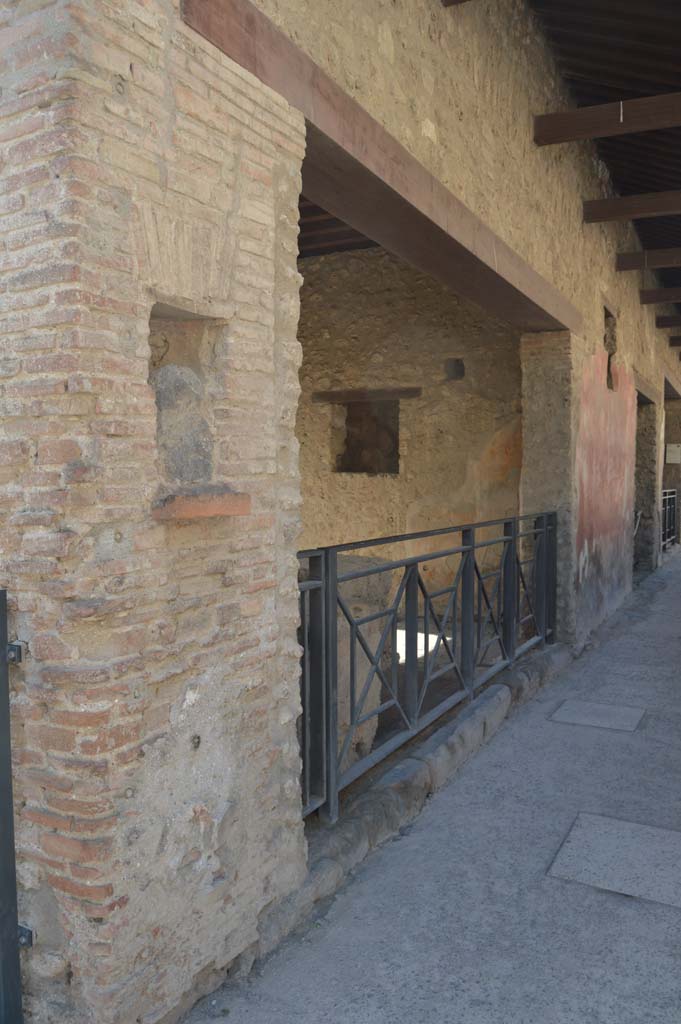
I.12.5
Pompeii. October 2017. Looking west across entrance doorway.
Foto Taylor Lauritsen, ERC Grant 681269 DÉCOR.
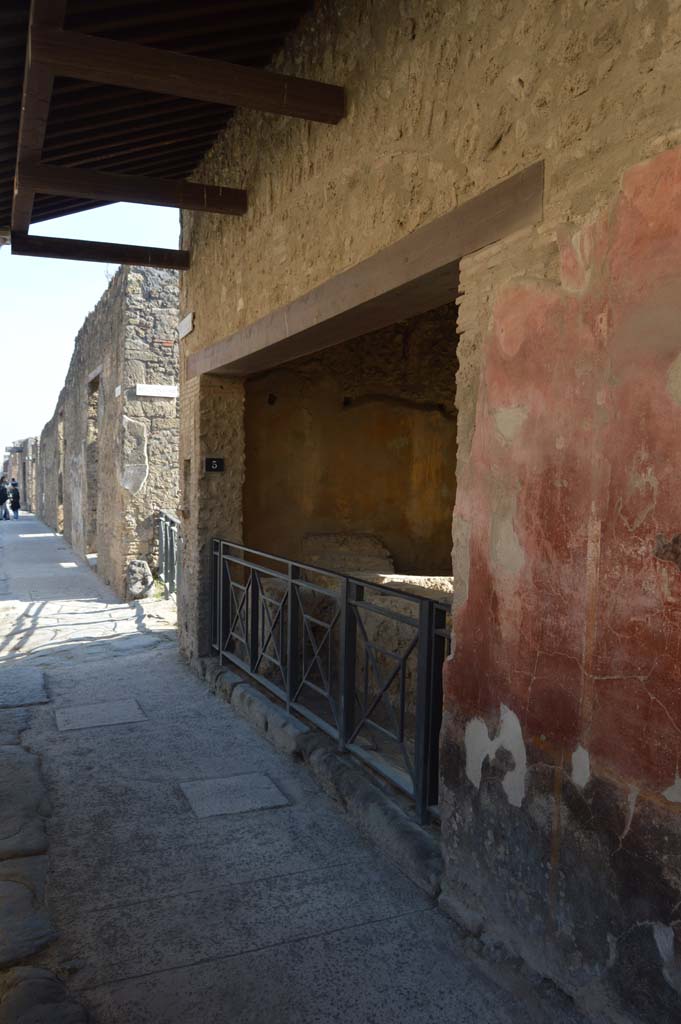
Looking east across entrance
doorway on Via dell’Abbondanza.
Foto
Taylor Lauritsen, ERC Grant 681269 DÉCOR.
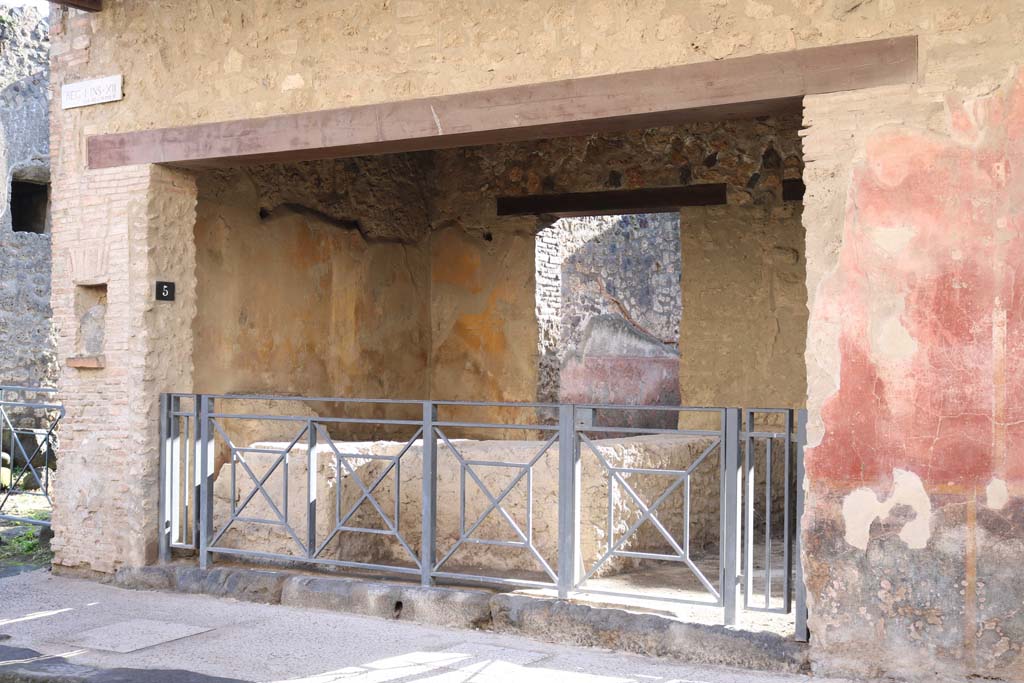
I.12.5 Pompeii. December 2018. Entrance doorway on south
side of Via dell’Abbondanza. Photo courtesy of Aude Durand.
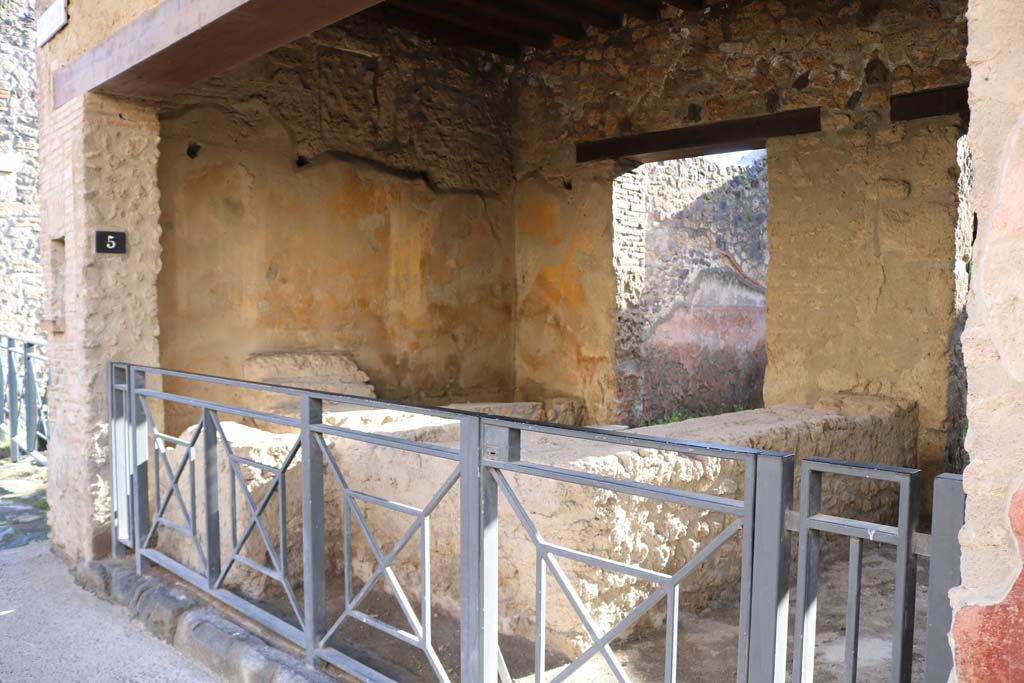
I.12.5 Pompeii.
December 2018. Looking south-east across bar-room, from entrance doorway. Photo courtesy of Aude Durand.
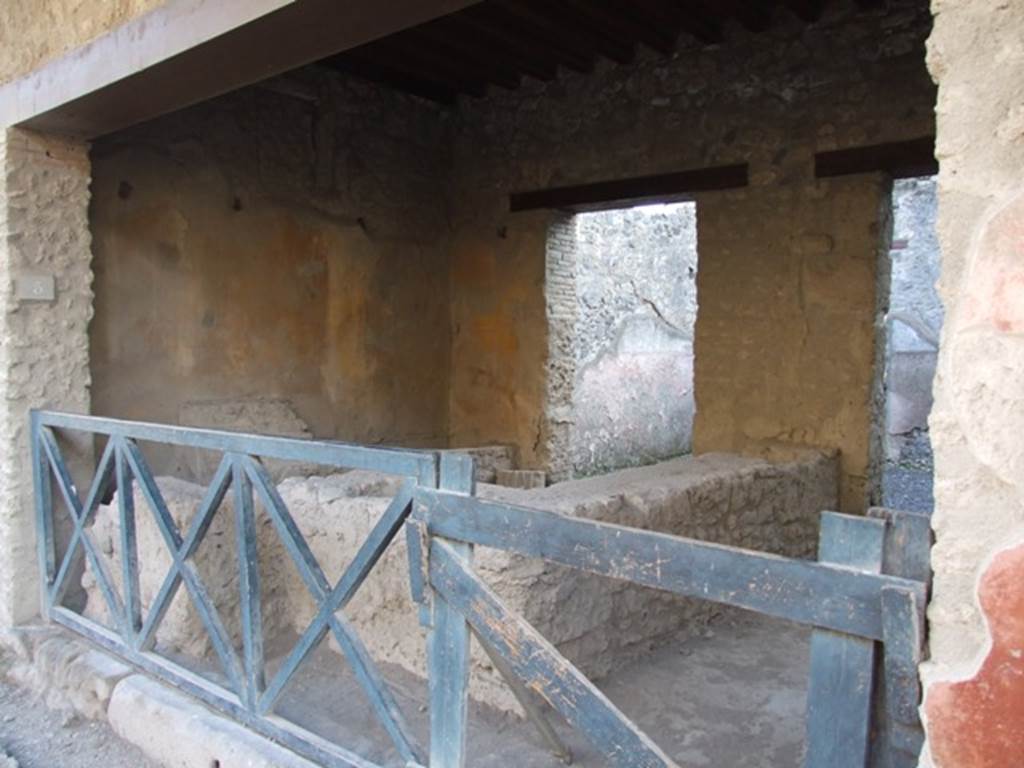
I.12.5 Pompeii. December 2007. Entrance doorway, looking south-east.
According to Della Corte, on 3rd April 1914, nearly at the height of the architrave, a cylindrical door bell (0.14 high) was found.
Near to this a bronze coin from the time of Tiberius was also found.
See Notizie degli Scavi di Antichità, 1914,
(p.180).
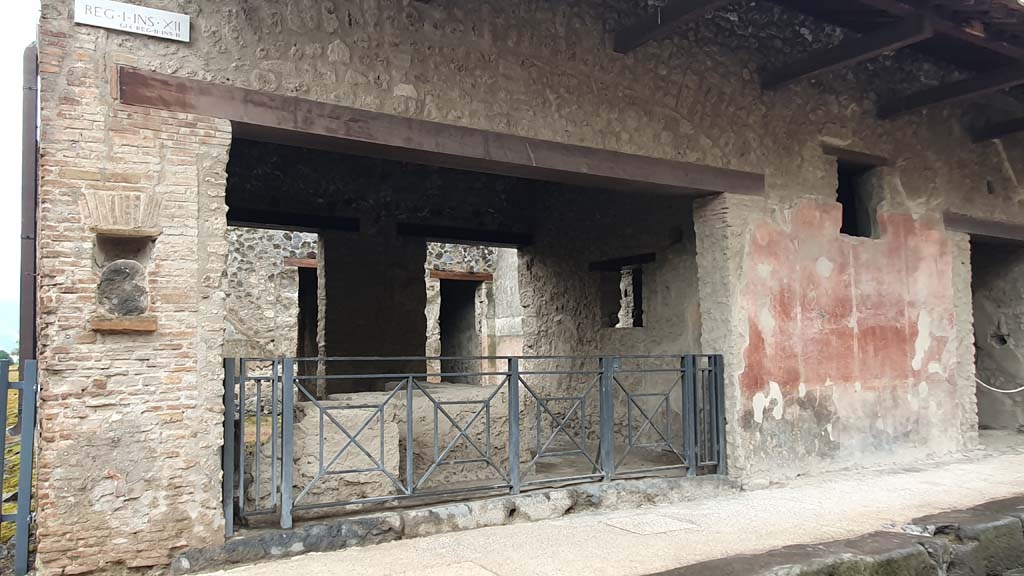
I.12.5 Pompeii. July 2021. Looking south-west towards entrance, and through to rear.
Foto Annette Haug, ERC Grant 681269 DÉCOR.
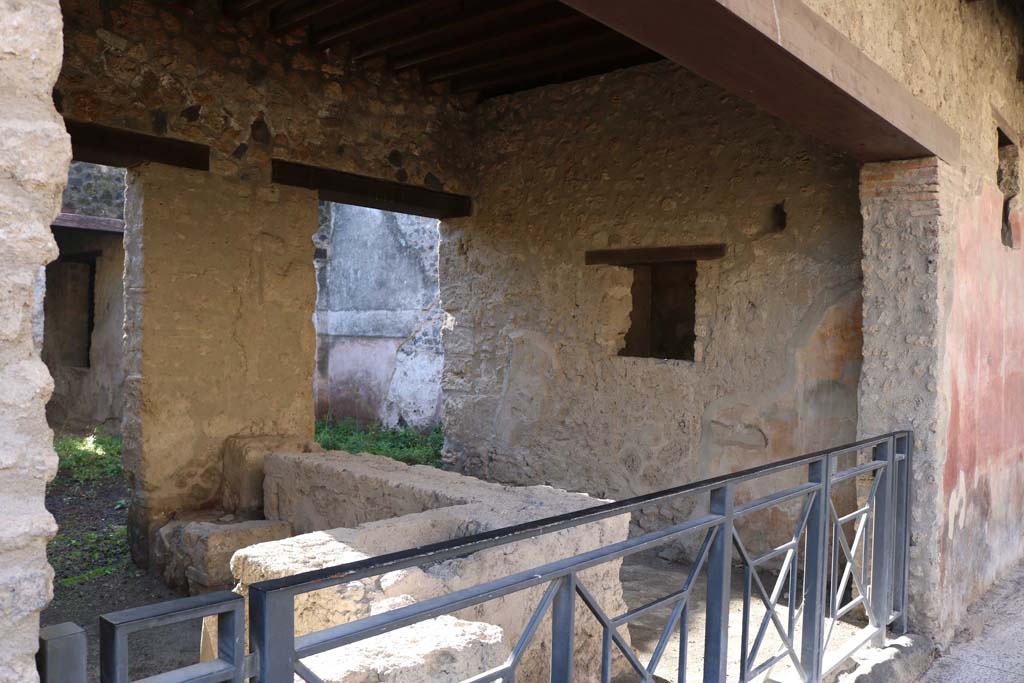
I.12.5 Pompeii. December 2018. Looking towards west side of
bar-room, from entrance doorway. Photo courtesy of Aude Durand.
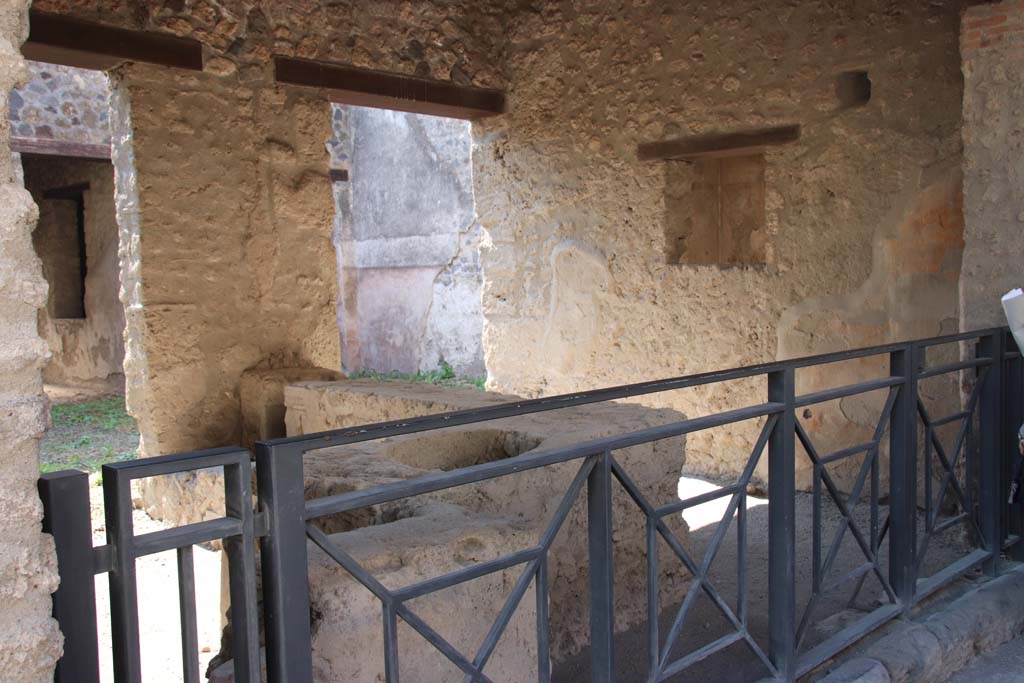
I.12.5
Pompeii. September 2017. Looking south-west from entrance doorway. Photo
courtesy of Klaus Heese.
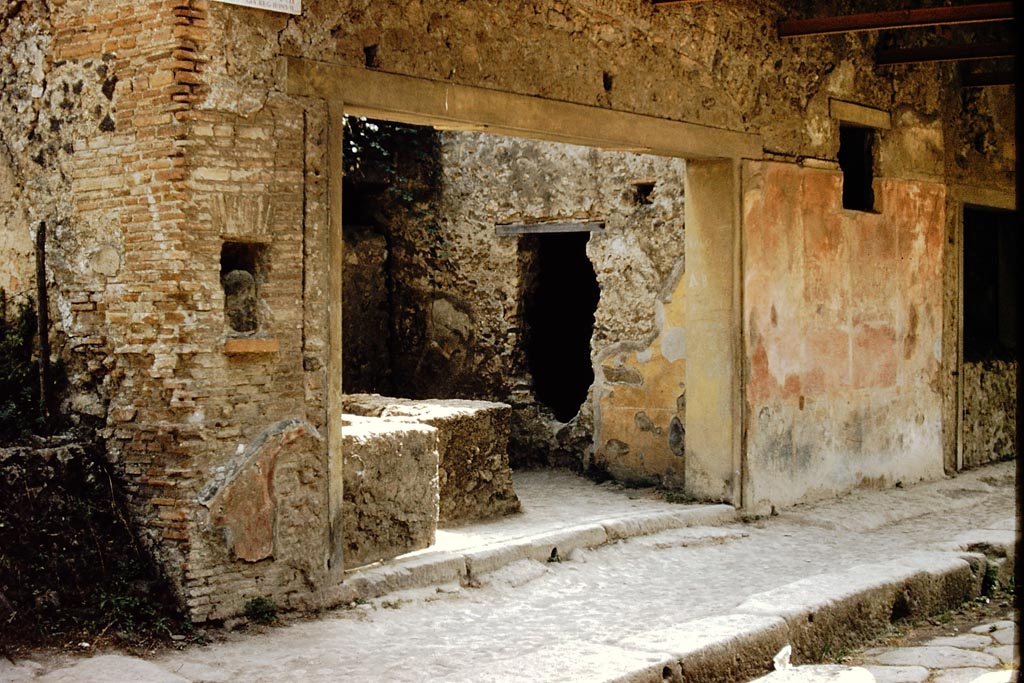
I.12.5 Pompeii. 1959. Entrance doorway, looking south-west. Photo by Stanley A. Jashemski.
Source: The Wilhelmina and Stanley A. Jashemski archive in the University of Maryland Library, Special Collections (See collection page) and made available under the Creative Commons Attribution-Non-Commercial License v.4. See Licence and use details.
J59f0515
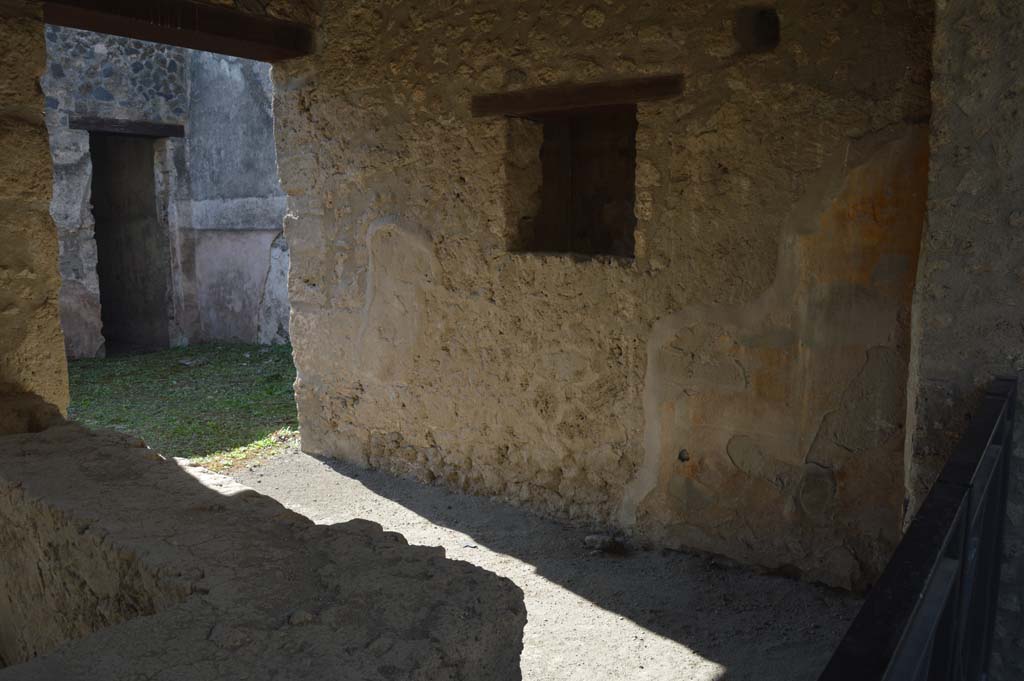
I.12.5 Pompeii. October 2017.
Looking towards west wall.
Foto Taylor Lauritsen, ERC Grant 681269 DÉCOR.
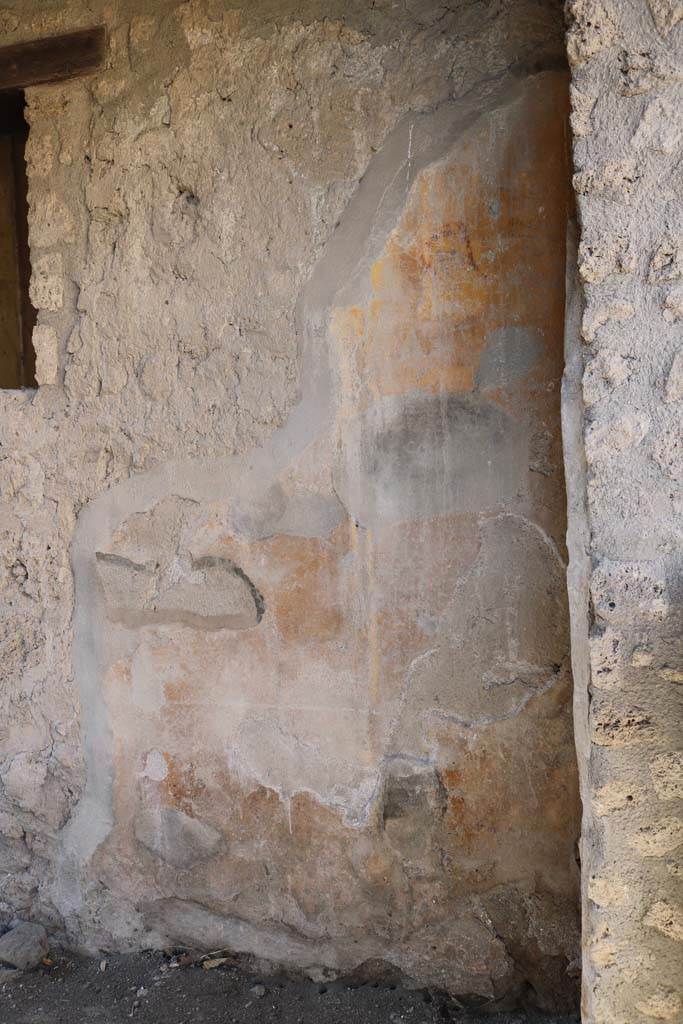
I.12.5 Pompeii. December 2018.
Painted
decoration from north end of west wall of bar-room. Photo courtesy of Aude
Durand.
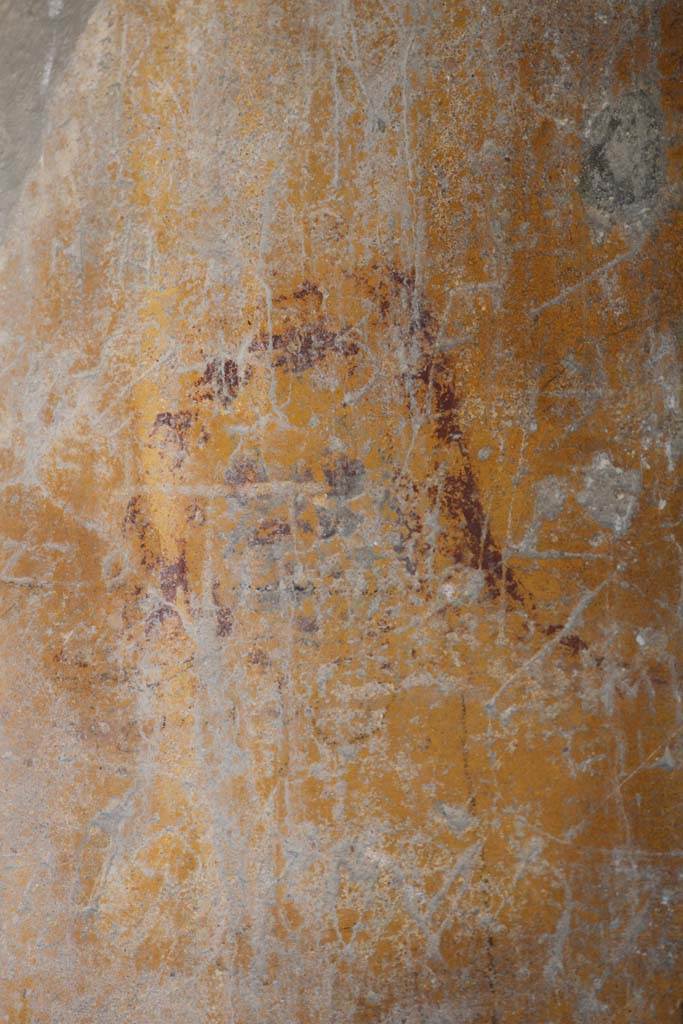
I.12.5 Pompeii. December 2018.
Detail of remaining painted decoration from
north end of west wall of bar-room. Photo courtesy of Aude Durand.
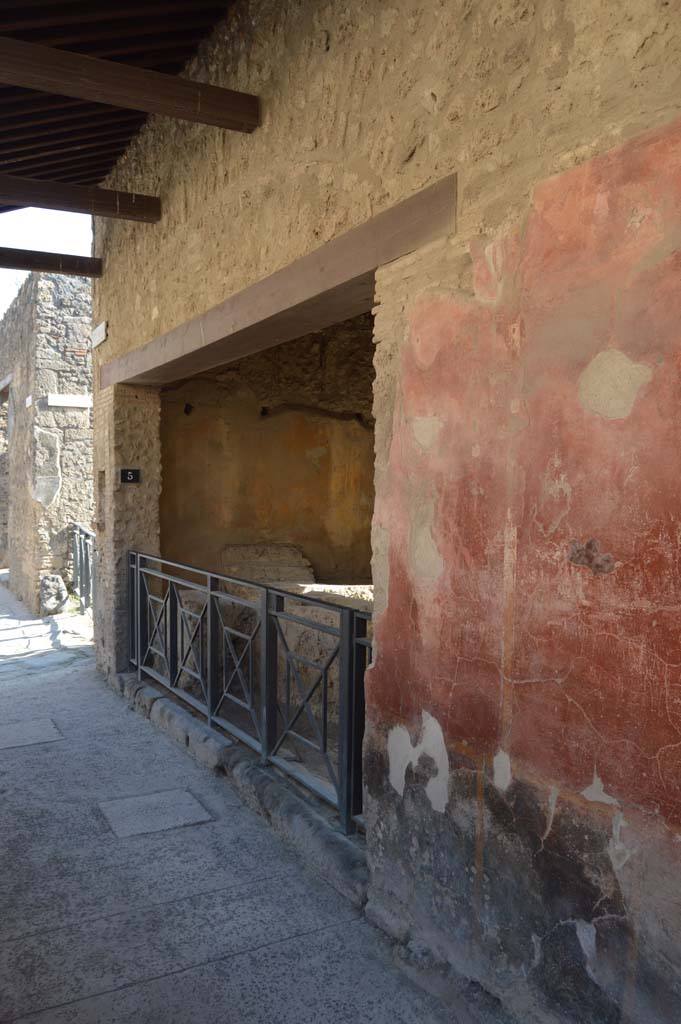
I.12.5
Pompeii. October 2017. Looking east from painted wall between I.12.5 and
I.12.4.
Foto Taylor Lauritsen, ERC
Grant 681269 DÉCOR.
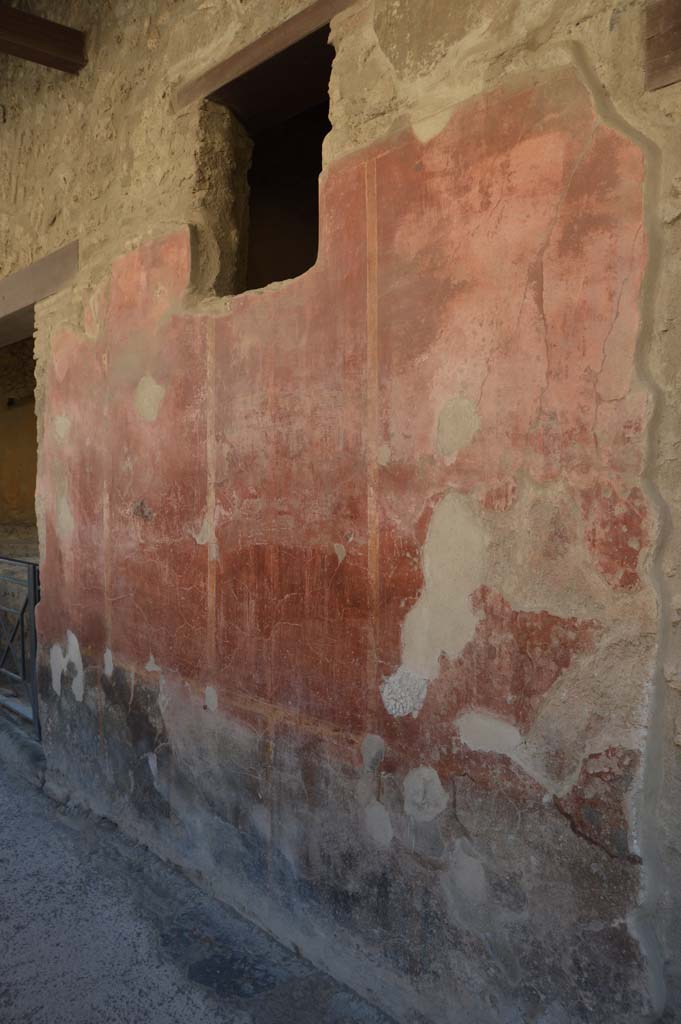
I.12.5
Pompeii. October 2017.
Looking
east along painted wall between I.12.5 and I.12.4.
Foto Taylor Lauritsen, ERC
Grant 681269 DÉCOR.
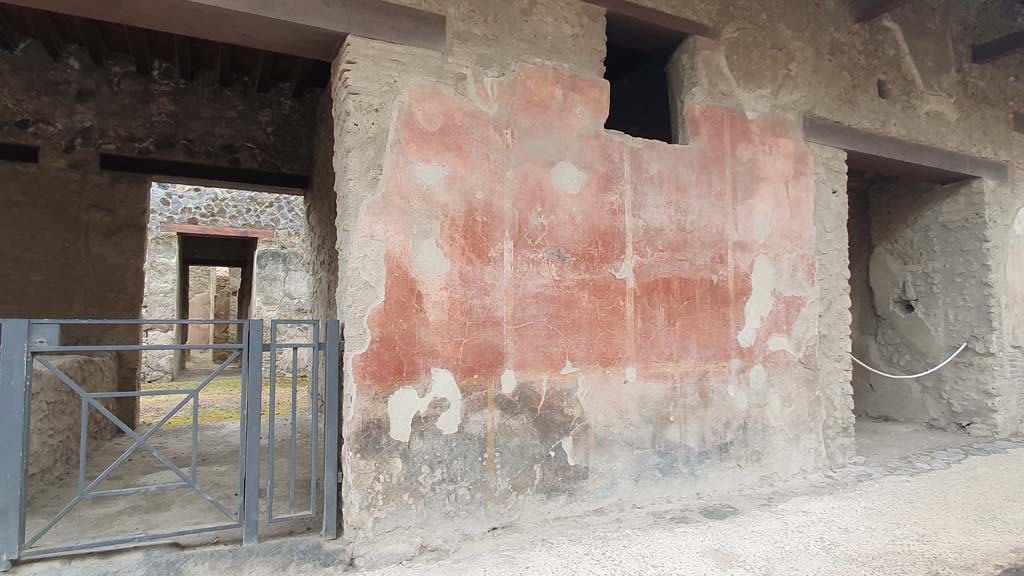
I.12.5 Pompeii. July 2021. Detail of remaining coloured stucco on west side of doorway, with I.12.4, on right.
Foto Annette Haug, ERC
Grant 681269 DÉCOR.
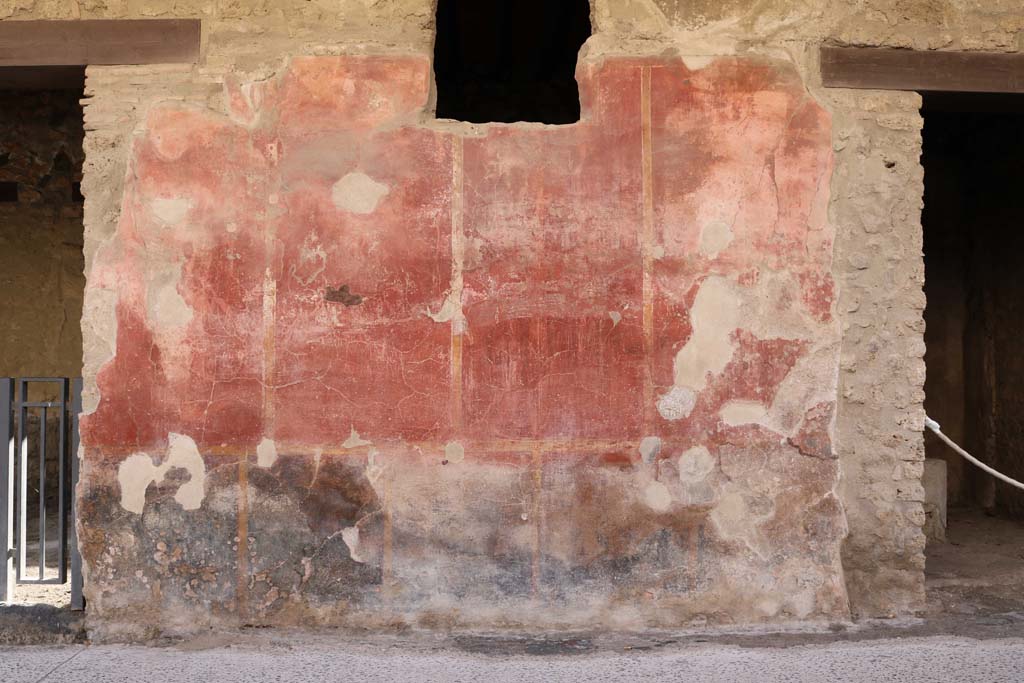
I.12.5 Pompeii, on left. December
2018.
Looking south towards wall between two
doorways with 1.12.4 on right. Photo courtesy of Aude Durand.
Foto
Taylor Lauritsen, ERC Grant 681269 DÉCOR.
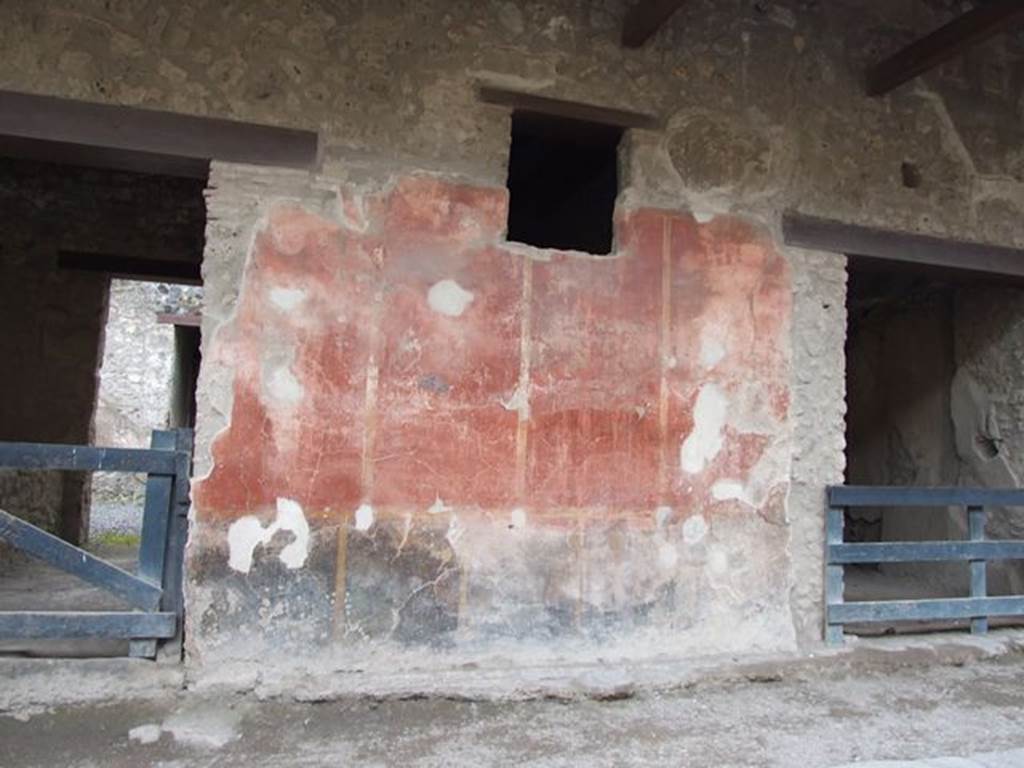
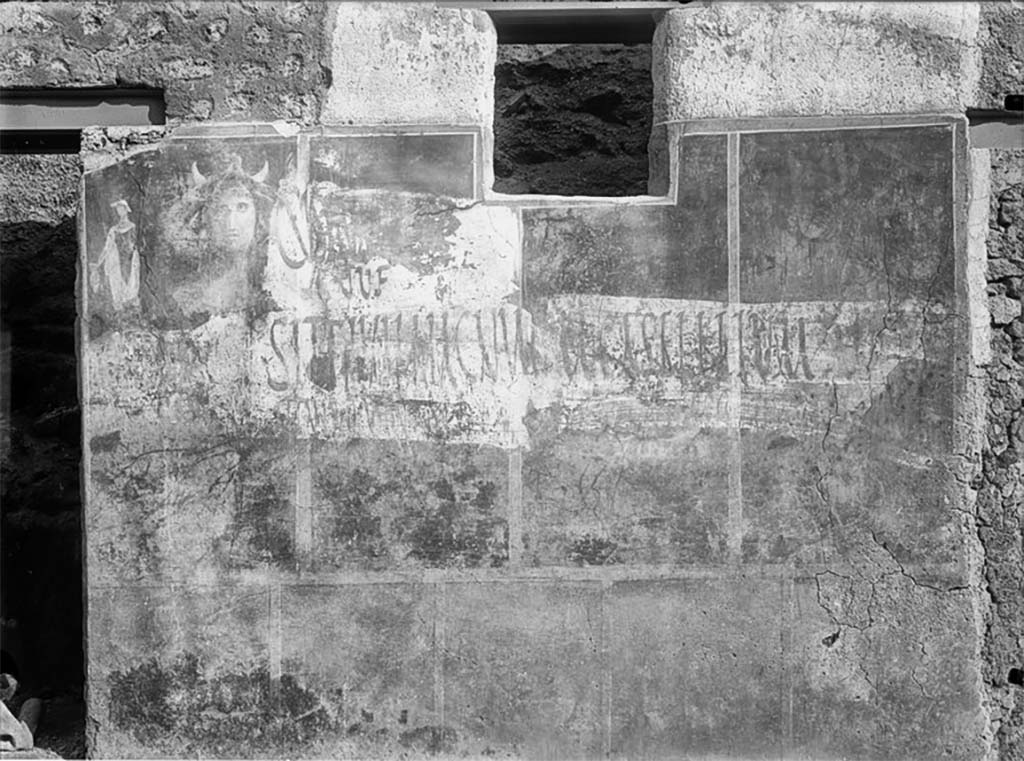
I.12.5 Pompeii, on left. December 2006. Painted wall plaster between two doorways. I.12.4, on right.
High up near the architrave, on the west side (right) of the doorway of I.12.5, a large painted head was found.
This showed the personification of Alessandria, or of Egypt.
On the left side of the large painted head was a painted Mercury,
Many graffiti were recorded from the walls between I.12.5 and I.12.4.
See Notizie degli Scavi di Antichità, 1914,
(p.181-2)
See Varone, A. and Stefani, G., 2009. Titulorum Pictorum Pompeianorum, Rome: L’erma di Bretschneider. (p.154-5)
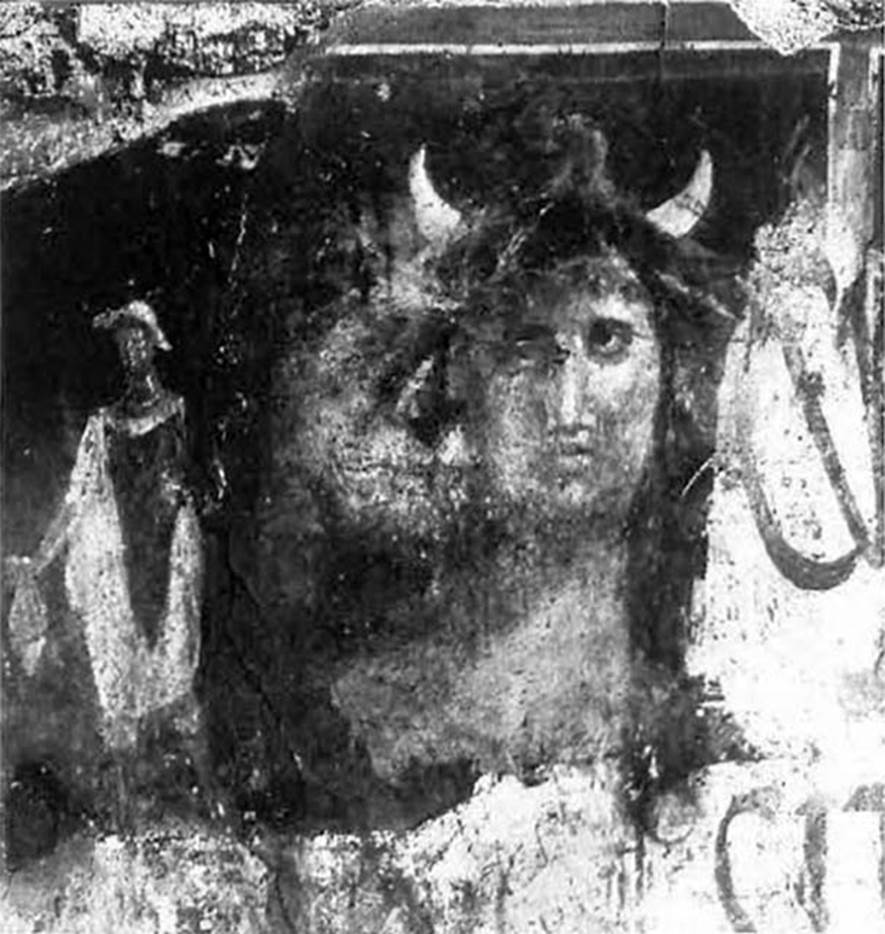
I.12.5 Pompeii. C.1915.
High up near the architrave, on the west side (right) of the doorway of I.12.5, a large painted head was found.
This showed the personification of Alessandria, or of Egypt, looking straight ahead.
Her head was covered with the usual tusks of an elephant.
On the left side of the large painted head, where the stucco is now missing, was a painted Mercury,
Mercury (0.56m high) was standing with his caduceus leaning on his left shoulder.
His purse was in his right hand.
See Fröhlich, T., 1991. Lararien und Fassadenbilder in den Vesuvstädten. Mainz: von Zabern, F11, Taf. 54,4.
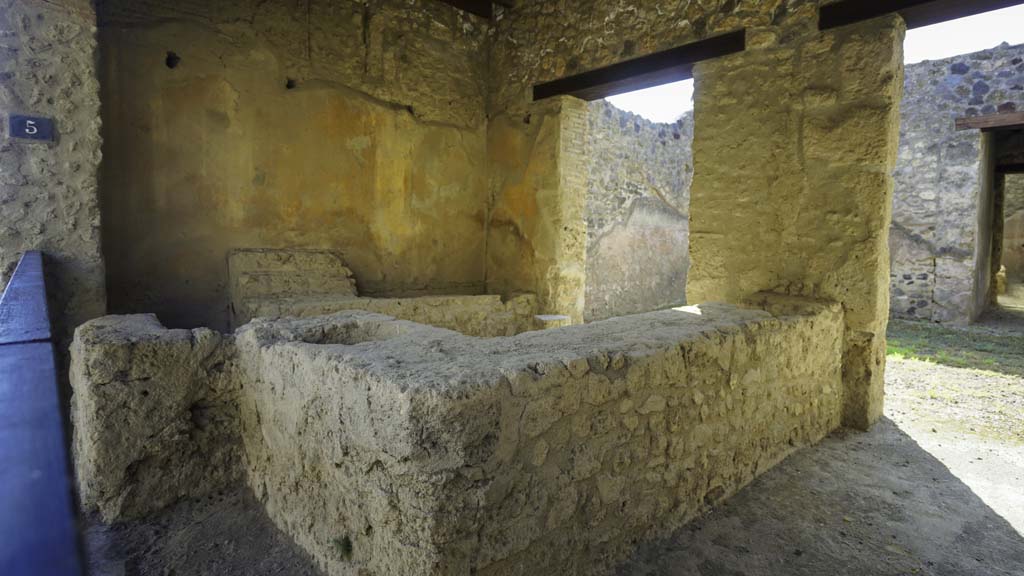
I.12.5 Pompeii. August 2021.
Looking towards east wall, and counter with shelving for
displaying drinking vessels. Photo courtesy of Robert Hanson.
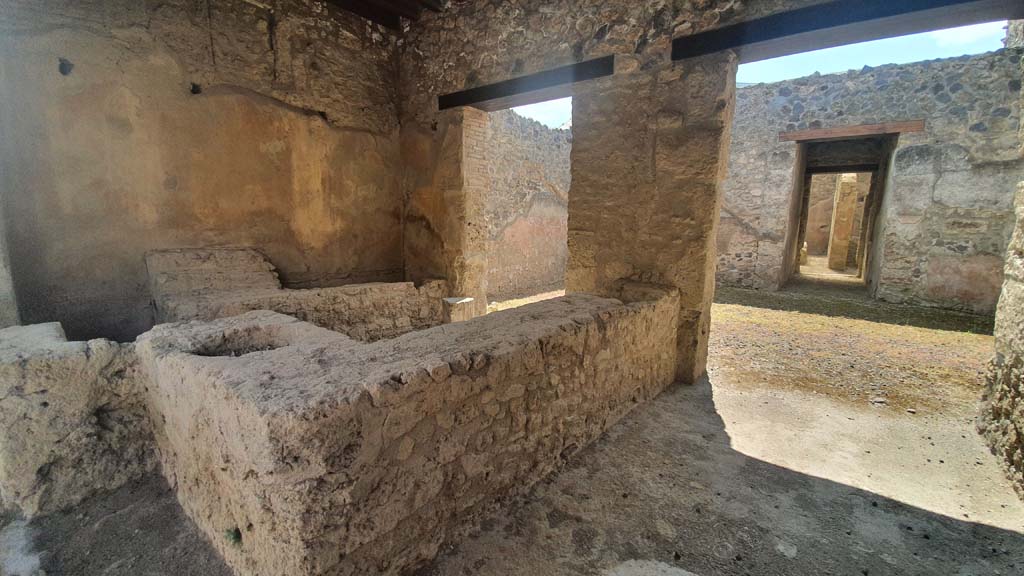
I.12.5 Pompeii. July 2021.
Looking south-east towards east side of bar-room and south across atrium to corridor leading to garden at rear.
Foto Annette Haug, ERC Grant 681269 DÉCOR.
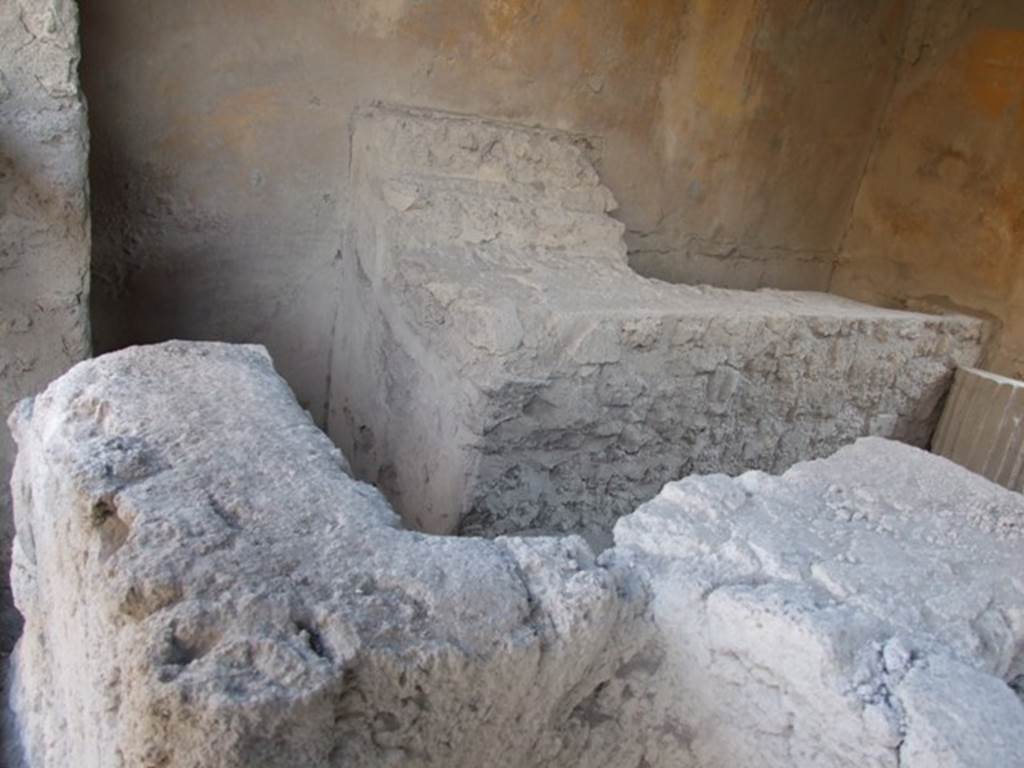
I.12.5 Pompeii. December 2007. Counter with remains of shelves for displaying drinking vessels.
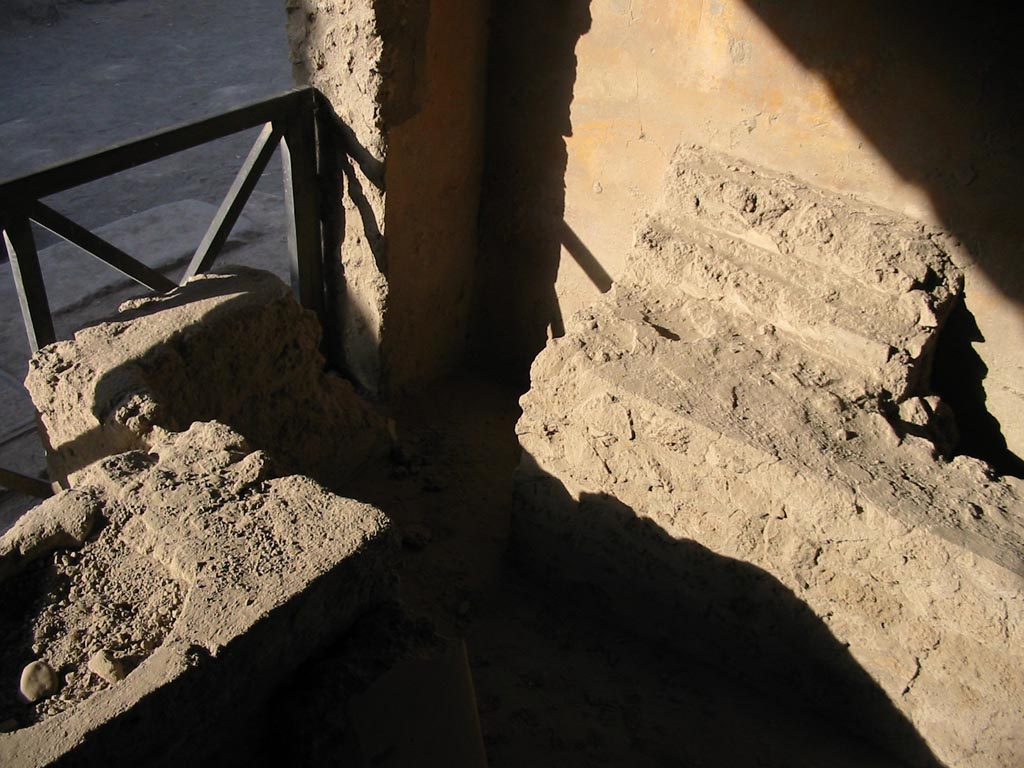
I.12.5 Pompeii. May 2003. Looking towards north-east corner. Photo courtesy of Nicolas Monteix.
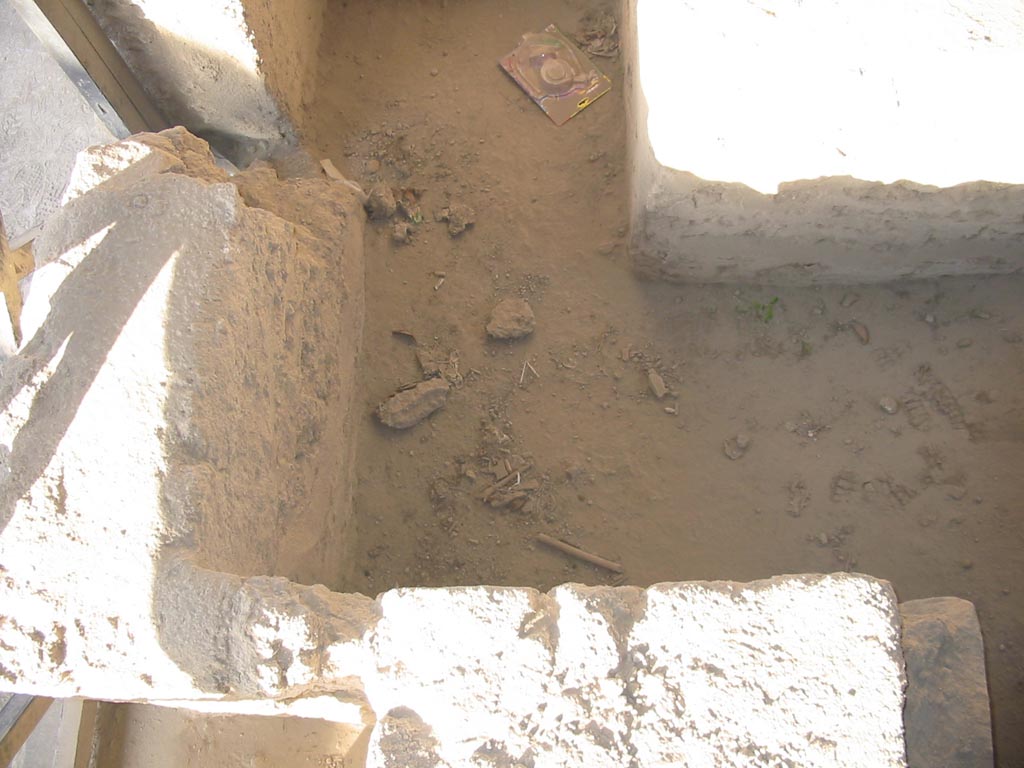
I.12.5 Pompeii. May 2003. Looking down on counter in north-east corner. Photo courtesy of Nicolas Monteix.
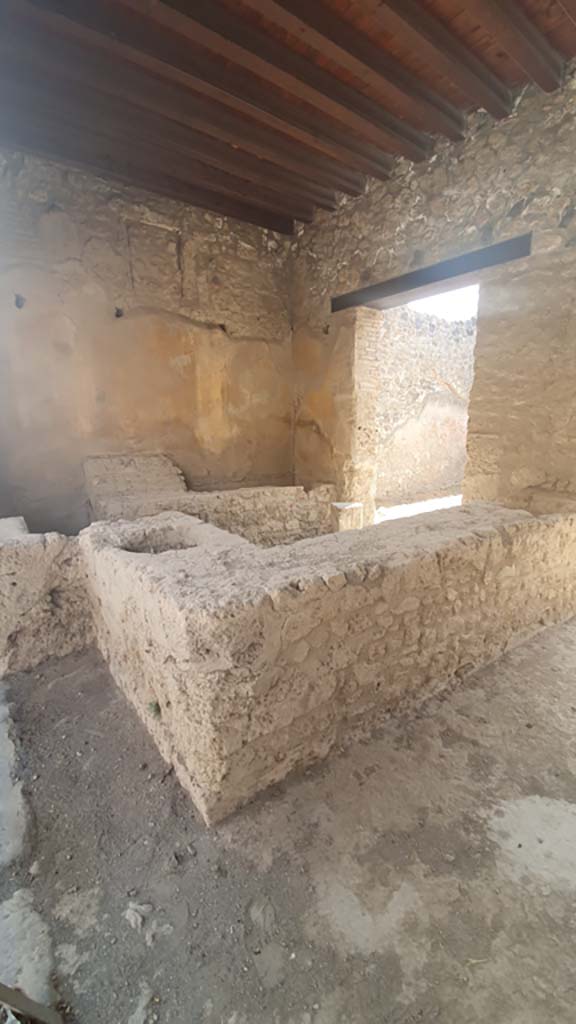
I.12.5 Pompeii. July 2021. Looking south-east across bar-counter.
Foto Annette Haug, ERC Grant 681269 DÉCOR.
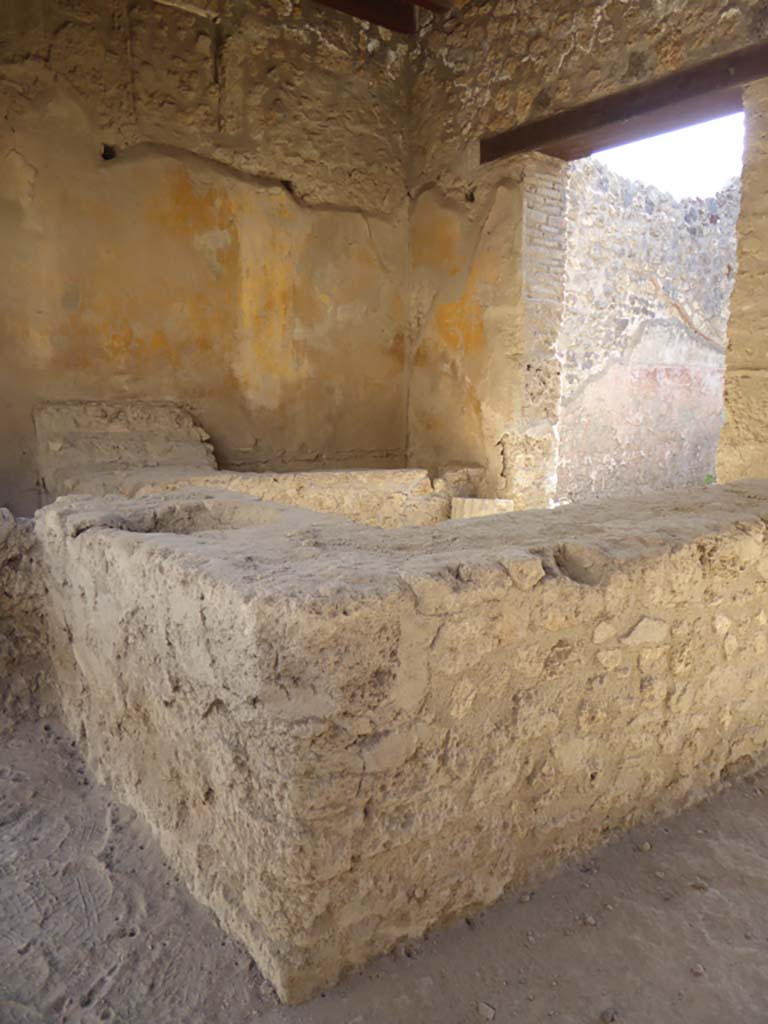
I.12.5 Pompeii. September 2015. Looking south-east across counter.
Foto Annette Haug, ERC Grant 681269 DÉCOR.
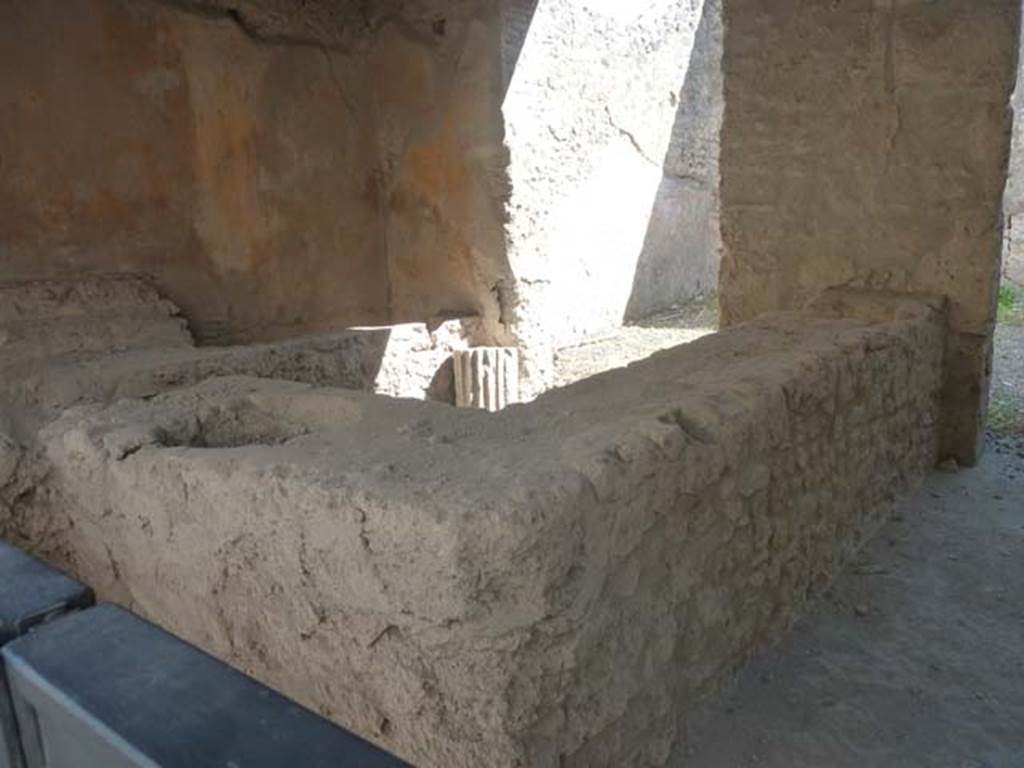
I.12.5 Pompeii. September 2015. Looking south-east across counter.
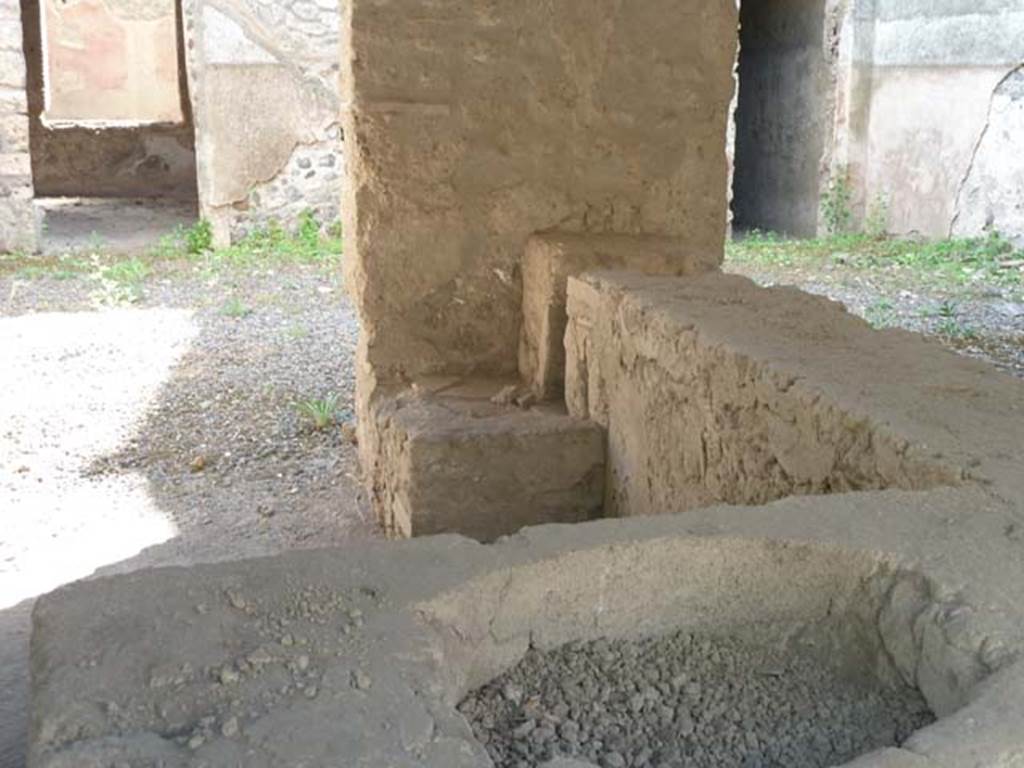
I.12.5 Pompeii. September 2015. Looking south along counter, towards hearth at far end.
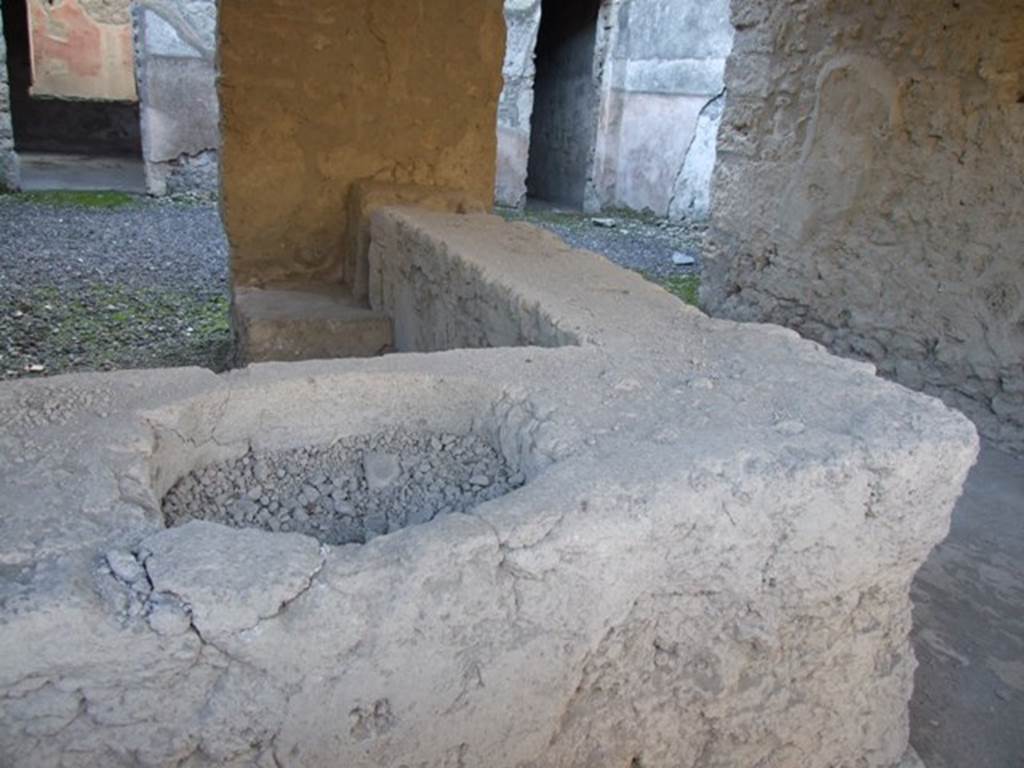
I.12.5 Pompeii. December 2007. Counter, looking south.
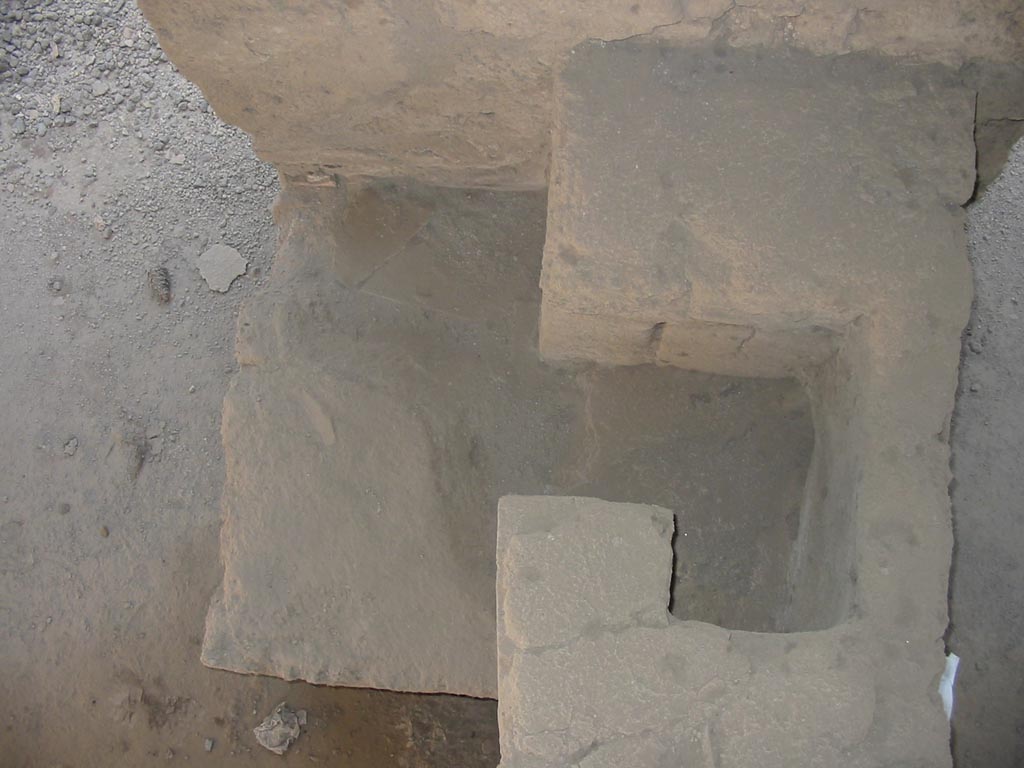
I.12.15 Pompeii. May 2003. Looking down on hearth at south end of counter. Photo courtesy of Nicolas Monteix.
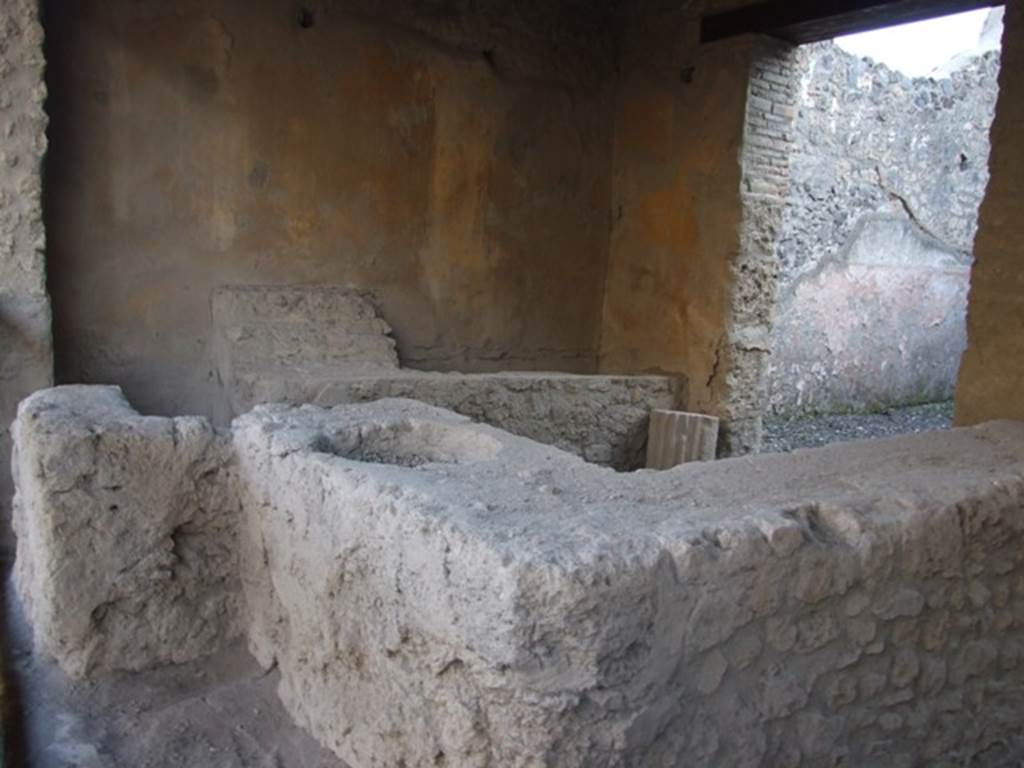
I.12.5 Pompeii. December 2007. Counter and east wall.
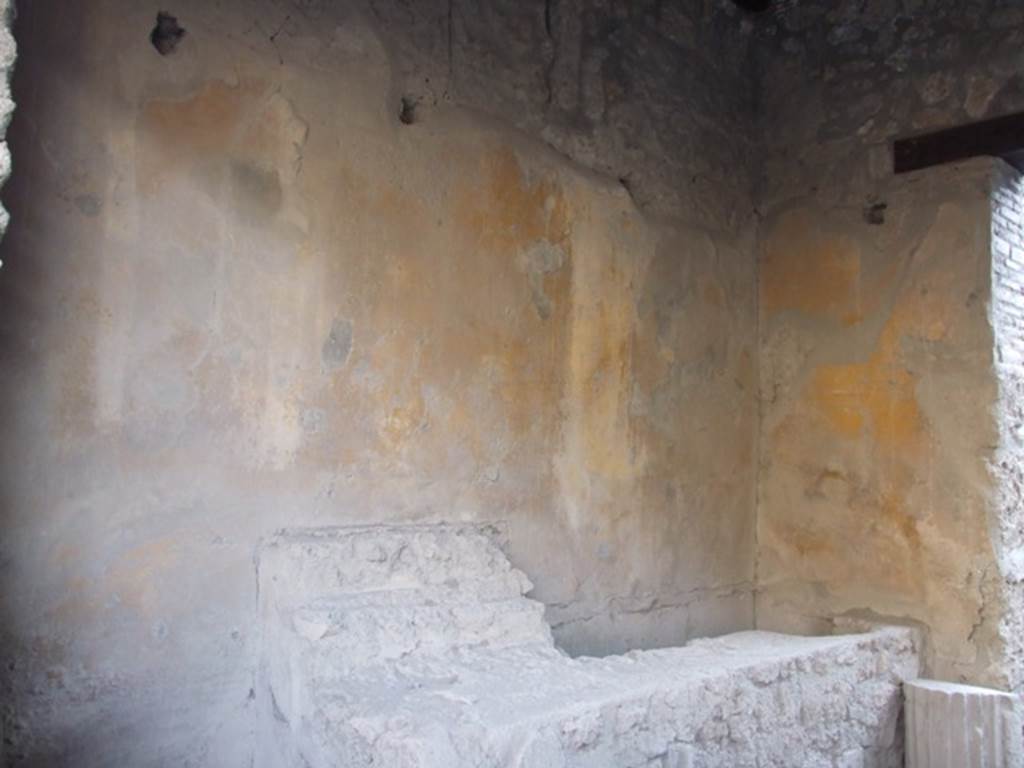
I.12.5 Pompeii. December 2007. Looking towards east wall.
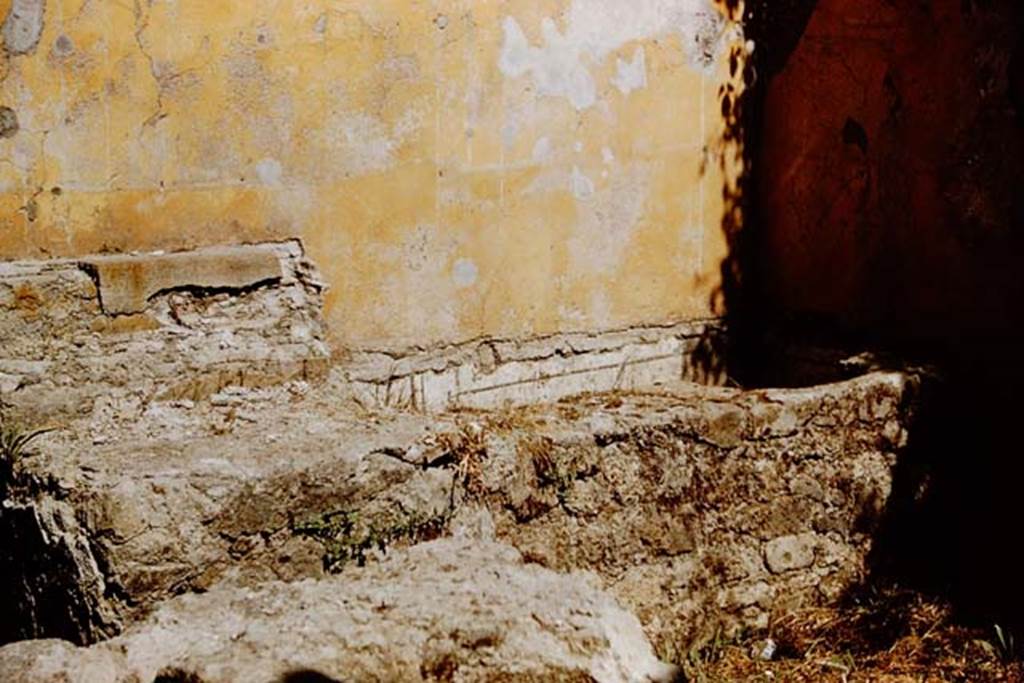
I.12.5 Pompeii. 1959. East wall with counter and remains of shelving. Photo by Stanley A. Jashemski.
Source: The Wilhelmina and Stanley A. Jashemski archive in the University of Maryland Library, Special Collections (See collection page) and made available under the Creative Commons Attribution-Non-Commercial License v.4. See Licence and use details.
J59f0491
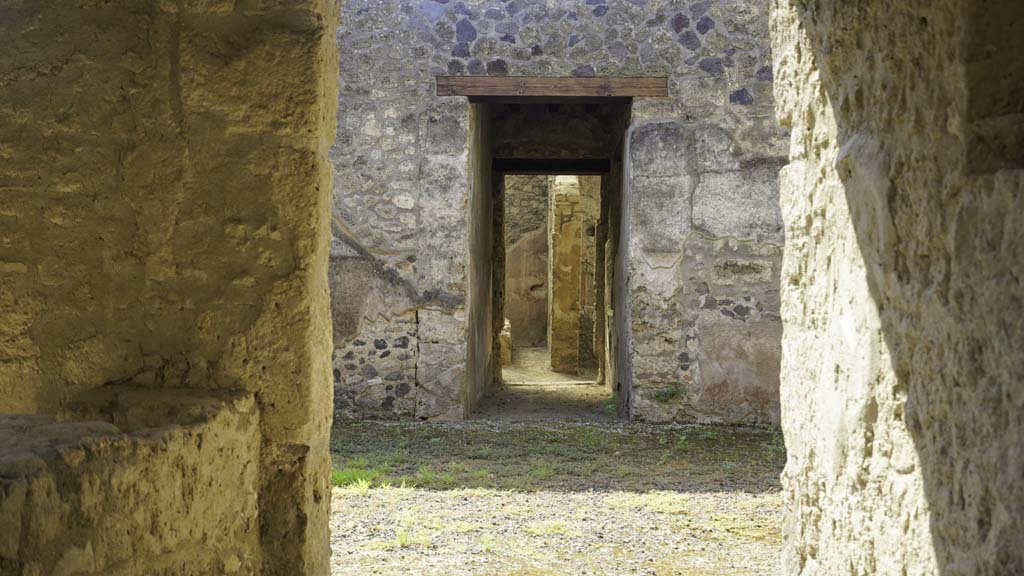
I.12.5 Pompeii. August 2021. Looking south across
atrium to corridor leading to garden. Photo courtesy of Robert Hanson.
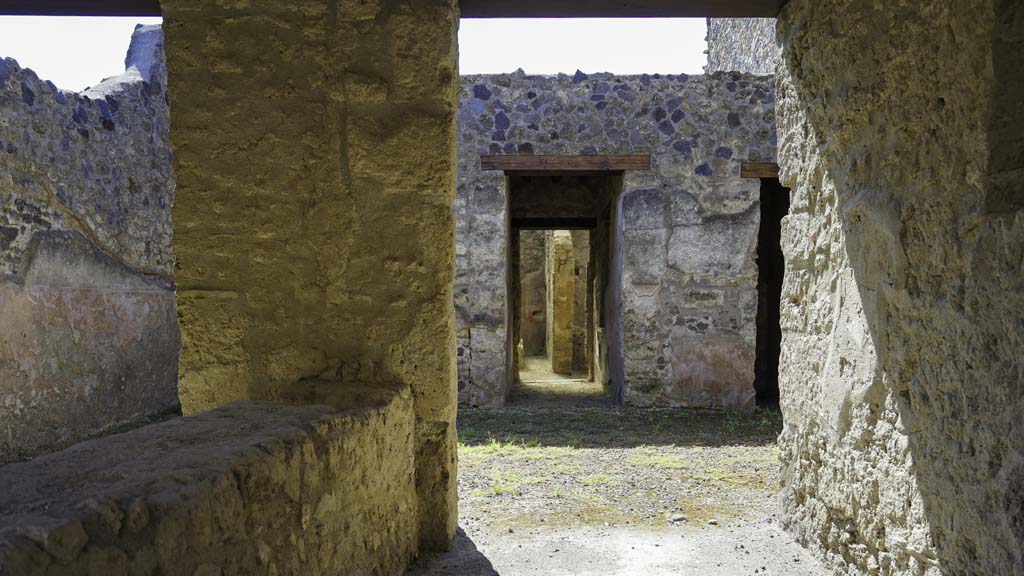
I.12.5 Pompeii. August 2021. Looking south to rear. Photo
courtesy of Robert Hanson.
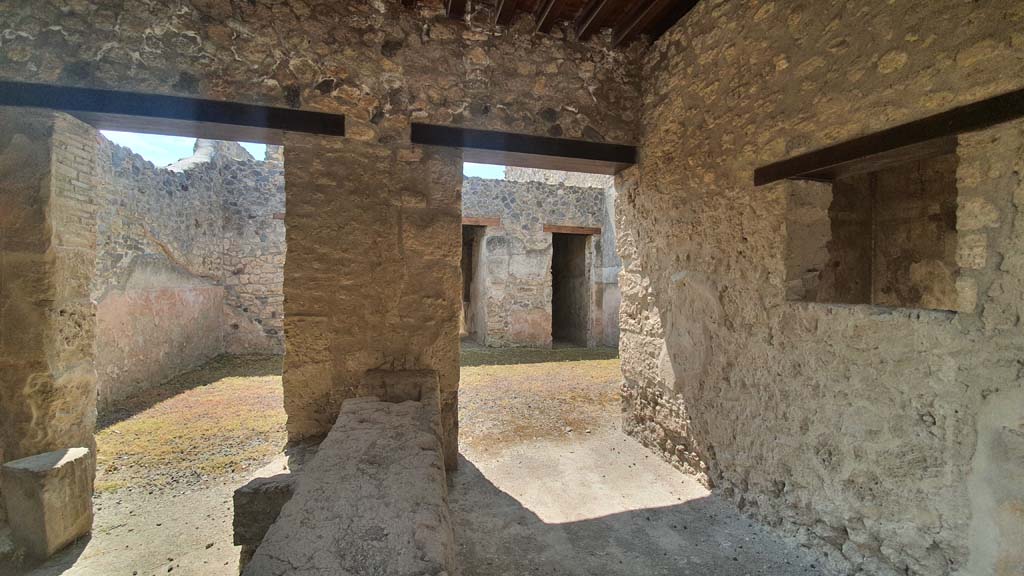
I.12.5 Pompeii. July 2021. Looking south-west across bar-room.
Foto Annette Haug, ERC Grant 681269 DÉCOR.
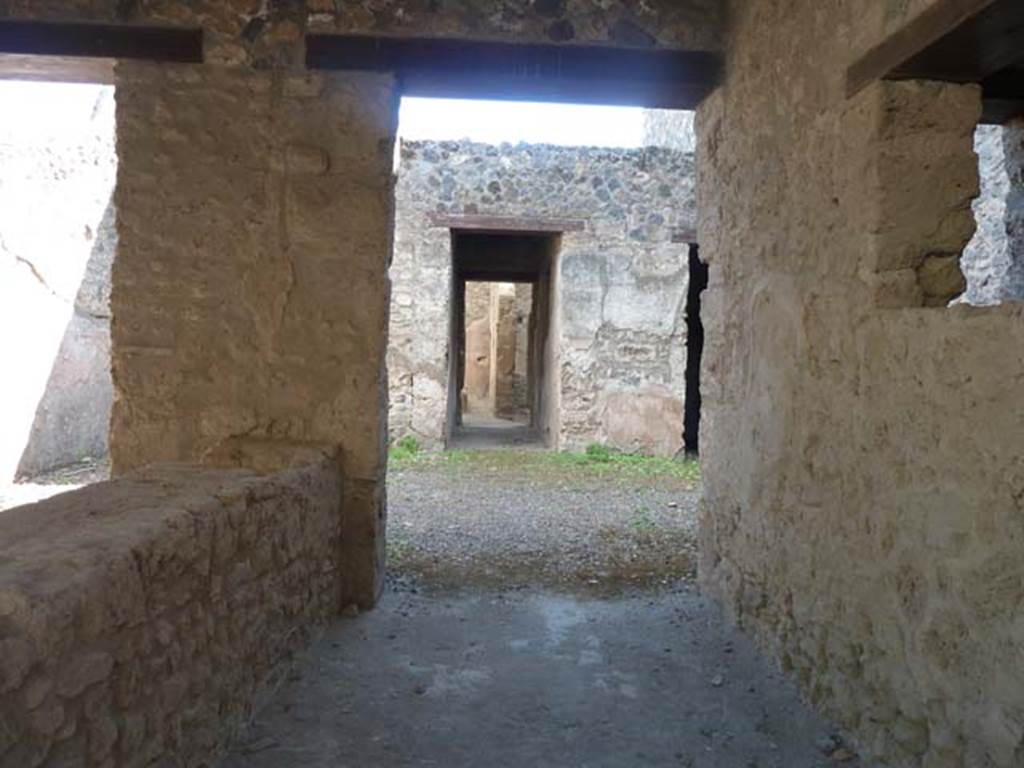
I.12.5 Pompeii. September 2015. Looking south.
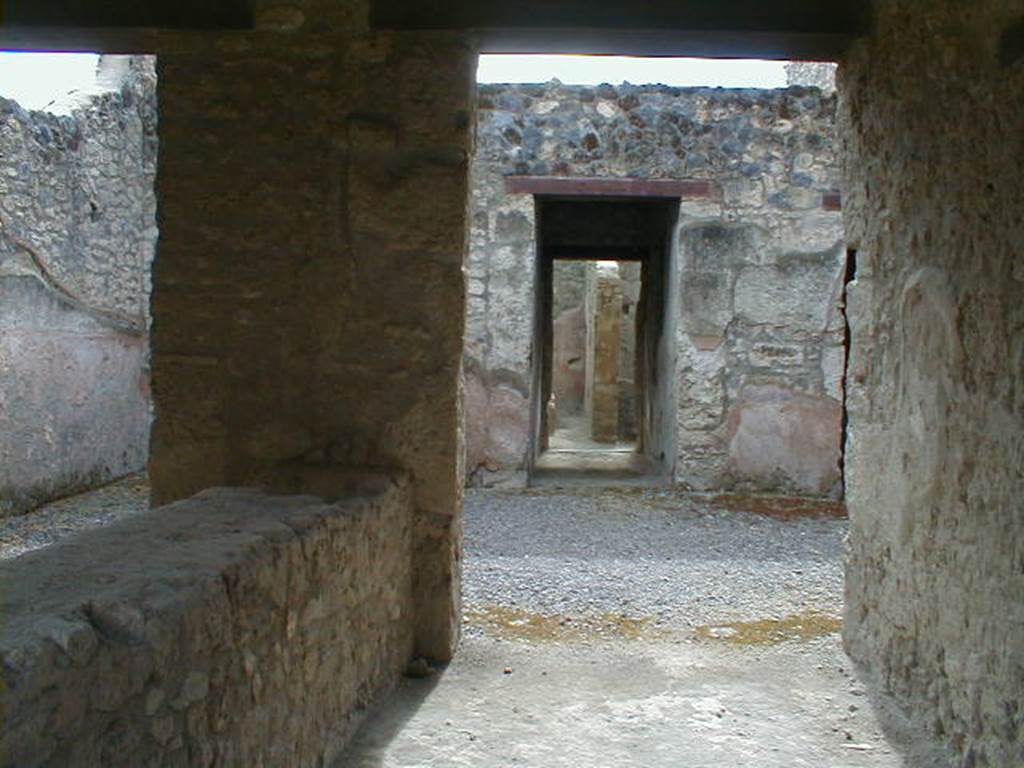
I.12.5 Pompeii. September 2004. Looking south across atrium to corridor leading to garden.
According to Wallace-Hadrill, this property comprised a shop area with counter.
At the rear was a displuviate atrium, and three other rooms.
In the backyard were well constructed masonry stairs to the upper floor, and a large, lined basin surrounded by low wall.
When he conducted his survey, there were faded style III and IV style decoration in three rooms.
See Wallace-Hadrill, A, (1994): Houses and Society in Pompeii and Herculaneum, UK, Princeton Univ. Press, (p.196)
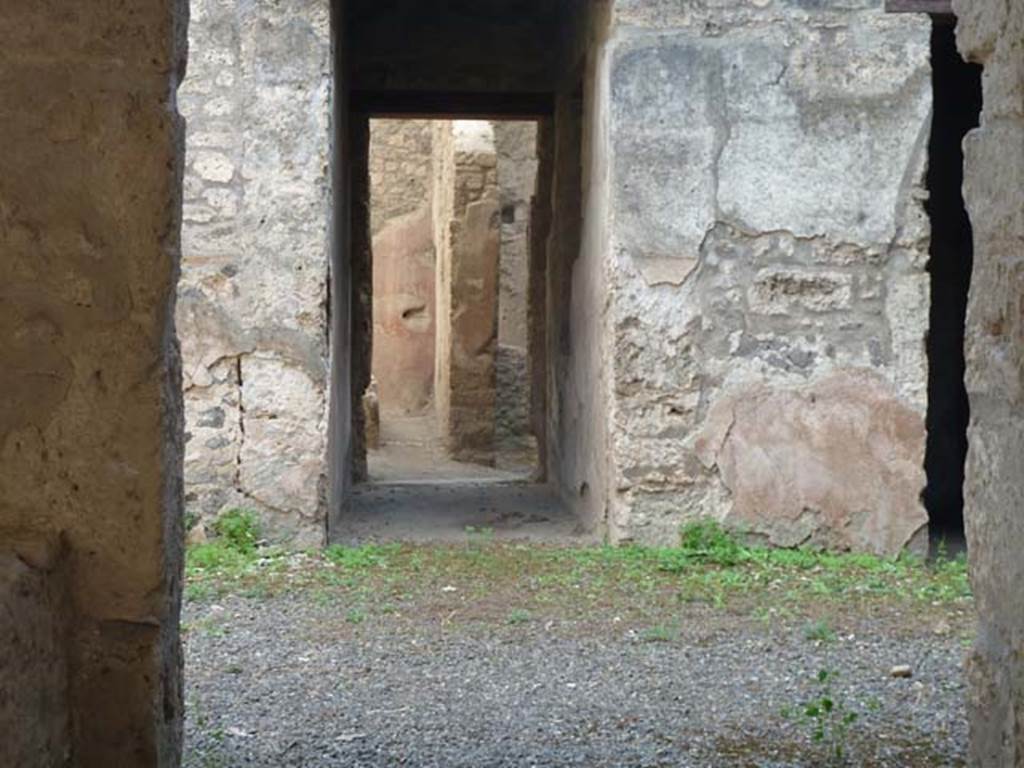
I.12.5 Pompeii. September 2015. Looking south across atrium to corridor leading to garden.
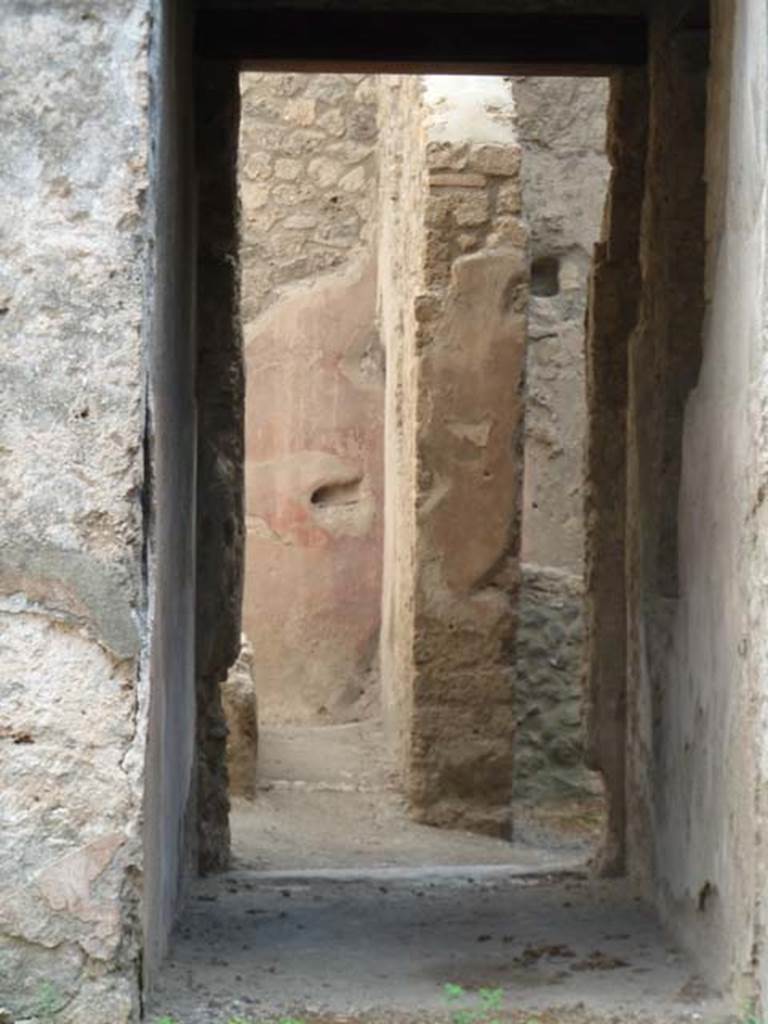
I.12.5 Pompeii. September 2015. Looking south through corridor to rear rooms and garden.