I.11.11 Pompeii. Thermopolium of the Phoenix or Thermopolio della fenice
or Caupona of Euxinus and Iustus.
Excavated 1953, 1958, 1960 and 1964.

I.16 Pompeii, on left. September 2005. Via di Castricio looking west. I.11.11 and I.11.10, on right.
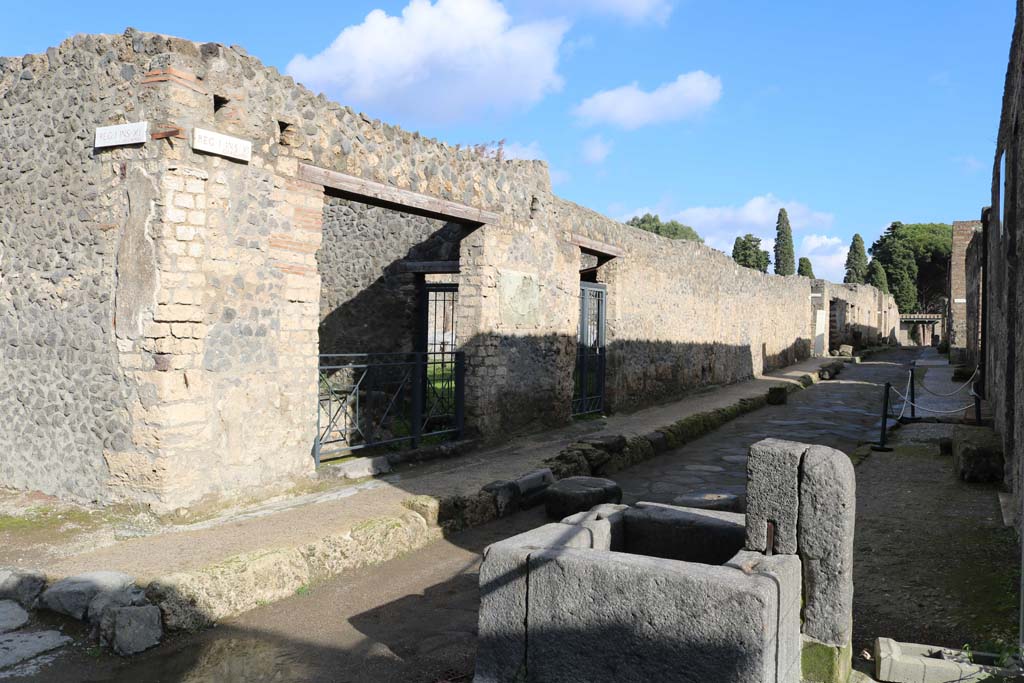
I.11.11 Pompeii. December 2018.
Looking towards entrance doorways on north side of Via di
Castricio, looking east. Photo courtesy of Aude Durand.

I.11.11 Pompeii. October 2022.
Identification plate on west side of entrance doorway, originally known as Reg. II. Insula 1, now Reg. I. Insula XI. Photo courtesy of Klaus Heese.
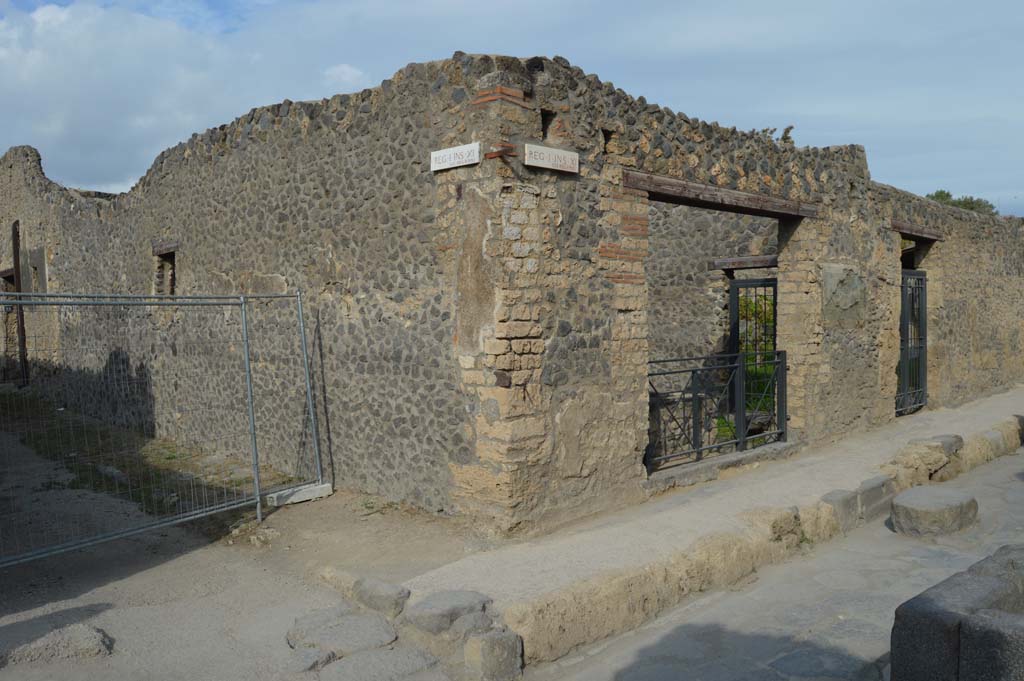
I.11.11 Pompeii, centre right.
October 2017.
Looking
towards corner of junction between unnamed vicolo, on left, and Via di
Castricio, on right.
Foto Taylor Lauritsen, ERC Grant 681269 DÉCOR.

I.11.11 and I.11.10, Pompeii. December 2018.
Looking towards entrance doorways on north side of Via di Castricio, from fountain outside of I.16.4.
Photo courtesy of Aude Durand.

I.11.11 Pompeii. December 2018. Looking north to entrance
doorway, with bar-counter. Photo courtesy of Aude Durand.

I.11.11 Pompeii. May 2024. Looking north-east to entrance
doorway, with bar-counter. Photo courtesy of Klaus Heese.

I.11.11 Pompeii. October
2017. Looking
north to entrance doorway, with bar-counter.
Foto Taylor Lauritsen, ERC Grant 681269 DÉCOR.

I.11.11 Pompeii. May 2017. Looking north to entrance doorway, with bar-counter. Photo courtesy of Buzz Ferebee.

I.11.11 Pompeii. July 2021. Looking north across bar-counter from entrance doorway.
Foto Annette Haug, ERC Grant 681269 DÉCOR.

I.11.11 Pompeii. October 2017. Looking north
through entrance with counter.
Foto Taylor Lauritsen, ERC
Grant 681269 DÉCOR.

I.11.11 Pompeii. September 2005. Entrance with counter.

I.11.11 Pompeii. July 2021.
Looking north-east from entrance across bar-counter.
Foto Annette Haug, ERC Grant 681269 DÉCOR.

I.11.11 Pompeii, on left, and I.11.10, on right. May 2003.
Looking north-east towards entrance doorways. Photo courtesy of Nicolas Monteix.

I.11.11 Pompeii. 1964. Entrance doorway with inscriptions on both sides.
On the west (left) side of the doorway was CIL IV 9851.
On the east side of the doorway, on the right, is CIL IV 9852. Photo by Stanley A. Jashemski.
Source: The Wilhelmina and Stanley A. Jashemski archive in the University of Maryland Library, Special Collections (See collection page) and made available under the Creative Commons Attribution-Non-Commercial License v.4. See Licence and use details.
J64f1490
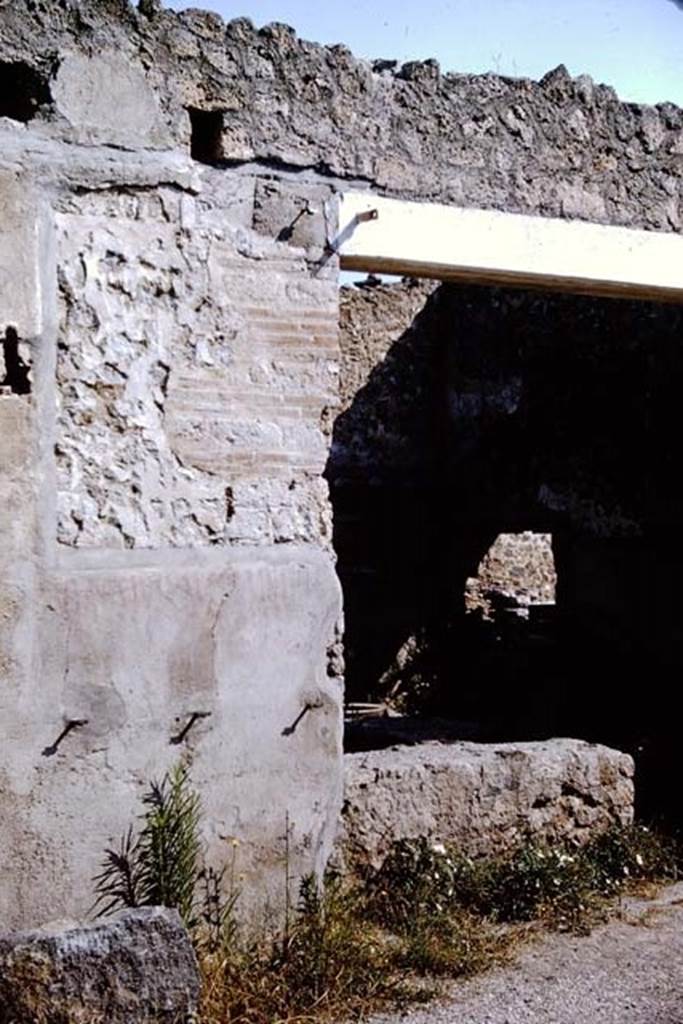
I.11.11 Pompeii. 1964.
Looking north to entrance doorway, with remains of inscription on its western side.
In this photo, the sign of the phoenix has been removed, but below its site CIL IV 9851 can still be read.
Photo by Stanley A. Jashemski.
Source: The Wilhelmina and Stanley A. Jashemski archive in the University of Maryland Library, Special Collections (See collection page) and made available under the Creative Commons Attribution-Non-Commercial License v.4. See Licence and use details.
J64f1470
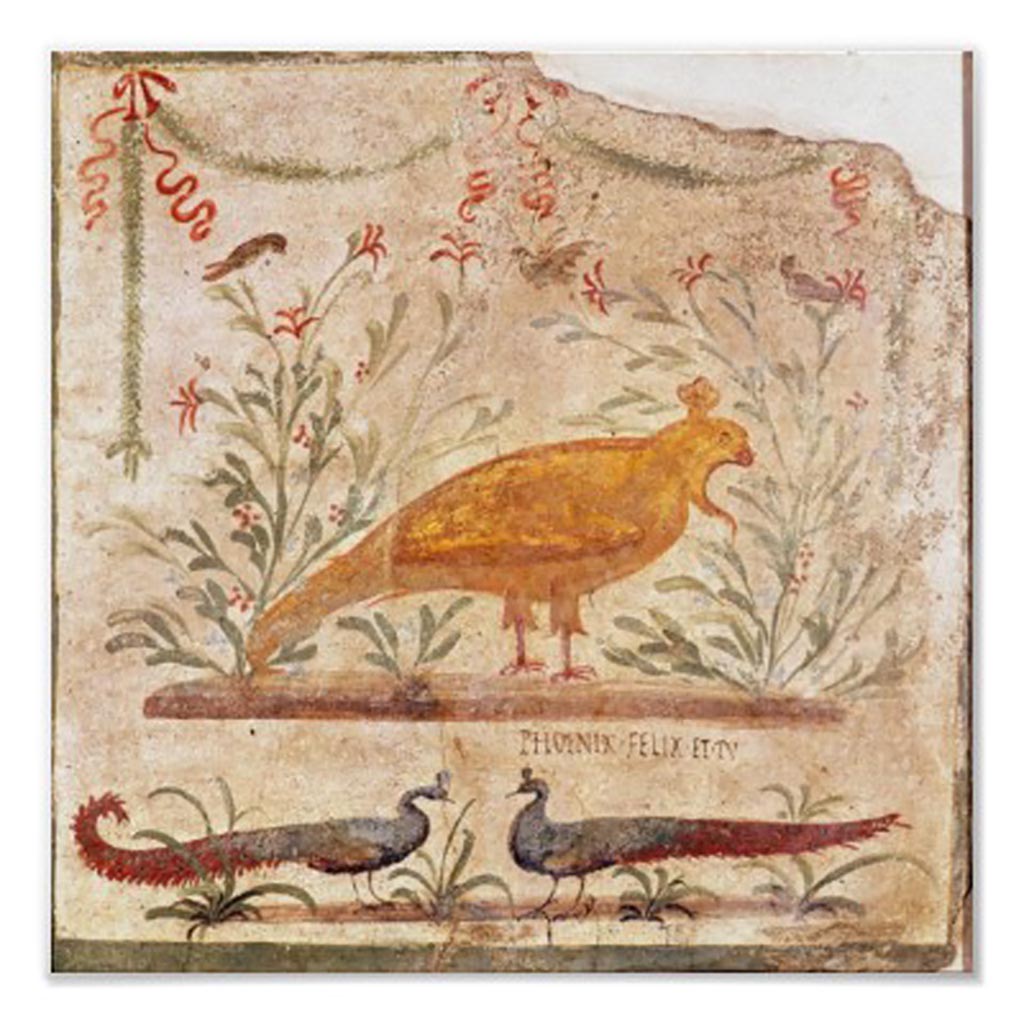
I.11.11 Pompeii. April 2015. Phoenix inn sign. Photo courtesy of Nicolas Monteix.
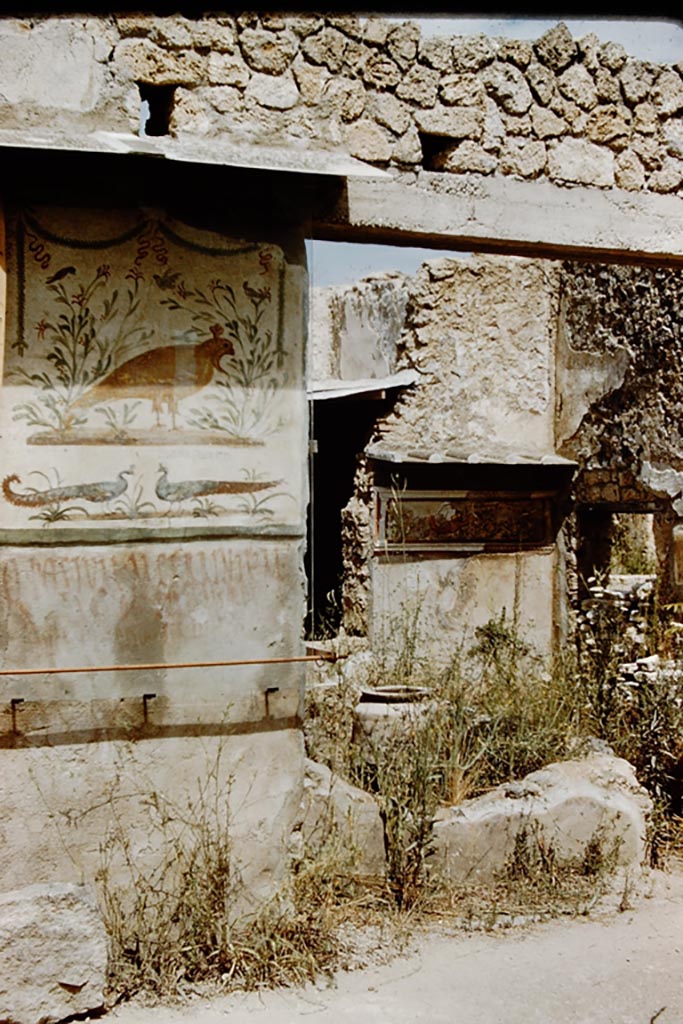
I.11.11 Pompeii. 1959.
Entrance doorway, with sign and inscription. Photo by Stanley A. Jashemski.
Source: The Wilhelmina and Stanley A. Jashemski archive in the University of Maryland Library, Special Collections (See collection page) and made available under the Creative Commons Attribution-Non-Commercial License v.4. See Licence and use details.
J59f0500
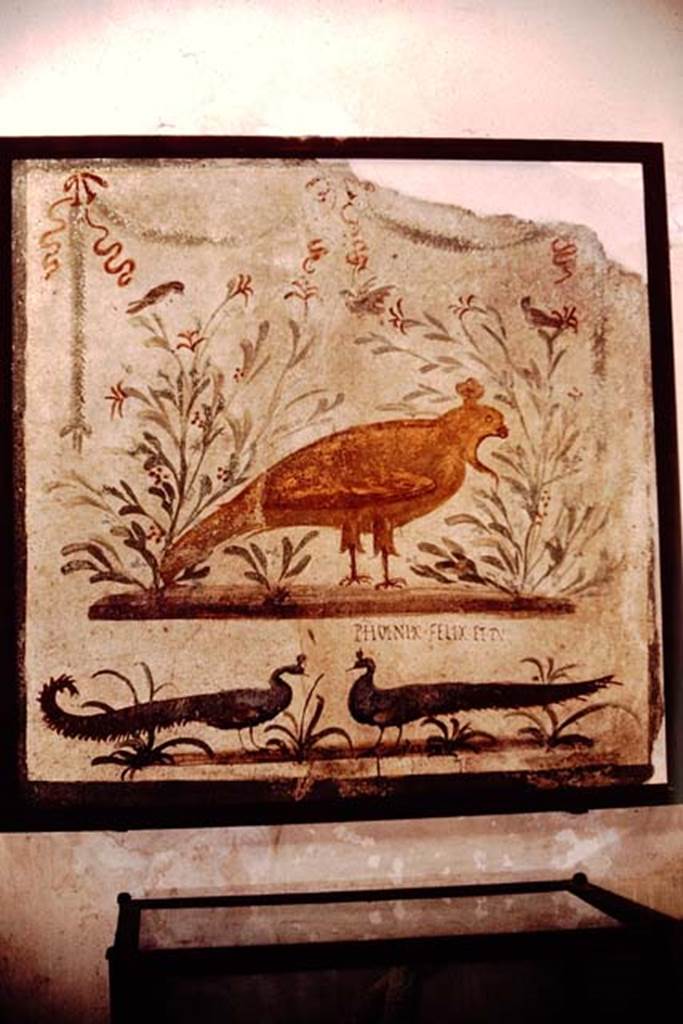
I.11.11 Pompeii. 1964. Phoenix inn sign, in Naples Museum. Photo by Stanley A. Jashemski.
Source: The Wilhelmina and Stanley A. Jashemski archive in the University of Maryland Library, Special Collections (See collection page) and made available under the Creative Commons Attribution-Non-Commercial License v.4. See Licence and use details.
J64f1817
![I.11.11 Pompeii. May 2006. Reproduction inn sign, part of a reconstruction of a thermopolium in Naples Museum.
According to Varone and Stefani, the original is now in the deposits at Pompeii.
The painting of the Inn sign had a phoenix with two peacocks and a welcoming inscription.
According to Varone and Stefani, the Inn sign of the phoenix was on the west (left) of the doorway.
On the sign, under the painting of the phoenix, was written –
Phoenix Felix Et Tu [CIL IV 9850]
According to Cooley, this translated as – “The phoenix is lucky: may you be too.”
See Varone, A. and Stefani, G., 2009. Titulorum Pictorum Pompeianorum, Rome: L’erma di Bretschneider, (p.142-143)
See Cooley, A. and M.G.L., 2004. Pompeii: A Sourcebook. London: Routledge. (p.162)
On the same wall under the Inn sign, CIL IV 9851 was found.
According to Epigraphik-Datenbank Clauss/Slaby (See www.manfredclauss.de), it read -
Q(uintum) Postum(ium) M(arcum) Cerrinium
aed(iles) o(ro) v(os) f(aciatis)
Euxinus rog(at)
nec sine Iusto scr(ibit) Hinnulus [CIL IV 9851]
According to Cooley, this translated as –
“Euxinus asks you to elect Quintus Postumius and Marcus Cerrinius aediles, together with Iustus. Hinnulus wrote this”.
See Cooley, A. and M.G.L., 2004. Pompeii: A Sourcebook. London: Routledge. (p.116)](1%2011%2011_files/image027.jpg)
I.11.11 Pompeii. May 2006. Reproduction inn sign, part of a reconstruction of a thermopolium in Naples Museum.
According to Varone and Stefani, the original is now in the deposits at Pompeii.
The painting of the Inn sign had a phoenix with two peacocks and a welcoming inscription.
According to Varone and Stefani, the Inn sign of the phoenix was on the west (left) of the doorway.
On the sign, under the painting of the phoenix, was written –
Phoenix Felix Et
Tu [CIL IV 9850]
According to Cooley, this translated as – “The phoenix is lucky: may you be too.”
See Varone, A. and Stefani, G., 2009. Titulorum Pictorum
Pompeianorum, Rome:
L’erma di Bretschneider, (p.142-143)
See Cooley, A. and M.G.L., 2004. Pompeii: A Sourcebook. London: Routledge. (p.162)
On the same wall under the Inn sign, CIL IV 9851 was found.
According to Epigraphik-Datenbank Clauss/Slaby (See www.manfredclauss.de), it read -
Q(uintum) Postum(ium)
M(arcum) Cerrinium
aed(iles) o(ro)
v(os) f(aciatis)
Euxinus rog(at)
nec sine
Iusto scr(ibit) Hinnulus
[CIL IV 9851]
According to Cooley, this translated as –
“Euxinus asks you to elect Quintus Postumius and Marcus Cerrinius aediles, together with Iustus. Hinnulus wrote this”.
See Cooley, A. and M.G.L., 2004. Pompeii: A Sourcebook. London: Routledge. (p.116)
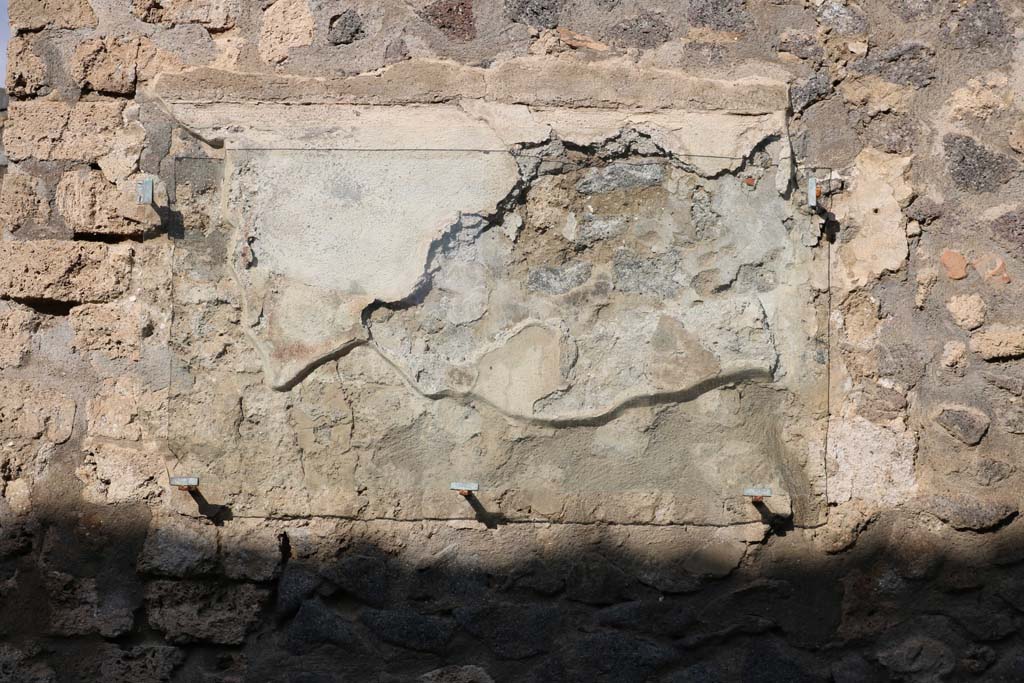
I.11.11 Pompeii. December 2018.
Site of remaining graffiti on exterior wall on south side of
insula near 1.11.11 and 1.11.10. Photo courtesy of Aude Durand.
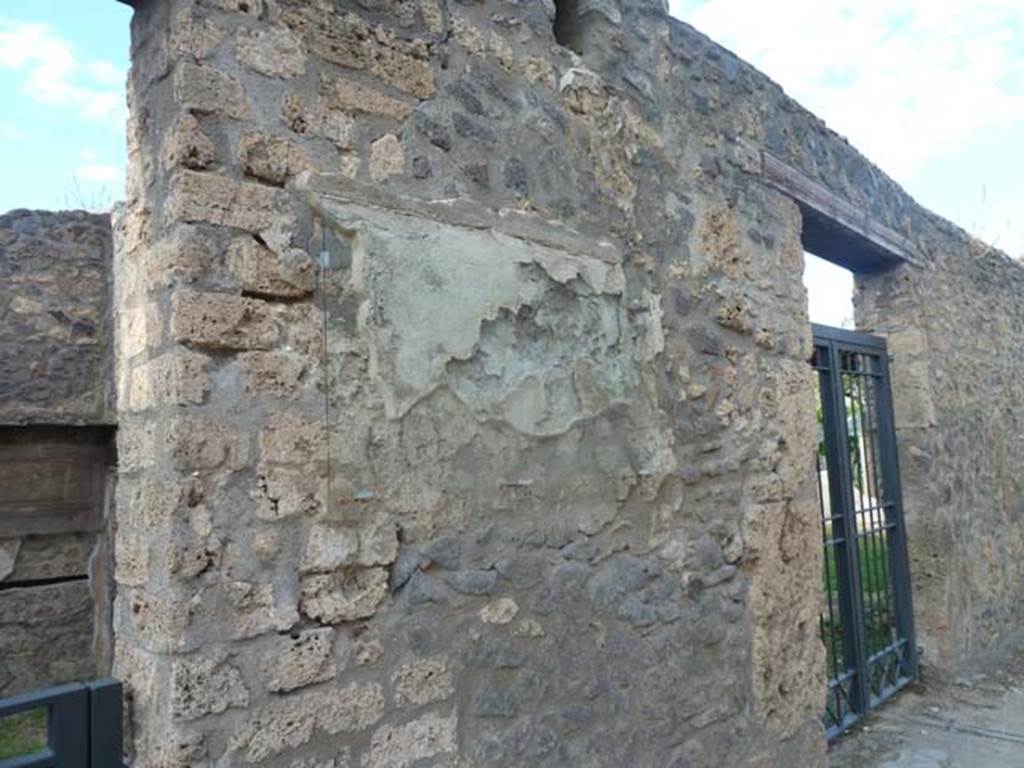
I.11.11 Pompeii. September 2015. Remaining graffiti on exterior walls on south side of insula near 1.11.11 and 1.11.10.
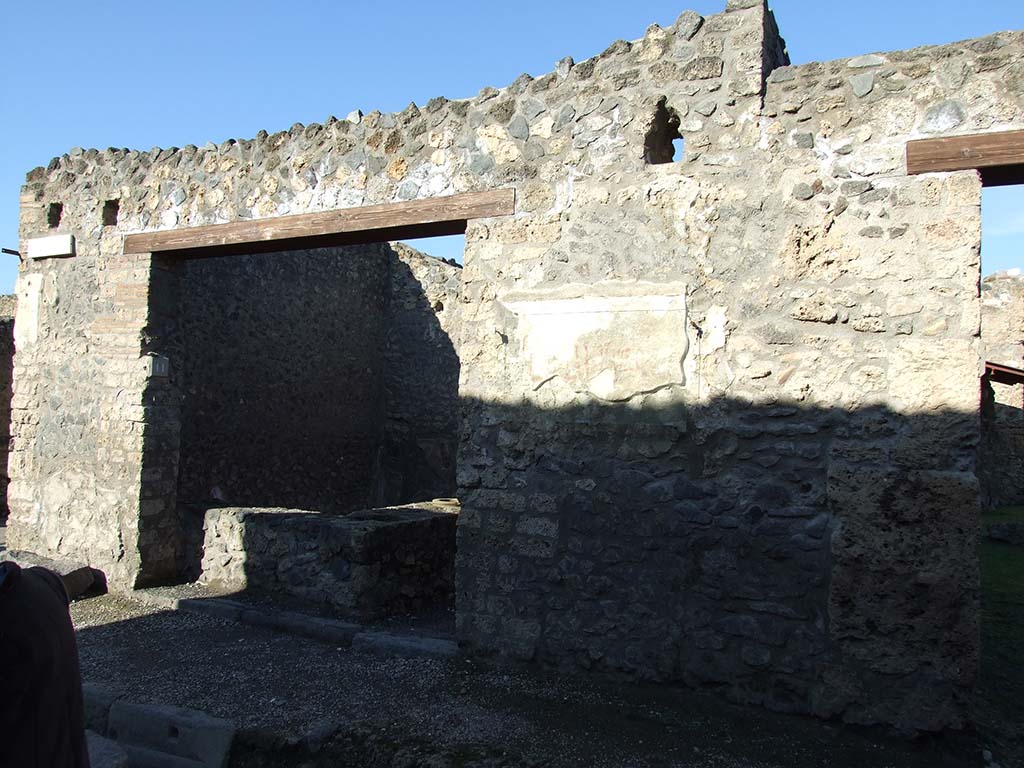
I.11.11 Pompeii. December 2006. Exterior walls on south side of insula near 1.11.11 and 1.11.10.
![I.11.11 Pompeii. December 2006. Graffito on east (right) of entrance doorway – CIL IV 9852.
According to Epigraphik-Datenbank Clauss/Slaby (See www.manfredclauss.de), this read -
Felicem IIvir(um) o(ro) v(os) f(aciatis) [CIL IV 9852]](1%2011%2011_files/image033.jpg)
I.11.11 Pompeii. December 2006. Graffito on east (right) of entrance doorway – CIL IV 9852.
According to Epigraphik-Datenbank Clauss/Slaby (See www.manfredclauss.de), this read -
Felicem IIvir(um)
o(ro) v(os) f(aciatis)
[CIL IV 9852]
![I.11.11 Pompeii. 1964. Wilhelmina studying the exterior wall to the right of the inscription [CIL IV 9852] which was on the east of the doorway. Photo by Stanley A. Jashemski.
Source: The Wilhelmina and Stanley A. Jashemski archive in the University of Maryland Library, Special Collections (See collection page) and made available under the Creative Commons Attribution-Non Commercial License v.4. See Licence and use details.
J64f1689](1%2011%2011_files/image035.jpg)
I.11.11 Pompeii. 1964.
Wilhelmina studying the exterior wall to the right of the inscription [CIL IV 9852] which was on the east of the doorway.
Photo by Stanley A. Jashemski.
Source: The Wilhelmina and Stanley A. Jashemski archive in the University of Maryland Library, Special Collections (See collection page) and made available under the Creative Commons Attribution-Non-Commercial License v.4. See Licence and use details.
J64f1689
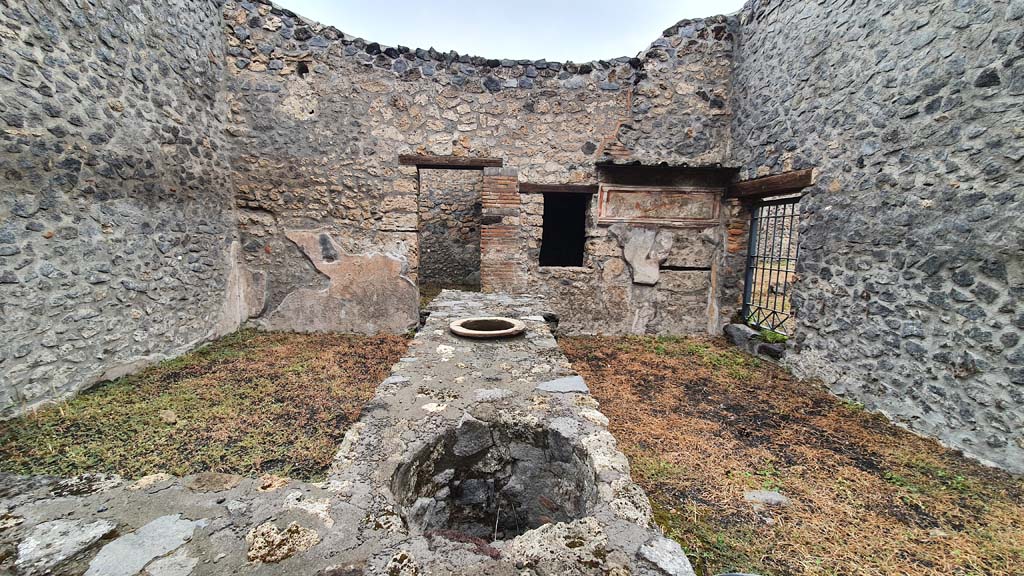
I.11.11 Pompeii. July 2021. Looking north across bar-counter.
Foto Annette Haug, ERC Grant 681269 DÉCOR.
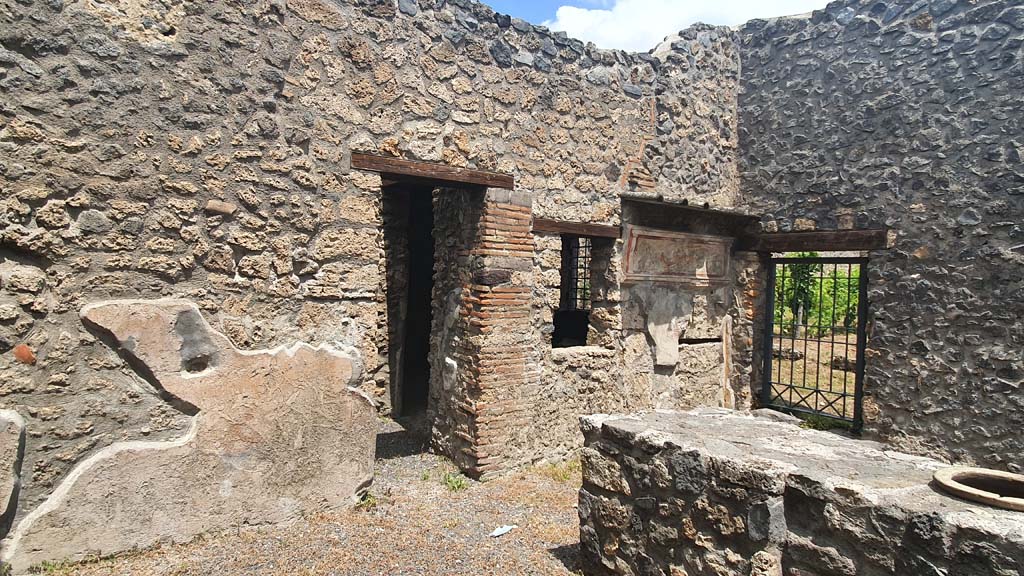
I.11.11 Pompeii. July 2021. Looking towards north wall of bar-room, from behind counter.
Foto Annette Haug, ERC Grant 681269 DÉCOR.
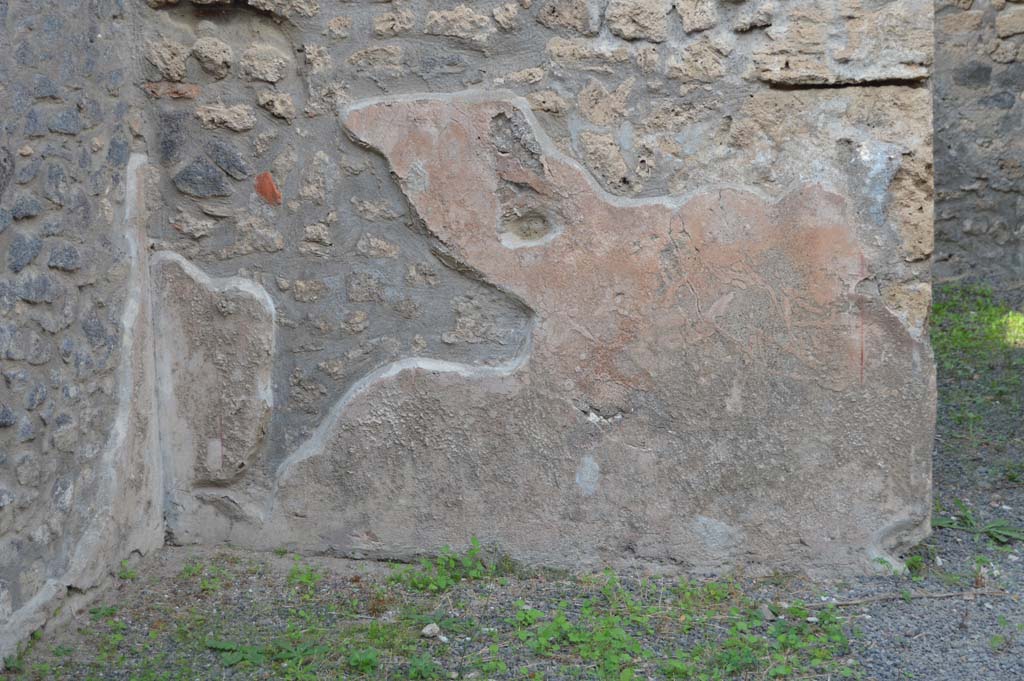
I.11.11 Pompeii. October
2017. North-west corner and north wall of bar-room.
Foto Taylor Lauritsen, ERC Grant 681269 DÉCOR.
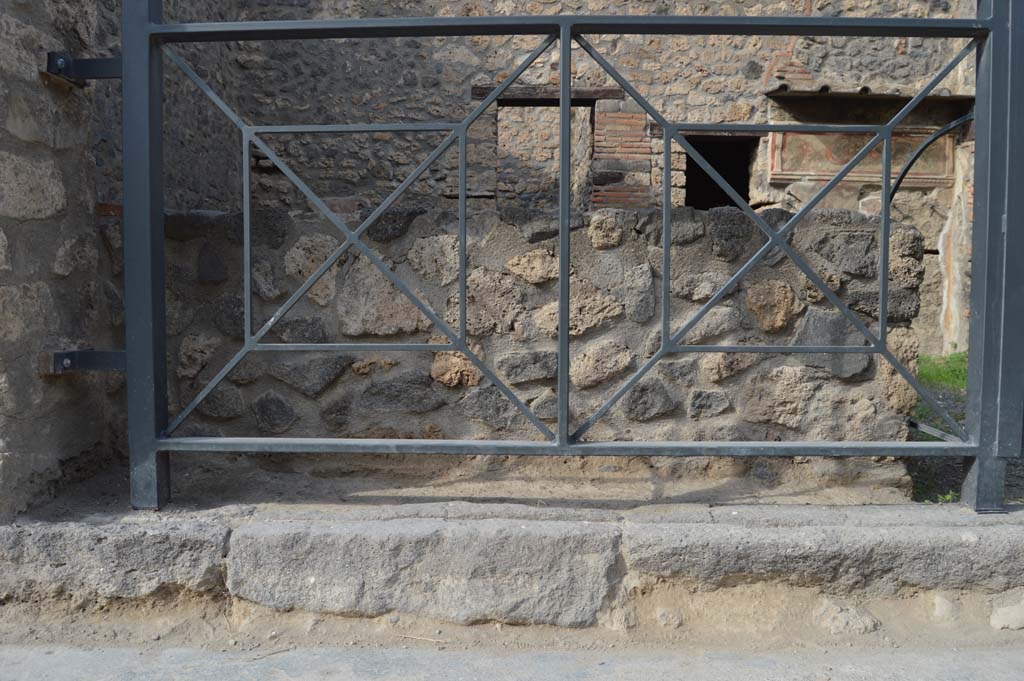
I.11.11 Pompeii. October
2017. Looking north to front façade of counter.
Foto Taylor Lauritsen, ERC Grant 681269 DÉCOR.
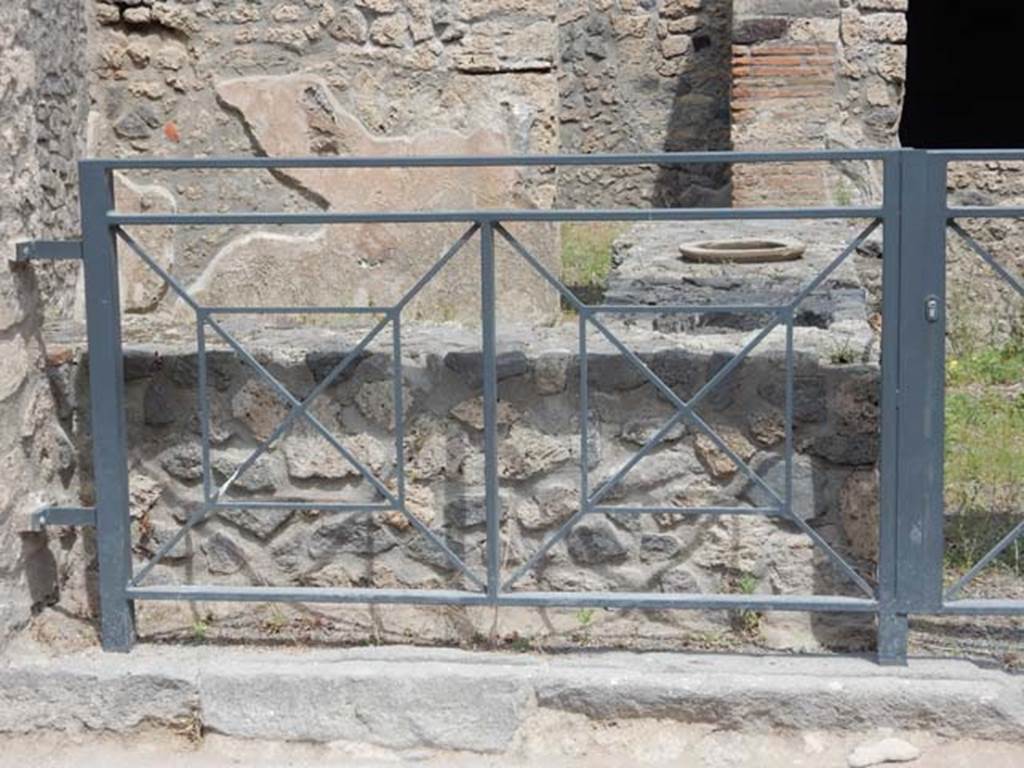
I.11.11 Pompeii. May 2017. Looking north across counter in bar-room. Photo courtesy of Buzz Ferebee.
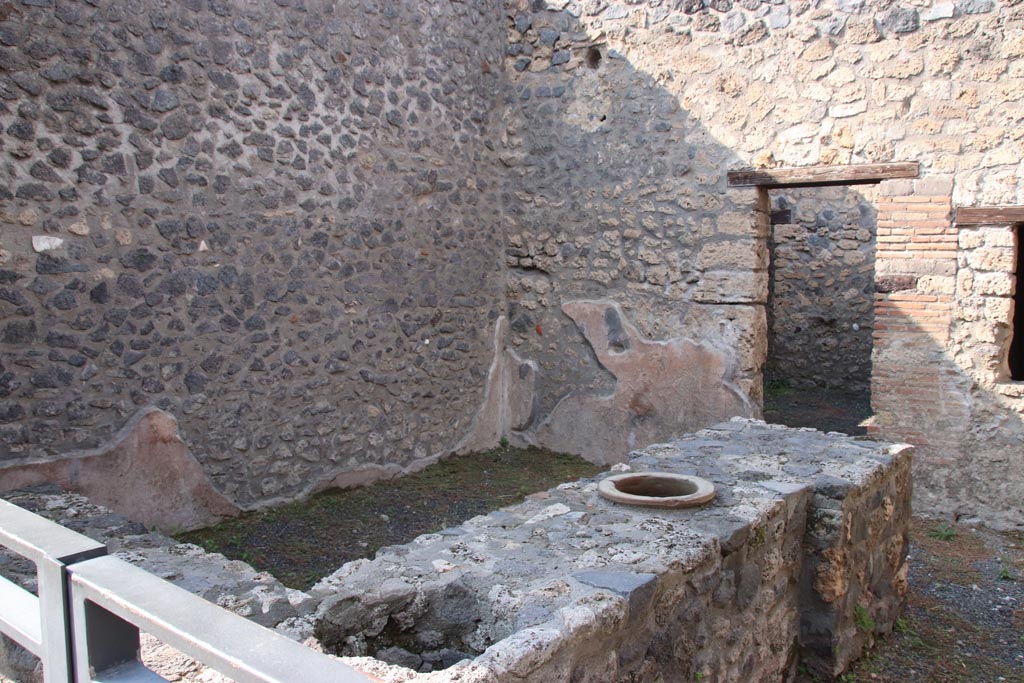
I.11.11 Pompeii. October 2022. Looking north-west across counter towards doorway to rear room. Photo courtesy of Klaus Heese.
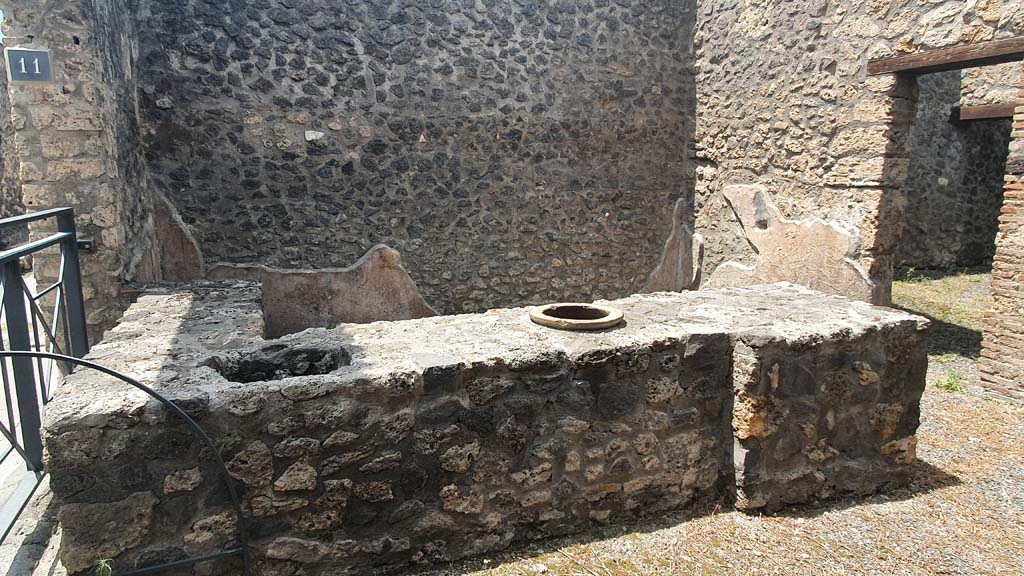
I.11.11 Pompeii. July 2021. Looking west across counter in bar-room.
Foto Annette Haug, ERC
Grant 681269 DÉCOR.
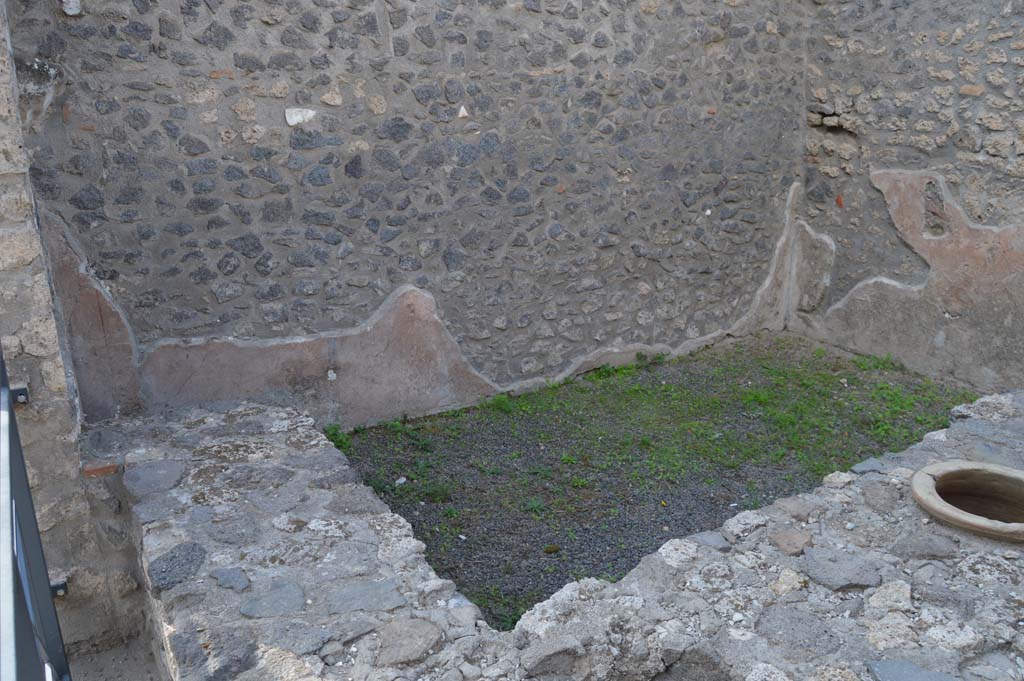
I.11.11 Pompeii. October 2017. Looking towards
west wall of bar-room, across counter.
Foto Taylor Lauritsen, ERC
Grant 681269 DÉCOR.
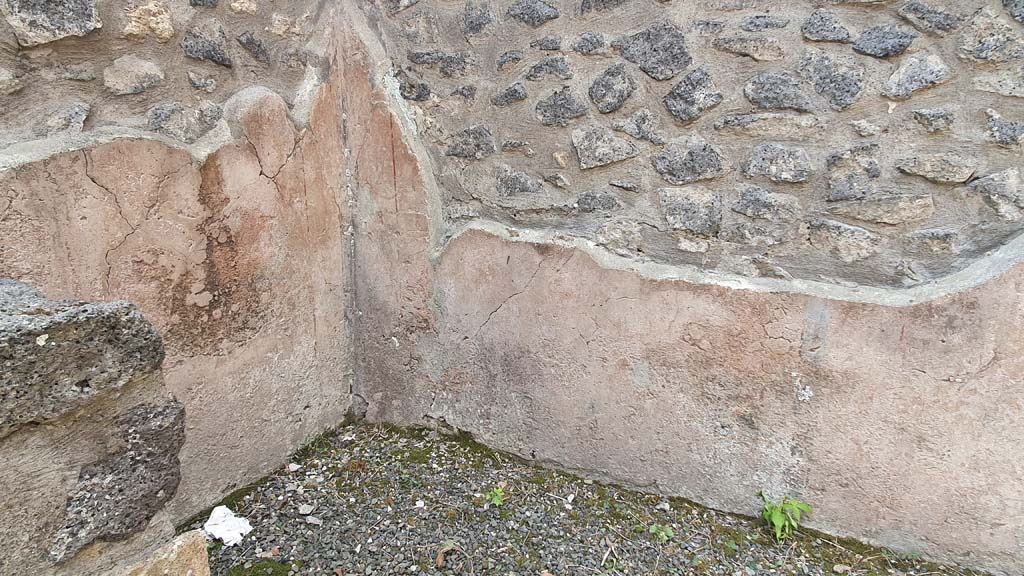
I.11.11 Pompeii. July 2021. Looking towards south-west corner of bar-room, behind counter.
Foto Annette Haug, ERC
Grant 681269 DÉCOR.
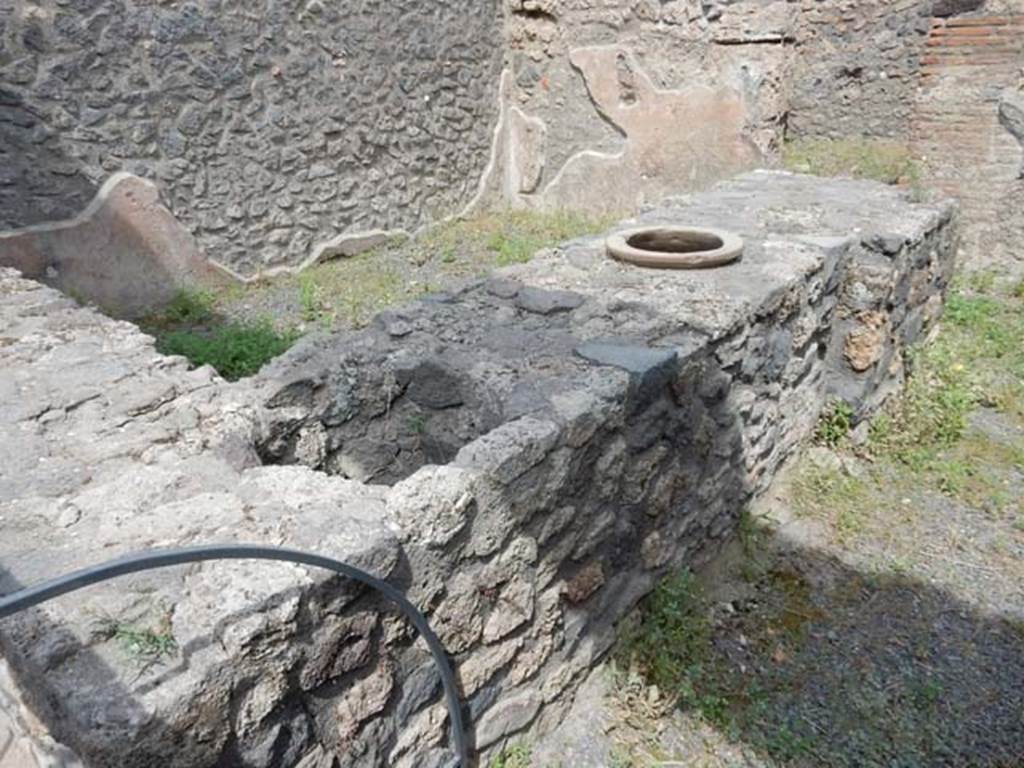
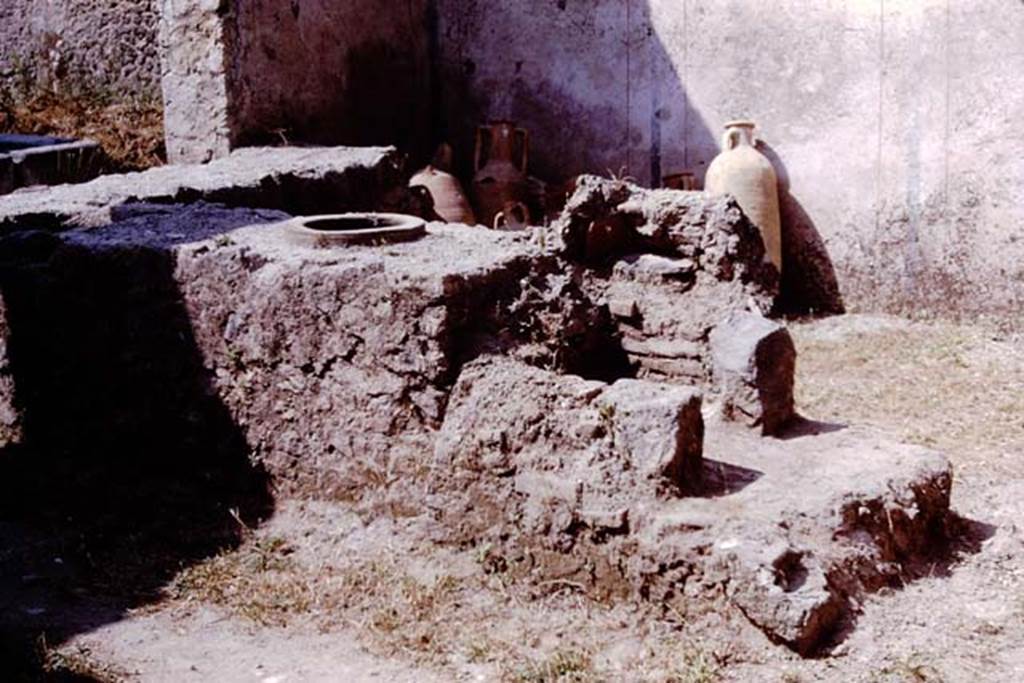
I.11.11 Pompeii. 1964. Looking south-west across counter in bar-room. Photo by Stanley A. Jashemski.
Source: The Wilhelmina and Stanley A. Jashemski archive in the University of Maryland Library, Special Collections (See collection page) and made available under the Creative Commons Attribution-Non-Commercial License v.4. See Licence and use details.
J64f1797
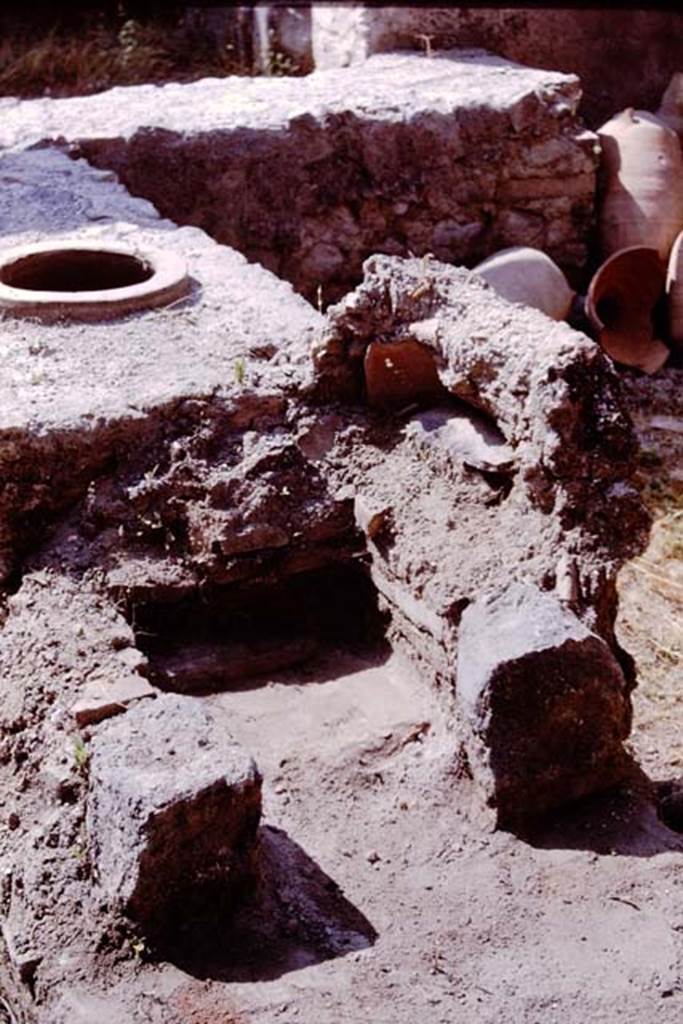
I.11.11 Pompeii. 1964.
Looking south to rear of counter and hearth. Photo by Stanley A. Jashemski.
Source: The Wilhelmina and Stanley A. Jashemski archive in the University of Maryland Library, Special Collections (See collection page) and made available under the Creative Commons Attribution-Non-Commercial License v.4. See Licence and use details.
J64f1798
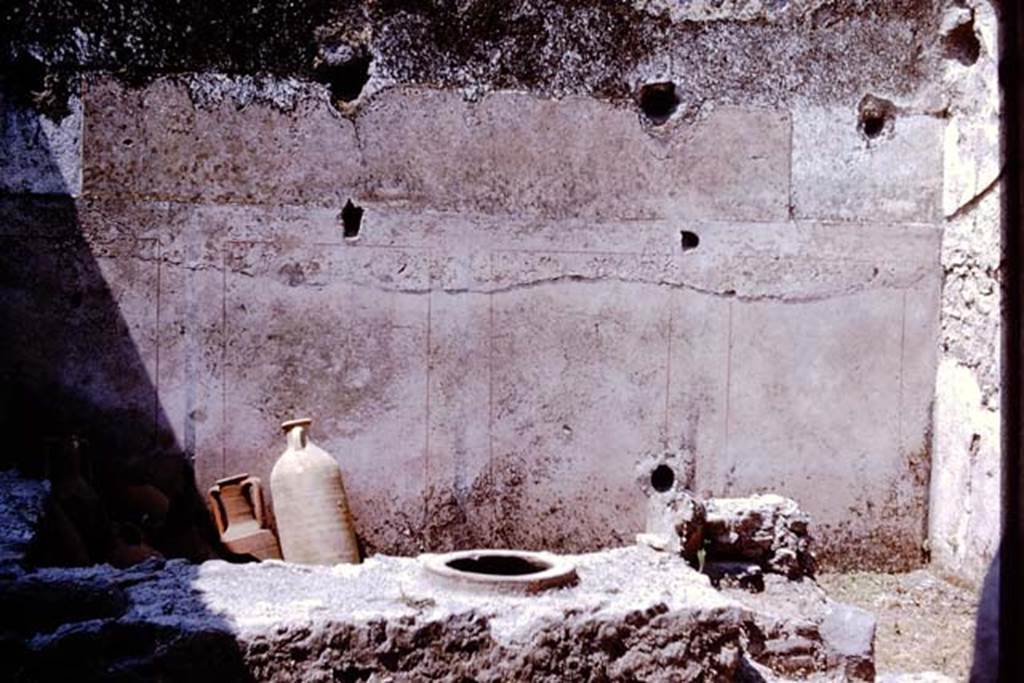
I.11.11 Pompeii. 1964.
Looking across counter to west wall of bar-room, which would have had supports for wooden shelving or racks.
Photo by Stanley A. Jashemski.
Source: The Wilhelmina and Stanley A. Jashemski archive in the University of Maryland Library, Special Collections (See collection page) and made available under the Creative Commons Attribution-Non-Commercial License v.4. See Licence and use details.
J64f1857
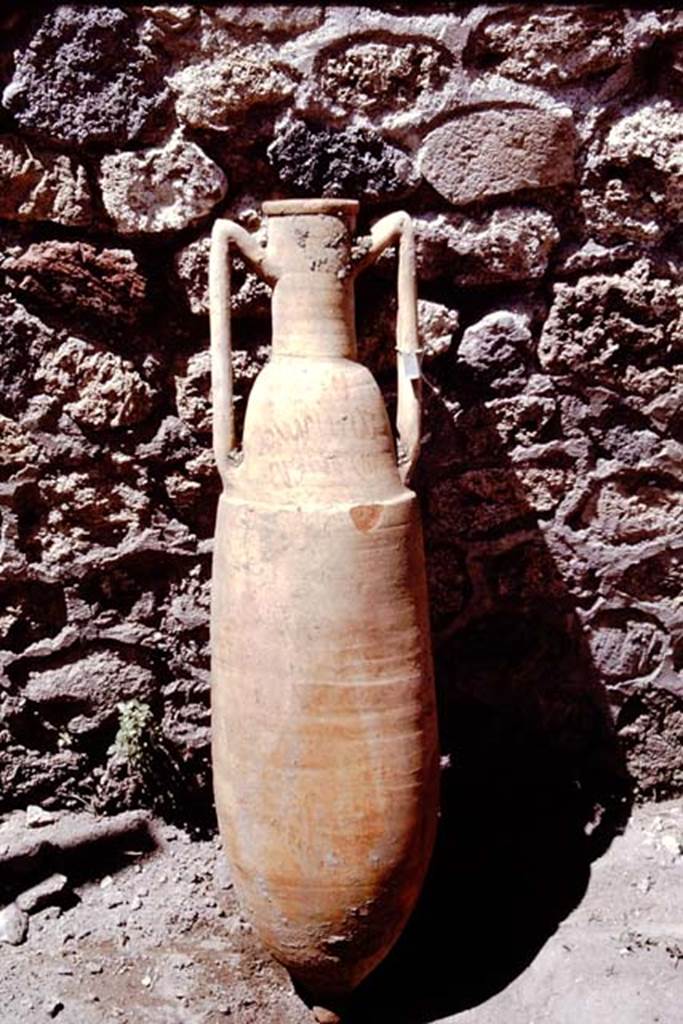
I.11.11 Pompeii. 1964.
Amphora addressed “to the copo, Euxinus, near the amphitheatre at Pompeii”. Photo by Stanley A. Jashemski.
According to Wilhelmina, “among the many amphorae found during the excavation of the counter-room were three that gave the name and address of the owner of the caupona”.
See Jashemski, W. F., 1979. The Gardens of Pompeii. New York: Caratzas. (p.172)
Source: The Wilhelmina and Stanley A. Jashemski archive in the University of Maryland Library, Special Collections (See collection page) and made available under the Creative Commons Attribution-Non-Commercial License v.4. See Licence and use details.
J64f1554
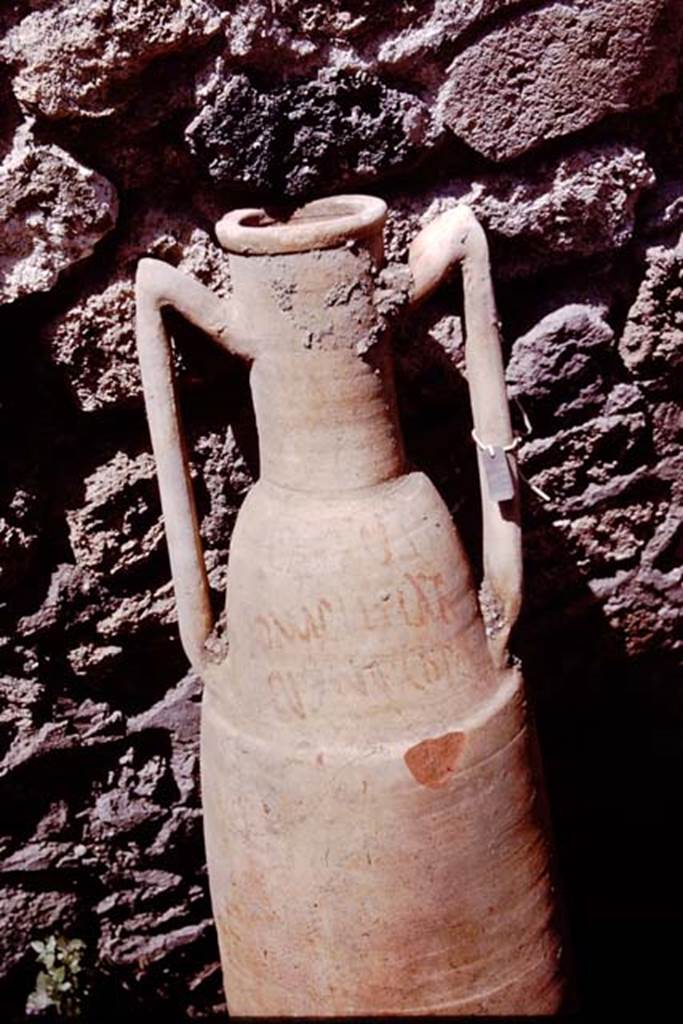
I.11.11 Pompeii. 1964.
Detail from amphora addressed “to the copo, Euxinus, near the amphitheatre at Pompeii”.
Photo by Stanley A. Jashemski.
Source: The Wilhelmina and Stanley A. Jashemski archive in the University of Maryland Library, Special Collections (See collection page) and made available under the Creative Commons Attribution-Non-Commercial License v.4. See Licence and use details.
J64f1555
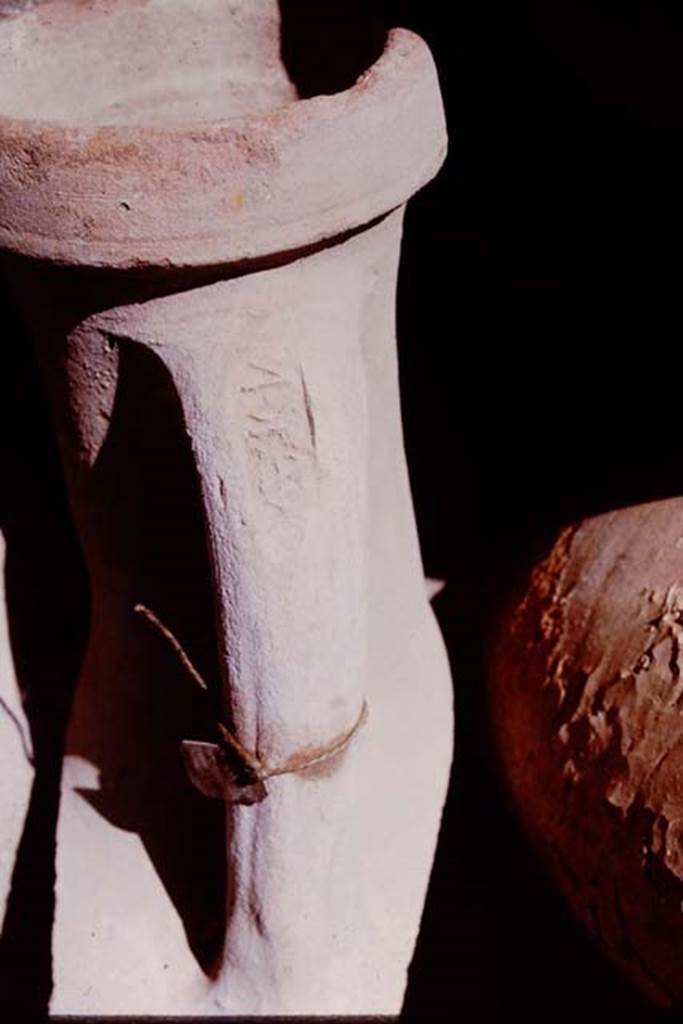
I.11.11 Pompeii. 1964.
Amphora addressed “to the copo, Euxinus, near the amphitheatre at Pompeii”. Photo by Stanley A. Jashemski.
Source: The Wilhelmina and Stanley A. Jashemski archive in the University of Maryland Library, Special Collections (See collection page) and made available under the Creative Commons Attribution-Non-Commercial License v.4. See Licence and use details.
J64f1556
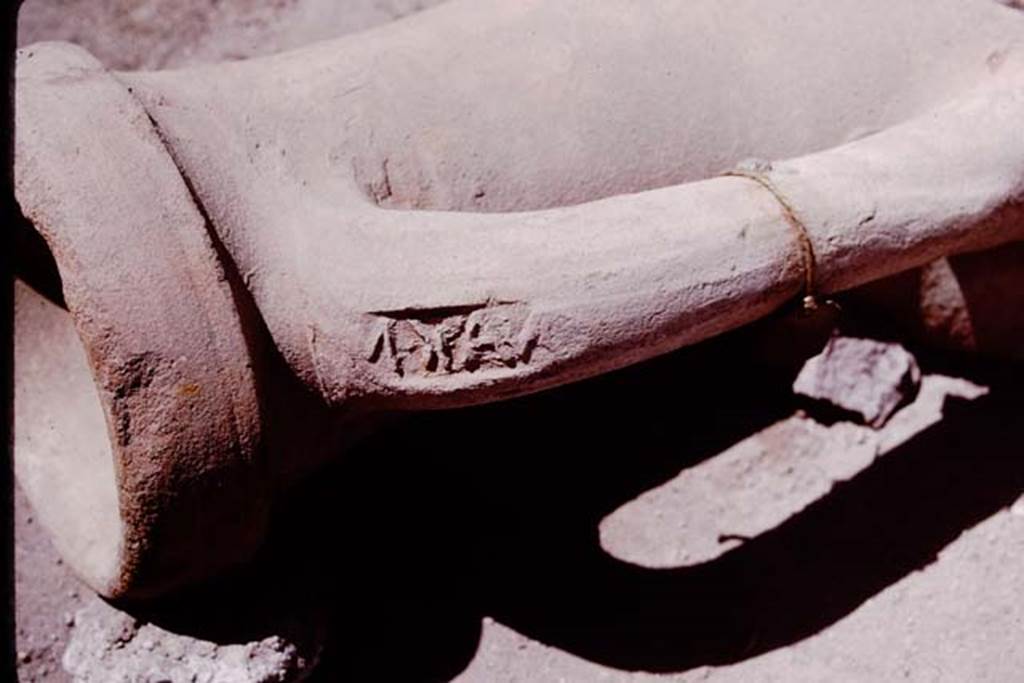
I.11.11 Pompeii. 1964.
Detail from the amphora addressed “to the copo, Euxinus, near the amphitheatre at Pompeii”. Photo by Stanley A. Jashemski.
Source: The Wilhelmina and Stanley A. Jashemski archive in the University of Maryland Library, Special Collections (See collection page) and made available under the Creative Commons Attribution-Non-Commercial License v.4. See Licence and use details.
J64f1557