Pompeii. Painted street shrine on wall next to V.6.19.
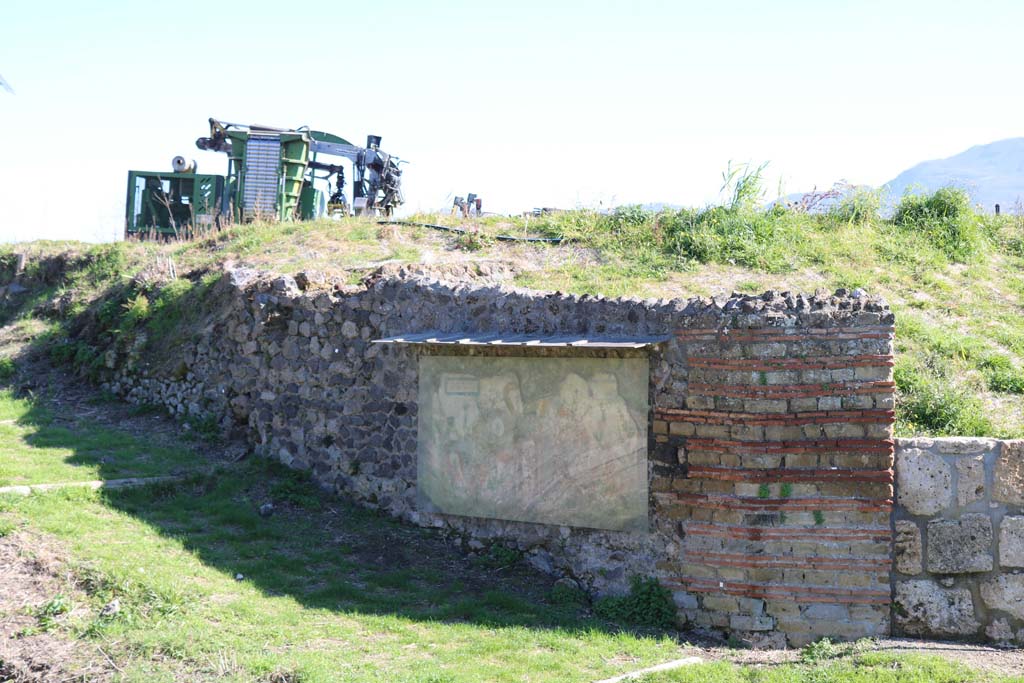
Painted street shrine
on the wall at V.6.19. December 2018. Looking south-east. Photo courtesy of Aude Durand.
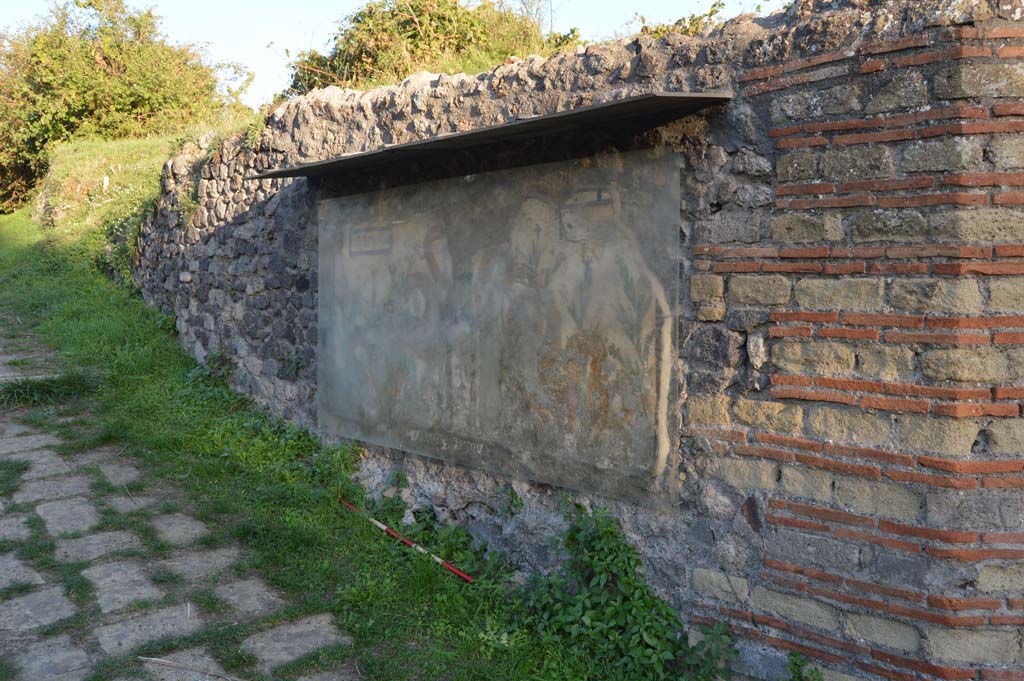
Painted street shrine on the wall at V.6.19 Pompeii. October 2017. Looking south-east towards painted street shrine.
Foto Taylor Lauritsen, ERC
Grant 681269 DÉCOR.
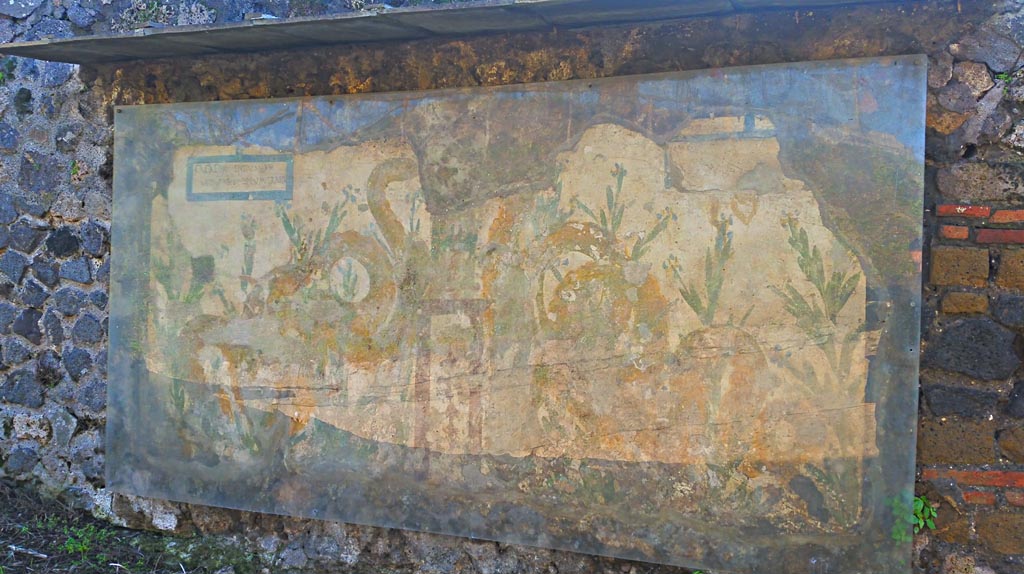
Painted street shrine on the wall at V.6.19 Pompeii. December 2019. Looking south-east. Photo courtesy of Giuseppe Ciaramella.
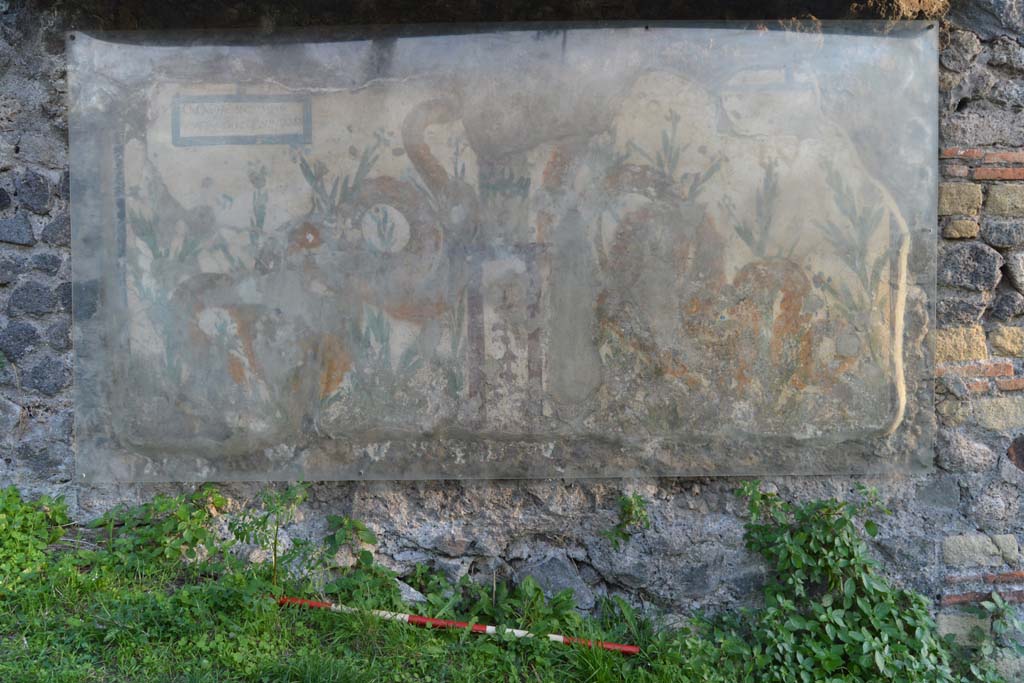
V.6.19 Pompeii. October 2017. Looking
south towards painted lararium on exterior wall.
Foto Taylor Lauritsen, ERC Grant 681269 DÉCOR.
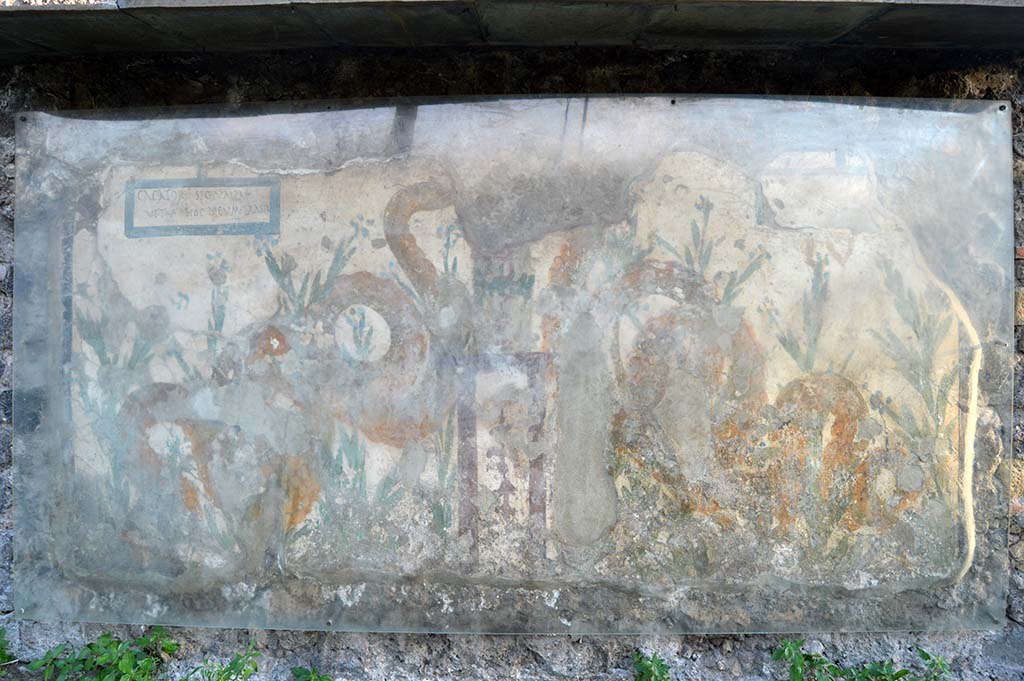
V.6.19 Pompeii. October 2017. Detail
of painted lararium on exterior wall.
Foto Taylor Lauritsen, ERC Grant 681269 DÉCOR.
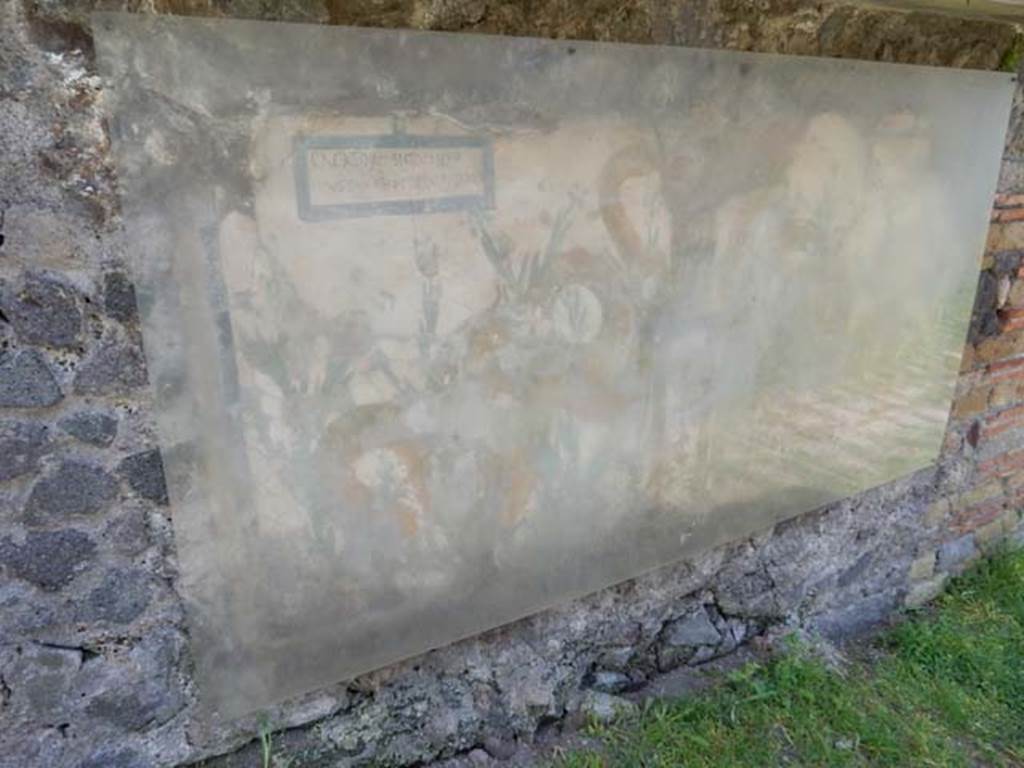
Painted street shrine on the wall at V.6.19. May 2015. Photo courtesy of Buzz Ferebee.
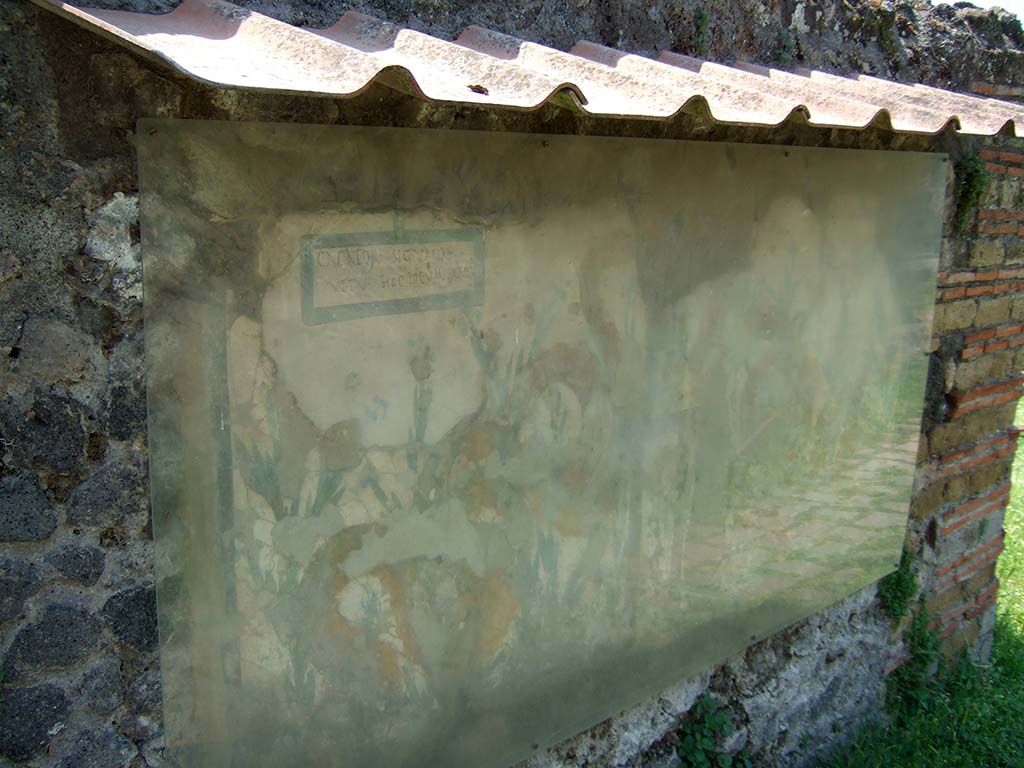
V.6.19 Pompeii. May 2006. Lararium painted on the wall at V.6.19.
This shows two serpents moving through plants to an altar that had offerings on it.
In the top left-hand side, CIL IV 6641 can be seen, written in the painted rectangle.
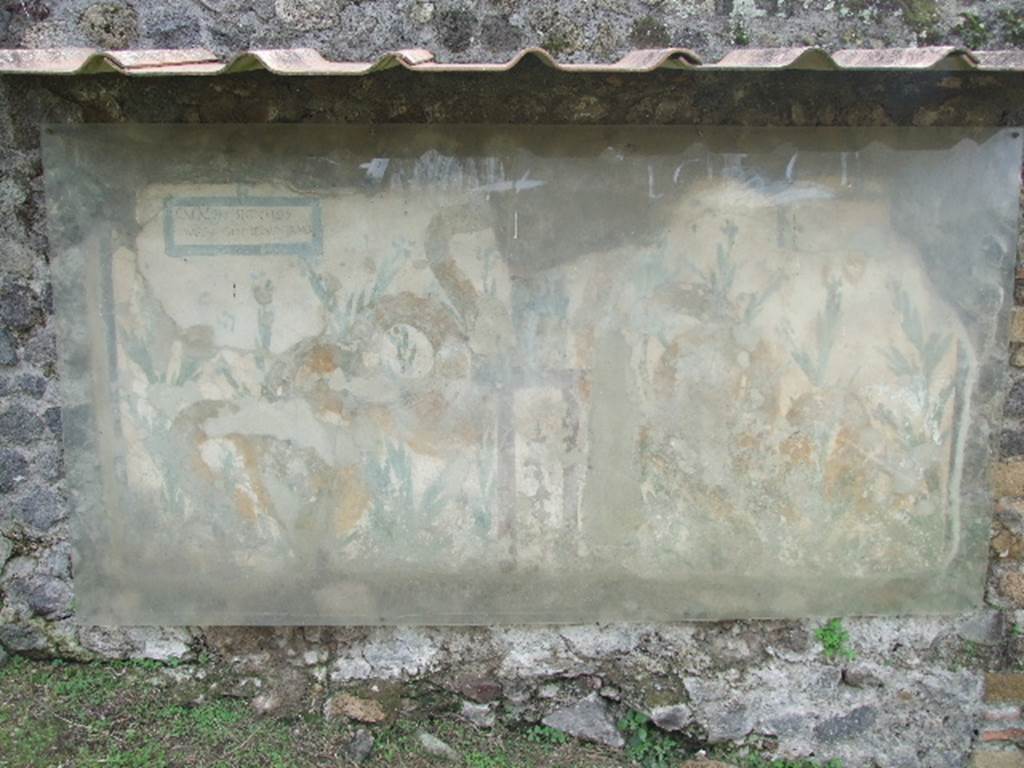
Painted street shrine on the wall at V.6.19. December 2005.
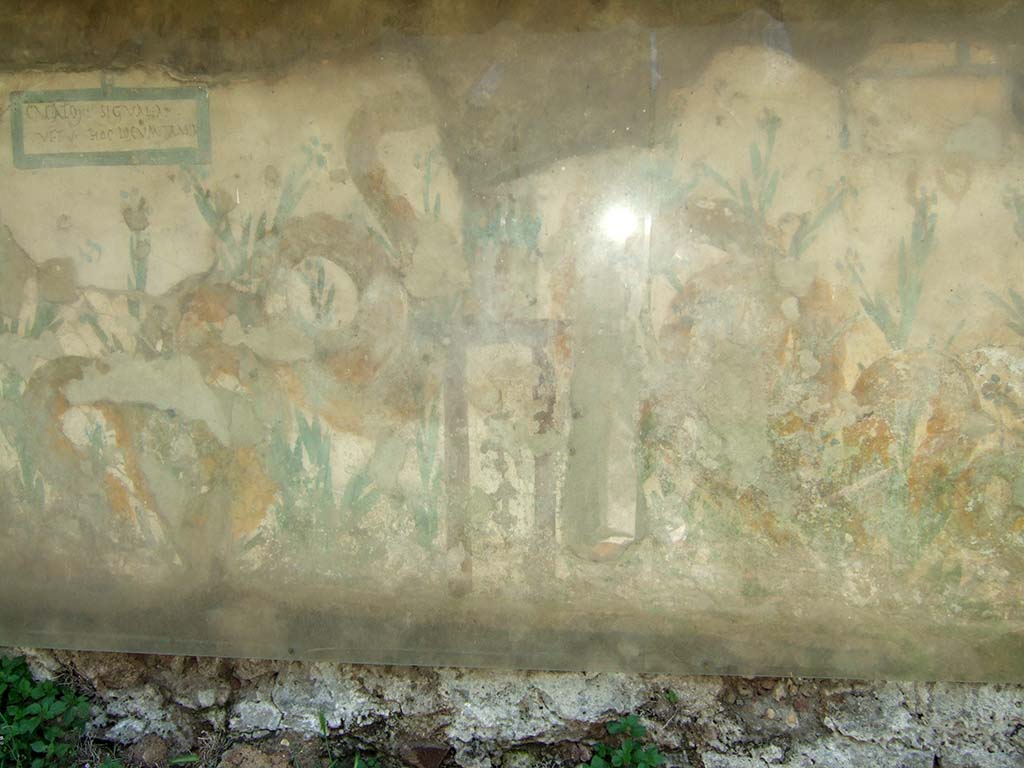
Painted street shrine on the wall at V.6.19. May 2006.
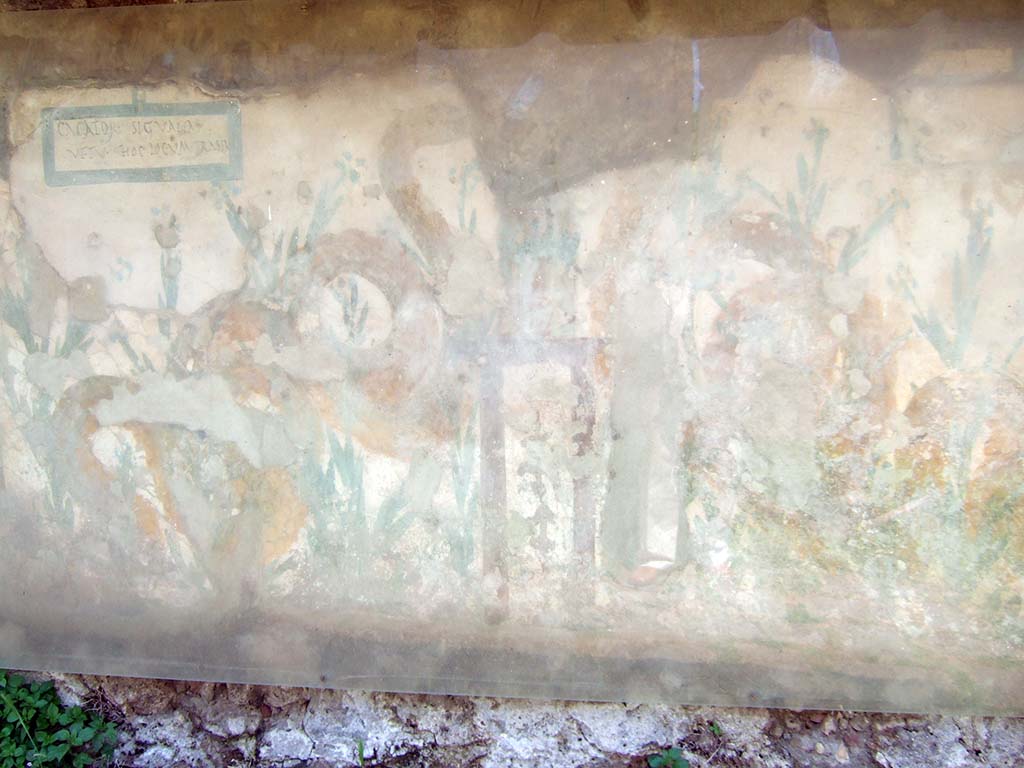
Painted street shrine on the wall at V.6.19. May 2006.
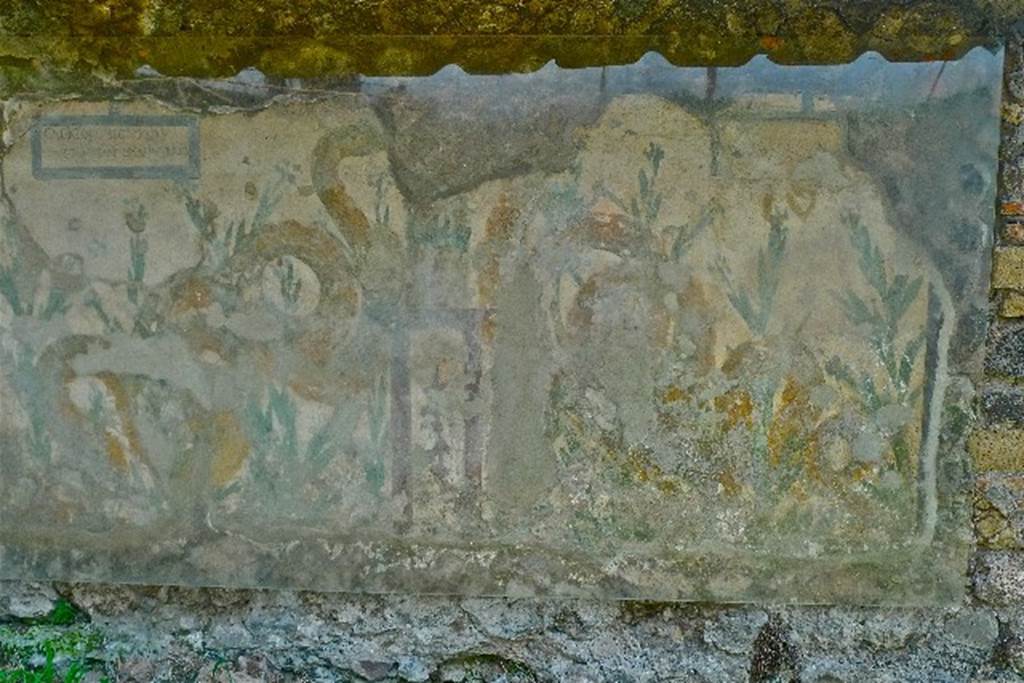
Painted street shrine on the wall at V.6.19. July 2010. Photo courtesy of Michael Binns.
This shows two serpents moving through plants to an altar that had offerings on it.
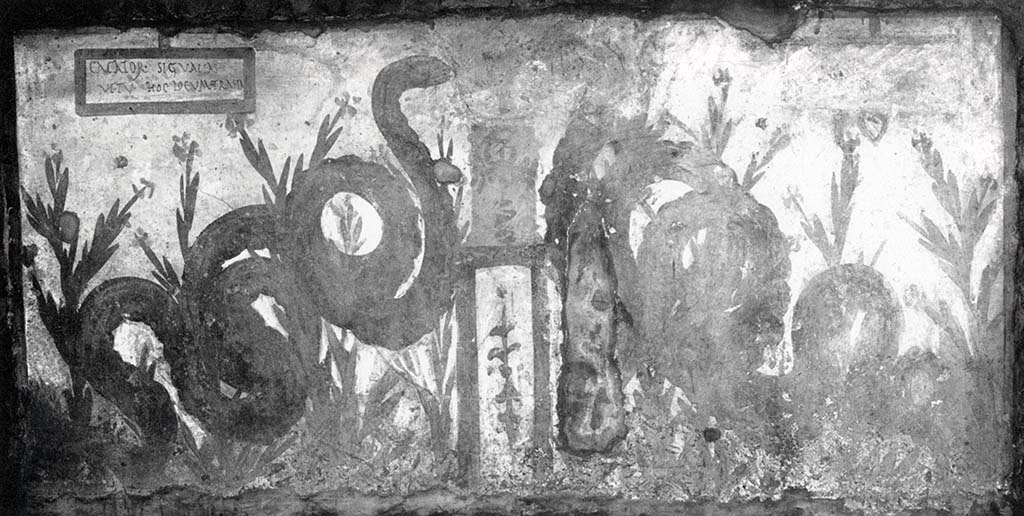
Painted street shrine on the wall at V.6.19.
This shows two serpents moving through plants to an altar that had offerings on it.
See Fröhlich, T., 1991. Lararien und Fassadenbilder in den Vesuvstädten. Mainz: von Zabern, (p.319, 35, Taf 56,2)
According to Spano, "one of the usual representations of two enormous agatodemon snakes came to light, which on both sides
approach a sumptuous altar, all included in a rectangular space with a white
background, measuring 2.10m. X 1.00m.
The picture, however, is here, more than elsewhere, notable for the
inscription painted in the corner upper left, and which I reproduce here:
CACATOR SIC VALEAS
VT TV HOCLOCVM TRASIA
The image of snakes, tutelary geniuses of a place, served in general to
defend that place against any kind of ugliness.
What ugliness was feared in the place where we are, however, is explicitly stated by our inscription".
See Spano, in Notizie
degli Scavi di Antichità, 1910,
p. 262.
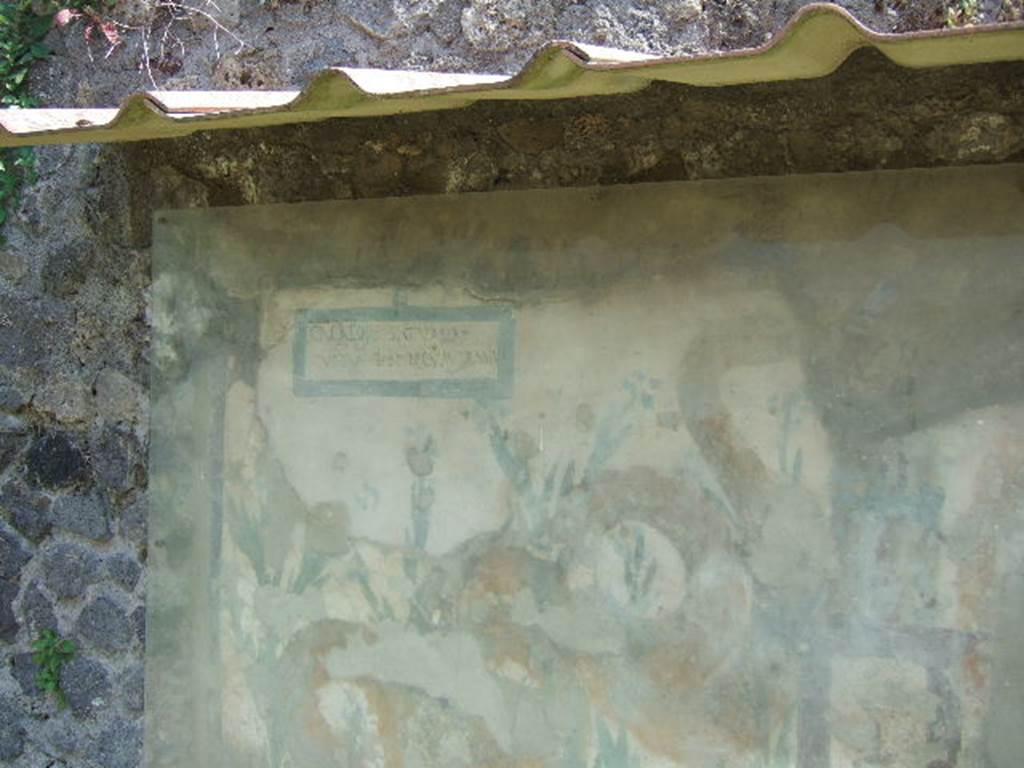
Painted street shrine on the wall at V.6.19. December 2005.
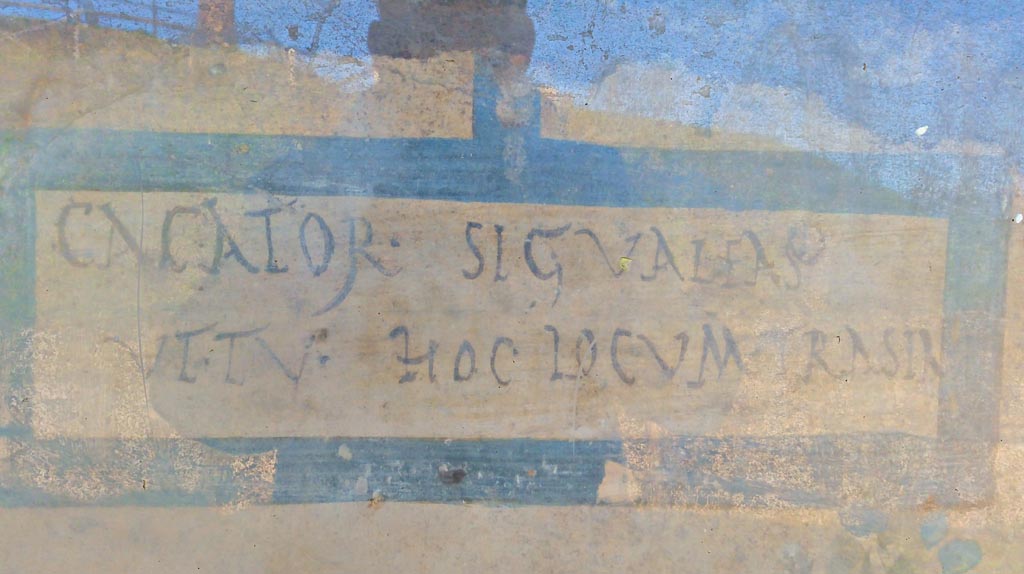
Painted shrine at V.6.19 Pompeii. December 2019.
In the top left-hand side of the painted lararium, CIL IV 6641 can be seen, written in the painted rectangle.
Photo courtesy of
Giuseppe Ciaramella.
![V.6.19 Pompeii. October 2017.
In the top left-hand side of the painted lararium, CIL IV 6641 can be seen, written in the painted rectangle.
Foto Taylor Lauritsen, ERC Grant 681269 DÉCOR.
According to Della Corte, the unknown proprietor of the unexcavated house or workshop, had the warning added to the street shrine.
The wording, between good wishes and irony, was:
Cacator, sic valeas, ut tu hoc (sic) locum trasia(s) (= transeas). [CIL IV 6641]
See Della Corte, M., 1965. Case ed Abitanti di Pompei. Napoli: Fausto Fiorentino. (p.97)
According to Epigraphik-Datenbank Clauss/Slaby (See www.manfredclauss.de), it read:
Cacator, si<c=g> valeas
Ut tu hoc locum tra(n)sea(s) [CIL IV 6641]
See also Spano, in Notizie degli Scavi di Antichità, 1910, p.262.](Altar%2050619_files/image020.jpg)
V.6.19 Pompeii. October 2017.
In the top left-hand side of the painted lararium, CIL IV 6641 can be seen, written in the painted rectangle.
Foto Taylor Lauritsen, ERC
Grant 681269 DÉCOR.
According to Della Corte, the unknown proprietor of the unexcavated house or workshop, had the warning added to the street shrine.
The wording, between good wishes and irony, was:
Cacator,
sic valeas, ut tu hoc (sic) locum trasia(s)
(= transeas). [CIL IV 6641]
See Della Corte, M., 1965. Case ed Abitanti di Pompei. Napoli: Fausto Fiorentino. (p.97)
According to Epigraphik-Datenbank Clauss/Slaby (See www.manfredclauss.de), it read:
Cacator,
si<c=g> valeas
Ut tu hoc locum
tra(n)sea(s) [CIL IV 6641]
See also Spano, in Notizie
degli Scavi di Antichità, 1910, p.262.
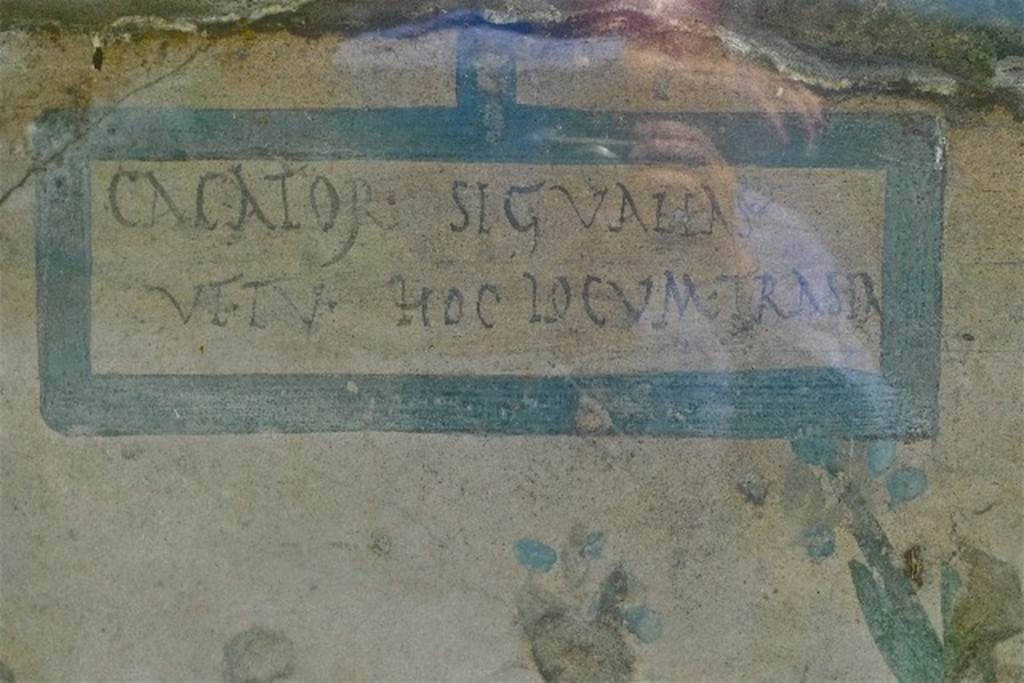
Painted street shrine on the wall at V.6.19. July 2010. Warning to passers-by added to street shrine.
“CACATOR SIC VALEAS VT TV HOC LOCUM TRA(N)SEA(S)”. CIL IV 6641.
Photo courtesy of Michael Binns.
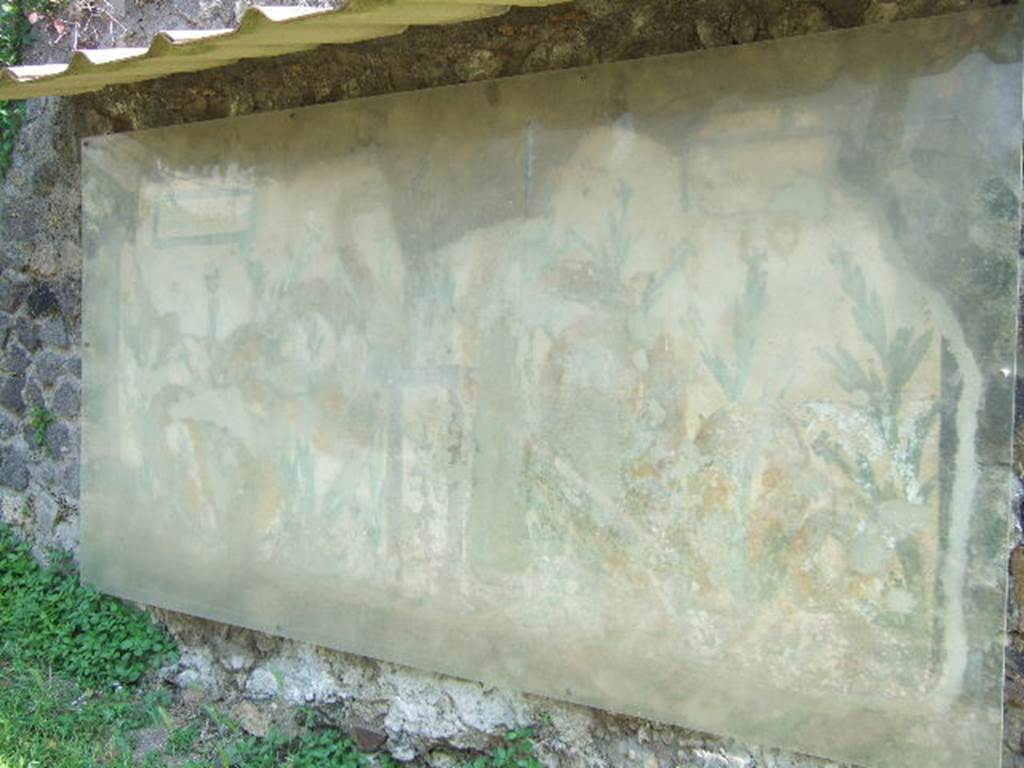
Painted street shrine on the wall at V.6.19. December 2005.
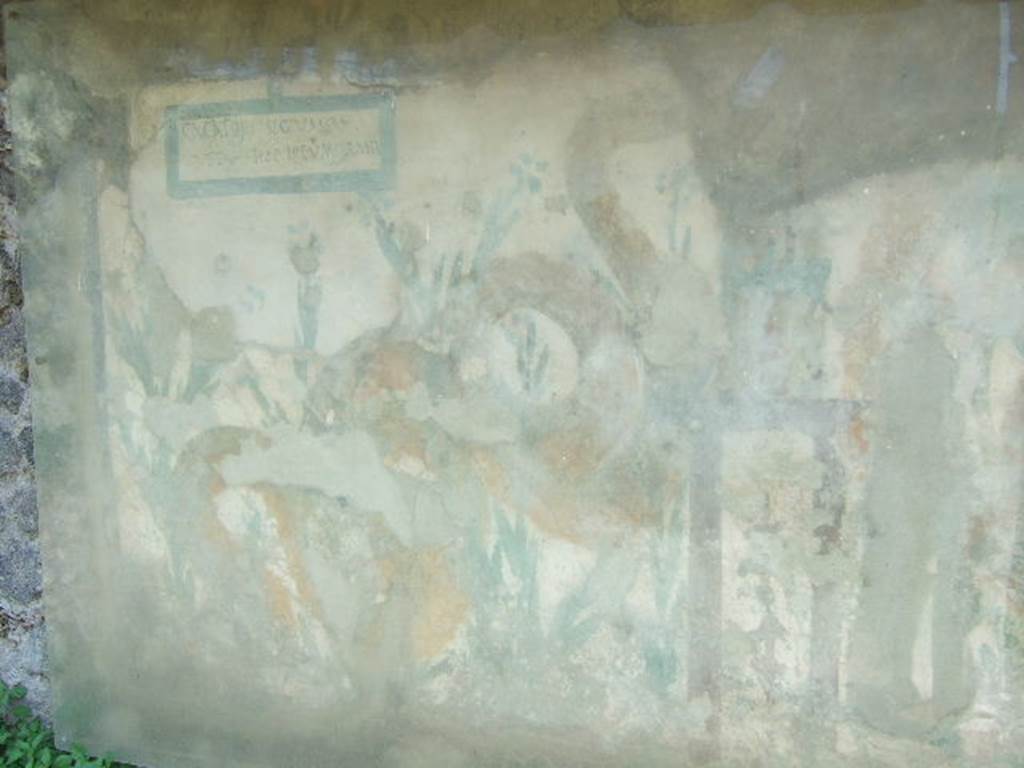
Left-hand side of painted street shrine on the wall at V.6.19. December 2005.
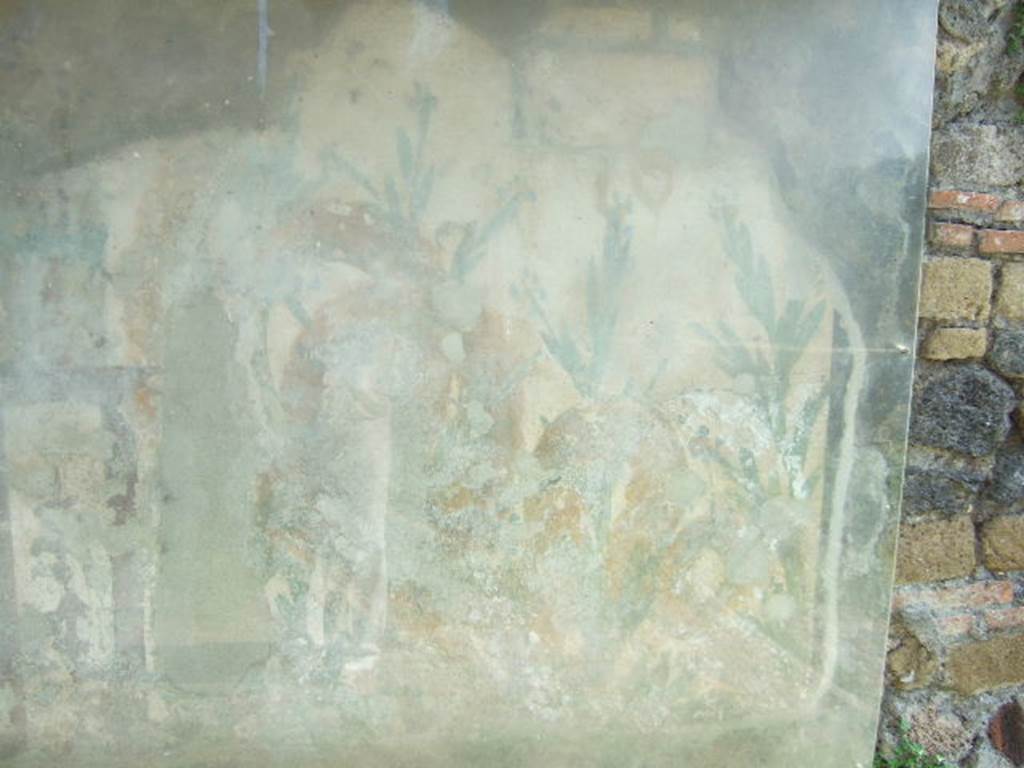
Right-hand side of painted street shrine on the wall at V.6.19. December 2005.